
Can You Cut Concrete With a Circular Saw? Yes, Here’s How
This post contains affiliate links. As an Amazon Associate, we earn from qualifying purchases.
Yes, a standard circular saw can cut concrete, but only if you fit it with a diamond-tipped blade designed for masonry. The process requires strict dust control, multiple shallow passes, and a respect for the saw’s limits. For pavers, thin slabs up to 4 inches thick, or concrete board, it’s a viable DIY method. For anything thicker or heavily reinforced, you should be looking at a dedicated concrete saw.
Most people think they can just slap on a special blade and muscle through concrete like it’s a two-by-four. That’s how you burn out a motor, ruin a blade, or worse. The real mistake is underestimating the abrasive grit and the invisible hazard it creates.
Here’s what actually works, what will wreck your tools, and how to get a clean cut without filling your lungs with crystalline silica.
Key Takeaways
- A diamond blade is mandatory; a standard wood blade will be destroyed in seconds and is dangerous.
- Silica dust from concrete is a serious health hazard. A P100 respirator, not a dust mask, is the minimum protection.
- Cut in multiple shallow passes, increasing depth by 1/4 inch each time. One deep pass will overheat the blade and stall the saw.
- Wet cutting with a constant water spray is the best way to control dust and extend blade life, but it’s messier.
- A standard 7 1/4-inch circular saw is only practical for concrete up to about 4 inches thick. Beyond that, rent a proper concrete saw.
What Blade Do You Need to Cut Concrete?
You need a diamond-tipped blade. Full stop. That abrasive masonry blade you see at the hardware store for ten bucks will cut maybe a foot of concrete before it’s worn to the hub. It also throws a cloud of fine dust that hangs in the air for hours. A diamond blade costs more upfront but will last through an entire patio project and cut cleaner.
Diamond blades for concrete are graded by the hardness of their bond. A soft-bond blade wears faster, exposing fresh diamonds continuously, ideal for hard, cured concrete. A hard-bond blade lasts longer but cuts slower, better for softer materials like pavers or concrete block.
The blade type dictates your entire approach. Segmented rim blades have gaps between the diamond segments. These gaps allow air to flow, cooling the blade during dry cutting.
They’re the go-to for most DIY concrete work. Continuous rim blades have a solid, smooth edge. They give a cleaner, chip-free cut but generate more heat; they almost always require water cooling. Turbo rim blades are a hybrid, with a serrated pattern on a continuous rim for a balance of speed and finish.
| Blade Type | Best For | Cut Speed | Edge Quality | Cooling Required |
|---|---|---|---|---|
| Segmented Rim Diamond | General concrete, block, dry cutting | Fast | Rough, chipped edges | Air cooling (pauses every 30-45 sec) |
| Continuous Rim Diamond | Tile, pavers, finished edges where appearance matters | Slow | Very smooth, clean cut | Water spray mandatory |
| Turbo Rim Diamond | A balance between speed and a decent finish on concrete | Moderate | Smoother than segmented | Water recommended, air possible |
| Abrasive Masonry | One or two shallow cuts in a pinch | Very fast initially, then slows | Very rough | Not effective; blade wears out too fast |
The blade’s diameter matters for your depth of cut. A 7 1/4-inch blade on a standard circular saw can only cut about 2 1/2 inches deep at 90 degrees.
You can cut a 4-inch slab, but you’ll have to flip the piece over and cut from the other side. If your project involves thicker concrete, you’ll need a larger saw or a different tool altogether. For a deep dive on blade types and their specific uses, our guide on diamond blade uses covers the finer details.
Safety Gear You Cannot Skip
Concrete dust isn’t just a nuisance. It contains crystalline silica, a known carcinogen that causes silicosis, an irreversible lung disease. A regular dust mask or even an N95 is not enough for dry cutting.
You need a respirator with a P100 filter. I learned this the hard way years ago cutting a few patio blocks without one. I coughed up grey phlegm for two days and had a raw throat for a week. Never again.
Your eyes need protection from flying chips. Safety glasses are a minimum; a full-face shield is better. Hearing protection is non-negotiable, a diamond blade on concrete is significantly louder than cutting wood. Wear heavy gloves, long sleeves, and steel-toed boots if you’re handling larger slabs.
If you’re dry cutting, a shop vacuum with a HEPA filter attached to the saw’s dust port helps, but it won’t catch everything. The best dust control is to not make dust in the first place: use water.
Wet Cutting vs. Dry Cutting: The Trade-Off
Dry cutting is convenient. No hose, no slurry, less mess to manage. But it’s brutal on the blade and your lungs.
The friction heats the blade and the concrete, which can glaze the diamond segments, reducing their cutting ability. You must stop every 30 to 45 seconds to let the blade cool and spin freely to clear dust from the gullets. If you see smoke or smell a burning odor, you’ve gone too far and are damaging the blade.
Wet cutting uses a constant stream of water directed at the cut. It keeps the blade cool, suppresses nearly all the dust, and extends blade life dramatically. The trade-off is the slurry, a messy paste of concrete particles and water.
You’ll need to contain and dispose of it properly; don’t let it run into storm drains. Some DIYers rig a simple setup with a garden hose and a zip-tied spray nozzle. It works.
Before you start: Concrete dust contains silica, which causes permanent lung damage. A P100 respirator is mandatory. Wet cutting creates slurry; have a tarp or containment area ready. The blade can kick back if it binds, always use two hands and stand to the side of the saw’s path.
Step-by-Step: Cutting Concrete with a Circular Saw
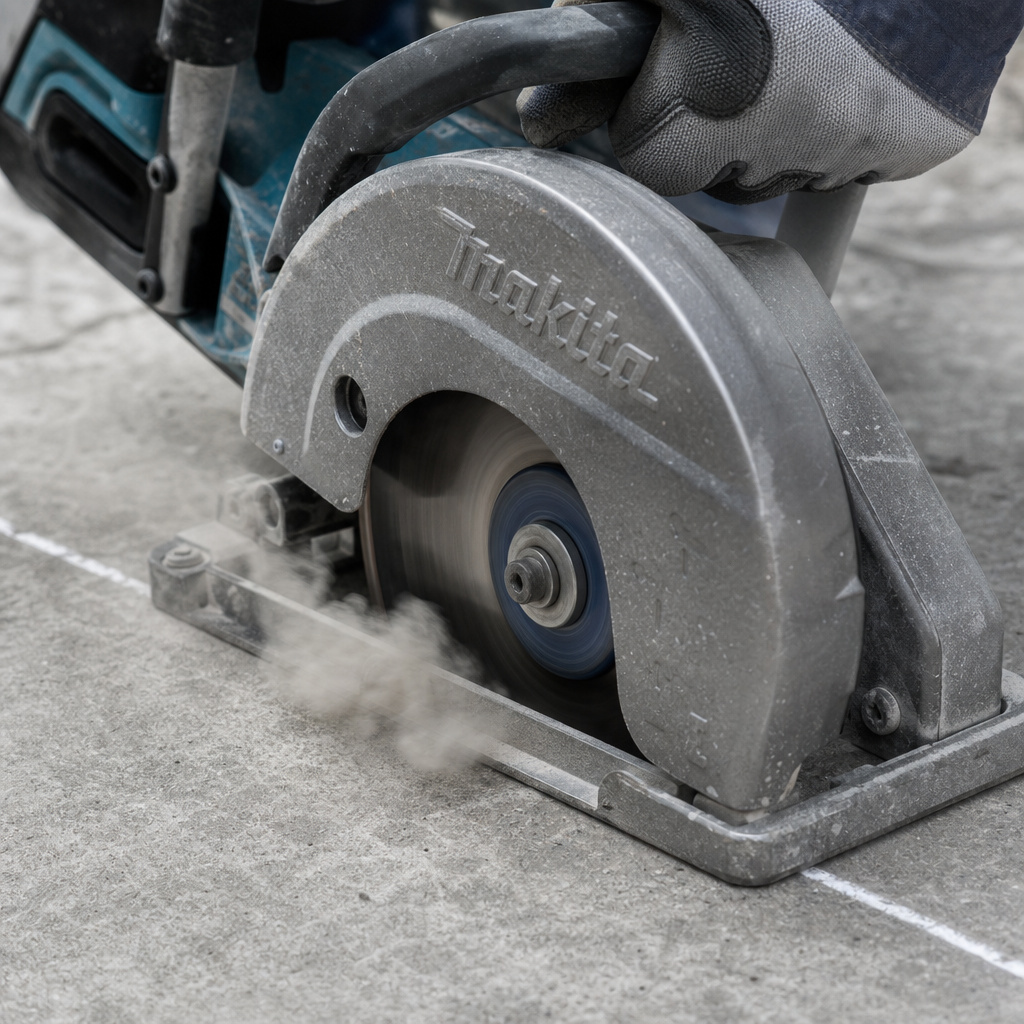
Step 1: Mark and Secure Your Workpiece
Use a chalk line or a straightedge and a lumber crayon to mark your cut. Concrete is unforgiving; you can’t sand out a mistake. If you’re cutting a slab on the ground, make sure it’s fully supported underneath the cut line to prevent cracking. For smaller pieces like pavers, clamp them securely to a workbench. Movement during the cut is a sure way to bind the blade and cause a violent kickback.
Step 2: Install the Diamond Blade and Set Depth
Unplug the saw. Loosen the arbor nut with the wrench, remove the old blade, and mount the diamond blade with the arrow on the blade pointing in the same direction as the saw’s rotation. Tighten the nut firmly. Set the cutting depth. This is critical: for the first pass, adjust the base plate so the blade extends no more than 1/4 inch below the concrete surface. You are making a scoring cut. For a full-depth cut, you’ll make multiple passes, increasing the depth each time. If you’re new to changing the blade on your saw, practice on a scrap piece of wood first.
Step 3: Make the First Scoring Pass
Put on all your safety gear. Position the saw at the start of your line, with the blade not touching the concrete. Start the saw and let it reach full speed. Gently lower the spinning blade onto your mark. Don’t force it. Use a steady, even forward pressure. Let the blade’s weight and teeth do the work. Guide the saw along the entire line to create a shallow groove.
Step 4: Deepen the Cut with Subsequent Passes
Turn off the saw. Increase the cutting depth by another 1/4 to 1/2 inch. Repeat the process, following the exact same groove. For dry cutting, after 30-45 seconds of cutting, stop, lift the blade out while it’s still spinning to clear dust, and let it run free for 10 seconds to cool. Continue this cycle until you’re through the material. For a 4-inch slab, expect at least four passes per side. Rushing this step is what overheats the motor and wears out a fifty-dollar blade in minutes.
Step 5: Handle Rebar and Wire Mesh
If your blade suddenly starts sparking and screeching, you’ve hit rebar. A diamond blade will cut through thin rebar, but it’s hell on the diamonds and can cause dangerous grabbing. If you know the concrete has reinforcement, consider a different tool or method. For unexpected wire mesh, you can usually power through, but the cut will be ragged.
What Can Go Wrong? Troubleshooting Common Problems
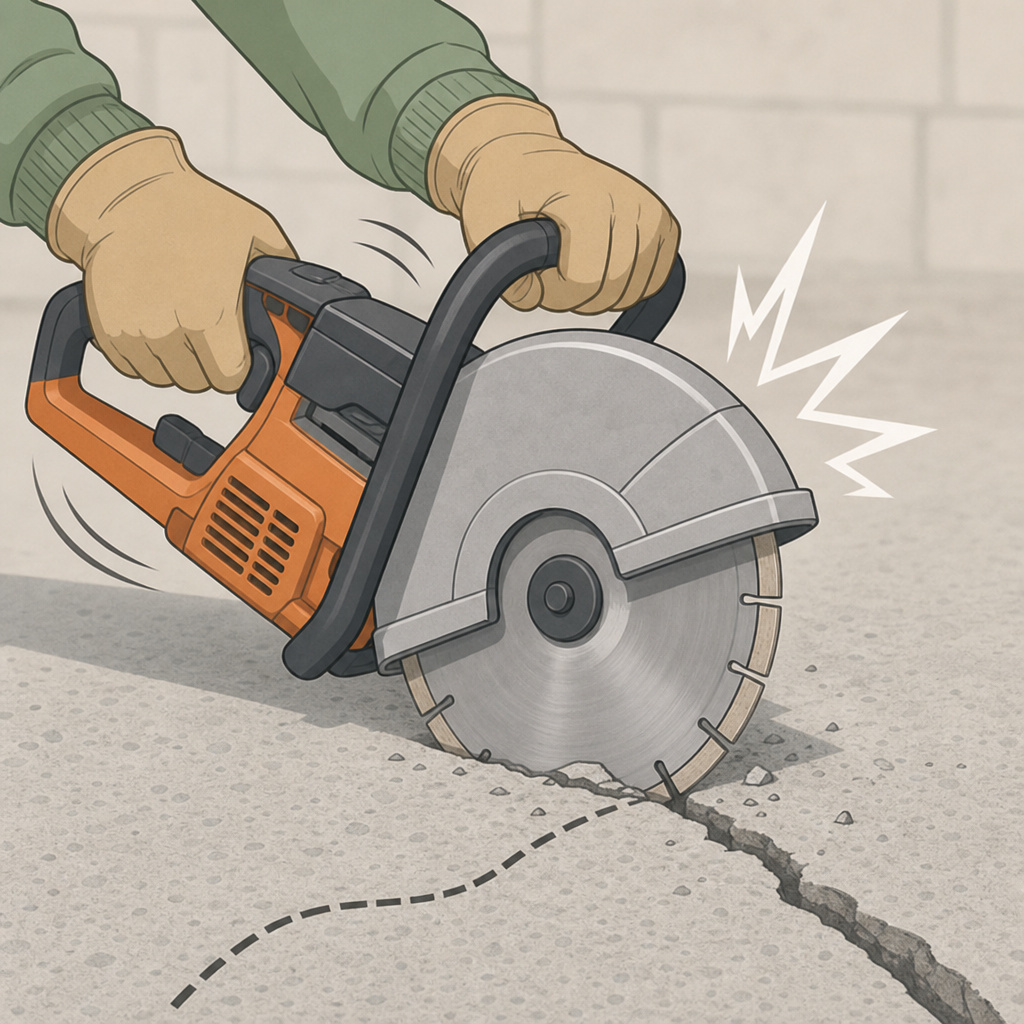
The blade binds and the saw kicks back. This usually means the concrete cracked and pinched the blade, or you’re forcing the cut and the motor can’t keep up. Always keep the saw moving forward steadily. If it binds, release the trigger immediately and hold the saw firmly until it stops.
The cut is wandering off your line. You didn’t score it deeply enough on the first pass. The blade will follow the path of least resistance, which is often a slight inconsistency in the concrete. A deeper scoring pass, or using a guide clamped to the workpiece, solves this. For more on this, our guide on straight cuts with a circular saw covers the techniques.
Excessive vibration or a wobbly cut. Check that the blade is mounted tightly and isn’t damaged. A bent blade or a worn arbor flange will cause this. Also, ensure the concrete itself is stable and not rocking.
The blade seems dull and isn’t cutting. For dry cutting, you’ve likely glazed the blade by letting it overheat. Let it cool completely.
For a diamond blade, sometimes cutting a few inches into a soft brick or a concrete block can help re-expose fresh diamonds. If that doesn’t work, the blade is spent. Knowing the signs of a dull diamond blade saves you time and frustration.
When to Use a Circular Saw (And When Not To)
A circular saw with a diamond blade is perfect for a handful of common jobs:
– Cutting concrete pavers for a walkway
– Trimming a concrete backer board in a tile shower
– Notching a thin concrete slab for plumbing
– Slicing through concrete block or brick
It is not the right tool for:
– Slabs thicker than 4 inches. The depth capacity isn’t there, and the motor will overheat.
– Heavily reinforced concrete. The rebar will eat your blade.
– Long, continuous cuts. A dedicated concrete saw with a water feed is faster, cleaner, and safer for anything over a few feet.
– Indoor projects without extreme ventilation. Even with a vacuum, silica dust will get everywhere.
For those bigger jobs, renting a 14-inch gas-powered concrete saw for a day often costs less than replacing the circular saw you’re about to burn out.
Cleaning and Maintenance Afterward
Concrete slurry is corrosive. If you used water, rinse the saw thoroughly with clean water immediately after you’re done. Pay special attention to the base plate, depth adjustment mechanism, and motor vents. Wipe it down and spray it with a water-displacing lubricant like WD-40 to prevent rust.
The diamond blade needs care too. Remove it from the saw and clean it with water and a stiff brush to remove concrete paste from the segments. Let it dry completely before storing it. Proper blade cleaning after this kind of work prevents the bond from getting clogged, which preserves cutting performance.
Dispose of the slurry responsibly. Let it settle in a bucket, pour off the water, and scoop the thick residue into a heavy-duty bag for landfill disposal. Don’t wash it down a drain, it will harden and cause a blockage.
Frequently Asked Questions
Can I use my regular wood-cutting circular saw blade?
No. A wood blade’s carbide teeth are designed to chip out wood fibers. Concrete will grind those teeth down to nothing in seconds, likely damaging the saw and creating a dangerous kickback scenario.
How deep can a 7 1/4-inch circular saw cut into concrete?
At a 90-degree angle, a 7 1/4-inch blade gives you a maximum cutting depth of about 2 1/2 inches. You can cut a 4-inch slab by cutting halfway through from one side, then flipping it over and completing the cut from the other.
Is a special circular saw needed, or will any saw work?
Any standard circular saw with a 15-amp motor or stronger can handle a diamond blade. However, using a saw with a worn motor or weak bearings on such a heavy load will shorten its life. A corded saw is preferable to cordless for this sustained, high-torque work.
Why does my saw bog down and smoke when cutting?
You’re either cutting too deep in one pass or pushing too hard. The blade needs to cut at its own pace. Reduce your depth of cut and let the saw’s weight provide the downward pressure. Forcing it creates friction, heat, and smoke.
Can I cut curves in concrete with a circular saw?
You can make gentle, sweeping curves if you use a continuous rim diamond blade and go very slowly. Tight curves are nearly impossible without specialized equipment. For anything more than a slight radius, score the line with the circular saw and finish with an angle grinder fitted with a diamond wheel.
The Bottom Line
Cutting concrete with a circular saw is a straightforward job if you respect the material and the tool. The blade is everything, invest in a good diamond blade matched to your concrete type. The dust is lethal, treat it with a P100 respirator or a water spray. The technique is about patience, shallow, repeated passes win the race.
For a few pavers or a small slab modification, it’s a cost-effective DIY solution. For a foundation wall or a driveway, put the circular saw away and rent the right tool. Your lungs, your back, and your wallet will thank you.
