
How to Identify a Dull Diamond Saw Blade: Key Indicators
This post contains affiliate links. As an Amazon Associate, we earn from qualifying purchases.
A diamond saw blade is dull when it cuts slower, requires more pressure, produces rough or chipped edges, leaves burn marks, vibrates excessively, or the diamond segments appear smooth and shiny instead of rough and crystalline. The core issue is the loss of exposed, sharp diamond grit, either from wear or from the metal bond melting over the diamonds.
Most people don’t notice until they’ve ruined a $100 slab of porcelain tile or stalled their saw mid-cut. They blame the tool, the material, or their own technique. The real culprit is a blade that lost its edge hours ago.
Here’s how to spot the signs before you waste material and time, how to tell if you can salvage it, and when to just throw it out.
Key Takeaways
- A dull blade makes the saw motor labor, cuts slower, and leaves a rough, chipped edge. You’ll feel it fighting you.
- Burn marks on wood or discoloration on masonry are a dead giveaway of excessive friction from a dull or glazed blade.
- Glazing, when the metal bond melts over the diamonds, makes the blade segments look shiny and smooth. This is often fixable by dressing the blade.
- If the diamond segments are visibly worn down to the steel core, the blade is finished. No amount of dressing will bring it back.
- Always match your blade’s bond hardness and segment type to the material. A hard-bond blade on soft brick will glaze instantly.
A diamond blade doesn’t cut with a sharp edge like steel. It grinds. Thousands of tiny, exposed diamond particles embedded in a metal matrix do the work. Dullness occurs when those diamonds wear down or fracture, or when the surrounding metal bond overheats and flows over them, a condition called glazing.
The 6 Signs Your Diamond Blade Is Dull
The symptoms build on each other. You might notice one, then two, then all of them. Ignoring the early warnings just costs you more in ruined work and damaged tools.
1. It Cuts Slower and Harder
This isn’t a subtle change. A sharp diamond blade on a 7-1/4″ circular saw will zip through a concrete patio block in seconds with light pressure. A dull one feels like you’re pushing the saw through wet clay. The motor sound changes from a high-pitched whine to a labored groan. You find yourself leaning into the cut, which only makes the next problem worse.
2. The Cut Quality Degrades
A sharp blade produces a fine, consistent slurry. On tile, the edge is clean with minimal chipping. On concrete, the cut face is relatively smooth. Dull blades crush and tear.
On porcelain tile, you’ll see micro-chipping along the cut line, a ragged, fractured edge instead of a clean break. On wood, especially hardwoods, you get burn marks. The blade isn’t cutting; it’s rubbing and generating heat through friction. On masonry, the cut face looks ragged and the kerf (the width of the cut) might widen unevenly as the blade wanders.
3. You See or Smell Burning
This is the undeniable signal. If you’re cutting wood and see dark brown or black scorch marks, stop. The blade is too dull for the job. On masonry, you might not see flames, but you’ll smell a distinct, acrid odor, hot metal and dust. The blade itself can show discoloration, a blueish tint on the steel core near the segments from overheating.
4. Excessive Vibration and Blade Wander
A sharp blade tracks straight and true in its cut. A dull one starts to vibrate in your hands, and the cut line drifts. You’re fighting to keep it on the chalk line. This happens because the uneven wear on the segments creates an imbalance. It’s hard on the saw’s bearings and dangerous for you. Kickback risk goes up.
5. The Diamond Segments Look Shiny and Smooth
Get close and look at the blade’s cutting edge, the diamond segments. A new or sharp segment has a rough, matte, crystalline look, you can see the individual diamond particles standing proud. A glazed segment looks polished, shiny, and slick. Run your fingernail across it (with the blade removed!). It should catch. If it slides like glass, the metal bond has flowed over the diamonds.
6. Visible Segment Wear or Damage
This is the end stage. Compare the height of the diamond segment to the steel core. New segments protrude significantly. A worn blade has segments ground down nearly flush with the core. You might also see cracks in the segments or missing chunks. Once it’s worn to the steel, it’s done. It will only cut with the steel, which is ineffective and dangerous.
What Causes a Diamond Blade to Go Dull?
Diamond blades are consumables. They’re designed to wear. But they wear out faster, or fail in different ways, because of how they’re used.
Natural Wear: This is expected. The diamonds fracture and pull out, the metal bond erodes to expose new ones, it’s a self-sharpening process. Eventually, the segment is gone.
Overheating (The Big One): This is almost always user error. Diamond blades dissipate heat through the material being cut and, in wet applications, the coolant. Dry cutting granite without a pause? The heat softens the metal bond, which then flows over and encapsulates the diamonds. That’s glazing. The blade looks fine but cuts nothing.
Material Mismatch: Blades have different bond hardnesses. A hard bond (for soft, abrasive materials like asphalt) wears slowly to expose new diamonds gradually. Use it on hard, dense concrete, and the bond won’t erode fast enough, the diamonds wear down and get polished smooth without being replaced. The blade “loads up” and stops cutting.
Improper Use: Forcing the blade, running it at the wrong RPM (too fast heats it up, too slow doesn’t cut cleanly), or using a warped blade all accelerate wear or cause catastrophic failure.
| If You’re Cutting… | You Need a Blade With… | Why? |
|---|---|---|
| Soft, abrasive masonry (asphalt, brick) | A hard bond | The bond erodes slowly against the abrasive material, steadily exposing fresh diamonds. |
| Hard, dense masonry (granite, cured concrete) | A soft bond | The dense material wears the bond away faster, constantly revealing new, sharp diamonds. |
| Tile, porcelain, slate | A continuous rim or turbo rim | A continuous rim gives a chip-free finish on brittle materials. Turbo segments cool faster. |
| Green or uncured concrete | A segmented rim with wide gullets | The segments dissipate heat, and wide gullets clear the wet, slurry-like debris quickly. |
Glazed vs. Worn Out: Can You Save It?
This is the critical distinction. A glazed blade can often be revived. A worn-out blade belongs in the recycling bin.
A Glazed Blade has plenty of diamond segment left, but the surface is slick. The diamonds are still there, buried under a thin layer of overheated metal bond. The fix is called dressing.
I ran a brand-new blade dry through 20 linear feet of hard-fired brick on a demo job once. By the end, it was shiny and cutting at a crawl. I thought I’d killed a $90 blade in an hour. A contractor saw me about to toss it and told me to dress it. Five minutes on an old concrete block later, it was cutting like new. I felt like an idiot, but I never made that mistake again.
A Worn-Out Blade has visibly depleted segments. The diamond-impregnated rim is worn down close to the steel core. You might see cracks or chunks missing. Dressing this blade does nothing, you’re just grinding away the steel core. It’s toast.
How to Fix a Glazed Diamond Blade (The Dressing Process)
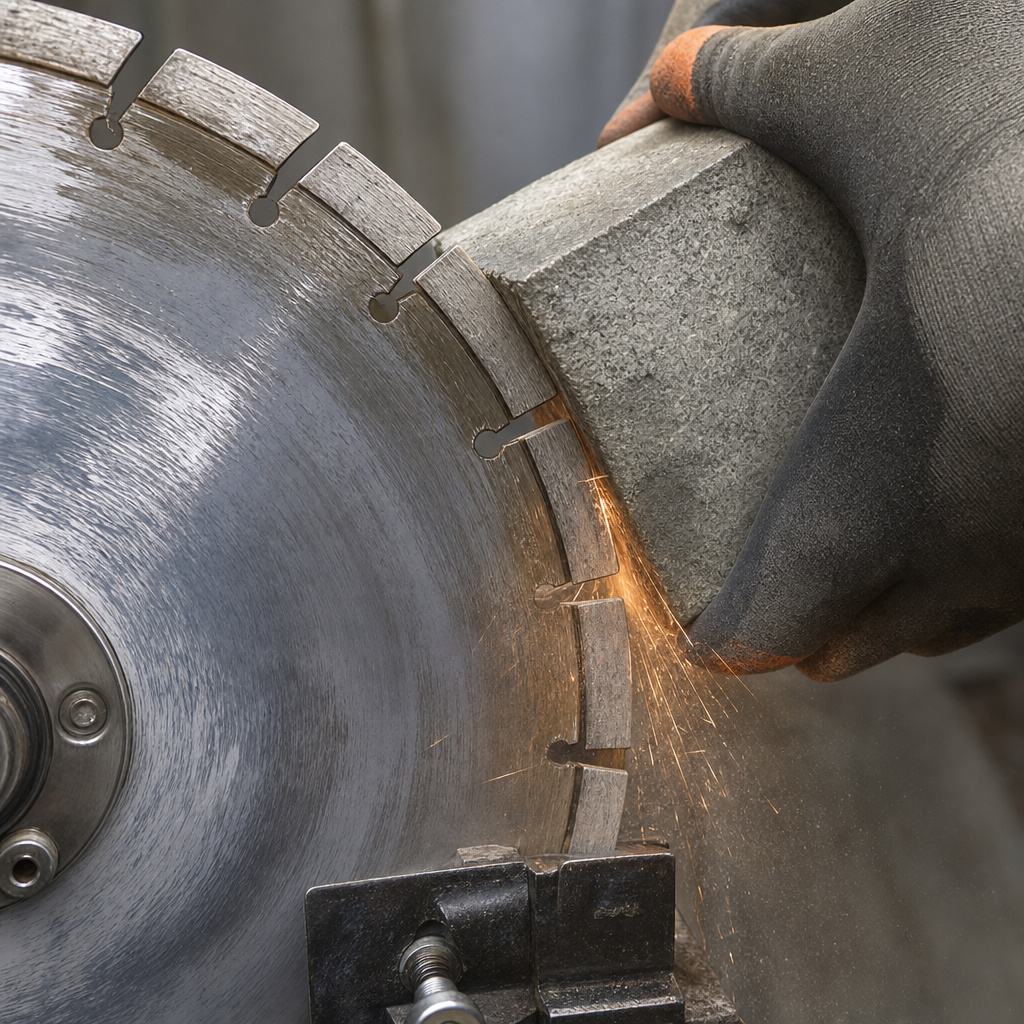
Dressing is simply using an abrasive material to wear away the glazed surface layer of the metal bond, exposing fresh, sharp diamonds underneath.
Before you start: Wear safety glasses and gloves. Secure the abrasive material firmly so it cannot move. Never dress a blade that is cracked or has damaged segments. Ensure your saw is unplugged (corded) or the battery is removed (cordless) before mounting or removing the blade.
- Remove the blade from the saw. This is non-negotiable for safety and control. Trying to dress it while it’s mounted in a tool is asking for trouble.
- Choose your dressing material. You need something abrasive but relatively soft. A concrete block, a piece of sandstone, or a dedicated dressing stone works best. Avoid using another piece of the material you were cutting that caused the glazing.
- Secure the material and run the blade. Clamp your dressing block to a workbench. Re-mount the blade in the saw. With the saw’s guard in place and your safety gear on, gently run the spinning blade into the dressing material. Use light pressure.
- Check frequently. Do this in 10-15 second bursts. Stop, inspect the segments. You’re looking for that matte, rough texture to return. It usually takes 30-45 seconds total. You’ll see sparks and dust, that’s the metal bond being ground away.
- Clean and test. Brush off any debris. Reinstall the blade and make a test cut in a scrap piece of the correct material. It should cut noticeably faster and smoother.
If dressing doesn’t restore performance, the blade is worn out, not glazed. Time to replace it. For a detailed look at other sharpening techniques, the principles are similar but the execution differs for steel teeth.
When to Replace a Diamond Blade
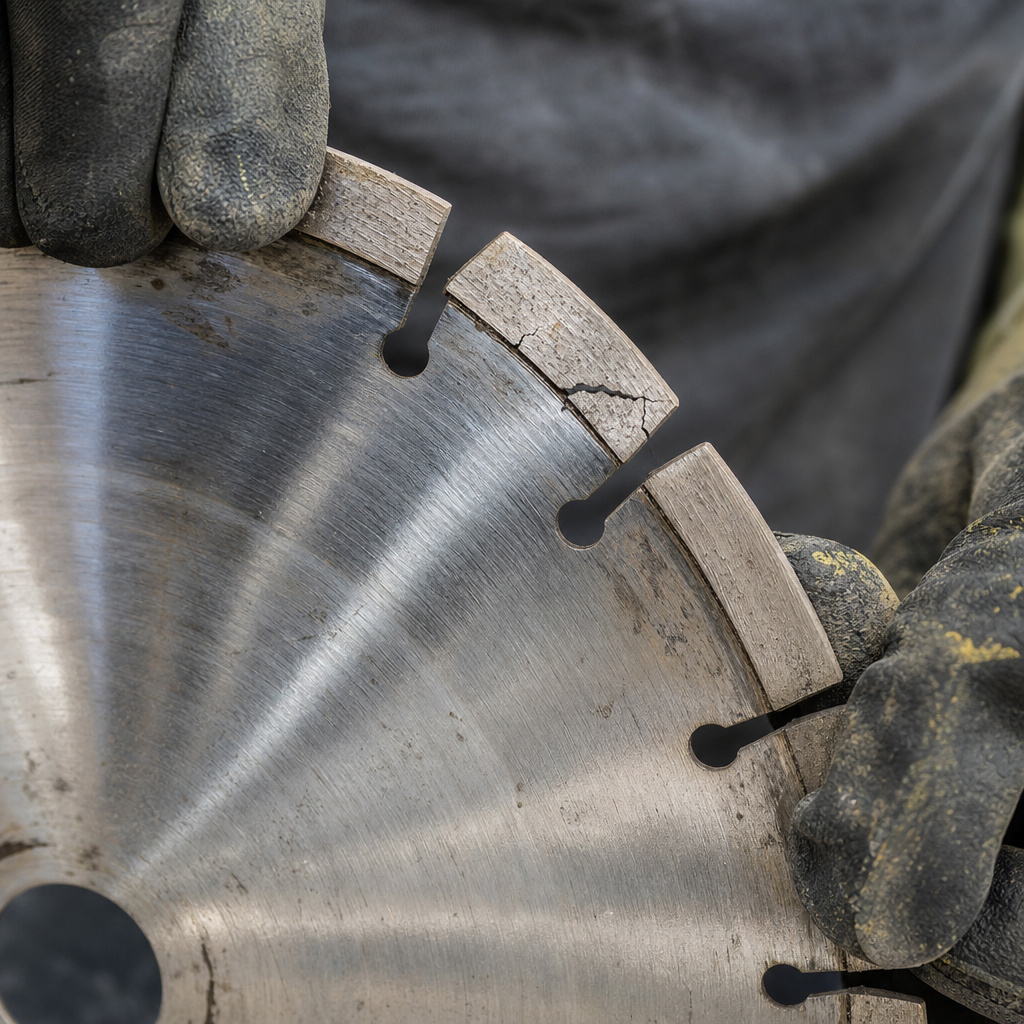
Sometimes, fixing it isn’t an option. Replace the blade if you see any of these signs:
- The segments are worn down to the steel core. Measure the segment height. If it’s less than 1/8 inch above the core, its useful life is over.
- There are cracks in the steel core or the segments. A cracked blade can disintegrate at high RPM. Do not use it.
- The blade is warped or bent. This causes violent vibration and inaccurate cuts. It’s often a result of overheating or physical damage.
- Dressing and cleaning saw blades have no effect. You’ve removed the glaze and embedded material, but it still cuts poorly. The diamonds are simply gone.
Buying a new blade is cheaper than repairing a saw damaged by a failing blade or redoing a botched cut on expensive material.
How to Make Your Diamond Blades Last Longer
Prevention is better than cure. These habits extend blade life dramatically.
- Match the blade to the material. This is the number one rule. Use the manufacturer’s chart. A general-purpose blade is a compromise that doesn’t excel at anything.
- Use water when possible. Especially for tile, stone, and concrete. Wet cutting keeps the blade cool, reduces dust, and prevents glazing. It’s not just for masonry saws; a sprayer attachment for a circular saw works.
- Let the blade do the work. Don’t force it. Applying excessive pressure bends the blade, overheats it, and causes premature wear. Feed it steadily and evenly.
- Avoid twisting or side-loading. This is crucial for diamond hole saws and core bits. Let the tool cut straight. Twisting can crack segments or warp the core.
- Clean blades after use. Gunked-up residue hardens and can imbalance the blade. A quick scrub with a brass brush and some water after a wet cut, or a dedicated blade cleaner after a dry cut, makes a difference.
- Store them properly. Hang them or lay them flat. Don’t stack them in a pile where they can get knocked around and the segments chipped.
Think of it like circular saw maintenance. A clean, sharp, appropriate blade is the most important factor in a good cut.
Frequently Asked Questions
Can you sharpen a diamond saw blade?
Not in the traditional sense. You can’t reshape a steel tooth. You can dress a glazed blade to expose fresh diamonds, and you can clean it to remove embedded material. If the diamond segments are worn down, the blade is done.
How long should a diamond blade last?
There’s no single answer. A quality blade cutting soft brick with adequate water might last for thousands of linear feet. The same blade dry-cutting hard quartzite might be done in under fifty. Lifespan is measured in cutting performance, not time.
Why is my new diamond blade not cutting?
It’s almost certainly glazed from the first use. This happens if you run it too fast (high RPM), use too much pressure, or cut a material that’s too hard for the blade’s bond. Dress it as described above. Also, ensure you’ve removed any protective coating from the blade.
Is it safe to use a cracked diamond blade?
No. Never. A crack in the steel core can propagate instantly under the centrifugal force of spinning. The blade can shatter. Discard it immediately.
Can I use a masonry blade on wood?
You can, but you shouldn’t. The blade is designed to grind brittle material, not slice wood fibers. It will tear the wood, create excessive heat and smoke, and glaze over almost immediately. It’s a great way to ruin both the blade and your workpiece.
The Bottom Line
A dull diamond blade announces itself. Listen for the straining motor, feel for the extra pressure, and look for the chipped edges and burn marks. Before you blame your saw or your skill, pull the blade and inspect the segments. If they’re shiny, dress them. If they’re worn down to the nub, replace them.
The real secret isn’t in the diagnosis, it’s in the prevention. Match the blade to the job, use coolant, and don’t force the cut. That $40 blade will outlast three cheaper blades used incorrectly, and it’ll save you a mountain of frustration on every project. Your next cut will be cleaner, faster, and safer. That’s the goal.
