
What Is a Brushless Drill? Lighter, Cooler & More Powerful
This post contains affiliate links. As an Amazon Associate, we earn from qualifying purchases.
A brushless drill is a cordless power tool that uses an electronic circuit board and sensors, instead of physical carbon brushes, to control the motor. This eliminates friction, reduces heat by up to 50%, extends battery runtime, and allows the tool to automatically adjust power to the task. It’s more efficient, powerful, and durable than a traditional brushed drill, but comes at a higher initial cost.
The efficiency gain isn’t a minor spec. It reshapes the tool’s physical limits. A motor that runs 50 percent cooler can be packed into a housing with fewer or no vents, which directly changes where you can use it without clogging the internals with sawdust.
What follows is a breakdown of the mechanism, the hard numbers on performance, and where this technology actually matters for your work. By the end, you’ll know whether the upgrade is worth it for a weekend project or a professional job site.
Key Takeaways
- Brushless motors replace friction-prone carbon brushes with an electronic controller, cutting energy waste as heat and boosting runtime by up to 50 percent.
- Expect a 15 to 35 percent increase in power and torque over an equivalent brushed model, with the tool automatically matching output to the material resistance.
- Brushed drills require new carbon brushes every 50 to 60 hours of use; brushless models have no such wearable parts, drastically reducing long-term maintenance.
- The compact design of a brushless motor can make the overall tool 25 percent smaller and over a pound lighter, improving maneuverability.
- For infrequent DIY use, a brushed drill is often sufficient. The brushless advantage pays off in runtime, power, and durability on longer or more demanding jobs.
The Core Difference: Electronics vs. Brushes
All cordless drill motors work by using magnets to spin a shaft. The split happens in how they manage the electrical current that makes those magnets work.
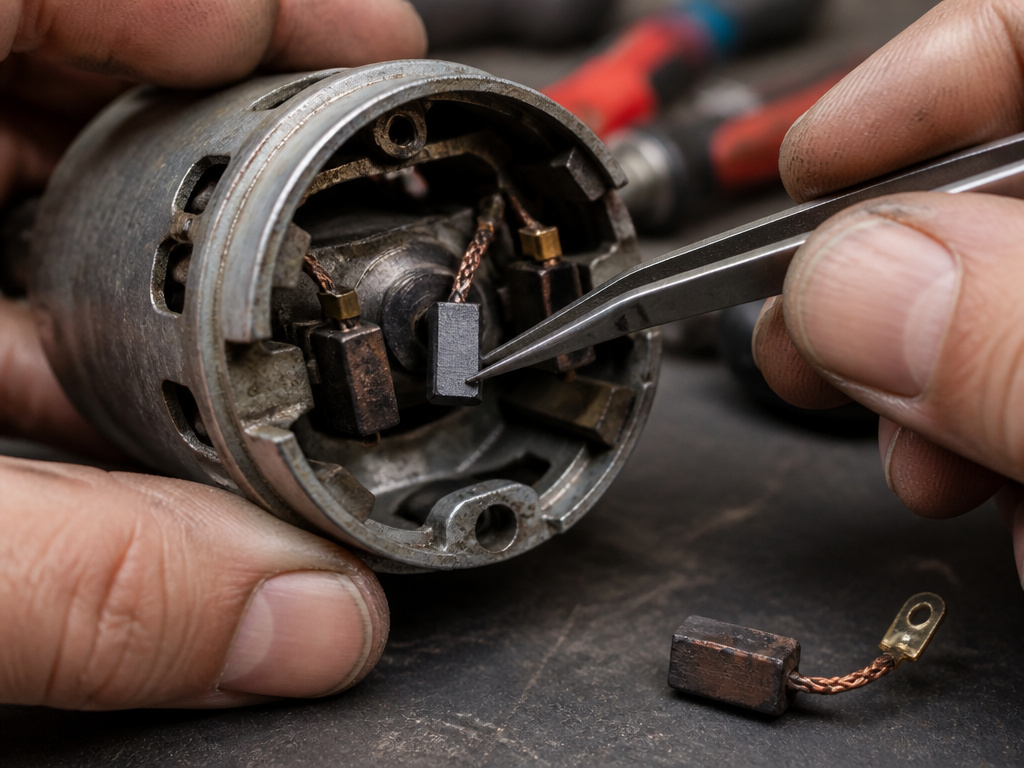
A brushed motor uses spring-loaded carbon brushes that press against a spinning commutator. This physical contact creates the magnetic field but also constant friction. That friction wastes energy as heat and wears down the brushes themselves.
A brushless motor replaces the brushes and commutator with a small circuit board and magnetic sensors. The board acts as a digital traffic controller, precisely timing the current to the motor’s windings. This is the shift from a mechanical switch to a solid-state electronic one.
The absence of grinding parts is the entire game. No friction means almost no energy is lost as heat, and there are no brushes to wear out. This is why a brushless motor can deliver more of the battery’s power directly to the chuck.
Where this goes sideways: Storing a brushed drill in a damp garage accelerates corrosion on the commutator and brushes. A brushless drill’s sealed electronics are inherently more resistant to this, but they can be damaged by conductive metal dust if the housing isn’t kept clean.
How a Brushless Motor Actually Works
The circuit board isn’t just a replacement part; it’s an active manager. It continuously reads the motor’s position via sensors and adjusts the electrical pulse thousands of times per second.
This allows for two things a brushed motor can’t do. First, it can vary power output in real time. When you start driving a screw into soft pine, the motor delivers minimal torque. The instant the screw head hits resistance, the sensors detect the increased load and the board commands more power. It uses only what’s needed, which is the root of its battery efficiency.
Second, it eliminates the “cogging” or jerky start-up of some brushed motors. The current is applied smoothly as the motor winds up to speed. This results in cleaner hole starts and less chance of the drill bit skating off a mark.
The Measurable Advantages: By the Numbers
The benefits are documented in manufacturer testing and user reports. Here’s what you gain when you switch from a brushed to a brushless platform.
| Advantage | How It Manifests | Typical Improvement Over Brushed |
|---|---|---|
| Runtime | More work per battery charge. | Up to 50% longer. |
| Power & Torque | Faster drilling in hard materials, easier screw driving. | 15% to 35% increase. |
| Heat Reduction | Motor and battery run cooler, extending component life. | Runs up to 50% cooler. |
| Size & Weight | More compact, balanced tool for tight spaces. | Can be 25% smaller, >1 lb lighter. |
| Maintenance | No brush replacements; less ingress from sealed design. | Eliminates a scheduled part swap. |
The 15 to 35 percent increase in performance comes from John Banta, a senior test project leader at Consumer Reports. The 50 percent cooler figure is from Wayne Hart, Communications Manager at Makita. These engineering outcomes are measured against a brushed baseline.
The size reduction is equally concrete. Lauren Chell, a product manager at Dewalt, notes a brushless model can be 25 percent more compact than its brushed counterpart, shedding over an inch in length and a pound in weight. That changes how long you can use the tool overhead without fatigue.
Where Brushless Drills Fall Short (And Where Brushed Wins)
 The technology has a cost, both literal and practical. The sophisticated circuit board and rare-earth magnets make brushless drills more expensive to manufacture.
For a homeowner assembling flat-pack furniture twice a year, that premium is hard to justify. A basic 12V drill from a reputable brand will handle those duties for years. The brushless advantages in runtime and power are wasted on ten minutes of use.
Brushed drills also have simpler repair paths. When the carbon brushes wear out, a 50 to 60 hour service interval, you can often pop open the housing and slide in a new set for a few dollars. Fixing a faulty circuit board in a brushless tool usually means replacing the entire motor assembly, a job for a service center.
Common mistake: Buying a brushless drill for very light, occasional use. The investment won’t pay off in saved time or battery life, and a quality brushed model will last just as long given the low hours.
The decision often comes down to workload. If your projects last longer than a single battery charge or involve dense materials like hardwoods or metal, the brushless efficiency starts earning its keep immediately.
Decoding the Specs: What to Look For
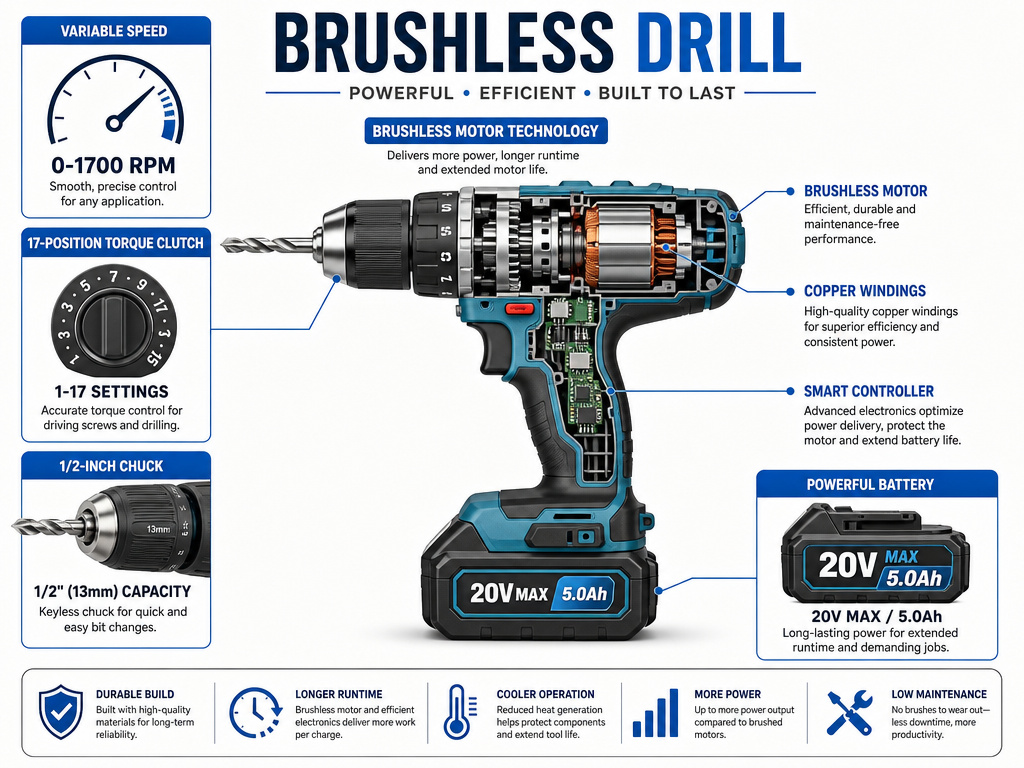 When you’re comparing models, the “brushless” label is just the start. The real performance is in the accompanying specifications printed in the manual.
No-load speed (e.g., 0–450/0–1700 RPM on the SKIL DL6280B-00) tells you the motor’s maximum rotational speed at each gear setting. Higher speeds are for drilling; lower speeds deliver higher torque for driving.
Torque settings matter. A clutch with 17+1 positions, like on many brushless models, gives fine control over driving depth to avoid stripping screw heads or sinking them too deep.
Chuck size determines your maximum bit shank diameter. A 1/2-inch (13mm) chuck is standard for full-size drills, while a 3/8-inch chuck is common on compact models. Your choice here depends on whether you need the versatility for large-diameter bits or prioritize a smaller, lighter drill driver.
Pay attention to the voltage rating, but understand the naming. A “20V Max” drill often uses the same battery cells as an “18V” drill, the difference is nominal versus actual voltage. The performance difference between an 18V drill and a 20V drill from the same brand is often minimal; what matters more is the battery’s amp-hour (Ah) rating for capacity.
The Verdict: Who Should Buy One?
If you run a drill for more than an hour a week, buy brushless. The combination of longer runtime, adaptive power, and reduced maintenance will save you time and frustration on the job. For professionals or serious DIYers, it’s the default choice.
For the casual user who drills a few holes or drives a handful of screws per month, a quality brushed drill is a perfectly rational tool. It will get the job done for less money upfront.
The middle ground is the compact category. Here, the size and weight savings of brushless technology are a tangible benefit for anyone, making a tool like a 12V brushless drill a superb all-arounder for light to medium duty.
I recommend the SKIL DL6280B-00 as a solid entry point. It delivers the core brushless benefits, the 20V power, two-speed gearbox, and LED light, without the premium price tag of pro-grade brands. For heavier use, step up to a brushless model from Dewalt’s 20V Max or Makita’s 18V LXT line; their ecosystem of batteries and tools is worth the investment.
Frequently Asked Questions
Are brushless drills more powerful?
Yes, but not because they have a fundamentally stronger motor. They are more efficient. A brushless drill can deliver 15 to 35 percent more of the battery’s power to the chuck because it isn’t losing energy as heat and friction from brushes. This results in higher effective torque and faster drilling speeds.
How long do brushless drills last?
The motor itself can last for thousands of hours of use because there are no wearable brushes. The limiting factors become the bearings, the battery’s lifespan, and the electronics. With proper care, keeping it clean, storing batteries at room temperature, a brushless drill should outlast several equivalent brushed models.
Can you repair a brushless drill motor?
It is difficult and often not cost-effective. While you can replace external parts like the chuck, trigger, or housing, a failure in the internal circuit board or motor windings typically requires a whole motor assembly swap. This contrasts with a brushed motor, where replacing the $5 carbon brushes is a common and simple user repair.
Do brushless drills work with existing batteries?
Only within the same brand’s battery platform. A brushless Dewalt 20V Max drill uses a Dewalt 20V Max battery. The drill’s electronics are designed for that specific voltage and communication protocol. You cannot use a Makita battery in a Dewalt tool, regardless of the motor type.
Is brushless better for concrete or masonry?
For drilling into concrete with a hammer drill function, the brushless advantage is still relevant but less pronounced. The hammering action is a separate mechanism. The brushless motor’s efficiency will give you longer runtime per battery, but the limiting factor will be the quality of the hammer mechanism and the carbide masonry bit itself.
The Bottom Line
A brushless drill is a smarter, more efficient version of a fundamental tool. The technology turns battery energy into rotational force with less waste, less heat, and no planned obsolescence from wearing brushes.
For heavy users, that translates to less downtime charging, less arm strain from a lighter tool, and a longer service life. The upfront cost is the barrier, but it pays for itself in productivity for anyone who uses a drill regularly.
If your drill gathers dust more often than it spins, save the cash. But if you’re shopping for a primary tool that will see real work, the brushless model is the only logical choice. The performance and durability gains are now standard for a reason.
