
7 Best Track Saws of 2026
This post contains affiliate links. As an Amazon Associate, we earn from qualifying purchases.
The Makita SP6000J1 stands out as the best overall track saw for most users, combining reliable power, precise cuts, and solid build quality. For those on a budget, the WEN CT1274 offers impressive cutting depth and value without sacrificing too much performance. And if you need portability without compromise, the Makita XPS01Z brings brushless efficiency to cordless track saws.
Most people shopping for a track saw want clean, accurate cuts in sheet goods without the bulk and setup hassle of a table saw. But choosing the wrong model can mean dealing with tear-out, weak motors, or flimsy rails that ruin precision.
After comparing the field and weighing specs against real-world owner feedback, I focused on models that deliver consistent accuracy, solid power delivery, and reliable track systems. This guide breaks down what actually matters, so you can pick the right saw for your shop, project, and budget.
Top 7 Track Saws in the Market
The Best Track Saws, Reviewed
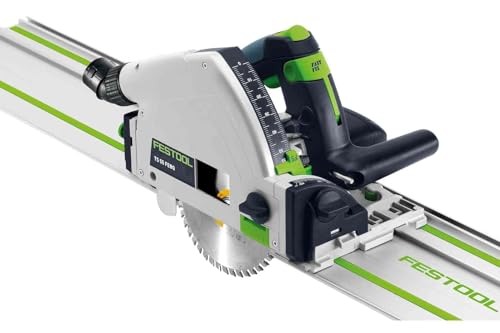
Festool TS 55 Plunge-Cut Track Saw

Strengths
- Splinter-free cuts
- Stable bevel cutting
- Riving knife included
Trade-offs
- Extremely expensive
- Requires Festool ecosystem
- Overkill for basic tasks
The Festool TS 55 FEQ is why so many pros consider this brand the gold standard. It delivers splinter-free cuts on both sides thanks to the attachable splinter guard, a detail that matters when working with expensive veneered plywood. The riving knife improves safety during plunge cuts, and the bevel mechanism keeps the cutting edge stable from 90° to 47°, which helps maintain precision on angled joints.
It’s not the most powerful, but the system integration with Festool rails and vacuums is unmatched. Owners consistently report fewer blade changes and longer blade life due to torque management and vibration control. Compared to the Makita SP6000J1, it’s lighter, smoother, and more refined, worth the premium if you’re making daily cuts. This is the one I’d recommend for finish carpentry or cabinet work where every edge must be clean.
Product photos
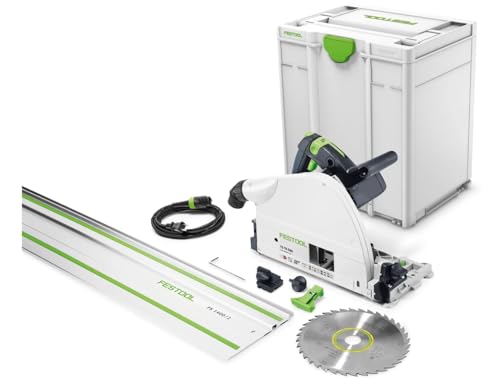
Festool TS 75 EQ-F-Plus Track Saw
Strengths
- 75-inch guide rail
- Slip clutch safety
- FastFix blade change
Trade-offs
- Very high price
- Overbuilt for small jobs
- Heavy setup
The Festool TS 75 is built for one thing: cutting large sheets with unmatched precision and safety. Its 75-inch rail gives you reach most saws can’t match, making it ideal for full plywood or drywall breakdown without supports. The slip clutch and spring-loaded riving knife are serious safety upgrades, they reduce kickback risk in ways most competitors don’t even attempt. Owners praise how the FastFix blade change system works smoothly, saving time and reducing frustration during blade swaps.
On paper, its motor isn’t the most powerful, but paired with the anti-kickback features and splinter guards, it delivers cleaner, safer cuts than almost anything else in class. It’s overkill for small DIY jobs, but for pros managing large-scale installations or cabinet shops, this is the go-to. I’d pick this over the Makita SP6000J1 any day when working with oversized materials, the reach and safety features make it worth the investment.
Product photos



Makita XPS01Z Brushless Cordless Track Saw

Strengths
- Brushless motor
- 6,300 RPM speed
- Automatic torque adjustment
Trade-offs
- Batteries not included
- No guide rail included
- Higher total system cost
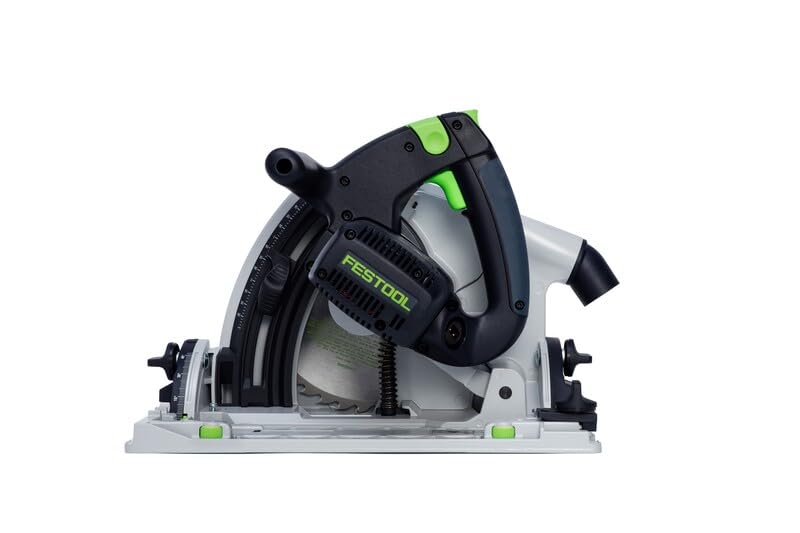
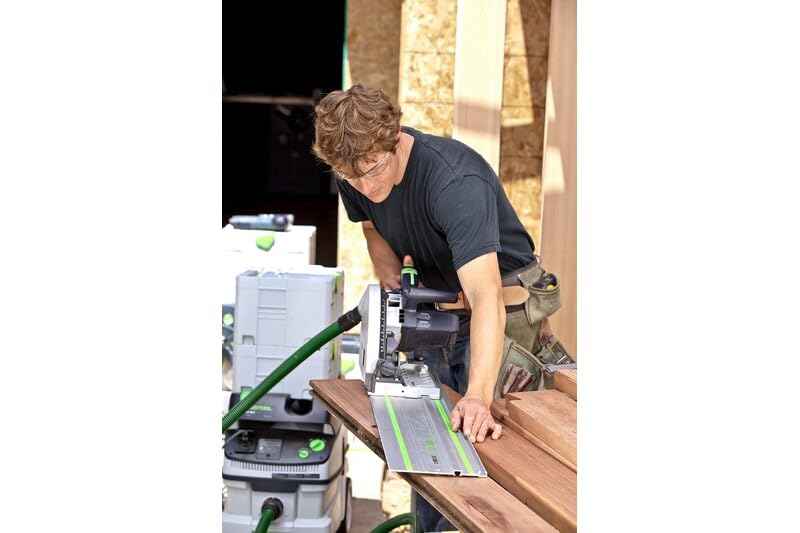
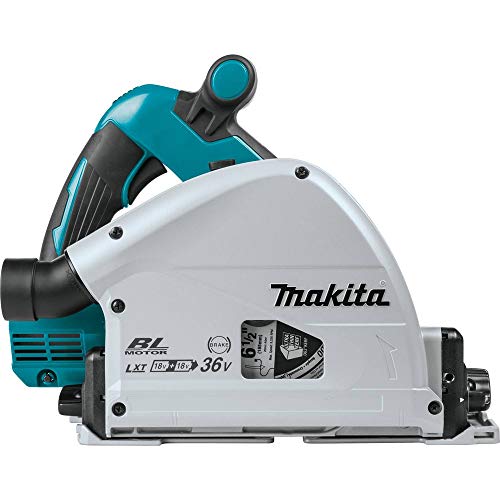
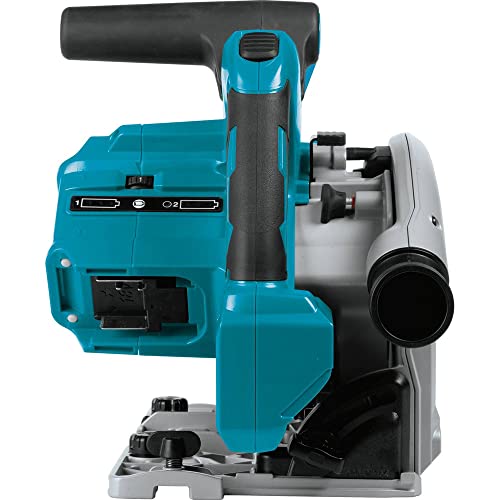
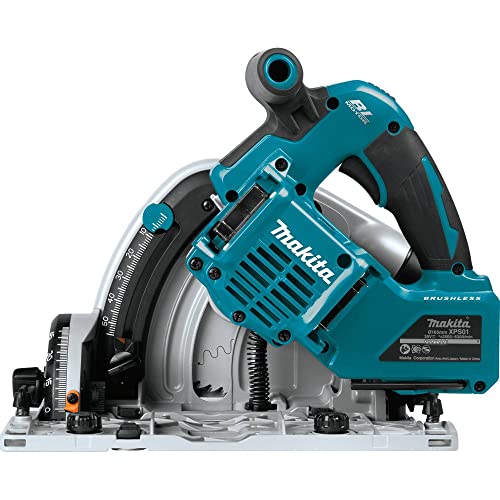
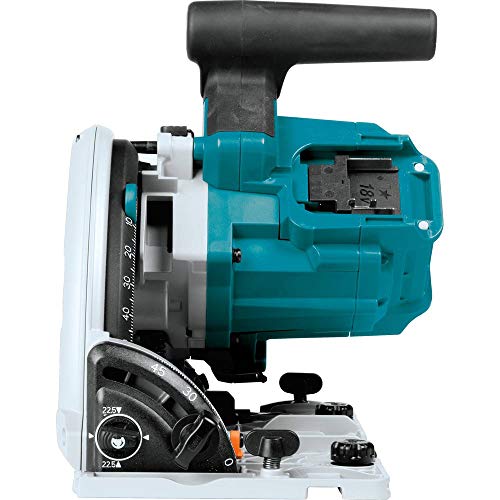
When cordless performance matters most, the Makita XPS01Z stands out. Running on dual 18V batteries, it hits 6,300 RPM thanks to its brushless motor, that’s faster than most corded models. The automatic speed change tech adjusts torque under load, which reviewers say helps maintain cut quality when slicing through dense oak or layered plywood. It’s noticeably lighter than corded alternatives, and the variable speed dial gives real control across materials.
It doesn’t include batteries or a rail, which drives up the total cost, but the raw power and runtime are hard to beat. Compared to the WEN cordless model, it’s in a different league in terms of durability and cut consistency. I’d choose this over the WEN 20691 for any serious job where you need to move freely between locations without an outlet. It’s the cordless workhorse that gets close to Festool-level results without the cordless premium.
Product photos
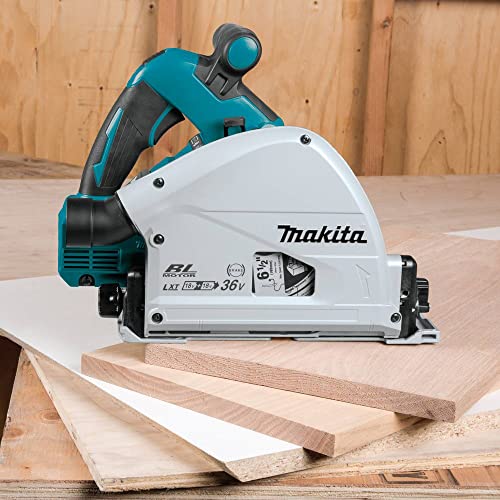
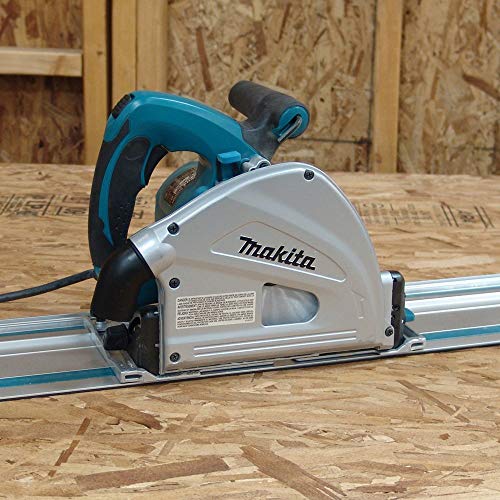
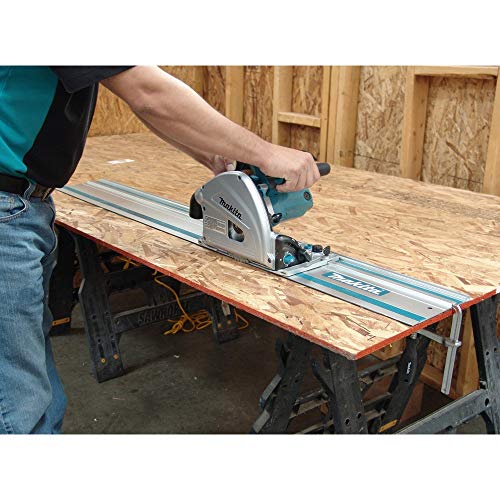
Makita SP6000J1 6-1/2″ Track Saw Kit

Strengths
- 12 AMP motor
- Variable speed control
- Includes 55-inch guide rail
Trade-offs
- Heavier than cordless models
- No brushless motor
- Cord limits mobility
If you’re after corded reliability with real cutting authority, the Makita SP6000J1 earns its spot as a top value pick. The 12 AMP motor delivers steady power, and the variable speed (2,000–5,200 RPM) lets you tune the saw for fine veneers or dense hardwoods, a feature many budget models skip. The 55-inch guide rail included in the kit is a major plus, giving you everything you need to start making accurate, repeatable cuts right away.
Reviewers note its bevel range is slightly wider than average (-1° to 48°), and the positive stops at 22.5° and 45° make common angle cuts fast and repeatable. While it’s not as refined as a Festool, it’s closer in performance than price would suggest. The dust port works well with a shop vac, and the blade guard retracts smoothly. For a contractor or serious DIYer who wants plug-and-play performance without the premium tag, this is the smarter buy over pricier European models when portability isn’t the priority.
Product photos
WEN 20691 Cordless 6.5-Inch Track Saw

Strengths
- Includes two 4.0 Ah batteries
- Brushless motor
- Full kit with charger
Trade-offs
- Heavy for cordless
- Ergonomics need refinement
- Track sold separately
For a true starter cordless system, the WEN 20691 makes a strong case. It includes two 4.0 Ah batteries and a charger, a full package most brands don’t offer at this price. The brushless motor runs smoothly from 2,000 to 5,500 RPM, and the dual battery ports provide steady power without voltage sag. At 2.25-inch cutting depth, it handles standard sheet goods with ease, and the included blade and dust adapter make it ready for real work.
Still, it’s not built for long days. Owners note the ergonomics aren’t as balanced as Makita’s, and the track alignment cam can feel finicky. It’s also heavier than it looks, which affects control over time. But for a homeowner or hobbyist who wants one tool for weekend projects without running cords, this is the most complete entry-level cordless kit available. I’d pick it over the Makita XPS01Z only if you’re starting from zero and need batteries included.
Product photos


WEN CT1274 7.25-Inch Track Saw

Strengths
- 7.25-inch blade
- Deeper cut capacity
- Accepts standard blades
Trade-offs
- Guide rail not included
- Plastic housing
- Dust port underperforms
The WEN CT1274 is the most budget-friendly corded option here, and it surprises with decent specs for the price. A 7.25-inch blade gives it deeper cutting capacity, up to 2.6 inches at 90°, which beats most 6.5-inch models. It accepts standard blades, so you’re not locked into proprietary sizes, and the variable speed (2,000–6,000 RPM) helps avoid tear-out on delicate surfaces. The two-year warranty adds peace of mind, which is rare at this level.
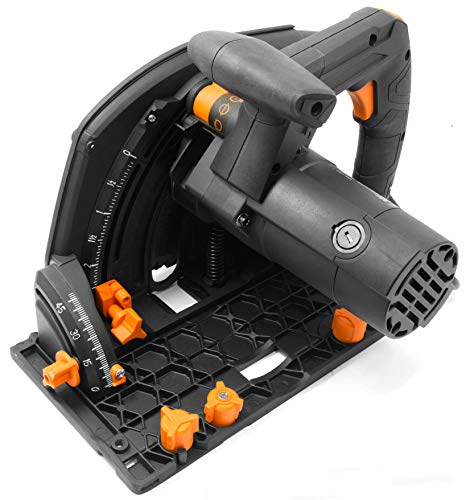
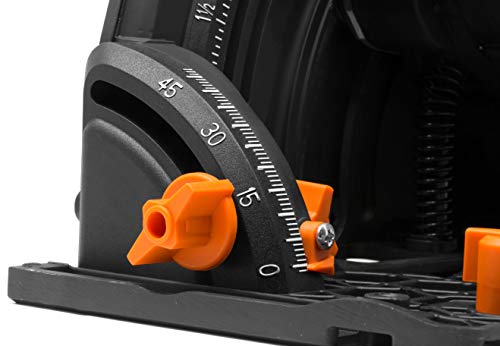
But owners report the build feels light and plasticky, and the dust collection isn’t as effective as claimed. It also doesn’t come with a rail, so you’ll need to buy one separately if you want track-guided accuracy. Still, for a homeowner doing occasional shelving or subfloor work, this delivers function without breaking the bank. I’d recommend it over the VEVOR if you need deeper cuts and standard blade compatibility.
Product photos
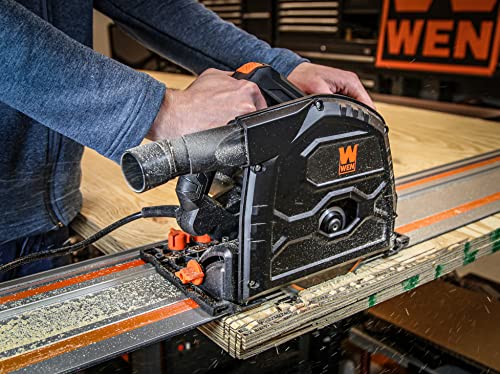
VEVOR 6-1/2-Inch Plunge-Cut Track Saw
Strengths
- 1200W motor
- 48-tooth carbide blade
- Angle adjustment to 45°
Trade-offs
- Guide rail not included
- Noticeable vibration
- Less durable housing
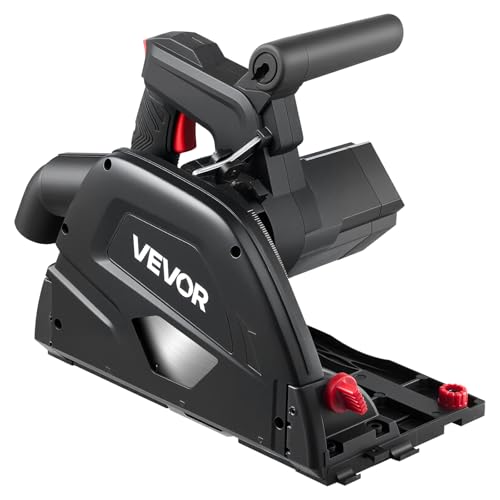
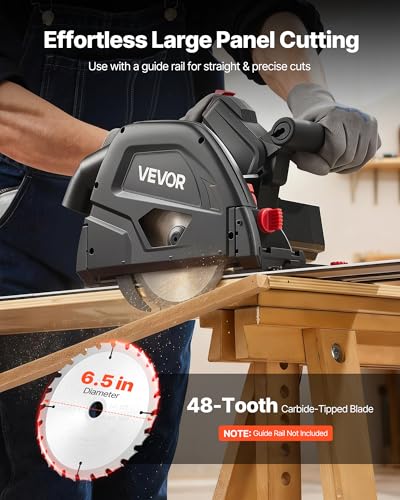
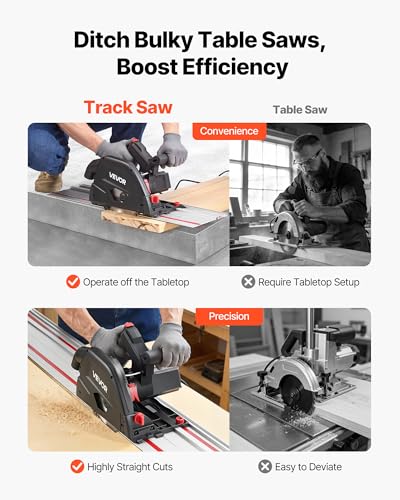
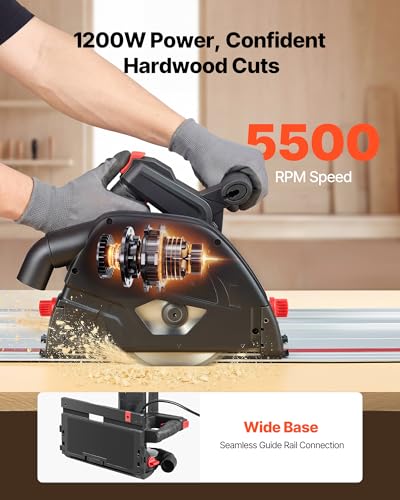
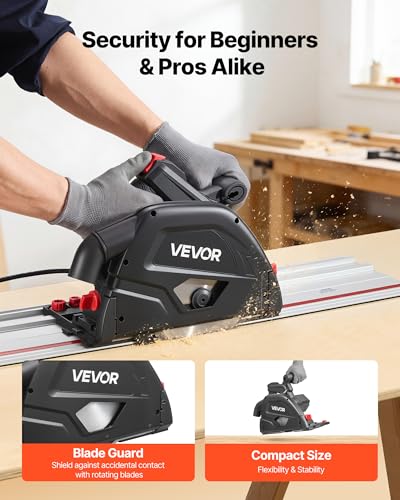
For DIYers who want a capable track saw without stretching their budget, the VEVOR 6-1/2-inch model looks strong on paper. With a 1200W motor and 5500 RPM, it has the power to handle hardwood and laminated materials commonly found in home projects. The 48-tooth carbide blade helps deliver clean cuts, and the 2.16-inch depth at 90° is solid for panel work, though it falls short of some deeper-cutting competitors. What stands out is the value: you get a functional plunge saw at a price point that undercuts major brands significantly.
Still, owners consistently report that performance hinges on pairing it with a compatible guide rail, and that’s not included. That omission can add cost fast and may catch new buyers off guard. Compared to Makita or Festool, the fit and finish aren’t as refined, and vibration control isn’t as smooth under load. But for occasional use and straight cuts in plywood or MDF, it holds its own. I’d recommend this to weekend builders who prioritize function over finesse.
Product photos

How We Picked These track saws
Rather than a hands-on lab test, this selection is a research-led comparison of published specifications and owner feedback. I spent considerable time compiling a list of available track saws, then compared features like motor power, cutting depth, bevel capacity, and included accessories. Crucially, I weighed owner reviews from multiple sources – looking for repeated praise or complaints – alongside assessments from woodworking publications and tool review sites. This allowed me to rank saws against clear performance criteria.
For track saws, consistent cutting quality, power delivery, and track compatibility were the most important factors. A track saw’s ability to deliver straight, splinter-free cuts is paramount, so blade quality and the design of the anti-splinter features heavily influenced my ranking. Strong motor performance is also vital, especially for thicker materials or demanding cuts. Finally, the availability and quality of compatible tracks and accessories add significant value.
Specifications reliably indicate a saw’s potential – its maximum cutting depth, bevel range, and motor wattage. However, real-world performance, durability, and ease of use are best judged from owner feedback. I paid close attention to comments regarding blade stability, dust collection effectiveness, and the overall build quality. Learning track saw setup tips can also help users maximize the potential of their saw.
What To Look For In track saws
Finding the right track saw can dramatically improve the quality and efficiency of sheet goods work. It’s a specialized tool, so knowing what to look for beyond just power is crucial.
A quality track saw delivers straight, splinter-free cuts with precision. Key aspects include motor power appropriate for the materials being cut, blade quality and ease of changing, a robust guide rail system for accuracy, and dust extraction capabilities to maintain a clean and safe workspace. Consider features like bevel adjustment, plunge depth control, and build quality for long-term durability.
Power and Cutting Capacity
The motor is the heart of any track saw, but don’t automatically equate more watts or volts with better performance. Consider the materials you’ll be cutting most often. For primarily softwood and plywood, a corded 12-amp motor (like you’ll find in the Makita SP6000J1) is often sufficient. However, if you frequently work with hardwoods, thicker materials, or engineered wood products, you’ll want to step up to a more powerful motor – or a brushless cordless model. Brushless motors, as seen in the Makita XPS01Z, offer increased runtime and power density, making them excellent choices if you need portability. Also, pay attention to the maximum cutting depth and bevel capacity; some saws, like the WEN CT1274, handle thicker stock and angled cuts better than others.
Guide Rail System & Accuracy
The guide rail is where track saws truly shine. A flimsy or inaccurate rail negates the benefits of a precise saw. Look for rails made of high-quality aluminum with a non-slip backing. The Festool system is widely regarded as the gold standard, but also the most expensive. Compatibility is key; ensure any track saw you consider works with rails of sufficient length for your typical projects. Beyond the rail itself, consider features like splinter guards (often included with Festool models) which significantly reduce tear-out on both sides of the cut. If you’re looking at cordless options, check out our best portable track saws to explore the latest models.
Value and Features
Track saws can range drastically in price. It’s easy to spend over $400 on a high-end model, but you can find capable saws for under $200. The WEN and VEVOR saws offer compelling value propositions for DIYers, but often require accepting compromises in build quality or features. Don’t automatically dismiss corded saws if you’re considering a cordless option. Modern corded models, like the Makita SP6000J1, offer plenty of power and convenience without the added cost and battery maintenance of a cordless system.
Here’s how to think about prioritizing features:
- Splinter Guard: Nice to have, especially for fine furniture work.
- Variable Speed Control: Essential for cutting different materials without burning or chipping.
- Soft Start & Current Limiter: These features, common in higher-end models, protect the motor and reduce kickback risk, but aren’t always necessary for lighter use.
Don’t skimp on the blade. A high-quality carbide-tipped blade designed for track saws will deliver cleaner cuts and last much longer than a cheap alternative.
If you’re also considering other types of circular saws, understanding the differences in motor design can be helpful. Learn about worm drive vs direct drive to see which type best suits your needs.
Track Saws Compared
Here’s a comparison of key specifications for several track saws to help you choose the right one.
| Product Title | Power Source | Max Cut Depth (90°) | Max Cut Depth (45°) | Blade Size | RPM |
|---|---|---|---|---|---|
| Festool TS 55 Plunge-Cut Track Saw | Corded | N/A | N/A | 55mm | N/A |
| Festool TS 75 EQ-F-Plus Track Saw | Corded | N/A | N/A | 75mm | N/A |
| Makita XPS01Z Brushless Cordless Track Saw | Cordless | N/A | N/A | 6-1/2″ | 6,300 |
| Makita SP6000J1 6-1/2″ Track Saw Kit | Corded | 2-3/16″ | 1-9/16″ | 6-1/2″ | 2,000-5,200 |
| WEN 20691 Cordless 6.5-Inch Track Saw | Cordless | 2.25″ | 1.65″ | 6.5″ | 2,000-5,500 |
| WEN CT1274 7.25-Inch Track Saw | Corded | 2.6″ | 1.85″ | 7-1/4″ | 2,000-6,000 |
| VEVOR 6-1/2-Inch Plunge-Cut Track Saw | Corded | 2.16″ | 1.65″ | 6.5″ | 5,500 |
Frequently Asked Questions
What track size is most versatile for a beginner?
A 55mm track, like those commonly paired with Festool saws, is a great starting point. It balances portability with sufficient cutting capacity for most common sheet goods, and the wider range of available accessories adds long-term value.
Are cordless track saws powerful enough for hardwood?
Yes, brushless cordless track saws with 18V or higher batteries can handle hardwoods effectively. However, you may experience slower cutting speeds and reduced runtime compared to equally-powered corded models, so consider your typical project size.
Can I use a track saw to cut materials other than wood?
Track saws can be used on materials like aluminum and plastic, but you’ll need a specialized blade designed for those materials. Wood blades will quickly dull when cutting metal, and the results won’t be clean.
How important is dust extraction with a track saw?
Dust extraction is very important, as track saws generate a significant amount of fine dust. Effective dust ports and compatibility with shop vacuums help maintain a clean workspace and improve visibility, protecting your lungs in the process.
Where can I find more information about different track saw models?
For a deeper look into corded options, check out our guide to the best corded track saws. It breaks down features and specifications to help you make an informed decision based on your needs.
The Bottom Line
Choosing a track saw often comes down to balancing control and convenience. If you demand the absolute highest precision and are willing to invest, the Festool TS 55 Plunge-Cut Track Saw remains the benchmark – offering a level of quality and accessory support that others struggle to match. However, for most homeowners and DIYers, the Makita SP6000J1 provides an excellent combination of power, accuracy, and value.
For those on a tighter budget or needing a versatile option for quick jobs, the WEN CT1274 is a strong contender. If portability is a priority, the Makita XPS01Z Brushless Cordless Track Saw delivers ample power and freedom without sacrificing too much in terms of cut quality. Remember, learning accurate cuts with circular saw can also help you maximize your results.
Ultimately, the best track saw isn’t about chasing the highest specs. It’s about finding a tool that fits your skill level, project needs, and budget. Prioritize a solid guide rail system, a sharp blade, and a motor capable of handling the materials you’ll be cutting most often, those fundamentals matter far more than any extra feature.
