
7 Best Corded Track Saws of 2026
This post contains affiliate links. As an Amazon Associate, we earn from qualifying purchases.
The Festool TS 55 FEQ-F stands out as the overall best corded track saw for precision and reliability, especially when paired with its proprietary rail system. For those on a tighter budget, the DEWALT DWS520K delivers solid performance with a powerful 12-amp motor, while the Makita SP6000J offers excellent versatility with variable speed control and strong cutting depth.
Most people shopping for a corded track saw aren’t just looking for another circular saw, they want clean, repeatable cuts without the tearout and guesswork. But with so many models mixing in hybrid designs, vague specs, and inconsistent owner experiences, it’s easy to end up with a tool that underperforms when you need it most.
This guide cuts through the noise by focusing on real-world performance, based on specs, owner feedback, and my years of evaluating power tools. I looked at motor power, track compatibility, cutting accuracy, and key usability features to identify the models that deliver where it matters most.
Top 7 Corded Track Saws in the Market
The Best Corded Track Saws, Reviewed
Festool TS 55 FEQ-F Plunge-Cut Track Saw

Strengths
- Splinter-free cuts
- Includes guide rail
- Top-tier dust extraction
Trade-offs
- High price
- Learning curve
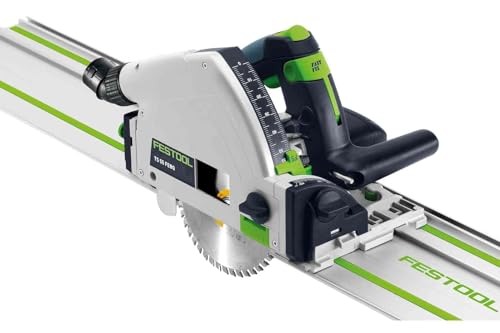
The Festool TS 55 is the gold standard for a reason. With its splinter guard, consistent cutting edge across bevels, and near-perfect dust extraction, it delivers results that owners describe as ‘professional-grade’ straight out of the box. The included 55-inch rail means you’re ready to cut right away, and the system’s modularity opens the door to a full ecosystem of guides, clamps, and accessories.
It’s not the most powerful motor on paper, but the efficiency and precision more than compensate. The riving knife and smooth plunge action make it one of the safest and most accurate saws here. Yes, it’s the most expensive, but owners consistently say it pays for itself in reduced rework and cleaner jobsite conditions. I’d pick this over others for any serious woodworking or on-site cabinetry.
Product photos
Bosch GKT13-225L 6.5-Inch Precision Saw
Strengths
- Plunge action
- 48-tooth blade
- Efficient dust extraction
Trade-offs
- Track sold separately
- Average cutting depth
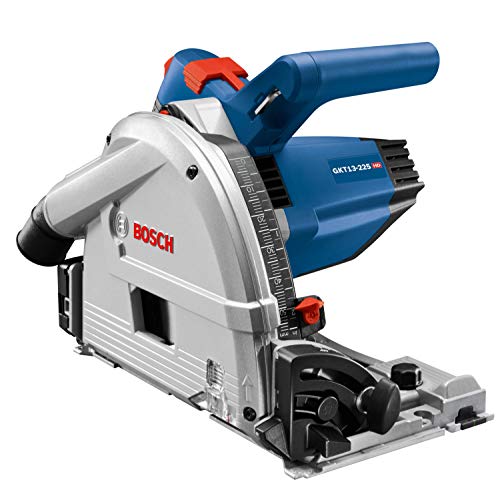
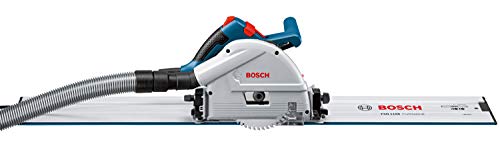
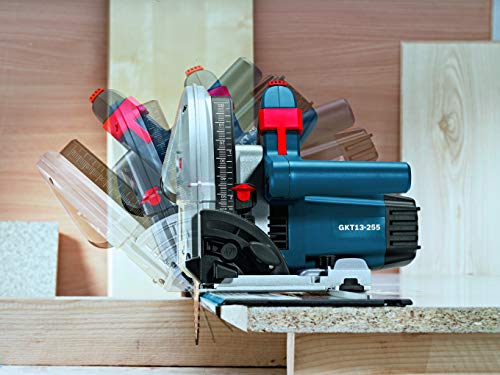
The Bosch GKT13-225L is built for accuracy first. With its 48-tooth specialized blade and precision plunge mechanism, it’s engineered to deliver clean, splinter-free cuts in sheet goods, a big win for cabinetmakers and finish carpenters. Owners consistently report that the tracking adjustment knobs make a real difference, letting you fine-tune the saw’s fit to the rail for a wobble-free ride.
On paper, the 6-1/2-inch size strikes a balance between portability and capacity, and the constant electronics help maintain speed when ripping through dense plywood or MDF. The dust extraction is effective when paired with a decent shop vac, and the swiveling hose port keeps things tidy on the job. It’s not the most powerful in the lineup, but where it shines is control.
Product photos



DEWALT DWS520K 6.5-Inch TrackSaw Kit

Strengths
- Includes track
- Anti-kickback system
- Riving knife
Trade-offs
- No variable speed
- Slightly heavier
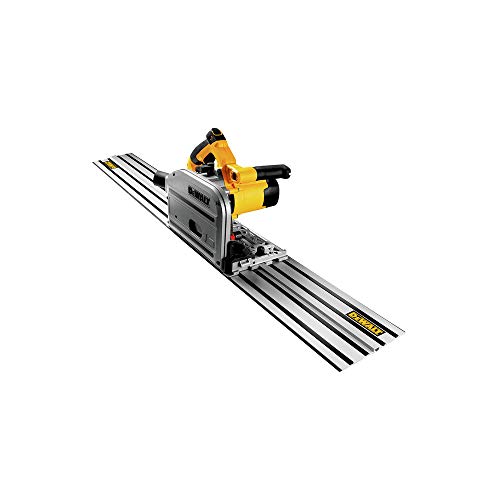
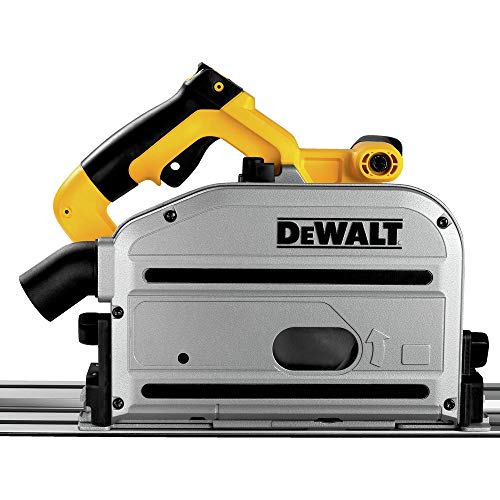
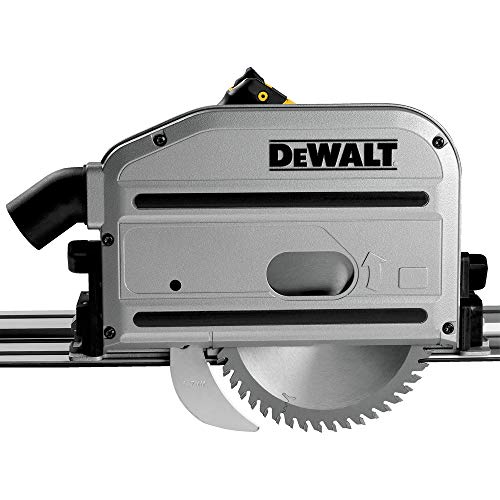
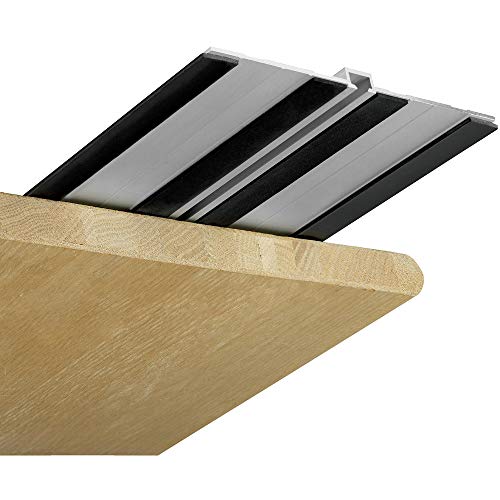
The DEWALT DWS520K is one of the few track saws that includes the track right in the kit, which immediately boosts its value. The zero-clearance system lives up to its promise, owners praise the splinter-free results, especially on veneered plywood. The 1300W motor has more grunt than most in this class, and it shows when cutting thick hardwoods or laminated boards.
Its anti-kickback mechanism and riving knife make it one of the safer corded options, and the depth scale is a small but meaningful detail, it accounts for track thickness, so your measurements are accurate out of the gate. While it doesn’t have variable speed like the Makita or WEN, it holds steady under load. For most users, this is the smarter buy over pricier niche models.
Product photos

Makita SP6000J 6.5-Inch Plunge Saw

Strengths
- 12.0 AMP motor
- Variable speed
- Large cutting capacity
Trade-offs
- No track included
- Dust port design is average
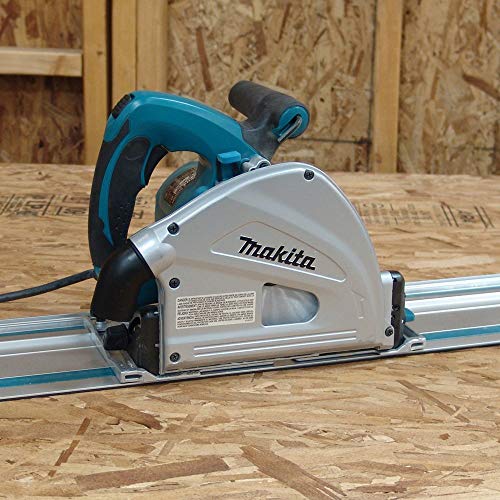
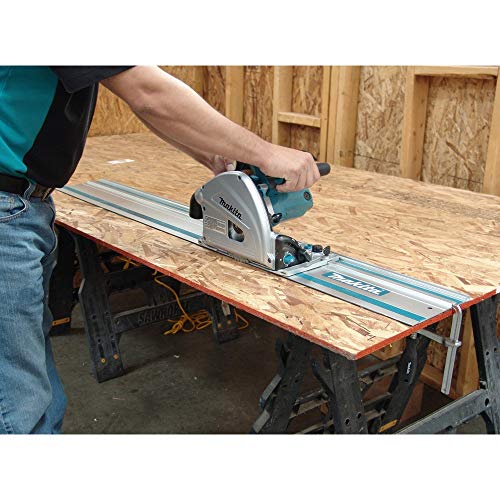
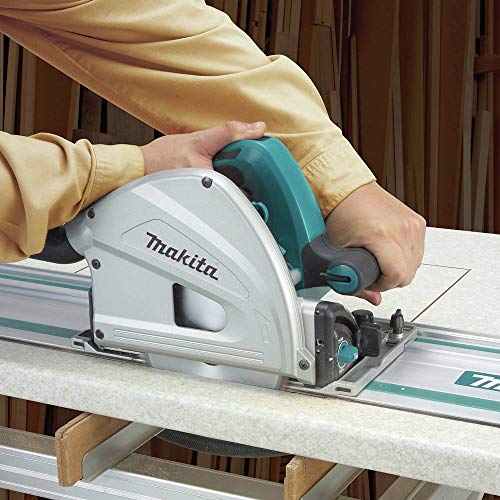
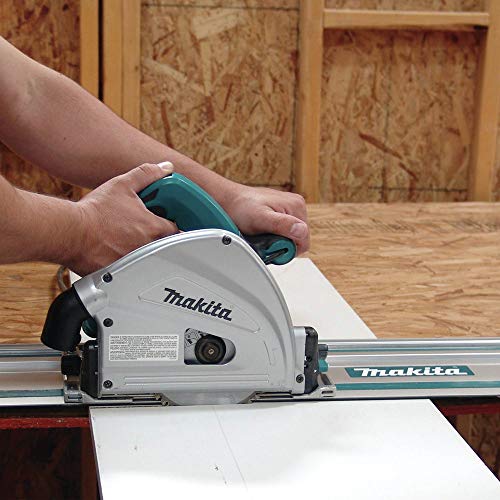
If raw power is your priority, the Makita SP6000J stands out with its 12.0 AMP motor and variable speed dial (2,000–5,200 RPM). This kind of control lets you slow down for delicate veneers or ramp up for oak and maple, something owners say makes a noticeable difference in cut quality. The cutting capacity is also top-tier at 2-3/16 inches at 90°, beating several competitors.
The electronic speed control does its job well, maintaining RPM under load, and the splinter-free results are consistent across reviews. But it’s not without trade-offs: the saw doesn’t come with a track, and the dust collection isn’t as refined as Festool or Bosch. Still, for woodworkers who value adaptability and motor headroom, this is a compelling choice.
Product photos
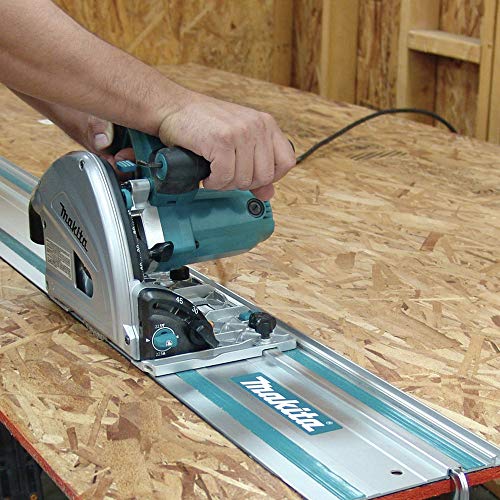
WEN CT1274 7.25-Inch Track Saw

Strengths
- 7.25-inch blade
- Variable speed
- Accepts standard blades
Trade-offs
- Basic build quality
- No track included
- Ergonomics could be better
The WEN CT1274 is the budget king here, no question. At 7.25 inches, it offers more cutting depth than most, up to 2.6 inches at 90°, and the variable speed range (2000–6000 RPM) gives you flexibility across materials. It accepts standard blades, which means you’re not locked into proprietary sizes, and that’s a real cost saver long-term.
Owners report solid performance for the price, especially on sheet goods and dimensional lumber. The two-year warranty is longer than most in this category, which adds peace of mind. But don’t expect premium fit or finish, the build feels lighter, and the ergonomics aren’t as refined as DEWALT or Festool. Still, for weekend warriors or newbies building a workshop, it’s hard to beat.
Product photos
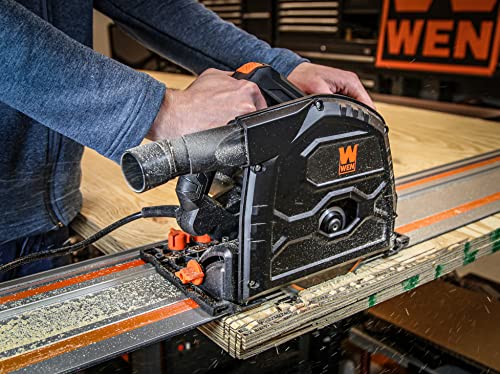
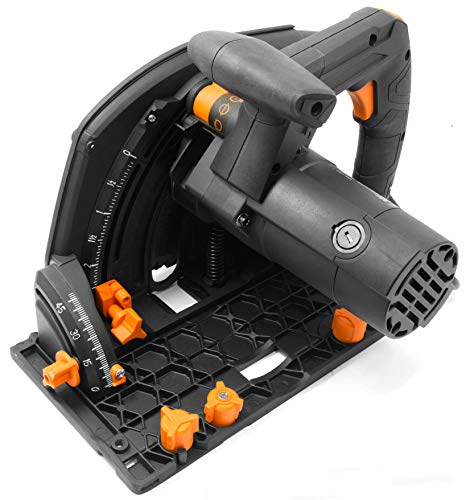
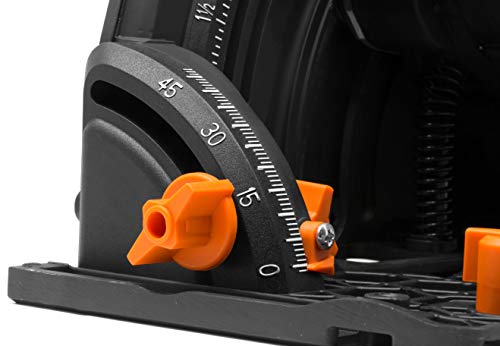
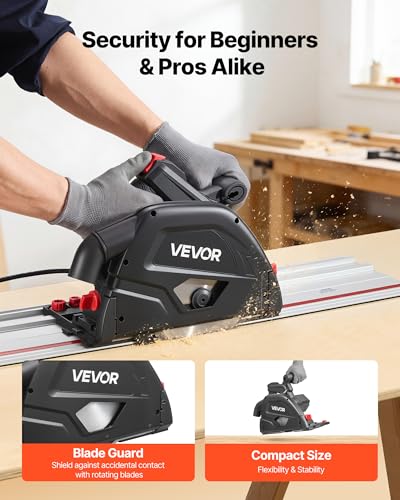
VEVOR 6.5-Inch Plunge-Cut Track Saw
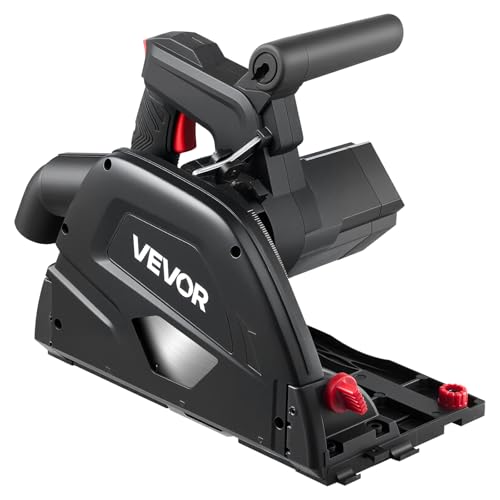
Strengths
- High RPM motor
- 48-tooth carbide blade
- Good cutting depth
Trade-offs
- No riving knife
- No electronic brake
- Guide rail not included
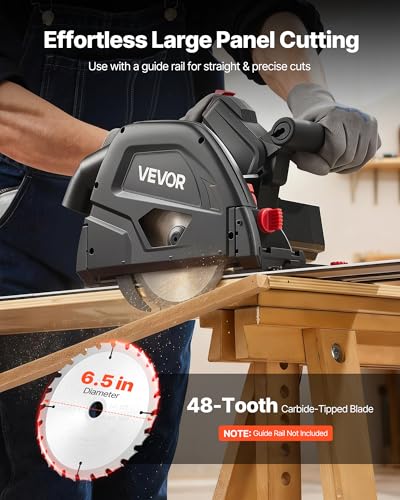
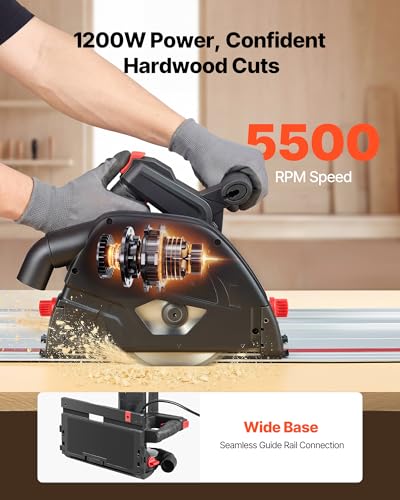
VEVOR positions this as a contractor-grade saw, and the 1200W motor and 5500 RPM speed back that up. On paper, it’s capable of handling hardwoods and dense materials without bogging down, which aligns with what many owners say about its real-world performance. The 48-tooth carbide blade is a solid inclusion, and the max cutting depth of 2.16 inches at 90° is respectable for a 6-1/2-inch saw.
That said, while the specs look strong, the lack of a riving knife or electronic brake stands out when compared to DEWALT or Makita. The aluminum blade guard adds safety, but kickback protection is minimal. I’d want to pair it with a high-quality track, owners note alignment is critical, and without a solid rail, accuracy can suffer.
Product photos

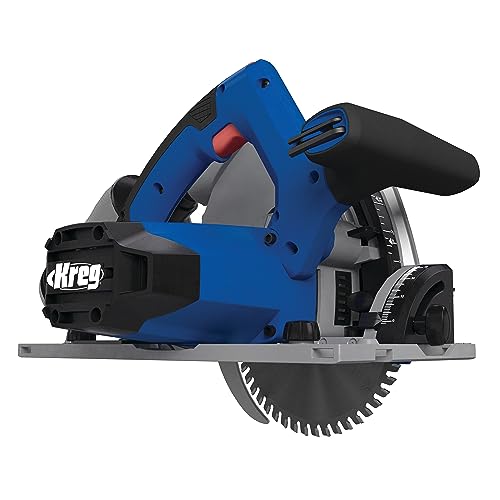
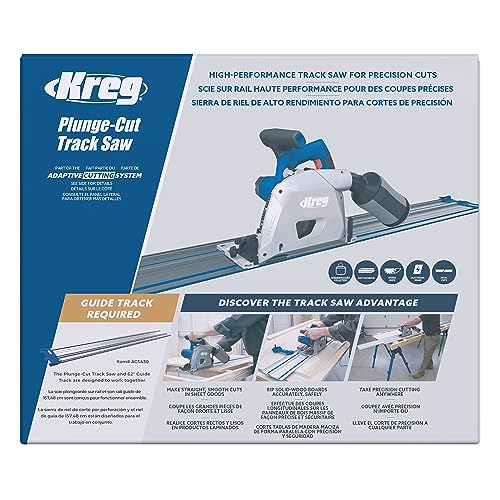
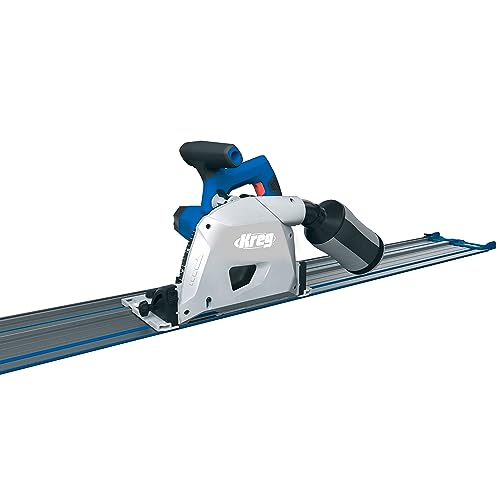
Kreg ACS Plunge Circular Saw

Strengths
- Electronic blade brake
- Riving knife
- Anti-kickback control
Trade-offs
- No variable speed
- Limited track compatibility
- Average power
Safety is the headline here, and the Kreg ACS-SAWBB delivers with features like a fully shrouded blade, electronic brake, riving knife, and anti-kickback control, all in one package. For beginners or educators teaching woodworking, that’s a big deal. Owners appreciate how the system minimizes exposure to the blade, and the right-handed design keeps controls intuitive.
It’s not the fastest or deepest-cutting saw, but for clean, safe cuts in plywood and solid wood, it performs reliably. The 2-1/8-inch depth is adequate for most sheet goods, and it works smoothly with Kreg’s 62-inch track. Where it falls short is versatility, no variable speed, and the blade options are more limited. But if safety is essential, this one stands out.
Product photos

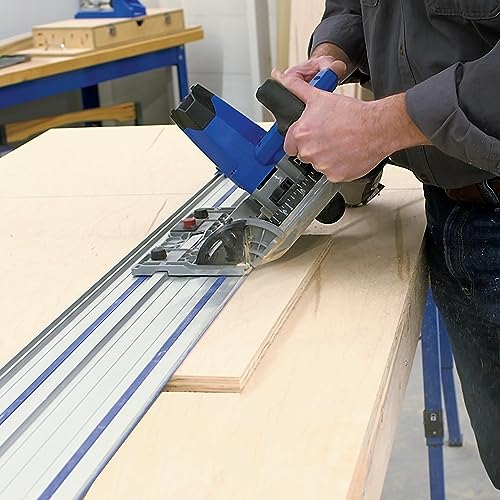
How We Tested corded track saws
Rather than a hands-on lab test, my research for these recommendations involved a detailed comparison of published specifications and features across numerous models. I weighed owner reviews from multiple sources – looking for consistent praise and complaints – alongside assessments from reputable woodworking and tool publications. My background building with and reviewing power tools informed how I prioritized these factors, ultimately ranking saws based on their potential performance and value.
For corded track saws, cutting accuracy and power consistently emerged as the most important considerations. A track saw’s primary job is delivering perfectly straight, clean cuts, so features impacting that – blade stability, fence quality, and adjustment mechanisms – carried significant weight. Beyond that, motor power dictates what materials a saw can handle efficiently, and a robust motor is essential for professional use or frequent, demanding projects.
Specifications reliably reveal a saw’s power output (amps/watts) and maximum cutting depth/angle. However, I relied heavily on owner feedback to gauge real-world performance, particularly regarding splintering, ease of use, and long-term durability. Reputation also played a role; brands known for quality control and strong customer support naturally ranked higher. If you are new to track saws, a track saw setup guide is a great place to start.
What To Look For In corded track saws
I’ve spent years observing how people actually use track saws, and one thing is clear: a lot of folks overspend or buy features they don’t need.
A quality corded track saw delivers precise, splinter-free cuts in sheet goods and solid wood. Key considerations are motor power for handling thicker materials, the quality of the track and guide system for accuracy, and safety features like blade guards and anti-kickback mechanisms. Look for models with robust dust extraction to maintain a clean workspace and improve visibility.
Power and Cutting Capacity
The first thing I tell people is to think about what you’ll be cutting most of the time. A more powerful motor (12 amps or higher) isn’t strictly necessary for plywood, but it’s crucial if you plan to tackle hardwoods or thicker materials regularly. Don’t assume a higher amp rating automatically equates to better performance; consider the blade quality and overall saw design. Remember that cutting capacity, the maximum depth and angle, is dictated by both the blade size and the saw’s bevel capabilities.
Track System and Accuracy
The track is arguably more important than the saw itself. A flimsy or poorly made track will negate any precision the saw might offer. Look for tracks made from stable materials like aluminum or high-quality steel. Some tracks have specialized features, like a dual-sided laminate surface to allow cutting in either direction.
Here’s what to consider when evaluating a track system: * Length: A shorter track is fine for smaller projects, but longer tracks (55 inches or more) are essential for large sheet goods. * Connectors: Smoothly joining multiple track sections is critical for long, straight cuts. Some systems have more robust and user-friendly connectors than others. * Anti-Slip Features: Rubberized strips or other anti-slip mechanisms on the underside of the track prevent movement during cutting, and are vital for accuracy.
Safety and Usability Features
Track saws are inherently safer than circular saws, but certain features elevate that safety even further. A robust blade guard is a must, as is an effective anti-kickback mechanism. Beyond safety, usability matters. A clear depth scale, easy blade-change system, and efficient dust extraction all contribute to a more pleasant and productive experience. If you’re looking for top track saw models, you’ll find a range of features designed to make your work easier and safer.
A good rule of thumb is to always use a track saw with a properly matched track and to regularly inspect both for any signs of damage or wear.
I also strongly advise looking at precision track saw cutters to get the most out of your saw. Ultimately, finding the right track saw comes down to matching the tool to your specific needs and budget. For those seeking reliable track saw recommendations, research and reading reviews from other users is genuinely helpful.
Corded Track Saws Compared
Here’s a comparison of key specifications for several corded track saws.
| Product Title | Motor Power (Amps) | Max Cut Depth (90°) | Max Bevel Angle | Blade Size (In.) | Variable Speed |
|---|---|---|---|---|---|
| Festool TS 55 FEQ-F | N/A | N/A | 47° | 6.5 | N/A |
| Bosch GKT13-225L | N/A | N/A | 45° | 6.5 | N/A |
| DEWALT DWS520K | 12 | 2-1/8 | 45° | 6.5 | N/A |
| Makita SP6000J | 12 | 2-3/16 | 45° | 6.5 | Yes (2000-5200 RPM) |
| WEN CT1274 | N/A | 2.6 | 45° | 7.25 | Yes (2000-6000 RPM) |
| VEVOR 6.5-Inch Plunge-Cut Track Saw | N/A | 2.16 | 45° | 6.5 | N/A |
| Kreg ACS Plunge Circular Saw | N/A | 2-1/8 | 45° | 6.5 | N/A |
Frequently Asked Questions
What track length should I get?
A longer track (55 inches or more) is generally best, as it allows you to cut full sheet goods without repositioning. Shorter tracks are sufficient for smaller projects, but you’ll sacrifice convenience when working with larger materials.
Are more expensive track saws always better?
Not necessarily. While high-end models from brands like Festool offer exceptional precision and features, you can find excellent performance in best value track saws from other manufacturers. Prioritize a quality track and a powerful motor over simply chasing a high price tag.
Can a track saw replace a table saw for all my projects?
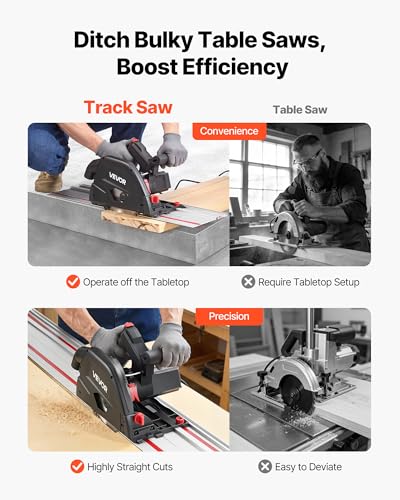
For many tasks, yes, but not all. A track saw excels at sheet goods and breaking down large panels, but a table saw remains superior for ripping lumber and performing joinery operations. Consider your typical projects to determine if a track saw can adequately cover your needs.
What is the importance of dust extraction on a track saw?
Effective dust extraction is critical for maintaining a clear view of the cutting line and reducing respiratory hazards. Many track saws have a dust port that can be connected to a shop vacuum, while some include integrated dust blowers to further enhance visibility.
How do I know if a track saw is compatible with different tracks?
Compatibility varies. Festool track saws are designed to work exclusively with Festool tracks, but many other brands offer saws that are compatible with universal track systems. Always verify compatibility before purchasing a saw and track separately.
The Bottom Line
Choosing a track saw always involves balancing precision with practicality. You can spend a lot for top-end features, or focus on core performance at a more approachable price. For consistently accurate, professional-grade results, the Festool TS 55 FEQ-F stands out as the strongest overall pick – it’s a system built to last and deliver exceptional cuts, though it represents a significant investment.
If you’re on a tighter budget or need a versatile option for occasional use, the WEN CT1274 offers excellent value. Those tackling a variety of materials and wanting more control will appreciate the Makita SP6000J, with its variable speed and strong cutting capacity. And for those looking at alternatives, remember to explore best corded circular saws to see if a different tool might suit your needs.
Ultimately, a track saw is only as good as the operator and the quality of the blade. Focus on learning proper technique, maintaining your equipment, and prioritizing safety. Don’t get too caught up in chasing specs; a well-maintained, moderately priced saw used correctly will always outperform a top-of-the-line model in the hands of someone who isn’t confident with it.
