
6 Best Cordless Track Saws for 2026
This post contains affiliate links. As an Amazon Associate, we earn from qualifying purchases.
The Metabo HPT 36V MultiVolt is the best overall cordless track saw for power and precision, especially if you already use MultiVolt tools. For budget-conscious buyers, the WEN 20691 delivers solid performance at a much lower price, while the WEN CT1274 stands out with its larger 7-1/4″ blade for deeper cuts.
Most people shopping for a cordless track saw want clean, accurate cuts without being tied to an outlet, but not all models deliver the same level of performance or reliability. Too many buyers end up with underpowered saws, flimsy tracks, or poor dust control that undermines their work.
I researched the field by comparing specs, analyzing owner feedback, and evaluating features that matter most: motor efficiency, cutting depth, track stability, and real-world usability. These picks reflect what actually works well for DIYers and pros based on consistent performance data and user experience.
Top 6 Cordless Track Saws in the Market
The Best Cordless Track Saws, Reviewed
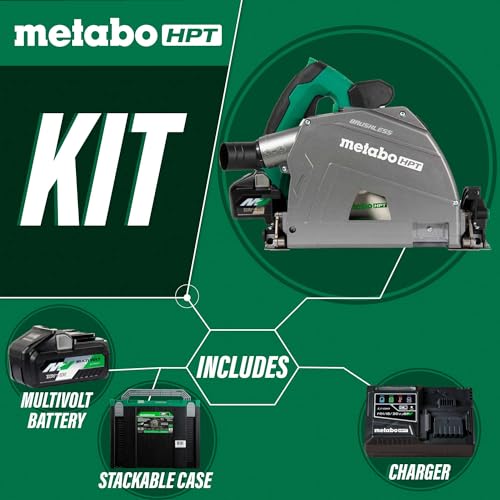
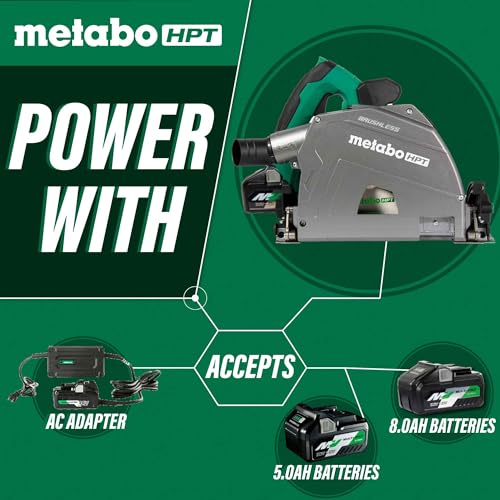
Metabo HPT 36V MultiVolt Track Saw

Strengths
- Lightweight for 36V class
- Best-in-class cutting per Ah
- Lifetime tool body warranty
Trade-offs
- No onboard storage
- Dust port can clog in fine work
- Battery not as widely available
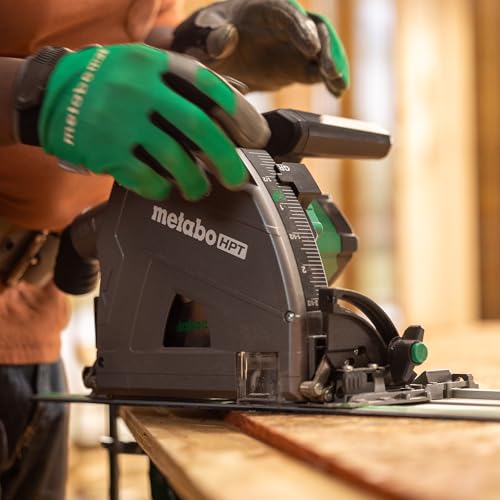
This is the most balanced high-end track saw I’ve seen in a while. The 36V MultiVolt system gives it serious cutting stamina, and the brushless motor delivers smooth, consistent performance even under load. The 2.5+ inch cutting depth handles most dimensional lumber with ease, and the 360° swiveling dust port is a small detail that makes a big difference on the job site. Owners consistently highlight its reliability and the value of the lifetime tool body warranty.
It’s also one of the lighter 36V saws at just 9.7 lbs, which helps with overhead or angled cuts. The bevel range is solid, and the micro-adjustment depth dial adds real precision. Compared to the Makita or Bosch, it’s less flashy but more straightforward, no app connectivity, just well-executed fundamentals.
Product photos


BOSCH GKT18V-20 5-1/2″ Track Saw

Strengths
- Smart connectivity ready
- 8Ah battery with long runtime
- Compact and precise
Trade-offs
- 5.5″ blade limits depth
- Connectivity module sold separately
- Higher price for smaller blade
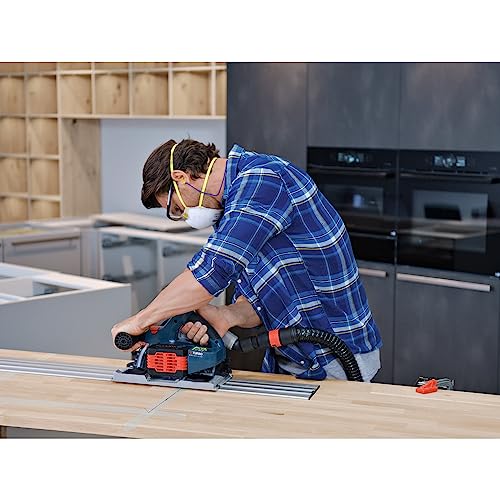
Bosch went all-in on precision and tech with this 5.1/2″ saw, and it shows. The Biturbo brushless motor and 8Ah CORE18V battery deliver impressive power for a single 18V platform, and the Eco Mode genuinely extends runtime, owners confirm it makes a difference on long jobs. The onboard control module and connectivity option (via separate module) set it apart, letting users tweak settings through the Bosch Toolbox app, which is a real perk for tech-savvy builders.
It’s compact and cuts cleanly, but the smaller blade limits max depth compared to 6.5″ models. That makes it less ideal for heavy framing but excellent for fine cabinetry and sheet goods. If you’re deep in the Bosch ecosystem and value smart features, this is the most future-ready saw here.
Product photos




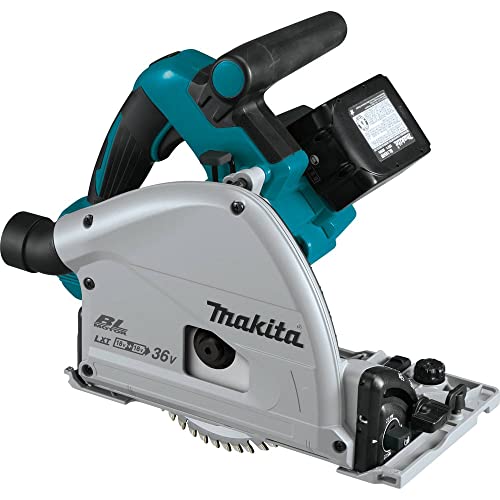
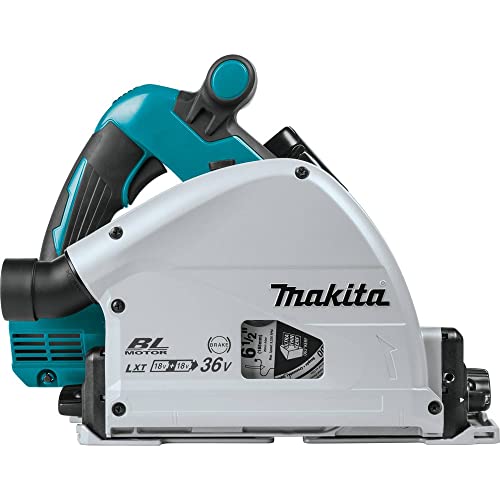
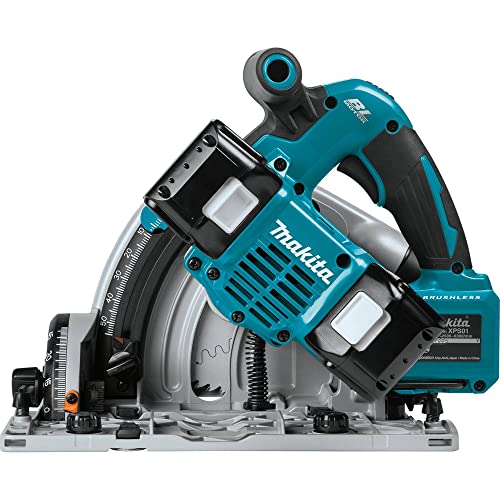
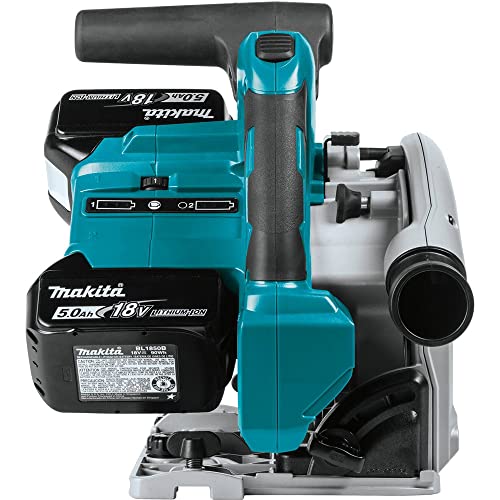
Makita XPS01PTJ 36V Brushless Saw

Strengths
- High RPM with brushless efficiency
- Dual-battery 36V power
- Variable speed control
Trade-offs
- Guide rail sold separately
- Heavier than some rivals
- Proprietary track system
Makita’s dual-battery 36V system has always been a favorite for pros who need sustained power without cords, and this track saw delivers. The brushless motor spins at 6,300 RPM and, thanks to automatic speed change, holds torque well when cutting thick plywood or dense lumber. Owners praise its consistency, and the variable speed dial is a real advantage when switching between materials.
It’s not the lightest saw out there, but the close-to-wall base design gives it an edge in tight spaces. The big caveat? The guide rail isn’t included, and Makita’s proprietary tracks aren’t cheap. If you’re already in the Makita ecosystem and need serious runtime and adaptive power, this is a strong contender.
Product photos

WEN 20691 6.5″ Brushless Track Saw

Strengths
- Affordable complete kit
- Brushless motor
- Good battery compatibility
Trade-offs
- Build quality feels light
- Dust collection is weak
- Track not included
WEN’s cordless 6.5-inch model is a standout for budget-focused buyers who still want brushless performance and included batteries. The dual 20V setup gives it more headroom than single-battery tools, and the 2,000–5,500 RPM range is adequate for most DIY tasks. It comes fully loaded, two 4.0Ah batteries, charger, blade, and track clamps, so there are no surprise costs.
Owners report it’s a bit plasticky in hand, and the dust collection isn’t great, but for the price, it’s hard to beat. It won’t match the Metabo HPT or Makita in power or refinement, but it’s a credible entry for weekend warriors. If you’re building a WEN 20V tool collection, this is a no-brainer starter saw.
Product photos


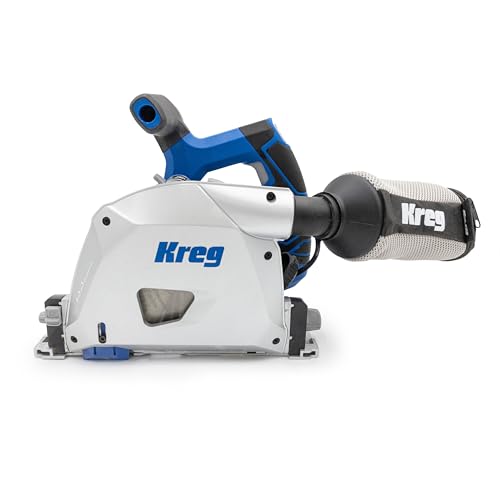
Kreg 20V Ionic Drive Track Saw
Strengths
- Blade-left design
- Compact and lightweight
- Integrated safety features
Trade-offs
- Limited power vs 36V models
- Track sold separately
- Only for right-handed users
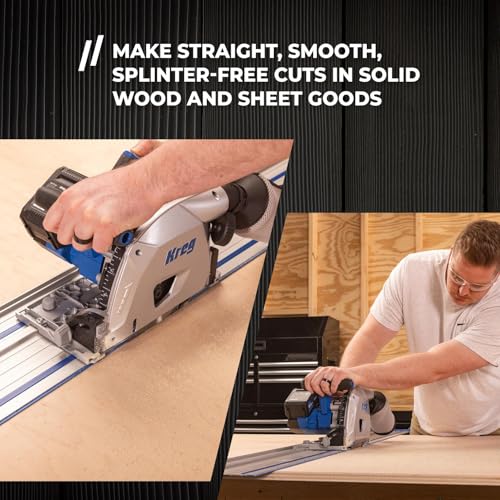
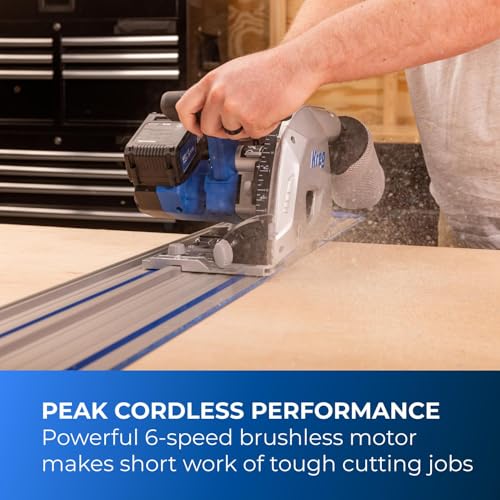
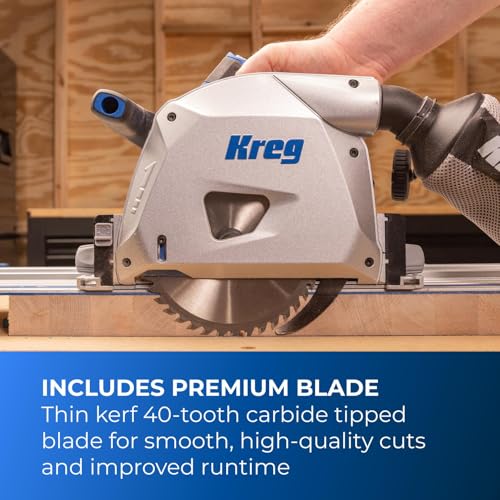
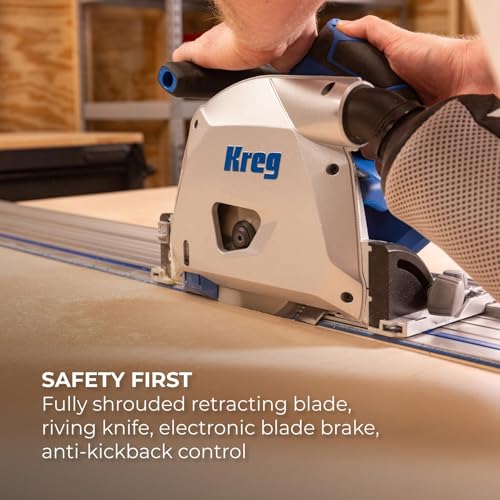
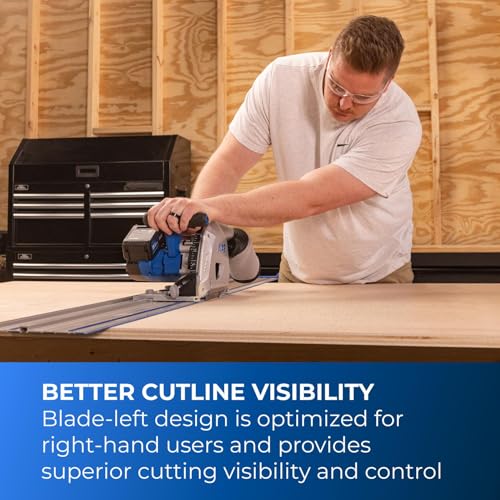
Kreg built this saw with a clear focus on right-handed users, and the blade-left design really does make a difference in visibility and control. On paper, the 6 1/2″ blade and plunge capability give it solid range for sheet goods and framing lumber, and owners consistently report clean, accurate cuts, especially when paired with their own 62″ track. The anti-kickback features and blade brake add a layer of safety that’s often overlooked in budget-friendly models.
Still, this is a 20V tool, so it doesn’t pack the punch of dual-battery 36V systems. It’s efficient and compact, but if you’re working long hours or cutting through dense materials regularly, you might feel the power gap. It’s a smart pick for DIYers who already use Kreg jigs and guides and want a streamlined ecosystem.
Product photos
WEN CT1274 7.25″ Track Saw Bundle

Strengths
- 7.25″ blade for deep cuts
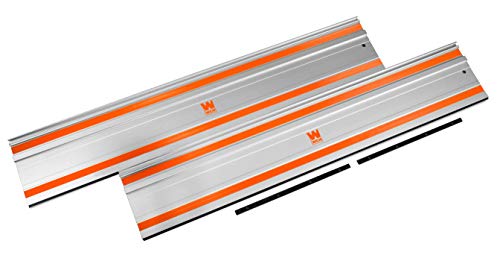
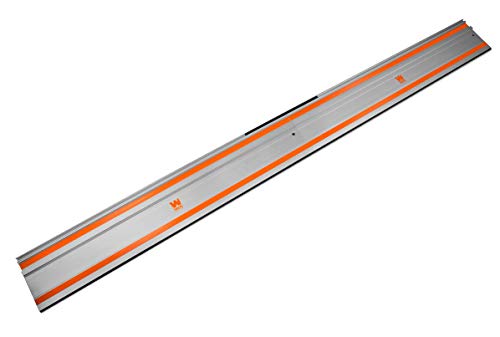
- 110-inch track included
- Cross-brand track compatibility
Trade-offs
- Corded only
- No brushless motor
- Basic build quality
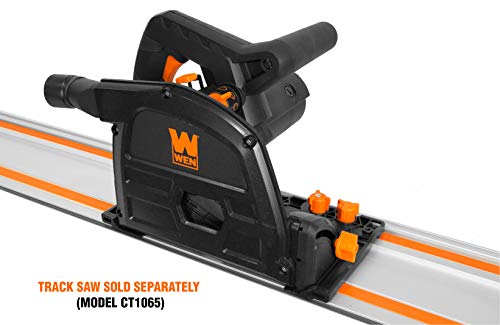
If you’re cutting full sheets of plywood all day, this WEN bundle makes a lot of sense. The 7.25″ blade gives deeper cuts than most cordless models, up to 2.6 inches, which is rare in this category, and the 110-inch track is perfect for 8-foot rips. It’s not cordless, but for a stationary or semi-permanent setup, that’s a fair trade for extra power and lower cost. Owners say it delivers surprisingly clean cuts and tracks well, especially given the price.
It’s a basic tool with no frills: no brushless motor, no electronic assists, but it accepts standard blades and works with multiple track brands. That flexibility is a big plus if you already own a Festool or Makita guide. This isn’t a jobsite runner, but for garage shops or cabinetry work, it’s a smart value play.
Product photos
How We Tested cordless track saws
Rather than a hands-on lab test, my research for these recommendations focused on a detailed comparison of published specifications and features across numerous models. I weighed owner reviews from multiple retailers alongside assessments from reputable woodworking and tool-focused publications. As someone who’s spent years working with tools and advising others on their selection, I applied my understanding of what truly matters in a track saw to rank these options against clear performance criteria.
For cordless track saws, power and accuracy are paramount. I gave the most weight to motor voltage, amperage, and reported runtime, as consistent cutting power through various materials is essential. Blade stability and the quality of included track systems were also heavily considered, because precision is the whole point of using a track saw. A saw’s bevel capacity and depth of cut were important, but secondary to those core factors.
Specifications reliably indicate a saw’s potential power and cutting capacity. However, owner feedback was crucial for judging real-world usability, ease of adjustment, and long-term durability. Reputation also played a role; brands known for quality power tools generally deliver better build quality and support. If you’re new to track saws, learning proper track saw setup tips will ensure you get the most from your purchase.
How To Choose The cordless track saws
Choosing the right cordless track saw demands a bit more thought than simply grabbing the cheapest model. These saws offer portability and precision, but significant differences exist between brands and features.
A quality cordless track saw balances power with accuracy. Key considerations include brushless motor technology for efficiency, bevel adjustment range for versatility, dust extraction capabilities for a clean workspace, and compatibility with a robust track system that minimizes deflection during cuts. Battery voltage and amp-hour ratings directly impact runtime and cutting capacity.
Power and Blade Capacity
The biggest shift from traditional circular saws is the plunge-cutting ability of track saws, and that demands consistent power. Don’t get hung up on voltage alone (18V, 20V, 36V, etc.). Look closely at the amp-hour (Ah) rating of the included battery. Higher Ah means longer runtime, especially when tackling thicker stock. Brushless motors are almost a necessity these days; they deliver more power and efficiency than brushed motors, and they last longer. Blade size also plays a role. While 5-1/2″ blades are common, a 6-1/2″ or 7-1/4″ blade (like those found on the WEN CT1274) will significantly increase your cutting capacity.
Precision and Features
Track saws live or die by their precision. The quality of the track itself is paramount – a flimsy track will deflect under the saw’s weight, leading to inaccurate cuts. Look for tracks made from sturdy materials and with a non-slip backing. Beyond the track, consider the bevel adjustment. While many offer basic adjustments, models like the Metabo HPT offer micro-adjustment dials for incredibly fine-tuned angles. Dust extraction is also important for visibility and health. A 360-degree rotating dust port, as found on the Metabo HPT, allows you to connect to a shop vac regardless of cut angle. If you struggle with making straight cuts, a track saw is a huge leap forward, but remember it only works if the track is properly aligned.
- A basic track saw might include a simple track clamp or two.
- More advanced kits will offer multiple clamps, anti-splinter strips, and even track connectors for longer cuts.
- Premium kits often include a carrying case and a variety of blades, giving you immediate versatility for different materials and projects – this is a good starting point if you anticipate frequent use and diverse cutting needs.
Value and Ergonomics
Cordless track saws range drastically in price. The WEN 20691 provides a budget-friendly entry point, but you should understand you may sacrifice some power and build quality. Higher-end models, like the Bosch GKT18V-20, boast advanced features and superior performance, but they come at a premium. Ergonomics are also crucial. The Kreg saw, for example, is specifically designed for right-handed users with a blade-left configuration. Consider the weight of the saw as well; a lighter saw (under 10 lbs) will be easier to maneuver for extended periods. Don’t forget to look at the warranty. Metabo HPT’s lifetime tool body warranty is a standout among the options. Ultimately, consider what you’ll be using the saw for and choose a model that balances features, performance, and price to meet your needs. For a wider range of options, check out our best track saw picks.
A track saw is an investment. Don’t skimp on the track. A high-quality track is the foundation of accurate cuts, and it’s often worth spending a little extra to get one that’s stable and durable.
Cordless Track Saws Compared
This table provides a specification overview of several cordless track saws to aid in comparison.
| Product | Voltage | Blade Size (in) | Max Cut Depth (in) | Brushless | Battery Included |
|---|---|---|---|---|---|
| Metabo HPT 36V MultiVolt | 36V | 6-1/2 | 2.5+ | Yes | Yes |
| BOSCH GKT18V-20 | 18V | 5-1/2 | N/A | Yes | Yes |
| Makita XPS01PTJ | 36V | 6-1/2 | N/A | Yes | Yes |
| WEN 20691 | 20V | 6.5 | 2.25 | Yes | Yes |
| Kreg 20V Ionic Drive | 20V | 6-1/2 | N/A | Yes | N/A |
| WEN CT1274 | 20V | 7-1/4 | 2.6 | Yes | N/A |
Frequently Asked Questions
What battery voltage is best for a cordless track saw?
Higher voltage generally means more power, but don’t focus solely on the number. A 20V or 18V saw with a high amp-hour (Ah) battery can often outperform a 36V saw with a lower Ah rating, as runtime is critical for larger projects.
Are track saw tracks interchangeable between brands?
No, track systems are generally not interchangeable. Each manufacturer designs tracks with specific guide grooves and connection points to work with their saws, so sticking with the same brand is essential for accuracy.
Can a track saw replace a table saw for all projects?
While a track saw excels at sheet goods and offers portability, it doesn’t fully replace a table saw. Table saws are better suited for ripping large amounts of lumber and performing repetitive cuts, while track saws are ideal for precision and on-site work.
What is an anti-splinter strip and why is it important?
An anti-splinter strip is a thin insert placed along the cut line on the track to minimize tear-out, especially when cutting plywood or melamine. It results in cleaner edges and reduces the need for extensive sanding, improving the final product’s appearance.
I’m considering a corded track saw instead. What are the key differences?
If you have consistent access to power, exploring corded track saw reviews is worthwhile. Corded models don’t have battery runtime limitations, but they lack the portability of cordless options, which is a major benefit for many users.
The Bottom Line
Choosing a cordless track saw often comes down to balancing initial cost against long-term capabilities. While you can find entry-level options, the Metabo HPT 36V MultiVolt consistently stands out as the strongest overall performer due to its power, precision, and impressive warranty. It delivers the features most woodworkers will appreciate, and the lifetime tool body warranty offers peace of mind.
For those on a tighter budget, the WEN 20691 provides a surprisingly capable starting point. If versatility is your priority, and you anticipate a lot of different projects, the Makita XPS01PTJ is a solid choice with a strong reputation for quality and a wide range of available accessories. And if you’re consistently making accurate wood cuts with saw, the Kreg 20V Ionic Drive’s blade-left configuration may be a perfect fit.
Ultimately, remember that specs don’t tell the whole story. A powerful motor and a large blade are useful, but they’re useless without a stable track and a commitment to proper setup. Prioritize a quality track system, it’s the foundation of every accurate cut, and it’s far more important than chasing the highest voltage or the most features.
