
10 Best Tools to Cut Drywall (2026 Guide)
This post contains affiliate links. As an Amazon Associate, we earn from qualifying purchases.
The DEWALT 20V MAX XR Drywall Cut-Out Tool stands out as the best overall for its reliable brushless motor and precision cutting, especially when paired with a 20V MAX battery you may already own. For those on a tighter budget, the Cordless Drywall Cut-Out Tool delivers solid 30,000 RPM performance at a lower price. If you’re cutting frequently and hate dust, the VERVEWAVE model adds useful dust collection without sacrificing power.
Cutting drywall cleanly and safely isn’t just about making a hole, it’s about avoiding hidden wires, minimizing mess, and getting the job done without frustration. A bad tool can tear paper, bind mid-cut, or leave rough edges that take longer to patch and paint.
This guide cuts through the marketing to focus on what actually matters: motor reliability, depth control, dust management, and real-world usability. I compared specs and dug into owner feedback to find the tools that deliver consistent results whether you’re cutting outlets, windows, or access panels.
Top 10 Tools To Cut Drywalls in the Market
The Best Tools To Cut Drywalls, Reviewed
DEWALT 20V MAX XR Drywall Cut-Out Tool

Strengths
- Ergonomic compact design
- Tool-free bit change
- Accepts multiple bit sizes
Trade-offs
- Max depth only 25 mm
- No built-in dust shroud
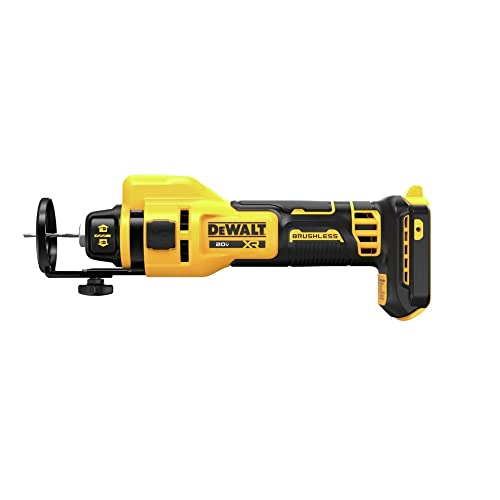
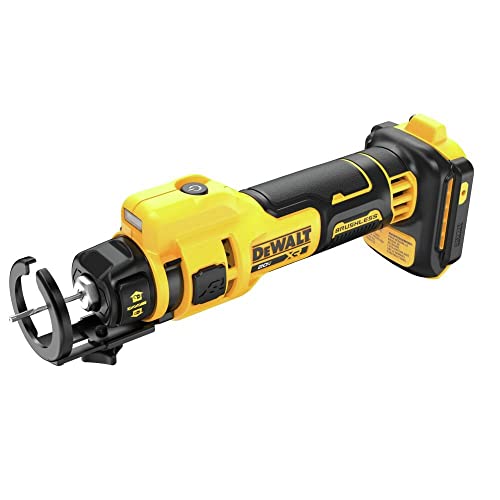
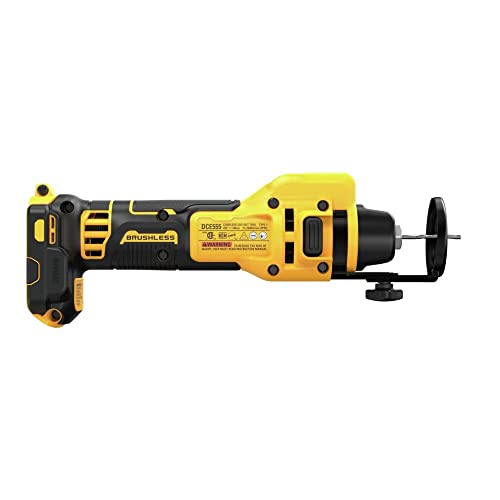
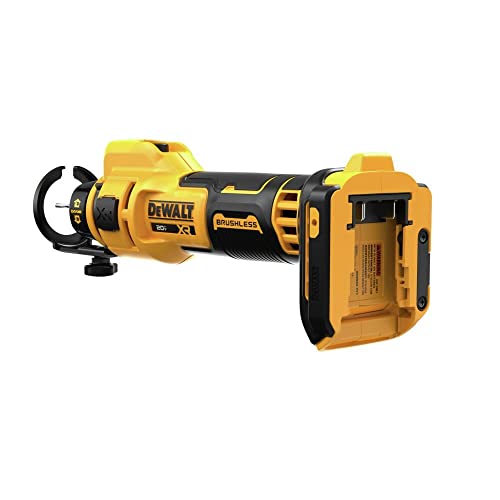
If there’s a benchmark in cordless drywall cut-out tools, this DEWALT model is it. The 26,000 RPM brushless motor strikes the right balance between speed and control, and owners consistently report excellent runtime and reliability. The compact size and forward-positioned switch make it easy to maneuver in tight corners, something you’ll appreciate when cutting around electrical boxes.
It accepts three bit sizes (1/8″, 5/32″, 1/4″) and changes them tool-free, which keeps the workflow smooth. The depth guide ensures consistent cuts, and the LED light is bright enough to work in dim basements or unfinished attics. While it doesn’t have the highest RPM or deepest cut, its overall refinement makes it the most dependable all-around performer.
Product photos

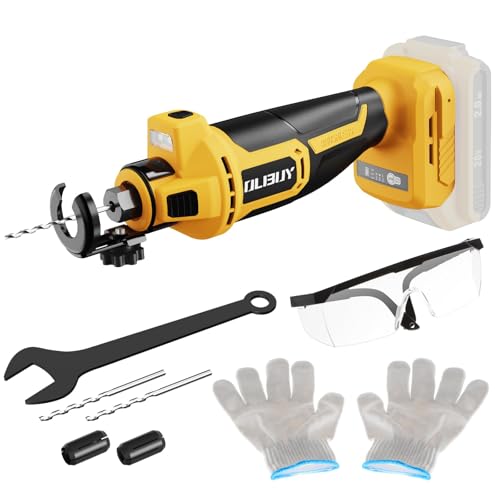
Cordless Drywall Cut-Out Tool with Brushless Motor
Strengths
- 35 mm max depth
- 30,000 RPM brushless motor
- Dual collet system
Trade-offs
- No dust collection
- Bulky with larger bits
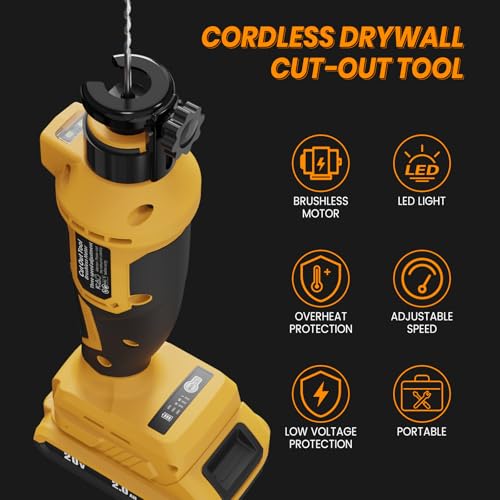
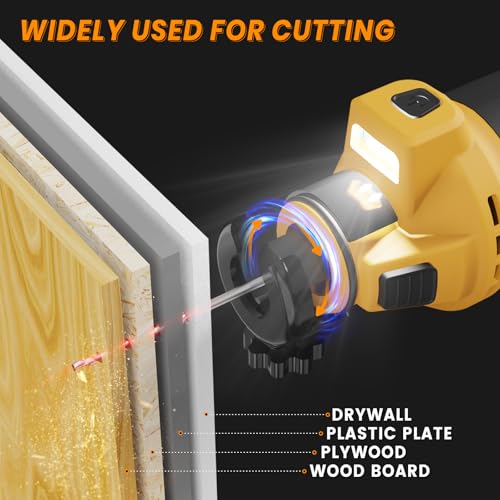
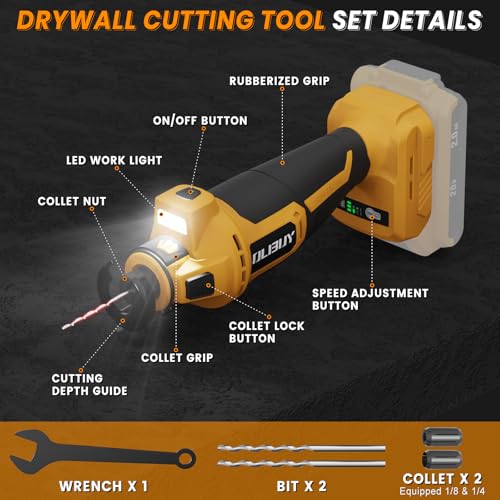
This cordless rotary saw offers serious performance on paper, with a 30,000 RPM brushless motor and 35 mm max depth, deeper than most competitors. The adjustable depth without tools is a real workflow advantage, and the spindle lock makes bit changes faster than using a wrench. Owners note it powers through not just drywall but also plywood and plastic with ease, making it versatile beyond just sheet rock jobs.
The dual collet setup (1/8″ and 1/4″) adds flexibility, letting you swap between undercut and spiral bits without carrying extra tools. Compared to the DEWALT DCE555B, it pushes higher RPMs but feels a bit less refined in balance. Still, for the price, it’s a strong contender if you’re already in the DeWalt 20V ecosystem.
Product photos


VERVEWAVE Cordless Drywall Cut-Out Tool
Strengths
- Excellent dust collection
- Removable shroud
- 30,000 RPM motor
Trade-offs
- Slightly heavier with shroud
- Max depth 25 mm
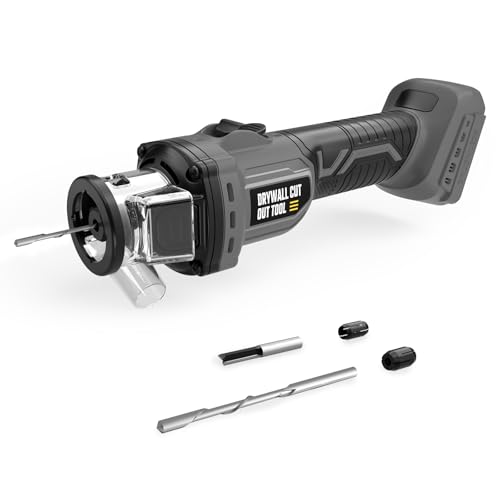
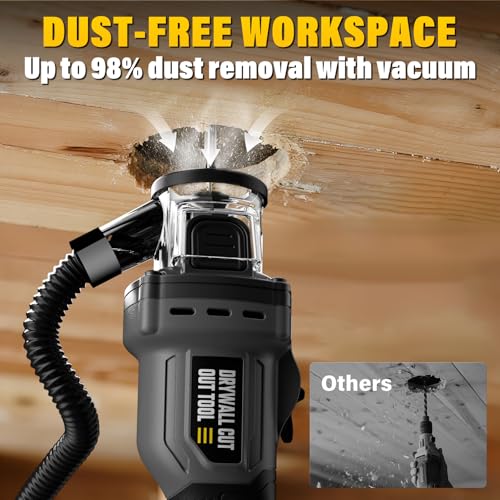
This VERVEWAVE model earns its ‘Best Dust Control’ label thanks to the detachable dust shroud that captures up to 98% of debris when used with a vacuum. That’s a standout for indoor jobs where cleanup time eats into profits or when working in finished spaces. The 30,000 RPM brushless motor delivers strong cutting power, and the tool-free bit change keeps things efficient.
It matches the DEWALT DCE555B in versatility with multiple collet sizes and a built-in LED, but wins on cleanliness. Some owners mention the shroud can get in the way on angled cuts, but for straight drywall openings, it’s unmatched. If you hate drywall dust, this should be at the top of your list.
Product photos


YAWV Cordless Drywall Cut-Out Tool

Strengths
- 3-speed adjustment
- Brushless motor efficiency
- Includes bit and collets
Trade-offs
- No dust shroud
- Slight vibration at high speed
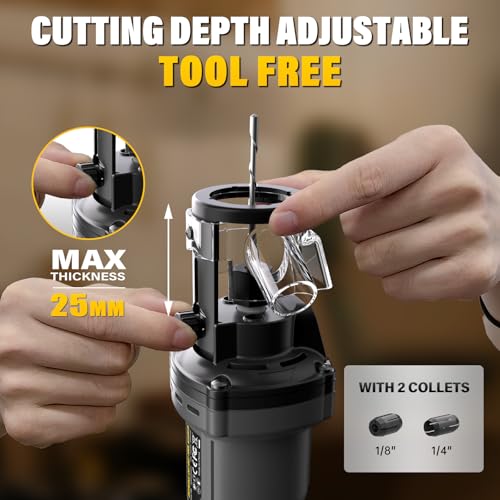
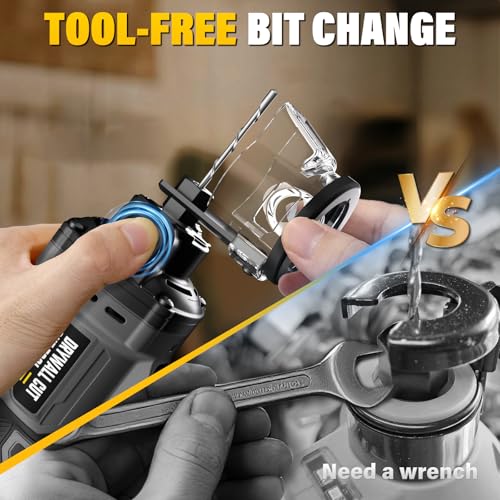
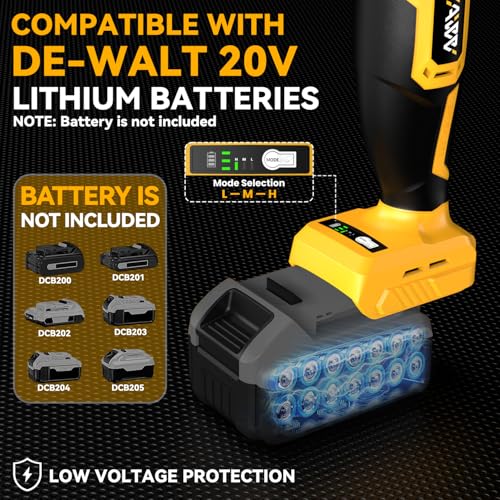
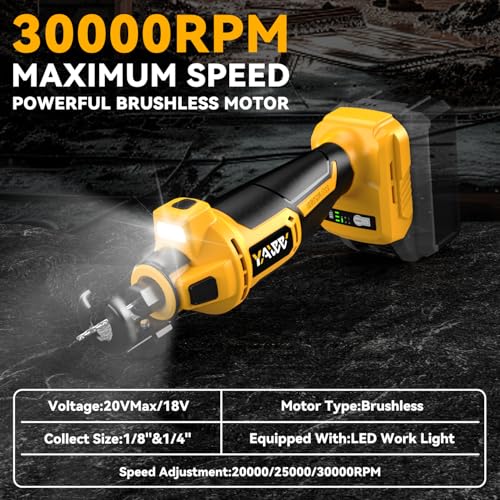
The standout here is the 3-speed adjustability from 20,000 to 30,000 RPM, something most rotary drywall tools don’t offer. This lets you dial down for control on thin drywall or ramp up for tougher materials like plywood. The brushless motor delivers strong, efficient power, and owners report it handles long jobs without overheating.
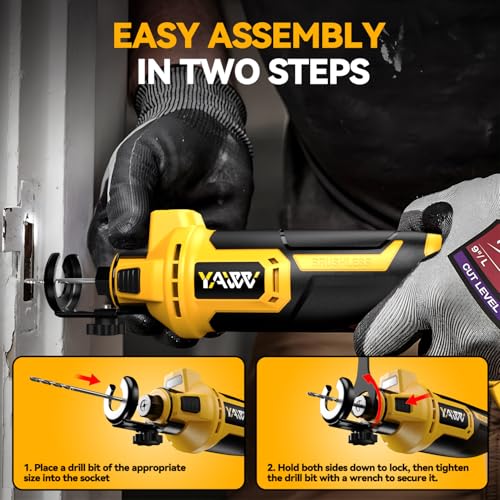
It comes with both 1/8″ bit and collets, so you’re ready for undercutting or spiral cutting right out of the box. The LED light and tool-free bit change add to its convenience. While it lacks dust collection, the speed control gives it an edge over single-speed models, especially for users working with varied materials.
Product photos


IRWIN Standard Drywall/Jab Saw

Strengths
- Rigid bi-metal blade
- Balanced hardwood handle
- Bi-ground teeth
Trade-offs
- No folding mechanism
- Basic grip
The IRWIN drywall jab saw is a no-frills, high-value option that’s been around for years, and for good reason. The rigid bi-metal blade with bi-ground teeth cuts fast and stays straight, and the hardwood handle offers solid balance and comfort. It’s not flashy, but it does the job reliably, which is why so many contractors keep one in their bag.
Owners appreciate its durability and how it holds up over time without blade wobble. Compared to more expensive models, it lacks advanced ergonomics or folding features, but it’s tough to beat for sheer simplicity and effectiveness. If you want a one-and-done manual saw, this is it.
Product photos


Goldblatt 6-Inch Drywall Jab Saw
Strengths
- Bi-metal blade
- Dual-direction cutting
- Soft grip handle
Trade-offs
- No blade storage
- Not for thick materials
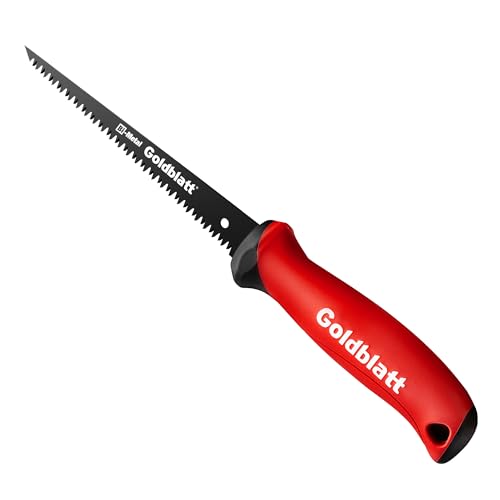
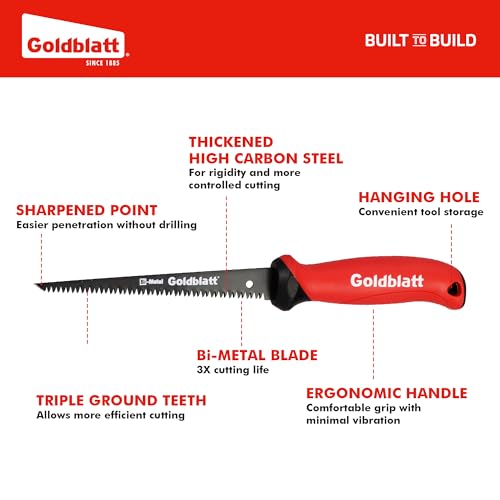
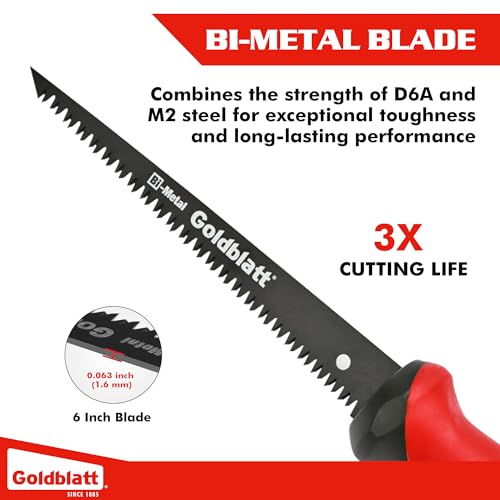
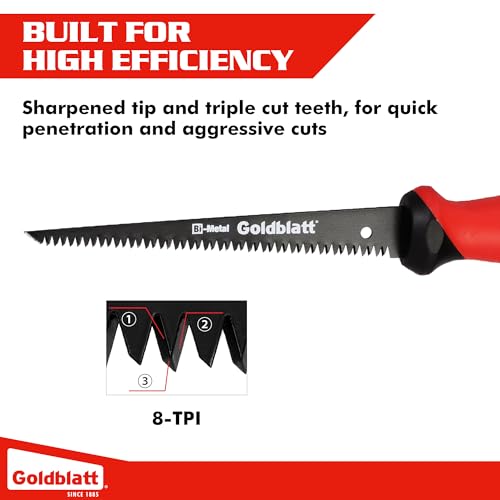
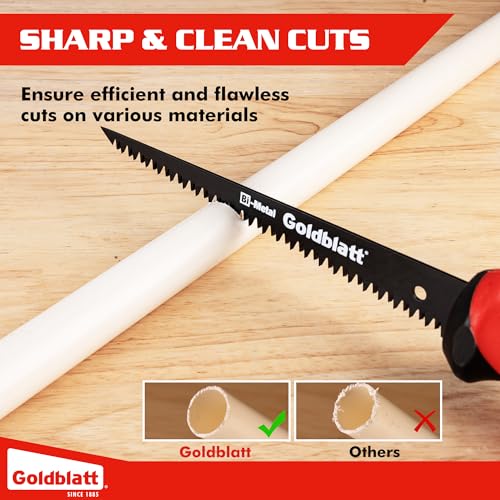
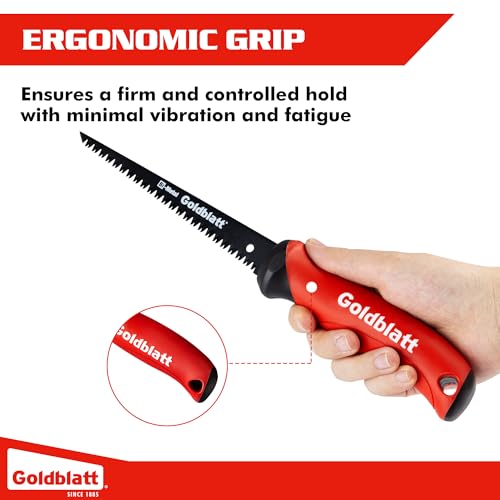
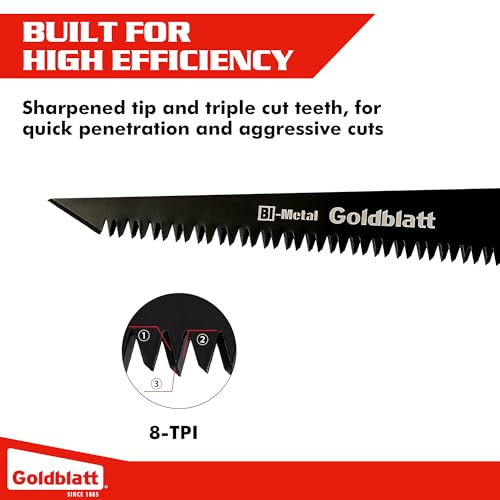
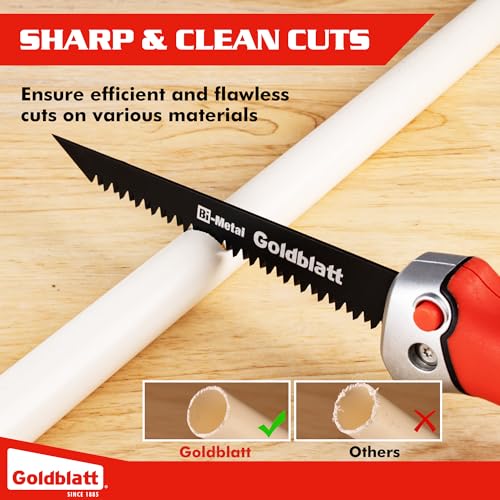
This Goldblatt jab saw stands out in the manual drywall cutting space thanks to its bi-metal blade and thoughtful design. The 8 TPI blade cuts aggressively in both directions, and owners consistently report it slices through drywall faster than standard single-ground teeth saws. The inverted teeth and deep gullets do a solid job clearing dust, reducing clogging during longer cuts.
I appreciate the ergonomic soft-grip handle, it’s comfortable for extended use and offers real slip resistance, which matters when you’re pushing hard into a wall. The sharpened tip makes starting cuts easy without needing a pilot hole, a small but meaningful time-saver on the job.
Product photos
Goldblatt Folding Drywall Jab Saw
Strengths
- Folds for storage
- Secure blade lock
- Comfortable grip
Trade-offs
- Shorter blade
- No included sheath
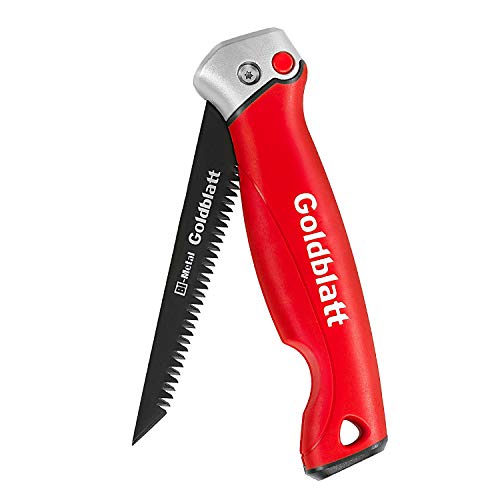
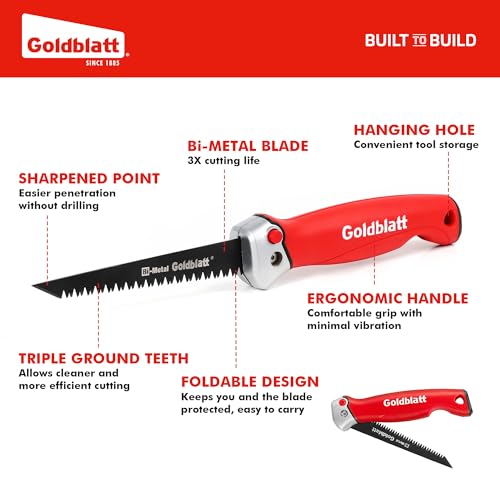
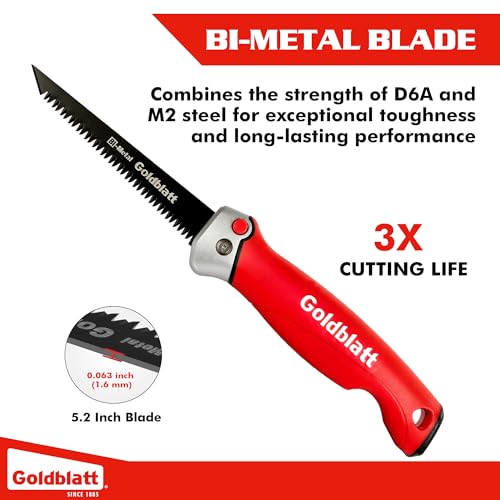
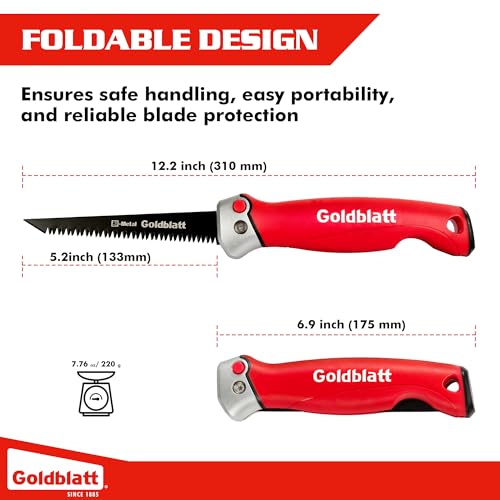
This folding jab saw is the ultimate pocket-sized solution for quick drywall tasks. The 5-inch bi-metal blade with 8 TPI cuts cleanly in both directions, and the triple-ground teeth live up to claims of faster cutting with less effort. The soft-grip handle is comfortable, and the red-button lock system works reliably to prevent accidental closure, a real safety win.
Its compact folded size makes it a no-brainer for tool bags, and it’s light enough to carry all day. Compared to the non-folding Goldblatt model, it sacrifices a bit of blade length but gains serious portability. For electricians or HVAC techs who only cut drywall occasionally, this is the smarter pick.
Product photos
Foldable Drywall Cutting Tool with 19 Wheels
Strengths
- Laser-etched scale
- 19-wheel tracking
- Blade storage in handle
Trade-offs
- Not for thick boards
- Assembly required
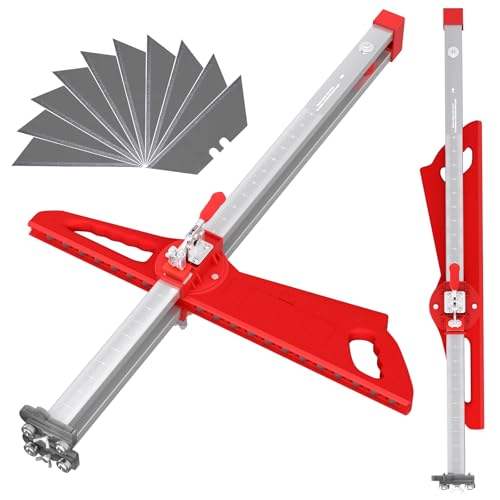
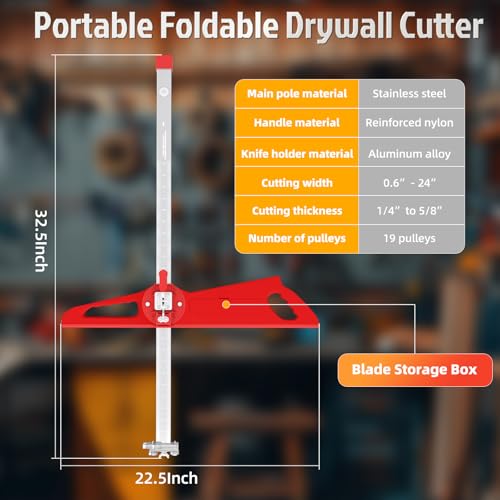
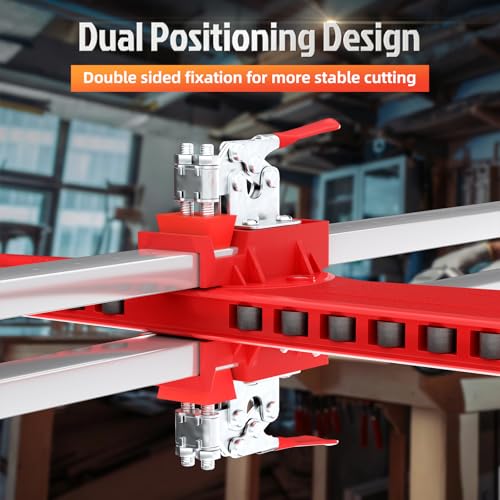
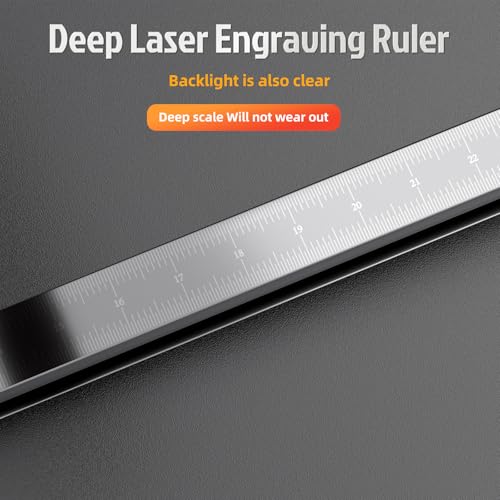
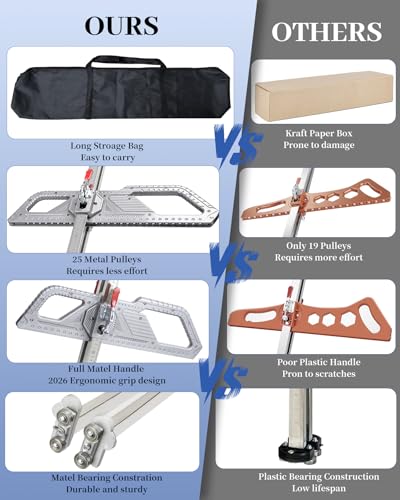
This foldable drywall cutter is built for one thing: straight, clean cuts in standard drywall panels. The 19-wheel system and dual-end guide keep it tracking true, and the laser-etched scale makes setup quick. It handles common drywall thicknesses with ease, and the stainless steel build resists rust and wear, important for tools that live in damp job sites.
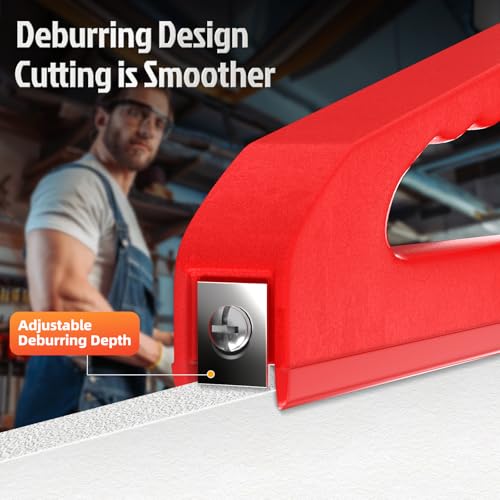
The blade storage in the handle is a smart touch, and the shock-absorbing design reduces hand fatigue. It’s not as heavy-duty as the AXIUM model, but it’s lighter and more affordable. For DIYers tackling a bathroom remodel or basement finish, this delivers pro-level results without the pro price.
Product photos

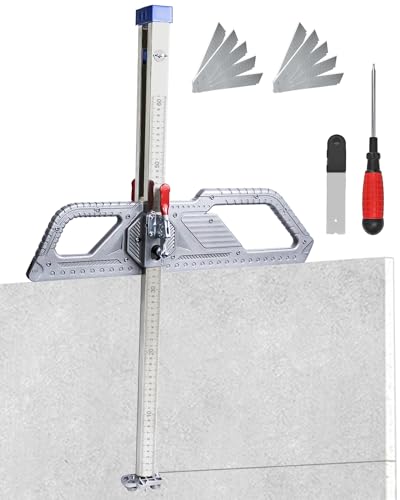
AXIUM Foldable Drywall Cutter with 29 Wheels
Strengths
- Full metal build
- 29-wheel tracking system
- Depth adjustment with lock
Trade-offs
- Bulky when folded
- Overkill for small jobs
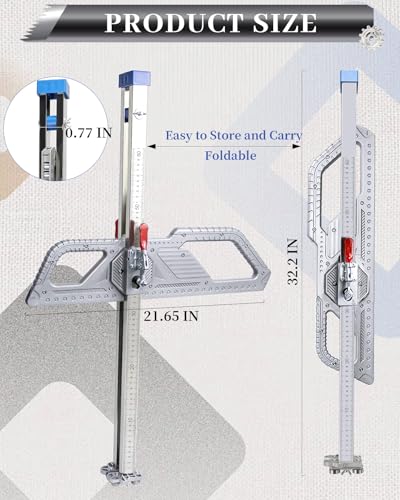
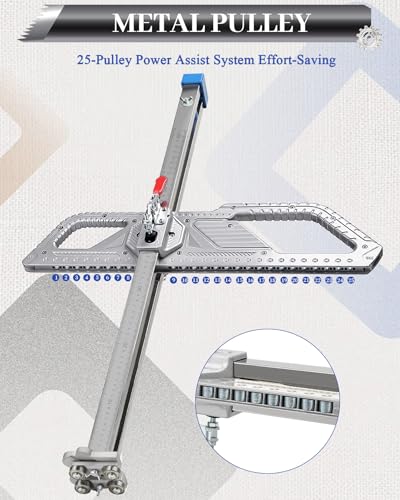
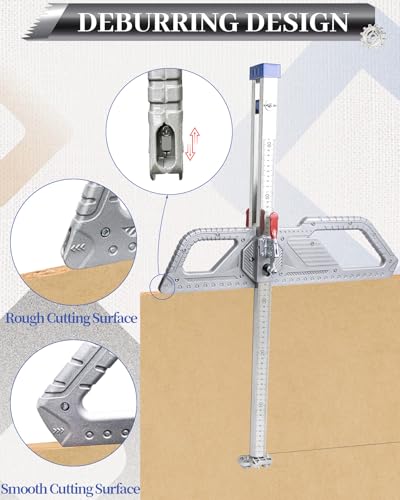
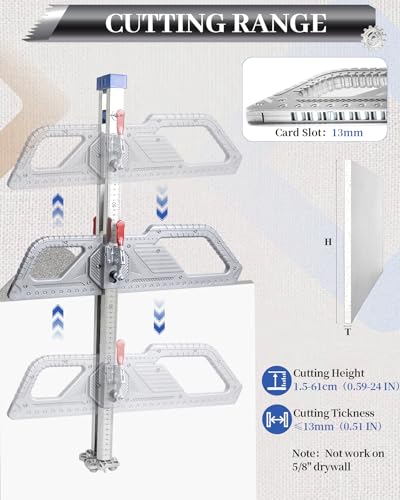
The AXIUM manual drywall cutter is built like a tank and delivers on precision for straight-line cuts. Its full metal construction and 29-wheel system stand head and shoulders above basic drywall scoring tools, owners praise its stability and how it tracks straight without veering off course. The bilateral depth stops and clear scale markings make repeatable, accurate cuts simple, which is critical when replacing panels or fitting new drywall sections.
The deburring plates are a nice touch, smoothing edges as you cut and reducing the need for sanding afterward. While it’s heavier than some foldable models, the trade-off is rigidity and durability. It’s clearly designed for pros or serious DIYers who do multiple drywall jobs a year.
Product photos
Klein Tools Adjustable Circle Hole Saw

Strengths
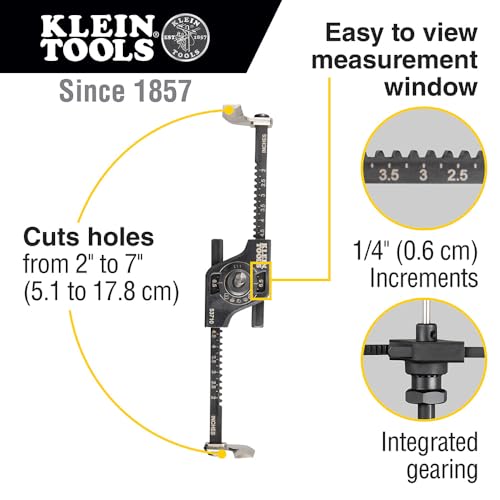
- Adjustable 2–7 inch range
- Dust bowl with vacuum port
- Spring-loaded collar
Trade-offs
- Not for wood or metal
- Blade sold separately
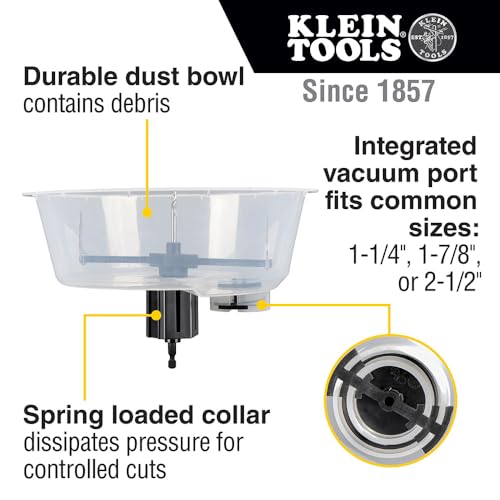
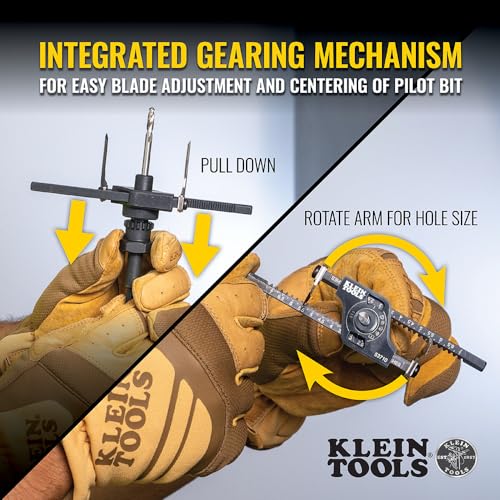
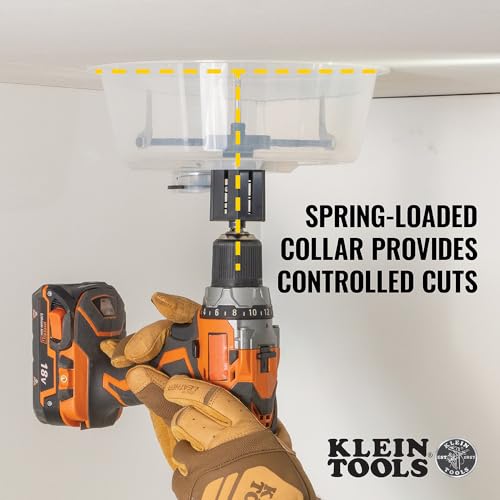
When you need round holes in drywall, think recessed lighting, vents, or ceiling speakers, this Klein adjustable hole saw is the best option. The auto-set arms let you dial in any size from 2 to 7 inches without swapping blades, and the spring-loaded collar keeps the tool perpendicular, preventing wobble and tear-out.
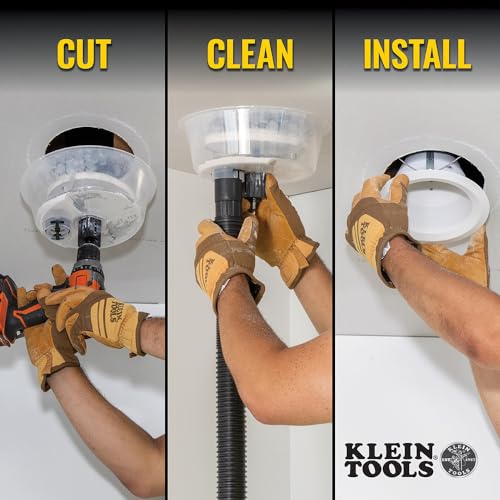
The dust bowl is a standout feature, it catches most debris, and with the integrated vacuum port, you can go completely dust-free. Owners love how clean the cuts are, especially on finished ceilings. It works with any drill, so there’s no need for a specialty tool. Compared to fixed-size hole saws, this one saves space and time.
Product photos
How We Picked These tools to cut drywalls
Rather than a hands-on lab test, this is a research-led comparison of specs and owner feedback. I started by compiling a list of tools marketed for drywall cutting, then compared published specifications – motor power, blade/wheel materials, cutting depth, and included features like dust collection or adjustable speeds. I then weighed owner reviews from major retailers alongside expert opinions from sites focused on construction and remodeling. My goal was to identify patterns in performance and reliability.
For drywall cutting tools, the most important factors are cutting precision and ease of use. A clean cut minimizes the need for patching, and a tool that’s comfortable and efficient to operate saves time and frustration. Beyond that, the type of cuts you’ll be making frequently – straight lines versus holes, or whether dust control is critical – heavily influences the best choice. Understanding these priorities helped me rank the various options.
Specifications reliably indicate a tool’s potential cutting power and maximum capacity. However, owner feedback proved crucial for assessing real-world durability and the effectiveness of features like depth adjustment or dust collection. Many owners also detailed how well a tool performs with different types of drywall, and whether it’s easy to master – especially for those unfamiliar with using a circular saw or similar tools for this purpose. using a circular saw can be a useful skill to have when tackling drywall projects.
Choosing The Right tools to cut drywalls
Picking the right drywall cut-out tool depends heavily on the scope of your projects and how much precision you absolutely require.
A quality drywall cut-out tool balances power, accuracy, and ease of use. Key features include a robust motor (brushless is preferred), adjustable depth settings for varying drywall thicknesses, and integrated dust control to minimize mess. Look for tools with quick-change blade mechanisms and ergonomic designs to reduce fatigue during extended use. Compatibility with common battery platforms is also a significant consideration for cordless models.
Motor & Cutting Performance
The heart of any drywall cut-out tool is its motor. While corded options still exist, the convenience of cordless models has driven significant innovation, particularly around brushless motors. I’ve seen a clear trend: brushless motors deliver more consistent power and longer runtimes than their brushed counterparts, which is crucial when you’re making numerous cuts. Don’t get hung up on the highest RPM number alone; a well-engineered 26,000 RPM brushless motor will often outperform a poorly designed 30,000 RPM one. Consider the types of materials you’ll be cutting. Some tools advertise versatility with wood and plastic, but drywall is their primary focus.
Depth Control & Versatility
Precision is paramount when cutting drywall, and that’s where adjustable depth control comes in. The ability to fine-tune the cutting depth prevents accidental damage to wiring or plumbing hidden within the wall. Look for tools that offer tool-free depth adjustment for quick and easy changes. Beyond depth, consider the range of bit sizes the tool accepts. Most accept common sizes like 1/8″, 5/32″, and 1/4″, but some offer greater compatibility. If you anticipate needing to create various shapes and sizes of openings, consider whether the tool can function as a spiral saw, undercut saw, or even a miniature rotary drywall cutters.
- A fixed depth setting is acceptable for very simple, repetitive cuts.
- Tool-free depth adjustment is a significant time-saver and provides much greater flexibility.
- A depth guide with clear markings and a locking mechanism ensures consistent cuts and prevents accidental adjustments during operation. This is especially important if you’re also exploring using a reciprocating saw for drywall for larger openings.
A practical rule of thumb: always start with a shallow depth setting and gradually increase it until you achieve the desired cut. This minimizes the risk of cutting too deep and damaging hidden components.
Value & Usability Features
Beyond the core cutting capabilities, several features can significantly improve usability and overall value. Integrated LED lights are incredibly helpful for illuminating dark work areas, ensuring accurate cuts. Dust collection systems, whether built-in or compatible with shop vacuums, are a godsend for keeping your workspace clean. And don’t overlook ergonomics. A lightweight, well-balanced tool will reduce fatigue during prolonged use. Battery compatibility is also a major factor. If you already own a platform like DeWalt 20V MAX, choosing a tool compatible with those batteries can save you money and hassle. For more complex projects, you could also consider specialized drywall saws or even oscillating drywall tools for detailed work.
Tools to Cut Drywalls Compared
Here’s a comparison of key specifications for different drywall cutting tools.
| Product Name | Motor (RPM) | Max Cut Depth (mm) | Blade/Wheel Count | Adjustable Speed | Dust Collection | Battery Compatibility |
|---|---|---|---|---|---|---|
| DEWALT 20V MAX XR Drywall Cut-Out Tool | 26,000 | N/A | N/A | No | No | 20V MAX |
| Cordless Drywall Cut-Out Tool | 30,000 | 35 | 1/8″, 1/4″ | No | No | DeWALT 20V |
| VERVEWAVE Cordless Drywall Cut-Out Tool | 30,000 | 25 | 1/8″, 1/4″ | No | Yes | DEWALT 20V |
| YAWV Cordless Drywall Cut-Out Tool | 30,000 | N/A | 1/8″ | 20,000-30,000 | No | DeWALT 20V |
| IRWIN Standard Drywall/Jab Saw | N/A | N/A | N/A | N/A | No | N/A |
| Goldblatt 6-Inch Drywall Jab Saw | N/A | N/A | N/A | N/A | No | N/A |
| Goldblatt Folding Drywall Jab Saw | N/A | N/A | N/A | N/A | No | N/A |
| Foldable Drywall Cutting Tool | N/A | N/A | 19 | N/A | No | N/A |
| AXIUM Foldable Drywall Cutter | N/A | 13 | 29 | N/A | No | N/A |
| Klein Tools Adjustable Circle Hole Saw | N/A | 2-7″ (Diameter) | N/A | N/A | Yes | N/A |
Frequently Asked Questions
What drywall cutting tool is best for beginners?
A jab saw for drywall is generally the easiest to learn with, as it requires only manual effort and has a simple design. However, for faster, more precise cuts, a cordless drywall cut-out tool with adjustable speed settings is a good investment once you’re comfortable with basic techniques.
How do I choose the right blade for my drywall tool?
The ideal blade depends on the material and cut type. For standard drywall, a carbide-tipped blade is a good all-around choice, while a diamond-grit blade is better for tougher materials or when needing a very clean cut.
Are cordless drywall cutters as powerful as corded models?
Modern cordless models with brushless motors are often comparable in power to corded versions. Battery voltage and amp-hour ratings are key; higher numbers generally indicate more power and longer runtimes.
What is the benefit of a drywall tool with dust collection?
Dust collection significantly reduces airborne particles, improving visibility and creating a cleaner work environment. This is particularly important for larger projects or for those sensitive to dust, and can also help protect your lungs.
Can I use a multi-tool drywall blades to cut drywall?
Yes, you can, but the cuts will be slower and potentially less precise than with a dedicated drywall cutter. A multi-tool is best suited for smaller, intricate cuts or for cleaning up edges after using a primary cutting tool.
The Bottom Line
Choosing a drywall cutting tool often comes down to balancing initial cost with long-term convenience and accuracy. While simpler hand tools have their place, the DEWALT 20V MAX XR Drywall Cut-Out Tool strikes the best overall balance of power, speed, and features for most homeowners and professionals alike. It offers a level of precision and efficiency that hand tools simply can’t match, making larger projects much more manageable.
For those on a tighter budget, or who only have a few small repairs to make, the Goldblatt 6-Inch Drywall Jab Saw remains an excellent, affordable choice. Similarly, if you frequently need to create perfectly round openings, the Klein Tools Adjustable Circle Hole Saw delivers specialized performance that’s tough to beat. These tools prove that you don’t always need the most expensive option to get the job done effectively.
Ultimately, the “best” tool is the one you’ll actually use. Focus on features that address your specific needs – adjustable depth for avoiding hidden obstacles, dust collection for cleaner workspaces, and comfortable ergonomics for extended use. Mastering accurate drywall cuts with any tool requires practice, but prioritizing these fundamentals will deliver the best results, regardless of your budget or experience level.
