
9 Best Drywall Cutting Tools of 2026
This post contains affiliate links. As an Amazon Associate, we earn from qualifying purchases.
The DEWALT 20V MAX XR Cut-Out Tool stands out as the best overall drywall cutting tool for powered performance, combining speed and reliability. For those on a budget, the Foldable Drywall Cutting Tool delivers solid precision without the cost. If you need maximum versatility across materials, the Cordless Drywall Rotary Saw earns strong marks.
Cutting drywall cleanly and efficiently is harder than it looks. A ragged edge or misaligned cut can mean hours of extra sanding or patching, especially on big jobs. I’ve seen too many DIYers struggle with the wrong tool, wasting time and materials.
This guide cuts through the noise. I compared specs, owner feedback, and real-world performance to find tools that deliver where it counts – clean cuts, ease of use, and durability. Whether you’re upgrading your kit or starting from scratch, these picks are based on what actually works in walls, not just on paper.
Top 9 Drywall Cutting Tools in the Market
The Best Drywall Cutting Tools, Reviewed
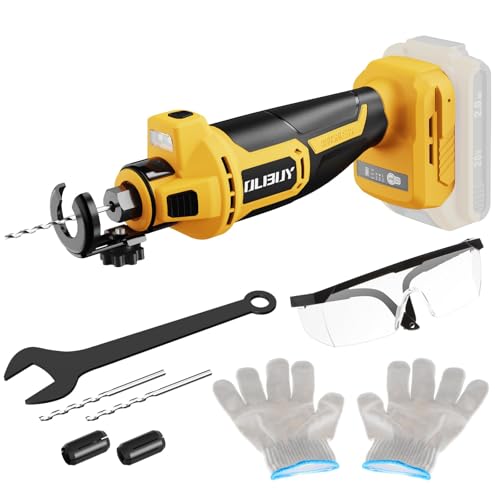
Cordless Drywall Cut-Out Tool
Strengths
- 30,000 RPM motor
- 35 mm depth adjustment
- Dual collet system
Trade-offs
- No dust collection shroud
- Battery not included
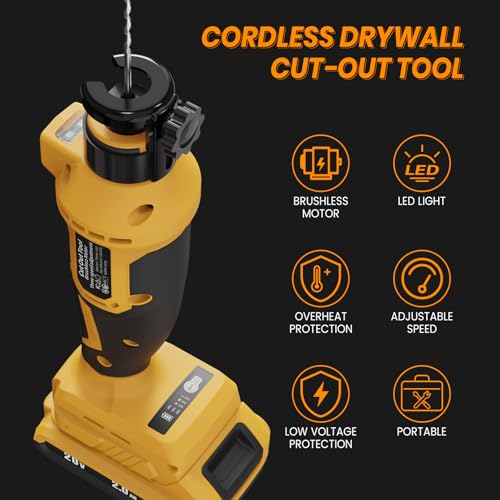
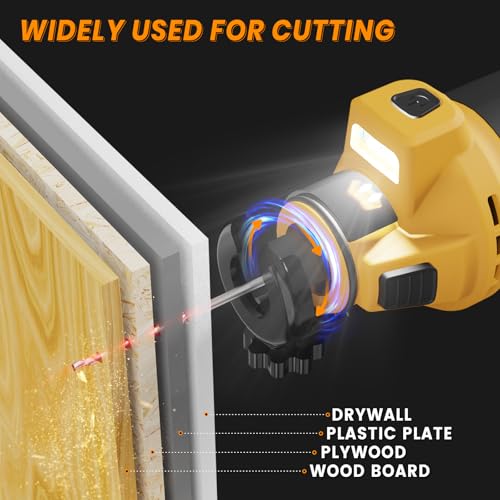
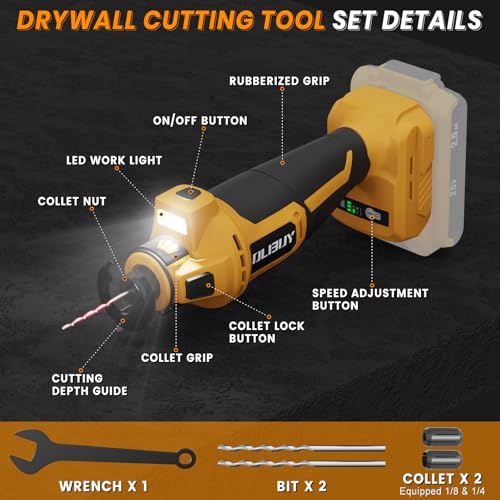
This cordless drywall cut-out tool stands out in the crowded DeWalt-compatible space with its aggressive 30,000 RPM brushless motor and solid 35 mm cutting depth. On paper, that depth beats most rivals, and owners consistently report clean cuts through standard 5/8-inch drywall with room to spare. The dual collet system (1/8″ and 1/4″) adds real versatility, letting users switch between fine and aggressive bits without tools.
The built-in LED is bright enough to help in tight ceiling cavities, and the safety protections, overheat, overload, low voltage, are standard but effective. Compared to the DEWALT DCE555B, this one pushes higher RPM and slightly deeper cuts, though it lacks tool-connect capability. I’d pick this over branded options if you’re budget-conscious but still want pro-level performance.
Product photos


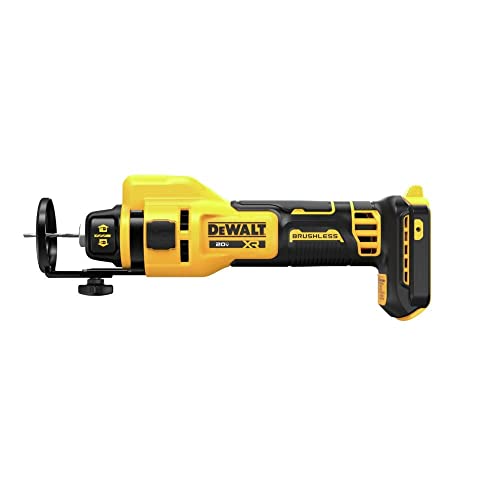
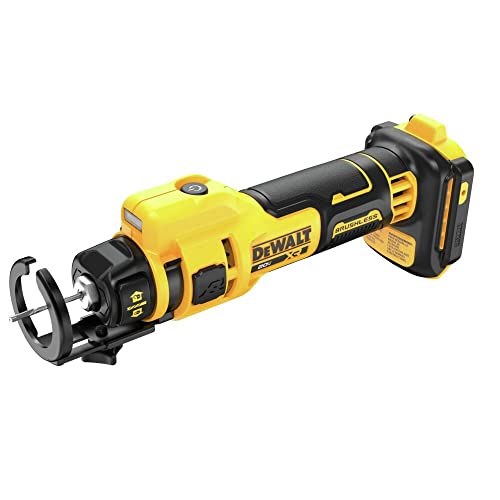
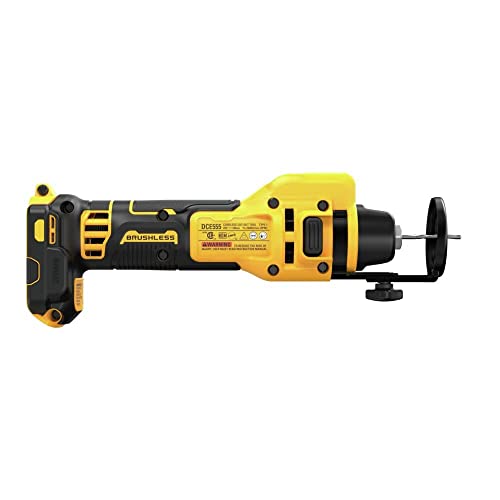
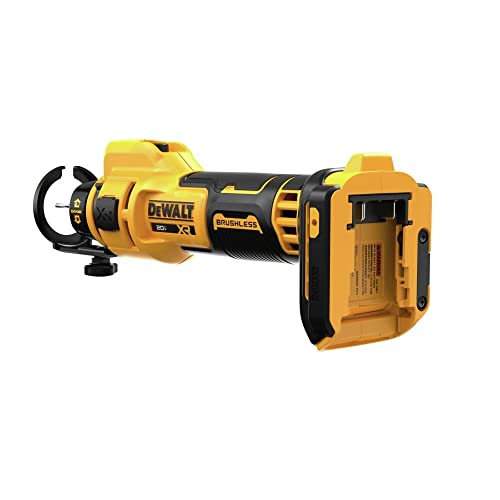
DEWALT 20V MAX XR Cut-Out Tool

Strengths
- Tool connect ready
- Ergonomic switch
- Depth guide included
Trade-offs
- Slightly lower RPM
- No dust shroud
This is the gold standard for pros. The 26,000 RPM brushless motor may run slower than some clones, but it delivers consistent power and longer runtime, owners report fewer battery swaps on full-day jobs. The forward-positioned switch is a small but smart ergonomic win, reducing thumb strain. The depth guide ensures repeatable cuts, and the tool-connect readiness is a standout for fleet management.
It’s not the fastest or deepest cutter, but it’s the most reliable. Compared to the VerveWave or other DeWalt-compatible tools, it wins on build quality and serviceability. If you’re on a jobsite every day, this is the one you’ll trust to start every time.
Product photos

Cordless Drywall Cut-Out Kit
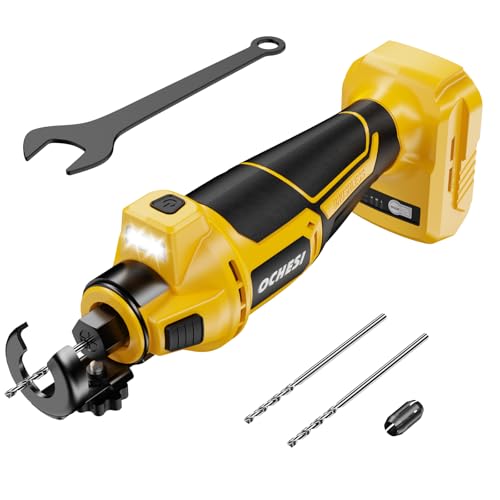
Strengths
- 3 speed settings
- 35 mm depth
- Safe Start/Stop button
Trade-offs
- 1/4-inch bit not included
- Battery not included
The three-speed settings set this tool apart, few competitors offer variable speed control, and that makes a real difference when switching between drywall, wood, and tile. Owners appreciate being able to dial down for delicate cuts or ramp up for hardwood backing. The 35 mm depth adjuster is tool-free and precise, and the “Safe Start/Stop” button adds a layer of control during tight work.
It’s nearly identical to other 30,000 RPM models but adds meaningful user control. Compared to the single-speed clones, this one gives experienced users more finesse. If you’re cutting varied substrates and want real speed modulation, this is the only cordless option that delivers.
Product photos


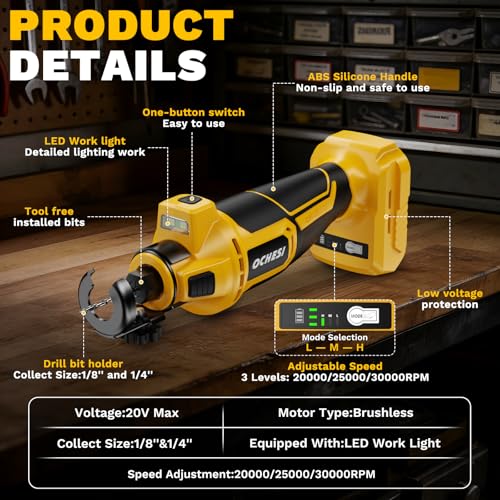
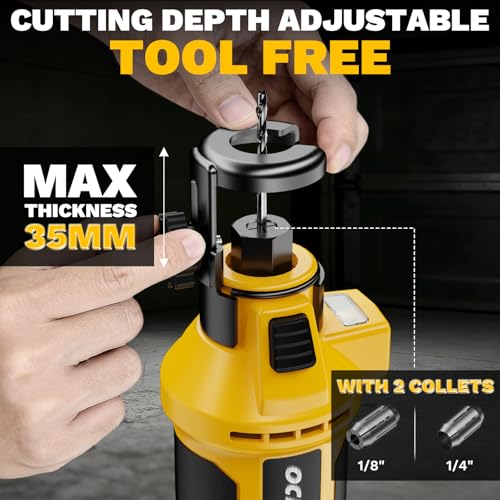
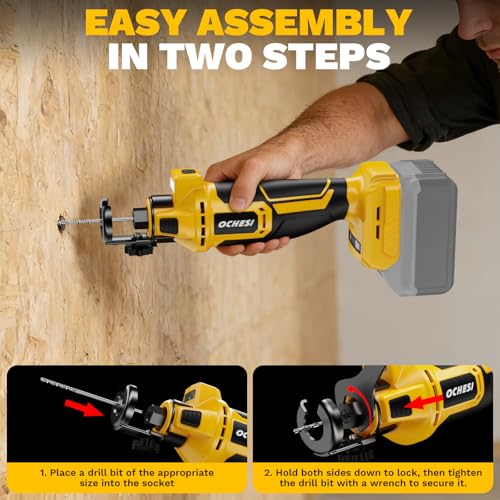
Cordless Drywall Rotary Saw
Strengths
- 98% dust capture
- Removable shroud
- Built-in LED light
Trade-offs
- 25 mm max depth
- Battery not included
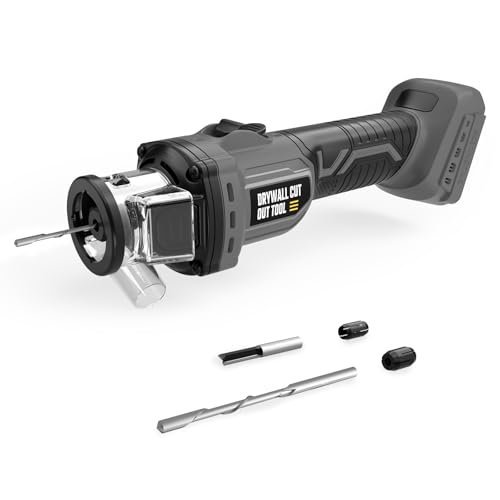
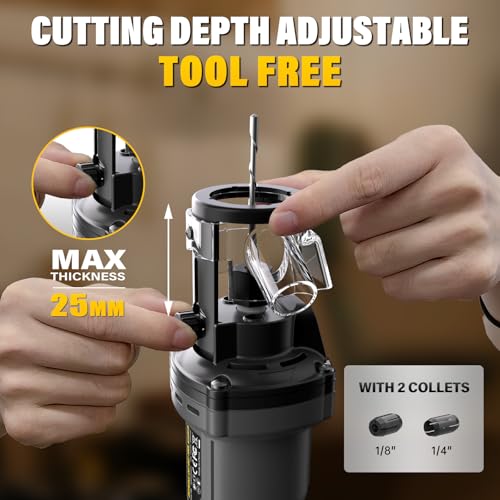
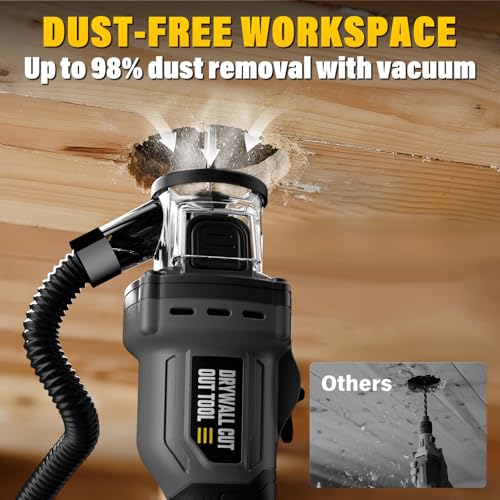
The standout here is the dust collection shroud, this is the only model in this list with a hood that captures up to 98% of debris when paired with a vacuum. For anyone serious about job site cleanliness or working in occupied homes, that’s a huge win. The 30,000 RPM brushless motor and tool-free bit change match the competition, but the real advantage is the sealed interface that keeps drywall dust out of the motor.
Owners note it runs cooler during extended use, likely thanks to the efficient brushless design and airflow management. It’s nearly identical to the B0H32X3W11 but adds meaningful dust control. If you’re already using DeWalt 20V tools, this is the smarter buy for indoor renovations where cleanup time eats into profits.
Product photos



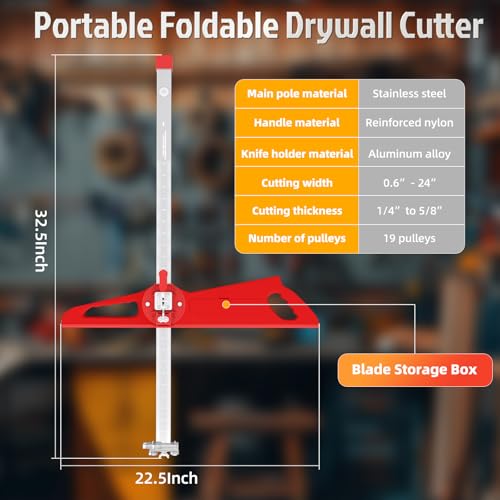
Foldable Drywall Cutting Tool
Strengths
- 19 roller wheels
- Adjustable up to 24″
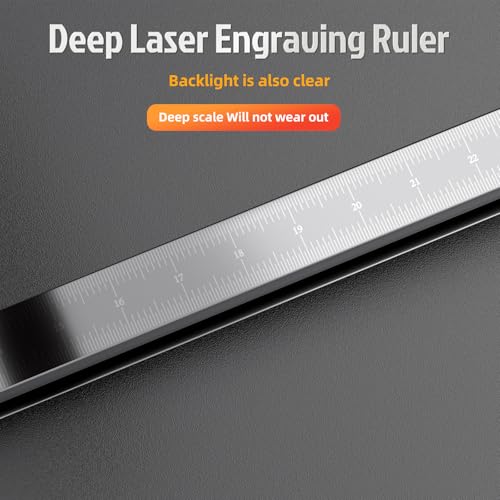
- Laser-etched scales
Trade-offs
- No blade reset safety
- Not for fire-rated boards
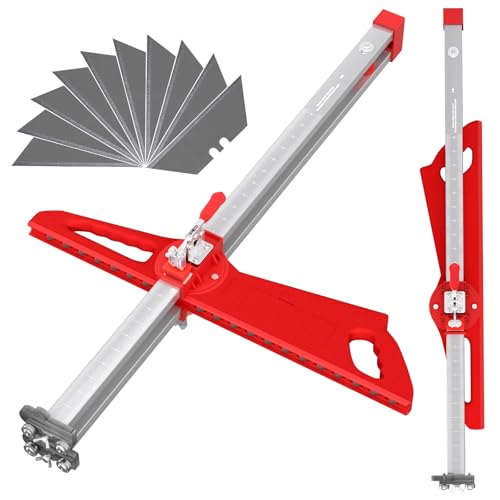
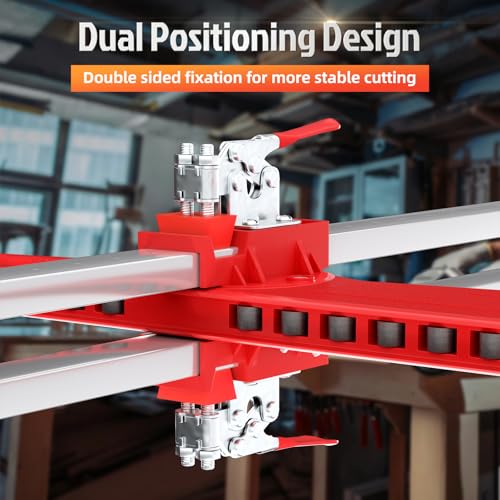
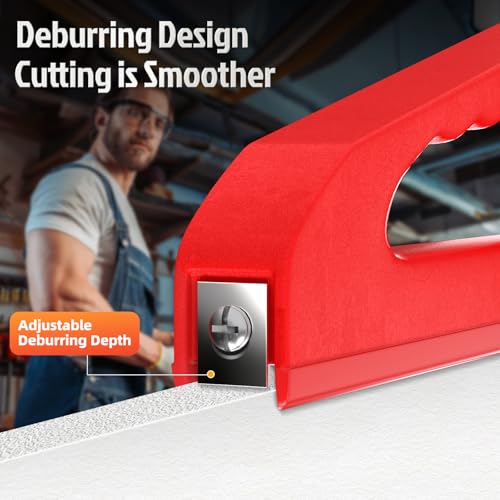
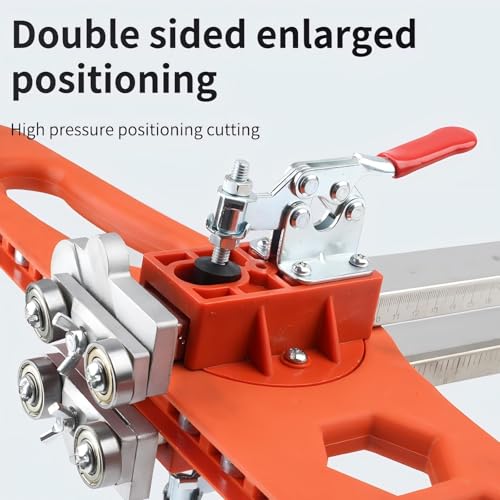
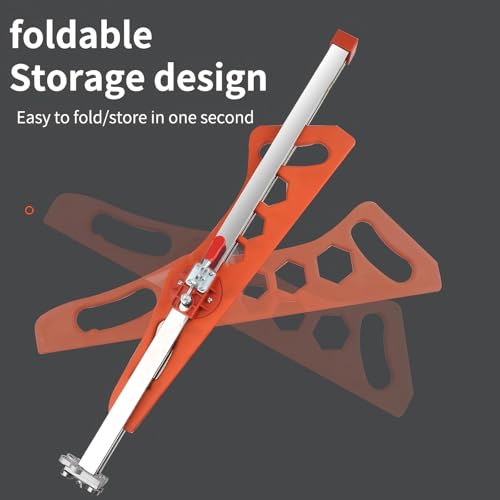
If you’re looking for a no-power, no-fail way to score and snap drywall cleanly, this manual foldable cutter delivers. With 19 steel wheels and a dual-positioning system, it tracks straight and resists wandering, owners praise how it eliminates the “chatter” common in cheaper models. The adjustable height up to 24 inches makes it ideal for full-panel rips, and the laser-etched scales are easy to read in low light.
It’s built for speed on flat walls where precision matters. While it won’t replace a rotary tool for electrical cutouts, it outperforms utility knives and T-squares for long, straight lines. Compared to the Zozen model, it lacks blade reset safety but offers more wheel support. I’d recommend this as the go-to scoring tool for anyone doing multiple drywall installs.
Product photos

Muscovite Heavy Duty Drywall Cutter
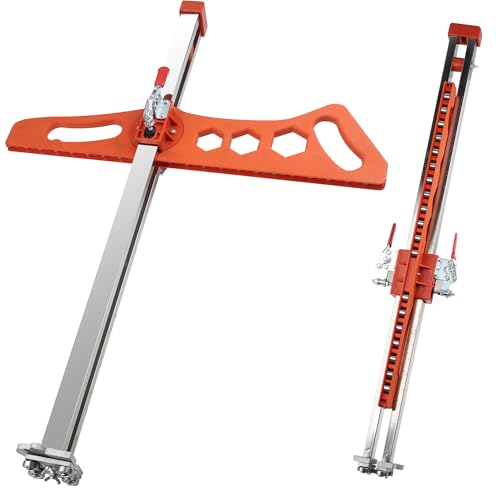
Strengths
- Titanium alloy holder
- 23 nylon pulleys
- Stubble-removal plate
Trade-offs
- Heavier than average
- No blade reset
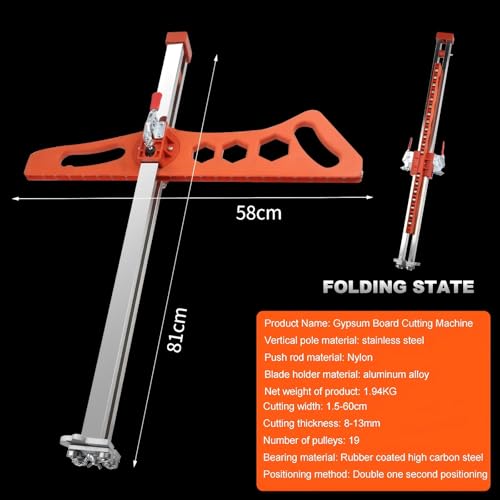
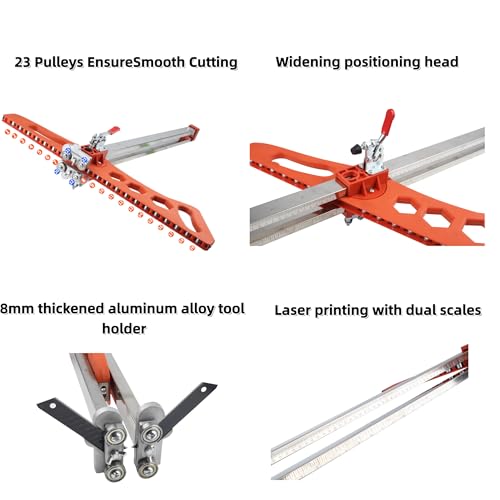
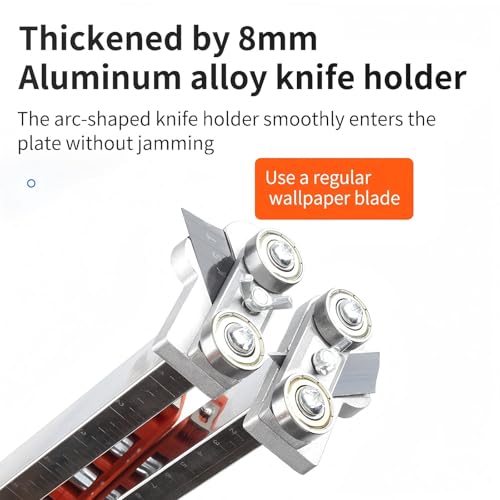
Build quality is the headline here. With titanium alloy blade holders, stainless steel rods, and 23 nylon pulleys, this manual cutter feels like it’s built to last a career. The dual-side scales are easy to read, and the anti-slip retainers lock measurements securely, no creeping during long rips.
Owners love the stubble-removal plate that trims paper fuzz as you cut, leaving a cleaner edge than most manual tools. It’s heavier than others, but that adds stability. Compared to the foldable Zozen, it’s less compact but more rigid and accurate. I’d pick this for high-volume installs where consistency and durability matter most.
Product photos
Zozen Foldable Drywall Cutter
Strengths
- Blade reset safety
- Dual-blade scoring
- Foldable design
Trade-offs
- ABS button less durable
- Fewer wheels than rivals
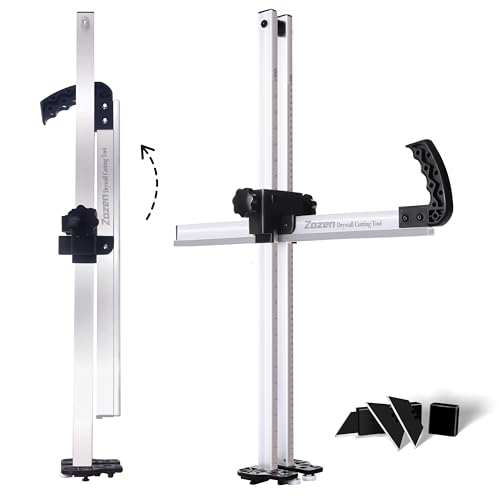
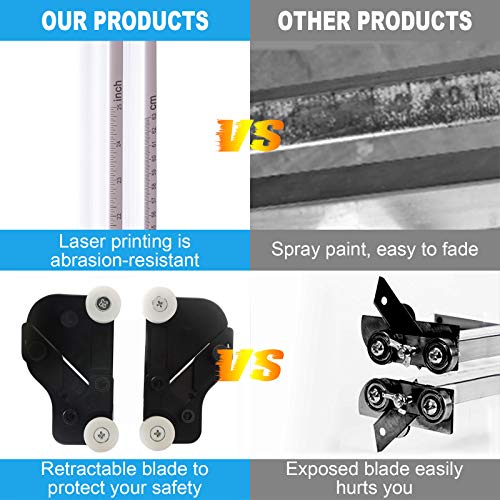
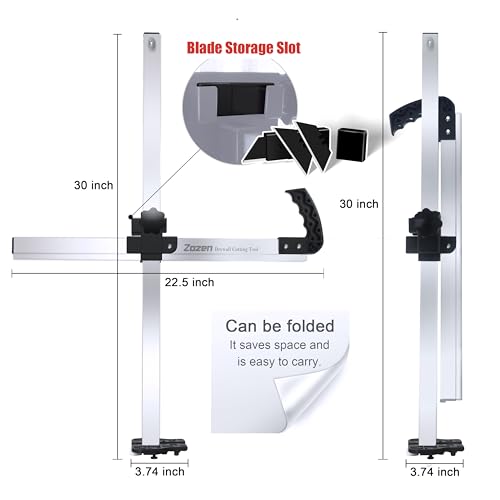
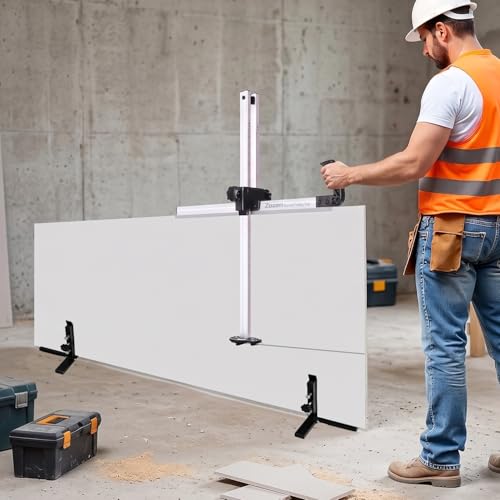
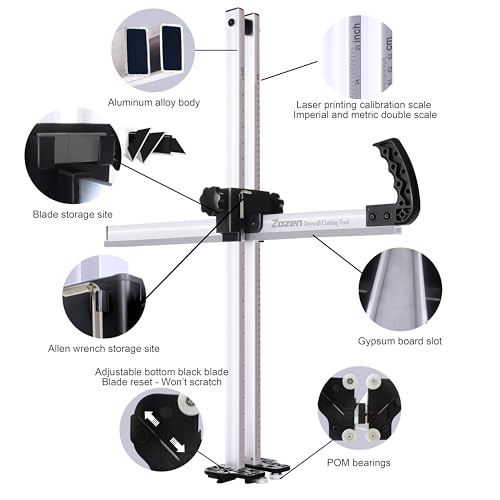
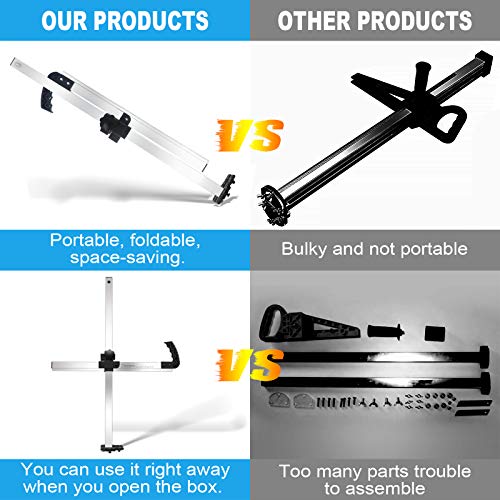
Safety is the standout feature, once you reset the blade, it’s fully enclosed, which is rare in manual cutters. That makes it a smart pick for crews with mixed experience levels or anyone training new hands. The dual-blade system scores both sides of drywall simultaneously, so snapping is faster and cleaner than with single-blade tools.
It’s patent-protected and well-reviewed for ease of use, though some owners note the ABS rotary button can feel a bit loose over time. Compared to the Muscovite, it’s lighter and safer but not as rugged. For DIYers or rental fleets where tool safety and simplicity are key, this is a strong pick.
Product photos
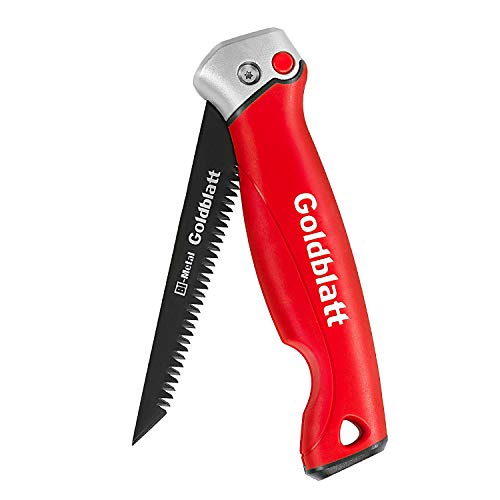
Goldblatt Folding Jab Saw
Strengths
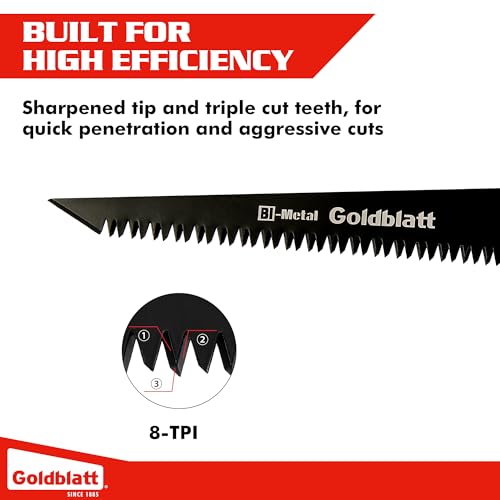
- 8 TPI bi-metal blade
- Ergonomic soft grip
- Folds for storage
Trade-offs
- No depth guide
- Limited to manual cuts
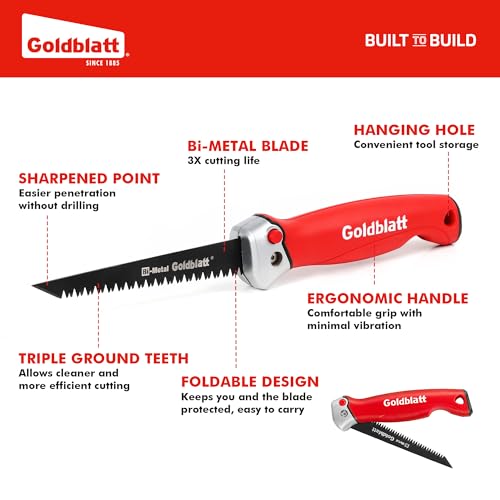
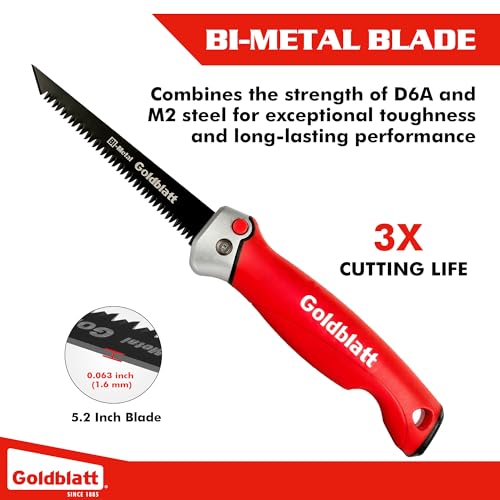
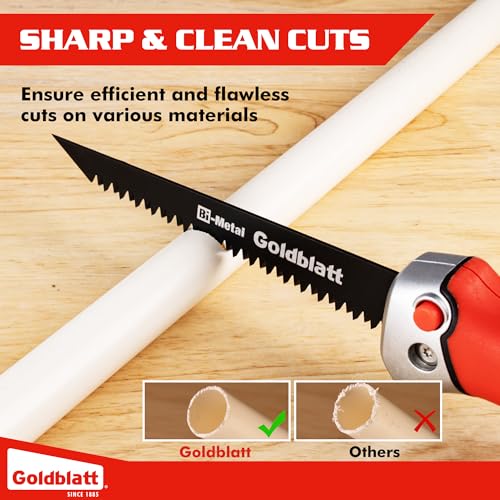
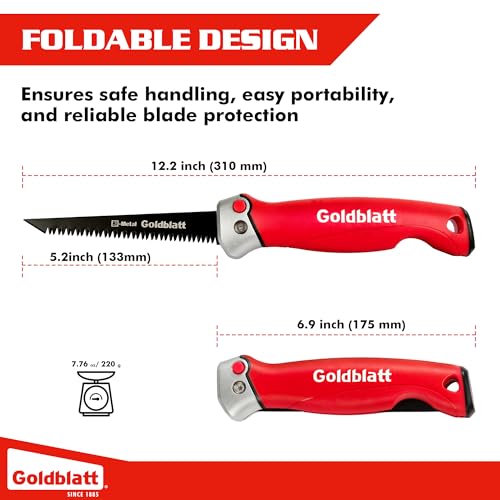
This jab saw is a favorite among pros for a reason, the triple-ground 8 TPI bi-metal blade cuts fast in both directions and resists clogging thanks to deep gullets. The sharpened tip punches through drywall cleanly, eliminating the need for pilot holes. At 5 inches, the blade is long enough for deep cuts but short enough to control in tight corners.
The soft-grip handle is genuinely comfortable, and the foldable lock is secure, no accidental closures mid-cut. Compared to other handhelds, it strikes the best balance between portability and cutting power. For electricians or HVAC techs making dozens of cutouts a day, this is the kind of tool that saves wrists and time.
Product photos
8-In-1 Multi Blades Hand Saw

Strengths
- 8 HSS blades included
- Quick blade change
- Multi-material use
Trade-offs
- Bulky for tight spaces
- Blades not all same length
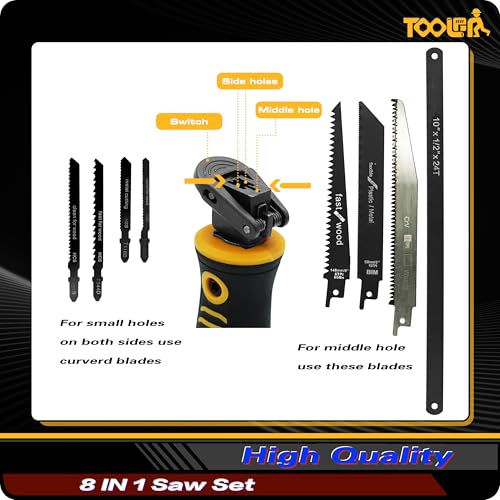
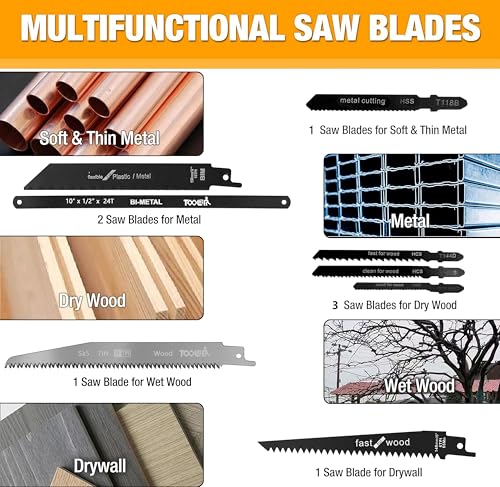
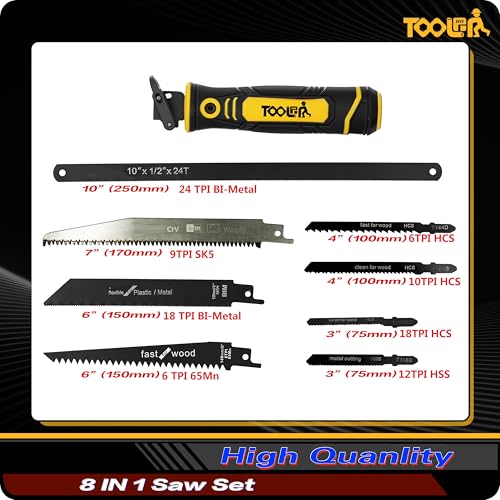
This isn’t a dedicated drywall tool, it’s a multi-material workhorse. With eight high-speed steel blades included and a quick-change mechanism, it handles drywall, plastic, metal, and even thin plywood without swapping tools. The TPR non-slip handle reduces fatigue during long cuts, and the lockback mechanism keeps blades secure under load.
It’s bulkier than a jab saw, but the flexibility is unmatched. Compared to the Goldblatt folding saw, it’s less refined for drywall-only tasks but far more capable when you’re cutting through mixed materials in old walls. I’d keep this in a demolition or remodel kit where you never know what’s behind the sheetrock.
Product photos


How We Evaluated drywall cutting tools
As someone who’s spent years around workshops and job sites – and sharing advice through PowerToolGuide.net – I know choosing the right tool for drywall goes beyond just advertised features. Rather than a hands-on lab test of every model, this selection is a research-led comparison of published specifications, owner reviews, and professional assessments. I weighed these factors against my understanding of what makes a drywall tool truly effective and efficient for a range of users.
For drywall cutting tools, speed and precision were the biggest factors driving my recommendations. Clean cuts minimize patching later, and speed is essential for larger projects. I also heavily considered safety features, as working with drywall can create a lot of dust and requires careful handling of blades. A tool’s compatibility with common battery platforms (like DeWALT 20V) also played a significant role, offering convenience for those already invested in a system.
Specifications reliably tell you about motor power (RPM) and cutting depth capacity. However, I relied on owner feedback to gauge real-world durability, ease of use, and how well features like dust collection actually perform. Reputation, particularly among professional contractors, was also a key indicator of long-term reliability and value. If you’re considering other methods, you might find helpful information on cutting drywall with circular saw.
How To Choose The drywall cutting tools
Picking the right drywall cutting tool can save you a lot of time and frustration, especially if you’re tackling a larger renovation.
A quality drywall cutting tool balances speed with accuracy. Key features include blade material (high-carbon steel is common), adjustability for different drywall thicknesses, and a design that minimizes dust and chipping. Look for models with secure blade locking mechanisms and comfortable grips to reduce fatigue during extended use. Consider whether you prioritize manual options for precision or powered tools for speed.
Power Source & Speed
For many, the immediate question is corded versus cordless. While a manual tool offers ultimate control, a powered drywall cutter significantly speeds up the process. If you already invest in the DeWALT 20V platform, a cordless option like the DEWALT 20V MAX XR Cut-Out Tool makes a lot of sense, avoiding the hassle of cords. Brushless motors are a must; they deliver more power and longer run times than brushed motors, and they generally run cooler. Don’t get hung up on the highest RPM number, though. Consistent power delivery is more important than peak speed.
Blade Quality & Adjustability
The blade is where the work happens, and cheap blades mean jagged cuts and more finishing work. Look for blades made from high-carbon steel or, better yet, bi-metal construction. Adjustability is also critical. Drywall comes in different thicknesses (1/2 inch is standard, but 3/8 and 5/8 inch are common), and a tool that can’t easily adapt will leave you struggling. Many tools offer adjustable depth settings or interchangeable blades to handle these variations. If you plan on making a lot of straight cuts with a circular saw as well, consider how this tool’s capabilities will complement that.
- A fixed-blade manual tool is best for small jobs and extremely precise cuts.
- An adjustable blade depth allows you to customize the cut for different drywall thicknesses, preventing damage to the backside.
- Interchangeable blades (like the 1/8-inch and 1/4-inch options in some models) dramatically increase versatility, letting you use the tool for spiral cuts, undercuts, or even other materials.
Value & Additional Features
Beyond the core cutting ability, consider features that improve usability and safety. Integrated dust collection, like the system on the Cordless Drywall Rotary Saw, is a huge plus for keeping your workspace clean and improving visibility. LED work lights are also incredibly helpful, especially when working in dimly lit areas.
A good rule of thumb is to prioritize build quality over the lowest price. A tool that lasts for years and delivers consistent performance is a better investment than a cheaper option that needs to be replaced frequently.
If you’re already invested in the DeWALT ecosystem and want a fast, efficient tool, one of their cordless options is a strong contender. For more delicate work or if you’re looking for a versatile manual option, exploring the folding drywall cutters, or even looking at top oscillating multi-tools can be beneficial – especially the best drywall cutting oscillating tools.
Drywall Cutting Tools Compared
Here’s a comparison of key specifications for various drywall cutting tools to help you make an informed purchase.
| Product Title | Motor Type | Max Cutting Depth (mm) | Blade/Wheel Count | Dust Collection | Battery Compatibility |
|---|---|---|---|---|---|
| Cordless Drywall Cut-Out Tool | Brushless | 35 | 2 (1/8″, 1/4″) | No | DeWALT 20V |
| DEWALT 20V MAX XR Cut-Out Tool | Brushless | N/A | Accepts 1/8″, 5/32″, 1/4″ | No | DeWALT 20V |
| Cordless Drywall Cut-Out Kit | Brushless | 35 | 2 (1/8″, 1/4″) + 2 bits | No | DeWALT 20V |
| Cordless Drywall Rotary Saw | Brushless | 25 | 2 (1/8″, 1/4″) | Yes (w/vacuum) | DeWALT 20V |
| Foldable Drywall Cutting Tool | Manual | N/A | 19 | No | N/A |
| Muscovite Heavy Duty Drywall Cutter | Manual | N/A | 23 | No | N/A |
| Zozen Foldable Drywall Cutter | Manual | N/A | 2 | No | N/A |
| Goldblatt Folding Jab Saw | Manual | N/A | N/A | No | N/A |
| 8-In-1 Multi Blades Hand Saw | Manual | N/A | 8 | No | N/A |
Frequently Asked Questions
What drywall thickness can most of these tools handle?
Most tools adjust to cut 1/2-inch drywall easily, but the key is adjustability. Look for models with depth settings or interchangeable blades to reliably handle the common 3/8-inch and 5/8-inch thicknesses as well.
Are manual drywall cutters really accurate enough for professional work?
Yes, a high-quality manual drywall cutter can be incredibly accurate, especially for smaller jobs or detailed cuts. Professionals often appreciate the control they offer, and the best folding drywall cutters have blades designed for clean, precise results.
What’s the benefit of a cordless drywall cutter over a corded one?
Cordless drywall cutters offer increased mobility and convenience, eliminating the need for an extension cord. If you’re already invested in a platform like DeWALT 20V, a cordless option avoids needing to find an outlet and is a time-saver on larger projects.
How important is dust collection when cutting drywall?
Dust collection is very important, as drywall dust is irritating to the lungs and reduces visibility. While not all models have it, those that integrate with a shop vac (like the Cordless Drywall Rotary Saw) will significantly improve your workspace comfort and cut quality.
What other tools can I use for drywall cuts besides dedicated drywall cutters?
While dedicated tools are best, you can also make drywall cuts with an oscillating multi-tool. I’ve found that versatile multi-tools for drywall cuts offer a lot of flexibility, especially when paired with the right blade, but they won’t match the speed of a dedicated cutter on large projects.
The Bottom Line
Ultimately, choosing a drywall cutting tool comes down to balancing how much control you want against how much speed you require. For most homeowners and DIYers tackling medium to large projects, the Cordless Drywall Rotary Saw offers the best combination of power, features, and convenience. Its integrated dust collection and DeWALT 20V compatibility are significant advantages, reducing mess and maximizing efficiency.
If budget is a primary concern, or if you only have a few small patches to address, the Foldable Drywall Cutting Tool is a surprisingly capable option. And for those already committed to the DeWALT ecosystem and prioritizing cordless freedom, either the Cordless Drywall Cut-Out Tool or the DEWALT 20V MAX XR Cut-Out Tool will be a strong performer. Don’t overlook the value of a good oscillating multi-tool either, especially if you anticipate using it for other tasks around the house.
More than any specific feature or power rating, remember that a clean, accurate cut is the goal. Taking the time to understand drywall thicknesses, choosing a sharp blade, and practicing proper technique will have a bigger impact on your finished results than spending top dollar on the most powerful tool available. Learning circular saw operation basics can also help you achieve professional-looking results.
