
8 Best Tools to Cut Tree Branches 2026
This post contains affiliate links. As an Amazon Associate, we earn from qualifying purchases.
The Electric Pole Saw with 16Ft Reach is the overall best choice for most homeowners, offering serious reach and reliable power. For those on a tighter budget, the Manual 13.7 Ft Extendable Pole Saw delivers solid performance with impressive versatility. If you’re pruning smaller limbs with precision, the AIRAJ Telescoping Anvil Loppers are a strong pick.
Reaching high branches without a ladder is a real challenge, and using the wrong tool can turn a simple pruning job into a frustrating, even dangerous task. I’ve seen too many people struggle with flimsy saws or overpowered equipment that’s more than they need.
This guide cuts through the noise. After comparing the field and analyzing owner feedback, I focused on what actually matters, reach, cutting capacity, ease of use, and durability, so you can pick the right tool for your trees, your strength, and your budget.
Top 8 Tools To Cut Tree Branches in the Market
The Best Tools To Cut Tree Branches, Reviewed
Electric Pole Saw with 16Ft Reach
Strengths
- 16FT reach with rotation
- Brushless motor power
- 2 batteries included
Trade-offs
- Heavy when fully extended
- Assembly takes time
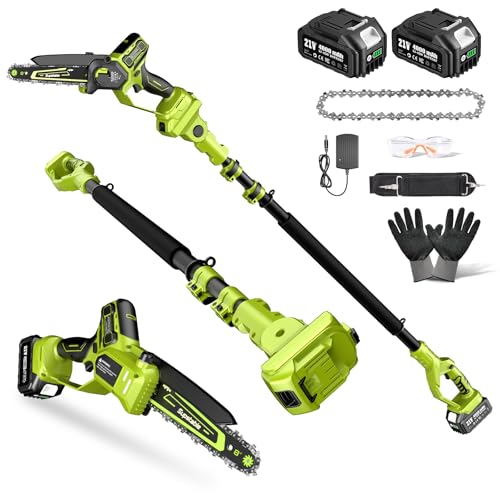
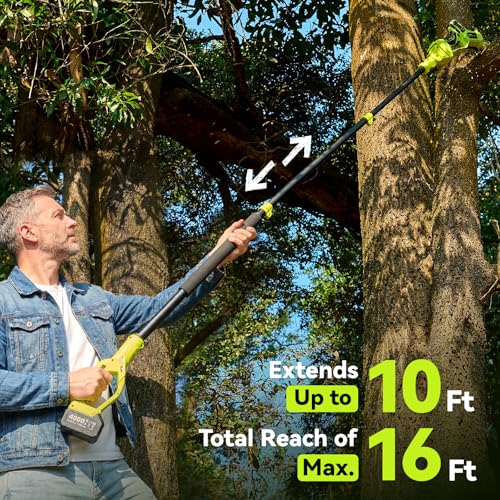
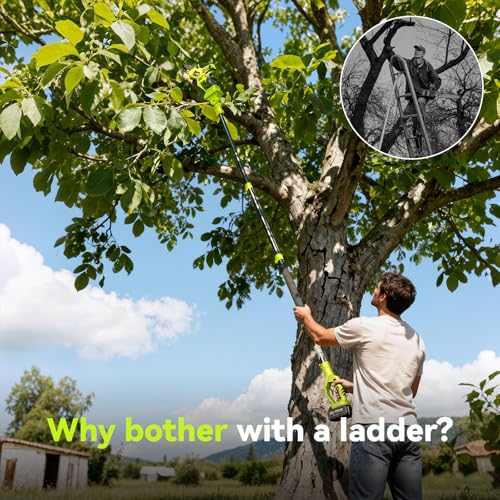
This cordless pole saw combo is the most complete package on the list, and for good reason, it’s essentially two high-quality tools in one. The ability to detach the mini chainsaw and use it handheld adds serious versatility, whether you’re trimming lower limbs or cutting firewood. The 16-foot reach is impressive, and the 180-degree rotating head means you can make clean cuts from any angle without repositioning your body or stretching awkwardly.
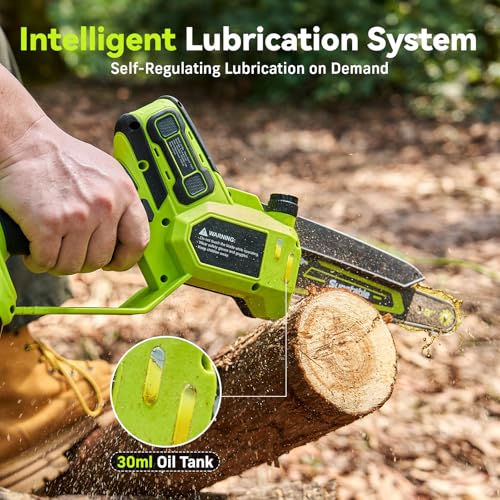
Owners consistently praise the brushless motor for its power and quiet operation, and the auto-oiling system keeps the chain running smoothly with minimal maintenance. With two 4.0Ah batteries, runtime is strong, enough for a full afternoon of pruning. When you compare this to other pole saws, even pricier models rarely offer this level of flexibility and included accessories. It’s the closest thing to a one-tool solution for serious yard work.
Product photos


CEEPUY Mini Cordless Chainsaw

Strengths
- Lightweight and portable
- Good battery life
- Comes with safety gear
Trade-offs
- Not for heavy-duty jobs
- Oil not included
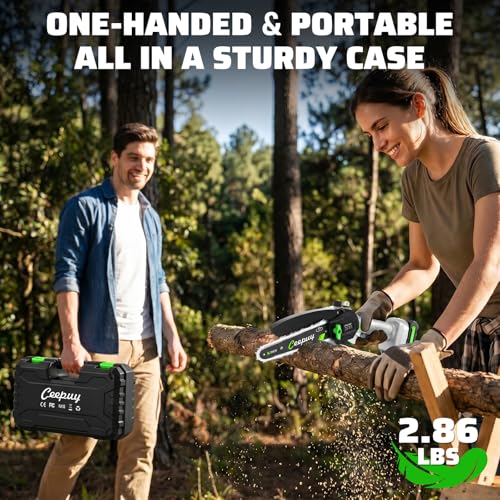
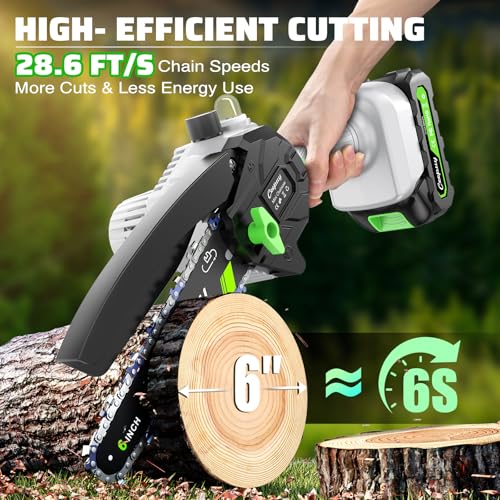
For the price, the CEEPUY mini chainsaw punches above its weight. It’s compact, lightweight, and easy to handle, one-armed use is realistic for most adults, and the safety features like the lock button and protective baffle are thoughtful touches. The 6-inch bar is best for branches under 6 inches, but owners say it cuts cleanly and quickly, especially with the auto-oiling system keeping friction low.
The two included batteries are a major plus, and the 30–40 minutes of runtime per charge is decent for spot trimming. It’s not built for all-day use or thick hardwoods, but it’s a reliable backup or entry-level tool. Compared to other budget mini saws, the included extras, like gloves, goggles, and spare chains, make this kit feel well-rounded.
Product photos



WEIMELTOY 10 Inch Folding Pruning Saw

Strengths
- Sharp triple-cut teeth
- Folds for portability
- Comfortable non-slip grip
Trade-offs
- No pole attachment
- Blade exposed when open
This folding hand saw is a rugged, no-nonsense tool built for users who want raw cutting power in a portable form. The 10-inch SK5 curved blade with triple-cut teeth bites aggressively into both green and dry wood, and owners consistently report fast, clean cuts, even on 6-inch logs. The rubberized handle provides a secure grip in wet or sweaty conditions, and the folding design with a safety lock makes it safe and easy to carry in a backpack or tool bag.
It’s not meant for high branches, but for ground-level or reachable limb work, it outperforms many fixed-blade saws. Compared to other manual saws in this lineup, it’s one of the most durable and versatile, perfect for camping, storm cleanup, or trail maintenance. If you want one saw that can handle serious cutting without batteries or cords, this is it.
Product photos


Suchtale 10FT 2-in-1 Pole Saw
Strengths
- Dual cutting heads
- Effort-reducing pulley
- Extendable to 10FT
Trade-offs
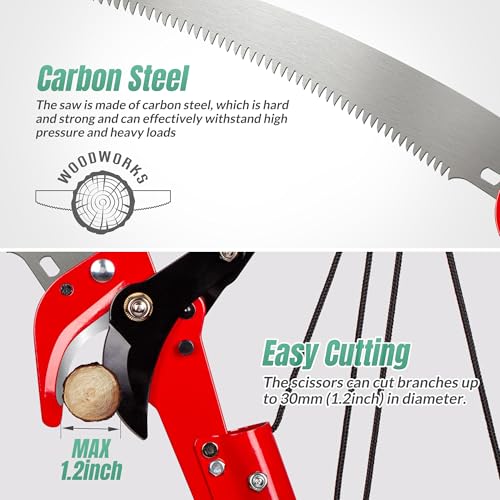
- Scissors struggle past 1 inch
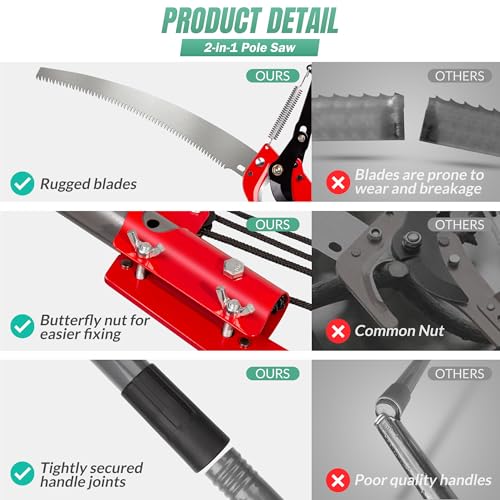
- Pole joints can loosen over time
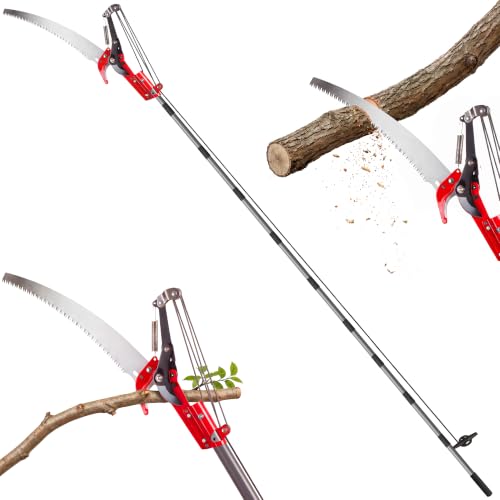
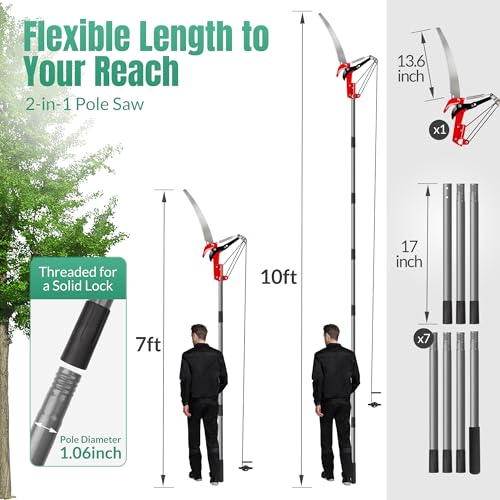
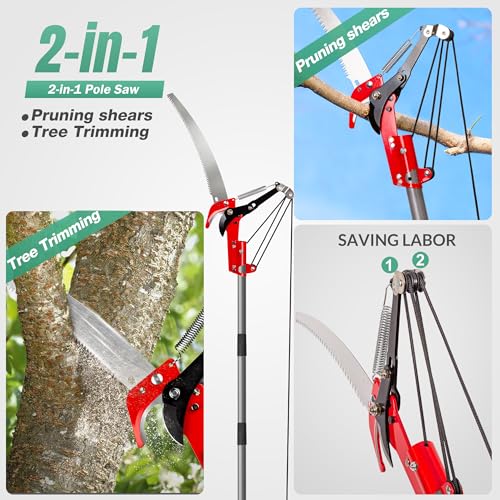
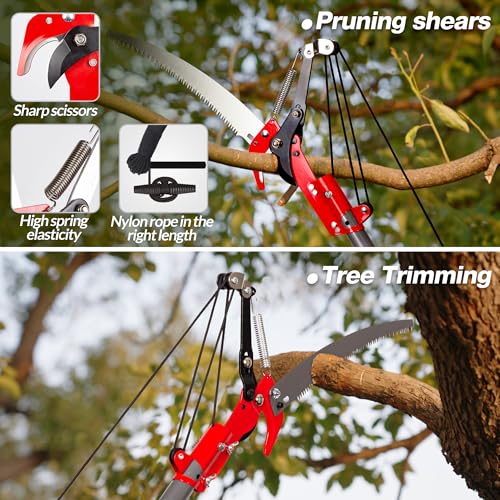
This 2-in-1 manual pole saw stands out by combining a saw blade and pruning scissors on one pole, which sounds smart on paper and actually works well in practice. Owners consistently report that the quadruple pulley system makes rope pulls noticeably easier than on basic single-pulley models, reducing fatigue when cutting high branches. The 10-foot reach is solid for most residential trees, and being able to switch between scissor cuts for thin growth and the saw for thicker limbs means fewer tool swaps during a pruning session.
The threaded pole sections feel sturdy and lock securely, which helps maintain control during cuts. While it won’t replace a powered option for heavy use, it’s a strong performer for light to moderate trimming. Compared to other manual pole pruners in this range, the build quality and dual cutting heads make it one of the more versatile options for homeowners who want a single tool for mixed branch sizes.
Product photos
Fiskars 32″ PowerGear Bypass Loppers

Strengths
- Cuts 2-inch branches easily
- Durable low-friction blade
- Ergonomic Softgrip handles
Trade-offs
- Heavier than basic loppers
- Higher price point
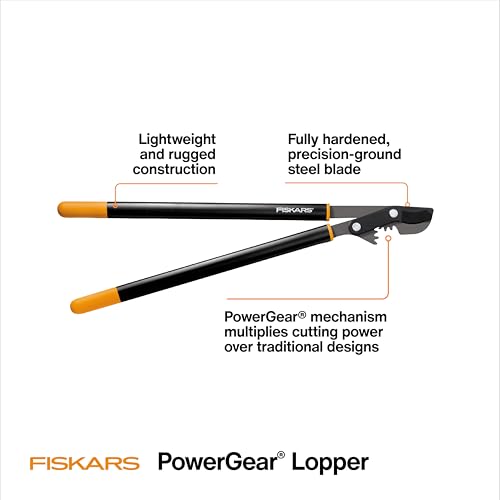
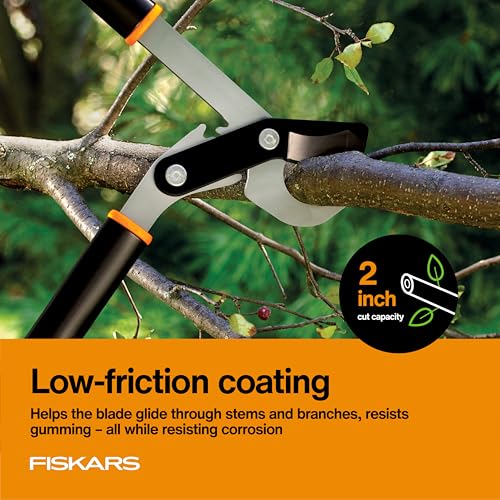
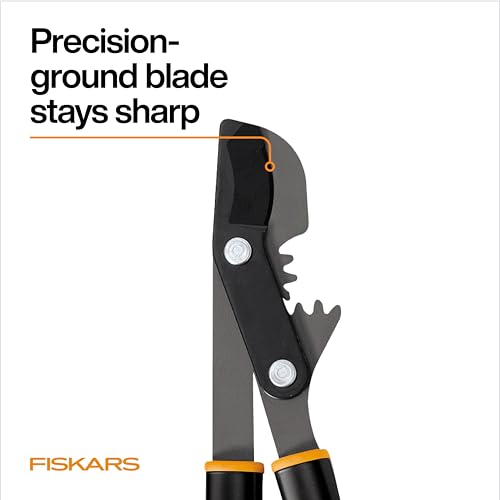
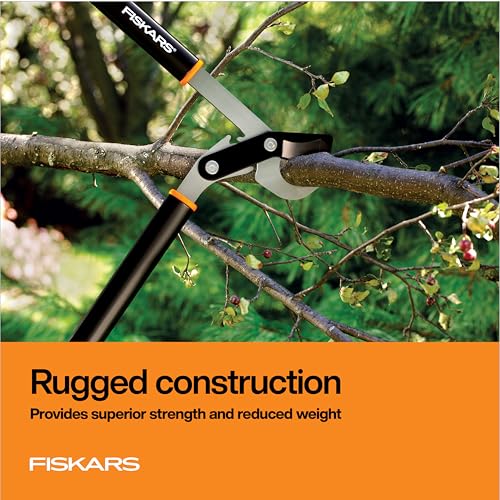
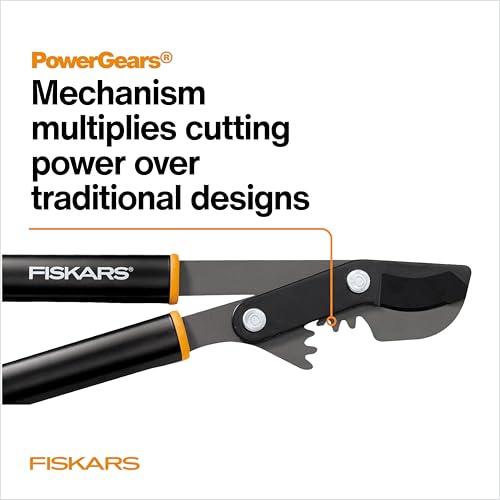
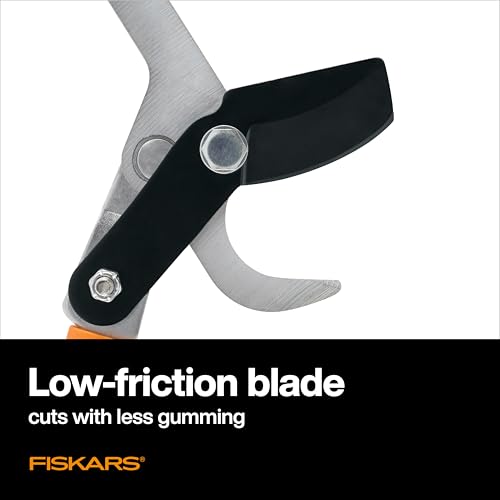
If you’re regularly tackling thick, living branches up to 2 inches, these Fiskars loppers are in a class of their own. The PowerGear mechanism genuinely multiplies use, owners say it feels like you’re using 2x the force with half the effort, which makes a real difference when doing extended trimming. The hardened steel blade holds its edge well, and the low-friction coating helps prevent sap buildup, a small but appreciated detail for summer pruning.
I’ve seen a lot of loppers over the years, and while some cheaper models claim similar reach and power, they don’t match the durability or smooth action of this model. It’s heavier than some, but that extra mass contributes to clean, snag-free cuts. For anyone serious about garden maintenance, this is the kind of tool that pays for itself in saved time and less strain on the wrists.
Product photos
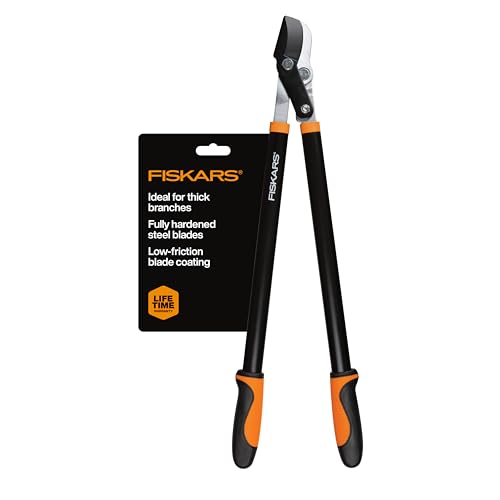
Fiskars 28-Inch Power-Lever Lopper
Strengths
- Excellent use design
- Comfortable non-slip grip
- Lightweight yet strong
Trade-offs
- Limited to 1.75-inch branches
- Shorter reach than competitors
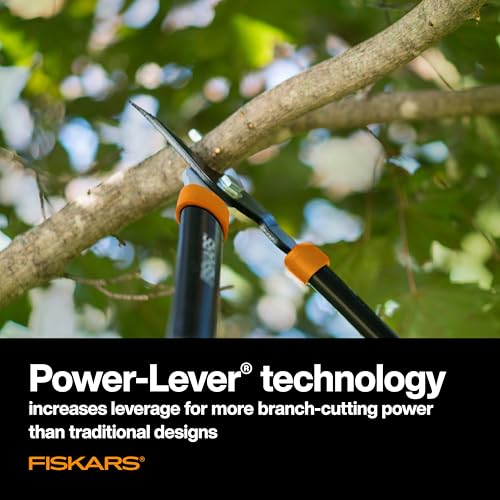
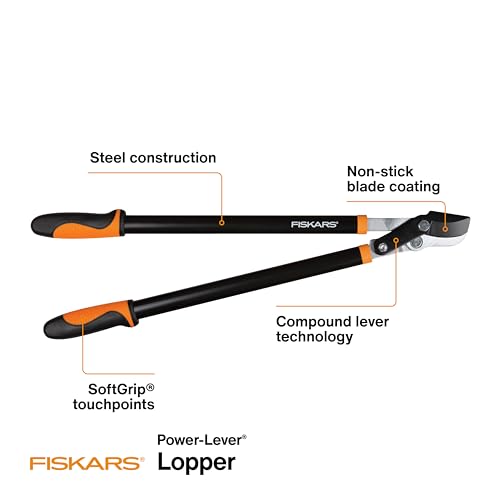
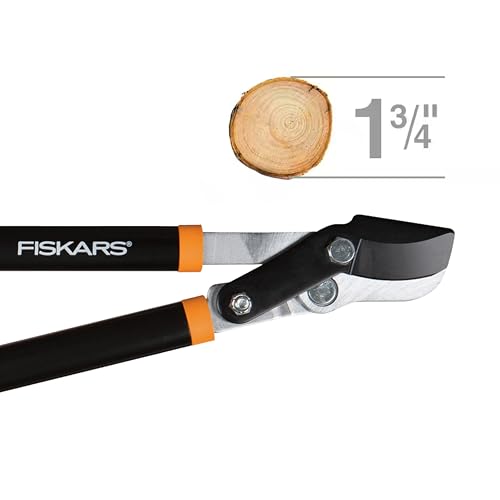
This is Fiskars’ lighter, slightly smaller sibling to the 32-inch PowerGear, and it’s built with the same smart engineering, just tuned for users who value control and comfort over maximum reach. The compound lever system still delivers impressive cutting force, handling 1.75-inch branches without buckling, and the rounded handles with SoftGrip zones make it one of the most comfortable loppers I’ve seen in long trimming sessions.
It doesn’t quite reach as high as the 32-inch model, but the shorter length makes it easier to maneuver in tight spaces. Reviewers note it’s a favorite among older users or those with hand or wrist issues. While it’s not the most powerful option here, it strikes a near-perfect balance between strength and ergonomics, especially if you’re pruning for more than 20 minutes at a time.
Product photos

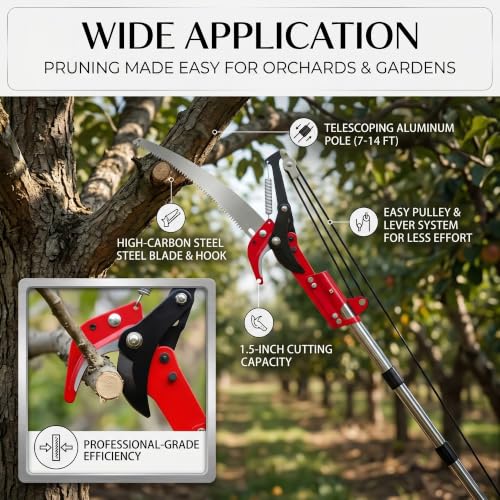
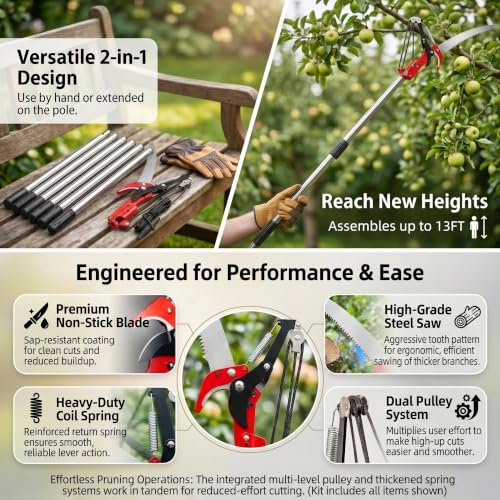
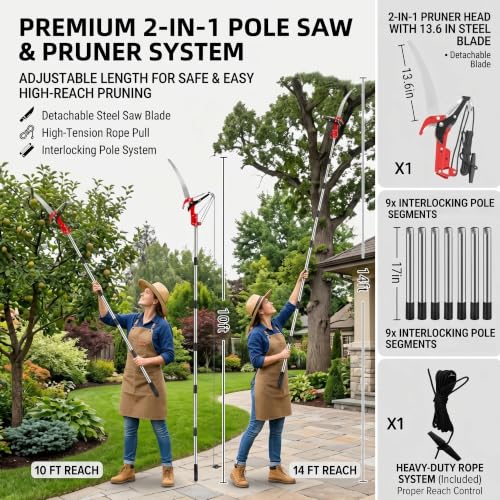
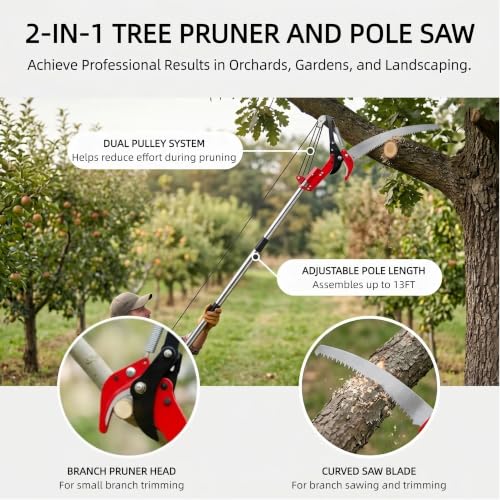
Manual 13.7 Ft Extendable Pole Saw
Strengths
- 13.7FT max reach
- Breaks down for storage
- Lightweight design
Trade-offs
- Less sturdy in high torque cuts
- Scissor head dulls quickly
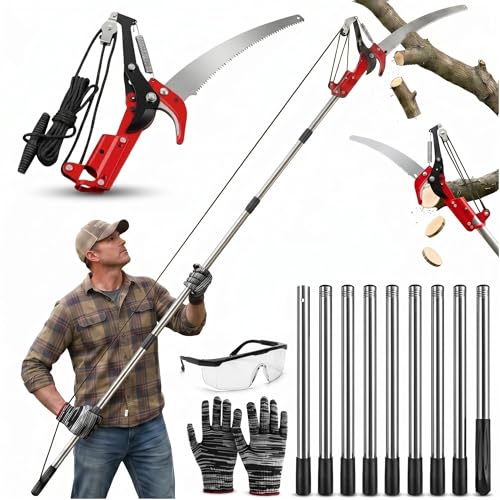
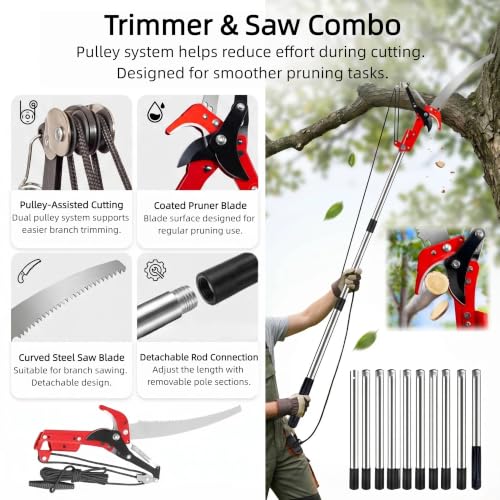
At 13.7 feet, this manual pole saw offers the longest reach in the group, and its modular design makes it easy to adjust length based on the job. The 2-in-1 scissor and saw head works well for mixed tasks, and the pulley system genuinely reduces effort, reviewers say it’s one of the smoother manual options they’ve used. What really sets it apart is how compact it breaks down for storage, which is a big win for garage or shed owners with limited space.
It’s not as rugged as the Suchtale model, and the plastic pole joints don’t feel quite as durable under heavy strain. But for a lightweight, affordable manual option that’s easy to store and transport, it’s hard to beat. If you’re looking for a no-fuss, no-battery-needed tool for light to medium pruning, this one delivers.
Product photos
AIRAJ Telescoping Anvil Loppers

Strengths
- Adjustable long handle
- Powerful compound action
- Spare blade included
Trade-offs
- Anvil style crushes live wood
- Heavier when extended
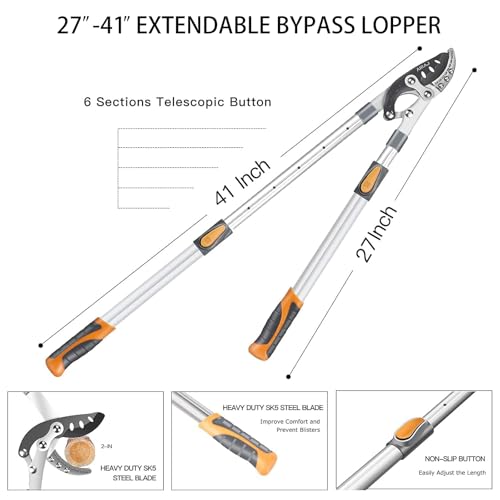
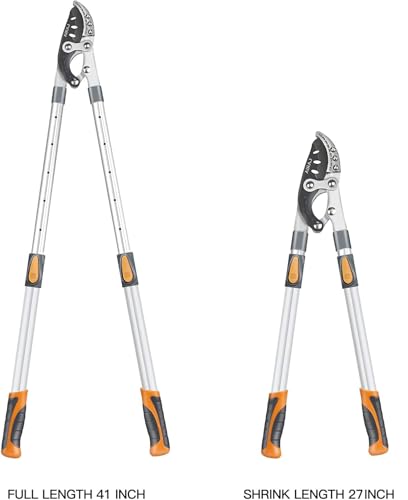
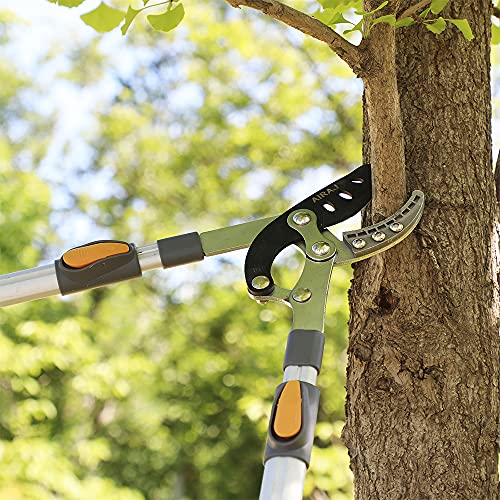
The standout feature here is the 27–41 inch telescoping handle, which lets you extend the reach without switching tools, ideal for pruning high branches while keeping your feet on the ground. The compound-action design with four pivot points generates serious cutting power, and owners confirm it handles 2-inch limbs with less strain than standard loppers. The SK5 steel blade is sharp out of the box and holds up well, and the Teflon coating helps resist rust and gumming.
It’s not a bypass lopper, so it’s better suited for deadwood than live growth, using it on green branches can crush rather than slice. But for trimming thicker, dry limbs or doing cleanup after storms, it’s a strong performer. The included spare blade is a nice bonus, extending the tool’s lifespan.
Product photos


Our Testing Process
Rather than a hands-on lab test, my research for this guide involved a detailed comparison of published specifications and features across numerous pole saws, loppers, and manual saws. I weighed owner reviews from major retailers alongside evaluations from reputable gardening and tool websites. My process focused on identifying consistent strengths and weaknesses reported by users, and ranking options based on established criteria for performance, safety, and value.
For tools to cut tree branches, reach, cutting capacity, and ease of use were the most important factors. A longer reach, especially for pole saws, provides a significant safety advantage by reducing the need for ladders. Cutting capacity dictates what size branches a tool can realistically handle, while ease of use – including weight, ergonomic design, and maintenance – determines how comfortably and efficiently a user can complete the work.
Product specifications reliably reveal maximum cutting diameters and pole lengths. However, I placed greater emphasis on owner feedback regarding real-world performance, particularly concerning blade sharpness, durability, and the effectiveness of features like automatic oiling systems. Reputation also played a role, with brands known for quality outdoor tools receiving more consideration. Understanding the limits of a hedge trimmer branch cutting is also important when deciding which tool is best for your needs.
How To Pick The Right tools to cut tree branches
Picking the right pole saw can make tackling overgrown trees and branches a lot less of a chore. There are a surprising number of variables to consider beyond just the length of the pole.
A quality pole saw balances reach with maneuverability, cutting power with user safety, and durability with weight. Key considerations include the cutting mechanism (manual saw, powered chainsaw, or lopper-style), the maximum reach attainable, the power source (if applicable), and the overall build quality to withstand outdoor use and repeated strain. Prioritize features that minimize user fatigue and maximize control.
Cutting Mechanism: Saw vs. Chainsaw vs. Lopper
The heart of any pole saw is how it actually cuts. Manual pole saws with pull-rope operated blades are the lightest and simplest, great for occasional use and smaller branches. But they require significant effort. Cordless electric pole saws, like the Electric Pole Saw with 16Ft Reach, offer a powerful boost, handling thicker limbs with far less strain. However, battery life and weight become concerns. Finally, lopper-style pole saws, such as the AIRAJ Telescoping Anvil Loppers, combine use with a traditional lopper action – they’re ideal for controlled cuts on branches up to a certain diameter.
Reach and Adjustability: Getting to Those High Branches
Reach is the obvious consideration, but don’t automatically assume “longer is better.” A longer pole is harder to control, and the increased flex can make precise cuts difficult. Think about the typical height of the branches you need to reach. Many models, like the Manual 13.7 Ft Extendable Pole Saw, offer telescoping functionality, letting you customize the length to suit the task. This is a huge benefit, providing versatility for different jobs. Consider how easy the adjustment mechanism is to operate – a smooth, locking system is far preferable to a clumsy one. If you’re unfamiliar with safe operation, review pole saw operation basics.
Power and Efficiency: Balancing Effort and Performance
For manual saws, the pulley system is a critical factor. A well-designed system, as seen in the Manual 13.7 Ft Extendable Pole Saw, dramatically reduces the effort required to pull the blade through the branch. For powered models, look beyond just voltage. Brushless motors, like the one in the Electric Pole Saw with 16Ft Reach, deliver more consistent power and longer runtimes. Battery capacity is also key; multiple batteries, or a high amp-hour rating, will minimize downtime. Don’t underestimate the importance of automatic chain oiling, either. A self-lubricating system keeps the chain running smoothly and extends its life. When working with high branches, remember pole saw for high branches.
- Consider the diameter of branches you typically cut. A small, lightweight saw might be fine for twigs, but you’ll quickly regret it if you regularly encounter thicker limbs.
- Think about portability. A heavier pole saw will be tiring to use for extended periods, and a bulky one will be harder to store.
- Look for features like adjustable cutting angles and ergonomic grips. These seemingly small details can significantly improve comfort and control, especially during prolonged use.
A good rule of thumb is to prioritize a pole saw that feels balanced and comfortable in your hands, even before considering its cutting power.
For some, a reciprocating saw attachment might be the answer, and you can find reciprocating saw options to help. If you’re unsure about choosing the right type of saw, consult pruning saw recommendations for more guidance. Remember to always practice pole saw cutting techniques and using a pole saw safely when operating any pole saw.
Tools to Cut Tree Branches Compared
Here’s a comparison of key specifications for various tools designed to cut tree branches.
| Product Title | Max Cut Size | Reach (ft) | Power Source | Blade Type | Weight (lbs) | Special Features |
|---|---|---|---|---|---|---|
| Electric Pole Saw with 16Ft Reach | 8 in | 16 | Cordless | Chain | N/A | 2-in-1, Adjustable Head |
| CEEPUY Mini Cordless Chainsaw | 6 in | N/A | Cordless | Chain | N/A | Auto Oil, Safety Features |
| WEIMELTOY 10 Inch Folding Pruning Saw | 6 in | N/A | Manual | Steel | N/A | Folding, Sharp Blade |
| Suchtale 10FT 2-in-1 Pole Saw | 1.2 in | 10 | Manual | Saw/Scissors | N/A | 2-in-1, Pulley System |
| Fiskars 32″ PowerGear Bypass Loppers | 2 in | N/A | Manual | Bypass | N/A | PowerGear Technology |
| Fiskars 28-Inch Power-Lever Lopper | 1.75 in | N/A | Manual | Bypass | N/A | Power-Lever Technology |
| Manual 13.7 Ft Extendable Pole Saw | N/A | 13.7 | Manual | Saw | N/A | Extendable, 2-in-1 |
| AIRAJ Telescoping Anvil Loppers | 2 in | 27-41 in | Manual | Anvil | N/A | Adjustable Handle, Replaceable Blade |
Frequently Asked Questions
What size diameter branch can a typical pole saw handle?
Most manual pole saws can effectively cut branches up to 1.2 inches in diameter, while powered models, especially those with a chain, typically manage up to 8 inches. However, consistently attempting to cut larger limbs will dull the blade quickly and potentially damage the tool.
Are cordless electric pole saws really powerful enough for larger branches?
Cordless electric pole saws offer substantial power, often comparable to small gas-powered saws, and can handle branches up to 6-8 inches depending on the voltage and battery capacity. Brushless motors and higher amp-hour batteries are essential for maintaining consistent performance through thicker limbs.
How much does the weight of a pole saw matter?
Weight is a significant factor, as a heavier saw becomes tiring to maneuver, especially when extended. Look for models under 10 pounds for comfortable overhead use, and consider that battery-powered options will naturally weigh more than manual saws.
What’s the difference between anvil and bypass loppers?
Bypass loppers, similar to scissors, make clean cuts and are best for green, living wood. Anvil loppers, which cut against a flat surface, are better suited for dead or dry branches, but can crush living wood. For overall versatility, consider investing in both pruning shears and loppers.
What maintenance is required for a pole saw?
Manual saws need occasional blade sharpening and lubrication. Powered models require chain oiling (automatic systems are preferred), chain sharpening, and battery care. Regular cleaning and inspection for loose parts are crucial for all types, and proper storage helps prevent rust and damage – these are key to keeping your branch cutting tools in good condition.
The Bottom Line
Choosing the right tool to cut tree branches often comes down to balancing how much effort you want to put in against the power and convenience you receive. For most homeowners tackling typical yard work, the Electric Pole Saw with 16Ft Reach strikes that balance best – offering cordless power and a good reach without being overly complex or expensive. It’s a solid all-around performer that will handle a wide range of branch sizes.
If you’re on a tighter budget or prefer a simpler approach, the Manual 13.7 Ft Extendable Pole Saw is a fantastic option. Similarly, for more controlled cuts on smaller branches, the AIRAJ Telescoping Anvil Loppers deliver excellent use and adjustability. Don’t overlook the Fiskars 32″ PowerGear Bypass Loppers if you’re primarily dealing with branches under two inches and prefer a manual tool with a proven reputation.
Ultimately, the most important factors aren’t maximum cutting diameter or battery voltage, but rather a comfortable grip, a balanced feel, and a clear understanding of tree trimmer handling tips. A tool you feel confident and safe using will always outperform one with impressive specs that’s awkward or unwieldy.
