7 Best Wet Tile Saws of 2026
This post contains affiliate links. As an Amazon Associate, we earn from qualifying purchases.
The DEWALT 10-Inch Wet Tile Saw stands out as the best overall pick for its powerful performance and 37-inch rip capacity, making it ideal for large jobs. For budget-conscious DIYers, the POWERTEC PRO 7-Inch Wet Tile Saw offers solid build quality and precision at a lower price. If versatility matters most, the VEVOR 10-Inch Wet Tile Saw delivers strong specs and a large cutting area for a range of tile types.
Cutting tile without the right saw means chipped edges, crooked lines, and wasted materials. Too many people learn the hard way that not all wet tile saws handle thick porcelain or long rips with equal ease.
As Robert A. Bennett from PowerToolGuide.net, I’ve evaluated dozens of tools over 15 years of hands-on builds and workshop testing. This guide reflects what matters most after analyzing specs and real owner feedback, so you can pick a saw that performs reliably, whether you’re tiling a bathroom or tackling a full remodel.
Top 7 Wet Tile Saws in the Market
The Best Wet Tile Saws, Reviewed
DEWALT 10-Inch Wet Tile Saw with Stand

Strengths
- 15-amp motor
- 37 in. rip capacity
- Stainless-steel rollers
- Fits through standard doors
- Integrated accessory storage
Trade-offs
- Heavy at 91 lbs
- No laser or LED guidance
- Higher price point
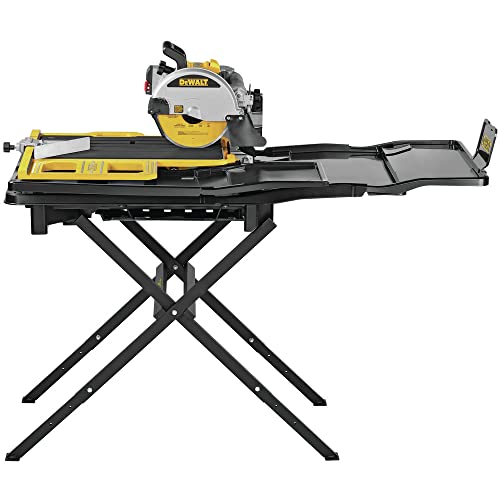
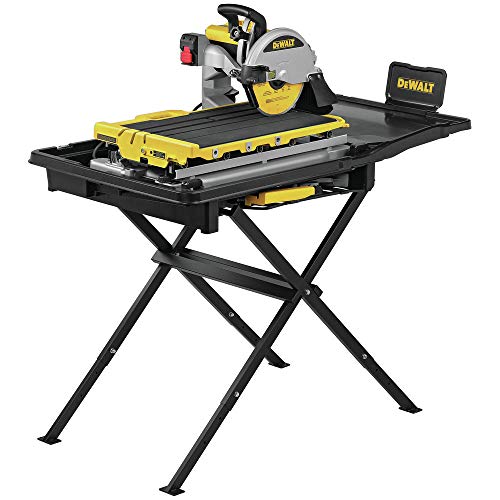
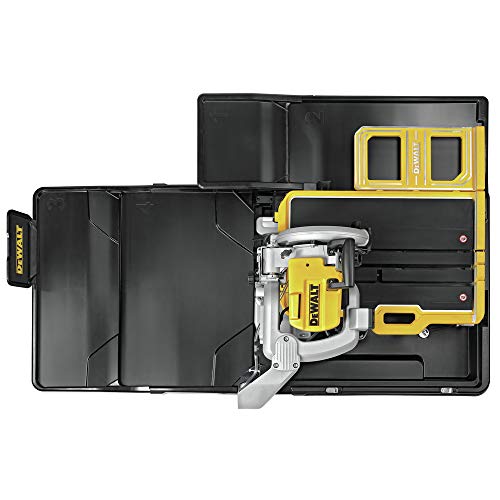
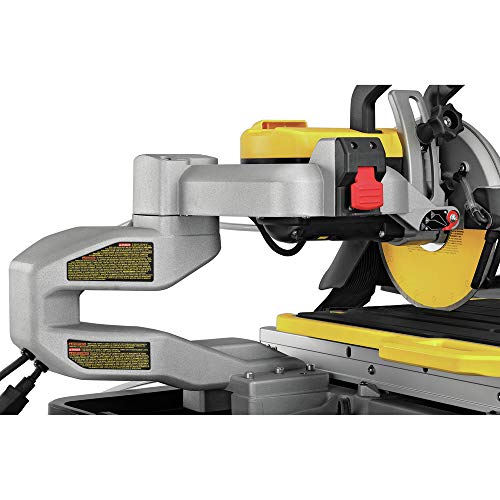
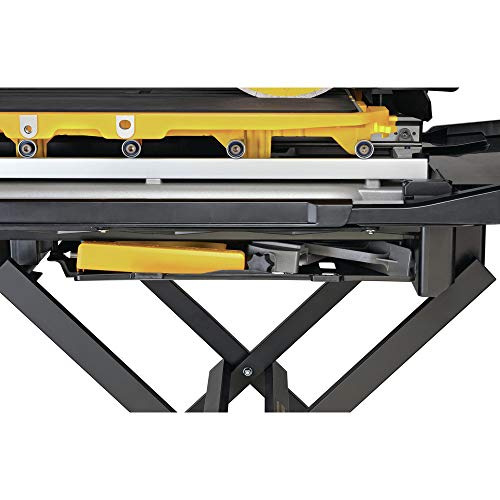
This DEWALT is built like a contractor-grade workhorse, and that shows in both its specs and what owners consistently report. The 15-amp motor and 1,220 MWO rating mean it can push through thick porcelain without bogging down, which matters when you’re cutting large-format material all day. I appreciate the thoughtful design touches, like the stainless-steel rollers and rigid frame, that contribute to repeatable accuracy within 1/32 inch over long cuts. For pros or serious DIYers handling big tile jobs, that kind of precision isn’t a luxury, it’s a necessity.
The 37-inch rip capacity (41 inches with plunge) is a standout, letting you split a 36×36 tile clean down the middle. That’s not something every saw in this class can do. It’s also one of the few models that fits through a standard 30-inch door, which makes moving it around a job site realistic. The integrated storage for accessories is a small detail, but in practice, it means you’re not losing the miter guide or wrenches in a truck bed.
Product photos
POWERTEC PRO 7-Inch Wet Tile Saw
Strengths
- Laser alignment
- LED lighting
- Sliding table
- Folding stand
- Smooth dual bearing rollers
Trade-offs
- 7 in. blade limits deep cuts
- No 10 in. option available
- Splash guard could be taller
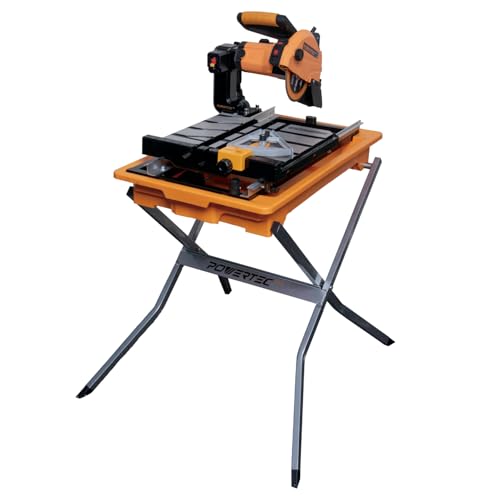
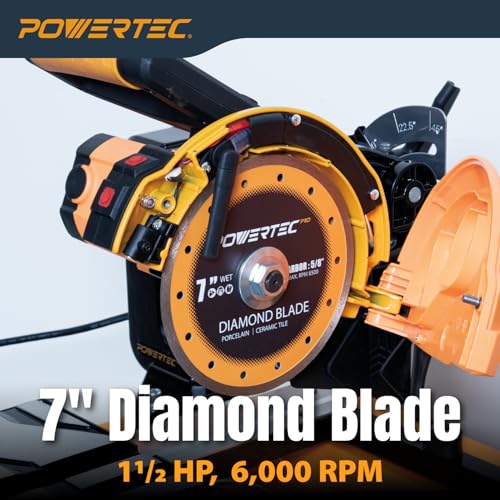
If you’re after precision, especially for complex cuts like diagonals, L-cuts, or beveled edges, this POWERTEC model stands out. The laser alignment system and LED illumination are not gimmicks; owners report they make layout work faster and more accurate, especially in dimly lit basements or garages. The 7-inch continuous rim blade paired with a 1.5 HP motor delivers clean cuts on porcelain, and the 6,000 RPM speed helps maintain momentum without chipping.
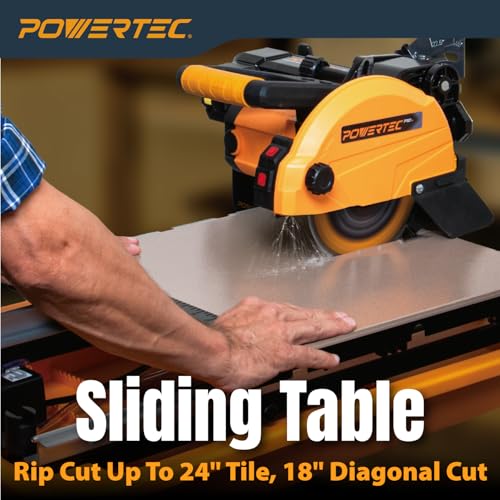
The sliding table with dual bearing rollers gives it a smoother glide than most saws in this range, and the folding stand makes storage easier. While the 24-inch rip capacity isn’t class-leading, it’s solid for mid-size jobs. I’d pick this over bulkier models if you’re doing detailed work on countertops or walls where accuracy matters more than brute cutting length.
Product photos

PeakPursuit 7-Inch Wet Tile Saw
Strengths
- Low price
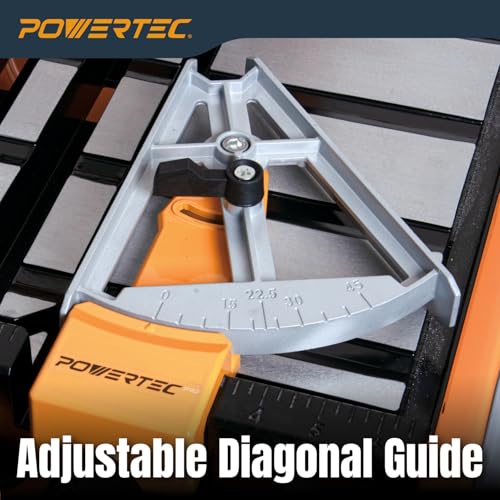
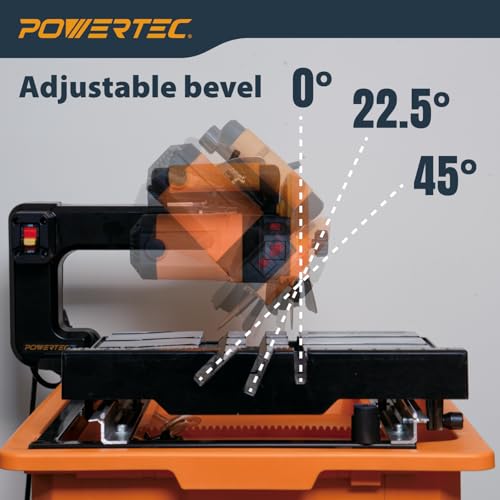
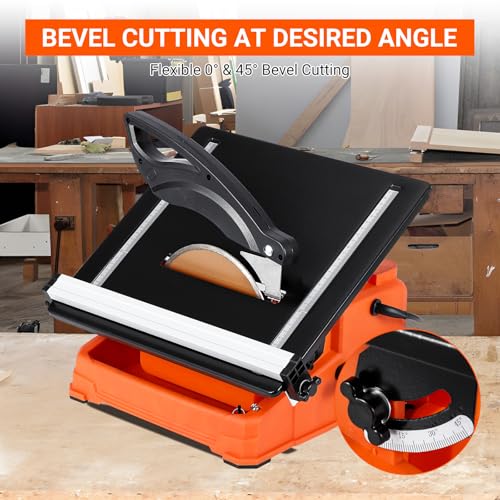
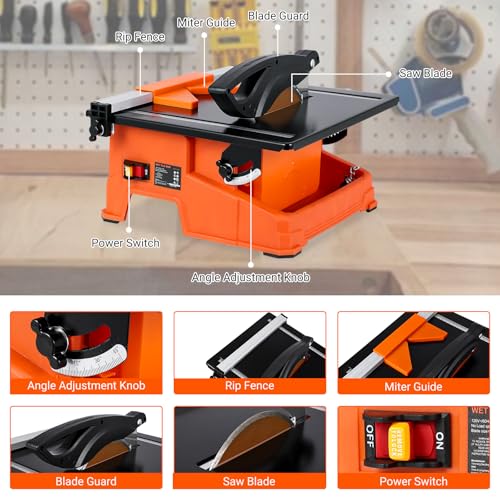
- Bevel adjustment
- Galvanized table
- Reset switch
- Compact
Trade-offs
- Spec discrepancy (6500 vs 3450 RPM)
- Underpowered for porcelain
- No brand reputation
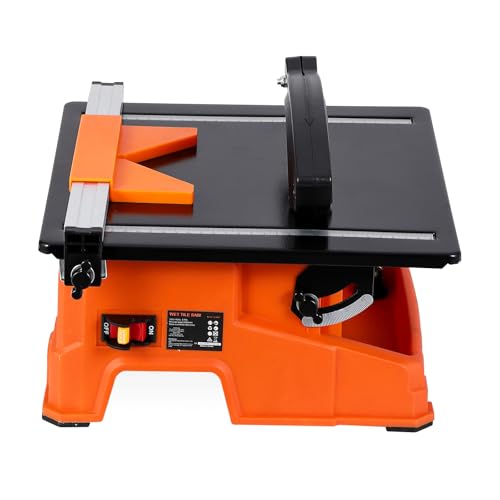
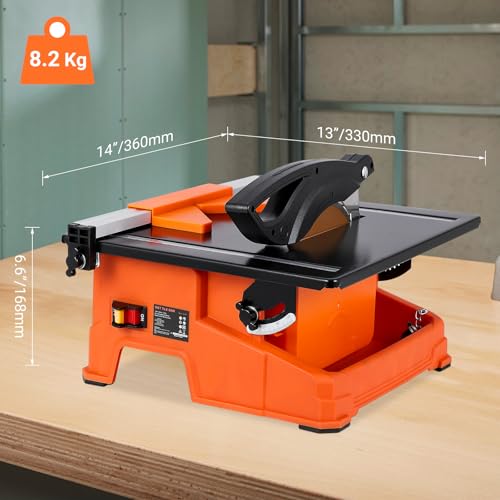
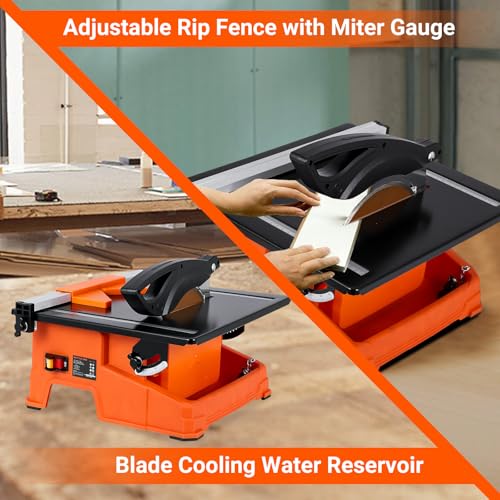
At first glance, the PeakPursuit looks identical to the previous model, same 7-inch size, bevel range, and claimed 6500 RPM. But there’s a red flag: the feature list says “6500 RPM” in the title, yet specifies “3450 RPM” in the description. That kind of inconsistency raises questions about marketing accuracy. Owners are split, some say it cuts fine on ceramic, others say it struggles with porcelain and the motor sounds strained.
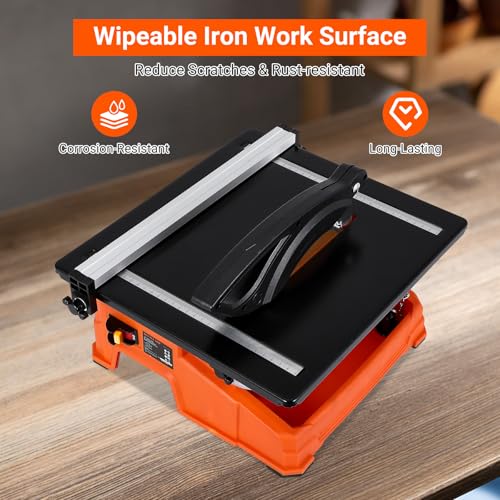
It shares the same compact footprint, galvanized table, and reset switch, so it’s not without merit. But given the confusion over specs and the lack of standout build features, I’d only recommend this if it’s significantly cheaper than alternatives. Even then, there are more trustworthy budget options.
Product photos
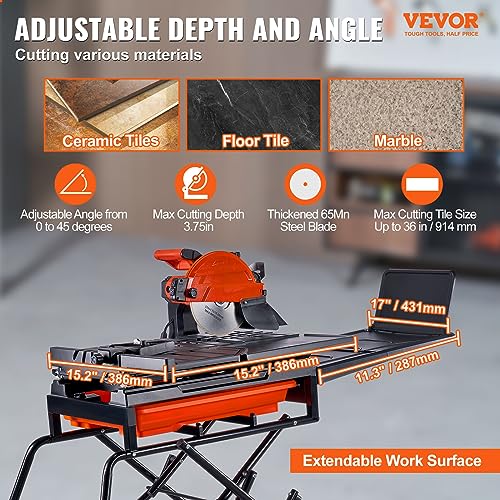
VEVOR 10-Inch Wet Tile Saw with Stand

Strengths
- 36 in. max tile size
- 3.75 in. cutting depth
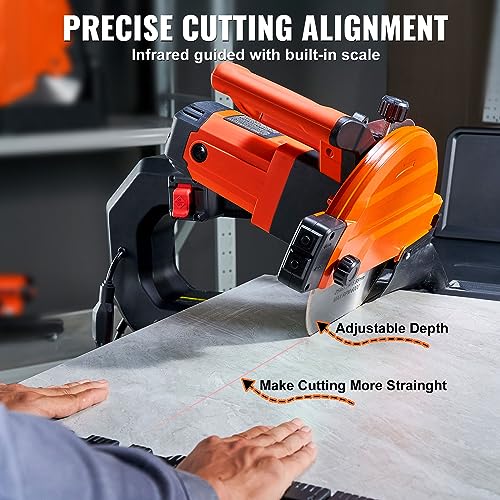
- Infrared guidance
- Removable water reservoir
- Adjustable miter angles
Trade-offs
- Noticeable vibration
- Basic splash guard
- Inconsistent laser accuracy
VEVOR is known for packing features into budget-friendly packages, and this 10-inch model aims big with a 3.75-inch max cutting depth and 36-inch max tile size, on paper, that’s impressive for oversized stone or thick pavers. The infrared guidance system is a welcome addition for alignment, though some owners note it’s not as crisp as a laser. The 4500 RPM induction motor isn’t the fastest, but it’s consistent, and the 65Mn steel blade handles hard materials without immediate wear.
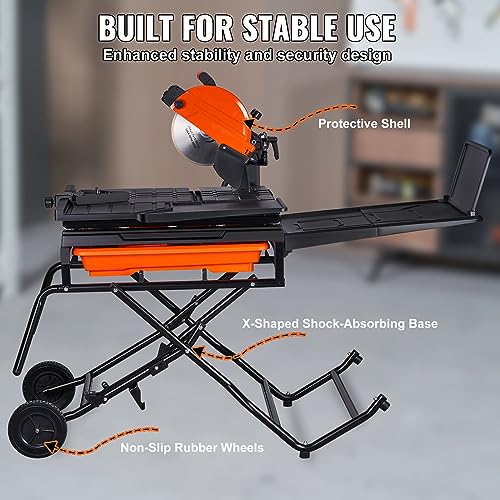
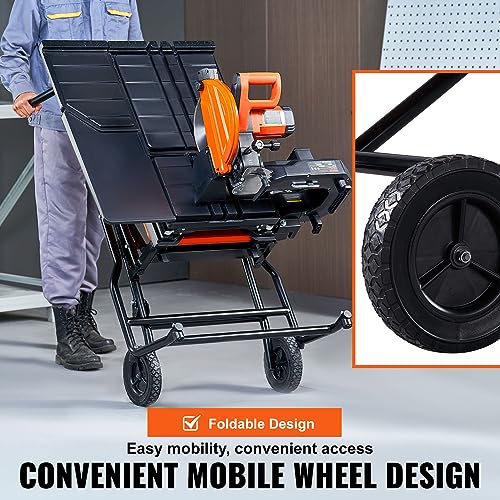
Where it stumbles is build refinement. While it has caster wheels, the overall stability isn’t as solid as DEWALT or POWERTEC. Vibration can become noticeable on long cuts, and the splash containment isn’t as effective. Still, for the buyer needing to cut large slabs without spending top dollar, it’s a compelling option if you’re willing to trade some polish for capacity.
Product photos

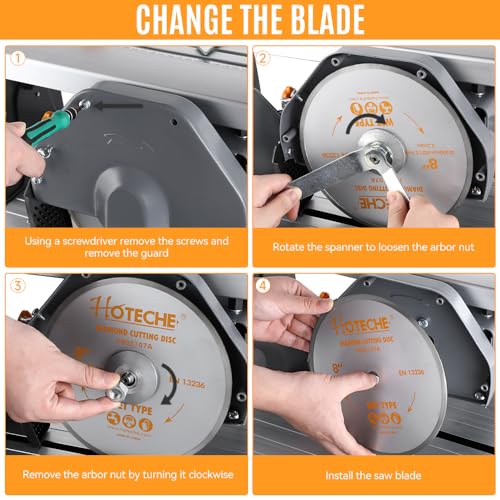
Hoteche 8-Inch Wet Tile Saw with Stand

Strengths
- Large table size
- 8 in. blade
- Adjustable depth
- Tilting head
- Stable stand
Trade-offs
- No laser or LED
- Splash control is average
- Motor lacks high-end torque
The Hoteche 8-inch model hits a sweet spot between power and price. The 8A motor and 3550 RPM speed aren’t record-breaking, but they’re enough for consistent performance on ceramic and standard porcelain. What stands out is the 785mm x 385mm table, that’s nearly 31×15 inches, offering more support than most saws in this range. That extra surface area helps when guiding large tiles, reducing the chance of binding or misalignment.
Owners appreciate the adjustable cutting depth and tilting head for bevel work, though the angle stops aren’t as precise as higher-end models. It’s not flashy, but it’s dependable for mid-level projects. Compared to the DEWALT, it lacks the same refinement, but for the buyer who doesn’t need pro-level accuracy, it delivers solid value.
Product photos
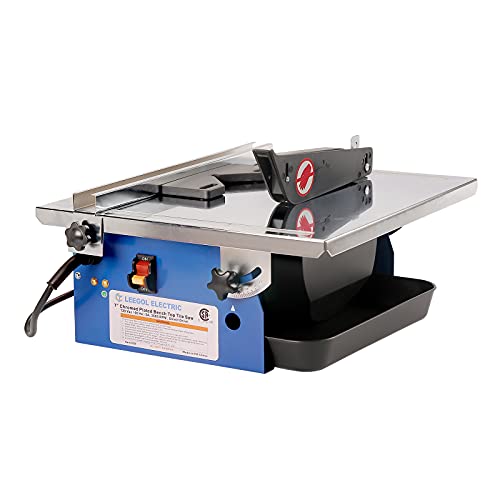
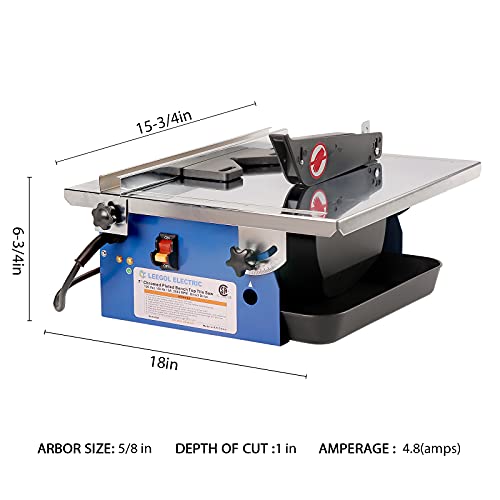
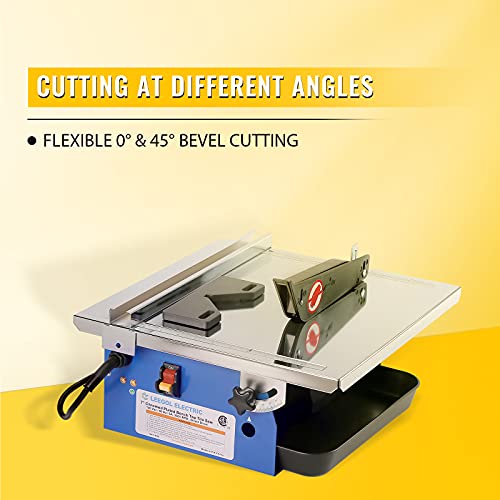
Leegol 7-Inch Electric Wet Tile Saw
Strengths
- Compact size
- Lightweight
- Adjustable fence
- Miter gauge included
- Affordable
Trade-offs
- Low RPM motor
- No stand included
- Minimal splash protection
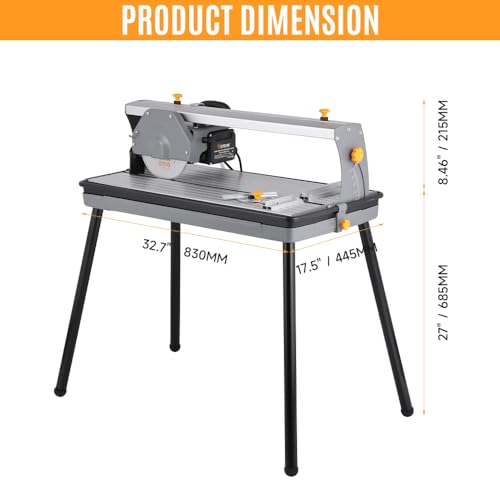
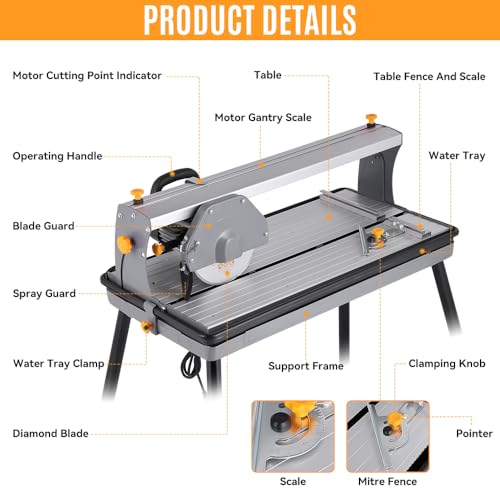
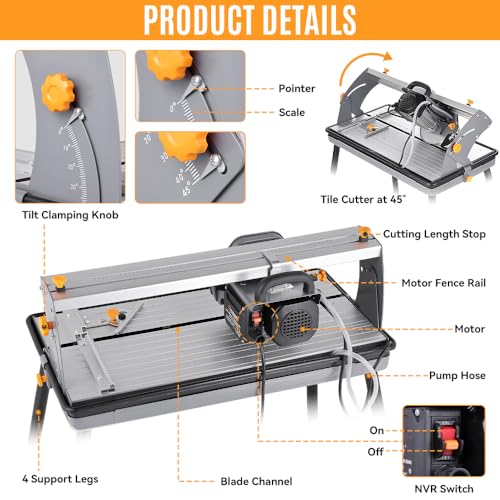
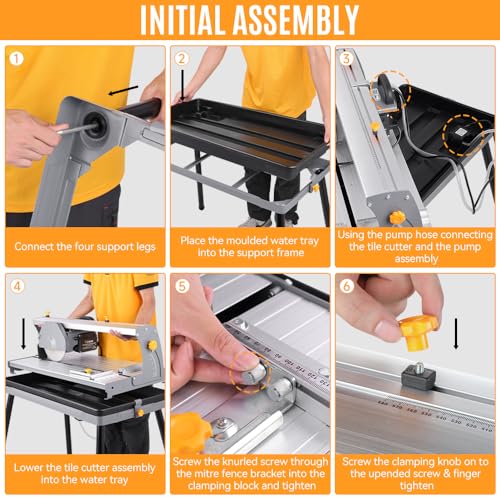
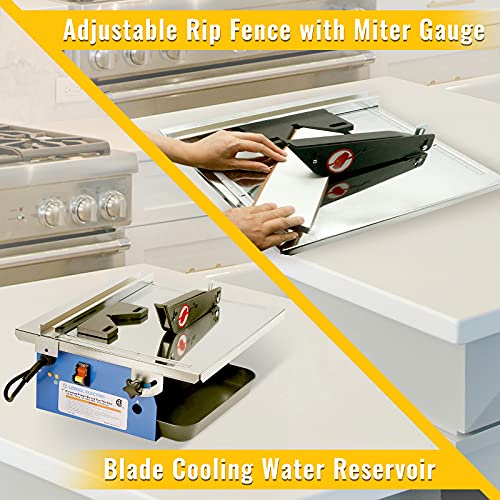
The Leegol is one of the most compact options here, and that’s its main selling point. With a small footprint and basic but functional design, it’s meant for tight spaces or users who only need to cut a few tiles occasionally. The 3,550 RPM induction motor won’t win any speed contests, but it’s adequate for ceramic and thin porcelain. The adjustable rip fence and miter gauge help with straight cuts, though don’t expect laser-level precision.
It lacks modern extras like LED lights or a folding stand, and the water reservoir is basic. But for someone in an apartment doing a single backsplash, or a homeowner with minimal storage, its size and simplicity are assets. Owners say it works fine for light use, but don’t push it hard for long periods.
Product photos
7-Inch 6500 RPM Wet Tile Saw
Strengths
- 6500 RPM motor
- Pure copper winding
- Galvanized table
- Reset safety switch
- Affordable
Trade-offs
- Shallow cutting depth
- Small worktable
- Motor heat issues reported
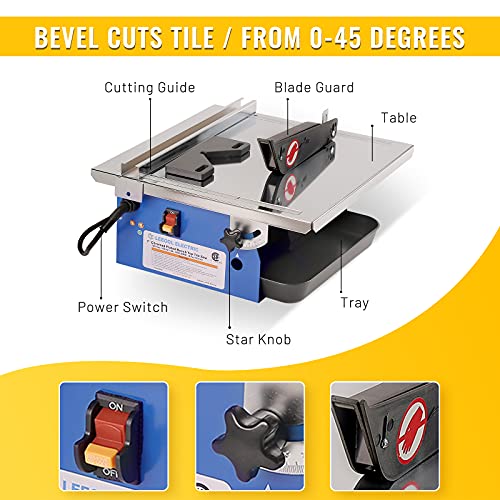
This saw leans hard into speed, the 6500 RPM pure copper motor is one of the highest no-load speeds in the category, and that can help slice through porcelain with less chipping if the feed rate is controlled. The pure copper winding should, in theory, run cooler and last longer than standard motors, which matters on longer sessions. But owners report mixed results on durability, with some noting the motor overheats under continuous use.
The 1.34-inch max depth limits it to thinner tiles and stones, and the small 13×14-inch table feels cramped compared to others. It’s clearly aimed at light-duty DIYers doing small bathroom or kitchen updates. The galvanized table resists rust, which is a plus, but overall, it’s outclassed by models with better stability and cutting capacity.
Product photos
How We Picked These wet tile saws
As someone who’s spent years around workshops and job sites, I understand how crucial a good wet tile saw is for any tiling project. Rather than a hands-on lab test with each model, my approach involved a detailed research-led comparison of published specifications, features, and, most importantly, a thorough review of owner and expert feedback. I analyzed each saw against a set of criteria designed to identify the strengths and weaknesses of each, ultimately ranking them based on overall performance and value.
For wet tile saws, cutting capacity and motor power were the biggest deciding factors. Larger format tiles are increasingly common, so the ability to handle 24-inch or even 36-inch rips is vital. Equally important is a robust motor; consistent, clean cuts require sufficient power to maintain blade speed without bogging down, especially with harder materials. Precision features like a good miter gauge and laser guide also played a significant role in the rankings. You can learn more about getting the most out of your wet saw with this wet saw tile cutting guide.
Specifications reliably indicate motor power, blade size, and maximum cutting dimensions. However, real-world performance, how smoothly a saw operates, how well it contains water spray, and the overall build quality, is best gleaned from owner reviews. I paid close attention to comments regarding durability, ease of use, and accuracy, weighing those experiences alongside professional reviews to create a balanced assessment. Achieving wet saw straight cuts often depends on these finer details.
What To Look For In wet tile saws
Choosing the right wet tile saw can make or break a tiling project, saving you time, money, and a whole lot of frustration.
A quality wet tile saw delivers clean, accurate cuts with minimal chipping. Key features include a robust motor capable of handling the material you’ll be working with, a stable frame to prevent vibration, and an effective water delivery system to keep the blade cool and suppress dust. Look for models with adjustable cutting depths and angles, and consider the maximum tile size the saw can accommodate.
Motor Power and Blade Quality
Don’t underestimate the importance of the motor. A more powerful motor (measured in amps or horsepower) isn’t always better, but it will certainly make quick work of harder materials like porcelain. Cheaper saws often skimp on motor quality, leading to overheating and premature failure. Equally crucial is the blade. Many saws come with a basic blade, but upgrading to a high-quality continuous rim diamond blade will dramatically improve cut quality and speed. Understanding diamond blade applications is essential; a blade designed for general purpose cutting won’t perform well on dense porcelain.
Rip Capacity and Tile Size
Think about the largest tiles you realistically expect to cut. A saw with a 24-inch rip capacity is great if you’re working with large format tiles, but overkill if you’re primarily doing small mosaic work. Many saws offer extension tables to increase rip capacity, which is a good compromise. Don’t forget to check the throat depth – the distance from the blade to the back of the saw – as this limits the width of diagonal cuts.
- Consider a plunge cutting feature if you need to start cuts in the middle of a tile.
- Look for adjustable bevel angles (0-45 degrees) for creating custom edges and transitions.
- For maximum versatility, a saw with both adjustable rip and miter guides is worth the investment, particularly if you’re tackling complex installations.
Portability and Workspace Considerations
Wet tile saws can be bulky and heavy. If you’re planning to move the saw frequently between jobs or store it in a small space, a more compact and lightweight model is essential. Conversely, if the saw will remain stationary, a heavier, more robust model will provide greater stability. Many saws come with folding stands or wheels for easier transport. If you’re limited on space, explore compact wet tile saws that offer a smaller footprint without sacrificing too much cutting power.
A good rule of thumb: always prioritize stability over portability if you have the space. A wobbly saw is a dangerous saw, and will also produce less accurate cuts.
Wet Tile Saws Compared
Here’s a comparison of key specifications for popular wet tile saws to help you make an informed decision.
| Product Name | Blade Size (in.) | Max. Cut Depth (in.) | Max. Rip Cut (in.) | Motor RPM | Stand Included |
|---|---|---|---|---|---|
| DEWALT 10-Inch Wet Tile Saw | 10 | N/A | 37 | N/A | Yes |
| POWERTEC PRO 7-Inch Wet Tile Saw | 7 | 2.25 | 24 | 6,000 | Yes |
| PeakPursuit 7-Inch Wet Tile Saw | 7 | 1.34 | N/A | 6,500 | Yes |
| VEVOR 10-Inch Wet Tile Saw | 10 | 3.75 | 36 | 4,500 | Yes |
| Hoteche 8-Inch Wet Tile Saw | 8 | 30/25 (90/45 deg) | 500 mm (19.7 in) | 3,550 | Yes |
| Leegol 7-Inch Electric Wet Tile Saw | 7 | N/A | N/A | 3,550 | No |
| 7-Inch 6500 RPM Wet Tile Saw | 7 | 1.34 | N/A | 6,500 | Yes |
Frequently Asked Questions
What water source should I use with a wet tile saw?
A standard garden hose is typically sufficient for most wet tile saws. However, using a pressurized water source can improve cutting efficiency and reduce blade wear, especially with denser materials like porcelain.
Can I cut natural stone with a wet tile saw?
Yes, you can cut many types of natural stone with a wet tile saw, but you’ll need the correct blade. A blade specifically designed for stone cutting is essential to prevent chipping and ensure a clean cut; a general-purpose tile blade won’t suffice.
How often should I replace the blade on my wet tile saw?
Blade life varies greatly depending on usage and material cut, but I generally recommend replacing it after approximately 50-100 hours of use or when you notice a significant decrease in cutting speed and quality. Dull blades create more heat and can strain the saw’s motor.
What’s the difference between a continuous rim and a segmented diamond blade?
A continuous rim blade provides cleaner, chip-free cuts and is ideal for harder materials like porcelain and glass. Segmented blades are better for faster cutting of softer materials like ceramic tile, but may leave a slightly rougher edge.
Are there wet tile saws suitable for small, DIY projects?
Absolutely. Many compact and portable 7-inch wet tile saws are perfect for smaller tiling projects around the home. These saws are more affordable and easier to store than larger models, and still offer enough power and precision for most DIY applications; you might even find some excellent durable wet tile saws in the smaller size range.
The Bottom Line
Choosing a wet tile saw always comes down to balancing your budget with the scale and complexity of your projects. While a higher price tag often buys you more power and capacity, the DEWALT 10-Inch Wet Tile Saw stands out as the strongest all-around performer, offering a great combination of features, accuracy, and durability for serious DIYers and professionals alike. It’s a significant investment, but one that will likely pay off in the long run with cleaner cuts and fewer headaches.
For those on a tighter budget, or tackling smaller jobs, the PeakPursuit 7-Inch Wet Tile Saw provides a surprisingly capable option. If you prioritize versatility and the ability to handle a wide range of tile sizes and cuts, the Hoteche 8-Inch Wet Tile Saw is a solid choice, offering an impressive rip capacity and adjustable bevel angles. Understanding how to operate a wet saw is key to getting the most from any of these models.
Ultimately, the specs are less important than a stable setup, a quality blade, and consistent technique. Don’t get too hung up on horsepower numbers or rip capacities if you’re only cutting standard-sized tiles. Prioritize a saw that feels solid and well-built, and always follow proper safety procedures to ensure accurate, clean cuts and a safe working environment.
