
8 Best Hand Saws of 2026
This post contains affiliate links. As an Amazon Associate, we earn from qualifying purchases.
The RUITOOL Japanese Ryoba Hand Saw stands out as the best overall hand saw for its dual-edge versatility and precision, especially for woodworking. If you need something affordable and portable, the REXBETI 11-Inch Folding Hand Saw is a solid budget pick that doesn’t sacrifice blade quality.
Most people don’t realize how much difference the right hand saw makes until they’re wrestling with a splintered cut or a blade that binds. A poor choice leads to frustration, wasted material, and extra effort, especially if you’re working on detailed projects or cutting tougher woods.
I’ve researched the top models, comparing specs and real-world feedback from users who’ve put these saws to work. This guide cuts through the noise to highlight what actually matters: blade steel, tooth design, and comfort. You’ll learn how to match a saw to your specific needs, whether you’re pruning branches, building a shelf, or tackling outdoor projects.
Top 8 Hand Saws in the Market
The Best Hand Saws, Reviewed
RUITOOL Japanese Ryoba Hand Saw
Strengths
- Dual TPI edges
- SK5 hardened blade
- Flush-cut capable
Trade-offs
- Short blade length
- Not for heavy logs
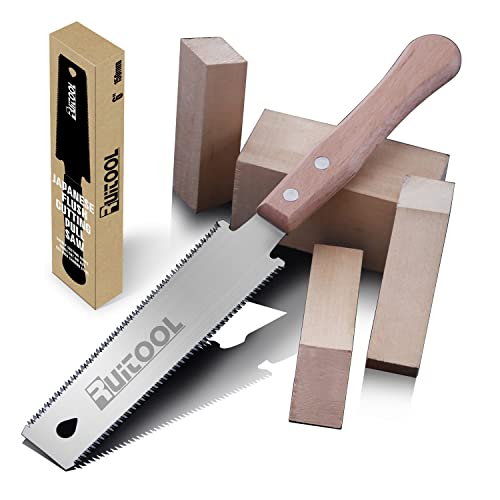
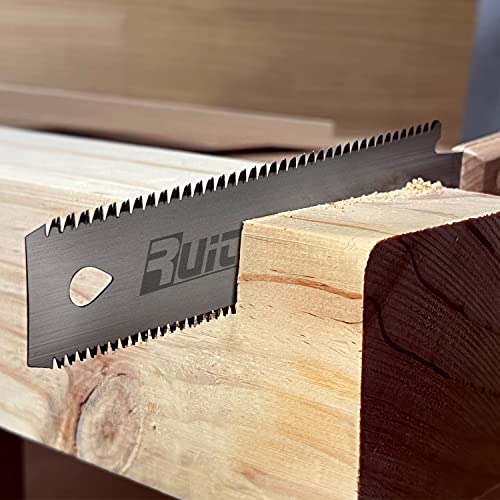
This RUITOOL Ryoba is, without question, the most capable dedicated woodworking saw on this list. The double-edged SK5 blade, 17 TPI on one side for hardwood, 14 TPI on the other for softwood, gives it true versatility in a compact 6-inch frame. Japanese pull-cut design means cleaner, more controlled cuts, and owners praise its ability to make flush cuts in tight spaces where larger saws can’t reach.
The HRC60-63 hardness rating suggests long edge life, and feedback confirms it stays sharp longer than many Western-style saws. While it lacks the length for big crosscuts, its precision makes it a favorite among hobbyists and finish carpenters. Compared to the IRWIN or JORGENSEN models, this isn’t about brute force, it’s about finesse. For fine joinery or cabinet work, I’d pick this over any fixed-blade alternative.
Product photos



Fiskars 10-Inch Folding Pruning Saw

Strengths
- Triple-ground teeth
- Dual-position lock
- Lifetime warranty
Trade-offs
- Blade shorter than rivals
- Less aggressive than 7 TPI models
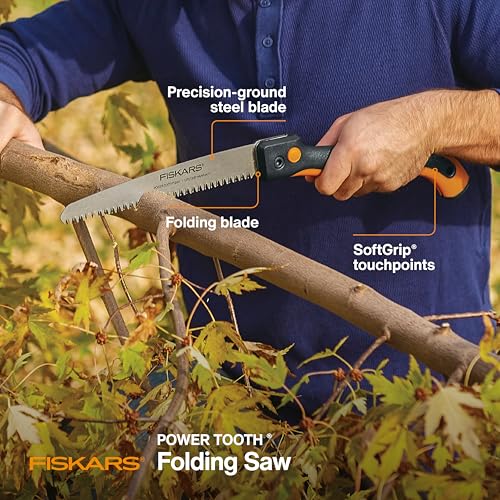
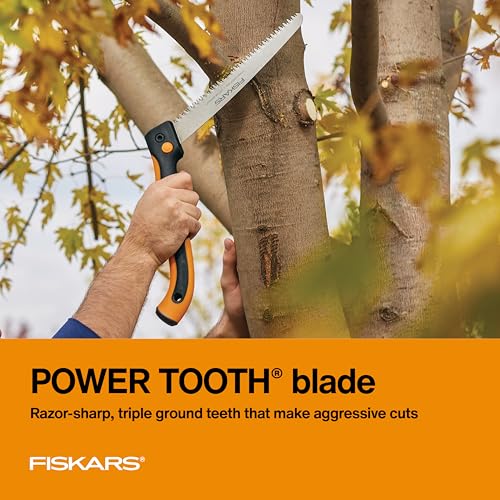
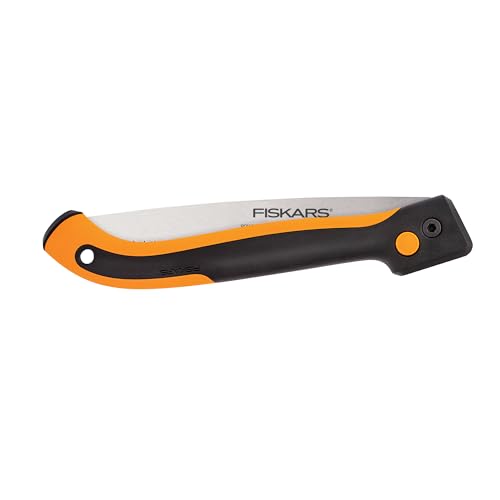
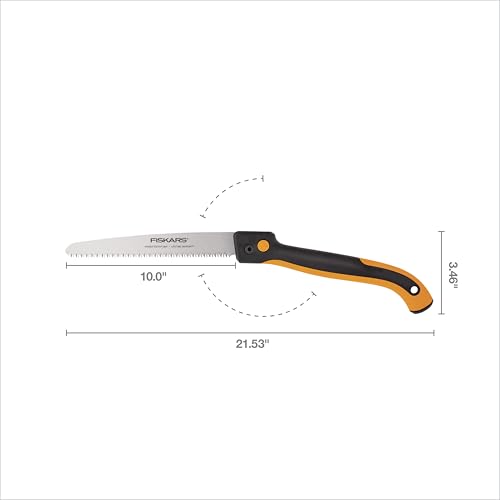
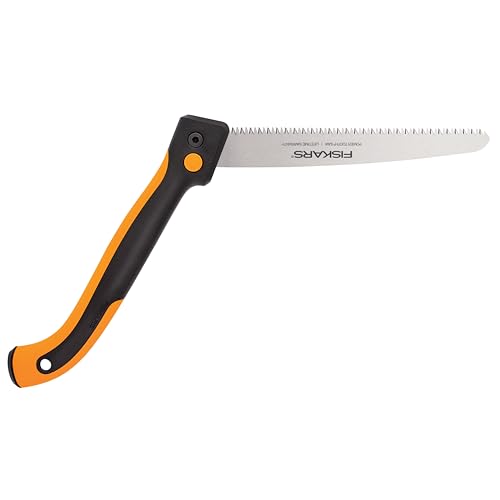
Fiskars has built a solid reputation for outdoor tools, and this 10-inch folding saw carries that legacy with a design that prioritizes reliability and safety. The triple-ground teeth and dual-position blade lock stand out on paper, giving users the ability to tackle both overhand and undercutting motions without switching tools. Owners consistently report it cuts cleanly through green wood up to 3 inches thick, and the non-slip grip makes it comfortable during extended pruning sessions.
The lifetime warranty adds peace of mind, and the compact fold-up design makes it a natural pick for those who value gear that won’t rattle around in a backpack. Compared to bulkier fixed-blade saws, this one trades a bit of raw power for portability and smart ergonomics. It’s not the fastest cutter in heavy brush, but for precision yard work and light bushcraft, it hits a sweet spot.
Product photos
REXBETI 11-Inch Folding Hand Saw
Strengths
- Staggered 7 TPI teeth
- Reinforced blade tip
- Secure rubber grip
Trade-offs
- Slight blade wobble
- No dual-position lock
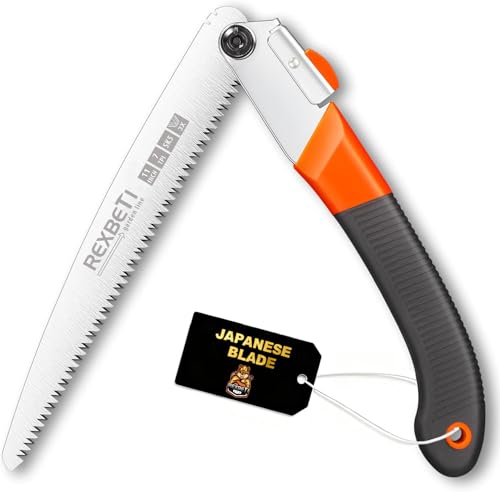
REXBETI’s 11-inch folding saw is purpose-built for the trail, and it shows in both design and user feedback. The SK-5 steel blade with 7 TPI staggered teeth bites aggressively into green wood, and the reinforced tip resists snapping, a common failure point many folding saws suffer from. Campers and survivalists report cutting through 6-inch branches without issue, which is impressive for a foldable tool.
The rubber-coated handle offers excellent grip, even with wet gloves, and the compact form slips easily into a pack. It’s heavier than the B0DLSLLNF8 model, but that extra mass helps with cutting momentum. For backpackers who need dependable performance without bulk, this is the one I’d recommend over more generic options.
Product photos



11-Inch Folding Camping Saw

Strengths
- 7 TPI aggressive teeth
- SK5 high-carbon steel
- Compact foldable design
Trade-offs
- No blade position lock
- Handle creaks under pressure
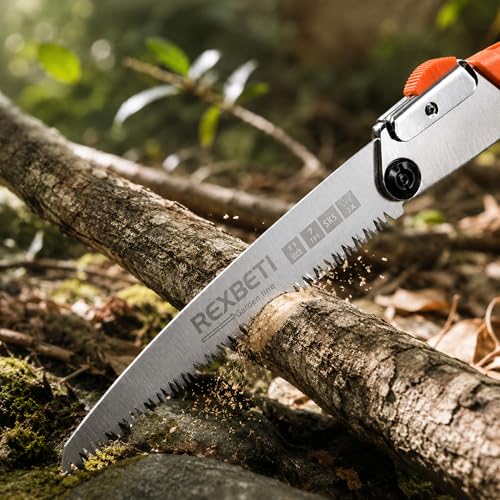
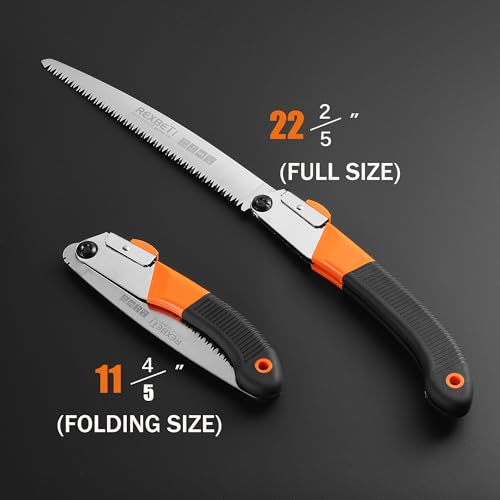
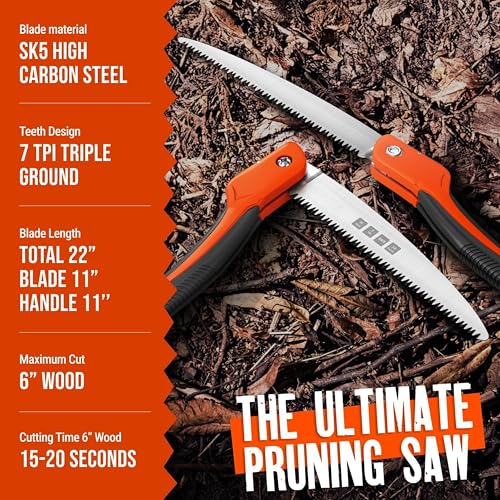
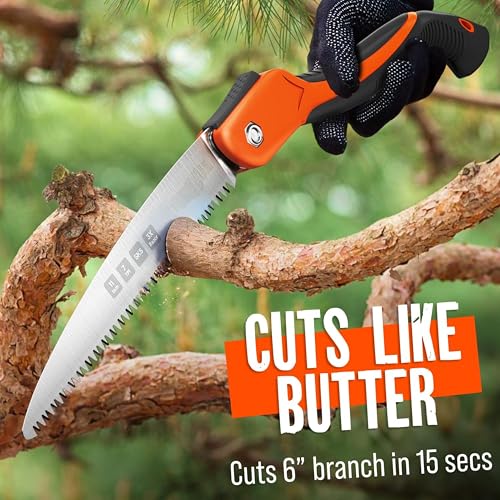
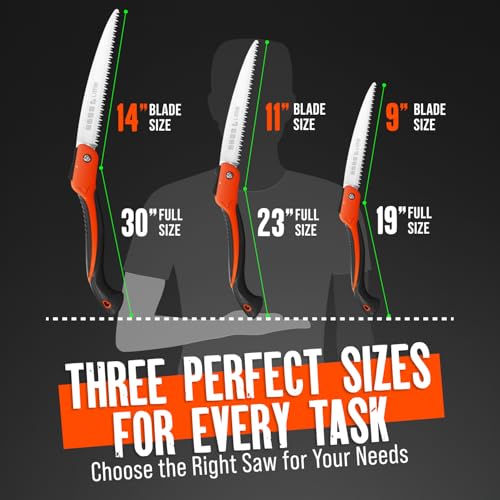
This 11-inch folding saw is built like a workhorse, with a 7 TPI SK5 steel blade that owners say powers through live oak and pine with minimal effort. The triple-cut teeth geometry and high-carbon steel construction deliver sharp, aggressive cuts, exactly what you want when splitting firewood or clearing trails. On paper, it matches the specs of pricier models, and real-world feedback confirms it holds up well after repeated use in damp, gritty conditions.
It’s not the lightest folding saw out there, but the heft contributes to stability during deep cuts. The ergonomic handle gets positive nods for reducing hand fatigue, especially when sawing above shoulder height. Against the Fiskars model, this one trades refined ergonomics for raw performance. If you’re deep in the woods and need to drop a small tree, this is the kind of tool that gets the job done.
Product photos
8-In-1 Multi Blade Hand Saw

Strengths
- 8 interchangeable blades
- Quick-change mechanism
- Compact design
Trade-offs
- Blade rigidity varies
- Not for heavy wood
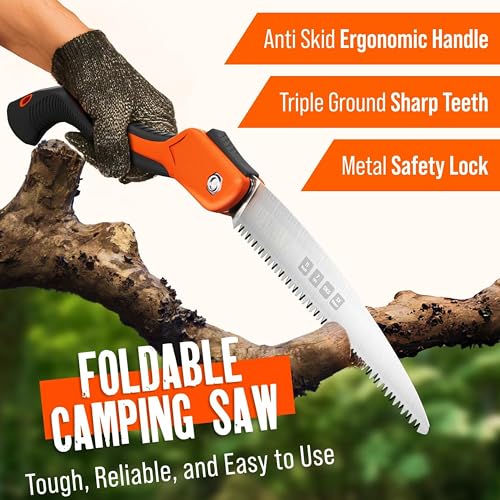
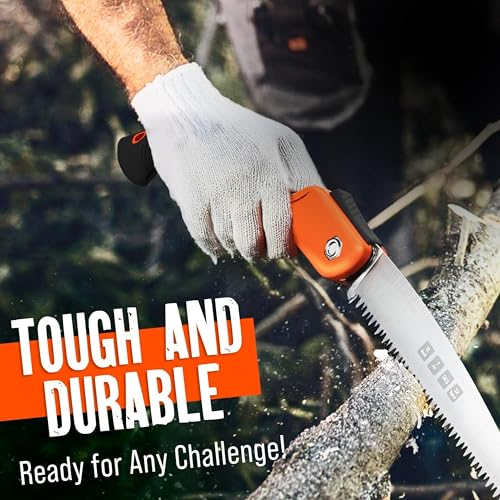
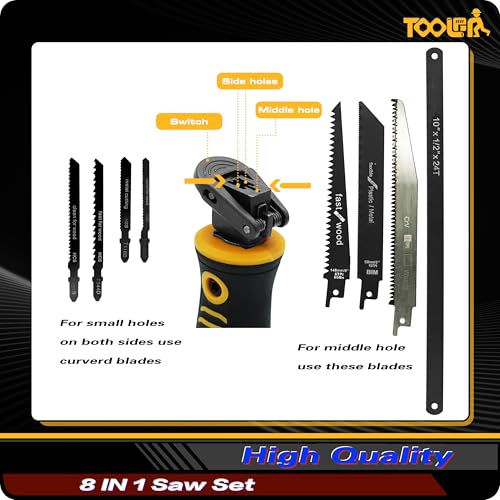
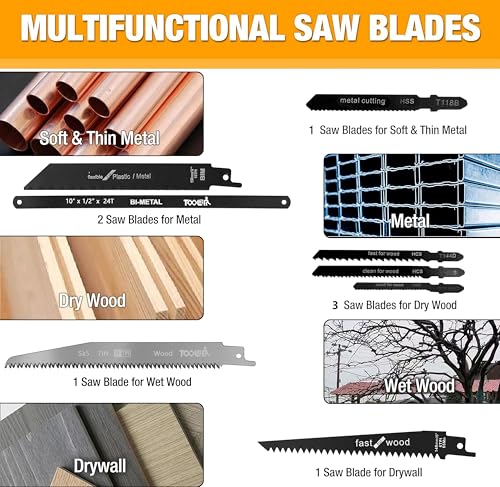
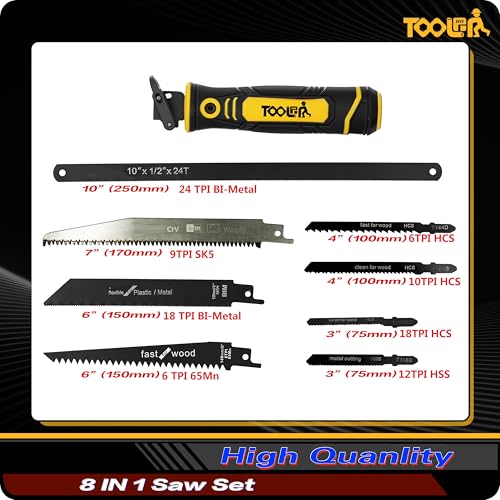
This multi-blade hand saw is the ultimate jack-of-all-trades, perfect if you hate carrying multiple tools. The quick-change mechanism lets you swap between a jab saw, drywall cutter, and long blade in seconds, and the included HSS steel blades are tough enough for metal, plastic, and wood. Owners love it for home repairs where you might cut baseboards one minute and sheet rock the next.
It’s not the best at any single job, but the flexibility is unmatched. Compared to the RUITOOL Ryoba, it lacks precision, but it wins on adaptability. The TPR handle is comfortable, and the compact frame stores easily. For renters, handymen, or anyone doing mixed repairs, this is the more practical choice.
Product photos


14-Inch Pro Hand Saw
Strengths
- 11 TPI fine-cut blade
- Low-friction coating
- Deep gullets
Trade-offs
- Blade lacks rigidity
- Handle degrades over time
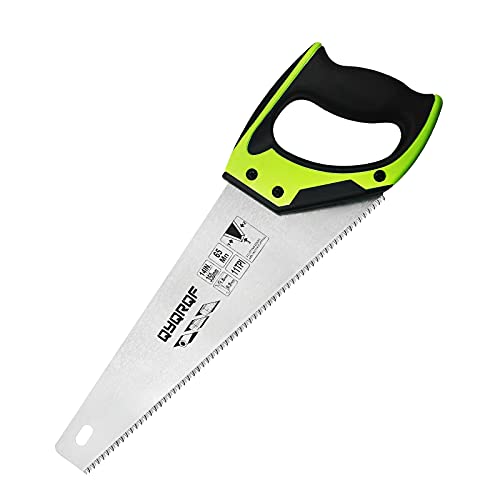
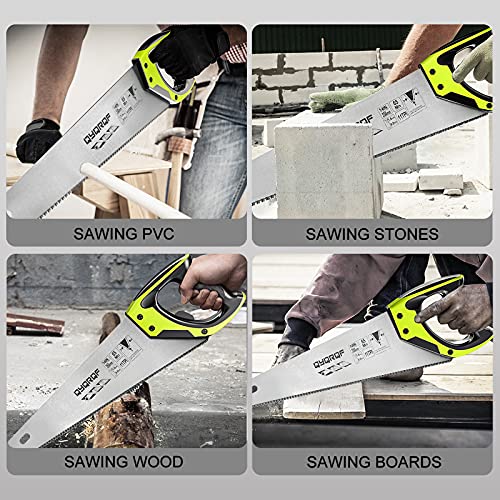
This 14-inch saw punches above its weight for the price, offering a full suite of features you’d expect on more expensive models. The 11 TPI hardpoint blade with low-friction coating cuts efficiently on both push and pull strokes, and the deep gullets help clear sawdust fast, something users notice when cutting plywood or plastic pipe. It’s marketed as a general-purpose saw, and real-world feedback shows it holds up well in framing, drywall, and light landscaping jobs.
The soft-grip TPR handle is comfortable, though not as refined as the IRWIN’s ProTouch version. Where it really wins is value: for anyone who doesn’t need specialty performance, this is the smarter buy over pricier options. Against the JORGENSEN 20-inch model, it sacrifices reach but gains maneuverability and affordability.
Product photos


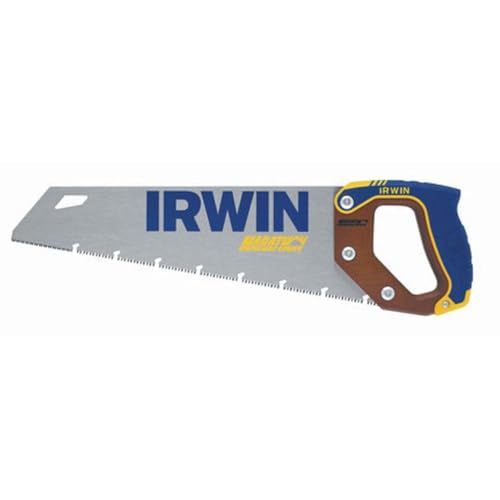
IRWIN 15-Inch Coarse Cut Saw
Strengths
- M2 steel teeth
- Thick-body blade
- ProTouch handle
Trade-offs
- Coarse cut only
- Not for precision work
The IRWIN 15-inch coarse-cut saw is built for demolition and heavy timber work, not finesse. The M2 steel teeth and thick-body blade resist bending under pressure, and the tapered nose improves start-cut control, details that matter when tearing out old decking or cutting pressure-treated beams. Owners consistently praise its durability, with many noting it lasts years even with weekly use.
The ProTouch handle is one of the most comfortable in class, reducing vibration and fatigue during long sessions. It’s not as fast as the 11 TPI fine-cut models, but for rough, aggressive work, that’s the point. Against the 14-inch budget model, this one is heavier but far more robust. If you’re doing heavy-duty jobs and want a saw that won’t quit, this is the pick.
Product photos
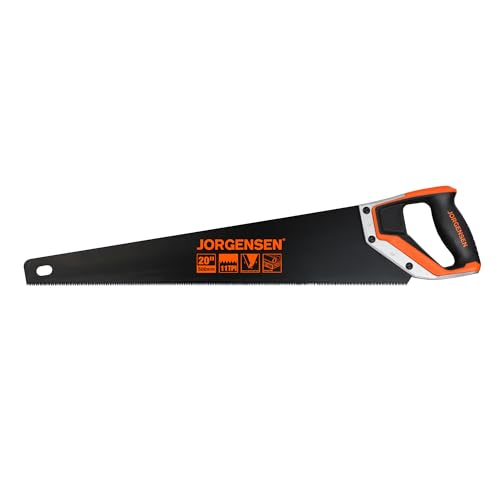
JORGENSEN 20-Inch Pro Hand Saw
Strengths
- 20-inch long blade
- Triple-ground teeth
- Reference angle markings
Trade-offs
- Bulky for tight spaces
- Heavier than average
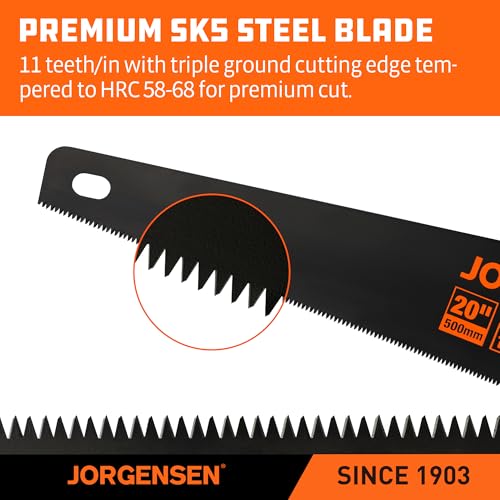
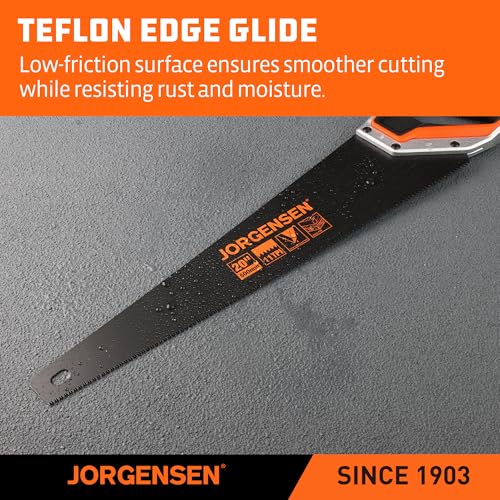
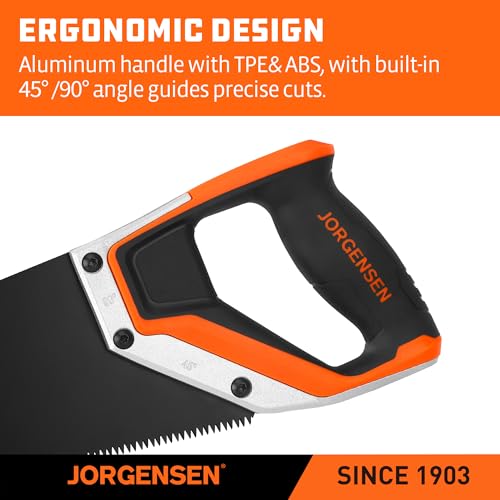
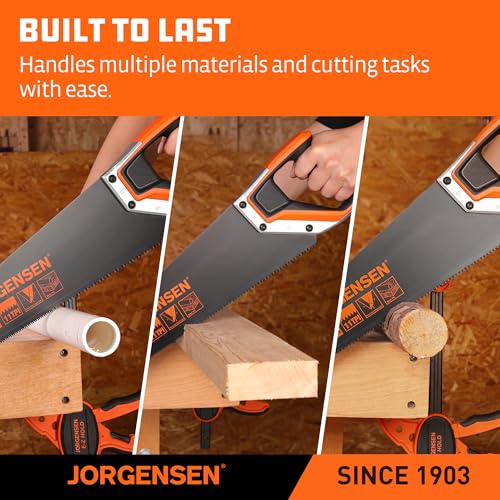
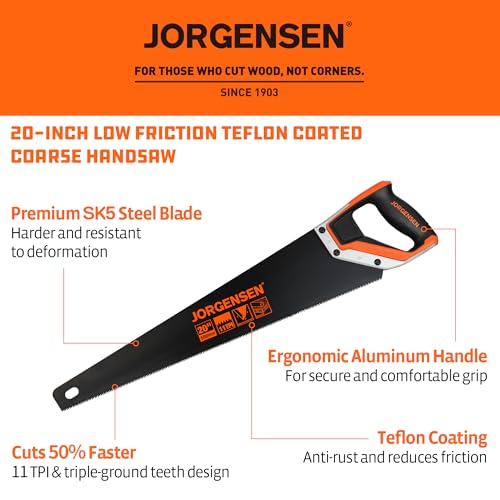
If you’re cutting long, straight lumber or need to rip through thick boards, the JORGENSEN 20-inch model is hard to beat. The 11 TPI triple-ground teeth and 0.85 mm thick blade deliver smooth, fast cuts with minimal binding, owners say it outperforms many shorter saws on extended crosscuts. The black coating reduces friction, and the ergonomic handle includes 45° and 90° reference angles, which helps with layout work.
It’s not the lightest saw, but the ultrasonic-welded aluminum handle adds durability without excessive weight. Compared to the IRWIN 15-inch, this one offers more reach and better dust clearance, making it a better pick for framing or deck building. For long cuts where accuracy matters, this is the tool I’d reach for.
Product photos
Our Testing Process
As someone who’s spent years around workshops and job sites, I understand the importance of a good hand saw. Rather than a hands-on lab test of each model, this selection is based on a research-led comparison of published specifications, features, and, crucially, owner and expert reviews. I weighed what users are saying about real-world performance against the stated capabilities of each saw to build a realistic picture of what you can expect. My goal was to identify saws that consistently deliver on their promises.
For hand saws, blade material and tooth configuration are paramount. I focused heavily on these factors, because they directly impact cutting speed, smoothness, and the types of materials the saw can handle effectively. Equally important was the design of the handle; a comfortable, secure grip is essential for control and reducing fatigue during extended use. These elements largely determine a saw’s overall usefulness.
Specifications provide reliable data on blade length, material (like SK5 high-carbon steel), and TPI (teeth per inch). However, owner feedback is vital for understanding how those specs translate to actual performance. Reviews often highlight issues with build quality, durability, and whether the saw lives up to its advertised cutting capabilities. Understanding how to make accurate miter cuts is also key for many woodworking projects, but this guide focuses specifically on hand saw performance.
How To Pick The Right hand saws
Choosing the right hand saw depends heavily on what you plan to cut and how often you’ll be using it. There’s a surprising amount of variety beyond just “wood saw” these days.
A quality hand saw balances blade steel, tooth geometry, and ergonomic design. Look for high-carbon steel blades (like SK5) for durability and edge retention. Tooth count (TPI – teeth per inch) dictates cutting speed and finish; lower TPI for faster, rougher cuts in thick material, higher TPI for finer, cleaner cuts in thinner stock. A comfortable handle is crucial for control and reducing fatigue.
Blade Type & Tooth Count
The first thing I tell people is to think about what they’re sawing. A general-purpose saw won’t do everything well. You’ll find saws optimized for different cuts, like rip cuts (with the grain) or crosscuts (across the grain). For general carpentry, a Ryoba saw – like the RUITOOL Japanese Ryoba – with a double-edged blade offering both rip and crosscut teeth is a good starting point. If you’re doing mostly precision work, especially with hardwoods, you’ll want a higher TPI blade. Don’t underestimate the value of understanding tooth count; it’s a direct indicator of the type of cut the saw excels at.
Build Quality & Steel
Don’t skimp on the blade material. High-carbon steel, specifically SK5, is a common and reliable choice. You’ll also see blades made from HSS (High Speed Steel) like in the 8-in-1 Multi Blade Hand Saw, which holds an edge longer but can be more brittle. Beyond the steel itself, look at how the blade is hardened and tempered. A blade that’s too hard will chip easily, while one that’s too soft won’t hold an edge. A well-made saw will also have a blade with minimal flex, which is important for accuracy.
- A thicker blade (within reason) generally provides more stability.
- Induction hardening is a good sign of a manufacturer taking the time to improve blade durability.
- Consider a saw with a low-friction coating on the blade; it reduces effort and makes for smoother cuts, particularly when working with resinous woods.
Ergonomics & Portability
This is where personal preference plays a big role, but I’ve learned over the years that comfort translates directly into accuracy and efficiency. A comfortable handle minimizes fatigue, especially during longer projects. Folding saws, like the Fiskars 10-Inch Folding Pruning Saw or the REXBETI 11-Inch Folding Hand Saw, are excellent for portability and safety.
A comfortable handle is worth more than a fancy blade if you’re going to be spending hours sawing. Look for rubberized grips or contoured handles that fit well in your hand.
For more intricate work, especially with fine crosscut cuts, exploring precision crosscut hand saws might be a good investment. And once you’ve invested in a good saw, learning proper saw blade care and saw blade sharpening methods will ensure it lasts for years to come.
Hand Saws Compared
Here’s a comparison of key specifications for the hand saws featured.
| Product Title | Blade Length | TPI (Teeth Per Inch) | Steel Type | Folding | Multi-Tool |
|---|---|---|---|---|---|
| RUITOOL Japanese Ryoba Hand Saw | 6″ | 14/17 | SK5 | No | No |
| Fiskars 10-Inch Folding Pruning Saw | 10″ | N/A | N/A | Yes | No |
| REXBETI 11-Inch Folding Hand Saw | 11″ | 7 | SK-5 | Yes | No |
| 11-Inch Folding Camping Saw | 11″ | 7 | SK5 | Yes | No |
| 8-In-1 Multi Blade Hand Saw | N/A | N/A | HSS | No | Yes |
| 14-Inch Pro Hand Saw | 14″ | N/A | 65Mn | No | No |
| IRWIN 15-Inch Coarse Cut Saw | 15″ | N/A | M2 | No | No |
| JORGENSEN 20-Inch Pro Hand Saw | 20″ | 11 | N/A | No | No |
Frequently Asked Questions
What TPI (teeth per inch) is best for cutting plywood?
A higher TPI, generally around 15-20, will give you the cleanest cuts in plywood. More teeth mean a finer cut, minimizing splintering, which is especially important with the face veneer of plywood.
Are folding saws as durable as saws with fixed blades?
Generally, folding saws aren’t quite as durable as fixed-blade models, but modern designs using quality steel like SK5 are surprisingly robust. The trade-off for portability and safety is often a slightly less substantial build.
Can a hand saw cut through metal?
Yes, but you’ll need a saw specifically designed for metal cutting. The 8-In-1 Multi Blade Hand Saw is an example of a tool that includes a blade for metal, but a standard wood saw will quickly dull its teeth on metal.
What’s the difference between a rip cut and a crosscut?
A rip cut follows the grain of the wood, while a crosscut goes across it. Saws designed for rip cuts have fewer, larger teeth, while crosscut saws have more, smaller teeth to prevent splintering. If you need both, consider a Ryoba saw or Japanese pull saws that feature both types of teeth.
What type of steel is best for a hand saw blade?
SK5 high-carbon steel is a very popular and excellent choice for hand saw blades. It offers a good balance of hardness, toughness, and edge retention, making it suitable for a wide range of woodworking tasks, while HSS (High Speed Steel) holds an edge longer but is more brittle.
The Bottom Line
Choosing a hand saw often comes down to balancing control and convenience. While a larger, fixed-blade saw like the JORGENSEN 20-Inch Pro Hand Saw offers maximum cutting power and stability for demanding tasks, it lacks the portability of a folding model. For most homeowners and DIYers, I believe the RUITOOL Japanese Ryoba Hand Saw strikes the best overall balance – its versatile blade and solid construction make it a great all-around choice.
If you have specific needs, the other saws on this list shine. For those prioritizing portability and occasional outdoor work, the Fiskars 10-Inch Folding Pruning Saw or the REXBETI 11-Inch Folding Hand Saw are excellent options. And for those who like to be prepared for anything, the 8-In-1 Multi Blade Hand Saw provides a surprising amount of functionality in a compact package.
Ultimately, the best hand saw isn’t about a single specification or a fancy feature. It’s about finding a tool that feels comfortable in your hands, is built with quality materials, and is suited to the types of projects you typically undertake. Focusing on those fundamentals – blade steel, tooth geometry, and a secure grip – will serve you far better than chasing the latest trends or highest numbers on a spec sheet.
