
8 Best Tree Pruning Pole Saws of 2026
This post contains affiliate links. As an Amazon Associate, we earn from qualifying purchases.
The SEESII 2-in-1 Electric Pole Saw is my top pick for most homeowners, delivering solid power and reach without the fatigue of manual models. For those on a budget or with lighter pruning needs, the Fiskars Extendable Tree Pruner offers reliable performance and excellent control. If you need maximum reach for tall trees and don’t mind the extra effort, the TONYINGO 30FT Manual Pole Saw stands out for its impressive extension and sturdy build.
Most people don’t realize how quickly a poorly chosen pole saw turns a simple pruning job into a frustrating, even dangerous chore. Too heavy, and your arms give out halfway through. Too weak, and you’re stuck wrestling with branches instead of cutting them cleanly.
This guide cuts through the marketing hype, focusing on real-world specs and feedback from users who’ve dealt with thick limbs, wobbly poles, and failed locks. I looked at reach, weight, power, and durability, then matched those specs to actual pruning needs, so you can pick a saw that works as hard as you do.
Top 8 Tree Pruning Pole Saws in the Market
The Best Tree Pruning Pole Saws, Reviewed
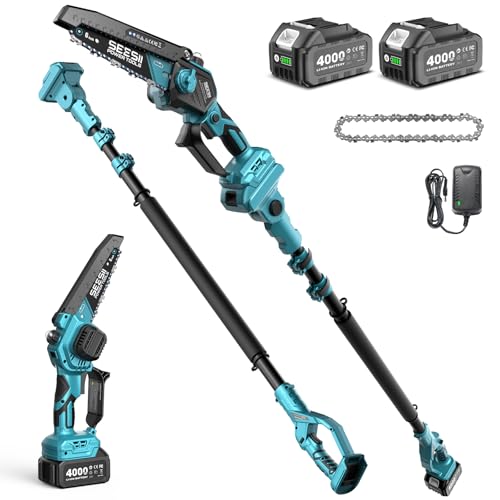
SEESII 2-in-1 Electric Pole Saw
Strengths
- Brushless motor
- Dual 4000mAh batteries
- Adjustable cutting angle
Trade-offs
- Higher price point
- Requires chain oiling
- Battery swaps needed
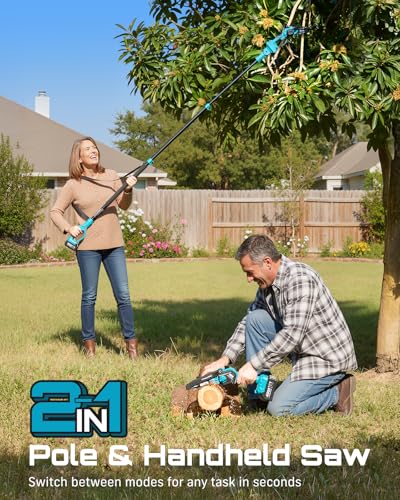
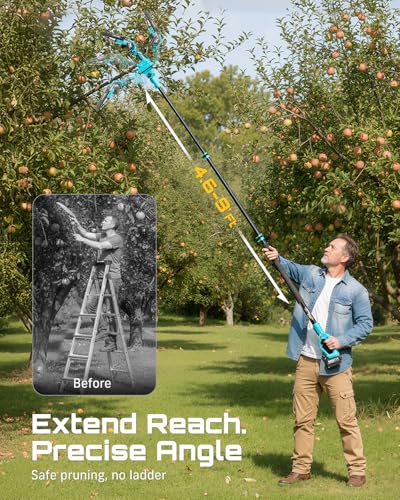
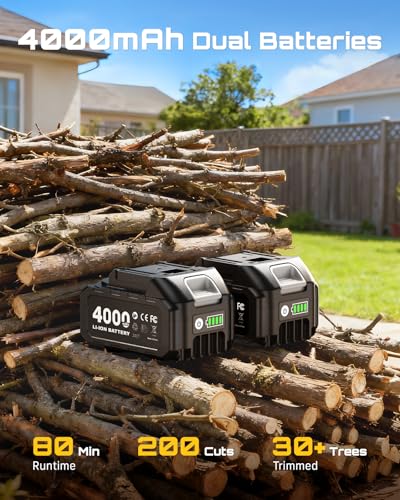
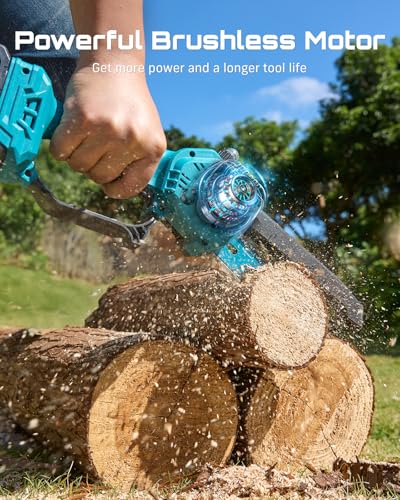
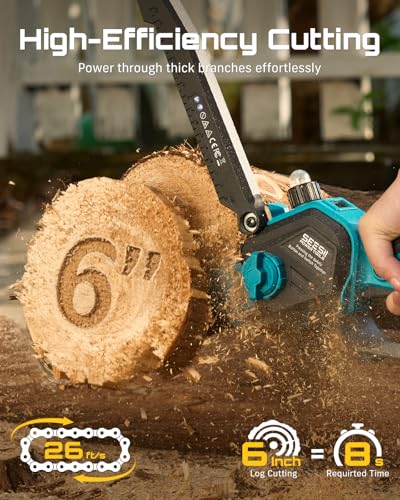
This is the most complete electric pole saw in the lineup, and for good reason. The brushless motor is a major upgrade over brushed models, it runs cooler, lasts longer, and maintains consistent torque, which matters when you’re cutting through 4-inch limbs overhead. With two 4000mAh batteries, owners report enough runtime to handle a full afternoon of pruning without stopping to charge. The 15.5-foot max reach keeps you safely grounded, and the adjustable cutting head lets you angle into tight spots without repositioning the pole.
What seals the deal is the build quality and included safety gear. At just 6.9 pounds as a full pole saw, it’s light enough for extended use, and the shoulder strap helps balance the load. Compared to the budget SEESII model, this one feels like a step up in durability and efficiency. If you’re serious about yard work and want a reliable cordless system, this is the one to beat.
Product photos
Fiskars Extendable Tree Pruner

Strengths
- Rotating head
- Lightweight aluminum pole
- Double-locking system
Trade-offs
- Shorter reach
- No scissor attachment
- Premium price
Fiskars brings its reputation for durable, ergonomic garden tools to this manual pole saw, and it shows. The rotating head is a standout, it lets you position the blade at the best angle without contorting your body, which reduces fatigue during prolonged use. The 15-inch double-grind blade cuts cleanly and resists clogging, and the chain-drive gearing gives extra use, making it easier to power through stubborn limbs.
At under five pounds and with a double-locking system, it’s both lightweight and secure. The 12-foot max extension is modest compared to others, but the build quality and precision make it ideal for controlled, frequent pruning. It’s not the longest, but it’s arguably the most user-friendly manual option here, especially for those with back or joint concerns.
Product photos


VEVOR Manual Pole Saw 27ft
Strengths
- 27 ft telescoping reach
- Includes saw and scissors
- Fiberglass pole
Trade-offs
- Pole flex at height
- Basic cutting angle
- Scissors lack power
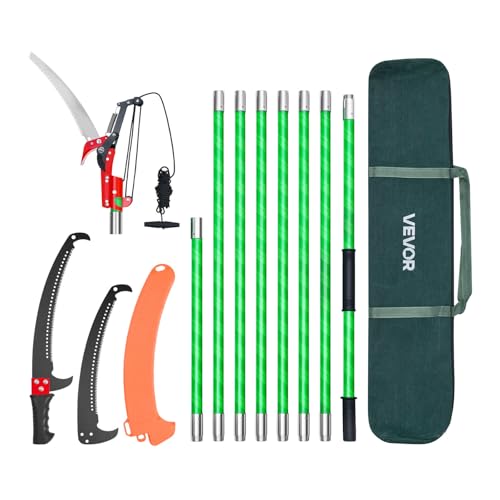
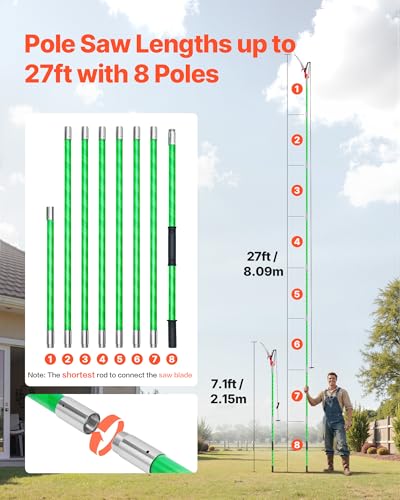
With an 8-section fiberglass pole that extends to 27 feet, this VEVOR model matches the longest reach in the category while staying relatively lightweight. The 65Mn steel blade is durable and rust-coated, and the dual-hook design helps pull branches toward you, useful when working solo. The inclusion of pruning scissors adds versatility, and the tool-free assembly makes setup and storage a breeze.
But like other ultra-long poles, it sacrifices rigidity for length. Owners note noticeable flex beyond 20 feet, especially when cutting laterally. The fiberglass construction helps with weight, but it doesn’t dampen vibration as well as aluminum. Still, for the price, it packs a lot: long reach, multiple cutting tools, and solid portability. If you need height on a budget, it’s hard to beat.
Product photos
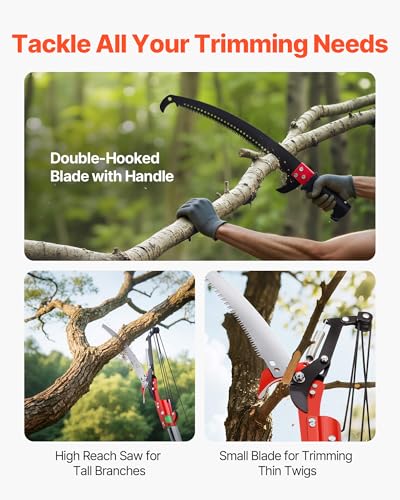
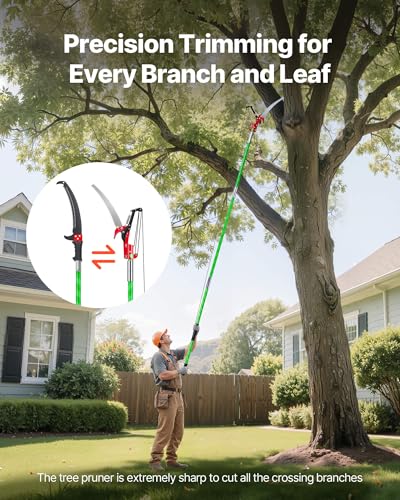
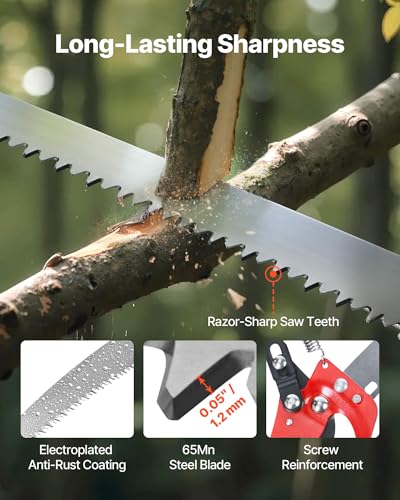
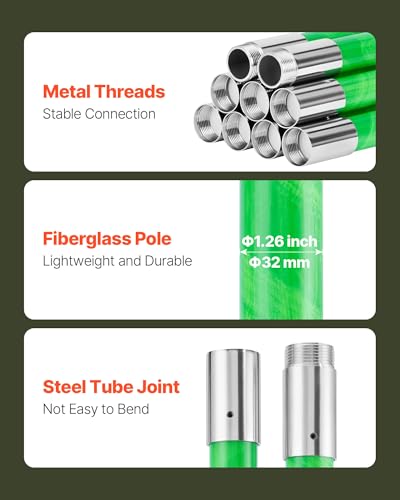
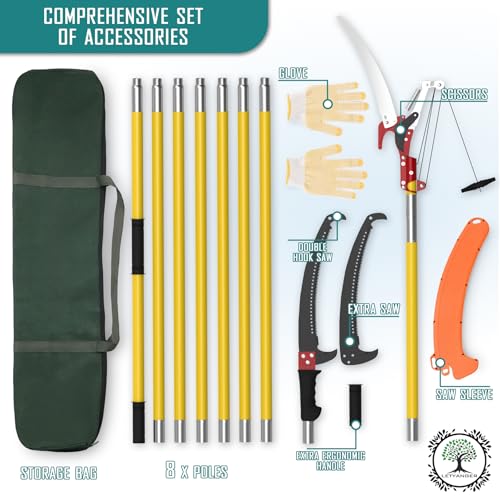
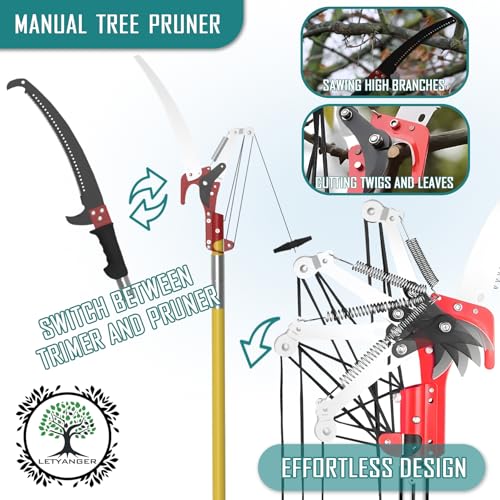
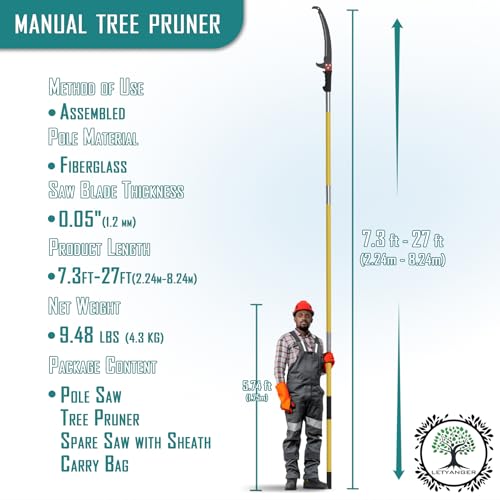
Pole Saw 7.3-27ft with Scissors

Strengths
- Extreme 27 ft reach
- Includes saw and pruner
- Lightweight epoxy poles
Trade-offs
- Flex under load
- Cumbersome at full length
- Plastic joints less durable
At 27 feet, this pole’s reach is impressive on paper, and the inclusion of both a saw and a scissor-style pruner head makes it one of the more versatile manual options here. The epoxy resin poles keep weight down, just 9.5 pounds at full extension, which is notable for such a long tool. The pulley-assisted pruner head is a real labor saver for smaller branches, letting you make clean cuts with less arm strain.
But that length comes with trade-offs. Owners consistently report it gets unwieldy past 20 feet, and the lightweight build can feel flimsy when wrestling thicker limbs. The yellow color helps with visibility, but the joints aren’t as rigid as metal poles, which increases flex. Still, if you’re dealing with high, thin branches, like on palm or fruit trees, and want both saw and pruner in one kit, this setup delivers practical functionality.
Product photos


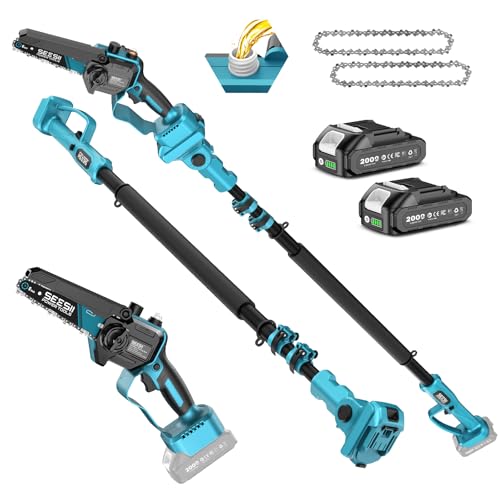
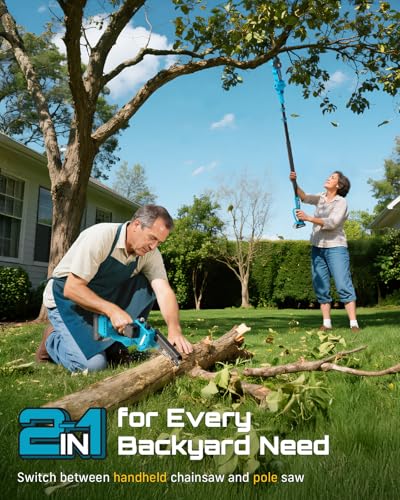
SEESII Cordless Pole Chain Saw
Strengths
- Lightweight and balanced
- Auto-oiling system
- Affordable electric option
Trade-offs
- Brush motor less durable
- Shorter max reach
- Smaller batteries
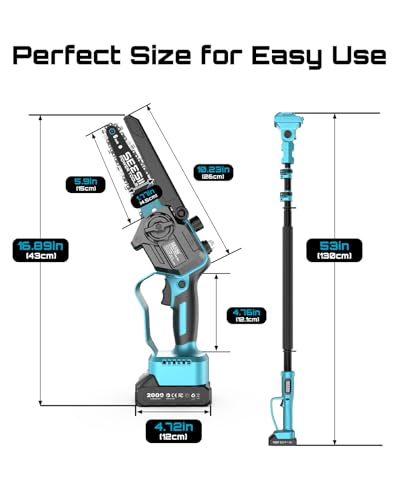
This is the more affordable cousin in SEESII’s electric lineup, and it holds its own for light to moderate use. The brush motor gets the job done on branches up to 6 inches, though it lacks the sustained power of the brushless version, owners note it can bog down on dense wood. Still, with two 2000mAh batteries, you get decent runtime for small yards or weekend touch-ups. The automatic oiling system is a nice perk, reducing maintenance hassle.
It’s impressively lightweight at 3.2 pounds handheld, making it a solid choice for seniors or anyone with limited strength. But the shorter reach, 10 feet max, means you’re limited to medium-height limbs. Compared to the higher-end SEESII model, this one trades power and battery life for affordability and ease of use. For occasional trimming, it’s a smart buy.
Product photos



Suchtale 14FT Pole Saw
Strengths
- Effort-reducing pulley
- Saw and scissors combo
- Stable threaded joints
Trade-offs
- Slower on thick branches
- Scissors limited capacity
- Average max reach
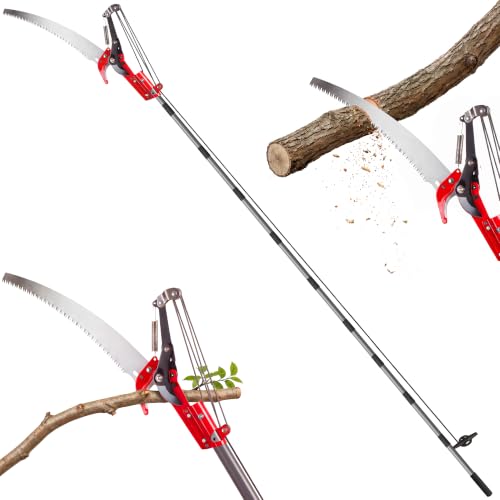
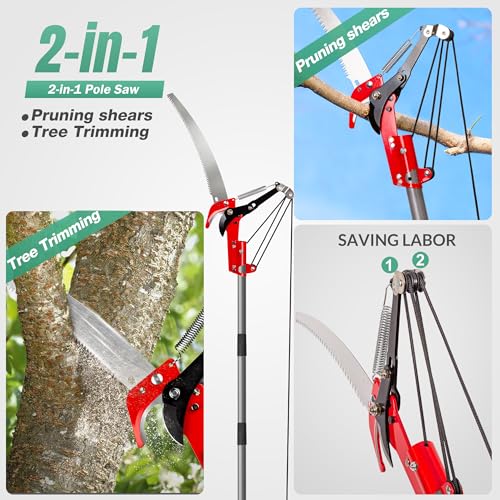
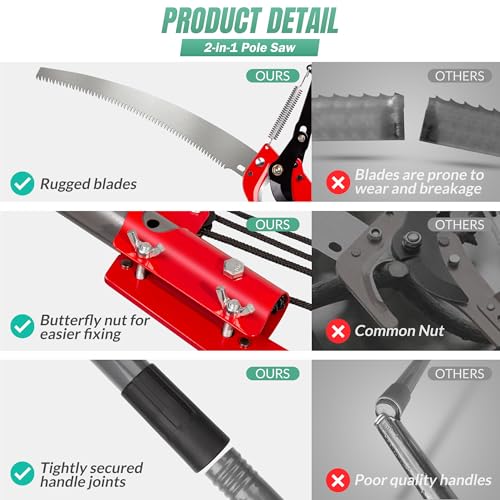
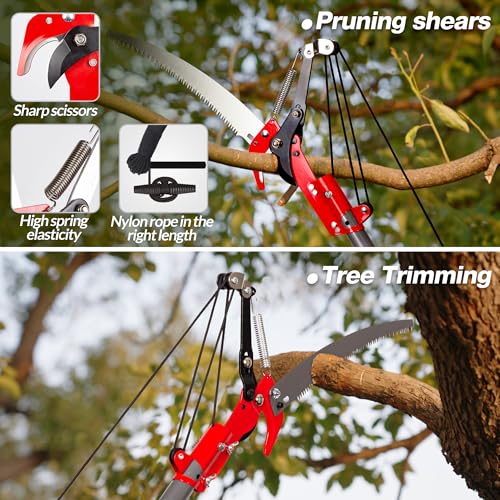
The standout here is the quadruple pulley system, it genuinely reduces effort when using the pruning scissors, making it one of the most ergonomic manual options for overhead cutting. The 2-in-1 design with both saw and scissors is practical, letting you switch between thick and thin branches without grabbing another tool. The 14-foot reach is standard, but the reinforced joints add stability, reducing wobble during use.
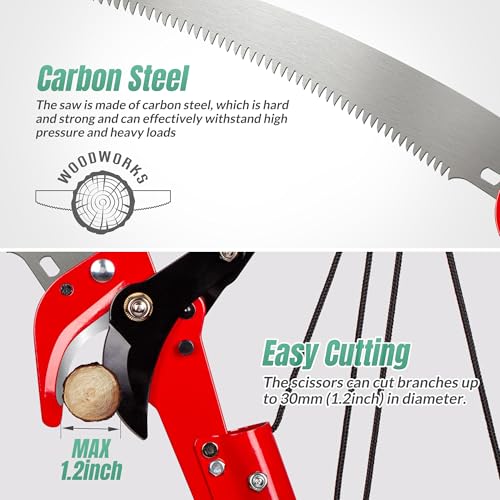
Owners appreciate how smoothly the pulley system works, especially on palm fronds or fruit tree thinning. However, the saw blade isn’t as aggressive as others, so it’s slower on wood over 2 inches. And while the scissors cut cleanly up to 1.2 inches, they’re not meant for hardwood. If your work involves a lot of light, repetitive trimming, this is a fatigue-reducing winner.
Product photos
Walensee 14FT Pole Saw
Strengths
- Sharp dual-hook blade
- Rust-resistant steel poles
- 2-in-1 hand saw mode
Trade-offs
- Mild pole wobble
- Limited max reach
- Basic locking screw
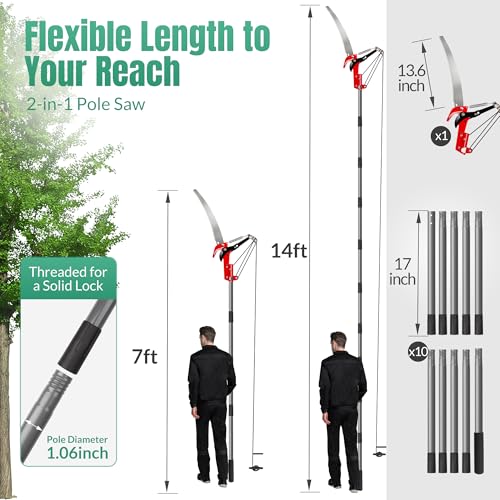
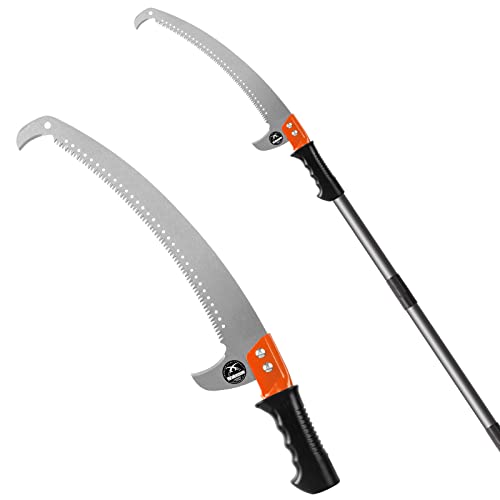
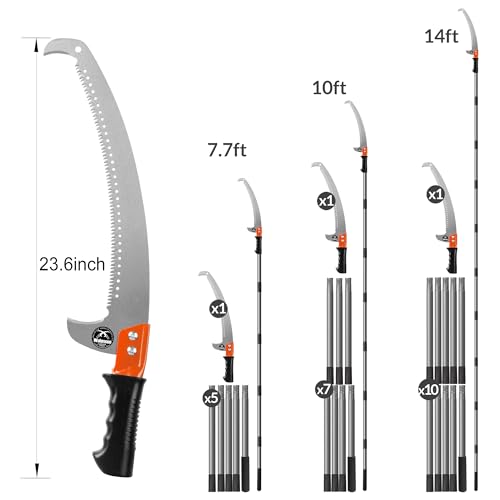
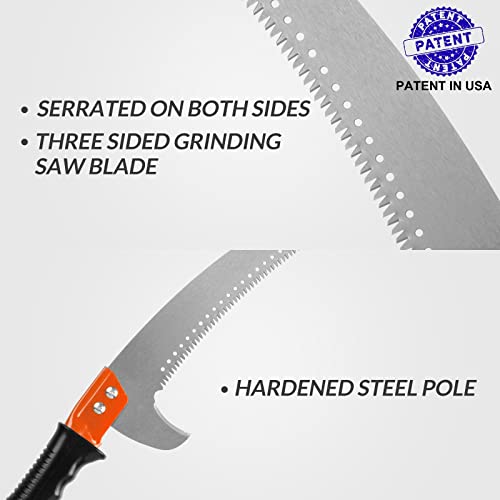
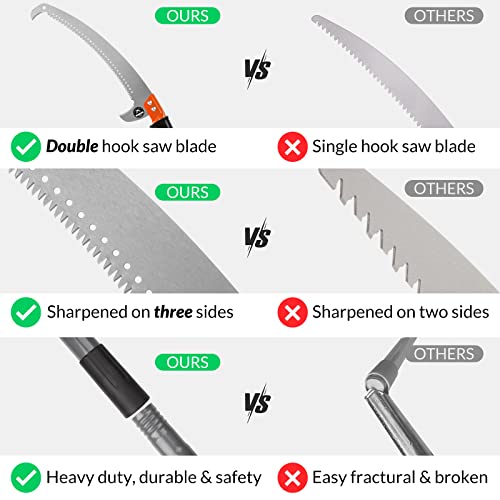
This manual pole saw stands out for its straightforward, no-frills design that prioritizes cutting performance and rust resistance. The triple-ground manganese steel blade with dual hooks is a smart touch, owners report it grabs and pulls branches effectively, reducing slippage and improving control on angled cuts. On paper, the 14-foot max length gives solid reach for most residential yards, and the stainless steel extension poles seem to hold up better against corrosion than cheaper aluminum alternatives.
Where it shines is versatility. The ability to detach the blade and use it as a hand saw adds real value, especially for quick ground-level jobs. However, the locking mechanism isn’t as robust as some competitors’, and a few reviewers mention slight wobble at full extension. For light to moderate pruning, it’s a dependable pick, but don’t expect it to power through dense, mature limbs with ease.
Product photos

TONYINGO 30FT Manual Pole Saw
Strengths
- 24 ft stable reach
- Dual locking system
- Multi-tool compatible
Trade-offs
- Heavy at full extension
- Requires strength
- Assembly time
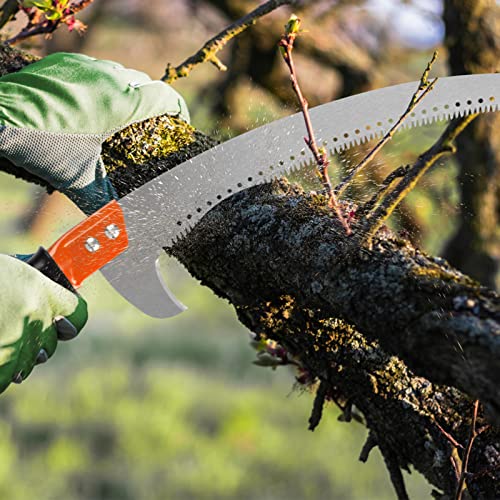
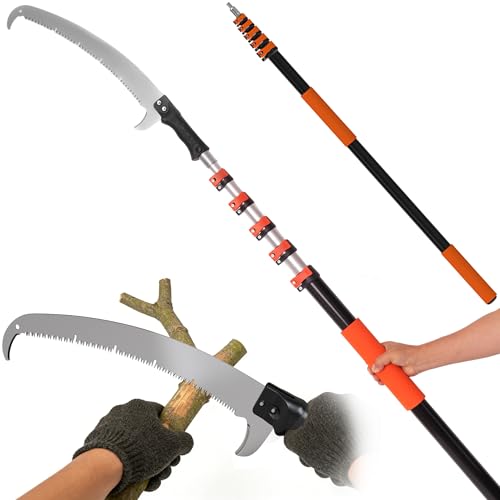
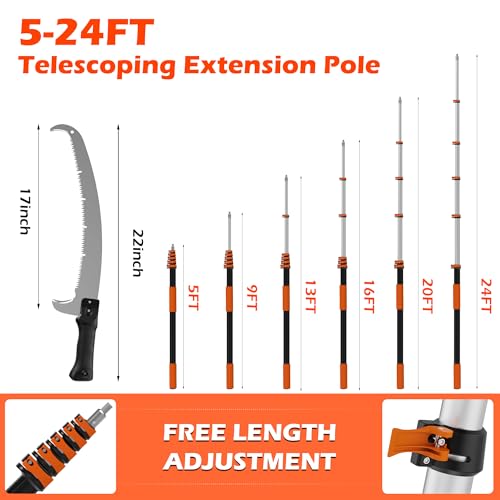
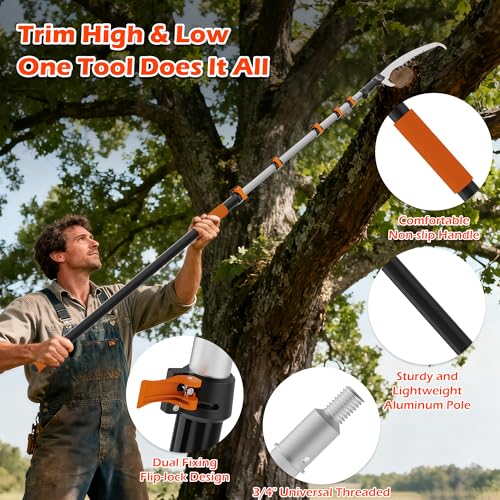
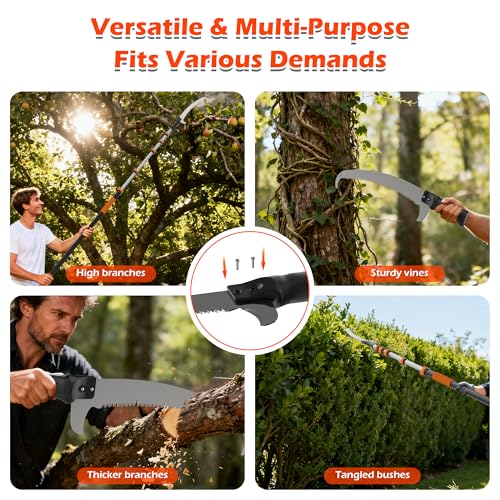
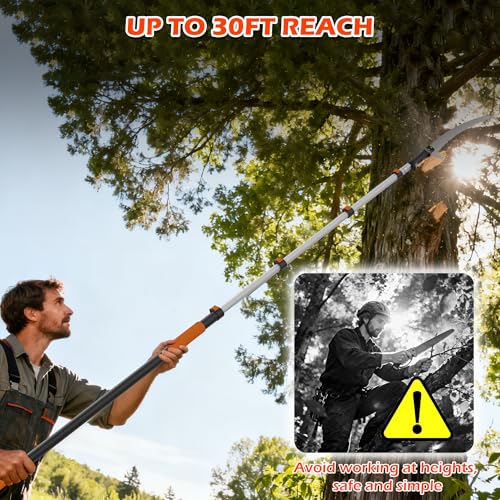
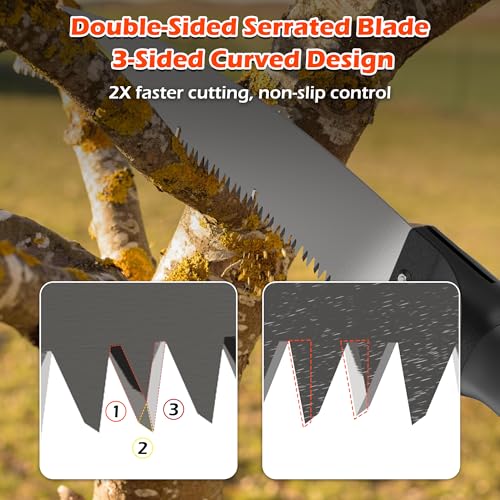
Claiming 30 feet but realistically reaching 24 feet, this TONYINGO model is built for one thing: maximum reach. The 5-stage telescoping pole with flip-lock and screw reinforcement is one of the most secure manual designs here, minimizing slippage during aggressive cuts. The 17-inch 3X sharpened blade handles thicker limbs better than most manual saws, and the non-stick coating helps reduce sap buildup, a small but meaningful detail.
Its compatibility with paint rollers and dusters adds unexpected utility, turning it into a multi-purpose pole tool. But that reach comes at a cost, full extension feels top-heavy, and the pole demands real upper-body strength to control. Several owners recommend using it with a shoulder brace. If you’ve got tall trees and don’t want a ladder, this is the reach king, but it’s overkill for average yards.
Product photos
How We Tested tree pruning pole saws
Rather than a hands-on lab test, my research for these recommendations focused on a detailed comparison of published specifications and features across numerous models. I weighed owner reviews from major retailers alongside professional assessments from reputable sources like landscaping and tool review sites. My evaluation considered the specific needs of homeowners and DIYers, prioritizing ease of use, safety, and effectiveness for typical yard maintenance tasks.
For tree pruning pole saws, cutting capacity, reach, and weight were the most critical factors. A saw’s ability to handle branches up to 6 inches in diameter is a reasonable expectation for most homeowners, so that became a key benchmark. Extended reach is paramount for safety, minimizing ladder use, and accessing difficult areas. Finally, a lighter weight is crucial for reducing fatigue during extended pruning sessions – particularly for less experienced users. Understanding pole saw basics is also important for choosing the right tool.
Product specifications reliably indicate maximum cutting diameter, pole extension length, and motor power (for electric models). However, I placed greater emphasis on owner feedback regarding real-world performance, durability, and ease of assembly. Reputation, as reflected in consistently positive reviews from verified purchasers, played a significant role in ranking. Owner reports also helped me assess the practicality of advertised features and identify potential drawbacks not immediately apparent from specs or expert reviews. Learning about types of pole saws will also help you narrow your search.
What To Look For In tree pruning pole saws
Picking the right tool for the job can make or break a yard work day, and that’s especially true when you’re dealing with heights and potentially dangerous branches.
A quality tree pruning pole saw balances reach, cutting power, and user safety. Important features include blade sharpness and type, pole extension and locking mechanisms, weight and ergonomics, and overall build quality. Consider whether you prioritize manual or powered options based on the scale of your pruning needs and your physical capabilities.
Reach and Extension System
The whole point of a pole saw is to avoid ladders, so reach is paramount. Don’t just look at the maximum extension length; think about usable reach. A saw that extends to 27 feet sounds impressive, but if it’s flimsy and wobbles uncontrollably at that length, it’s more dangerous than helpful. Many models offer adjustable lengths, which is great, but the locking mechanism is critical. A flimsy twist-lock can slip under pressure, while a robust flip-lock or screw-lock system, like you find on the top tree pruning pole saws, offers far more confidence.
- Short reach (under 10 feet): Suitable for small yards or trimming lower branches.
- Mid-range reach (10-15 feet): A good all-around choice for most homeowners with average-sized trees.
- Long reach (15+ feet): Ideal for tall trees or those with difficult-to-access branches, but be prepared for a heavier, potentially less stable tool. This is where a good locking mechanism really shines.
Power Source and Cutting Capacity
You’ve generally got two choices: manual or powered. Manual saws are lighter, quieter, and cheaper, but they require more physical effort. Powered models – typically electric (corded or cordless) – provide that extra oomph, especially when tackling thicker branches. If you’re consistently dealing with branches over 2 inches in diameter, a powered saw is a significant time-saver. Consider the cutting capacity specified by the manufacturer; a saw that claims to handle 6-inch branches may struggle with hardwood. For smaller tasks and maintaining shrubs, you might even find a hedge trimmer purposes sufficient.
Don’t underestimate the importance of blade sharpness. A dull blade is not only inefficient, it’s significantly more dangerous.
Weight and Ergonomics
A long, heavy pole saw can quickly become fatiguing, increasing the risk of losing control. Look for models made with lightweight materials like aluminum or fiberglass. Ergonomic grips and a balanced design are also crucial. Some saws, like the SEESII models, prioritize a lighter build, while others focus on raw cutting power. It’s a trade-off. If you have limited upper body strength or plan to do a lot of pruning, a lighter saw is definitely the way to go. The best pruning pole saws will feel comfortable and controlled, even when fully extended.
Tree Pruning Pole Saws Compared
Here’s a comparison of key specifications for various tree pruning pole saws to help you make an informed decision.
| Product Title | Max Reach | Power Source | Blade Type | Weight (Pole Saw) | Special Features |
|---|---|---|---|---|---|
| SEESII 2-in-1 Electric Pole Saw | 15.5 ft | Electric | Chain | 6.9 lbs | 2-in-1, Dual Battery |
| Fiskars Extendable Tree Pruner | 12 ft | Manual | Saw | N/A | Extendable, Lightweight |
| VEVOR Manual Pole Saw 27ft | 27 ft | Manual | Dual-Hook | N/A | High Reach, Versatile Blades |
| Pole Saw 7.3-27ft with Scissors | 27 ft | Manual | Saw/Pruner | 9.5 lbs (27ft) | 2-in-1, Pulley System |
| SEESII Cordless Pole Chain Saw | 10 ft | Electric | Chain | N/A | 2-in-1, Auto-Oiling |
| Suchtale 14FT Pole Saw | 14 ft | Manual | Steel Saw | N/A | 2-in-1, Quadruple Pulley |
| Walensee 14FT Pole Saw | 14 ft | Manual | Triple-Ground | N/A | 2-in-1, Adjustable Length |
| TONYINGO 30FT Manual Pole Saw | 30 ft | Manual | Carbon Steel Saw | N/A | Max Reach, Dual Locking |
Frequently Asked Questions
What’s the difference between a manual and powered pole saw?
A manual pole saw relies on your physical strength to cut branches, making it lighter and quieter, while a powered model (usually electric) provides assistance for thicker limbs. If you regularly prune branches over 2 inches, consider one of the top electric pole saws to reduce strain.
How do I know if a pole saw’s reach is sufficient?
Don’t focus solely on the maximum reach; assess the usable reach. A saw extending to 20 feet is less helpful if it becomes unstable and difficult to control at that length, so prioritize a solid locking mechanism.
What blade type is best for most homeowners?
For general yard work, a traditional steel saw blade is often sufficient, but a chain saw blade provides faster, more efficient cutting, especially for larger branches. Keep in mind that chain blades require more maintenance and safety precautions.
Are pole saws safe to use, and what precautions should I take?
Pole saws can be dangerous if not used properly, so always wear safety glasses, gloves, and a helmet. Maintain a safe distance from power lines and be aware of your surroundings, and ensure the locking mechanism is securely engaged before each cut.
What maintenance is required for a pole saw?
Manual saws need occasional blade sharpening, while powered models require battery care (for cordless versions) and chain lubrication (for chain saws). Regularly inspect all parts for wear and tear, and clean the saw after each use to prevent rust and corrosion.
The Bottom Line
Choosing a tree pruning pole saw always comes down to balancing control and convenience. While a longer reach and powered options offer efficiency, they also add weight and complexity. For most homeowners, the SEESII 2-in-1 Electric Pole Saw strikes the best overall balance – offering reasonable reach, effective cutting power, and features like dual battery compatibility that make larger jobs manageable.
If budget is a primary concern, or you only have occasional trimming needs, the Fiskars Extendable Tree Pruner remains a solid choice. For those needing maximum reach without the cost of power, the VEVOR Manual Pole Saw 27ft delivers impressive length and versatility. Remember to review pole saw safety tips before starting any pruning project.
Ultimately, the best pole saw isn’t about the highest specs or the longest reach. It’s about finding a tool you’re comfortable and confident using, and understanding the fundamentals of safe, effective pruning. Prioritize a secure grip, a stable stance, and awareness of your surroundings – those are far more important than any feature list.
