8 Best Tree Pruner Pole Saws of 2026
This post contains affiliate links. As an Amazon Associate, we earn from qualifying purchases.
The SEESII 2-in-1 Electric Pole Saw stands out as the best overall pick for most homeowners, combining reliable power and smart features in a lightweight design. If you’re working on a budget and need serious reach, the 26FT Telescoping Manual Pole Saw delivers impressive extension without the cost or maintenance of powered models. For those tackling thicker branches with less effort, the Suchtale 14FT Pole Saw offers a quadruple pulley system that makes manual cutting noticeably easier.
Trimming high branches shouldn’t mean risking a fall from a wobbly ladder or struggling with a saw that can’t handle the job. Too many people buy based on max reach alone, only to end up with a heavy, unstable pole that’s worse than useless.
In this guide, I break down the top tree pruner pole saws based on real-world specs, owner feedback, and years of hands-on experience with yard tools. You’ll learn what actually matters, like cutting capacity, weight, and locking stability, and why the right saw depends on your trees, not just the tool’s headline numbers.
Top 8 Tree Pruner Pole Saws in the Market
The Best Tree Pruner Pole Saws, Reviewed
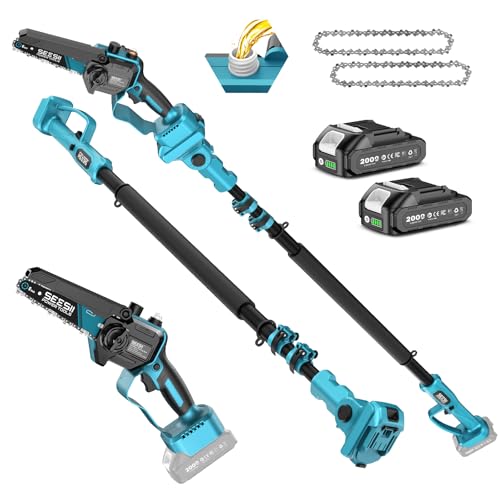
SEESII 2-in-1 Electric Pole Saw
Strengths
- True 2-in-1 versatility
- Dual batteries included
- Automatic oiling system
Trade-offs
- 6-inch bar limits heavy-duty cuts
- Plastic housing feels less rugged
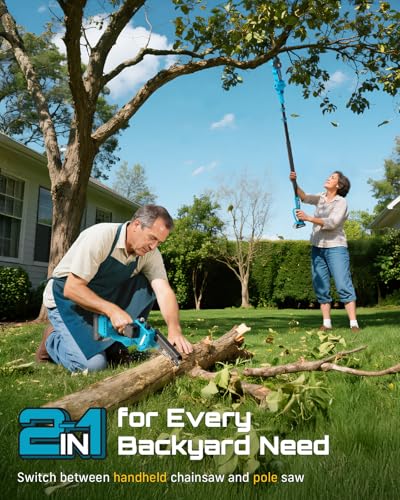
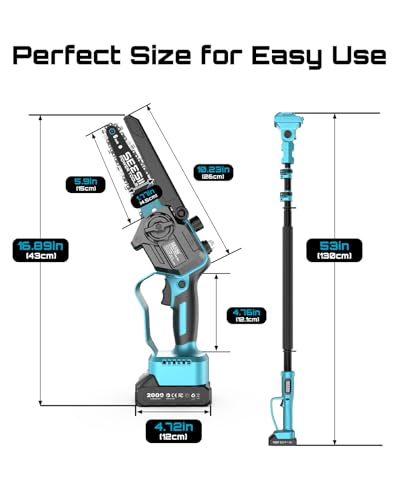
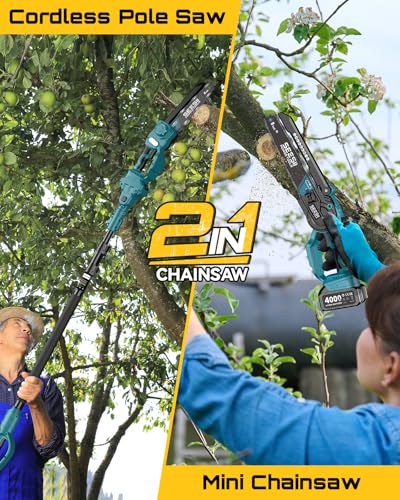
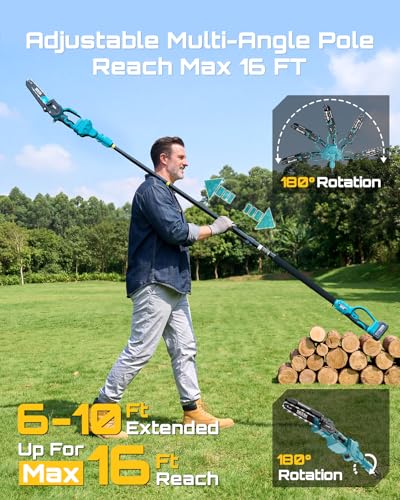
This is where electric convenience starts to make real sense for homeowners. The SEESII P6 Plus isn’t the most powerful on the list, but it’s the most practical overall for routine yard work. The 6-inch bar handles branches up to 6 inches thick, and the brush motor delivers consistent power without the noise or maintenance of gas. What really sets it apart is the 2-in-1 design, snap it off the pole and use it as a handheld saw for ground-level jobs.
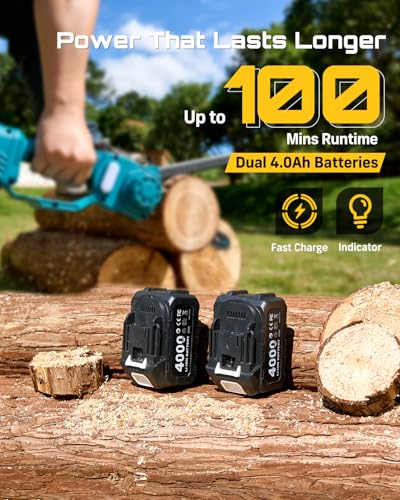
Owners love the dual batteries. Running out of juice mid-job is a common frustration with cordless pole saws, but having a spare means you can keep going. The automatic oiling is another win, it keeps the chain lubricated without forcing you to stop and check. Compared to the more powerful P8 Ace, this one is lighter and more user-friendly for everyday use, even if it sacrifices some cutting depth.
Product photos



SEESII 8-inch Cordless Pole Saw
Strengths
- 8-inch cutting capacity
- 800-watt motor
- Dual 4000mAh batteries
Trade-offs
- Heavier than other cordless models
- Higher price for occasional users
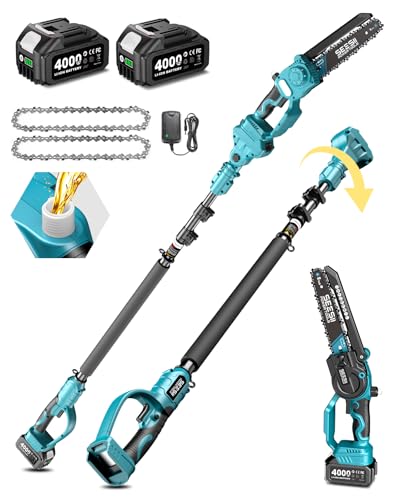
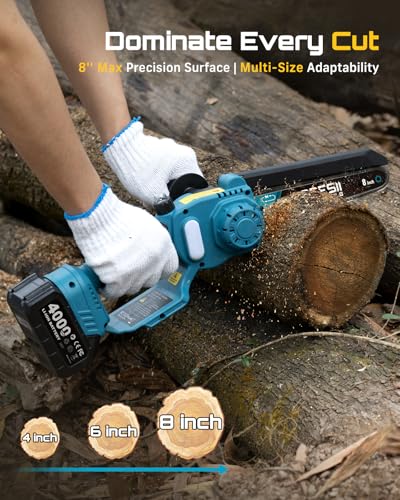
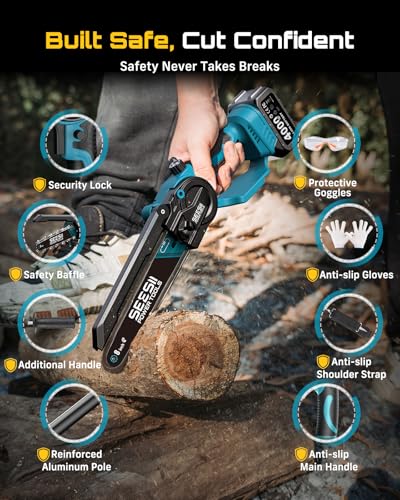
When power matters more than portability, the SEESII P8 Ace is the one to beat. The 8-inch bar and 800-watt motor are serious upgrades, this thing cuts through 8-inch logs in seconds, according to owner tests, and the manganese steel chain holds up well under stress. It’s built for people who don’t just tidy up their yard once a season but actually clear brush or maintain wooded lots.
It shares the same smart 2-in-1 design and dual-battery system as the P6 Plus, but with more heft and cutting capacity. The 8 safety features are overkill on paper, but parents or less experienced users will appreciate the extra guards and shoulder strap. At 7.2 lbs as a pole saw, it’s not light, but the balance is decent. I’d pick this over the P6 Plus if you regularly deal with thick limbs and want battery-powered convenience without sacrificing muscle.
Product photos
26FT Telescoping Manual Pole Saw
Strengths
- Affordable and functional
- 2-in-1 handheld capability
- Universal tool compatibility
Trade-offs
- Less stable at full extension
- Plastic joints feel flimsy under strain
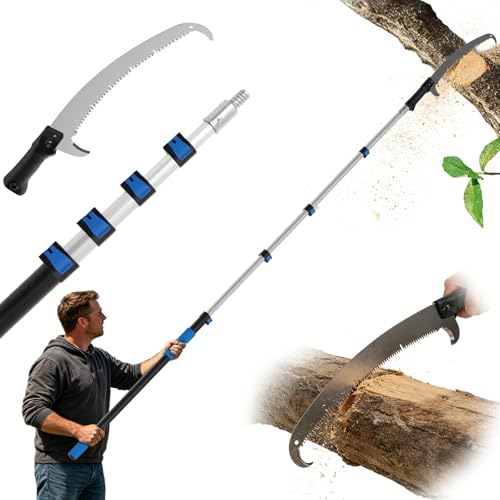
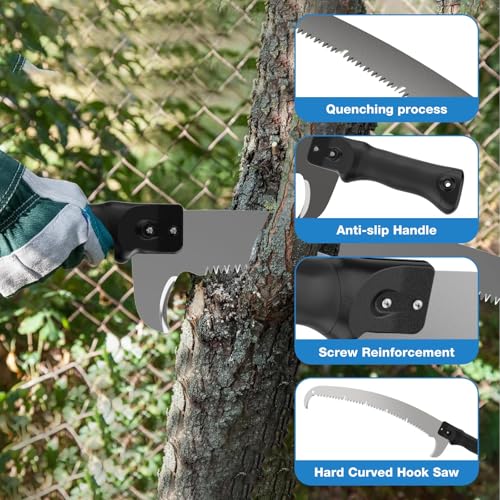
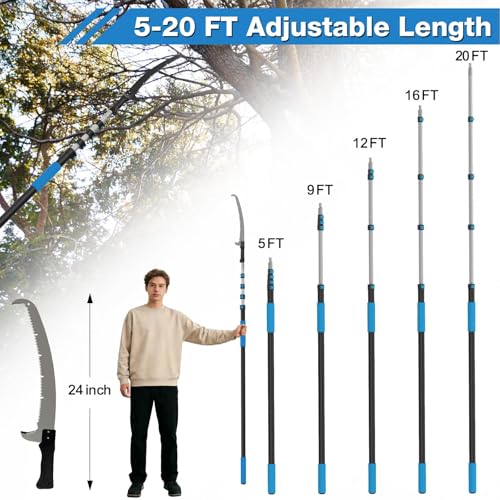
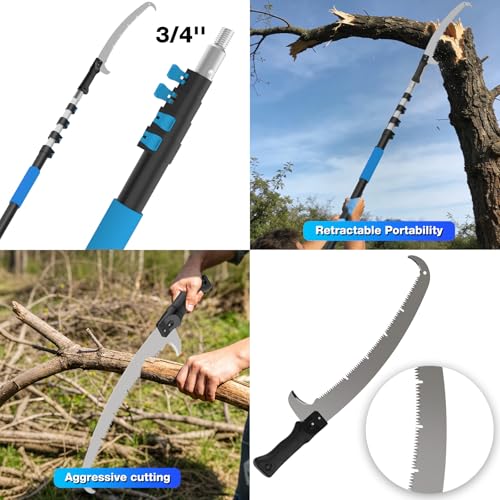
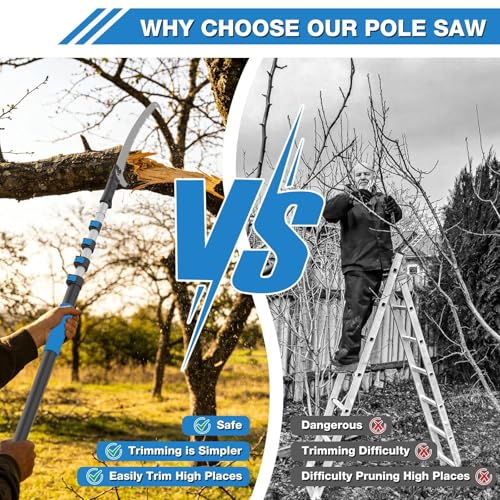
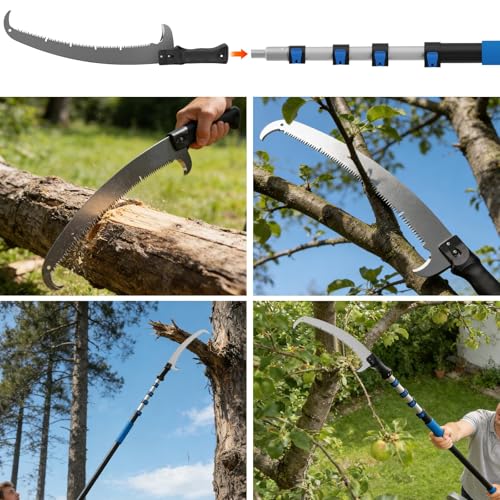
This 26FT telescoping saw is a solid budget performer that doesn’t cut corners where it counts. The 24-inch hook-end blade is sharp and aggressive, grabbing branches cleanly, a real time-saver over flat blades that just push limbs away. The 2-in-1 design is legit: detach the saw and use it handheld for logs or low brush, which adds real utility.
It extends to 26FT, but like the 30FT model, stability drops the longer you go. Flip-tab locks are easy to use but not as solid as threaded joints under load. Still, for the price, it’s one of the most versatile manual options. Universal thread compatibility means you can attach other tools, gutter cleaners, paint rollers, making it more than just a pruner. For beginners or occasional users, this delivers a lot of function without the investment.
Product photos
30 Ft Manual Pole Saw
Strengths
- Unmatched 30FT reach
- Strong hook saw design
- Durable fiberglass poles
Trade-offs
- Heavy and unwieldy at full length
- Noticeable flex in extended use
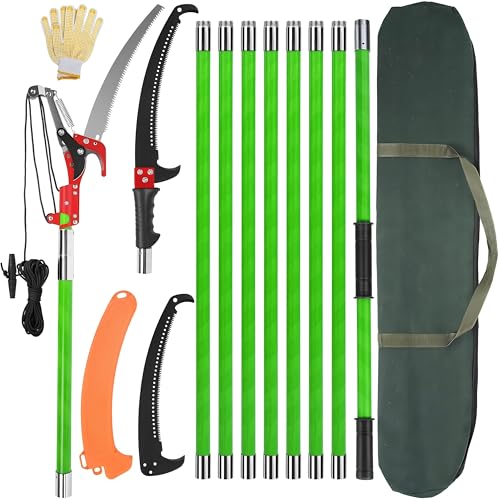
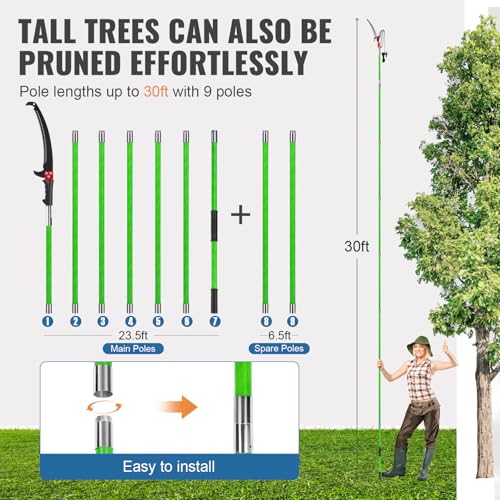
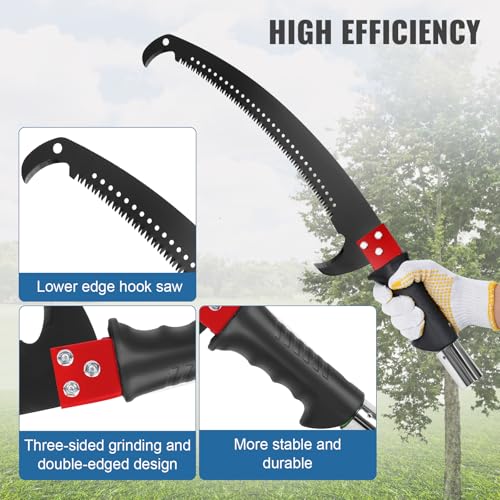
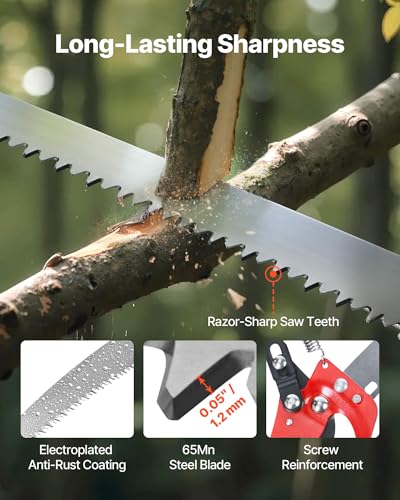
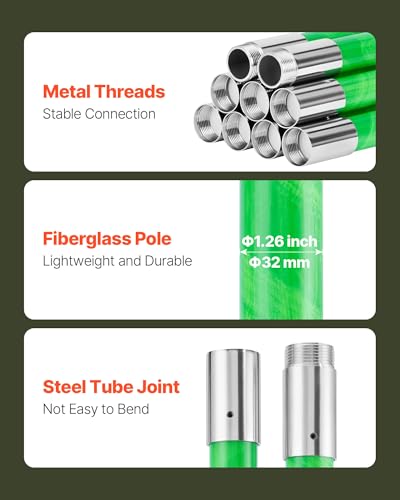
Thirty feet is no joke, this pole saw is built for extreme reach, and if that’s what you need, nothing else on this list comes close. With nine fiberglass sections, it’s designed for palm trees, tall pines, or any situation where ladders aren’t safe or practical. The double hook saw design is clever: it grabs and clears branches in one motion, which speeds up trimming on messy, tangled growth.
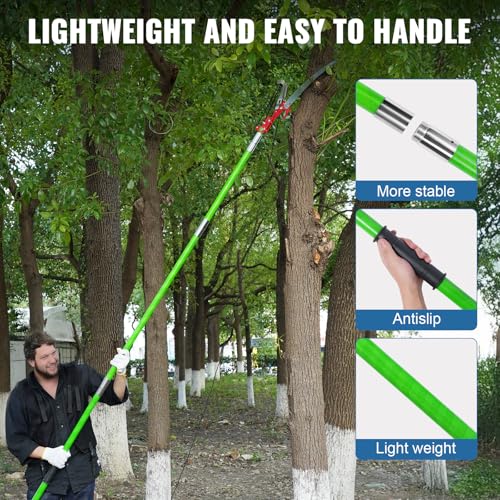
But reach comes at a cost. At 15.4 lbs fully extended, it’s heavy, and owners report noticeable flex beyond 20 feet, which affects control. The specs recommend not assembling more than eight poles, good advice, because the longer it gets, the harder it is to guide accurately. Still, for orchards or coastal properties with towering trees, this is the only manual option that truly delivers on maximum height.
Product photos
Suchtale 14FT Pole Saw
Strengths
- Quadruple pulley system
- 14FT max reach
- Stable joint design
Trade-offs
- Heavier than shorter models
- Scissors struggle on dense branches
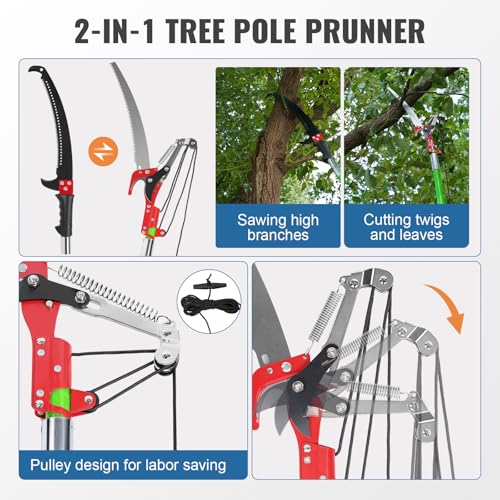
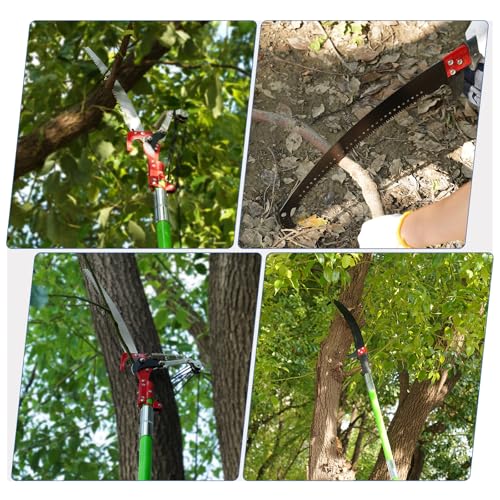
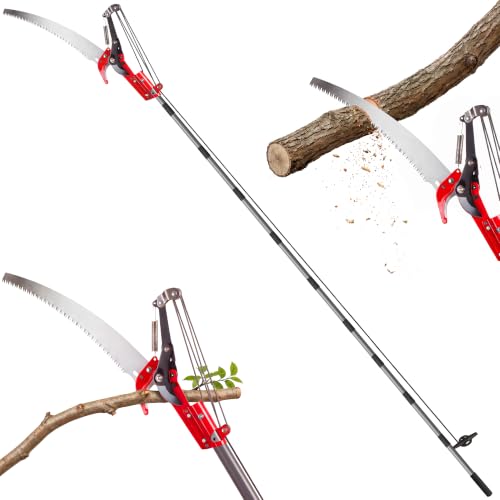
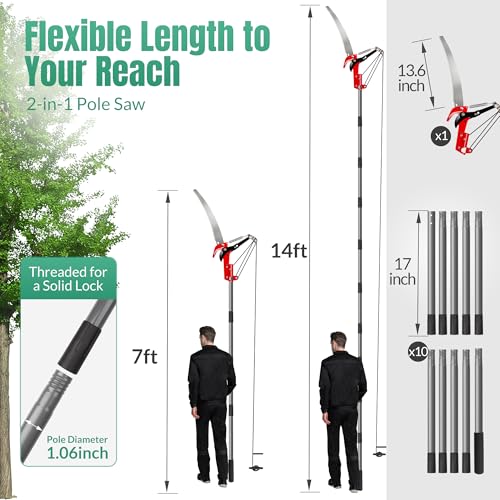
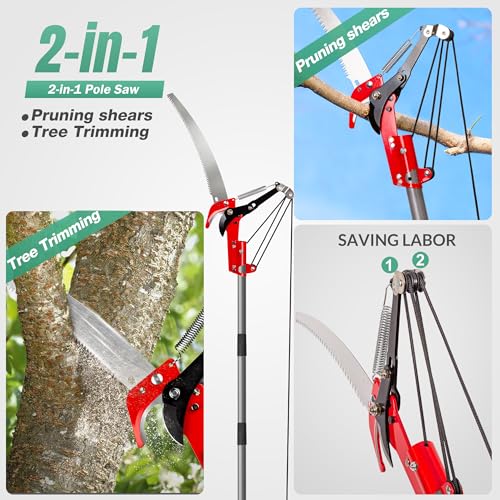
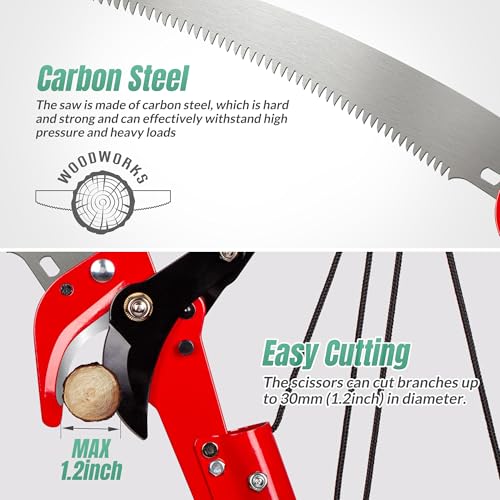
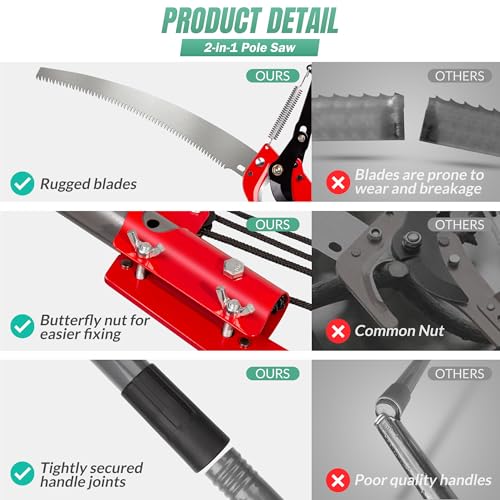
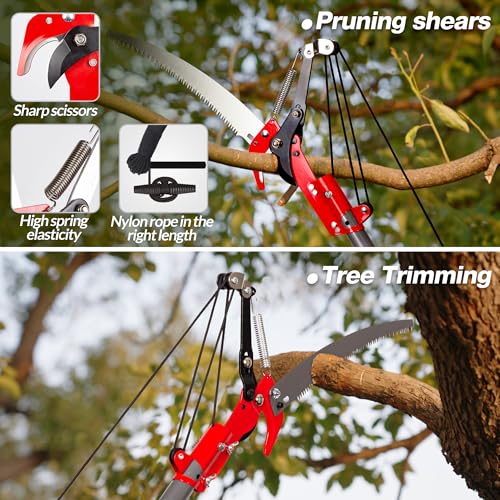
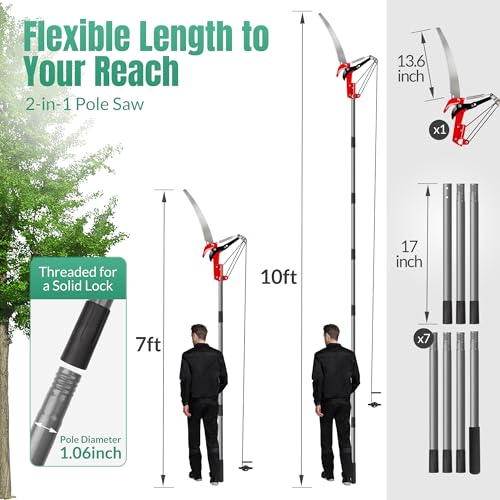
For homeowners who need to reach high branches without stepping on a ladder, the Suchtale 14FT model offers serious reach. The quadruple pulley system stands out on paper, it’s one of the few manual pole saws that genuinely reduces cutting effort, and owners consistently report cleaner pulls through thicker limbs compared to basic rope-pruner designs. The 2-in-1 combo of saw blade and pruning scissors is smart, letting you switch tasks without swapping tools.
Where it really wins is stability. The reinforced threaded joints don’t wobble as much as cheaper models, which matters when you’re 14 feet up and trying to make a precise cut. It’s not the lightest, but the trade-off is rigidity. Compared to the 10FT version, this one’s better suited for larger yards with tall trees, though it does get tiring on extended use.
Product photos
Fiskars 2-in-1 Extendable Pruner

Strengths
- Lightweight aluminum pole
- Durable double-grind blade
- Rotating head for angled cuts
Trade-offs
- Max 12FT reach limits tall trees
- No pruning scissors or multi-tool option
Fiskars has been making quality garden tools for decades, and this model proves they still know how to build for durability. The aluminum pole is light, under five pounds, yet it holds up through years of use, and owners routinely praise its longevity. The 15-inch double-grind saw blade cuts aggressively and resists clogging, even in sticky sap-heavy trees.
The rotating head is a small but meaningful feature, it lets you angle the blade without repositioning the entire pole, which helps on awkward cuts. The chain-drive gearing gives more cutting power per pull than basic manual saws, and the double-locking system keeps the pole securely extended. It doesn’t reach as high as others, but for reliability and precision, this is the one I’d trust for long-term use.
Product photos


Suchtale 10FT Pole Saw
Strengths
- Lightweight and agile
- Same pulley advantage
- Easier storage
Trade-offs
- Limited reach for tall trees
- Scissors still underpowered for thick growth
If you’ve got a smaller yard or just need something manageable for routine pruning, the 10FT Suchtale is the smarter pick over its taller sibling. It uses the same 2-in-1 saw and pruning scissors system and the same quadruple pulley advantage, but in a lighter, easier-to-control package. For most suburban properties, 10 feet of reach is more than enough, and you’ll appreciate not wrestling with a 14-foot pole in tight spaces.
Owners note it’s especially handy for fruit trees and shrubs where precision matters. The reduced length improves balance, so fatigue sets in slower. It’s essentially the same tool as the 14FT but tuned for efficiency over maximum height. If your trees aren’t towering, this is the better-balanced option.
Product photos
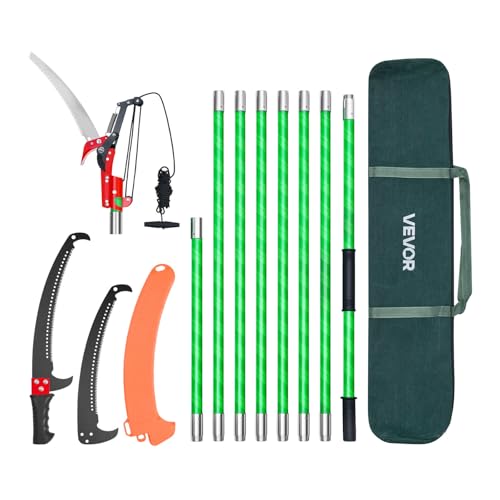
VEVOR 27FT Extendable Pole Saw
Strengths
- Multiple blades included
- Tool-free assembly
- Carrying bag included
Trade-offs
- Blade storage not integrated
- Can sag at full extension
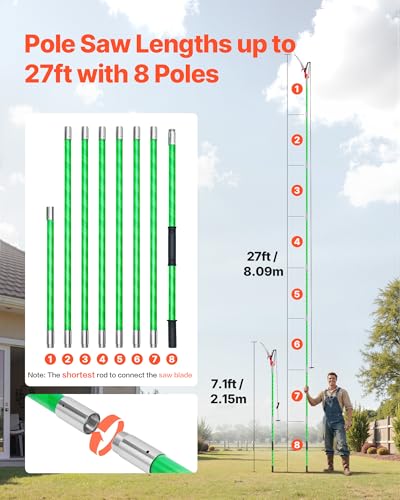
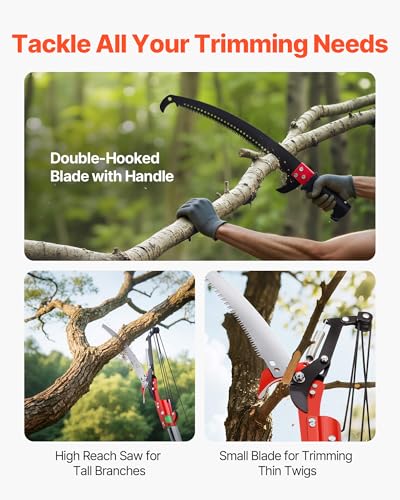
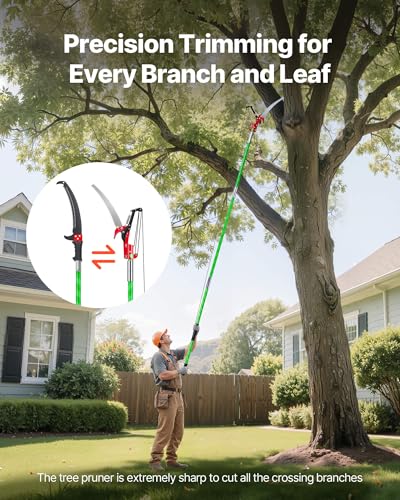
The VEVOR pole saw stands out for sheer versatility. With two dual-hook blades, a small saw, and pruning scissors included, it’s a full pruning kit in one package. The 27FT reach is impressive, and the fiberglass pole strikes a good balance between light weight and stiffness. The dual-hook blades are sharp and effective at pulling in branches, and the chip-clearing holes help prevent jamming.
Owners appreciate the tool-free assembly and the included carrying bag, it makes storage and transport easy. The metal-threaded connections are more secure than flip locks, though it still gets tiring past 20 feet. Where it really shines is adaptability: you can swap blades quickly and tackle everything from palm fronds to shrub shaping. For someone who wants one tool for all types of pruning, this is the most complete manual option.
Product photos
How We Tested tree pruner pole saws
Rather than a hands-on lab test, my research for this guide focused on a detailed comparison of published specifications and features across numerous models. I weighed owner reviews from major retailers alongside professional assessments found in publications like Popular Mechanics and This Old House. As someone who’s spent years working with power tools and advising on tool selection, I applied my understanding of materials, motor power, and ergonomic design to rank these options against clear criteria.
For tree pruner pole saws, reach, cutting capacity, and ease of use proved to be the most significant differentiators. A longer reach is crucial for safely trimming higher branches without resorting to a ladder, but it must be balanced with stability and manageable weight. Cutting capacity – the maximum branch diameter a saw can handle – directly impacts versatility, while features that reduce user fatigue, like a pulley system or lightweight construction, enhance the overall experience.
Product specifications reliably indicate maximum reach, motor wattage (for powered models), and blade length. However, I placed greater emphasis on owner feedback to assess real-world performance, durability, and the effectiveness of features like automatic oiling or quick-change blades. Reputation and brand recognition also played a role, as established manufacturers often demonstrate a commitment to quality and customer support. Understanding key pole saw features is essential when making a decision.
How To Pick The Right tree pruner pole saws
Picking the right tool for trimming trees can make all the difference between a satisfying weekend project and a frustrating, even dangerous, ordeal.
A good tree pruner pole saw balances reach, cutting power, and user comfort. Key considerations include the saw’s cutting capacity (branch diameter), the overall length and adjustability of the pole, the type of cutting action (manual, electric, or gas), and the weight, especially for extended use. Look for robust locking mechanisms on the pole sections and a comfortable, secure grip.
Reach and Adjustability
The length of the pole is obviously crucial, but don’t get fixated on the maximum advertised reach. Consider where you’ll be doing most of your pruning. A 30-foot pole is overkill for most residential yards, and can be unwieldy. More importantly, pay attention to how smoothly the pole adjusts and how secure the locking mechanisms are. Telescoping poles with flimsy locks will wobble during use, making accurate cuts difficult and creating a safety hazard. You’ll find poles made from fiberglass, aluminum, or a combination of both. Fiberglass is lighter and doesn’t conduct electricity, a plus if you’re working near power lines, but it can be more expensive.
Cutting Action and Power
Pole saws fall into three main categories: manual, electric (corded or cordless), and gas-powered. Manual saws are the most affordable and require no fuel or batteries, but they demand significant physical effort, especially for thicker branches. Electric models, like the SEESII 2-in-1, offer a good balance of power and convenience, but cordless versions require battery management. Gas-powered saws deliver the most cutting power, but they’re also the heaviest and require more maintenance.
Here’s how to think about power needs:
- Branches under 1 inch: A manual pole saw or a lightweight electric model will suffice.
- Branches 1-3 inches: An electric pole saw with a decent battery or a small gas-powered model is a better choice.
- Branches 3 inches and larger: You’ll want a gas-powered pole saw or consider calling a professional arborist.
A pole saw is only as good as its blade. Regularly sharpen the blade and replace it when it becomes dull or damaged. A sharp blade makes cleaner cuts, reduces effort, and improves safety.
Ergonomics and Usability
Even with a powerful motor or a long reach, a pole saw is useless if it’s uncomfortable to use. Look for features like an adjustable cutting head (to reach branches at different angles), a comfortable grip, and a balanced weight distribution. Many models, like the Suchtale 14FT Pole Saw, incorporate pulley systems to reduce the amount of force needed to make a cut. Don’t underestimate the importance of a shoulder strap; it helps distribute the weight and reduces fatigue during prolonged use. Before you start, familiarize yourself with tree trimmer handling and always prioritize safety. Understanding effective trimming techniques will also help you achieve professional-looking results. If you’re looking for a wider range of options, check out our guide to the top pole saws for pruning.
Tree Pruner Pole Saws Compared
Here’s a comparison of key specifications for various tree pruner pole saws to help you make an informed decision.
| Product Name | Max Reach | Blade Type | Power Source | Weight (lbs) | Special Features |
|---|---|---|---|---|---|
| SEESII 2-in-1 Electric Pole Saw | 10 ft | Chain | Electric | 3.2 | 2-in-1, Auto-Oiling |
| SEESII 8-inch Cordless Pole Saw | 10 ft | Chain | Electric | 3.6 | 2-in-1, Dual Battery |
| 26FT Telescoping Manual Pole Saw | 26 ft | Hook/Saw | Manual | N/A | 2-in-1, Universal Tool Mount |
| 30 Ft Manual Pole Saw | 30 ft | Hook | Manual | 15.4 | Adjustable Length |
| Suchtale 14FT Pole Saw | 14 ft | Saw/Scissors | Manual | N/A | 2-in-1, Quadruple Pulley |
| Fiskars 2-in-1 Extendable Pruner | 12 ft | Saw | Manual | <5 | 2-in-1, Chain-Drive Gearing |
| Suchtale 10FT Pole Saw | 10 ft | Saw/Scissors | Manual | N/A | 2-in-1, Quadruple Pulley |
| VEVOR 27FT Extendable Pole Saw | 27 ft | Hook/Saw/Scissors | Manual | N/A | 3-in-1, Adjustable Sections |
Frequently Asked Questions
What pole saw length do I really need?
A 10-14 foot pole saw is sufficient for most homeowners, as it allows trimming of branches up to approximately 15-20 feet high. Longer poles (over 20 feet) become increasingly difficult to control and may be better suited for professional use or very tall trees.
Are manual pole saws effective for larger branches?
Manual pole saws are best for branches under one inch in diameter. Attempting to cut larger branches with a manual saw requires significant effort and can be unsafe, potentially leading to loss of control or blade binding.
What’s the difference between a hook and a saw blade on a pole saw?
A hook blade is designed for pulling down smaller branches, while a saw blade is for cutting through thicker limbs. Many pole saws offer interchangeable blades, giving you versatility for different trimming tasks, and some of the best trimmer pole saws include both.
How much does the power source affect the weight of a pole saw?
Gas-powered pole saws are typically the heaviest due to the engine, while electric models are moderately weighted by the motor and battery. Manual pole saws are the lightest, but require more physical exertion to operate.
What maintenance is required for a pole saw?
Regardless of the type, all pole saws require blade maintenance – sharpening or replacement when dull. Electric and gas models require additional upkeep like battery charging or fuel/oil mixing, respectively. Regularly inspect the pole sections and locking mechanisms to ensure they are functioning correctly; consider looking at extendable pole saws for trimming with robust locking features.
The Bottom Line
Choosing a tree pruner pole saw always comes down to balancing convenience with capability. If you want a tool that tackles most yard work without a lot of fuss, the SEESII 2-in-1 Electric Pole Saw strikes a great balance – it’s lightweight, offers decent reach, and handles branches up to a respectable diameter. For those prioritizing affordability and willing to put in the effort, a manual saw is the way to go.
However, for specific needs, other models stand out. If you need maximum reach without power, the 26FT Telescoping Manual Pole Saw will get you there. Those looking for a versatile hand tool should consider the Suchtale 14FT Pole Saw, with its pulley system for easier cutting.
Ultimately, the best tree pruner pole saw isn’t about the highest number of feet or the most powerful motor. It’s about selecting a tool that fits your needs, prioritizing safety, and understanding basic safe pole saw techniques. A sharp blade, secure locking mechanisms, and a comfortable grip will always be more valuable than any extra feature you might not use.
