
8 Best Tile Saws of 2026
This post contains affiliate links. As an Amazon Associate, we earn from qualifying purchases.
The DEWALT 10-Inch Wet Tile Saw stands out as the best overall choice for its powerful motor, deep cutting capacity, and solid build. For budget-conscious DIYers, the POWERTEC PRO 7-Inch Wet Tile Saw delivers reliable performance without breaking the bank.
If you’ve ever tried cutting tile with the wrong tool, you know how quickly a messy job turns frustrating. Chipped edges, uneven cuts, and a flooded workspace can ruin even the most carefully planned tile project.
After comparing the field and weighing specs against real-world owner feedback, I focused on performance, durability, and ease of use. These picks reflect what actually works for homeowners and pros tackling real jobs.
Top 8 Tile Saws in the Market
The Best Tile Saws, Reviewed
DEWALT 10-Inch Wet Tile Saw

Strengths
- High 15-amp power
- Massive 37-inch rip capacity
- Excellent accuracy and build
Trade-offs
- Heavy at 91 lbs
- Higher cost
- Larger storage footprint
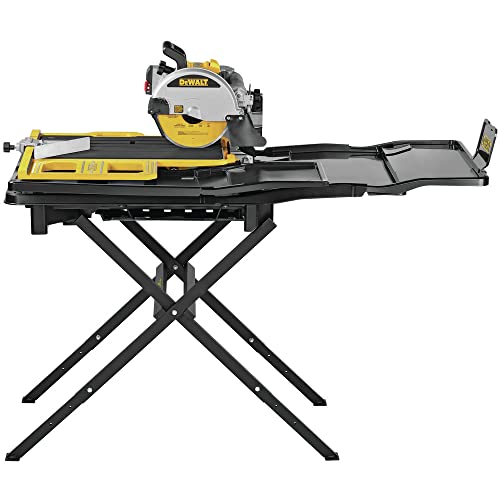
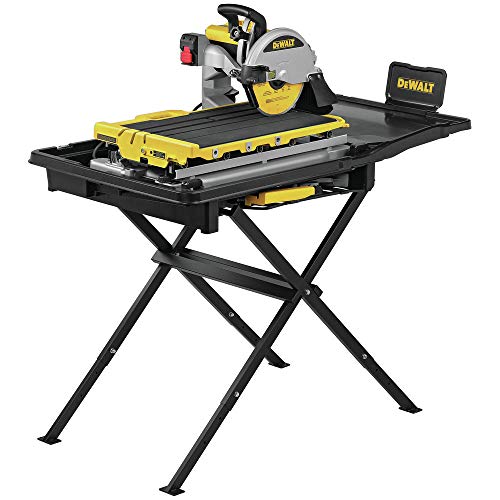
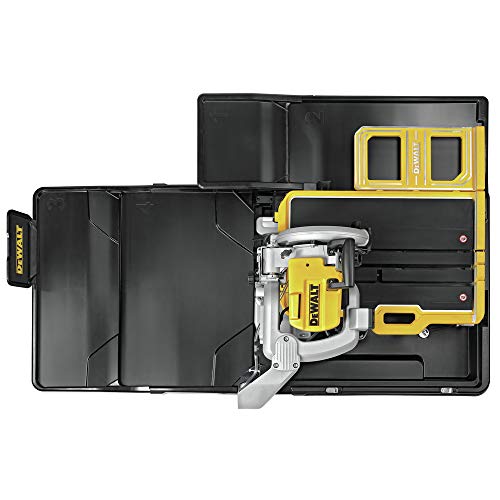
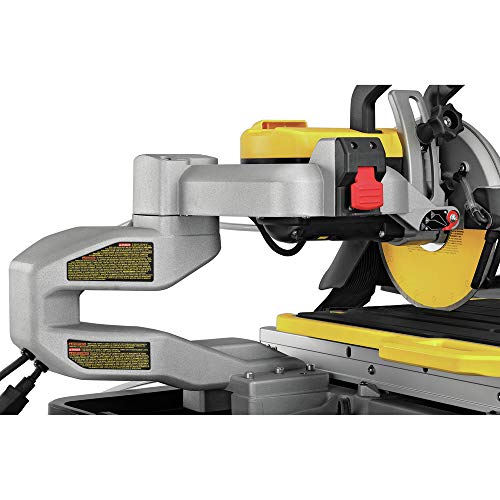
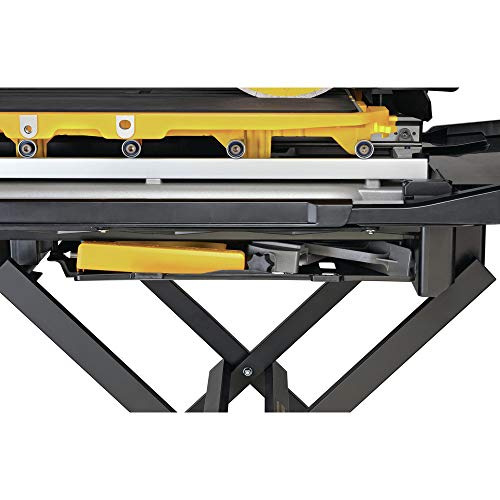
This is the best overall tile saw in this lineup, hands down. The 15-amp motor and 1,220 MWO deliver serious power, easily slicing through the densest porcelain and gauged stone. With a 37-inch rip capacity and 18-inch clearance left of the blade, it can split a 36-inch tile cleanly, something few others here can claim. The rigid frame and stainless steel rollers keep accuracy within 1/32 inch over 30 inches, which matters when laying large-format tile.
Owners consistently rate it as a jobsite tank: heavy at 91 lbs, but the fold-in cart and door-frame-friendly width make it manageable. It even stores its own wrenches and guides. The only downside? Price, but if you’re doing multiple jobs a year, this pays for itself in time saved and fewer chipped tiles.
Product photos
POWERTEC PRO 7-Inch Wet Tile Saw
Strengths
- Laser + LED guidance
- Smooth sliding table
- Excellent splash control
Trade-offs
- 7-inch blade limits depth
- No 10-inch upgrade option
- Slightly slower than top-tier motors
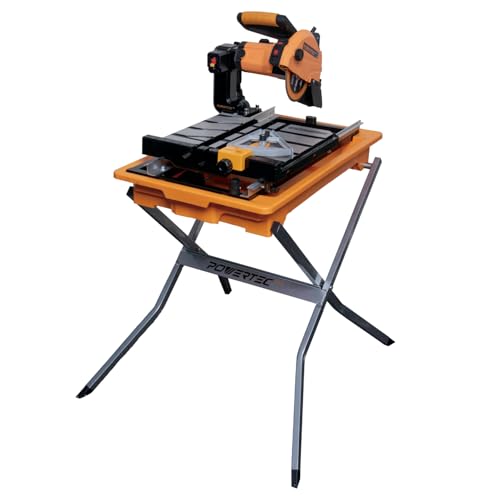
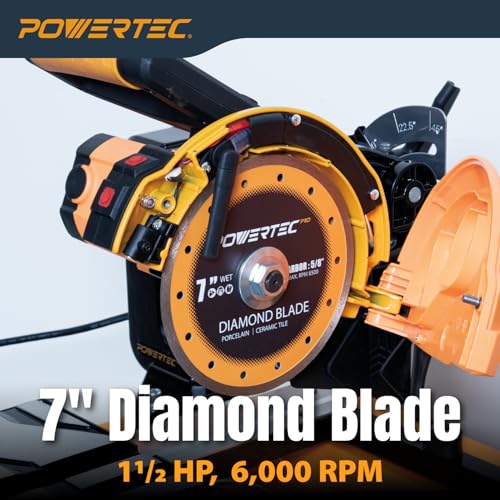
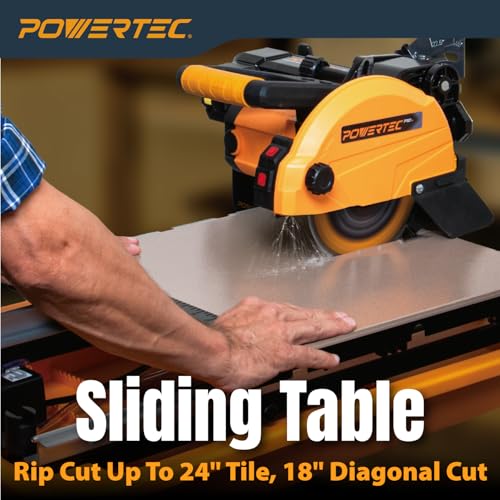
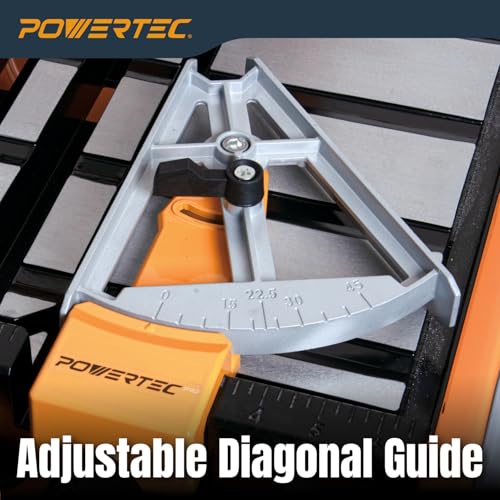
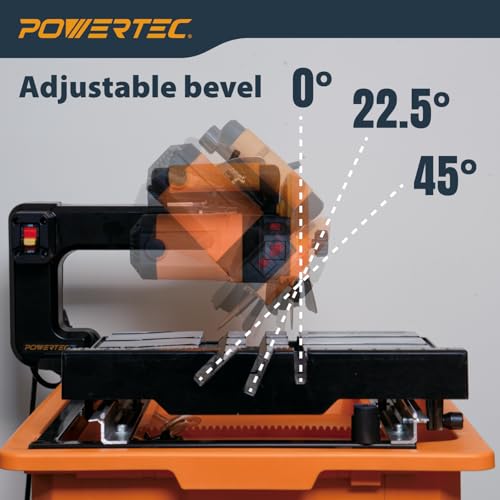
If you want laser-guided accuracy in a 7-inch saw, the POWERTEC TLS1003 is where I’d point most buyers. The dual system, laser for cut line projection and LED for illumination, works together better than most in this range. Owners praise how it eliminates guesswork on L-cuts and diagonals, especially in dim basements or garages. The sliding table rolls smoothly on dual bearings, and the 24-inch rip capacity is generous for a 7-inch unit. At 64 lbs with stand, it’s portable enough for job sites but stable when locked down.
It doesn’t match the DEWALT D36000S in raw capacity, but for homeowners and part-time tilers who want precision without the bulk, this hits a sweet spot. The splash guard is also one of the best-designed, keeping water where it belongs.
Product photos

DEWALT 10-Inch Wet Tile Saw
Strengths
- Proven DEWALT durability
- Accurate cutline indicator
- Fits in small vehicles
Trade-offs
- Shallow water pan
- No laser guidance
- Basic stand adjustability
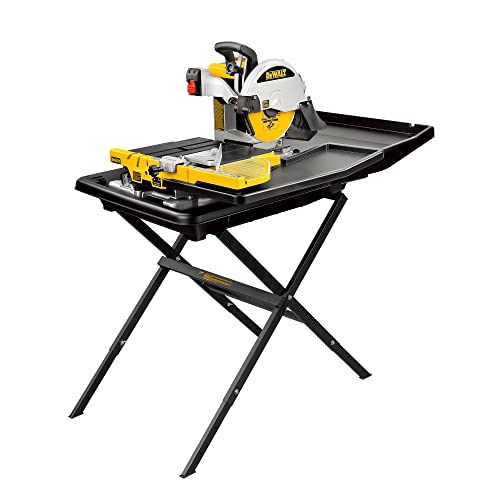
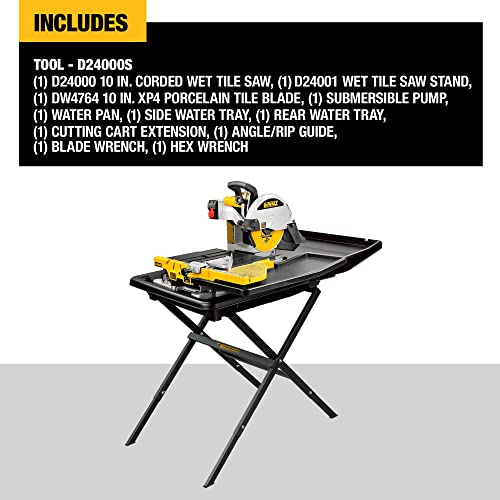
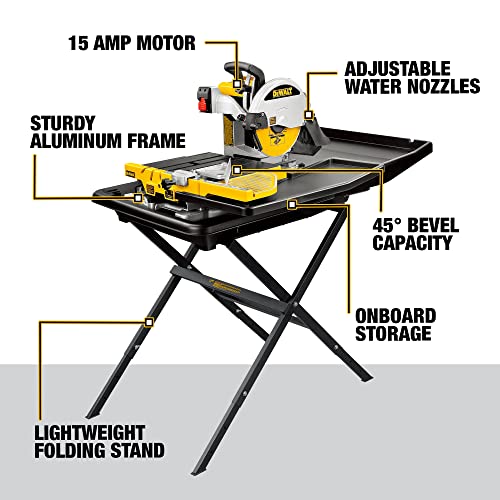
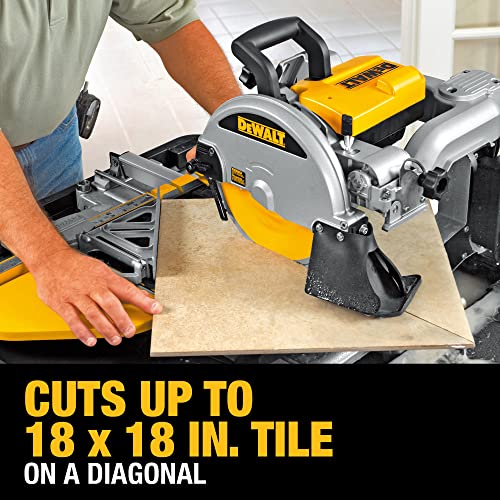
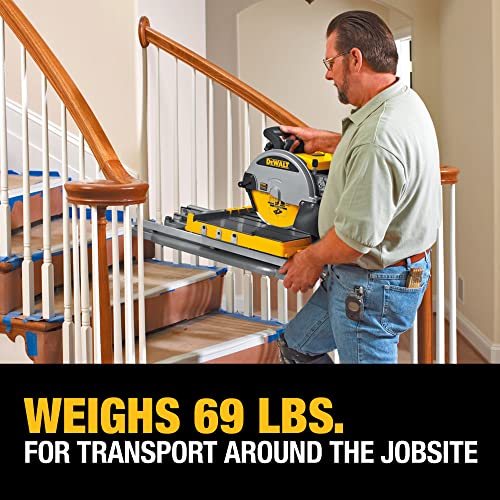
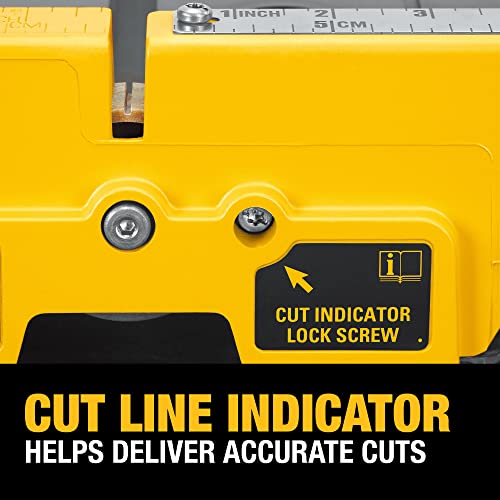
The DEWALT D24000S is a budget corded workhorse that punches above its price. At 1.5 HP and 10 inches, it handles standard porcelain and stone with ease, and the stainless steel rollers contribute to repeatable accuracy within 1/32 inch, important if you’re laying tile in a tight grid. The compact frame fits in a truck bed or SUV, and the stand is simple but sturdy. Owners say it’s durable for the price, though the water tray is shallow and can slop over if you cut fast.
It lacks the laser or infrared aids of pricier models, but DEWALT’s cutline indicator is crisp and effective. For the price, it’s one of the most reliable entry-level pro saws available.
Product photos
VEVOR 10-Inch Wet Tile Saw

Strengths
- Deep 3.75-inch cut
- Infrared alignment guide
- Caster wheels for mobility
Trade-offs
- Frame flex under load
- Basic stand construction
- Pump reliability issues
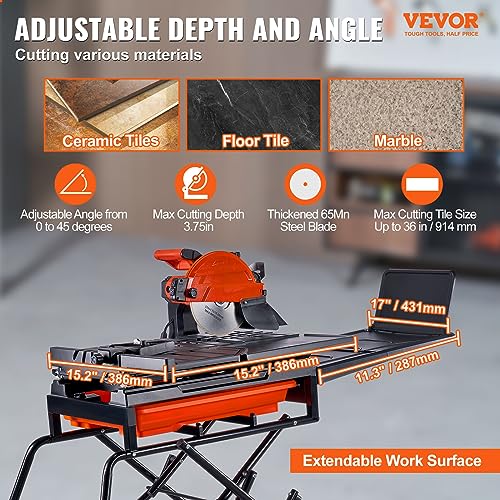
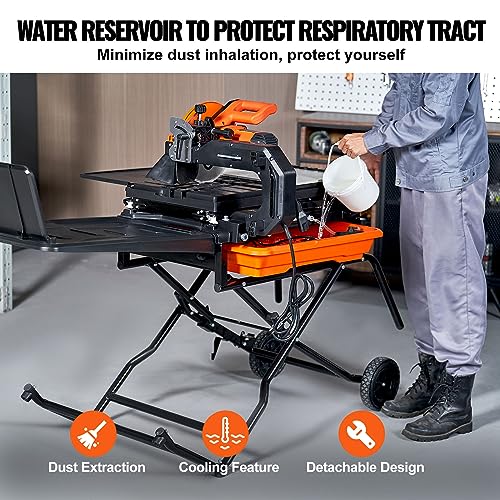
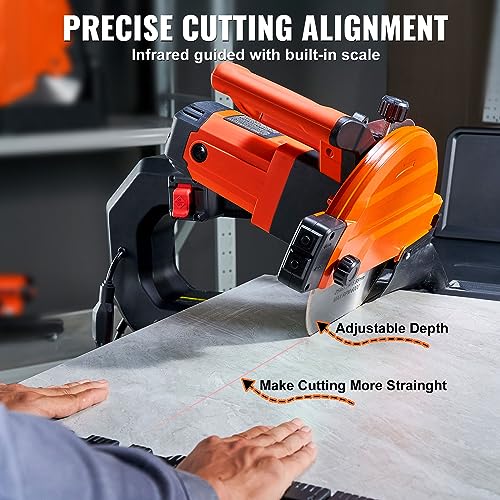
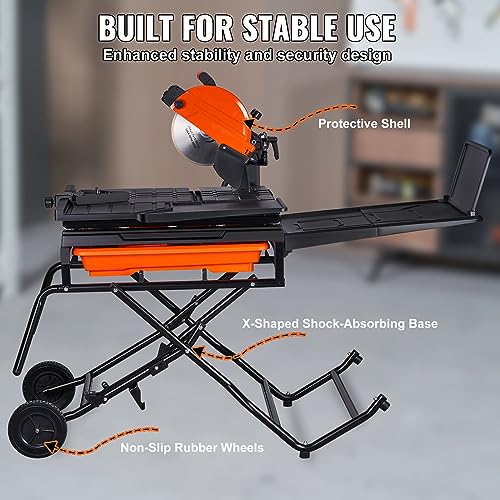
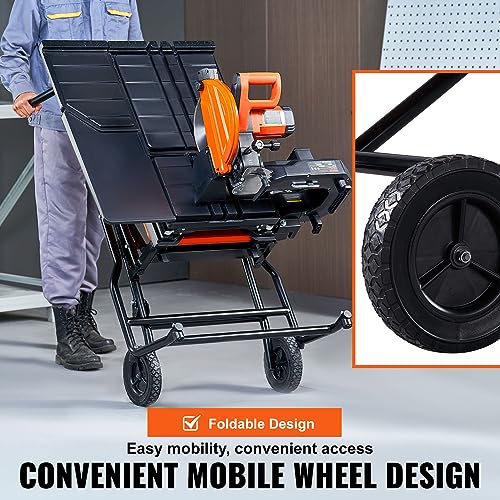
At 10 inches and 4500 RPM, this VEVOR brings more blade real estate and cutting depth, nearly 3.75 inches, making it capable of slicing through thick pavers or stacked stone that smaller saws can’t touch. The infrared guide is a standout for this price range, helping users line up cuts without guesswork, though reviewers note it’s not as bright or accurate as a real laser. The stand is basic but functional, and the caster wheels make it easy to roll around a garage or yard.
Still, the build quality is what you’d expect for the tier: the frame flexes slightly during deep cuts, and the pump occasionally loses prime. But for outdoor patios or masonry work where portability and depth matter more than micron-level accuracy, this is a smart pick over pricier models.
Product photos
PeakPursuit 7-Inch Wet Tile Saw
Strengths
- High RPM claim
- Galvanized worktable
- Bevel to 45°
Trade-offs
- Speed drops under load
- Vibration reported
- No laser or guide light
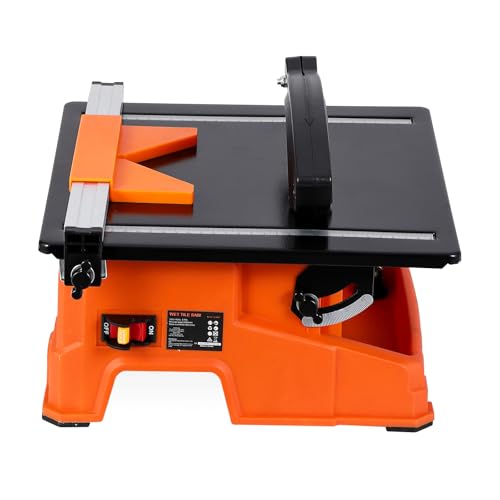
On paper, the PeakPursuit 7-inch wet tile saw looks aggressive with its claimed 6500 RPM, more than most entry-level models deliver. That said, owners report it doesn’t sustain that speed under load, and some note vibration issues when cutting denser porcelain. The 1.34-inch max depth is solid for a 7-inch saw, and the galvanized table resists rust better than basic steel units. But when compared to the DEWALT or POWERTEC models, this one feels more like a weekend warrior tool than a jobsite staple.
I’d be cautious about that RPM spec, it’s likely no-load and drops fast when pressure hits. Still, for small bathroom or backsplash jobs where precision isn’t razor-tight, it offers decent value for DIYers who want speed on paper and don’t mind some tuning to get clean cuts.
Product photos
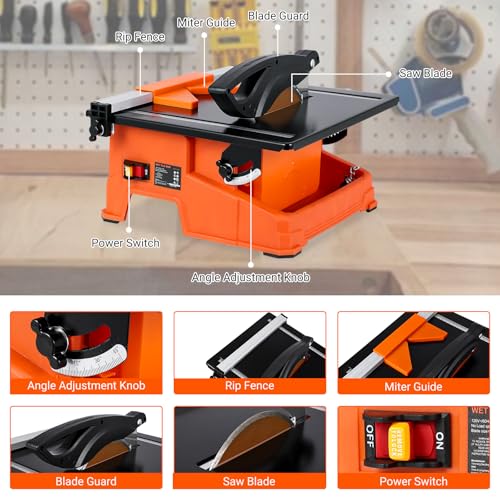
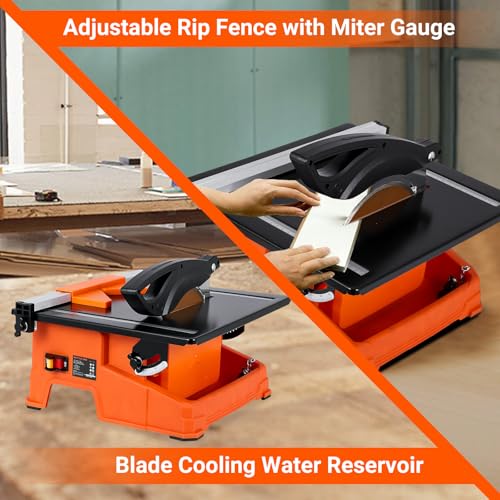
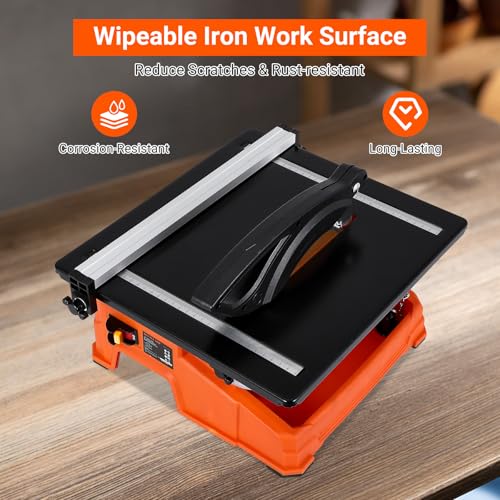
Hoteche 7-Inch Wet Tile Saw

Strengths
- Spacious worktable
- Quiet operation
- Good for basic cuts
Trade-offs
- Low RPM for tough tile
- Loose table extension
- Weak pump flow
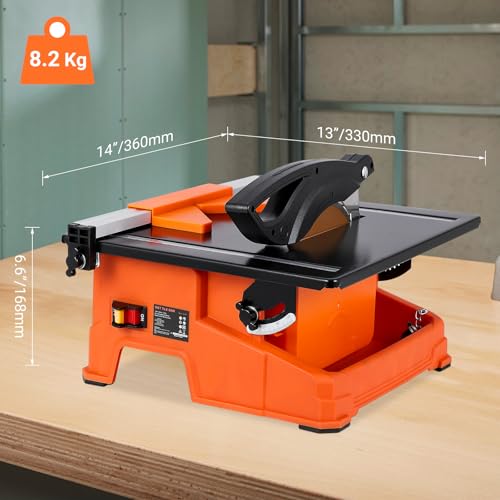
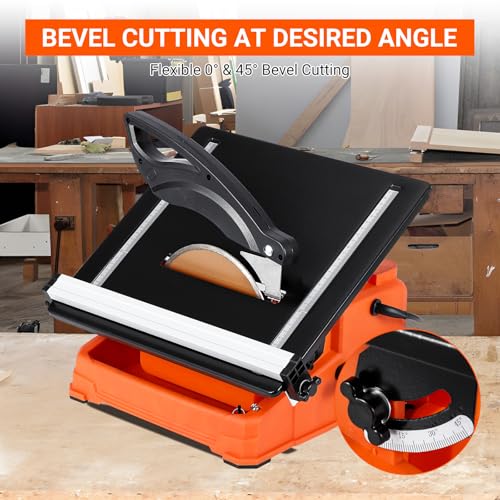
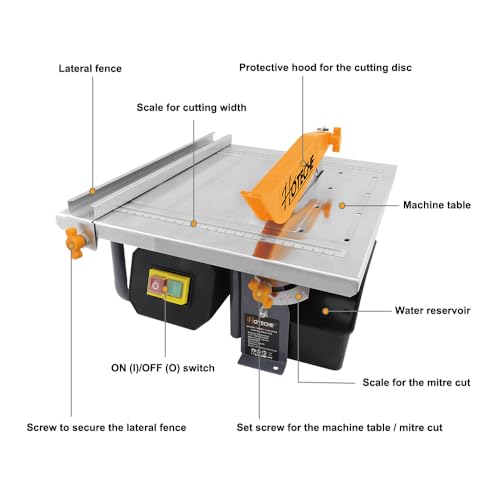
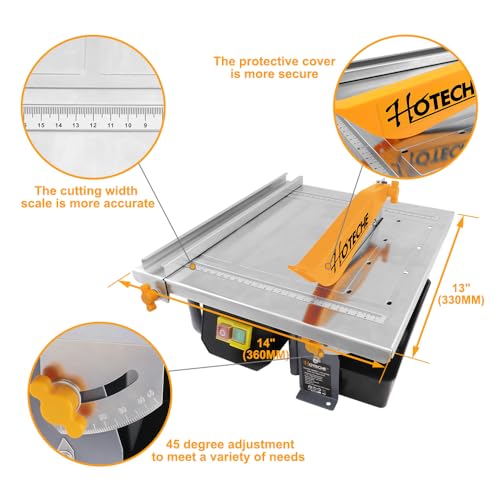
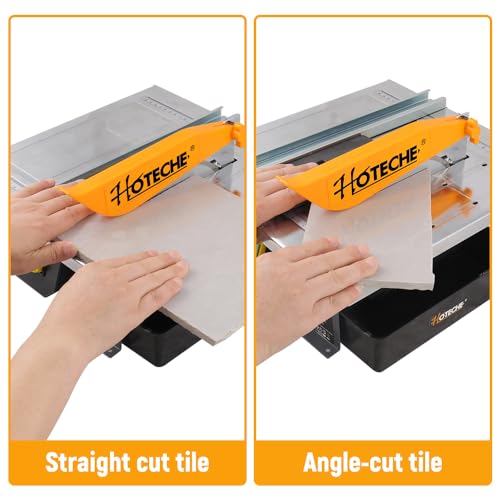
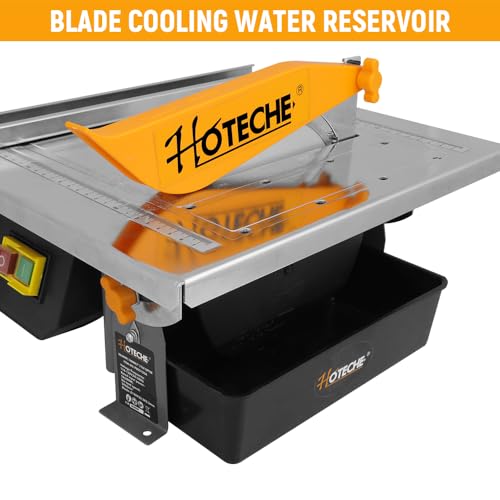
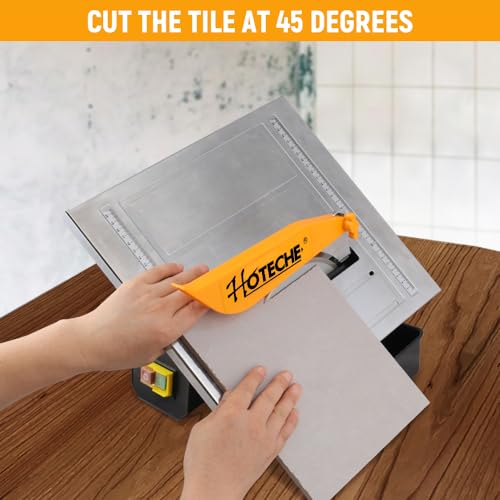
The Hoteche 7-inch saw is clearly aimed at the DIY crowd, and specs back that up: 2950 RPM is on the slower side, and while the 5A motor is efficient, it doesn’t deliver the torque needed for dense porcelain at full depth. The table is spacious for a unit this size, and the dual table dimensions suggest some clever expandability, but owners note the extension isn’t as rigid as it should be.
It’s quiet and easy to set up, which makes it a decent choice for first-time tile cutters. But when compared to the Leegol or VEVOR, it doesn’t offer enough extra to justify its place unless you specifically need that adjustable table.
Product photos
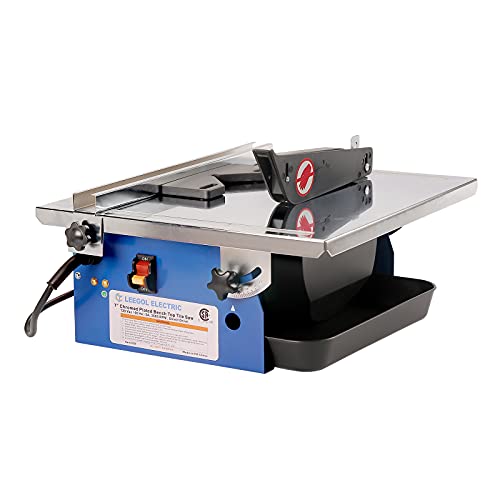
Leegol 7-Inch Wet Tile Saw
Strengths
- Ultra-compact size
- Low cost
- Simple setup
Trade-offs
- No stand included
- Minimal depth capacity
- No advanced guides
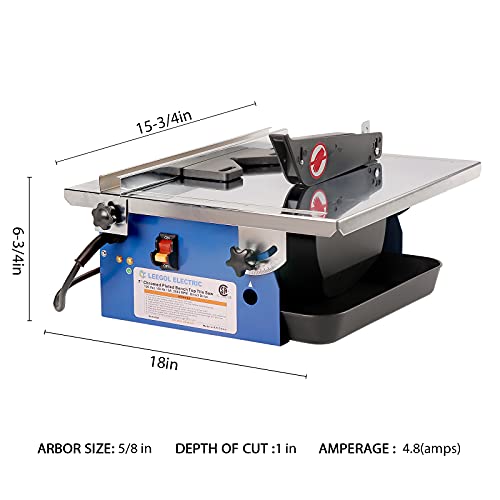
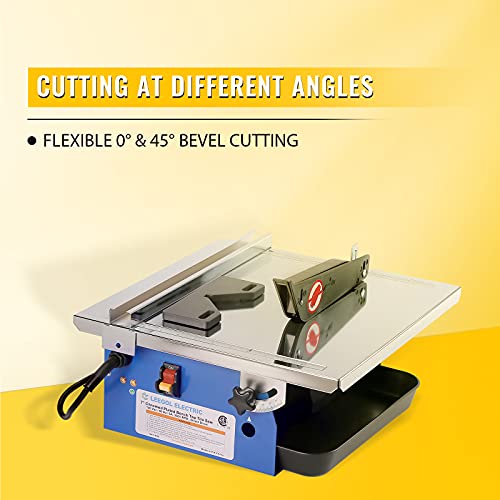
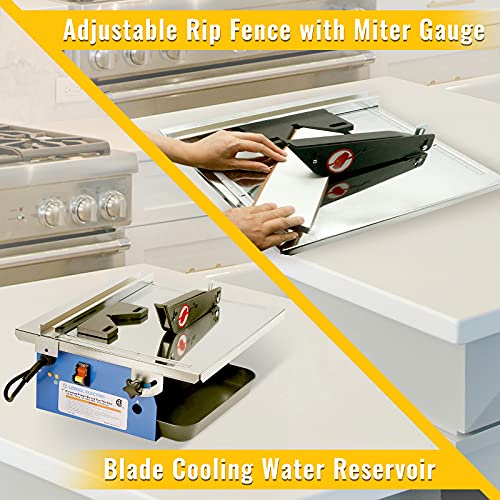
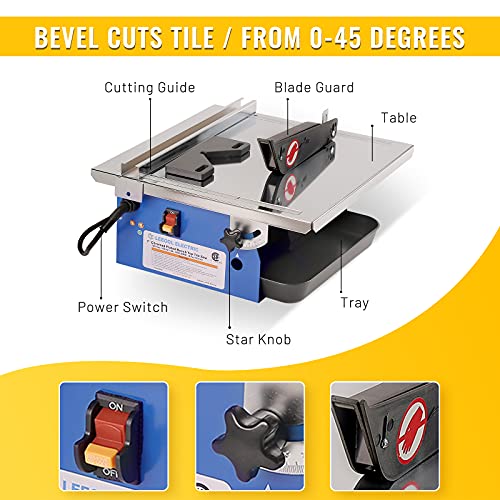
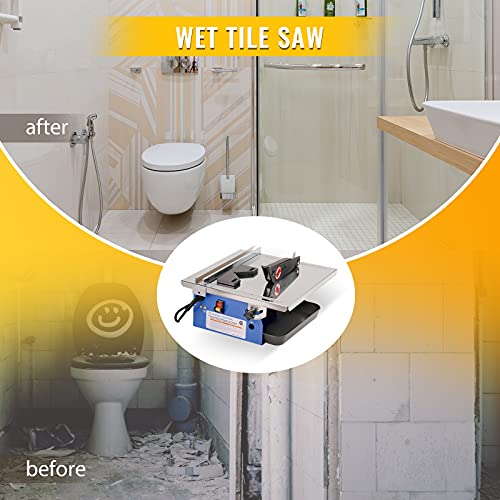
The Leegol is the most no-frills, compact option here, light, simple, and built for small jobs. With 3,550 RPM and a standard 7-inch blade, it handles ceramic and thin porcelain well, but don’t expect it to power through 12mm porcelain in one pass. The adjustable rip fence is basic but functional, and the water reservoir does its job keeping dust down.
What stands out is its footprint: it takes up less space than a microwave. For apartment renovators or renters doing a single backsplash, that’s a big win. But with no stand or laser, it’s strictly a benchtop unit. I’d recommend it only when storage is tight and cuts are minimal.
Product photos
VEVOR 7-Inch Wet Tile Saw

Strengths
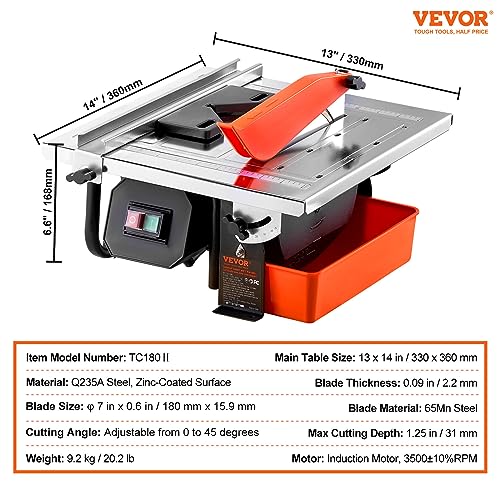
- Lightweight design
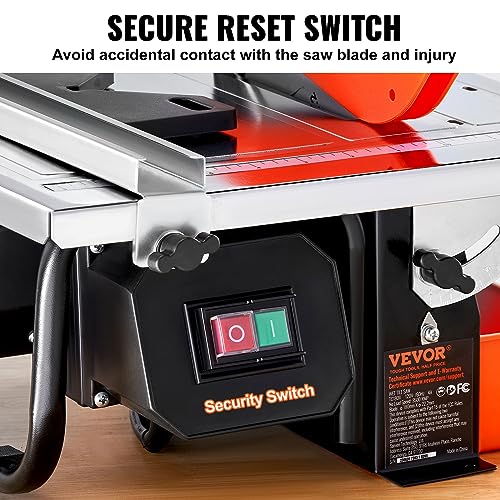
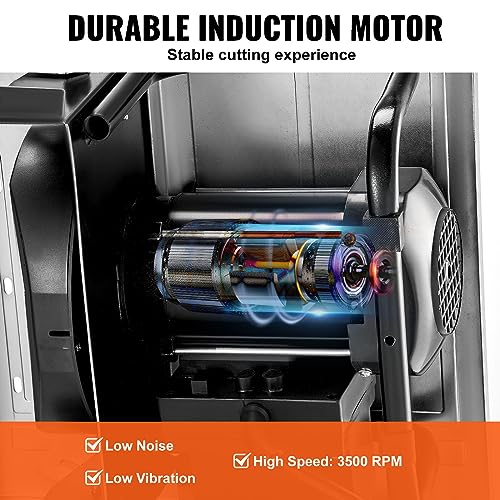
- Brushless induction motor
- Removable water tank
Trade-offs
- Loose slide mechanism
- Small water reservoir
- Struggles with thick porcelain
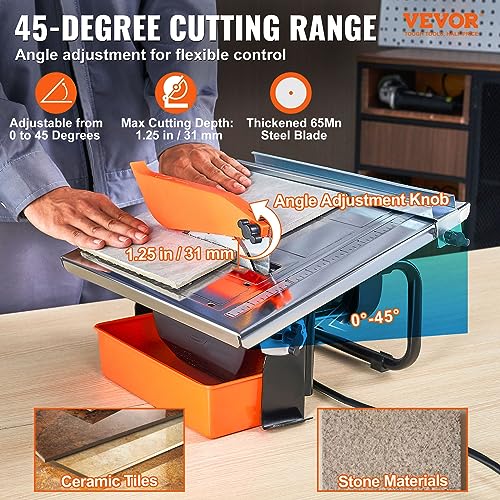
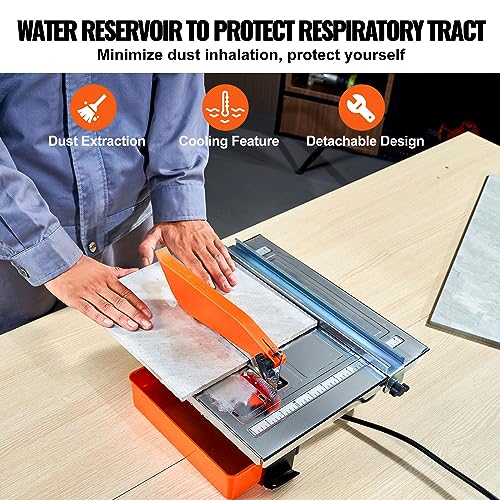
This VEVOR 7-inch model is one of the lighter units in the class, which helps if you’re moving it between rooms or storing it overhead. The 3500 RPM motor is modest, but induction-driven, so it runs quieter and with less brush maintenance than brushed motors. That’s a win for occasional users. Owners consistently report it handles basic ceramic and thin porcelain well, but struggles with full-body porcelain at full depth. The 1.25-inch max cut depth is average, and while the water reservoir works fine, it’s small and needs refilling mid-job on longer sessions.
Where it falls short is rigidity, the sliding mechanism feels a bit loose, and you’ll need to clamp tiles down for best results. It’s not a precision machine, but for basic cuts and low-budget flips, it gets by.
Product photos
How We Evaluated tile saws
Rather than a hands-on lab test, my research for these recommendations centered on a detailed comparison of published specifications and features across numerous models. I weighed owner reviews from major retailers alongside expert opinions found in trade publications and established tool review sites. As someone who’s spent years working with tools and advising others on their selection, I applied my understanding of what reliably translates to performance in a tile saw – and ranked options accordingly.
For tile saws, cutting capacity and motor power are paramount. A larger capacity allows for more versatile project work, while sufficient horsepower is crucial for cleanly slicing through harder materials like porcelain. Equally important is the stability of the saw; vibration and a flimsy frame directly impact cut quality and, frankly, safety. These factors consistently surfaced as the biggest concerns in owner feedback and heavily influenced my rankings.
Specifications reliably indicate a saw’s physical capabilities – blade diameter, maximum cut depth, and motor amperage. However, I placed more weight on owner reports regarding build quality, ease of use, and long-term durability. Reputable expert reviews helped validate those impressions and provided insights into real-world performance beyond the numbers. Learning about common issues or praises within the user community is crucial to understanding a tool’s true value; you can find more guidance on wet saw tile cutting guide.
How To Choose The tile saws
Choosing a tile saw can feel overwhelming, but focusing on a few key factors will help you find the right tool for your projects.
A quality tile saw delivers clean, accurate cuts with minimal chipping or damage to the tile. Look for models with robust frames, powerful motors, and effective water cooling systems. Consistent cut depth adjustment, a stable carriage, and a good blade are also critical for achieving professional results. Prioritize safety features like blade guards and reset switches.
Cutting Capacity & Blade Size
The size of the tile you regularly work with dictates the cutting capacity you’ll need. Don’t overbuy; a 10-inch saw is great for larger format tiles and occasional stone work, but a 7-inch model is often sufficient for most DIY tiling projects. Rip capacity (the length of cut) is just as important as depth. Consider whether you’ll need to make diagonal cuts, and ensure the saw’s table and fence system can accommodate them accurately. A saw with a limited rip capacity will force you to reposition the tile mid-cut, increasing the risk of uneven results.
Motor Power & Cooling
A more powerful motor isn’t always better, but it is essential for consistently cutting harder materials like porcelain. Lower-powered motors struggle with dense tiles, leading to slow cuts and potential blade damage. Look for at least a 1.5 HP motor for a 10-inch saw, or 1 HP for a 7-inch model. Equally important is the cooling system. Wet saws rely on water to keep the blade cool, reduce dust, and prolong blade life.
Here’s what to consider regarding water management: * A simple water pan is adequate for small jobs. * A submersible pump provides consistent water flow and better cooling. * A fully enclosed system with integrated trays minimizes mess and water waste, making cleanup much easier, especially if you’re working indoors.
Portability & Features
Tile saws can be heavy, so think about where you’ll be using it. If you need to move it frequently, a lighter model with a folding stand is a must. Beyond portability, consider the features that will streamline your work. Many saws now include laser guides for precise cuts, adjustable bevels for angled cuts, and miter gauges for repetitive cuts. Understanding diamond blade applications is also key – the right blade makes all the difference.
A solid rule of thumb: if you’re tackling a large tile job, invest in a saw with a dedicated stand. You’ll save your back and improve accuracy.
I often recommend looking at the range of high-performance wet tile saws to get a feel for the features available and the price points associated with them. Ultimately, the “best” saw depends on your specific needs and budget.
Tile Saws Compared
Here’s a comparison of key specifications for the tile saws featured.
| Product Name | Blade Diameter | Max. Cut Depth | Max. Rip Cut | Angle Adjustment | Motor (HP) | Weight (lbs) |
|---|---|---|---|---|---|---|
| DEWALT 10-Inch Wet Tile Saw | 10 in | 3 1/8 in | 28 in | 45° | 1.5 | 69 |
| POWERTEC PRO 7-Inch Wet Tile Saw | 7 in | 2 1/4 in | 24 in | 45° | 1-1/2 | 64 |
| DEWALT 10-Inch Wet Tile Saw | 10 in | 3.75 in | N/A | 45° | N/A | 91 |
| VEVOR 10-Inch Wet Tile Saw | 10 in | 3.75 in | 36 in | 45° | N/A | N/A |
| PeakPursuit 7-Inch Wet Tile Saw | 7 in | 1.34 in | N/A | 45° | N/A | N/A |
| Hoteche 7-Inch Wet Tile Saw | 7 in | 33 mm | N/A | 45° | N/A | N/A |
| Leegol 7-Inch Wet Tile Saw | 7 in | N/A | N/A | 45° | N/A | N/A |
| VEVOR 7-Inch Wet Tile Saw | 7 in | 1.25 in | N/A | 45° | N/A | N/A |
Frequently Asked Questions
What tile thickness can most standard wet saws handle?
Most 7-inch and 10-inch wet saws can cut tiles up to 3 inches thick, but always confirm the specification for the model you’re considering. Thicker tiles require more powerful motors and specialized blades, so verify compatibility.
Are there wet saws suitable for small or occasional projects?
Yes, you can find several compact wet tile saws – or even handheld wet tile saws – that are ideal for hobbyists or those with limited space. These typically have 7-inch blades and are lighter weight, making them easier to maneuver and store.
What’s the difference between a submersible pump and a standard water pan in a tile saw?
A submersible pump provides consistent water flow to the blade, leading to better cooling and cleaner cuts, while a water pan relies on gravity and may require more frequent refills. Saws with pumps are generally preferred for larger or more demanding projects.
How important is the saw’s frame material?
The frame material significantly impacts stability and durability. Steel frames are generally more robust and less prone to vibration than plastic or aluminum, resulting in more accurate cuts and a longer lifespan for the saw.
Besides the saw itself, what other accessories are essential?
Beyond the saw, you’ll want a quality diamond blade specifically designed for the tile type you’re cutting, safety glasses, and potentially a tile cart for moving larger pieces. Having a spare blade on hand is also a good idea, as diamond blades will eventually wear down.
The Bottom Line
Choosing a tile saw always comes down to balancing control and convenience. You can spend a lot to get every feature under the sun, or you can find a solid, reliable tool that gets the job done without breaking the bank. For most homeowners and DIYers, I believe the DEWALT 10-Inch Wet Tile Saw strikes the best overall balance of power, capacity, and features – it’s a workhorse that will handle a wide range of projects with accuracy and ease.
If you’re on a tighter budget or primarily work with smaller tiles, the PeakPursuit 7-Inch Wet Tile Saw is a fantastic option. For those needing maximum versatility, the VEVOR 10-Inch Wet Tile Saw offers a generous rip capacity for tackling large-format tiles and complex cuts. And remember, understanding safe wet saw usage is critical regardless of which model you choose.
Ultimately, the most important factors aren’t horsepower or blade size, but a stable frame, consistent water flow, and a quality blade. Don’t get lost in the details; focus on building a solid foundation of technique and prioritizing safety, and you’ll achieve professional-looking results with any of these saws.
