7 Best Thickness Planers Under $400 of 2026
This post contains affiliate links. As an Amazon Associate, we earn from qualifying purchases.
The DEWALT DW735X stands out as the best thickness planer under $400, offering reliable performance and consistent cuts. For budget-focused buyers, the WEN PL1337 is a solid choice with its spiral cutterhead and dual feed speeds, while the VEVOR 13-inch with a 2.0 HP motor delivers strong value for heavier use.
Most people shopping for a thickness planer under $400 are trying to balance real woodworking demands with a tight budget. The challenge isn’t just finding something affordable, it’s avoiding models that struggle with hardwood, leave rough finishes, or wear out fast.
This guide cuts through the noise by focusing on specs that matter, motor power, cutterhead type, and feed control, backed by owner feedback and real-world performance trends. We looked at what actually holds up over time, so you can pick a planer that works well now and keeps working.
Top 7 Thickness Planer Under $400S in the Market
The Best Thickness Planer Under $400S, Reviewed
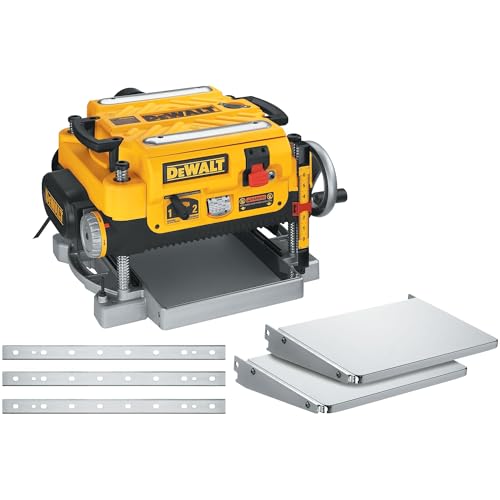
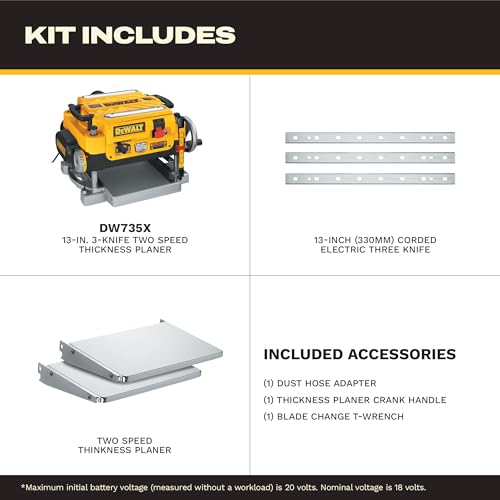
DEWALT 13-Inch Thickness Planer (DW735X)
Strengths
- Durable three-knife head
- Excellent snipe reduction
- Reliable long-term performance
Trade-offs
- Heavier than competitors
- No helical cutterhead
- Dated but proven design
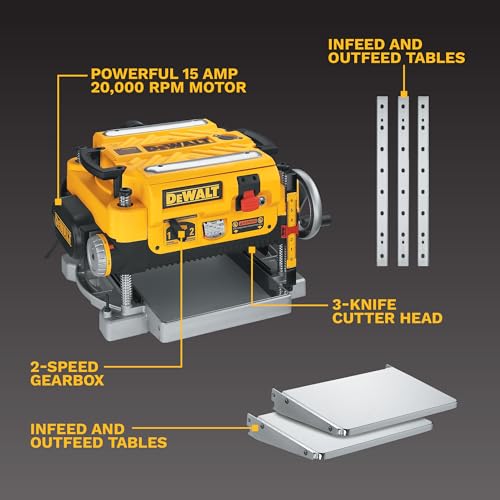
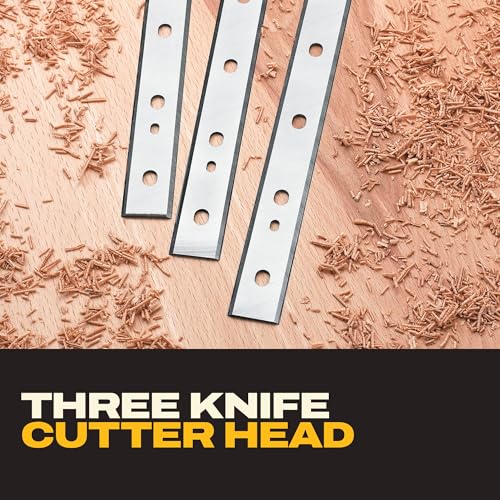
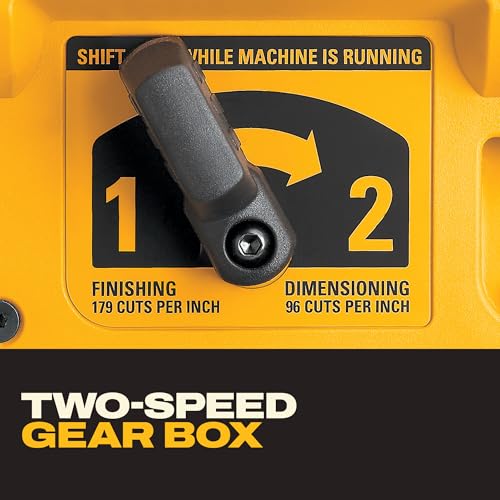
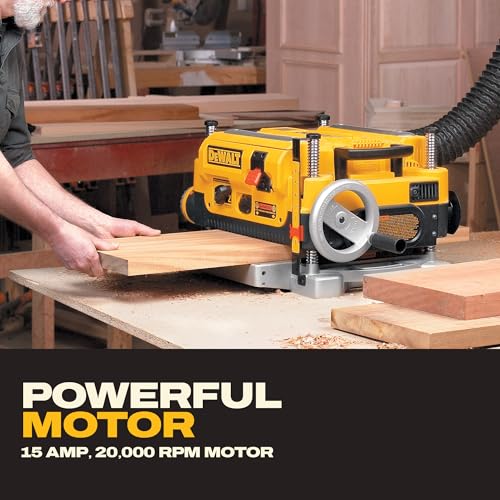
Even years after its release, the DW735X still sets the benchmark. The three-knife cutterhead delivers 30% longer blade life and cleaner cuts than most two-knife units, and the two-speed gearbox lets you optimize for 96 or 179 cuts per inch, a real advantage when switching between rough stock and final passes. The cast aluminum base is rigid, reducing vibration, and the automatic carriage lock minimizes snipe without fiddling with manual adjustments.
Owners consistently rate it as the most reliable in this range, with many reporting years of weekly use without issues. The fan-assisted chip ejection actually works, and the extra-large depth scale makes repeat passes accurate. It’s heavier than some, but that adds stability. Compared to newer models, it lacks helical cutterheads or digital readouts, but its build quality and consistency make it the smartest buy for serious users.
Product photos
VEVOR 13-Inch Two-Knife Benchtop Planer

Strengths
- Heavy-duty cast iron base
- Extended infeed support
- Hardened steel cutterhead
Trade-offs
- Rougher surface finish
- Less effective dust port
- Noisy operation
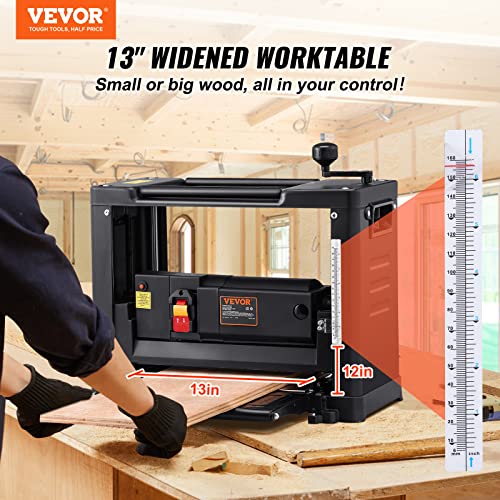
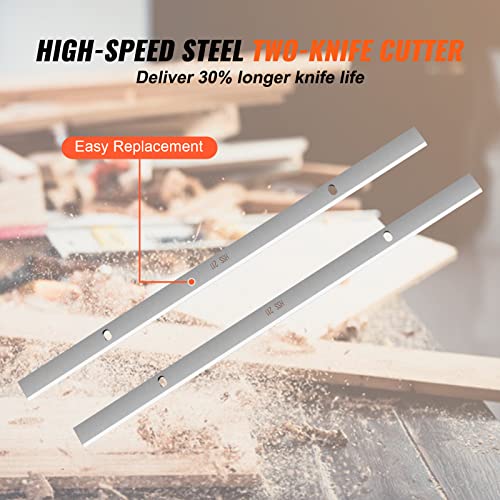
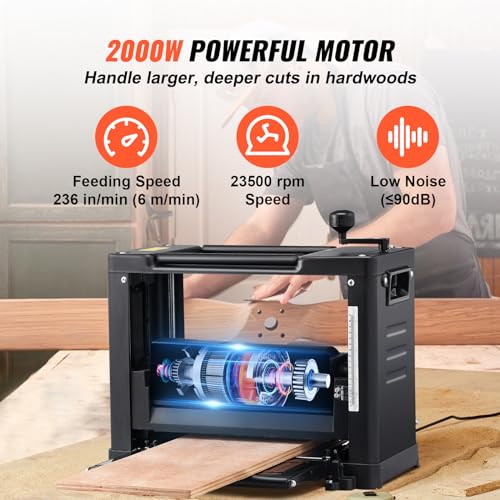
This VEVOR model leans hard into raw power, 2000W, 23,500 RPM, and a hardened two-knife steel cutterhead. It’s built like a tank, with a cast iron bed and 35 inches of total table length thanks to the 12-inch infeed extension. That kind of support matters when you’re running 8-foot boards, and owners say it helps minimize snipe better than most in this class. The overload protection is a smart touch, too, especially if you’re prone to pushing thick cuts.
But that two-knife head is a double-edged sword. It’s durable and handles abuse well, but it leaves a rougher surface than multi-blade or helical designs. You’ll be sanding more, no question. And the dust port is smaller than on their other model, so chip ejection isn’t as efficient. Still, if you want brute-force planing and don’t care about silky finishes, this is a strong pick.
Product photos

VEVOR 13-Inch Three-Blade Planer
Strengths
- Dual feed speeds
- Dual roller feeding system
- Excellent dust port flexibility
Trade-offs
- Noticeable noise
- Some vibration under load
- HSS blades wear faster than carbide
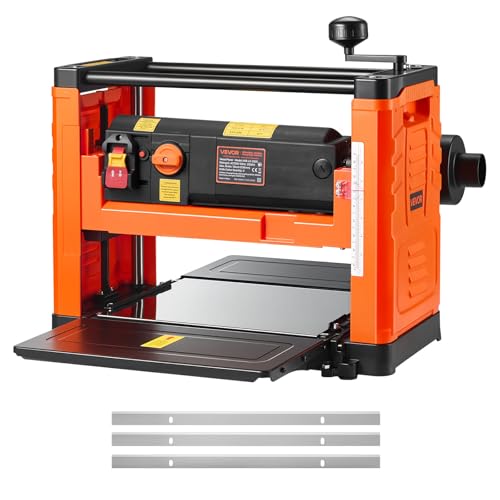
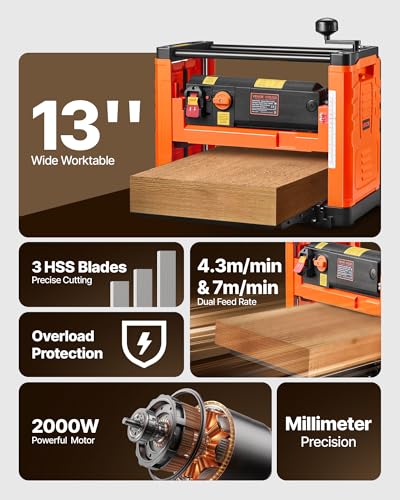
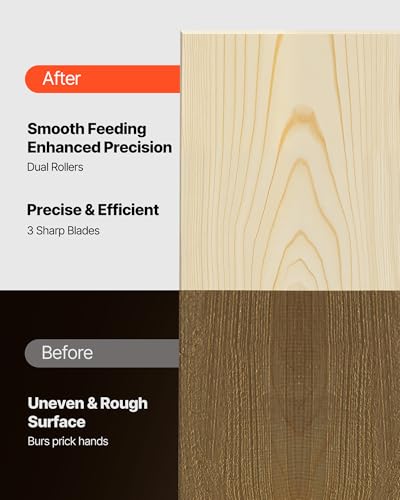
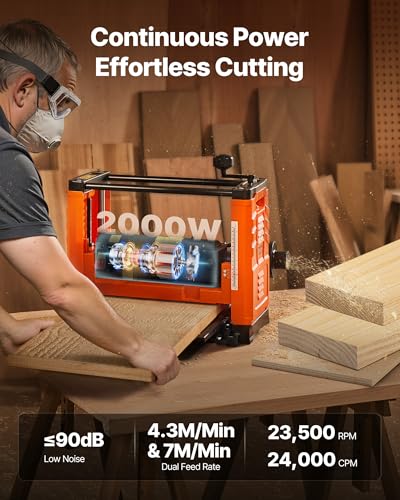
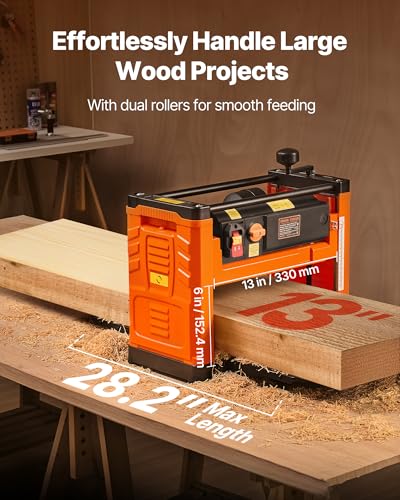
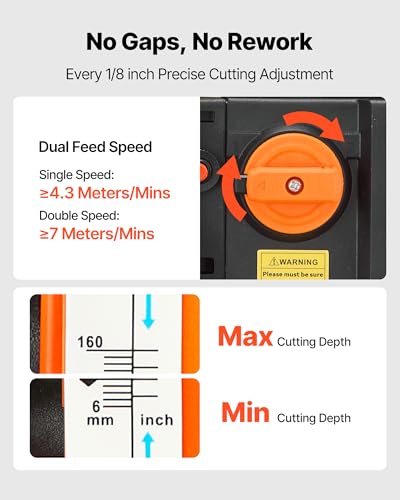
VEVOR’s two-speed model stands out for its dual rollers and 2000W motor, which owners consistently report keeps feed steady even with dense maple or warped stock. The 24,000 CPM with HSS blades delivers a smoother result than most straight-knife planers in this range, and the two feed speeds let you balance speed versus finish. The large 28.2-inch table helps reduce snipe, though it still needs good support on longer pieces.
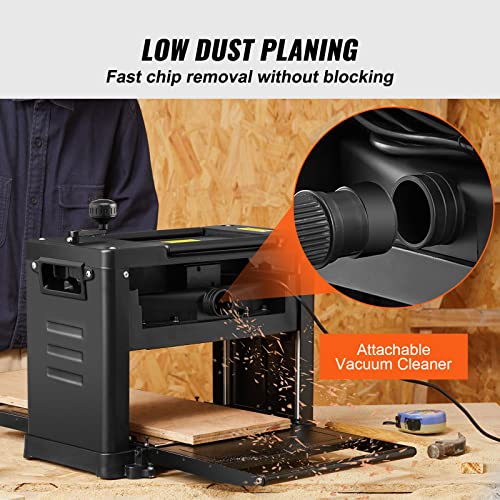
What I appreciate here is the dust collection, being able to run either 2-inch or 4-inch hoses is rare at this price and makes cleanup far more effective. Still, it’s loud, and some users mention vibration at full load. It’s not as refined as the DEWALT, but for the power and feeding control, it’s a serious step up from basic models.
Product photos
WEN 13-Inch Spiral Blade Planer (PL1337)

Strengths
- Two-speed feed control
- Spiral HSS cutterhead
- Good value for feature set
Trade-offs
- HSS blades require frequent sharpening
- Motor strains on thick hardwood
- Limited table support
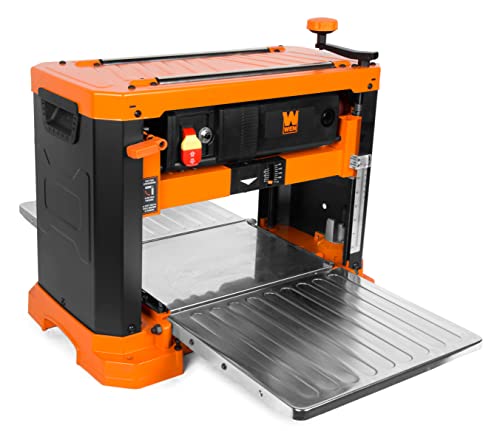
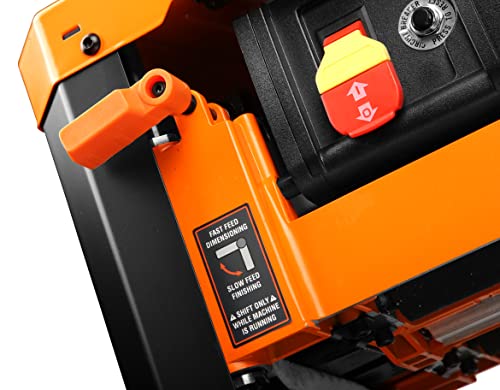
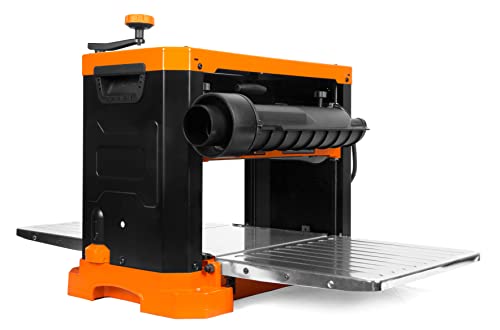
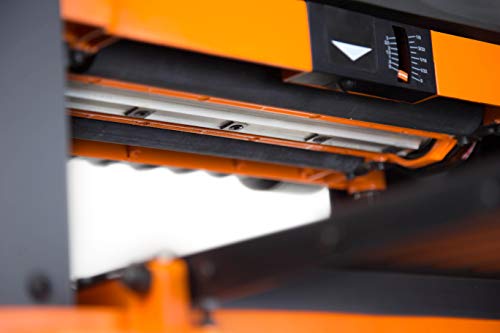
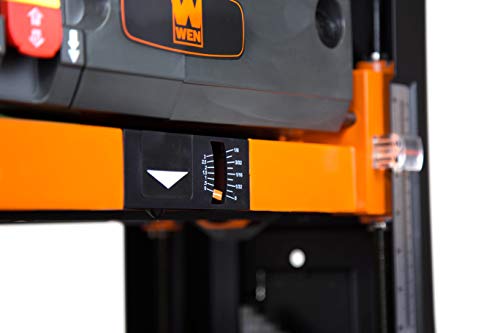
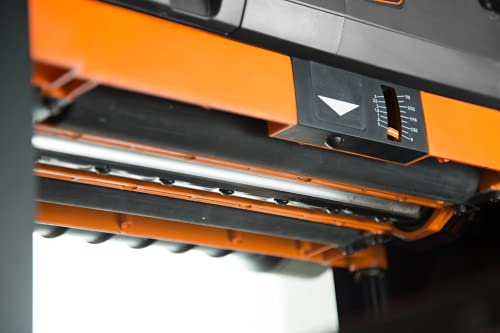
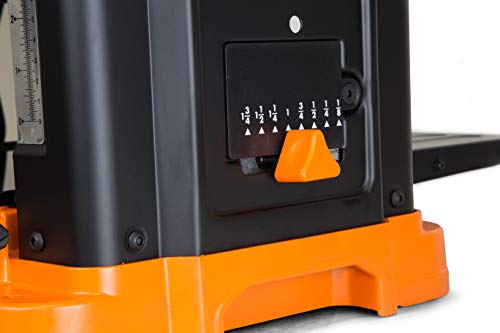
WEN’s PL1337 is the most accessible spiral cutterhead planer under $400, and that’s its big selling point. The 26 staggered HSS blades give a noticeably cleaner cut than straight-knife models, and the two-speed gearbox (16 or 26 FPM) lets you switch from roughing to finishing on the fly. That’s a feature even some pricier models skip. Owners praise the ease of blade changes and the included return rollers, which help with longer stock.
But it’s not all upside. The spiral head uses HSS, not carbide, so while it cuts cleaner than three-knife designs, it won’t last nearly as long under heavy use. And while the 15A motor is adequate, it can bog down on dense hardwoods at full depth. Still, for a first-time buyer wanting a taste of spiral performance without breaking the bank, this is the logical entry.
Product photos
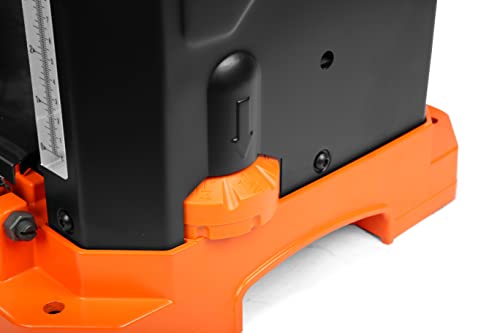
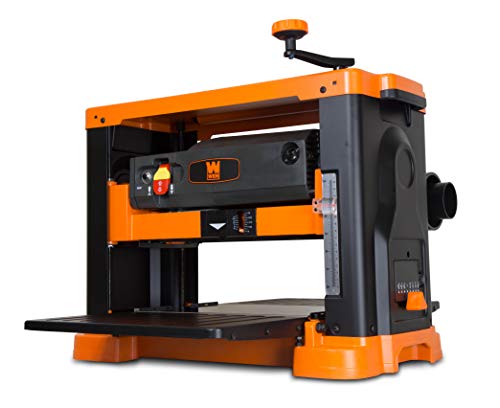
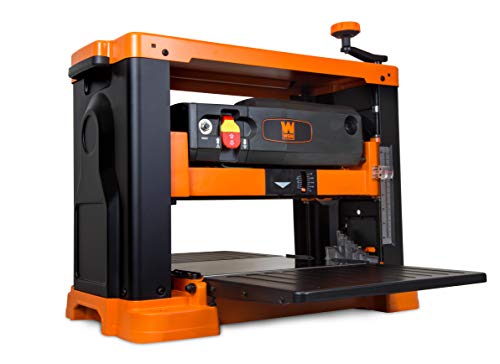
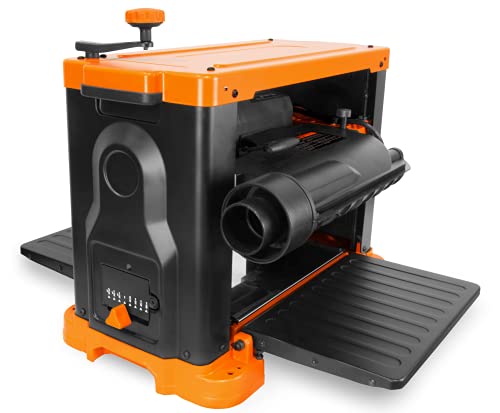
WEN PL1303 13-Inch Three-Blade Planer
Strengths
- Affordable entry point
- Reversible blades extend life
- Solid 15A motor
Trade-offs
- Basic finish quality
- No feed speed control
- Noticeable snipe risk
This planer hits where it counts for budget-focused DIYers. The 15A motor and 30,000 cuts per minute sound strong on paper, and owners confirm it handles softwoods and occasional hardwoods without stalling. The three reversible SK5 steel blades are a decent perk at this price, letting you flip them when dull instead of replacing right away. But don’t expect magic, finish quality is acceptable, not impressive, and snipe can creep in on longer boards if you’re not careful with infeed support.
It’s lightweight and compact, so it won’t dominate your bench, but the lack of a helical cutterhead or even two-speed feed means you’re trading refinement for cost savings. Compared to others in this range, it’s the bare-minimum workhorse. If you’re only flattening rough lumber once in a blue moon, it’ll get you by.
Product photos
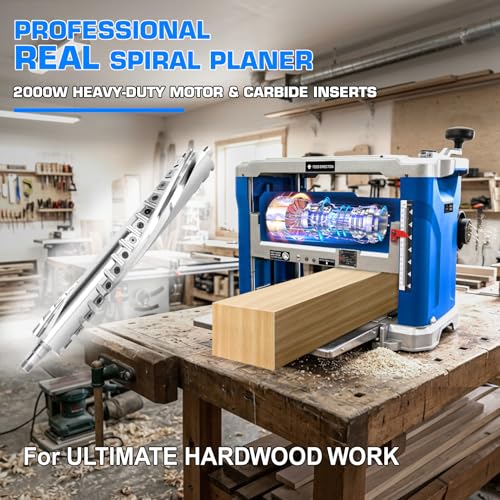
WOODERS 13-Inch Spiral Helical Planer
Strengths
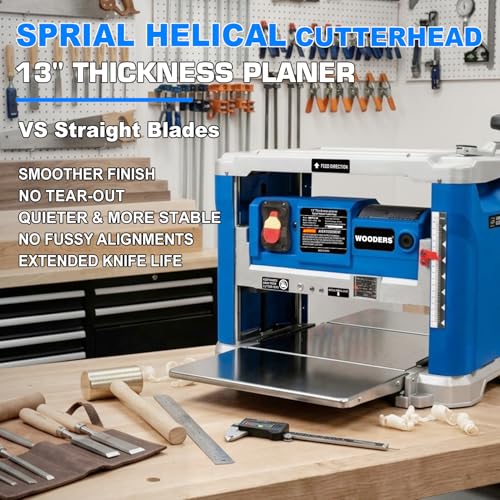
- Spiral carbide cutterhead
- Glass-smooth finish
- Reduced sanding needed
Trade-offs
- Single feed speed
- Insert replacement less intuitive
- Higher initial cost within range
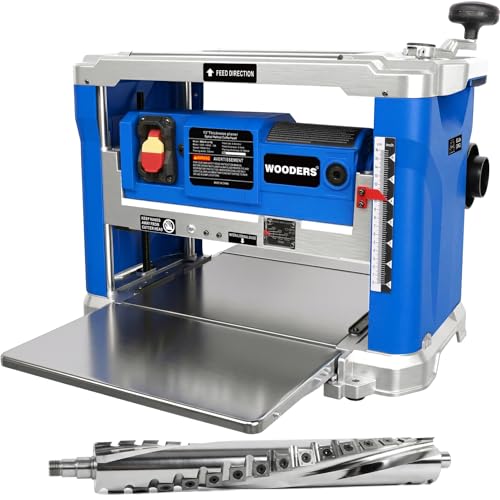
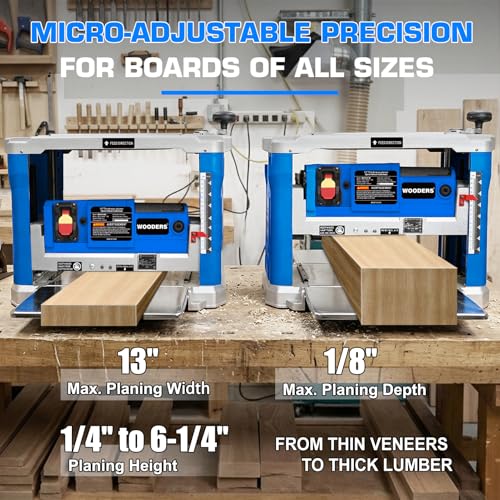
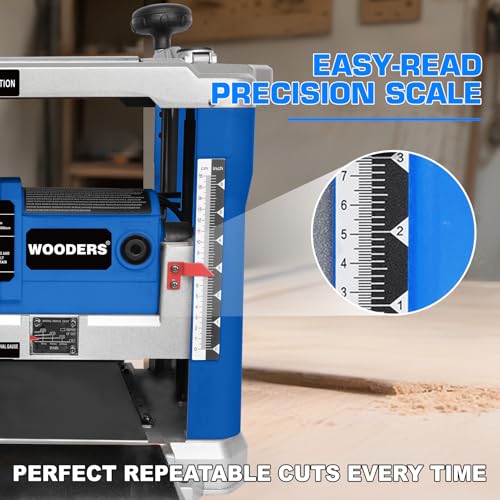
This one grabs attention with its spiral helical cutterhead and tungsten carbide inserts, a feature usually seen in $800+ planers. On paper, that means less tear-out, quieter operation, and vastly longer blade life. Owners agree: the surface finish is noticeably smoother, especially on figured or interlocked grain, and many say they’re doing 70% less sanding post-planing. The 10,000 RPM speed paired with micro-adjustable depth control gives fine repeatability, which matters when you’re dialing in to 1/32″.
The 15A motor holds up well, and the aluminum top cover does seem to help with heat dissipation during extended runs. Still, the feed rate is fixed at a single speed, which limits flexibility compared to two-speed competitors. And while the cutterhead is durable, replacing inserts isn’t as plug-and-play as flipping a straight blade. But if finish quality is your top priority under $400, this is the machine to beat.
Product photos
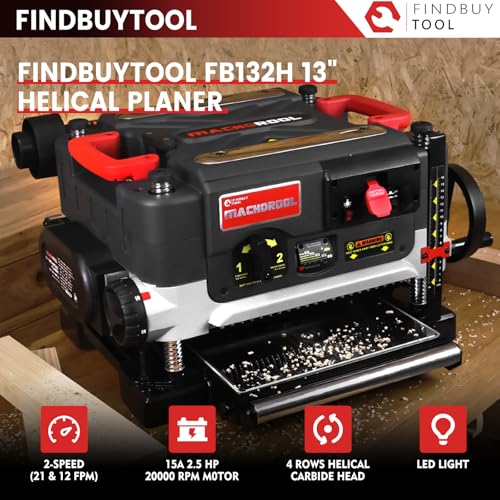
FINDBUYTOOL 13-Inch Helical Cutterhead Planer
Strengths
- 40-carbide helical cutterhead
- Precision ball-screw adjustment
- Extensive table support
Trade-offs
- Steeper learning curve
- Brand less proven long-term
- Slightly bulkier footprint
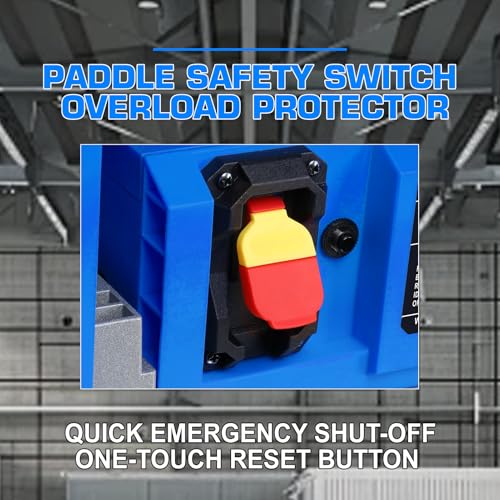
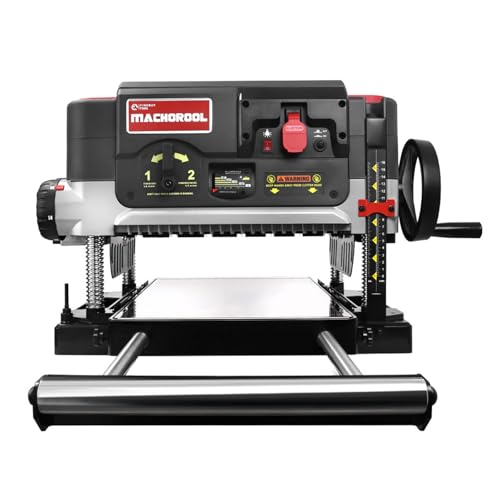
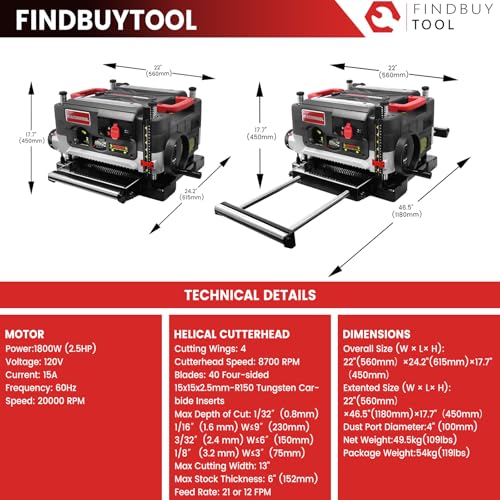
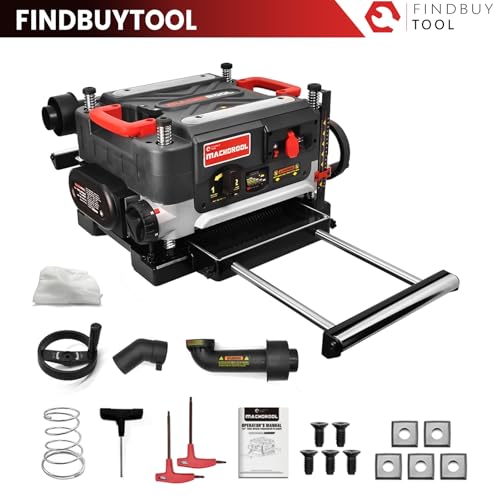
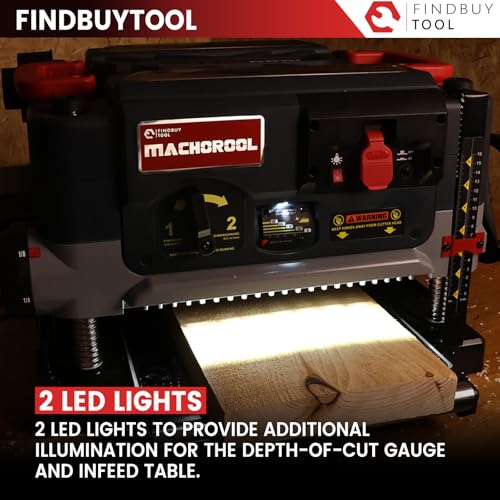
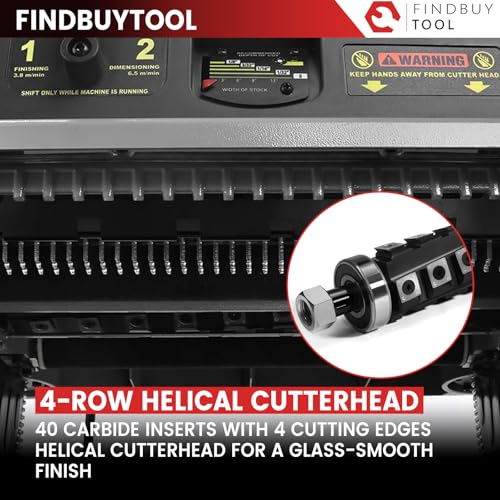
This FINDBUYTOOL model brings pro-level precision into the sub-$400 conversation. The 40-carbide-insert helical head is the standout, owners report it stays sharp for hundreds of board feet and delivers a near-machined surface. The ball-screw height adjustment with ±0.05mm accuracy is something you’d expect on industrial gear, and the 6-position preset thickness turret saves real time on repeat jobs. The LED lights and 45-inch extendable tables are thoughtful touches that improve usability.
The 2.5HP-equivalent motor handles tough feed rates without hesitation, and the 4-inch dust port clears chips effectively. It’s not perfect, some users note the controls take a minute to learn, and the brand isn’t as established as DEWALT or WEN. But for the feature set, it’s a sleeper hit. If you want long-term blade savings and repeatable accuracy, this is the one to get.
Product photos
How We Chose These thickness planer under $400s
My approach to evaluating thickness planers involved a research-led comparison of specifications, features, and, crucially, owner and expert feedback. Rather than a hands-on lab test of each model, I focused on building a detailed picture of performance based on published data and the experiences of people actually using these tools. I weighed factors like motor power, cutting depth, feed rates, and cutterhead design against reported reliability and cut quality from various sources.
For thickness planers, consistent cutting depth and power are paramount. I gave the most weight to models offering precise depth adjustment mechanisms and motors capable of handling harder wood species without bogging down. Blade quality and cutterhead type (spiral vs. straight) also figured heavily, as these directly impact the finish and the longevity of the cutting surfaces. Understanding these elements is key when considering a purchase, particularly if you need to work with a variety of materials.
Specifications reliably indicate a planer’s potential – motor horsepower, maximum cutting depth, and feed rates are all clearly defined. However, real-world performance, especially regarding smoothness of cut, vibration, and long-term durability, is better assessed through owner reviews and insights from reputable woodworking sites. These sources reveal common issues, like snipe (uneven edges) or blade dulling, that aren’t always apparent in product descriptions. For more options, you may want to see our guide to the best benchtop models.
How To Pick The Right thickness planer under $400s
Finding the right thickness planer can dramatically improve your woodworking, but there’s a lot to consider beyond just price.
A good thickness planer delivers consistently flat, smooth surfaces with minimal tear-out. Key specs include motor power (for handling hardwoods), cutterhead type (spiral vs. straight knife), feed rate control, and dust collection efficiency. Look for features that promote accuracy, reduce snipe, and simplify blade changes.
Motor Power and Cutterhead Type
Don’t underestimate the importance of a powerful motor. If you plan to work with hardwoods like oak or maple regularly, you’ll want a planer with at least a 15-amp motor. While lower amperage models can handle softwoods, they’ll struggle and potentially stall with denser materials. Equally important is the cutterhead. Straight-knife cutterheads are more affordable, but require more frequent sharpening or replacement. Spiral cutterheads, especially those with carbide inserts, offer a superior finish and last much longer, though they come at a higher price. If you’re looking for more options, consider checking out our guide to the top planers under 500.
Feed Rate and Depth Control
The feed rate dictates how quickly the wood passes through the planer. A variable feed rate is a huge benefit. Slower speeds are crucial for achieving a very smooth finish, especially with figured wood or difficult grain. Faster speeds are great for quickly removing material from rough lumber. Precision in depth control is also vital. Look for a planer with a clear, accurate scale and a mechanism that allows for small, incremental adjustments. Many planers offer preset stops for common thicknesses, saving you time and ensuring consistency.
Usability and Dust Collection
Thickness planers create a lot of shavings. Effective dust collection isn’t just about keeping your shop clean; it’s about safety and visibility. A 4-inch dust port is preferable, as it’s compatible with most shop vacuums and dust collection systems. Beyond that, consider features like infeed and outfeed tables. These extensions support longer boards, reducing the risk of snipe (that annoying dip at the beginning and end of the cut). Here’s a quick rule to remember:
Always take multiple shallow passes rather than one deep cut. This reduces strain on the motor, minimizes tear-out, and produces a smoother, more accurate result.
Finally, think about blade changes. Some planers have frustratingly complex blade replacement systems. Look for models with quick-change mechanisms or clear, easy-to-follow instructions. If you’re looking for the most value, you might also consider best budget thickness planers to get started.
Thickness Planer Under $400s Compared
Here’s a comparison of key specifications for thickness planers under $400.
| Product Name | Max. Width (in) | Max. Depth (in) | Motor (HP) | Cutterhead Type | Feed Rate (FPM) | Dust Port (in) |
|---|---|---|---|---|---|---|
| DEWALT DW735X | 13 | 6 | N/A | Three-Knife | 96/179 | N/A |
| VEVOR (13″ Two-Knife) | 13 | 6 | 1.5 | Two-Knife | N/A | N/A |
| VEVOR (13″ Three-Blade) | 13 | 6 | 2.0 | Three-Blade | N/A | 2/4 |
| WEN PL1337 | 13 | 6 | 1.5 | Spiral | 26/16 | 2.5/4 |
| WEN PL1303 | 13 | 6 | 1.5 | Three-Blade | 26 | N/A |
| WOODERS 13-Inch | 13 | 6.25 | 1.5 | Spiral | 10,000 RPM | N/A |
| FINDBUYTOOL 13-Inch | 13 | 6 | 1.5 | Helical | 21/12 | 4 |
Frequently Asked Questions
What level of woodworking experience is ideal for using a thickness planer under $400?
These planers are generally user-friendly and suitable for both beginners and experienced woodworkers. However, understanding basic woodworking principles and safety precautions is crucial for achieving optimal results and avoiding potential hazards.
How often will I need to sharpen or replace the blades on these planers?
The frequency depends heavily on the wood species you’re processing and the cutterhead type. Straight-knife cutterheads typically require sharpening every 20-30 hours of use, while spiral cutterheads with carbide inserts can last for hundreds of hours.
Can a thickness planer completely eliminate twist or warp in lumber?
While a planer can significantly reduce twist and warp, it’s unlikely to eliminate it entirely in severe cases. Multiple passes and careful technique can improve the result, but severely warped boards may still require additional jointing before planing for best results.
Are these planers loud during operation, and are there ways to mitigate the noise?
Yes, thickness planers can be quite loud(around 80-90 decibels). Using hearing protection is essential. Placing the planer on a vibration-dampening mat and ensuring the shop is well-ventilated can also help reduce perceived noise levels.
Where can I find more in-depth information about choosing the best wood thickness planers?
You can find a more detailed wood planer buying guide that covers various factors, including motor power, cutterhead types, and safety features, to help you make an informed decision.
The Bottom Line
Choosing a thickness planer often comes down to balancing initial cost with long-term satisfaction. While you can find functional options for under $400, the DEWALT DW735X consistently receives high marks for its balance of power, precision, and reliability within this price range. It’s a solid all-around performer that will handle a wide variety of projects without breaking the bank.
For those on a tighter budget, the VEVOR (13″ Two-Knife) offers an entry point into thickness planing, and the WEN PL1303 provides a reasonable set of features for the price. However, if you anticipate working with hardwoods frequently or prioritize a superior finish, the WEN PL1337 with its spiral cutterhead is a worthwhile step up. Those seeking more detailed insights into options might find our benchtop planer comparisons helpful.
Ultimately, remember that specifications tell only part of the story. The most important factors aren’t horsepower or feed rates, but rather a stable setup, sharp blades, and taking consistent, shallow passes. A well-maintained, modestly-powered planer used correctly will always deliver better results than a high-end machine pushed to its limits.
