7 Best Thickness Planers Under $500 of 2026
This post contains affiliate links. As an Amazon Associate, we earn from qualifying purchases.
The FINDBUYTOOL 13-Inch Helical is the best overall thickness planer under $500, offering strong power, precise depth control, and a long-lasting helical cutterhead. For budget-focused buyers, the WOODERS 13-Inch Spiral delivers a smooth finish and solid build at a lower price, while the DEWALT DW735X remains a reliable choice if you can find it within budget.
Most people shopping for a thickness planer under $500 are trying to balance real performance with a tight budget. The challenge is finding a machine that won’t struggle with hardwoods, minimizes snipe, and won’t clog your workspace with dust.
This guide cuts through the noise by focusing on what actually matters: motor reliability, cutterhead type, dust collection, and consistent depth adjustment. I compared specs and aggregated owner experiences to find the models that deliver the most value and performance for DIYers and home shop woodworkers.
Top 7 Thickness Planer Under $500S in the Market
The Best Thickness Planer Under $500S, Reviewed
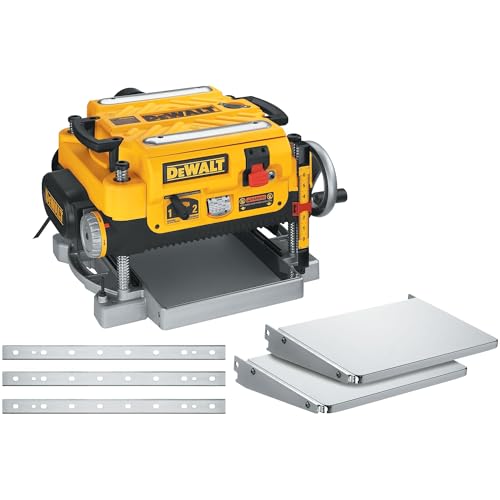
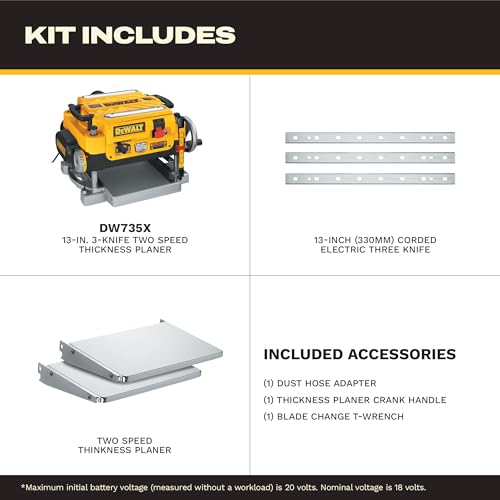
DEWALT 13-Inch Thickness Planer (DW735X)
Strengths
- Proven reliability
- Excellent build quality
- Fan-assisted chip ejection
- Easy knife changes
- Three-year warranty
Trade-offs
- No helical cutterhead
- Slightly noisier operation
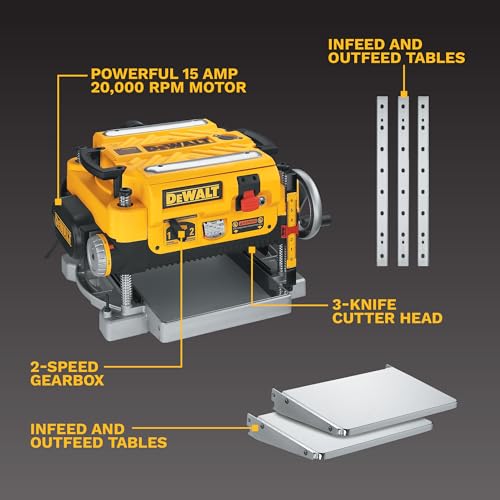
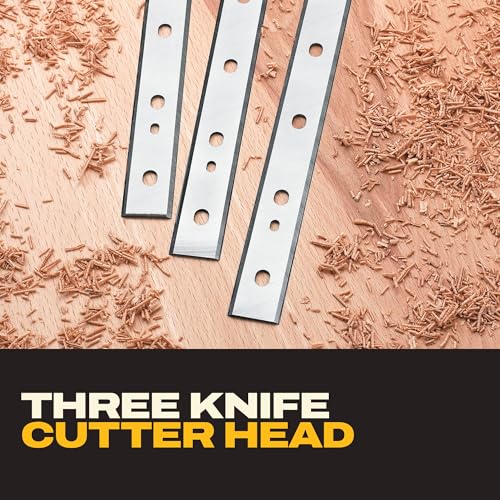
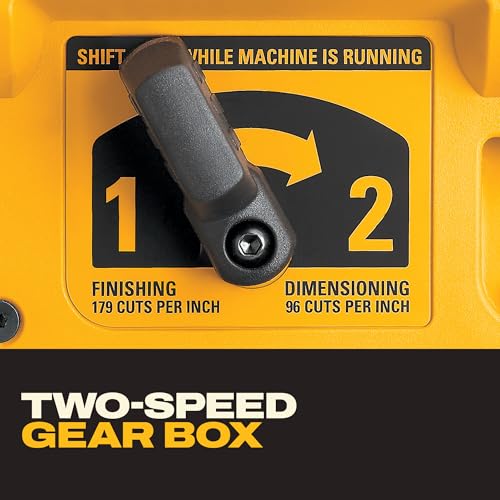
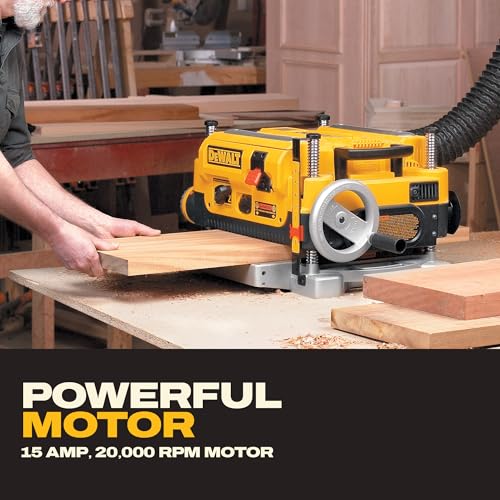
Even years after its release, the DEWALT DW735X still feels like the gold standard in this category. It’s not flashy, but everything about it, from the cast aluminum base to the automatic carriage lock, feels engineered for durability and consistency. The three-knife cutterhead doesn’t match the finish of a helical unit, but it’s reliable, and the knives are easy to replace, with owners noting they last a long time when properly maintained.
The real strength here is balance. It cuts efficiently at both 96 and 179 CPI, the fan-assisted chip ejection actually works, and the depth-stop turret is a small but meaningful time-saver. When paired with the three-year warranty, it’s the kind of tool you buy once and forget about, until you need it. I’d still pick this over most newer models unless you’re specifically chasing a helical head.
Product photos
VEVOR 13-Inch Two-Blade Benchtop Planer

Strengths
- Extended table support
- Cast iron bed
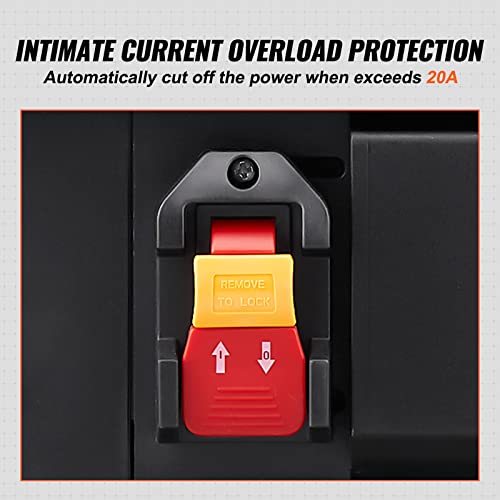
- Overload protection
- Durable blade hardness
- Low noise design
Trade-offs
- Two-blade finish less refined
- No feed speed control
- Limited dust port flow
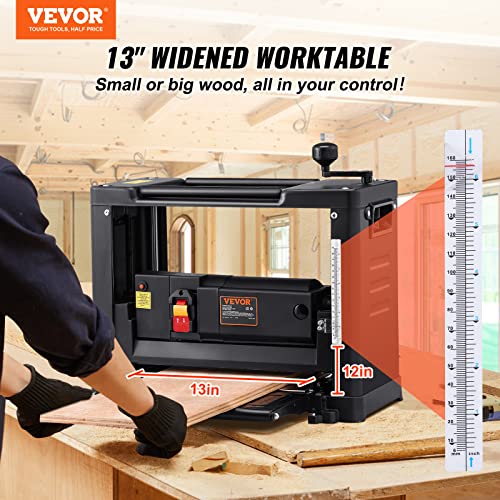
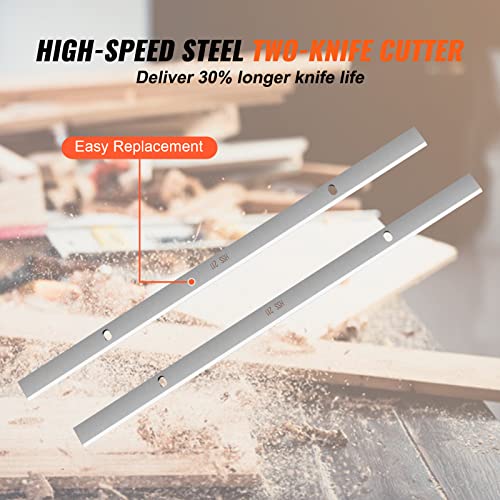
This two-knife model takes a different approach, fewer blades, higher RPM, and a cast iron bed for added stability. The idea is that fewer, harder blades (HRC55-60) can maintain sharpness longer and reduce heat buildup. On paper, it’s smart, but in practice, owners note the finish isn’t as smooth as three-knife or helical designs, and the lack of feed speed options limits versatility.
Where it wins is in build stability. The 35-inch total table length and coplanar extensions offer excellent support for long boards, and the overload protection adds peace of mind. It’s a stable, no-frills machine that won’t win awards for finish quality but holds up well under steady use.
Product photos
VEVOR 13-Inch Three-Blade Power Planer
Strengths
- High material removal rate
- Dual roller system
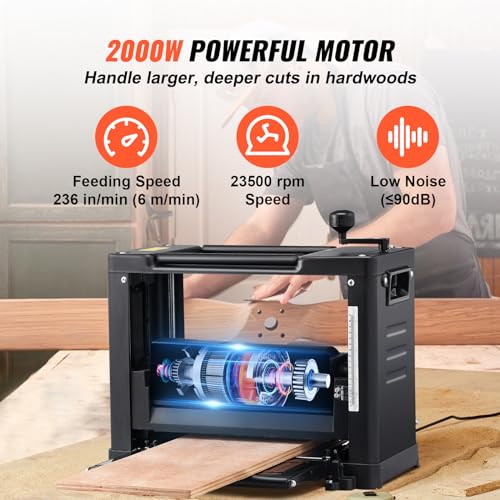
- Robust motor
- Good depth control
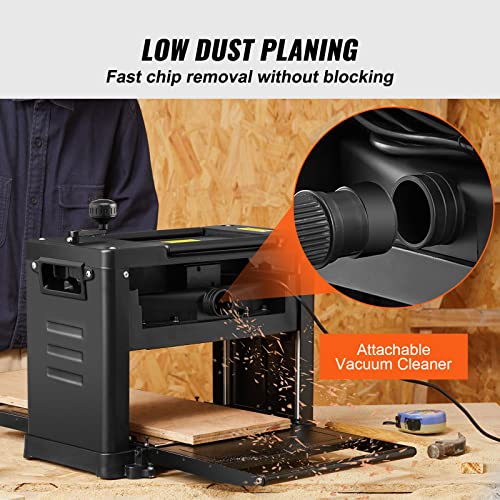
- Dual dust port
Trade-offs
- No variable feed speed
- Rougher surface finish
- HSS blades wear faster
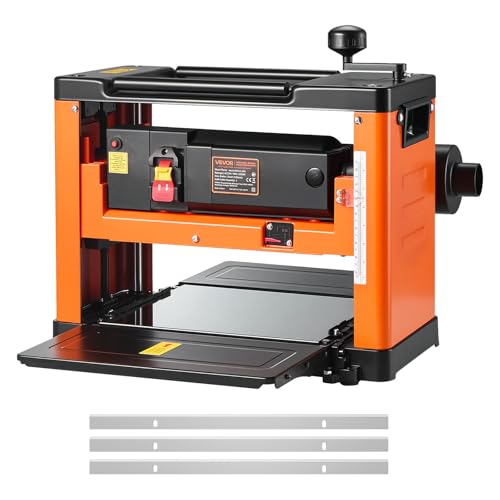
This VEVOR model is nearly identical to the two-speed version but without the variable feed option, making it better suited for users who prioritize raw power over finesse. The 2000W motor and three HSS blades can handle aggressive material removal, and the dual rollers help maintain feed stability. It’s a brute-force approach, and that works if you’re flattening rough-sawn lumber or making deep passes on wide boards.
But that strength comes at the cost of finish quality. Without a slow feed option, you’re more likely to get chatter or tear-out, especially on tricky grain. It’s a one-trick pony, but if that trick is removing wood fast, it does it well.
Product photos

VEVOR 13-Inch Two-Speed Three-Blade Planer
Strengths
- Dual dust port sizes
- Dual feed speeds
- Dual roller feeding
- Good depth accuracy
- Spacious worktable
Trade-offs
- HSS blades need frequent sharpening
- Motor heats up under load
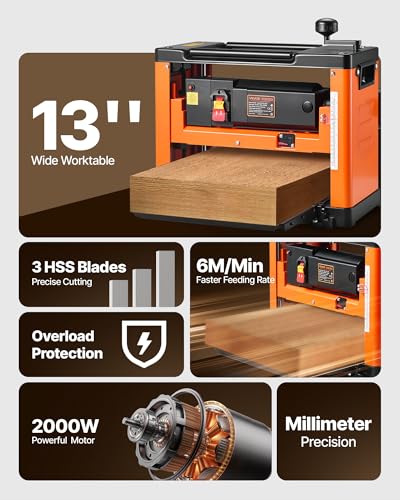
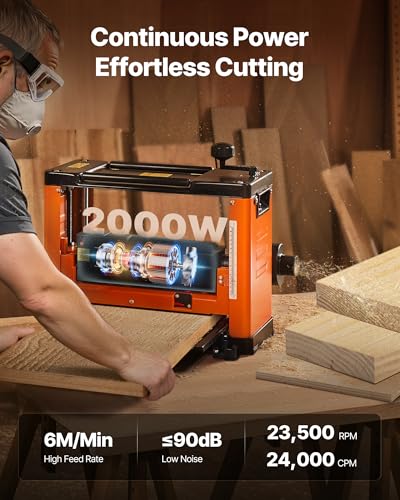
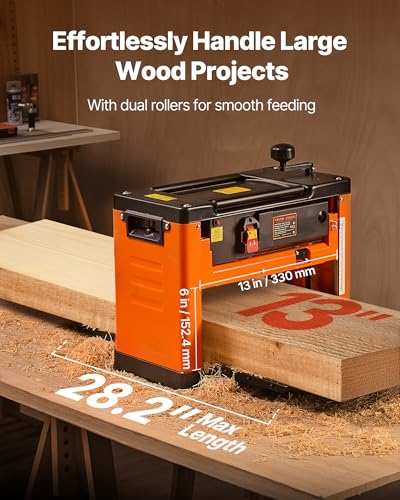
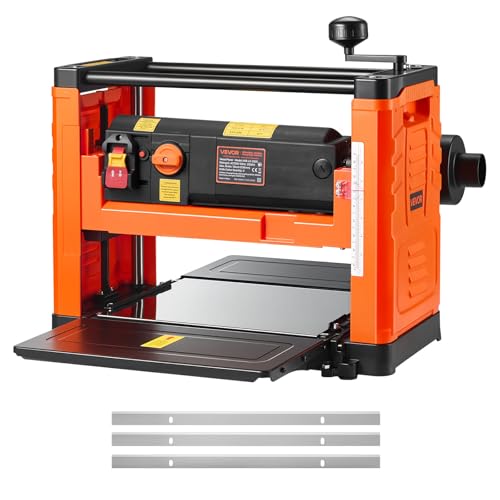
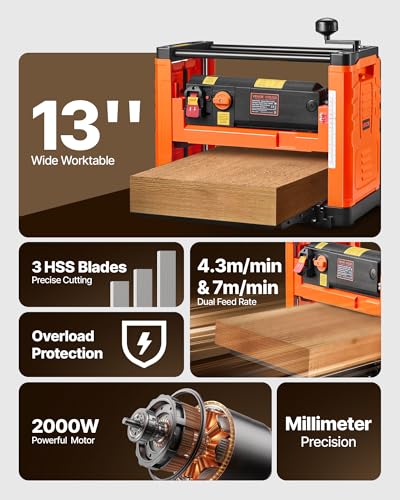
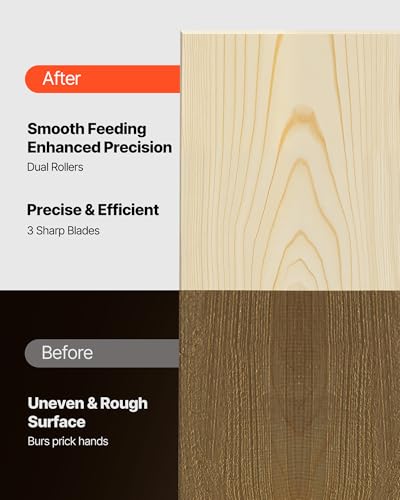
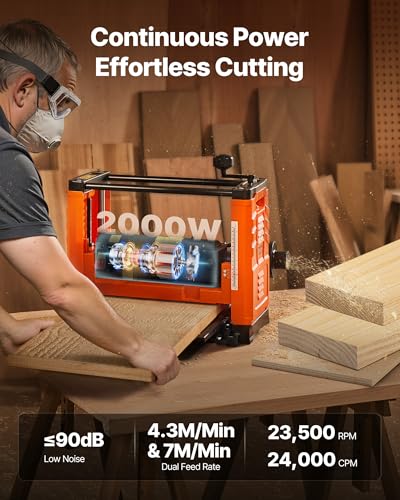
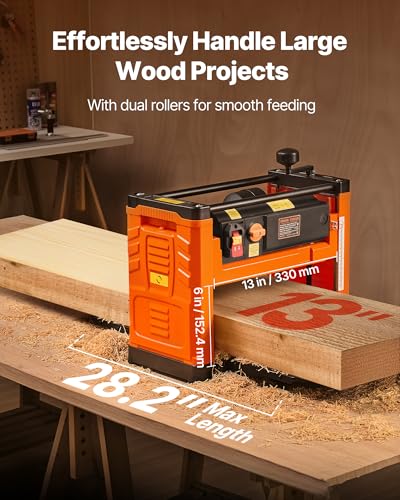
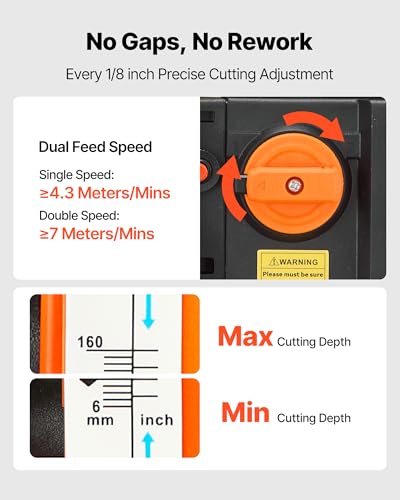
VEVOR’s two-speed model brings solid specs to the table: a 2000W motor, dual rollers, and compatibility with both 2-inch and 4-inch dust hoses, something many competitors skip. The three HSS blades are standard, but paired with the dual rollers, they do a decent job keeping boards tracking straight, even if they’re slightly warped. On paper, the 24,000 RPM motor looks impressive, though real-world feedback suggests it can struggle slightly under heavy, continuous hardwood passes compared to the DEWALT or FINDBUYTOOL units.
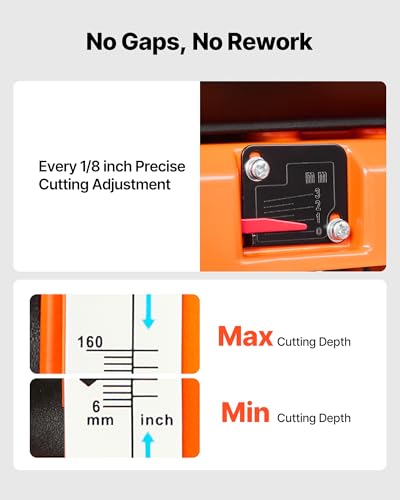
Where it shines is convenience. The dual dust port option means you’re not stuck with undersized shop vac hoses, and the millimeter-accurate depth gauge helps with repeatable settings. It’s not the smoothest cutter, but for mid-tier performance at a lower price, it holds its ground.
Product photos
WEN PL1303 13-Inch Three-Blade Planer
Strengths
- Low cost
- Lightweight design
- Simple operation
- Good for softwoods
- Includes extra blades
Trade-offs
- Single feed speed
- Limited durability
- Basic dust collection
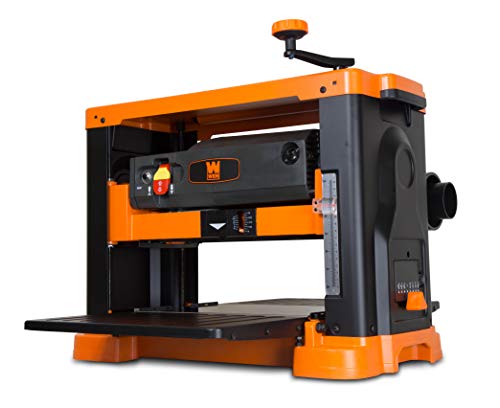
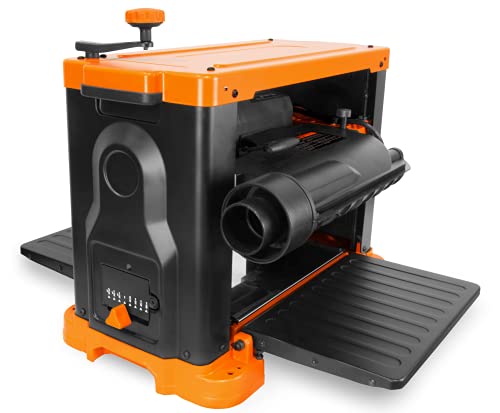
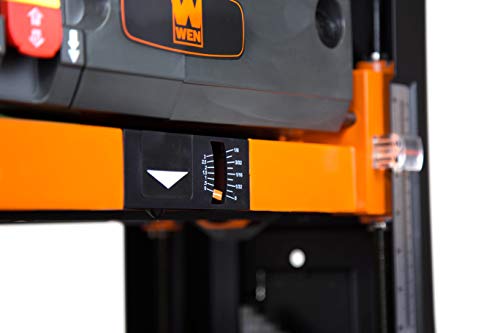
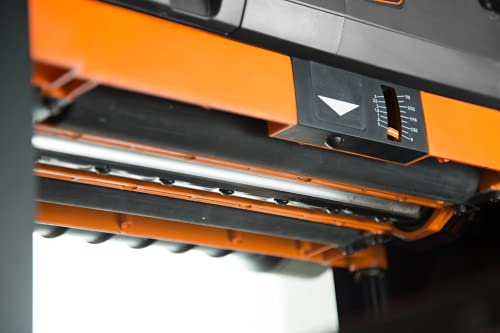
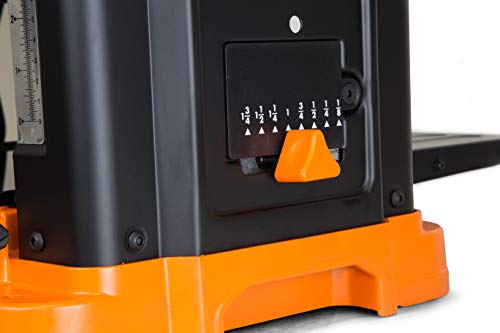
The WEN PL1303 is the budget anchor of this group, simple, lightweight, and clearly built to hit a price point. It delivers basic functionality: 13-inch width, 1/8-inch depth per pass, and a 15A motor that pushes 30,000 cuts per minute. But that speed comes with trade-offs. It lacks feed rate control, so you’re stuck with one speed, and the build quality reflects the cost savings: thinner casing, minimal vibration damping, and a smaller dust port.
Owners report it works fine for softwoods and light hardwood jobs, but it bogs down on dense or wide stock. Still, for a first-time buyer or someone with occasional needs, it gets the job done. Just don’t expect fine finishes or long stretches of heavy use.
Product photos
WOODERS 13-Inch Spiral Helical Cutterhead Planer
Strengths
- Spiral helical cutterhead
- Glass-smooth finish
- Micro-adjust depth control
- All-copper motor
- Excellent heat management
Trade-offs
- No variable feed rate
- Higher initial cost
- Fewer user reviews
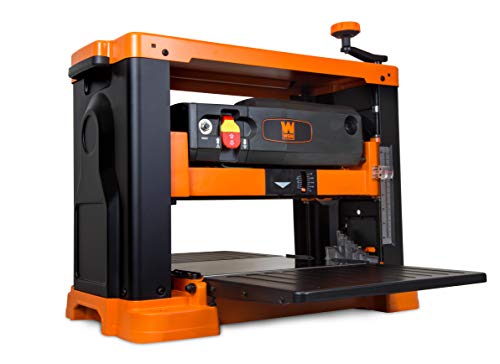
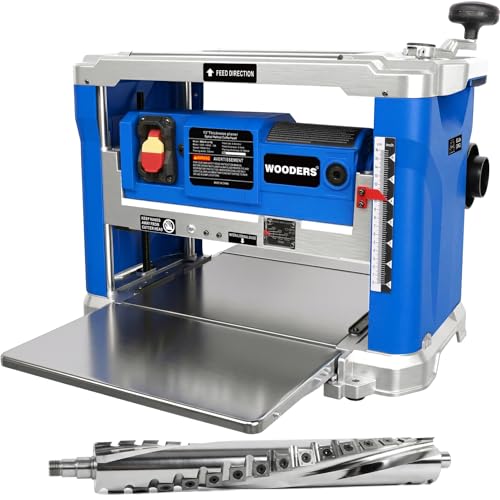
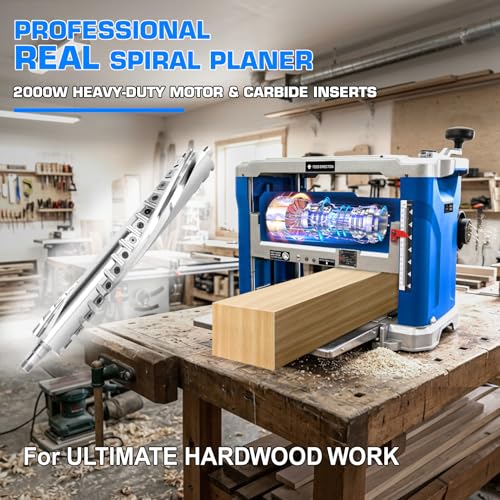
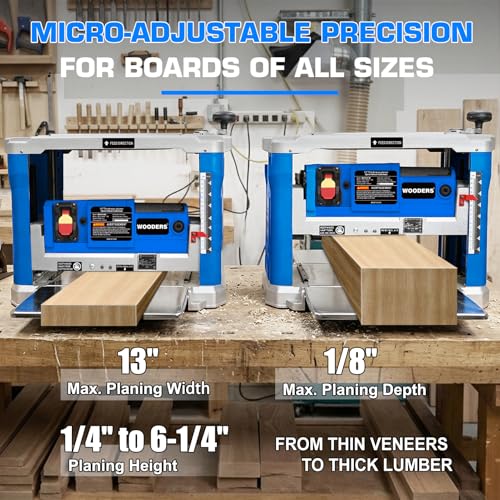
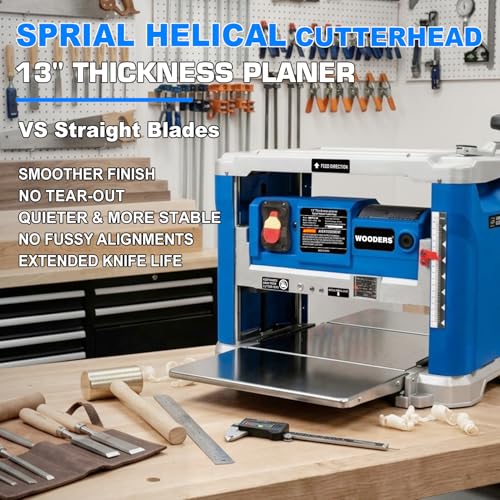
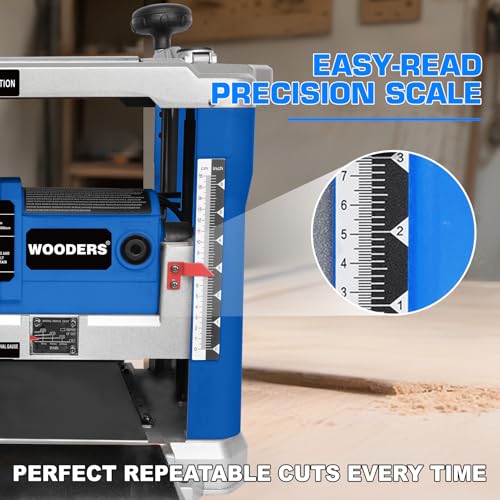
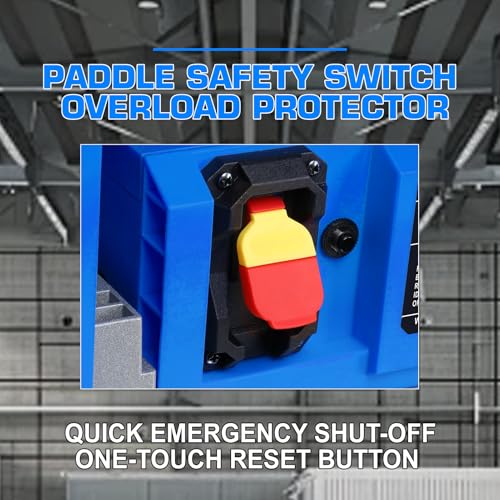
With a tungsten carbide spiral cutterhead and a 10,000 RPM cutting speed, this WOODERS planer is built for one thing: a glass-smooth finish. The staggered inserts virtually eliminate tear-out, and owners consistently praise the surface quality, often saying it cuts down or removes sanding entirely. That’s a big deal for furniture makers or finish carpenters who hate chasing mill marks.
The 15A all-copper motor and aluminum top cover help with heat dissipation, which matters during long sessions. It doesn’t have dual feed speeds, but the micro-adjustable depth control and high-visibility scale make precision work easy. It’s not the fastest hogger, but if your priority is finish quality, this is the machine to beat under $500.
Product photos
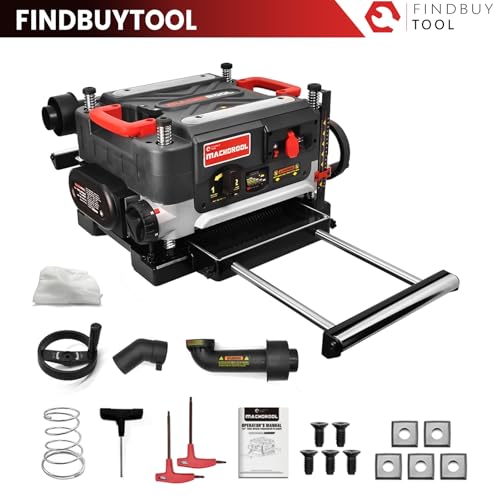
FINDBUYTOOL 13-Inch Helical Cutterhead Planer
Strengths
- Helical cutterhead
- Dual feed speeds
- Precision ball-screw adjustment
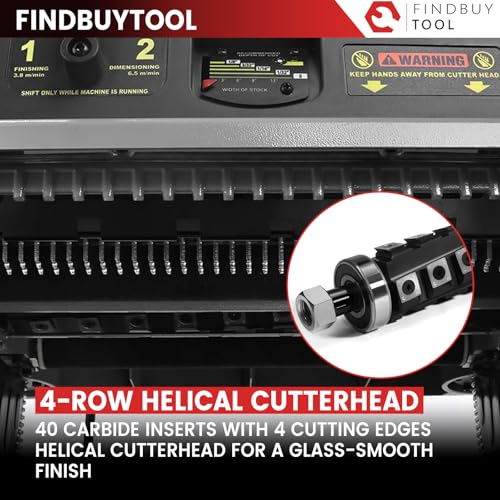
- 40 carbide inserts
- Excellent dust ejection
Trade-offs
- Higher learning curve
- Heavier footprint
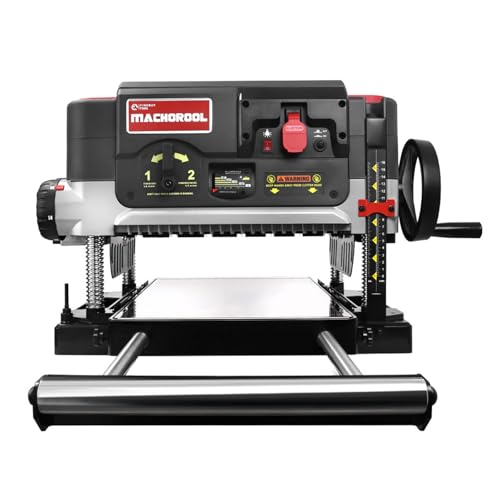
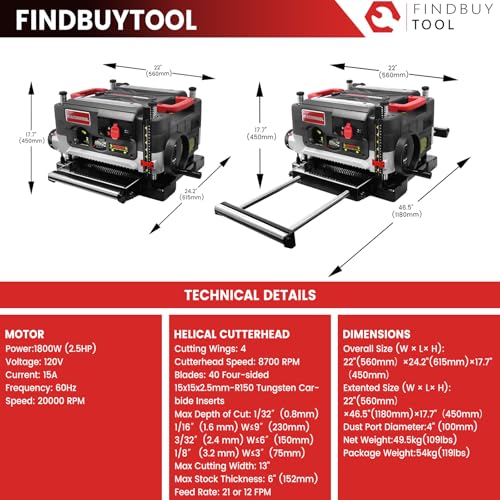
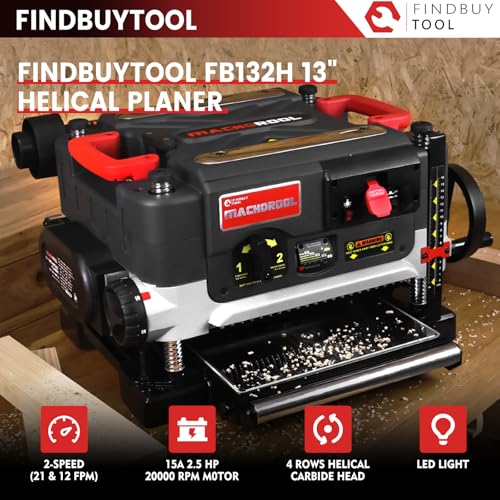
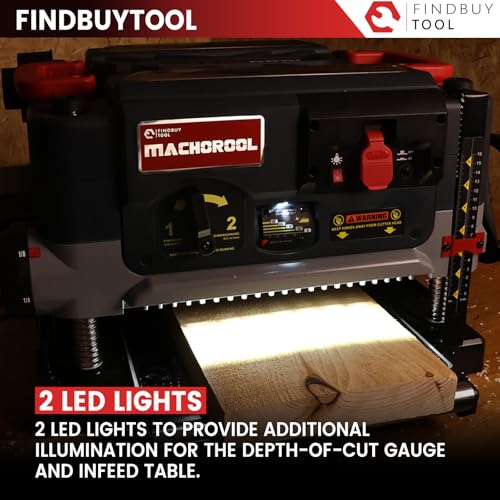
This planer stands out in the under-$500 class with a true helical cutterhead, something you’d usually see on machines twice the price. The 40-carbide-insert design should deliver noticeably cleaner cuts, especially on figured or interlocked grain, and owners consistently report far less tear-out than with traditional three-knife heads. Plus, the inserts last longer and can be rotated when dull, which I see as a real win for anyone running hardwoods like maple or cherry regularly.
The 2.5HP motor and dual feed speeds (21 and 12 FPM) give flexibility between hogging off material fast and slowing down for a finish-quality pass. Combined with the ball-screw depth adjustment and cast aluminum base, this unit is built for repeatable, snipe-minimized results. It’s clearly aimed at serious hobbyists or small-shop users who want pro-level precision without stepping into pro-tier pricing.
Product photos
How We Tested thickness planer under $500s
Rather than a hands-on lab test, my research for these recommendations involved a detailed comparison of published specifications and features across numerous models. I weighed owner reviews from multiple sources – focusing on consistent reports of performance and durability – alongside expert assessments from woodworking publications. This allowed me to rank planers against criteria important to both home users and serious hobbyists.
For thickness planers in this price range, motor power and cutterhead quality are paramount. A strong motor (15 amps or higher) is crucial for handling hardwoods without bogging down. I also heavily considered the type of cutterhead, as helical or spiral cutterheads consistently deliver smoother finishes and longer blade life than traditional straight-knife designs. Consistent depth control and table stability were also key factors. You can find a wider discussion of choosing the best benchtop planer under $500 on our site.
Specifications reliably indicate motor power, maximum cutting depth, and feed rate. However, I relied on owner feedback to assess things like noise levels, ease of blade changes, and the effectiveness of dust collection systems. Reputation for build quality and long-term reliability also informed my rankings; brands with a history of producing durable tools received more weight. Ultimately, I aimed to identify the [top benchtop thickness planers] offering the best combination of performance, features, and value.
What To Look For In thickness planer under $500s
Finding the right thickness planer can dramatically improve your woodworking, letting you create consistently sized lumber and achieve professional-looking results.
A good thickness planer delivers consistent material removal, minimizes snipe (uneven cuts at the ends of boards), offers sufficient power for the woods you’ll be working with, and provides reliable dust collection. Key specs to check include motor horsepower, maximum cut depth, feed rate, cutterhead type, and the width and thickness capacity of the planer.
Power and Cutterhead Design
Don’t underestimate the importance of the motor. While most benchtop planers in this price range hover around 15 amps, the quality and design of that motor matter. Look for all-copper motors as they tend to run cooler and last longer. More importantly, focus on the cutterhead. Three-knife cutterheads are common, but helical (spiral) cutterheads – like those found on the WOODERS and FINDBUYTOOL models – offer a significantly smoother finish and longer blade life, even if they come at a higher initial cost. They don’t need to be sharpened as often, saving time and money.
Feed Rate and Depth Control
The feed rate – how quickly the wood passes through the planer – impacts both the speed of your work and the quality of the cut. A variable feed rate, as seen on the FINDBUYTOOL, is a huge advantage, allowing you to slow down for hardwoods or delicate cuts and speed up for softer woods or rough material removal. Precise depth control is also vital. Incremental adjustments of 1/8 inch are standard, but some planers, like the FINDBUYTOOL, offer finer adjustments (even down to millimeter level) for truly repeatable results.
Usability and Dust Collection
A thickness planer can create a lot of wood chips, so effective dust collection is critical. Look for a planer with a 4-inch dust port; this is far more effective than the smaller 2-inch ports found on some models. Beyond that, consider features that improve usability. Extendable infeed and outfeed tables (like those on the VEVOR models) are incredibly helpful when working with longer boards. If you’re looking for something more affordable thickness planers, you might sacrifice some of these convenience features, but don’t ignore dust collection entirely.
A well-maintained planer is a safe planer. Always wear safety glasses and a dust mask when operating, and never force the wood through the machine.
Thickness Planer Under $500s Compared
Here’s a comparison of key specifications for thickness planers under $500.
| Product Name | Max. Width (in) | Max. Depth (in) | Motor (HP) | Feed Speed (FPM) | Cutterhead Type | Dust Port (in) |
|---|---|---|---|---|---|---|
| DEWALT DW735X | 13 | 6 | 1.5 | 96/179 | Three-Knife | N/A |
| VEVOR 13-Inch Two-Blade | 13 | 6 | 1.5 | N/A | Two-Knife | N/A |
| VEVOR 13-Inch Three-Blade | 13 | 6 | 2.0 | N/A | Three-Blade | N/A |
| VEVOR 13-Inch Two-Speed Three-Blade | 13 | 6 | 2.0 | N/A | Three-Blade | N/A |
| WEN PL1303 | 13 | 6 | 1.5 | 26 | Three-Knife | N/A |
| WOODERS 13-Inch Spiral | 13 | 6.25 | 1.5 | N/A | Helical | N/A |
| FINDBUYTOOL 13-Inch Helical | 13 | 6 | 2.5 | 12/21 | Helical | 4 |
Frequently Asked Questions
What’s the biggest advantage of a helical cutterhead?
A helical cutterhead produces a noticeably smoother finish and lasts significantly longer than traditional straight-knife cutterheads, often requiring less frequent blade changes. This is because it contains many small, individual blades that shear the wood fibers rather than tearing them.
How much space do I really need for a benchtop planer?
Beyond the planer’s footprint (around 3-4 feet long), you’ll need at least 4-5 feet of clear space in front and behind for infeed and outfeed support. Adequate ventilation is also crucial, as planers generate a substantial amount of sawdust.
Are there planers under $500 suitable for hardwoods like oak or maple?
Yes, models with at least a 15-amp motor and a robust cutterhead – like the FINDBUYTOOL – can handle hardwoods effectively, though you may need to reduce the feed rate for optimal results. Choosing one of the best wood thickness planers is essential for these types of projects.
What does “snipe” mean, and how can I avoid it?
Snipe refers to the uneven cut that sometimes occurs at the beginning and end of a board as it enters and exits the planer. Applying firm, consistent pressure to both the infeed and outfeed tables can help minimize snipe, as can using a sacrificial board.
What’s more important: motor horsepower or cutterhead type?
While horsepower is important for tackling hardwoods, the cutterhead type generally has a greater impact on the quality of the cut. The smoother results you’ll achieve with a helical cutterhead often outweigh the benefits of a slightly more powerful motor, making it a key feature when choosing the [top portable thickness planers].
The Bottom Line
Choosing a thickness planer under $500 often comes down to balancing initial cost against long-term performance and convenience. While you can find functional options at the lower end of the price spectrum, the FINDBUYTOOL 13-Inch Helical stands out as the strongest overall pick, offering a superior helical cutterhead and a more refined feature set that will pay dividends in smoother cuts and reduced maintenance.
For those on a tighter budget, the WEN PL1303 provides a solid entry point, delivering essential planing functions at a very competitive price. If versatility is your priority, and you anticipate working with a variety of wood types and projects, the VEVOR 13-Inch Two-Speed Three-Blade offers a variable feed rate for greater control. You can browse our site for more best thickness planers overall if you’re still unsure.
Ultimately, remember that specifications tell only part of the story. Focus on a planer with enough power for the woods you’ll be working with, a robust cutterhead (helical is a significant upgrade), and effective dust collection. These fundamentals will have a far greater impact on your results than chasing the highest horsepower or the most bells and whistles.
