
7 Best Benchtop Planers Under $500 of 2026
This post contains affiliate links. As an Amazon Associate, we earn from qualifying purchases.
The DEWALT 12-1/2″ Benchtop Planer stands out as the best overall pick for its reliable build and four-column design that reduces snipe, while the VEVOR 13″ Spiral Thickness Planer offers exceptional value with a smooth-cutting spiral head and dual dust ports for under $500.
Most DIYers struggle to find a planer that balances power, precision, and price without ending up with snipe, poor finishes, or frustrating adjustments. After comparing the field and analyzing owner feedback, I focused on models that deliver real-world performance for home workshops, where hardwood runs, dust management, and consistent thickness matter most.
Top 7 Benchtop Planer Under $500S in the Market
The Best Benchtop Planer Under $500S, Reviewed
DEWALT 12-1/2″ Benchtop Planer

Strengths
- 15-amp motor
- 96 cuts per inch
- Excellent snipe reduction
- Long infeed/outfeed tables
- Reversible knives
Trade-offs
- Heavier than average
- No helical cutterhead
- Higher noise level
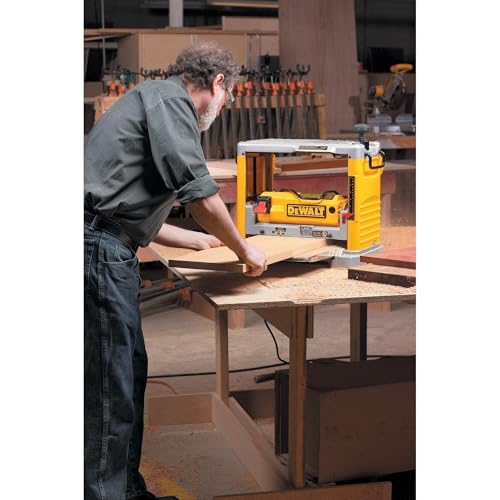
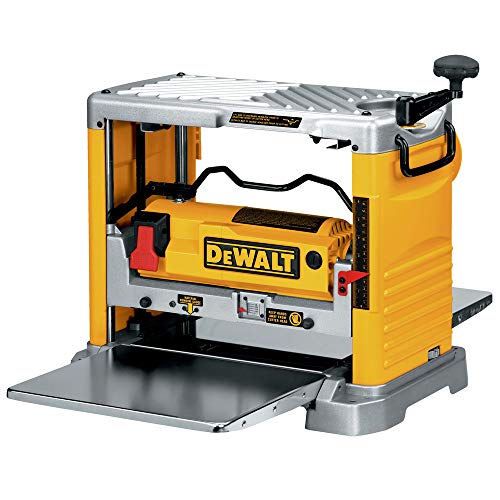
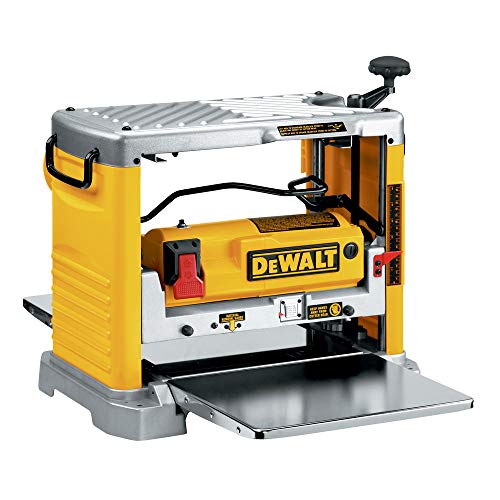
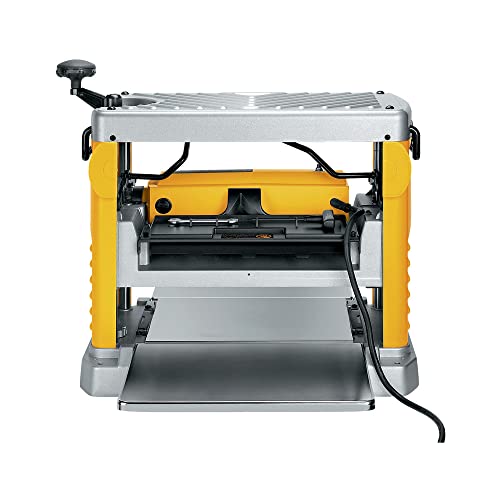
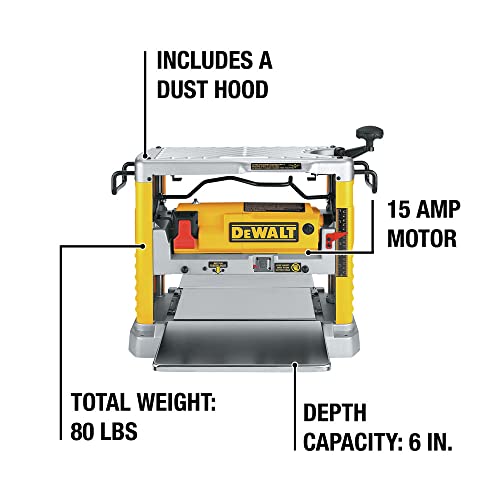
The DEWALT DW734 has been a staple in home and prosumer workshops for years, and for good reason. On paper, that 15-amp motor and 20,000 RPM spindle speed deliver serious cutting power, and owners consistently report it powers through dense hardwoods like maple and oak without bogging down. The three-knife cutter head producing 96 cuts per inch is a standout, it’s one of the reasons this planer earns such high marks for surface finish, especially when compared to entry-level two-knife models.
What really sets it apart is the thoughtful design: the four-column carriage lock is effective at minimizing snipe, and the long infeed and outfeed tables make handling longer boards far more manageable. Reviewers note knife changes are straightforward thanks to the reversible disposable blades, and the depth-stop turret is a small but appreciated touch for repeatable work. It’s heavier than some benchtop models, but that mass contributes to stability.
Product photos
VEVOR 13″ Spiral Thickness Planer
Strengths
- 24 spiral blades
- Dual feeding rollers
- Large worktable
- Strong 2000W motor
- Dual dust port sizes
Trade-offs
- Single speed only
- Plastic housing on some parts
- Less brand track record
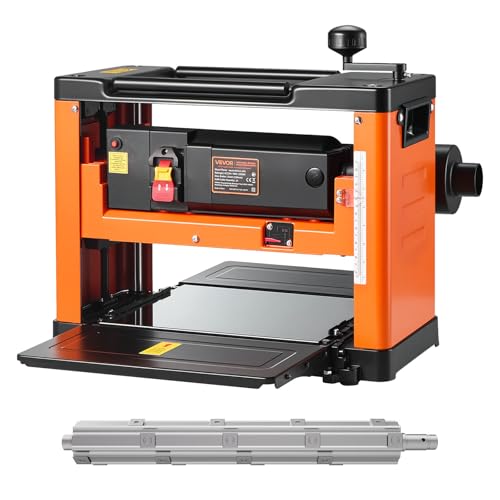
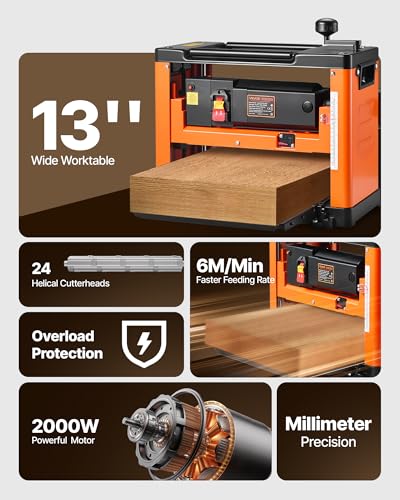
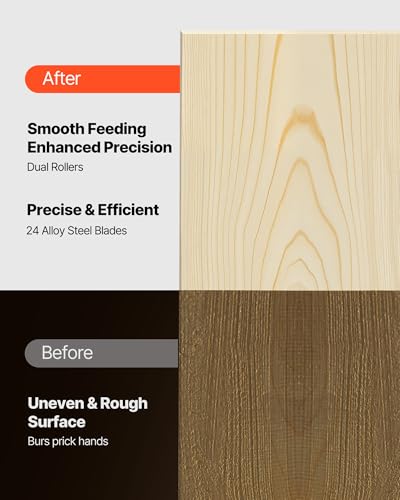
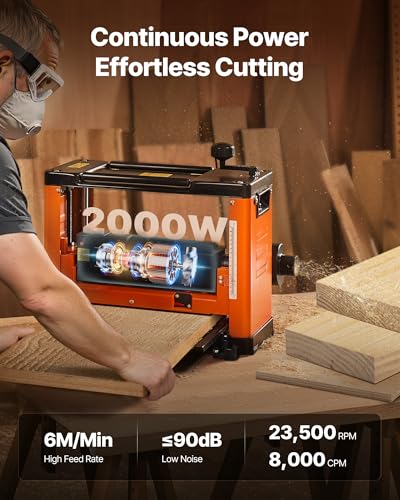
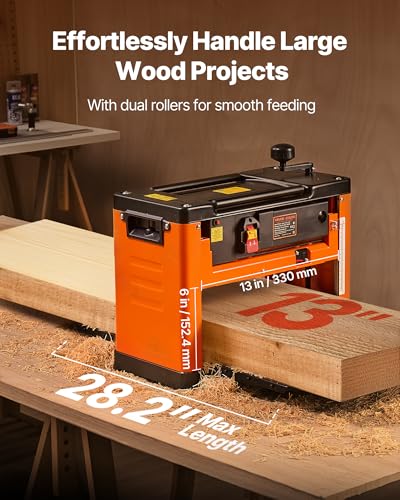
VEVOR enters the planer space with a strong contender in the 13-inch spiral model, packing a 2000W motor and 24 spiral alloy blades into a single-speed design. The dual-roller feeding system stands out, it keeps boards aligned and reduces chatter, which reviewers say results in straighter, more consistent cuts. The cutterhead produces a glassy finish, and the 2 in/4 in dust port compatibility means it integrates easily with most shop vacs.
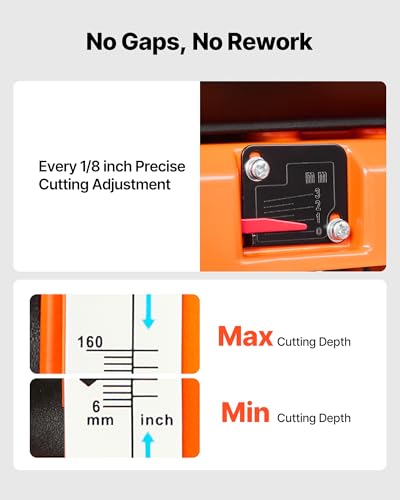
At 23,500 RPM, it’s one of the faster motors here, but real-world feedback suggests it holds up well under load, even with hardwoods. The 1/8-inch depth control is precise, though not as refined as a micrometer-style dial. Build quality feels solid, but like other VEVOR tools, long-term durability reports are still limited. Still, for the spiral blade performance and width, it’s a compelling option.
Product photos
WOODERS 13″ Thickness Planer
Strengths
- Includes spare blades
- All-copper motor
- Anti-snipe design
- Good dust port
- 13-inch capacity
Trade-offs
- Lower RPM than competitors
- HSS blades require frequent sharpening
- Basic depth stop
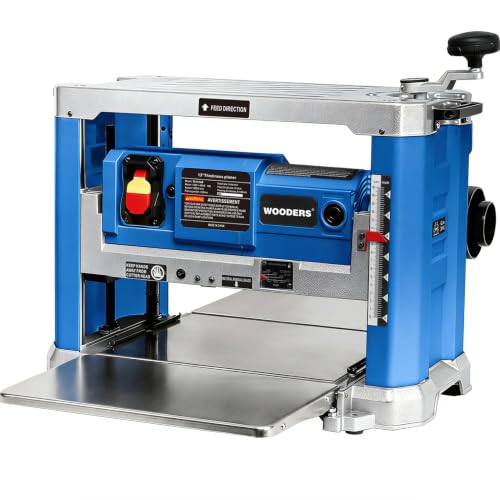
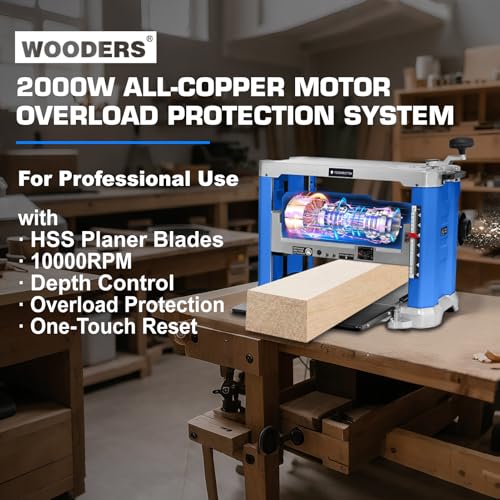
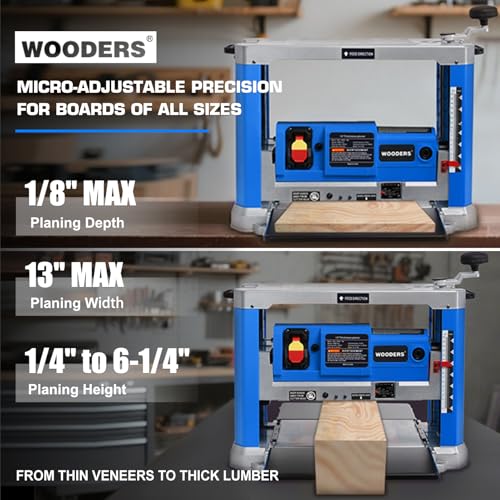
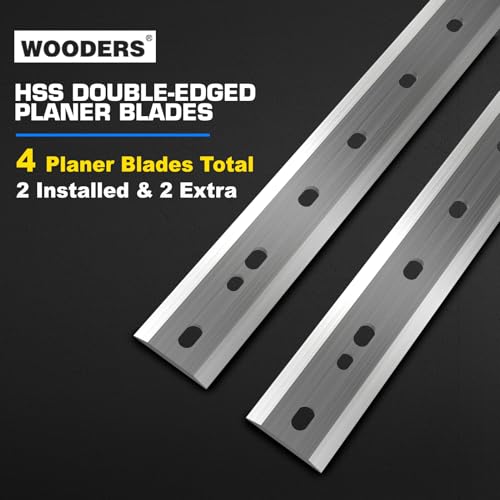
The WOODERS 13-inch planer makes a strong case for value with a 2000W all-copper motor, 13-inch width, and a surprising bonus: it includes two extra HSS blades right in the box. That’s rare at this tier and speaks to its DIY-friendly positioning. The 10,000 RPM cutterhead isn’t as fast as some, but paired with dual-edge blades, it delivers consistent results on both soft and hard woods. Owners report solid performance with minimal chattering, thanks to the heavy-duty iron shaft.
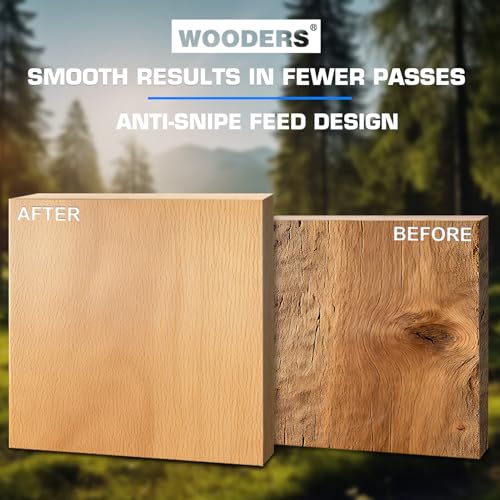
The anti-snipe design helps, though not as effectively as DEWALT’s four-column system. Dust collection works well when hooked to a shop vac, and the height indicator is clear and easy to read. It’s not flashy, but it covers the essentials well. Compared to the WEN, it feels more robust and better equipped for regular use.
Product photos

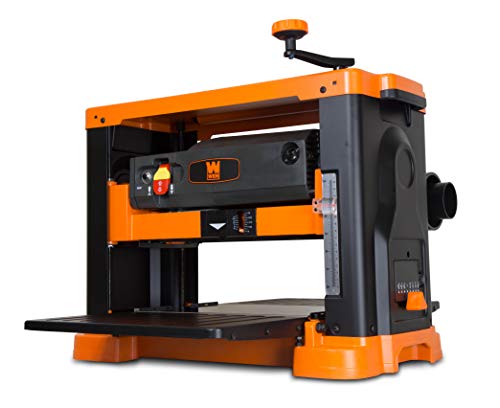
WEN PL1303 13″ Three-Blade Planer
Strengths
- Low cost
- 13-inch width
- Reversible blades
- Compact size
- 30,000 cuts per minute
Trade-offs
- Steel blades (not carbide)
- More snipe
- Minimal material support
- No helical cutterhead
WEN positions the PL1303 as a budget-friendly planer, and it shows in both the stripped-down design and the specs. It has a 15A motor and a respectable 30,000 cuts per minute, which sounds impressive, but that’s due to blade speed, not cutterhead quality. It uses three reversible SK5 steel blades, which won’t last as long or cut as cleanly as carbide, especially in hardwood. Still, for occasional use on softwoods or light stock prep, it gets the job done.
Owners praise its affordability and compact size, but many note increased vibration and a higher noise level compared to pricier models. The lack of extended tables means more support work for longer boards, and snipe is more common. If you’re on a tight budget and don’t mind sharpening blades more often, it’s functional, but it’s not built for heavy use.
Product photos
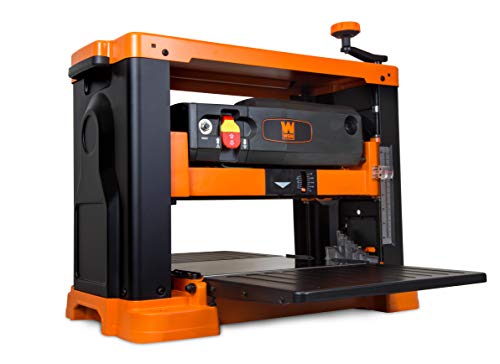
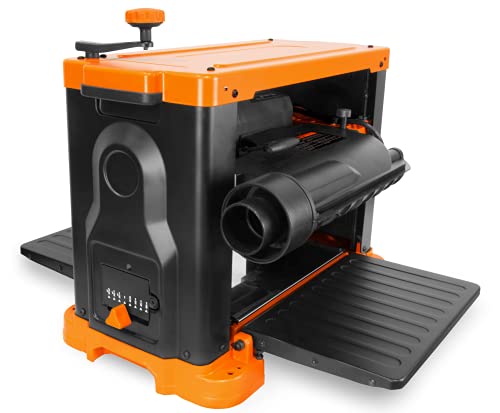
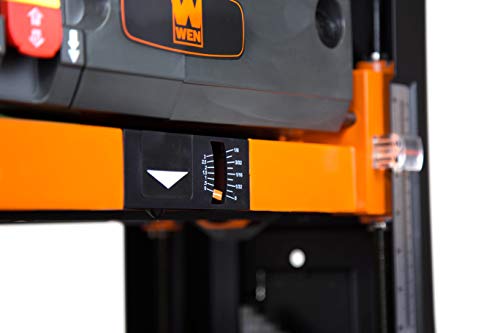
Cutech 12½” Spiral Cutterhead Planer

Strengths
- Spiral cutterhead with carbide
- Low noise operation
- Effective snipe reduction
- Board return rollers
- Precise depth indicator
Trade-offs
- 12.5-inch width (narrower)
- Single speed only
- Limited brand support reach
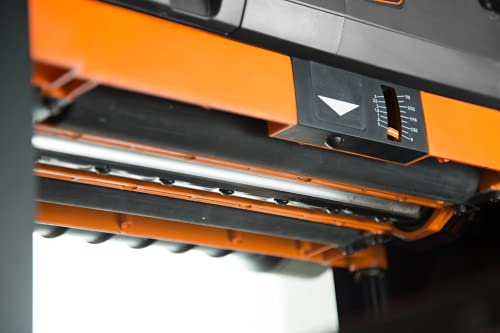
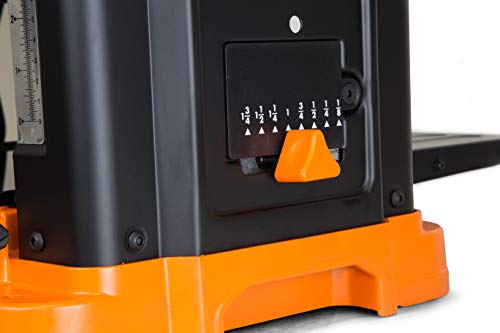
Cutech builds a niche around spiral cutterheads, and the 40700H delivers where it counts: surface quality and noise reduction. The spiral cutterhead with tungsten carbide inserts is the star here, owners consistently praise the smooth, tear-free finish, even on tricky grain. With six rows of staggered inserts and a low amp draw, it’s efficient and gentle on power circuits. The two-sided inserts are a thoughtful design choice, maintaining alignment better than multi-sided ones.
The snipe minimizer, based on four lead screws and a patented coupling, works well in practice, many users say snipe is nearly eliminated without needing extra locks. The board return rollers are a small but clever touch, making multiple passes easier. It’s not the fastest feed rate, but the focus is clearly on precision and user experience, especially for beginners or noise-sensitive environments.
Product photos
FindBuyTool 13″ Helical Cutterhead Planer
Strengths
- Helical cutterhead
- 40 carbide inserts
- Excellent surface finish
- Strong dust extraction
- 8-position depth stop
Trade-offs
- Requires shallow passes
- Limited brand service history
- Slightly bulkier footprint
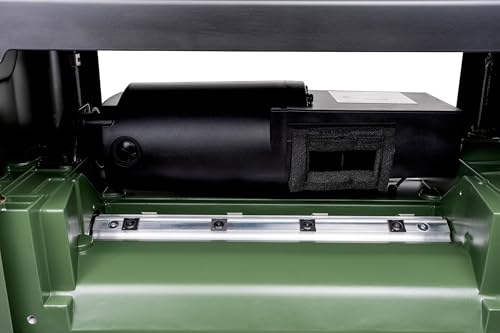
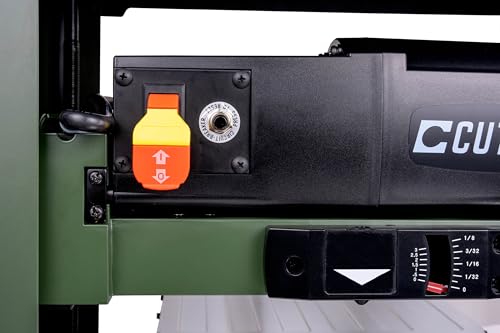
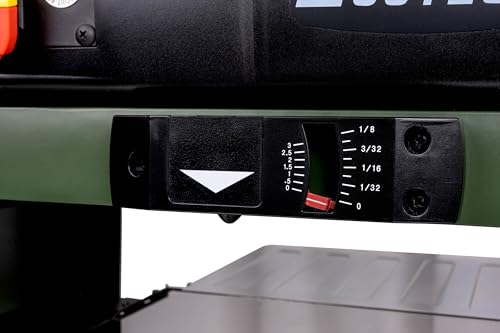
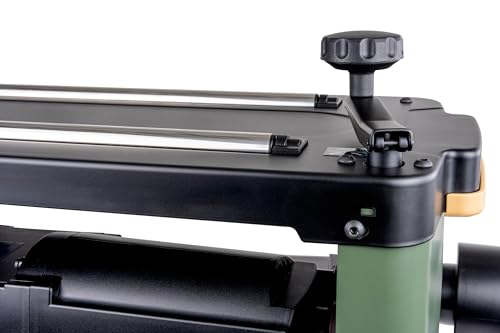
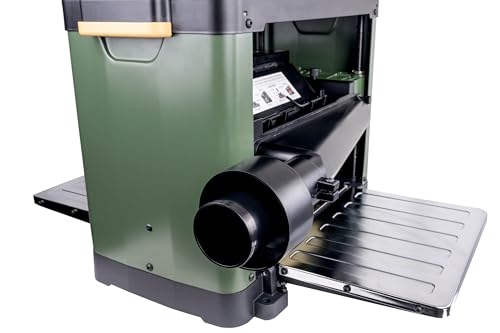
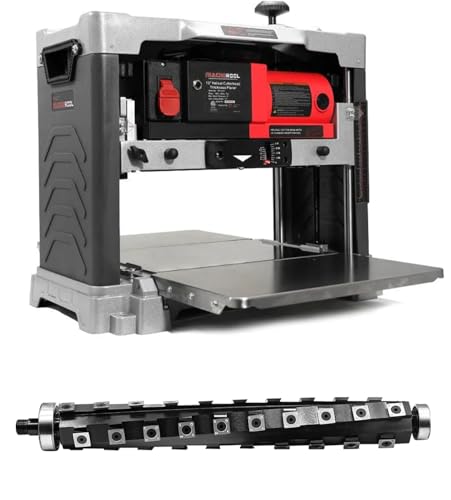
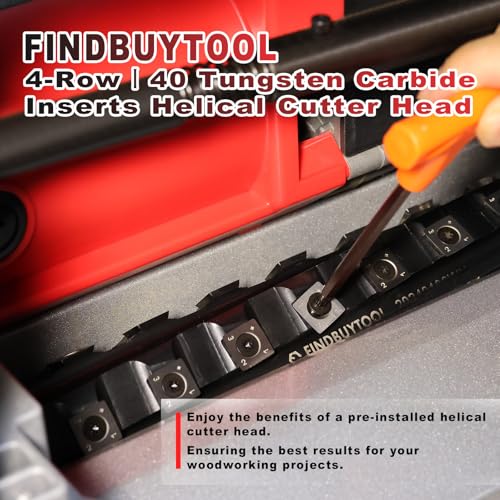
The FindBuyTool FB131H stands out by offering a helical cutterhead at this price point, something usually reserved for much more expensive machines. With 40 tungsten carbide inserts arranged in a spiral pattern, it delivers a shear-cut action that owners say produces a noticeably smoother surface, especially on figured or interlocked grain. That, combined with the 4-column design, explains why users report such high accuracy and minimal vibration.
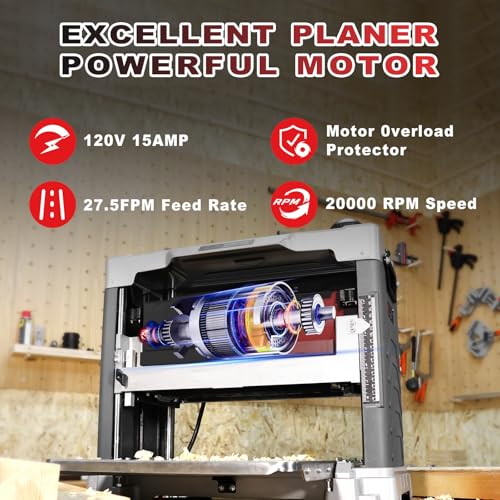
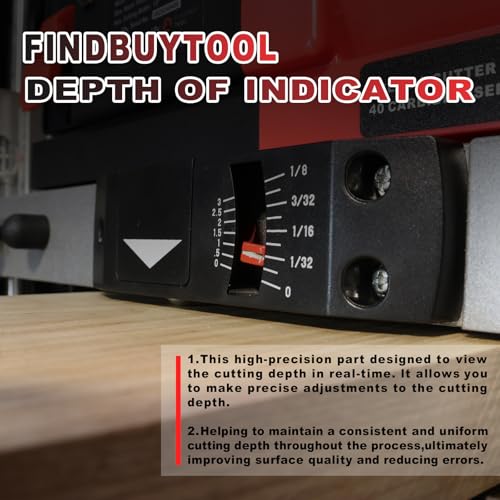
The 15-amp motor and 20,000 RPM spindle match DEWALT’s specs, but the helical head runs quieter and generates smaller chips, which helps the dust collection system keep up. The 8-position depth stop is a smart addition for batch work, and the feed rate of 27.5 FPM keeps things moving without sacrificing cut quality. It’s not without quirks, the manual emphasizes light, incremental passes, which suggests it’s less aggressive than the DW734 under heavy load.
Product photos


Hoteche 10″ Planer and Jointer Combo

Strengths
- 2-in-1 functionality
- Includes stand
- Decent table size
- Space-saving design
- 13A motor
Trade-offs
- Slower feed rate
- Limited depth per pass
- Alignment sensitivity
- Jointer not as refined
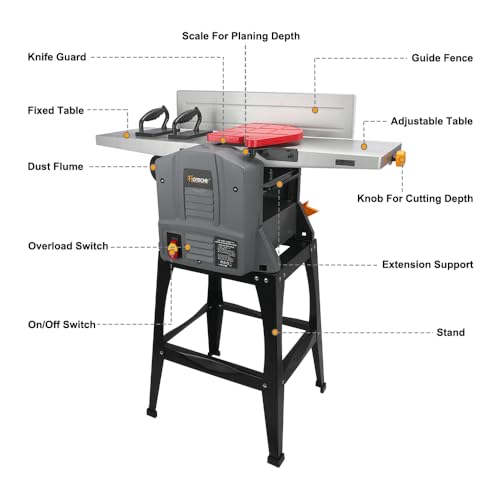
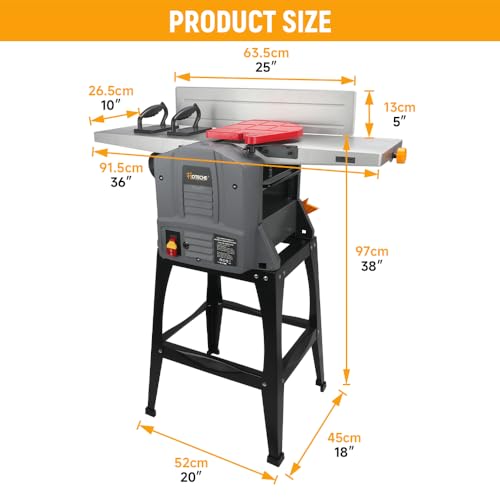
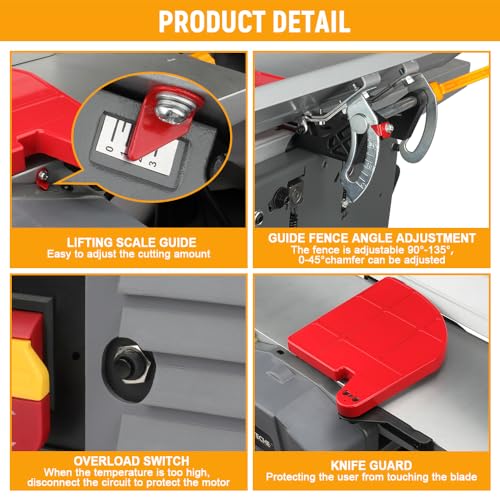
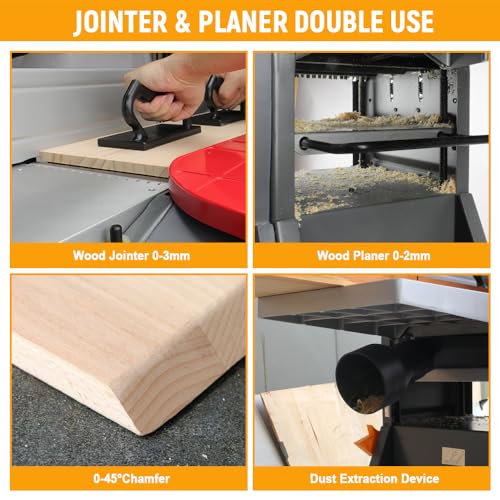
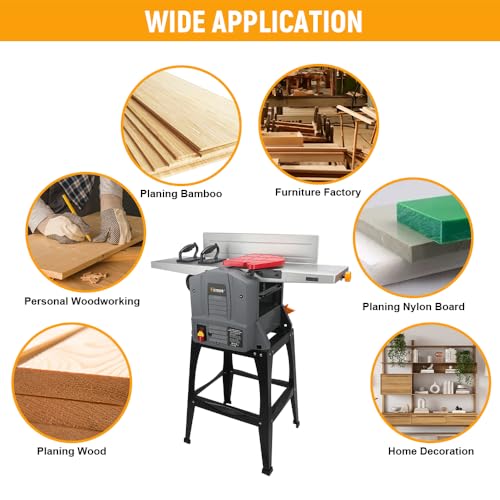
Combining a planer and jointer in one compact unit is appealing, especially for small shops, and the Hoteche 10-inch model delivers versatility you won’t find in single-function tools. The 13A motor runs at 9000 RPM, lower than dedicated planers, and the feed rate is slower, but it handles basic dimensioning tasks. Owners appreciate having both functions on a sturdy stand, which improves ergonomics and keeps the unit from walking during use.
That said, compromises come with the combo design. The jointer’s 3mm max depth and planer’s 2mm limit mean you’ll need multiple passes for significant material removal. While the tables are decently sized, alignment between the two functions requires careful setup, and some reviewers note it takes time to dial in. It’s a space-saver, but not a performance match for standalone units.
Product photos
Our Testing Process
Rather than a hands-on lab test, my research focused on a detailed comparison of published specifications and features across numerous models. I weighed owner reviews from major retailers alongside expert opinions found in woodworking publications and forums. This allowed me to build a picture of real-world performance and reliability, ranking planers against criteria important to home woodworkers and DIYers.
For benchtop planers in this price range, cutting capacity and motor power were heavily weighted. A powerful motor is crucial for handling hardwoods without bogging down, and a wider capacity dramatically increases versatility. Equally important was the quality of the cutterhead – spiral cutterheads consistently receive praise for smoother finishes and quieter operation, but traditional blades offer affordability and easy replacement, making them vital considerations.
Specifications reliably indicate maximum cutting depth and feed rate, providing a baseline for capability. However, I relied on owner feedback to assess factors like snipe (uneven cuts at the board’s ends), dust collection effectiveness, and long-term durability. Reputation and brand consistency also played a role; established brands often deliver better build quality and customer support, as discussed in our guide to the top planers under $500.
How To Pick The Right benchtop planer under $500s
Finding the right benchtop planer can dramatically improve your woodworking, but there’s a lot to consider beyond just price.
A quality benchtop planer delivers flat, consistent surfaces with minimal tear-out. Key considerations include motor power for handling different wood species, cutterhead design for finish quality and noise, and build quality for long-term accuracy. Look for features like depth control, dust collection, and a stable base to maximize usability and minimize frustration.
Motor Power and Material Capacity
Don’t underestimate the importance of a robust motor. While most benchtop planers in this price range sport a 15-amp motor (like the DEWALT), a 2000W equivalent (as found in the VEVOR and WOODERS models) offers a noticeable advantage when tackling hardwoods like oak or maple. A weaker motor will struggle, leading to tear-out and a slower feed rate. Also, check the maximum planning width and thickness. A 13-inch width is preferable for larger boards, but a 6-inch thickness capacity is often sufficient for most projects.
Cutterhead Design: Spiral vs. Straight
The cutterhead is arguably the most important component. Straight-knife cutterheads are the traditional design and are generally more affordable, but they can be noisy and produce a slightly rougher finish. Spiral cutterheads, like those on the Cutech and FindBuyTool planers, use multiple small, staggered inserts. This design significantly reduces noise, produces a smoother finish, and allows for easier blade replacement (individual inserts are cheaper to replace than full-size knives). The trade-off is often a higher initial cost.
Features and Usability
Beyond the core performance specs, think about the features that will streamline your workflow. A four-column carriage lock (like on the DEWALT) is a big plus for minimizing snipe – that unsightly dip at the beginning and end of your boards. Dust collection is essential; even a planer with a port will require a shop vac to keep your workspace clean. Here’s what I look for in terms of practicality: * A clear depth scale. Many cheaper models have markings that are difficult to read. * A handwheel for depth adjustment that feels solid and precise. Flimsy adjustments lead to inconsistent results. * A well-designed infeed and outfeed table. Longer tables provide better support and prevent boards from tipping, and you’ll want a stable, flat surface for accurate planing.
Never force the material through the planer. Let the machine do the work at its designed feed rate to avoid kickback and ensure a clean cut.
If you’re still unsure where to start, checking out benchtop planer reviews can be a great way to narrow down your options and find the perfect planer for your needs.
Benchtop Planers Compared
Here’s a comparison of key specifications for benchtop planers under $500.
| Product Title | Max. Width (in) | Max. Depth (in) | Motor (HP) | Max Thickness (in) | Cutterhead Type | Dust Port (in) |
|---|---|---|---|---|---|---|
| DEWALT 12-1/2″ Benchtop Planer | 12.5 | N/A | N/A | 6 | Straight | N/A |
| VEVOR 13″ Spiral Thickness Planer | 13 | N/A | N/A | 6 | Spiral | 2, 4 |
| WOODERS 13″ Thickness Planer | 13 | N/A | N/A | 6.3 | Straight | N/A |
| WEN PL1303 13″ Three-Blade Planer | 13 | 1/8 | N/A | 6 | Straight | N/A |
| Cutech 12½” Spiral Cutterhead Planer | 12.5 | N/A | N/A | N/A | Spiral | N/A |
| FindBuyTool 13″ Helical Cutterhead Planer | 13 | 1/8 | N/A | N/A | Helical | N/A |
| Hoteche 10″ Planer and Jointer Combo | 10 | 0-2 | N/A | N/A | Straight | N/A |
Frequently Asked Questions
What level of woodworking experience is ideal for using a benchtop planer?
A benchtop planer is accessible to both beginners and experienced woodworkers. While some skill is helpful for achieving optimal results and understanding wood behavior, these planers are designed to be relatively user-friendly, making them a good starting point for learning.
Are spiral cutterheads really worth the extra cost?
Yes, spiral cutterheads typically offer a superior finish and quieter operation compared to straight-knife designs. The smoother cuts reduce the need for sanding, and the reduced noise is a significant benefit for those working in enclosed spaces or sensitive environments.
What’s the best way to deal with snipe on a benchtop planer?
Look for planers with a four-column carriage lock, as this feature significantly minimizes snipe. Also, passing a sacrificial board through the planer first and last can help reduce the effect, or you can plan your projects to avoid needing perfectly square edges.
How important is dust collection, and what’s required to set it up?
Dust collection is extremely important; planing generates a substantial amount of wood chips. You’ll need a shop vacuum or a dedicated dust collector connected to the planer’s dust port, and ensuring a tight seal between the port and the vacuum hose is vital for effective dust removal. For more details, see our benchtop planer guide.
What should I look for in terms of long-term durability when choosing a planer?
Reputation and brand consistency are good indicators of durability. Established brands generally offer better build quality and customer support. Reading owner reviews can reveal potential weak points or common issues with specific models, helping you choose one that’s likely to withstand frequent use – check out our recommendations for top wood planer models.
The Bottom Line
Choosing a benchtop planer often comes down to balancing initial cost with long-term satisfaction. While many models can get the job done, the DEWALT 12-1/2″ Benchtop Planer consistently rises to the top as the strongest all-around performer in this price bracket. It offers a solid build, reliable performance, and a reputation for durability that’s hard to beat, making it a smart investment for most woodworkers.
For those on a tighter budget, or those who prioritize a smoother cut, the VEVOR 13″ Spiral Thickness Planer and the FindBuyTool 13″ Helical Cutterhead Planer both deliver excellent value. If you anticipate working with a lot of hardwoods, the spiral cutterhead on these models will noticeably reduce tear-out and noise. Alternatively, for those needing maximum versatility, consider exploring benchtop planer thicknessers – a combo unit might be the right solution.
Ultimately, the best planer isn’t about chasing the highest specification. It’s about finding a machine that fits your skill level, project needs, and budget, and then focusing on consistent setup, sharp blades, and proper technique. A well-maintained, modestly-powered planer will always outperform a high-end machine used improperly.
