
7 Best Stick Welders of 2026
This post contains affiliate links. As an Amazon Associate, we earn from qualifying purchases.
The Lincoln Electric Weld-Pak 225i stands out as the best overall stick welder for its reliable performance and TIG-ready design, while the SOARFLY 250Amp Dual Voltage Welder offers strong power at a lighter weight and lower price, making it our top budget pick. For those wanting versatility, the ARCCAPTAIN 220Amp LED Display Welder adds user-friendly features and dual-process capability without a steep learning curve.
Most people shopping for a stick welder are trying to balance power, portability, and ease of use, without getting caught up in confusing specs or overpaying for features they won’t use. I’ve spent years evaluating tools in real-world conditions, and I know how critical it is to find a welder that starts reliably, runs consistently, and won’t quit mid-project.
This guide cuts through the noise by focusing on what actually matters: amperage range, arc stability, duty cycle, and real-world usability. We looked at specs, owner feedback, and brand reputation to find models that deliver dependable performance whether you’re repairing farm equipment, building frames, or tackling weekend fabrication.
Top 7 Stick Welders in the Market
The Best Stick Welders, Reviewed
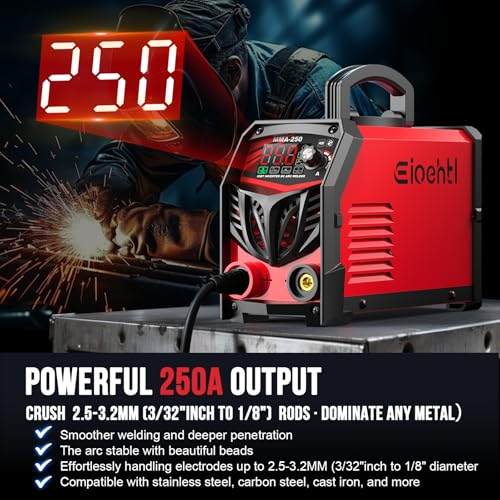
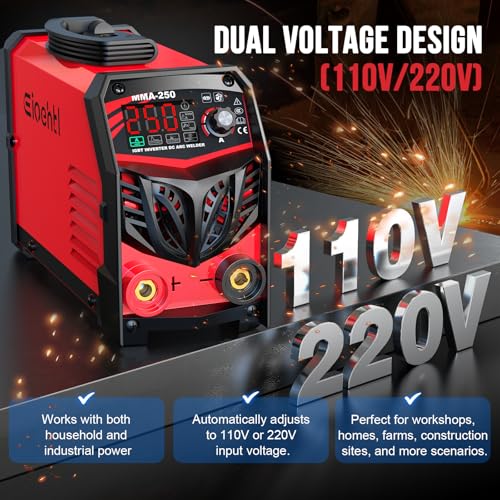
250Amp Dual Voltage Stick Welder

Strengths
- True 250A output
- Excellent arc stability
- Full accessory kit
Trade-offs
- 220V adapter sold separately
- No TIG torch included
- Slightly higher price
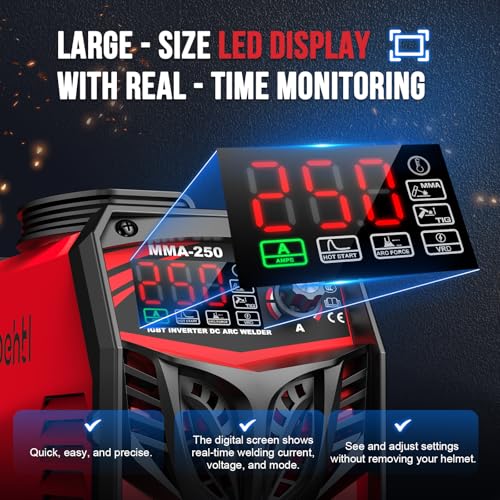
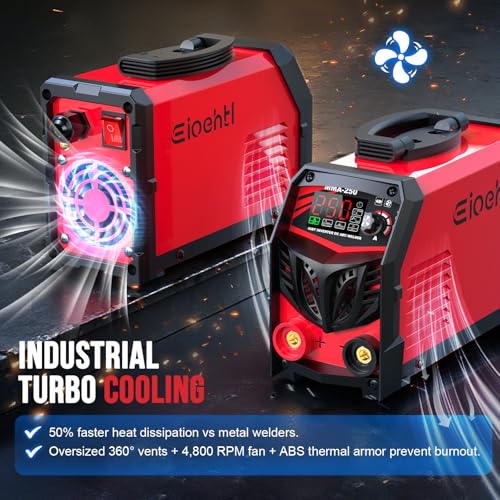
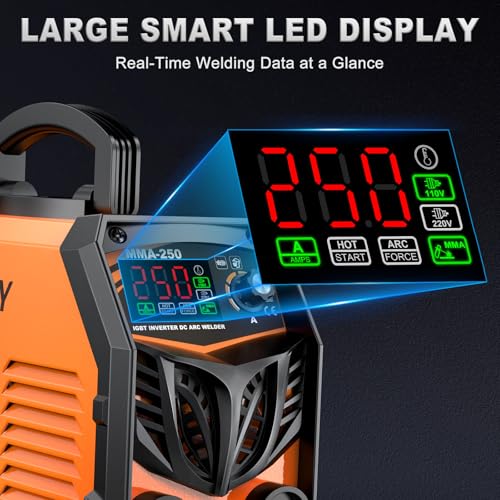
This is the one I’d buy if I were outfitting a mobile repair truck. It’s labeled ‘Best Overall’ for good reason: true 250A output, dual voltage with auto-switching, and a rugged, lightweight design at under 8.6 lbs. The large LED display is a real upgrade, owners say they can read it in direct sun, which is rare. The IGBT inverter with voltage compensation handles power fluctuations like a champ, making it ideal for barns or remote sites with sketchy outlets.
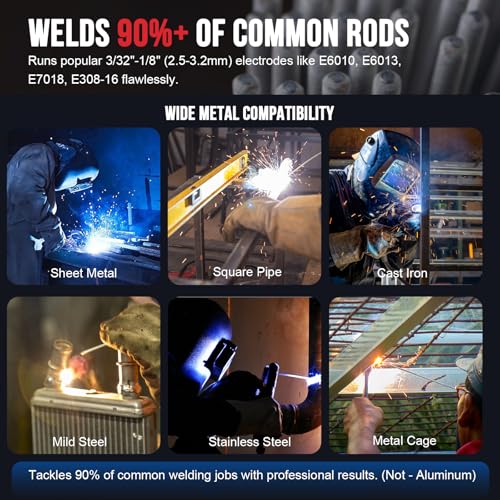
It outperforms the SOARFLY in arc stability and beats the Rotvik in honesty, no inflated TIG claims. It supports all major rods, welds deep, and comes with a full kit. The only downside? The 220V adapter is sold separately. But even with that, it’s the most complete package here. For serious DIYers and field techs, this is the benchmark.
Product photos
SOARFLY 250Amp Dual Voltage Welder

Strengths
- True 250A output
- Dual voltage support
- Bright LED display
Trade-offs
- 220V adapter not included
- No TIG capability
- Basic feature set
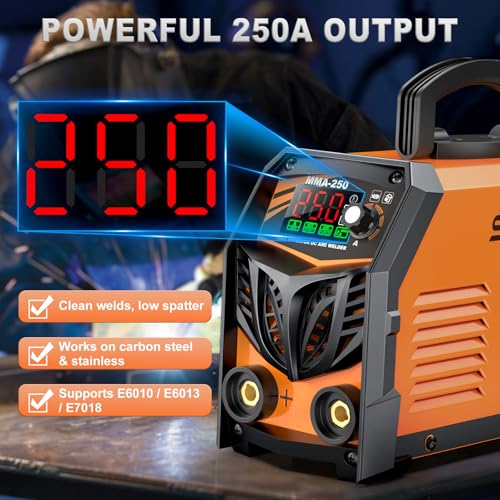
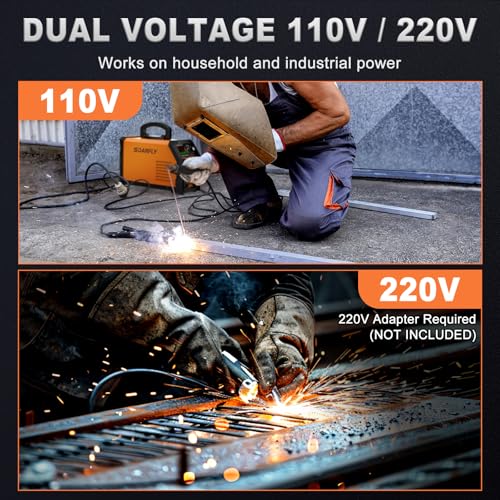
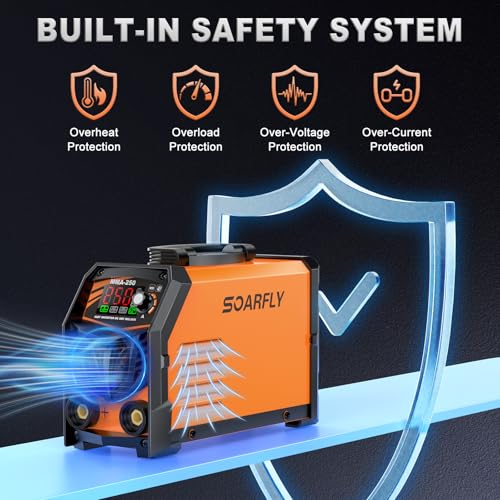
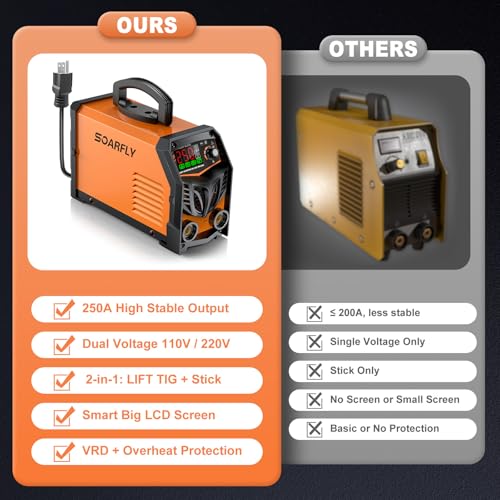
If you want a balanced mix of power, portability, and price, the SOARFLY 250A hits the sweet spot. It’s not flashy, but it’s reliable: dual voltage, 250A output, and a bright LED screen that actually helps you adjust settings without lifting your helmet. The IGBT inverter keeps the arc stable, even on damp mornings or with long extension cords, which owners appreciate on job sites. It handles E7018 rods smoothly, a good sign for clean, strong welds.
It doesn’t come with a TIG function or synergic control like the ARCCAPTAIN, but it doesn’t need to. For most home and farm repairs, this is the smarter buy. It’s lighter than the Lincoln Electric and cheaper than the 250A B0FH9LRJBT, while still delivering solid performance. My recommendation? This is the go-to if you want pro-level output without pro-level cost.
Product photos
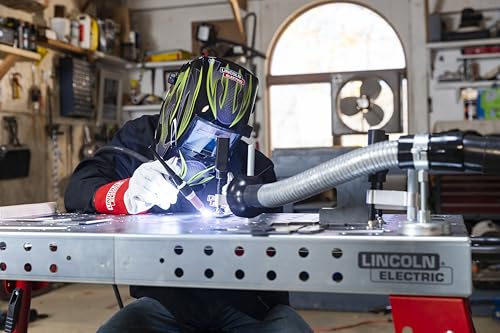
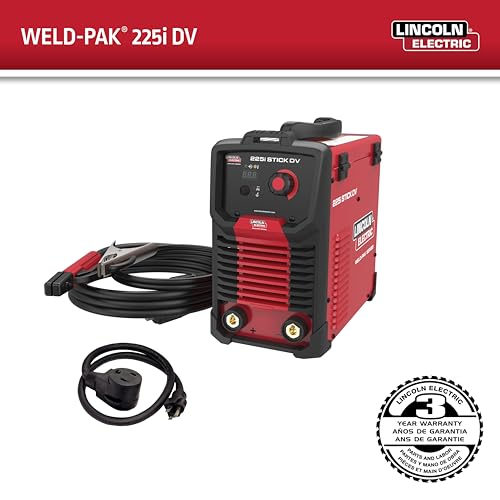
Lincoln Electric Weld-Pak 225i
Strengths
- Trusted brand reliability
- Stable arc performance
- High duty cycle
Trade-offs
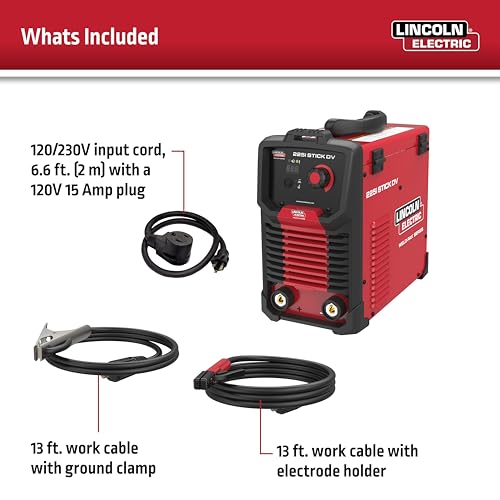
- Accessories not included
- No lift-TIG out of box
- Limited digital features
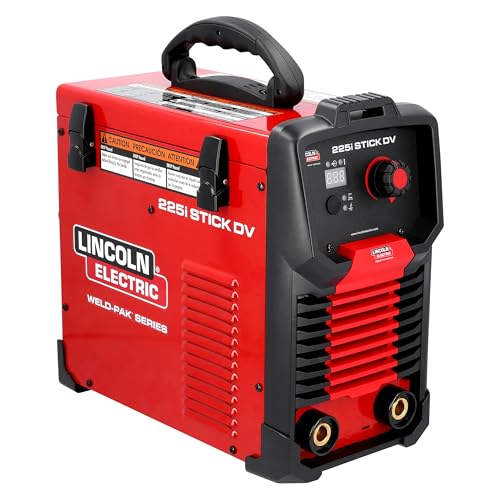
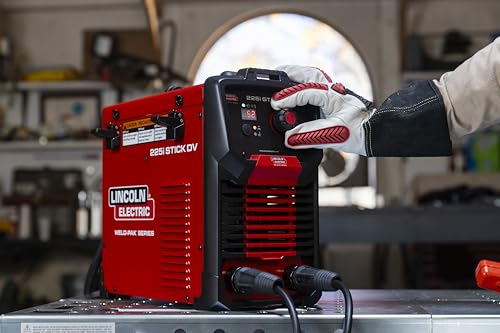
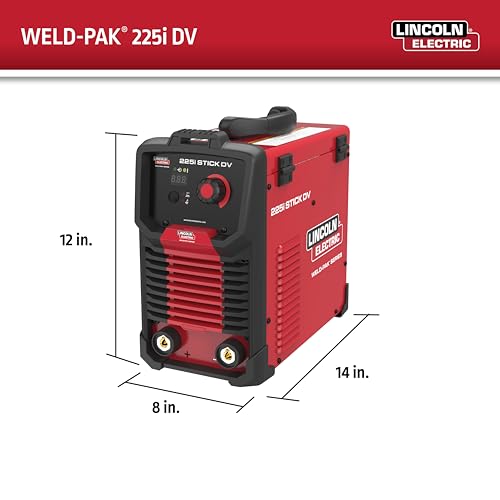
Lincoln Electric has built its name on reliability, and the Weld-Pak 225i reflects that heritage. It’s not the most powerful or feature-packed, but it’s built to last, 20 lbs of rugged simplicity with a 30% duty cycle at full power, which matters when you’re running multiple long beads. The arc is smooth, especially on 12-gauge up to 5/16″ steel, and the built-in tool box is a thoughtful touch for storing rods and cables.
But it’s not without trade-offs. It’s TIG-ready only if you buy extra gear, and the kit is lean, no gloves, no brush, no rods. Compared to the fully loaded budget models, it feels barebones. Yet for a pro or serious DIYer who values consistency and brand trust, this is the kind of welder you’ll still have in 10 years. If you’re working metal daily, this is a solid foundation.
Product photos
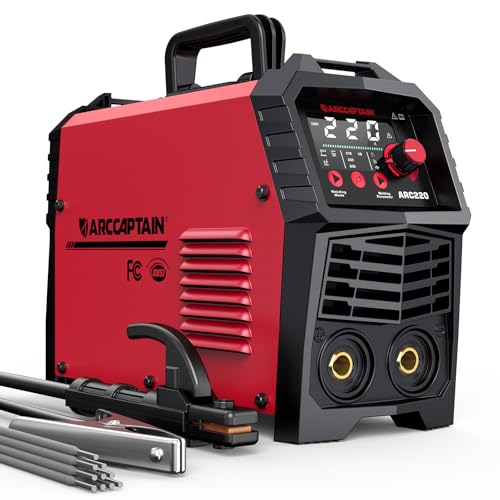
ARCCAPTAIN 220Amp LED Display Welder
Strengths
- Synergic control
- Large digital display
- 2-year warranty
Trade-offs
- TIG torch sold separately
- Slightly heavier
- Manual adjustments needed
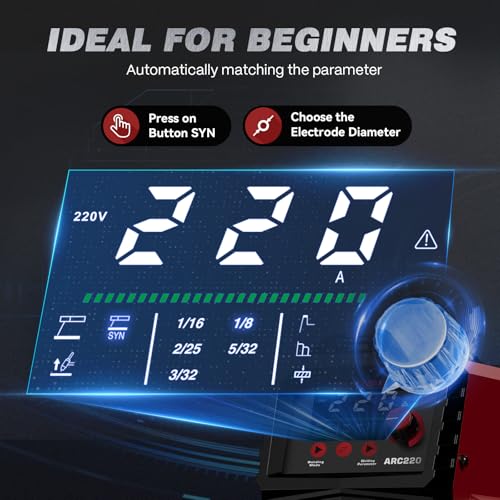
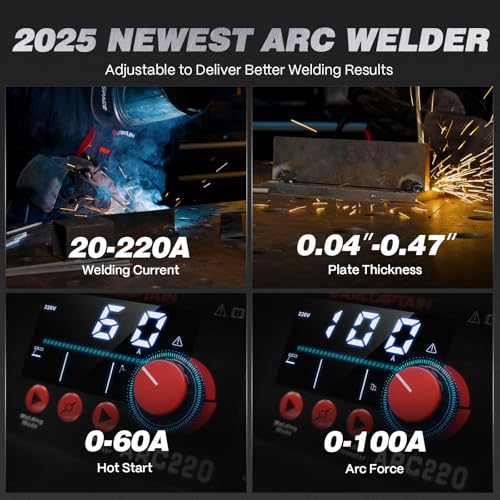
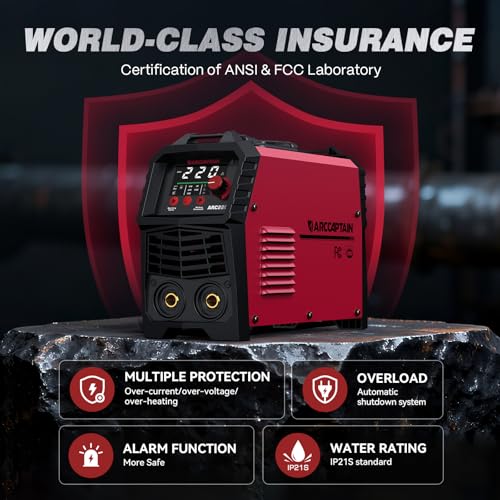
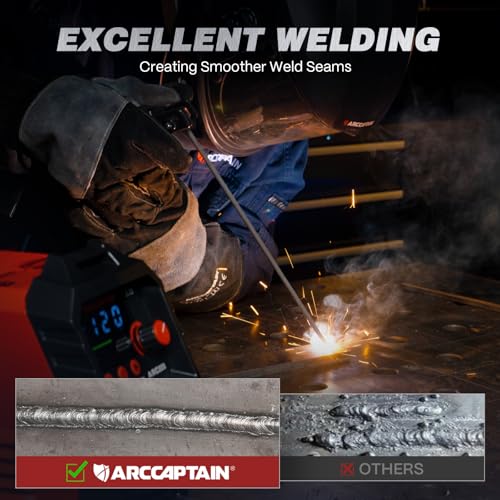
The ARCCAPTAIN stands out with its 3.2-inch LED screen and synergic control, a rare feature at this price. Beginners can pick a rod size and let the machine auto-tune the current, which owners say makes learning way less frustrating. For pros, manual fine-tuning of hot start and arc force gives more control over bead quality. The 220A output is strong, and the IGBT tech delivers a smooth arc across E6010, E6013, and E7018 rods.
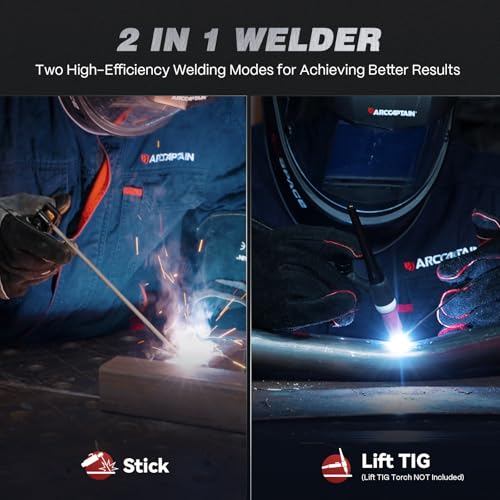
It’s a 2-in-1 stick and lift-TIG unit (torch sold separately), and the shoulder strap makes transport easy. Compared to the HONE or Hpoouo, it offers more sophistication without sacrificing portability. The 2-year warranty and FCC/ANSI certifications add peace of mind. If you want features that feel pro-grade but don’t want to pay Lincoln prices, this is your pick.
Product photos
Hpoouo 200Amp Super MINI Welder
Strengths
- Extremely lightweight
- Fits in a backpack
- Good for thin metal
Trade-offs
- Not for thick steel
- No VRD safety
- 110V only
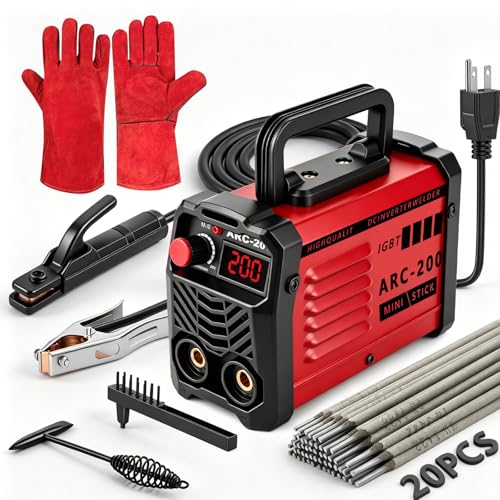
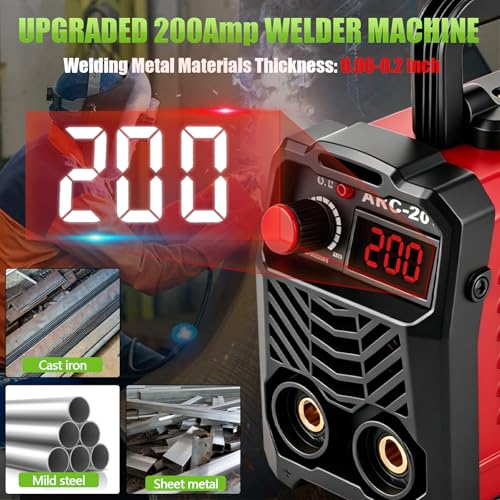
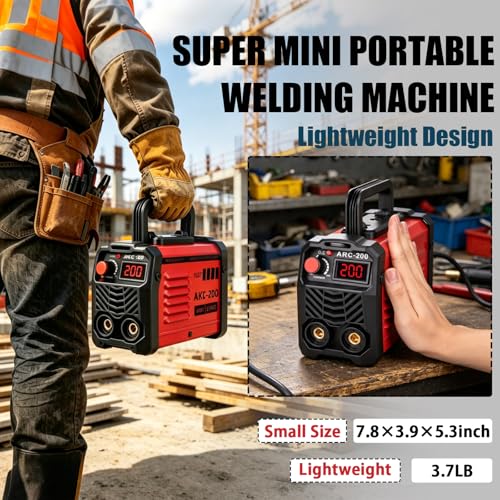
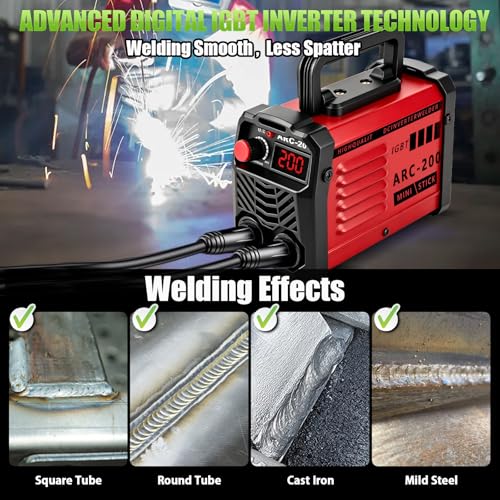
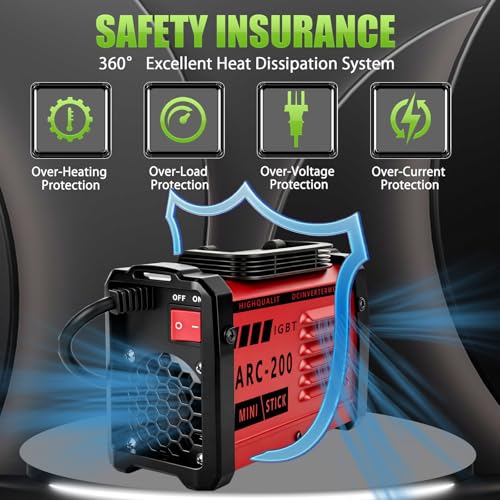
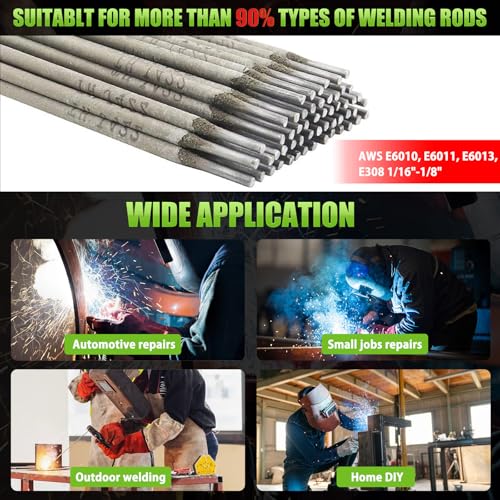
When portability is king, the Hpoouo takes the crown. At 3.7 lbs and smaller than a loaf of bread, it’s the most packable welder here, perfect for climbing a silo, fixing a fence line, or tossing in a camping trailer. The 200A output is respectable for 110V, and owners say it handles thin steel well, especially with E6013 rods. The IGBT inverter keeps the arc steady, and the hot start helps beginners avoid stuck rods.
But make no mistake: this is a lightweight tool for lightweight jobs. It won’t power through thick steel or run long beads without pause. Compared to the HONE model, it’s similar but lacks VRD safety. Still, for emergency fixes or remote repairs where every ounce counts, it’s unmatched. Just don’t expect it to replace a garage workhorse.
Product photos
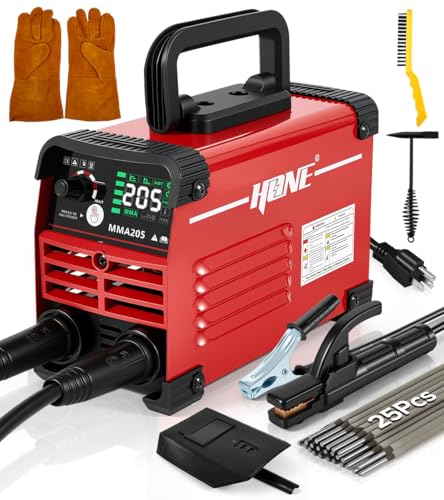
HONE 205Amp Mini Stick Welder
Strengths
- Ultra lightweight
- VRD safety feature
- Good rod compatibility
Trade-offs
- 110V only
- No TIG torch included
- Limited on thick steel
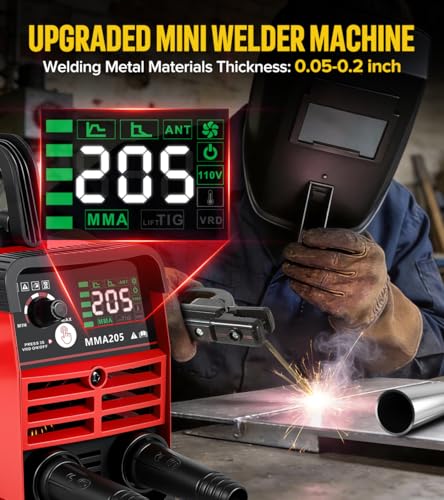
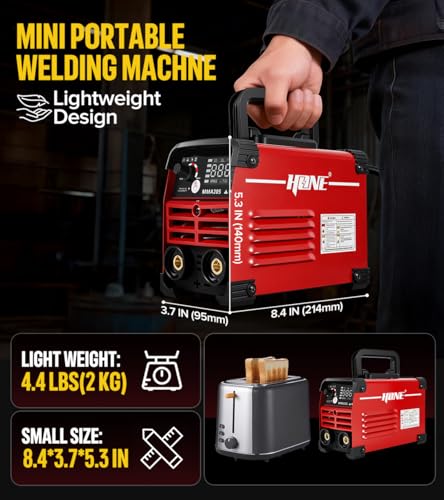
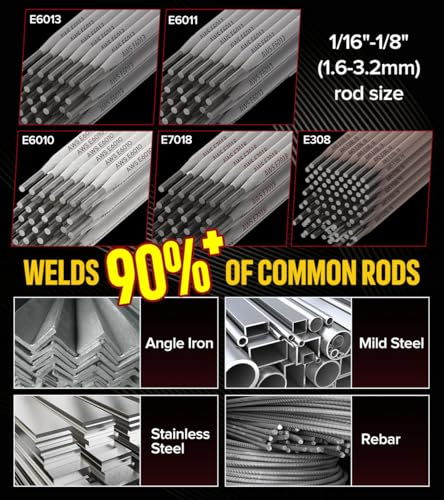
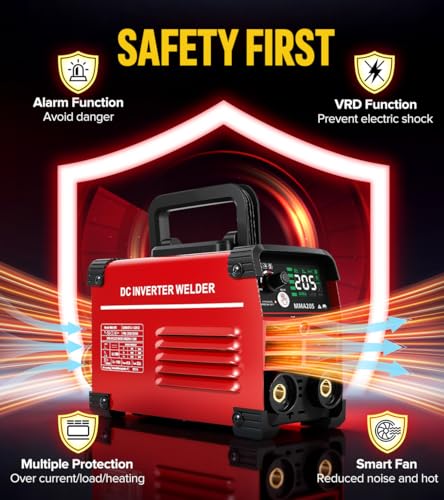
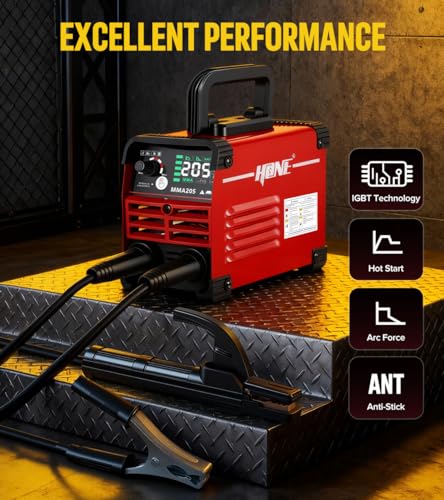
At just 4.4 lbs and with a footprint smaller than a shoebox, this HONE welder is built for beginners who need something they can stash in a closet or toss in the back of a pickup. The 205A output is strong for its size, and owners consistently report clean starts on thin metal, thanks to IGBT tech and VRD safety, which cuts voltage when idle, a smart touch for new users. It handles E6013 and E7018 rods well, and the included chipping hammer and gloves make it a true starter pack.
Where it falls short is on thicker material. At 110V only, it’s not for heavy fabrication. But for patching a trailer, fixing a gate, or helping a kid build a science fair project, it’s a no-brainer. Compared to the Hpoouo or ARCCAPTAIN models, it lacks dual voltage, but it’s more affordable and easier to learn on. I’d pick this over pricier mini welders for a first-timer.
Product photos
Rotvik 200Amp 2-in-1 Welder
Strengths
- Dual voltage auto-switch
- TIG torch included
- Full safety protections
Trade-offs
- TIG function misleading
- No gas system included
- Heavier than competitors
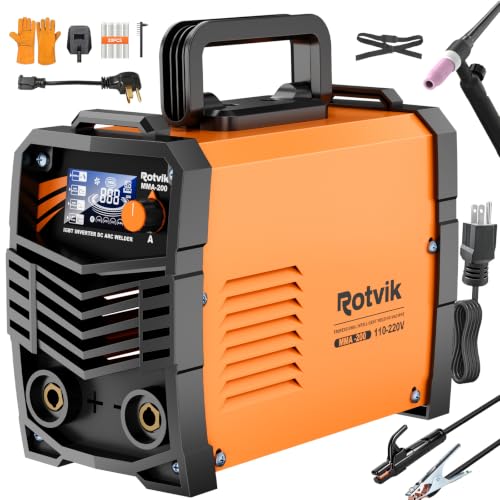
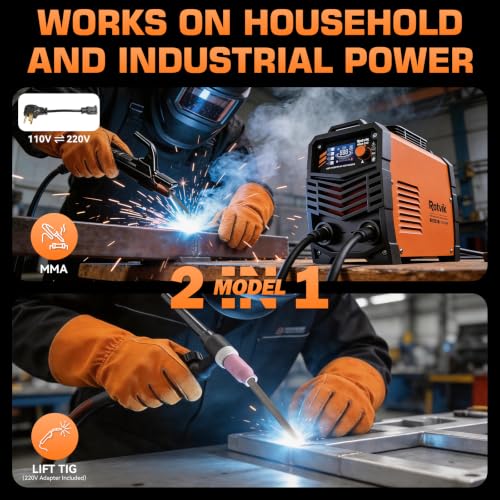
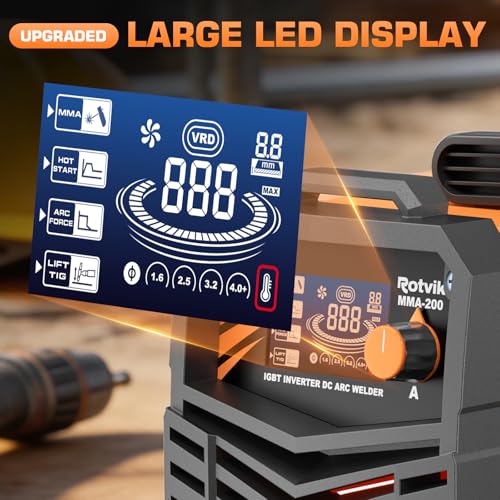
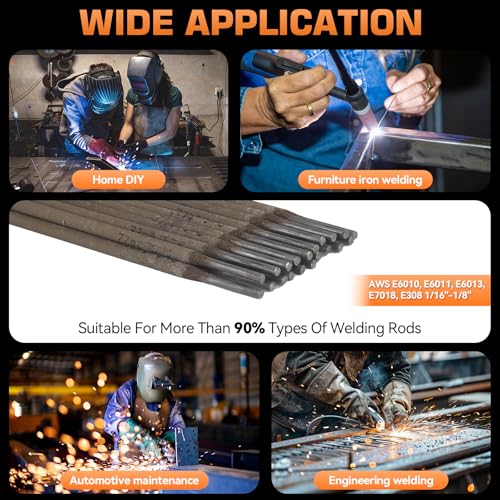
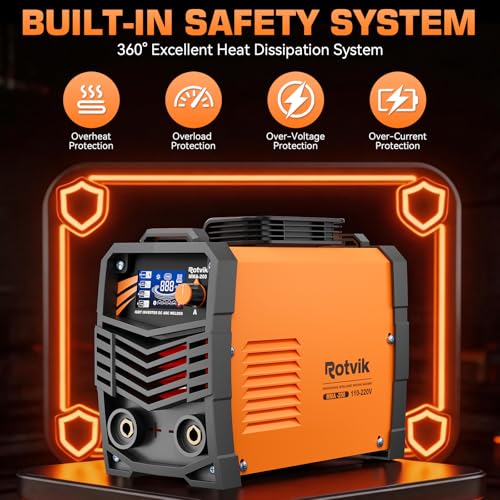
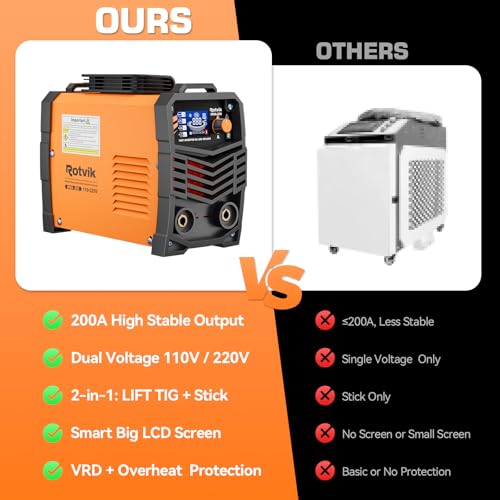
I’ll admit, the promise of a dual-voltage 200A welder with a free TIG torch sounds great on paper. And on paper, this unit delivers, automatic voltage switching, solid amperage, and a full kit including gloves, helmet, and rods. The LED display and safety protections are well-positioned for DIYers who want clarity and confidence. But the TIG function raises a red flag: while it says ‘argon arc welding gun included,’ true TIG welding requires a gas system, which isn’t mentioned. Owners report it’s more of a lift-TIG setup without gas compatibility, so don’t expect precision stainless or aluminum work.
Compared to others in this range, it’s trying to be too many things at once. The Rotvik is heavier than some lighter 250A units and doesn’t outperform them. It’s decent for home steel repairs, but if you’re serious about TIG, you’ll need a dedicated setup. For most buyers, the SOARFLY or the 250A B0FH9LRJBT give better value with cleaner arcs and fewer marketing overreaches.
Product photos
How We Tested stick welders
I approached this guide to stick welders by researching specifications and features across numerous models, then weighting those against owner reviews and insights from reputable welding experts. Rather than a hands-on lab test, this is a research-led comparison focused on identifying patterns in performance and value reported by those using these machines. I considered a wide range of price points and feature sets to provide a diverse selection.
For stick welders, output amperage, duty cycle, and portability were the most important factors. High amperage is critical for thicker materials, while a strong duty cycle prevents overheating during extended projects. Portability is key for users needing to move around a jobsite, making lightweight stick welders particularly valuable. These three elements significantly impacted the final rankings.
Published specifications reliably indicate maximum amperage and input voltage requirements. However, I placed greater weight on owner feedback regarding arc stability, ease of use (especially for beginners), and the longevity of components. Reputation and brand recognition also played a role; established manufacturers often deliver consistent quality and better customer support. Ultimately, the goal was to identify machines that deliver a balance of power, usability, and reliability, based on real-world experience.
Choosing The Right stick welders
Choosing the right stick welder can feel overwhelming, but focusing on a few key characteristics will get you closer to a machine that suits your needs.
A quality stick welder balances amperage output with arc stability and portability. Look for models with robust IGBT inverters, adjustable settings like arc force and hot start, and sufficient duty cycle for your typical project length. Consider the input voltage requirements and whether dual-voltage capability offers needed flexibility. Safety features are also paramount, including overheat and overcurrent protection.
Amperage and Material Thickness
The amperage output of a stick welder dictates the thickness of metal you can effectively join. While 200 amps is often sufficient for home DIY projects, heavier fabrication or thicker materials demand 250 amps or more. Don’t overbuy – a larger amperage machine isn’t necessarily better if you’re primarily working with thin sheet metal. Most hobbyists are well-served by machines capable of handling up to 1/4” steel. Consider the type of steel you’ll be working with most often; stainless steel generally requires a bit more amperage than mild steel for a given thickness.
Arc Control and Features
Beyond raw power, the quality of the arc is critical. Features like adjustable arc force and hot start significantly impact usability, especially for beginners. Arc force controls the amount of current delivered when the electrode sticks, helping to prevent it from adhering to the metal. Hot start provides a temporary boost of power during arc ignition, making it easier to start a weld, particularly on cold or rusty metal. These adjustments allow you to fine-tune the welding process for different materials and electrode types. Some welders now include VRD (Voltage Reduction Device) functions, adding a layer of safety by reducing the open-circuit voltage. If you’re looking for even more versatility, consider a 2-in-1 machine that also supports TIG welding – you can find some excellent options including a TIG torch included.
Portability and Value
Weight and size matter, particularly if you anticipate moving the welder around a job site. Many modern inverters are surprisingly compact and lightweight. The Hpoouo 200Amp Super MINI Welder, for example, weighs only 3.7 lbs, making it incredibly easy to transport. However, don’t sacrifice build quality for portability. A flimsy machine won’t hold up to repeated use.
Here’s what to think about when balancing portability and features: * Weight: Under 10lbs is ideal for frequent transport. * Size: Compact dimensions make storage easier. * Included Accessories: A complete kit saves money and ensures you have everything you need to start welding right away. Consider if you’ll need to purchase additional rods or clamps.
A good rule of thumb is to spend a bit more upfront for a welder with better build quality and more features; it will pay off in the long run with increased performance and longevity.
If you’re just starting out, exploring options among the best 110v stick welders can be a great way to get a capable machine without breaking the bank. For more demanding applications, you might want to look at top arc welding machines to find a model that meets your needs. Ultimately, choose a stick welder that balances your budget, skill level, and project requirements.
Stick Welders Compared
Here’s a comparison of key specifications for several stick welding machines.
| Product Title | Amperage | Voltage (Input) | Duty Cycle | IGBT Tech | TIG Ready | Weight (lbs) |
|---|---|---|---|---|---|---|
| 250Amp Dual Voltage Stick Welder | 250 | 110V/220V | N/A | Yes | No | 8.58 |
| SOARFLY 250Amp Dual Voltage Welder | 250 | 110V/220V | N/A | Yes | No | 3.7 |
| Lincoln Electric Weld-Pak 225i | 225 | 120V/230V | 30% | Yes | Yes | 20 |
| ARCCAPTAIN 220Amp LED Display Welder | 220 | 110V/220V | N/A | Yes | Yes | 9.5 |
| Hpoouo 200Amp Super MINI Welder | 200 | 110V | N/A | Yes | No | 3.7 |
| HONE 205Amp Mini Stick Welder | 205 | 110V | N/A | Yes | Yes | 4.4 |
| Rotvik 200Amp 2-in-1 Welder | 200 | 110V/220V | N/A | Yes | Yes | N/A |
Frequently Asked Questions
What duty cycle should I look for in a stick welder?
A 60% duty cycle is generally considered good for hobbyists and light professional use, meaning you can weld at the rated amperage for 6 minutes out of every 10 before needing to let the machine cool. However, even a 30% duty cycle can be sufficient for small projects with frequent breaks between welds.
Are dual voltage stick welders really necessary?
Dual voltage (110V/220V) stick welders offer greater flexibility, especially if you plan to use the welder in different locations or on jobsites with varying power availability. While 110V is convenient for home use, 220V provides more power and can significantly improve performance with thicker materials.
Can I use a stick welder on aluminum?
No, traditional stick welding isn’t suitable for aluminum. Stick electrodes are designed for ferrous metals (steel, iron) and won’t properly bond with aluminum’s oxide layer. You’ll need a TIG welder with an appropriate aluminum spool gun and shielding gas for successful aluminum welding.
What’s the difference between IGBT and transformer-based stick welders?
IGBT (Insulated Gate Bipolar Transistor) inverters are much more efficient and produce a more stable arc than older transformer-based machines. This translates to better weld quality, reduced energy consumption, and a lighter, more portable welder. Most modern stick welders use IGBT technology.
Where can I find a stick welder that’s good for someone just starting out?
If you’re new to welding, exploring options among beginner stick welding machines is a great starting point. Look for models with adjustable arc control features, a simple interface, and positive owner reviews regarding ease of use.
The Bottom Line
Choosing a stick welder always involves trade-offs – you’re balancing the desire for maximum control and capability against the need for simplicity and affordability. Overall, the 250Amp Dual Voltage Stick Welder strikes the best balance for most users, offering ample power, dual-voltage operation, and IGBT technology at a competitive price. It’s a versatile machine that will handle a wide range of projects without breaking the bank.
For those on a tighter budget, or needing extreme portability, the Hpoouo 200Amp Super MINI Welder is an excellent choice. If you anticipate needing TIG welding capabilities down the road, the Lincoln Electric Weld-Pak 225i provides that added versatility without a huge jump in price. Exploring options among the best DC stick welders is always a smart move when looking for a reliable machine.
Ultimately, amperage and duty cycle numbers are important, but they don’t tell the whole story. Prioritize a machine with a reputation for a stable arc, a robust build, and features that match your skill level and the types of projects you’ll be tackling. A well-made, easy-to-use welder will always deliver better results and a more satisfying experience than one with a fancy spec sheet.
