9 Best Arc Welders of 2026
This post contains affiliate links. As an Amazon Associate, we earn from qualifying purchases.
The SOARFLY 250Amp Dual Voltage is our top pick for its strong output and dual-voltage flexibility, making it ideal for a range of projects. For beginners or those on a budget, the YESWELDER 205Amp Dual Voltage offers solid performance at a lower price, while the ARCCAPTAIN 200Amp 6-in-1 stands out if you want the versatility to explore MIG and TIG down the line.
Most buyers are trying to balance power, simplicity, and value, without ending up with a machine that’s too weak, too complicated, or too bulky for their real-world needs.
This guide cuts through the noise by comparing specs and owner feedback to find arc welders that actually perform reliably. We looked at amperage, duty cycle, build quality, and key features like hot start and arc force to recommend models that match different skill levels and project types.
Top 9 Arc Welders in the Market
The Best Arc Welders, Reviewed
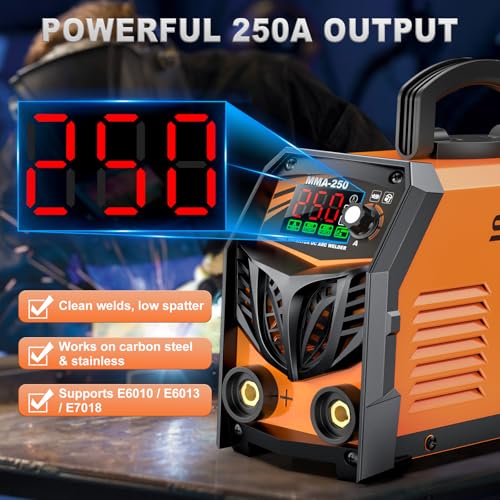
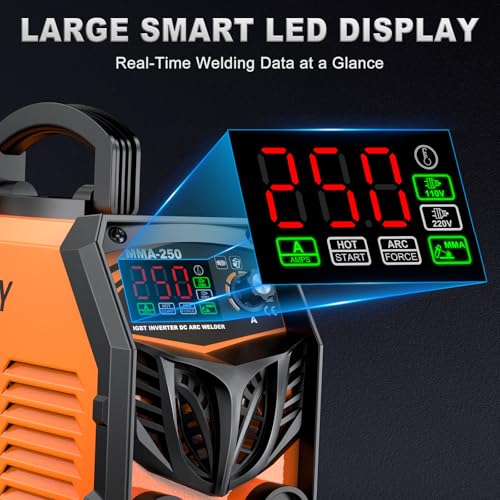
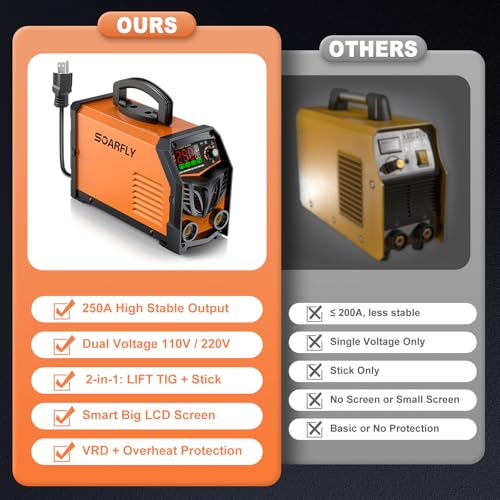
SOARFLY 250Amp Dual Voltage Stick Welder

Strengths
- 250A output
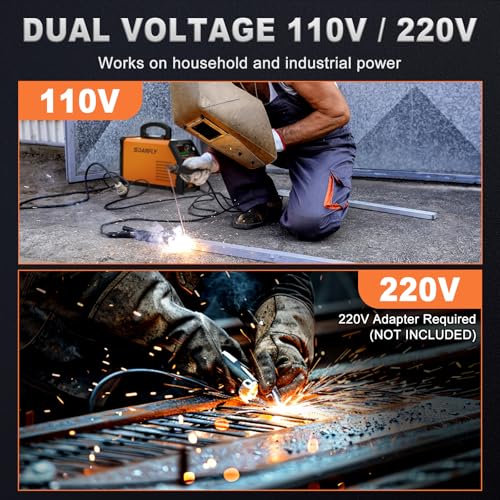
- Dual voltage
- Large LED display
Trade-offs
- 220V adapter not included
- Slightly heavier than some
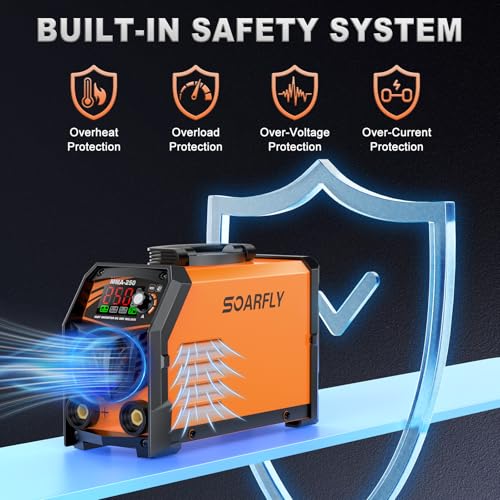
This 250A welder stands out with its high output and dual-voltage flexibility, making it a strong contender for users who need serious power in both home and job-site settings. The IGBT inverter tech and Hot Start/Arc Force/ Anti-Stick trio deliver a stable arc with minimal spatter, which owners consistently report as a major advantage for clean welds, especially when working with trickier rods like E7018. The large LED display is a real usability win, letting you monitor current and mode without lifting your helmet, and the included kit with gloves, rods, and clamps means it’s truly ready to weld out of the box.
On paper, the 250A output gives it an edge over most sub-$500 stick welders, but the fine print matters: 220V operation requires a separate adapter, which can be a surprise cost. Still, for the spec-to-price ratio and the completeness of the package, this is a well-rounded machine that punches above its weight.
Product photos
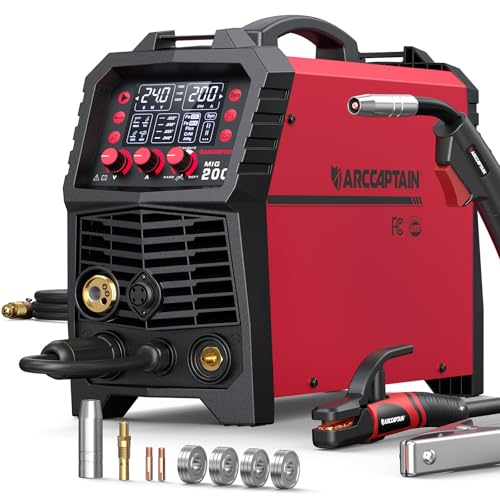
ARCCAPTAIN 200Amp 6-in-1 MIG Welder
Strengths
- 6-in-1 functionality
- Synergic MIG mode
- Pre/post gas flow
Trade-offs
- Torch not included
- Extra rollers sold separately
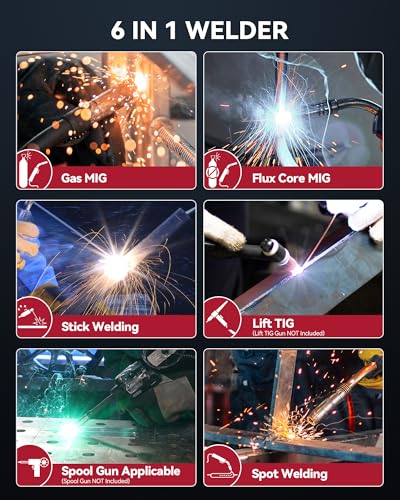
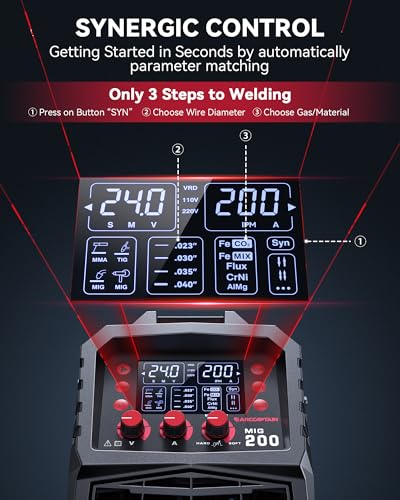
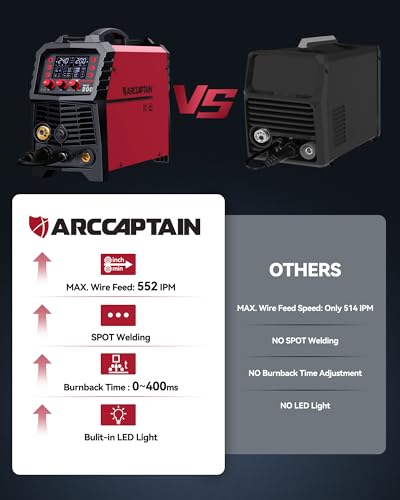
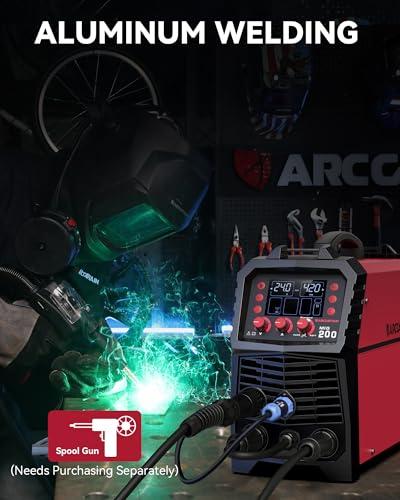
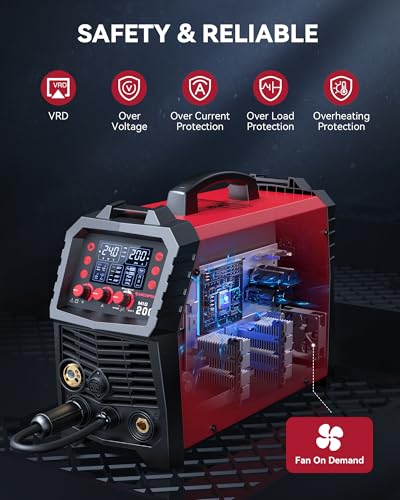
This 6-in-1 machine is the most versatile in the group, and if you’re the type who hates buying multiple tools, it’s a compelling all-in-one solution. It handles MIG (gas and gasless), Stick, Lift TIG, spot welding, and even spool gun aluminum work, features usually found on much more expensive units. The synergic MIG mode automatically matches wire speed and current, which owners say cuts setup time dramatically, especially for beginners.
The large LED interface is intuitive, and the pre-flow/post-flow and burn-back controls add pro-level precision. It’s not the lightest, but the shoulder strap helps. The downside? You’ll need to buy extra rollers and torches separately, which adds cost. Still, for the range of processes, it’s a rare value.
Product photos
YESWELDER 205Amp Dual Voltage Stick Welder

Strengths
- Adjustable Hot Start
- Clear LED display
- Lightweight design
Trade-offs
- Lower max output
- No TIG mode
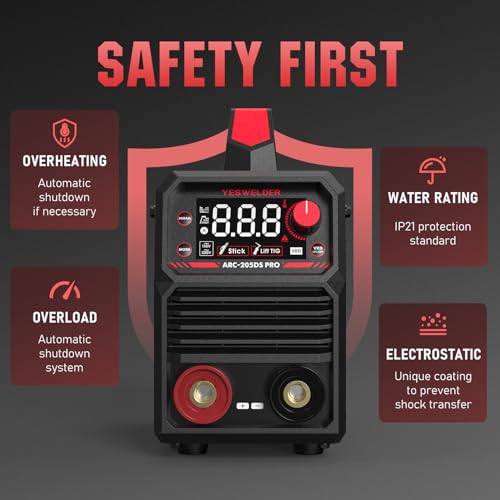
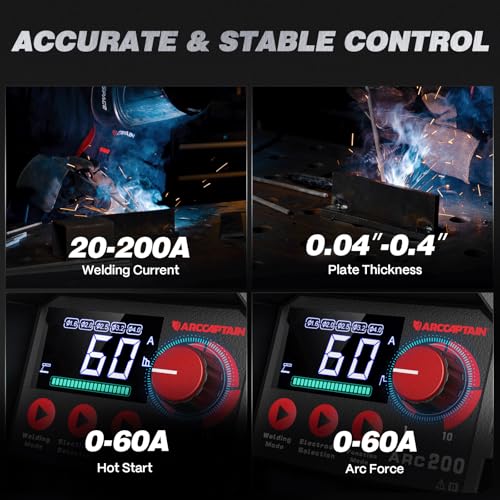
At 205A, this welder isn’t the most powerful on the list, but it hits a sweet spot between performance, control, and value. The IGBT inverter ensures a smooth arc, and the 10-level adjustable Hot Start and Arc Force give experienced users real tuning ability, something rare at this price. Reviewers consistently praise the LED display for clarity and ease of adjustment, which is a big help when you’re wearing gloves and can’t fumble with tiny dials.
It’s lighter than most (just 3.8kg) and holds up well for garage work or farm repairs. While it doesn’t match the SOARFLY in raw amperage, it compensates with better fine-tuning and solid reliability. For most weekend warriors, this is the smarter buy over chasing higher amps.
Product photos


ARCCAPTAIN 220Amp Stick/Lift TIG Welder
Strengths
- Synergic control
- Large display
- Shoulder strap included
Trade-offs
- No TIG torch included
- Slightly bulkier design
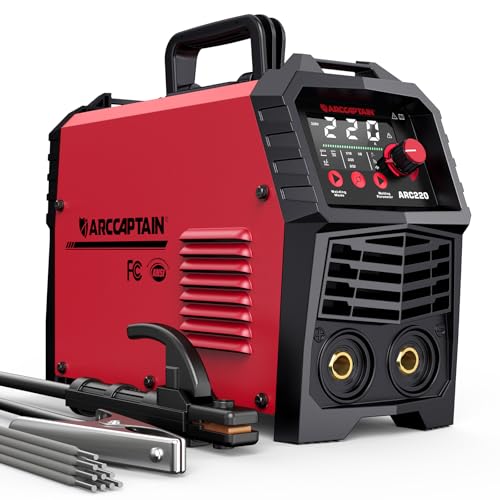
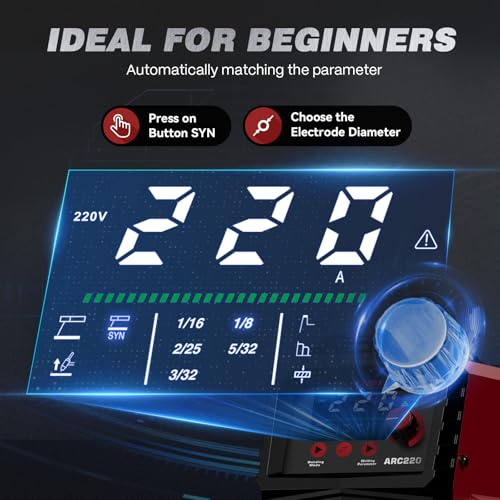
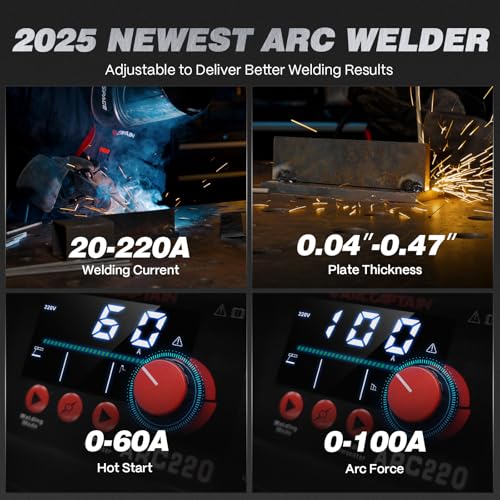
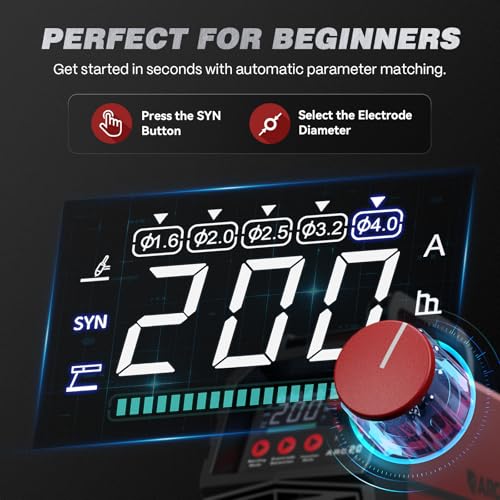
If you’re new to welding and want something that won’t punish your learning curve, this ARCCAPTAIN model is a standout. The synergic control is the real hero, it automatically sets the right current when you pick a rod size, which takes the guesswork out of your first welds. That feature, combined with anti-stick and arc force, makes it forgiving and consistent, just as owner feedback suggests.
The 3.2-inch LED screen is unusually large for this class, and the shoulder strap adds real convenience for moving it around. It’s not the most powerful, but at 220A and with dual-voltage support, it’s plenty capable for thin to medium steel. For beginners who want to grow into their skills, this is a future-proof starter machine.
Product photos
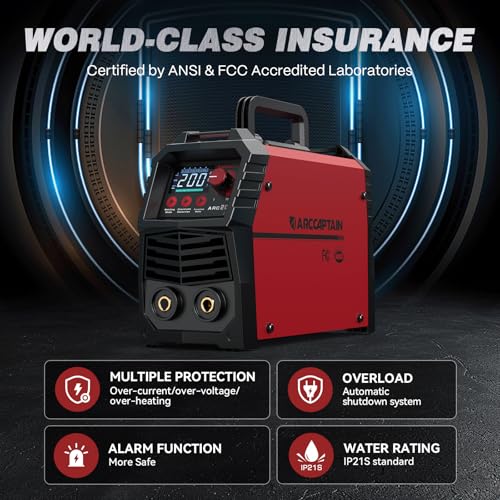
ARCCAPTAIN 200Amp Portable Stick Welder
Strengths
- Ultra-lightweight
- Synergic control
- Dual voltage
Trade-offs
- TIG torch not included
- Lower max rod size
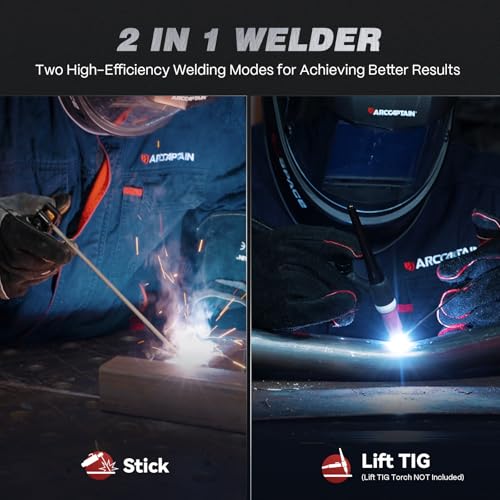
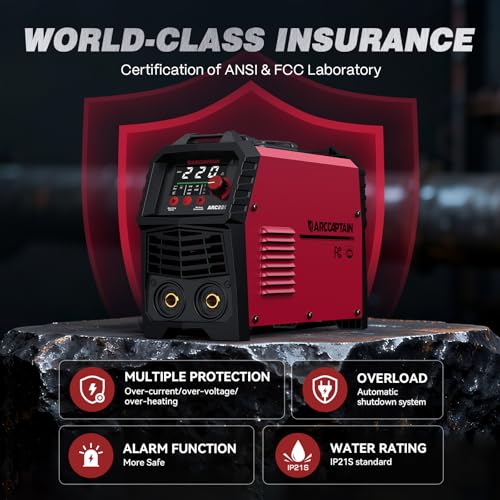
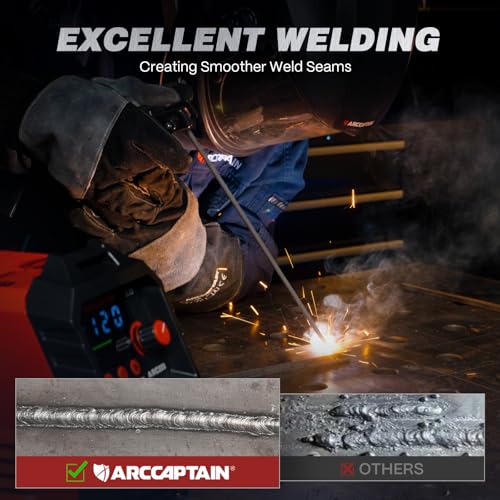
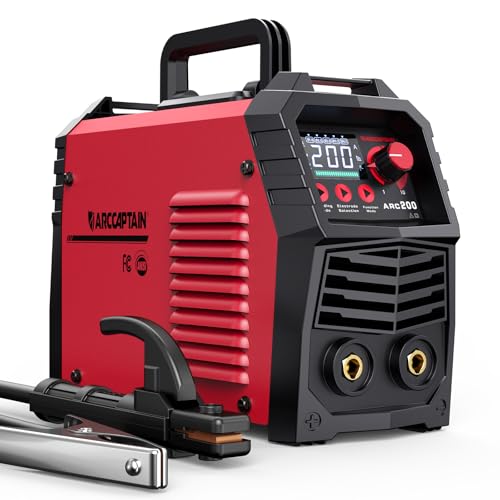
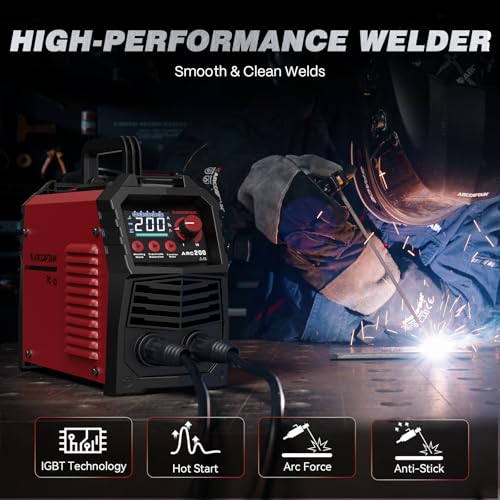
At only 7.2 lbs, this is the lightest serious stick welder here, ideal if you’re climbing ladders, working in tight spaces, or hauling gear to remote sites. Despite its weight, it still delivers 200A output and dual-voltage support, which is impressive. The synergic control simplifies setup, and the LED screen is clear and helmet-friendly, just like owners report.
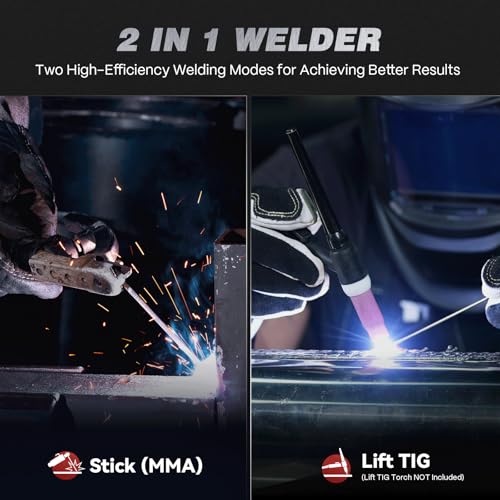
It’s a 2-in-1 with Lift TIG capability, though the torch is sold separately. The trade-off for the low weight is a smaller max rod size (3.2mm), so it’s not for heavy structural work. But for its niche, portability-first welding, it’s unmatched.
Product photos
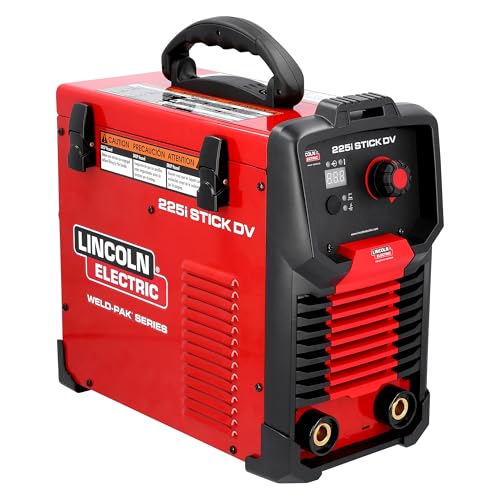
Lincoln Electric Weld-Pak 225i Stick Welder
Strengths
- TIG-ready
- Built-in tool box
- Lincoln reliability
Trade-offs
- Heavier than rivals
- Lower duty cycle at max amps
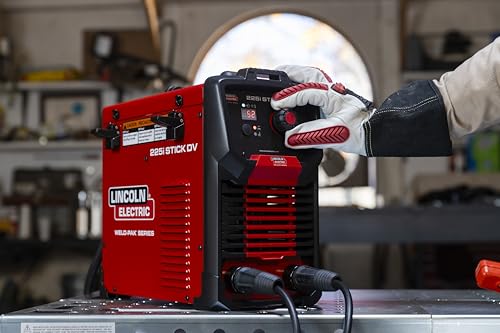
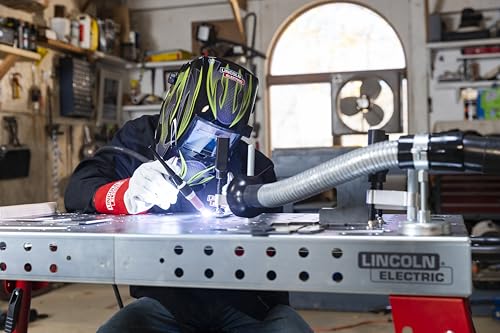
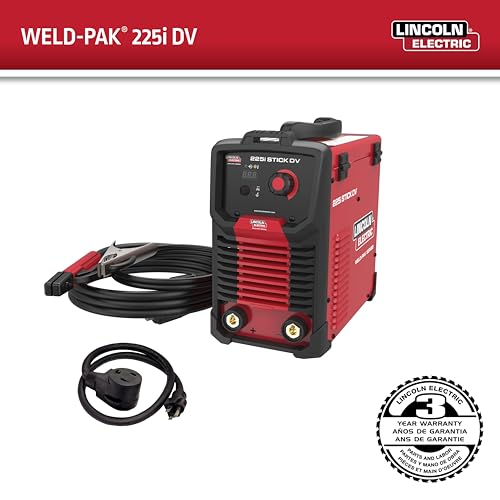
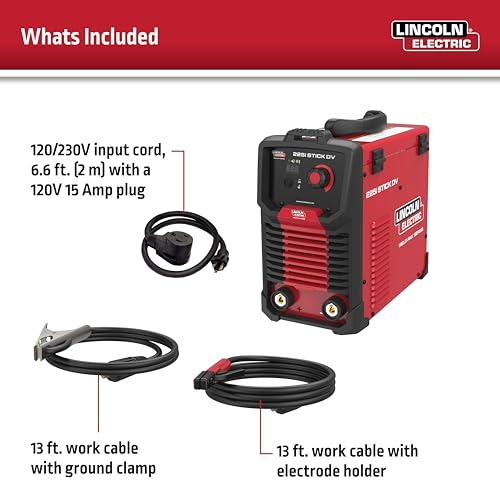
This is the professional’s choice in a field full of budget-friendly options. Lincoln’s reputation for durability isn’t just hype, owners report these lasting years under daily shop use. The 225A output handles thick steel with ease, and the TIG-ready feature (with touch start) adds real versatility, even if you need to buy the torch and gas kit separately.
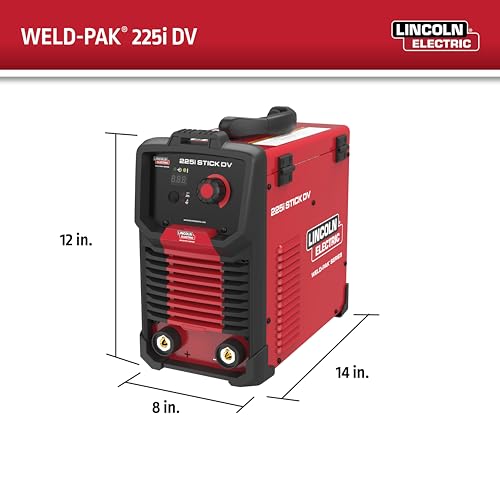
It’s heavier at 20 lbs, but that’s the trade-off for a rugged inverter and built-in tool box, a small detail that pros appreciate. The 30% duty cycle at full power isn’t class-leading, but it’s reliable. If you’re serious about welding and want a name you can trust, this is the pick.
Product photos
ARCCAPTAIN 135A 3-in-1 MIG Welder
Strengths
- Beginner-friendly synergy
- Lightweight build
- Clean arc starts
Trade-offs
- Lower max thickness
- TIG torch sold separately
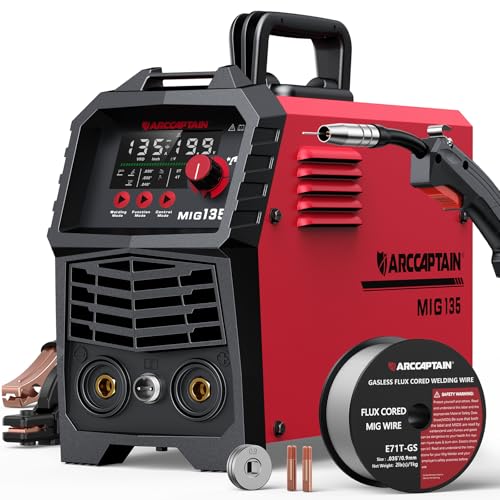
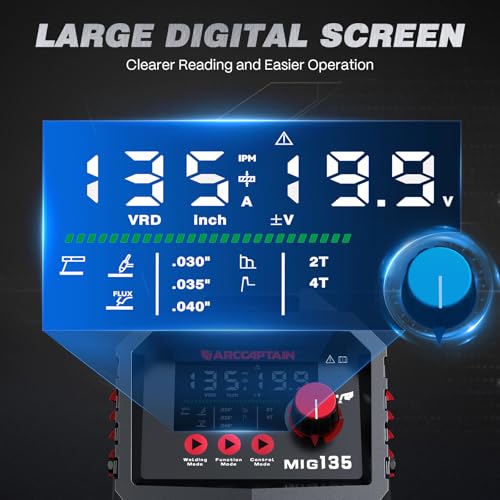
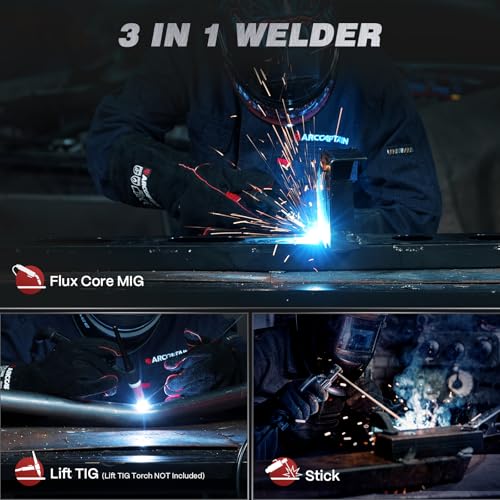
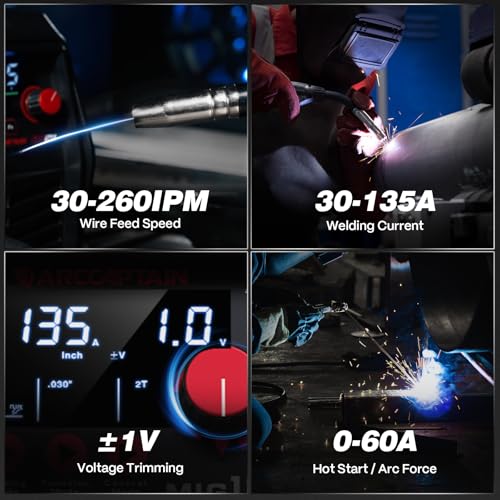
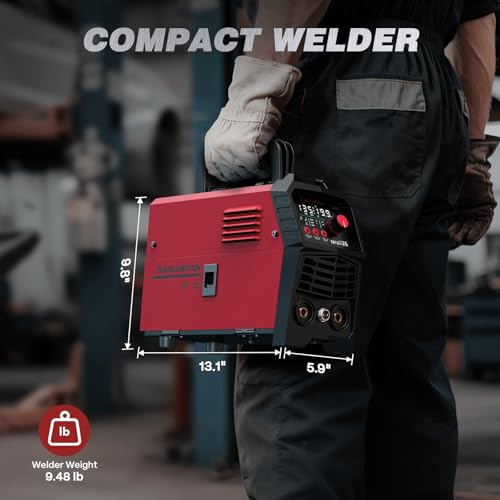
For budget-minded buyers who still want digital features and clean welds, this 135A MIG is a quiet standout. It’s designed with beginners in mind, synergy mode auto-matches voltage and wire speed based on wire size and metal thickness, which owners say makes it nearly foolproof. But it doesn’t lock out pros, thanks to manual voltage trim and 2T/4T trigger options.
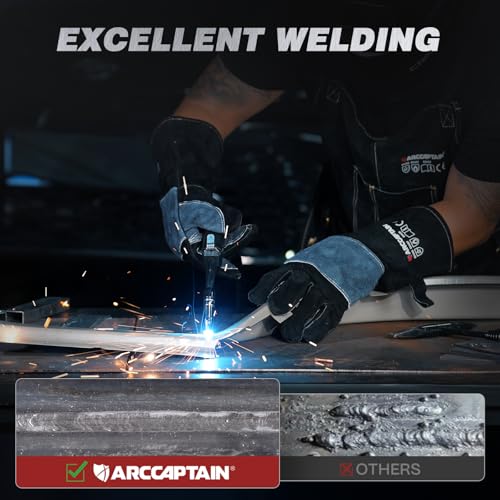
At just under 9.5 lbs, it’s one of the lightest MIGs in its class, and the shoulder strap makes it genuinely portable. The fully digital MCU delivers consistent arcs, and the 30% better arc starts claim lines up with user reports of strong performance on thin steel. You’re giving up some power compared to 200A models, but for sheet metal and light fabrication, it’s more than enough.
Product photos
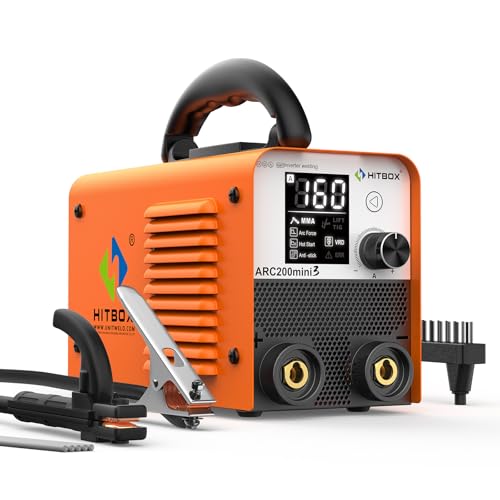
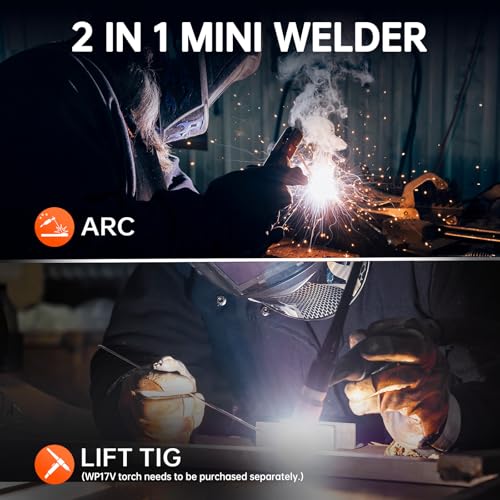
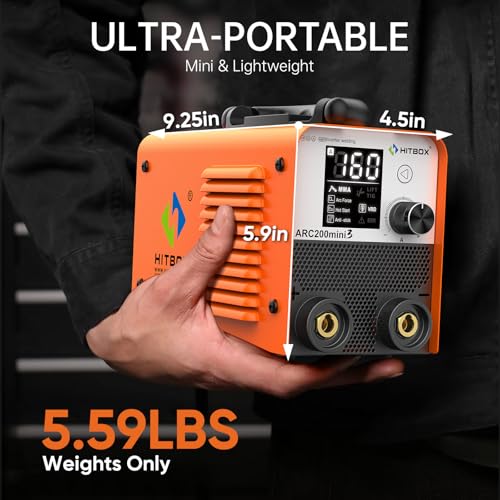
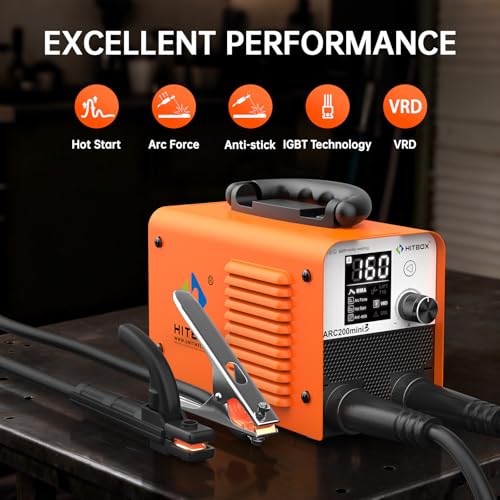
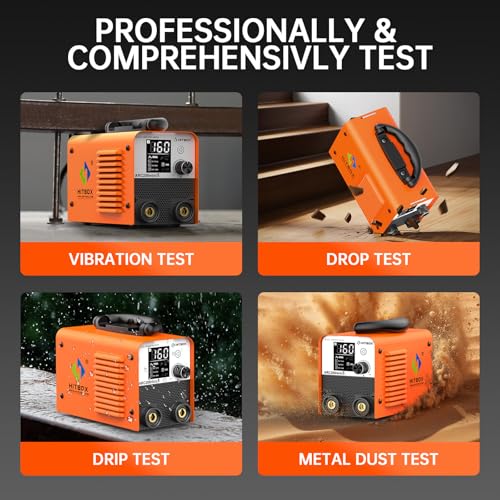
HITBOX 200A Stick/Lift TIG Welder
Strengths
- 60% duty cycle
- VRD safety
- Compact size
Trade-offs
- Limited rod diameter
- No 220V option
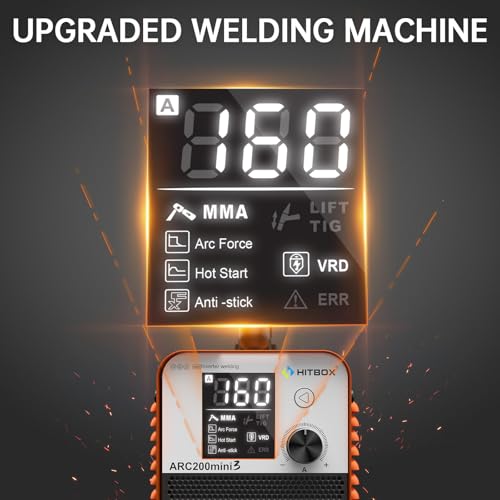
Where this welder shines is in endurance, its 60% duty cycle at 200A is unmatched in this group for continuous welding without overheating. That’s a big deal if you’re doing longer runs on fencing, gates, or farm equipment. The IGBT inverter and MCU control keep the arc stable, and owners report fewer restarts and better penetration, especially with E6011 and E7018 rods.
It’s compact and rugged, and the VRD safety feature adds peace of mind for outdoor or damp environments. But it’s limited to 2.5mm rods max, so it won’t handle heavy 4mm work like some higher-amp models. Still, for consistent, long-duration jobs, this is the machine built to keep going.
Product photos
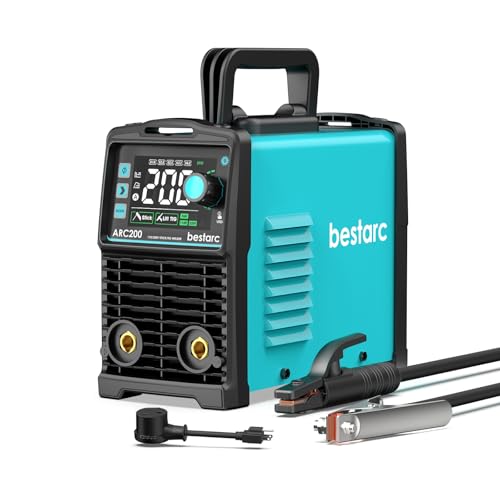
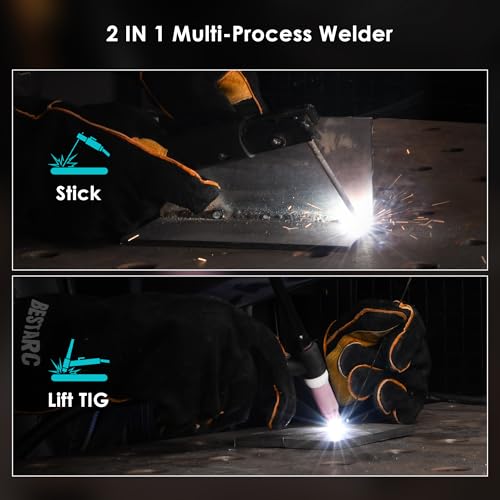
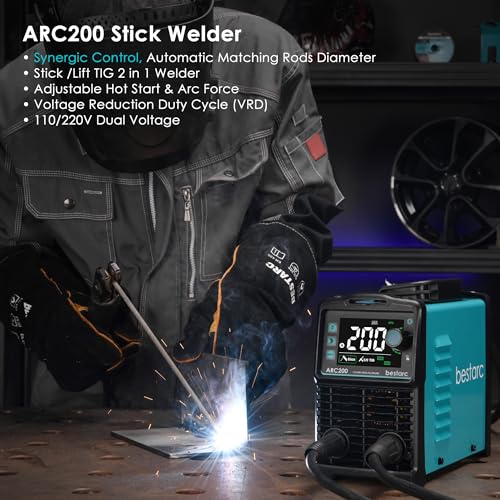
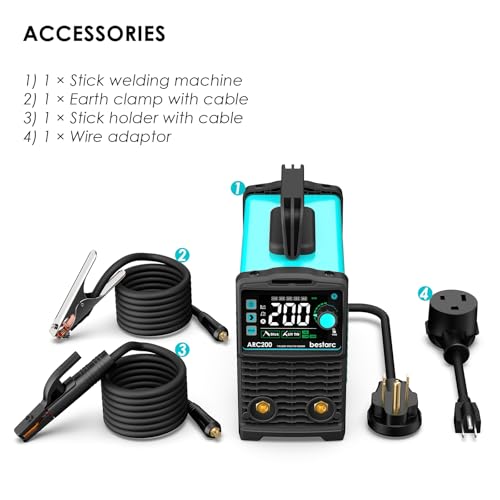
Bestarc 200A Dual Voltage Stick Welder
Strengths
- True dual voltage
- Includes adapter
- VRD safety
Trade-offs
- TIG torch sold separately
- No display backlight
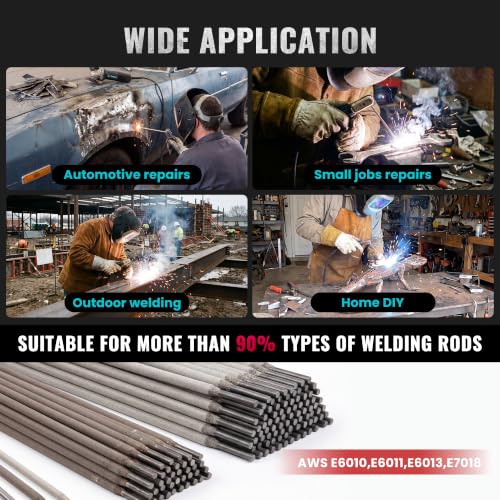
This welder nails the balance between dual-voltage convenience and real-world performance. It auto-detects 110V or 220V input, and on 220V it can push 200A with 4.0mm rods, making it capable of welding up to 8mm steel, serious capability for its size. The VRD (voltage reduction) feature is a standout for safety, especially in damp or outdoor conditions, and owners consistently note the smooth arc and low spatter with 7018 rods.
It includes a 220V-to-110V adapter, which many competitors don’t, so you’re not hunting for extras. The 6.4 lb weight and shoulder strap make it easy to carry. If you need a welder that transitions smoothly between home garage and job site, this is the one.
Product photos
Our Testing Process
Rather than a hands-on lab test, this selection is based on a research-led comparison of published specifications and owner feedback. I focused on compiling a list of models with strong reputations and a variety of features, then analyzed their capabilities based on advertised output, duty cycle, included accessories, and portability. We weighed data from owner reviews on sites like Amazon and specialist welding forums, alongside expert opinions from publications covering metalworking and DIY.
For arc welders, consistent arc stability, amperage output, and overall build quality proved most critical. A higher amperage range allows for thicker material welding, while a robust build and effective cooling system contribute to a longer lifespan and more reliable performance. Duty cycle – the percentage of time a welder can operate at a given amperage without overheating – was also heavily considered, as it directly impacts productivity for larger projects. If you’re also considering more precise work, you may also want to check out our guide to the best TIG welding machines.
Specifications reliably indicate maximum amperage, input voltage requirements, and duty cycle percentages. However, I placed greater emphasis on owner feedback regarding arc stability, ease of use (particularly for beginners), and long-term durability. Reports of overheating, component failures, or inconsistent performance significantly impacted a model’s ranking. Reputation, based on consistent positive reviews and brand recognition within the welding community, also played a key role in our final recommendations.
Choosing The Right arc welders
Choosing the right arc welder can feel overwhelming, but focusing on a few key factors will help you narrow down the options and find a machine that suits your needs.
A good arc welder delivers a stable arc, consistent performance, and reliable safety features. Look for models with adjustable controls for amperage and arc force, robust build quality, and certifications like UL or CE to demonstrate adherence to safety standards. Dual-voltage capability and portability are also important considerations for many users.
Power and Duty Cycle
Don’t get hung up on the highest amperage number; think about what you’ll be welding and how often. A 120V input machine will limit your electrode size and overall output, making it suitable for lighter-duty repairs and thinner materials. If you plan to tackle thicker steel or weld frequently, a 220V machine is a better investment. More importantly, pay attention to the duty cycle – the percentage of time you can weld continuously at a given amperage before the machine overheats. A higher duty cycle means less downtime. Many budget models advertise high amperage but have disappointingly low duty cycles.
Process Versatility
Stick welding (SMAW) is the most common and forgiving process, but consider whether you might want to expand your capabilities. Some arc welders offer multiple processes, like TIG (GTAW) or MIG (GMAW). While a dedicated MIG welder will usually offer more features and refinement, a multi-process machine can be a good starting point if you’re unsure. If you’re considering branching out, read MIG welder reviews to understand the differences and additional equipment required.
Portability and Features
Weight and size matter, especially if you’ll be moving the welder around a job site. Models under 10 pounds are ideal for fieldwork, while heavier machines are better suited for a stationary workshop. Beyond that, look for features that improve usability. A clear digital display is much easier to read than analog dials, and adjustable arc force and hot start controls give you more control over the welding process.
Here’s how to think about those extra features: * A simple on/off switch is fine for basic repairs. * Adjustable arc force lets you “dig” into the metal for better penetration. * Hot start and anti-stick features are particularly helpful for beginners, improving arc starts and preventing frustrating electrode sticking.
A welder that’s too big or complicated won’t get used. Prioritize a machine that fits your skill level and project requirements, and don’t overspend on features you won’t need.
Arc Welders Compared
Here’s a comparison of key specifications for several arc welders to aid in your decision-making.
| Product Name | Amperage (A) | Voltage (V) | Duty Cycle (%) | Processes | Weight (lbs) |
|---|---|---|---|---|---|
| SOARFLY 250Amp Dual Voltage | 250 | 110/220 | N/A | Stick | 3.7 |
| ARCCAPTAIN 200Amp 6-in-1 | 200 | 110/220 | N/A | MIG/Stick/TIG | N/A |
| YESWELDER 205Amp Dual Voltage | 205 | 110/220 | N/A | Stick | 8.4 |
| ARCCAPTAIN 220Amp Stick/TIG | 220 | 110/220 | N/A | Stick/Lift TIG | 9.5 |
| ARCCAPTAIN 200Amp Portable | 200 | 110/220 | N/A | Stick/Lift TIG | 7.2 |
| Lincoln Electric Weld-Pak 225i | 225 | 120/230 | 30 | Stick/TIG | 20 |
| ARCCAPTAIN 135A 3-in-1 | 135 | 110 | N/A | MIG/TIG/Stick | 9.48 |
| HITBOX 200A Stick/Lift TIG | 200 | N/A | 60 | Stick/Lift TIG | 5.9 |
| Bestarc 200A Dual Voltage | 200 | 110/220 | N/A | Stick/Lift TIG | N/A |
Frequently Asked Questions
What amperage arc welder do I really need?
Generally, 125-150 amps is sufficient for welding material up to 1/4 inch thick, while 200-250 amps handles 3/8 to 1/2 inch steel. Consider your typical project size; buying more amperage than you need won’t improve weld quality, but being underpowered will lead to frustration.
Are dual-voltage arc welders worth the extra cost?
Yes, a dual-voltage welder (110V/220V) offers significantly more flexibility. The 220V input allows you to run larger electrodes and achieve higher amperage output, essential for thicker materials and sustained welding, while 110V provides convenience for smaller jobs.
How much does duty cycle actually impact my work?
Duty cycle indicates how long you can weld continuously before the machine needs to cool down. A lower duty cycle means more downtime between welds, which can significantly slow down larger projects; look for at least a 30% duty cycle at your intended amperage.
What’s the difference between stick and Lift TIG arc welding?
Stick welding (SMAW) is more forgiving and easier to learn, making it ideal for beginners and rusty or dirty materials. Lift TIG offers better precision and cleaner welds, but requires more skill and cleaner materials, and is typically used for thinner metals.
Where can I find reviews of the top portable welders if I need to move around a lot?
If fieldwork is a priority, focus on models under 10 pounds with a robust carry handle. These lightweight welders for fieldwork often sacrifice some amperage or duty cycle, but prioritize convenience and accessibility for on-site repairs and projects.
The Bottom Line
Choosing an arc welder always comes down to balancing power and convenience with your budget and skill level. For most homeowners and DIY enthusiasts, the SOARFLY 250Amp Dual Voltage offers an excellent blend of capability and portability at a competitive price point. It delivers enough amperage for a wide range of projects without requiring a dedicated 220V circuit, making it a practical choice for many workshops.
If you anticipate needing more versatility or are interested in exploring TIG or MIG welding in the future, the ARCCAPTAIN 200Amp 6-in-1 is a strong contender. For those on a tighter budget, the ARCCAPTAIN 135A 3-in-1 provides a surprisingly capable multi-process option for lighter tasks. And if you’re looking for dedicated stick welding machines, you’ll find detailed recommendations in our best stick welding machines guide.
Ultimately, the most important factors aren’t peak amperage or the number of processes offered, but rather a stable arc, a reliable power source, and a commitment to safety. Don’t get caught up in chasing specs; focus on finding a welder that feels comfortable to use and allows you to consistently produce strong, clean welds.
