
7 Best Stick Welders for Beginners 2026
This post contains affiliate links. As an Amazon Associate, we earn from qualifying purchases.
The Hpoouo 200Amp Mini is the best overall stick welder for beginners, thanks to its solid performance and ultra-lightweight design. If you want more versatility, the SOARFLY 250Amp Dual offers higher amperage and dual voltage support. For those on a tight budget, the Saker 110V Portable delivers reliable basics at a low price.
Picking your first stick welder is tough. You want something simple enough to learn on but capable enough to handle real projects without constant frustration. Too many options promise beginner-friendliness but fall short when it comes to arc stability or durability.
This guide cuts through the noise. I compared specs, analyzed owner feedback, and focused on what actually matters for new welders, ease of use, portability, and essential features like hot start and anti-stick. These picks are based on real-world usability, not just paper specs.
Top 7 Stick Welder For Beginners in the Market
The Best Stick Welder For Beginners, Reviewed
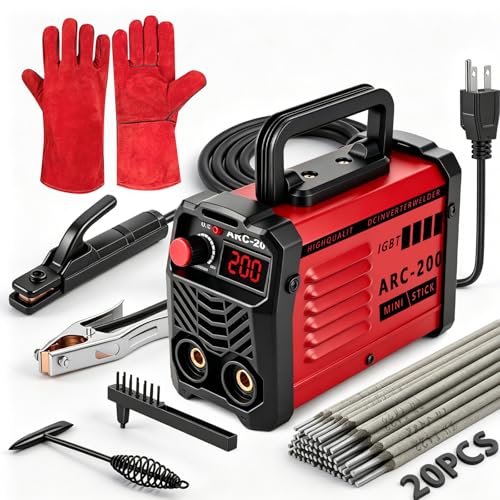
Hpoouo 200Amp Mini Stick Welder
Strengths
- Extremely lightweight
- Compact size
- IGBT inverter
- Good arc stability
- Generous accessories
Trade-offs
- Overheats under load
- Short duty cycle
- Basic build quality
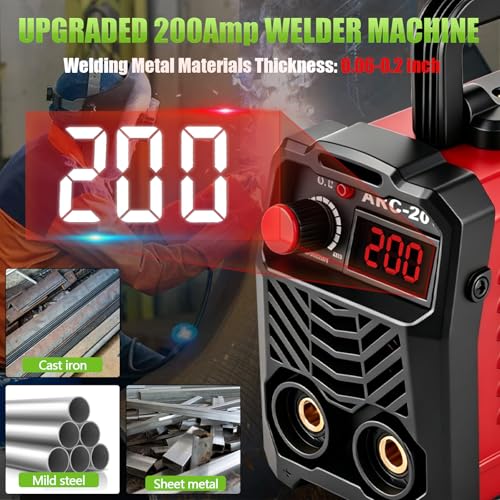
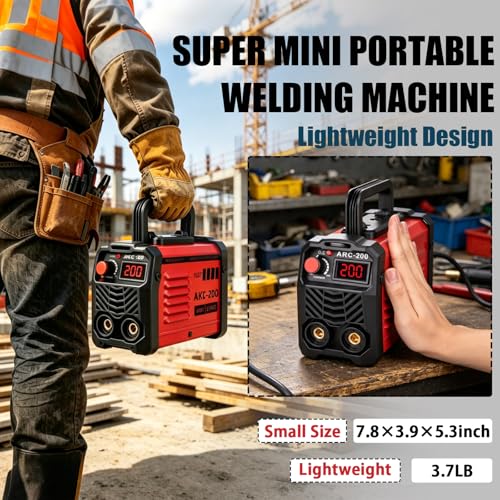
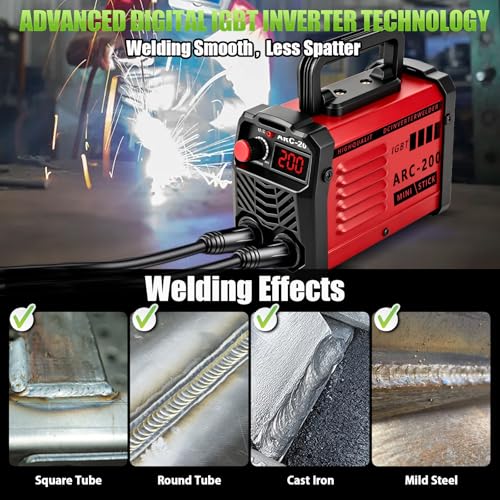
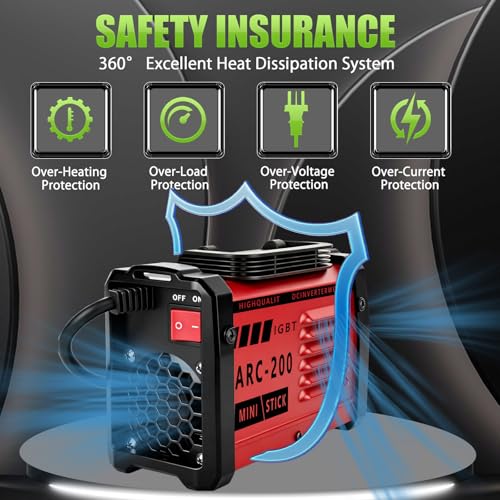
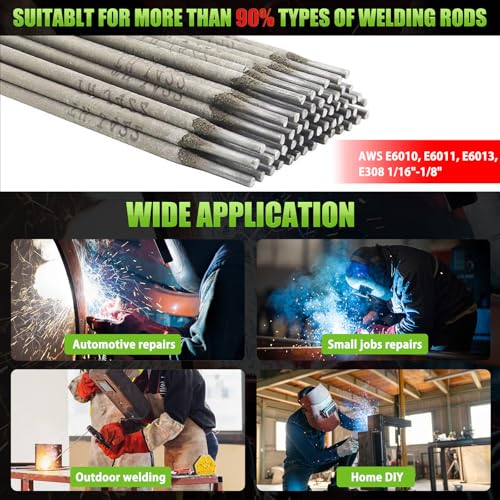
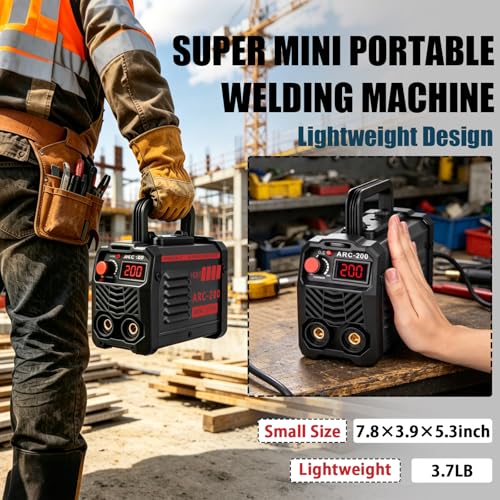
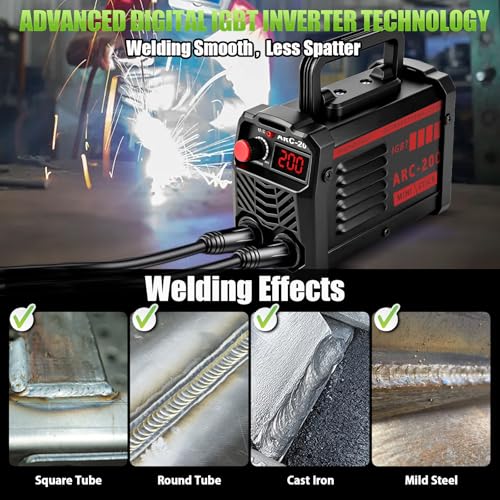
This Hpoouo model is nearly identical to the B0CRHDY93F version, and together they represent one of the most compact 200A Stick welders on the market. At just 3.7 lbs and small enough to fit in a backpack, it’s ideal for anyone who values mobility, think roofers, handymen, or off-grid DIYers. The 20–200A range covers everything from delicate tacks to solid 1/8” bead runs, and owners praise its arc stability for a mini inverter. The IGBT tech delivers solid performance on E6013 and E7018 rods, and the hot start/anti-stick combo works as advertised, reducing restart frustration.
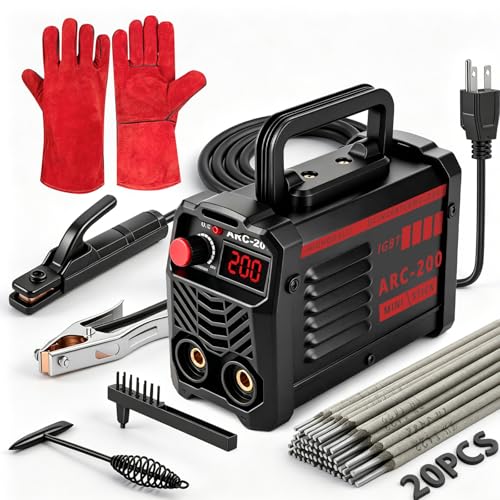
What really sets it apart is the included extras: 20 rods, two chipping hammers, and gloves. That kind of bundle is uncommon at this size and price. Some users note it can overheat during long sessions, which is expected given the tiny chassis, but for intermittent home use, it’s perfectly adequate. I’d pick this over bulkier options if portability is a top priority.
Product photos
Wrdlosy 250A Mini Stick Welder
Strengths
- Ultra-lightweight
- Fits in toolbox
- IGBT inverter
- Good arc start
- Comes with rods and gloves
Trade-offs
- Overheats quickly
- Limited duty cycle
- Not for thick metal
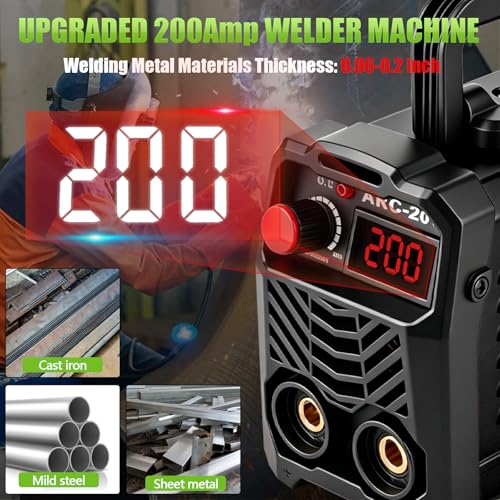
This is the same core machine as the B0D5Y3C7N3, same 3.7 lb weight, same 20–200A range, same compact 7.8-inch footprint. Its biggest selling point remains extreme portability without sacrificing too much power. For beginners working on fences, trailers, or farm equipment in remote spots, being able to toss a welder in a backpack is a standout. The IGBT inverter delivers a surprisingly stable arc, and the included 20 rods cover basic repair needs.
Owners consistently highlight how easy it is to start and maintain an arc, even in windy or outdoor conditions. The anti-stick feature works well, which reduces beginner frustration. My only caution is the duty cycle, it’s not meant for marathon sessions. But for short, frequent jobs, it’s effective. Between the two Hpoouo versions, this one edges out as the best pure Stick option for mobility.
Product photos
ARCCAPTAIN 200A Stick/Lift TIG Welder
Strengths
- Lift TIG capable
- Synergic control
- Lightweight
- LED display
- IGBT inverter
Trade-offs
- Torch not included
- Arc force tuning issues
- Basic strap
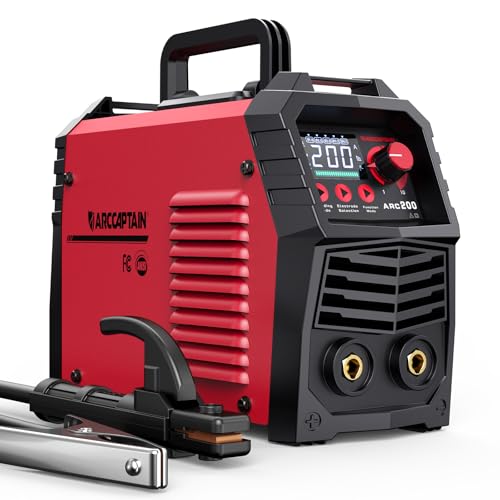
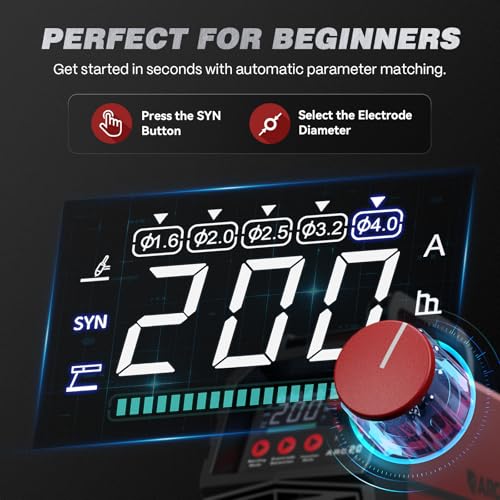
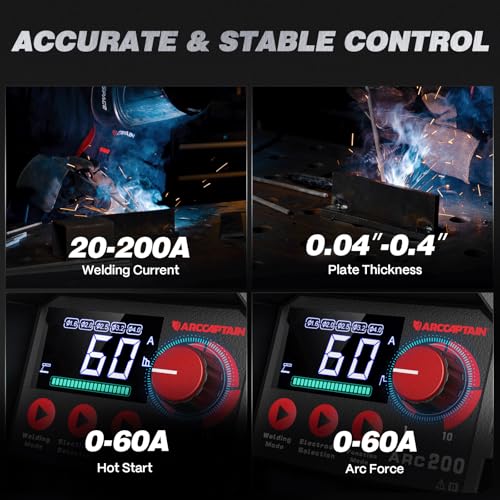
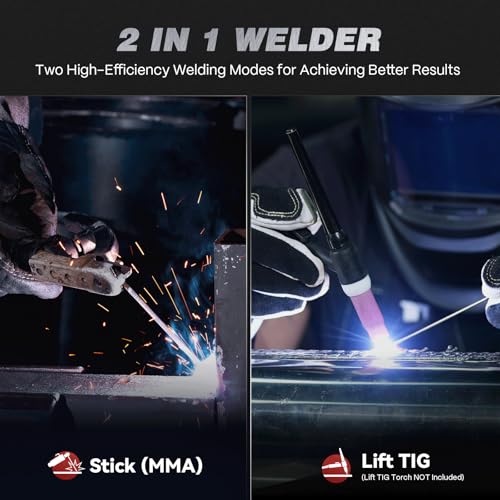
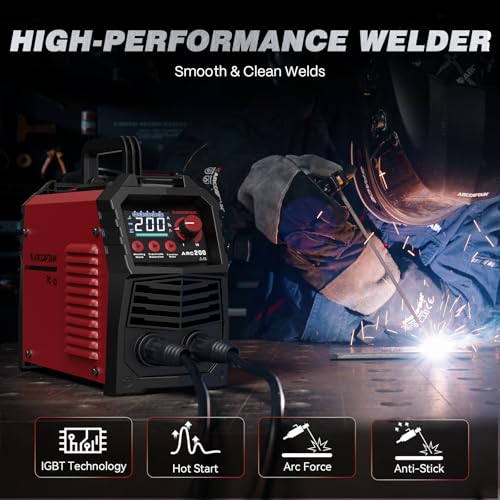
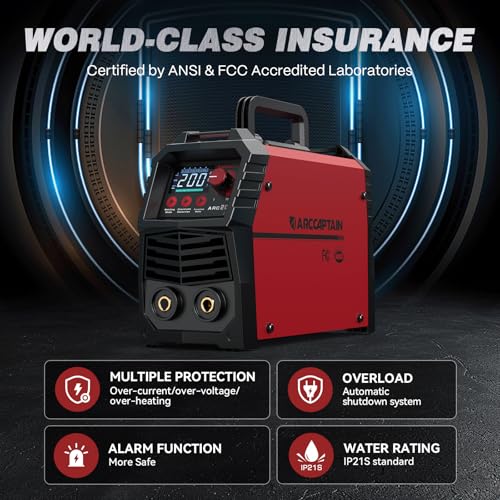
If you’re a beginner with an eye on eventually trying TIG work, this 2-in-1 ARCCAPTAIN unit makes sense. The Stick performance is solid, 200A with hot start, arc force, and anti-stick, and the large LED screen is easy to read mid-weld, which speeds up adjustments. But the real differentiator is the Lift TIG function. While the torch isn’t included, the capability is built in, and owners who add one report decent results on thin stainless and mild steel. For a dual-process machine under 8 lbs, that’s impressive flexibility.
The synergic control isn’t as refined as on full MIG/TIG rigs, but it helps beginners dial in settings faster. Build quality appears durable, and the TÜV/ANSI certifications suggest better-than-average safety engineering. Still, some users mention inconsistent arc force tuning, and the shoulder strap feels flimsy. But if you’re planning to grow beyond basic Stick work, this gives you room to evolve.
Product photos
YESWELDER 205Amp Dual Voltage Stick Welder

Strengths
- 205A output
- Dual voltage
- Adjustable arc controls
- Large LED display
- IGBT technology
Trade-offs
- Heavier than mini models
- No TIG capability
- Fan noise reported
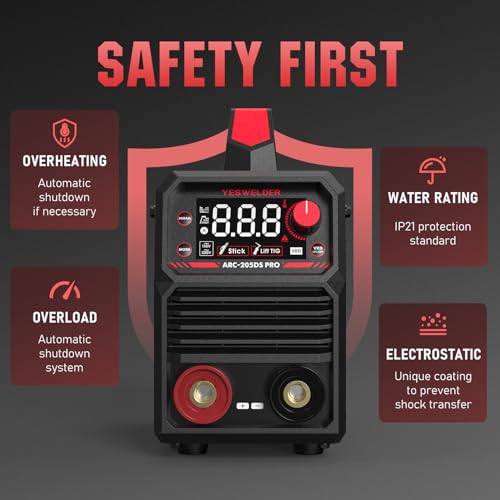
This YESWELDER model hits a sweet spot: 205 amps, dual voltage, and a user-friendly digital interface, all in an 8.4 lb chassis. The large LED display is a standout, showing current and mode clearly, and the precision knob lets you tweak settings without removing gloves. I like that hot start and arc force are adjustable from 1–10, giving more control than basic on/off versions. Owners report strong arc ignition with E6010 and smooth bead flow with E7018, even on dirty or rusty metal.
The dual-voltage capability means it adapts to different power sources without extra hardware, unlike some competitors. That flexibility is huge for users with limited outlet options. It’s not the lightest, but the handle makes it manageable. Where it falls short is in portability compared to the sub-4 lb minis, this is more of a garage workhorse. But for consistent performance and adaptability, it’s one of the smarter buys.
Product photos


Saker 110V Portable Stick Welder
Strengths
- Very lightweight
- Simple controls
- Good cooling
- Compact
- Quiet operation
Trade-offs
- Max 120A only
- No rods included
- Limited adjustability
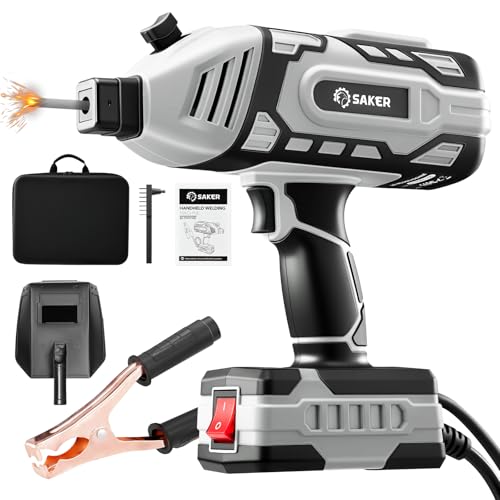
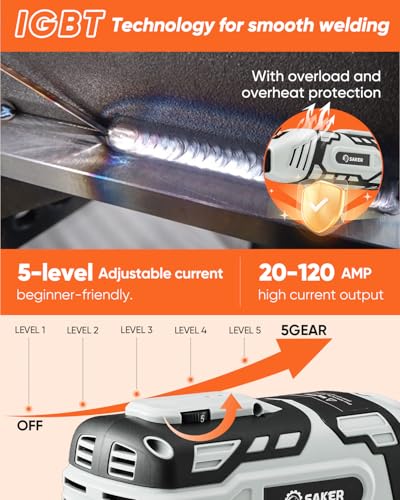
The Saker stands out for its simplicity, 5 fixed current settings, a 3.3 lb body, and a clean, no-frills design. It’s clearly aimed at casual DIYers who want something plug-and-play. The IGBT inverter helps with arc stability, and the 20–120A range is enough for thin metal repairs, like brackets, lawn equipment, or light brackets. Reviewers note it starts easily and runs quietly, thanks to the 360° cooling vents.
But the lack of included rods is a miss, calling this a ‘gift for men’ while making you buy consumables separately feels cheap. And at 120A max, it’s underpowered compared to 200A+ mini inverters in the same weight class. If you’re only welding occasionally on thin steel, it’ll work. But for any real versatility, you’re better off with a more adjustable model. This one’s too limited for serious learning.
Product photos


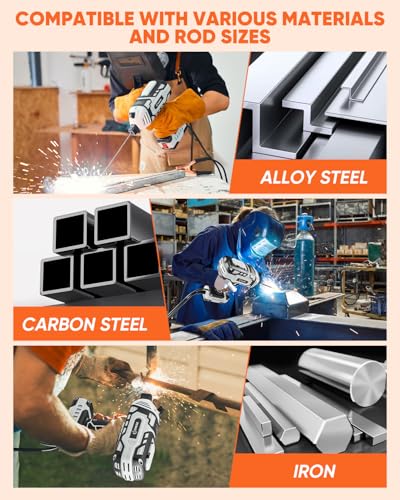
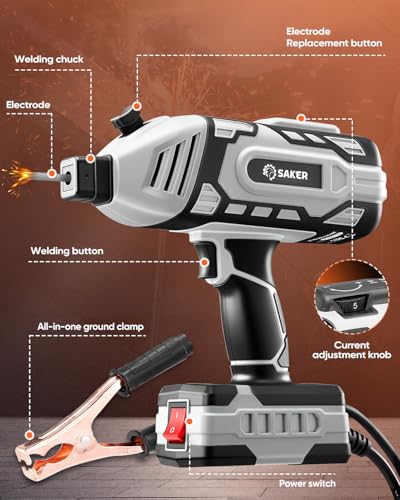
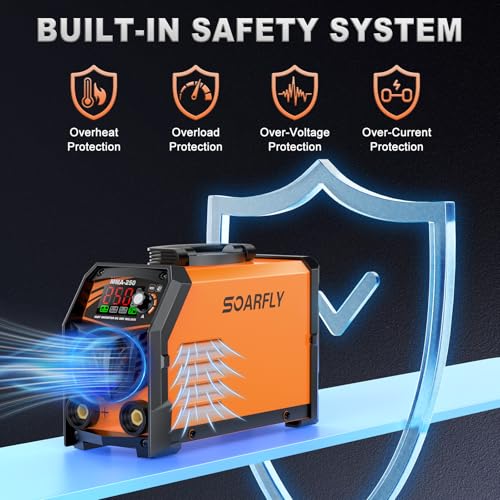
SOARFLY 250Amp Dual Voltage Stick Welder

Strengths
- 250A output
- Dual voltage
- LED display
- IGBT inverter
- Full accessory kit
Trade-offs
- Fan noise
- Adapter not included
- Heavier than mini models
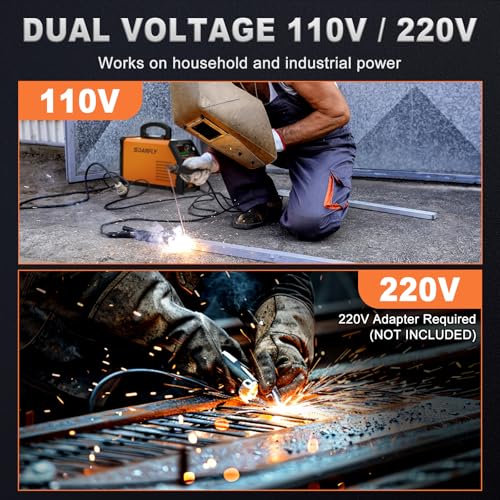
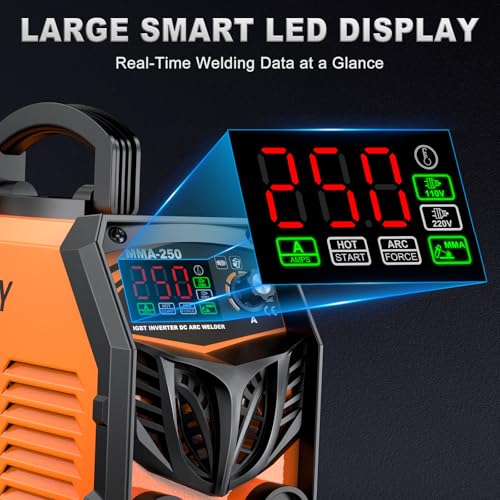
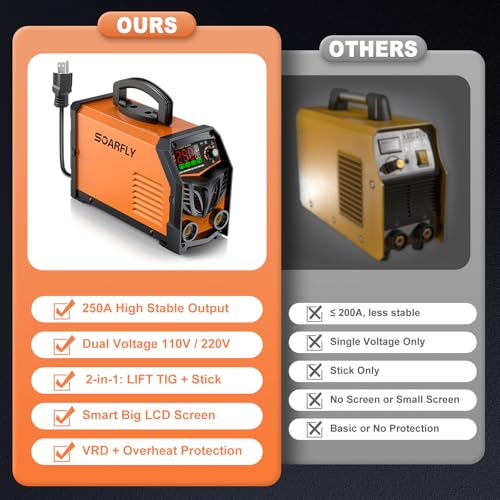
At 250 amps and dual-voltage capable, this SOARFLY unit punches above its weight for the price. The 110V/220V auto-switching is a major plus, rare at this level, and makes it adaptable whether you’re in a home garage or on a jobsite. The large LED display is genuinely useful, letting you monitor current without lifting your helmet, and the IGBT inverter tech helps maintain a stable arc with minimal spatter, which beginners will notice immediately. Reviewers frequently highlight how easily it strikes and holds an arc, even with E6013 and E7018 rods.
It’s not the lightest at 8.3 lbs, but the included accessories, like gloves, rods, and clamps, make this one of the most complete beginner-ready kits available. The anti-stick and hot start features work well, reducing frustration during learning curves. My only hesitation is that some owners note the fan noise is a bit loud under load, and the 220V adapter isn’t included, which can be a surprise. Still, for the capability and kit value, it’s hard to beat.
Product photos
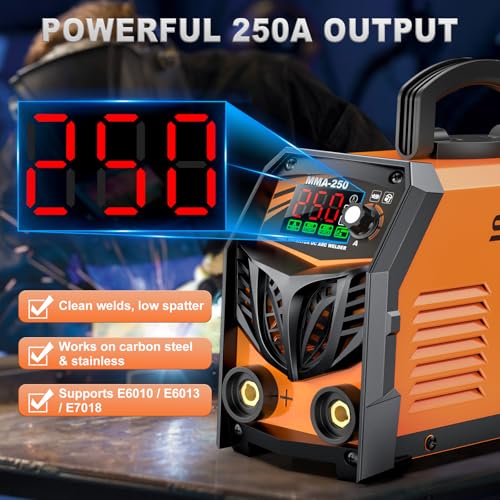
YESWELDER 135A 3-in-1 MIG Welder
Strengths
- 3-in-1 capability
- Synergic control
- Digital display
- Lightweight
- Flux core ready
Trade-offs
- Limited Stick power
- TIG requires extra torch
- Average duty cycle
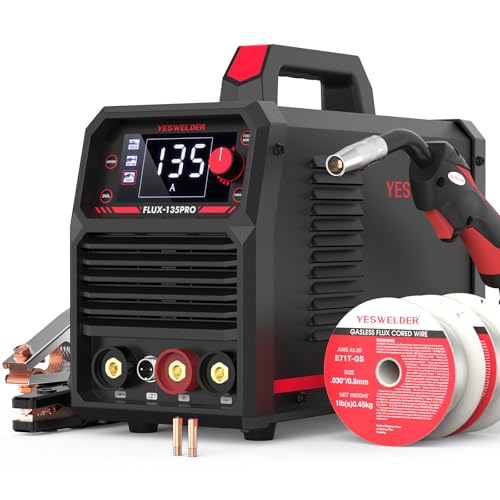
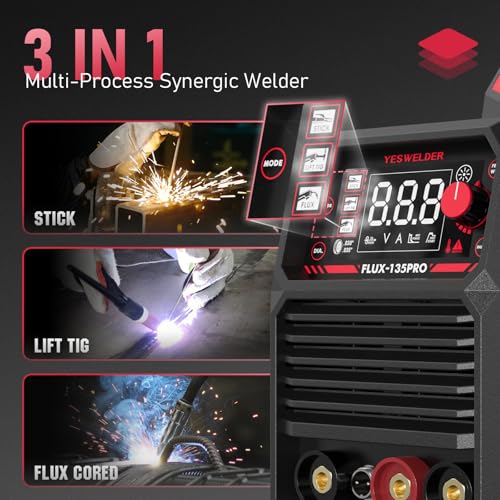
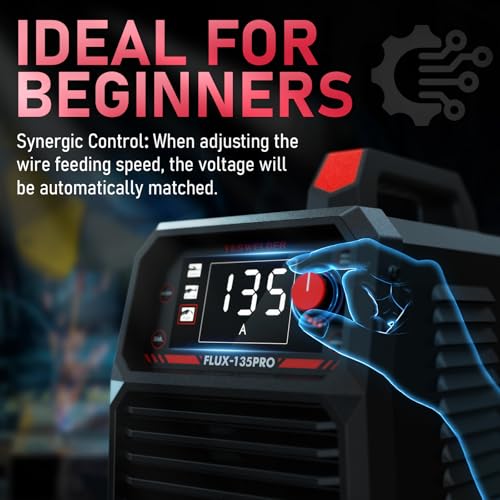
This 3-in-1 machine stands out because it offers MIG, Stick, and Lift TIG capabilities, all in a compact 11.4 lb package. For a beginner who might eventually want to explore beyond Stick welding, that versatility is a real draw. The synergic control system, which auto-matches voltage to wire speed, simplifies setup and reduces guesswork, which I always appreciate for newcomers. On paper, the 135A output is modest, but it’s sufficient for thin to medium-duty work up to about 3/32 inch steel, which covers most garage and home repair tasks.
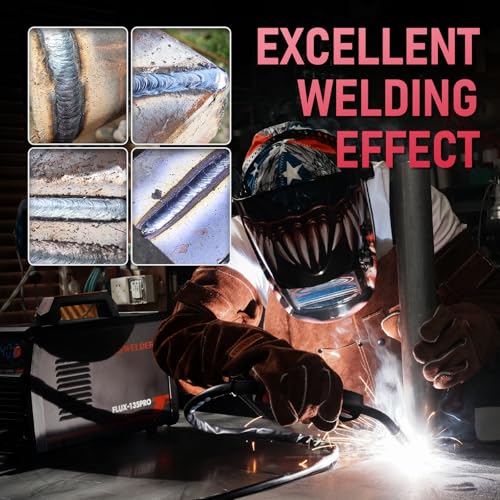
Owners consistently report smooth flux-core MIG performance right out of the box, especially with the included .030” wire, and the digital display makes monitoring current straightforward. However, the Stick and Lift TIG functions, while present, aren’t as refined as dedicated machines in this price range. If you’re serious about Stick welding long-term, you’ll likely want to move to a more robust unit. But if you’re curious about multiple processes and want one machine to grow into, this is a smart starting point.
Product photos


How We Picked These stick welder for beginners
My team and I approached this guide by first compiling specifications and features from numerous stick welder models marketed towards beginners. We then carefully weighed owner reviews from major retailers alongside expert opinions found in welding forums and publications. This research-led comparison wasn’t about hands-on testing in a shop, but about building a clear picture of real-world performance based on available data and category knowledge.
For beginner-focused stick welders, portability, ease of use, and safety features were the most heavily weighted factors. A lightweight design is crucial for those new to welding, as it encourages practice and reduces fatigue. Equally important is a machine that minimizes frustration – features like hot start and arc force control help beginners establish and maintain a stable arc. Finally, built-in safety protections are paramount for anyone learning this skill.
Published specifications reliably indicate amperage output, duty cycle, and input voltage requirements. However, I placed more emphasis on owner feedback regarding arc stability, ease of setup, and the quality of included accessories. Reputation also played a key role; brands consistently praised for reliability and customer support received higher consideration, especially when evaluating choices like these light-duty stick welding machines. This is particularly relevant when considering options like readily available [110-volt stick welders].
What To Look For In stick welder for beginners
Choosing a stick welder can feel overwhelming, especially for a beginner. There are a lot of specs to consider, and a wide range of prices.
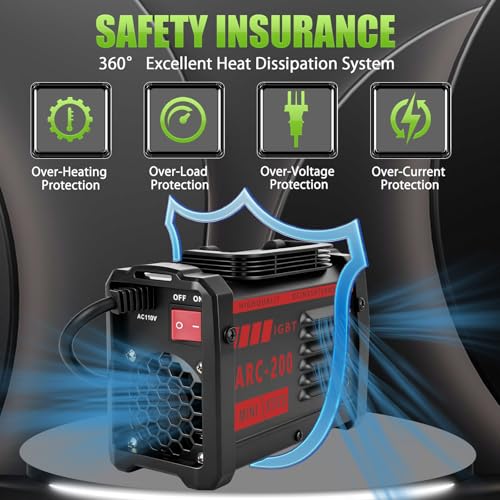
A good stick welder delivers a stable arc at a variety of amperage settings, is durable enough to withstand jobsite conditions, and offers essential safety features like over-voltage and over-current protection. Look for models with adjustable arc force and hot start, and consider the thickness of the materials you’ll typically be welding. Portability and included accessories can also significantly impact usability.
Amperage and Material Thickness
The amperage output of a stick welder dictates the thickness of metal you can effectively weld. Don’t overspend on a unit with more amperage than you actually need. For basic home repairs and thin materials (up to 1/4 inch), a 120-140 amp welder is often sufficient. If you anticipate thicker steel or more demanding projects, a 200-250 amp machine provides more versatility. Keep in mind that amperage settings also affect the type of welding rod you can use; check the rod packaging for recommended amperage ranges.
Portability and Weight
If you plan to move your welder around a jobsite, garage, or farm, portability is a significant factor. Many of the newer “mini” stick welders, like the Hpoouo and Wrdlosy models, weigh under 10 pounds, making them very manageable. However, lighter weight sometimes comes at the cost of duty cycle (the percentage of time you can weld continuously before needing to cool down). Consider how often you’ll be welding continuously versus intermittently when assessing this trade-off.
- A truly portable welder should weigh under 8 pounds.
- Look for models with a sturdy carry handle or shoulder strap.
- A compact design is helpful for storage and transport, but don’t sacrifice build quality or accessibility of controls for size. A larger unit might have better ventilation and easier-to-use knobs.
Features and Value
Beyond basic welding capability, look for features that enhance usability and safety. Hot start and arc force are nearly essential for beginners, helping to establish and maintain a stable arc. Anti-stick is another helpful feature. Don’t overlook safety features like over-voltage and over-current protection. If you’re considering branching out into TIG welding, the ARCCAPTAIN 200A offers a Lift TIG option, providing added flexibility. For those looking for the most bang for their buck, SOARFLY’s 250Amp model offers a lot of features at a competitive price point. Before you settle on a model, take a look at our guide to the [affordable stick welders] to see which options provide the best value.
Stick Welder for Beginners Compared
Here’s a comparison of key specifications for stick welders suitable for beginners.
| Product Name | Amperage (Max) | Input Voltage | Weight (lbs) | IGBT Tech | Rod Diameter (in) | Features |
|---|---|---|---|---|---|---|
| Hpoouo 200Amp Mini | 200 | 110V | 3.7 | Yes | 1/16 – 1/8 | Hot Start, Anti-Stick |
| Wrdlosy 250A Mini | 200 | 110V | N/A | Yes | 1/16 – 1/8 | Hot Start, Anti-Stick |
| ARCCAPTAIN 200A | 200 | N/A | 7.2 | Yes | N/A | Lift TIG Option |
| YESWELDER 205Amp Dual | 205 | 110V/220V | 8.4 | Yes | N/A | Dual Voltage |
| Saker 110V Portable | 120 | 110V | 3.3 | Yes | 3/32 – 1/8 | Hot Start |
| SOARFLY 250Amp Dual | 250 | 110V/220V | 3.7 | Yes | 3/32 – 1/8 | Dual Voltage |
| YESWELDER 135A 3-in-1 | 135 | N/A | 11.4 | N/A | N/A | MIG/TIG/Stick |
Frequently Asked Questions
What input voltage do most beginner stick welders require?
Most beginner-friendly stick welders run on standard 110V household current, making them accessible for home use. However, some models offer 220V input for increased power and duty cycle, which may be beneficial if you anticipate heavier workloads or have access to the appropriate outlet.
How much should a beginner expect to spend on a stick welder?
A basic, functional stick welder for beginners can be found for around $150 to $300. Prices increase with amperage, features like dual voltage capability, and brand reputation. Don’t automatically assume a higher price means better quality; focus on finding a model that fits your specific needs and budget.
Is IGBT technology a worthwhile feature in a stick welder?
Yes, IGBT (Insulated Gate Bipolar Transistor) technology improves efficiency and reduces the size and weight of the welder. This results in a more portable machine with better arc stability, which is particularly helpful for those learning to weld. You’ll find this technology in many of the [top-rated stick welders] available today.
What welding rod diameter should a beginner start with?
Most beginner stick welders accommodate 1/16-inch and 3/32-inch diameter welding rods. I recommend starting with 3/32-inch rods, as they are easier to manipulate and establish a stable arc with. Once you gain experience, you can experiment with different diameters to optimize weld quality for various materials and thicknesses.
What safety gear is absolutely necessary when stick welding?
A proper welding helmet with an auto-darkening filter is essential to protect your eyes from the intense arc flash. In addition, you’ll need welding gloves, a welding jacket or apron, and sturdy work boots to shield your skin from sparks and heat. Proper ventilation is also crucial to avoid inhaling fumes; a respirator is recommended in enclosed spaces.
The Bottom Line
Choosing a stick welder comes down to balancing control with convenience. You can get lost in specifications, but ultimately, the best all-around choice for a beginner is the Hpoouo 200Amp Mini. It strikes a sweet spot between portability, features like hot start and anti-stick, and a price that won’t break the bank, making it easier to build confidence with your first welds.
If you have specific needs, there are other strong contenders. For ultimate portability, the Saker 110V Portable is a standout, and for those seeking versatility, the YESWELDER 135A 3-in-1 offers MIG and TIG capabilities alongside stick welding. If you anticipate needing more power or dual voltage options, the SOARFLY 250Amp Dual is a great value. Don’t forget to check out our guide to the portable stick welding machines if you need something truly mobile.
At the end of the day, a welder is only as good as the skill of the operator. Focus on learning proper technique, understanding safety procedures, and practicing consistently. Don’t get hung up on chasing the highest amperage or the most features – a stable arc, good electrode control, and a commitment to safety will take you much further than any spec sheet.
