7 Best Portable Stick Welders of 2026
This post contains affiliate links. As an Amazon Associate, we earn from qualifying purchases.
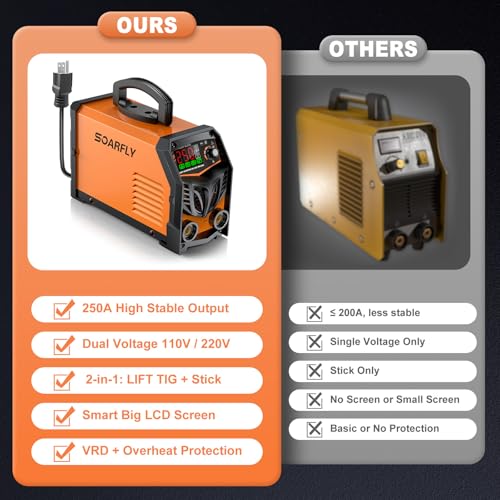
The SOARFLY 250Amp Dual Voltage Stick Welder stands out as the best overall portable stick welder for its strong output, dual-voltage capability, and solid build. For those on a tighter budget, the Hpoouo 200Amp Mini Stick Welder delivers reliable performance at a low weight and price. If you want added versatility, the ARCCAPTAIN 200A offers Stick and Lift TIG modes in a compact package.
Most people shopping for a portable stick welder aren’t just looking for something small, they need real welding power that won’t quit mid-job. Too many compact models sacrifice duty cycle or arc stability for the sake of size, leaving users frustrated with overheating or inconsistent results.
This guide cuts through the noise by focusing on models that balance amperage, duty cycle, weight, and real-world usability. I compared specs, analyzed owner feedback, and prioritized features like IGBT inverter tech and arc control that make a tangible difference when you’re working in the garage, on a job site, or out in the field.
Top 7 Portable Stick Welders in the Market
The Best Portable Stick Welders, Reviewed
SOARFLY 250Amp Dual Voltage Stick Welder

Strengths
- 250A output
- Complete tool kit
- Dual voltage
Trade-offs
- Adapter not included
- Slightly bulkier
- No TIG mode
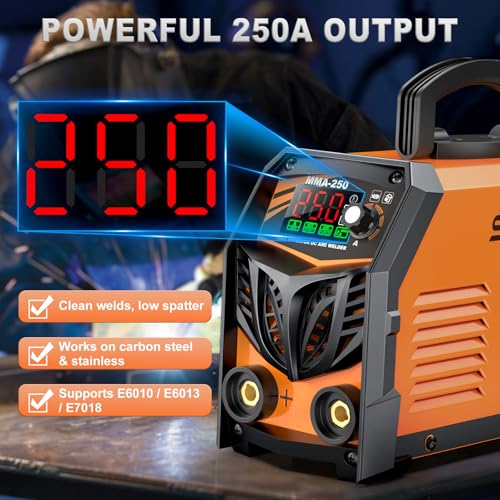
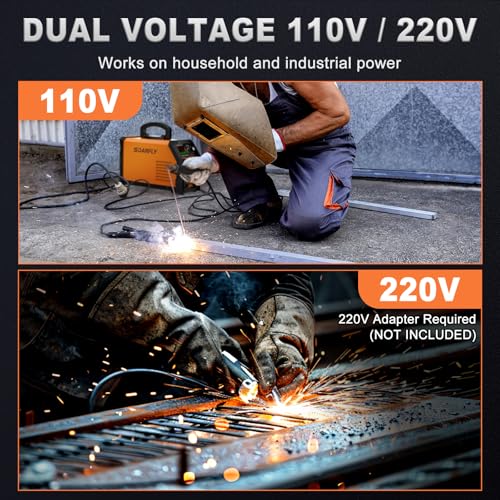
If I had to pick one machine for most users, this would be it. The 250A output gives it real muscle, enough to handle 3.2mm rods confidently, which the lighter 120–135A units can’t. That makes it more versatile for thicker material work like trailer frames or farm equipment. The dual voltage auto-switching is a major plus, letting you move from garage (110V) to jobsite (220V) without rewiring, though you’ll need an adapter for 220V, which isn’t included.
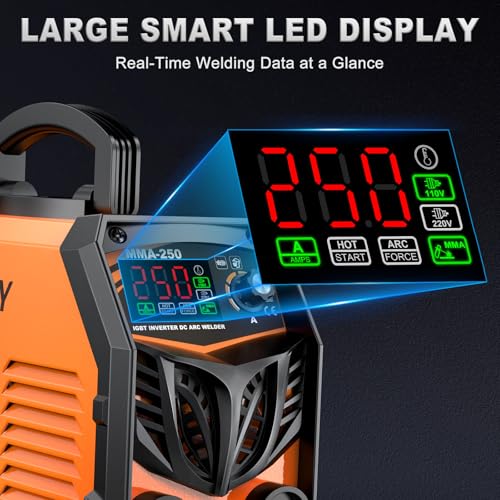
What really seals the deal is the full kit. Having rods, gloves, clamp, and brush included means you can start welding immediately, no extra trips to the store. The LED display is bright and legible, and owners praise its arc stability with 7018 rods, a sign of solid IGBT performance. Compared to others, this strikes the best balance between power, portability, and readiness.
Product photos
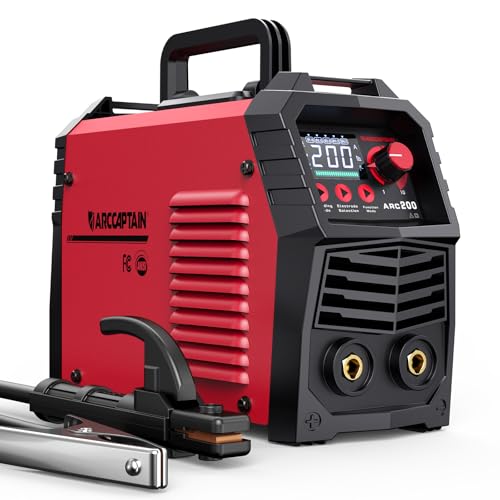
ARCCAPTAIN 200A Stick/Lift TIG Welder
Strengths
- Large LED display
- Synergic control
- 2-in-1 functionality
Trade-offs
- Torch not included
- No rods included
- Slightly heavier than rivals
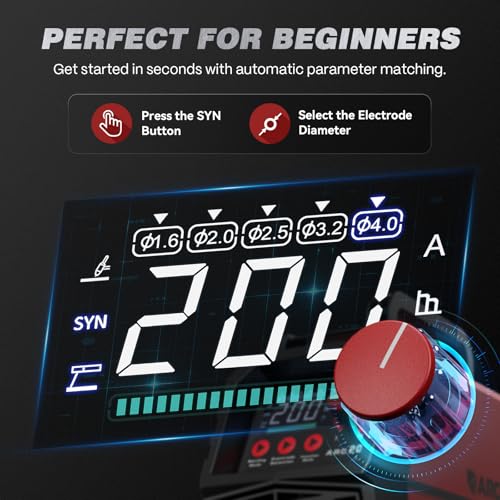
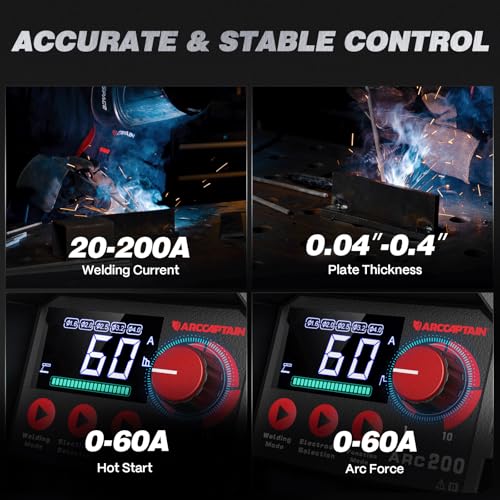
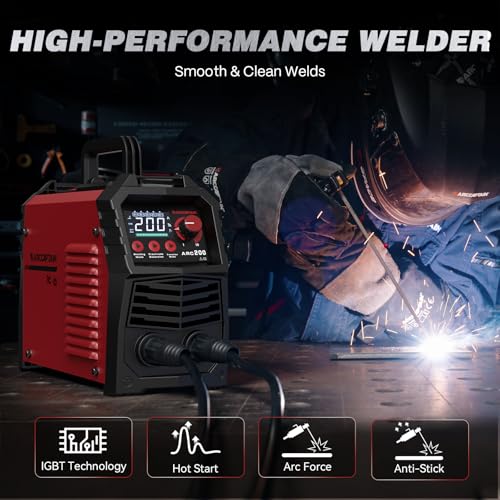
This welder stands out for beginners who want a simple, no-fuss entry into arc welding. The synergic control is a smart touch, just pick your rod size and the machine auto-matches voltage and current, which cuts down on guesswork. That, combined with the large LED display, makes setup intuitive, especially when you’re not ready to memorize settings. Owners consistently report clean starts with 6013 and 7018 rods, and the IGBT inverter tech delivers stable arcs even on thinner materials.
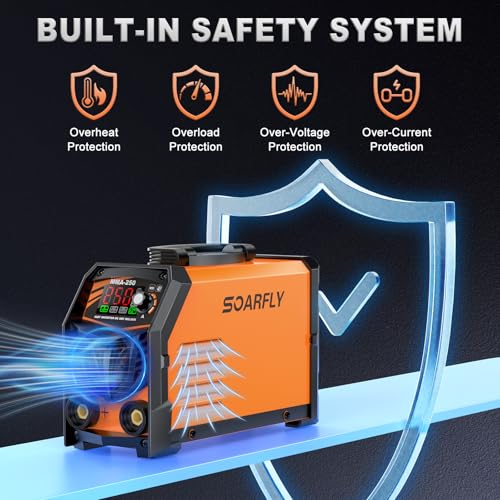
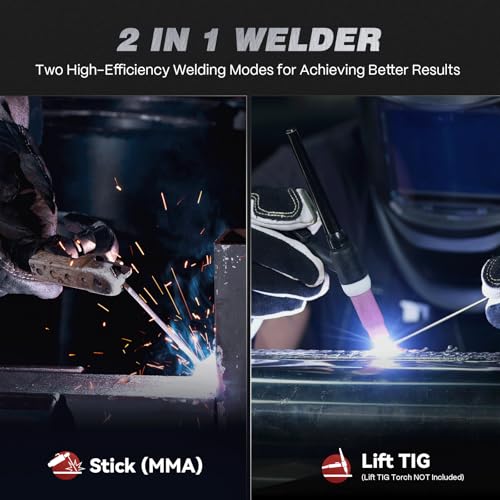
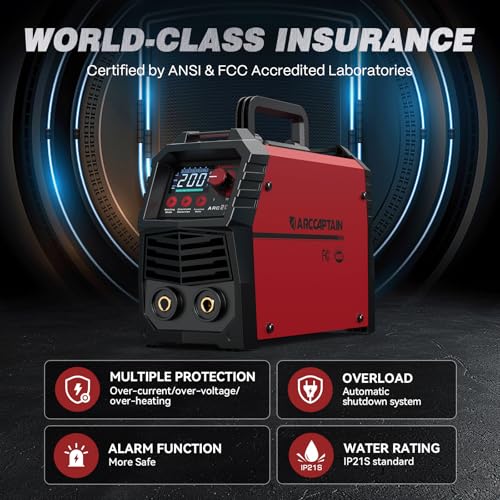
At 7.2 lbs, it’s light enough to move around, though not the lightest in this group. It’s a 2-in-1 unit with Lift TIG capability, but since the torch isn’t included, you’ll need to source that separately, something beginners might overlook. Still, for someone starting out or doing occasional home projects, this is a solid pick with solid safety protections and a clean digital interface that makes learning easier.
Product photos
YESWELDER 205Amp Dual Voltage Stick Welder

Strengths
- 205A output
- Dual voltage
- Adjustable arc settings
Trade-offs
- No TIG mode
- Heavier than mini units
- No rods included
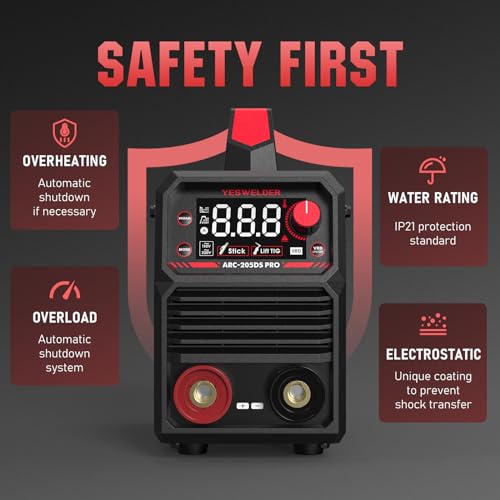
This one delivers where it counts: performance per pound. With 205A output and full dual voltage support, it bridges the gap between lightweight portability and serious capability. The large LED display is a standout, easy to read with gloves on, and the precision knob lets you fine-tune current without helmet removal. Owners consistently highlight its smooth arc with 7018 rods, a tough benchmark for budget inverters.
The adjustable hot start and arc force (1–10 scale) give experienced users more control, while anti-stick keeps beginners from getting frustrated. It’s slightly heavier than some (8.4 lbs), but that’s the trade-off for more power. Compared to the ARCCAPTAIN, it offers similar features but with better amperage and voltage flexibility. For someone who wants a single welder for garage and jobsite, this is the smarter buy.
Product photos


HONE 205Amp Stick Welder with Lift TIG
Strengths
- Excellent value
- VRD safety feature
- Includes 25 rods
Trade-offs
- TIG torch not included
- No dual voltage
- Plastic housing feels light
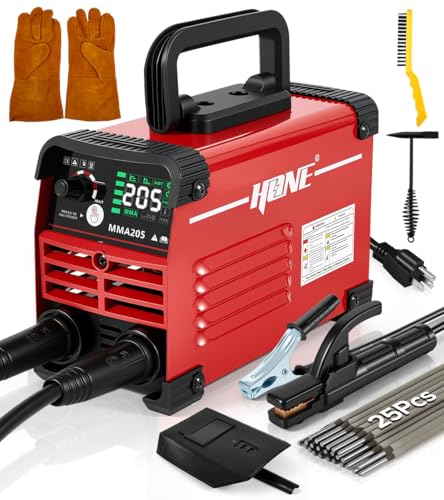
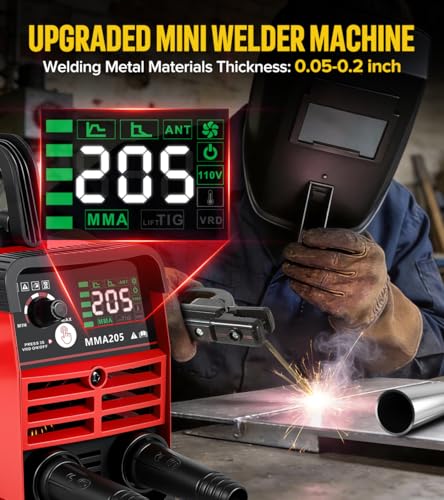
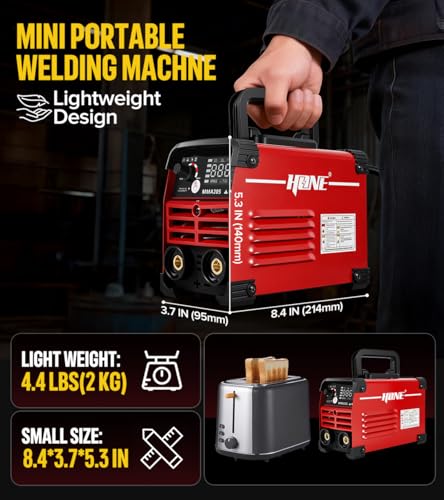
You get a lot for the price here. At just 4.4 lbs and with a 205A output, it packs serious punch for its size. The VRD (voltage reduction device) adds a layer of safety that’s rare at this price, ideal if you’re welding in damp or unpredictable environments. It supports both stick and Lift TIG modes, and owners report smooth transitions between them, though again, no torch is included.
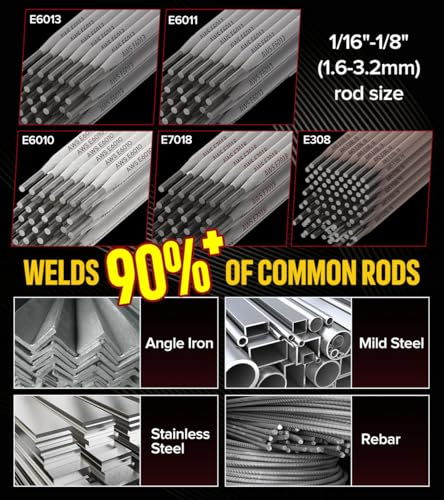
The included 25 rods and full safety kit (gloves, hammer, brush) make it one of the most complete budget packages. It handles E6013 and 7018 rods well on thin to medium steel, though some note minor spatter on longer welds. Still, for someone starting out or doing occasional repairs, the value is hard to beat. I’d pick this over pricier models if budget is the priority.
Product photos
Hpoouo 200Amp Mini Stick Welder
Strengths
- Extremely lightweight
- Compact footprint
- Good accessory bundle
Trade-offs
- Short duty cycle
- No dual voltage
- No display screen
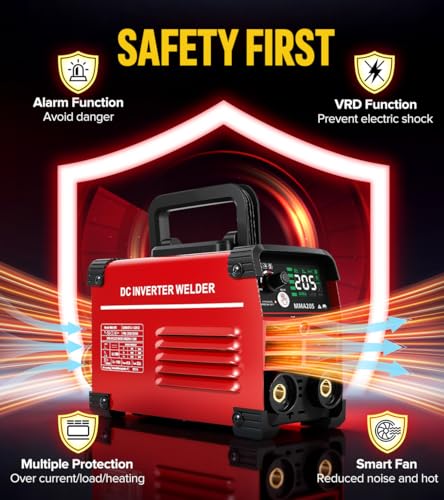
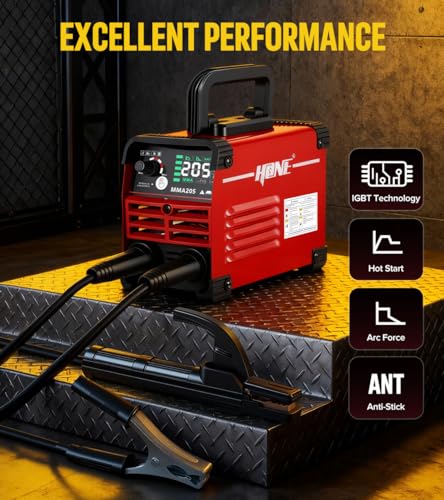
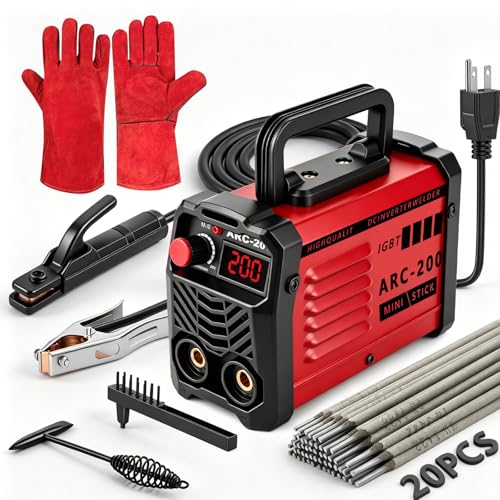
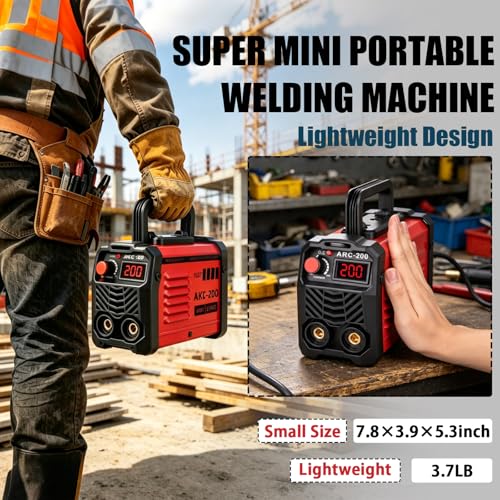
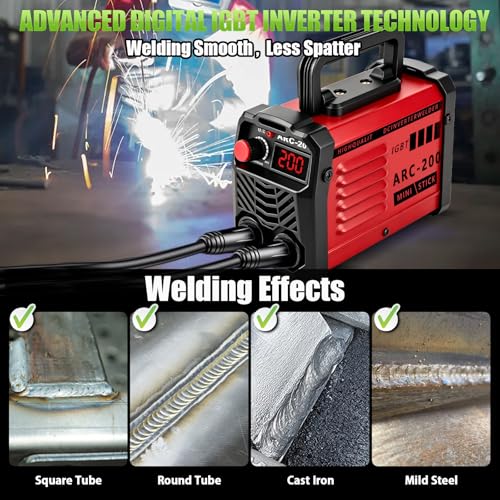
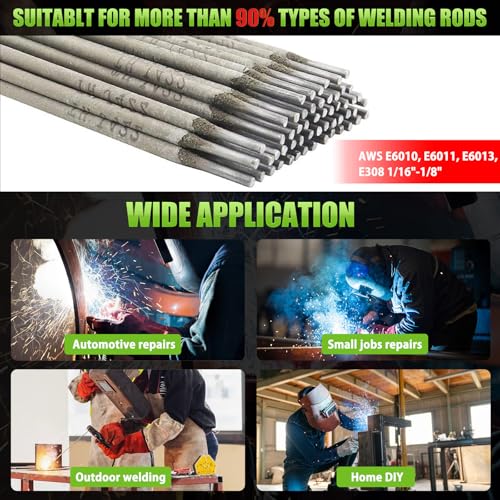
This might be the lightest 200A welder you’ll find, 3.7 lbs and small enough to fit in a backpack. For welders who move between job sites or work in tight spaces, that’s a standout. The specs suggest solid performance on rods up to 1/8″, and owner feedback confirms decent arc stability with E6013 and E6010, though it struggles slightly with 7018 on thicker joints. The microsecond-level current control from the IGBT system helps, but the duty cycle is shorter than heavier units.
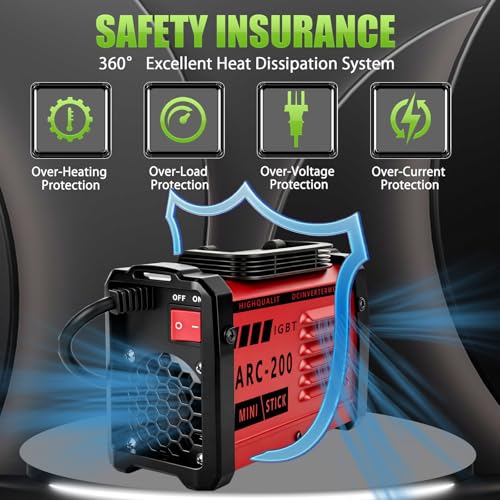
What’s nice is the included accessories, 20 rods, gloves, hammers, so it’s ready to go. The hot start and anti-stick work well, and the build feels rugged for its size. But like others in this class, it’s not for all-day use. If you prioritize lightweight portability above all, this is a strong contender.
Product photos
Saker 120A Portable Stick Welder

Strengths
- Ultra-lightweight
- Compact size
- Easy arc start
Trade-offs
- Low amperage limit
- No dual voltage
- Short duty cycle
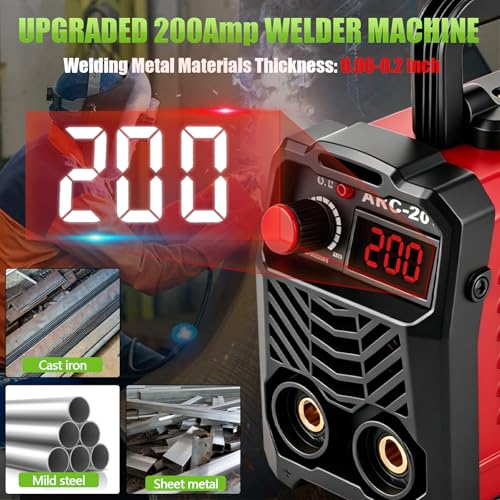
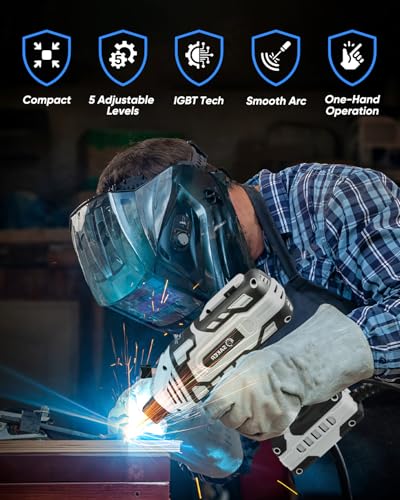
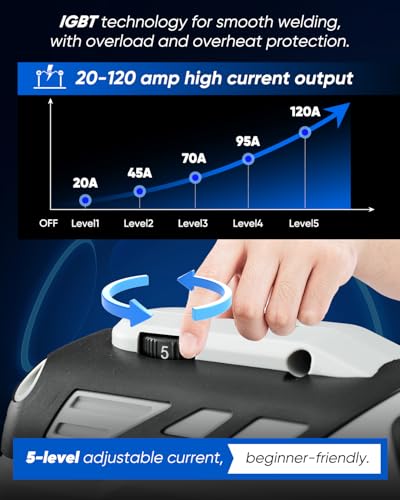
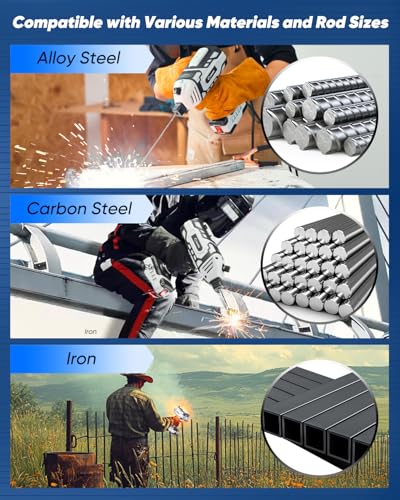
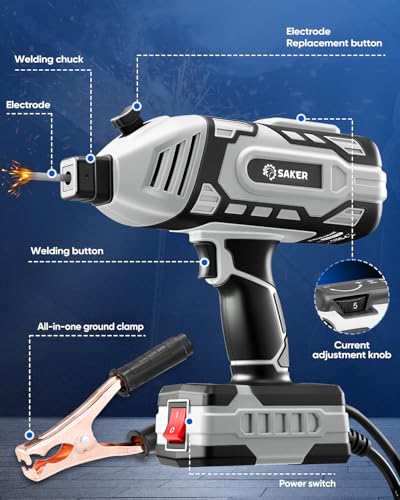
This is the lightest and most compact unit here, only 3.3 lbs and barely larger than a hardcover book. For pure portability, it’s hard to beat. It’s clearly aimed at users doing light repairs: fence fixes, thin metal brackets, or automotive touch-ups. The 20–120A range limits it to 3/32″ rods, so don’t expect to weld anything over 1/8″ thick. But within that range, reviewers note surprisingly stable arcs, thanks to the IGBT inverter and hot start function.
It’s not a 2-in-1 and lacks digital displays or dual voltage, which keeps it simple and affordable. The handheld design is convenient, but some users report the duty cycle heats up quickly during extended use. That’s expected at this size, but it means this isn’t a workhorse. If your needs are minimal and portability is king, this makes sense. Otherwise, look elsewhere.
Product photos

110V 2-in-1 Stick/Lift TIG Welder
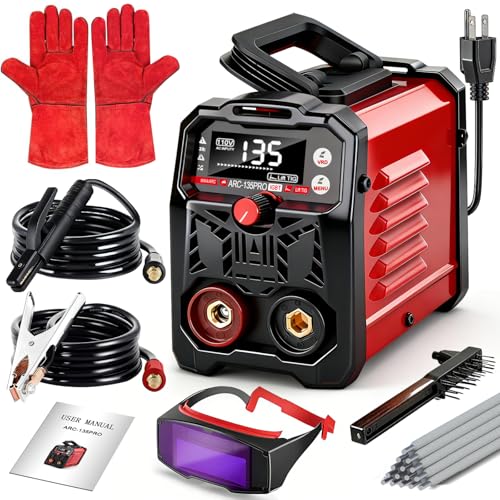
Strengths
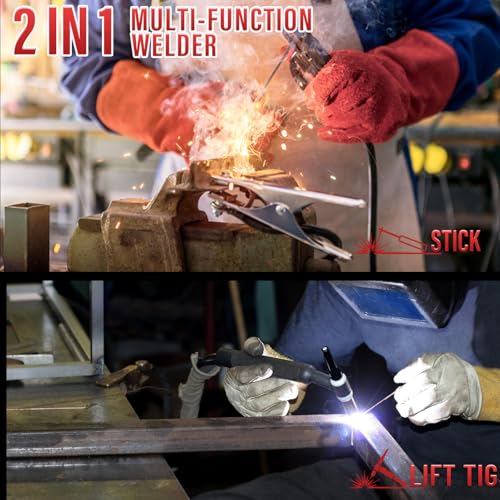
- True 2-in-1 capability
- IP21 dust/moisture protection
- Lightweight aluminum body
Trade-offs
- Limited to 135A
- Torch sold separately
- No dual voltage
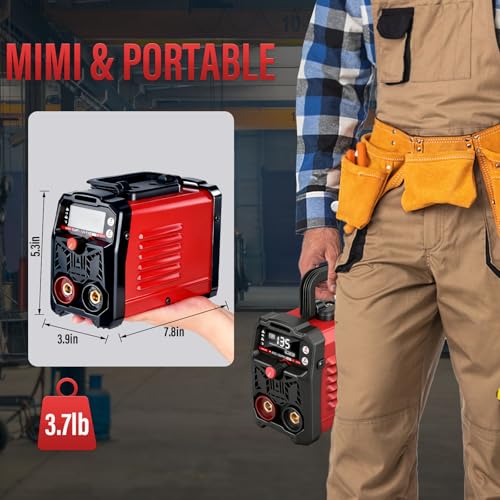
This unit is built for one thing: maximizing versatility in a tiny package. At only 3.7 lbs and with a sleek aluminum body, it’s among the most portable 2-in-1 welders here. The Lift TIG mode is a real advantage, if you’re willing to buy a torch separately, you gain the ability to weld stainless and thin metals cleanly, which stick-only units can’t match. The 20–135A range keeps it focused on light to medium work, but the 62V no-load voltage helps with arc striking, even in tough conditions.
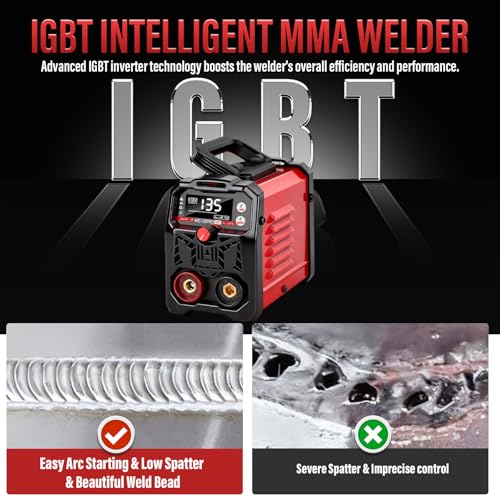
Owners appreciate the intelligent welding algorithm that manages hot start, arc force, and anti-stick smoothly. The IP21 rating adds durability against dust and moisture, useful for outdoor or garage use. While it can’t handle heavy rods, it’s the best pick if you want real dual-function flexibility in a pocket-sized unit.
Product photos

How We Picked These portable stick welders
I approached this guide by first compiling a list of commonly available portable stick welders, then comparing their published specifications and features side-by-side. I weighed these technical details against owner reviews from multiple sources – including major retailers and welding forums – as well as expert opinions from sites specializing in fabrication and repair. Ultimately, I ranked these units based on how well they met the needs of DIYers and professionals seeking a balance of power, portability, and ease of use.
For portable stick welders, amperage output, duty cycle, and overall weight are critical. A higher amperage allows for welding thicker materials, while a reasonable duty cycle prevents overheating during extended projects. I prioritized lighter-weight designs because the key benefit of a portable welder is, naturally, its ease of transport – after all, you’ll likely be using it in various locations. We found that the top portable welding units consistently excelled in these areas.
Specifications reliably tell you about maximum amperage and input voltage requirements. However, real-world performance – how smoothly the arc starts, how minimal the spatter is, and how easily the unit handles voltage fluctuations – is best gleaned from owner feedback and reputable reviews. Those experiences consistently highlighted the importance of IGBT inverter technology and features like hot start and arc force for a user-friendly experience. It’s why we heavily considered those features when assessing each model, separating those that deliver a truly enjoyable welding process from those that might leave you frustrated.
What To Look For In portable stick welders
Finding the right portable stick welder requires a bit more thought than just grabbing the cheapest option. A good unit balances power, portability, and usability – and those factors can vary significantly depending on your needs.
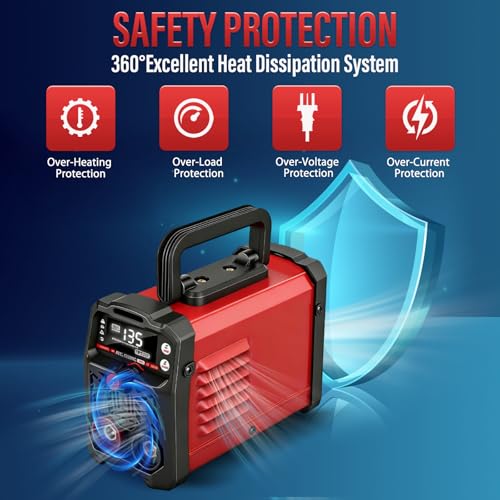
A quality portable stick welder delivers consistent arc performance, operates efficiently with standard power sources, and includes essential safety features like overheat protection. Look for models utilizing IGBT inverter technology for a stable arc, adjustable settings for different materials and thicknesses, and a weight that suits your intended application – whether it’s quick repairs around the house or more demanding jobsite work. Consider the included accessories and the range of compatible welding rods.
Power and Duty Cycle
Don’t assume “more amps” automatically means “better.” While 200 amps might sound impressive, a lower-amp machine with a higher duty cycle could be more practical for many homeowners. Duty cycle, expressed as a percentage, indicates how long you can weld continuously at a given amperage before the machine needs to cool down. If you’re only making short welds, a lower duty cycle won’t be a problem. But if you plan on tackling larger projects, look for a model with a higher duty cycle, even if its peak amperage is slightly lower. Many of the units I see people struggle with are powerful enough, but overheat before they can finish a project.
Inverter Technology and Arc Control
IGBT (Insulated Gate Bipolar Transistor) inverter technology is now standard in most portable stick welders, and for good reason. It’s more efficient than older designs, resulting in a lighter, more compact machine that delivers a more stable arc. Beyond the technology itself, consider the arc control features. Hot Start, Arc Force, and Anti-Stick aren’t just marketing buzzwords; they genuinely improve usability.
Here’s how those features break down:
- Hot Start: Briefly boosts the current during arc ignition. (Helpful for difficult-to-start electrodes.)
- Arc Force: Dynamically adjusts the current to maintain a stable arc length. (Prevents the arc from extinguishing when the electrode gets too close to the metal.)
- Anti-Stick: Reduces the current when the electrode sticks, making it easier to remove without damaging the machine or the workpiece. (A lifesaver for beginners.)
These features work together to make welding easier and create cleaner, more consistent welds. If you are looking at the top stick welding machines, be sure to check for these.
Portability and Accessories
A “portable” welder isn’t truly portable if it weighs 30 pounds and lacks a comfortable handle. Consider the overall weight and dimensions, especially if you’ll be carrying it up ladders or working in tight spaces. A weight under 10 pounds is ideal for most DIY applications. Don’t underestimate the value of a complete accessory kit. Many welders come with everything you need to get started – electrode holder, ground clamp, welding rods, brush, and even gloves and a face shield. While you can always buy these separately, a bundled kit offers convenience and cost savings. I often recommend looking at the best-performing stick welders to see what’s included in the box.
A lightweight stick welder (under 8 pounds) is easier to maneuver and transport, but always prioritize build quality and safety features over minimizing weight at the expense of performance.
Ultimately, the best portable stick welder depends on your skill level, the types of projects you’ll be tackling, and your budget. If you’re mainly doing light-duty repairs around the house, a smaller, more affordable unit will likely suffice. For more demanding work, or if you’re a serious hobbyist, investing in a more powerful and feature-rich model is a good idea. Looking at recommended stick welders is a great way to narrow down your choices.
Portable Stick Welders Compared
Here’s a comparison of key specifications for various portable stick welders to help you find the best fit for your needs.
| Product Title | Amperage | Voltage (Input) | IGBT Tech | Weight (lbs) | Modes | Accessories Included |
|---|---|---|---|---|---|---|
| SOARFLY 250Amp Dual Voltage Stick Welder | 250 | 110V/220V | Yes | 7.7 | Stick | Rods, Holder, Clamp, Gloves |
| ARCCAPTAIN 200A Stick/Lift TIG Welder | 200 | 110V | Yes | 7.2 | Stick, TIG | N/A |
| YESWELDER 205Amp Dual Voltage Stick Welder | 205 | 110V/220V | Yes | 8.4 | Stick | Rods, Holder, Clamp |
| HONE 205Amp Stick Welder with Lift TIG | 205 | 110V | Yes | 4.4 | Stick, TIG | Rods, Brush, Gloves |
| Hpoouo 200Amp Mini Stick Welder | 200 | 110V | Yes | 3.7 | Stick | Rods, Chip Hammer, Gloves |
| Saker 120A Portable Stick Welder | 120 | 110V | Yes | 3.3 | Stick | N/A |
| 110V 2-in-1 Stick/Lift TIG Welder | 135 | 110V | Yes | 3.7 | Stick, TIG | Rods, Goggles, Gloves |
Frequently Asked Questions
What amperage is sufficient for most home repairs?
Around 120 to 140 amps is generally enough for most common household repairs and light fabrication work. While higher amperage machines exist, they aren’t always necessary and can add unnecessary weight and cost for simpler tasks.
Do I need a dedicated 220V outlet to run a portable stick welder?
Not always. Many portable stick welders are dual-voltage and can operate on standard 110V household current, though they may have reduced amperage output when plugged into a standard outlet. Check the welder’s specifications to confirm its input voltage requirements before purchasing.
How important is the duty cycle for a beginner?
A higher duty cycle is beneficial regardless of skill level, as it allows for longer continuous welding without overheating. For beginners, it’s especially helpful because learning to weld often involves pauses and restarts, and a longer duty cycle minimizes downtime.
What’s the difference between IGBT and traditional inverter technology?
IGBT (Insulated Gate Bipolar Transistor) inverter technology is more efficient and results in a lighter, more compact welder with a more stable arc compared to older designs. This leads to better weld quality and easier operation, especially for those newer to stick welding.
Are the included accessories usually sufficient, or should I plan to buy more?
The included accessories are often a good starting point, but upgrading certain items can improve your experience. Investing in higher-quality electrode holders and ground clamps, as well as a good auto-darkening welding helmet, can significantly enhance comfort and safety, particularly if you plan on doing a lot of welding. Finding top DC stick welders often means you’ll get a better accessory kit to begin with.
The Bottom Line
Choosing a portable stick welder often comes down to balancing how much control you want with how much fuss you’re willing to deal with. For most users, the SOARFLY 250Amp Dual Voltage Stick Welder strikes that balance best; it offers ample power, a solid duty cycle, and a reasonable weight, all at a competitive price. It’s a machine that won’t leave you wanting for more capability on typical home or farm projects.
If you’re specifically on a tighter budget or need something ultra-compact, the Saker 120A Portable Stick Welder is an excellent choice. For those who want versatility and the ability to tackle both stick and TIG welding, the ARCCAPTAIN 200A Stick/Lift TIG Welder delivers a lot of functionality in a portable package. And if you are looking for the best 110-volt stick welders, these are all excellent options.
Ultimately, specs like amperage and duty cycle are important, but they’re less critical than a stable arc, user-friendly controls, and a machine that feels well-built. Don’t get hung up on chasing the highest numbers; focus on finding a welder that fits your needs and allows you to create consistent, quality welds.
