
8 Best Stick Welding Gloves of 2026
This post contains affiliate links. As an Amazon Associate, we earn from qualifying purchases.
The Lincoln Electric Traditional MIG/Stick Gloves are the best overall for stick welding, combining trusted durability and solid heat protection. For a budget-friendly option that still performs well, the Caiman Wasabi Green split deerskin gloves stand out. If you need maximum forearm coverage, the 16-inch TICONN heat-resistant leather gloves offer excellent reach and a high 1000°F rating.
Stick welding throws off intense heat, sparks, and spatter, and flimsy gloves won’t last five minutes. You need protection that holds up without sacrificing the ability to grip your rod holder or adjust settings. Too many gloves either overheat your hands or feel like oven mitts.
This guide cuts through the noise by focusing on real-world performance, balancing material quality, protection level, and user feedback. I looked at heat ratings, leather type, stitching, and cuff length across top models, using specs and owner experiences to find the ones that deliver where it matters.
Top 8 Stick Welding Gloves in the Market
The Best Stick Welding Gloves, Reviewed
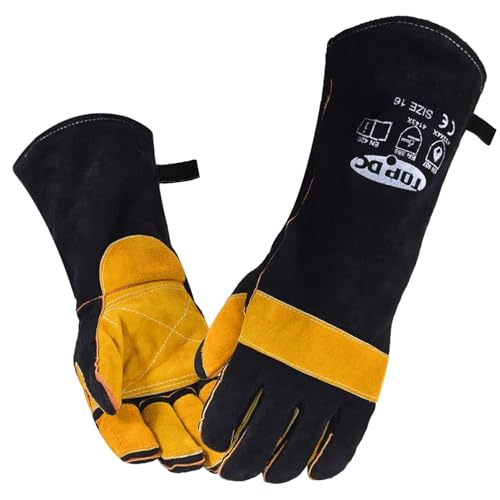
TOPDC 16 Inch Fireproof Welding Gloves
Strengths
- 16-inch length
- Double leather stitching
- Cotton lining
- Kevlar thread
- Multi-use
Trade-offs
- Sleeve can bunch
- Not for tight spaces
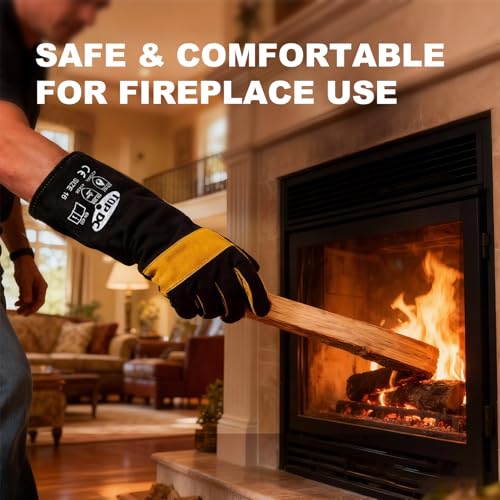
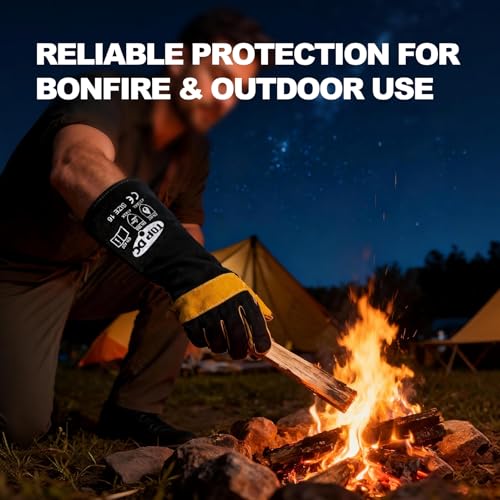
At 16 inches with a 7.5-inch sleeve, this glove is built for coverage, and it shows. The double leather stitching and 1.2mm cowhide make it tough, but it’s the cotton lining and breathability that owners consistently praise. For a glove this long, it manages to stay comfortable over hours of use, which is rare.
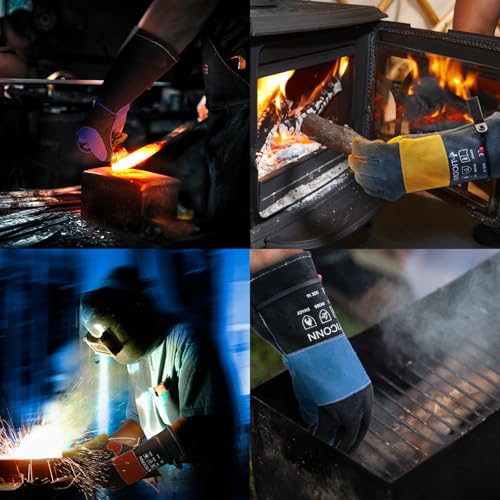
The 932°F heat rating is solid, though not the highest here. What pushes this toward ‘Best Overall’ is its versatility. People use these not just for welding but for grills, fire pits, and even animal handling, a testament to their rugged design. The Kevlar stitching holds up, and the price-to-performance ratio is hard to ignore. I’d recommend this as a first glove for most DIYers.
Product photos



Lincoln Electric Traditional MIG/Stick Gloves
Strengths
- Proven durability
- Kevlar stitching
- Reinforced stress points
- Cotton liner
- Straight thumb
Trade-offs
- Stiff out of the box
- Minimal insulation
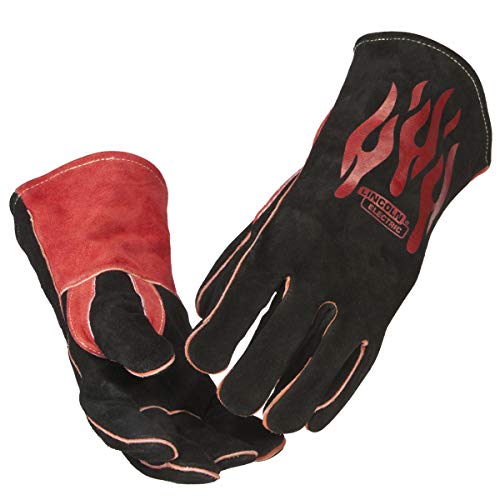
This is the glove I see most often in pro shops and mobile repair rigs, not flashy, but built like a tank. The 14-inch high-grade leather and cotton liner aren’t cutting-edge, but they’re proven. The straight thumb design is old-school, but it delivers fingertip sensitivity that some of the pre-curved models struggle to match.
Owners consistently report these last through months of daily use, which is rare. The Kevlar stitching and leather reinforcements at stress points make it clear this was designed for real-world abuse. It’s not the warmest or most flexible, but if you’re working long shifts or on job sites where gear gets beat up, this is the benchmark. My pick over flashier gloves when reliability is essential.
Product photos



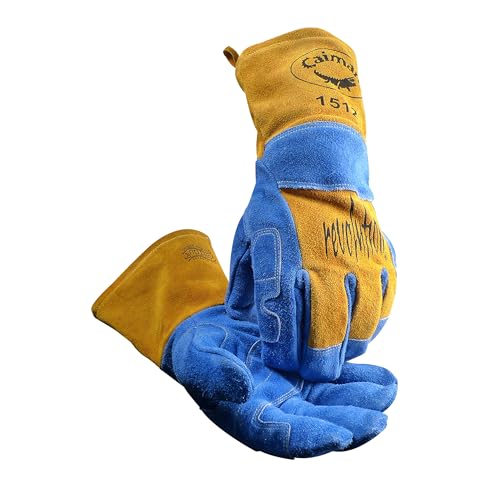
Caiman Premium Split Cowhide Welding Gloves
Strengths
- Wool lining
- ANSI Level 3 heat rating
- Kontour fit
- Kevlar stitching
- Durable cowhide
Trade-offs
- Stiff initially
- Warm in summer
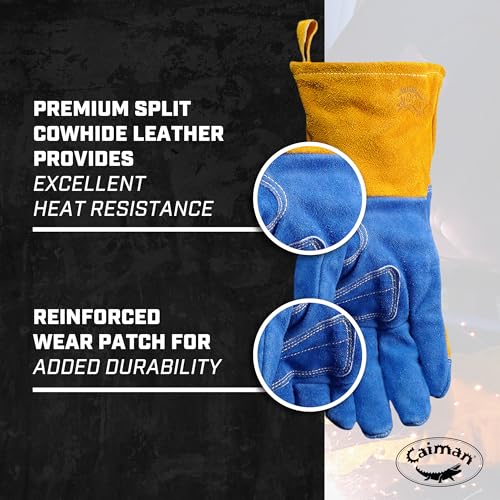
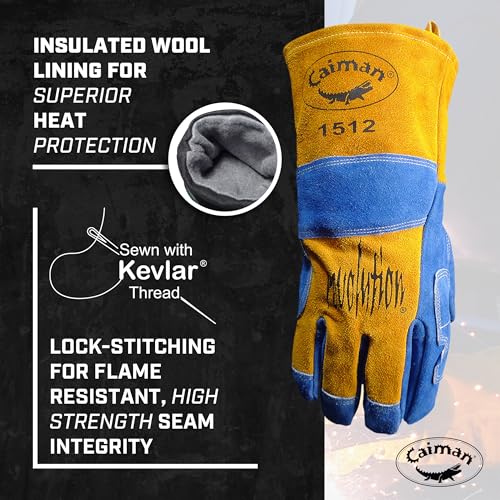
Split cowhide isn’t glamorous, but it’s one of the most practical leathers for welding, and Caiman uses it well here. The wool lining is the real story: wool is the best natural insulator, and in cold shops or outdoor welding, that makes a noticeable difference. The ANSI Contact Heat Level 3 certification (392°F) confirms this is a serious heat barrier, not just marketing.
The Kontour design brings ergonomic fit to a heavier glove, which is rare. Most insulated gloves sacrifice dexterity, but owners report this one maintains decent control. It’s not as soft as the deerskin or goat grain models, but for users in harsh conditions where heat is the top concern, this is the smarter buy. I’d take this over lighter gloves when working near furnaces or in winter.
Product photos


Caiman Premium Goat Grain Welding Gloves

Strengths
- Wool lining
- Seamless thumb
- Kontour fit
- Kevlar thread
- Comfortable warmth
Trade-offs
- Limited forearm coverage
- Not for high-spatter environments
The Kontour design shows up again here, but with goat grain leather instead of deerskin, a smart shift toward durability without sacrificing much in feel. Owners repeatedly highlight the wool lining for warmth, but what really sets this glove apart is the seamless Kontour thumb. That detail eliminates a common hotspot area, and in a category where thumb wear kills gloves fast, that’s meaningful.
I’ve found goat grain holds up better than deerskin under daily use, and the Kevlar stitching ensures seams won’t fail prematurely. It’s not the most heat-resistant option on the list, but for someone doing frequent MIG or light stick work where grip and comfort are key, this is one of the most ergonomic choices. It’s my recommendation over the deerskin if you weld more than a few times a month.
Product photos


RAPICCA 16 Inch Fireproof Leather Gloves
Strengths
- 16-inch protection
- Double leather padding
- Aluminum foil layer
- Kevlar stitching
- Good grip
Trade-offs
- Runs hot
- Sleeve can trap debris
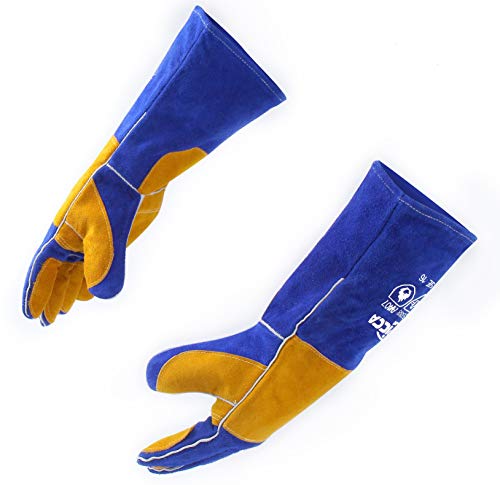
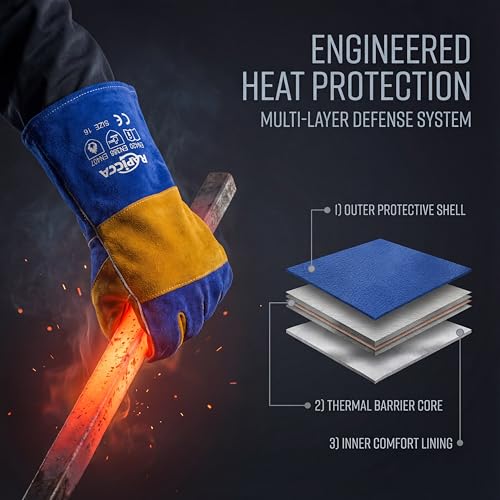
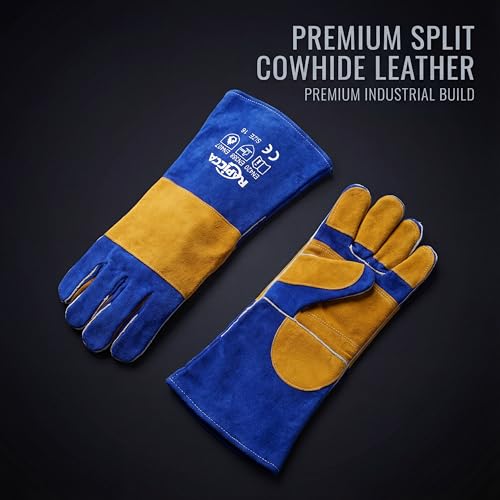
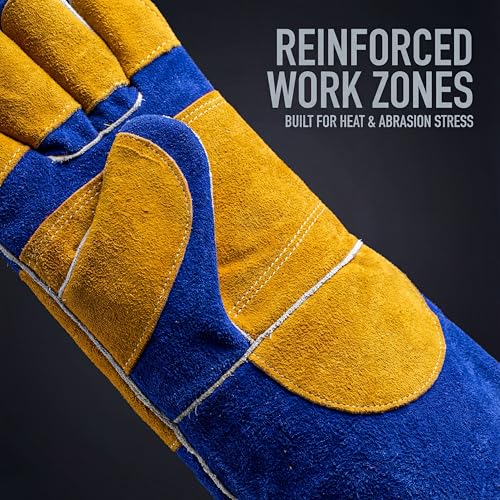
RAPICCA leans hard into forearm protection, and rightly so. The 16-inch length with 7.5-inch sleeve is identical to TOPDC and TICONN, but the double leather reinforcement on fingers and palms gives it an edge in durability. The aluminum foil layer and flame-retardant cotton liner help it hit 932°F resistance, matching several competitors.
Owners note the grip stays strong even with spatter buildup, and the leather-reinforced padding maintains fingertip sensitivity better than expected for such a heavy glove. It’s not the most breathable, but for grinding, stick welding, or working overhead, the coverage is unmatched. If your arms usually catch sparks, this is the fix.
Product photos
TICONN 16 Inch Heat-Resistant Leather Gloves

Strengths
- 1000°F resistance
- Aluminum foil layer
- Adjustable cuff
- Kevlar stitching
- Long sleeve
Trade-offs
- Bulky design
- Stiff in cold
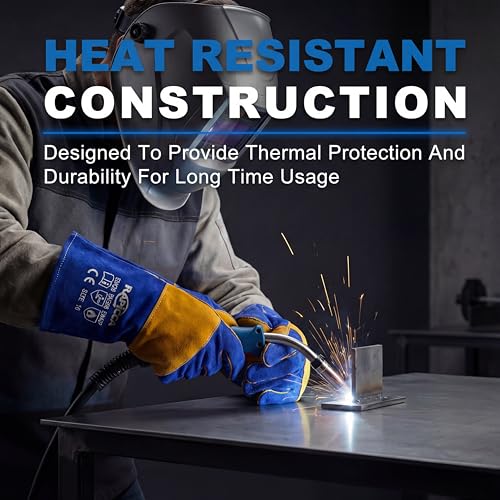
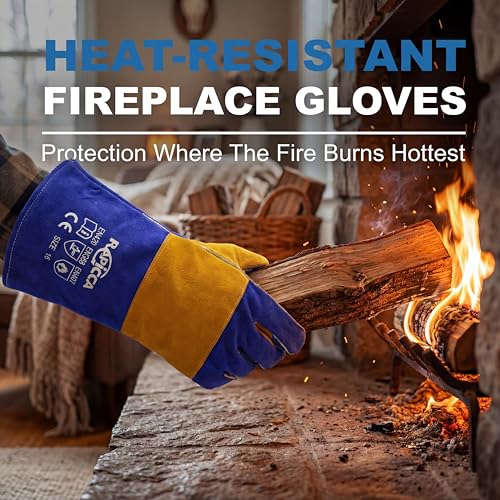
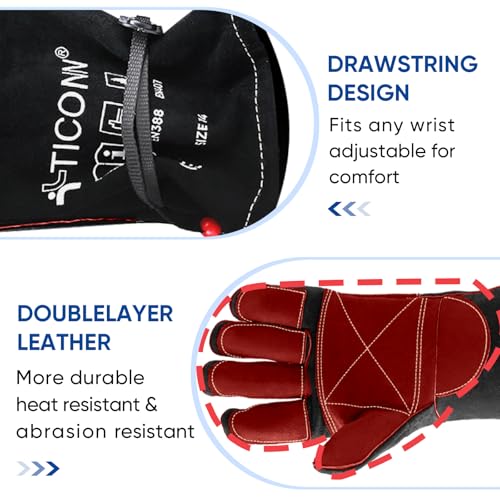
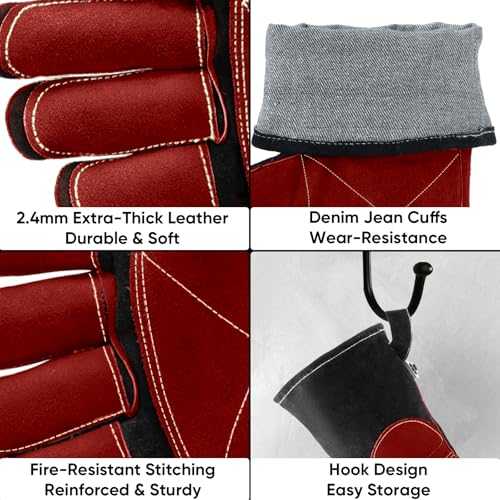
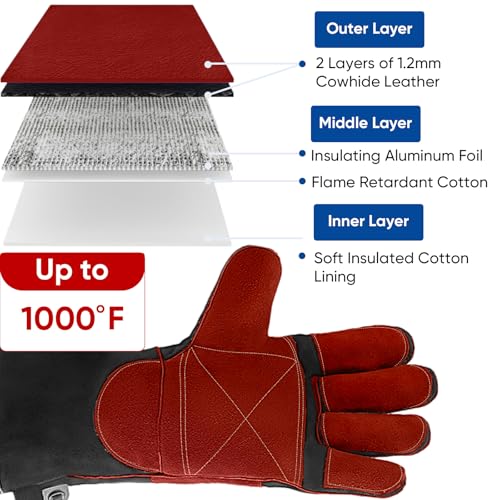
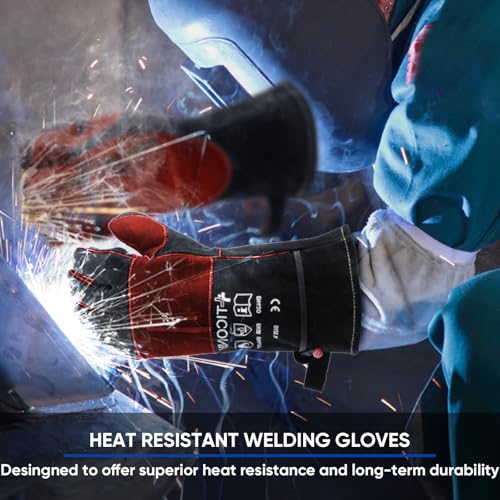
This glove claims 1000°F resistance, the highest on the list, thanks to its 3-layer build: 2.4mm cowhide, aluminum foil insulation, and flame-retardant cotton. On paper, that’s impressive, and owner feedback supports strong performance in extreme heat. The aluminum foil layer is a real differentiator, blocking radiant heat in ways traditional gloves can’t.
The adjustable elastic cuff is a smart touch, keeping debris and sparks from creeping in. It’s bulky, no doubt, but that’s the trade-off for this level of protection. The dexterity is decent for such a heavy glove, and the 16-inch sleeve gives full forearm coverage. If you’re forge welding or working near molten metal, this is the one I’d reach for.
Product photos
Black Stallion Premium Grain Elkskin Gloves

Strengths
- Thick elkskin leather
- Nomex back lining
- Thumb strap
- Kevlar stitching
- Flame resistant
Trade-offs
- Bulky for fine work
- Break-in period needed
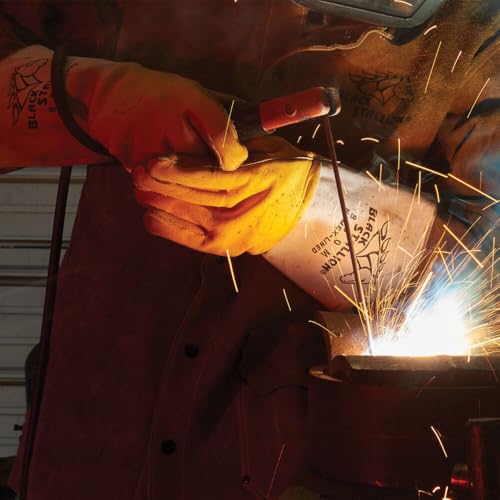
Elkskin is a niche material, but when done right, like here, it brings something unique to the table: natural insulation, softness, and surprising toughness. The extra thickness of the grain elkskin gives it a leg up in heat resistance, and the Nomex-lined back adds real protection against radiant heat, which matters during long stick welding runs.
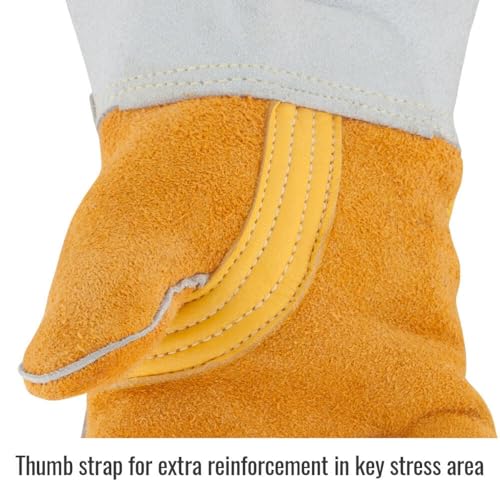
The thumb strap is a small detail, but it’s one that owners praise for extending glove life. Combined with Kevlar stitching and reversed grain palm, this glove is clearly engineered for longevity. It’s heavier than most, so it’s not my go-to for delicate work, but for high-heat, high-spatter environments, it’s one of the most protective options. I’d choose this over others when safety margins matter most.
Product photos


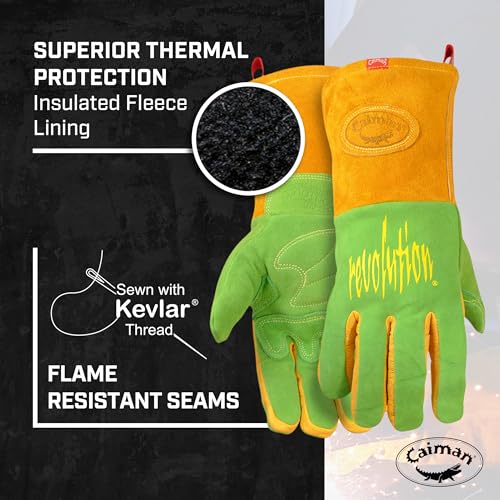
Caiman Wasabi Green Split Deerskin Gloves

Strengths
- Supple deerskin
- FR foam/fleece lining
- Pulse protector
- Kevlar stitching
- Pre-curved fit
Trade-offs
- Less abrasion resistance than cowhide
- Not ideal for heavy grinding
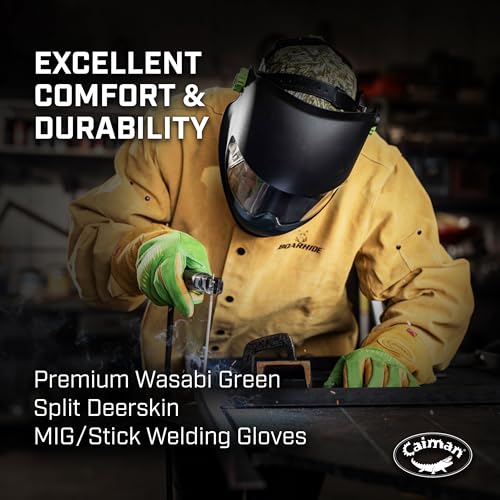
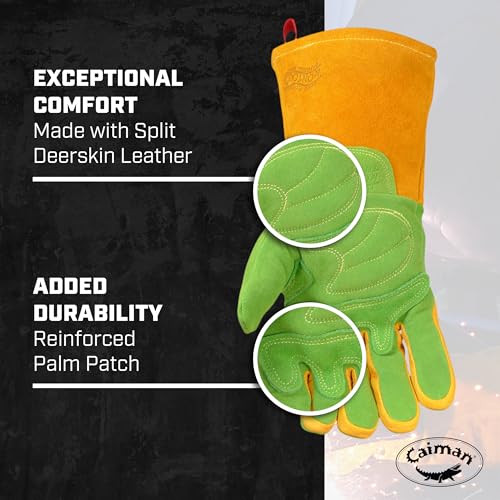
I’ve seen a lot of deerskin gloves come and go, and when it’s genuine American split deerskin like this Caiman model, the comfort is almost immediate. The softness stands out on paper and in owner feedback, people consistently report these feel broken in from day one. Paired with the FR foam/fleece insulation, they’re a strong contender in colder shop environments where warmth matters just as much as protection.
The pulse protector is a standout feature for stick welding, where wrist coverage often gets overlooked. Combined with Kevlar stitching and double-stitched palm padding, this is a glove built for repetition. It’s not the heaviest-duty option here, but for users prioritizing dexterity and comfort over brute durability, it strikes a smart balance. I’d pick this over heavier gloves for weekend warriors or detail-focused welding.
Product photos
How We Picked These stick welding gloves
Rather than a hands-on lab test, this selection is based on a research-led comparison of published specifications and owner feedback. I compared features across numerous models, weighting them based on what experienced welders consistently prioritize in stick welding gloves. I also read through hundreds of owner reviews and expert opinions from welding forums and publications to understand real-world performance and durability.
For stick welding, heat resistance and durability are paramount. We heavily weighted a glove’s temperature rating – looking for materials like split cowhide, elkskin, and effective insulation – as well as construction details like Kevlar stitching and reinforced palms. Forearm protection also ranked highly, as stick welding produces considerable sparks and spatter. A good glove needs to shield not just the hands, but also the wrists and lower arms.
Specifications reliably indicate a glove’s materials and construction, offering a baseline for heat resistance and abrasion protection. However, owner feedback proved essential in assessing comfort, dexterity, and long-term durability. Many gloves claim to be comfortable, but reviews reveal which models maintain a good feel even during extended use. For welders needing exceptional finger control, exploring dexterous welding gloves may also be helpful, as the fine stitch work often translates to better feel.
How To Choose The stick welding gloves
Choosing the right welding gloves is critical for protecting your hands from burns, abrasions, and other hazards.
A quality welding glove balances heat resistance, dexterity, and durability. Look for gloves constructed from thick leather (cowhide, deerskin, or elkskin are common), reinforced stitching – Kevlar is a plus – and extended cuffs to protect your forearms. Consider the type of welding you’ll be doing; stick welding demands higher heat resistance than MIG welding.
Material and Heat Resistance
The material a welding glove is made from dictates how well it protects you. Cowhide is a solid all-around choice, offering good abrasion resistance and decent heat protection. Deerskin is softer and more comfortable, making it ideal for extended use, but it’s generally not as durable as cowhide. Elkskin, as seen in the durable welding gloves from Black Stallion, is a premium option combining durability and flame resistance. Heat resistance ratings are important; a glove rated to 932°F (500°C) is a good starting point for most hobbyist work, but if you’re frequently working with high-heat applications, consider gloves like the TICONN, which boast resistance up to 1000°F.
Comfort and Dexterity
Don’t underestimate the importance of a comfortable fit. Welding requires a surprising amount of dexterity, and bulky, stiff gloves will quickly lead to fatigue and reduce your control. Look for gloves with contoured designs, like those offered by Caiman with their Kontour design, which aim to mimic the natural shape of your hand. Linings also play a role; wool-lined gloves provide excellent insulation and comfort, especially in colder environments.
- A shorter cuff (6-8 inches) provides freedom of movement, but sacrifices forearm protection.
- A mid-length cuff (12-14 inches) offers a good balance of protection and dexterity, suitable for most general welding tasks.
- An extended cuff (16 inches or more), like those from RAPICCA, maximizes forearm protection, crucial for overhead welding or working in environments with a lot of sparks and debris, even if it slightly reduces agility.
Value and Application
Consider where you’ll be using the gloves. If you’re a professional welder, investing in a high-quality, durable pair like the Lincoln Electric traditional MIG/Stick gloves is worthwhile. For occasional home use, a more affordable option like the Caiman Wasabi Green split deerskin gloves might be sufficient. Remember to also think about the type of welding you’ll be doing most often. If you primarily stick weld, prioritize heat resistance. If you do a lot of MIG welding, dexterity and comfort might be more important. Finding the best welding gloves overall requires matching the glove to your needs and budget.
Don’t skimp on protection. A good pair of welding gloves is a small investment compared to the cost of treating a severe burn.
Stick Welding Gloves Compared
Here’s a comparison of key specifications for various stick welding gloves to help you make an informed decision.
| Product Title | Length (in) | Material (Palm) | Material (Back) | Heat Resistance (°F) | Lining | Kevlar Stitching |
|---|---|---|---|---|---|---|
| TOPDC 16 Inch Fireproof Welding Gloves | 16 | Cowhide Leather | Kevlar & Leather | 932 | Cotton | Yes |
| Lincoln Electric Traditional MIG/Stick Gloves | N/A | Leather | Leather | N/A | Cotton | Yes |
| Caiman Premium Split Cowhide Welding Gloves | N/A | Split Cowhide | N/A | 392 | Wool | Yes |
| Caiman Premium Goat Grain Welding Gloves | N/A | Goat Grain | N/A | N/A | Wool | Yes |
| RAPICCA 16 Inch Fireproof Leather Gloves | 16 | Leather | Leather | 932 | Cotton | Yes |
| TICONN 16 Inch Heat-Resistant Leather Gloves | 16 | Cowhide Leather | N/A | 1000 | Cotton | Yes |
| Black Stallion Premium Grain Elkskin Gloves | N/A | Elkskin | Nomex | N/A | N/A | Yes |
| Caiman Wasabi Green Split Deerskin Gloves | N/A | Deerskin | N/A | N/A | FR Foam/Fleece | Yes |
Frequently Asked Questions
What leather type offers the best balance of durability and heat resistance?
Split cowhide provides a good compromise between cost, durability, and heat protection. While elkskin offers superior flame resistance, it comes at a higher price, and deerskin prioritizes comfort over ultimate protection.
How important is Kevlar stitching, and what does it protect against?
Kevlar stitching significantly increases a glove’s lifespan and resistance to tearing. It’s crucial because stick welding generates a lot of spatter and abrasion that can quickly compromise standard thread, leading to premature glove failure.
What cuff length should I choose, and how does it affect protection?
A 16-inch cuff provides the most forearm coverage, essential for overhead stick welding or environments with heavy spatter. Shorter cuffs offer more dexterity but leave your forearms vulnerable; consider premium welder gloves with longer cuffs for increased safety.
What heat resistance rating is sufficient for most stick welding applications?
A rating of 932°F (500°C) is generally adequate for hobbyist or light-duty stick welding. For heavier work or when welding with high-amperage settings, look for high-heat gloves rated up to 1000°F or higher.
Are more expensive welding gloves always better?
Not necessarily. While higher prices often reflect better materials and construction, the “best” glove depends on your specific needs and welding frequency. For occasional use, a mid-range option like the Caiman Wasabi Green may offer sufficient protection without the cost of trusted welder hand protection designed for professional welders.
The Bottom Line
Choosing stick welding gloves always involves a trade-off between maximum protection and the ability to actually feel what you’re doing. For most welders, a balance is key, and the TOPDC 16 Inch Fireproof Welding Gloves strike that balance well with their extended length, solid heat resistance, and reinforced stitching. They won’t give you the finesse of a deerskin glove, but they offer a very high level of dependable protection at a reasonable price.
If you’re on a tighter budget, the Caiman Wasabi Green Split Deerskin Gloves are a fantastic option. And for those prioritizing durability and premium materials, the Black Stallion Premium Grain Elkskin Gloves are a worthwhile investment. Remember, if you also do a lot of MIG work, exploring MIG welding gloves can expand your options and potentially provide a better fit for a wider range of projects.
Ultimately, the best welding gloves are the ones you’ll actually wear. Don’t get too caught up in chasing the highest temperature rating or the most exotic materials. Focus on finding a glove that fits well, offers adequate protection for your typical work, and allows you to maintain control and dexterity. A comfortable, well-fitting glove is far more valuable than a spec sheet.
