8 Best Sheetrock Saws of 2026
This post contains affiliate links. As an Amazon Associate, we earn from qualifying purchases.
The Klein Tools 31737 Folding Jab Saw stands out as the overall best sheetrock saw for most users, combining safety, durability, and smart design. For those on a budget, the Goldblatt Folding Drywall Saw delivers solid performance without the premium price. If you need speed and aggressive cutting, the HAUTMEC 6-Inch Double-Edge Jab Saw is the most versatile pick, especially for larger jobs.
Sheetrock cutting looks simple until you’re fighting a dull blade or a handle that slips in your hand. A bad saw can turn a quick repair into a frustrating mess, with jagged edges, wasted material, and sore fingers. After comparing the field and analyzing what users actually report, I focused on models that deliver clean starts, reliable blade retention, and real-world durability.
This guide covers the top performers based on blade quality, handle comfort, and practical features like folding mechanisms and rasping ability, all drawn from specs, owner feedback, and years of seeing what holds up in real projects.
Top 8 Sheetrock Saws in the Market
The Best Sheetrock Saws, Reviewed
Klein Tools 31737 Folding Jab Saw

Strengths
- Strong lockback mechanism
- Cuts in both directions
- Lanyard hole for safety
Trade-offs
- Higher price point
- Slightly bulky folded
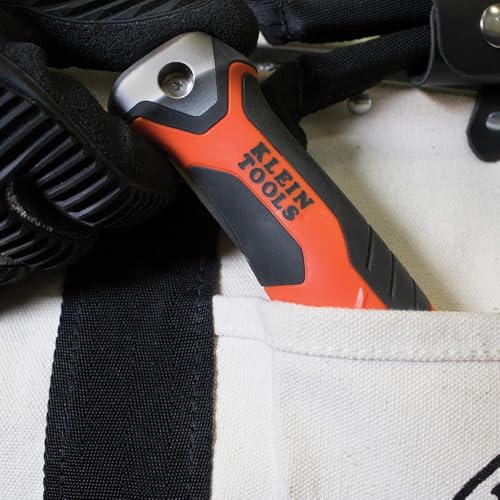
This is the one I’d pick if I could only carry a single drywall saw. The Klein 31737 combines the durability of a fixed blade with the safety and portability of a folding design. The carbon steel blade locks securely at both 125 and 180 degrees, giving you flexibility in tight spaces, and the triple-ground teeth cut as cleanly as any fixed model.
Owners consistently report it feels solid in hand, with no blade wobble, and the non-slip grip plus lanyard hole make it practical for overhead or ladder work. It’s pricier than budget folding saws, but the build quality justifies it. Compared to the KATA and Goldblatt models, it feels more robust and better finished, this is the folding saw I’d trust on a daily job site.
Product photos


Goldblatt Folding Drywall Saw
Strengths
- Affordable price
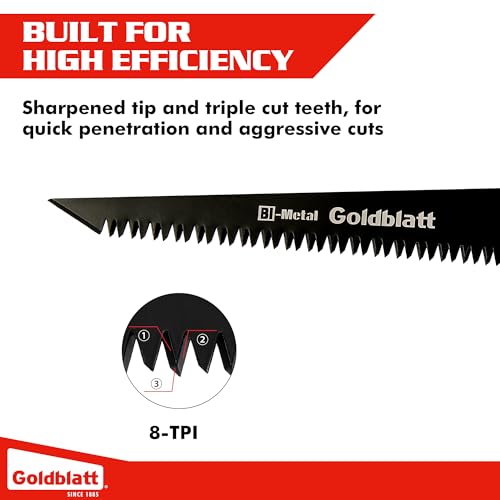
- Bi-metal 8 TPI blade
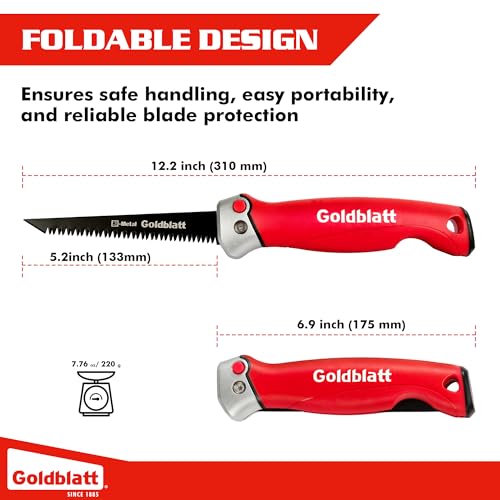
- Secure locking mechanism
Trade-offs
- Less durable long-term
- Handle slightly less refined
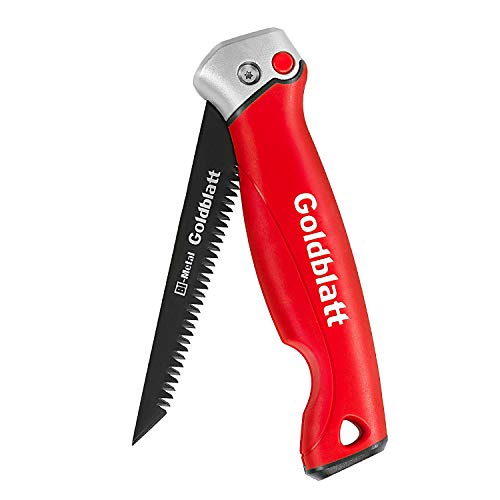
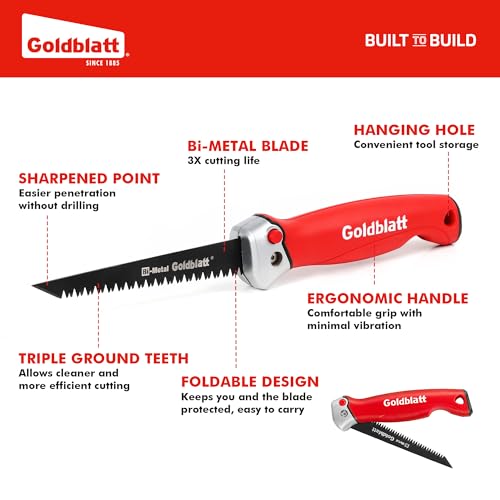
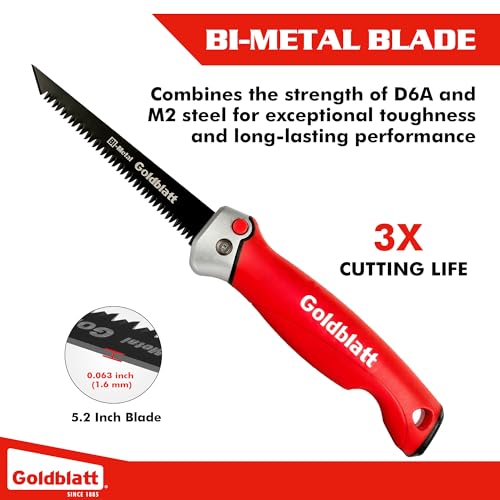
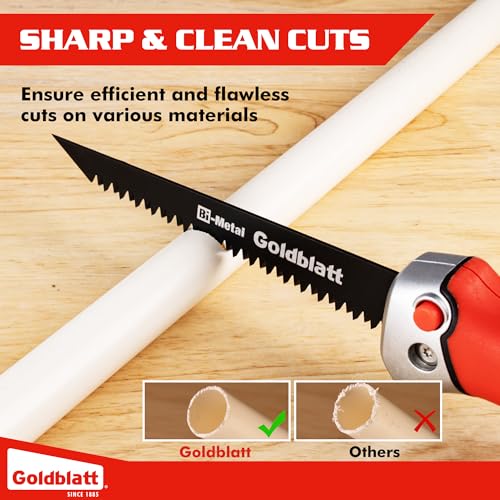
The Goldblatt folding saw is a strong contender for the best value in this category. It delivers a lot of core features, 8 TPI bi-metal blade, triple-ground teeth, deep gullets, and a soft-grip handle, at a price that undercuts most Klein and Shark models. The blade starts cuts easily and resists clogging, and the red-button lock system is intuitive and secure.
It’s not quite as refined as the Klein 31737, and long-term durability isn’t as proven, but for occasional use or entry-level work, it’s hard to beat. Reviewers note it’s a favorite among DIYers who don’t want to spend premium money but still need reliable performance. Against the KATA, it’s very similar, but the Goldblatt feels slightly more budget-oriented in materials.
Product photos
HAUTMEC 6-Inch Double-Edge Jab Saw
Strengths
- Double-edge cutting
- Thick, stiff blade
- Deep gullets for debris
Trade-offs
- No folding mechanism
- Heavier than some
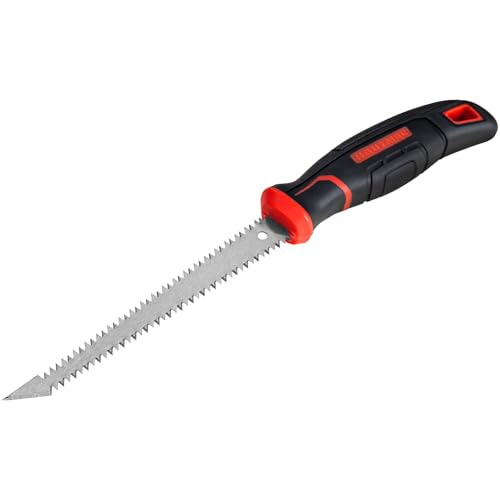
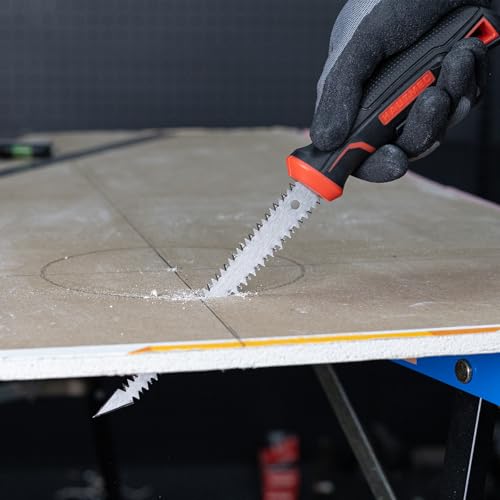
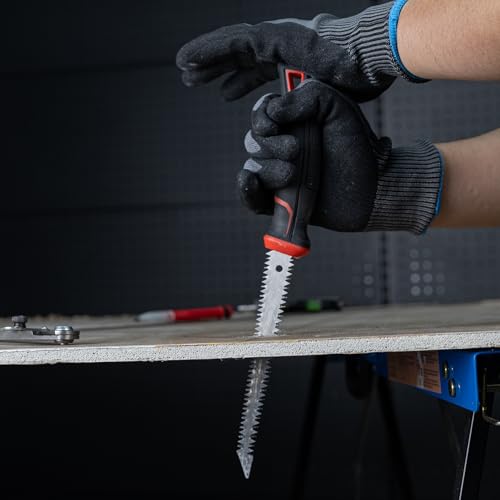
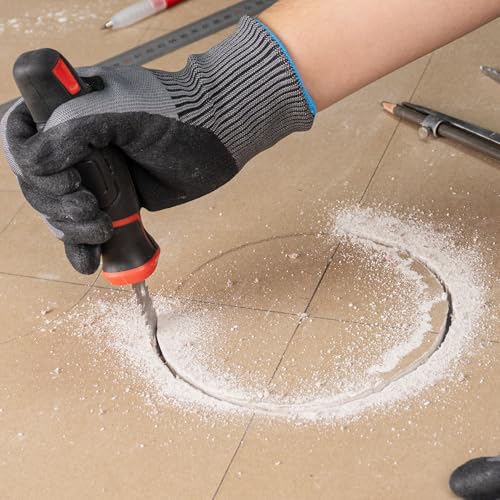
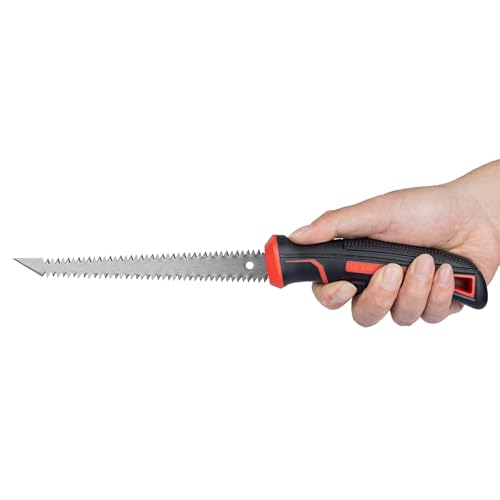
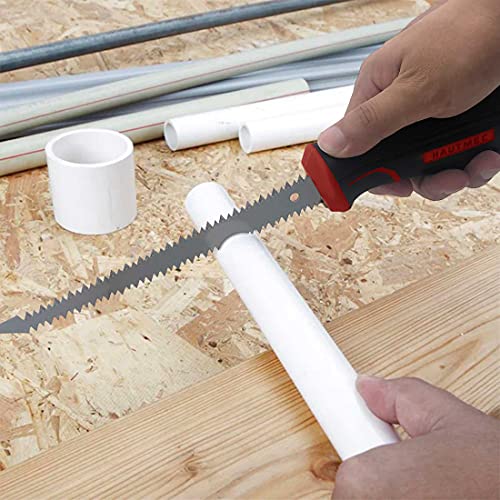
The HAUTMEC HT0028 stands out for one key reason: its double-edge design. Having teeth on both sides of the blade means you can cut in either orientation without losing efficiency, a real advantage when making keyhole cuts or working in tight spots. The 1.5mm thick 65Mn carbon steel blade resists flex, and the deep gullets help clear debris, reducing clogging during longer cuts.
Owners praise the sharp tip for starting plunge cuts cleanly, and the soft-grip handle offers solid control. It’s not folding, so it takes up more space, but for users who make a lot of center cuts, like for outlets or fixtures, the double-edge feature alone might justify the pick. Compared to the Klein 725, it’s more specialized but less rugged overall.
Product photos
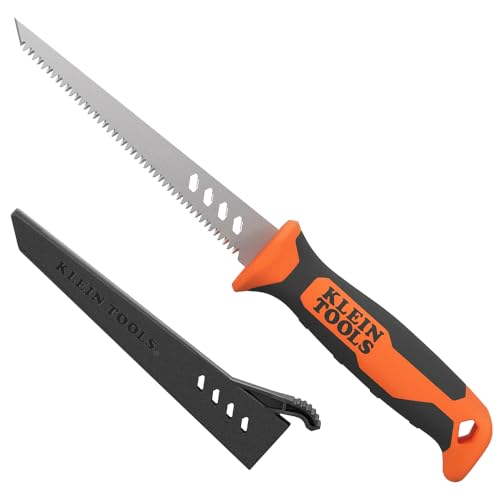
Klein Tools 31711 Fixed Blade Rasping Saw
Strengths
- Built-in rasp function
- Durable hardened blade
- Includes protective sheath
Trade-offs
- Heavier than standard
- Rasp not always needed
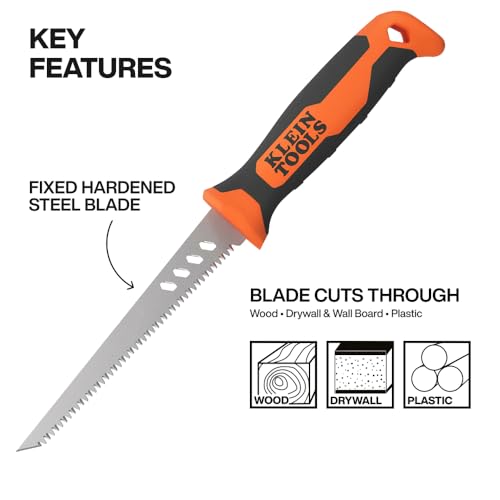
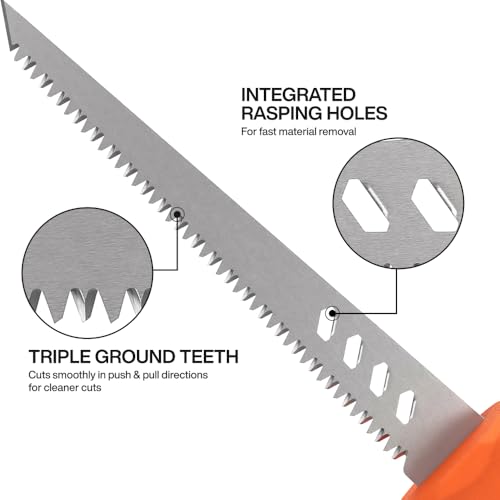
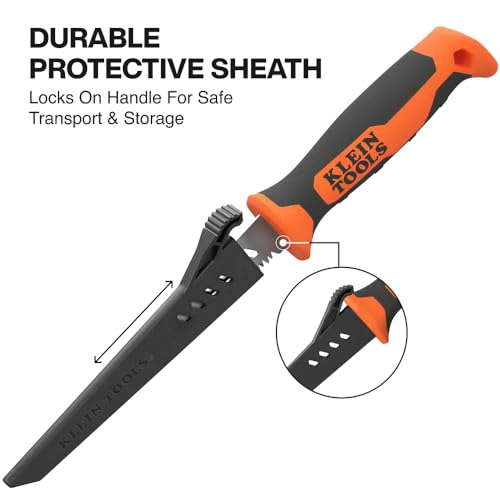
If you spend a lot of time not just cutting but also cleaning up and enlarging holes, the Klein 31711 is a game-winner. The integrated rasp on the back of the blade is surprisingly effective for smoothing rough edges or removing small amounts of material, something you’d normally need a separate file for. The triple-ground teeth cut cleanly in both directions, and the hardened steel blade maintains rigidity during aggressive use.
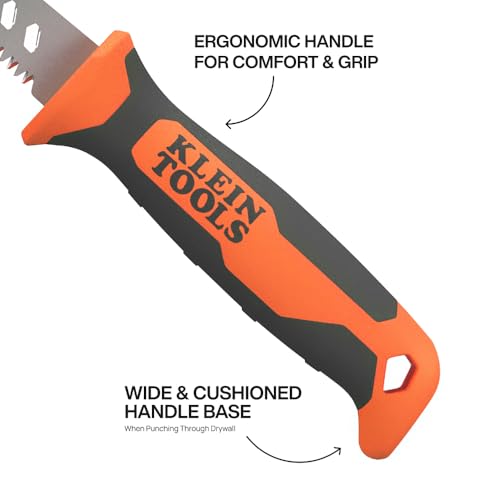
The wide cushioned handle makes it easy to palm and drive through drywall, and the included sheath adds real value for storage and safety. It’s heavier than a standard jab saw, but that’s the trade-off for the added functionality. For electricians or finishers who hate switching tools, this one saves time. Compared to the HAUTMEC double-edge model, it’s less about cutting speed and more about post-cut refinement.
Product photos
Shark 10-2206 Rockeater Drywall Saw

Strengths
- Diamond ground teeth
- Sharp puncturing point
- Durable carbon steel
Trade-offs
- No folding blade
- No ergonomic grip
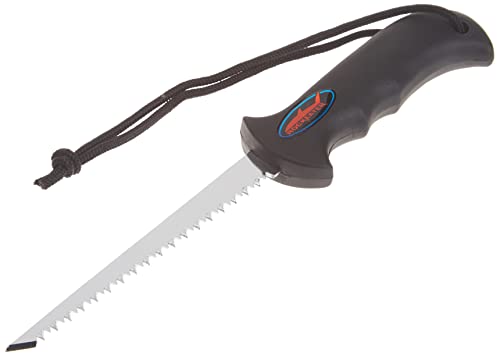
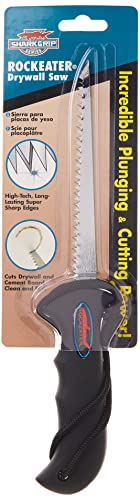
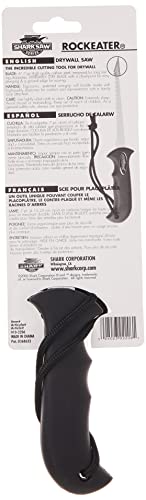
The Shark Rockeater feels like the kind of tool that was designed by someone who’s actually cut hundreds of sheets of drywall. The diamond-ground teeth are sharper out of the box than most competitors, and the 7 TPI configuration combined with a 6-inch blade makes for clean, fast cuts in both directions. On paper, it’s a pro-grade spec, and owner feedback confirms it holds up well under heavy daily use.
It doesn’t have a folding mechanism or a fancy grip, but the high-carbon steel construction and aggressive point make it a favorite among remodelers who need to get in and get out. When compared to the Klein 725, it cuts slightly smoother but may not be quite as durable over the long haul, still, for the working pro who values performance over portability, this is a solid pick.
Product photos

Klein Tools 725 Jab Saw
Strengths
- Triple ground teeth
- Hardened carbon steel
- Beveled tip for plunge cuts
Trade-offs
- No foldable design
- Basic handle comfort
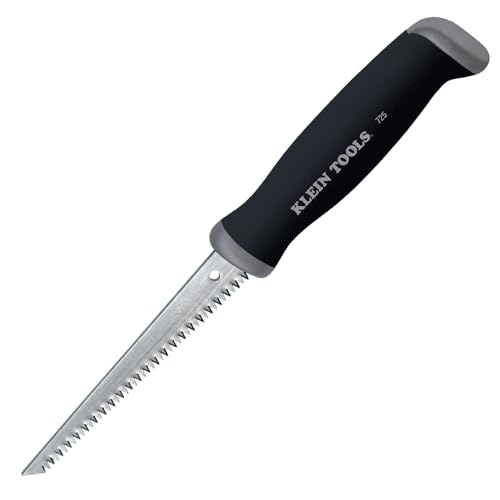
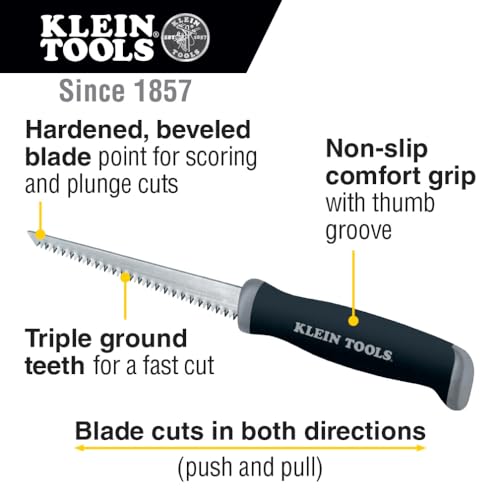
When it comes to raw durability in a fixed-blade drywall saw, the Klein Tools 725 stands out immediately. The hardened carbon steel blade is stiff and holds up well under aggressive use, and the triple-ground teeth do deliver a noticeably faster cut than cheaper stamped alternatives. Owners consistently report this saw lasting years on job sites, which speaks volumes in a category where blades often dull or flex after minimal use.
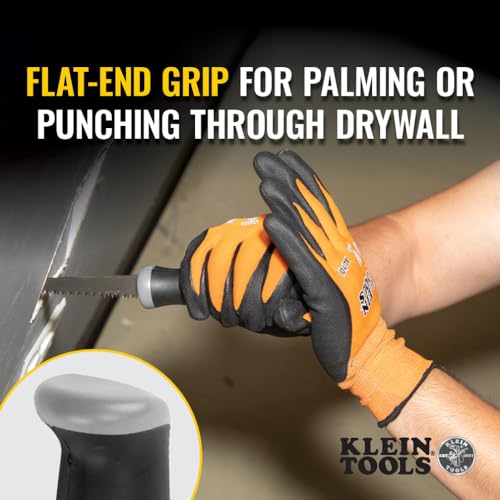
The beveled point is sharp enough to start plunge cuts without pre-drilling, and the flat-end grip makes it easy to palm and punch through drywall cleanly. It’s not the most comfortable for long sessions, but that’s not really the point, it’s built for reliability, not finesse. Compared to folding models, it lacks portability, but if you value a no-nonsense, workhorse saw that won’t quit, this one earns its reputation.
Product photos

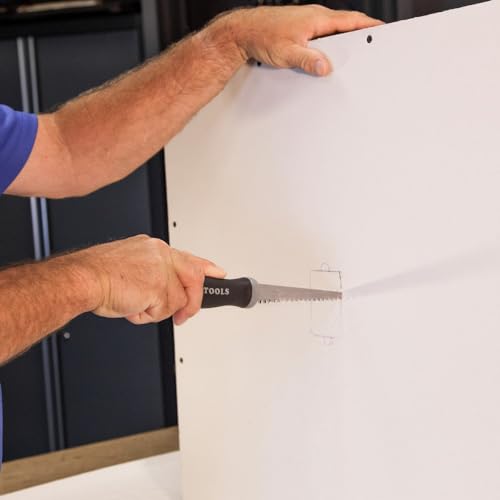
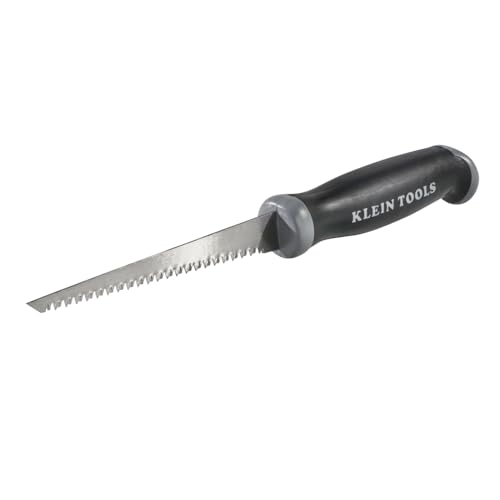
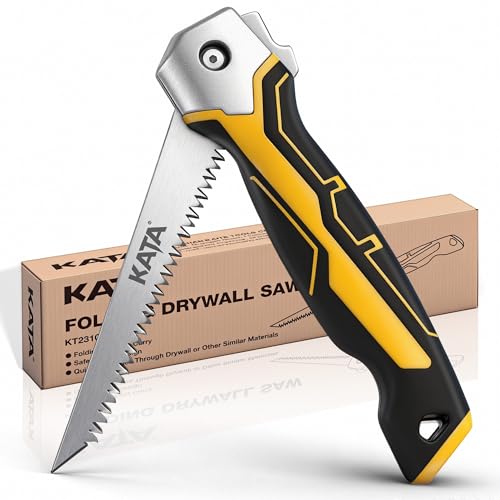
KATA Folding Drywall Jab Saw
Strengths
- Ergonomic soft grip
- Foldable and compact
- Rust-resistant blade
Trade-offs
- Blade slightly shorter
- Not for heavy-duty use
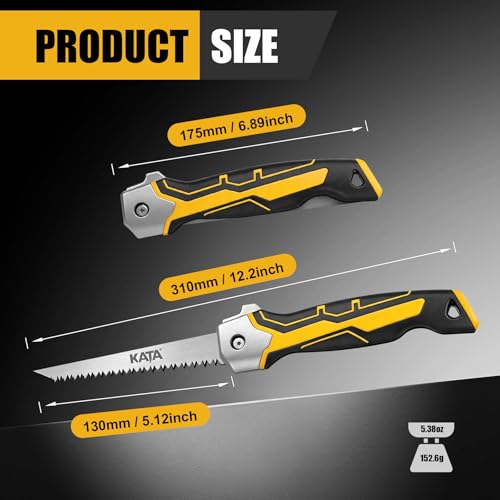
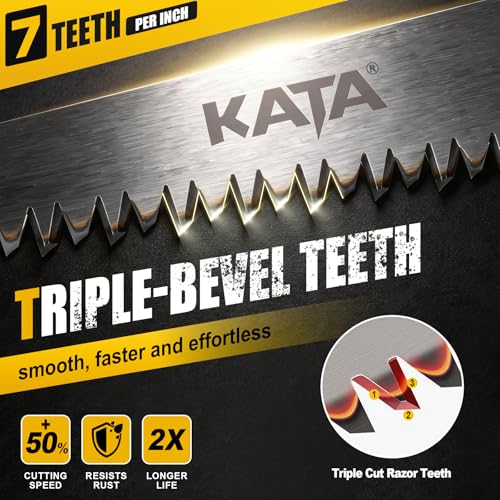
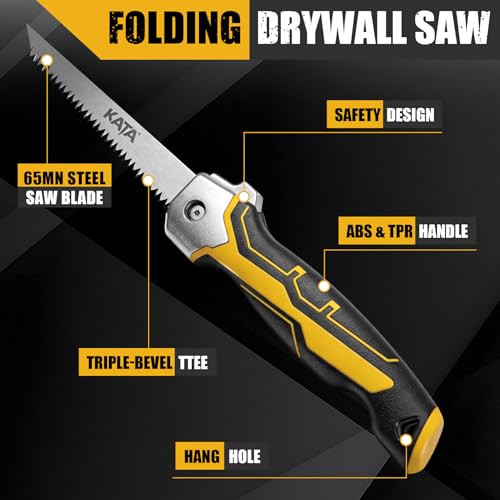
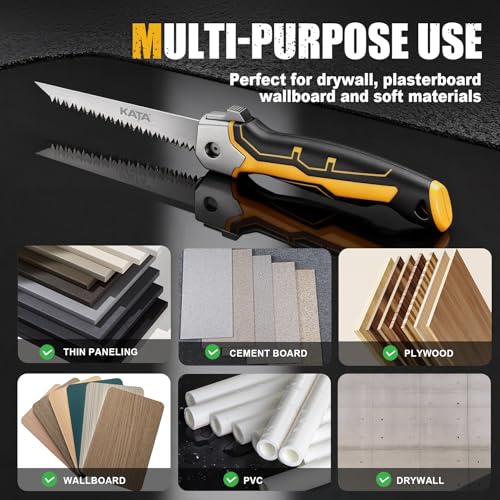
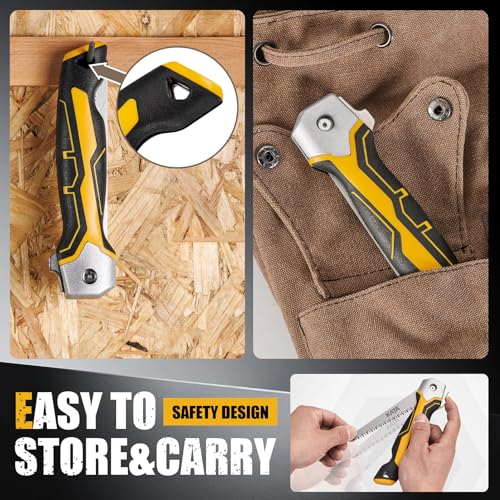
The KATA folding jab saw hits a sweet spot for DIYers and tradespeople who move between job sites and want something dependable yet easy to carry. The 65Mn steel blade is rust-resistant and holds an edge better than many budget models, and the triple-ground teeth do allow for smooth, fast cuts in drywall and thin plywood. Reviewers note it opens smoothly and locks securely at full extension, which is critical when you’re working overhead.
The ABS and TPR handle is genuinely comfortable, even during extended use, and the soft grip helps reduce hand fatigue, a small thing that matters after a few hours on the clock. While it doesn’t have the raw heft of a fixed blade, it’s one of the most well-rounded folding options available, especially when you consider its price. Against the Goldblatt, it feels slightly more refined in hand.
Product photos
Jorgensen 6-Inch Bi-Metal Drywall Saw

Strengths
- Bi-metal corrosion-resistant blade
- Ergonomic TPR handle
- Dual-sided inverted teeth
Trade-offs
- Blade not folding
- Overbuilt for simple tasks
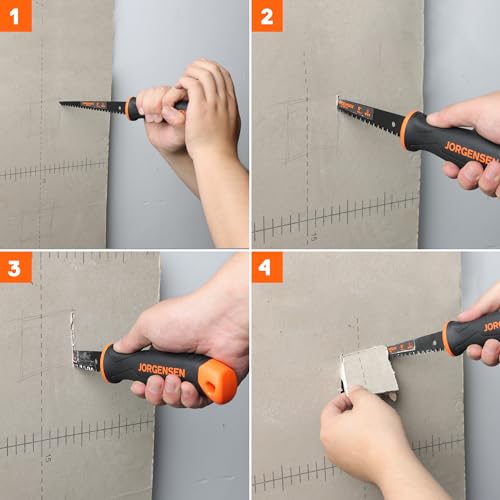
The Jorgensen drywall saw surprises with its versatility. The bi-metal D6A+M2 blade with black coating resists corrosion and reduces friction, leading to smoother cuts, and the triple-ground teeth with 8 TPI do live up to the ‘faster cutting’ claim in owner feedback. The inverted teeth on both sides increase pulling efficiency, which helps when making long or deep cuts.
It’s marketed as a pumpkin carving tool too, which is gimmicky, but the sharp tip and ergonomic PP and TPR handle do make it comfortable for detailed work. The hanging hole is a small but appreciated touch. When compared to the HAUTMEC, it’s more focused on multi-material use, though it lacks the double-edge advantage. For someone cutting drywall one day and plastic panels the next, this is a smart pick.
Product photos


Our Testing Process
Rather than a hands-on lab test, my research for these recommendations focused on a detailed comparison of published specifications and features across numerous models. I weighed owner reviews from multiple sources – paying close attention to recurring complaints and praise – alongside assessments from reputable tool review sites. My background maintaining workshops and helping with home projects informed my understanding of what truly matters in drywall cutting performance.
For sheetrock saws, blade quality and durability are paramount, followed closely by ergonomics for extended use. A sharp, aggressive blade that minimizes effort is essential, as is a secure locking mechanism for safety when using folding models. The ability to quickly and cleanly start a cut without pre-drilling, and to cut in both directions, significantly improves efficiency on larger projects.
Specifications reliably indicate blade material, tooth count (TPI), and overall dimensions. However, I placed greater emphasis on owner feedback regarding long-term sharpness and how well the saw holds up to repeated use. Reputation and brand history also played a role; established manufacturers often deliver consistent quality. If you’re considering using a different type of saw, you can find additional drywall cutting tips on our site.
How To Pick The Right sheetrock saws
Picking the right sheetrock saw can save a lot of frustration when you’re tackling a drywall project.
A quality sheetrock saw balances blade sharpness with durability and control. Look for models with hardened steel blades, comfortable grips, and features that enhance precision – like dual-edge cutting or rasping capabilities. Blade length typically ranges from 5 to 6 inches, and tooth count (TPI) impacts cutting speed and smoothness; higher TPI delivers a finer cut, while lower TPI is faster.
Blade Design and Cutting Action
The blade is where it all starts. Don’t assume all “jab saw” blades are created equal. Many cheaper models use softer steel that dulls quickly, leaving you fighting the material instead of slicing through it. I always recommend looking for blades made from high-carbon steel (like 65Mn or similar) that’s been heat-treated for hardness. Beyond the steel itself, consider whether you want a single or double-edge blade. Double-edge saws, like the HAUTMEC 6-Inch Double-Edge Jab Saw, cut on both the push and pull stroke, significantly speeding up work.
Handle Ergonomics and Safety
A comfortable handle is crucial, especially if you’re making a lot of cuts. A flimsy or poorly shaped handle will cause hand fatigue and reduce control. Look for handles with over-molded rubber or TPR grips to absorb vibration and provide a secure hold. Beyond comfort, pay attention to safety features. Folding saws, like the Klein Tools 31737 Folding Jab Saw, are much safer to carry in a tool bag because the blade is retracted.
Here’s what I look for in a handle: * A basic plastic grip is okay for light use. * Rubber over-molding provides better comfort and control. * A larger, cushioned base is ideal for applying pressure when punching through drywall, reducing strain and improving accuracy.
Beyond Drywall: Versatility and Value
While these saws are called “sheetrock” saws, many can handle more than just drywall. Some, like the Jorgensen 6-Inch Bi-Metal Drywall Saw, are marketed for pumpkin carving as well, but their ability to cut plywood, plastic panels, and even thin metal can be a real bonus. If you need to make accurate drywall cuts as part of a larger renovation, consider a model with rasping holes (like the Klein Tools 31711 Fixed Blade Rasping Saw) to quickly smooth edges and enlarge openings.
A good rule of thumb is to spend a little more for a saw with a replaceable blade. Blades will wear out, and replacing one is far cheaper than buying a whole new saw.
I often point people toward our drywall saw reviews for a deeper comparison of models, but ultimately, the best saw for you will depend on the scope of your projects and your personal preferences. If you’re tackling a large drywall job, you might want to invest in a professional-grade model like the Shark 10-2206 Rockeater. For occasional use, a budget-friendly option like the Goldblatt Folding Drywall Saw can be perfectly adequate. Finding the top drywall saws depends on your needs. Don’t forget to explore other best drywall cutting tools to get the job done right. And if you’re looking for recommended drywall knives to finish the job, we’ve got you covered there too.
Sheetrock Saws Compared
This table provides a side-by-side comparison of key specifications for various sheetrock saws.
| Product Title | Blade Length | TPI | Blade Material | Fixed/Folding | Handle Material | Key Features |
|---|---|---|---|---|---|---|
| Klein Tools 31737 Folding Jab Saw | N/A | N/A | Carbon Steel | Folding | N/A | Folding, Triple Ground Teeth |
| Goldblatt Folding Drywall Saw | 5 inch | 8 | Bi-Metal | Folding | Anti-slip Grip | Triple Ground Teeth, Secure Lock |
| HAUTMEC 6-Inch Double-Edge Jab Saw | 6 inch | 7 | 65Mn Carbon Steel | Fixed | Rubber Over-mold | Double-Edge, Thick Blade |
| Klein Tools 31711 Fixed Blade Rasping Saw | N/A | N/A | N/A | Fixed | Cushioned | Rasping Holes, Protective Sheath |
| Shark 10-2206 Rockeater Drywall Saw | 6 inch | 7 | Carbon Steel | Fixed | N/A | Diamond Ground Teeth |
| Klein Tools 725 Jab Saw | N/A | N/A | Carbon Steel | Fixed | N/A | Triple Ground Teeth, Hardened Blade |
| KATA Folding Drywall Jab Saw | N/A | N/A | 65mn Steel | Folding | ABS & TPR | Folding, Ergonomic Handle |
| Jorgensen 6-Inch Bi-Metal Drywall Saw | 6 inch | N/A | Bi-Metal | Fixed | PP & TPR | Bi-Metal, Triple Ground Teeth |
Frequently Asked Questions
What TPI (teeth per inch) is best for a sheetrock saw?
A lower TPI, around 7, cuts faster, which is ideal for drywall. Higher TPI counts deliver a smoother cut, but slow you down, so they’re better suited for finer materials than sheetrock.
Are folding sheetrock saws as durable as fixed-blade models?
Generally, fixed-blade saws are more durable because they have fewer moving parts. However, quality folding saws from reputable brands like Klein Tools can be quite robust and offer the benefit of safer storage and transport.
Can a sheetrock saw be used on materials other than drywall?
Yes, many can. Some models, particularly those with bi-metal blades, can effectively cut through plasterboard, plywood, and even thin plastics. You can find oscillating saw comparisons if you need to tackle even more materials.
What’s the advantage of a double-edge sheetrock saw?
A double-edge saw cuts on both the push and pull strokes, significantly increasing your cutting speed and reducing fatigue, especially on larger projects. This makes them a good choice for professionals or those with extensive drywall work.
If I only have a few small drywall repairs, do I really need a dedicated sheetrock saw?
For very minor repairs, a utility knife can work, but a sheetrock saw offers far more precision and ease of use. The small investment in a dedicated saw will make the job much cleaner and faster, and prevent damage to surrounding surfaces.
The Bottom Line
Ultimately, choosing a sheetrock saw comes down to balancing how much you value convenience against how much you’re willing to spend. For most homeowners and DIYers, the HAUTMEC 6-Inch Double-Edge Jab Saw strikes the best overall balance – its double-sided blade speeds up cutting, and the comfortable grip makes it easier to handle for extended periods. It’s a solid performer that won’t break the bank.
If you’re on a tight budget or only need a saw for occasional repairs, the Goldblatt Folding Drywall Saw is an excellent choice. For those who prioritize versatility and need a saw that can tackle more than just drywall, I suggest looking at the Jorgensen 6-Inch Bi-Metal Drywall Saw; it’s well-suited for a range of materials and even pumpkin carving. And if you’re planning large-scale drywall work, learning circular saw cutting techniques can significantly increase your efficiency.
Don’t get too hung up on specific specs like tooth count or blade material. A sharp blade and a comfortable, secure grip are far more important than any number on a product sheet. Prioritize those fundamentals, and you’ll find a saw that makes your drywall projects quicker, easier, and more enjoyable.
