
8 Best Oscillating Saws of 2026
This post contains affiliate links. As an Amazon Associate, we earn from qualifying purchases.
The ENERTWIST 4.2 Amp and AVID POWER 3.5-Amp stand out as the top choices, with the ENERTWIST taking the edge for heavy-duty cutting and the Dremel Multi-Max MM35 as a solid pick for precision work around the house.
Most people buying an oscillating saw want one tool that can handle everything from trimming baseboards to demolition, but the real challenge is finding a balance between power, control, and reliability. Too much power makes detail work difficult, while underpowered models stall on tougher jobs.
This guide cuts through the marketing noise by focusing on specs that matter, like oscillation angle, motor strength, and accessory compatibility, alongside real-world feedback from owners who’ve used these tools for months or years. I compared the most common models on the market, weighing performance data and user experiences to highlight the ones that deliver consistent results without frustration.
Top 8 Oscillating Saws in the Market
The Best Oscillating Saws, Reviewed
Dremel Multi-Max MM35 Oscillating Tool

Strengths
- Smooth variable speed
- Tool-less blade change
- Well-balanced kit
Trade-offs
- Shorter cord than some
- Oscillation angle not the widest
- No auxiliary handle
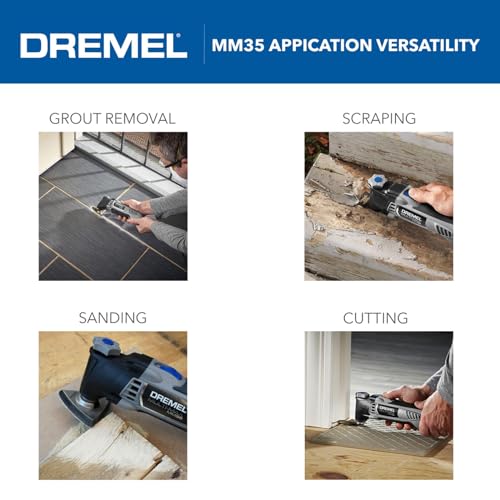
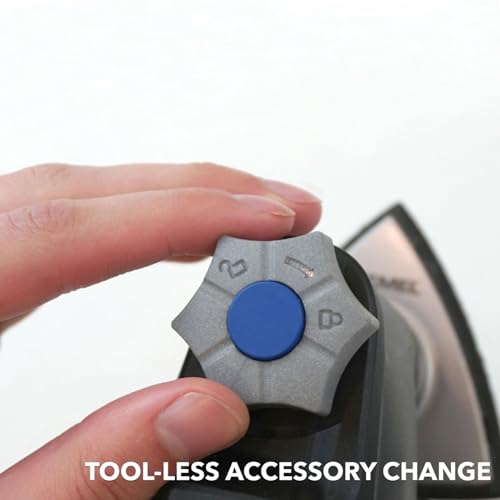
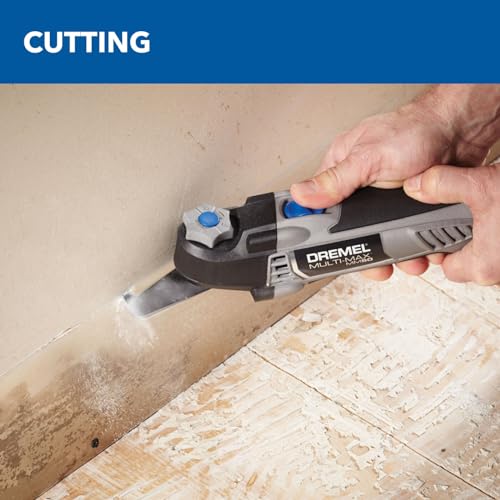
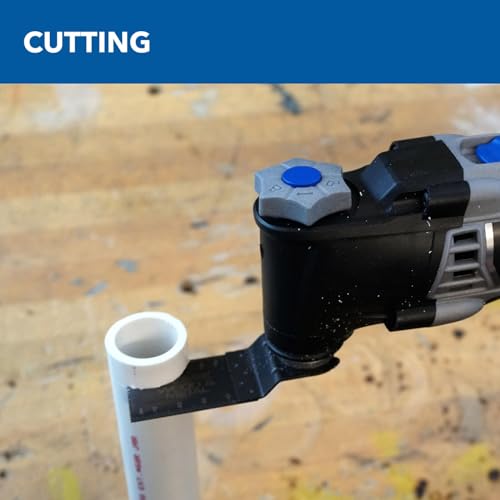
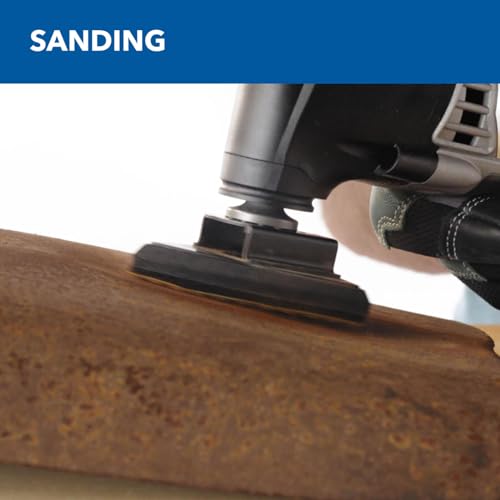
If I had to pick one oscillating saw for most DIYers and weekend warriors, it’d be the Dremel MM35. It’s not the most powerful on paper, but the 3.5-amp motor, 3.2-degree oscillation angle, and smooth variable speed control (10,000–23,000 OPM) strike a near-perfect balance between precision and performance. The tool-less blade change is genuinely fast and secure, something owners praise repeatedly, and the soft grip feels solid in hand, even during extended sanding or scraping.
It handles wood, metal, and drywall with confidence, and the included accessory kit covers a broad range of common tasks. While it doesn’t have the raw aggression of some 4+ amp models, it’s more predictable and easier to control, especially for less experienced users. Compared to the AVID or ENERTWIST models, it trades brute force for finesse, which in most home projects is exactly what you want.
Product photos
ENERTWIST 4.2 Amp Oscillating Multitool
Strengths
- Strongest motor
- 5° oscillation angle
- 31-piece kit
Trade-offs
- Lower max speed
- No LED light
- Heavier than average
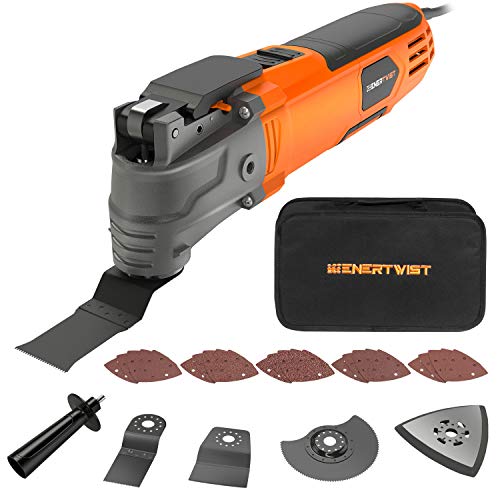
The ENERTWIST ET-OM-500 is the muscle car of this lineup, a 4.2-amp motor and 5° oscillation angle give it the highest cutting efficiency, especially on dense materials like tile, grout, and nail-studded wood. Owners consistently report it powers through tasks that stall smaller tools, and the 31-piece accessory kit is one of the most generous here, including a diamond blade for masonry work.
The 6-speed range is narrower than some (8,000–16,000 OPM), so it lacks the top-end speed for ultra-fine sanding or plastic trimming. But for demolition, flooring removal, or bathroom remodeling, that trade-off makes sense. The auxiliary handle and universal fit system add to its pro-grade feel. If you’re comparing it to the JORGENSEN or AVID models, this one wins on power and kit completeness.
Product photos


23000 OPM Corded Oscillating Multitool

Strengths
- Highest speed range
- 26-piece kit
- Auxiliary handle
Trade-offs
- Less power on thick cuts
- No LED light
- Cord length average
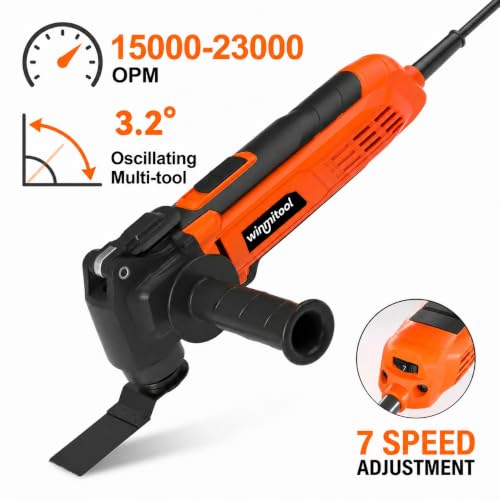
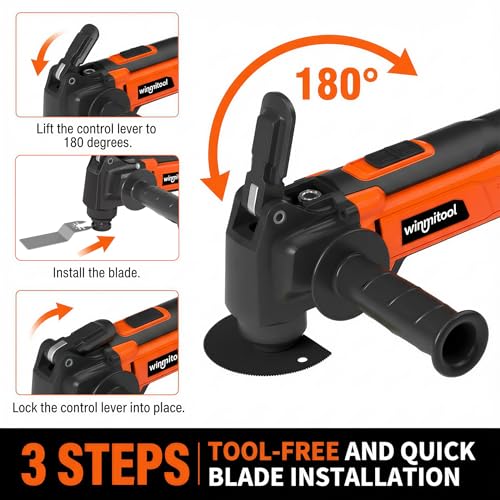
This model stands out with a top speed of 23,000 OPM and a wide 7-speed range (15,000–23,000), making it the clear pick for tasks that benefit from high-frequency action, like fine sanding, grout removal, or slicing through plastic without melting. The 3.2° oscillation angle isn’t the widest, but the speed range more than compensates for precision work.
The 26-piece kit is excellent, including a diamond blade and a full set of sanding papers across grits. The auxiliary handle is a welcome addition for control, and the tool-free change system works smoothly. Owners say it’s durable and consistent, though the motor isn’t as strong as the ENERTWIST or AVID 3.5A models. Still, for sanding-heavy jobs or detailed trimming, this one’s hard to beat.
Product photos
JORGENSEN 4 Amp Oscillating Tool
Strengths
- Low cost
- 5° oscillation angle
- Auxiliary handle
Trade-offs
- Build quality average
- No LED light
- Grip could be better
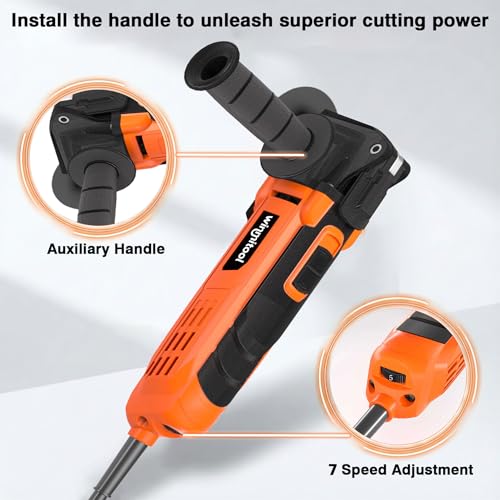
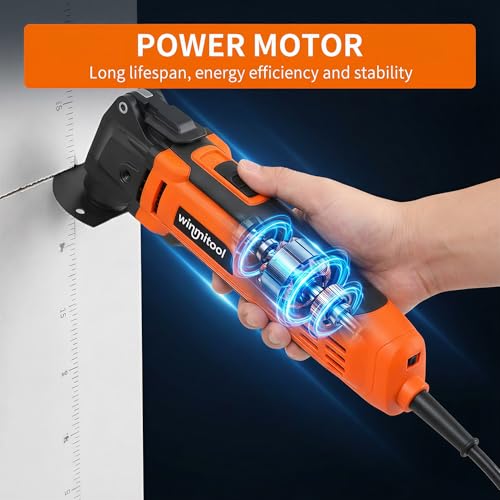
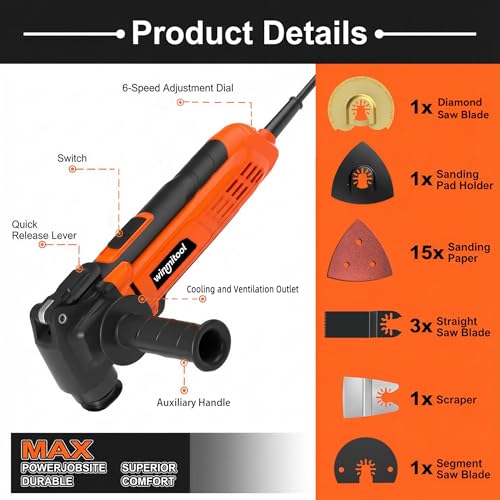
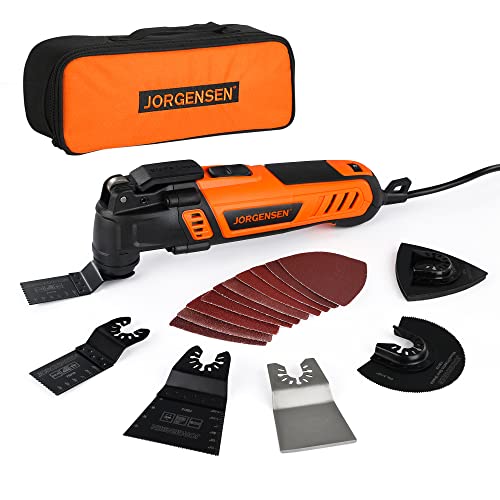
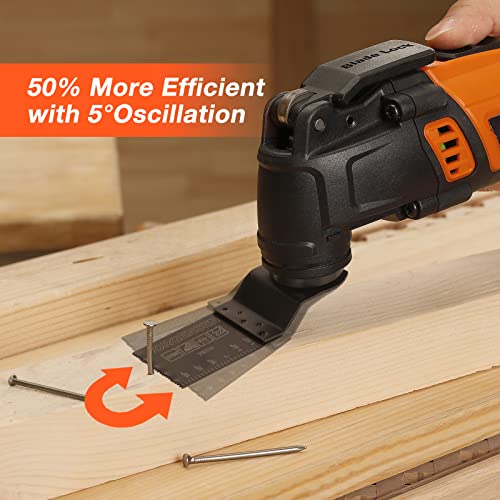
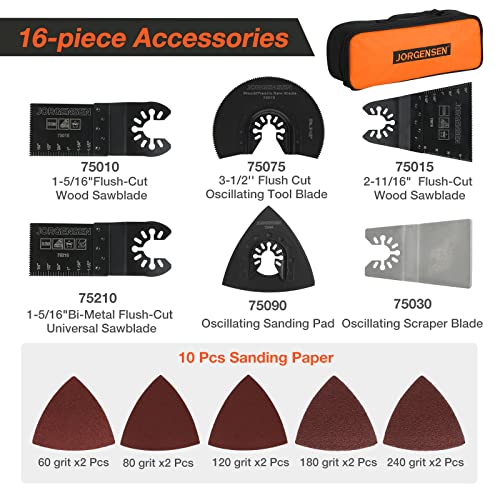
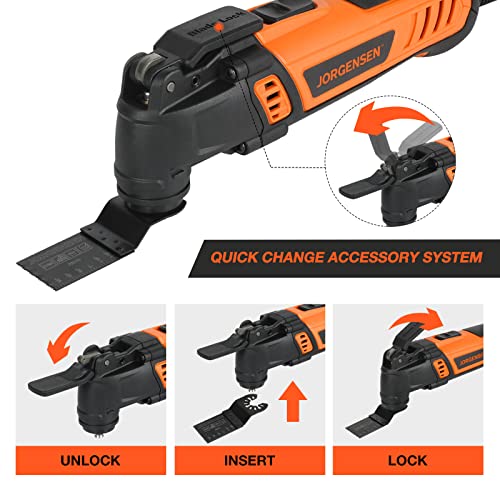
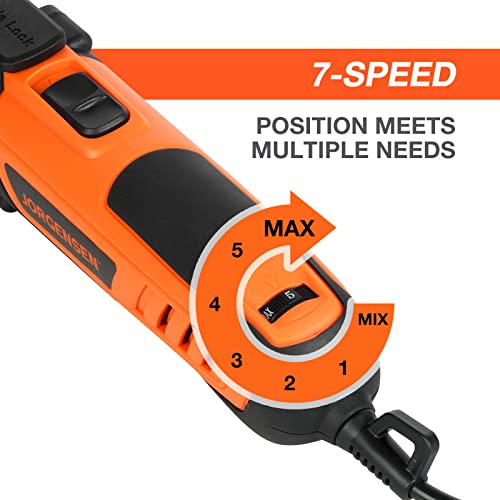
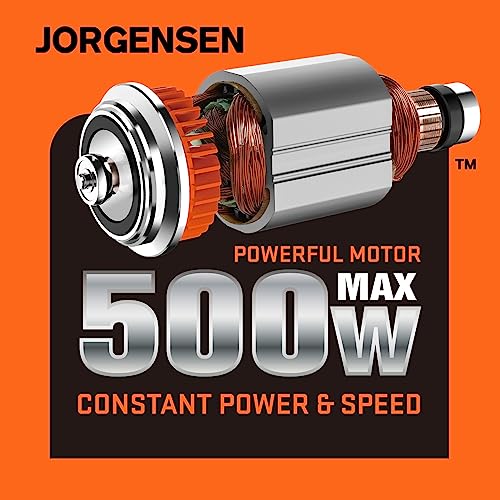
At this price point, the JORGENSEN 70800 surprises with a full 5° oscillation angle and a solid 16-piece accessory set, including multiple flush-cut blades and a good sanding spread. The 4-amp motor delivers strong performance for the cost, and the 7-speed dial (8,000–16,000 OPM) gives decent control across materials. The quick-change system works well, and the included auxiliary handle boosts stability.
It’s not as refined as the Dremel or DEWALT, and the build feels a bit plasticky compared to metal-housed rivals. But for a first-time buyer or someone who only needs an oscillating tool occasionally, it’s hard to beat. Compared to the Hammerhead or basic AVID models, it offers more power and versatility for not much more money.
Product photos
DEWALT 20V MAX XR Oscillating Tool

Strengths
- Cordless convenience
- Brushless motor
- Includes battery
Trade-offs
- Less torque than corded
- Battery adds weight
- Higher long-term cost
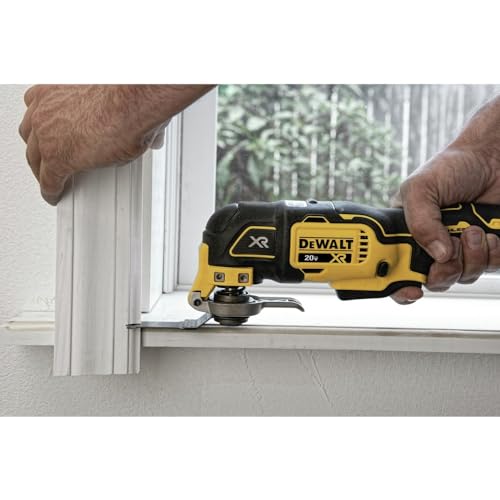
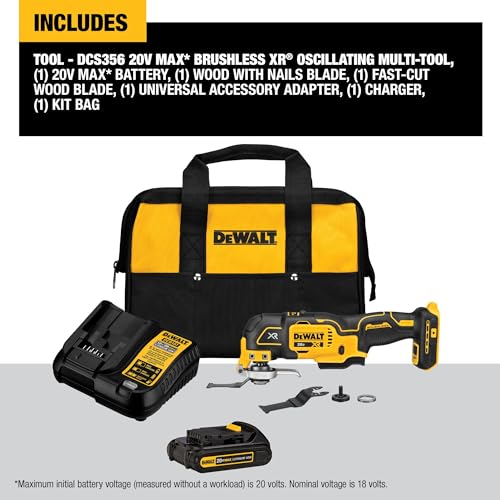
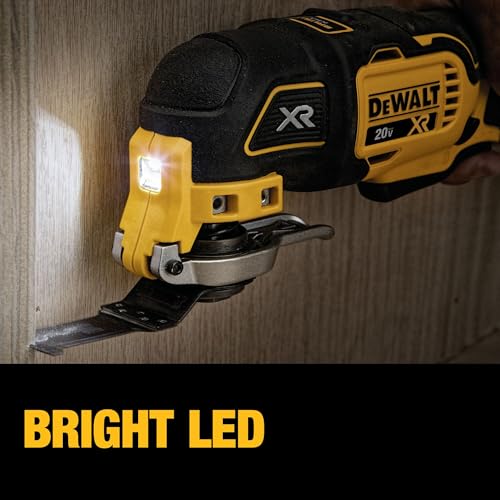
Going cordless with an oscillating tool means trading some power for freedom of movement, but the DEWALT DCS356C1 manages the balance well. The brushless motor extends runtime and reduces maintenance, and the 3-speed selector lets you match output to the task, something corded models often lack. The dual-grip trigger gives excellent control, and the LED light is bright and well-positioned.
It’s not as aggressive as the 4.2-amp ENERTWIST, but for on-site work where outlets are scarce, like cabinet installation or attic repairs, its cordless design is a standout. Owners appreciate the included battery and charger, which makes this a true plug-and-play kit. Compared to the corded Dremel or AVID models, it’s less powerful but far more mobile. If you already own DEWALT 20V tools, this integrates perfectly.
Product photos


AVID POWER 3.5-Amp Oscillating Tool

Strengths
- Wide 4.5° oscillation
- Auxiliary handle included
- 6-speed control
Trade-offs
- Bulky design
- No LED light
- Average grip comfort
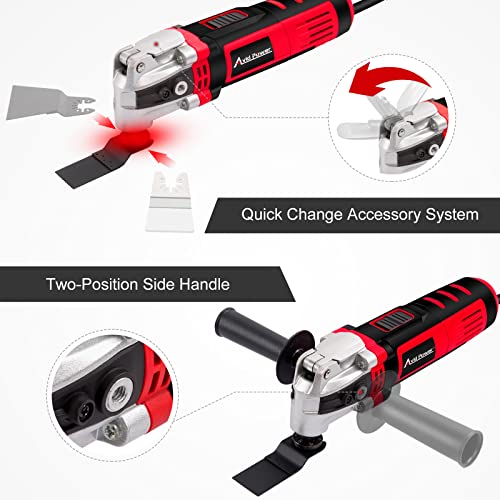
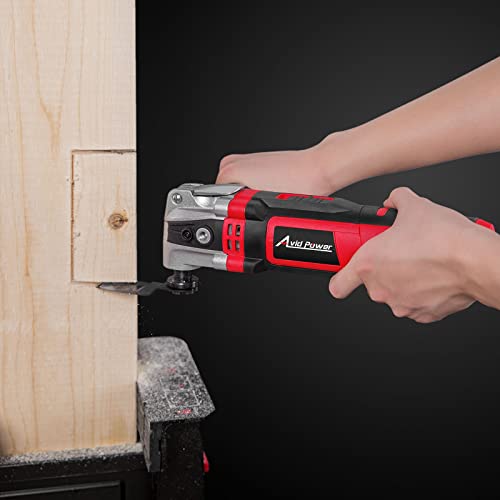
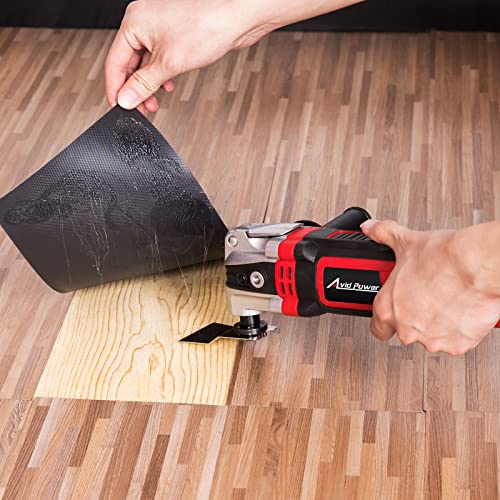
With a 4.5° oscillation angle and 3.5-amp motor, this AVID model is built for speed, owners say it cuts through wood and thin metal noticeably faster than tools with smaller swing angles. The 6-speed control lets you dial in the right aggression, and the quick-change system works reliably without tools. The auxiliary handle is a major upgrade, offering better control during aggressive plunges or long cuts.
It’s not the most refined tool in the lineup, the ergonomics are functional but not plush, but it delivers where it counts: productivity. Compared to the Dremel MM35, it’s less precise but cuts faster. Against the ENERTWIST, it’s slightly less powerful but comes with a better accessory mix. The universal fit system is another win, meaning you won’t be locked into proprietary blades.
Product photos


AVID POWER 22000 OPM Electric Tool

Strengths
- Lightweight build
- Comfortable grip
- Good speed range
Trade-offs
- Underpowered for tough cuts
- No auxiliary handle
- Shorter cord
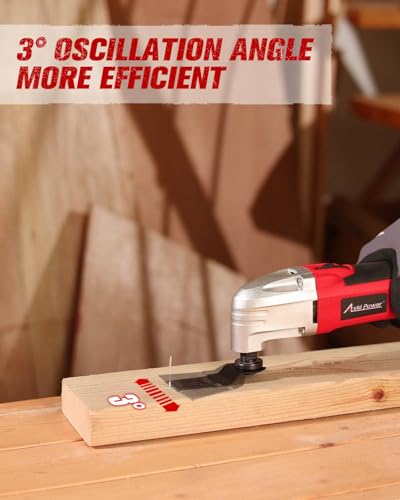
This AVID model earns its ‘Best Ergonomic Design’ label with a slim profile, rubberized grip, and featherlight 2.2-pound build, perfect for overhead work or long sessions where fatigue matters. The 3° oscillation angle isn’t class-leading, but paired with a 22,000 OPM top speed, it delivers sharp, controlled cuts in wood and plastic. The universal fit system works as advertised, accepting most standard blades without fuss.
On paper, the 2.0A motor looks underpowered next to 3.5A or 4.2A units, and owner feedback confirms it can bog down on denser materials like thick metal or nail-embedded wood. Still, for furniture repair, baseboard trimming, or light sanding, it’s more than capable. It’s quieter than many rivals too, which matters in finished spaces. If comfort and control are your top priorities, this AVID beats the Hammerhead and gives the Dremel a run for its money.
Product photos


Hammerhead 2.2-Amp Oscillating Multi-Tool

Strengths
- Compact size
- Universal blade fit
- LED work light
Trade-offs
- Lower power output
- No auxiliary handle
- Limited included accessories
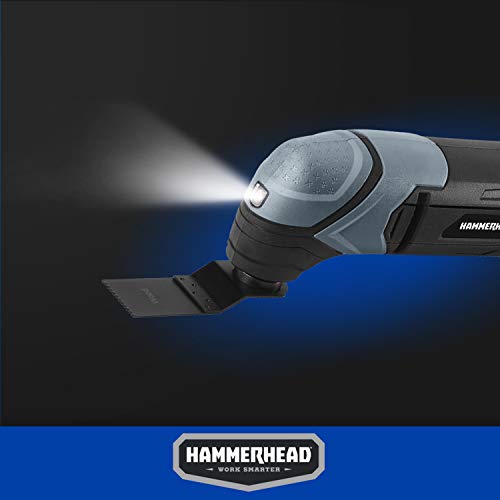
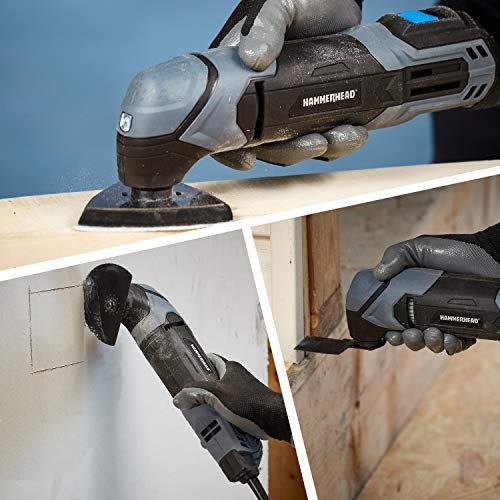
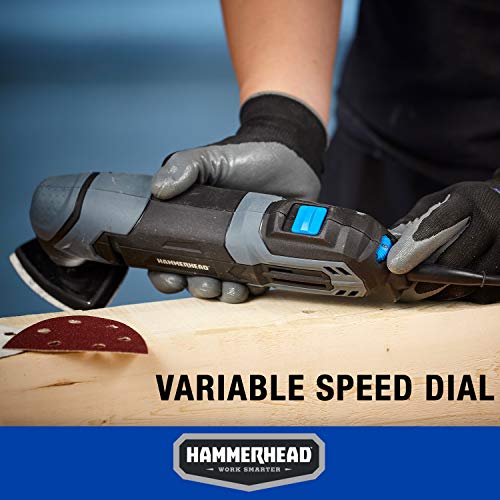
The Hammerhead HAMT022 stands out for its compact size and lightweight feel, which makes it a natural pick for tight spaces or detail work where bulkier tools struggle. With a 2.2-amp motor and 20,000 OPM, it’s not the strongest in this group, but it delivers enough power for light-duty cuts in wood, drywall, and soft metals, especially when paired with the included flush-cut and semicircle blades.
Owners consistently report it’s comfortable for short stints and great for DIYers who need occasional versatility without overspending. The universal collet system is a big plus, ensuring compatibility with a wide range of aftermarket accessories. That said, it doesn’t match the torque or cut speed of higher-amp models, and the lack of an auxiliary handle can make longer jobs tiring.
Product photos


How We Chose These oscillating saws
Rather than a hands-on lab test, my research for these recommendations focused on a detailed comparison of published specifications and features across numerous models. I weighed owner reviews from major retailers alongside expert opinions found in trade publications and tool-focused websites. Ultimately, I ranked each oscillating saw based on a combination of performance indicators, accessory compatibility, and overall value, drawing on my years of experience with power tools and workshop needs.
For oscillating saws, the most important factors are the oscillation angle, motor amperage, and accessory system. A wider oscillation angle (4° or greater) generally means faster cutting, especially through tougher materials. Higher amperage delivers more power, crucial for demanding tasks, and a universal accessory system provides flexibility and cost savings. These elements directly impact the tool’s ability to handle a variety of projects efficiently.
Published specifications reliably indicate motor power, speed range (OPM), and oscillation angle. However, I placed greater emphasis on owner feedback regarding long-term durability, vibration levels, and the usability of the quick-change accessory systems. Reputation and consistent positive reviews from experienced users often reveal real-world performance issues that specs alone can’t capture. Understanding the difference between marketing claims and practical performance is key, and you might also find our guide to Sawzall uses helpful if you need a more robust cutting tool for certain tasks.
How To Choose The oscillating saws
A good oscillating saw is a surprisingly versatile addition to any workshop, but knowing what to look for separates the truly useful tools from the ones that’ll gather dust.
An effective oscillating saw balances power with control. Key specs to examine include the motor amperage, oscillation angle (wider is generally faster but less precise), variable speed control, and accessory compatibility. A tool-less accessory change system is a huge time-saver, and ergonomic design matters for extended use.
Motor Power and Application
Don’t automatically assume “more power” is always better. While a 4.2 Amp motor (like on the ENERTWIST) will rip through tougher materials like thick branches or metal pipe quickly, it can be overkill – and harder to control – for delicate work like fine trim or plastic. I often recommend starting with a 2.5 to 3.5 Amp motor for general home use. Consider the types of projects you anticipate doing most often. If you’re primarily tackling demolition or rough cuts, more power is beneficial. For detailed work, precision and control are more important than raw muscle.
Oscillation Angle and Speed
The oscillation angle – the degree of swing the blade makes – impacts both speed and control. A wider angle (like the 4.5 degrees offered by AVID POWER) is faster for rough cutting, but harder to maneuver precisely. A narrower angle (around 3.2 degrees, found in many models) offers better control for detail work. Variable speed is critical, and a wider speed range (15,000-23,000 OPM like the 23000 OPM Corded Oscillating Multitool) provides greater flexibility.
Here’s how to think about speed settings: * Low speed: Ideal for starting cuts, working with plastic, or polishing. * Medium speed: Good for general-purpose cutting in wood or drywall. * High speed: Best for aggressive cuts in softer materials, but can lead to overheating or blade damage if used improperly.
Ergonomics and Accessory Compatibility
Oscillating saws can vibrate quite a bit, so a comfortable grip and a well-balanced design are essential. Look for models with soft-grip handles and, if possible, an auxiliary handle for added control. Beyond comfort, accessory compatibility is huge. Most saws use a universal fit system, but it’s worth confirming. If you’re already invested in a particular brand’s accessories, check that the saw can accommodate them. Don’t underestimate the convenience of a tool-less accessory change system; spending less time wrestling with wrenches means more time actually working. Speaking of accessories, if you’re looking for guidance on maintaining your other power tools, such as learning about circular saw blade replacement, we have resources for that too.
A comfortable saw is a safe saw. Prioritize a model that fits your hand well and minimizes vibration, even if it means spending a little more upfront.
If you’re still unsure which model is right for you, exploring our guide to the top oscillating multi-tools can offer a broader perspective on the best options currently available.
Oscillating Saws Compared
Here’s a comparison of key specifications for various oscillating saws to help you choose the right tool for your needs.
| Product Title | Amps | OPM Range | Oscillation Angle | Corded/Cordless | Accessories Included |
|---|---|---|---|---|---|
| Dremel Multi-Max MM35 | 3.5 | 10,000-23,000 | 3.2° | Corded | 6 |
| ENERTWIST 4.2 Amp | 4.2 | 8,000-16,000 | 5° | Corded | 9 |
| 23000 OPM Corded | 2.5 | 15,000-23,000 | 3.2° | Corded | 26 |
| JORGENSEN 4 Amp | 4 | 8,000-16,000 | 5° | Corded | 16 |
| DEWALT 20V MAX XR | 20V | N/A | N/A | Cordless | N/A |
| AVID POWER 3.5-Amp | 3.5 | N/A | 4.5° | Corded | 13 |
| AVID POWER 22000 OPM | 2.0 | 22,000 | 3° | Corded | 10 |
| Hammerhead 2.2-Amp | 2.2 | 20,000 | N/A | Corded | N/A |
Frequently Asked Questions
What oscillation angle is best for precision work?
A narrower oscillation angle, around 3.2 degrees, provides the best control for detail work. While wider angles cut faster, they sacrifice precision for speed.
Are cordless oscillating saws as powerful as corded models?
Generally, no. Cordless models prioritize convenience, while corded saws typically deliver more consistent power, especially for demanding applications, though the gap is narrowing with advances in battery technology.
What does OPM mean, and why is it important?
OPM stands for oscillations per minute, indicating the speed of the blade. A wider OPM range (like 15,000-23,000) offers greater flexibility to adjust for different materials and tasks.
How much should I expect to spend on a good oscillating saw?
Expect to spend anywhere from $50 to $200+ depending on features and brand. More expensive models often offer better ergonomics, more powerful motors, and a wider range of included accessories.
What are the benefits of a tool-less accessory change system?
A tool-less system saves significant time and frustration. Instead of needing wrenches to loosen and tighten, you can quickly swap accessories, increasing efficiency on multi-step projects. If you’re considering a cordless option, explore our guide to the best cordless oscillating tools to learn more.
The Bottom Line
Choosing an oscillating saw often comes down to balancing control with raw power. If you want a single tool that can handle almost anything, the Dremel Multi-Max MM35 stands out as the strongest overall performer, offering a good mix of power, precision, and a well-established accessory ecosystem. It’s a solid investment for DIYers and pros alike who need a reliable tool for a wide range of tasks.
For those on a tighter budget, the AVID POWER 22000 OPM is a fantastic value. If you need a versatile option that excels at demolition and rough cuts, the ENERTWIST 4.2 Amp delivers plenty of power, while the JORGENSEN 4 Amp is a close second. Understanding your primary projects will steer you toward the best fit – don’t overspend on features you won’t use.
Ultimately, the specifications matter less than finding a saw that feels comfortable in your hand and fits your working style. A wider range of speeds and a tool-less accessory change are worthwhile conveniences, but don’t overlook the importance of a solid grip and a balanced design. If you’re tackling larger cutting jobs, remember to review reciprocating saw safety guidelines as well.
