
8 Best Shop Dust Collection Systems 2026
This post contains affiliate links. As an Amazon Associate, we earn from qualifying purchases.
The POWERTEC 1 HP Mobile Dust Collector stands out as the best overall shop dust collection system for most DIYers, combining strong 800 CFM airflow with reliable 1-micron filtration. For tighter budgets, the WEN DC1300 delivers high 1,300 CFM performance in a 50-gallon setup, while the DeWALT Ceiling Air Filtration System offers unmatched air cleaning with its H11 HEPA filter for shops prioritizing air quality.
If you’re like me, you know that sawdust isn’t just messy, it’s a real hazard. It gets in your lungs, coats your tools, and can even become a fire risk. Most people underestimate how much a proper system can improve both safety and workflow until they see the difference.
This guide cuts through the marketing hype. I compared specs and owner feedback across top models, focusing on what actually matters: CFM, filtration, ease of use, and real-world reliability. These picks reflect what I’d recommend to a neighbor or a fellow woodworker based on years of dealing with underperforming and overpriced gear.
Top 8 Shop Dust Collection Systems in the Market
The Best Shop Dust Collection Systems, Reviewed
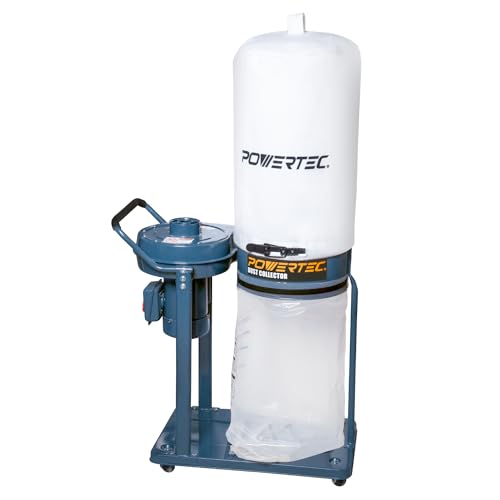
POWERTEC 1 HP Mobile Dust Collector
Strengths
- 800 CFM airflow
- 1 micron filtration
- Mobile and portable
Trade-offs
- Higher price point
- Bag replacement cost
- Base not as heavy-duty
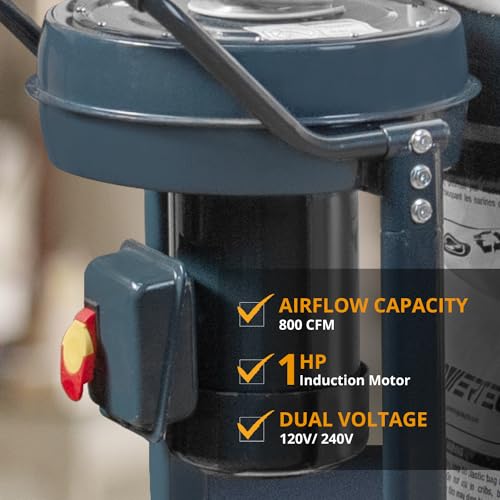
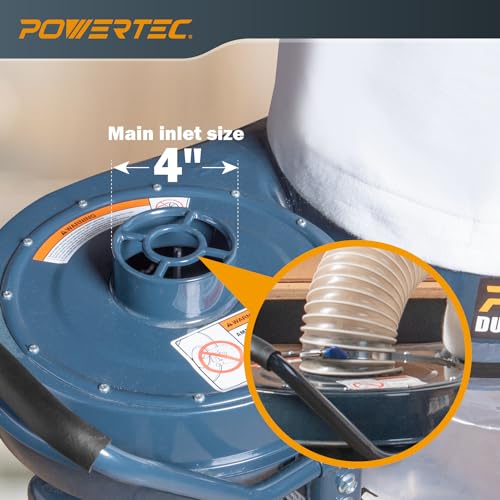
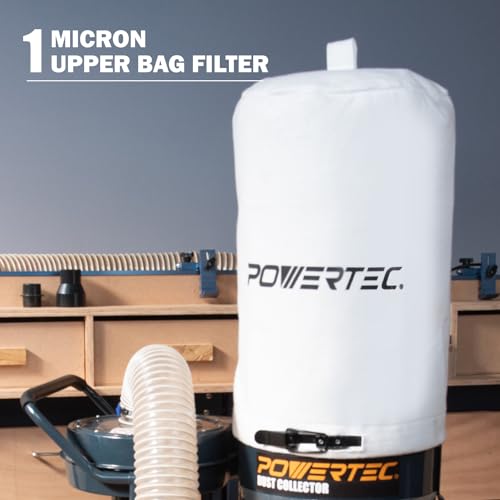
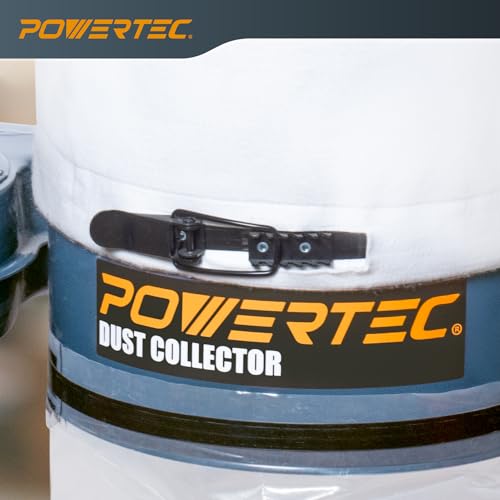
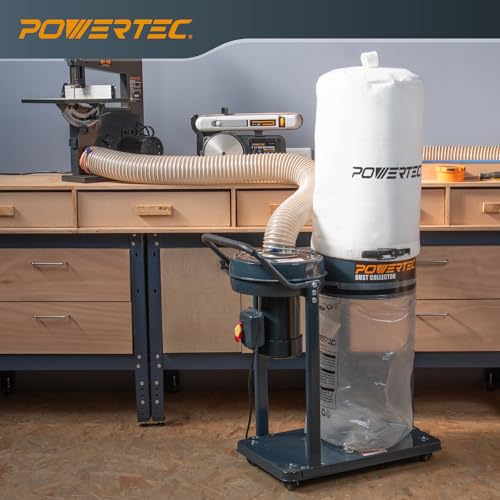
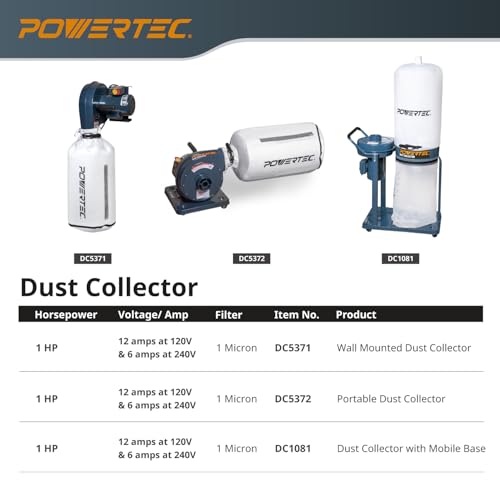
This is the most balanced all-around unit in the lineup. At 800 CFM, it’s stronger than the wall-mount version and comes with a mobile base, making it easy to reposition or integrate into a central system. The 1 micron filtration bag is a major upgrade over 5-micron models, capturing fine particulates that affect air quality and health.
Owners consistently rate it highly for reliability and ease of setup. The quick-release clamps are a small touch, but they make emptying the bag faster and cleaner. Compared to the WEN model, it trades some raw CFM for better filtration and quieter operation. For most home shops, that’s the smarter trade.
Product photos
WEN DC1300 50-Gallon Dust Collector
Strengths
- High 1,300 CFM output
- Dual 4-inch inlets
- 50-gallon vertical bag
Trade-offs
- 5-micron filter limit
- Noisy at full throttle
- Bag can bulge if overloaded
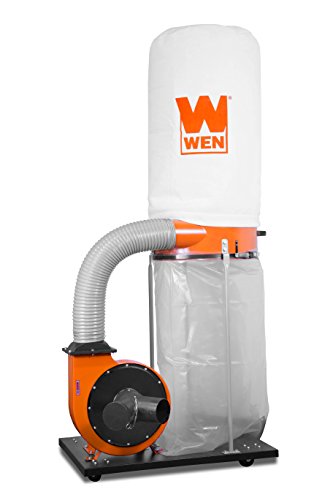
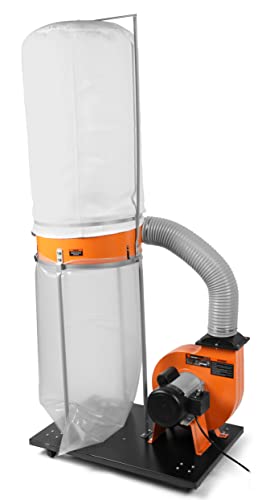
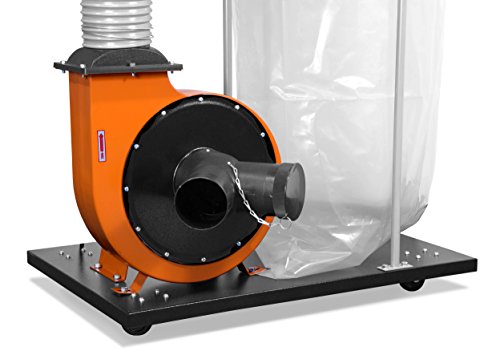
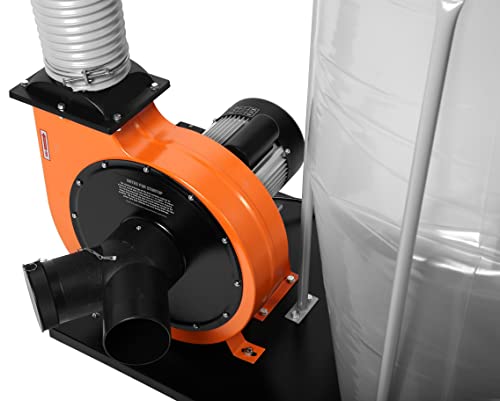
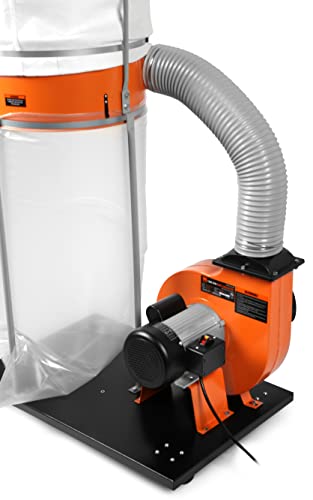
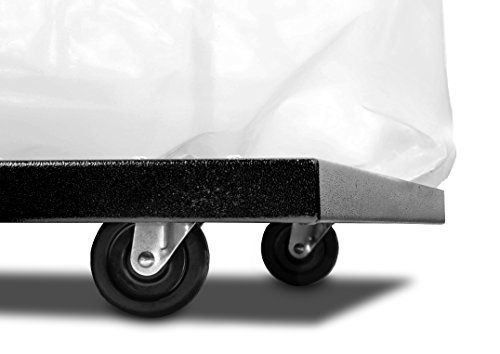
With 1,300 CFM and a 14-amp motor, this is the muscle car of budget-friendly dust collectors. It moves serious air, and the dual 4-inch inlets mean you can run two machines at once without a splitter, something I always recommend for better suction balance. The vertical 50-gallon bag is a smart design; it collapses as it fills and doesn’t tip easily, even on the mobile base.
Owners praise its reliability for mid-sized shops, though the 5-micron filtration isn’t fine enough for finishing sanding or allergy-sensitive environments. Still, for rough milling and jointing, it’s a workhorse. The noise level is typical for this class, loud, but nothing out of line.
Product photos
POWERTEC 1 HP Wall Mount Collector

Strengths
- Wall-mount design
- 1 micron filtration
- Vortex airflow efficiency
Trade-offs
- Modest CFM for heavy use
- Port clogging risk
- Limited capacity
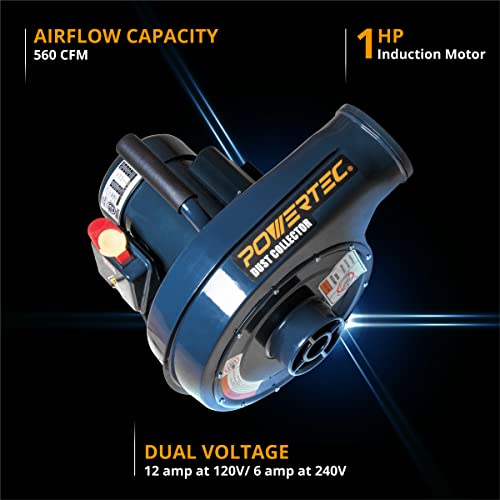
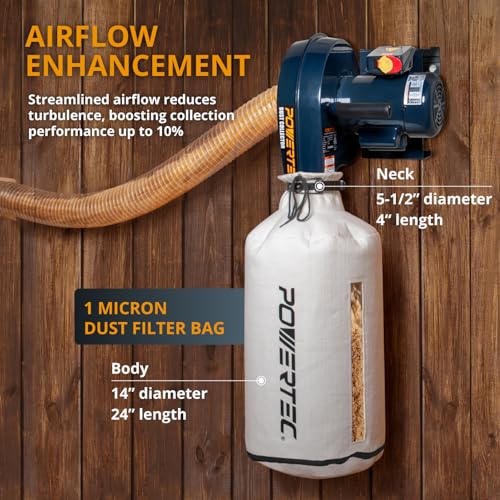
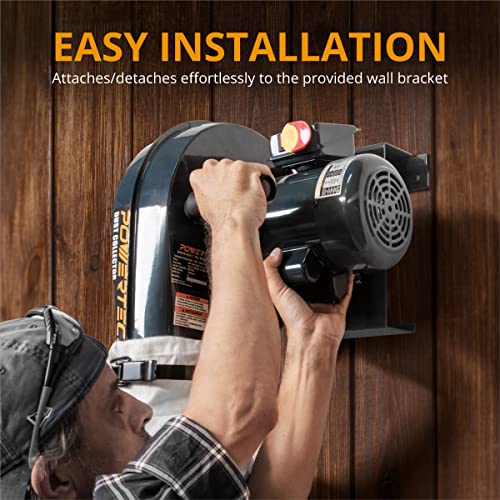
This wall-mount unit makes smart use of space, which I appreciate in tighter shops where floor area is at a premium. On paper, the 560 CFM and 1 HP motor are modest, but paired with the vortex base design, they deliver noticeably smoother airflow than similarly sized collectors. Owners consistently report it handles light to mid-duty routing and sanding well, though it’s not built for continuous heavy planer or wide-belt sander use.
The reusable 1 micron bag with a viewing window is a standout feature, helps you know when it’s time to dump without guessing. Still, that 4-inch side port with the protective grate needs regular checking. Reviewers note performance drops if debris builds up, so maintenance can’t be ignored.
Product photos

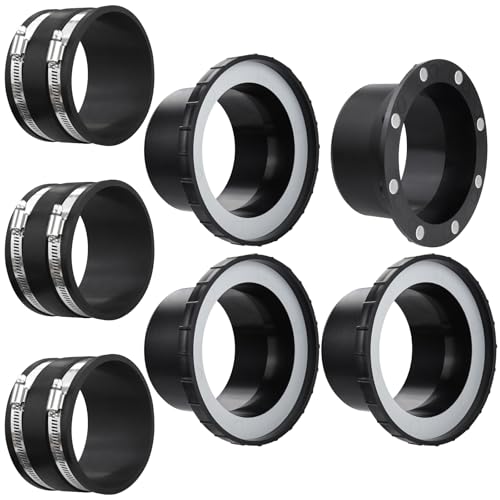
Magnetic Dust Collection Starter Kit
Strengths
- Fast magnetic connections
- Reduces setup time
- Clean shop layout
Trade-offs
- Requires flat metal ports
- Not for large debris
- Magnets weaken over time
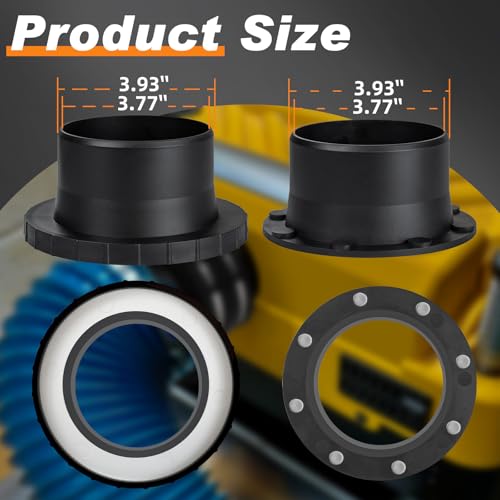
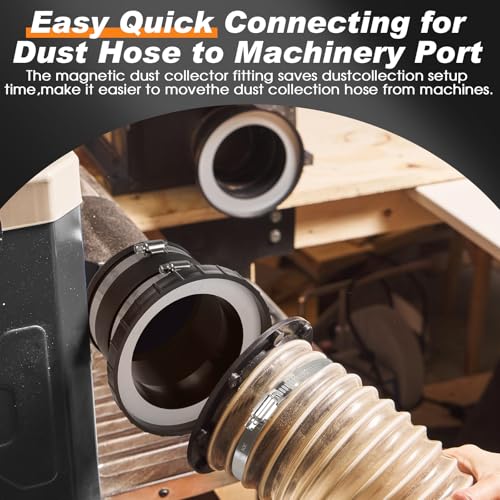
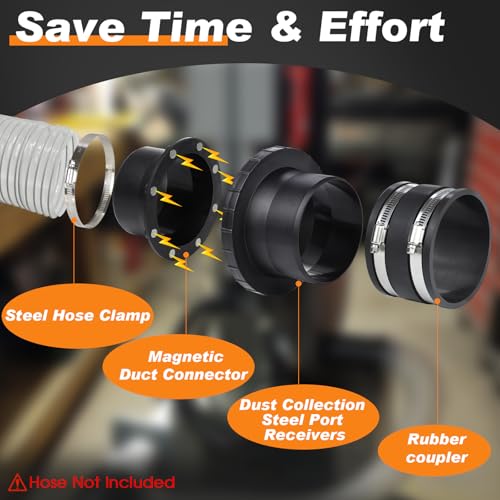
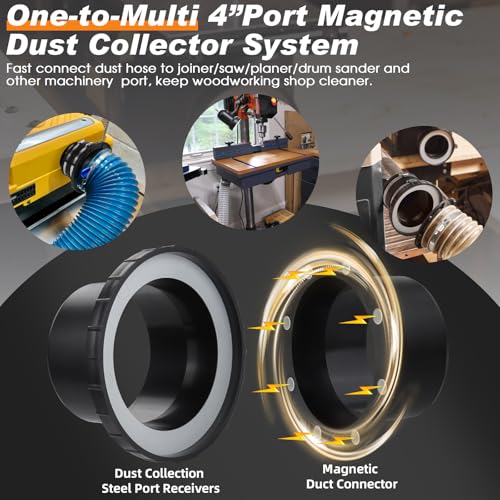
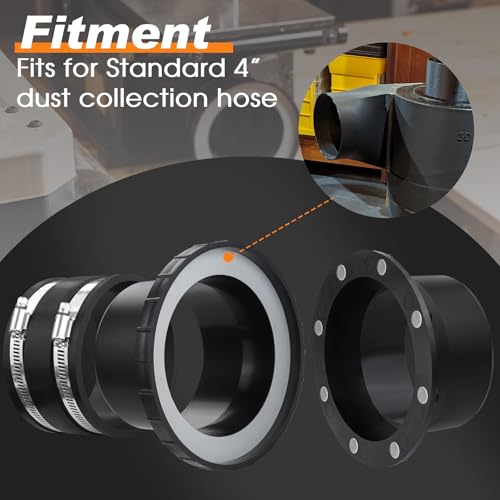
Switching tools with a single dust hose is a pain, this magnetic system fixes that. The strong magnetic couplers let you snap the hose on and off in seconds, which I know from experience saves real time during multi-tool projects. It’s designed for 4-inch ports, and owners confirm it holds tight during operation without leaks.
The kit includes multiple receivers, so you can install them on your jointer, planer, and sander, then move one hose between them. It’s not for high-volume central systems, but for small shops avoiding complex ducting, it’s a clever, practical upgrade. Just make sure your machines have flat metal ports for the magnets to seal.
Product photos
DeWALT Ceiling Air Filtration System

Strengths
- HEPA-level filtration
- Ceiling-mounted space saving
- Auto air sensing mode
Trade-offs
- Not a dust collector
- No tool port integration
- Higher filter cost
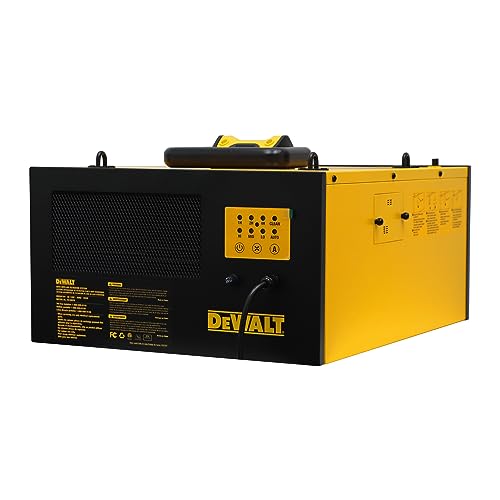
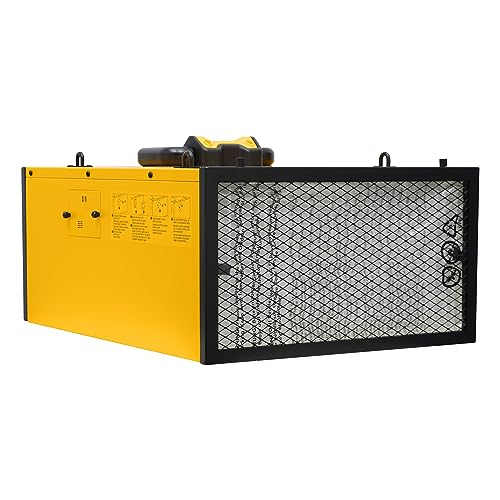
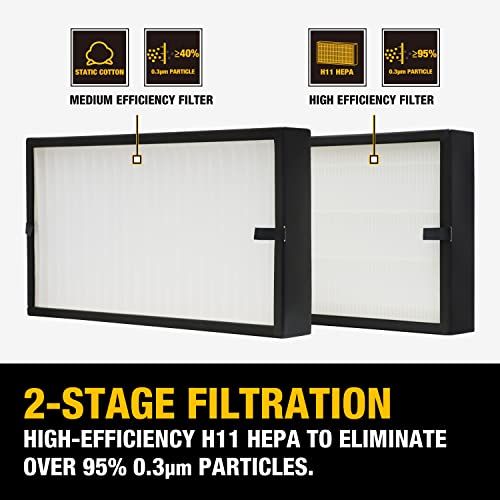
This isn’t a dust collector, it’s an air scrubber, and it does that job exceptionally well. The H11 HEPA filter and two-stage system capture over 95% of ultrafine 0.3-micron particles, which is critical for health in enclosed shops. Mounted from the ceiling, it runs quietly on AUTO mode, adjusting to air quality without intervention.
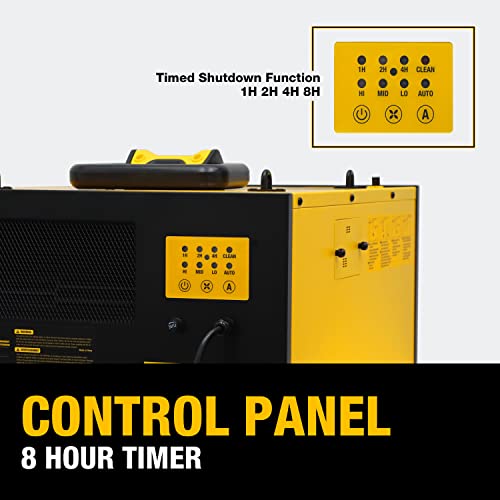
Owners love the remote and timer settings, they can set it to run overnight and walk into a cleaner shop. It won’t replace source collection at tools, but it handles the residual dust that escapes capture. For anyone with allergies or a finishing room, this is a must-have supplement.
Product photos

Mullet High-Speed Cyclone Separator
Strengths
- 99% debris separation
- Keeps vac filters clean
- Durable one-piece build
Trade-offs
- Requires shop vac
- No built-in motor
- PVC can crack in cold
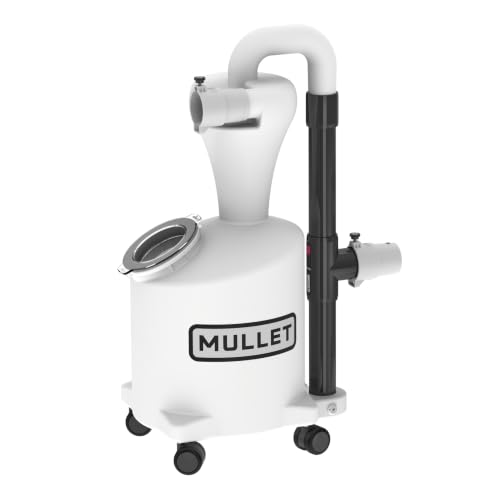
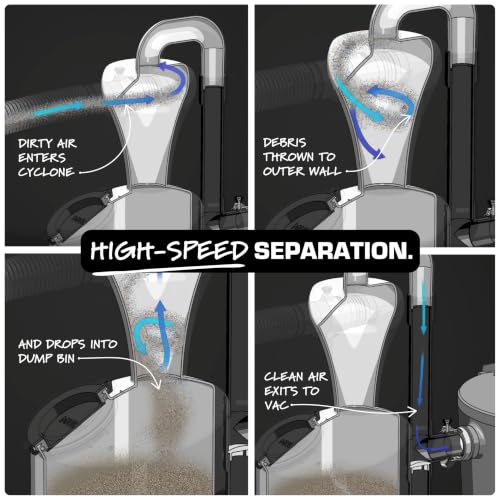
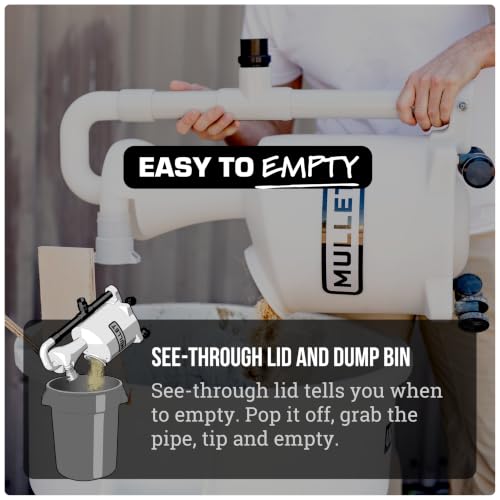
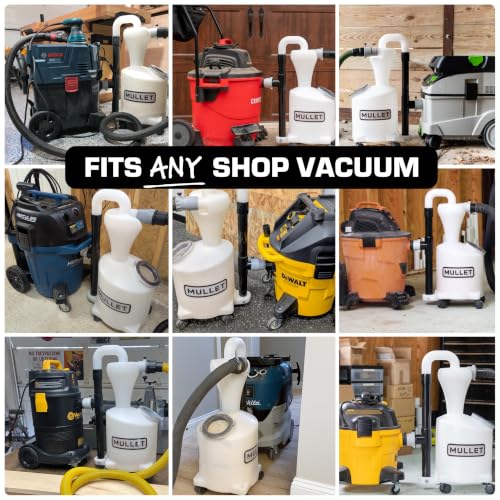
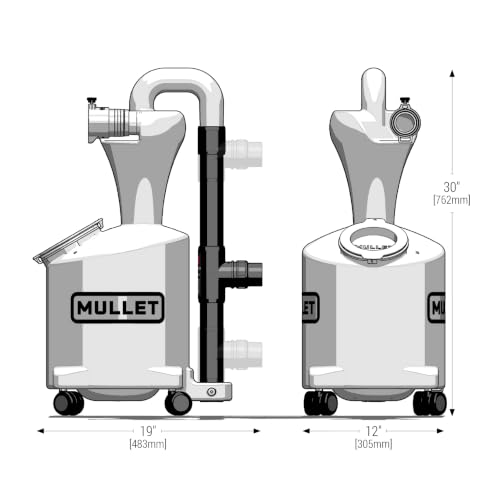
If you’re running a shop vac instead of a full dust collector, the Mullet cyclone is a game-saver. It pre-separates over 99% of debris, which keeps your vac filter clean and maintains suction, something every woodworker with a clogged filter can appreciate. The parabolic design creates a faster spin than basic bucket separators, improving efficiency.
Made in the USA and built with seamless PVC, it’s also more durable than DIY bucket setups. Users love how it extends vac life and reduces filter maintenance. It doesn’t collect dust on its own, of course, but as a pre-filter, it’s one of the best-engineered solutions in its class.
Product photos

VEVOR 1.6-HP Sandblaster Dust Collector

Strengths
- 1.6 HP strong suction
- Reclaims multiple media types
- Durable steel build
Trade-offs
- Small dust capacity
- Limited to blasting use
- Not for wood dust
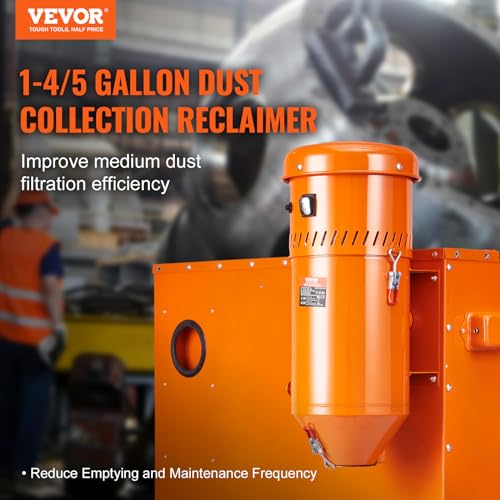
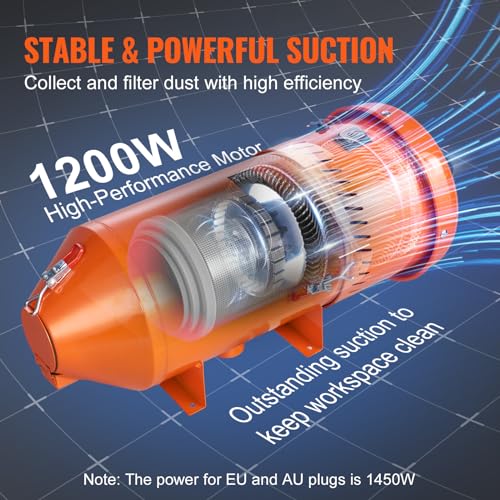
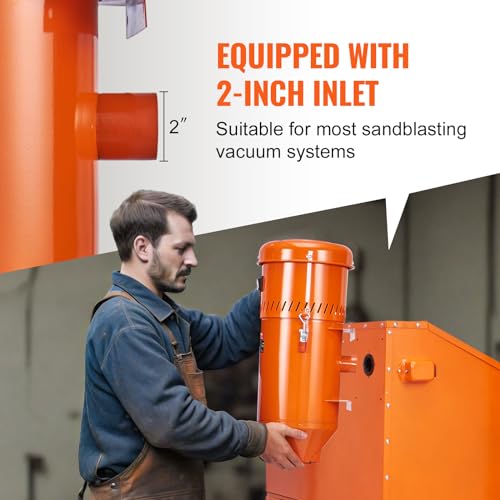
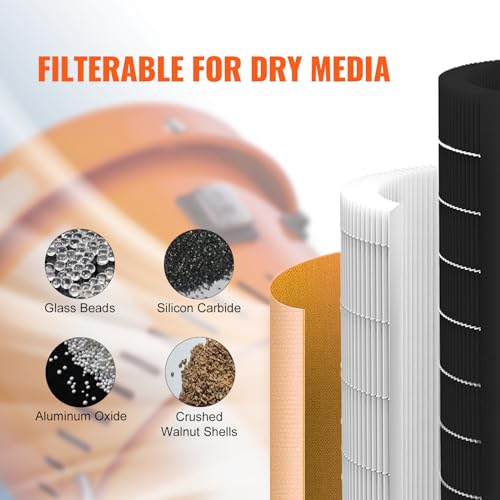
This is a niche tool with a clear purpose: reclaiming blasting media and keeping your blast cabinet environment clean. The 1.6 HP motor delivers strong suction, and the 2-inch inlet is standard for most cabinets. What impresses me is how well it handles different media types, owners confirm it works cleanly with glass beads, aluminum oxide, and even organic media like walnut shells.
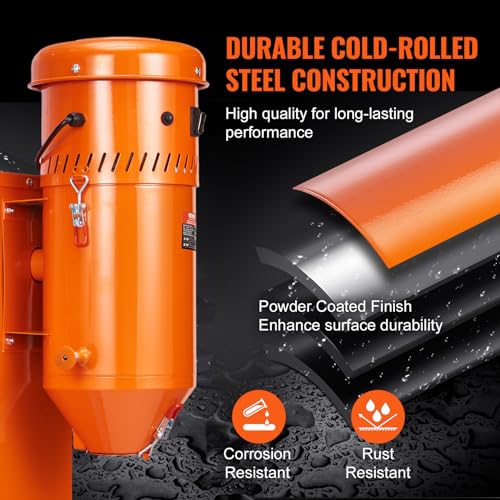
The steel housing feels rugged, and the 1.8-gallon capacity means fewer stops to empty. It’s not a replacement for shop dust collection, but as a dedicated reclaimer, it does its job efficiently. Just don’t expect fine filtration, it’s built for durability and function, not air polishing.
Product photos
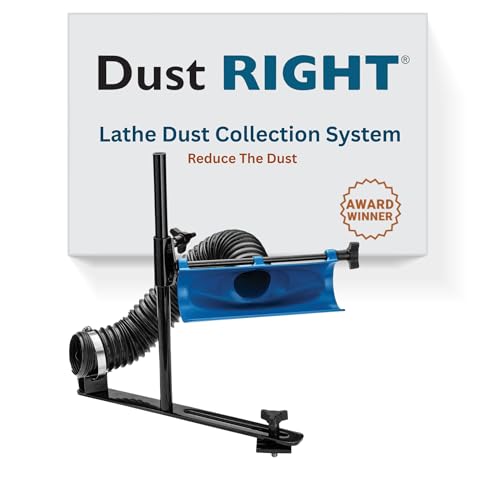
Dust Right Lathe Dust Collector
Strengths
- C-shaped dust scoop
- Adjustable steel arm
- Effective source capture
Trade-offs
- Lathe-specific use
- No motor included
- Hose kinking reported
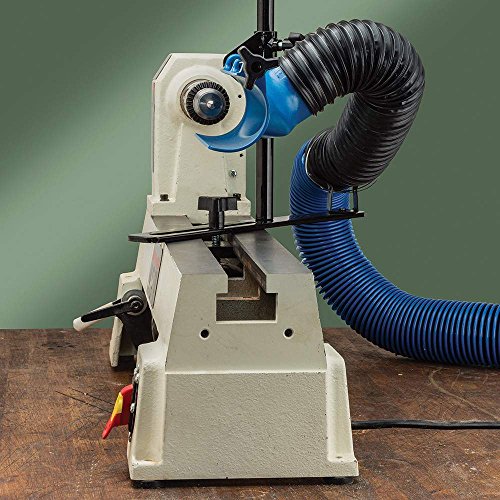
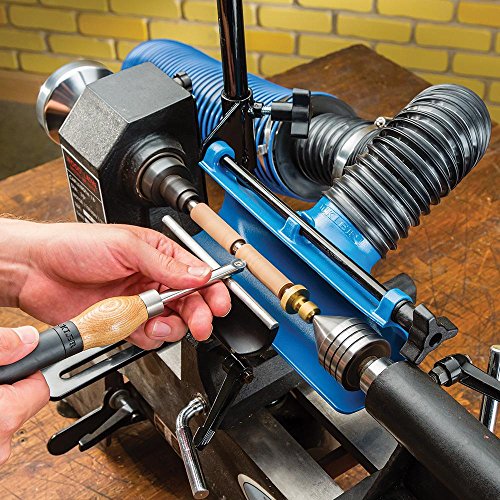
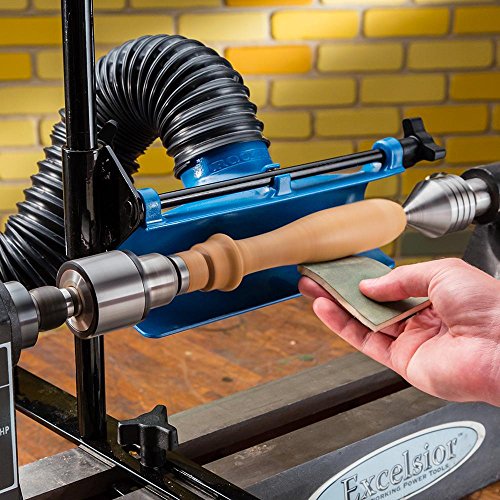
If you’re into pen turning or spindle work, this system nails the fundamentals. The C-shaped dust scoop is the real innovation here, it wraps around the workpiece and captures dust at the cut point, which is exactly where you need it. The steel boom arm is stiff enough to stay put during operation, and the FlexForm hose maintains a solid seal without restricting movement.
Compatibility is broad, and owners say it integrates cleanly with benchtop and full-size lathes alike. It won’t replace a full-shop collector, but as a targeted solution, it’s one of the few products that actually reduces airborne dust from lathe work instead of just shifting it around.
Product photos


How We Chose These shop dust collection systems
Rather than a hands-on lab test, my research focused on comparing published specifications and features across numerous models. I weighed owner reviews from multiple sources – including retailer sites and woodworking forums – alongside expert analyses from publications dedicated to shop tools. My goal was to rank these systems based on their suitability for different workshop needs, applying my experience with tool performance and dust management over the past fifteen years.
For shop dust collection systems, airflow (CFM) and filtration quality were the most heavily weighted factors. Strong CFM is essential for capturing dust at the source, preventing it from becoming a health hazard and coating the workshop. Equally important is the filter’s ability to trap fine particles; a 1-micron or HEPA filter is critical for truly clean air. Capacity, the size of the collection bag or drum, also mattered significantly, as frequent emptying reduces efficiency.
Specifications reliably indicate motor horsepower, airflow rates, and filter micron ratings. However, I placed more emphasis on owner feedback concerning real-world performance, noise levels, and durability. Reputation, particularly for brands known for quality construction and effective dust separation, played a key role. I also looked for consistent reports about ease of maintenance and compatibility with standard shop vac hoses, helping to identify truly practical wood shop dust collector systems.
What To Look For In shop dust collection systems
Picking the right dust collection system can dramatically improve your shop’s air quality and your overall woodworking experience.
A good dust collection system efficiently removes airborne particles at the source, improving visibility, reducing health risks, and preventing dust buildup. Key considerations include airflow (CFM), filtration level (micron rating), collection capacity, portability, and compatibility with your existing tools. Prioritize systems with sealed designs to minimize dust leakage and look for features like automatic filter cleaning for low-maintenance operation.
Airflow (CFM) and Static Pressure
Airflow, measured in Cubic Feet per Minute (CFM), is the most important spec. More isn’t always better, though. You need enough CFM to effectively pull dust away from your tools, but excessive airflow can mean a noisy system and potentially damage delicate tooling. A system with around 800-1000 CFM is a good starting point for smaller shops, but larger workshops or those running multiple machines simultaneously will benefit from 1300 CFM or higher, like the WEN DC1300 offers. Don’t forget static pressure – this measures the system’s ability to maintain airflow through restrictions like long hoses or filters.
Filtration and Bag Design
While CFM gets the dust moving, filtration determines what actually stays out of the air you breathe. A 1-micron filter is generally considered the minimum acceptable for woodworking, capturing the majority of harmful particles. However, finer filtration (like the H11 HEPA filter in the DeWALT Ceiling Air Filtration System) is ideal, especially if you’re sensitive to dust or working with exotic woods. Consider bag design, too. Reusable bags are cost-effective, but they require regular cleaning. Disposable bags are convenient but add to ongoing expenses.
- Single-use disposable bags are cheapest upfront but create ongoing waste.
- Reusable fabric bags save money long-term but need frequent cleaning to maintain airflow.
- Bags with a clear window, like those found on the POWERTEC 1 HP Wall Mount Collector, allow you to visually monitor dust levels and know when it’s time for emptying or cleaning, saving you from performance drops.
Portability and Versatility
How and where you plan to use the system significantly impacts your choice. If you have a dedicated shop space, a stationary system may be ideal. But if you move your tools around or work in a multi-purpose space, portability is key. Mobile systems with casters (like the POWERTEC 1 HP Mobile Dust Collector) offer flexibility. If you frequently switch between tools, consider a magnetic dust collection starter kit – these allow for quick connections and disconnections without fumbling with clamps. You could also look at shop vacs for fine dust to see if pairing a shop vac with a cyclone separator suits your needs.
A cyclone separator is a worthwhile investment. It pre-separates the majority of larger debris before it reaches the filter, extending filter life and maintaining consistent suction.
If you’re considering a dedicated dust collection system, exploring the top-rated dust collection models available can help narrow down your options.
Shop Dust Collection Systems Compared
Here’s a comparison of key specifications for various shop dust collection systems to help you make an informed decision.
| Product Title | Motor HP | CFM | Filter Type | Capacity (Gallons/cu ft) | Voltage (V) | Inlet Port (in) |
|---|---|---|---|---|---|---|
| POWERTEC 1 HP Mobile Dust Collector | 1 | 800 | 1 Micron | N/A | 120/240 | N/A |
| WEN DC1300 50-Gallon Dust Collector | N/A | 1,300 | N/A | 50 | N/A | 4 |
| POWERTEC 1 HP Wall Mount Collector | 1 | 560 | 1 Micron | N/A | 120/240 | 4 |
| Magnetic Dust Collection Starter Kit | N/A | N/A | N/A | N/A | N/A | 4 |
| DeWALT Ceiling Air Filtration System | N/A | N/A | H11 HEPA & Static | N/A | N/A | N/A |
| Mullet High-Speed Cyclone Separator | N/A | N/A | N/A | N/A | N/A | Universal |
| VEVOR 1.6-HP Sandblaster Dust Collector | 1.6 | N/A | N/A | 1.8 | N/A | 2 |
| Dust Right Lathe Dust Collector | N/A | N/A | N/A | N/A | N/A | N/A |
Frequently Asked Questions
What CFM is sufficient for a small workshop?
Around 800-1000 CFM is generally enough for a smaller workshop, but consider the tools you’ll be using. Higher CFM is needed if you plan to run multiple machines simultaneously or have long hose runs.
Are disposable dust bags truly more wasteful long-term?
Yes, while cheaper initially, disposable bags create ongoing waste and expense. Reusable fabric bags are more environmentally friendly and cost less over time, though they require regular cleaning to maintain suction.
Can I use a standard shop vac hose with these dust collectors?
Many systems are designed to be compatible with standard 2.5-inch shop vac hoses, but it’s always best to verify before purchasing. Adapters are often available if a direct connection isn’t possible.
What’s the benefit of a cyclone separator?
A cyclone separator pre-removes larger debris before it reaches the filter, extending filter life and maintaining consistent suction. Exploring workshop cyclone collectors can help determine if one suits your needs.
Is a 1-micron filter good enough for most woodworking?
A 1-micron filter is a good starting point and captures the majority of harmful particles, but a finer filter, like a HEPA filter, is preferable if you have sensitivities or work with exotic woods.
The Bottom Line
Choosing a dust collection system often comes down to balancing control over your shop environment with the hassle of maintenance and expense. For most workshops, the WEN DC1300 strikes that balance very well – it delivers substantial airflow and capacity, making it a solid all-around performer for a reasonable price. It’s a system you can build around as your needs grow, and its larger capacity means less frequent bag changes.
If your priorities are different, there are compelling alternatives. For those needing a truly portable solution, especially in smaller spaces, consider exploring compact dust collection systems. If you’re on a tighter budget, the POWERTEC 1 HP Mobile Dust Collector provides good value. And for specialized needs, like overhead air purification, the DeWALT Ceiling Air Filtration System is a standout choice.
Ultimately, the CFM and micron rating are important, but don’t get lost in the numbers. A consistent, well-maintained system, even a simpler one, will always outperform a powerful system that’s neglected. Prioritize a good filter, regular emptying, and properly sized hoses, and you’ll create a workshop that’s both safer and more enjoyable.
