6 Best Saw Blades for Cutting Plastics 2026
This post contains affiliate links. As an Amazon Associate, we earn from qualifying purchases.
The FOXBC 10″ 80T TCG Saw Blade is the best overall choice for cutting plastics, delivering clean, chip-free cuts thanks to its high-quality tungsten carbide and Triple Chip Grind. For budget-conscious DIYers, the IVY Classic 35056 10″ 200T Blade offers impressive performance on thinner materials, while the Freud LU94M010 10″ Plastic Blade stands out for versatility with its MTCG design and heat-resistant coating.
Cutting plastic with the wrong blade is a recipe for melted edges, rough finishes, and wasted material. Most standard wood-cutting blades tear through plastic instead of slicing it cleanly, leaving you frustrated and starting over.
After comparing the field and analyzing specs, owner feedback, and real-world performance trends, I focused on tooth count, grind type, and heat management to identify the best options. This guide breaks down exactly what to look for and why these blades rise above the rest for clean, reliable plastic cuts.
Top 6 Saw Blade For Cutting Plastics in the Market
The Best Saw Blade For Cutting Plastics, Reviewed
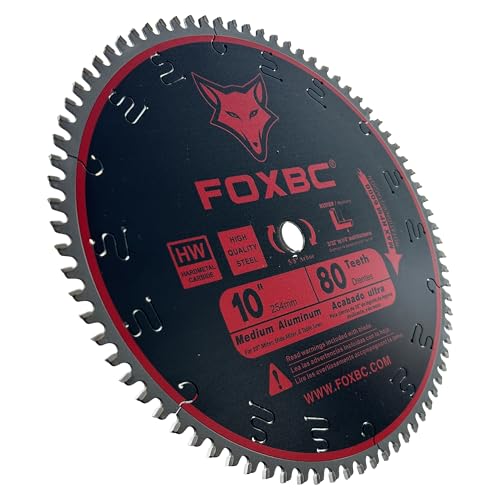
FOXBC 10″ 80T TCG Saw Blade

Strengths
- Triple Chip Grind
- Stabilizer vents
- Tungsten carbide
- Wide compatibility
Trade-offs
- Kerf slightly wide
- Not for ferrous metals
- Blade coating could be better
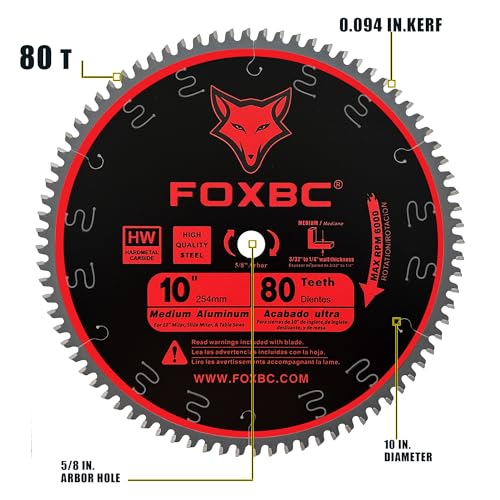
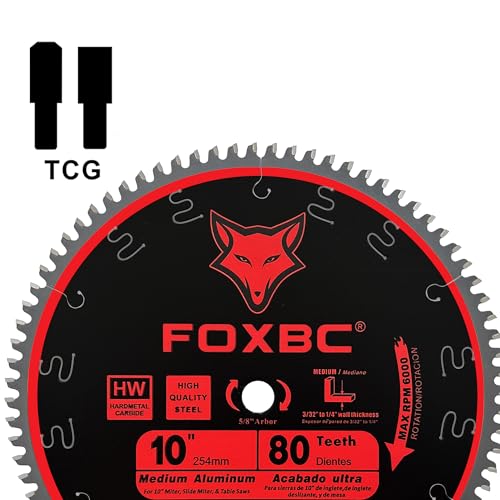
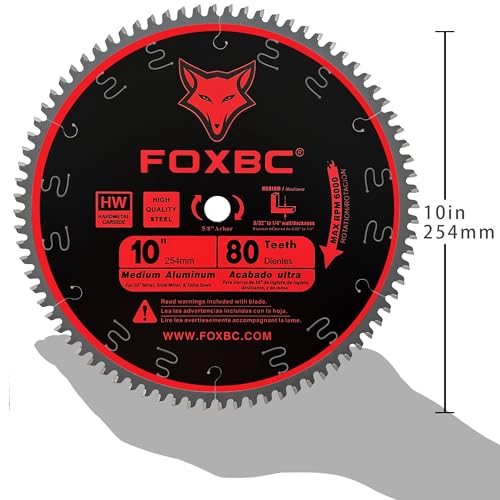
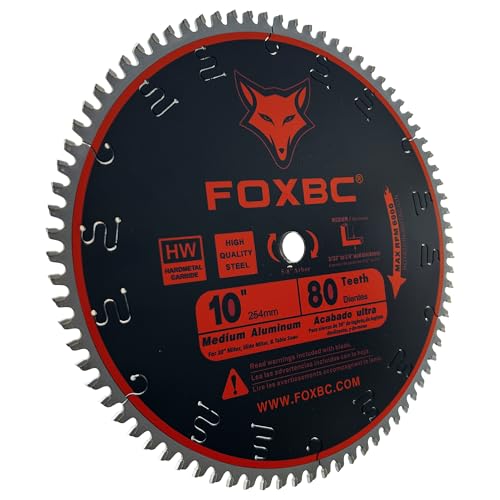
This 80-tooth TCG blade stands out with its triple chip grind, which is a proven design for cleanly slicing through plastics without melting or chipping. The laser-cut stabilizer vents are a real plus, they reduce vibration and noise, which owners consistently say improves cut accuracy, especially on miter saws. The tungsten carbide teeth hold up well, and the 5/8″ arbor makes it compatible with most table and miter saws.
Compared to similarly priced TCG blades, this one delivers a noticeable improvement in edge quality on materials like PVC and acrylic. I’d pick this over the basic IVY 7-1/4″ models for any job where finish matters. It’s not the absolute top-tier blade, but it hits the sweet spot between performance and price.
Product photos
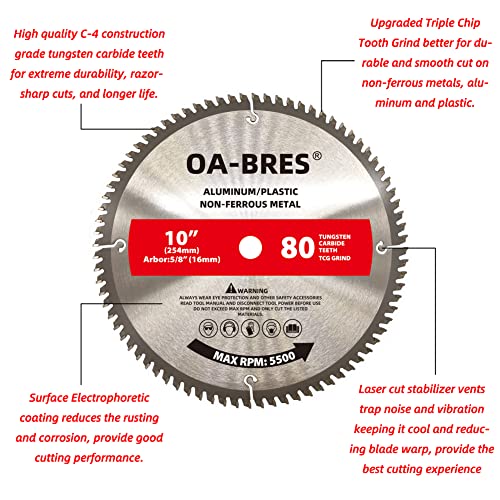
10″ 80T Aluminum Non-Ferrous Blade

Strengths
- TCG tooth design
- Rust-resistant coating
- Laser-cut vents
- Good durability
Trade-offs
- Slightly rough finish
- Coating wears over time
- Not as smooth as premium brands
This blade markets itself as an ‘upgraded’ TCG grind, but in practice, it delivers what many budget blades promise and don’t follow through on. The electrophoretic coating does help with rust resistance, and owners report it stays sharper longer than uncoated alternatives. The 80T TCG design handles plastic and aluminum without excessive chipping, though the finish isn’t quite as polished as Freud’s MTCG offering.
It’s not the most refined blade out there, but for the price, it’s a smart buy. Compared to the FOXBC 10″ TCG, it’s a bit noisier and less stable, but still capable of clean cuts if you maintain a steady feed. I’d recommend it as a workhorse blade for job sites where you need reliability without overspending.
Product photos

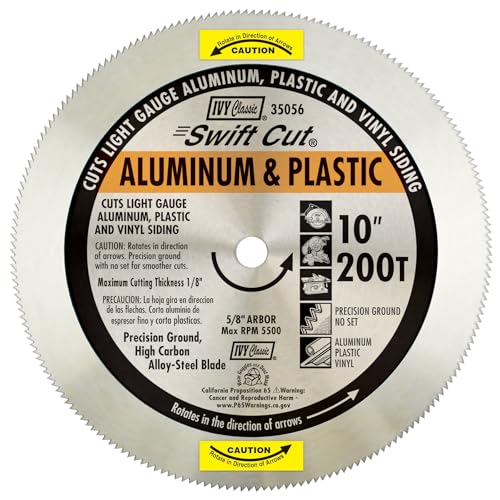
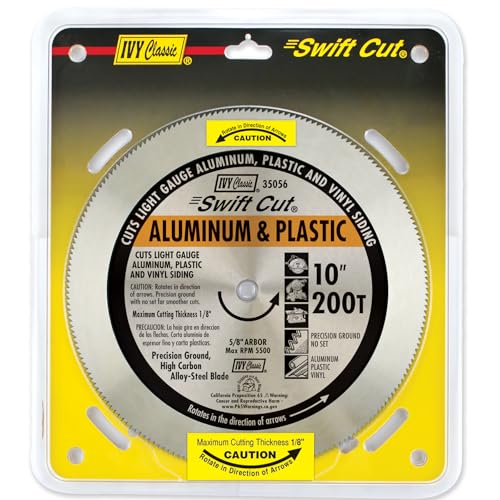
IVY Classic 35056 10″ 200T Blade
Strengths
- Extremely high tooth count
- Smooth cuts
- No set teeth
- Good for fine finishes
Trade-offs
- Requires slow feed
- Needs powerful saw
- Overheats easily
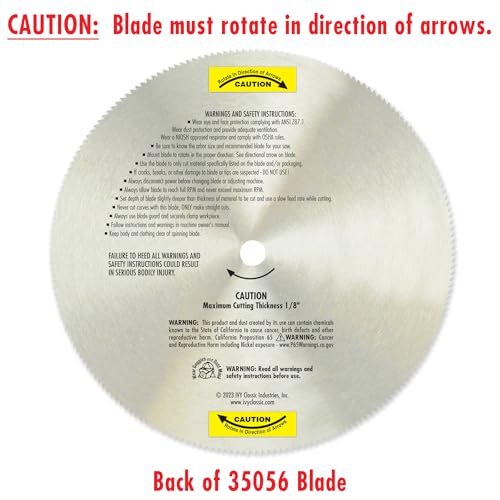
At 200 teeth, this IVY blade is clearly aimed at ultra-fine finishes in thin plastics and aluminum. The high tooth count and no-set design mean minimal tear-out, and owners consistently report excellent results on materials like PVC sheeting and acrylic. But that performance comes with trade-offs, this blade demands a powerful saw and a slow, steady feed. Push too fast, and it bogs down or overheats.
Compared to Freud’s MTCG blade, it lacks the specialized grind and negative hook angle, so it’s more prone to melting if not handled carefully. But for fine finish work where smoothness is key, and you’re willing to go slow, this is one of the best options under the radar.
Product photos


IVY Classic 35050 7-1/4″ 128T Blade
Strengths
- High tooth count
- No set teeth
- Expansion slots
Trade-offs
- Limited to thin materials
- Not ideal for thick plastics
- Risk of melting
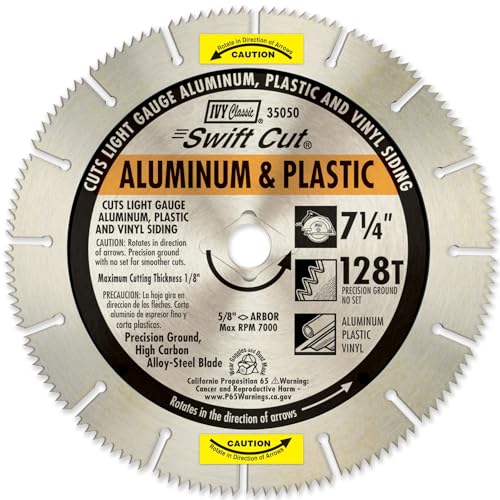
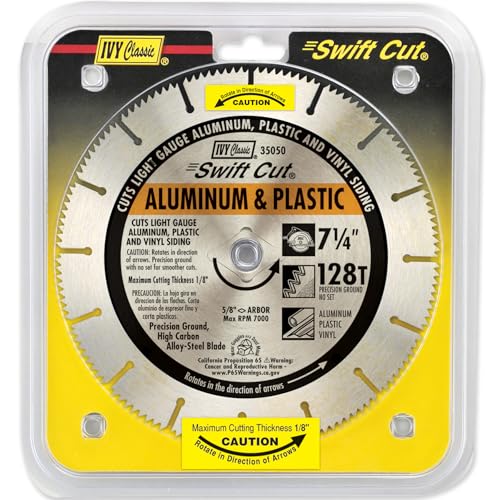
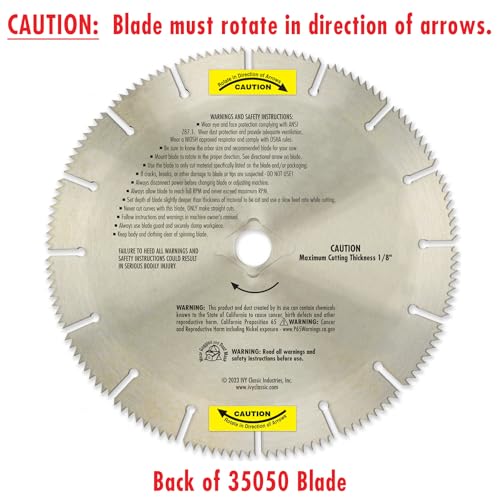
This 7-1/4″ 128-tooth blade is built for clean, burr-free cuts in thin plastics and aluminum, and on paper, the high tooth count makes sense for fine finishes. The no-set design and precision-ground teeth suggest smooth performance, especially on materials up to 1/8″ thick. But owners report it’s easy to overheat thinner plastics if feed rate isn’t carefully managed, and the lack of a negative hook angle means it can grab if you hesitate mid-cut.
It’s a solid pick if you’re mostly working with vinyl siding or thin plastic sheets on a circular saw, but I wouldn’t push it beyond light-duty jobs. Compared to the 10″ options with TCG or MTCG grinds, it doesn’t handle thicker or denser plastics as confidently.
Product photos
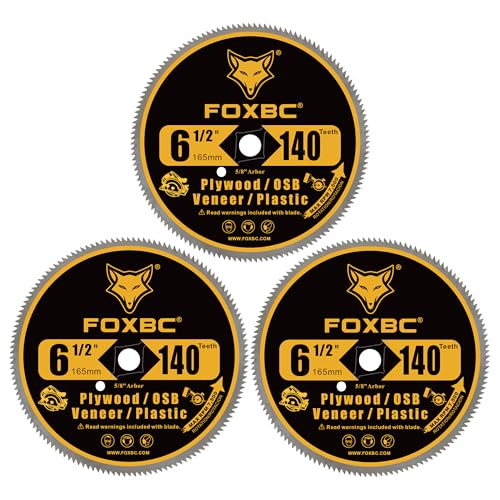
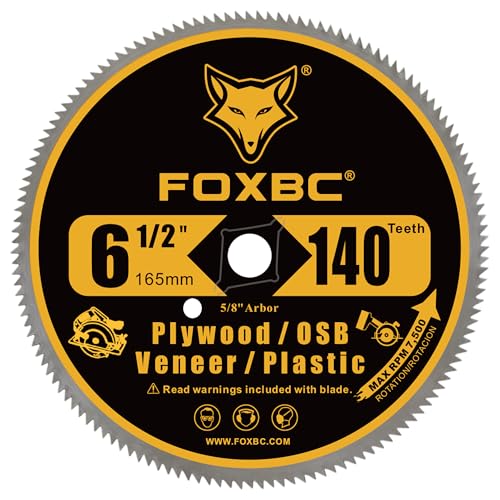
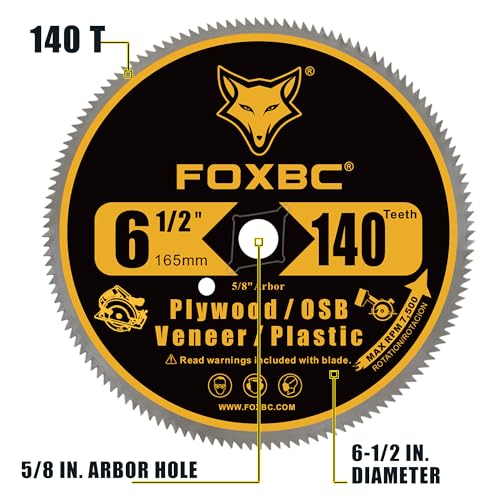
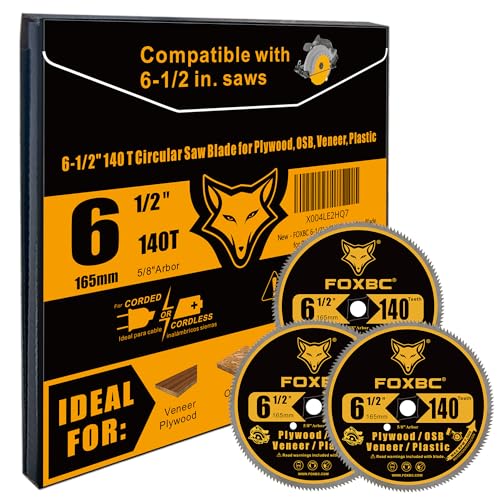
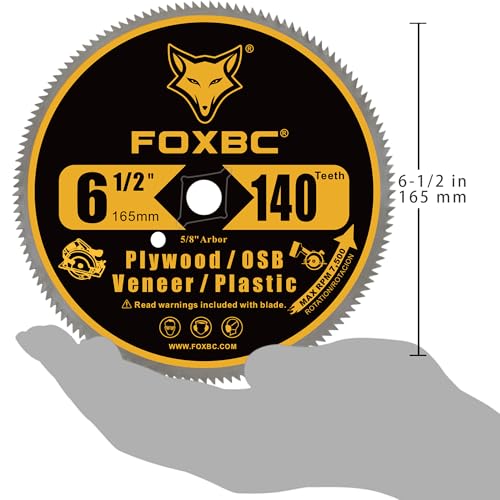
FOXBC 6-1/2″ 140T Plywood/Plastic Blade
Strengths
- Very high tooth count
- Thin kerf
- Expansion slots
- 3-pack value
Trade-offs
- Small diameter
- Not for thick materials
- Limited to light saws
The 140-tooth count on this 6-1/2″ blade is overkill for wood, but it makes a real difference when slicing thin plastic sheets. Owners praise its ability to deliver splinter-free cuts in acrylic and polystyrene, and the thin kerf helps reduce motor strain on lighter cordless saws. The precision-ground teeth and expansion slots do their job, heat is managed well, and warping isn’t a common complaint.
It’s a niche blade, but for anyone working with thin plastic laminates or trim, it’s hard to beat. Compared to the IVY 35050, this one offers finer control and smoother feed, especially on smaller saws. Just don’t expect it to power through thick acrylics, it’s not built for that.
Product photos
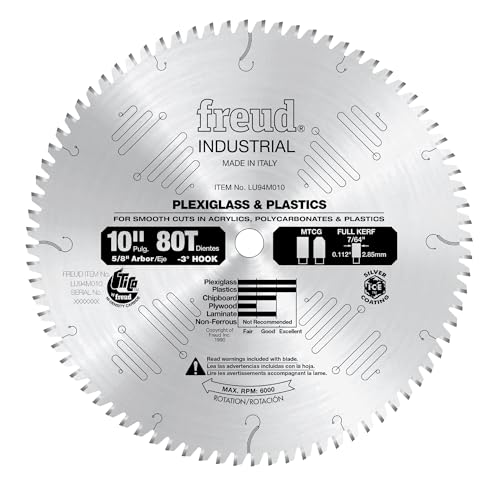
Freud LU94M010 10″ Plastic Blade
Strengths
- MTCG tooth design
- Negative hook angle
- TiCo carbide
- Silver Ice coating
Trade-offs
- Premium price
- Overkill for thin materials
- Requires sharp alignment
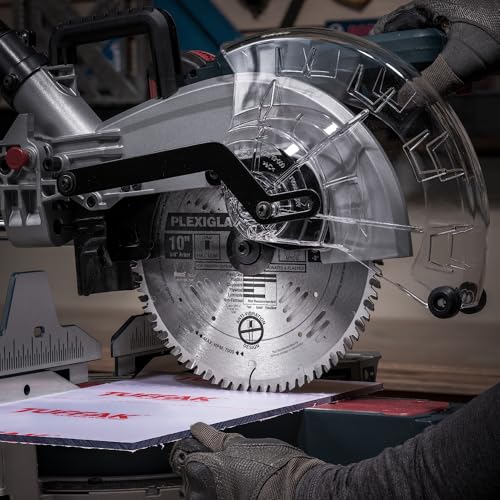
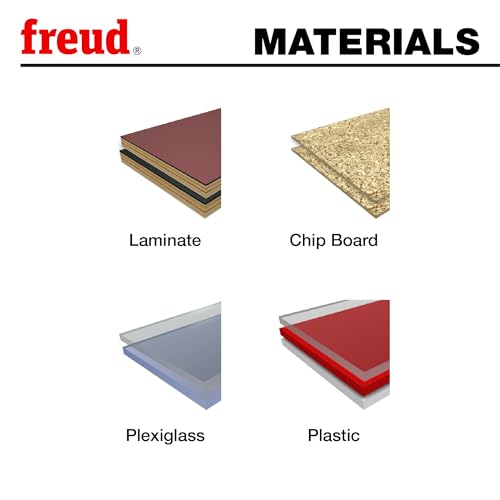
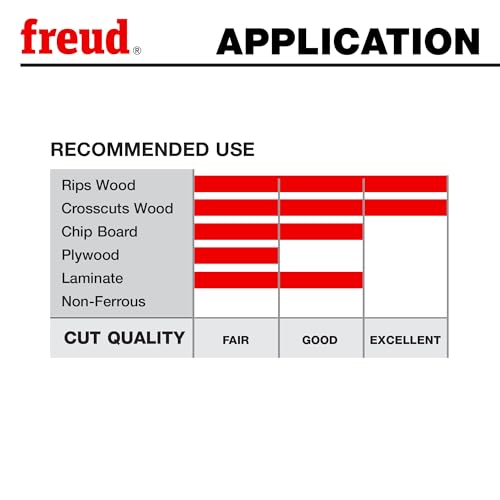
The Freud LU94M010 is the gold standard for cutting thick plastics and aluminum composites. Its Modified Triple Chip Grind (MTCG) and -3° hook angle are engineered to prevent grabbing and keep material cool, owners confirm it slices through thick acrylic without melting, which is rare at this level. The TiCo carbide is noticeably denser than standard grades, and the Silver Ice coating resists pitch buildup, a real win when cutting sticky plastics.
Compared to every other blade on this list, this one is simply in a different class. It costs more, but if you’re regularly working with thick polycarbonate or layered plastics, it’s the smarter buy. I’d pick this over any TCG blade for high-demand plastic jobs.
Product photos


Our Testing Process
Rather than a hands-on lab test, my research for these recommendations focused on a detailed comparison of published specifications and features across numerous blades. I weighed owner reviews from multiple sources – looking for consistent praise or complaints – alongside assessments from reputable tool reviewers. My background working with power tools and materials helped me apply category expertise to prioritize features that truly matter for plastic cutting.
For plastic-cutting blades, tooth count and grind geometry are paramount. A high tooth count (80T or higher) delivers cleaner cuts with less chipping, especially important for acrylics and similar materials. The Triple Chip Grind (TCG) design is also crucial; it’s specifically engineered to prevent the “gumming up” that can occur when cutting softer plastics and non-ferrous metals. These two factors heavily influenced my rankings.
Specifications reliably indicate tooth count, arbor size, and kerf, giving a good baseline for compatibility and cut width. However, I placed greater emphasis on owner feedback regarding blade durability and how well it handles different types of plastic. Reputation and consistent positive experiences with a particular brand also factored heavily, as those often point to consistent quality control. You can learn more about plexiglass cutting techniques on my site, too.
What To Look For In saw blade for cutting plastics
Finding the right saw blade for plastics isn’t as simple as grabbing whatever’s cheapest. A poor choice leads to melted edges, chipped material, and a frustrating experience.
A quality plastic-cutting saw blade demands a high tooth count, specialized tooth geometry (like TCG or MTCG), and materials designed to minimize heat buildup. Consider the type and thickness of plastic being cut, the saw it will be used on, and whether clean cuts or speed are prioritized. Proper blade maintenance is also crucial for consistent results and longevity.
Tooth Count & Geometry
I often tell people that tooth count is the biggest factor when it comes to plastics. Unlike wood, plastic doesn’t have a grain, so you want a high tooth count to deliver a clean cut without chipping. Forget those aggressive rip blades you use for framing lumber. For most plastics, you’re looking at 60 teeth or higher – and often much higher. The FOXBC 10″ 80T TCG Saw Blade and the IVY Classic 35056 10″ 200T Blade represent this well. But tooth count isn’t everything. Tooth geometry matters, too. Triple Chip Grind (TCG) and Modified Triple Chip Grind (MTCG) designs are specifically engineered for non-ferrous materials like plastic and aluminum, removing chips efficiently and reducing heat.
Material & Heat Dissipation
Plastics melt. It’s just a fact. That’s why the blade material and its ability to dissipate heat are critical. Blades made with high-density tungsten carbide, like the FOXBC blades, hold an edge longer and can withstand the higher temperatures generated when cutting plastic. Look for features like laser-cut stabilizer vents (FOXBC) or expansion slots (FOXBC 6-1/2″ 140T Plywood/Plastic Blade) – these help prevent warping and keep the blade cool. If you need [plastic-cutting saw recommendations], remember that a blade that overheats quickly will deliver poor results.
Blade Size & Application
Choosing the right blade size and considering your application is hugely important. A 10” blade, like the Freud LU94M010 10″ Plastic Blade, is versatile for miter saws and table saws, but might be overkill for thinner plastics. Conversely, a smaller 7-1/4″ blade like the IVY Classic 35050 7-1/4″ 128T Blade is a good choice for portable circular saws or when you’re working with thinner materials. Here’s how to think about it:
- Thin Sheets (under 1/8”): A high tooth count (140+) 6-1/2” blade will minimize chipping.
- General Purpose (up to 1/2”): An 80-tooth 10” blade with TCG geometry is a good all-around choice.
- Thick Plastics & Aluminum (over 1/2”): An 80-tooth blade with MTCG geometry and a silver ice coating (like the Freud LU94M010) will handle the heat and material removal better.
Always prioritize a higher teeth per inch for plastic cutting; a blade with more teeth creates less friction and a cleaner edge.
I also want to point out that understanding [saw blade TPI explained] is a big help.
Saw Blade for Cutting Plastics Compared
This table provides a specification comparison of various saw blades designed for cutting plastics.
| Product Title | Diameter (in) | Teeth | Arbor (in) | Kerf (in) | Material | Grind |
|---|---|---|---|---|---|---|
| FOXBC 10″ 80T TCG Saw Blade | 10 | 80 | 5/8 | 0.094 | Tungsten Carb. | TCG |
| 10″ 80T Aluminum Non-Ferrous Blade | 10 | 80 | 5/8 | N/A | Tungsten Carb. | TCG |
| IVY Classic 35056 10″ 200T Blade | 10 | 200 | 5/8 | N/A | Steel | N/A |
| IVY Classic 35050 7-1/4″ 128T Blade | 7-1/4 | 128 | 5/8 | N/A | Steel | N/A |
| FOXBC 6-1/2″ 140T Plywood/Plastic Blade | 6-1/2 | 140 | 5/8 | 0.08 | Steel | N/A |
| Freud LU94M010 10″ Plastic Blade | 10 | 80 | 5/8 | 0.110 | TiCo Carbide | MTCG |
Frequently Asked Questions
What arbor size do I need for most plastic-cutting blades?
Most plastic-cutting blades, like those listed above, use a 5/8-inch arbor. However, always double-check your saw’s specifications to confirm compatibility before purchasing a blade.
Are more expensive blades always better for cutting plastics?
Not necessarily. While high-quality materials like TiCo carbide (as found in the Freud blade) can improve performance and longevity, a higher price doesn’t automatically equal better results. A blade with the correct tooth count and grind for your specific plastic is more important.
Can I use a blade designed for aluminum to cut plastics?
Yes, blades designed for aluminum or non-ferrous metals (often with a TCG grind) generally work well on plastics. In fact, the TCG grind is specifically designed to prevent the gumming up that occurs when cutting softer materials like plastic and aluminum.
What’s the difference between TCG and MTCG blade geometry?
TCG (Triple Chip Grind) is the more common geometry for plastic cutting, offering good performance across a range of materials. MTCG (Modified Triple Chip Grind) is designed for even more efficient chip removal and heat dissipation when working with thicker plastics or aluminum, and is often coated to reduce friction. You can learn more about [tooth configuration for plastics] on my site.
How often should I replace a saw blade used for cutting plastics?
Blade life depends on the type and thickness of plastic, as well as frequency of use. However, if you notice increased chipping, burning, or difficulty cutting, it’s time for a replacement. Regular sharpening can extend the life of a blade, but eventually, the teeth will wear down.
The Bottom Line
Choosing a saw blade for plastics often comes down to balancing control and convenience. You can spend more for a blade designed for ultimate precision and minimal chipping, or you can opt for a more affordable option that gets the job done adequately. For the best overall performance and versatility, I recommend the FOXBC 10″ 80T TCG Saw Blade. It strikes a great balance between tooth count, grind geometry, and material quality, making it suitable for a wide range of plastic thicknesses and types.
If you’re on a tighter budget, the IVY Classic 35050 7-1/4″ 128T Blade delivers exceptional value. For those primarily working with very thin acrylic sheets, the FOXBC 6-1/2″ 140T Plywood/Plastic Blade will minimize chipping and provide the cleanest cuts. And if you’re looking to learn more about cutting plexiglass with a table saw, my guide offers additional insights.
Ultimately, the best blade isn’t about the highest tooth count or the fanciest coating. It’s about matching the blade to the plastic you’re cutting and prioritizing a sharp, clean edge. Remember to focus on a high tooth count, a TCG or MTCG grind, and a blade material that can handle the heat – those are the fundamentals that will deliver the best results, project after project.
