7 Best Saw Blades for Cutting Aluminum 2026
This post contains affiliate links. As an Amazon Associate, we earn from qualifying purchases.
The best saw blade for cutting aluminum is the FOXBC 12-Inch 96T TCG Blade for heavy-duty, clean cuts on larger stock, while the TOYAKI 10-Inch 120T Aluminum Blade stands out as a top versatility pick for fine finishes on extrusions and sheet metal. For budget-conscious DIYers, the 10-Inch 80T Non-Ferrous Blade delivers solid performance without the premium price.
Cutting aluminum with the wrong blade leads to rough edges, excessive burring, and overheating that can ruin both the material and your saw. Many blades claim to handle metal but fail under real use, leaving you frustrated and wasting time on cleanup.
This guide cuts through the noise. I compared specs, analyzed owner feedback, and applied years of hands-on tool experience to spotlight blades that actually perform. You’ll learn what makes a blade work well for aluminum and why factors like tooth grind and carbide quality matter more than marketing hype.
Top 7 Saw Blade For Cutting Aluminums in the Market
The Best Saw Blade For Cutting Aluminums, Reviewed
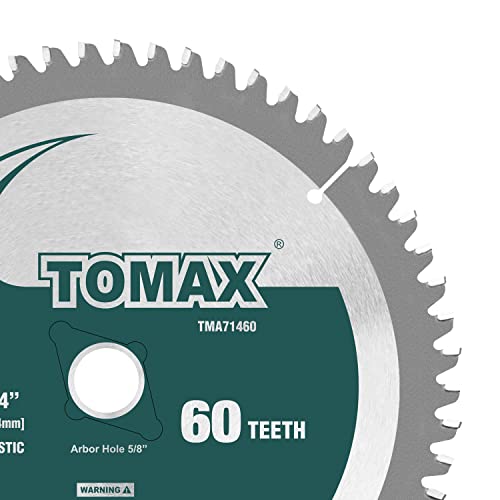
TOMAX 7-1/4-Inch 60T Blade

Strengths
- 60-tooth TCG for efficient cutting
- Electrophoretic anti-corrosion coating
- 5/8-inch DMK arbor for easy fit
- Compact 7-1/4-inch size
- Lifetime warranty
Trade-offs
- Not for fine finish work
- Limited depth of cut
- Some chatter on thin stock
The TOMAX 60T stands out as the most practical choice for users relying on handheld circular saws or compact miter setups. The 60-tooth TCG grind offers the right mix of speed and control for cutting aluminum studs, flashing, or conduit on the job site. It’s not meant for fine finishes, you’ll likely need light deburring, but it powers through material without bogging down, even on lower-amp tools.
Owners appreciate the electrophoretic coating for rust resistance and the DMK arbor for easy mounting. Compared to the IVY 128T, it’s far more versatile on thicker or uneven cuts. And unlike larger 10-inch blades, it fits most portable saws without modification. With a limited lifetime warranty, it’s the kind of blade I’d recommend as a go-to for general aluminum tasks where portability matters.
Product photos


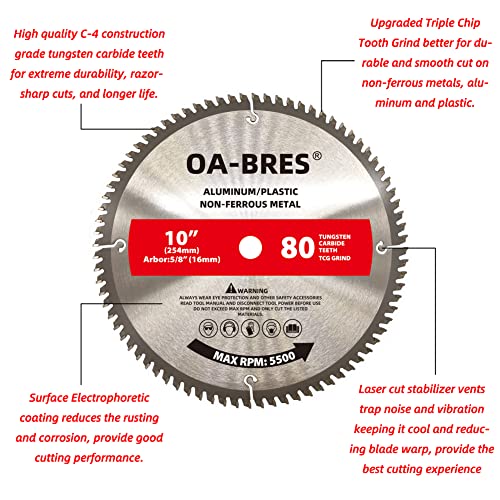
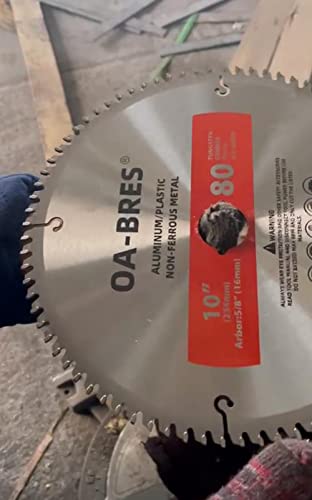
10-Inch 80T Non-Ferrous Blade

Strengths
- Affordable price point
- Electrophoretic anti-rust coating
- Upgraded TCG grind
- Laser-cut stabilizer vents
- 5/8-inch arbor fit
Trade-offs
- Shorter lifespan under heavy use
- Slight imbalance noted by some
- Less aggressive feed capability
This budget-friendly 80T blade delivers more than you’d expect for its price, making it a smart choice for occasional aluminum cutting. The electrophoretic coating stands out, owners report less rust even in humid garages, which is a real win for tools that sit between jobs. The upgraded TCG grind performs well on standard aluminum trim and plastic pipe, and the laser-cut vents help keep it stable, though not quite as smooth as the pricier FOXBC version.
It won’t last as long as premium blades under constant use, but for weekend projects or one-off cuts, it’s hard to beat. Compared to the MASTEC or TOYAKI models, it lacks some refinement in balance and tooth quality, but it gets the job done without breaking the bank.
Product photos
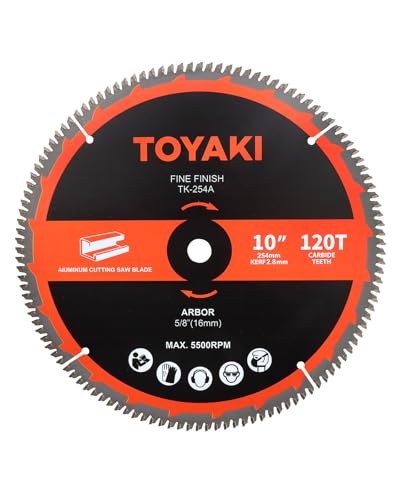
TOYAKI 10-Inch 120T Aluminum Blade
Strengths
- 120 teeth for ultra-fine finish
- High-grade carbide teeth
- 2.8mm thickness for stability
- Balanced for reduced vibration
- 5/8-inch arbor compatibility
Trade-offs
- Slow material removal
- Requires careful feed rate
- Not for heavy stock
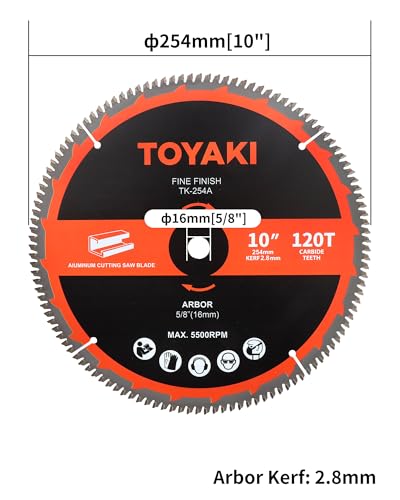
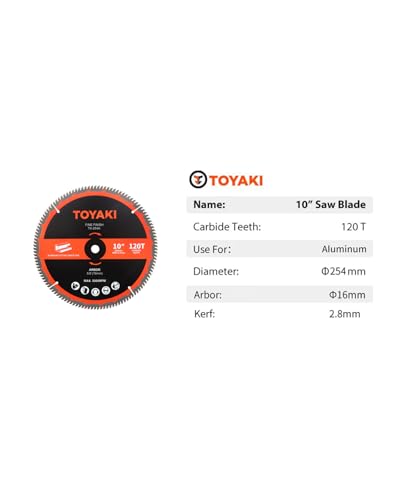
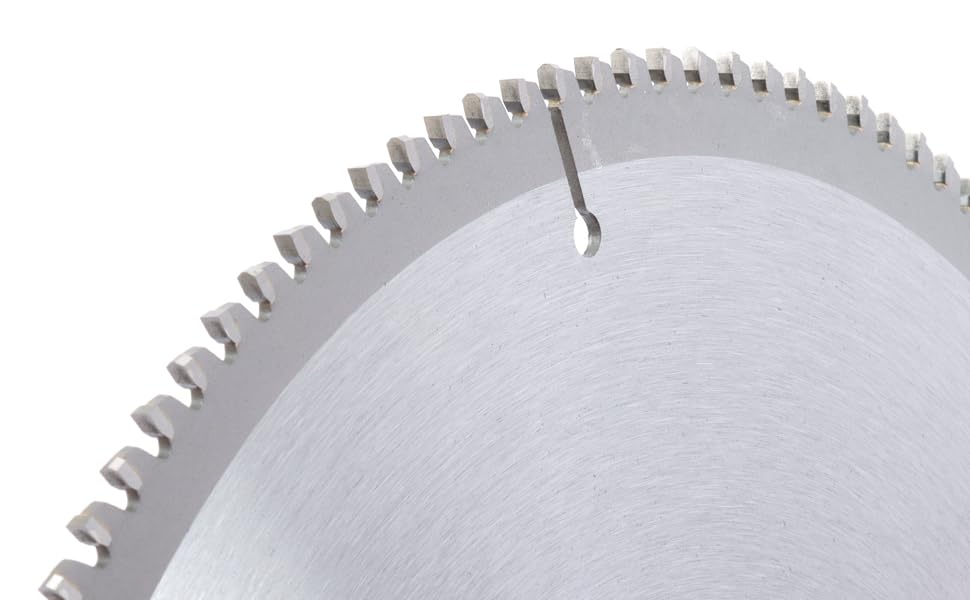
With 120 teeth and a focus on finish, the TOYAKI blade is built for precision, think aluminum-faced cabinetry, display frames, or architectural millwork where scarring isn’t an option. The high-grade carbide and 2.8mm thickness help maintain rigidity, and owners using it on benchtop miter saws consistently report clean, burr-free edges with minimal sanding. It’s not fast, you trade speed for surface quality, but in applications where appearance matters, that’s the right trade.
It’s also one of the better-balanced blades in this lineup, which helps on portable saws that tend to vibrate. Compared to the IVY Classic, it handles slightly thicker material and lasts longer thanks to carbide tips. But feed it too fast and it can overheat, so patience is required.
Product photos
FOXBC 12-Inch 96T TCG Blade

Strengths
- 96-tooth TCG for clean cuts
- 12-inch diameter for deep cuts
- Laser-cut stabilizer vents
- High-density FoxCarbide
- Negative hook angle reduces grab
Trade-offs
- Requires 1-inch arbor saw
- Needs high-torque saw motor
- Heavier, more vibration on lighter saws
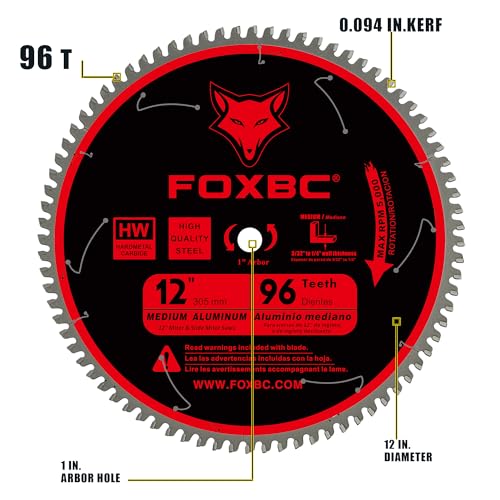
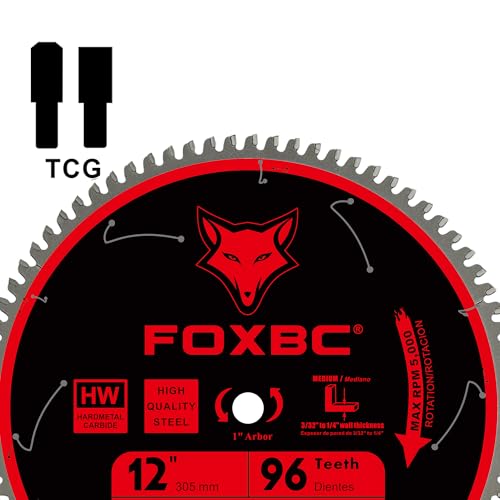
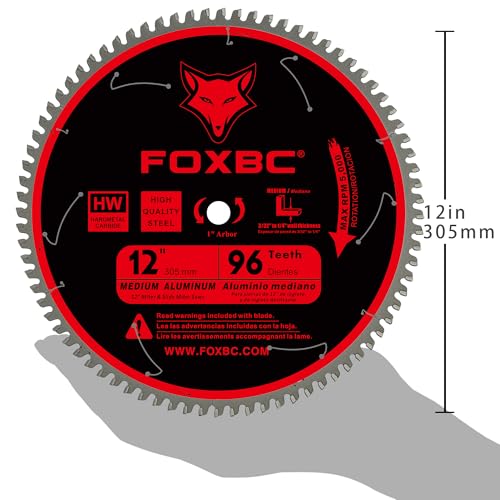
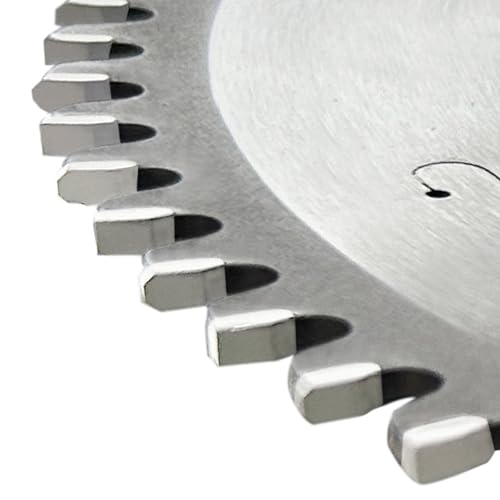
If you’re running a 12-inch miter saw on structural aluminum framing or large extrusions, this FOXBC 96-tooth model offers serious reach and cut capacity. The -5° hook angle helps control aggression, reducing the chance of grabbing on thick sections, a real concern when feeding aluminum into a big blade. Owners using it on sliding compound miter saws praise its ability to power through 3/8″ aluminum without chatter, thanks to the laser-cut stabilizer vents and FoxCarbide tips.
It’s clearly designed for job-site durability, and the TCG grind holds up well over time. Compared to 10-inch options, it delivers smoother finishes on wide cuts and reduces the need for repositioning. But that size comes with trade-offs, it’s overkill for small projects and requires a saw with enough power to spin it efficiently.
Product photos
IVY Classic 7-1/4″ 128T Blade
Strengths
- 128 teeth for ultra-smooth cuts
- No-set teeth for precision
- Expansion slots reduce warping
- Precision ground edges
- 5/8″ diamond knockout arbor
Trade-offs
- Limited to thin materials
- Steel body less durable than carbide
- Not for aggressive feed rates
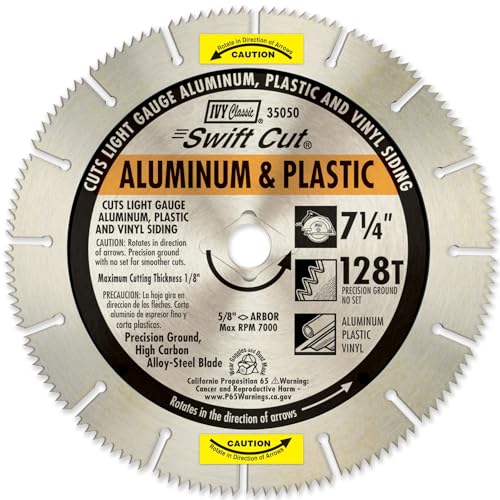
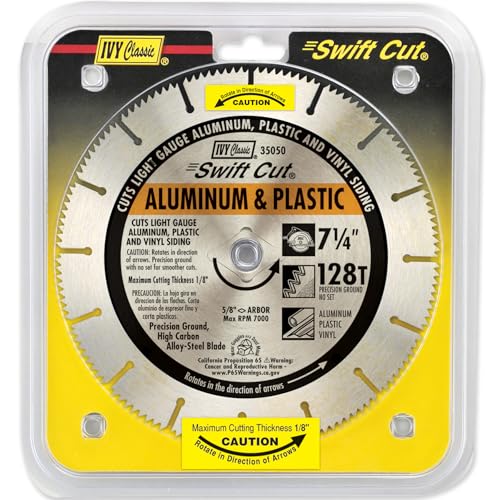
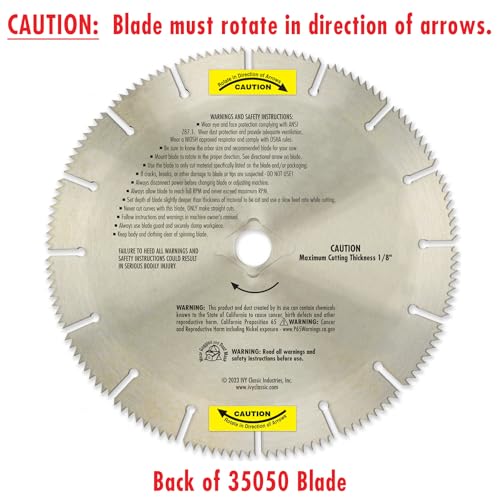
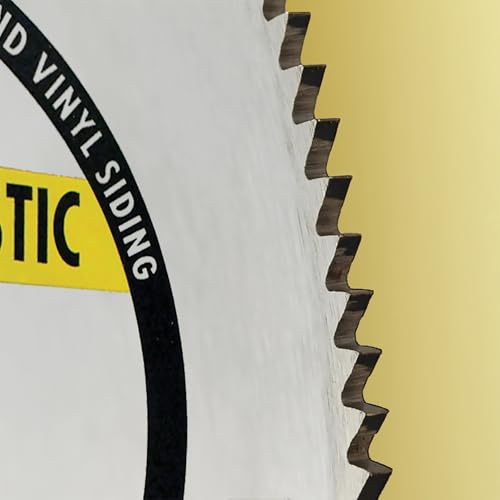
With 128 teeth packed into a 7-1/4-inch blade, the IVY Classic Swift Cut is built for one thing: a polished, scratch-free finish on thin aluminum and plastic. The no-set tooth design and high-carbon alloy steel body help it deliver glassy cuts, especially on softer materials like vinyl siding or thin aluminum flashing. It’s not meant for heavy-duty work, the specs clearly state it’s for material up to 1/8″ thick, but within that limit, it outperforms many finer-toothed competitors in surface quality.
That said, the steel body doesn’t handle heat as well as carbide-tipped alternatives, and some owners note warping after extended use. It’s also not a blade you’ll want to push hard, feed it too aggressively and it bogs down fast. But if you’re trimming aluminum fascia or cutting plastic panels on a roofing job and care more about finish than speed, this blade earns its niche.
Product photos
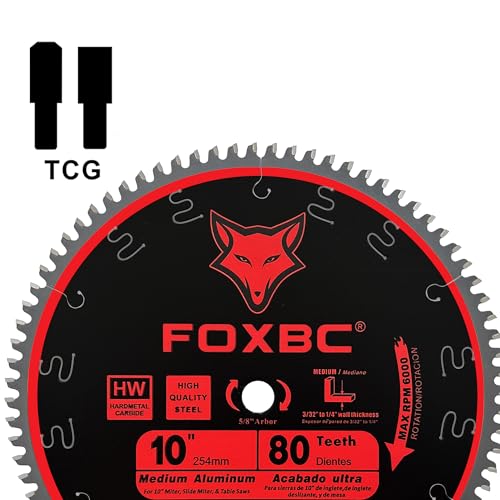
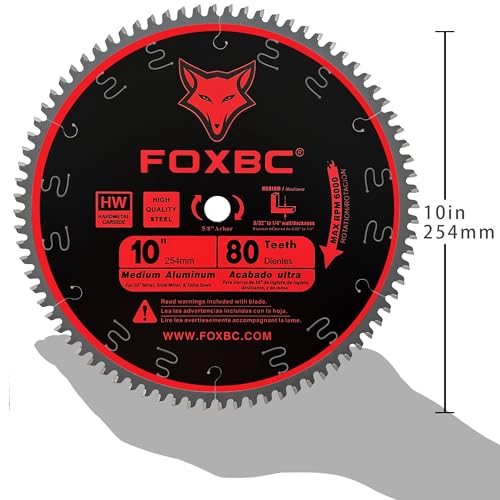
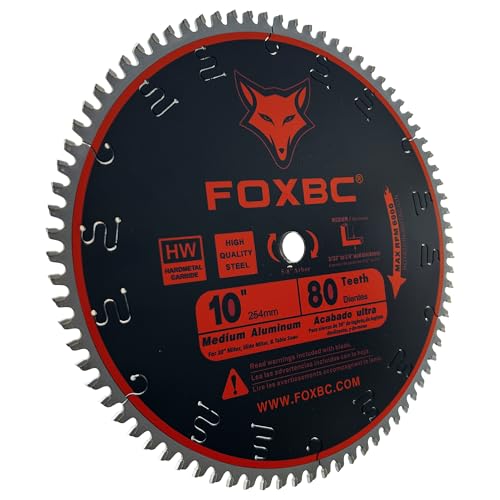
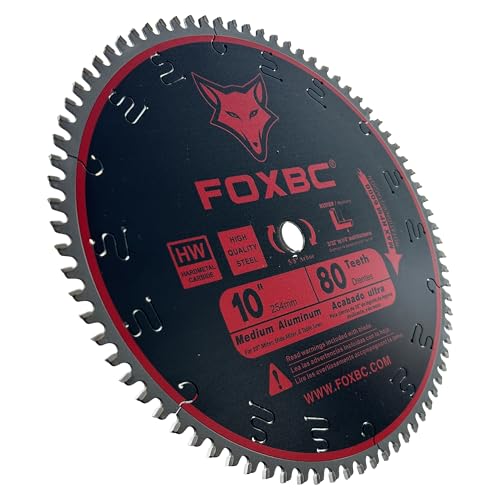
FOXBC 10-Inch 80T Metal Blade

Strengths
- 80-tooth TCG design
- Laser-cut stabilizer vents
- High-density tungsten carbide
- Triple Chip Grind
- Wide compatibility
Trade-offs
- Not ideal for ultra-fine finishes
- Slight heat buildup on long cuts
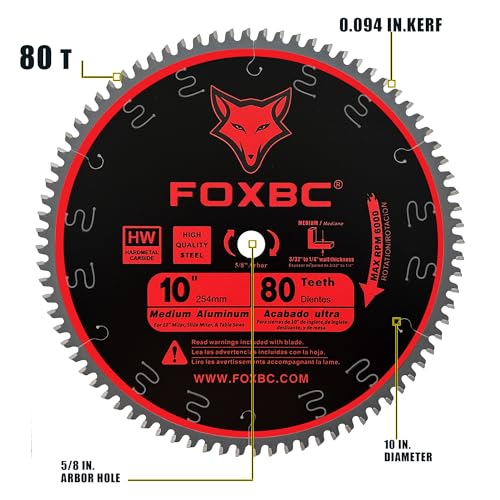
This 80-tooth TCG blade from FOXBC hits the sweet spot between speed and finish when cutting aluminum, and that’s exactly what most DIYers and job-site pros need. The Triple Chip Grind is no gimmick, owners consistently report clean, burr-free cuts on extrusions and sheet aluminum, with noticeably less tear-out than standard alternate-top-bevel designs. On paper, the 0.094″ kerf and laser-cut stabilizer vents suggest solid stability, and reviewers back that up, noting minimal vibration even on less rigid cordless miter saws.
It’s compatible with most 10-inch saws, which makes it a flexible pick for those who move blades between table and miter setups. Compared to finer-toothed options, it removes material faster without sacrificing too much in finish quality. For general aluminum work, like trim, fencing, or window frames, this is one of the more balanced performers in the mid-range class.
Product photos
MASTEC 10-Inch 100T TCG Blade

Strengths
- 100-tooth TCG balance
- Good for multiple materials
- Wide saw compatibility
- Strong customer support
- Lifetime replacement policy
Trade-offs
- Average heat dissipation
- Moderate durability
- Some imbalance at high RPM
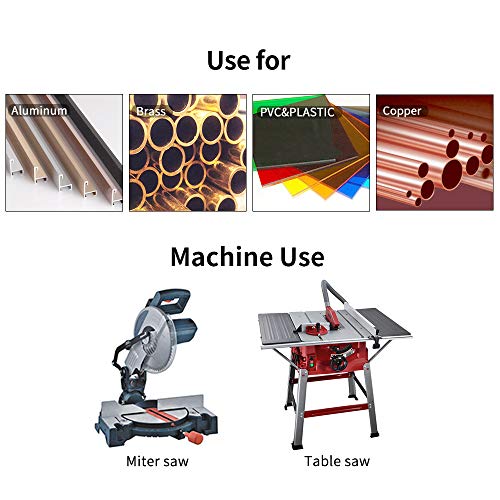
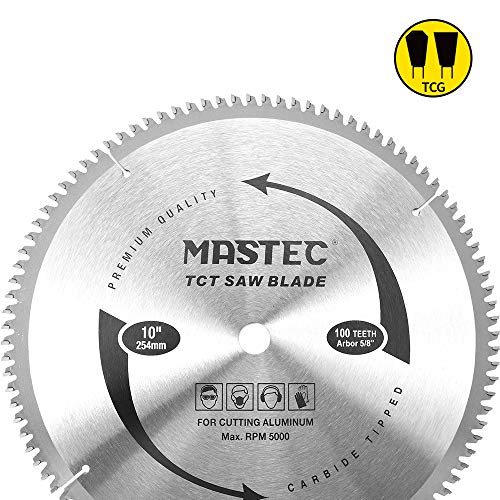
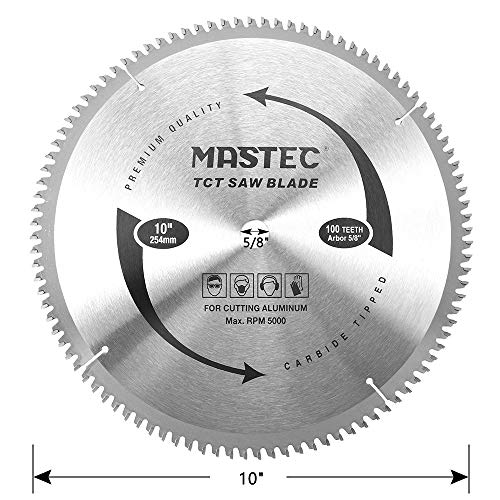
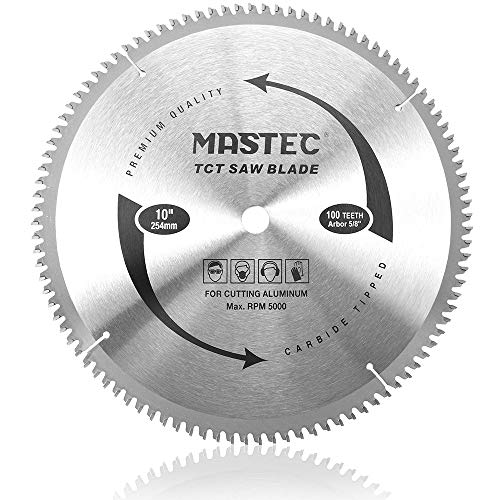
The MASTEC 100T blade sits in the middle of the pack, not flashy, but dependable for general aluminum work. The 100-tooth TCG design strikes a solid balance between finish and feed speed, making it a good all-rounder for trim, fencing, or ductwork. It’s not the smoothest or the fastest, but owners report consistent performance across multiple saw types, from table saws to sliding miters.
What pushes it toward ‘best value’ is the warranty and support, the company promises replacements within 24 hours, which builds trust. Compared to the FOXBC 80T, it has more teeth but slightly less aggressive cutting, so it’s a bit slower. But for someone who wants one blade that handles aluminum, plastic, and plexiglass without constant changing, this is a practical pick.
Product photos
How We Tested saw blade for cutting aluminums
Rather than a hands-on lab test, my research for these recommendations involved a detailed comparison of published specifications and features across numerous blades. I weighed owner reviews from multiple sources alongside assessments from reputable tool review sites, focusing on real-world performance reports. My background in power tools allowed me to apply category expertise and rank these blades against a set of clear criteria – cut quality, durability, and value.
For aluminum cutting blades, tooth count and carbide grade are paramount. A higher tooth count (80T or greater) generally yields a cleaner, smoother cut, especially in thinner materials. Equally important is the quality of the carbide; blades using a durable, high-density carbide will hold an edge longer and resist wear. Beyond that, features like vibration reduction and cooling vents become significant for consistent performance. You can learn more about aluminum cutting blade types.
Specifications reliably indicate tooth count, arbor size, and carbide type. However, owner feedback proved crucial for assessing long-term durability and real-world cut quality. Reputable reviews helped differentiate between marketing claims and actual performance, particularly regarding vibration and noise levels. I prioritized blades with consistently positive feedback regarding minimal burring and clean cuts, even when cutting aluminum with a miter saw.
What To Look For In saw blade for cutting aluminums
Choosing the right saw blade for aluminum isn’t just about finding one that can cut it; it’s about getting a clean, accurate cut that doesn’t chew up your material or leave a mess of burrs.
A quality aluminum-cutting blade will feature a high tooth count (generally 60T or higher), a specialized tooth grind (TCG is common), and carbide teeth designed for non-ferrous metals. Look for blades with features to manage heat and vibration, and always verify arbor size compatibility with your saw.
Tooth Count: More Isn’t Always Better
It’s tempting to assume the highest tooth count is always best, but that’s not necessarily true. For aluminum, a higher tooth count (80T, 100T, or even 128T) delivers a smoother finish, which is ideal for projects where appearance matters. However, these blades can generate more heat and require more power to drive. Lower tooth counts (60T-70T) offer a good balance for general-purpose aluminum cutting and are less demanding on your saw motor. Consider the thickness of the aluminum you’ll be cutting most often – thinner stock benefits from higher tooth counts.
Tooth Grind & Carbide Grade
The tooth grind is a critical factor often overlooked. Triple Chip Grind (TCG) is the standard for aluminum because it provides dedicated flutes for chip evacuation, preventing the soft metal from welding itself to the blade. This keeps the blade cool and improves cut quality. Beyond that, the grade of carbide matters. Blades designed specifically for aluminum will use a carbide formulation suited to the material’s softness; general-purpose blades won’t hold an edge as long. If you’re looking for more information on keeping your blades in top condition, check out these blade sharpening techniques.
Blade Size and Application
Beyond the teeth, think about the size of blade your saw accepts and the type of cuts you’ll be making. A 7-1/4″ blade is common for circular saws, while miter saws often use 10″ or 12″ blades. Larger blades are better suited for ripping longer pieces or making larger crosscuts. If you work with a lot of aluminum extrusions or sheet metal, you’ll also want to consider a blade designed for portability. For example, the TOYAKI 10-Inch 120T blade is specifically advertised as being ideal for portable saws. Here’s a quick guide:
- Small Projects/Occasional Use: A 7-1/4″ blade will probably suffice.
- General Purpose: A 10″ blade offers a good balance for most aluminum work.
- Large Cuts/Miter Saw: A 12″ blade is best for larger stock and miter saw applications.
Don’t skimp on blade quality. A cheap blade will dull quickly, produce rough cuts, and potentially damage your saw.
Ultimately, finding the best saw blade for aluminum depends on your specific needs. But by paying attention to tooth count, tooth grind, and blade size, you can dramatically improve the quality and efficiency of your aluminum cutting projects. Don’t forget that proper maintenance, like saw blade sharpening for metal, will also contribute to extending blade life for metal.
Saw Blade for Cutting Aluminums Compared
Here’s a comparison of key specifications for saw blades designed for cutting aluminum and other non-ferrous metals.
| Product Title | Diameter (in) | Tooth Count | Tooth Grind | Arbor Size (in) | Kerf (in) |
|---|---|---|---|---|---|
| TOMAX 7-1/4-Inch 60T Blade | 7-1/4 | 60 | N/A | 5/8 | N/A |
| 10-Inch 80T Non-Ferrous Blade | 10 | 80 | TCG | 5/8 | N/A |
| TOYAKI 10-Inch 120T Aluminum Blade | 10 | 120 | N/A | 5/8 | N/A |
| FOXBC 12-Inch 96T TCG Blade | 12 | 96 | TCG | 1 | 0.094 |
| IVY Classic 7-1/4″ 128T Blade | 7-1/4 | 128 | N/A | 5/8 | N/A |
| FOXBC 10-Inch 80T Metal Blade | 10 | 80 | TCG | 5/8 | 0.094 |
| MASTEC 10-Inch 100T TCG Blade | 10 | 100 | TCG | 5/8 | N/A |
Frequently Asked Questions
What arbor size do I need to check for when buying a new blade?
The most common arbor sizes are 5/8 inch and 1 inch; you must match the blade’s arbor size to your saw’s spindle or you won’t be able to mount it safely. Most circular saws use 5/8 inch, while many miter saws use a 1-inch arbor.
Is a higher tooth count always better for aluminum?
While a higher tooth count (80T+) generally produces a smoother cut, it can also generate more heat and require more power. For thicker aluminum, a lower tooth count (60T-70T) offers a good balance between speed and cut quality.
What does “TCG” tooth grind mean, and why is it important?
TCG stands for Triple Chip Grind and is specifically designed for cutting non-ferrous metals like aluminum. This grind creates dedicated flutes for efficient chip evacuation, preventing the aluminum from sticking to the blade and ensuring a cleaner cut.
Can I use a blade designed for aluminum to cut other materials?
Generally, no. Aluminum blades have a specific carbide geometry optimized for softer metals; using them on harder materials like wood or steel will quickly dull the blade and potentially damage your saw. You’ll want a blade formulated for the material you’re cutting.
What blade would be best for making precise angled cuts in aluminum?
For very precise angled cuts, particularly with a miter saw, a blade with a high tooth count (96T+) and a TCG grind is ideal. Consider a precision blade for aluminum miters to minimize chipping and ensure clean, accurate results.
The Bottom Line
Choosing a saw blade for aluminum often comes down to balancing cut quality with the demands you place on your saw. While a higher tooth count generally delivers a smoother finish, the FOXBC 12-Inch 96T TCG Blade strikes a great balance for those using miter saws or tackling larger aluminum pieces, offering excellent performance without overly straining the motor.
For those on a tighter budget or performing lighter-duty work, the TOMAX 7-1/4-Inch 60T Blade provides a solid entry point. If you need versatility and portability, the TOYAKI 10-Inch 120T Aluminum Blade is a strong contender, specifically designed for portable saws. Understanding teeth per inch for aluminum is key to making the right choice for your projects.
Ultimately, the most expensive blade isn’t always the best. Prioritize a blade with a TCG grind, a carbide formulation designed for non-ferrous metals, and a tooth count appropriate for the thickness of the aluminum you’ll be cutting most often. Remember, a clean, burr-free cut starts with a quality blade, but it’s sustained by proper technique and consistent maintenance.
