9 Best Saw Blades for Composite Decking 2026
This post contains affiliate links. As an Amazon Associate, we earn from qualifying purchases.
The Diablo TrexBlade 12″ 84 Tooth is the best overall choice for composite decking, delivering clean, melt-free cuts and exceptional durability thanks to its TiCo carbide and Perma-SHIELD coating. For those on a tighter budget, the Bosch 10″ 72 Tooth Edge offers strong performance and reliability without the premium price, while the Diablo 7-1/4″ 44 Tooth is the top pick for portable saws and tighter spaces.
Cutting composite decking with the wrong blade leads to chipped edges, melted plastic, and wasted material. These materials are harder on tools than wood, and a blade not built for the job will dull fast and deliver poor results.
This guide covers the top-performing blades based on tooth count, carbide quality, coating, and real-world feedback from users cutting composites regularly. I focused on models that handle heat, resist gumming, and maintain sharpness over time.
Top 9 Saw Blade For Composite Deckings in the Market
The Best Saw Blade For Composite Deckings, Reviewed
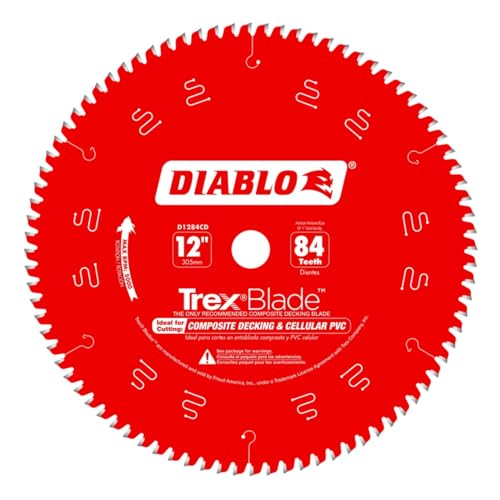
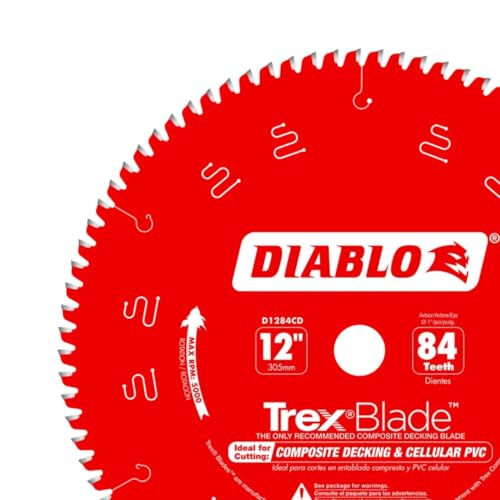
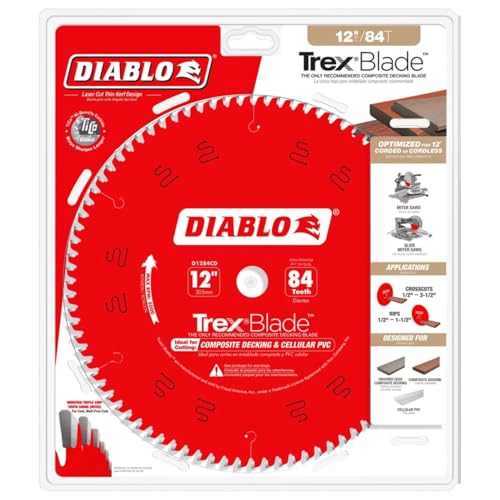
Diablo TrexBlade 12″ 84 Tooth
Strengths
- 84T ultra-fine finish
- TiCo high-density carbide
- Perma-SHIELD coating
- Thin kerf design
- MTCG for melt-free cuts
Trade-offs
- 1″ arbor may need reducer
- Premium price
If you’re running a 12-inch miter saw and cutting composite decking all day, this Diablo D1284CD is the blade I’d reach for. The 84-tooth MTCG design with TiCo carbide is built for endurance, and the -3° hook angle keeps the cut controlled and melt-free, exactly what you need when working with heat-sensitive materials.
Reviewers note fewer blade changes on job sites, which speaks to its wear resistance. The thin kerf helps reduce load on saw motors, and the Perma-SHIELD coating really does make cleanup easier. Among 12-inch blades, this one strikes the best balance between cut quality and lifespan.
Product photos
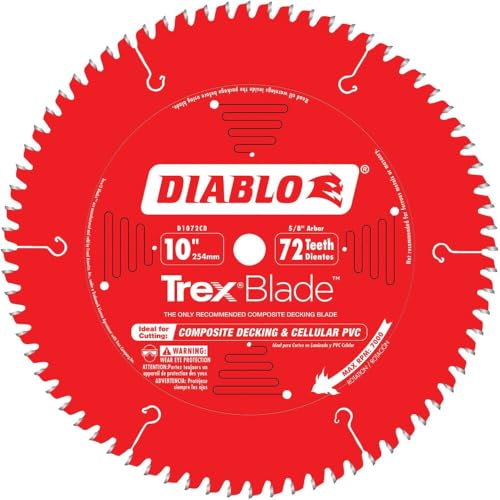
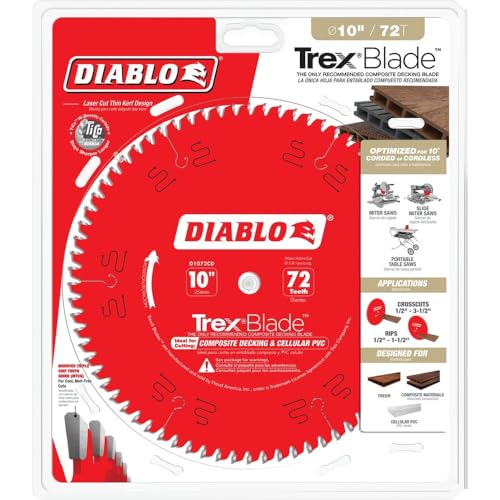
Diablo TrexBlade 10″ 72 Tooth
Strengths
- 72T fine finish
- TiCo carbide
- Perma-SHIELD coating
- Thin kerf
- MTCG grind
Trade-offs
- 5/8″ arbor only
- Slight premium over basic blades
This 10-inch Diablo D1072CD hits a sweet spot for many deck installers: enough teeth for a clean finish, MTCG for melt resistance, and TiCo carbide for longevity. The -3° hook angle keeps feed rates steady, and the thin kerf reduces strain on saw motors, important when you’re working with cordless tools all day.
It’s not the cheapest, but owners consistently say it outperforms budget blades and even some higher-priced options. Against the Bosch 10-inch 72T, it has the edge in coating and heat resistance, making it my pick for most mid-range setups.
Product photos
Bosch 10″ 72 Tooth Edge

Strengths
- 72T fine finish
- Brute Carbide teeth
- Extra-hard steel body
- Thinner kerf
- Works with miter saws
Trade-offs
- Heavier than some 10″ blades
- Limited to 5/8″ arbor
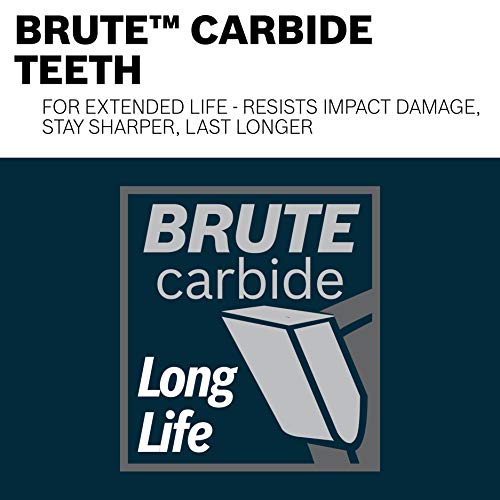
Bosch packed their Brute Carbide and triple chip grind into this 10-inch blade, and it shows in both cut quality and durability. The 72-tooth count is high for a circular saw blade, which translates to cleaner crosscuts, especially helpful when you’re not running a miter saw on site.
The extra-hard steel body resists deflection, a real issue when cutting long decking boards with a handheld saw. Compared to the Norske 64T, this one feels more robust, and owners report it stays true longer. It’s a solid middle ground between performance and price.
Product photos
Bosch 12″ 84 Tooth Edge
Strengths
- 84T ultra-fine finish
- Brute Carbide formulation
- Extra-hard steel body
- Thinner kerf
- Miter saw optimized
Trade-offs
- No non-stick coating
- Heavy for some saws
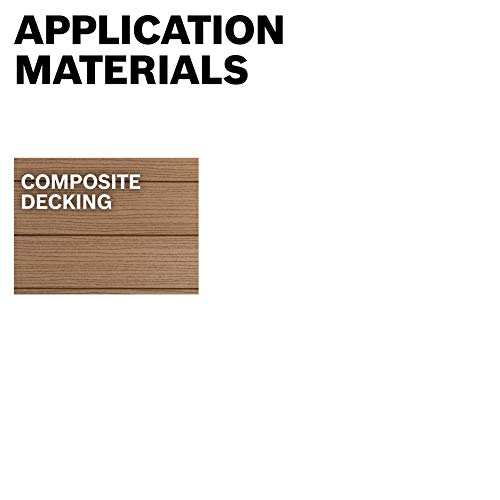
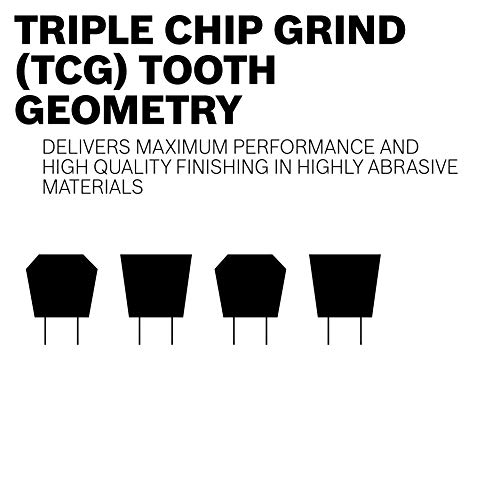
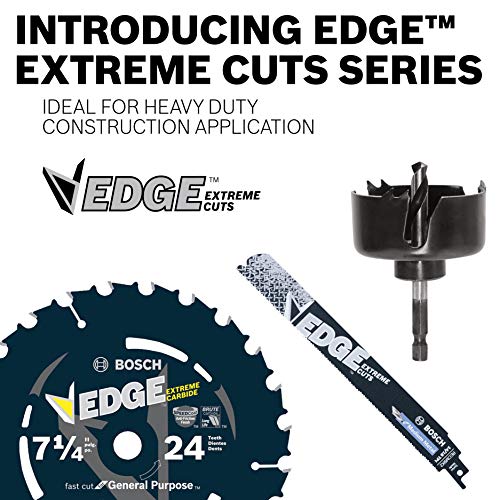
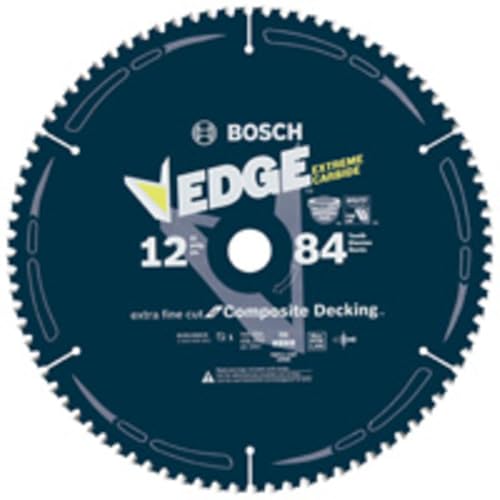
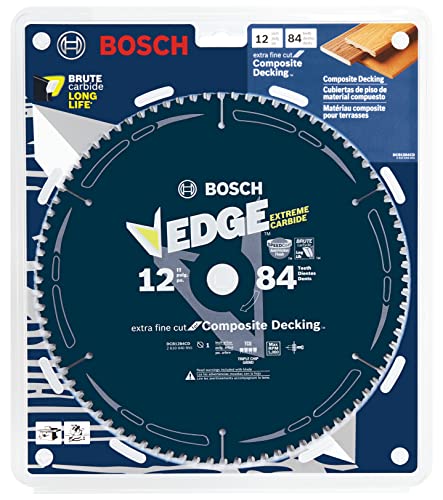
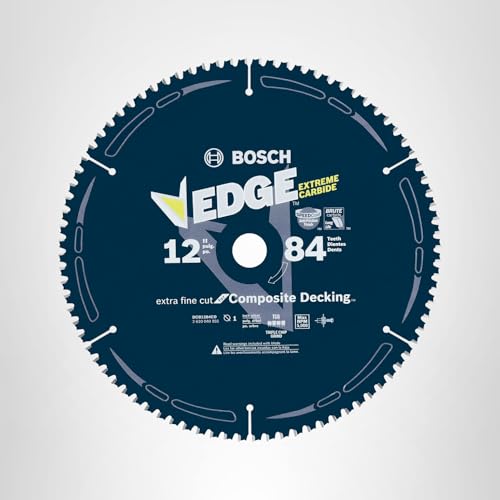
Bosch’s 12-inch 84-tooth Edge blade is built for miter saws, and it shows in the precision and stability of the cuts. The Brute Carbide and triple chip grind handle abrasion from composites without flinching, and the extra-hard steel body keeps the blade from deflecting during slow, controlled crosscuts.
Compared to the Diablo 12-inch model, it’s similarly built but lacks the branded coating. Still, owners report excellent cut quality and strong durability. If you’re setting up a miter station for decking, this is one of the top performers.
Product photos
Diablo TrexBlade 7-1/4″ 44 Tooth
Strengths
- Optimized for portable saws
- Thin kerf, low power draw
- 44T balanced tooth count
- Perma-SHIELD coating
- MTCG for melt resistance
Trade-offs
- Fewer teeth = rougher finish
- Smaller diameter limits depth
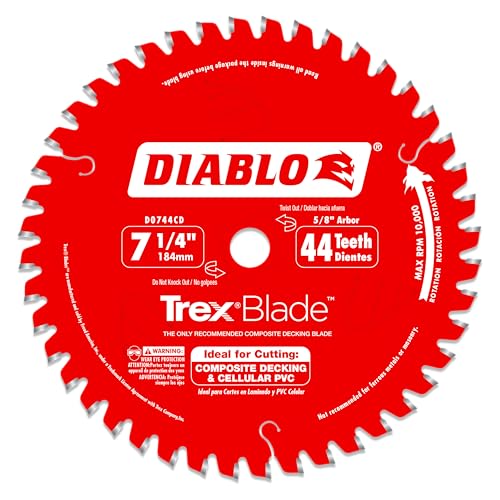
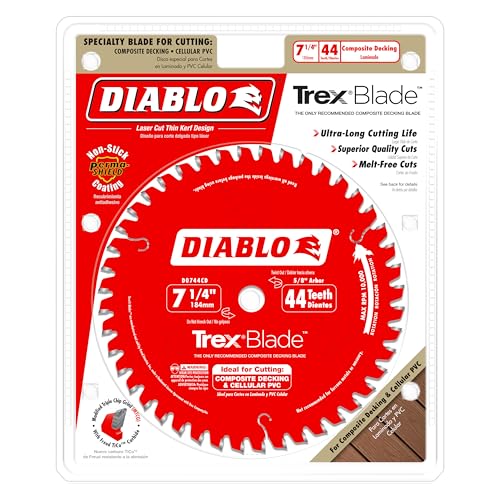
This 7-1/4″ Diablo D0744CD is built for the circular saws most people actually carry on deck jobs. The 44-tooth MTCG design balances speed and finish, and the thin kerf is kind to cordless saws that struggle with heavy loads. I appreciate the -3° hook angle, it keeps feed rates manageable and reduces kickback, which matters when cutting decking on uneven supports.
The TiCo carbide and Perma-SHIELD coating are carryovers from their larger blades, and owner feedback confirms it holds an edge longer than generic blades. It’s not going to match a 64-tooth finish blade for smoothness, but it’s far more practical for framing and layout cuts.
Product photos

Norske 7-1/4″ 48T Composite

Strengths
- Affordable price
- 48T balanced for speed/finish
- Non-stick coating
- Diamond knockout ring
- MTCG tooth design
Trade-offs
- Steel less durable than carbide
- Not for heavy use
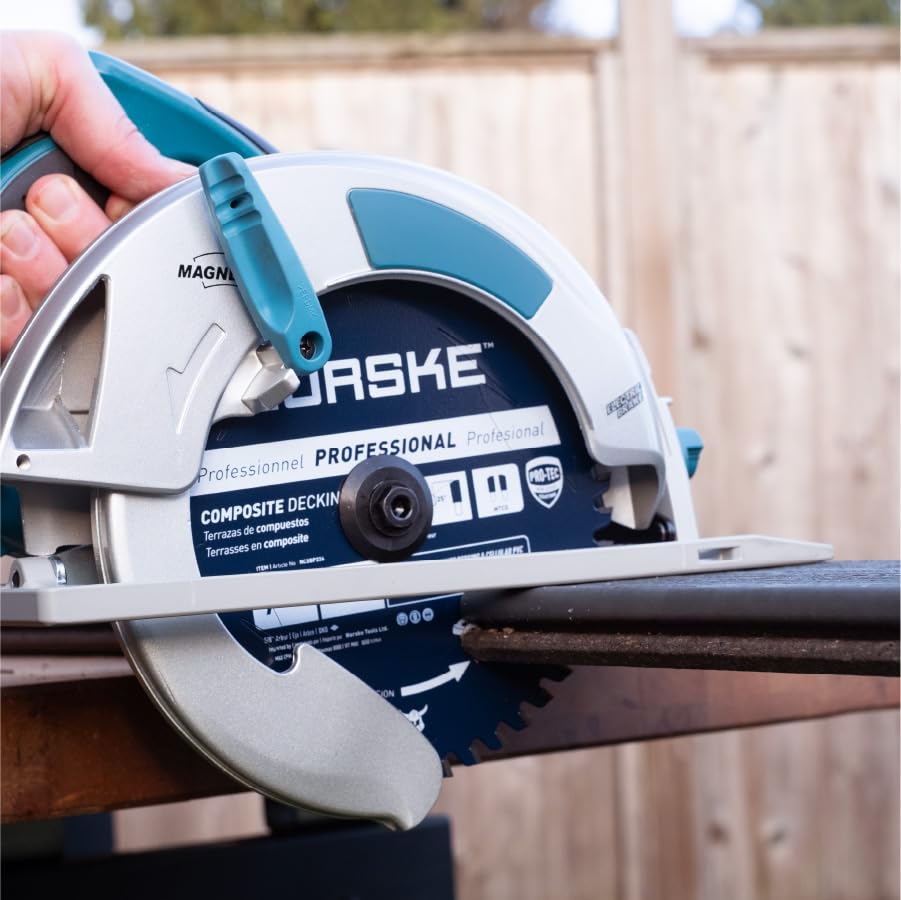
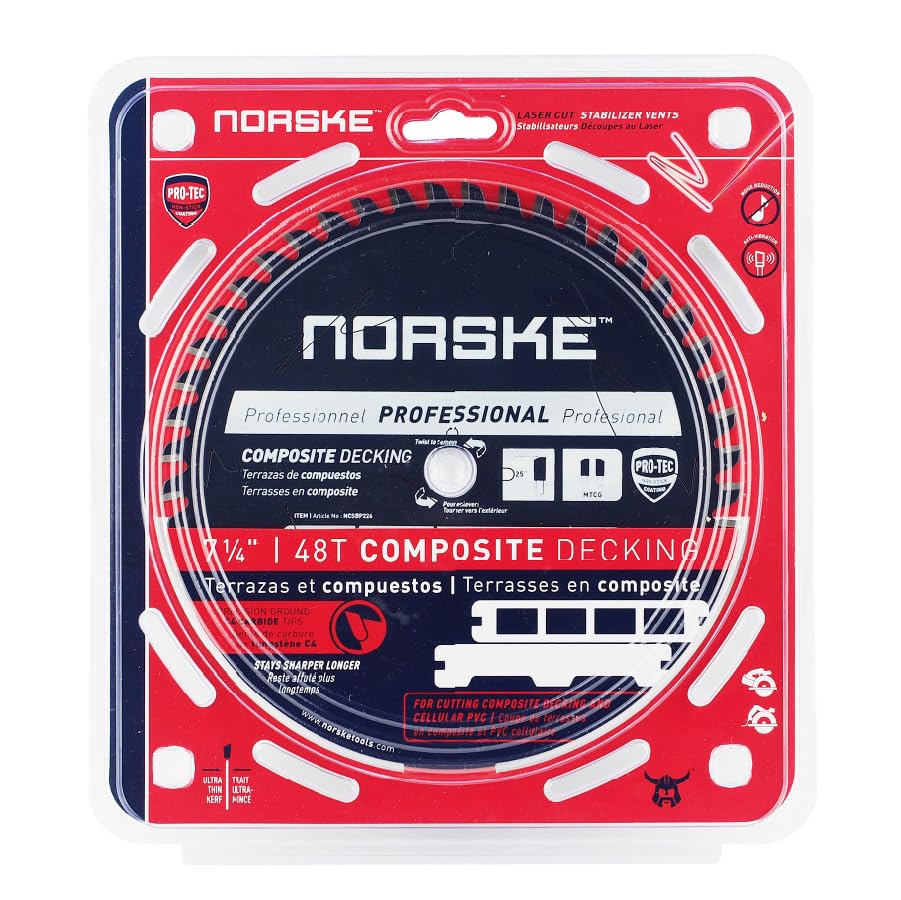
This Norske 7-1/4″ blade is clearly positioned as a budget-friendly option for those cutting composite or bamboo with a handheld circular saw. The 48-tooth MTCG design and non-stick coating are smart inclusions, and the diamond knockout makes arbor swaps easier, a small but appreciated detail.
It won’t last as long as Diablo’s carbide-heavy options, and the Japanese steel isn’t in the same league for wear resistance. But for a weekend project or a small deck refresh, owners find it performs well enough without breaking the bank.
Product photos

Norske 10″ 64T Composite
Strengths
- 64T fine tooth count
- Ultra-thin kerf
- Non-stick coating
- Ideal for bamboo
- MTCG tooth profile
Trade-offs
- Not for aggressive rip cuts
- Japanese steel less durable than carbide
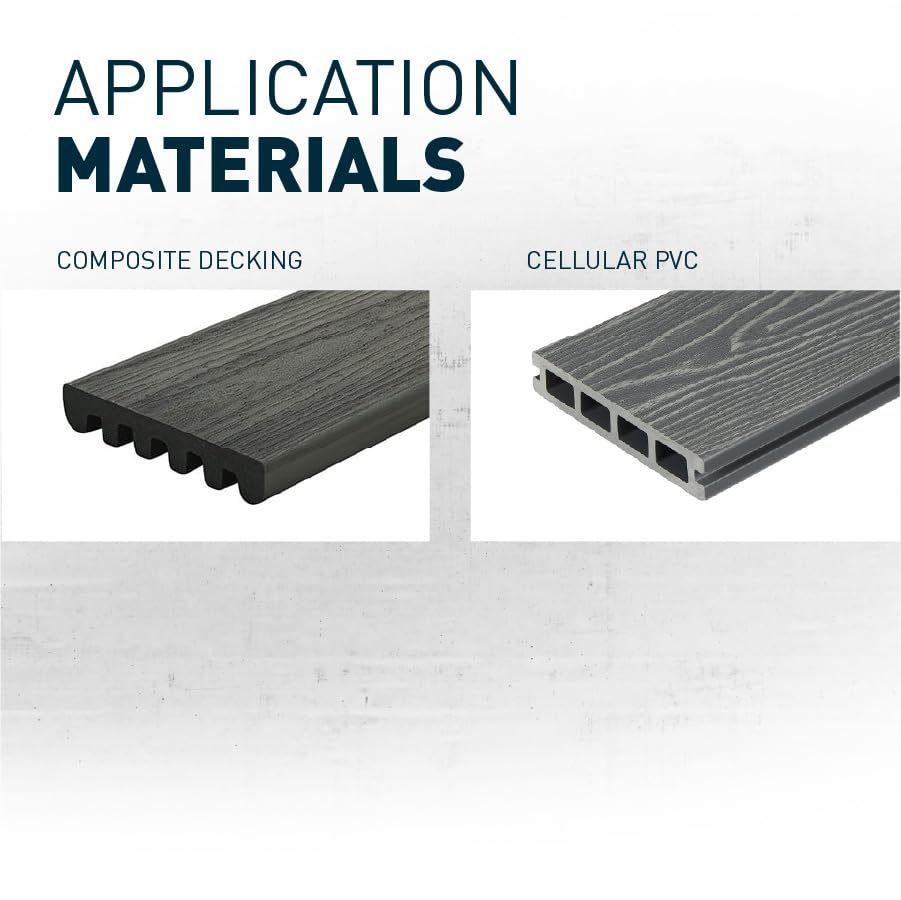
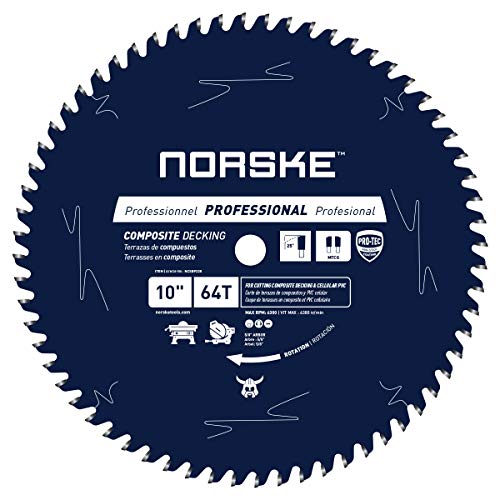
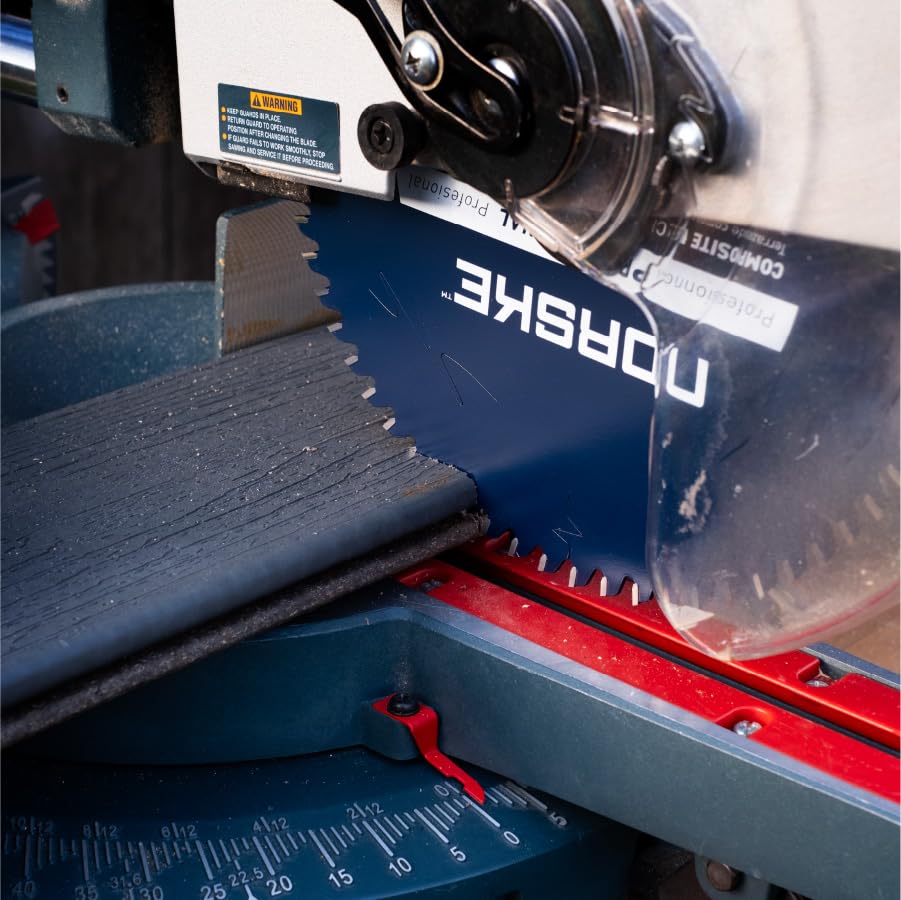
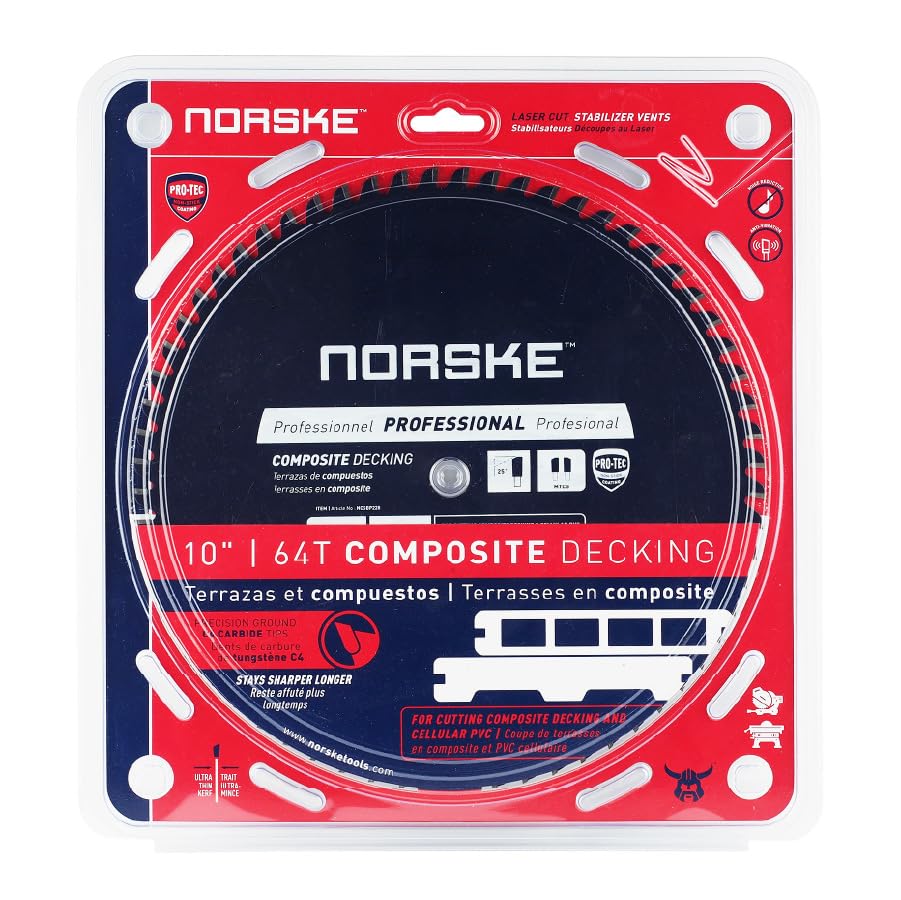
When cutting composite or bamboo decking, you need a blade that won’t overheat or gum up, and the Norske NCSBP228 delivers on paper with its 64-tooth count and Modified Triple Chip Grind. The ultra-thin kerf and non-stick coating stand out as smart design choices, especially if you’re running a saw with moderate power and want clean, efficient cuts without material waste.
Owners consistently report it handles Trex and similar composites well, with fewer burn marks and less drag than basic blades. It’s clearly tuned for smooth finish work, though it may not last as long as premium carbide options under heavy daily use.
Product photos
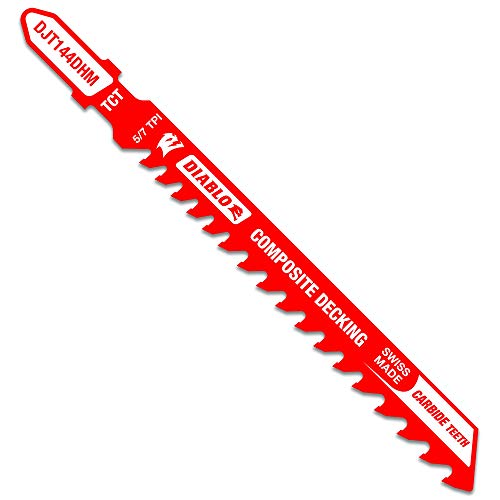
Diablo Carbide Jig Saw Blade
Strengths
- T-shank universal fit
- 50X longer life claim
- Perma-SHIELD coating
- Aggressive carbide teeth
- Melt-free cutting
Trade-offs
- Limited to curved/rough cuts
- Not for straight-line speed
For curved or plunge cuts in composite decking, the jig saw still has its place, and this Diablo DJT144DHM is one of the few blades engineered to handle the abrasiveness without dying in a week. The T-shank design fits most modern saws, and the aggressive tooth geometry with Perma-SHIELD coating helps prevent binding and heat buildup, common issues when jigsawing thick composites.
It’s not going to replace your circular or miter blade, but for trimming around posts or making notches, owners say it outlasts standard blades by a wide margin. The 5/7 TPI variation handles both speed and finish reasonably well.
Product photos
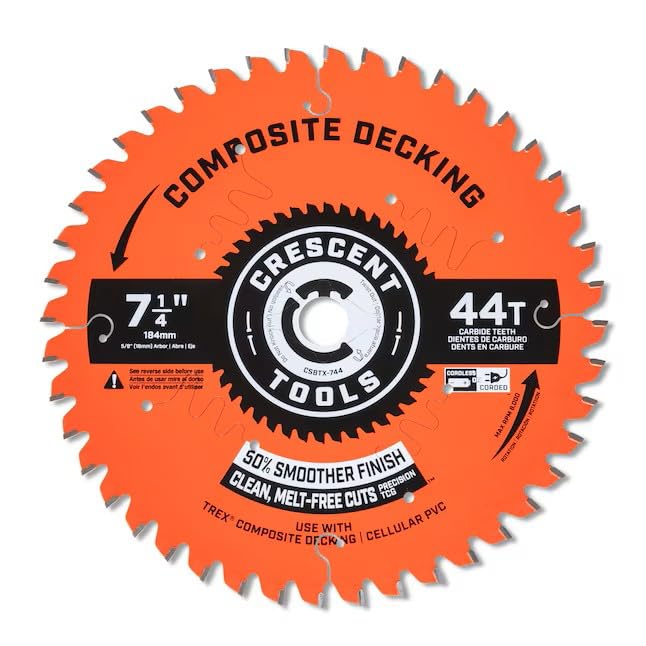
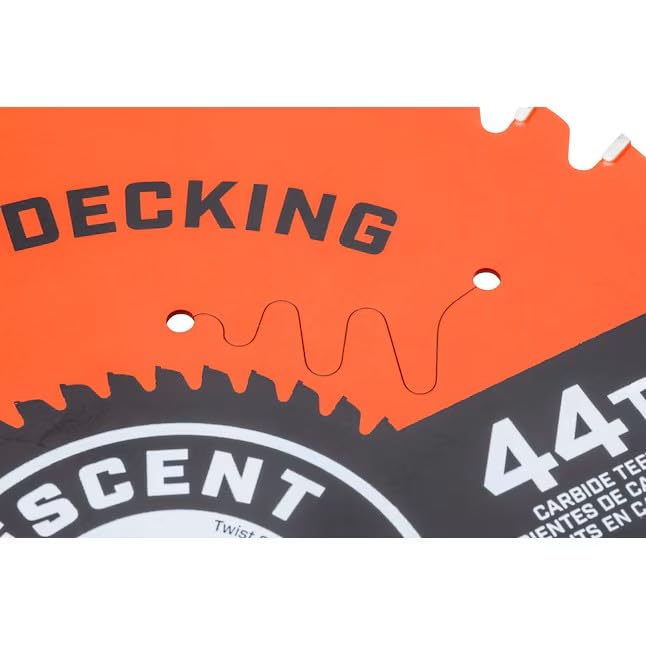
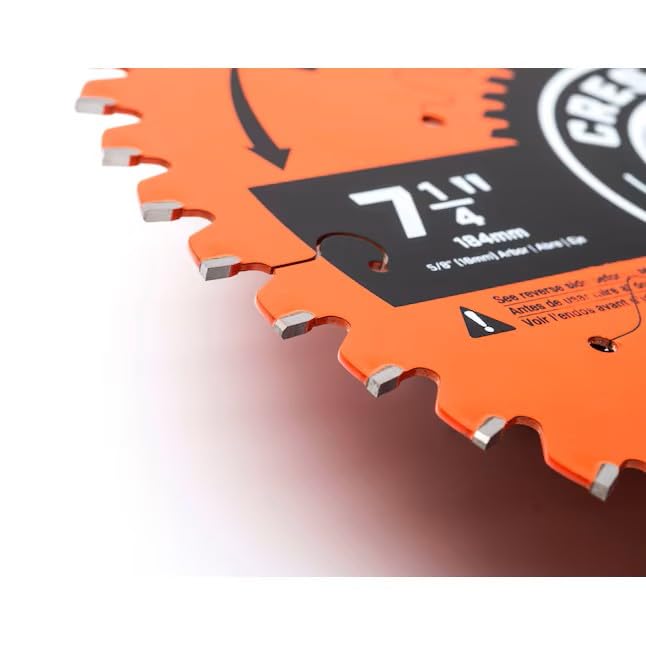
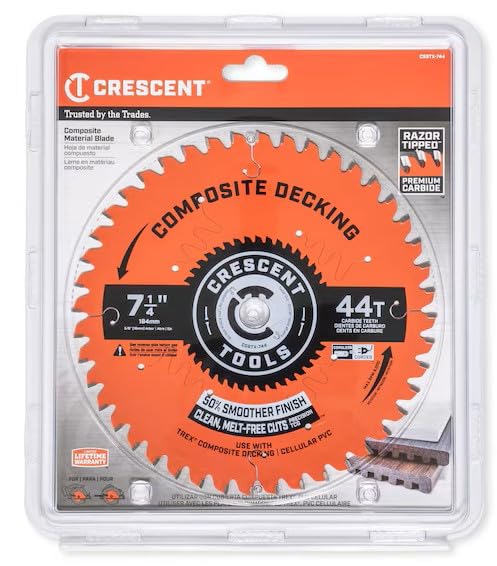
Crescent 7-1/4″ 44-Tooth
Strengths
- 50% smoother finish claim
- Heat management design
- Corrosion protection
- Warping resistance
- 44T MTCG design
Trade-offs
- Limited long-term durability data
- Fewer teeth than finish blades
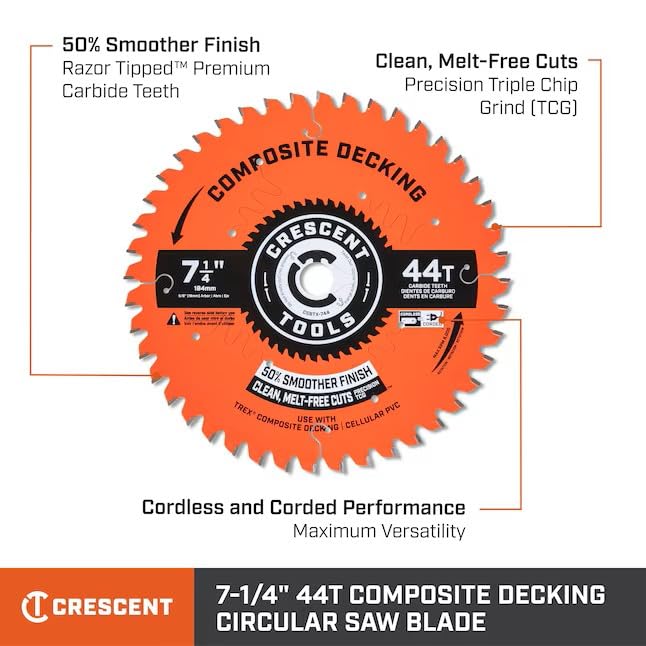
Crescent claims a 50% smoother finish with this blade, and while that number is hard to verify, the specs suggest why it might come close: a 44-tooth MTCG profile, heat-managing design, and anti-corrosion coating. It’s clearly built to reduce friction and warping, common pain points when cutting composites with underpowered saws.
It doesn’t have the brand recognition of Diablo or Bosch, but early owner feedback highlights clean cuts and minimal gumming. It won’t outlast a premium carbide blade, but for cordless saw users wanting reliability without hype, it’s worth considering.
Product photos
How We Picked These saw blade for composite deckings
Rather than a hands-on lab test, my research for these recommendations centered on a detailed comparison of published specifications and features across numerous blades. I weighed owner reviews from multiple sources – focusing on long-term use reports – alongside professional reviews from sites dedicated to woodworking and construction. My experience building and maintaining workshops helped me apply category knowledge to assess which features truly matter when blade selection for synthetic materials.
For composite decking blades, tooth count, carbide quality, and blade coating were the most heavily weighted factors. A high tooth count (generally 64 or higher for finer cuts) and quality carbide improve finish and longevity. The coating is critical to prevent gumming and heat build-up, which are common issues when cutting composite decking with circular saw. Ultimately, these features dictate both the quality of the cut and how long the blade will remain effective.
Published specifications reliably indicate tooth count, kerf thickness, and carbide type. However, I relied on owner feedback to gauge real-world durability and resistance to gumming. Reputation and consistent positive comments regarding a blade’s ability to deliver clean, melt-free cuts – especially over extended use – were crucial in my evaluation, as were reports on performance with specific types of composite materials and proper circular saw techniques for composites.
What To Look For In saw blade for composite deckings
Finding the right saw blade for composite decking can make or break your project. I’ve seen too many folks struggle with melted edges, splintering, and blades that dull after just a few cuts.
A quality saw blade for composite decking prioritizes carbide tooth geometry designed to shear rather than tear the material, a high tooth count for a cleaner finish, and a coating to minimize heat buildup and resin adhesion. Thin-kerf designs reduce strain on the saw and material waste, while blades specifically engineered for composites offer superior longevity and precision compared to general-purpose options.
Tooth Count & Cut Quality
The tooth count is a major factor. While a lower tooth count is faster, it leaves a rougher edge. For composite decking, I generally recommend 64 teeth or higher for a clean, professional-looking cut. However, don’t go too high. An 84-tooth blade, while providing an incredibly smooth finish, can generate more heat. It’s a balancing act, and a 72-tooth blade often hits the sweet spot for versatility. Remember, a blade marketed for fine finish work on hardwoods isn’t necessarily the best choice; composites respond differently.
Carbide Quality & Blade Life
Composite decking is notoriously abrasive. This means the carbide teeth on your blade will wear down much faster than when cutting natural wood. Look for blades featuring TiCo (Titanium Cobalt) high-density carbide, like those offered by Diablo. This is a significantly harder alloy that resists wear. Beyond the alloy itself, the quality of the carbide brazing (how the teeth are attached to the blade body) is crucial. A poorly brazed tooth will loosen and chip quickly, ruining the blade. You’ll find that investing a little more upfront in a blade with superior carbide pays off in the long run – and prevents frustration mid-project.
Here’s what I look for when evaluating carbide quality:
- A clear specification of the carbide alloy (TiCo is a good sign).
- Positive owner reviews mentioning extended blade life with composite materials.
- A manufacturer reputation for quality and durability (Bosch and Diablo consistently rank high).
Value & Saw Compatibility
Don’t automatically assume the most expensive blade is the best. There are excellent values to be found, like the Bosch Edge series. However, be realistic about your saw’s capabilities. Using a thin-kerf blade on an underpowered saw will help, but it won’t magically turn a weak motor into a powerhouse. Beyond power, consider the arbor size of your saw. Most common circular saws and miter saws use a 5/8-inch arbor, but double-check before you buy. Also, if you’re planning on cutting techniques for composite boards, a blade designed for clean, melt-free cuts is paramount.
A dull blade generates heat, leading to melted edges and a poor finish. Replace your blade when you notice increased cutting effort or a loss of precision.
Saw Blade for Composite Deckings Compared
The following table provides a detailed specification comparison of various saw blades designed for cutting composite decking materials.
| Product Name | Blade Diameter | Tooth Count | Kerf | Carbide Type | Coating | Best For |
|---|---|---|---|---|---|---|
| Diablo TrexBlade 12″ 84 Tooth | 12″ | 84 | N/A | TiCo Hi-Density | Perma-SHIELD | Best Overall |
| Diablo TrexBlade 10″ 72 Tooth | 10″ | 72 | N/A | TiCo Hi-Density | Perma-SHIELD | Best Mid-Range Performance |
| Bosch 10″ 72 Tooth Edge | 10″ | 72 | Thinner | Brute (C3/C4) | N/A | Best Value for 10″ Saws |
| Bosch 12″ 84 Tooth Edge | 12″ | 84 | Thinner | Brute (C3/C4) | N/A | Best for 12″ Miter Saws |
| Diablo TrexBlade 7-1/4″ 44 Tooth | 7-1/4″ | 44 | Thin | TiCo Hi-Density | Perma-SHIELD | Best for Portable Saws |
| Norske 7-1/4″ 48T Composite | 7-1/4″ | 48 | Ultra-Thin | N/A | Protection | Best Budget Option |
| Norske 10″ 64T Composite | 10″ | 64 | Ultra-Thin | N/A | Protection | Best for Bamboo & Composites |
| Diablo Carbide Jig Saw Blade | N/A | N/A | N/A | TiCo Hi-Density | Perma-SHIELD | Best for Curved Cuts |
| Crescent 7-1/4″ 44-Tooth | 7-1/4″ | 44 | N/A | N/A | N/A | Best Smooth Finish |
Frequently Asked Questions
What’s the difference between a blade for composite decking and a general purpose wood blade?
A blade designed for composite decking features a higher tooth count and a specialized coating to prevent the material from melting or gumming up, unlike a circular saw blade for wood. Composites are more abrasive, so these blades also use harder carbide alloys for extended life.
How often should I replace a saw blade used for cutting composite decking?
Replacement frequency depends on usage, but expect to replace a composite decking blade more often than one used for wood. If you notice increased cutting effort, splintering, or a loss of clean cuts, it’s time for a new blade, even if the teeth appear intact.
Can I use a thin-kerf blade for composite decking?
Yes, a thin-kerf blade can be beneficial because it requires less power from your saw and creates less waste. However, ensure your saw has enough power to maintain speed with a thin-kerf blade, and select one with the appropriate tooth count and carbide for composite materials.
What does “TiCo” carbide mean, and why is it important?
TiCo stands for Titanium Cobalt, a high-density carbide alloy. It’s important because it’s significantly harder and more wear-resistant than standard carbide, extending the blade’s life when cutting abrasive materials like composite decking.
Will any blade coating help with cutting composite materials?
A blade coating specifically designed to reduce heat buildup and resin adhesion is essential. Look for coatings like Diablo’s Perma-SHIELD, which prevents the composite material from sticking to the blade and causing a messy, inefficient cut, and helps minimize melting.
The Bottom Line
Choosing a saw blade for composite decking often comes down to balancing initial cost with long-term performance and finish quality. While you can get by with a cheaper blade, the frustration of frequent replacements and subpar cuts makes investing in a purpose-built blade like the Diablo TrexBlade 12″ 84 Tooth a worthwhile decision for most homeowners and pros. It consistently receives high marks for clean cuts, durability, and minimal melt-through, making it our top overall pick.
For those prioritizing value or working with smaller saws, the Bosch 10″ 72 Tooth Edge offers an excellent compromise. Similarly, if you need a blade for curved cuts, the Diablo Carbide Jig Saw Blade delivers the precision cutting with circular saw needed for intricate decking designs. Each of these blades addresses specific needs without sacrificing the essential qualities required for successful composite decking projects.
Ultimately, remember that no blade can compensate for a dull blade or improper technique. Prioritize safety, use a sharp blade, and adjust your feed rate to avoid overheating the material. Focusing on these fundamentals – alongside selecting a blade with the right tooth count and carbide quality – will give you the best results and ensure your composite deck looks professional for years to come, and will allow for blades for smooth composite cuts.
