3 Best Jigsaw Blades for Plastics 2026
This post contains affiliate links. As an Amazon Associate, we earn from qualifying purchases.
The Bosch S946VF is our top pick for cutting plastics, it delivers clean, chip-free cuts thanks to its high-TPI design and precision-ground teeth. For a budget-friendly option, the Romeda 10-Piece Set offers solid performance with a range of fine-tooth blades. If you need versatility across materials, the WORKPRO 25-Piece Set includes multiple HSS and bi-metal blades ideal for plastic and more.
Cutting plastic with the wrong jigsaw blade leads to melted edges, rough finishes, and frustrating tear-out, especially with acrylics or polycarbonate. Most standard blades are built for wood or metal and don’t account for plastic’s tendency to heat up and deform under pressure.
This guide cuts through the noise by focusing on specs and real user feedback to find blades that actually perform. We looked at tooth count, material, shank type, and set value to recommend options that deliver clean, controlled cuts in common plastics, so you can work confidently and get professional-looking results.
Top 3 Jigsaw Blade For Plastics in the Market
The Best Jigsaw Blade For Plastics, Reviewed
Romeda 10-Piece Jigsaw Blade Set

Strengths
- Sharp SK5 steel
- Clean plastic cuts
- T-shank compatibility
Trade-offs
- Smaller set size
- Fewer metal-cutting options
On paper, this 10-piece Romeda set looks lean but effective, with a solid spread of T-shank blades tailored for different tasks. The use of SK5 high carbon steel is a strong point, owners note these blades cut cleanly through plastic without chipping, especially the T101B and T101AO, which are fine-toothed and ideal for smooth edges. The T111D also gets praise for keeping its edge during repeated plastic cuts, which matters when you’re trimming acrylic or PVC.
What pushes this ahead of bulkier sets is its focus on usability and compatibility. It fits over 90% of jigsaws, and the no-tool install makes swaps quick. I’d call this the smarter buy for most homeowners, it’s not the largest set, but it covers the essentials without clutter. Compared to the WORKPRO set, it’s less about volume and more about precision, especially for plastic work.
Product photos



EZUVITA 25-Piece Jigsaw Blade Set
Strengths
- Plastic-optimized blades
- High tooth count options
- Durable storage case
Trade-offs
- Some blades feel thin
- Inconsistent coating
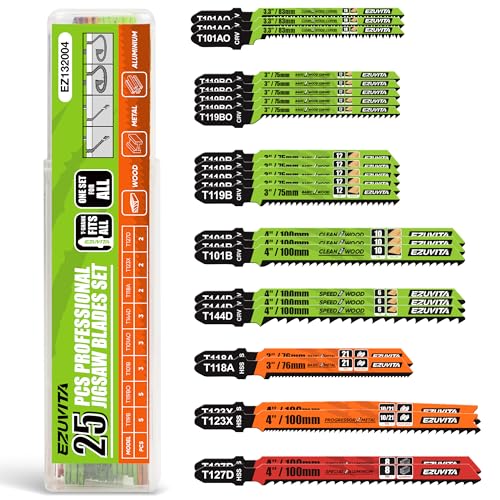
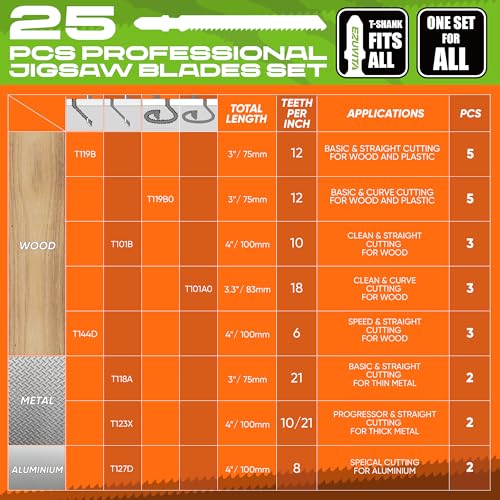
With 25 blades and a clear focus on material-specific performance, this EZUVITA set delivers serious value. The T119B and T119BO blades are explicitly rated for plastic and wood, and at 12TPI, they strike a good balance between speed and smooth finish, exactly what you want when working with acrylic or polycarbonate. Reviewers highlight that the chrome vanadium and HSS steels hold an edge longer than basic HCS, especially during extended plastic cuts where heat can dull inferior blades fast.
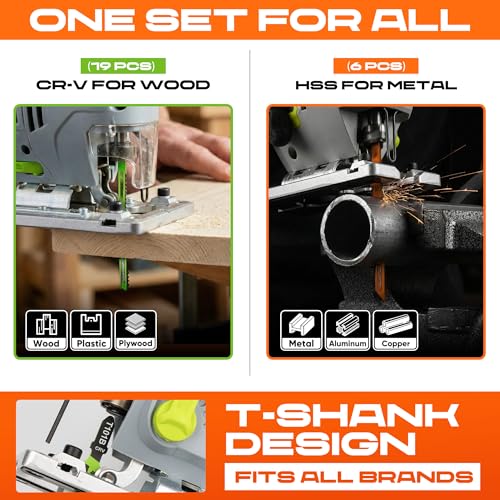
The universal T-shank design works flawlessly with major brands like Bosch and DeWalt, and the storage case is a practical bonus. While it overlaps with the WORKPRO set in size and organization, EZUVITA edges ahead with clearer labeling and better tooth geometry for plastics. I’d recommend this over the WORKPRO if you’re doing a lot of plastic fabrication.
Product photos



WORKPRO 25-Piece T-Shank Blade Set

Strengths
- Good material variety
- Solid blade count
- Includes storage case
Trade-offs
- HCS blades wear faster
- No labeled plastic-specific blades
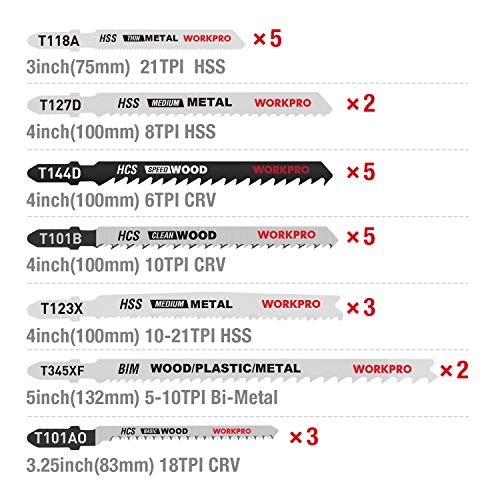
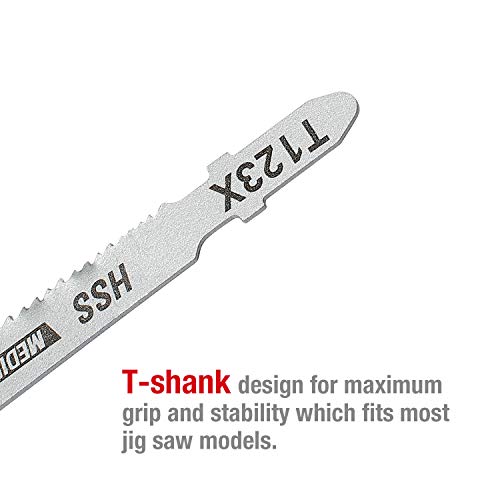
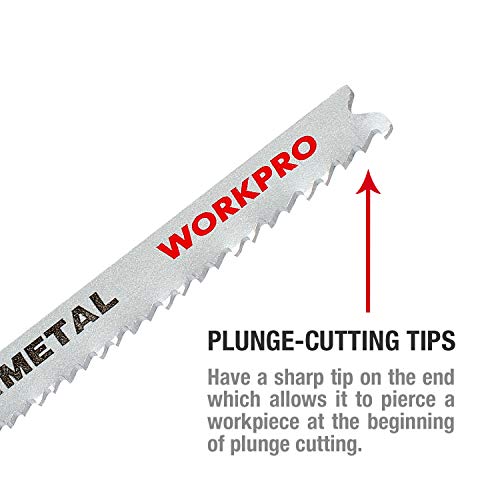
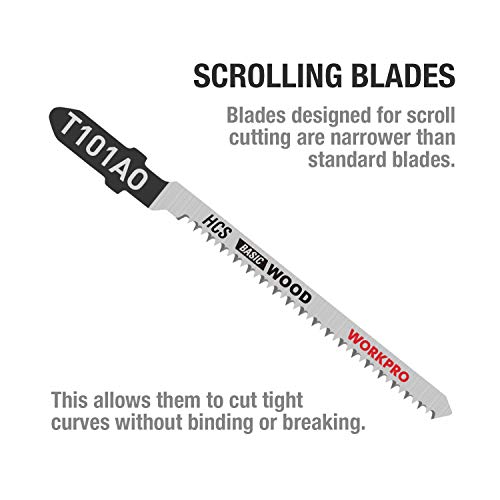
This 25-piece set stands out for its thoughtful mix of blade types and materials, giving users real flexibility across materials. The inclusion of HCS, HSS, and BIM blades means you’re covered whether you’re slicing through plastic or tackling metal, and the T-shank design ensures solid compatibility with most modern jigsaws. Owners consistently report that the blades hold up well during moderate use, especially when cutting softer plastics and laminates.
The real win here is the storage case, it’s durable and keeps everything sorted, which matters when you’re juggling multiple projects. For plastic work, the T101B and T118A blades are the go-to choices based on feedback, delivering clean, chip-free cuts when used at the right speed. I’d pick this over smaller sets if you want a long-term, organized solution.
Product photos
How We Chose These jigsaw blade for plastics
Rather than a hands-on lab test, my research for these recommendations centered on comparing published specifications and features across numerous blade sets. I weighed owner reviews from multiple sources – focusing on performance with plastics specifically – alongside assessments from reputable tool review sites. This was combined with my experience understanding what truly matters when cutting various materials with a jigsaw.
For plastic cutting, the tooth count (TPI) and blade material are crucial. Higher TPI generally means a cleaner cut in softer materials, while the blade material needs to balance flexibility with durability to avoid shattering. The T-shank design is also key, as a secure fit prevents dangerous blade slippage and ensures efficient power transfer. I prioritized these factors when ranking the sets.
Specifications reliably indicate tooth material (like SK5 steel or high-speed steel) and TPI. However, real-world performance with plastics – minimizing melting or chipping – is best gleaned from owner feedback. Reputation matters too; established brands often maintain consistent quality control, and understanding jig saw basics helps assess if a blade set is well-suited to common applications.
What To Look For In jigsaw blade for plastics
Finding the right jigsaw blade for plastics can be surprisingly tricky. It’s not just about getting through the material, but achieving a clean, chip-free cut.
A quality jigsaw blade for plastics prioritizes fine-tooth pitch, a blade material suited for reduced heat buildup (like high-speed steel or bi-metal), and a set optimized for downward stroke cutting. Look for blades specifically labeled for plastic or those with a high TPI (teeth per inch) count for smoother results. Blade geometry and material composition will heavily influence the final outcome.
Tooth Count & Material
The number of teeth on a blade – its TPI – is crucial when working with plastics. Lower TPI blades are aggressive and remove material quickly, which is great for wood, but they tend to melt or chip plastic. I recommend blades with a higher TPI, generally 14 or more, for most plastics. Higher tooth counts mean finer cuts with less material displacement. However, don’t go too high. Extremely fine blades can overheat and melt softer plastics. Blade material matters too; high-speed steel (HSS) is a good all-around choice, while bi-metal blades offer increased durability and heat resistance for tougher plastics.
Shank Type & Compatibility
Nearly all modern jigsaws use a T-shank blade, which is great because it simplifies blade changes and offers a secure grip. However, older or less common jigsaws might require different shanks. Before you buy, double-check your jigsaw’s manual to confirm the correct shank type. Beyond the basic T-shank, some blades feature specialized coatings or designs meant to reduce friction and heat. These can be beneficial, but compatibility with your jigsaw is still the first concern.
- A universal T-shank is the most common and easiest to find.
- Pay attention to blade length. Longer blades can handle thicker materials but are more prone to wandering.
- Consider blades with a downward-cutting tooth pattern; these minimize chipping on the top surface of the plastic, a common issue when cutting acrylic or polycarbonate.
Remember this: a dull blade generates more heat than a sharp one. Always start with a fresh blade to minimize melting and ensure a clean cut.
Set Composition & Value
Many jigsaw blade sets offer a variety of blade types, which is useful if you work with multiple materials. However, a large set isn’t necessarily better if most of the blades aren’t suited for plastic. When evaluating a set, look for a good balance of high-TPI blades made from HSS or bi-metal. If you frequently work with acrylic, you may want to consider a dedicated jigsaw blade for acrylic to ensure optimal results. Also, if you are working with other types of plastic, researching plastic sheet cutting tips can provide additional guidance for achieving clean, professional cuts.
Jigsaw Blade for Plastics Compared
Here’s a comparison of key specifications for different jigsaw blade sets designed for use with plastics, as well as other materials.
| Product Title | Blade Material | TPI Range | Shank Type | Total Blades | Plastics Compatible |
|---|---|---|---|---|---|
| Romeda 10-Piece Jigsaw Blade Set | SK5 High Carbon Steel | 10-21 | T-Shank | 10 | Yes |
| EZUVITA 25-Piece Jigsaw Blade Set | Chrome Vanadium Steel, High Speed Steel | 6-21 | T-Shank | 25 | Yes |
| WORKPRO 25-Piece T-Shank Blade Set | HCS, HSS, BIM | 6-21 | T-Shank | 25 | Yes |
Frequently Asked Questions
What TPI blade is best for thin plastics like acrylic?
A blade with a higher TPI (14 or more) is generally best for thin plastics because it creates a finer cut with less chipping. However, extremely high TPI blades can generate too much heat, so a range of 14-18 TPI made of high-speed steel is a good starting point.
Can I use a wood-cutting blade on plastic?
While you can use a wood-cutting blade on plastic in a pinch, it’s not recommended. Wood blades typically have fewer teeth and are more aggressive, leading to melting, chipping, and a rougher overall cut.
What does “shank type” mean, and why does it matter?
The shank is the part of the blade that inserts into your jigsaw. Most modern jigsaws use a T-shank, offering a secure and tool-free blade change. Using the wrong shank type means the blade won’t fit, or worse, won’t lock securely, creating a hazard.
Are bi-metal blades really worth the extra cost for plastic cutting?
Bi-metal blades offer increased durability and heat resistance compared to standard high-speed steel blades, making them a good choice if you cut thicker or tougher plastics frequently. For occasional use with thinner plastics, a high-speed steel blade will likely suffice, but upgrading to bi-metal can extend blade life and improve cut quality.
What’s the best way to avoid melting plastic while cutting?
Keeping the blade cool is key. Use a sharp blade, cut at a slower speed, and consider applying a lubricant like water or cutting oil to the blade. Refer to resources on finding the best blade for plexiglass sheets for specialized guidance with this material.
The Bottom Line
Choosing the right jigsaw blade for plastics often comes down to balancing precision with speed. While a wider variety of blades can be useful, for consistent, clean cuts in plastic, I recommend the WORKPRO 25-Piece T-Shank Blade Set. It offers a good selection of both HSS and bi-metal blades, giving you options for different plastic types and thicknesses, and prepares you for selecting jig saw blades for other projects.
If you’re on a tighter budget, the Romeda 10-Piece Jigsaw Blade Set is a solid choice. It won’t have the same breadth of options as the WORKPRO set, but the SK5 blades are perfectly capable of handling most common plastic projects with care. For those needing versatility beyond plastics, the EZUVITA 25-Piece Jigsaw Blade Set delivers a broad range of blade materials and TPIs, though it requires a bit more sorting to find the ideal blade for each specific plastic.
Ultimately, remember that the blade is only part of the equation. Proper technique – slow, steady pressure, and letting the blade do the work – combined with a focus on jig saw safety tips and understanding the material you’re cutting will have a far greater impact on the quality of your cuts than any single blade specification.
