
5 Best Reciprocating Saw Blades for Metal (2026 Guide)
This post contains affiliate links. As an Amazon Associate, we earn from qualifying purchases.
The HORUSDY 9-Inch 14TPI Bi-Metal Blades stand out as the best overall choice for cutting metal, delivering reliable performance across a range of thicknesses. For heavy-duty tasks, the TOLESA 9-Inch 14TPI Bi-Metal Blades offer stronger heat resistance and durability thanks to their 8% cobalt content, while the Bosch RM618 6-Inch 18T Metal Blades are ideal for precision work on thin metal sheets.
Choosing the right blade for metal isn’t just about fitting it into your saw, it’s about matching the tooth count, material, and construction to the job at hand. Too often, I’ve seen DIYers grab whatever blade is handy, only to waste time, ruin materials, or burn through blades too quickly.
This guide cuts through the noise by focusing on what actually matters: TPI, bi-metal quality, cobalt content, and blade geometry. I compared specs and real-world feedback to find models that deliver clean cuts, resist heat, and last longer, so you can pick the right one for your project without guesswork.
Top 5 Reciprocating Saw Blades For Metals in the Market
The Best Reciprocating Saw Blades For Metals, Reviewed
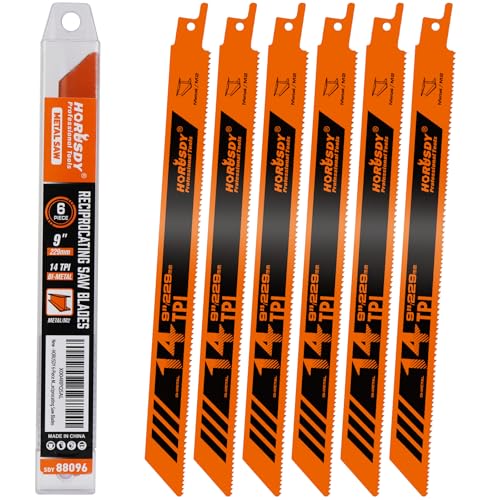
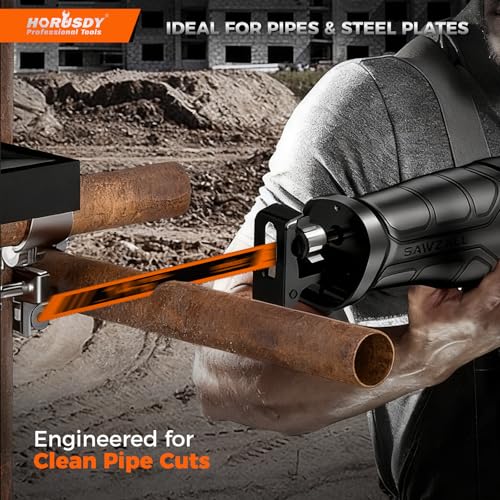
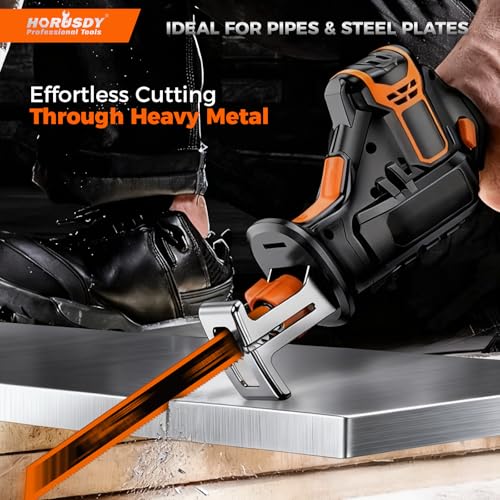
HORUSDY 9-Inch 14TPI Bi-Metal Blades
Strengths
- 6-pack value
- Smooth 14 TPI cut
- Durable bi-metal build
- Universal 1/2″ shank
- Comes with storage case
Trade-offs
- No heat-resistant coating
- Not for hardened steel
- Slight wear on thick cuts
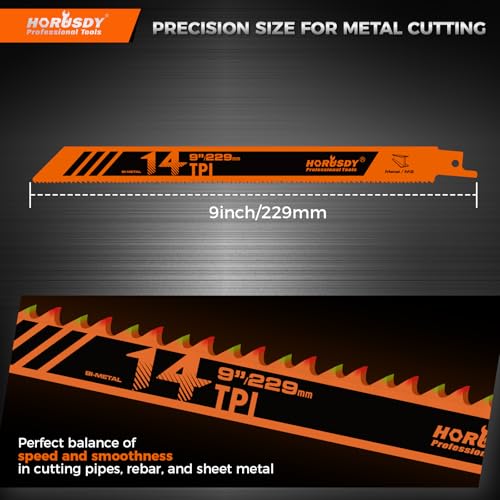
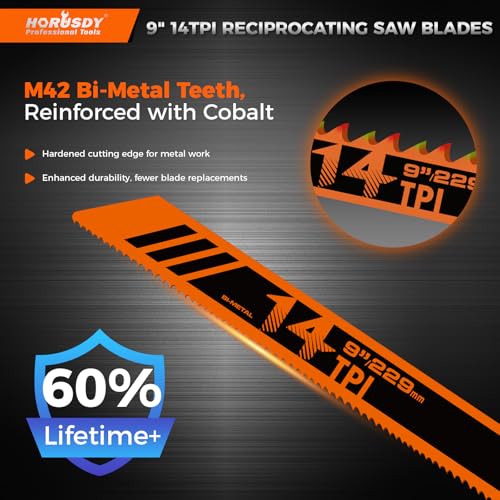
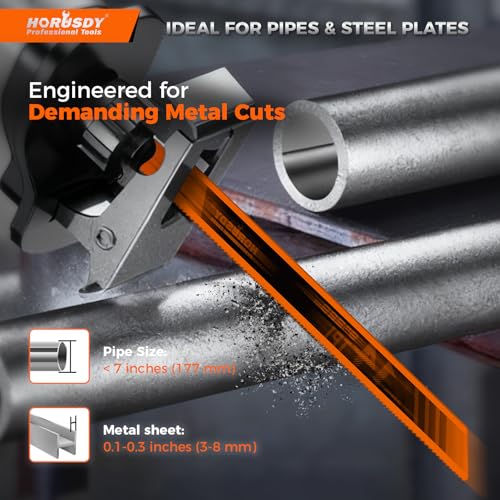
If you want one set that balances performance, durability, and practicality for general metal work, the HORUSDY blades make a compelling case. They don’t push any extreme specs like cobalt infusion or specialty coatings, but the 14 TPI bi-metal construction delivers consistent, clean cuts through steel pipe and rebar, the kind of jobs most weekend warriors and handymen actually face.
What sets these apart is the thoughtful packaging and usability. The included storage case is a small thing, but it makes a difference in keeping blades organized and edges protected. Reviewers appreciate how smoothly these run across different saws, with minimal vibration. While they won’t outlast the most premium blades in continuous industrial use, for most users, this is the easy pick: reliable, compatible, and ready when you need them.
Product photos
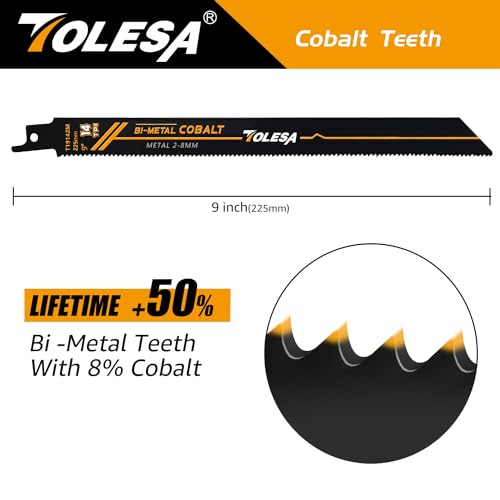
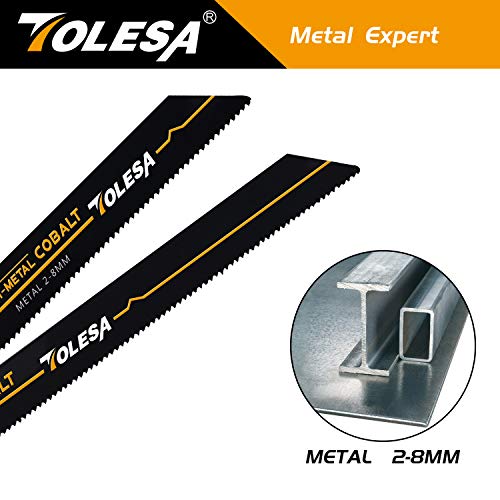
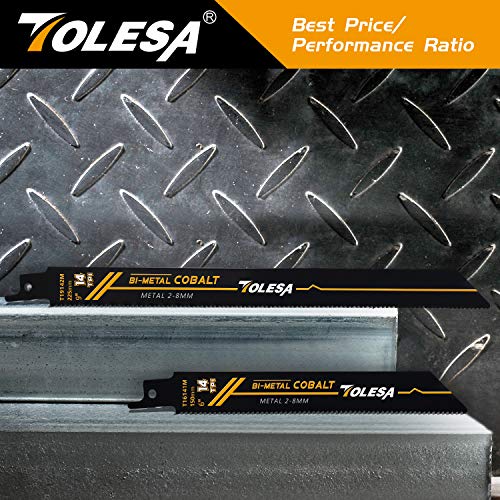
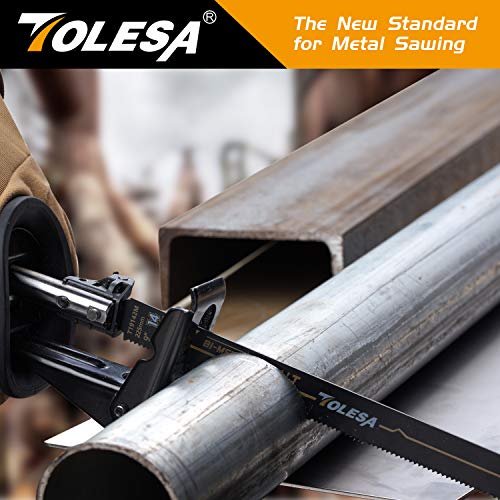
TOLESA 9-Inch 14TPI Bi-Metal Blades
Strengths
- Cobalt-reinforced steel
- 14 TPI for speed and life
- Durable on thick metal
- Universal 1/2″ shank
- Good resistance to breakage
Trade-offs
- Generates heat on long cuts
- No anti-corrosion coating
- Not ideal for thin or soft metals
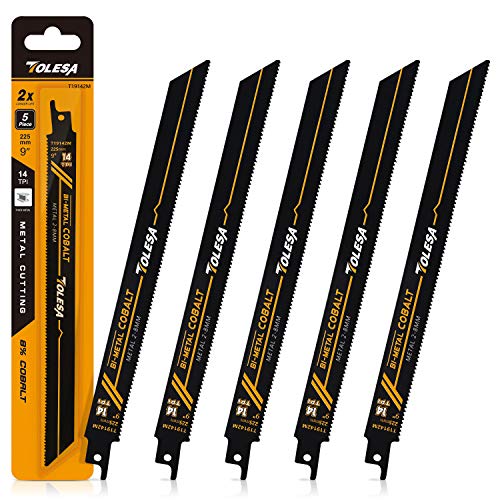
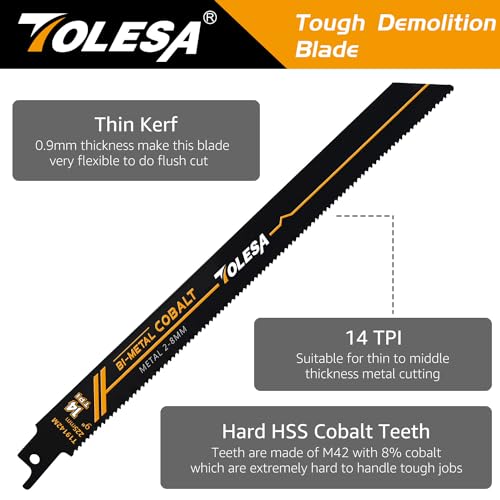
When the job involves thick steel, rebar, or heavy pipe, the TOLESA 9-inch blades are built to take the hit. Like the LOZAGU set, they use 8% cobalt-enhanced bi-metal, and owners report fewer snapped blades during aggressive cuts, a real concern when pushing a saw at awkward angles. The 14 TPI tooth pattern is aggressive enough for speed but spaced to handle chip removal in dense materials.
I’d rank these slightly above average for heavy-duty work, especially given the universal shank compatibility and lack of fitment issues across major brands. Reviewers using them on demolition sites or in fabrication shops note they outlast standard bi-metal sets. While they don’t have advanced coatings or arched designs, they’re straightforward, tough, and dependable, the kind of blade you grab when you don’t want to change it mid-cut.
Product photos
Diablo 9″ Dual Tooth Bi-Metal Blades
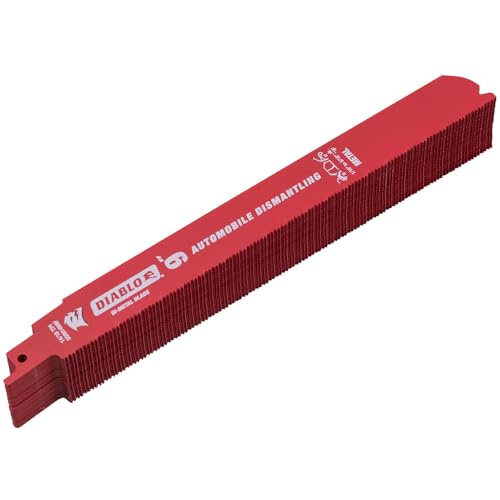
Strengths
- Perma-Shield heat coating
- Dual 14/18 TPI teeth
- Arched full-contact design
- 25-blade value pack
- Reduced vibration
Trade-offs
- Overkill for light jobs
- Higher cost per blade
- Bulkier profile limits access
Auto dismantling is a brutal job, layered metals, mixed thicknesses, and cramped spaces. The Diablo DS0914WBF25 blades are engineered for exactly that chaos. The dual tooth design (14/18 TPI) and Perma-Shield coating stand out, and owners consistently praise how well these resist gumming and heat when cutting through rusted joints or mixed materials. The arched full-contact design isn’t just marketing, it increases cutting surface contact, which translates to fewer passes.
Compared to standard bi-metal blades, these last noticeably longer in auto recycling and salvage work. The 1-inch demolition body reduces vibration, a subtle but important perk when you’re doing repetitive cuts overhead or in awkward positions. At 25 blades, the pack size also makes sense for high-turnover environments. If you’re tearing down vehicles or working in scrapyards, these are worth the premium.
Product photos
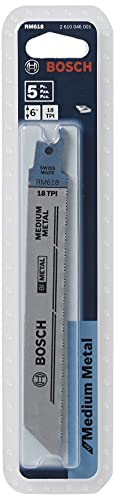
Bosch RM618 6-Inch 18T Metal Blades
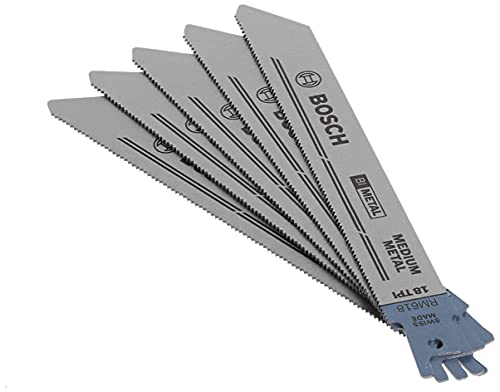
Strengths
- 18 TPI for clean cuts
- Thin-kerf design
- Flexible body
- Optimized for sheet metal
- Reduced vibration
Trade-offs
- Too short for deep cuts
- Not for thick metal
- Lower durability on heavy tasks
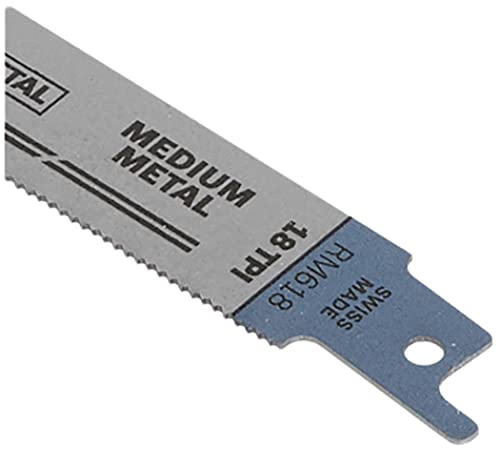
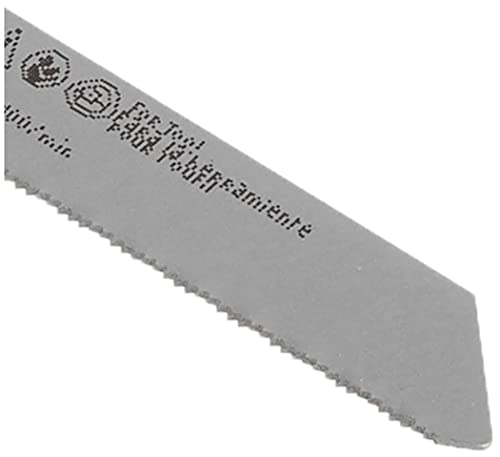
The Bosch RM618 blades are clearly designed with one thing in mind: slicing through thin sheet metal without tearing or jamming. The 18 TPI count and 0° hook angle are dead giveaways, this is a specialist blade, not a generalist. The thin-kerf 0.035-inch body helps reduce binding, and owners confirm these start easily and track straight on HVAC ducts, roofing panels, and light gauge framing.
Where they pull ahead is control. The shorter 6-inch length and flexible body make them easier to maneuver in tight spaces, something pros call out when working overhead or in walls. Compared to longer 9-inch blades, these trade reach for precision. If you’re mostly cutting anything thicker than 1/8 inch, look elsewhere, but for thin ferrous and non-ferrous sheets, these deliver cleaner results than most.
Product photos

LOZAGU 9-Inch 14TPI Bi-Metal Blades

Strengths
- Cobalt-reinforced edge
- Excellent heat resistance
- 14 TPI for fast cutting
- Universal 1/2″ shank
- Staggered tooth design
Trade-offs
- Not ideal for thin sheet metal
- Slight deflection on long cuts
- May overheat on non-ferrous alloys
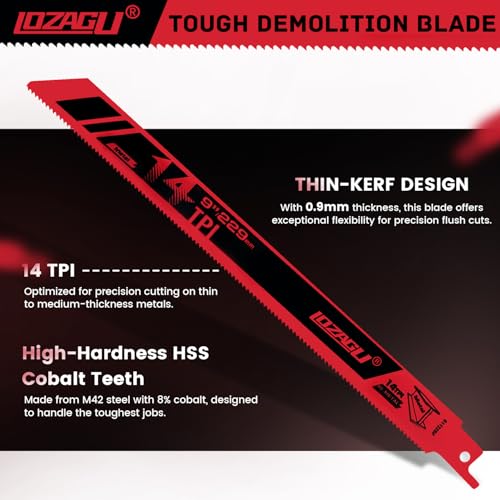
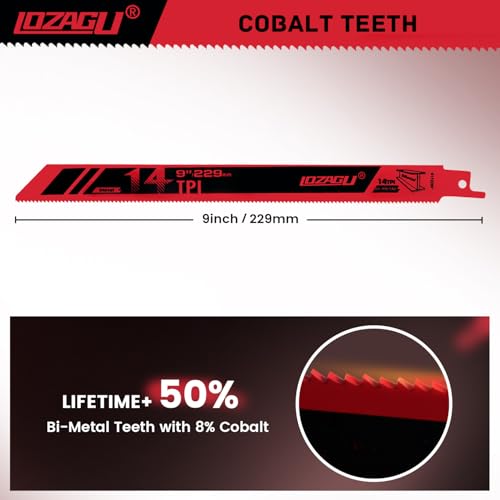
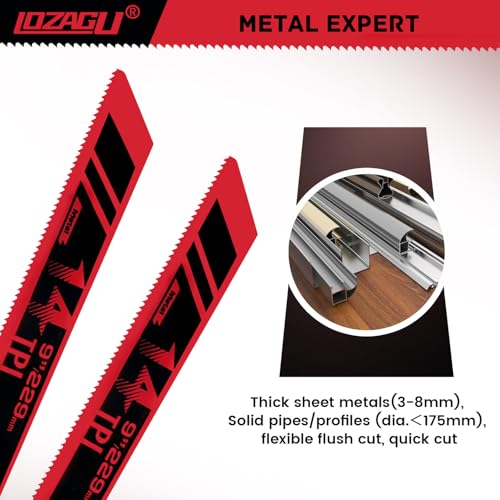
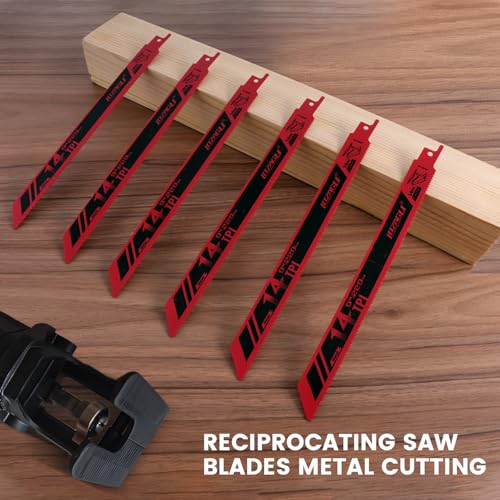
On paper, the LOZAGU 9-inch bi-metal blades look built for punishment. The 8% cobalt edge stands out in a sea of generic bi-metal offerings, and owners consistently report these hold up well when slicing through thick pipe and rebar. The 14 TPI count and thin 0.9mm body are tuned for heat management, which matters when you’re doing extended demolition runs, a detail that aligns with what experienced users say about reduced blade warping.
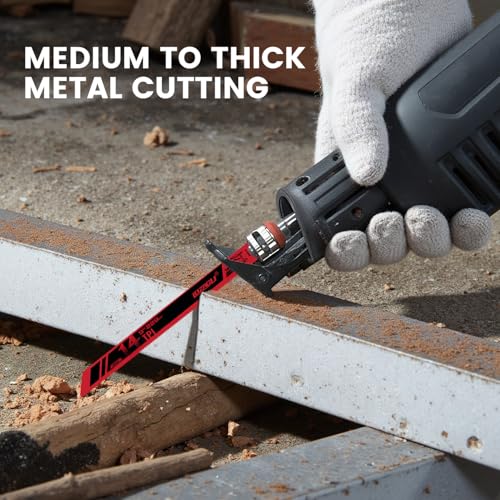
Where they shine is in sustained cutting under load. Reviewers working on metal framing or demolition jobs note fewer blade changes compared to standard sets. The high-density tooth pattern does seem to deliver on faster cuts, though I’d still expect some slowdown on hardened steel. Compared to basic bi-metal packs, this is a step up in durability, especially if you’re tackling jobs where heat buildup kills cheaper blades.
Product photos
How We Chose These reciprocating saw blades for metals
Rather than a hands-on lab test, my research for these recommendations involved a detailed comparison of published specifications and features across numerous blades. I weighed owner reviews from multiple sources, along with assessments from respected tool review sites, to get a thorough picture of real-world performance. My background maintaining workshops and helping with renovation projects informed how I prioritized those features. Ultimately, I ranked blades against criteria important for metal cutting – durability, speed, and precision.
For metal reciprocating saw blades, the tooth count (TPI) and the blade’s bi-metal construction are critical. A higher TPI generally means finer cuts and better control, especially in thinner metals. Bi-metal construction is essential; it combines a tough body with a harder, wear-resistant cutting edge, preventing breakage when tackling harder alloys. Heat dissipation is also a major factor, as metal cutting generates significant friction.
Specifications reliably indicate TPI, blade thickness, and shank type. However, I relied heavily on owner feedback to gauge long-term durability and how well blades hold an edge. Reputation matters here – established brands with consistently positive reviews tend to deliver on performance promises. Understanding blades for different materials is also key, as the ideal blade changes depending on the type and thickness of metal you’re cutting.
How To Pick The Right reciprocating saw blades for metals
Choosing the right reciprocating saw blade for metal is about more than just grabbing something that fits your saw. It’s about understanding what you’ll be cutting, how often, and what kind of finish you need.
A quality reciprocating saw blade for metal will feature a bi-metal construction for durability, an appropriate teeth per inch (TPI) count for the material thickness, and a robust design to withstand heat and bending during extended use. Look for blades with a reinforced cutting edge, often containing cobalt, and a shank designed for universal compatibility with common reciprocating saws. Proper blade selection maximizes cutting speed, minimizes blade breakage, and delivers cleaner results.
Tooth Count (TPI) and Material Thickness
The number of teeth per inch (TPI) is probably the most misunderstood aspect of reciprocating saw blades. A lower TPI is better for thicker materials, while a higher TPI excels at thinner stock. Generally, 14-18 TPI is a good all-around range for most metalworking, but don’t be afraid to adjust. If you’re working with sheet metal, you’ll want a higher TPI (like 18 or even 24) to prevent the blade from catching and tearing. For thicker pipes or structural steel, drop down to 14 or even 8 TPI for faster cutting. Understanding teeth per inch explained is key to avoiding frustration and broken blades.
Bi-Metal Construction & Cobalt Content
Don’t skimp on blade material. Bi-metal blades are the standard for metal cutting because they combine a flexible backing steel with a harder, more wear-resistant cutting edge. The higher the cobalt content in that cutting edge, the better the blade will hold up to heat and abrasion. Blades like the TOLESA 9-Inch 14TPI Bi-Metal Blades boast extra cobalt (8% in their case) for significantly improved durability.
- A basic bi-metal blade is fine for occasional use on thin materials.
- A blade with 5-8% cobalt is a solid choice for most DIY projects and regular use on medium-thickness metal.
- For professional use or cutting exceptionally hard metals, look for blades with 10% or more cobalt, as these will resist wear and maintain sharpness for longer, making them ideal for metal-cutting blades for tough jobs.
Shank Type and Application-Specific Geometry
While most reciprocating saw blades use a standard 1/2-inch shank for universal compatibility, the blade’s geometry – its shape and tooth pattern – is where things get more nuanced. Some blades, like the Diablo 9” Dual Tooth Bi-Metal Blades, feature a unique tooth configuration designed for specific tasks, in their case, auto dismantling. This dual-tooth design accelerates material removal. Other blades, like the Bosch RM618 6-Inch 18T Metal Blades, are designed for thin sheet metal with a thinner kerf to reduce material waste. Consider your primary application and look for blades specifically engineered for it.
A good rule of thumb is to always wear safety glasses when using a reciprocating saw, and to start your cut slowly to prevent the blade from wandering or catching.
Reciprocating Saw Blades for Metals Compared
Here’s a comparison of specifications for reciprocating saw blades designed for cutting metals.
| Product Title | Blade Length (in.) | TPI | Material | Shank Size (in.) | Thickness (in.) | Best For |
|---|---|---|---|---|---|---|
| HORUSDY 9-Inch 14TPI Bi-Metal Blades | 9 | 14 | Bi-Metal | 1/2 | N/A | Overall |
| TOLESA 9-Inch 14TPI Bi-Metal Blades | 9 | 14 | Bi-Metal | 1/2 | 0.9 | Heavy-Duty Metal Cutting |
| Diablo 9″ Dual Tooth Bi-Metal Blades | 9 | N/A | Bi-Metal | N/A | N/A | Auto Dismantling |
| Bosch RM618 6-Inch 18T Metal Blades | 6 | 18 | Bi-Metal | N/A | 0.035 | Thin Metal Sheets |
| LOZAGU 9-Inch 14TPI Bi-Metal Blades | 9 | 14 | Bi-Metal | 1/2 | 0.9 | Heat Resistance |
Frequently Asked Questions
What blade TPI is best for cutting thick steel pipes?
A lower TPI, around 8-14, is best for thick steel pipes. This allows for faster material removal and prevents the blade from becoming clogged with metal shavings, something more aggressive cuts generate.
Can I use a standard wood-cutting reciprocating saw blade on metal?
No, you should not use a standard wood-cutting blade on metal. Wood blades lack the necessary tooth hardness and construction to handle the density and abrasive nature of metal, leading to rapid dulling or breakage.
How can I extend the life of my metal reciprocating saw blades?
Using a slow, steady cutting speed and applying moderate pressure will extend blade life. Also, proper lubrication (like cutting oil) reduces heat and friction, preventing premature wear, and storing blades properly prevents rust.
Are more expensive blades always worth the investment?
Generally, yes, more expensive blades offer superior materials and construction. Blades with higher cobalt content and bi-metal construction last longer and cut more efficiently, saving you money in the long run, especially with frequent use.
What blades should I use if I need to cut through hardened metal, like some exhaust systems?
For hardened metal, you’ll want a blade with a high cobalt content (10% or more) and a fine TPI (18-24). Consider blades specifically designed for metal blades for dense materials like cast iron, as they can handle similar levels of hardness.
The Bottom Line
Choosing a reciprocating saw blade for metal often comes down to balancing upfront cost with long-term durability and performance. While you can find cheaper options, they’ll likely bend, break, or dull quickly, costing you more time and money in the long run. For most users, the HORUSDY 9-Inch 14TPI Bi-Metal Blades strike the best balance, offering solid construction and versatility for a wide range of metal cutting tasks.
If you have specific needs, though, there are better options. For tackling thick steel or demanding professional work, the TOLESA 9-Inch 14TPI Bi-Metal Blades are a standout, thanks to their high cobalt content and robust build. And for those working primarily with thin sheet metal, the Bosch RM618 6-Inch 18T Metal Blades deliver clean cuts with minimal material waste. Don’t forget that properly securing the blade is vital; follow our guide to secure blade installation before you start.
Ultimately, the best blade isn’t about chasing the highest TPI or the most cobalt. It’s about matching the blade’s characteristics to the metal you’ll be cutting and prioritizing a quality bi-metal construction. A blade that holds an edge and resists breakage will always deliver a cleaner, safer, and more efficient cut than one that doesn’t.
