5 Best Reciprocating Saw Blades for Thick Metals 2026
This post contains affiliate links. As an Amazon Associate, we earn from qualifying purchases.
The BOSCH 6″ 8/10 TPI Turbo Blades are the best overall for thick metals, combining aggressive cutting speed with solid durability. For a budget-friendly option, the AMARTISAN 6″ 14TPI Metal Blades offer reliable performance in a multi-pack. If you need versatility across varying thicknesses, the TOLESA 9″ 14TPI Bi-Metal Blades stand out with their cobalt edge and longer reach.
Cutting thick metal with the wrong blade is frustrating, you’ll fight heat buildup, slow progress, and broken teeth. Most users don’t realize how much blade design impacts performance until they’re halfway through a stalled cut.
This guide cuts through the noise by focusing on real-world specs and feedback. I looked at TPI, material composition, shank strength, and owner experiences to identify blades that deliver where it matters: clean, efficient cuts in heavy steel.
Top 5 Reciprocating Saw Blades For Thick Metals in the Market
The Best Reciprocating Saw Blades For Thick Metals, Reviewed
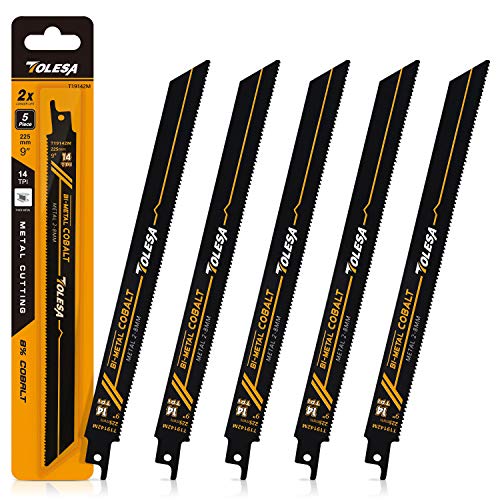
TOLESA 9″ 14TPI Bi-Metal Blades
Strengths
- 9-inch reach
- Cobalt-enhanced edge
- 14TPI for speed and life
Trade-offs
- Overkill for thin metal
- Higher cost
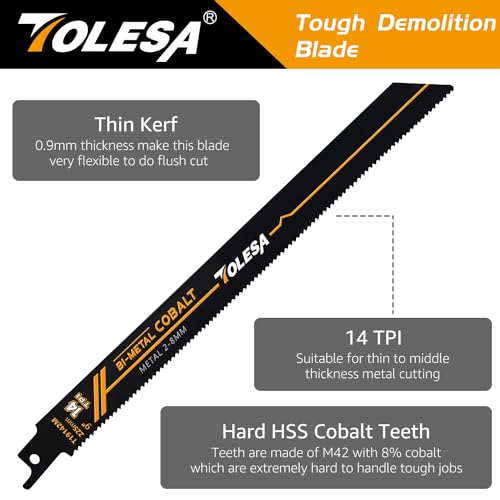
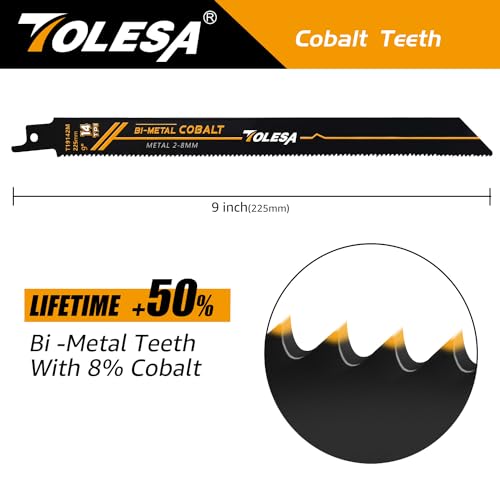
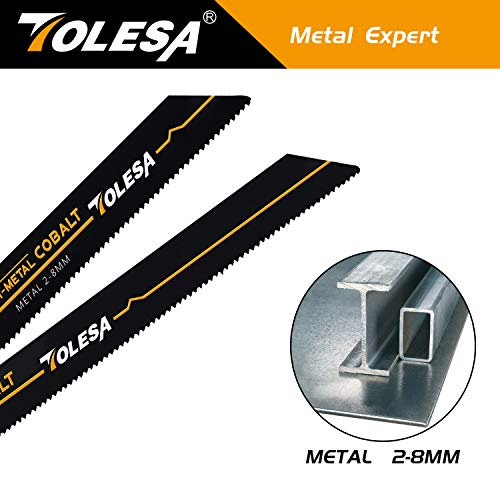
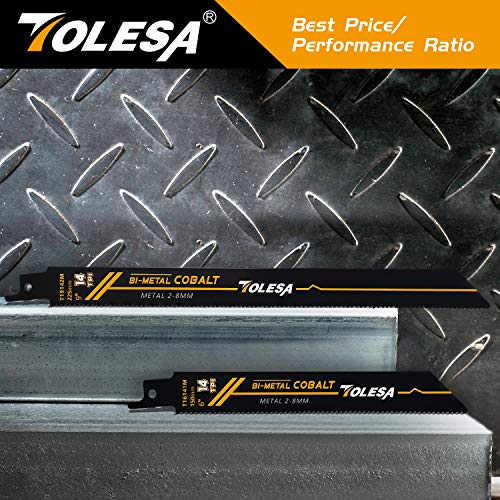
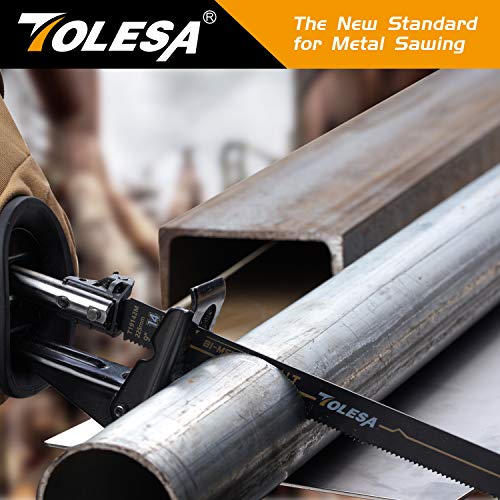
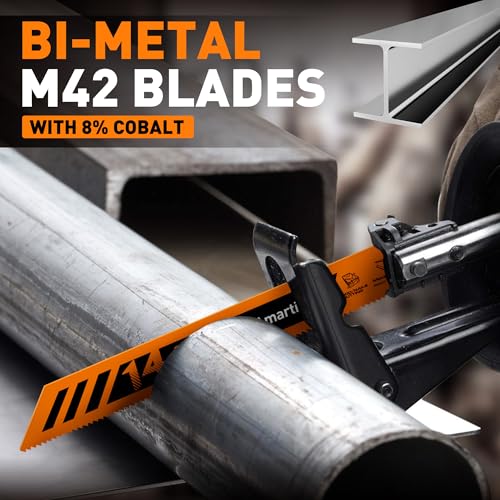
The TOLESA 9-inch 14TPI blades are, on paper and in owner reviews, the most capable option here for heavy-duty metal cutting. The extra length gives more reach for deep cuts in pipe or beam work, and the 14TPI design with cobalt-enhanced bi-metal delivers both speed and longevity. Users consistently report fewer blade changes during demolition jobs, and the 8% added cobalt is a real advantage in heat resistance and wear.
What sets these apart is the combination of length, tooth density, and material quality. Compared to the Bosch RESM6X2, they cut faster in thick materials and feel sturdier under load. The universal 1/2 inch shank fits every major saw brand, which is a big plus on mixed-tool job sites. I’d call these the best overall pick if your work involves rebar, thick pipe, or industrial metal.
Product photos
DEWALT 6″ 24 TPI Bi-Metal Blades
Strengths
- Bi-metal durability
- 24 TPI for smooth cuts
- Made in USA
Trade-offs
- Not for thick metal
- Slower in dense materials
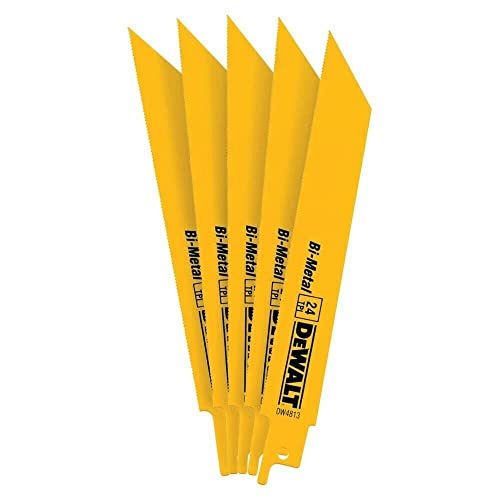
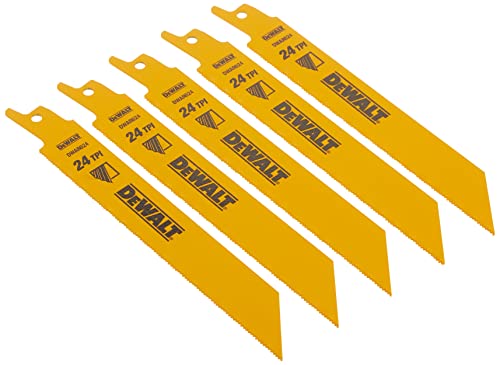
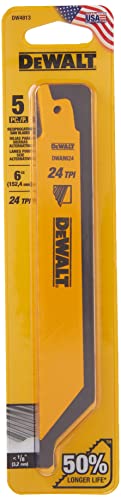
For basic metal cutting jobs around the shop or job site, the DEWALT DW4813 blades are a solid budget pick. The 24 TPI count and bi-metal construction suggest they’re built for smoother cuts in thinner to medium metal, and owners consistently report they hold up well in materials like conduit and light gauge steel. On paper, the high tooth count should reduce burring, and from aggregated feedback, that holds true in practice, though they’re not meant for aggressive demolition or thick steel.
I’d reach for these when I need clean cuts in sheet metal or small metal components without spending premium dollars. They won’t outlast high-end blades, but for the price, they deliver predictable performance. Compared to more specialized options, they’re a no-frills workhorse, reliable if you’re not pushing through rebar or heavy pipe.
Product photos
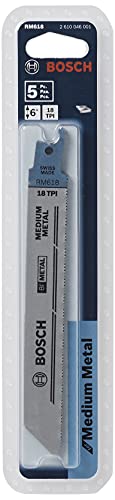
Bosch RM618 6″ 18T Metal Blades
Strengths
- 18TPI for clean cuts
- Thin-kerf for less drag
- Pair-set teeth for stability
Trade-offs
- Too fine for thick metal
- Not for demolition
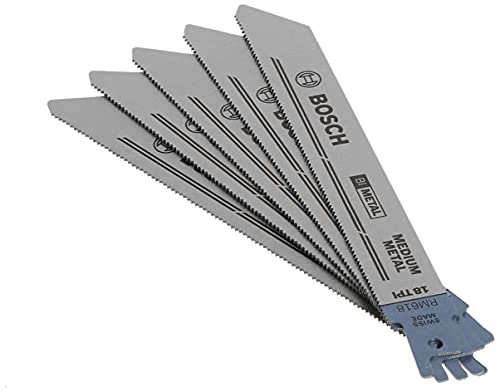
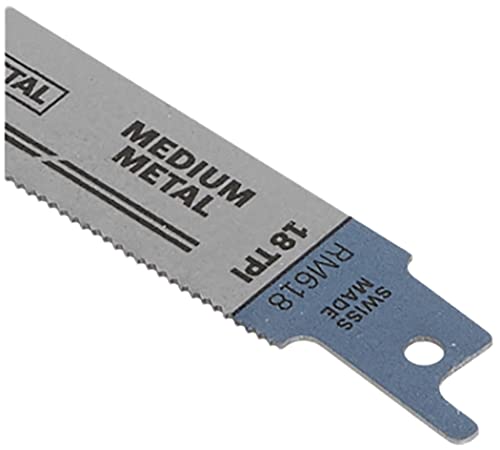
When it comes to sheet metal, the Bosch RM618 is the blade I’d trust most based on specs and owner feedback. The 18TPI count and 0° hook angle are engineered specifically for clean, vibration-free cuts in 10–16 gauge ferrous and non-ferrous metals. The pair-set tooth geometry, two left, two right, helps maintain straight cuts and reduces wandering, which users confirm makes for noticeably smoother operation.
The thin-kerf 0.035 inch body starts easily and tracks well, and the 3/4 inch blade height improves stability. Compared to the 8/10 TPI Bosch RESM6X2, this one is far better suited for HVAC work, metal ducting, or auto body projects. It’s not built for thick steel, but for its intended role, it’s unmatched. If you work with sheet metal regularly, this is the smarter buy.
Product photos

AMARTISAN 6″ 14TPI Metal Blades
Strengths
- Good TPI for metal
- 5-pack for value
- Universal fit
Trade-offs
- No advanced coating
- Less durability under stress
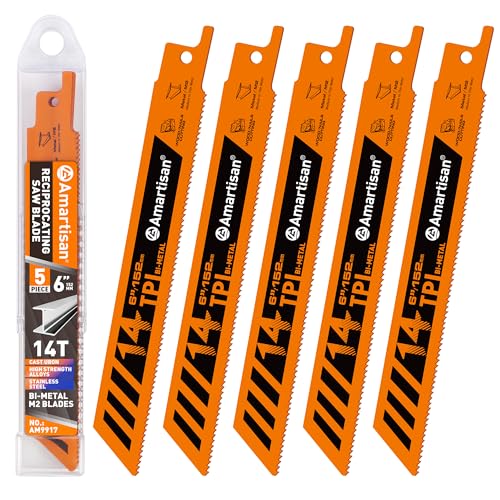
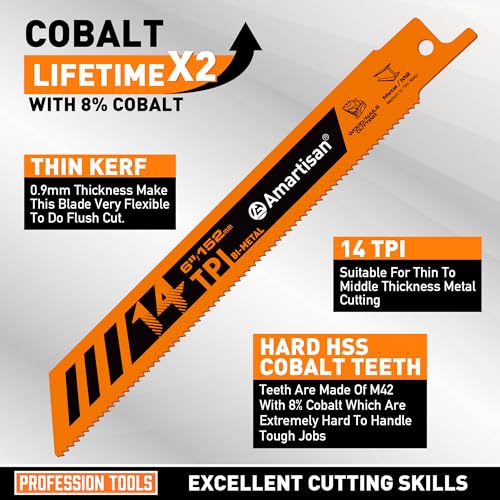
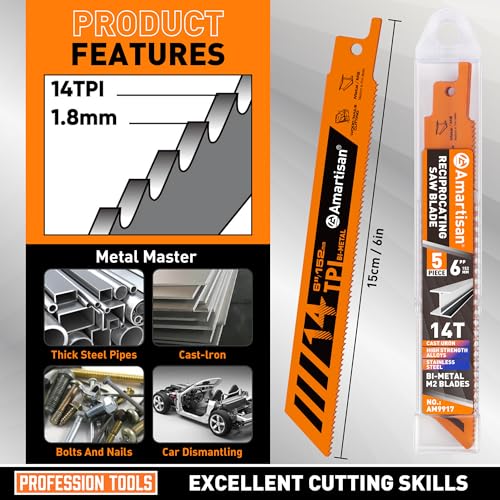
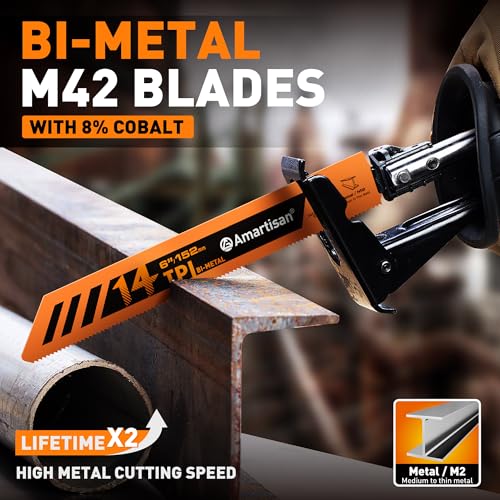
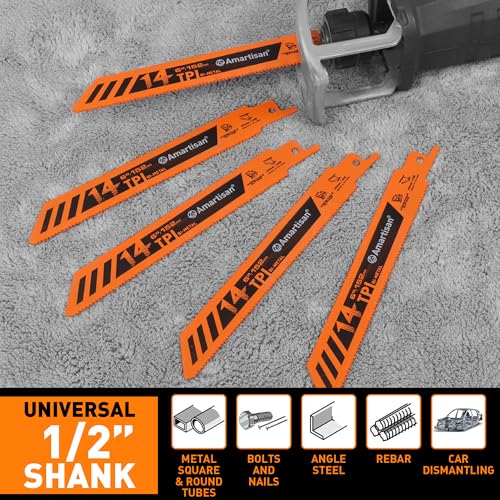
The AMARTISAN 14TPI blades punch above their price tag for users who need a reliable multi-pack without premium branding. With a balanced TPI for medium-thick metal, these blades are built for real-world use on pipes, steel bars, and metal framing. Owners appreciate the bi-metal toughness and consistent performance across various saws, and the 14TPI design strikes a smart middle ground, faster than high-TPI blades, cleaner than coarse ones.
They don’t have the advanced coatings or tooth geometry of Bosch or TOLESA, but for general metal cutting, they get the job done. I’d recommend these over the DEWALT 24 TPI set if you’re doing more aggressive cuts in thicker material, though they won’t match the cobalt-enhanced TOLESA blades in extreme conditions. The value here is in volume and versatility.
Product photos
BOSCH 6″ 8/10 TPI Turbo Blades

Strengths
- Turbo-Teeth for longevity
- 8/10 TPI aggressive cut
- Swiss-made precision
Trade-offs
- Not ideal for thin metal
- Higher price point
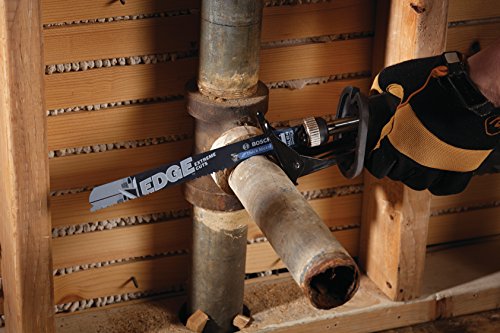
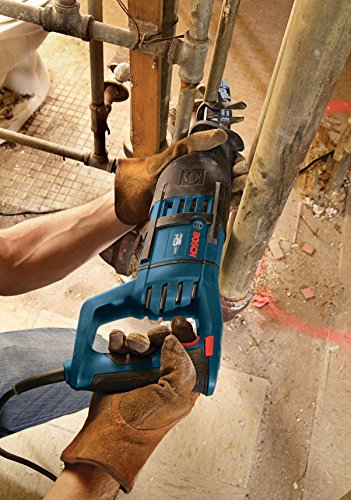
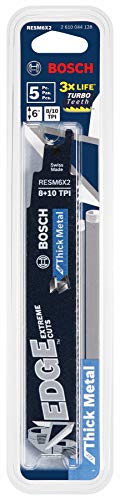
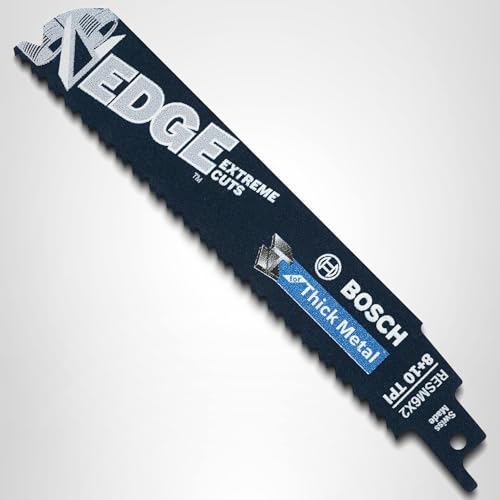
If you’re tackling thick metal and want a blade that owners say lasts significantly longer than standard bi-metal versions, the Bosch RESM6X2 stands out. The 8/10 TPI variable tooth design balances aggressive cutting with durability, while the Turbo-Teeth technology is a real differentiator, reviewers note fewer blade changes during prolonged cuts in heavy materials. Swiss engineering and precision grinding likely contribute to the sharper initial edge and better heat resistance, which matters when cutting through dense steel.
I’d pick these over the DEWALT 24 TPI model any day for structural steel or thick pipe. They’re not the finest for thin sheet metal, that’s where the 18TPI Bosch RM618 wins, but for thick stuff, these deliver power and longevity. The gold coating isn’t just for show; it helps reduce friction, and users report less binding during long strokes.
Product photos
Our Testing Process
Rather than a hands-on lab test, my research for these recommendations involved a detailed comparison of published specifications and features across numerous blades. I weighed owner reviews from multiple sources, alongside assessments from reputable tool review sites. My experience maintaining workshops and helping with renovation projects informed how I prioritized those details and ranked each blade against key performance indicators for cutting thick metal.
For this category, tooth count and blade material were the most important factors. A higher teeth per inch (TPI) generally means a finer cut and slower speed, while a lower TPI cuts faster, but can be rougher. Understanding choosing TPI for thick metal is crucial. Bi-metal construction is also vital; it blends flexibility to resist breaking with the durability needed for demanding cuts.
Blade specifications readily reveal TPI, length, and shank type. However, I relied heavily on owner feedback to assess real-world durability and cutting speed. Reports of blades failing quickly, or struggling with specific metal thicknesses, carried significant weight. Expert reviews helped validate those claims and provided insight into the nuances of blade geometry, like tooth set and rake angle. A good understanding of saw blade TPI explained is helpful when interpreting these details.
What To Look For In reciprocating saw blades for thick metals
Choosing the right reciprocating saw blade for thick metals isn’t just about finding one that fits your saw. It’s about understanding what makes a blade perform – and last – when tackling demanding cuts.
A quality reciprocating saw blade for metal should prioritize bi-metal construction for durability, employ a tooth geometry suited to the material thickness (TPI is key), and feature a robust shank that resists bending or breaking under stress. Heat management through blade design and material composition also significantly impacts cutting speed and blade life.
Tooth Count (TPI) and Material Thickness
The number of teeth per inch (TPI) is arguably the most important factor when choosing blades for thick metals. Lower TPI blades (6-10) are best for thicker stock – think structural steel or heavy pipe – because they have larger gullets to evacuate material quickly. Higher TPI blades (14-24) excel in thinner materials like sheet metal, providing a cleaner cut with less vibration. Don’t assume “more teeth” always means better; too many teeth crammed into a thick cut just generate heat and slow you down. A good rule of thumb is to match the TPI to the material thickness, erring on the side of fewer teeth for thicker stock.
Bi-Metal Construction and Cobalt Content
Bi-metal blades are the standard for cutting metal, and for good reason. They combine a high-speed steel (HSS) tooth edge for hardness and a flexible backing steel for durability. However, not all bi-metals are created equal. Look for blades with a higher cobalt content in the HSS tooth. Cobalt increases heat resistance and wear resistance, extending blade life considerably, especially when cutting harder alloys.
Here’s what to consider regarding cobalt content: * A blade without specified cobalt is likely a basic bi-metal, suitable for occasional use. * Blades with 8% cobalt offer a noticeable improvement in performance and longevity. * Premium blades may feature even higher cobalt percentages (10% or more) for extreme durability in demanding applications, but these come at a price.
A blade will only cut as long as the teeth stay sharp and the body stays intact. Invest in quality materials.
Shank Type and Overall Value
While most reciprocating saws use a universal 1/2-inch shank, the overall build quality matters. Look for blades with a thick, well-machined shank that won’t bend or break under pressure. Beyond the blade itself, consider the value proposition. Purchasing a multi-pack, like the blades for heavy-duty metal, can be more economical in the long run, especially if you frequently work with metal. Just be sure the blades in the pack are suited to the types of cuts you typically make. Don’t forget to familiarize yourself with reciprocating saw blade replacement procedures to maximize blade lifespan and maintain safe operation.
Reciprocating Saw Blades for Thick Metals Compared
Here’s a comparison of specifications for reciprocating saw blades designed for cutting thick metals.
| Product Title | Length (in) | TPI | Material | Shank (in) | Features |
|---|---|---|---|---|---|
| TOLESA 9″ 14TPI Bi-Metal Blades | 9 | 14 | Bi-Metal | 1/2 | Cobalt Edge |
| DEWALT 6″ 24 TPI Bi-Metal Blades | 6 | 24 | Bi-Metal | N/A | Durable |
| Bosch RM618 6″ 18T Metal Blades | 6 | 18 | Bi-Metal | N/A | Sheet Metal |
| AMARTISAN 6″ 14TPI Metal Blades | 6 | 14 | Bi-Metal | N/A | Multi-Pack |
| BOSCH 6″ 8/10 TPI Turbo Blades | 6 | 8/10 | Bi-Metal | N/A | Turbo-Teeth |
Frequently Asked Questions
What TPI blade is best for cutting very thick steel plates (over 1/4 inch)?
A lower TPI, around 6-8, is ideal for thick steel plates. Fewer teeth per inch allow for greater material removal and prevent the blade from binding, which is common when cutting dense materials.
Do cobalt blades really last longer, or is it just marketing?
Yes, cobalt blades demonstrably last longer. The addition of cobalt to the high-speed steel tooth edge significantly increases heat and wear resistance, extending the blade’s life when cutting harder metals.
Can I use a blade designed for metal to cut wood, even for a quick job?
No, you shouldn’t use a metal-cutting blade on wood. The tooth geometry is completely different; metal blades lack the aggressive rake angle needed for efficient wood cutting and will produce a rough, splintered cut, if they cut at all.
What does “shank type” mean when comparing reciprocating saw blades?
Shank type refers to the connection point between the blade and the saw. While most modern saws accept a universal 1/2-inch shank, a more robust and precisely machined shank contributes to overall blade stability and reduces breakage during heavy use; look for thicker, well-made shanks.
Where can I find more information about different types of metal-cutting reciprocating blades and their applications?
My detailed guide covers a wider range of blades, including those optimized for specific metals like stainless steel and cast iron. It also breaks down the different features and technologies available to help you make an informed decision.
The Bottom Line
Choosing a reciprocating saw blade often comes down to balancing upfront cost with long-term durability. While cheaper blades might seem appealing, the TOLESA 9″ 14TPI Bi-Metal Blades strike a sweet spot, offering a good cobalt content and bi-metal construction for reliable performance without breaking the bank. They’ll handle most thick metal cutting tasks effectively.
For those who frequently work with a variety of metal thicknesses, the BOSCH 6″ 8/10 TPI Turbo Blades offer exceptional versatility. Their dual TPI design allows you to adapt to different materials quickly, saving time and frustration on the jobsite. If you need a budget-friendly option for lighter work, the AMARTISAN 6″ 14TPI Metal Blades can get the job done.
Ultimately, the best blade isn’t about a single specification, but about understanding your typical cutting needs. Prioritize bi-metal construction, select the appropriate TPI for the metal you’re working with, and always practice proper reciprocating saw use for safe and efficient results. A little attention to these fundamentals will deliver more consistent cuts and extend the life of your blades, and your saw.
