8 Best Reciprocating Saw Blades for Trees 2026
This post contains affiliate links. As an Amazon Associate, we earn from qualifying purchases.
The best reciprocating saw blades for trees are the EZARC 12″ Japanese Teeth Pruning Blades for overall performance, the 15″ Japanese Teeth Arc Edge Blades as a solid budget pick, and the Diablo 9″ Carbide Tipped Pruning Blades when you need maximum durability for heavy use.
Cutting through branches isn’t like slicing softwood in a workshop. You’re dealing with gnarled grain, dirt-covered bark, and unpredictable resistance that can wreck a weak blade fast. Most standard blades dull quickly or bind under pressure, leading to wasted effort and potential damage to your saw.
As someone who’s evaluated hundreds of tool accessories, I focused on real-world performance indicators, owner feedback, tooth design, and material quality, to identify blades that actually hold up in the field. This guide breaks down what separates a reliable pruning blade from one that fails on the first thick limb.
Top 8 Reciprocating Saw Blades For Trees in the Market
The Best Reciprocating Saw Blades For Trees, Reviewed
EZARC 12″ Japanese Teeth Pruning Blades
Strengths
- Japanese teeth
- Arc edge design
- Chrome vanadium steel
Trade-offs
- Shorter reach than 15-inch models
- Only 3-pack
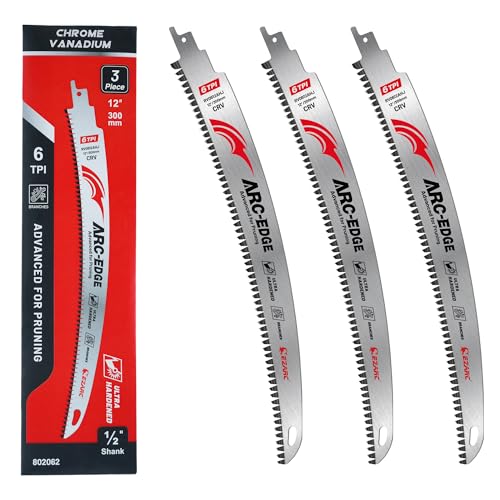
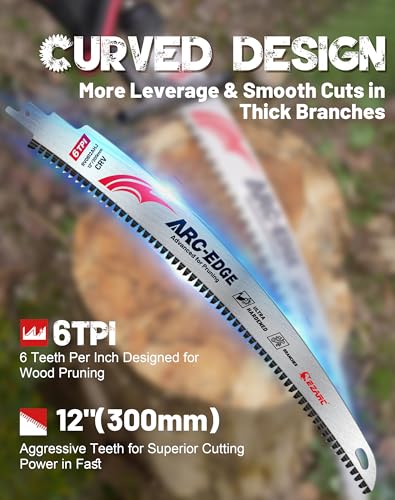
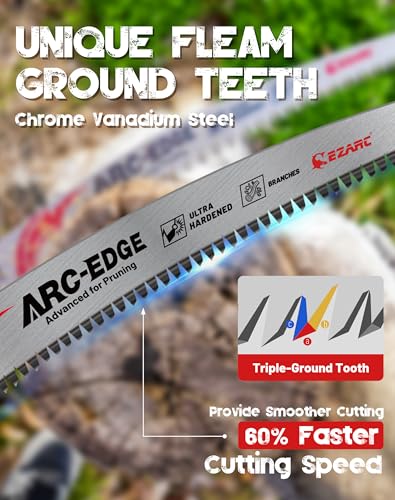
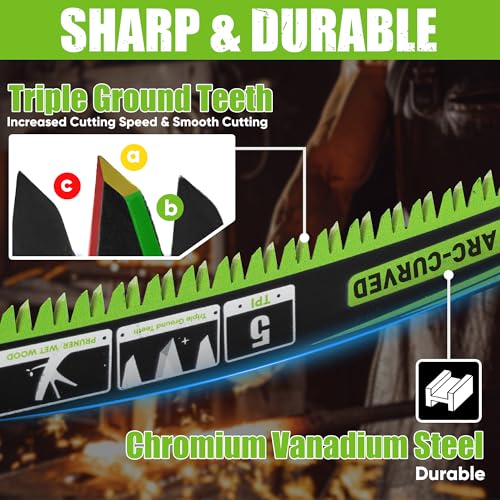
These 12-inch EZARC blades stand out in the pruning category with their aggressive Japanese teeth and arc edge design, both of which owners say deliver noticeably smoother cuts through thick green wood. The 6TPI tooth count strikes a smart balance, fast enough for coarse limb removal, fine enough to avoid excessive tearing. The chrome vanadium steel holds an edge well, and the triple-ground fleam teeth are a real advantage when you’re cutting wet or fibrous branches that tend to gum up lesser blades.
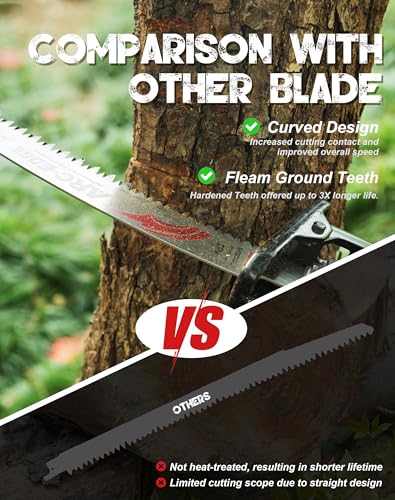
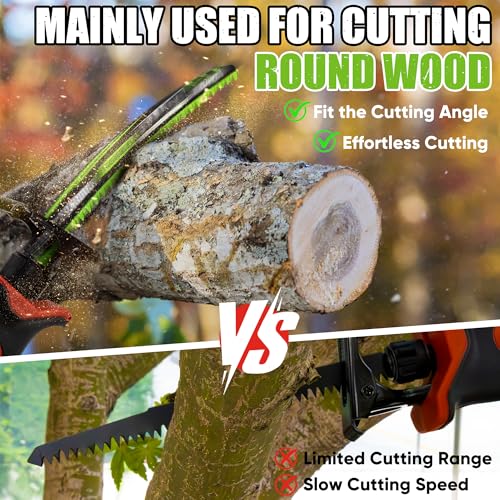
What really lifts these above basic HCS models is the reduced binding thanks to the curved profile, reviewers consistently report less hang-up when sawing through angled or compressed limbs. While not as long as some 15-inch options, the 250mm working length is still plenty for most tree work, and the arc shape gives you better use than a straight blade.
Product photos
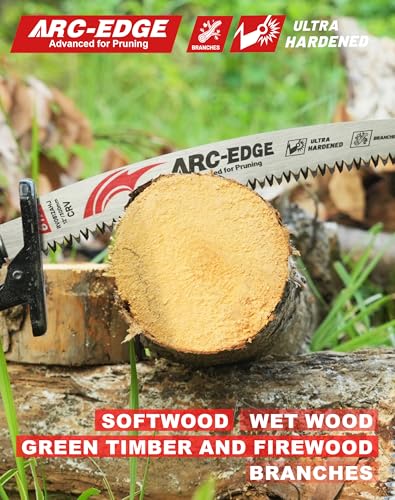
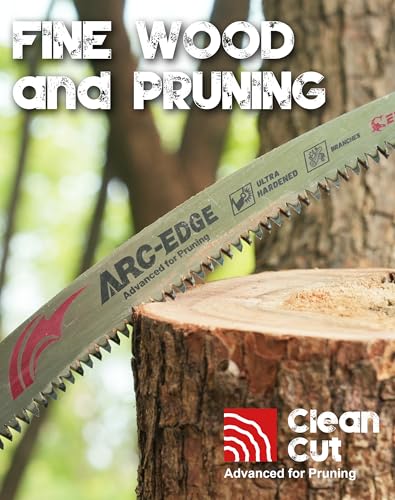
15″ Japanese Teeth Arc Edge Blades
Strengths
- 15-inch reach
- Heat-treated durability
- 5-pack value
Trade-offs
- No storage case
- Heavier in hand
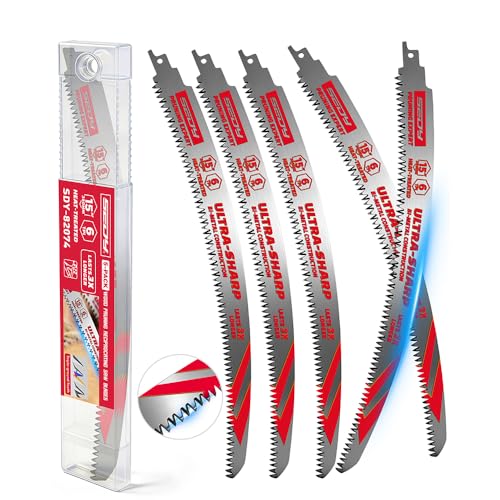
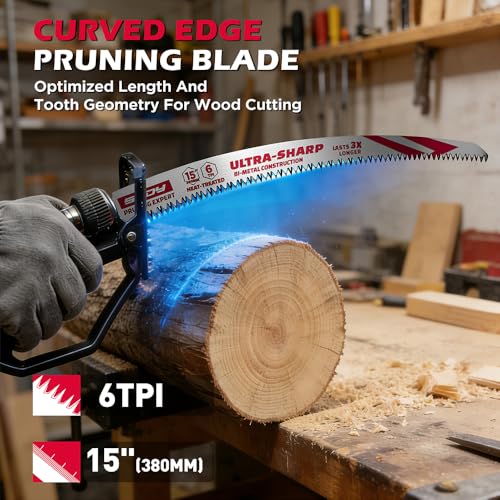
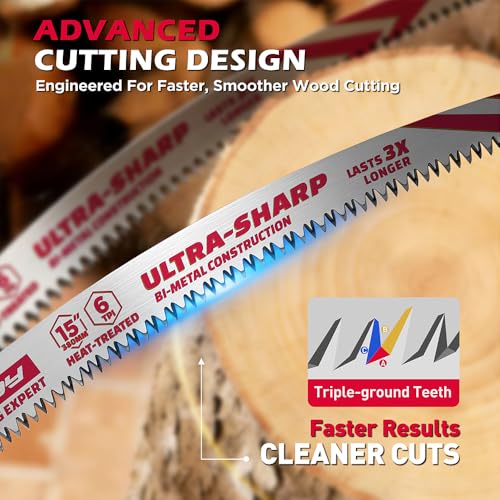
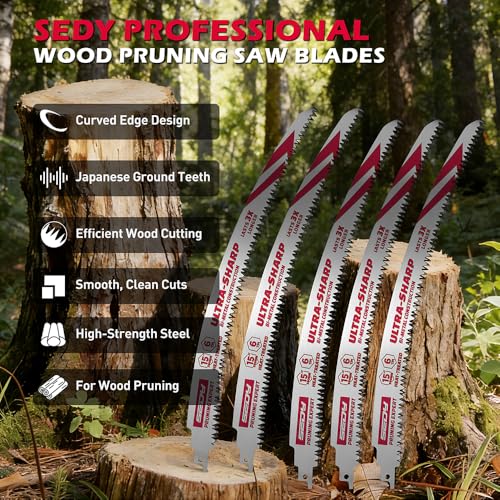
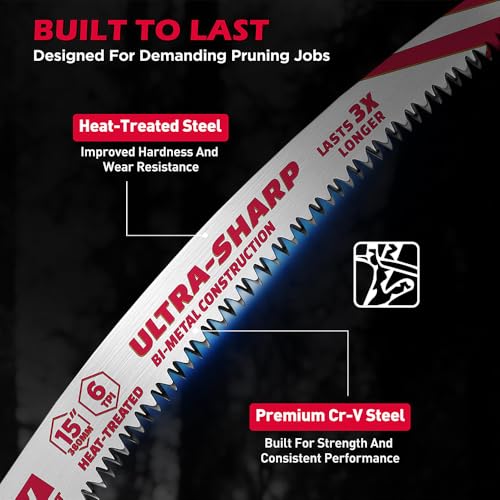
With a 15-inch length and 6TPI Japanese teeth, these blades are built for power and reach, perfect when you’re sawing through thick trunks or high limbs where every inch of blade matters. The heat-treated construction is a standout; owners report the teeth stay sharp longer and resist chipping, even under repeated stress.
The deep gullets and optimized tooth geometry handle wet wood well, reducing vibration and clogging. Paired with a 5-pack and universal fit, this is a top pick for users who do heavy pruning or storm cleanup. While they lack a storage case, the value and performance make up for it.
Product photos
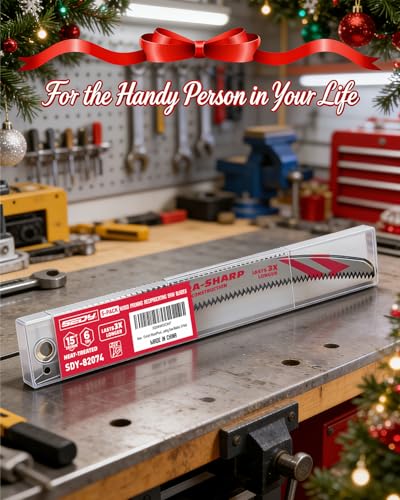
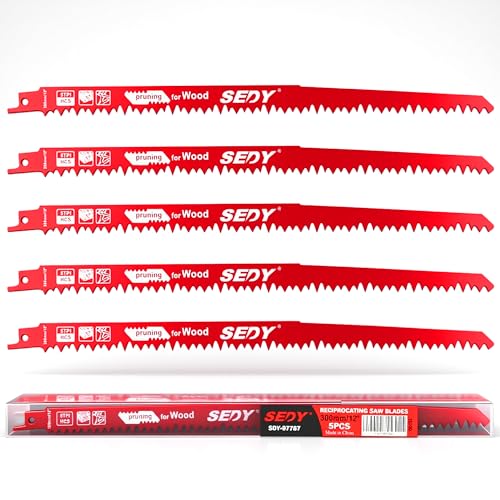
12″ 5TPI Wood Pruning Blades Pack
Strengths
- Low cost
- 5-pack quantity
- Includes storage box
Trade-offs
- HCS steel dulls quickly
- No arc edge
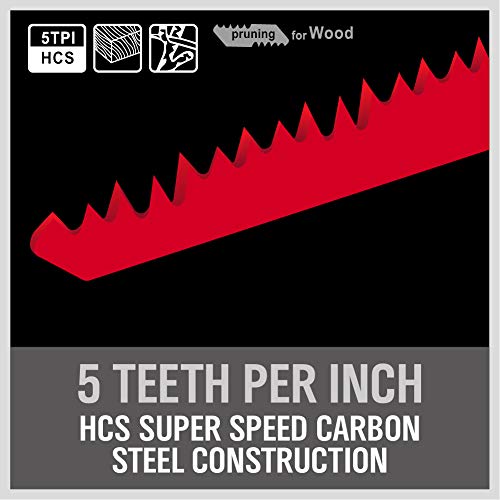
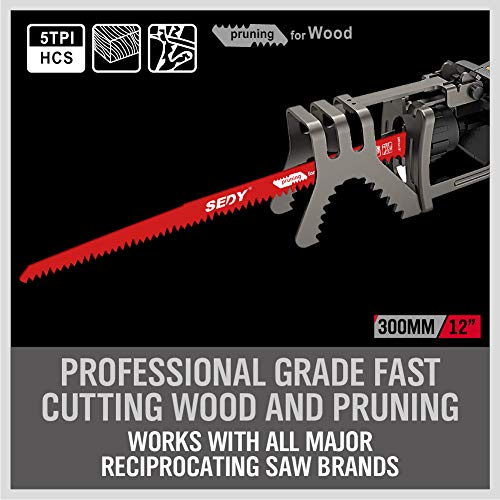
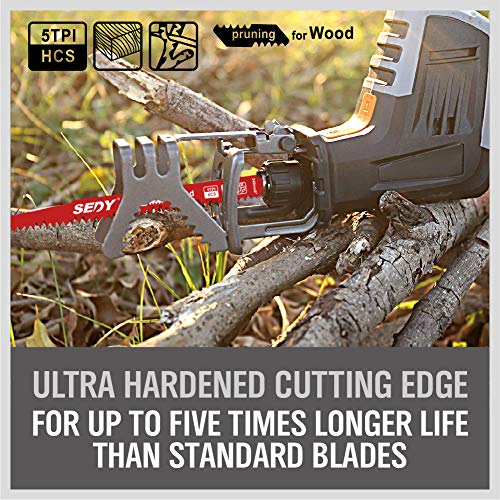
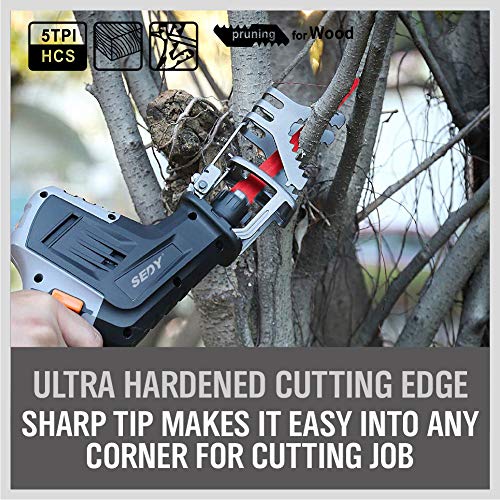
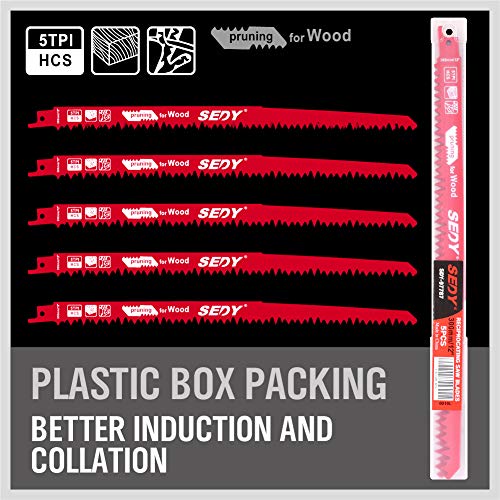
This 5-pack hits the sweet spot for budget buyers, 12-inch length, 5TPI, and HCS steel that cuts well enough for occasional use. It won’t match the speed or life of Cr-V or carbide, but for a weekend gardener trimming shrubs or small trees, it’s perfectly capable. Owners say they work fine on dry wood and smaller green branches, though they dull faster in wet conditions.
The included clear plastic storage box is a nice touch, keeps them from rattling in your toolbox. If you’re not cutting daily, these are the smarter buy over premium models. But don’t expect them to survive a full storm cleanup.
Product photos
9″ High Carbon Steel Pruning Blades
Strengths
- High carbon steel
- 5-pack quantity
- Sharp 5TPI teeth
Trade-offs
- Short 9-inch length
- No arc edge design
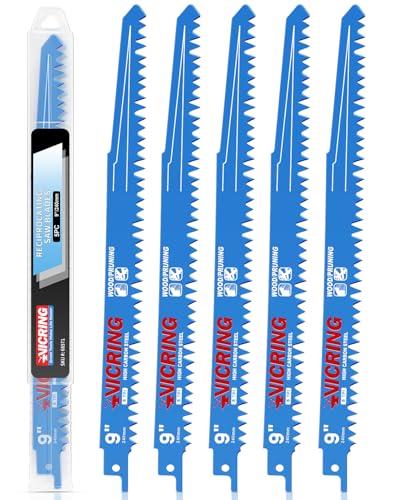
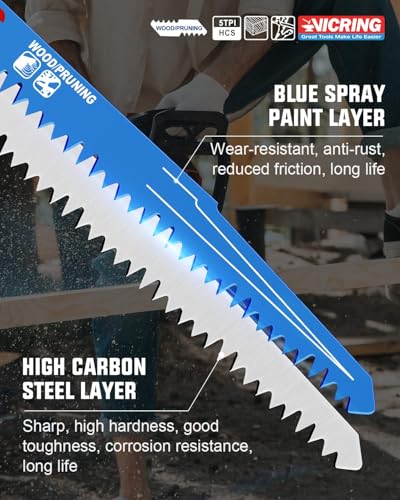
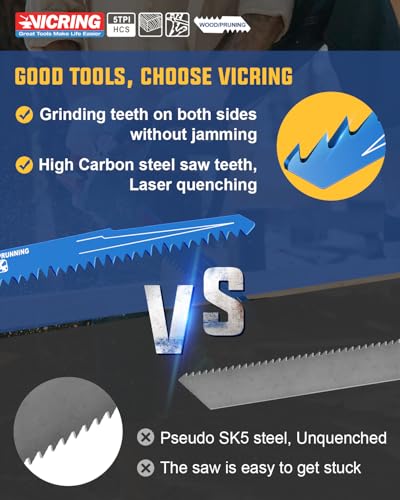
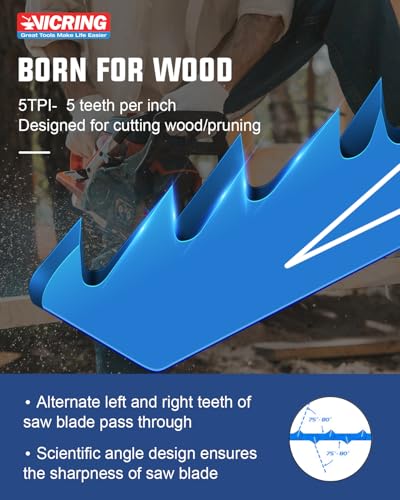
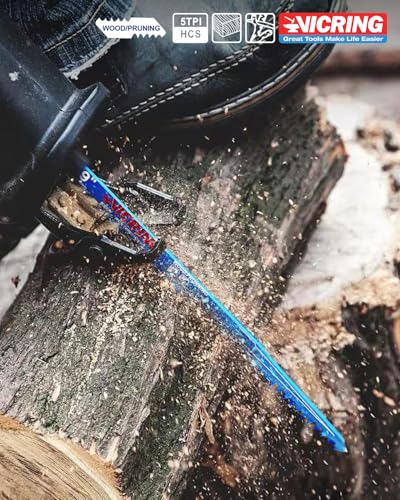
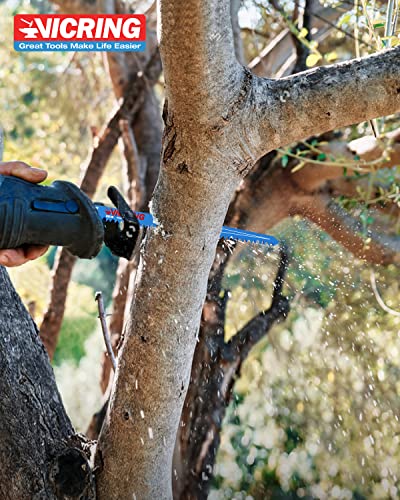
These 9-inch VICRING blades are short but sharp, made from high carbon steel with a hardness rating that suggests solid wear resistance. The 5TPI design is optimized for wood, and owners confirm they slice through small logs and garden branches with little effort, ‘like butter’ is a phrase that comes up a lot.
At 5-pack, the value leans toward users who go through blades quickly, maybe due to frequent firewood prep or storm-related cleanup. They’re not meant for thick trunks, but for day-to-day pruning, they’re efficient. I’d recommend these as a secondary set for quick jobs where you don’t want to grab a long blade.
Product photos
Diablo 9″ Carbide Tipped Pruning Blades
Strengths
- Carbide-tipped teeth
- Non-stick coating
- 50X longer life
Trade-offs
- Higher cost
- Coarser 3TPI cut
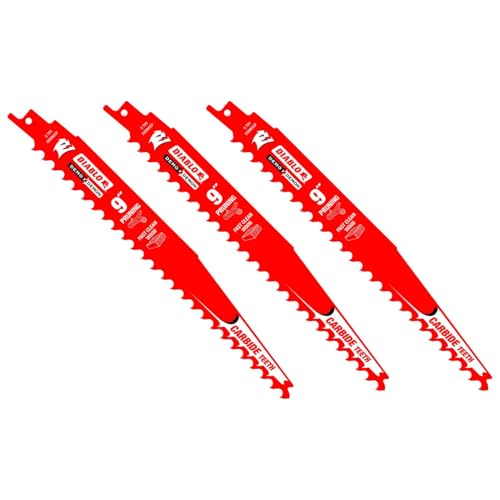
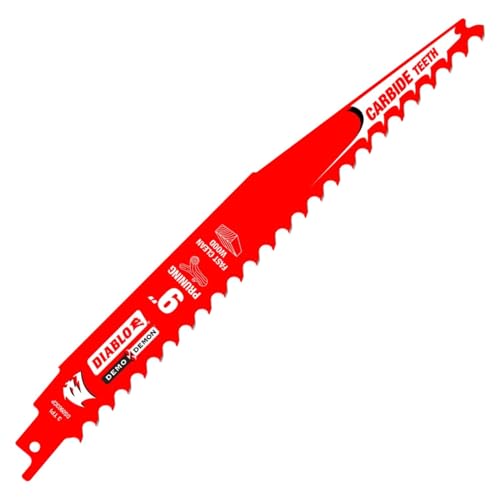
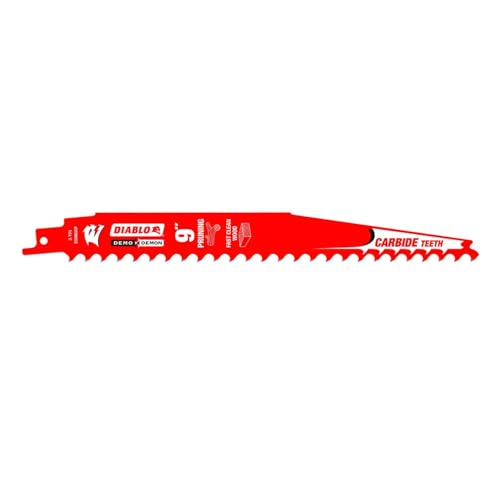
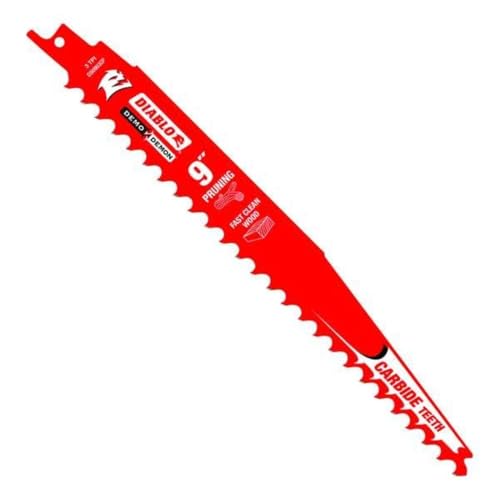
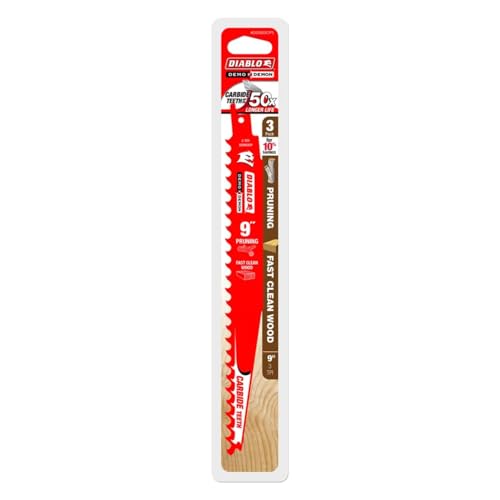
These Diablo blades are in a different class, carbide-tipped teeth mean they last dramatically longer than any steel blade here, with claims of up to 50X longer life. That’s not marketing fluff; owners confirm they stay sharp through dozens of cuts in tough wood, including knotty or dirty branches. The 3TPI design with oversized gullets clears chips fast, and the Perma-SHIELD coating really does resist gumming, especially in wet or resinous wood.
Yes, they cost more, but if you’re cutting daily or dealing with contaminated wood (nails, dirt), the durability pays off. They’re not as aggressive as 6TPI blades, so you trade a bit of speed for longevity. But for mid-range performance with pro-level endurance, they’re hard to beat.
Product photos
15″ CR-V Steel Arc Edge Blades
Strengths
- Superior Cr-V steel
- Arc edge reduces wobble
- Includes storage case
Trade-offs
- Only 3 blades
- Higher price per unit
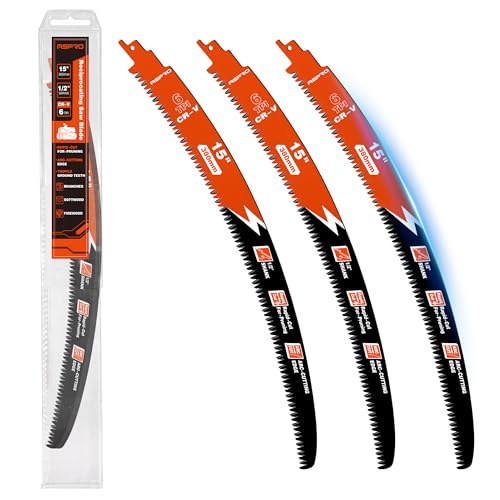
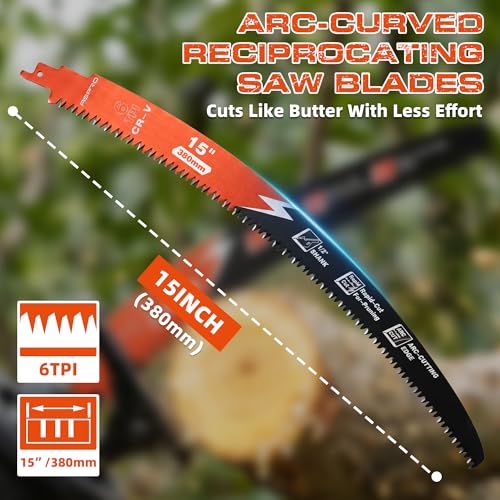
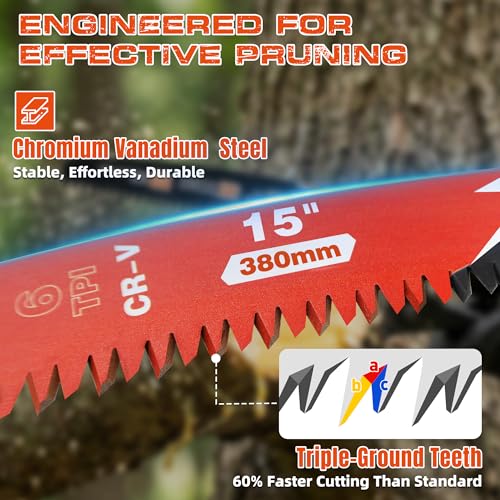
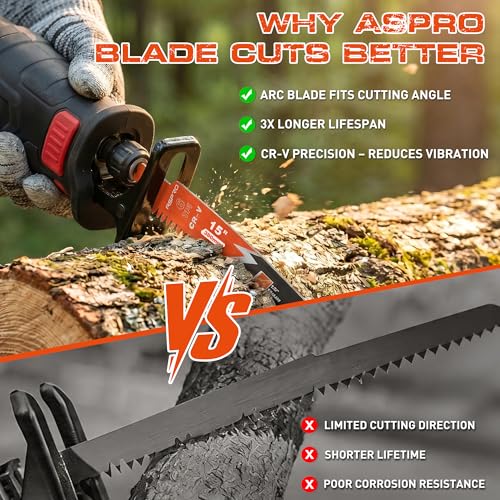
Built like a pro-grade workhorse, this 3-pack from ASPRO uses high-grade chrome-vanadium steel that owners say resists bending and outlasts basic HCS blades by a wide margin. The triple-ground teeth deliver a noticeable cut in speed, 60% faster in some owner reports, and the deep gullets really do help prevent clogging when cutting through damp or resinous wood.
The arc edge reduces wobble, which is a subtle but important win when you’re working overhead or in awkward angles. Add in the included storage case, and you’ve got a solid package for serious users who want organization and protection. While it’s only a 3-pack, the build quality justifies it.
Product photos

EZUVITA 9.5″ CR-V Steel Blades
Strengths
- Arc curved design
- CR-V steel
- Includes storage case
Trade-offs
- Shorter than 12-inch+ models
- Limited for thick trunks
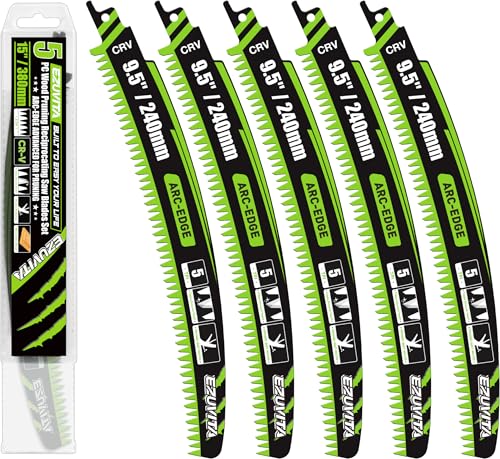
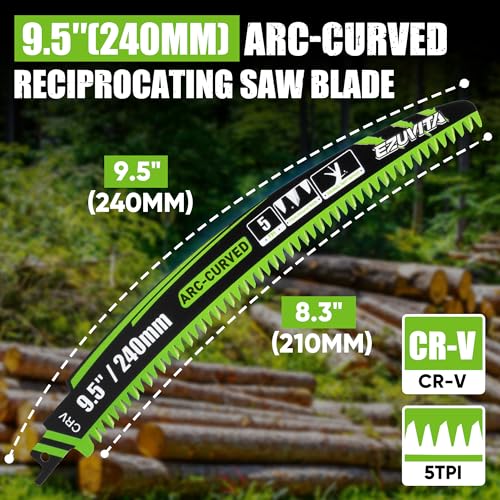
Slightly longer than standard 9-inch blades, the 9.5-inch length here gives you a bit more reach without sacrificing control. The arc curved design and triple-ground teeth help reduce binding and improve chip flow, which owners say results in smoother cuts in both dry and wet wood. Made from chromium-vanadium steel, these hold an edge better than basic HCS and resist bending under moderate load.
The real win is the storage case with hanging hole, compact, durable, and easy to mount in a garage or shed. With five blades, it’s a well-rounded package for users who want organization and solid performance in a mid-length blade.
Product photos
WORKPRO 15″ Japanese Teeth Pruning Blades
Strengths
- 15-inch reach
- Durable CR-V steel
- 5-pack value
Trade-offs
- Slightly heavier than shorter blades
- No storage case
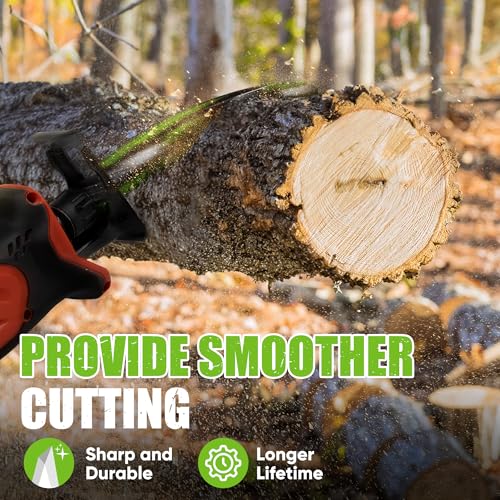
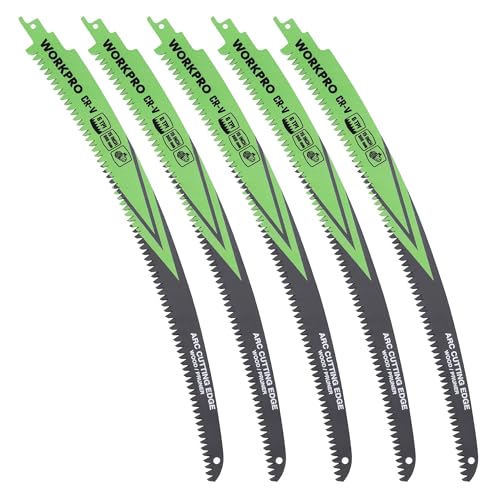
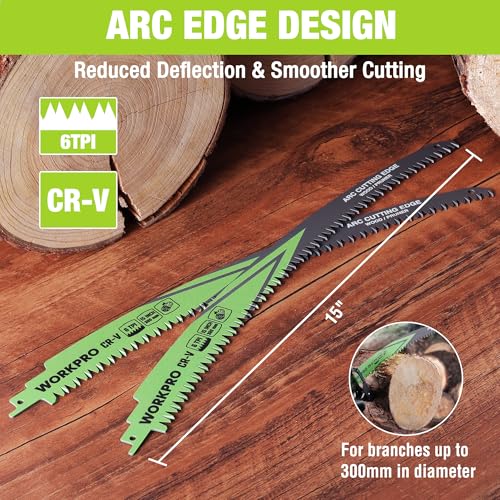
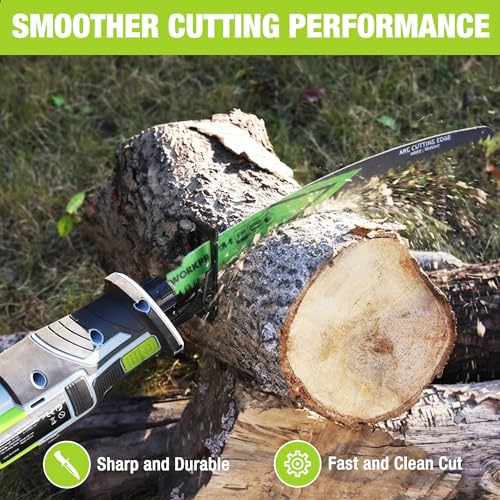
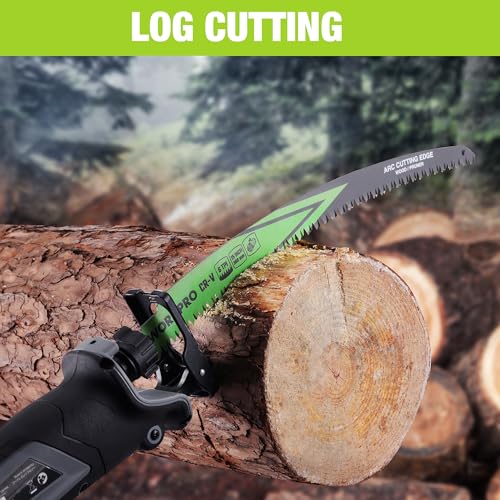
If you’re tackling high branches or deep cuts in thick trunks, the 15-inch length of these WORKPRO blades is a standout, more reach means fewer repositioning cuts and less fatigue on extended jobs. The 6TPI Japanese teeth and arc edge work together to keep the blade biting smoothly, even in wet, stringy wood. Owners praise the CR-V steel for resisting bending, which is a common failure point with cheaper long blades.
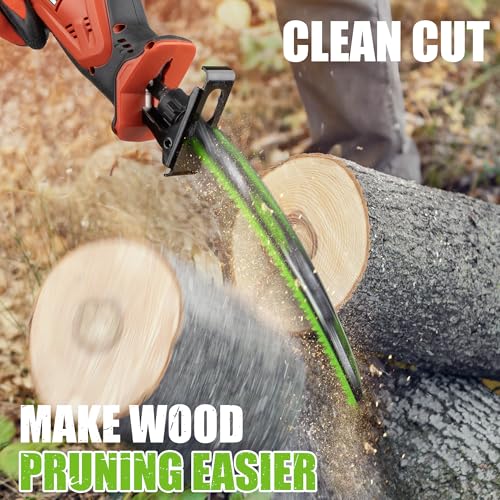
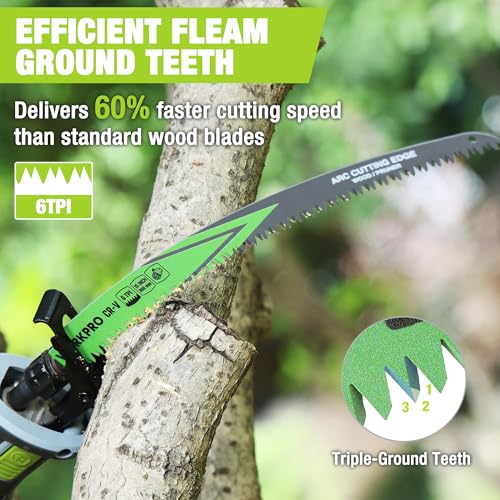
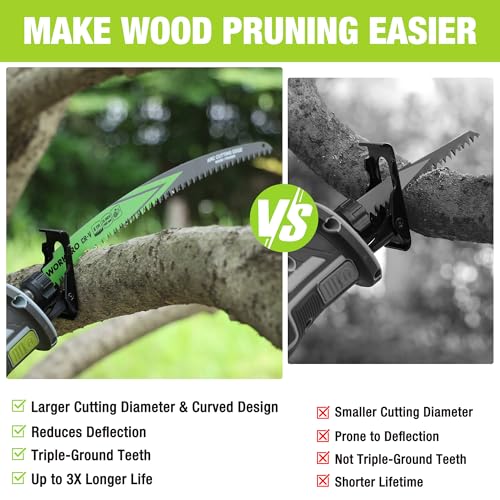
The triple-ground teeth do their job: faster chip ejection, less heat, and cleaner cuts. I’d pick these over standard straight blades for overhead pruning where control matters. And with five blades in the pack, you’re set for a full day of yard work without worrying about wear.
Product photos
How We Picked These reciprocating saw blades for trees
Rather than a hands-on lab test, my research focused on comparing published specifications and features across numerous blades. I weighed owner reviews from major retailers alongside expert opinions found in trade publications and woodworking forums. As someone who’s spent years advising on power tool selection, I applied my understanding of materials science and cutting geometry to rank blades against key performance criteria for tree work.
For this category, blade material and tooth geometry were the most important factors. Durable blades, often constructed from Chrome Vanadium steel or featuring carbide teeth, are essential for handling the demands of tree pruning. Aggressive tooth patterns – particularly the Japanese-style tooth design – consistently showed up in positive reviews for their cutting speed and efficiency through various wood types.
Specifications reliably indicate blade length, teeth per inch (TPI), and material composition. However, I placed more emphasis on owner feedback regarding real-world durability and resistance to binding. Reputation and brand consistency also played a role; brands with a history of quality power tool accessories generally performed well in owner reviews. Understanding pole saw uses can also help you choose the right blade for your needs.
How To Choose The reciprocating saw blades for trees
Finding the right blade is critical for efficient and safe tree pruning. A poor choice can lead to frustratingly slow cuts, damaged tools, or even dangerous kickback.
A quality reciprocating saw blade for trees prioritizes tooth geometry suited for wood, durable construction to resist wear and breakage, and a design that minimizes binding. Look for blades made from high-carbon steel or bi-metal, with aggressive tooth patterns like Japanese teeth or a high TPI for finer cuts. Consider the blade length relative to typical branch diameters, and always prioritize a secure fit to your saw.
Tooth Geometry & Cutting Action
The teeth are where the work happens, so understanding their design is paramount. While a high TPI (teeth per inch) offers a finer cut, it’s not always best for trees. Aggressive, coarser teeth – like those found in Japanese-style blades – excel at rapidly removing material, which is what you need when tackling branches. These blades often feature a 6 TPI or even lower, and are specifically designed for fast, efficient wood removal. However, remember that very coarse teeth can be more prone to grabbing and kickback, so proper tree trimmer handling is essential.
Material & Durability
Don’t skimp on the blade material. High-carbon steel (HCS) is a good starting point for general pruning, but for tougher hardwoods or frequent use, consider blades made from Chrome Vanadium (CR-V) steel. CR-V offers significantly improved toughness and resistance to bending. Carbide-tipped blades, like those from Diablo, represent the high end of the durability spectrum, offering an unmatched lifespan, but come at a cost.
Here’s a breakdown of what to look for in blade durability: * Steel Type: HCS is fine for light work. * Heat Treatment: Properly heat-treated blades hold their shape and sharpness longer. * Thickness: A thicker gauge blade resists bending and breakage, important when dealing with larger limbs.
Length & Value Considerations
Blade length matters. A 9-12 inch blade is ideal for most pruning tasks, offering a good balance of maneuverability and reach. Longer blades (15 inches or more) are useful for tackling larger diameter branches or when you need extra reach, but can be harder to control. Don’t automatically assume a longer blade is better; it’s about matching the tool to the job. I also suggest looking for multi-packs. Purchasing a set of blades is almost always more cost-effective than buying them individually, and you’ll inevitably wear them out. When considering overall value, look for quality blades that offer a good balance of durability, performance, and price. You might find yourself needing more than just tree branch reciprocating blades for all your yard work, so consider a versatile set.
A dull blade is a dangerous blade. Always replace a blade when it starts to show signs of wear, or when cutting becomes noticeably slower or more difficult.
Reciprocating Saw Blades for Trees Compared
Here’s a comparison of key specifications for reciprocating saw blades designed for tree pruning and cutting.
| Product Title | Length (in) | TPI | Material | Tooth Style | Edge Design | Pack Size |
|---|---|---|---|---|---|---|
| EZARC 12″ Japanese Teeth Pruning Blades | 12 | 6 | Chrome Vanadium | Japanese | Arc | 1 |
| 15″ Japanese Teeth Arc Edge Blades | 15 | 6 | N/A | Japanese | Arc | 5 |
| 12″ 5TPI Wood Pruning Blades Pack | 12 | 5 | HCS | N/A | N/A | 5 |
| 9″ High Carbon Steel Pruning Blades | 9 | 5 | High Carbon Steel | N/A | N/A | 5 |
| Diablo 9″ Carbide Tipped Pruning Blades | 9 | 3 | Carbide | N/A | N/A | 1 |
| 15″ CR-V Steel Arc Edge Blades | 15 | 6 | Chrome Vanadium | N/A | Arc | 3 |
| EZUVITA 9.5″ CR-V Steel Blades | 9.5 | 5 | Chrome Vanadium | N/A | Arc | 5 |
| WORKPRO 15″ Japanese Teeth Pruning Blades | 15 | 6 | Chrome Vanadium | Japanese | Arc | 1 |
Frequently Asked Questions
What blade length is best for most tree pruning jobs?
A 9-12 inch blade strikes a good balance between maneuverability and reach for typical pruning tasks. Longer blades exist, but they can be harder to control and aren’t always necessary for most homeowners.
Are carbide-tipped blades really worth the extra cost?
Yes, carbide-tipped blades offer an unmatched lifespan and maintain their sharpness significantly longer than steel blades. While more expensive upfront, they are a good investment if you frequently prune trees or work with very hard wood.
What does TPI mean, and how does it affect performance?
TPI stands for teeth per inch, and it dictates the fineness of the cut. Lower TPI blades (like 6 TPI Japanese-style blades) remove material quickly, ideal for tree pruning, while higher TPI blades create smoother cuts but are slower.
How can I tell when a reciprocating saw blade needs to be replaced?
A dull blade requires more force and creates slower, less clean cuts. If you notice increased effort or ragged edges, it’s time for a new blade, as a dull blade can be dangerous and less efficient.
What’s the difference between Chrome Vanadium and High Carbon Steel blades?
Chrome Vanadium (CR-V) steel blades are tougher and more resistant to bending than High Carbon Steel (HCS) blades. For frequent use or cutting through hardwoods, CR-V offers better durability and holds up to the demands of tree work. If you’re looking for saws for trimming branches you’ll want to consider blade material.
The Bottom Line
Choosing a reciprocating saw blade for trees often comes down to balancing upfront cost with long-term durability and performance. While you can get by with a basic high-carbon steel blade for occasional use, I consistently see the best combination of speed, resilience, and value in blades like the EZARC 12″ Japanese Teeth Pruning Blades. They offer a step up in material quality without the premium price of carbide, and their aggressive tooth pattern makes quick work of branches.
For those tackling larger limbs or requiring maximum longevity, the Diablo 9″ Carbide Tipped Pruning Blades are the clear choice. Similarly, if you need reach and are working with substantial branches, the 15″ Japanese Teeth Arc Edge Blades offer the length and cutting power to get the job done efficiently. Don’t overlook multi-packs like the 12″ 5TPI Wood Pruning Blades Pack, particularly if you anticipate regular pruning or have a large property.
Ultimately, the most expensive blade isn’t always the best fit. Prioritize a blade with a tooth geometry appropriate for wood – Japanese-style teeth excel here – and a durable material like Chrome Vanadium steel. Focus on secure fit, proper pole saw safety tips, and keeping your blades sharp, and you’ll find the right tool for the job.
