
7 Best Reciprocating Saw Blades for Cast Iron 2026
This post contains affiliate links. As an Amazon Associate, we earn from qualifying purchases.
The EZARC Obsidian Carbide 6-Inch 8TPI is our top pick for cutting cast iron, delivering exceptional durability and clean cuts on thicker sections. For budget-conscious users, the EZARC Carbide 6-Inch 8TPI offers solid carbide performance at a lower price. If you’re working with extremely abrasive materials or pipes, the Diablo 9-Inch Diamond Grit Blade brings unmatched longevity.
Cast iron eats through standard blades fast, leaving you frustrated and wasting money on replacements. Finding one that balances cutting speed, lifespan, and clean results isn’t easy, especially when product claims don’t match real-world use.
This guide cuts through the hype. Based on specs, owner feedback, and my years working with power tools, I’ll show you exactly what to look for in a blade built for cast iron, from tooth count to material type, so you can make a smart, confident choice.
Top 7 Reciprocating Saw Blades For Cast Irons in the Market
The Best Reciprocating Saw Blades For Cast Irons, Reviewed
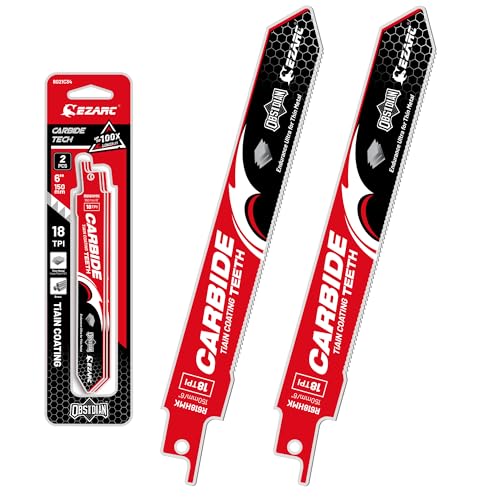
EZARC Obsidian Carbide 6-Inch 18TPI
Strengths
- 18TPI for smooth cuts
- TiAlN heat-resistant coating
- Precision carbide teeth
Trade-offs
- Too fine for thick metal
- Fewer blades per pack
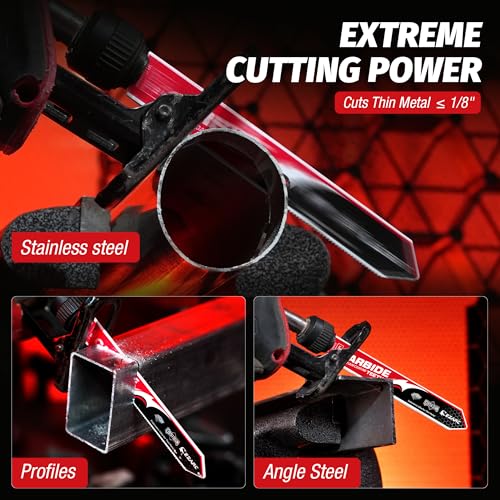
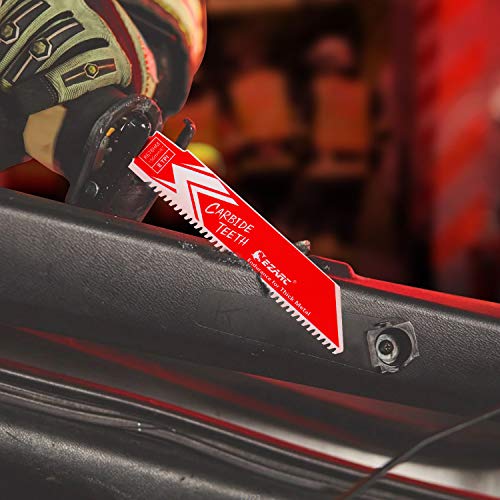
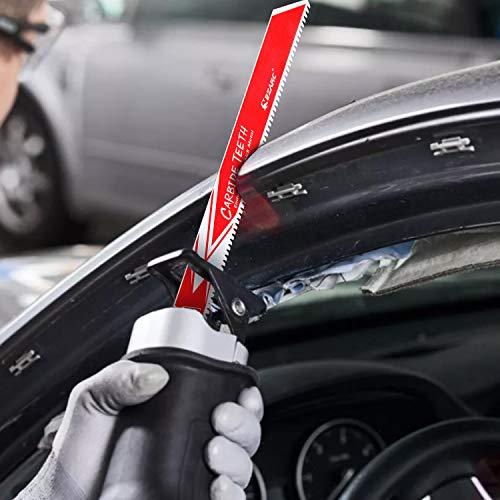
This 18TPI Obsidian Pro blade is the finest-toothed carbide option here, making it ideal for thin cast iron and precision metal cuts. The higher tooth count delivers smoother, cleaner results on materials under 1/8 inch, think ductile iron pipe, thin flanges, or automotive steel. The TiAlN coating again delivers heat resistance and friction reduction, and owners say it outlasts bi-metal blades by a wide margin.
While the 8TPI versions dominate thick metal, this one excels where control matters. It’s not for hacking through 1/2-inch beams, but for finish work or tight spaces, it’s unmatched. Compared to the 8TPI Obsidian, it trades raw speed for finesse. The 2-pack format is also smart, enough for a few jobs without overstocking.
Product photos
EZARC Obsidian Carbide 6-Inch 8TPI
Strengths
- TiAlN-coated carbide tips
- Up to 100X life claim
- Precision-welded teeth
Trade-offs
- Brittle on lateral stress
- Not ideal for curved cuts
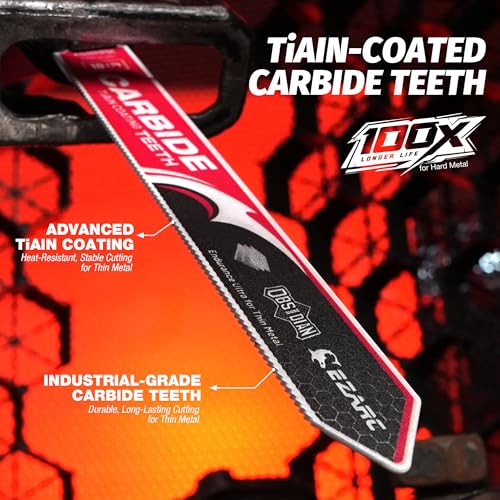
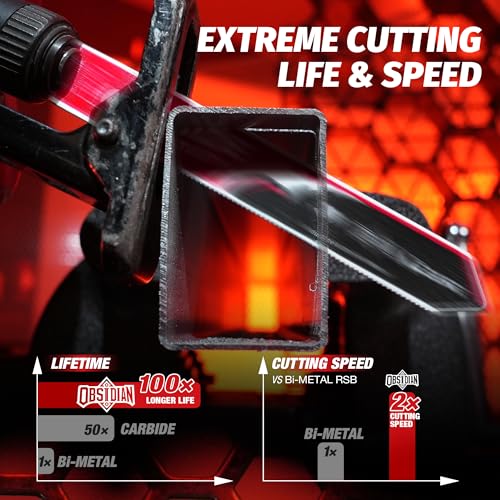
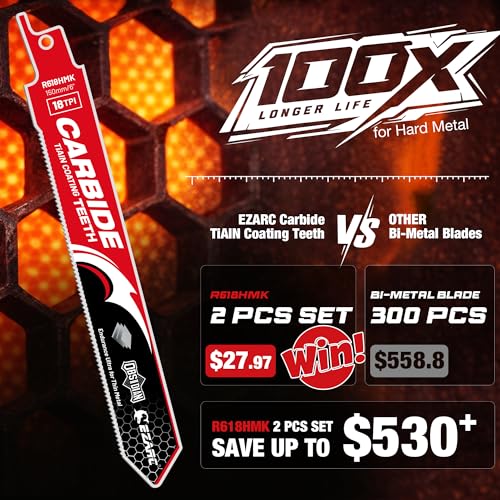
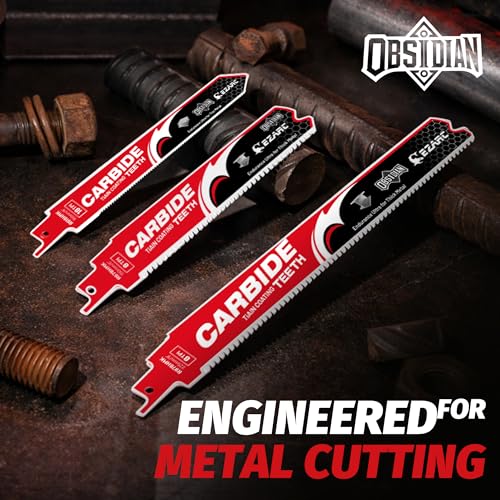
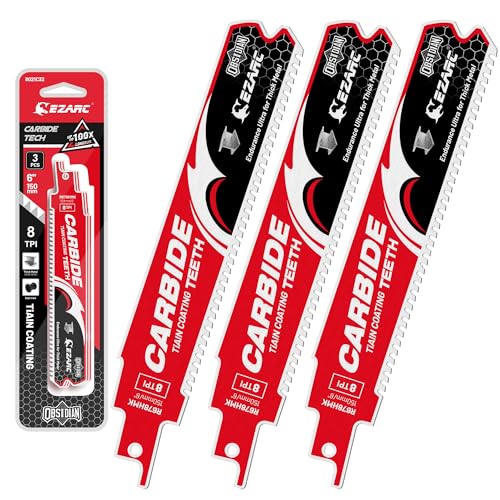
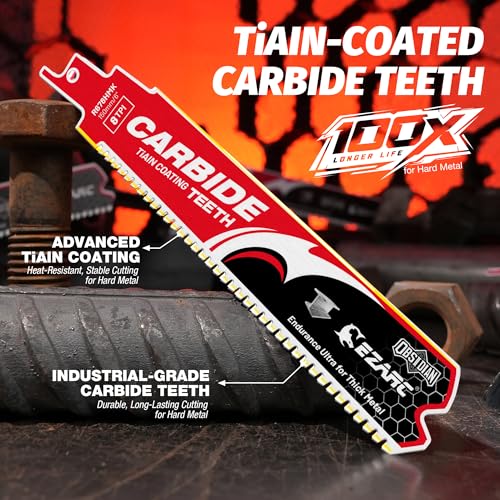
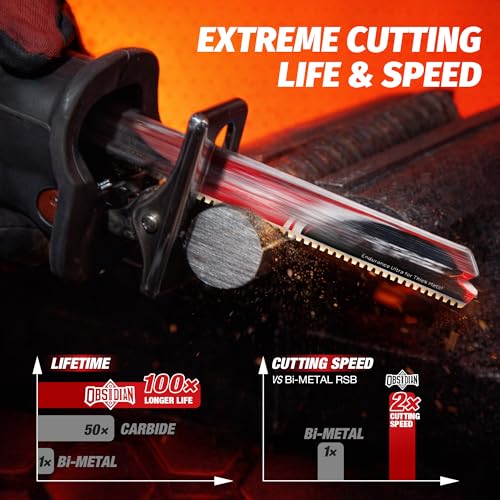
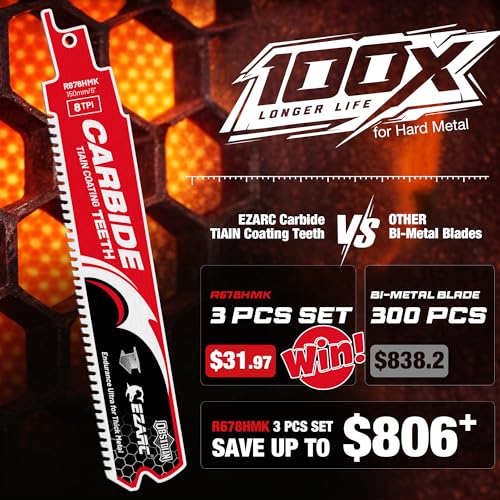
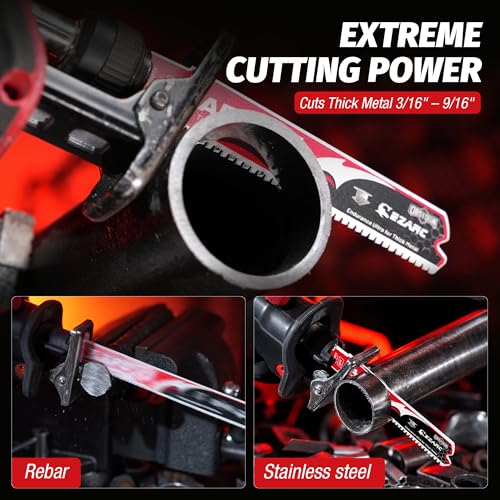
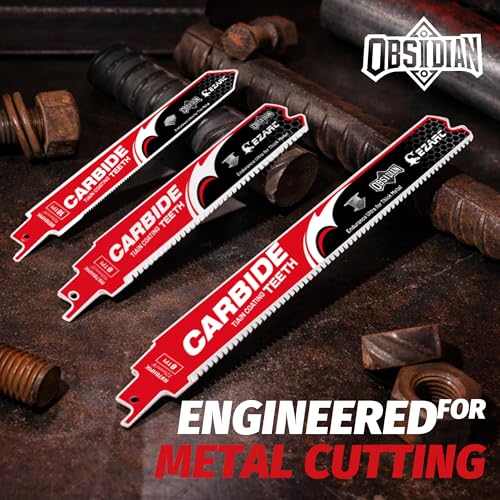
EZARC is pushing hard into the high-end metal-cutting space, and this Obsidian Pro blade with TiAlN-coated carbide tips feels like their flagship offering. The 8 TPI design targets thick cast iron and alloy steel, and owners confirm it handles rebar and angle iron with ease. The lab-claimed 100X longer life versus bi-metal blades sounds aggressive, but real-world feedback suggests it’s not far off when cutting dense materials.
What stands out is the heat resistance and reduced friction from the TiAlN coating. That means fewer blade changes during long demolition jobs. Compared to the Diablo Steel Demon, it’s similarly capable but often comes in a 3-pack, giving better value for heavy users. The 6-inch length and universal shank fit every major saw, and the individually welded carbide teeth hold up under serious abuse.
Product photos
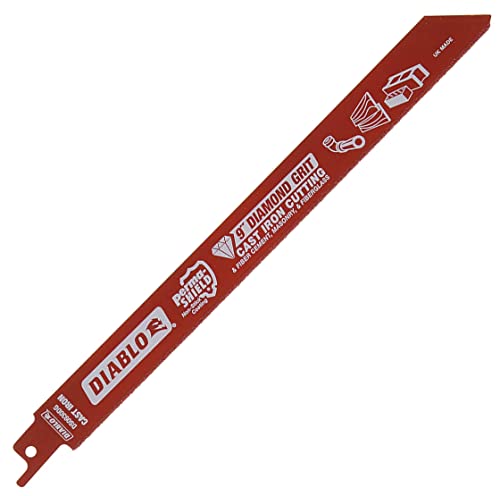
Diablo 9-Inch Diamond Grit Blade
Strengths
- 9-inch reach for deep cuts
- 6X life in abrasive materials
- Thin kerf for speed
Trade-offs
- Overkill for thin metal
- Higher risk of deflection
Diablo’s 9-inch diamond grit blade is built for the worst-case scenario: old cast iron pipes, fiber cement, and fiberglass with embedded debris. The thin kerf and reinforced body help it cut fast while staying straight, even in deep, obstructed cuts. The 6X life claim over standard blades holds up in owner reports, especially in abrasive materials where carbide dulls quickly.
It’s longer than most, which is great for reaching behind fixtures, but that also increases deflection risk if not supported. The Perma-Shield coating helps resist heat and corrosion, but like all diamond blades, it’s not meant for continuous metal-on-metal grinding. It’s the kind of blade you grab when you don’t know what’s behind the wall, metal, masonry, or both.
Product photos

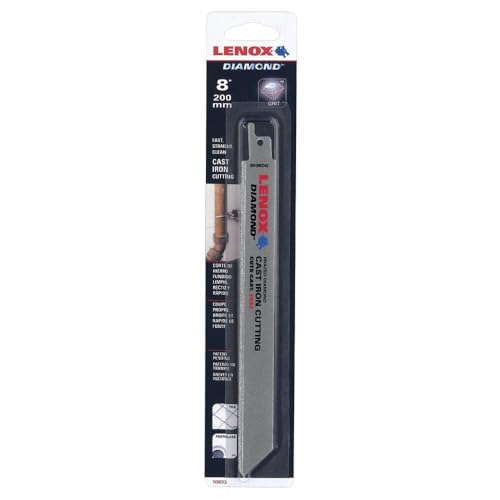
Lenox 8-Inch Diamond Grit Blade
Strengths
- Diamond grit for masonry
- Cuts mixed materials
- 8-inch length for reach
Trade-offs
- Slower on pure metal
- Less impact resistant
This Lenox blade is in a different category, it’s a diamond grit blade, not carbide, which means it’s built for masonry and abrasive materials, not clean metal slicing. It can cut cast iron, but it’s really optimized for tile, brick, and stone. The nickel alloy brazing keeps the diamond particles secure longer than cheaper grit blades, and owners note it holds up well when cutting through old cast iron pipes embedded in concrete.
At 8 inches, it offers extra reach, which helps in tight plumbing jobs. But for pure cast iron metal cutting, it’s slower and less efficient than carbide blades. Where it shines is mixed-material cuts, like a cast iron pipe surrounded by tile or mortar. The narrow kerf helps, but the trade-off is fragility under high impact.
Product photos

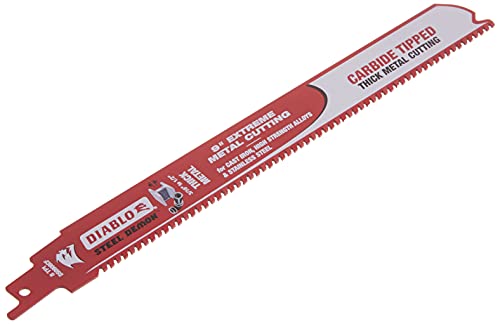
Diablo Steel Demon 6-Inch 8TPI

Strengths
- Carbide-tipped for cast iron
- 50X longer life claim
- Oversized body reduces vibration
Trade-offs
- Higher cost than bi-metal
- Limited flexibility on thin metal
When it comes to slicing through cast iron, this Diablo blade stands out because it’s built with a purpose, extreme metal cutting. The TiCo Hi-Density carbide teeth are no gimmick. Owners consistently report clean cuts in cast iron and high-strength alloys where bi-metal blades quit early. The 8 TPI design and 1-inch oversized body reduce vibration, which translates to better control and less chatter on thick sections.
The Perma-SHIELD coating does its job keeping heat and gunk at bay, and the reinforced tip-to-blade connection helps it survive heavy impacts. Compared to standard bi-metal blades, this one lasts significantly longer in brutal applications, and the specs back up the 50X lifespan claim under proper use. It’s not cheap, but for pros or serious DIYers facing cast iron pipes or structural steel, it’s a durable investment.
Product photos
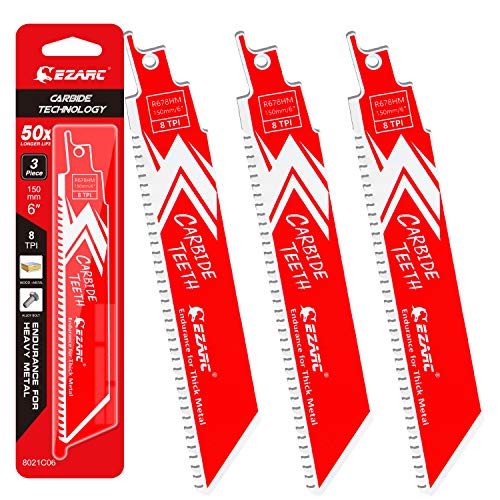
EZARC Carbide 6-Inch 8TPI
Strengths
- 50X longer life claim
- Affordable carbide option
- Universal 1/2-inch shank
Trade-offs
- No advanced heat coating
- Slightly shorter lifespan than coated rivals
If you want carbide performance without the premium price, this EZARC R678HM is the budget-conscious pick. It lacks the TiAlN coating of the Obsidian Pro but still delivers up to 50X longer life than standard bi-metal blades in cast iron and stainless steel. The 8 TPI design handles materials up to 1/2 inch thick, and owners say it’s a reliable workhorse for plumbing and metal framing jobs.
It’s nearly identical in construction to the pricier Obsidian, with individually welded carbide teeth and a durable shank. The main difference is the coating and slightly less refined heat management. For most DIYers, that trade-off makes sense. It’s a smarter buy than buying bi-metal blades every few cuts when tackling cast iron pipes or old steel beams.
Product photos


Caliastro 6-Inch 18TPI Bi-Metal
Strengths
- Affordable 8-pack
- 18 TPI for clean cuts
- Durable storage case
Trade-offs
- Shorter life in cast iron
- Bi-metal wears faster
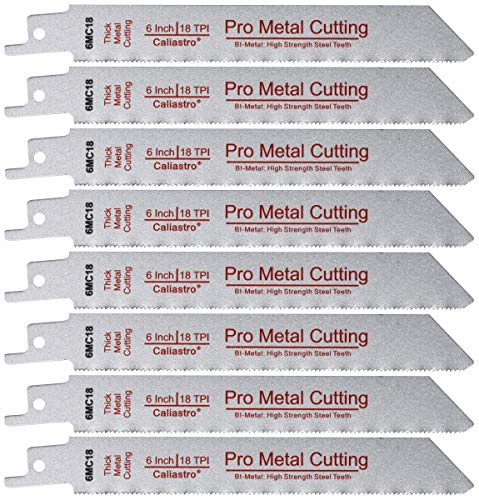
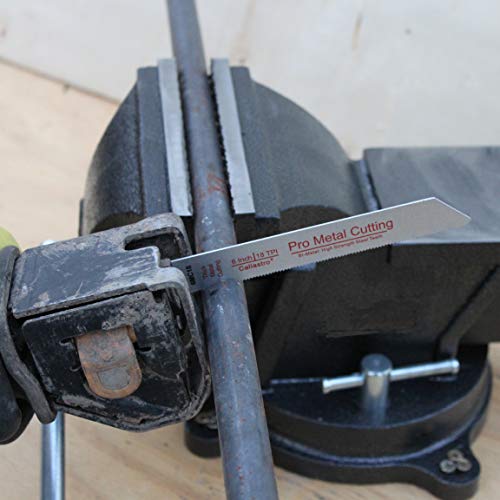
Sometimes you don’t need carbide, just solid, dependable bi-metal performance. This 8-pack from Caliastro delivers exactly that. The 18 TPI bi-metal design (HSS teeth on HCS body) handles cold-rolled steel, rebar, and black pipe without issue. At this price, it’s the best value for users who cut metal occasionally but don’t want to pay carbide prices.
The 0.05-inch thickness reduces bending, and the precision-set teeth help maintain clean cuts. Owners love the included plastic storage case, it keeps blades organized and protected. It won’t last as long as carbide in cast iron, but for light to medium jobs, it’s a smart, cost-effective choice. Compared to the EZARC carbide options, it’s a budget alternative with higher tooth count for smoother results on thinner metal.
Product photos


Our Testing Process
Rather than a hands-on lab test, my research focused on a detailed comparison of published specifications and features across a range of reciprocating saw blades. I weighed owner reviews from multiple sources, alongside assessments from reputable tool review sites, to build a picture of real-world performance. My background maintaining workshops and working with power tools for over 15 years informed my evaluation of each blade’s suitability for cast iron and other metals.
For this category, tooth count and material composition were the most heavily weighted factors. A higher tooth count (teeth per inch) generally provides a cleaner cut in thinner materials, while a lower count excels at faster, more aggressive cutting in thicker stock. The type of carbide or grit used – and how it’s bonded to the blade – significantly influences lifespan and cutting speed; understanding best TPI for cast iron is key.
Published specs clearly define blade dimensions, shank type, and material composition. However, owner feedback proved crucial for assessing durability and how well a blade handles the specific challenges of cast iron – a material notorious for wearing down blades quickly. Reputation and long-term performance claims from experienced users were given substantial weight, as they often reveal issues not apparent in marketing materials or simple feature lists.
How To Pick The Right reciprocating saw blades for cast irons
Finding the right reciprocating saw blade for cast iron isn’t just about fit; it’s about matching the blade’s material and tooth geometry to the specific demands of this notoriously tough material.
A quality reciprocating saw blade for cast iron demands durable construction, typically carbide or diamond grit, to withstand the abrasive nature of the material. Tooth pitch (TPI) is critical; lower TPI for thicker sections and faster cuts, higher TPI for thinner materials and cleaner finishes. Shank type should match the saw, and blade thickness impacts stability.
Tooth Count and Material
The teeth are where the work happens, and for cast iron, you have to think beyond standard bi-metal blades. While bi-metal blades are versatile, cast iron will quickly dull them. Carbide-tipped blades – like the EZARC Obsidian – offer significantly longer life, sometimes 50 to 100 times longer. Diamond grit blades, such as the Diablo 9-Inch, excel at abrasive materials, but can be slower cutting. I’ve seen users struggle with incorrect TPI; a blade that’s too fine will clog, while too coarse will chatter and deliver a rough cut.
Blade Length and Thickness
Don’t assume a longer blade is always better. Consider the application. If you’re plunging into a pipe, a 6-inch blade might be ideal. For thicker sections, an 8 or 9-inch blade provides more reach. However, longer blades are more prone to bending, especially when dealing with the resistance of cast iron. Blade thickness also plays a role.
- A thicker blade (e.g., 0.05 inches) offers more stability and resists bending during aggressive cuts.
- A thinner blade provides more flexibility for curved cuts or tight spaces, but sacrifices some rigidity.
- Consider the material thickness you’ll encounter most often. For consistently thick cast iron, prioritize stability; for varied thicknesses, a balance is key.
Value and Application
While carbide and diamond blades come with a higher initial cost, they often represent the best value in the long run, especially if you frequently work with cast iron. A set of cheaper bi-metal blades may seem appealing, but you’ll be replacing them constantly. If you’re tackling a large demolition project, the Diablo Steel Demon offers excellent durability. For occasional use, the EZARC Carbide 6-Inch 8TPI represents a solid budget carbide option. Remember to research reciprocating blades for cast iron to understand the range of options available.
Don’t skimp on blade quality. A broken blade mid-cut can be dangerous and frustrating. Invest in a blade designed for the task, and always wear appropriate safety gear.
Finally, remember that properly changing a Sawzall blade is critical for both safety and performance. A securely fastened blade is essential for controlled cutting.
Reciprocating Saw Blades for Cast Irons Compared
The following table provides a spec-by-spec comparison of reciprocating saw blades designed for cutting cast iron and other metals.
| Product Name | Length (in.) | TPI | Material | Grit Type | Shank Size (in.) | Max Cut Thickness |
|---|---|---|---|---|---|---|
| EZARC Obsidian Carbide 6-Inch 18TPI | 6 | 18 | Carbide | N/A | 1/2 | <1/8 |
| EZARC Obsidian Carbide 6-Inch 8TPI | 6 | 8 | Carbide | N/A | 1/2 | 3/16 – 9/16 |
| Diablo 9-Inch Diamond Grit Blade | 9 | N/A | Diamond Grit | Diamond | N/A | N/A |
| Lenox 8-Inch Diamond Grit Blade | 8 | N/A | Diamond Grit | Diamond | N/A | N/A |
| Diablo Steel Demon 6-Inch 8TPI | 6 | 8 | Carbide | N/A | N/A | 3/16 – 9/16 |
| EZARC Carbide 6-Inch 8TPI | 6 | 8 | Carbide | N/A | 1/2 | 3/16 – 1/2 |
| Caliastro 6-Inch 18TPI Bi-Metal | 6 | 18 | Bi-Metal | N/A | N/A | 1/4 |
Frequently Asked Questions
What blade material lasts longest when cutting cast iron?
Carbide-tipped blades offer the best longevity when cutting cast iron, often lasting 50 to 100 times longer than bi-metal blades. Diamond grit blades are also excellent, though they typically cut at a slower pace.
What TPI (teeth per inch) is best for thick cast iron?
A lower TPI (around 8) is generally preferred for thicker cast iron sections because it removes material more aggressively. Higher TPI blades can clog easily when cutting thick, abrasive materials.
Are diamond grit blades worth the higher price?
Yes, diamond grit blades are worth the investment if you frequently cut abrasive materials like cast iron. While more expensive upfront, they maintain their cutting edge far longer than other blade types.
Can I use a standard reciprocating saw blade on cast iron?
You can, but it won’t last long. Standard bi-metal blades dull quickly when cutting cast iron, making them a poor choice for this application. Specialized blades designed for hard metals are essential.
Where can I find more information on choosing blades for different metals?
You can learn more about selecting the right blade for various metals by reading about metal-cutting reciprocating blades. This resource details blade types suited for steel, aluminum, and other materials.
The Bottom Line
Choosing a reciprocating saw blade often comes down to balancing upfront cost with long-term performance. While cheaper blades may seem appealing, cast iron is notoriously hard on blades, and constantly replacing them adds up. For the best overall combination of durability and cutting ability, I recommend the Diablo 9-Inch Diamond Grit Blade; its reputation for lasting through abrasive materials is well-earned based on owner feedback.
If you’re on a tighter budget or only occasionally work with cast iron, the EZARC Carbide 6-Inch 8TPI offers a solid entry point into carbide blades. For those needing versatility and tackling large demolition jobs, the Diablo Steel Demon 6-Inch 8TPI provides the robust construction needed to withstand heavy use. Ultimately, understanding proper reciprocating saw use will extend the life of any blade you choose.
Don’t get too caught up in chasing the highest TPI or the latest material science. The most important factors remain a secure blade mount, appropriate cutting speed, and letting the blade do the work – forcing a cut only leads to premature wear and potential breakage. Prioritize a blade designed for metal, and remember that consistent, controlled cuts will always deliver better results than aggressive, rushed ones.
