
3 Best Quiet Air Compressors for Home Garages 2026
This post contains affiliate links. As an Amazon Associate, we earn from qualifying purchases.
The DEWALT Pancake Air Compressor stands out as the best overall choice for home garages, delivering reliable power and a reasonable noise level. For those on a tighter budget, the Quiet Air Compressor 5 Gallon runs significantly quieter and offers strong performance at a lower price. If space is tight, the HASIENDA Wall-Mount Air Compressor provides solid efficiency and a space-saving design.
Most homeowners don’t realize how disruptive a loud compressor can be until they’ve tried using one in a shared space. A noisy unit can interrupt family time, annoy neighbors, and make it hard to even carry on a conversation in the garage. After comparing the field and reviewing owner feedback, I focused on models that deliver enough air for common tasks without the roar.
This guide covers the top quiet compressors based on real-world performance, noise ratings, and features that matter most to DIYers. We weighed specs like SCFM, tank size, and decibel levels against user experiences to find units that actually work well in a home setting.
Top 3 Quiet Air Compressor For Home Garages in the Market
The Best Quiet Air Compressor For Home Garages, Reviewed
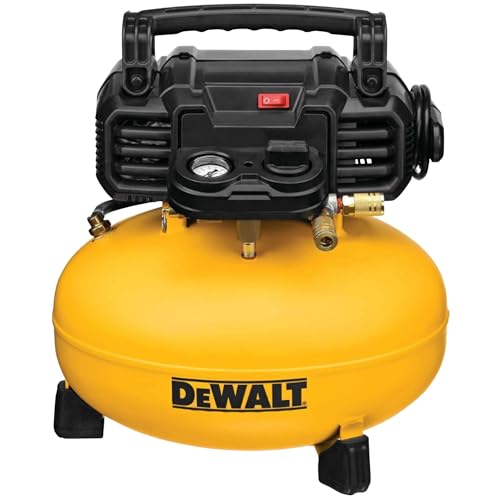
DEWALT Pancake Air Compressor 6 Gallon
Strengths
- 6-gallon tank
- Oil-free pump
- Dual couplers
- High flow regulator
- Cold-weather startup
Trade-offs
- Heavier than some
- 78.5 dBA not ultra-quiet
- Single-stage pump
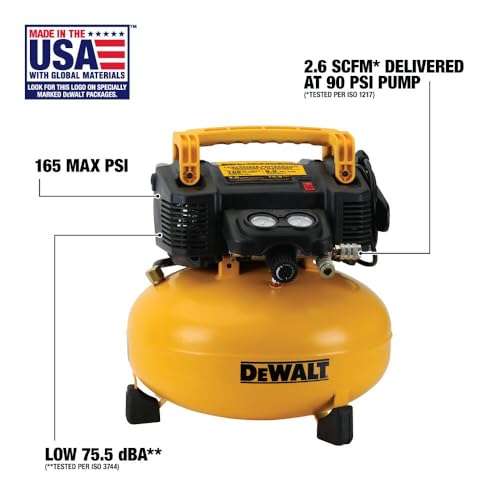
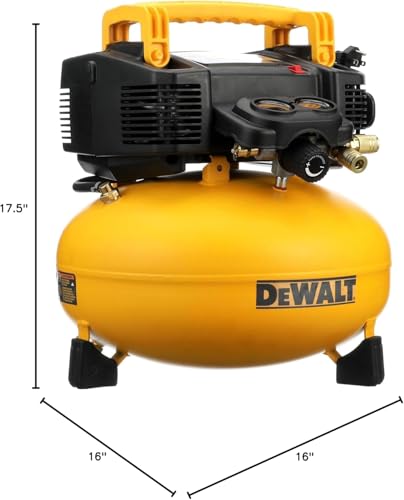
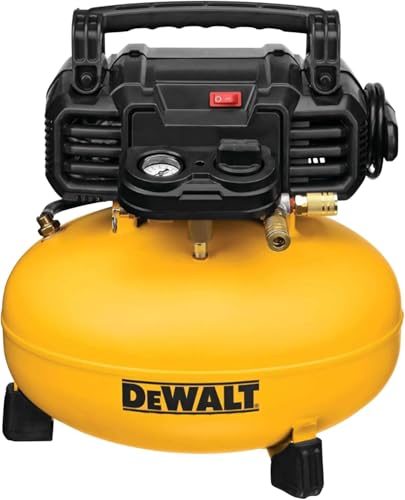
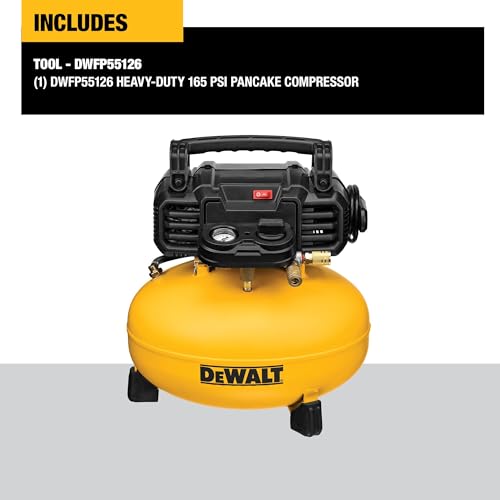
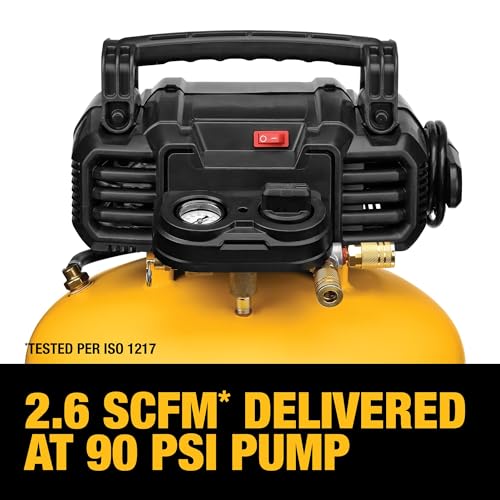
This DEWALT DWFP55126 is the kind of compressor I consistently recommend when someone asks for a reliable, no-nonsense workhorse for their garage. At 78.5 dBA, it’s not the quietest on paper, but owners agree it’s noticeably quieter than older, clunkier models, and that matters when you’re running brad nailers or inflating tires late in the evening. The 6-gallon tank and 2.6 SCFM at 90 PSI give it real staying power for intermittent tool use, framing, trim, or blowing debris, without constant cycling.
What stands out is the build quality. The oil-free pump means no maintenance, and the high-flow regulator ensures tools get consistent pressure. It’s also one of the few in this class with dual couplers, so two people can plug in at once. Compared to smaller 2-gallon units, this one recovers faster and runs longer, though it’s heavier than pancake-style competitors. For DIYers who want something durable that won’t hog space, this hits the sweet spot.
Product photos
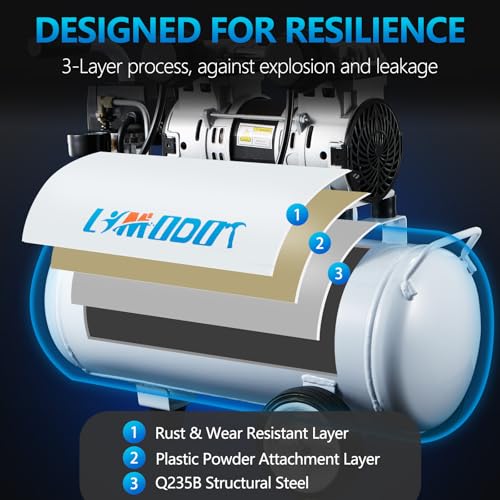
Quiet Air Compressor 5 Gallon 68dB

Strengths
- Only 68 dB
- 2.8 SCFM at 90 PSI
- Comes with 11 accessories
- Fast 80-second recharge
- Oil-free design
Trade-offs
- Smaller 5-gallon tank
- Plastic hose may kink
- Limited for heavy tools
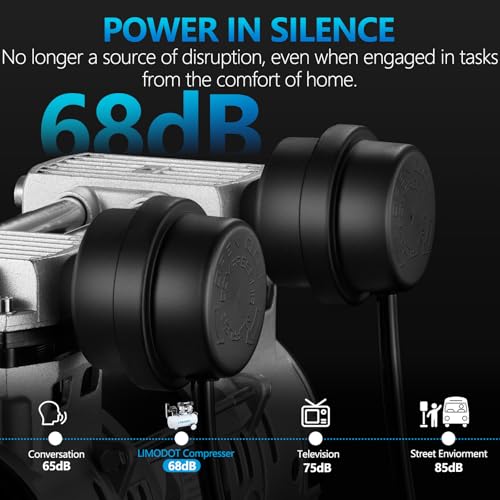
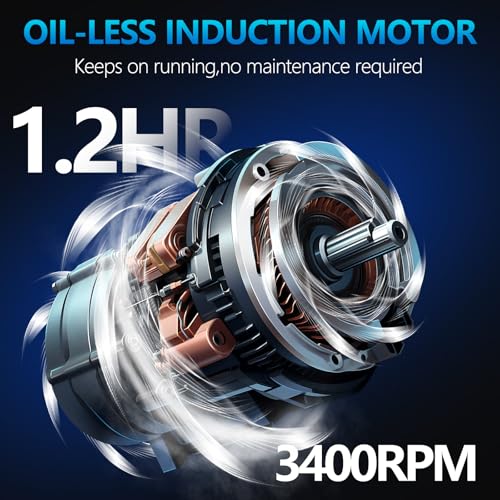
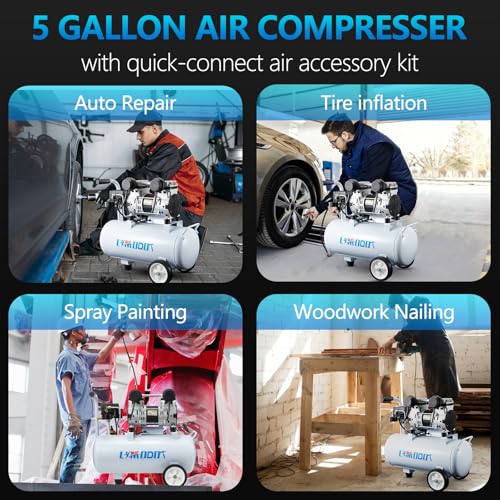
At 68 dB, this compressor earns its ‘ultra quiet’ label, and that’s a big deal for woodworking in shared spaces or indoor use. On paper, the 2.8 SCFM at 90 PSI is solid for a 5-gallon unit, and owners report it keeps up well with brad nailers, HVLP sprayers, and air brushes without bogging down. The 3400 RPM induction motor seems to be the key to the low noise, and it pays off in real-world use where you won’t disturb family or neighbors.
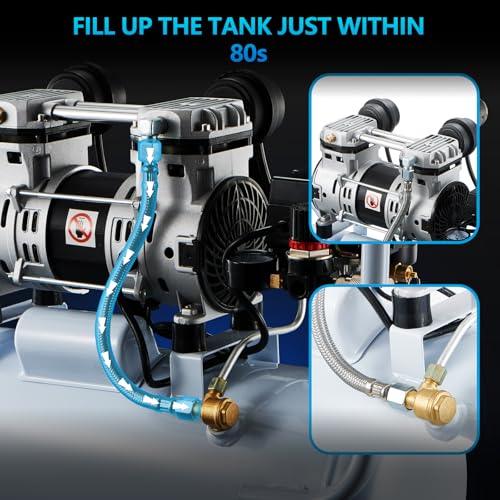
It also comes loaded with value, 25 ft hose, 11 accessories, quick-connect fittings, making it a strong pick for beginners or woodworkers setting up a shop on a budget. But it’s not perfect. The tank is smaller than the DEWALT, so recovery time matters more, and while 80 seconds from empty to full sounds fast, actual duty cycle limits continuous use. Still, for the noise level and included kit, it’s hard to beat.
Product photos
HASIENDA Wall-Mount Air Compressor
Strengths
- Wall-mount design
- Brushless motor
- 75 dB quiet operation
- Oil-free pump
- Lightweight and portable
Trade-offs
- 2-gallon tank limits runtime
- Not for heavy tools
- Lower max PSI
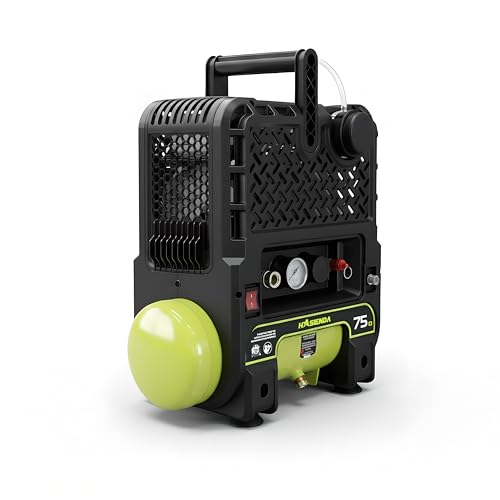
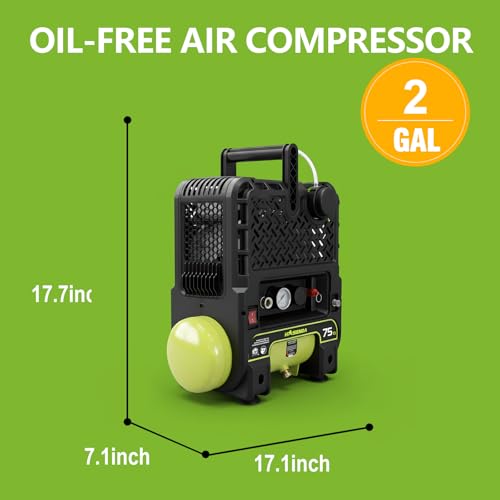
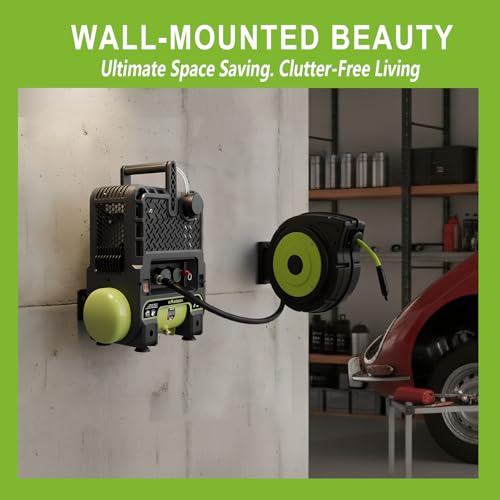
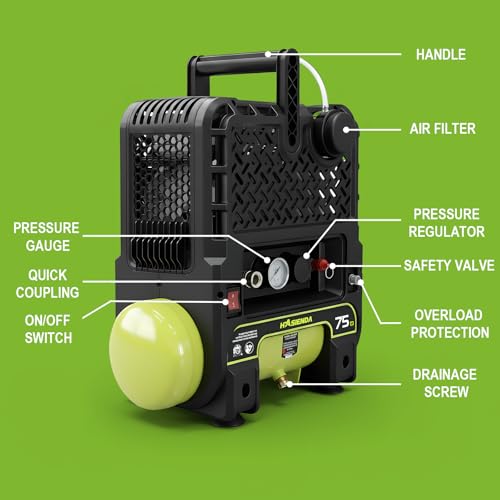
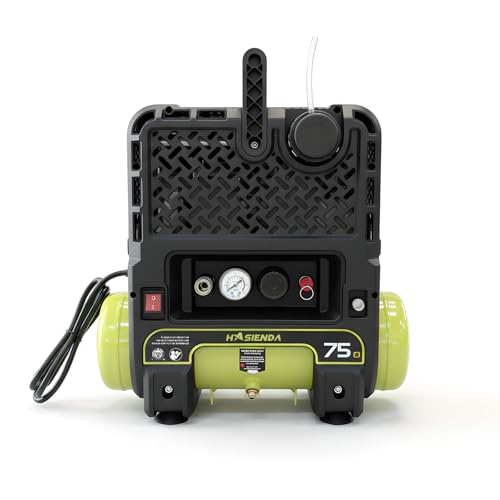
If floor space is tight, this HASIENDA unit is a smart solution. Mounting it on the wall frees up serious real estate in a cluttered garage, and the minimalist design actually looks clean in a modern workshop. At 75 dB, it’s quieter than many pancake compressors, and the dual-piston pump delivering 2.1 SCFM at 90 PSI punches above its weight for a 2-gallon tank. Owners say it handles brad nailers and tire inflation without issue, but don’t expect it to run a framing gun all afternoon.
The brushless motor is a standout, rated for 1500+ hours, which means fewer failures over time compared to brushed models in this price range. And being oil-free, it’s truly maintenance-free. But the small tank means frequent cycling during longer jobs. It’s best for quick tasks, not sustained use. Compared to the DEWALT, it’s less powerful but far more space-efficient.
Product photos

How We Chose These quiet air compressor for home garages
As someone who’s spent years around power tools and workshops, I understand the annoyance of a noisy compressor. Rather than a hands-on lab test of each unit, this selection is a research-led comparison of published specifications and features, combined with careful consideration of owner reviews and expert opinions. We looked at a wide range of models, prioritizing those frequently recommended for home garage use. Our goal was to identify compressors that balance performance with a quieter operation.
For quiet air compressors, consistent air delivery (SCFM) and tank size are key. I weighted these heavily because they directly impact how effectively a compressor can power tools without constant cycling. Noise level (dB) was, of course, paramount, but a low decibel rating doesn’t matter if the compressor can’t keep up with the demands of typical garage tasks. Understanding these trade-offs is vital.
Specifications reliably indicate a compressor’s potential output and physical characteristics, but owner feedback provides crucial insight into real-world performance and durability. We paid close attention to comments about actual noise levels (as reported dB figures can sometimes be optimistic) and long-term reliability. If you’re also looking for tools to use with your new compressor, check out our guide to the best 1/2-inch air impact wrenches. Reputation among DIYers and professional users also heavily influenced our rankings.
Choosing The Right quiet air compressor for home garages
Finding the right air compressor for your garage doesn’t have to be loud and frustrating. I’ve seen too many guys end up with a unit that’s either too weak for the job or so noisy it drives everyone inside crazy.
A quality air compressor balances power (CFM and PSI) with portability and noise levels. Look for an oil-free pump for low maintenance, a tank size appropriate for your typical tasks, and a noise rating below 80dB for comfortable operation. Consider the tools you’ll be powering and ensure the compressor can deliver sufficient sustained airflow (CFM) at the required pressure (PSI).
Tank Size and Portability
Tank size is often the first thing people consider, but it’s easy to overthink it. A larger tank (like 6 or 8 gallons) means less frequent motor cycling – the compressor doesn’t have to kick on as often when running tools continuously. However, it also means a heavier, less portable unit. For most home garage tasks like filling tires, running a nailer, or basic impact wrench use, a 5-gallon tank is often plenty. If you plan to use spray guns or sanders regularly, you’ll want to lean towards the larger side. Don’t automatically assume bigger is better; consider how often you’ll actually move the compressor. Many people end up needing portable garage compressors because they underestimated the hassle of a bulky unit.
Noise Level: It Matters More Than You Think
Noise is a huge factor, especially if you have a connected garage or close neighbors. The decibel (dB) rating tells you how loud the compressor is. Anything above 80dB starts to become genuinely irritating, and prolonged exposure can potentially damage your hearing. Look for compressors specifically marketed as “quiet” or “low noise.” Many now fall in the 68-75dB range, which is a significant improvement over older models. Remember though, the noise rating is often measured at a distance; the actual perceived loudness will be higher when you’re working right next to it.
Here’s what to keep in mind about noise ratings: * A lower dB number is always better. * Consider the type of motor. Induction motors tend to be quieter than universal motors. * Some compressors use sound-dampening materials in the housing to further reduce noise.
A good rule of thumb is to aim for a compressor with a noise level of 75dB or less if you plan to use it frequently or in a confined space.
Features and Maintenance
Oil-free compressors are almost universally preferred for home use. They require significantly less maintenance than oil-lubricated models – no oil changes, no oil level checks. This simplicity is a huge plus for DIYers. Beyond that, look for features like a quick-connect coupler for easy tool attachment, a good regulator to control air pressure accurately, and a durable construction. The HASIENDA model, for example, highlights its oil-free design and wall-mount capability. I always recommend checking owner reviews to see how a compressor holds up over time. If you’re looking for the quietest air compressor models, reading those reviews can be invaluable.
Quiet Air Compressors for Home Garages Compared
Here’s a comparison of key specifications for quiet air compressors suitable for home garage use.
| Product Name | Max PSI | Tank Size (Gallons) | SCFM @ 90 PSI | Noise (dBA) | Oil Free |
|---|---|---|---|---|---|
| DEWALT Pancake Air Compressor | 165 | 6.0 | 2.6 | 78.5 | Yes |
| Quiet Air Compressor 5 Gallon | N/A | 5.0 | 2.8 | 68 | Yes |
| HASIENDA Wall-Mount Air Compressor | N/A | N/A | 2.1 | 75 | Yes |
Frequently Asked Questions
What CFM level do I really need for most garage tasks?
Generally, 2.0 to 3.0 CFM at 90 PSI is sufficient for typical garage uses like inflating tires, running small nailers, and operating impact wrenches. However, if you plan on using more demanding tools like spray guns or sanders, you’ll want a compressor delivering at least 4.0 CFM.
Are oil-free compressors really as reliable as oil-lubricated ones?
While oil-lubricated compressors traditionally had a reputation for longer life, modern oil-free models are quite durable and suitable for home garage use. The convenience of not needing oil changes often outweighs the potential longevity benefit of an oil-lubricated unit for the average DIYer.
Can I make my existing air compressor quieter?
Yes, you can reduce noise with compressor muffler devices. Installing an air line filter/regulator with a larger reservoir can also help dampen sound, as can placing the compressor on a rubber mat to reduce vibration.
What’s the difference between peak PSI and SCFM, and which is more important?
Peak PSI (pounds per square inch) represents the maximum pressure the compressor can achieve, while SCFM (standard cubic feet per minute) indicates the sustained airflow it delivers. SCFM is more important because it determines if the compressor can maintain the pressure needed to power your tools continuously.
What should I look for when considering portability versus tank size?
If you need to move the compressor around frequently, prioritize a smaller tank size (5 gallons or less) and a lighter weight, even if it means the motor cycles on more often. If portability isn’t a major concern and you anticipate using air tools for extended periods, a larger tank will provide more consistent airflow with less motor cycling.
The Bottom Line
Choosing an air compressor always involves a trade-off between initial cost and long-term performance. While you can find very affordable options, I consistently see the DEWALT Pancake Air Compressor rise to the top as the best overall choice for most home garages. It strikes a really good balance of power, portability, and noise level, and Dewalt’s reputation for durability is well-earned.
For those on a tighter budget, the Quiet Air Compressor 5 Gallon delivers impressively low noise for the price. Or, if you’re prioritizing space-saving design and occasional use, the HASIENDA Wall-Mount Air Compressor is a solid pick. Remember to check out our guide to the best air compressors for garages for more options.
Ultimately, the specifications are less important than getting a unit that matches your needs and how you’ll actually use it. Don’t get hung up on chasing the highest PSI if you’re mostly inflating tires or running a nail gun. Focus on consistent CFM delivery, a reasonable noise level, and a build quality that suggests it will hold up over time.
