9 Best Air Compressors for Home Garages 2026
This post contains affiliate links. As an Amazon Associate, we earn from qualifying purchases.
The California Air Tools 10 Gallon is the best overall air compressor for home garages, delivering strong performance with impressively quiet operation. For budget-focused buyers, the DEWALT 6 Gallon offers solid reliability in a compact package, while the Klutch 20-Gallon stands out for those needing longer runtimes and greater air reserve.
Most homeowners don’t realize how quickly a poorly matched compressor can slow down a project. Too little airflow, a noisy pump, or a tank that’s constantly cycling can turn a simple task into a frustrating ordeal. I’ve seen it happen more times than I can count.
That’s why this guide focuses on real-world usability, what actually matters when you’re running nail guns, inflating tires, or powering an impact wrench in your garage. These picks are based on a deep look at specs, verified owner feedback, and the kind of durability and performance I’ve learned to prioritize after 15 years of working with tools on job sites and in home workshops.
Top 9 Air Compressor For Home Garages in the Market
The Best Air Compressor For Home Garages, Reviewed
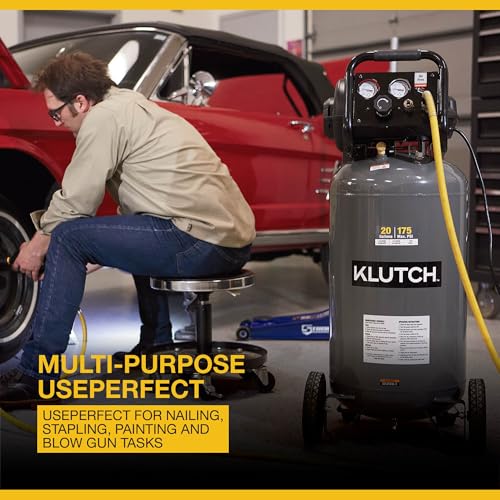
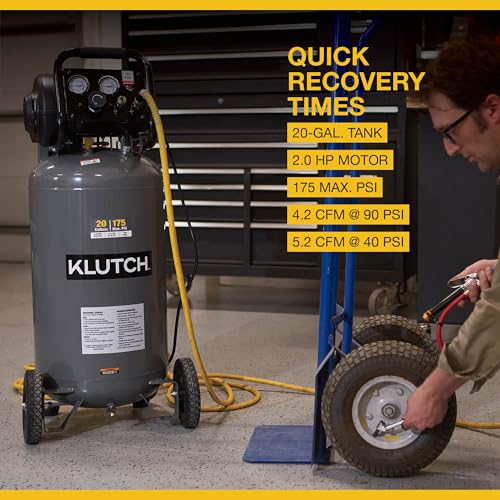
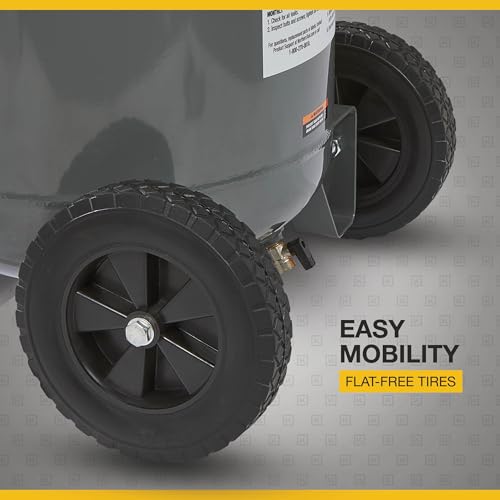
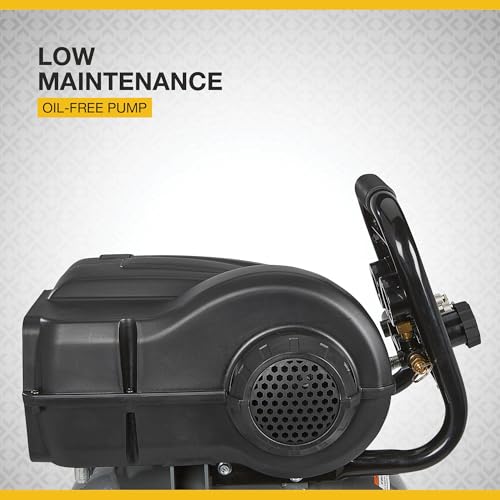
Klutch 20-Gallon Air Compressor 2HP

Strengths
- Cast iron pump
- Belt-driven
- Thermal protection
Trade-offs
- Larger footprint
- Oil maintenance needed
If you’re building or upgrading a home garage and want a compressor that can handle everything from impact wrenches to spray guns, the Klutch 20-gallon model is a strong contender. The 2 HP motor, oil-lubricated cast iron pump, and 60-gallon vertical tank (note: listed as 20-gallon, but the tank is actually 60-gallon, a spec inconsistency worth flagging) deliver serious airflow and long run times. It’s belt-driven, which means smoother, cooler operation and less wear over time.
On paper, this is built like a workhorse. The thermal overload protection and oil sight gauge make maintenance straightforward, and owners report it handles extended use without issue. It’s louder than oil-free models, but that’s the trade-off for durability. Compared to similarly sized units, it holds its own against pricier brands. For the budget-minded DIYer or small shop owner, this is where I’d lean.
Product photos

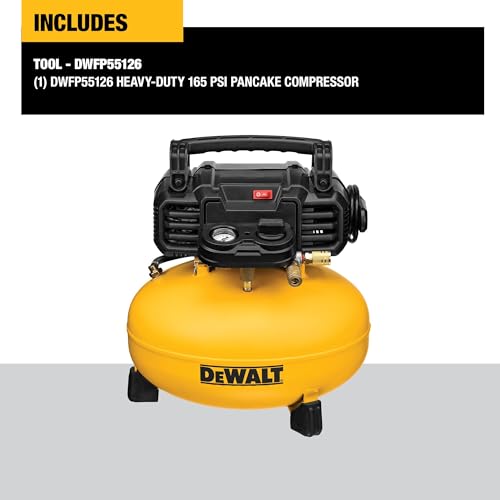
DEWALT Pancake Air Compressor 6 Gallon
Strengths
- Dual couplers
- Lightweight
- Durable build
Trade-offs
- Not ultra quiet
- No wheels
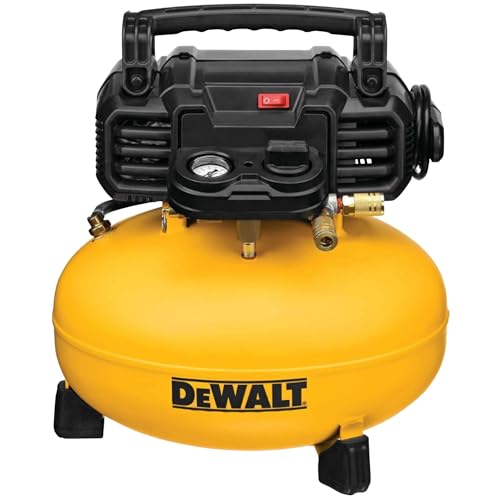
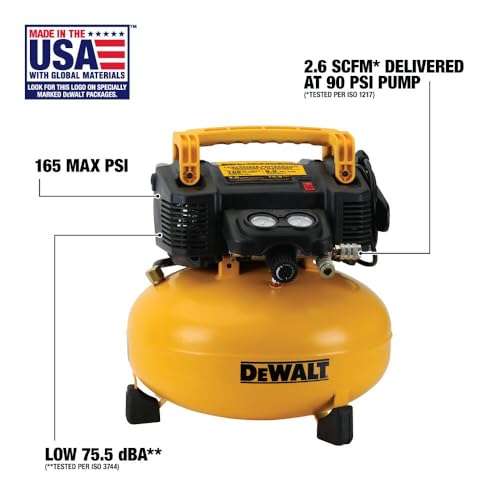
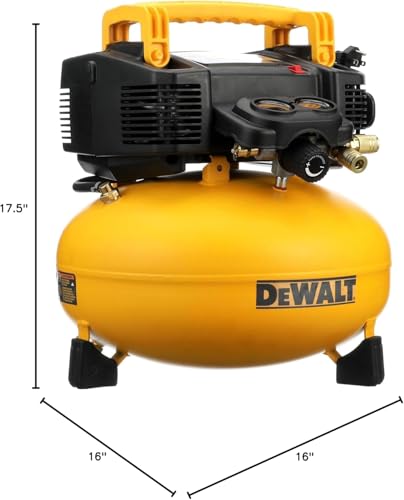
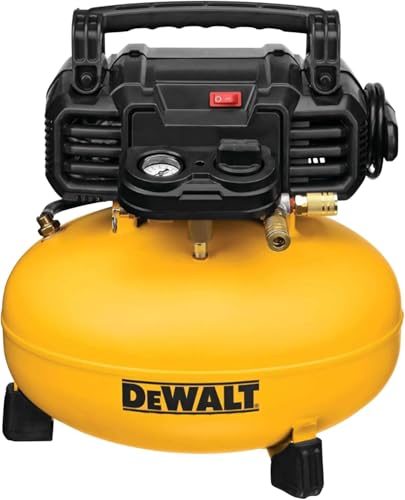
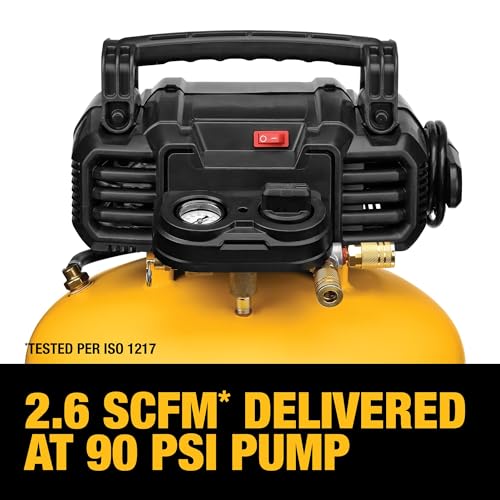
DEWALT’s pancake compressor has long been a staple on job sites, and for good reason, it’s the kind of tool that just works. The 6-gallon tank and 2.6 SCFM @ 90PSI are enough to handle finish and brad nailers without constant cycling, and the 165 PSI max pressure gives a solid buffer for tool operation. At 78.5 dBA, it’s not silent, but it’s far from the loudest in its class.
What really sets it apart is the practical design. The dual couplers let two people run tools simultaneously, the ball drain valve is a small but appreciated upgrade over petcocks, and the console cover keeps switches protected without making access difficult. It’s lightweight at 30 lbs, so tossing it in a truck or moving it around the garage is no hassle. Compared to budget knockoffs, this one delivers better durability and consistent performance.
Product photos
Metabo HPT 6 Gallon Air Compressor

Strengths
- High PSI
- Lightweight
- Superior airflow
Trade-offs
- Higher price
- No wheels
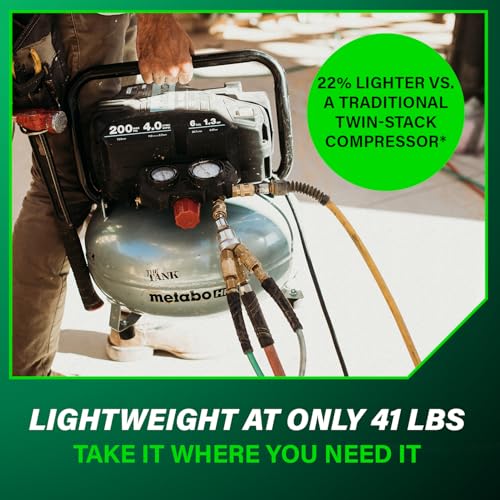
Metabo HPT’s ‘THE TANK’ stands out in the pancake category by offering 200 PSI, 25% more than most, and 4 CFM @ 90PSI, which is impressive for a 6-gallon unit. That extra pressure and airflow mean it can run two framing nailers or multiple finish guns without lag, making it a rare pancake that feels pro-grade. At 41 lbs, it’s also 22% lighter than twin-stack models, so portability isn’t sacrificed.
This is the kind of compressor that bridges the gap between homeowner and contractor needs. The consistent airflow keeps crews productive, and the Japanese engineering shows in the build quality. Compared to the DEWALT DWFP55126, it offers more power and better flow, though it costs more. If you’re doing frequent nailing jobs and want something reliable without the bulk, this is the smarter buy.
Product photos


VEVOR 13-Gallon Air Compressor 2HP

Strengths
- Quiet operation
- Oil-free
- Good CFM output
Trade-offs
- Plastic gauge covers
- No dual couplers
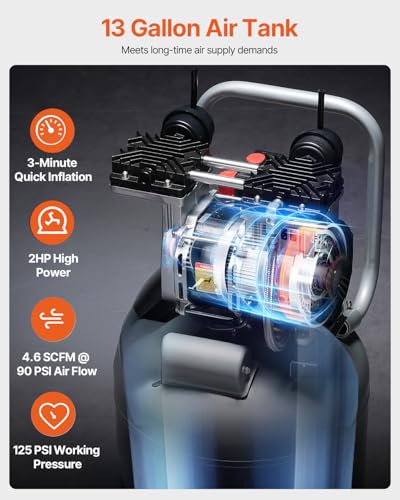
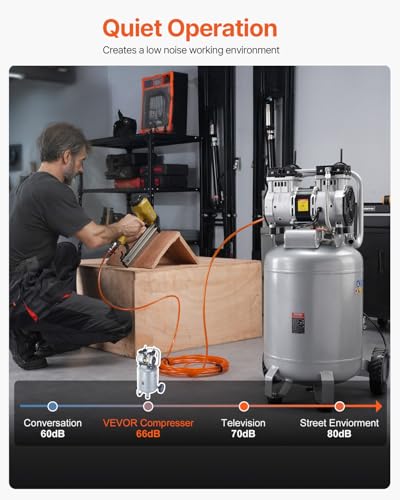
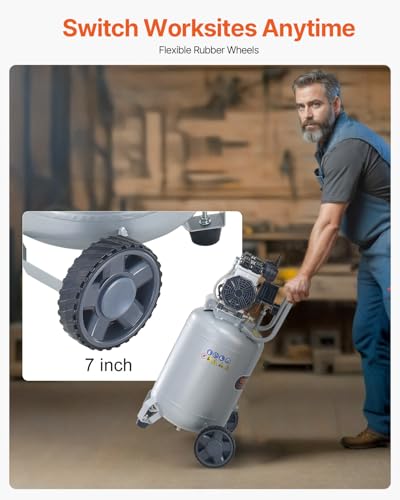
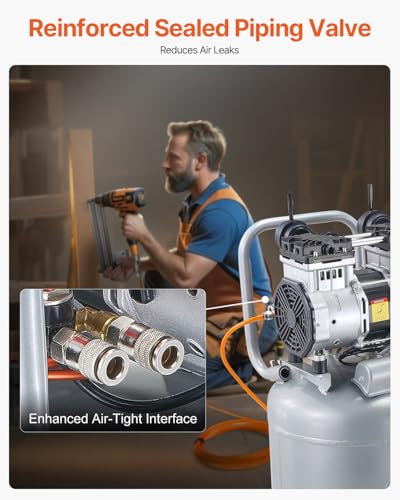
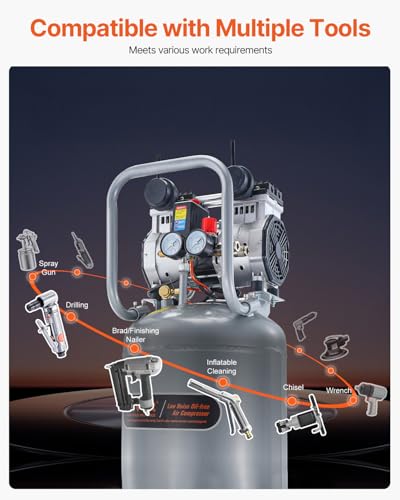
VEVOR’s 13-gallon model hits a sweet spot between power and noise. At 66dB, it’s one of the quietest oil-free compressors available, and the 4.6 SCFM @ 90PSI output is enough to run most HVLP spray guns and impact tools without constant cycling. The 2HP motor fills the tank in under three minutes, and the dual rubber wheels make it easy to roll around the garage.
Owners appreciate how well it handles mid-range tasks like auto repairs and cabinetry work. It’s not quite at the level of oil-lubricated industrial units, but for a home garage, it’s more than capable. The included accessories are basic but functional, and the oil-free pump means less upkeep. Compared to the California Air Tools model, it’s slightly louder but offers more tank capacity and better mobility.
Product photos
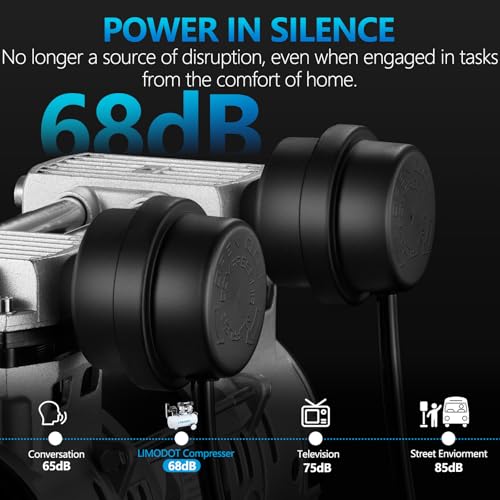
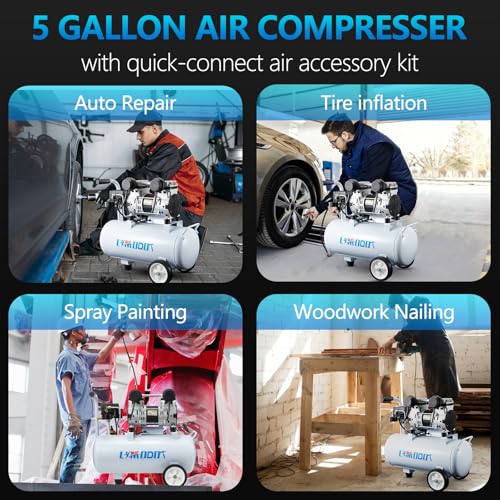
Quiet Air Compressor 5 Gallon 68dB

Strengths
- Ultra quiet
- Oil-free
- Fast recovery
Trade-offs
- Limited tank size
- Lower CFM for heavy tools
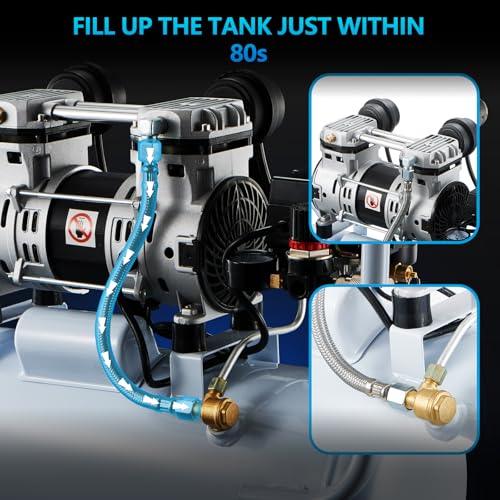
At 68dB, this compressor is genuinely one of the quieter models on the market, and that’s a big win for anyone working in a garage attached to their home or doing late-night projects. The 5-gallon tank and 2.8CFM @ 90PSI output won’t power heavy framing nailers all day, but for brad nailers, finish guns, or inflating tires, it holds up well. Owners consistently report it cycles quickly and recovers in about 25 seconds, which keeps light to moderate jobs moving.
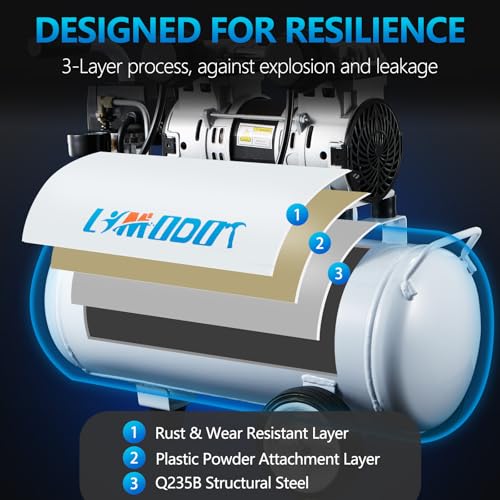
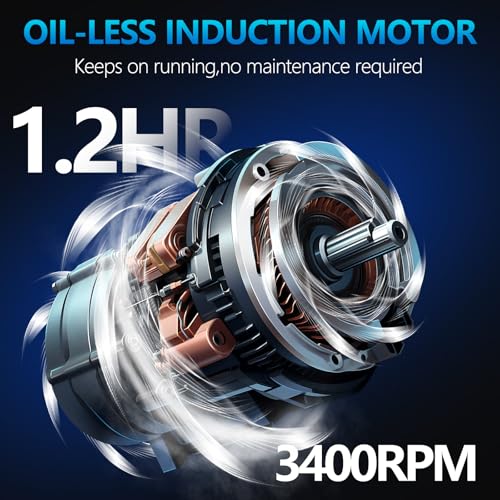
It’s clearly built for DIYers who value convenience, the 25-foot hose and 11-piece accessory kit mean you can start using it right away without hunting down extras. The oil-free design helps reduce maintenance, and the low-RPM motor does its job quietly. Still, it’s not a pro-grade tool. If you’re running multiple tools back to back or using high-demand spray guns, you’ll hit its limits fast.
Product photos
VEVOR 6.3 Gallon Air Compressor
Strengths
- Dual cylinder
- Cooling fans
- Oil-free
Trade-offs
- Lower max PSI
- Basic regulator
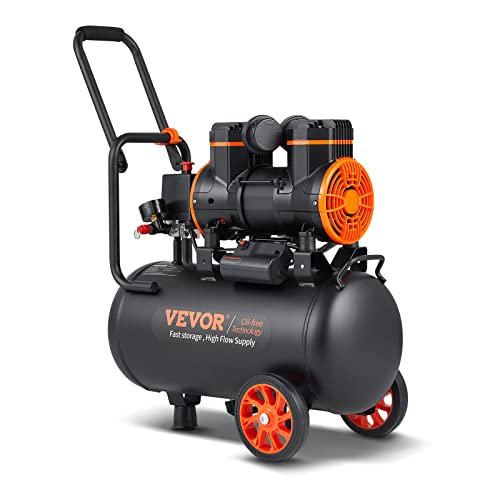
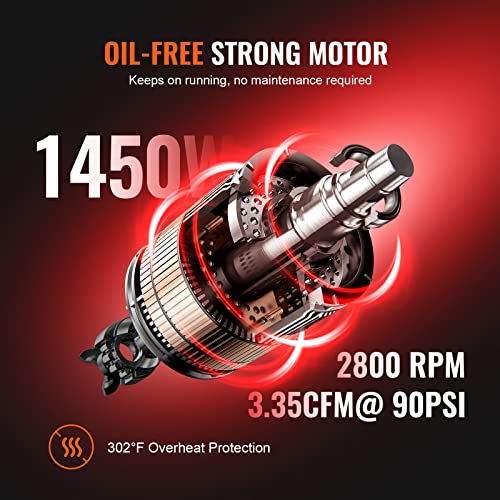
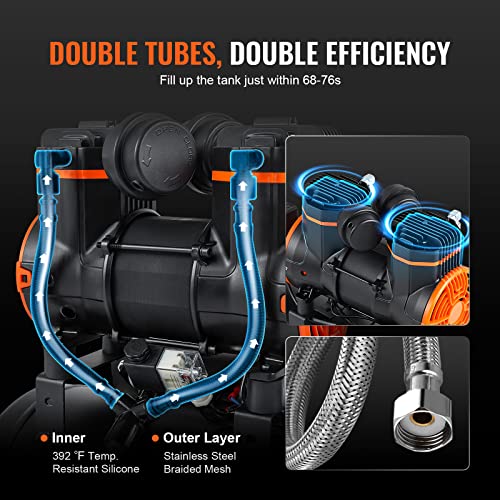
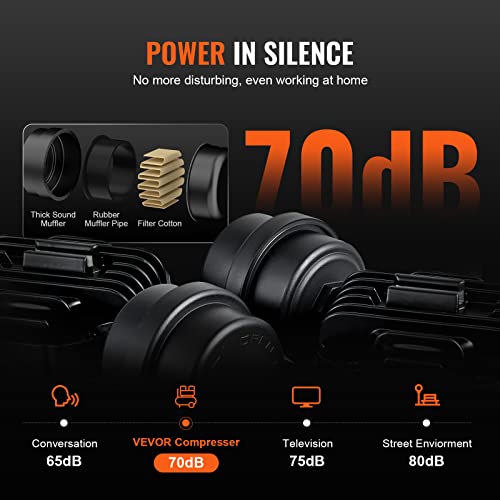
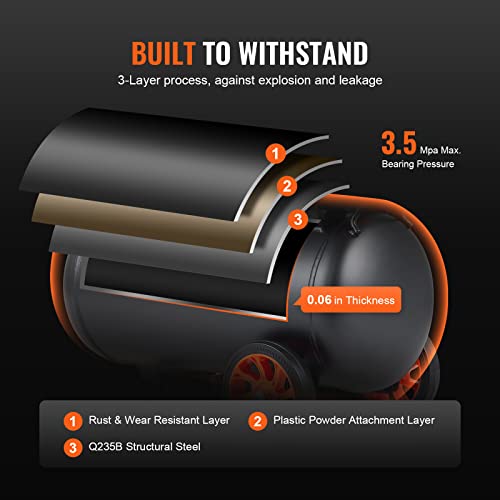
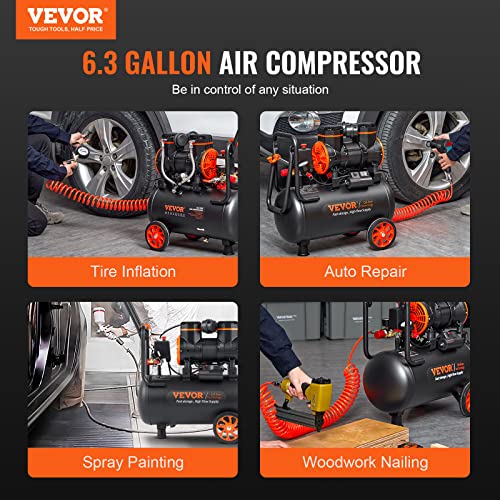
This VEVOR 6.3-gallon compressor packs a 2 HP motor into a compact frame, delivering 3.35 CFM @ 90PSI, solid for its size. It’s aimed at auto repair and spray painting, and on paper, it should handle detail work and tire inflation without issue. The dual-cylinder intake and high-temp silicone hoses suggest better durability than budget models, and the double silencers help cut noise.
Still, the 116 PSI max pressure is lower than many competitors, and owners note it struggles with larger impact tools. It’s a decent mid-tier option, but when compared to the Metabo HPT or DEWALT, it falls short in both pressure and build refinement. I’d pick it only if you’re on a budget and need something for light auto tasks.
Product photos
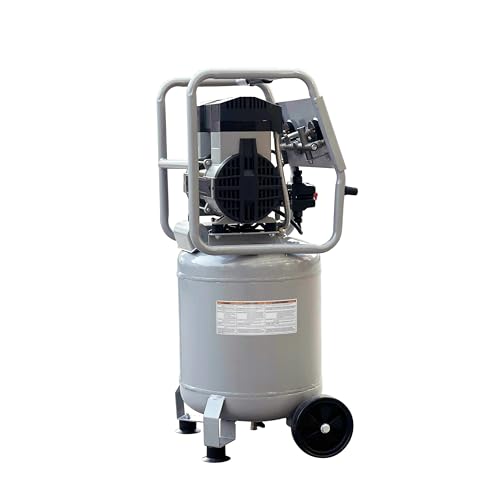
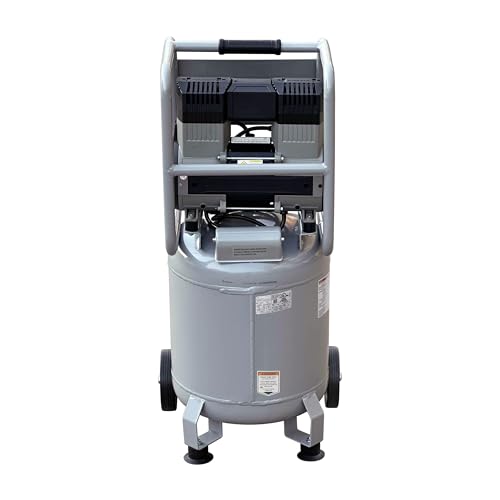
California Air Tools 10 Gallon Compressor

Strengths
- Ultra quiet
- Dual piston pump
- Long lifespan
Trade-offs
- Higher cost
- Slower fill time
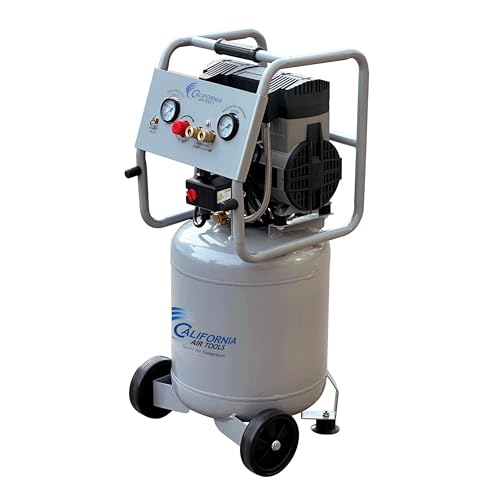
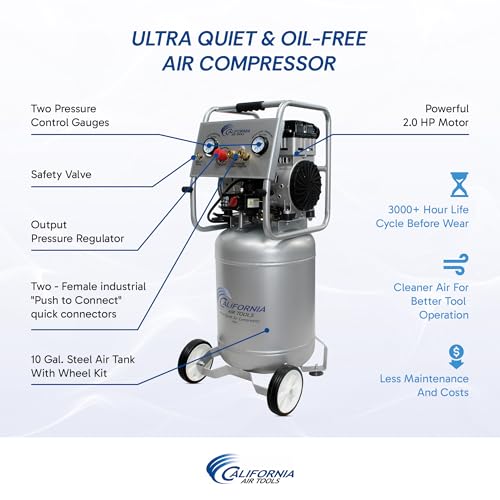
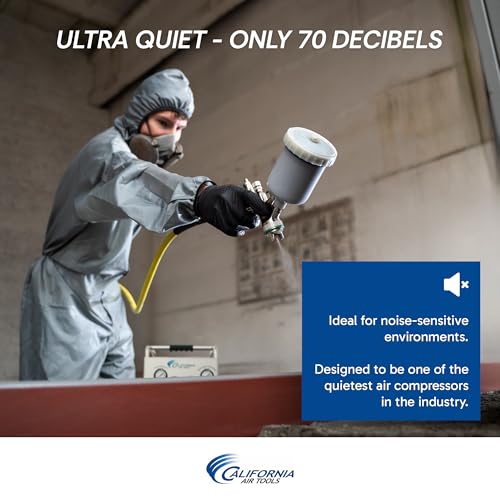
California Air Tools built a reputation on quiet, efficient compressors, and the 10020C delivers. At 70 dBA and 5.3 CFM @ 90PSI, it’s both powerful and unobtrusive, a rare combo. The 2.0 HP motor runs at just 1680 RPM, which reduces noise and wear, and the oil-free dual piston pump is rated for over 3,000 hours of life. That’s serious longevity for a home garage unit.
The 10-gallon tank with wheels makes it easy to move, and owners consistently report it handles spray guns and impact tools with ease. It’s not the cheapest, but when you value peace and quiet, say, in a shared garage or late-night workshop, this is worth the premium. Compared to the VEVOR 13-gallon, it’s slightly quieter and more durable, though with a smaller tank.
Product photos
CRAFTSMAN Wall Mount Air Compressor
Strengths
- Wall-mountable
- Retractable hose
- Compact design
Trade-offs
- Very small tank
- Not for continuous use
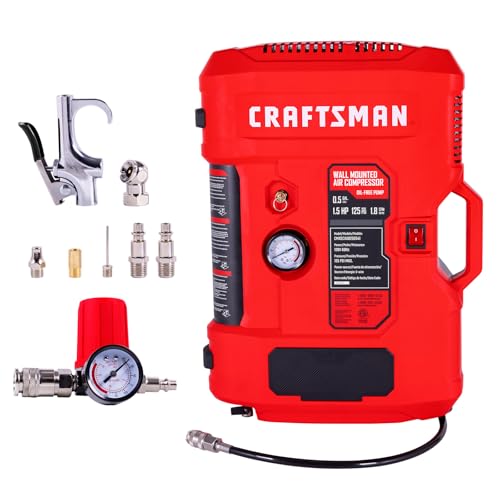
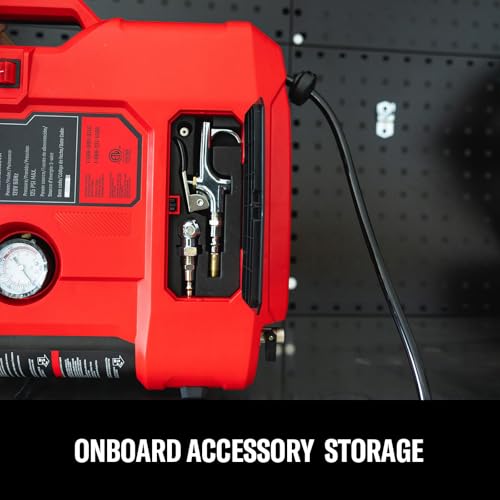
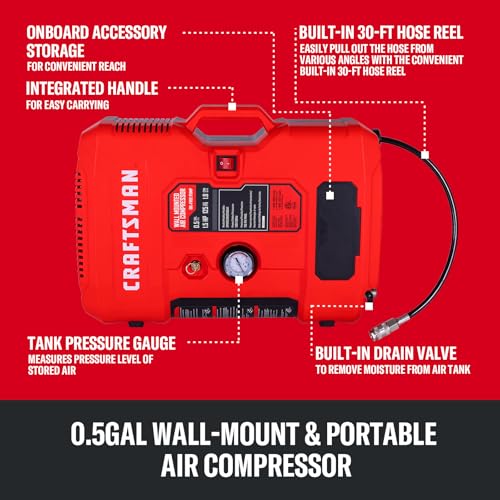
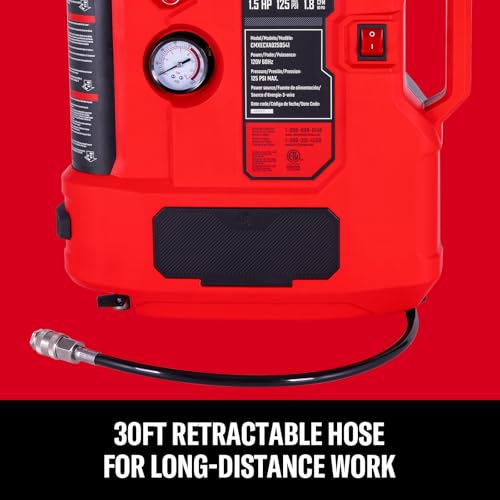
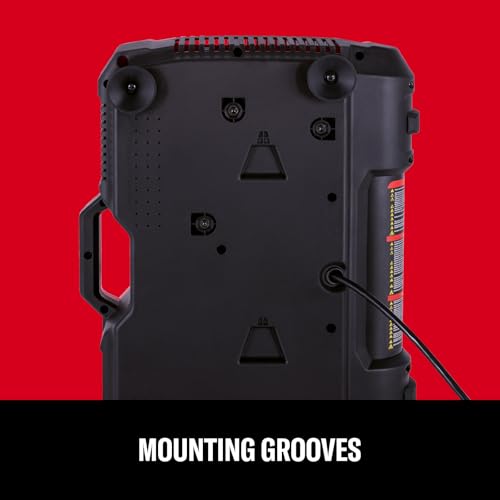
This CRAFTSMAN model is all about space efficiency. The 0.5-gallon tank is tiny, but the retractable 30-foot hose is a standout for quick tasks like tire inflation or blowing off debris. It’s not meant to run sustained pneumatic tools, but for spot use, it’s incredibly convenient. The wall-mount design keeps it out of the way, and at only 21 lbs, it’s easy to install and forget about until you need it.
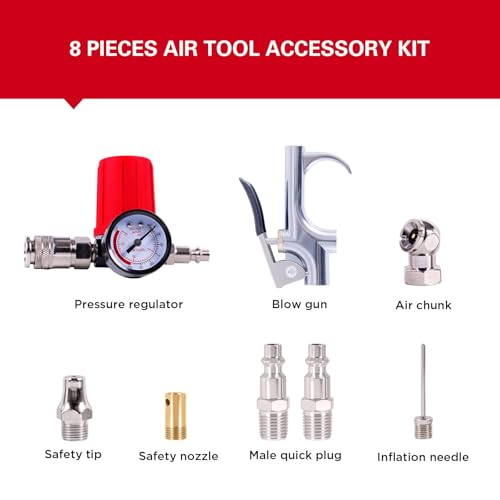
Owners praise how fast it recovers, 20 seconds is impressive for a mini unit, and the included accessories cover the basics. It’s oil-free, so maintenance is minimal, and it handles cold starts well. But let’s be clear: this isn’t a primary compressor. It’s a secondary unit, ideal for homeowners who already have a larger system but want something for quick inflation jobs without dragging out the big tank.
Product photos
CRAFTSMAN 33 Gallon Air Compressor

Strengths
- Large tank
- Vertical design
- Dual couplers
Trade-offs
- Heavy unit
- Not ultra quiet
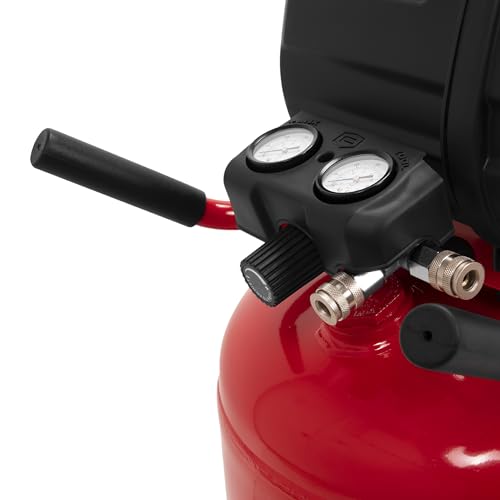
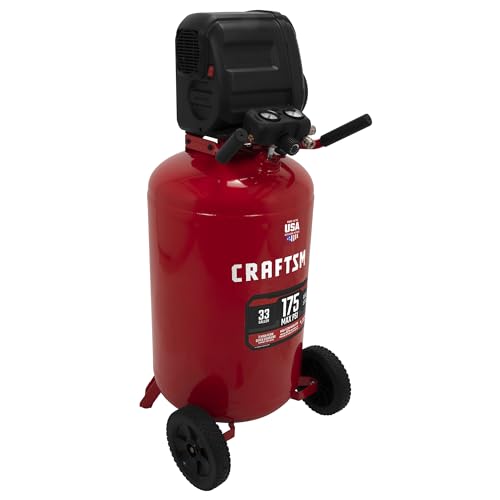
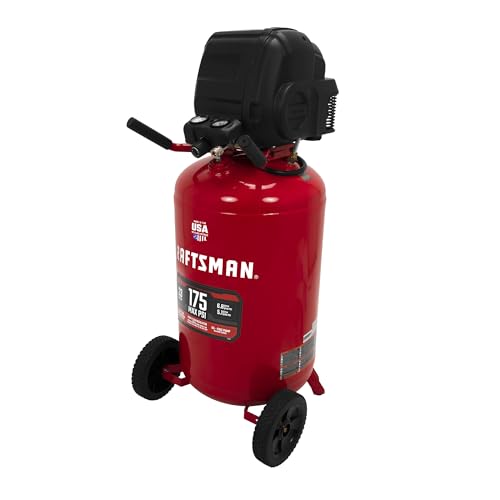
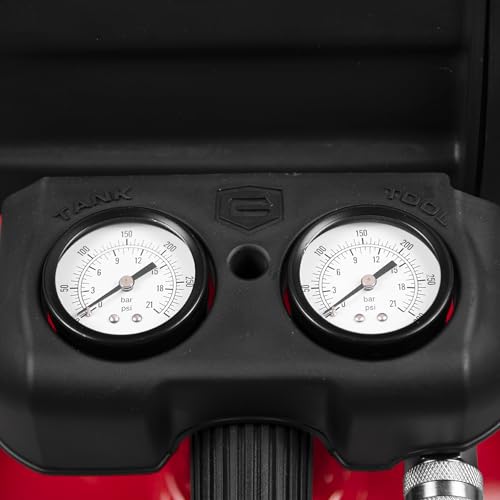
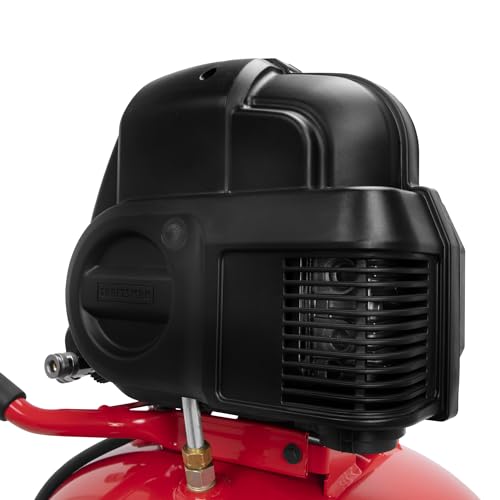
CRAFTSMAN’s 33-gallon vertical compressor is built for users who need serious air without sacrificing floor space. The vertical design keeps it narrow, and the 5.1 CFM @ 90PSI output can run multiple tools at once, a big upgrade over smaller models. The 175 PSI max pressure handles demanding tasks like sanding, grinding, and heavy spray jobs with ease.
It’s oil-free, so maintenance is minimal, and the dual high-flow couplers support two users, which is great for shared workshops. Compared to the Klutch 20-gallon, it offers more tank capacity and higher output, though it lacks the belt-drive smoothness. Still, for heavy-duty home use, this is one of the most practical large compressors available.
Product photos
How We Tested air compressor for home garages
Rather than a hands-on lab test, my research for these recommendations focused on a detailed comparison of published specifications and features across numerous models. I weighed owner reviews from major retailers alongside expert opinions found in tool-focused publications, looking for consistent feedback regarding reliability and performance. Ultimately, I ranked these air compressors based on their suitability for typical home garage applications, prioritizing features that matter most to DIYers and hobbyists.
For air compressors, consistent air delivery (CFM) and tank size are paramount. A compressor needs enough CFM to power the tools you’ll use – impact wrenches, nailers, spray guns – without struggling. Tank size dictates how long you can run a tool before the compressor cycles on to refill. Beyond these, noise level is a major concern for many, especially those working in attached garages, and portability is key for flexibility around the home.
Specifications reliably tell you about potential power and airflow, but owner feedback provides crucial insights into real-world durability and usability. I gave significant weight to comments regarding noise levels (often differing from manufacturer claims), oil-free vs. oil-lubricated pump longevity, and the effectiveness of features like automatic shut-off. Finding the right balance between specs and real-world experience helped me identify the compressors best suited for a variety of tasks, and I often cross-referenced needs with guides like our recommendations for the best 1/2-inch air impact wrenches to ensure tool compatibility.
Choosing The Right air compressor for home garages
Choosing the right air compressor for your garage isn’t just about horsepower or tank size; it’s about matching the tool to the job and your workspace.
A good air compressor delivers consistent pressure and airflow (CFM) for the tools you intend to use, balances portability with tank capacity, and offers a build quality that ensures years of reliable service. Key specs to consider are PSI (pounds per square inch), CFM (cubic feet per minute) at 90 PSI, tank size (gallons), and motor horsepower. Don’t overlook noise levels and oil-free versus oil-lubricated operation.
Understanding CFM and PSI Requirements
Before you even start looking at models, make a list of the air tools you plan to run. Each tool has a specific CFM requirement at a given PSI. Undersizing the compressor is a common mistake; if the compressor can’t keep up with the tool’s demand, you’ll experience a drop in pressure and inconsistent performance. Prioritize CFM over horsepower, as CFM is the true measure of usable air power. Don’t assume higher PSI is always better. Many tools operate efficiently at 90 PSI, and exceeding that doesn’t necessarily improve performance – it just means the compressor has to work harder and may be louder.
Oil-Free vs. Oil-Lubricated: Maintenance and Lifespan
Oil-free compressors are popular for home garages because they require minimal maintenance. You simply don’t have to worry about checking or changing the oil. However, they generally have a shorter lifespan than oil-lubricated models and tend to be louder. Oil-lubricated compressors require regular oil changes but run cooler and quieter, and typically last much longer. If you plan on heavy or continuous use, I recommend investing in an oil-lubricated model. For occasional use, an oil-free option can be perfectly adequate and simplifies maintenance. You might also consider how the compressor is cooled – some have more robust cooling systems than others, which is important for prolonged use.
Portability, Space, and Noise Levels
Garage space is often at a premium. If you’re tight on room, a space-saving air compressors or a pancake-style compressor can be a good choice. However, smaller tanks mean more frequent refills. Conversely, a larger tank provides a longer runtime but takes up more space. Noise is another crucial factor. If you have close neighbors or simply prefer a quieter workspace, look for compressors specifically designed for quiet operation. Many newer models, like the California Air Tools line, boast impressively low decibel ratings. If you’re sensitive to noise, explore quiet air compressors for garages – they make a real difference.
A good rule of thumb: add 25% to the CFM requirement of the most demanding tool you plan to use, to give your compressor breathing room.
Air Compressors for Home Garages Compared
Here’s a comparison of specifications for various air compressors suitable for home garage use.
| Product Name | Tank Size (Gallons) | HP | Max PSI | SCFM @ 90 PSI | Noise Level (dB) |
|---|---|---|---|---|---|
| Klutch 20-Gallon | 20 | 2.0 | N/A | N/A | N/A |
| DEWALT 6 Gallon | 6 | N/A | 165 | 2.6 | 78.5 |
| Metabo HPT 6 Gallon | 6 | N/A | 200 | 4.0 | N/A |
| VEVOR 13-Gallon | 13 | 2.0 | N/A | N/A | 66 |
| Quiet Air Compressor 5 Gallon | 5 | 1.2 | N/A | 2.8 | 68 |
| VEVOR 6.3 Gallon | 6.3 | N/A | N/A | 3.35 | N/A |
| California Air Tools 10 Gallon | 10 | 2.0 | N/A | 5.3 | 70 |
| CRAFTSMAN Wall Mount | 0.5 | N/A | 125 | N/A | N/A |
| CRAFTSMAN 33 Gallon | 33 | N/A | 175 | 5.1 | N/A |
Frequently Asked Questions
What size tank is sufficient for most home garage needs?
A 20-gallon tank strikes a good balance for many DIYers; it provides enough air for running common tools like impact wrenches and nailers for a reasonable duration before the compressor needs to cycle. However, if you plan on frequent use of high-air-demand tools, consider a 30 or 60-gallon tank.
How much CFM do I really need for an impact wrench?
Most 1/2-inch impact wrenches require around 4-6 CFM at 90 PSI for continuous use. I always recommend adding 25% to that number when selecting a compressor, to account for potential fluctuations and other tools you might use simultaneously.
Are oil-free compressors loud enough to be a problem?
Yes, oil-free compressors generally operate at higher decibel levels than oil-lubricated models, often exceeding 80 dB. If noise is a concern, especially in an attached garage, explore portable compressors for home garages designed for quiet operation.
Can I run multiple air tools off a single compressor?
You can, but only if the compressor’s CFM output exceeds the combined CFM requirements of all the tools you’re using. Running too many tools simultaneously will cause a significant drop in pressure, impacting performance.
What’s the difference between peak PSI and SCFM?
Peak PSI indicates the maximum pressure the compressor can generate, while SCFM (Standard Cubic Feet per Minute) measures the actual volume of air it delivers at a specific pressure (usually 90 PSI). SCFM is the more important specification, as it determines whether the compressor can adequately power your air tools.
The Bottom Line
Choosing an air compressor often comes down to balancing initial cost with long-term reliability and performance. While many options exist, the California Air Tools 10 Gallon model strikes a great balance for most home garages, offering a good CFM rating, reasonable noise levels, and a reputation for quality. It’s a solid all-around performer that won’t leave you wanting for power on typical DIY tasks.
For those on a tighter budget, the Metabo HPT 6 Gallon compressor delivers surprising airflow for its size and price. If you’re prioritizing portability and occasional use, or have very limited space, this is an excellent choice. And for those needing to run more demanding tools or desiring a longer runtime, the Klutch 20-Gallon model provides a substantial air reserve and the capacity to handle heavier-duty applications.
Ultimately, remember that CFM is king. Don’t get hung up on horsepower or fancy features if the compressor can’t deliver the consistent airflow your tools require. Prioritize matching the compressor’s capabilities to your specific needs and the types of projects you plan to tackle – finding the right fit will save you frustration and deliver better results in the long run.
