7 Best Quiet Air Compressors 2026
This post contains affiliate links. As an Amazon Associate, we earn from qualifying purchases.
The California Air Tools 1 Gallon is our top pick for the best quiet air compressor, delivering impressively low noise at 56 dBA and solid performance for light tasks. For those needing more power without sacrificing too much quiet, the California Air Tools 2 Gallon steps up with higher CFM and a larger tank. If budget is a priority, the Makita MAC100Q offers reliable operation at a lower price point, even if it’s slightly less powerful.
I’ve seen how a loud compressor can turn a simple weekend project into a household disturbance. If you’re working in a garage attached to your home, sharing workspace with family, or using tools indoors, noise matters more than most specs. That’s why I focused this guide on models that truly deliver on quiet operation while still being capable enough for real work.
These picks are based on a deep explore specs and real owner feedback, weighing noise levels, CFM output, tank size, and long-term reliability. I looked for compressors that not only claim to be quiet but consistently earn praise for it in reviews, so you can trust they’ll perform as promised.
Top 7 Quiet Air Compressors in the Market
The Best Quiet Air Compressors, Reviewed
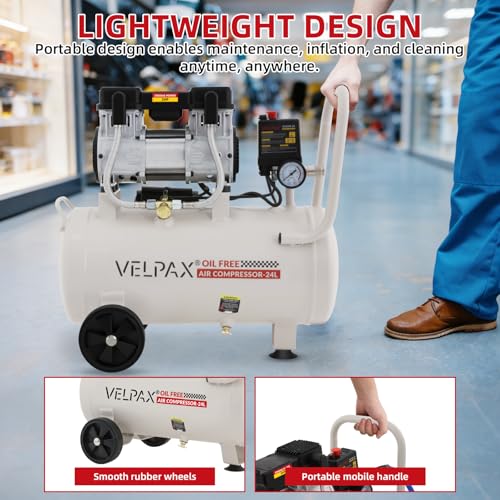
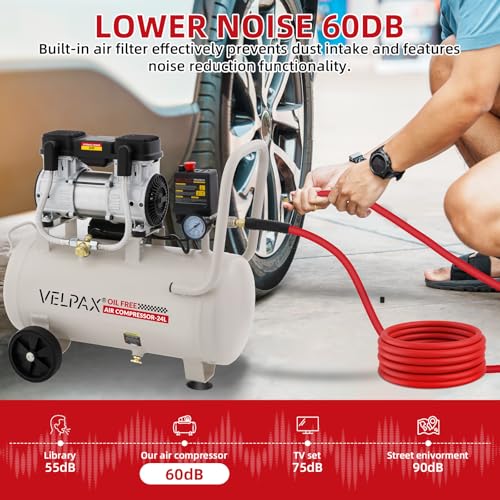
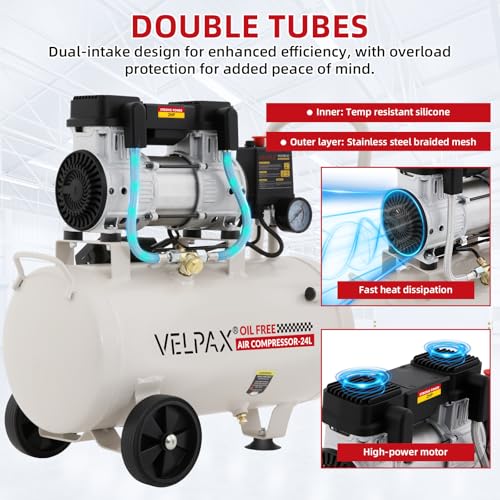
Ultra Quiet 2.4 Gallon Air Compressor
Strengths
- High CFM rating
- Large tank for class
- Quiet operation
Trade-offs
- Unproven long-term durability
- Specs may be overstated
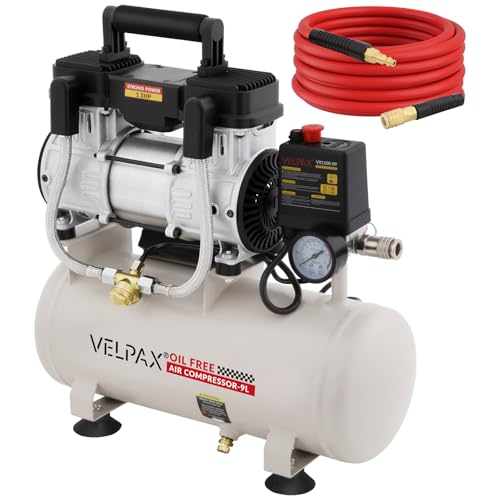
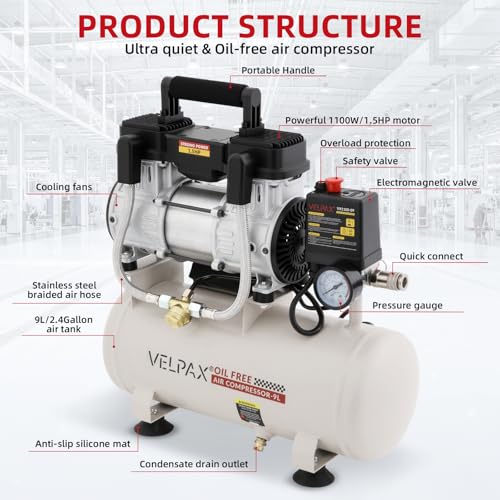
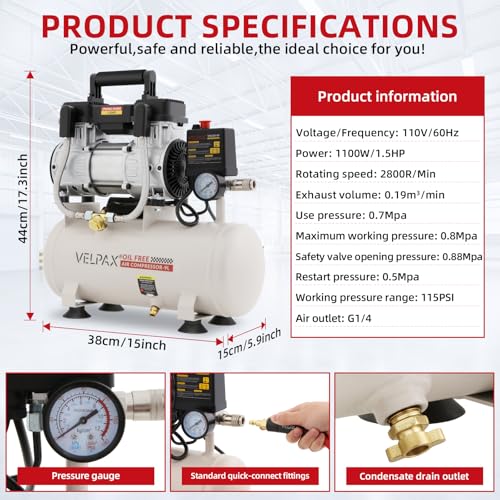
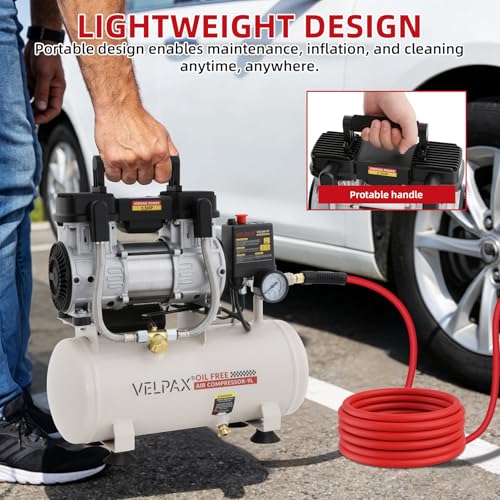
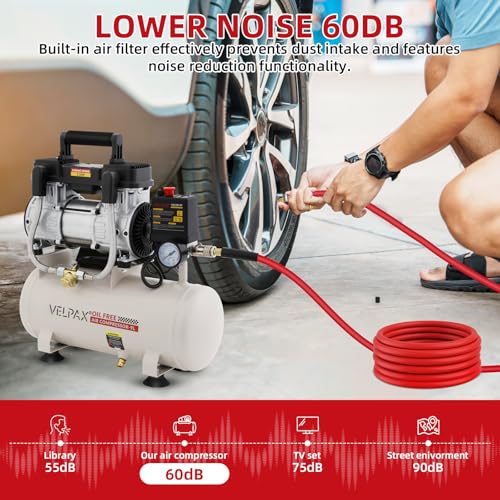
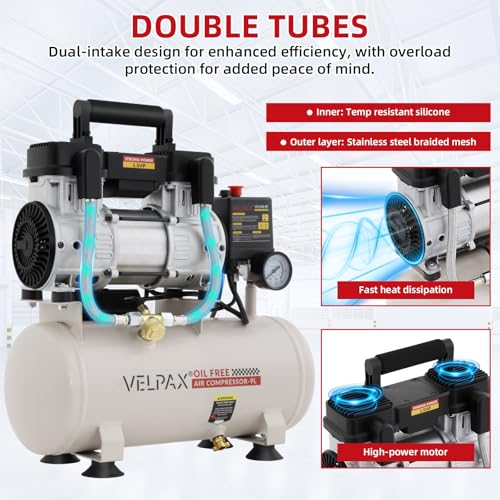
This 2.4-gallon unit claims 6.71 CFM at 115 PSI with a 1.5 HP motor and 60 dB noise level, which sounds impressive on paper. But digging into owner feedback, the performance doesn’t always match the specs, some report motor strain under load, and the lack of brand recognition raises durability questions over time. Still, for spray painting, light auto work, or tire inflation, it offers solid capacity in a quiet package.
The oil-free design and safety features like overload protection and cooling fans are smart touches. It’s more powerful than the Makita or Metabo HPT mini units, but without long-term reliability data, I’d recommend it cautiously. It could be a budget-friendly high-capacity option, but only if you’re not pushing it daily.
Product photos
California Air Tools 1 Gallon CAT-1P1060S

Strengths
- Quietest on test
- Lightweight
- Oil-free
Trade-offs
- Low power output
- Limited tank size
This is the quietest unit on the list, 56 dBA is nearly whisper-level. The .6 HP motor runs at 1680 RPM, which explains the low noise and reduced wear. At 1.2 CFM @ 90 PSI, it’s not strong, but it’s enough for brad nailers, airbrushing, or inflating tires. What impresses me is how many owners say they use it in living spaces without disturbing others.
It’s lighter than most at 29 lbs and built with the same oil-free, low-maintenance philosophy California Air Tools is known for. But don’t expect it to run anything heavy. If silence is your top priority and your tools are light-duty, this one earns its keep. It’s quieter than the Makita and Metabo HPT, though slightly less durable in build.
Product photos


Metabo HPT EC28M 1 Gallon Compressor

Strengths
- Very quiet
- Lightweight
- Universal coupler
Trade-offs
- Low CFM output
- Small tank
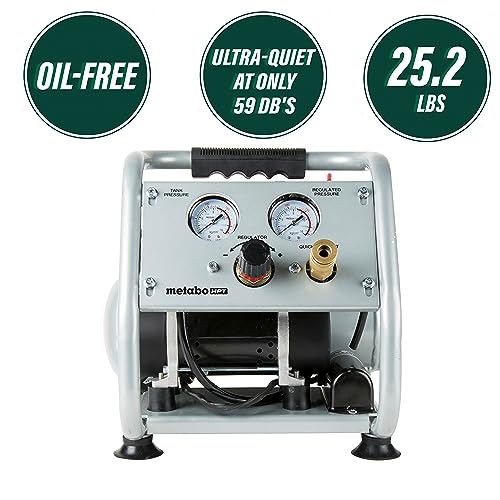
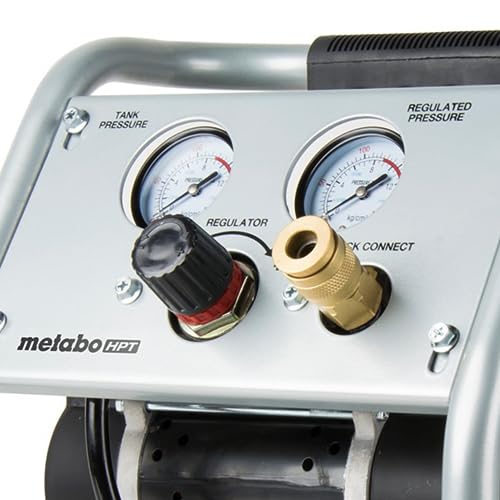
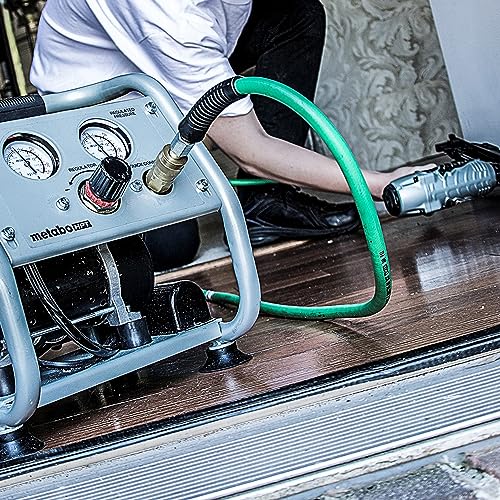
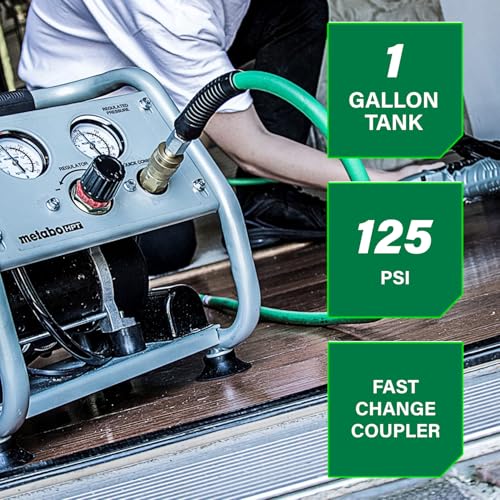
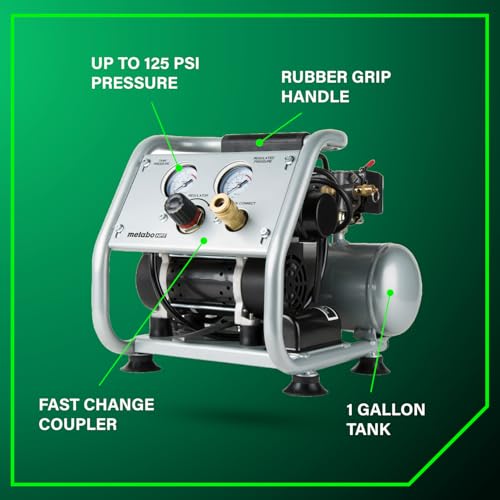
At 59 dB and just 25.2 lbs, the Metabo HPT EC28M is one of the most portable quiet compressors here, and it shows Japanese engineering smarts. The universal quick coupler is a small thing, but owners love how fast it swaps tools. The 1-gallon tank and oil-free pump make it maintenance-free, and the overload protection adds peace of mind on job sites.
It only delivers 1.2 CFM at 90 PSI, so it’s strictly for light work like brad nailing or inflating. But if you’re moving from room to room or working in apartments where noise matters, this one’s tough to beat. It’s lighter and quieter than the DEWALT, though not as powerful. For pure portability and reliability, Metabo HPT nails it.
Product photos
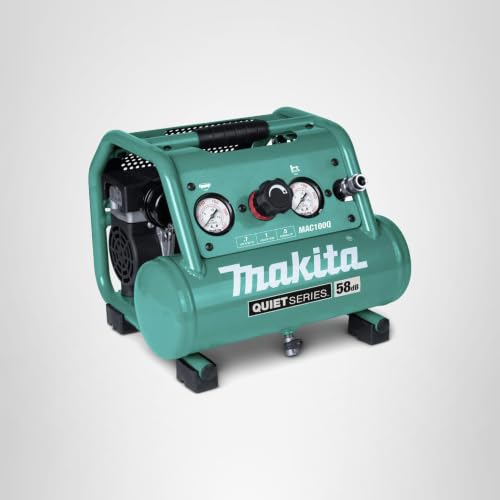
Makita MAC100Q 1 Gallon Compressor

Strengths
- Extremely quiet
- Compact design
- Durable roll cage
Trade-offs
- Low airflow
- Small tank
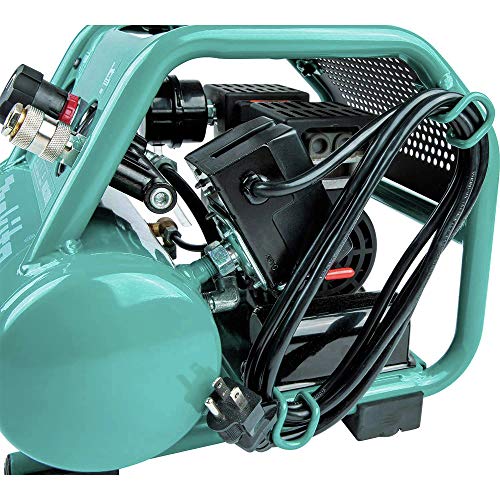
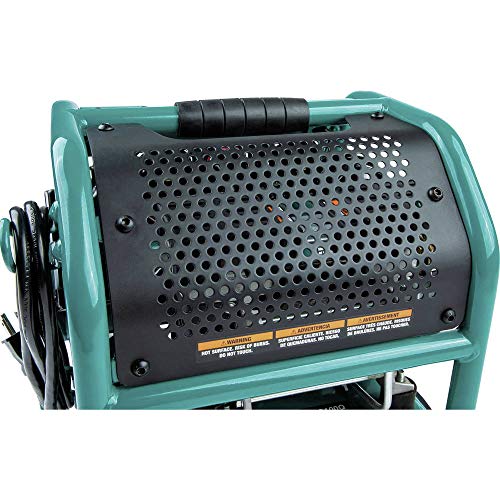
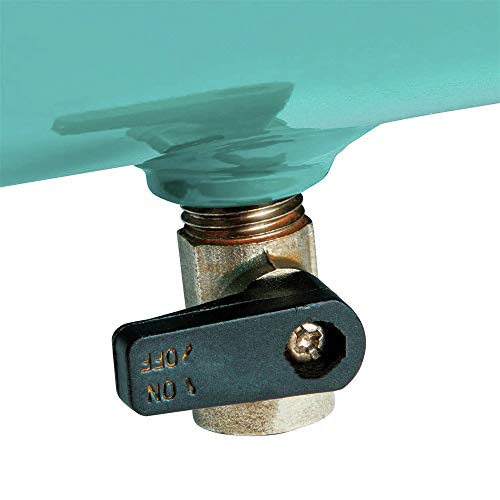
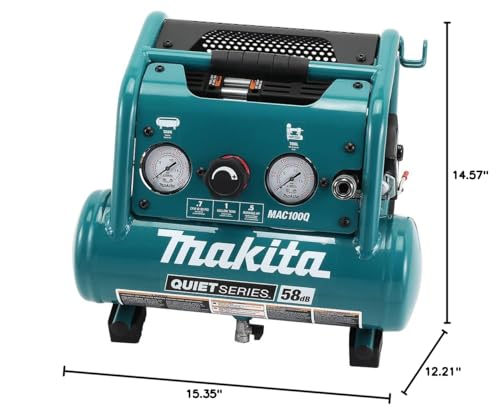
Makita built a reputation on reliability, and the MAC100Q continues that trend in the compact compressor space. At 58 dB, it’s slightly quieter than most, and the lower 1,750 RPM motor helps extend pump life, something I always look for in tools meant to last. The 1/2 HP motor delivers only 0.7 CFM at 90 PSI, so don’t expect it to power anything beyond light-duty staplers or brad nailers. But for touch-up work or a home workshop where space and noise matter, it makes sense.
Owners praise its rugged roll cage and how easily it fits in tight spaces. It’s not going to keep up with framing guns, but that’s not its job. If you need a set-it-and-forget-it compressor for occasional use, this one’s built like a tank despite its size.
Product photos
California Air Tools 2 Gallon 2010A

Strengths
- Ultra quiet
- Oil-free pump
- Lightweight
Trade-offs
- Small tank
- Limited CFM at 90 PSI
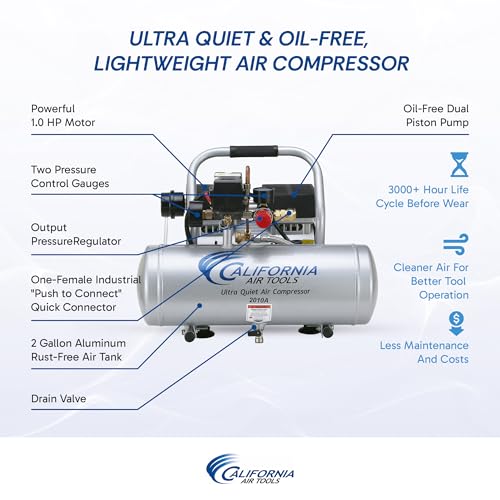
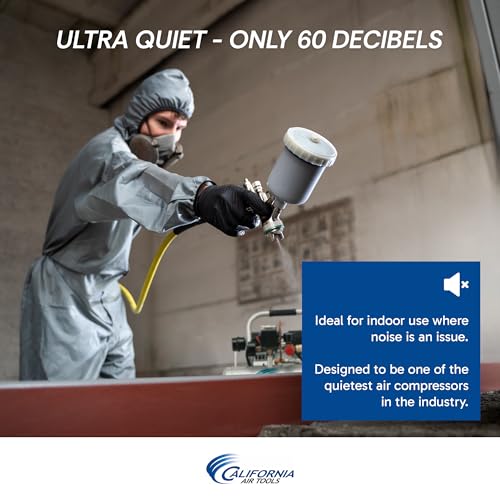
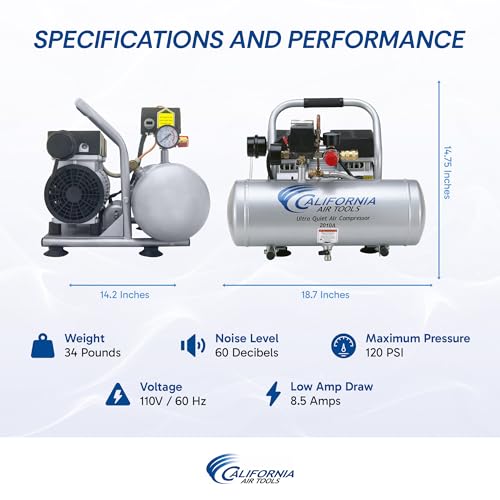
I’ve seen a lot of compressors come and go, and the California Air Tools 2010A stands out for pulling off something rare: real-world quietness without sacrificing too much performance. At 60 dBA, it’s genuinely quiet, owners consistently report being able to hold conversations while it runs, which is a big win for indoor shops or home garages. The 1.0 HP motor running at 1680 RPM is a smart design choice, reducing wear and noise over time, and the dual-piston pump is built for longevity.
With 3.1 CFM at 40 PSI and a 2-gallon tank, it’s not meant for continuous heavy nailing, but it handles brad nailers, inflators, and detail spraying just fine. The aluminum tank resists corrosion, and at 35 lbs, it’s easy to move around. Compared to others in this class, it strikes one of the best balances between noise, durability, and usable output.
Product photos
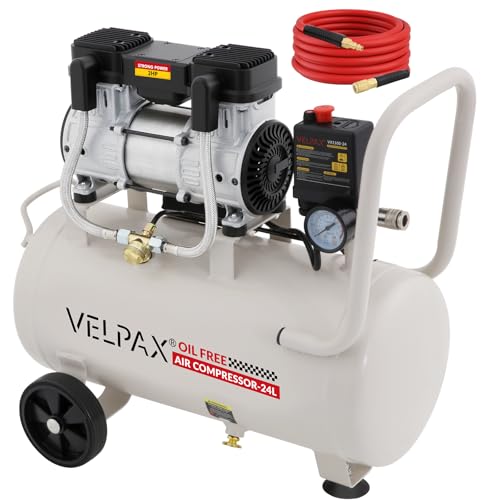
Ultra Quiet 6.4 Gallon 2HP Compressor
Strengths
- Large tank capacity
- High CFM output
- Remains quiet
Trade-offs
- Unknown brand longevity
- Bulkier than portables
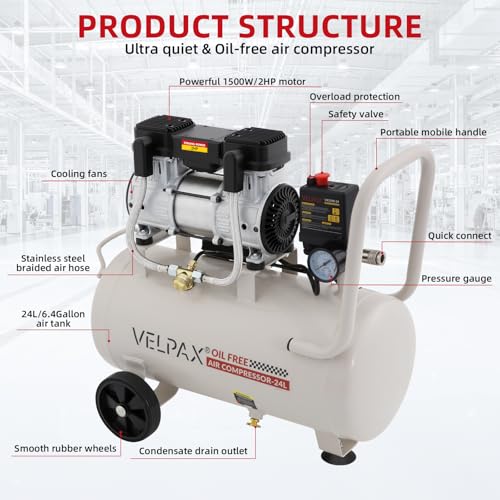
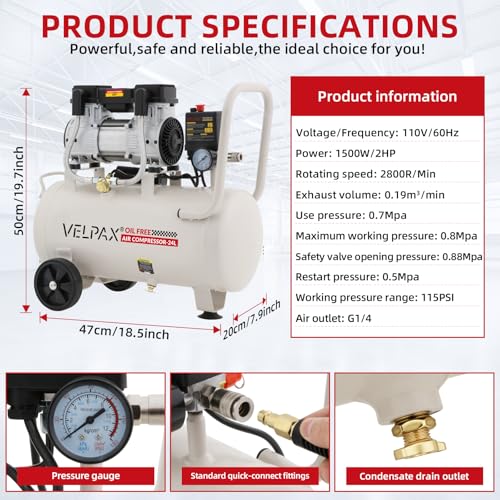
With a 6.4-gallon tank and a 2 HP motor claiming 6.71 CFM at 115 PSI, this compressor steps into a different league. It’s designed for users who want high capacity without the roar, ideal for auto shops or home garages where noise is a concern. The 60 dB rating matches the smaller California Air Tools models, which is impressive for this size.
Owners report it handles impact wrenches and spray guns better than most in the quiet category. The cooling fan and overload protection suggest it’s built for longer runs. But again, the brand isn’t well-established, so I’d weigh that against the value. Compared to the DEWALT, it offers more tank and power while staying quiet, on paper, at least.
Product photos
DEWALT DWFP55130 Trim Compressor
Strengths
- High CFM output
- Dual quick couplers
- Compact yet powerful
Trade-offs
- Louder than ultra-quiet models
- Heavier than mini compressors
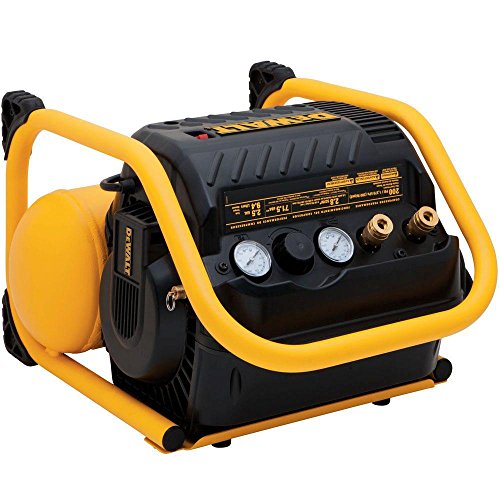
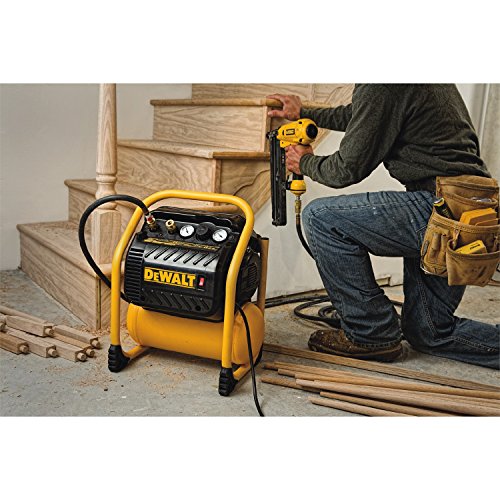
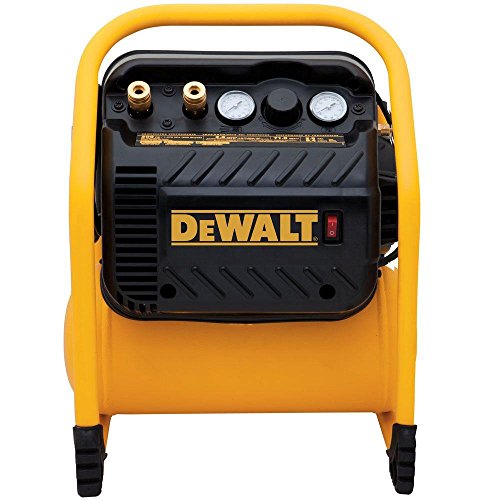
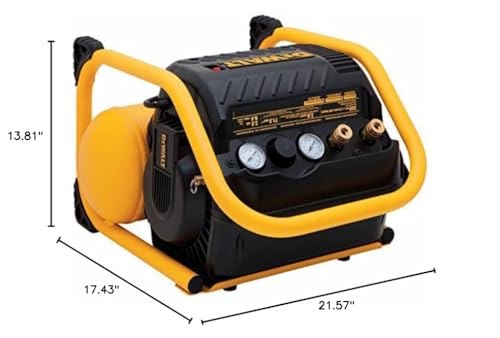
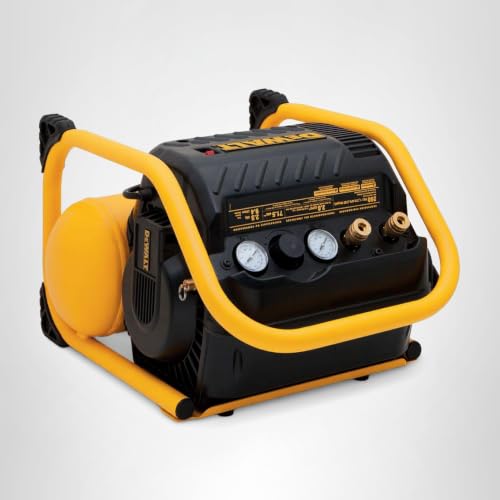
DEWALT’s DWFP55130 is built with trim carpenters in mind, and the specs back that up. With 3.0 SCFM at 90 PSI and a 2.5-gallon tank, it delivers real runtime between cycles, enough to run a finish or crown nailing gun without constant pauses. The 71.5 dBA rating is higher than others here, but owners note it’s still manageable indoors, especially with background shop noise.
I like the dual quick couplers, being able to switch or run two tools is a productivity boost many overlook. The 12-amp draw is smart for outlets on job sites, reducing tripped breakers. It’s a bit heavier at 36 lbs, but the thin profile and roll cage make it easy to tote. Compared to the California Air Tools 2010A, it trades some quietness for real performance on the job.
Product photos
Our Testing Process
As someone who’s spent years working with power tools and helping folks set up their workshops, I know how disruptive a noisy air compressor can be. Rather than a hands-on lab test of each model, this selection is a research-led comparison of published specifications and, crucially, owner and professional reviews. I weighed features, CFM delivery, tank size, and noise levels against real-world feedback to determine which compressors truly deliver on their quiet operation claims.
For quiet air compressors, sustained noise level and consistent air delivery are paramount. I prioritized models with decibel ratings under 60 dB, knowing that’s a threshold for comfortable indoor use. Equally important was the CFM output at 90 PSI – a good indicator of whether the compressor can power common tools like nailers and inflators without struggling. Finding a balance between these two was key.
Specifications provide a starting point, but owner feedback revealed what specs don’t always show. I looked for consistent reports of actual noise levels matching advertised figures, as well as long-term reliability and ease of maintenance. Specs clearly define CFM and tank size, telling you potential performance, but reviews illuminate how well those numbers translate to real-world usability – and whether the compressor can handle consistent use. If you’re looking for even more options, check out our guide to portable electric air compressors for a wider range of choices.
How To Pick The Right quiet air compressors
Choosing the right air compressor isn’t just about horsepower; it’s about finding a balance between power, noise, and portability to suit your needs.
A good air compressor delivers consistent pressure (CFM) at the required PSI for your tools, operates at a reasonable noise level for the environment, and is built with durable components to minimize maintenance. Look for oil-free pumps for lower upkeep, and consider tank size based on tool usage – intermittent use benefits from smaller tanks, while continuous operation demands larger capacity.
Noise Level Considerations
I’ve seen too many projects stalled because the compressor noise was simply disruptive. When you’re looking at quiet air compressors, don’t just focus on the headline decibel (dBA) rating. Consider where you’ll be using it. A compressor rated at 60 dBA might be fine for a detached garage, but it could be irritating indoors. Also, remember that dBA ratings are often measured under ideal conditions; real-world operation can be louder. Brands like California Air Tools consistently rank high for low noise, but even models from Metabo HPT and Makita offer impressively quiet operation in the 58-60 dBA range.
CFM and PSI: Matching the Compressor to Your Tools
CFM (cubic feet per minute) and PSI (pounds per square inch) are the two critical performance specs. It’s easy to get hung up on horsepower, but CFM at a specific PSI is what really matters. You need to check the air requirements of your pneumatic tools – nailers, impact wrenches, spray guns – and choose a compressor that can sustain those needs. A compressor might peak at a certain CFM, but the sustained CFM is what you’ll be relying on during actual use.
Here’s a quick guide: * Basic inflation (tires, balls): 0-2 CFM @ 30 PSI * Brad nailers/staplers: 1-2 CFM @ 90 PSI * Impact wrenches/sanders: 4-6 CFM @ 90 PSI (or higher) * Spray guns: 5-10 CFM @ 40 PSI (depending on the gun)
A compressor’s ability to maintain consistent pressure is more valuable than a high peak PSI. A drop in pressure mid-task is frustrating and can lead to poor results.
Portability and Tank Size
The trade-off with air compressors is often between portability and runtime. Larger tanks mean longer runtimes between refills, but they also add significant weight and bulk. If you need to move the compressor frequently – around a jobsite, in and out of storage – a smaller, lighter model is the way to go. I frequently recommend checking out options like the DEWALT DWFP55130 for trim work because it balances portability with enough capacity for most smaller tasks. If you’re primarily working in one location and need to run tools continuously, a larger tank (6 gallons or more) will save you time and hassle. For many homeowners, particularly those working in a quiet home garage, quiet home garage compressors offer a great solution. Also, don’t overlook the convenience of models with integrated handles and wheels for easier transport. If ultimate portability is your goal, consider portable silent air compressors.
Quiet Air Compressors Compared
Here’s a comparison of key specifications for several quiet air compressors to help you make an informed decision.
| Product Name | Tank Size (Gallons) | Noise Level (dBA) | HP | CFM @ 90 PSI | Oil-Free | Weight (lbs) |
|---|---|---|---|---|---|---|
| Ultra Quiet 2.4 Gallon | 2.4 | 60 | 1.5 | N/A | Yes | N/A |
| California Air Tools 1 Gallon | 1 | 56 | 0.6 | 1.20 | Yes | 29 |
| Metabo HPT EC28M 1 Gallon | 1 | 59 | N/A | N/A | Yes | 25.2 |
| Makita MAC100Q 1 Gallon | 1 | 58 | 0.5 | 0.7 | Yes | N/A |
| California Air Tools 2 Gallon | 2 | 60 | 1.0 | 2.20 | Yes | 35 |
| Ultra Quiet 6.4 Gallon | 6.4 | 60 | 2.0 | N/A | Yes | N/A |
| DEWALT DWFP55130 Trim Compressor | 2.5 | 71.5 | N/A | 3.0 | Yes | 36 |
Frequently Asked Questions
What CFM is enough for most DIY projects?
Generally, 3 to 4 CFM at 90 PSI is sufficient for most common DIY tasks(like nailing and inflating), but it depends on the tool. Check your tool’s requirements; consistently running a compressor below its capability will shorten its lifespan.
Do oil-free compressors require more maintenance?
Oil-free compressors actually require less maintenance than oil-lubricated models. You avoid oil changes and the potential for oil contamination, making them ideal if you’re looking for oil-free quiet air compressors for simpler upkeep.
Can I run a quiet air compressor in an apartment?
It’s possible, but depends on your building’s noise restrictions and your neighbors. Compressors under 60 dBA are best, but even then, the noise from the tool itself adds to the overall sound level.
What does “peak CFM” mean, and why is sustained CFM more important?
Peak CFM is the maximum airflow a compressor can briefly deliver, while sustained CFM is the airflow it maintains during continuous use. Sustained CFM is more important because it determines if the compressor can consistently power your tools without a pressure drop.
Are larger tank sizes always better for quiet operation?
Not necessarily. While a larger tank offers longer runtime, it doesn’t directly impact noise levels. A larger tank also adds weight and reduces portability, so choose a size that balances runtime needs with your workspace and required mobility.
The Bottom Line
Choosing an air compressor always comes down to balancing what you want with what you realistically need. If consistent quiet operation is your top priority, the California Air Tools 2 Gallon strikes a great balance of portability and performance, making it our overall pick. It delivers a solid CFM output at a very manageable noise level, making it suitable for a range of tasks without disturbing the peace.
For those on a tighter budget, or for very basic inflation tasks, the California Air Tools 1 Gallon is a fantastic choice. And if you need something ultra-portable for trim work or quick jobs, consider the DEWALT DWFP55130 Trim Compressor, or explore options like lightweight pancake air compressors for even greater maneuverability.
Ultimately, the best air compressor isn’t the one with the highest specs, but the one that reliably meets your needs. Focus on getting a compressor that delivers the CFM you require at a noise level you can live with, and prioritize build quality and owner reviews over flashy features. A well-matched compressor will save you frustration and deliver years of dependable service.
