7 Best Air Compressor Silencers of 2026
This post contains affiliate links. As an Amazon Associate, we earn from qualifying purchases.
The M05 XY-05 Air Compressor Muffler stands out as the best overall silencer for its strong noise reduction and durable build, while the Joyangy 3/8″ silencer pack offers solid performance at a budget-friendly price. For larger compressors needing maximum compatibility, the Solberg 3/4″ Filter Silencer Muffler is a reliable, well-constructed option.
A loud air compressor can make your garage unbearable, especially during long projects or early morning work. The right silencer helps cut that noise, but with so many thread sizes and mixed claims, it’s easy to pick the wrong one.
After researching specs, owner feedback, and construction details across multiple models, I focused on compatibility, real-world noise reduction, and durability. This guide breaks down what actually matters when choosing a silencer, so you can avoid returns, poor fits, and disappointment.
Top 7 Air Compressor Silencers in the Market
The Best Air Compressor Silencers, Reviewed
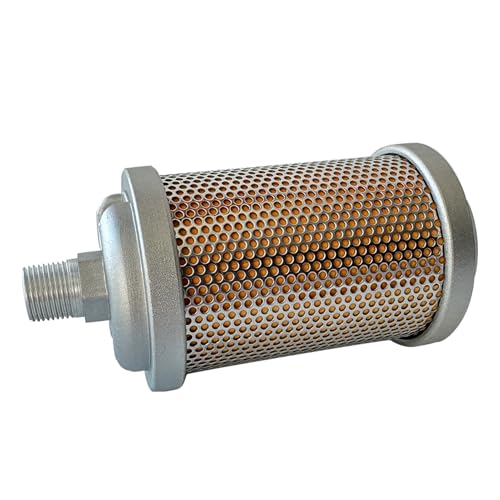
M05 XY-05 Air Compressor Muffler
Strengths
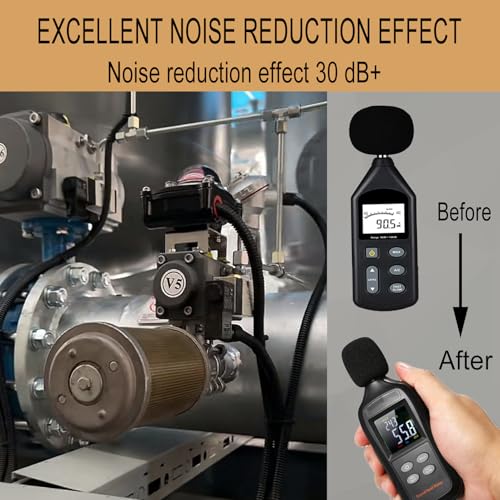
- Over 30 dB noise reduction
- High temp and corrosion resistant
- OEM-level durability
Trade-offs
- For exhaust, not intake
- Slightly higher cost
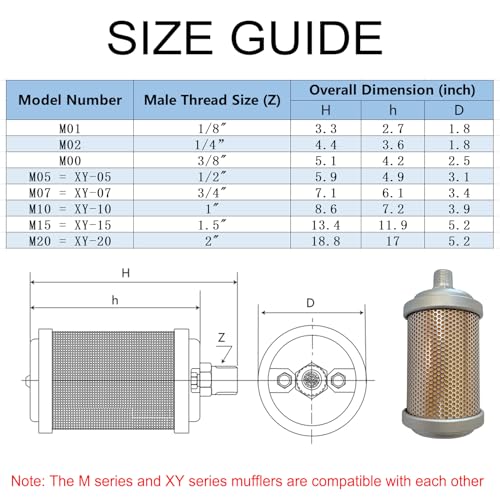
- Must confirm thread match
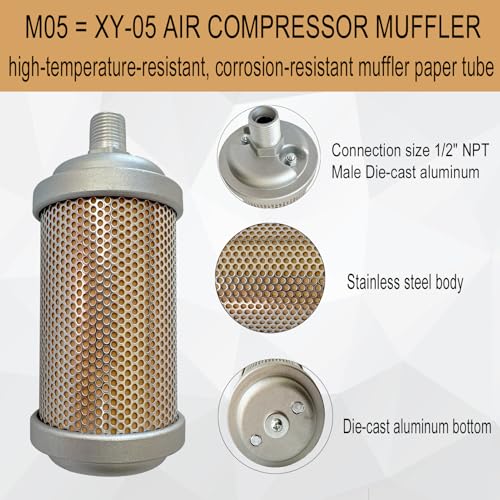
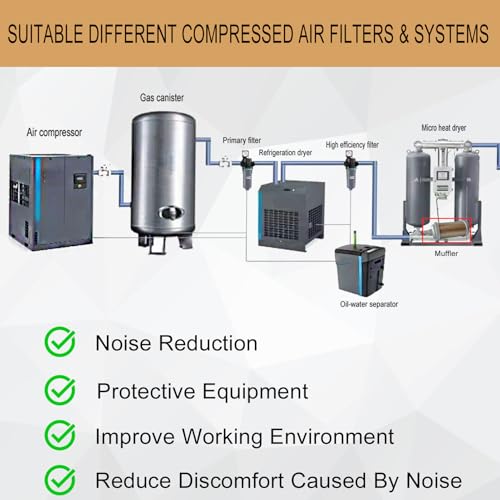
This M05 muffler is the most technically advanced option here, especially for exhaust-side noise control. It uses a high-temperature resistant paper tube instead of glass wool, which owners say provides more consistent and longer-lasting noise reduction, over 30 dB in many setups. That’s rare at this price point and makes it stand out from basic intake silencers.
It’s compatible with a wide range of systems, including rotary screw and reciprocating compressors, and meets OEM specs. The 145 PSI rating means it handles high-pressure environments without issue. When compared to intake-only models, this one targets the actual exhaust stream, which is often the loudest part. For overall performance and engineering, this is my top recommendation.
Product photos

Solberg 3/4″ Filter Silencer Muffler
Strengths
- Solid steel build
- Up to 30 dB reduction
- Durable for industrial use
Trade-offs
- Large size limits fit
- Only for 3/4″ NPT systems
- Heavy compared to alternatives
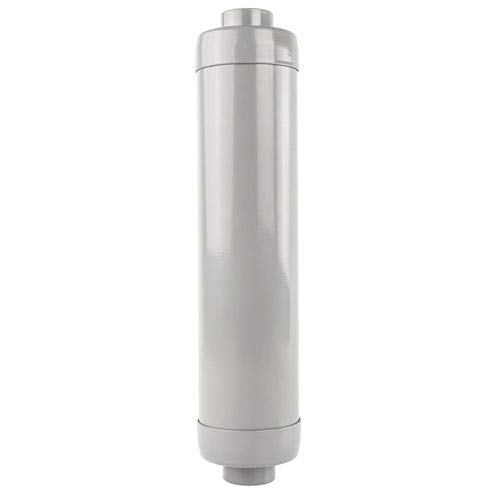
If you’re dealing with a loud compressor and need serious noise reduction, the Solberg SLCR-075 stands out on paper. Its solid steel construction and 14.5-inch length suggest it’s built for industrial environments where durability and sound dampening are top priorities. Owners consistently report a noticeable drop in high-frequency noise, some even cite reductions close to 30 decibels, which is significant in a workshop setting.
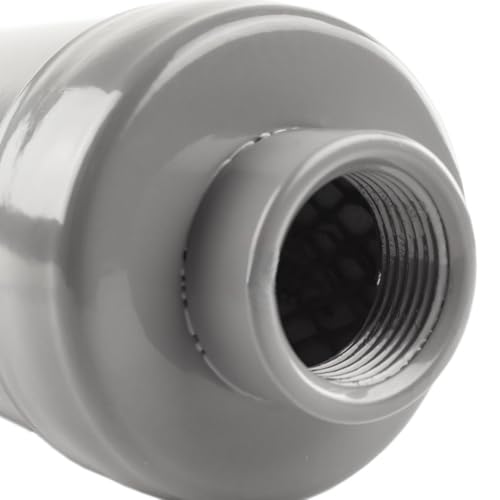
It’s clearly designed for larger systems with 3/4″ NPT ports, so it won’t fit smaller DIY compressors. But for those with compatible equipment, this silencer does more than just quiet things down, it also acts as a basic intake filter. I’d pick this over smaller mufflers when working in shared spaces or sound-sensitive environments.
Product photos

Tnuocke 2 pcs 1/2″ Air Compressor Silencer
Strengths
- Low cost for two units
- Rust-resistant coating
- Lightweight and easy to install
Trade-offs
- No replaceable filter cores
- Minimal noise reduction
- Shorter lifespan under heavy use
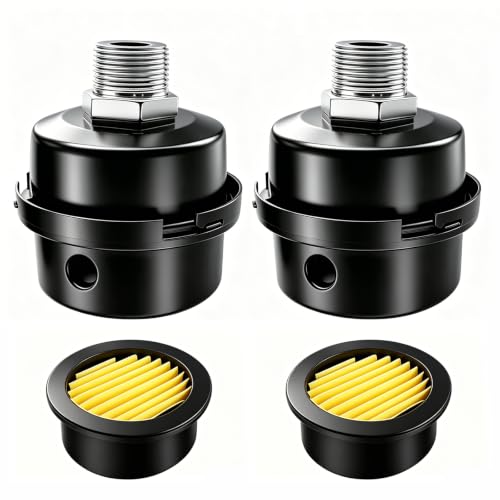
Priced as a budget buy, and sold in pairs, this Tnuocke set delivers basic functionality without frills. The coated metal shell resists rust, and at 68mm long, it fits neatly on most 1/2″ intake ports. It includes a simple foam-like filter media that helps reduce dust intake and slightly mutes noise, though don’t expect dramatic results.
Owners report these last a fair amount of time for the price, especially when used on smaller compressors or generators. Compared to the Joyangy model, it lacks replacement filters, so you’ll need to clean or replace the whole unit over time. But for someone doing occasional work and wanting a cheap, decent upgrade from a bare intake, this pack makes sense.
Product photos
Joyangy Pack of 2 3/8″ Silencer

Strengths
- Includes replacement filter cores
- Cost-effective long term
- Corrosion-resistant metal shell
Trade-offs
- Smaller port size limits use
- Not for high-CFM systems
- Replacement parts sold separately after initial pack
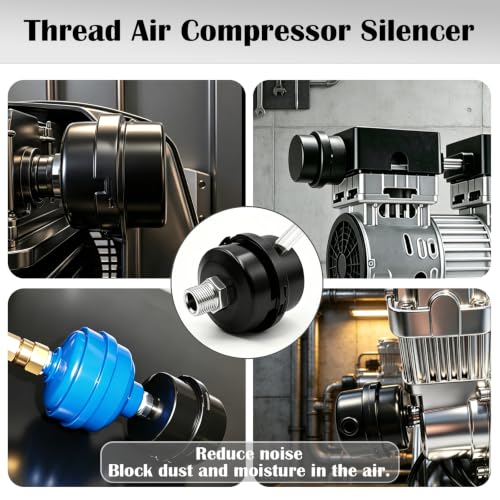
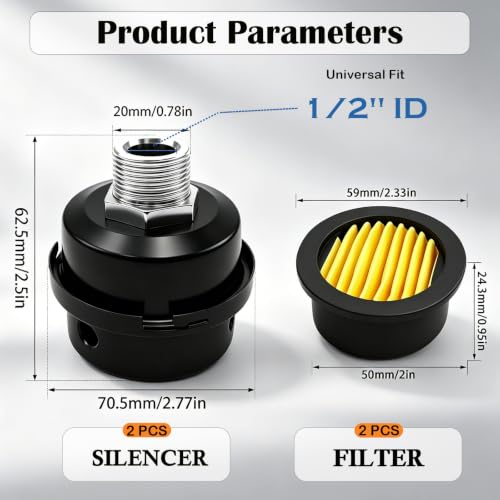
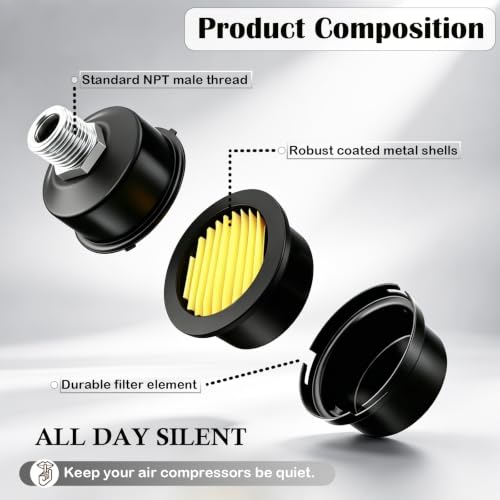
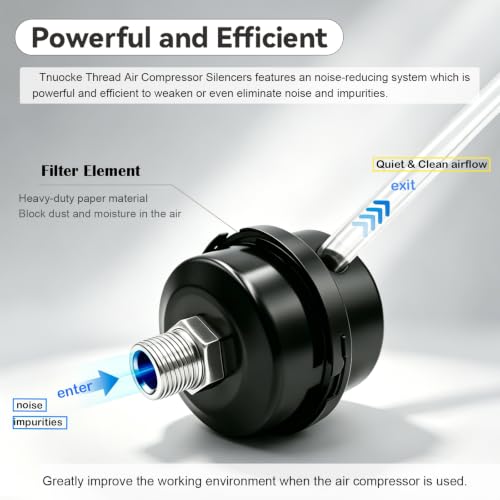
What sets the Joyangy silencer apart is the inclusion of replaceable filter elements, a rare and practical feature. Most mufflers force you to replace the whole unit when the filter clogs, but here you can just swap in a new core. This makes it far more economical over time, especially for frequent users.
The 3/8″ NPT size fits many smaller oil-less compressors, and the coated metal shell holds up well to corrosion. Owners praise its ease of installation and the noticeable drop in intake noise. Compared to the Tnuocke pack, this is the smarter buy for anyone who values maintenance efficiency and long-term savings.
Product photos
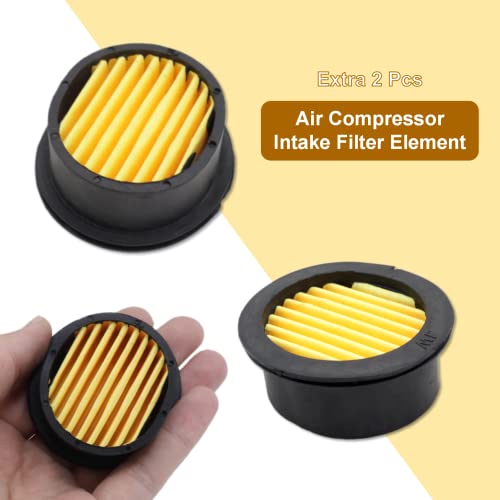
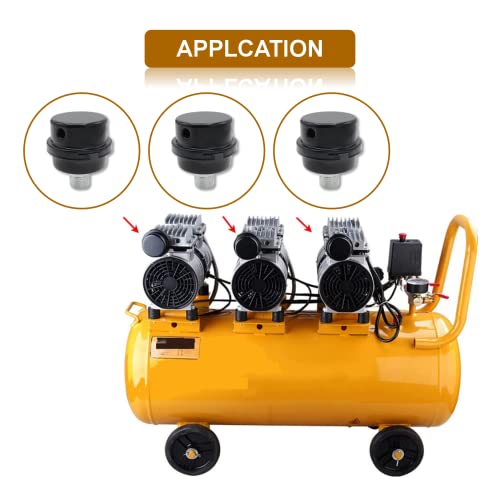
3/4″ Thread Air Compressor Silencer

Strengths
- Corrosion-resistant coating
- Effective dust and moisture filter
- Works with multiple machine types
Trade-offs
- Slightly bulky design
- Filter element not replaceable
- Limited noise reduction vs. larger models
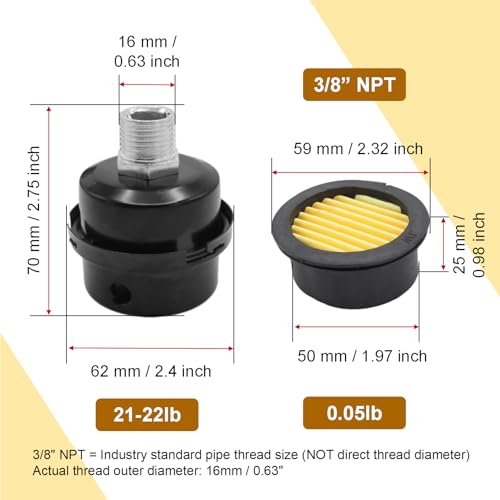
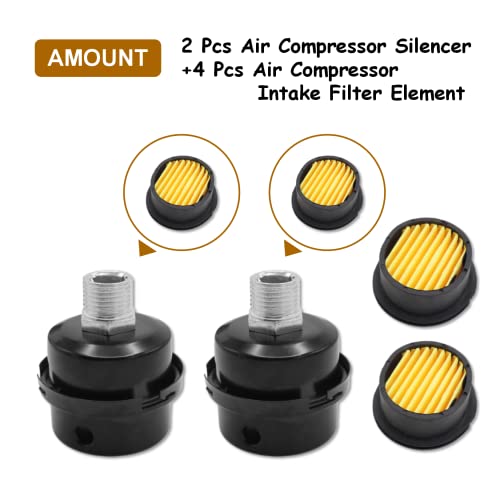
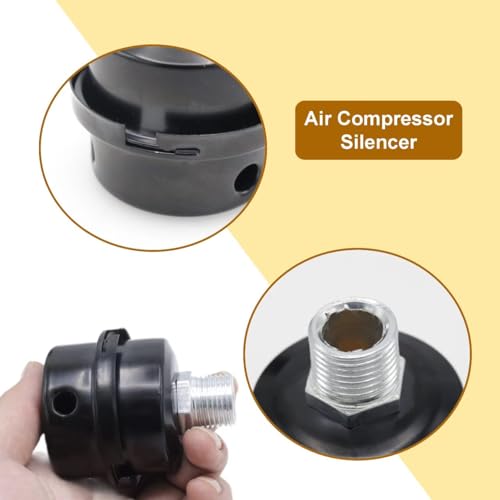
This 3/4″ silencer brings decent noise reduction and added protection with its built-in filter element. The coated metal shell holds up well against corrosion, which is a plus if you’re running equipment in damp or outdoor conditions. It’s designed for broad compatibility, owners confirm it fits a range of machinery beyond just air compressors, including generators and blowers.
While it doesn’t promise the same level of dB reduction as the Solberg model, it strikes a good balance between function and affordability. It’s not the most compact unit, but for someone needing a reliable intake muffler with dust and moisture protection, this is a solid mid-tier option. I’d recommend it over cheaper mini-mufflers if you value longer service life.
Product photos

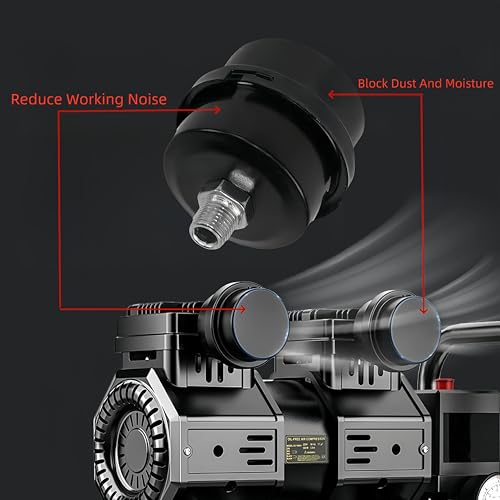

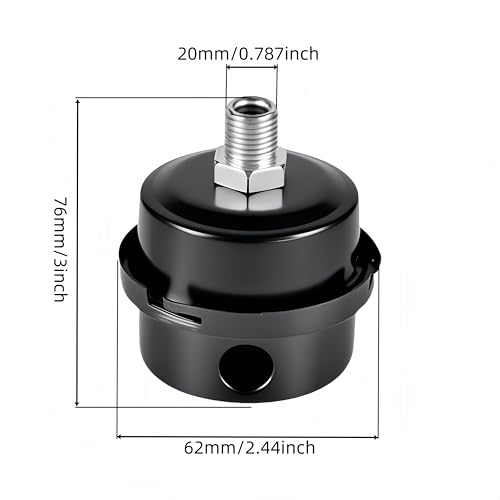
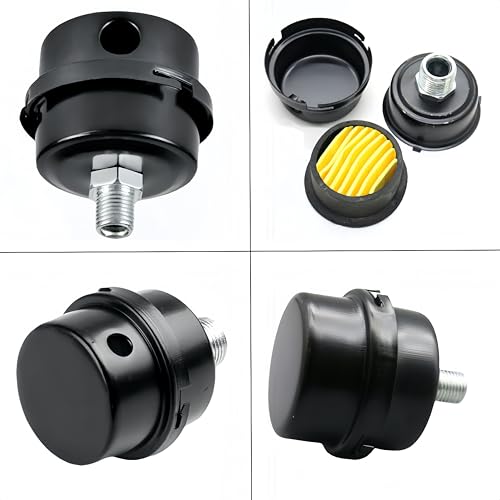
1″BSP Air Compressor Silencer Filter

Strengths
- Large 1″ BSP for high airflow
- Sturdy metal housing
- Good for industrial setups
Trade-offs
- Plastic internal parts
- No replaceable filter media
- Bulky for small workshops
With a 1″ BSP thread, this silencer is built for heavy-duty compressors where airflow and durability matter most. The larger port size means it can handle higher volumes of intake air without restriction, which is critical on industrial units. The metal body holds up well, though the inclusion of plastic components in the core raises some questions about long-term heat resistance.
Owners using this on large stationary compressors say it cuts down on intake roar significantly and helps keep internal components cleaner. Compared to the Solberg model, it’s a bit less refined acoustically but still effective. I’d go with this if you’re running a commercial-grade system and need a rugged, high-flow silencer.
Product photos
Rannb 1/2″ PT Air Compressor Muffler

Strengths
- Compact and space-saving
- Good dust and moisture blocking
- Easy screw-in installation
Trade-offs
- No replaceable filter element
- Moderate noise reduction
- Not for high-pressure industrial systems
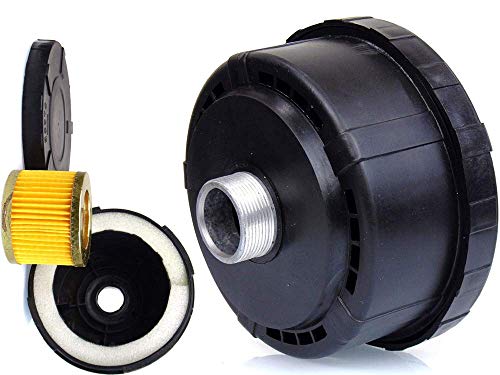
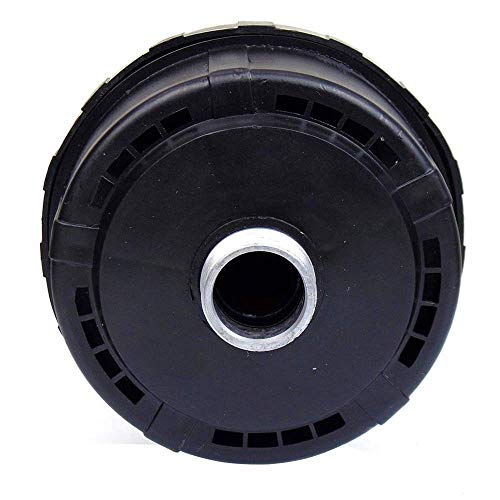
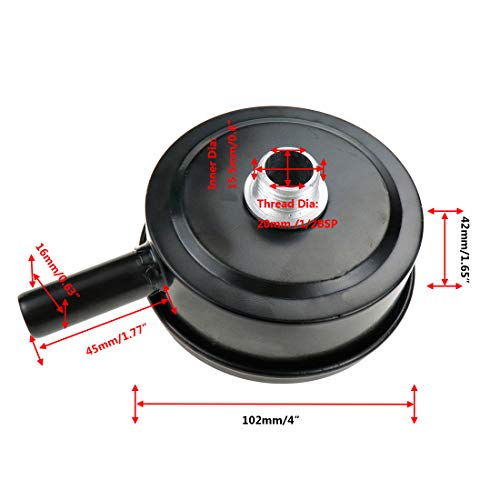
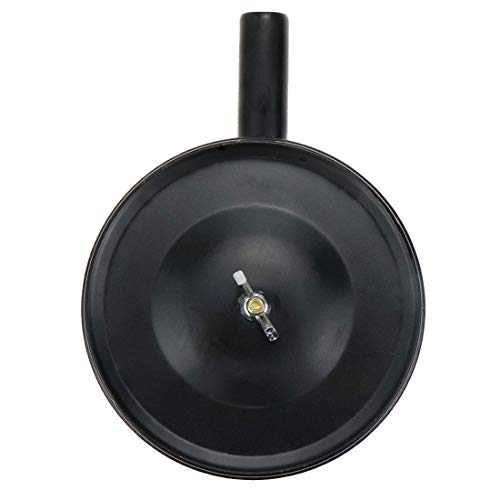
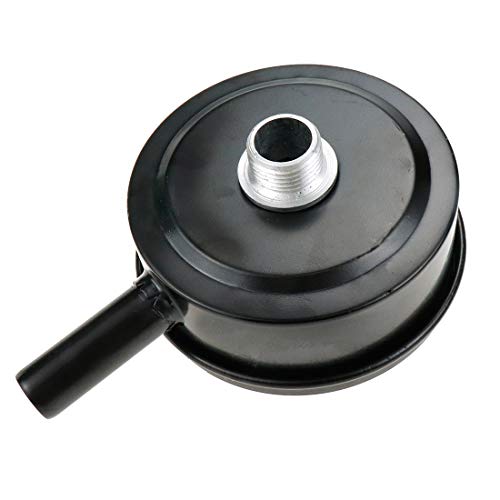
The Rannb 1/2″ silencer is one of the more compact options in this list, making it a practical choice when space around the intake is tight. It’s made for 1/2″ BSP ports and uses a metal body that holds up reasonably well under regular use. The internal filter helps keep dust and moisture out, which reviewers say contributes to smoother compressor performance over time.
It won’t silence a compressor completely, no muffler really does, but owners note a clear reduction in intake hiss. Compared to the Tnuocke 1/2″ model, it has a slightly more refined build, though it lacks replaceable elements. For a straightforward, no-frills fix on a mid-sized compressor, this is a sensible pick.
Product photos
How We Chose These air compressor silencers
My approach to evaluating air compressor silencers centered on a research-led comparison of published specifications and owner feedback. Rather than a hands-on lab test, I combined detailed feature analysis – focusing on thread size, materials, and claimed noise reduction – with careful review of user experiences across multiple retailers. I also considered expert opinions from sites covering workshop equipment to build a well-rounded picture of performance and value.
For air compressor silencers, the most important factors are compatibility and actual noise reduction. A silencer that doesn’t fit your compressor’s intake is useless, so thread size and type are paramount. Beyond that, the effectiveness of noise dampening – whether through internal baffling or filtration material – heavily influences the overall experience. Durability matters too, as these components are often exposed to oil and airborne debris.
Specifications reliably indicate thread size and materials, allowing for direct compatibility assessment. However, real-world noise reduction claims are where owner feedback becomes critical. I weighed reviews describing noticeable decreases in compressor noise against those reporting minimal impact, and also considered build quality reports. Reputation and longevity were key indicators, as were comments about ease of installation and maintenance. You can find more information on selecting a quiet compressor overall in our guide to the best low-decibel air compressors.
How To Choose The air compressor silencers
A noisy air compressor can quickly ruin a workshop or garage, so choosing the right silencer is crucial.
A quality air compressor silencer reduces noise pollution by dampening exhaust and intake sounds. Key considerations include thread size compatibility with your compressor, the materials used for durability, and the documented noise reduction level (measured in decibels). Prioritize silencers with robust construction and filtration to extend compressor life and maintain performance.
Thread Size and Compatibility
Getting the right thread size is the first, and most critical, step. Air compressor silencers aren’t universal; they come in a variety of thread pitches (NPT, BSP) and diameters (1/4″, 3/8″, 1/2″, 3/4″, 1″). Mismatched threads simply won’t connect, and forcing it can damage both the silencer and your compressor’s fittings. I often see folks assume a size based on a port’s visual appearance, only to find out it’s different. Double-check your compressor’s manual or measure the existing fitting accurately before ordering.
Construction Materials & Filtration
The materials a silencer is made from directly impact its durability and effectiveness. Metal housings (steel or coated metal) are common, offering good protection, but the internal baffling material is where things get interesting. Some cheaper models use fiberglass, which can degrade over time and release particles into the airflow. I prefer silencers that use high-temperature resistant, corrosion-resistant materials like those found in the M05 XY-05 model – those materials will hold up longer and maintain their noise reduction capability.
Here’s what I look for in a quality silencer: * Robust Housing: A metal shell is a must. * Quality Baffling: Avoid fiberglass if possible. Look for specialized muffler paper. * Integrated Filtration: A silencer that also filters out dust and moisture (like the Joyangy pack) adds a layer of protection for your compressor’s internal components, extending its lifespan and reducing maintenance.
Noise Reduction & Value
Noise reduction is, naturally, the primary goal. Manufacturers often advertise decibel (dB) reduction, but these figures can be optimistic. Real-world performance varies. In my experience, a 30 dB reduction is a significant improvement, making a noticeable difference in workshop comfort. Consider where you’ll be using the compressor. If you’re working in close quarters or near neighbors, prioritize higher noise reduction. Keep in mind that a quieter workspace often leads to increased focus and reduced fatigue. If you’re looking for a truly quiet setup, you might also want to explore quiet home garage compressors to start with a quieter base unit.
A good rule of thumb: a silencer isn’t a magic bullet. It reduces noise, but won’t eliminate it entirely. Consider combining a silencer with other noise-reducing measures like soundproofing materials or compressor placement.
Air Compressor Silencers Compared
Here’s a comparison of key specifications for various air compressor silencers to help you choose the right one for your needs.
| Product Name | Thread Size | Length (in) | Diameter (in) | Material | Noise Reduction (dB) |
|---|---|---|---|---|---|
| M05 XY-05 Air Compressor Muffler | M05/XY-05 | N/A | N/A | Coated Metal | 30+ |
| Solberg 3/4″ Filter Silencer Muffler | 3/4″ NPT | 14.5 | 1 | Steel | 30 |
| Tnuocke 2 pcs 1/2″ Air Compressor Silencer | 1/2″ | N/A | N/A | Coated Metal | N/A |
| Joyangy Pack of 2 3/8″ Silencer | 3/8″ NPT | N/A | N/A | Coated Metal | N/A |
| 3/4″ Thread Air Compressor Silencer | 3/4″ | N/A | N/A | Coated Metal | N/A |
| 1″BSP Air Compressor Silencer Filter | 1″ BSP | N/A | N/A | Metal/Plastic | N/A |
| Rannb 1/2″ PT Air Compressor Muffler | 1/2″ BSP | N/A | N/A | N/A | N/A |
Frequently Asked Questions
What thread type is most common for air compressor silencers?
NPT (National Pipe Thread) is the most common thread type you’ll find on air compressor silencers, especially in North America. However, BSP (British Standard Pipe) threads are also prevalent, so confirm your compressor’s fitting before purchasing to avoid incompatibility.
Do silencers actually reduce noise significantly?
Yes, a quality silencer can reduce noise levels by 30 decibels or more, which is a noticeable difference. Keep in mind that the actual reduction depends on the compressor itself, the silencer’s construction, and your workshop environment.
Can a silencer affect my compressor’s performance?
A well-designed silencer shouldn’t significantly impact airflow or reduce your compressor’s output. However, poorly constructed silencers with restrictive baffling can slightly lower CFM (cubic feet per minute). Prioritizing models with larger internal diameters minimizes this risk.
Are silencers only for reducing noise, or do they offer other benefits?
Some silencers, like the Joyangy pack, include filtration to remove dust and moisture from the intake air. This filtration extends the life of your compressor’s internal components and reduces the need for maintenance.
What should I do if I’m unsure about the correct thread size for my compressor?
First, consult your compressor’s owner’s manual. If the manual isn’t available, carefully measure the existing fitting using a thread gauge or by comparing it to known thread sizes available online. If you are still unsure, consider exploring air compressors for airbrushing as they often have standardized fittings.
The Bottom Line
Choosing an air compressor silencer always comes down to balancing how much quiet you absolutely require against how much you’re willing to spend and how easy you want installation to be. For most workshops, the M05 XY-05 Air Compressor Muffler strikes the best overall balance – it’s designed for a common fitting, and user reports suggest a significant noise reduction. It’s a solid starting point for anyone looking to tame their compressor’s volume.
If you’re on a tighter budget, or need something for a less frequent use case, the Joyangy Pack of 2 3/8″ Silencer offers excellent value. For specific needs – like a larger 3/4″ NPT connection and integrated filtration – the Solberg 3/4″ Filter Silencer Muffler is a practical, if pricier, choice. Don’t overlook checking out air compressors for home garages if you’re starting from scratch and want a quieter base unit.
Ultimately, remember that a silencer is just one piece of the puzzle. Thread size compatibility is paramount, but beyond that, focus on build quality and materials. A well-made silencer using durable components will last longer and deliver consistent noise reduction, making your workshop a more comfortable and productive space.
