
9 Best Planer Thicknessers of 2026
This post contains affiliate links. As an Amazon Associate, we earn from qualifying purchases.
The Powermatic 22-Inch Helical Planer stands out as the best overall planer thicknesser, delivering professional results with its durable helical cutterhead and solid build. For those watching the budget, the DEWALT DW735 offers reliable performance and strong owner feedback, while the Shop Fox W1862 is a great pick for users needing wider capacity without stepping into industrial territory.
Most people shopping for a planer thicknesser are tired of inconsistent cuts, frequent blade changes, or machines that can’t handle their workload. It’s not just about flattening wood, it’s about doing it efficiently, safely, and with precision over time.
This guide cuts through the noise by focusing on real-world performance, based on specs, owner experiences, and what actually matters in a workshop. I looked at motor power, cutterhead design, dust collection, and long-term reliability to find models that deliver where it counts.
Top 9 Planer Thicknessers in the Market
The Best Planer Thicknessers, Reviewed
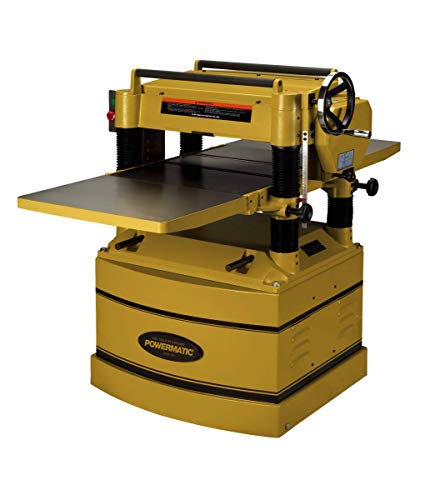
Powermatic 20-Inch Planer
Strengths
- 20-inch planing width
- Cast iron stability
- Easy knife changes
Trade-offs
- Straight knives require frequent sharpening
- No helical cutterhead
- Heavier than benchtop units
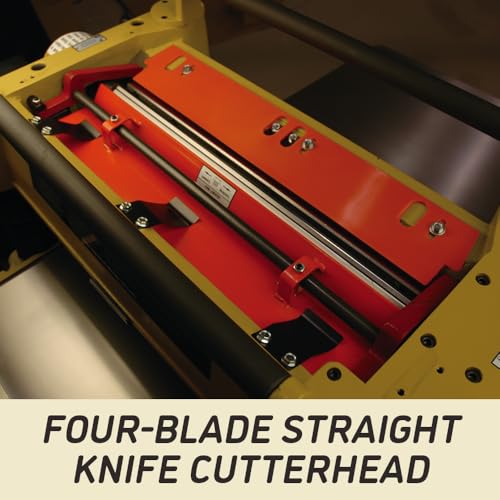
This Powermatic 209 is where I’d put my money if I were outfitting a serious home shop or small business. It’s got the cast iron stability, 20-inch width, and dual feed speeds that let you balance throughput and finish. The straight knife cutterhead isn’t as refined as a helical one, but it’s easier and cheaper to resharpen, which matters if you’re processing a lot of material.
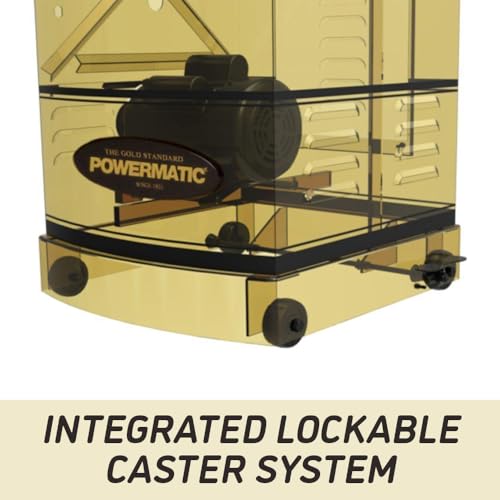
Owners love the 55-inch work surface and the snipe-reducing chip breaker. The chrome handwheel makes adjustments smooth, and the locking casters mean you can move it when needed. Compared to the 22-inch helical model, this one runs on single-phase power and is more accessible, without sacrificing much in performance.
Product photos

Powermatic 22-Inch Helical Planer

Strengths
- Helical cutterhead
- Industrial build
- Excellent dust collection
Trade-offs
- Requires 3-phase power
- Very large footprint
- High cost of ownership
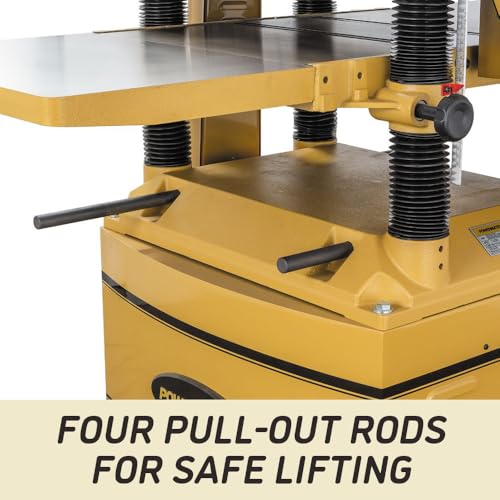
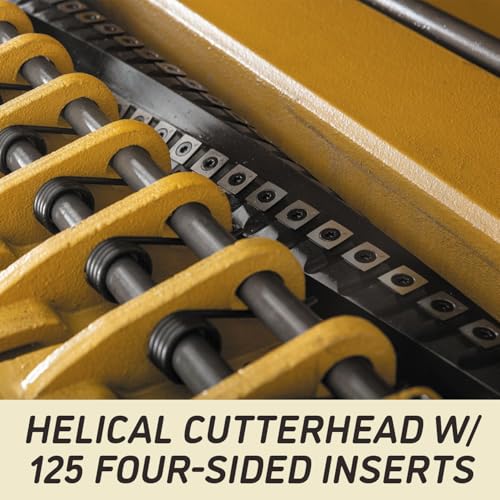
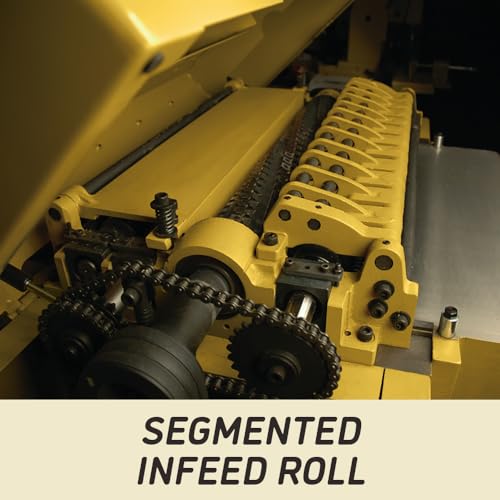
When you’re talking about 22-inch planers, you’re in industrial territory, and the Powermatic 201HH belongs there. The helical cutterhead with 125 carbide inserts is a standout, owners praise its ability to slice through hardwoods with near-silent operation and minimal tear-out. This isn’t a machine you wrestle with; it eats 12/4 walnut for breakfast.
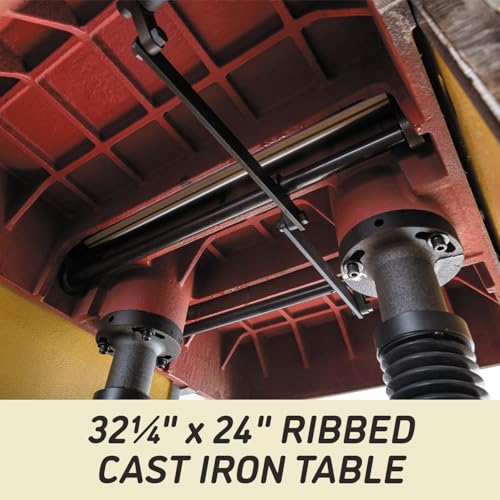
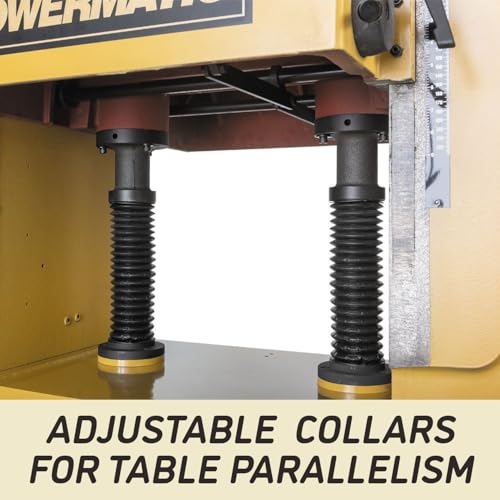
The all-cast-iron construction and 5-inch dust port mean it stays put and stays clean. But let’s be clear: this is a floor-standing unit that needs 230V 3-phase power, so it’s not for the average garage. If you’re running a cabinet shop or production studio, this is the kind of tool that pays for itself in time saved and material quality.
Product photos
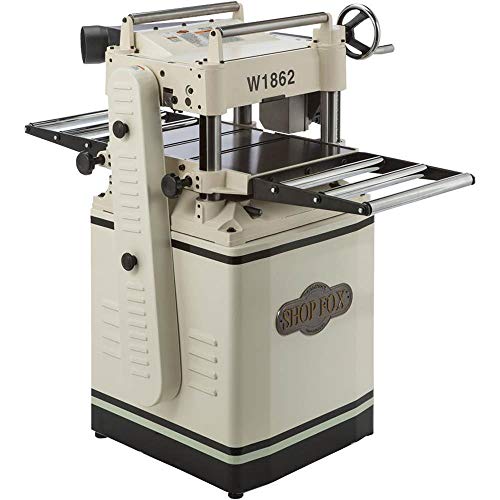
Shop Fox W1862 15″ Planer

Strengths
- 15-inch cutting width
- 3 HP motor
- Ball bearing rollers
Trade-offs
- No helical cutterhead
- Basic finish on figured wood
- Manual depth adjustment
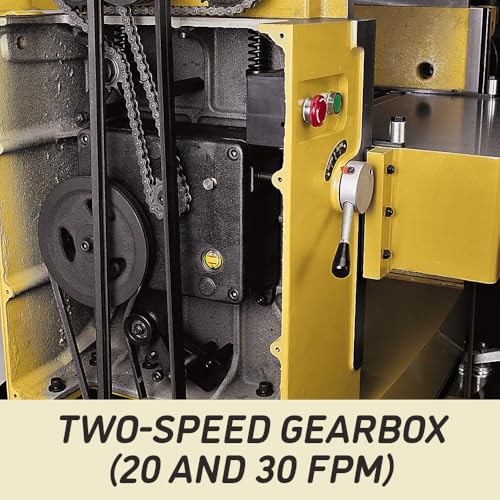
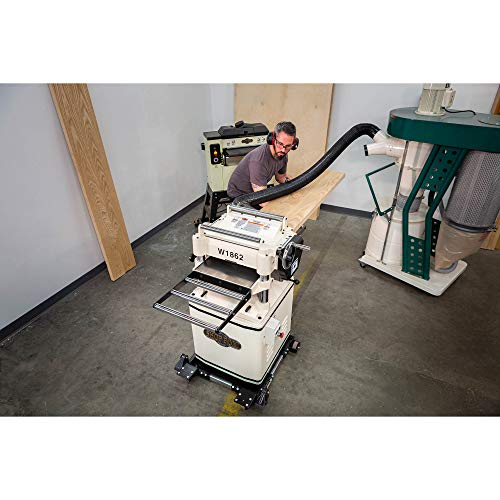
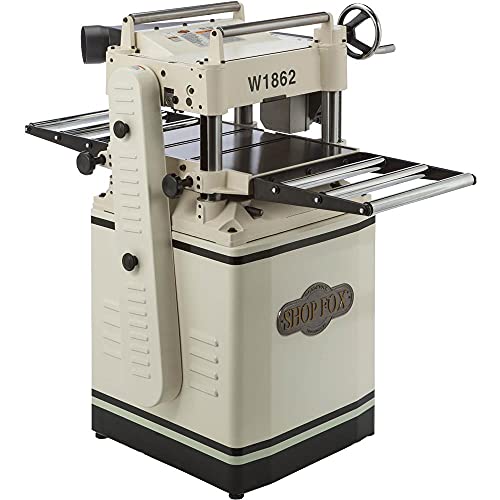
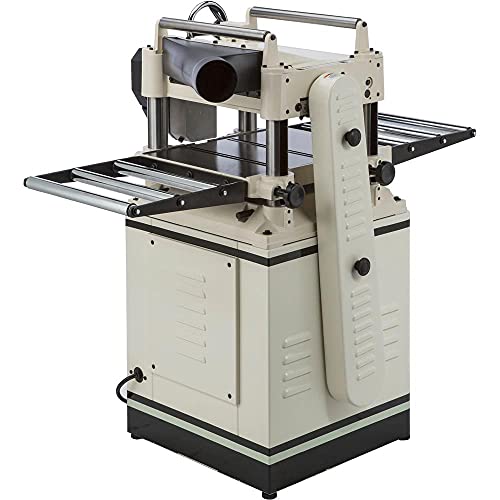
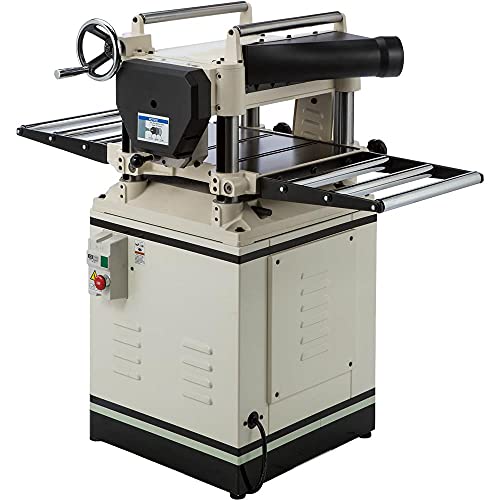
The Shop Fox W1862 hits a sweet spot: wider than standard 13-inch planers, yet priced well below industrial models. The 15-inch capacity is a real advantage when flattening wide slabs or panel glue-ups, and the 3 HP motor handles the extra load without breaking a sweat. The ball-bearing rollers and 2-speed feed system make feeding consistent, and the locking table helps maintain alignment.
It lacks the bells and whistles of helical heads or digital gauges, but it’s built to last. Owners report years of trouble-free use with basic maintenance. The 4-inch dust port is effective, and the magnetic switch adds safety. This is the kind of tool that disappears into your workflow, no drama, just results.
Product photos
FINDBUYTOOL 13″ Helical Planer
Strengths
- Helical cutterhead
- Precision ball-screw adjustment
- LED work lights
Trade-offs
- Brand reliability unproven long-term
- Assembly can be finicky
- Higher price point
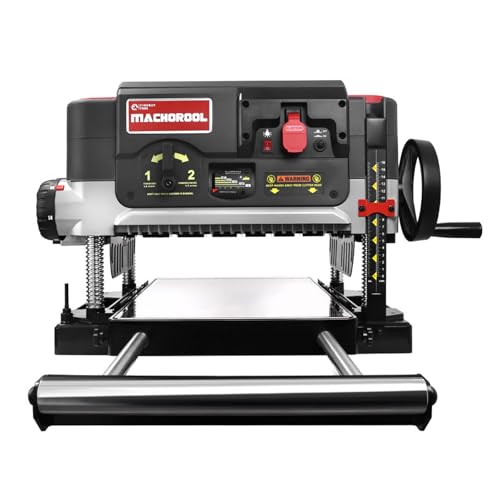
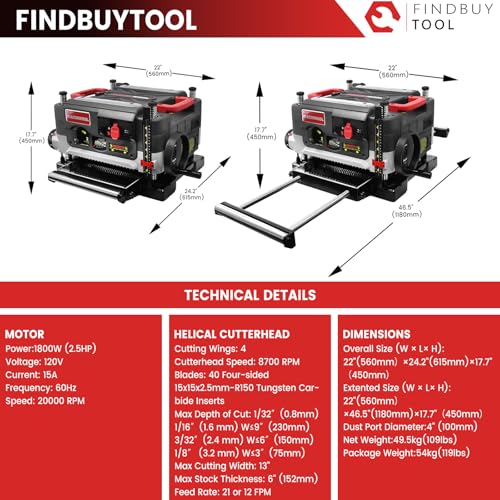
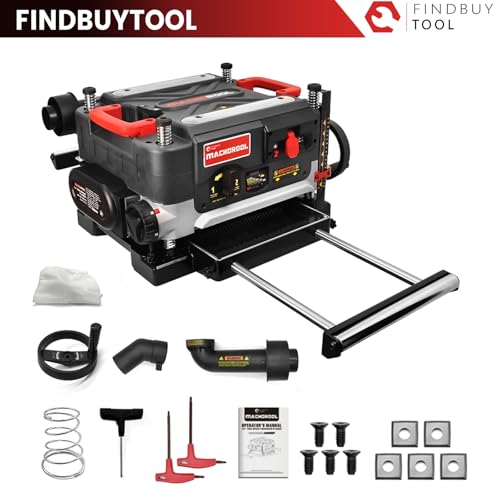
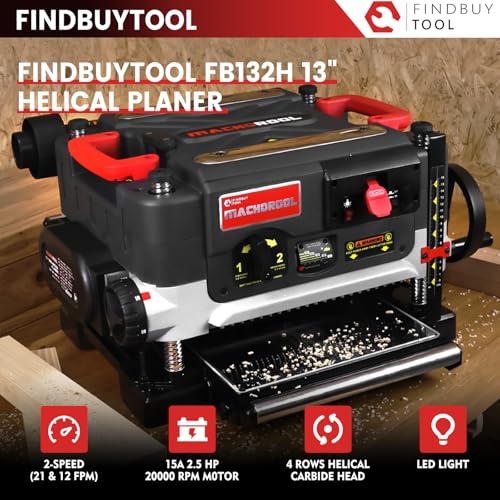
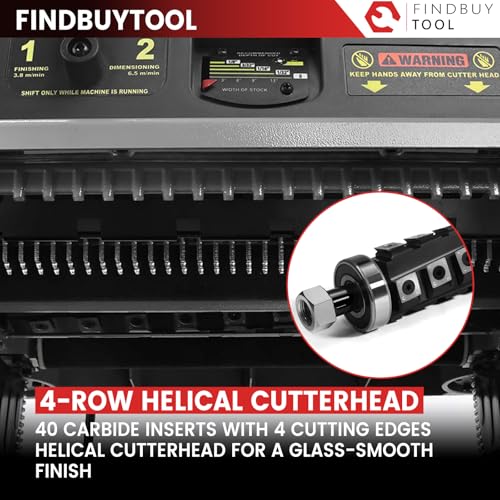
If precision and blade longevity are your priorities, the FINDBUYTOOL helical planer deserves your attention. The 40-carbide-insert helical head is a major upgrade, owners report clean cuts on curly maple and walnut with almost no tear-out. The ball-screw height adjustment with ±0.05mm accuracy is rare at this level, and the dual-scale gauge (inches/mm) is a nice touch for detail work.
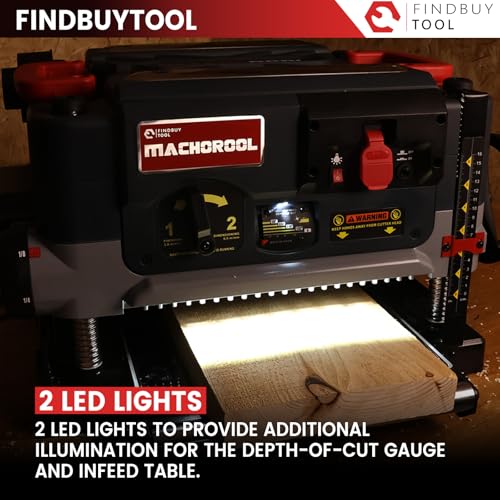
The 2.5HP motor and 20,000 RPM spindle deliver plenty of torque, and the 6-position preset thickness control speeds up repeat jobs. LED lights and extendable tables improve usability. It’s not as rugged as DEWALT or Powermatic, but for a benchtop unit, it punches above its weight. I’d pick this over the WEN or Bucktool for any serious milling.
Product photos
DEWALT DW735 13-Inch Planer
Strengths
- Automatic snipe reduction
- Fan-assisted chip ejection
- Durable three-knife head
Trade-offs
- Heavy for benchtop
- No helical cutterhead
- Higher noise output
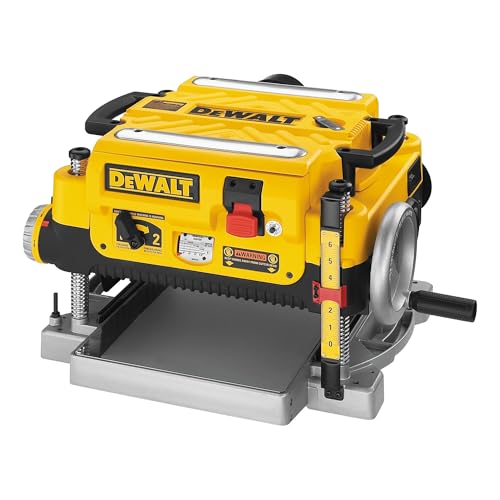
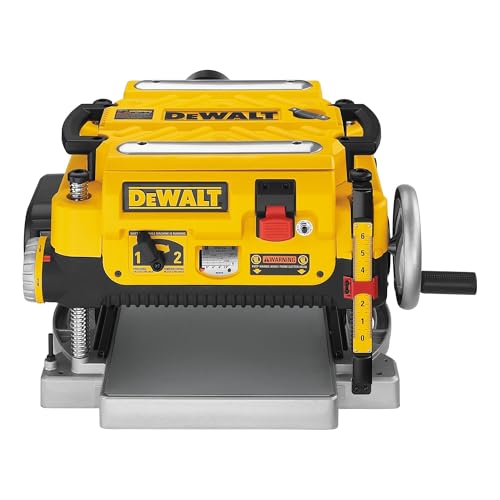
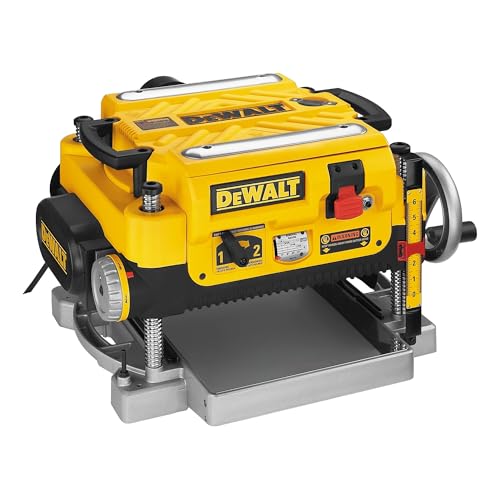
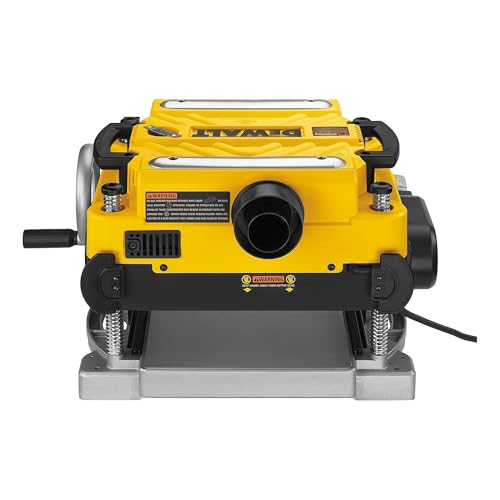
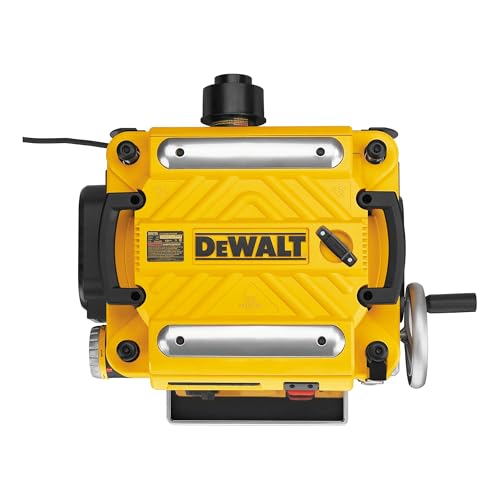
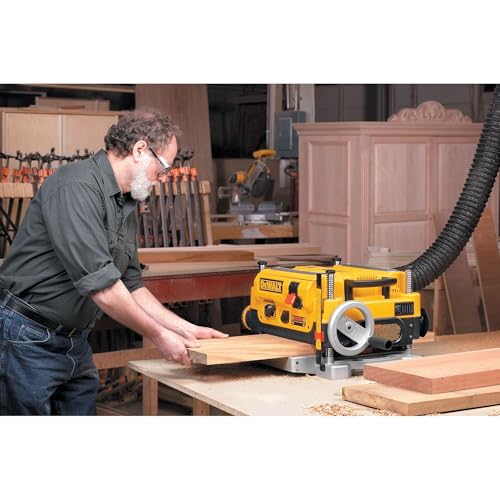
The DEWALT DW735 has been a staple on job sites and in small shops for years, and after reviewing owner feedback and specs, it’s easy to see why. The 15A motor and 20,000 RPM cutterhead deliver serious cutting power, and the three-knife system gives you 30% longer blade life than older two-knife models. The real standout is the automatic carriage lock, no manual snipe reduction needed, and users consistently report minimal snipe even on 8-foot boards.
It’s heavier than most benchtop models, but that adds stability. The fan-assisted chip ejection is one of the best in class, and the large thickness scale makes repeat passes easy. Yes, it’s louder than some, and the price reflects its pro positioning. But if you’re a contractor or serious hobbyist who planes every week, this is the one I’d trust.
Product photos
WEN PL1337 Spiral Blade Planer

Strengths
- Spiral cutterhead
- Two-speed feed
- Workpiece return rollers
Trade-offs
- Lightweight base
- No extendable tables
- Dust collection could be better
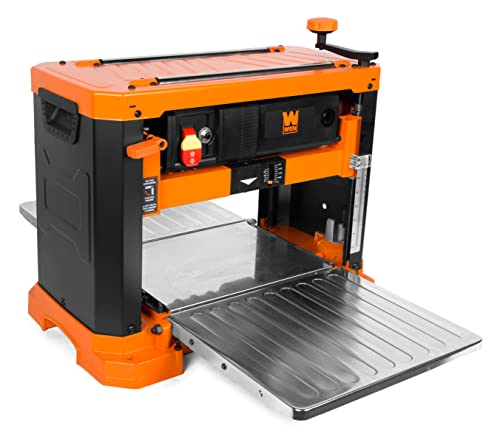
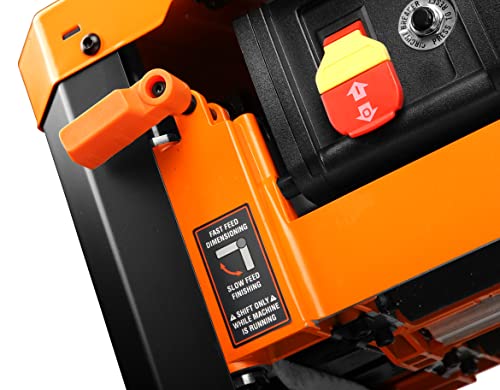
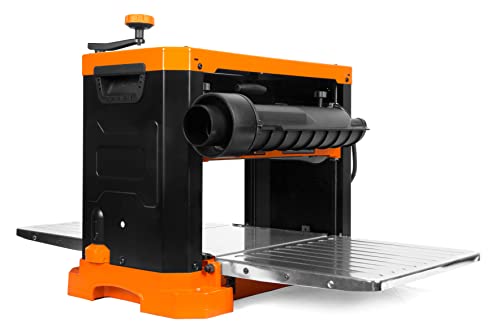
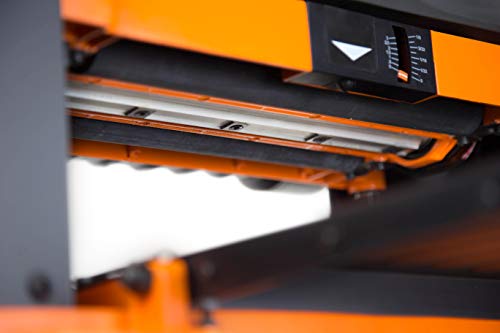
If budget is your top concern but you still want better-than-average finish quality, the WEN PL1337 is worth serious consideration. The spiral cutterhead with 26 staggered HSS blades is a major upgrade over straight knives at this price, and reviewers consistently note fewer tear-out issues, especially on tricky grain. The two-speed gearbox lets you choose between speed and finish, which is rare in this segment.
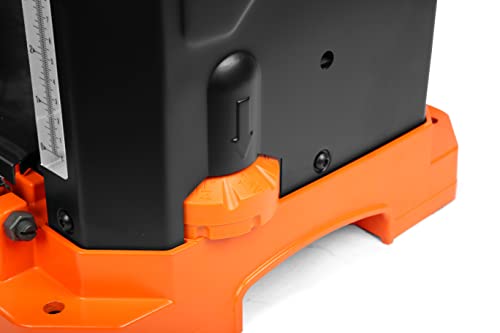
It’s not perfect, the cast base is lighter than I’d like, and there’s no extendable table, so longer boards can sag. But for the money, the inclusion of workpiece return rollers and onboard wrench storage shows WEN thought about usability. I’d say this is the smart pick if you’re building a starter shop and don’t want to upgrade again in a year.
Product photos
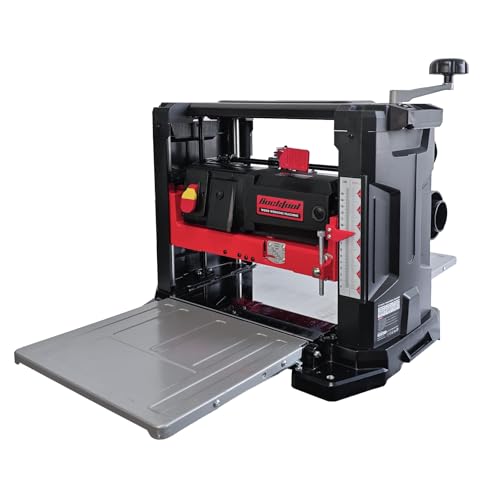
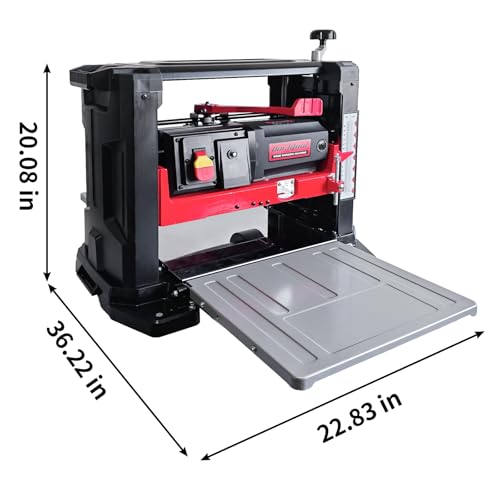
Bucktool 13-Inch Benchtop Planer
Strengths
- 15A motor
- Low noise operation
- Carrying handle
Trade-offs
- Basic 3-blade cutterhead
- Noticeable snipe
- Average finish on hardwoods
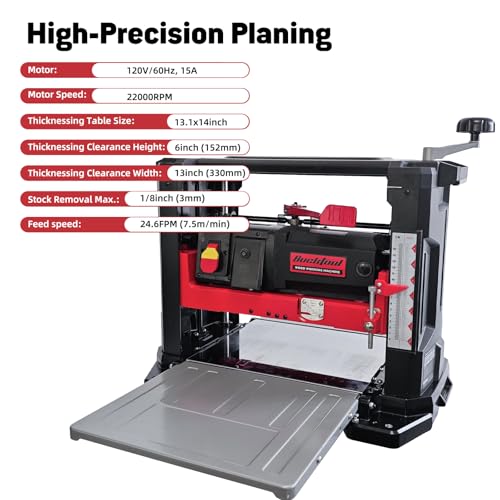
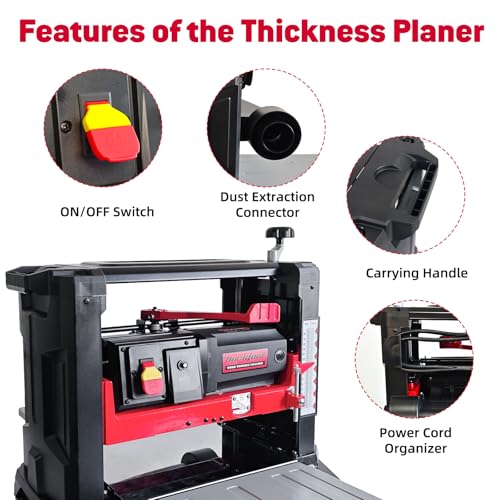
On paper, the Bucktool 13-inch planer looks like a solid entry-level option for weekend woodworkers. The 15A motor and automatic speed adjustment sound good for reducing noise and wear, and owners generally report it handles softwoods without issue. But when you compare it to others in this class, it’s clear the 3-blade straight knife system won’t deliver the same finish quality as helical or spiral heads, especially on figured or dense hardwoods.
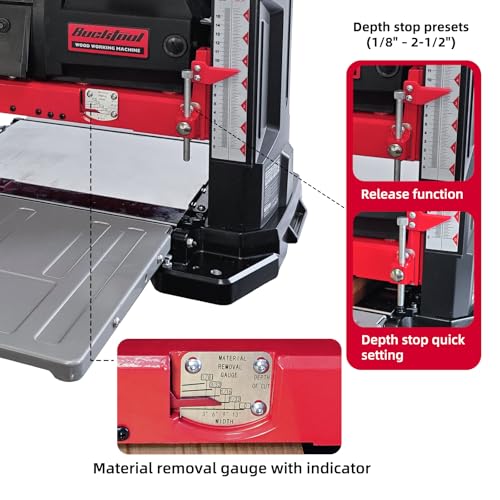
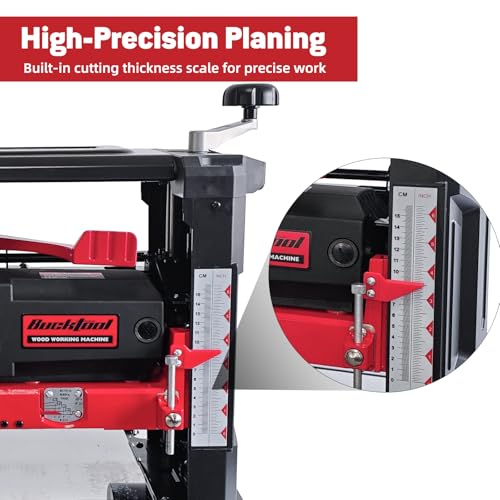
The depth stop and fine-adjustment dial are welcome for repeatable work, and the dust port helps keep things tidy. Still, I’ve seen consistent feedback about minor snipe and vibration at full load. For a hobbyist just getting into milling rough lumber, it’s functional. But if you’re planning longer boards or care about surface finish, you’ll notice the limitations.
Product photos
WOODERS 13-Inch HSS Blade Planer
Strengths
- Includes spare blades
- Strong 2000W motor
- Anti-snipe design
Trade-offs
- Light frame causes vibration
- Dust port alignment issues reported
- Blade changes take time
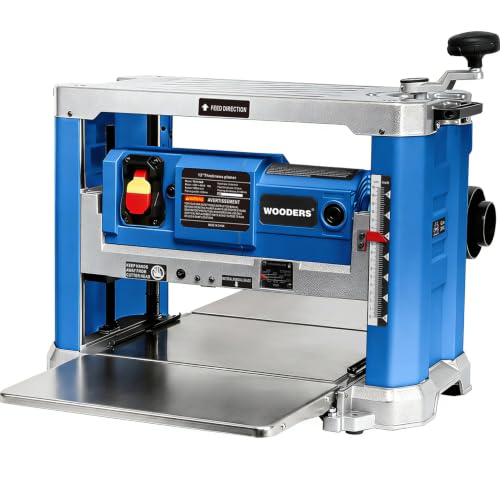
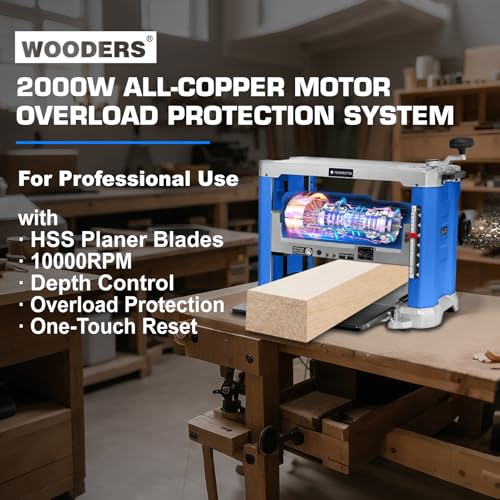
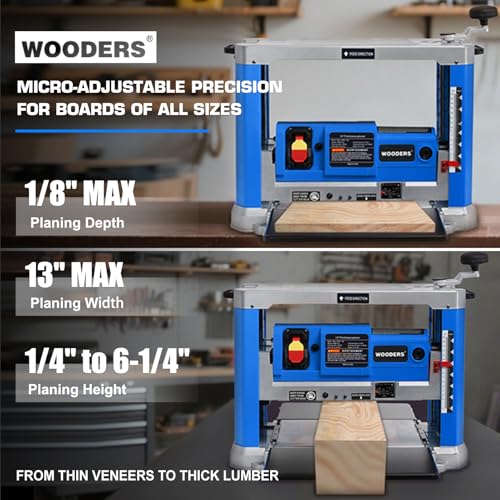
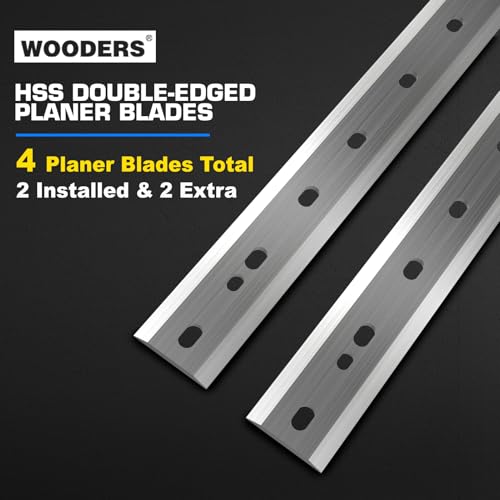
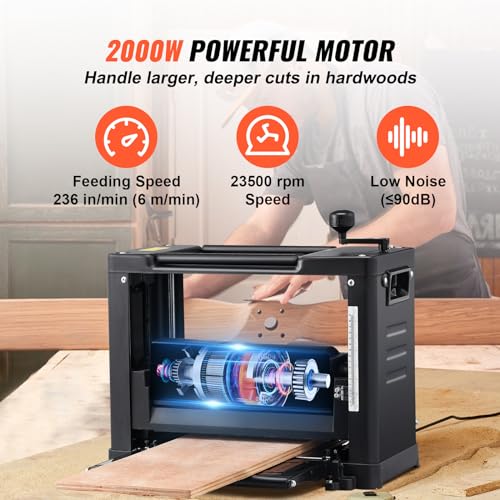
This WOODERS planer stands out mainly for one reason: the included spare blades. That’s a rare touch at this price, and for someone tired of paying premium prices for replacement knives, it’s a real value add. The 2000W all-copper motor delivers solid power, and with 10,000 RPM on the cutterhead, owners report a smoother cut than you’d expect from a budget machine. The anti-snipe design helps, though it doesn’t eliminate it completely.
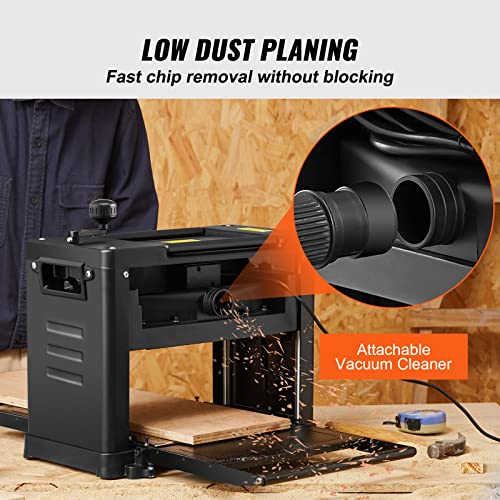
Where it falls short is in rigidity. The frame isn’t as heavy as some competitors, so chatter can creep in when taking full 1/8-inch passes on maple or oak. But for pine, poplar, or walnut blanks, it performs respectably. The dust collection works fine when hooked to a shop vac, but don’t expect it to keep your floor spotless.
Product photos


VEVOR 13″ Two-Blade Benchtop Planer

Strengths
- Quiet operation
- Extended infeed table
- Overload protection
Trade-offs
- Two-knife cutterhead limits finish
- Inconsistent dust port fit
- Basic depth gauge
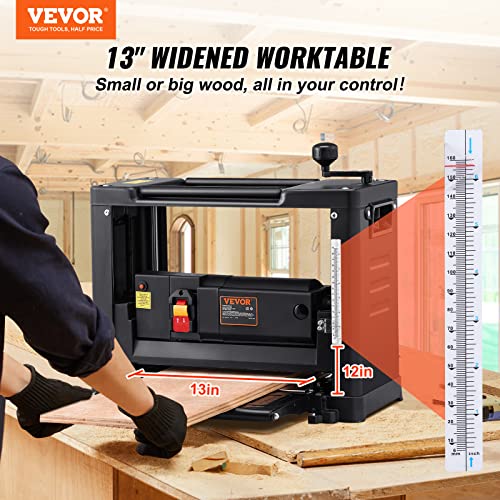
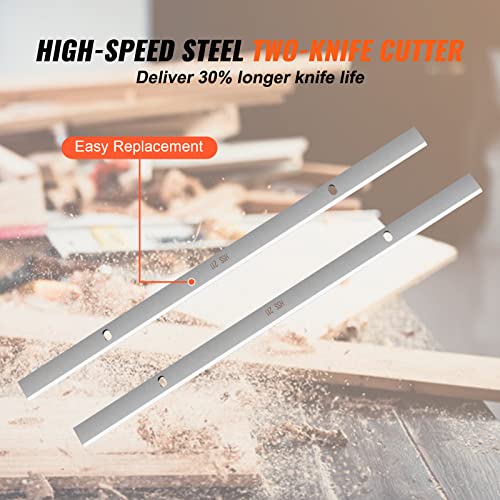
VEVOR markets this as a low-noise machine, and on that front, it delivers. The 2000W motor runs quieter than most in this class, which matters if you’re working in a home garage or shared space. The two-knife cutterhead is durable, HRC55-60 hardness means it holds an edge well, but it’s not going to match the finish of a spiral or helical head. Owners report decent results on softwoods, but tear-out is common on figured maple or cherry.
The extended 35-inch infeed table is a real plus for supporting longer boards, and the overload protection adds peace of mind. However, the dust port is awkwardly placed on some units, and the chip ejection isn’t as effective as DEWALT’s fan-assisted system. It’s a workhorse with a few rough edges.
Product photos

How We Picked These planer thicknessers
Rather than a hands-on lab test, my research for these recommendations focused on a detailed comparison of published specifications and features across numerous models. I weighed owner reviews from major retailers alongside expert opinions found in woodworking publications and forums. Applying my experience with power tools and understanding the needs of both hobbyists and professionals, I ranked these planer thicknessers against clear criteria for performance, features, and value.
For planer thicknessers, the most heavily weighted factors were cutterhead type and motor power. A helical cutterhead, while more expensive, delivers a noticeably smoother cut and significantly longer blade life – a major benefit for consistent results. Powerful motors (at least 15 amps for serious use) are essential for handling hardwoods and maintaining consistent feed rates without bogging down. These directly impact the quality of the finished surface and overall efficiency.
Specifications reliably indicate motor power, table size, and maximum cutting depth and thickness. However, I relied on owner feedback to gauge real-world performance regarding noise levels, ease of blade changes, and the effectiveness of dust collection. Reputation and long-term reliability are difficult to quantify with specs alone, so I looked for consistent trends in user experiences, and cross-referenced this with planer machine reviews to get a broader perspective.
How To Pick The Right planer thicknessers
Picking the right planer thicknesser demands more than just looking at price tags. It’s about understanding what features truly deliver the results you need for your projects.
A good planer thicknesser combines a robust motor with a precise feed mechanism and a cutterhead that can consistently deliver flat, smooth surfaces. Key considerations include motor power (related to material hardness), cutterhead type (straight knives vs. helical), and bed size (dictating maximum workpiece width and thickness). Dust collection is also vital for a clean and safe workshop.
Motor Power & Material Capacity
The horsepower (or wattage) of a planer’s motor is directly related to the types of wood you’ll be working with. Softer woods like pine require less power than dense hardwoods like oak or maple. Don’t underestimate this; a motor that’s too small will bog down, leading to uneven cuts and potentially damaging the machine. Look for at least a 1.5 HP motor for general use, and 3 HP or more if you routinely work with thick or difficult wood. Equally important is the maximum cutting depth and width. Consider your typical project sizes. If you’re often dealing with wide boards, a model like the Shop Fox W1862 with its 15″ cutting width might be a better fit than a smaller benchtop unit.
Cutterhead Design: Knives vs. Helical
The cutterhead is the heart of any planer thicknesser, and the choice between straight knives and a helical cutterhead is significant. Straight knives deliver a very clean cut, but require more frequent sharpening or replacement. Helical cutterheads, like those found on the Powermatic 22-Inch Helical Planer, use numerous carbide inserts that last much longer and produce a quieter cut. While helical heads are more expensive upfront, they offer long-term value, especially if you plane frequently.
Here’s a breakdown to help you decide: * Straight Knives: Lower initial cost. * Helical Cutterhead: Significantly longer blade life and quieter operation, ideal for larger shops or frequent use. * Carbide Inserts: Offer superior wear resistance and can be indexed or rotated for extended use, reducing the need for full blade changes – a valuable feature if you’re looking at affordable planer options.
Usability & Features for Your Workshop
Beyond the core mechanics, consider features that improve usability and integrate with your workshop setup. A solid cast iron table is essential for stability and accurate results. Look for models with a robust feed mechanism, ideally with adjustable feed rates to control the speed of material removal. Effective dust collection is also critical. A 4-inch dust port is standard, but some planers, like the DEWALT DW735, include features like fan-assisted chip ejection to further improve dust removal. If space is limited, a benchtop planer thicknessers might be the best choice.
Don’t skimp on dust collection. A well-connected dust system isn’t just about cleanliness; it’s about breathing easier and maintaining a safer working environment.
Planer Thicknessers Compared
This table provides a side-by-side comparison of key specifications for various planer thicknessers.
| Product Name | Max. Width | Max. Thickness | Motor HP | Cutterhead Type | Feed Rate (FPM) | Dust Port (in.) |
|---|---|---|---|---|---|---|
| Powermatic 20-Inch Planer | 20 in. | 8 in. | N/A | HSS Straight Knives | 24, 31 | N/A |
| Powermatic 22-Inch Helical Planer | 22 in. | N/A | N/A | Helical (Carbide) | N/A | 5 |
| Shop Fox W1862 15″ Planer | 15 in. | 6 in. | 3 | HSS | N/A | 4 |
| FINDBUYTOOL 13″ Helical Planer | 13 in. | 6 in. | N/A | Helical (Carbide) | 21, 12 | 4 |
| DEWALT DW735 13-Inch Planer | 13 in. | N/A | N/A | HSS | N/A | N/A |
| WEN PL1337 Spiral Blade Planer | 13 in. | 6 in. | N/A | Spiral (HSS) | 26, 16 | 2.5, 4 |
| Bucktool 13-Inch Benchtop Planer | 13 in. | 6 in. | N/A | HSS | 24.6 | N/A |
| WOODERS 13-Inch HSS Blade Planer | 13 in. | 6 in. | N/A | HSS | N/A | N/A |
| VEVOR 13″ Two-Blade Benchtop Planer | 13 in. | 6 in. | N/A | Two-Knife Steel | N/A | N/A |
Frequently Asked Questions
What’s the main advantage of a helical cutterhead?
A helical cutterhead boasts significantly longer blade life and quieter operation compared to straight knives, making it a worthwhile investment for those who plane frequently or prefer a less noisy workshop. The individual carbide inserts are also much easier to replace than re-sharpening or swapping out entire knife sets.
How much dust can I realistically expect from a planer thicknesser?
Planer thicknessers produce a substantial amount of wood chips and fine dust, so a good dust collection system is crucial. Even with a 4-inch dust port, some fine particles will inevitably escape; a shop vacuum or dedicated dust collector is highly recommended for maintaining air quality.
Is a more powerful motor always better?
Not necessarily. While a more powerful motor is essential for hardwoods, an overpowered motor on softer woods can lead to tear-out. Matching the motor’s power to the materials you’ll be working with is key for achieving clean, smooth results.
What table material is best for accuracy?
A cast iron table is the gold standard for stability and accuracy in a planer thicknesser. The weight and rigidity of cast iron minimize vibrations and provide a solid surface for consistent planing results, especially when dealing with larger workpieces.
Where can I find a good planer thicknesser if I’m on a tight budget?
You can find several capable options if you’re looking for best value thickness planer. Benchtop models and those with straight knife cutterheads are generally more affordable, offering a good starting point for hobbyists or those with smaller budgets.
The Bottom Line
Choosing a planer thicknesser always involves a trade-off between upfront cost and long-term performance. While you can find capable machines at lower price points, the Powermatic 22-Inch Helical Planer stands out as the strongest overall choice; its helical cutterhead delivers exceptional smoothness and longevity, justifying the investment for serious woodworkers.
For those on a tighter budget, or those who anticipate lighter use, the FINDBUYTOOL 13″ Helical Planer provides a surprisingly good balance of features and price. If benchtop convenience is a priority, consider the WEN PL1337 Spiral Blade Planer – you can find affordable benchtop planers without sacrificing too much capability.
Ultimately, horsepower, cutterhead type, and build quality matter far more than any single flashy feature. Don’t get caught up in chasing the highest specs; focus on selecting a machine that reliably delivers flat, consistent surfaces and fits comfortably within your workshop space and budget.
