
7 Best Benchtop Planer Thicknessers of 2026
This post contains affiliate links. As an Amazon Associate, we earn from qualifying purchases.
The JET 13-Inch Benchtop Planer stands out as the overall best, thanks to its helical cutterhead and cast iron bed that deliver a clean, flat finish. For budget-focused buyers, the VEVOR 13-Inch Two-Speed Planer offers solid performance with variable feed rates, while the FindBuyTool 13″ Helical Cutterhead Planer brings serious cut quality at a competitive price.
Most people buying a benchtop planer want smooth, uniform boards without spending a fortune or taking up half the garage. The real struggle is finding one that won’t fight you every time you run a piece through, snipe, tear-out, and underpowered motors are constant complaints.
This guide cuts through the noise by focusing on specs that matter and real-world feedback from users who’ve put these machines through their paces. I looked at cutterhead design, build quality, and key performance markers to find models that actually deliver consistent results.
Top 7 Benchtop Planer Thicknessers in the Market
The Best Benchtop Planer Thicknessers, Reviewed
JET 13-Inch Benchtop Planer

Strengths
- Helical cutterhead
- Cast iron bed
- 2 HP motor
- Dual feed speeds
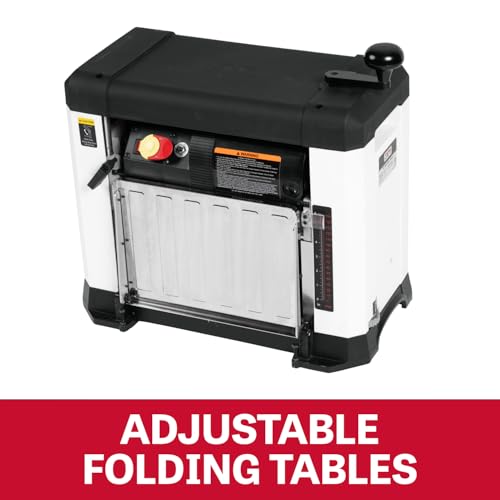
- Adjustable infeed/outfeed tables
Trade-offs
- Higher price point
- Heavier than most
- Limited spare blade storage
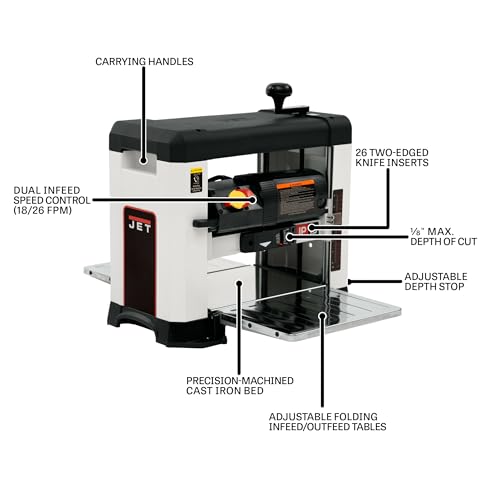
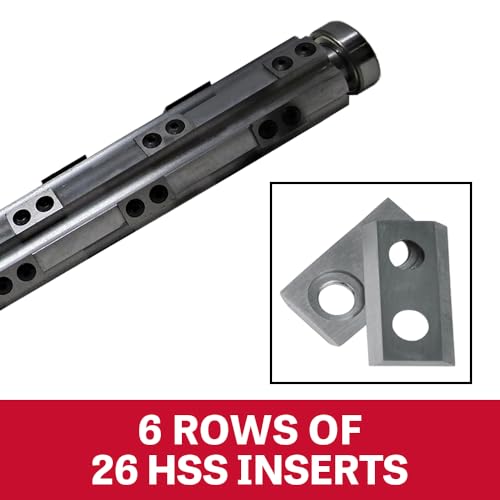
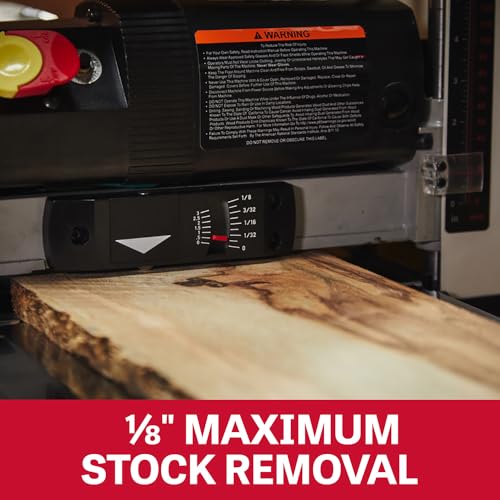
The JET JWP-13BT stands out in a crowded benchtop planer field by bringing real workshop-grade engineering to a product that doesn’t just look the part, it’s built for consistent, reliable performance. The helical cutterhead with 26 individual HSS inserts is a standout feature, delivering smoother cuts and quieter operation than traditional three-knife designs. On paper, that 10,000 RPM cutterhead paired with a 2-HP motor gives it serious bite, and owners consistently report it handles hardwoods like maple and oak without bogging down.
I appreciate the four-post design and cast iron bed, these aren’t just marketing fluff, they’re structural choices that reduce vibration and snipe, two pain points many users complain about in lesser models. The dual feed speeds are practical, letting you rough in stock quickly at 26 FPM or slow down for a glass-smooth finish. For serious DIYers or small-shop woodworkers who want professional results, this is one of the few benchtop models that feels like it won’t hold you back.
Product photos

DEWALT 12-1/2-Inch Benchtop Planer

Strengths
- Proven durability
- Four-column snipe control
- Reversible knives
- Turret depth stop
- Long infeed/outfeed tables
Trade-offs
- 12.5-inch width limit
- No helical cutterhead
- Heavier than average
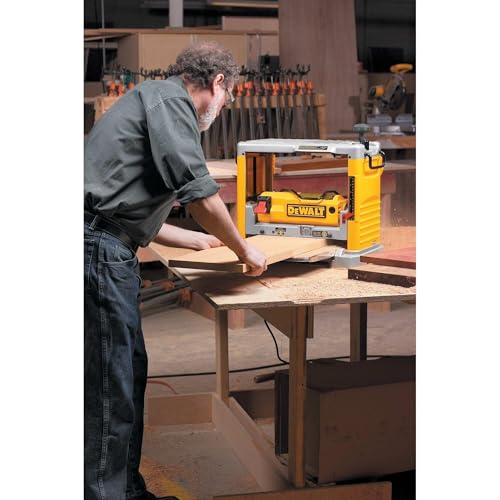
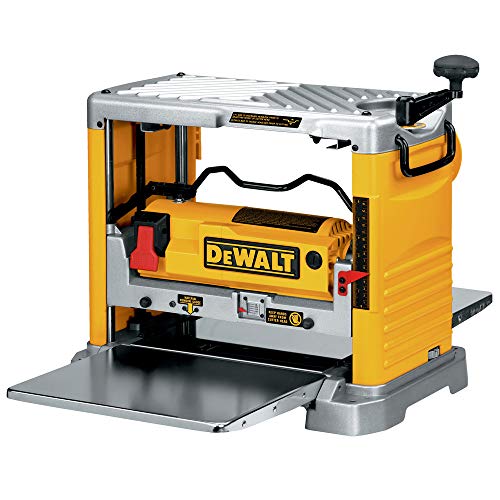
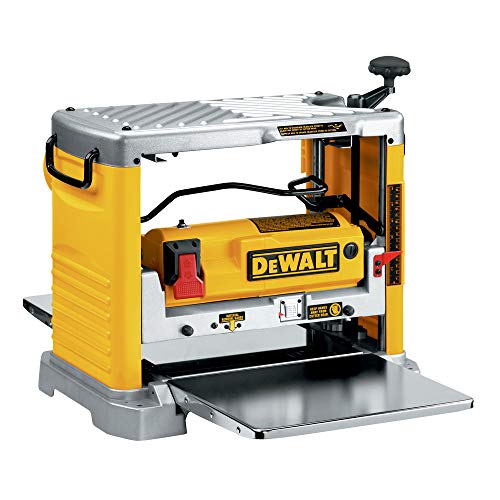
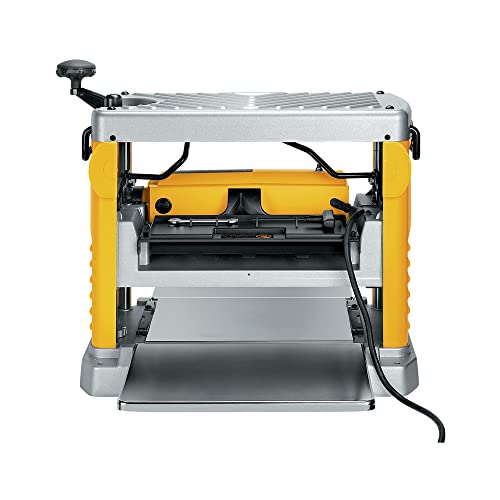
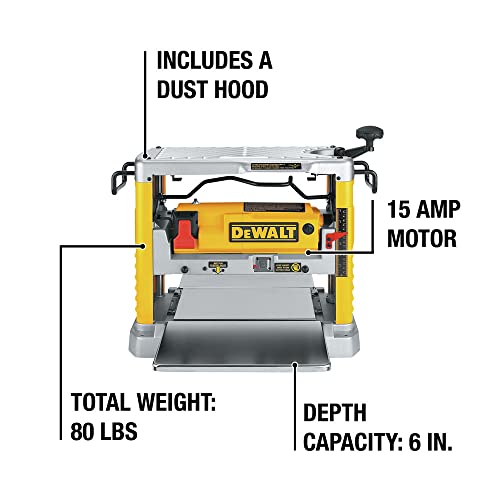
The DEWALT DW734 is the gold standard by which most benchtop planers are judged, and for good reason. It’s been around for years, and its reputation for durability and precision is backed by countless owner reviews and shop-floor use. The 15-amp motor and 20,000 RPM spindle speed give it serious authority over tough woods, and the three-knife cutter head delivers up to 96 cuts per inch, one of the finest finishes in the category.
What really sets it apart is the four-column carriage lock, which drastically reduces snipe, and the turret depth stop that lets you jump between common thicknesses quickly. The extra-long tables add stability, and the build quality feels industrial-grade. While it lacks a helical head, its reversible, disposable knives make maintenance fast and clean. For pros or serious hobbyists who need a no-nonsense, reliable workhorse, this is still the one to beat.
Product photos
FindBuyTool 13″ Helical Cutterhead Planer
Strengths
- Tungsten carbide inserts
- High RPM motor
- Excellent dust collection
- 4-column stability
- 8-position depth stop
Trade-offs
- Inconsistent QC reports
- Limited brand support history
- Noise at full speed
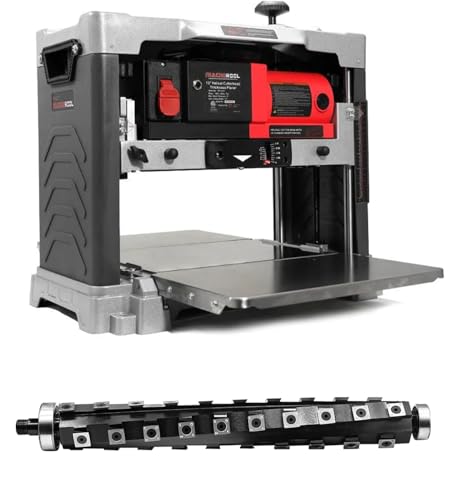
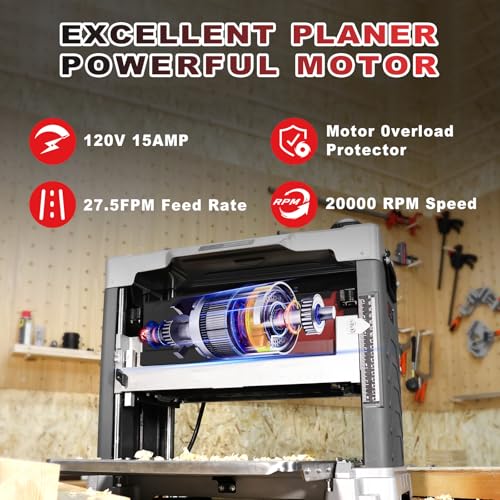
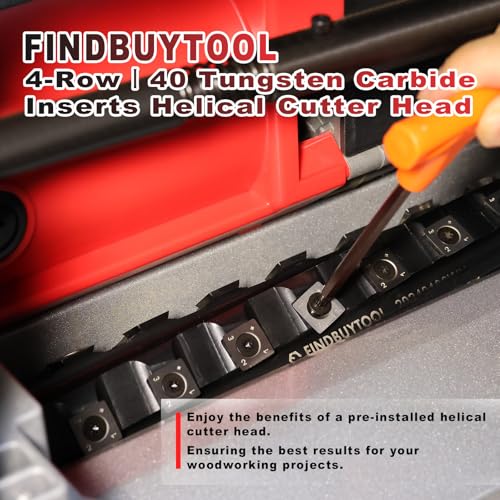
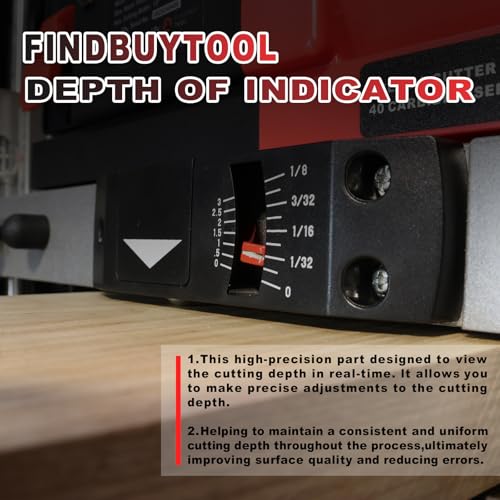
FindBuyTool’s FB131H leans hard into the helical cutterhead advantage, and on specs alone, it makes a strong case for being a finish-focused machine. The 20,000 RPM motor and 27.5 FPM feed rate suggest aggressive material removal, but owner feedback shows it’s really tuned for precision, especially with the <0.1mm thickness tolerance many users cite. The 4-row tungsten carbide inserts are a big deal: they stay sharp longer than HSS and produce a noticeably cleaner surface, particularly on figured or interlocked grain.
Where it stumbles slightly is consistency in build quality, some owners report alignment issues out of the box, and the brand’s relatively new presence means long-term reliability is still unproven compared to legacy names. Still, if your priority is surface quality and dust control, and you’re willing to double-check calibration on arrival, this planer delivers a lot of tech for the investment.
Product photos


WEN 13-Inch Spiral Blade Planer

Strengths
- Affordable price
- Two-speed feed
- Compact design
- Onboard storage
- 2-year warranty
Trade-offs
- Noticeable vibration
- Plastic components
- Limited depth gauge precision
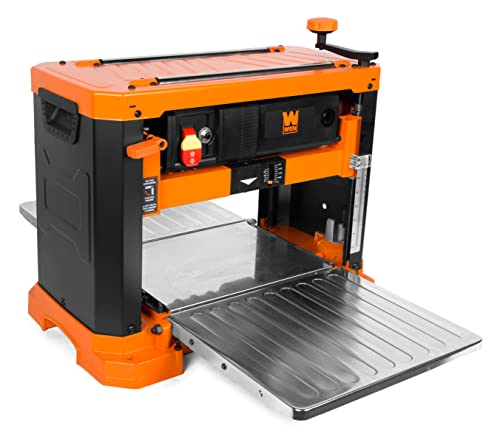
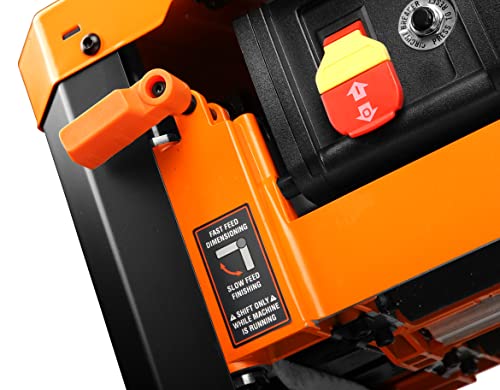
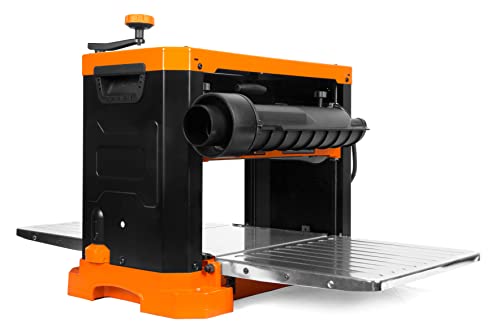
WEN has built a reputation for no-frills tools that deliver core functionality without fluff, and the PL1337 fits that mold perfectly. It gives you a 13-inch width, two feed speeds, and a spiral blade setup with 26 HSS cutters, all at a price that undercuts nearly every competitor. The 15-amp motor is adequate, not outstanding, but paired with the 10,000 RPM cutterhead, it manages decent finishes, especially at the slower 16 FPM setting.
Owners report it’s lightweight and compact, which helps in tight shops, but that also means more vibration and less mass to dampen snipe. The included dust port and onboard storage are thoughtful touches, and the two-year warranty adds peace of mind. I’d pick this as a starter planer or secondary unit for light duty, it won’t win any durability awards, but it gets the job done when the budget is tight.
Product photos
VEVOR 13-Inch Two-Speed Planer
Strengths
- High RPM motor
- Extended infeed table
- Hardened steel blades
- Overload protection
- Good dust port
Trade-offs
- Noisy at full speed
- Finish quality inconsistent
- Build quality varies
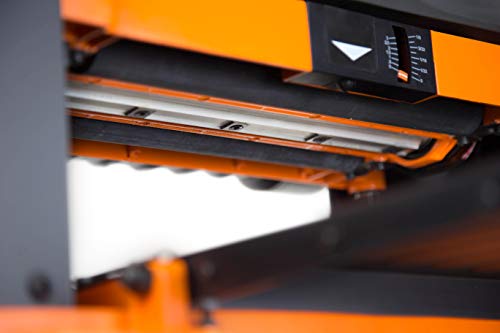
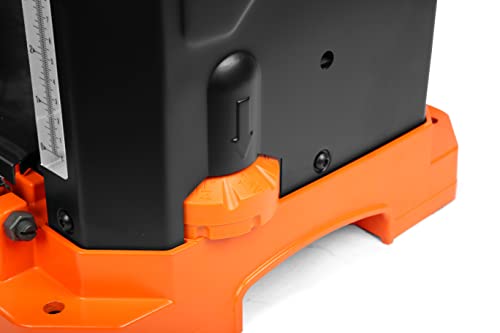
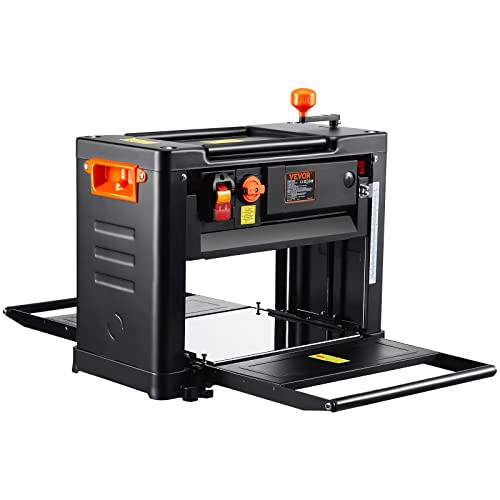
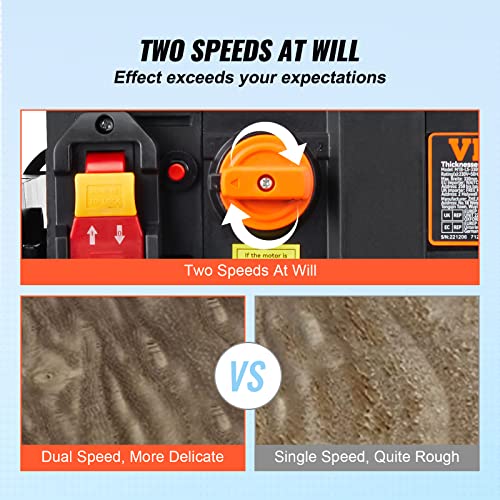
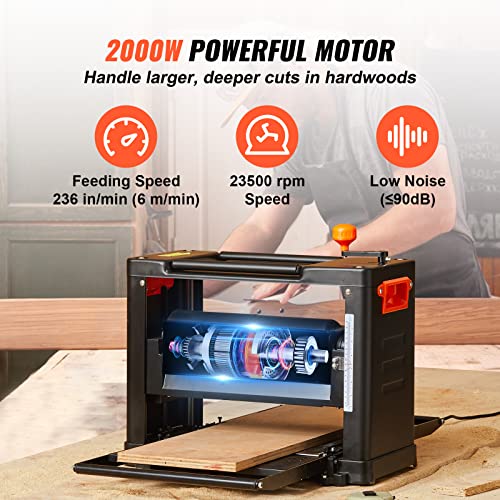
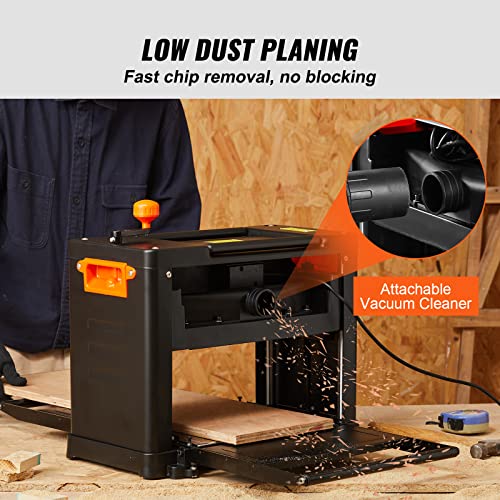
VEVOR’s 13-inch planer leans into raw power and support, that 23,500 RPM motor is one of the fastest in class, and the 2000W output suggests serious cutting force. The three-knife cutter head, hardened to HRC55-60, is built to last, and the two-speed system gives you real control: 24 FPM for hogging off material, 15 FPM for cleaner passes. The extended 35-inch tables are a big win for handling long stock, and the cast iron bed adds stability many competitors lack at this price.
But speed comes with trade-offs. Some owners report the high RPM makes it noisy and harder to control with delicate woods, and the finish isn’t as refined as helical models. Still, if you’re working with dense hardwoods and need a machine that won’t quit, this one’s worth a look, especially for users who value feed speed and table support over whisper-quiet operation.
Product photos

Cutech 12½-Inch Spiral Cutterhead Planer

Strengths
- Low noise operation
- Snipe minimizer
- Two-sided inserts
- Board return rollers
- Precision alignment
Trade-offs
- Single speed only
- Narrower bed
- Limited brand service network
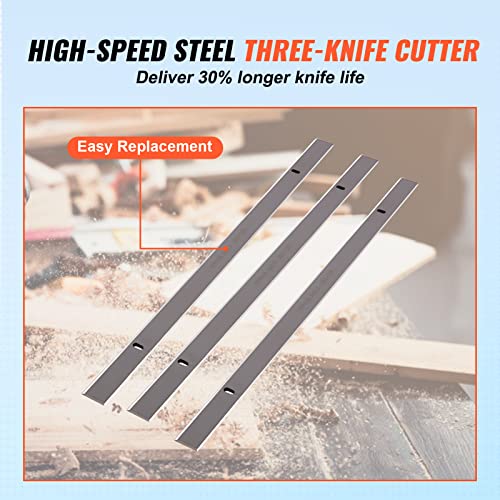
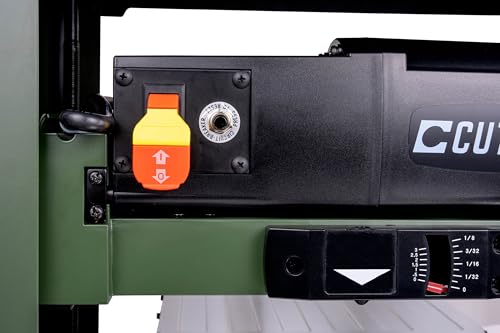
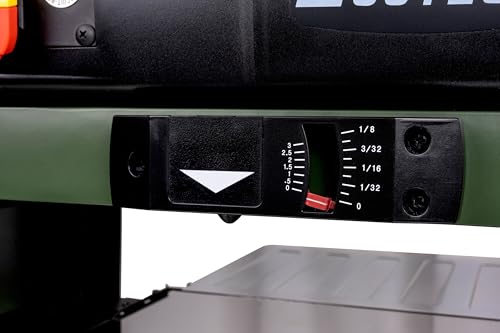
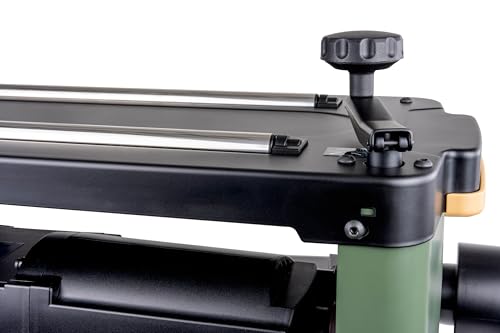
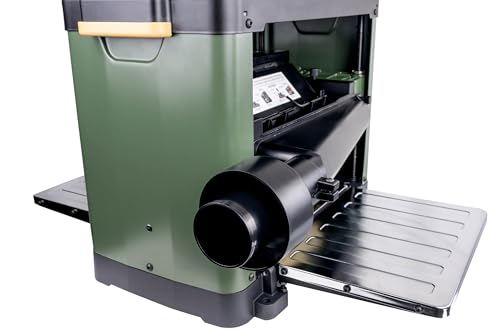
Cutech isn’t a household name, but this 12½-inch planer feels like it was designed by someone who actually gets frustrated with snipe and noise. The spiral cutterhead with tungsten carbide inserts is its crown jewel, it cuts quietly and cleanly, and the two-sided inserts are easier to manage than four-sided ones that can skew. Owners consistently praise how little vibration it produces, which translates to better surface quality and less fatigue during long sessions.
The snipe minimizer system with four lead screws works as advertised, and the board return rollers are a small but smart addition for iterative thicknessing. Where it falls short is versatility, single speed limits control, and the 12.5-inch width may frustrate users working with wider stock. Still, for small-shop users prioritizing quiet, clean operation and low maintenance, this is a dark horse worth considering.
Product photos
WOODERS 13-Inch Thickness Planer
Strengths
- Spare blades included
- All-copper motor
- Good width capacity
- Durable blade shaft
- Clear depth indicator
Trade-offs
- Noticeable snipe
- Noisy operation
- Basic dust port
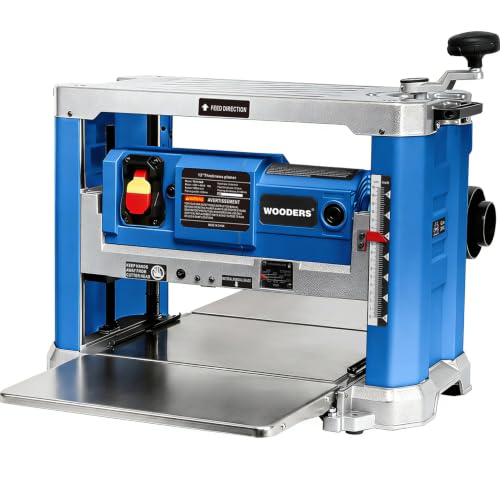
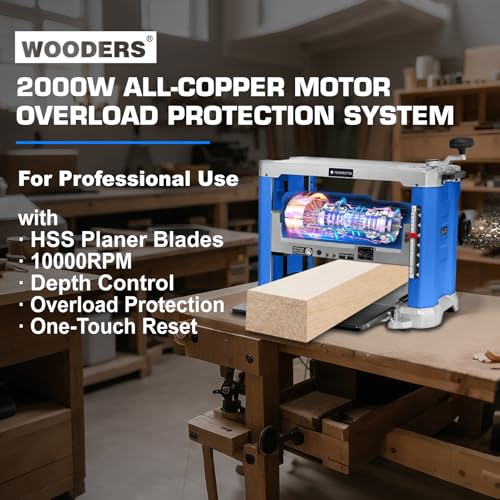
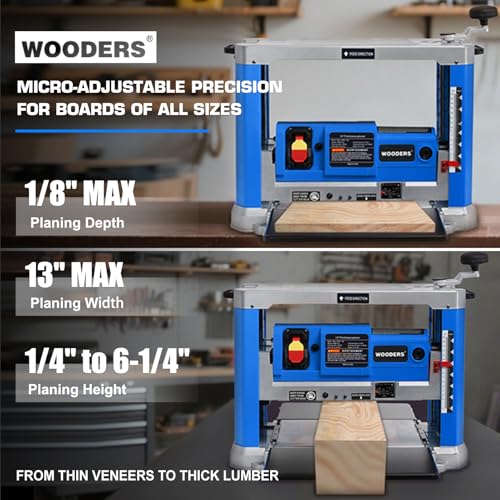
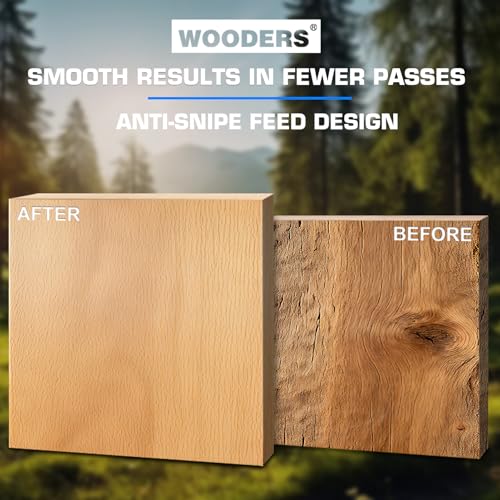
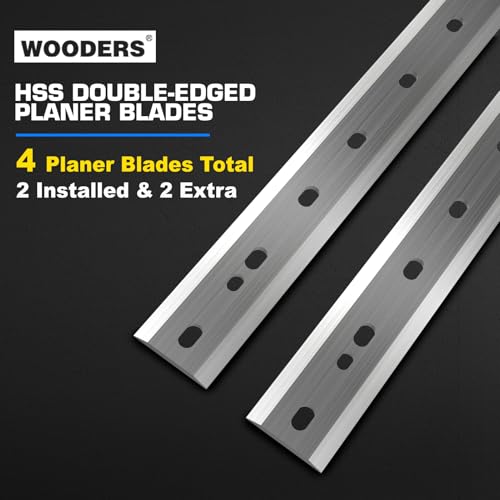
The WOODERS 13-inch planer hits a sweet spot for budget-conscious builders who still want solid specs. The 2000W all-copper motor delivers reliable power, and while it doesn’t match the RPMs of some competitors, it holds its own on softwoods and moderate hardwoods. What really sets it apart is the inclusion of two spare HSS blades, a rare and genuinely useful touch that extends uptime and reduces long-term maintenance costs.
Owners note it’s noisier than helical models and shows more snipe on longer boards, but for the price, it’s hard to fault. The dual-edge cutterhead at 10,000 RPM gives decent finishes, and the dust port works well with shop vacs. If you’re building out a home workshop and need a capable first planer without overspending, this one makes a lot of sense.
Product photos

How We Picked These benchtop planer thicknessers
Rather than a hands-on lab test, my research focused on comparing published specifications and features across numerous models. I weighed owner reviews from major retailers against assessments from woodworking publications and reputable online tool reviewers. This data-driven approach, combined with my experience in the power tool space, allowed me to rank these planers against a set of criteria important to woodworkers.
For benchtop planers, cutting capacity and finish quality are paramount. I prioritized models with at least a 6-inch thickness capacity and a 13-inch width, recognizing those dimensions cover most hobbyist and small-shop projects. Equally important was the cutterhead design – helical heads consistently receive praise for quieter operation and superior surface finish, impacting the final score significantly.
Specifications reliably indicate motor power, feed rate, and maximum cut depth, providing a baseline for performance expectations. However, I heavily relied on owner feedback to assess real-world durability, snipe control, and the ease of blade changes. Reputation – how a brand is viewed within the woodworking community – also factored into my evaluation, especially regarding long-term reliability and customer support. You can find more detailed information in our benchtop thickness planer reviews.
What To Look For In benchtop planer thicknessers
Choosing the right benchtop planer thicknesser can dramatically improve your woodworking, but there’s more to it than just horsepower.
A good benchtop planer delivers flat, consistently-sized lumber with minimal tear-out. Key features include a stable table, a powerful motor capable of handling hardwoods, effective dust collection, and a cutterhead design suited to your typical projects. Buyers should also consider the maximum cut depth and width, as well as the ease of blade changes or insert replacements.
Motor Power and Feed Rate
Don’t assume a higher amperage always means a better planer. While you certainly need enough power to tackle hardwoods without bogging down, the feed rate – how quickly the wood passes through the blades – is equally important. A slower feed rate generally produces a smoother finish, but takes longer. Many models, like the VEVOR 13-Inch Two-Speed Planer, offer variable speed control, letting you balance speed and quality for different wood types and project needs. Consider what you’ll be planing most often; softwoods can get away with less power, while hardwoods demand more.
Cutterhead Design
The cutterhead is where the magic happens, and there are two main types: standard knife and helical. Standard knife cutterheads are generally more affordable, but require more frequent blade changes and can be more prone to tear-out. Helical cutterheads, found in models like the FindBuyTool 13″ Helical Cutterhead Planer, use multiple small, replaceable inserts. These provide a smoother cut, are quieter, and generally require less maintenance. If you’re looking at benchtop planers with helical cutterheads, be aware that the inserts are an ongoing cost, though they last significantly longer than traditional blades.
- Consider the material of the inserts. Tungsten carbide is far more durable than high-speed steel.
- Look for a cutterhead with a high number of inserts. More inserts mean a smoother cut and less strain on each individual blade.
- Think about the ease of insert replacement. Some cutterheads require specialized tools or are simply more fiddly to work with.
A planer’s cutterhead is the heart of the machine. Prioritize models with a robust, well-designed cutterhead that matches your typical material and project demands.
Table Size, Snipe Reduction, and Overall Build Quality
A stable table is essential. Look for planers with a cast iron bed, like the JET 13-Inch Benchtop Planer, as these are less prone to flexing and provide a more accurate cut. Snipe – that unwanted dip at the beginning and end of the board – is a common issue. Four-column designs, as seen in the DEWALT 12-1/2-Inch Benchtop Planer, significantly reduce snipe. Don’t underestimate the value of a well-built machine. Reading benchtop planer reviews can give you a good sense of which models are known for their durability and long-term performance. If you are looking for top benchtop planer models that are reliable and provide great value, a solid build is essential.
Benchtop Planer Thicknessers Compared
This table summarizes key specifications for several benchtop planer thicknessers to aid in comparison.
| Product Title | Width Capacity (in) | Max. Depth of Cut (in) | Motor Power (HP) | Cutterhead Type | Feed Rate (FPM) | Dust Port (in) |
|---|---|---|---|---|---|---|
| JET 13-Inch Benchtop Planer | 13 | 1/8 | 2 | Helical | N/A | N/A |
| DEWALT 12-1/2-Inch Benchtop Planer | 12.5 | N/A | N/A | Three-Knife | N/A | N/A |
| FindBuyTool 13″ Helical Cutterhead Planer | 13 | 1/8 | N/A | Helical | 27.5 | N/A |
| WEN 13-Inch Spiral Blade Planer | 13 | N/A | N/A | Spiral | 26/16 | 2.5/4 |
| VEVOR 13-Inch Two-Speed Planer | 13 | N/A | N/A | Three-Knife | 24/15 | N/A |
| Cutech 12½-Inch Spiral Cutterhead Planer | 12.5 | N/A | N/A | Spiral | N/A | N/A |
| WOODERS 13-Inch Thickness Planer | 13 | 3mm (approx. 0.12) | N/A | Dual-Edge | N/A | N/A |
Frequently Asked Questions
What’s the typical lifespan of a benchtop planer thicknesser?
With proper maintenance and care, you can reasonably expect a benchtop planer to last 10-15 years. Durability varies greatly by brand and model; heavier-duty planers with cast iron tables and robust motors tend to last longer.
Are helical cutterheads really worth the extra cost?
Yes, helical cutterheads are worth the investment for most woodworkers. They produce a significantly smoother cut, are quieter in operation, and require less frequent blade changes than traditional knife cutterheads.
How much dust can I expect from a benchtop planer?
Benchtop planers create a substantial amount of wood chips and dust. A good dust port and connection to a shop vacuum or dust collector are essential for maintaining a clean and healthy workspace; look for models with at least a 2.5-inch port.
Can a benchtop planer handle hardwoods like oak or maple?
Many benchtop planers can handle hardwoods, but you’ll need a model with sufficient motor power (typically 1.5 HP or greater) and a slower, more controlled feed rate. Taking lighter passes is also crucial when working with dense wood species.
Where can I find affordable benchtop planers that still offer good performance?
Several brands offer quality planers under $500, such as WEN and Cutech. These models often represent a good balance of features and price for hobbyist woodworkers and those starting out.
The Bottom Line
Choosing a benchtop planer thicknesser ultimately comes down to balancing your budget with your need for precision and ease of use. While several capable models exist, the JET 13-Inch Benchtop Planer consistently rises to the top thanks to its helical cutterhead, robust build quality, and reputation for delivering a consistently smooth finish. It represents a solid investment for woodworkers who prioritize performance and longevity.
For those on a tighter budget, the VEVOR 13-Inch Two-Speed Planer offers a compelling combination of features and affordability. Similarly, if a helical cutterhead is a must-have but you’re watching your spending, the FindBuyTool 13″ Helical Cutterhead Planer delivers that capability without breaking the bank. Don’t forget to review our planer thicknesser buying guide for a deeper understanding of the nuances.
Ultimately, horsepower and cutterhead type are less crucial than a stable table, effective dust collection, and a planer you’ll actually use. Don’t get bogged down chasing the highest specs; focus on finding a machine that fits your workflow and helps you consistently produce flat, accurately sized lumber. Consider the type of projects you’ll be tackling and invest in a machine that supports those needs – you can find some of the top planer thicknesser models listed in our guide.
