
9 Best Planer Machines of 2026
This post contains affiliate links. As an Amazon Associate, we earn from qualifying purchases.
The DEWALT 13-Inch Thickness Planer stands out as the best overall planer for most woodworkers, combining reliable power, consistent performance, and a proven track record. If you’re on a budget, the WEN 6534 8-Amp Hand Planer offers solid value for light tasks, while the WOODERS Spiral Cutterhead Planer brings superior finish quality for those working with tricky grain.
Most people shopping for a planer want smoother, flatter boards without the frustration of tear-out, inconsistent cuts, or constant maintenance. The real challenge isn’t just removing material, it’s doing it cleanly and efficiently, especially when dealing with hardwoods or irregular stock.
This guide cuts through the marketing noise. I compared specs and owner feedback across popular models, focusing on motor strength, cutterhead design, and real-world usability. These are the planers that consistently deliver where it matters most.
Top 9 Planer Machines in the Market
The Best Planer Machines, Reviewed
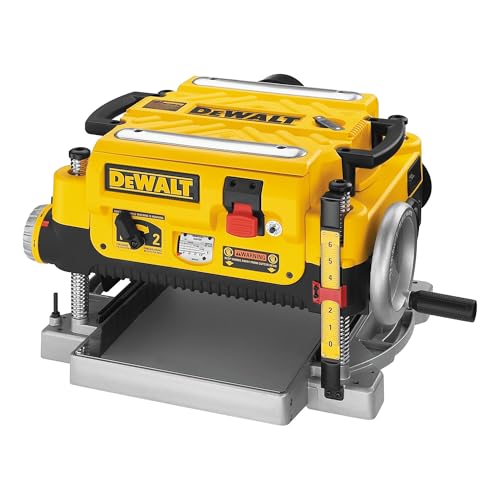
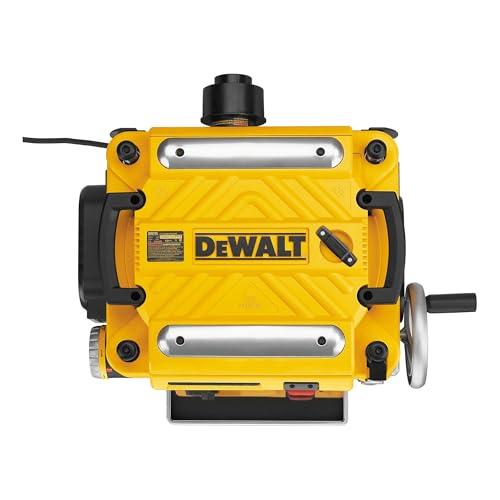
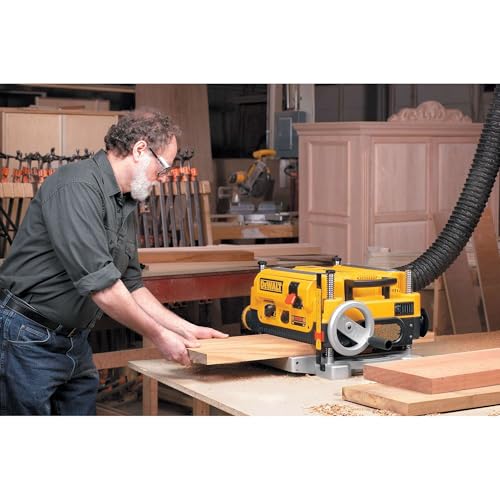
DEWALT 13-Inch Thickness Planer
Strengths
- Proven two-speed design
- Excellent snipe control
- Durable cast base
Trade-offs
- Heavy and bulky
- No included spare blades
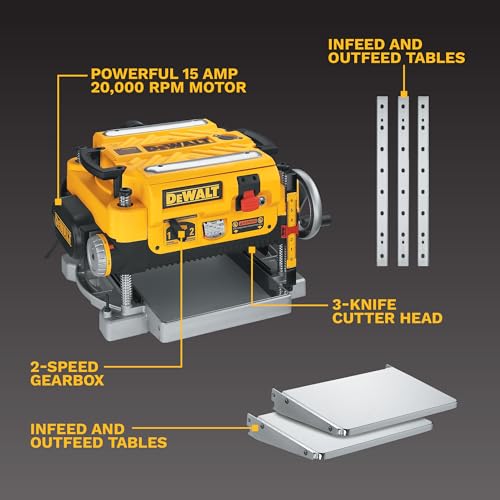
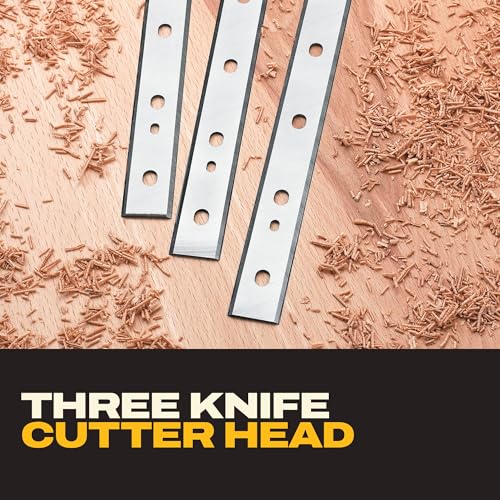
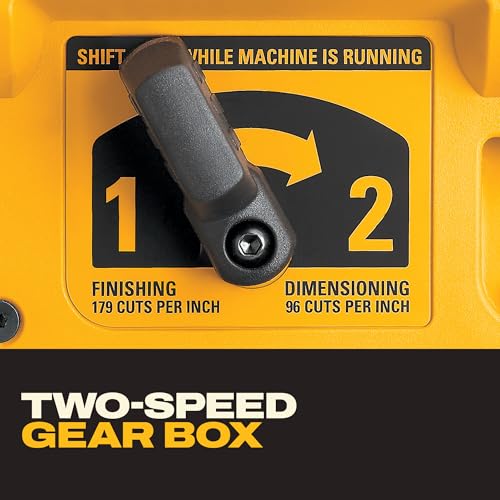
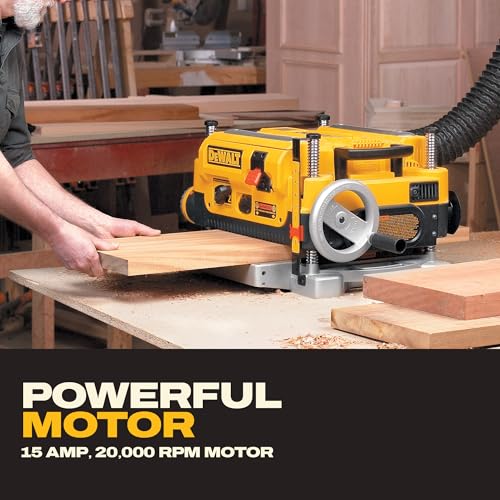
This DEWALT DW735 is the benchmark by which many 13-inch planers are judged. The 15-amp motor and 20,000 RPM spindle speed drive a three-knife cutter head that owners say stays sharp longer and delivers consistent cuts. The two-speed feed (96/179 CPI) gives real control, and the extra-large turret depth stop is a small feature that saves time when returning to common thicknesses.
It lacks the extra knives and hose adapter of the DW735X, but otherwise shares the same rigid cast aluminum base, fan-assisted chip ejection, and automatic snipe-reducing carriage lock. In owner feedback, it’s praised for reliability and precision. While heavier than most benchtop models, that mass helps dampen vibration. For overall performance, build quality, and long-term use, it’s the one I’d recommend most often.
Product photos
DEWALT DW735X Thickness Planer
Strengths
- Auto snipe reduction
- Two-speed feed
- Includes extra knives
Trade-offs
- Noisy operation
- Heavy at 84 pounds
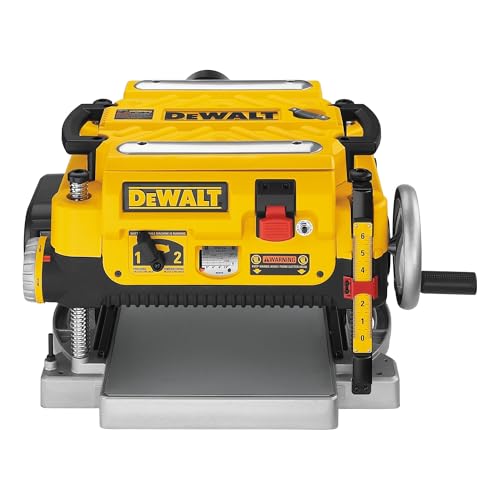
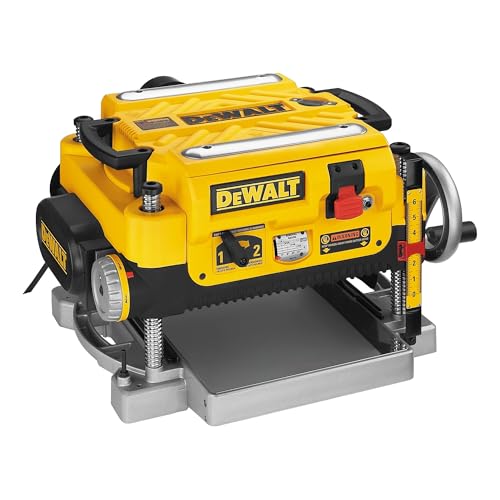
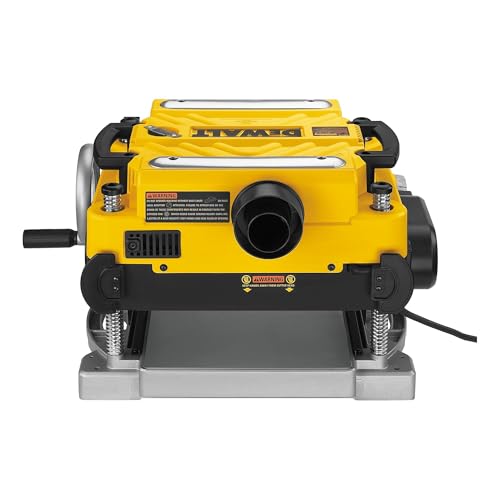
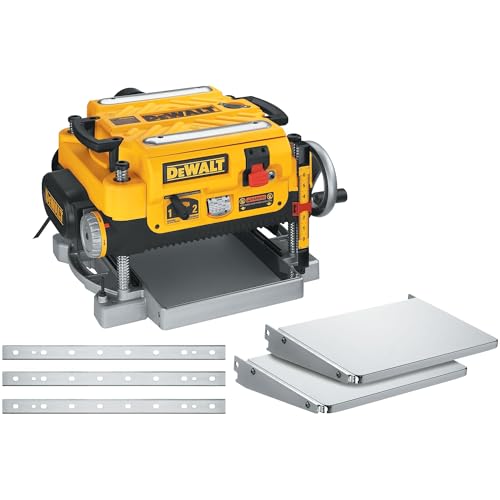
The DEWALT DW735X is a well-rounded performer with a reputation for durability and smart engineering. The three-knife cutter head at 10,000 RPM gives 30% longer blade life, and owners consistently praise how easy it is to swap knives. The two-speed gearbox lets you choose between 96 and 179 cuts per inch, ideal for balancing speed and finish.
The automatic carriage lock is a standout, it reduces snipe without any setup, which many users say works better than manual systems. Combined with the fan-assisted chip ejection and rigid cast aluminum base, this planer handles wide stock with confidence. It’s nearly identical to the DW735 but includes an extra set of knives and a dust hose adapter. For that, it’s the smarter buy in the DEWALT lineup.
Product photos
WOODERS Spiral Cutterhead Planer
Strengths
- Spiral helical cutterhead
- Carbide inserts
- Excellent surface finish
Trade-offs
- Higher blade replacement cost
- Heavier than some
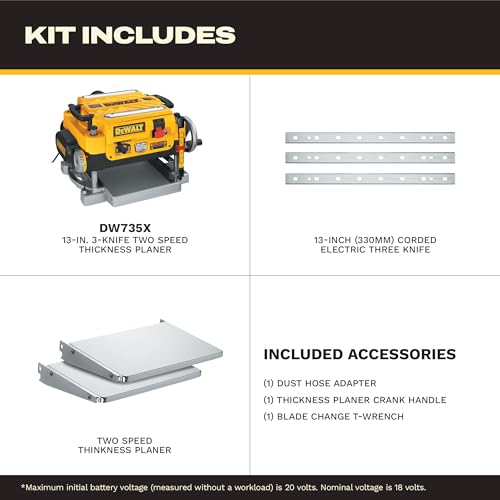
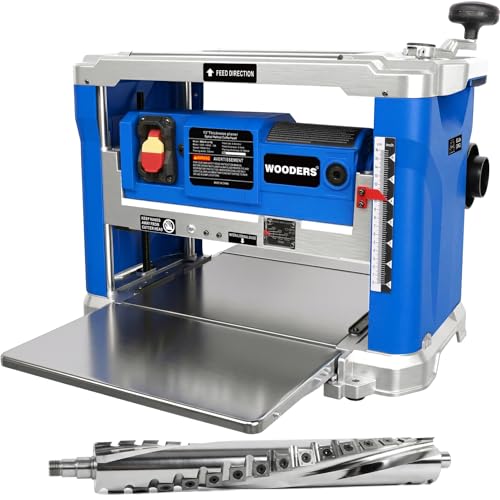
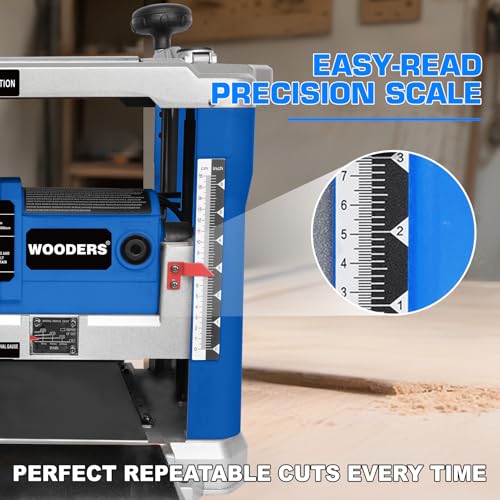
When finish quality is the priority, the WOODERS spiral helical model stands out. The tungsten carbide inserts in a staggered spiral pattern are a pro-level upgrade, owners report dramatically less tear-out and a near-sanded surface right off the table. At 10,000 RPM, the cutterhead balances speed and smoothness, and the micro-adjustable depth control allows for ultra-fine passes, which is key for high-end cabinetry.
The aluminum top cover aids cooling and rigidity, and the 2000W copper motor handles hardwoods without bogging. While it’s not the fastest feed, the trade-off is worth it for finish. Compared to standard knife heads, this one demands less frequent sharpening and delivers better results on difficult grain. If you hate sanding, this is the machine to cut those hours.
Product photos
WOODERS 13-Inch Benchtop Planer
Strengths
- Affordable price
- 2000W copper motor
- Includes spare blades
Trade-offs
- Noticeable noise
- Some snipe reported
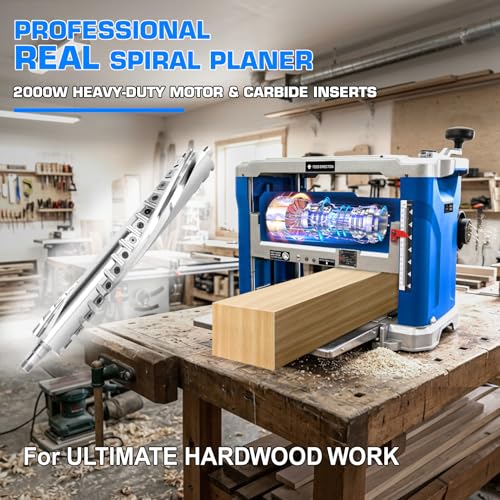
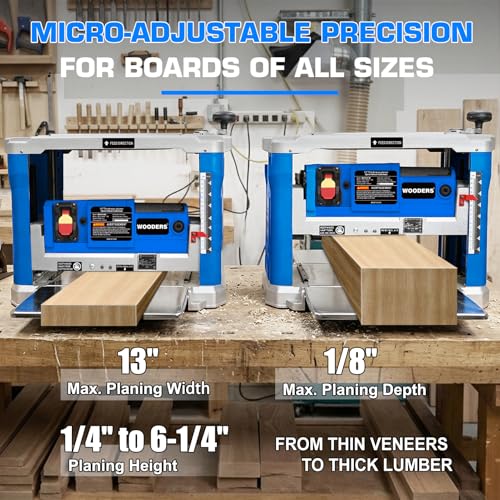
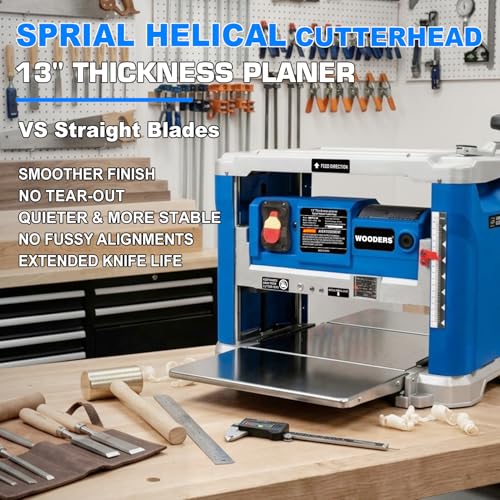
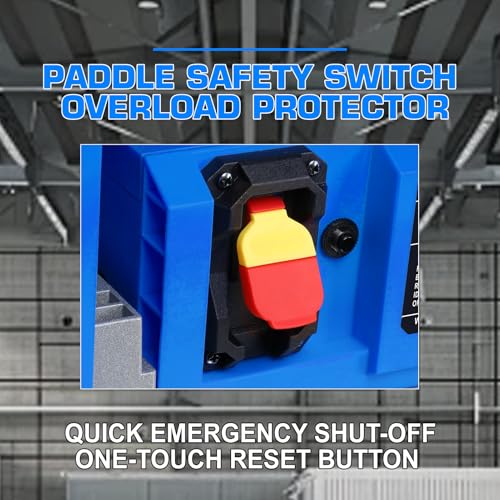
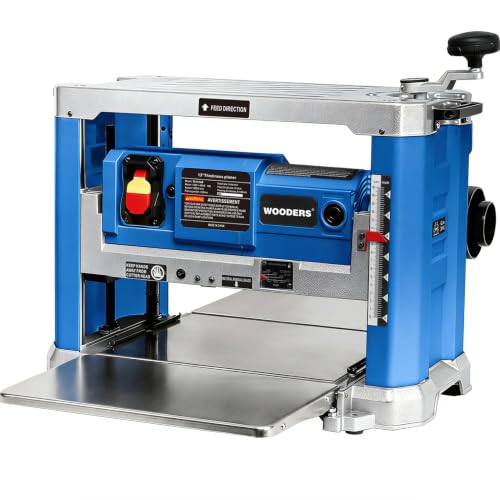
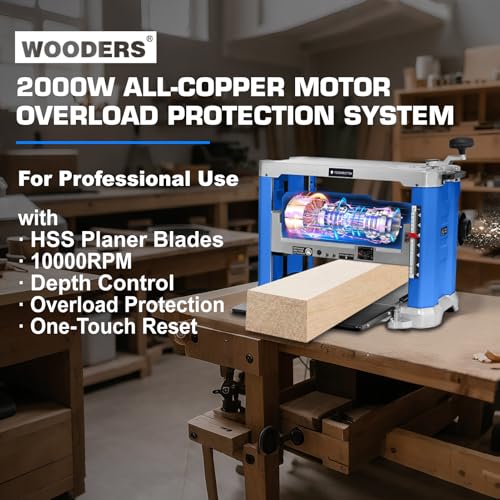
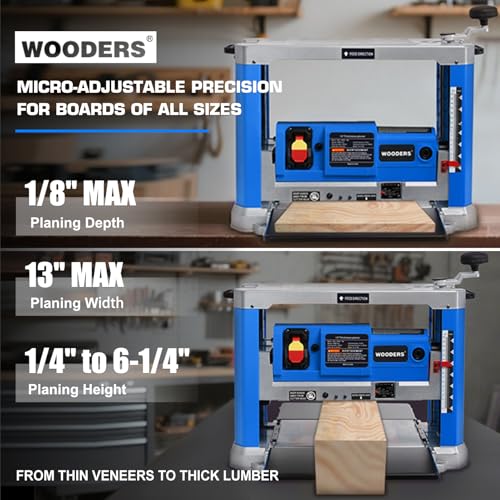
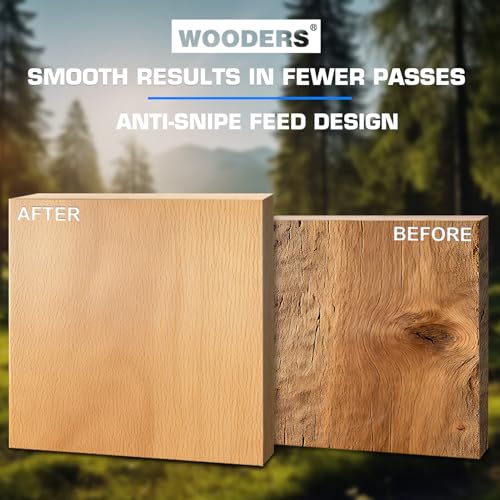
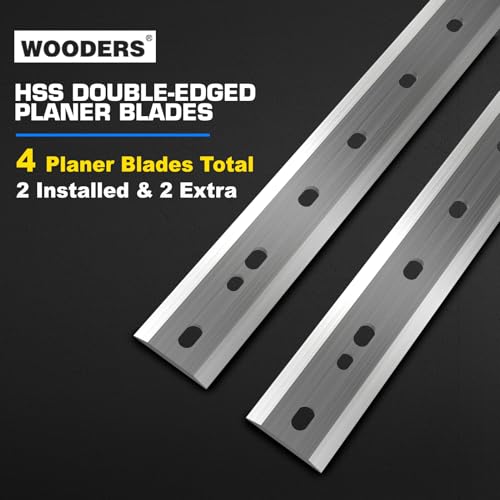
If you’re setting up a home shop on a budget but still want solid performance, the WOODERS 13-inch planer delivers more than its price suggests. The 2000W all-copper motor gets strong marks from owners for maintaining speed under load, even with oak or maple. At 10,000 RPM, the dual-edge cutterhead produces a decent finish, and the anti-snipe design helps, though not perfectly. Some users still report minor snipe on longer boards, but it’s less than on cheaper models.
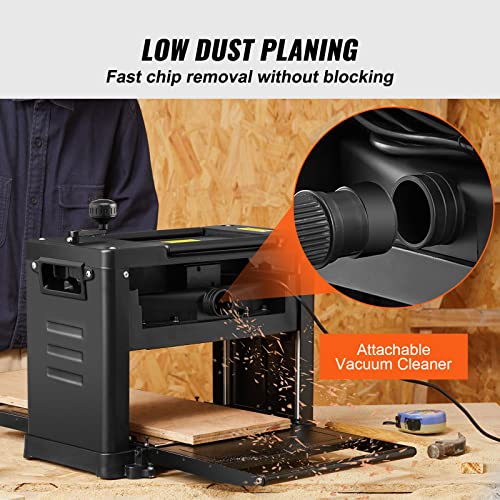
It’s not the quietest or smoothest finisher in the class, but it includes two spare HSS blades, which is a rare and appreciated touch. The dust port works with standard shop vacs, and the 330mm (13-inch) width handles most common stock. For beginners or casual woodworkers, this is a no-frills workhorse that won’t break the bank.
Product photos

VEVOR Two-Blade 13-Inch Planer

Strengths
- Low price for 13-inch
- Extended infeed table
- Overload protection
Trade-offs
- Two-knife head less efficient
- Vibration under load
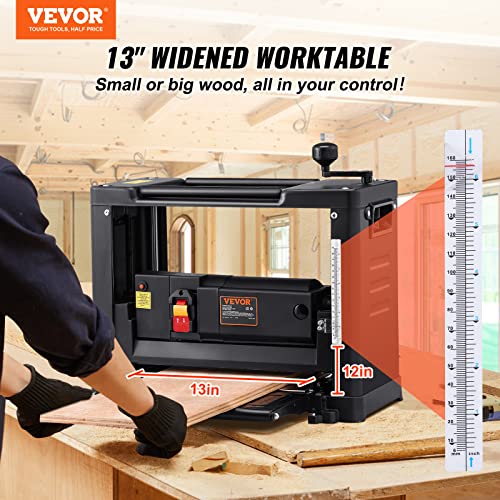
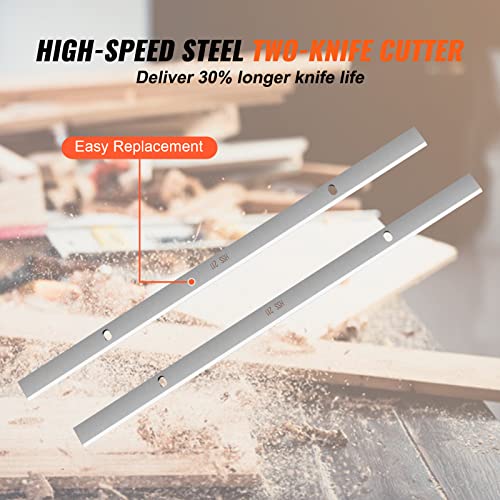
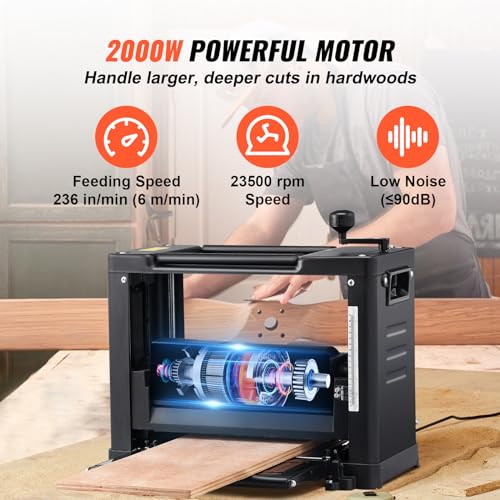
The VEVOR two-blade 13-inch planer is positioned as a value pick for hardwood users, and it delivers solid specs on paper. The 2000W motor and 23500 rpm rating sound impressive, but again, that’s likely blade tip speed, not cutterhead speed. The two-knife head is simpler and cheaper to maintain than three-knife models, but requires more frequent sharpening under heavy use.
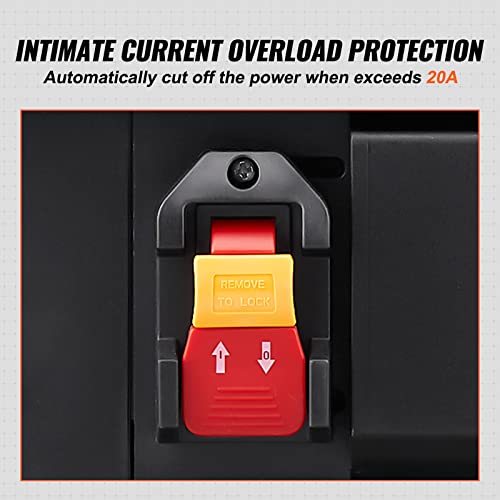
Owners note it handles softwoods well, but with dense hardwoods, the feed rate can slow, and some report vibration at full load. The extended 35-inch infeed table helps support long stock, and the overload protection is a safety plus. It’s a decent budget contender, but compared to DEWALT or even the spiral WOODERS model, it’s more basic in execution.
Product photos
VEVOR Two-Speed 13-Inch Planer
Strengths
- Dual feed speeds
- Extended table support
- Hardened three-knife head
Trade-offs
- Speed rating can be misleading
- Build quality inconsistent
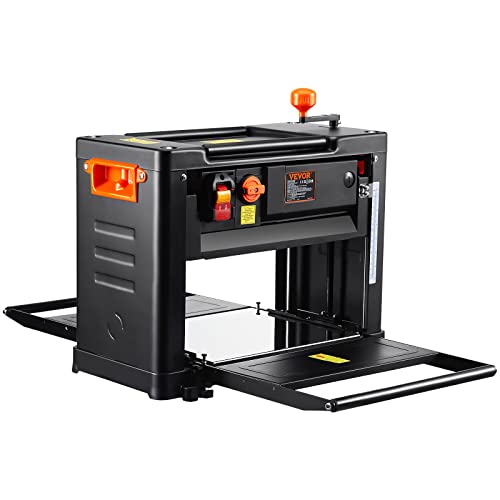
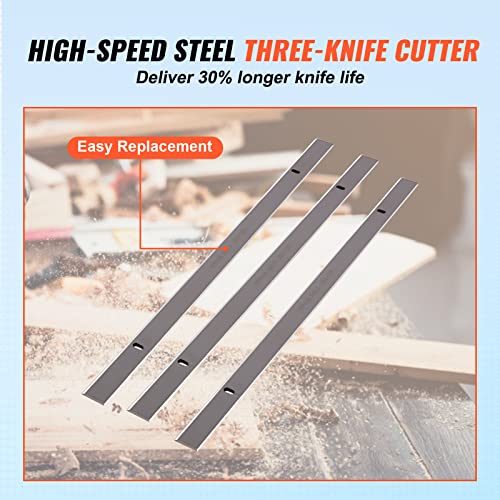
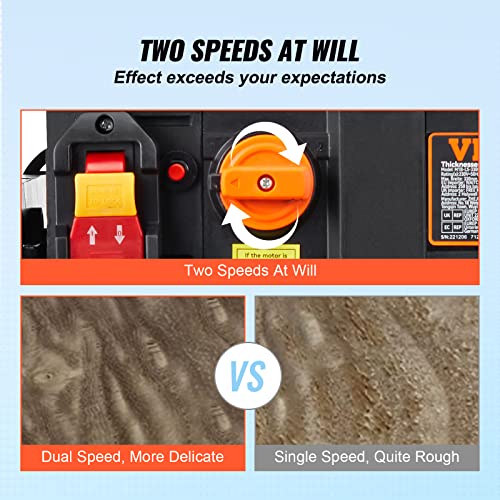
The VEVOR 13-inch dual-speed planer is built for users who want control over finish quality. The two feed speeds, 24 and 15 feet per minute, let you rip through stock fast or slow down for figured or tricky grain to reduce tear-out. Owners appreciate this flexibility, especially when working with curly maple or walnut. The three-knife cutter head, hardened to HRC55-60, holds an edge well and swaps out easily, which matters when you’re doing long runs.
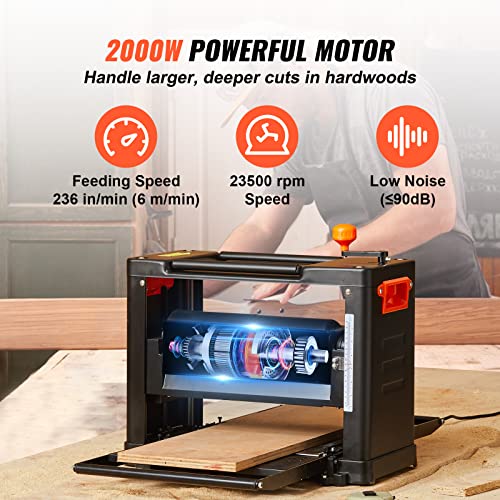
The 35-inch total table length with extensions is a real advantage for supporting long boards, and the cast iron bed adds stability. While the 23500 rpm motor sounds impressive, that’s likely blade tip speed, not cutterhead RPM, so don’t mistake it for a 23,500 RPM cut. Still, it’s powerful and includes overload protection. Compared to single-speed models, this one earns its spot for versatility.
Product photos

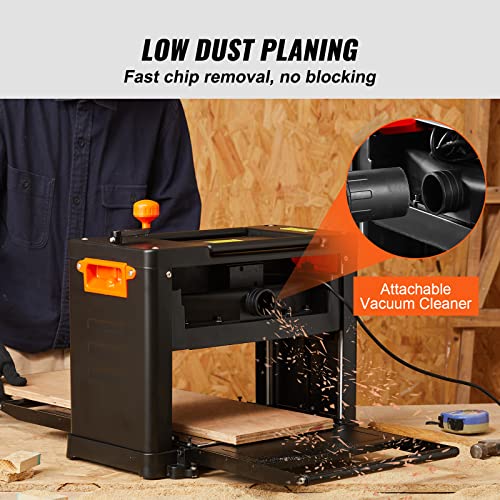
DEWALT 20V MAX Cordless Planer

Strengths
- Brushless motor
- 30,000 cuts/min
- Precise depth control
Trade-offs
- Bare tool only
- Higher price point
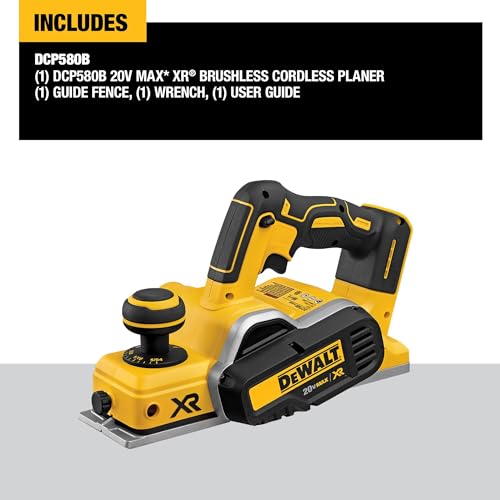
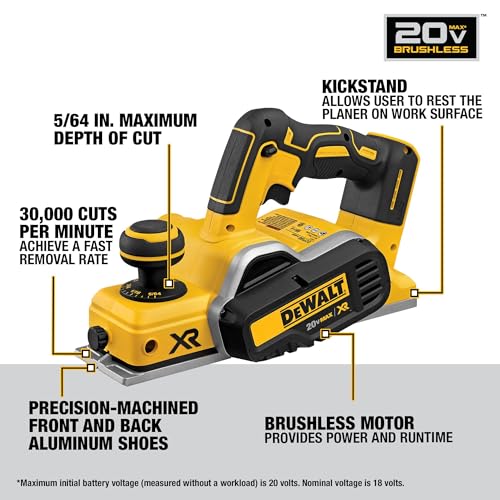
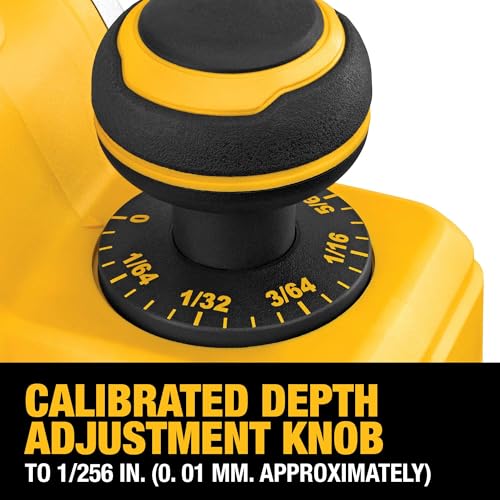
I’ve worked with a lot of cordless tools over the years, and the DEWALT DCP580B stands out in a category where power and precision are often compromised for portability. On paper, the 30,000 cuts per minute and brushless motor signal serious performance for a compact hand planer, and owners consistently report clean, chatter-free results even on dense hardwoods. The 2 mm depth of cut is aggressive enough for quick material removal, while the 1/256 in. depth adjustment gives real control for fine-tuning joints or smoothing rough-sawn stock.
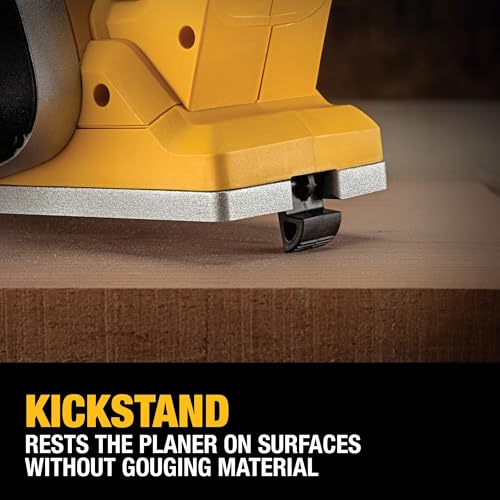
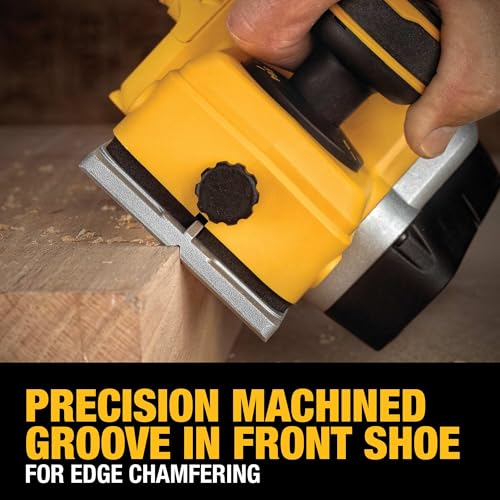
What really elevates this tool is the thoughtful design, aluminum shoes for stability, a kickstand to prevent gouging, and that precision groove for edge chamfering. Compared to budget models, it feels like a pro-tier tool. While it’s a bare tool (no battery or charger), that’s expected in this segment. For cordless convenience without sacrificing cut quality, this is tough to beat.
Product photos
WEN 6534 8-Amp Hand Planer
Strengths
- 4.375-inch cutting width
- Dual dust port
- Reversible blades included
Trade-offs
- Vibration at high load
- Plastic housing feels light
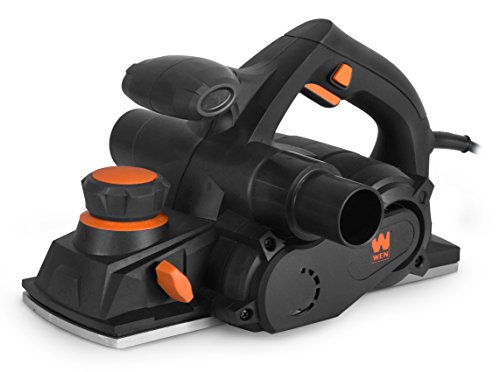
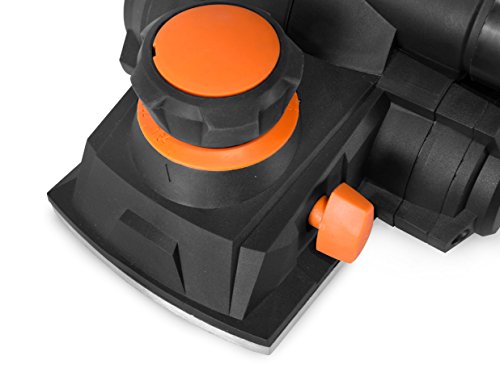
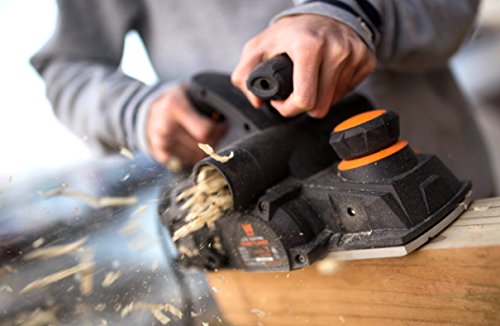
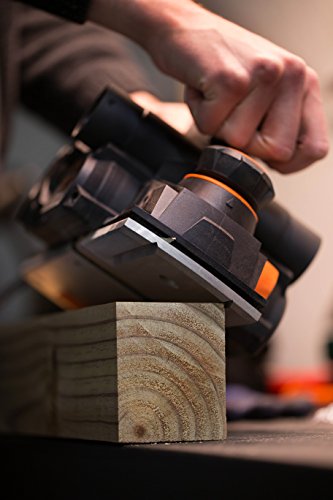
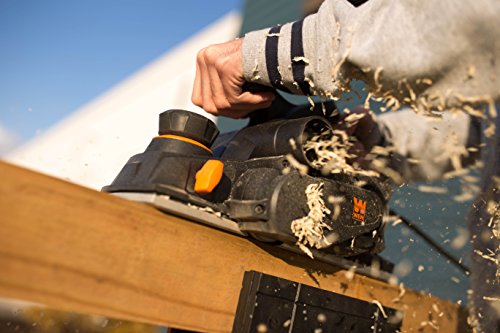
If you’re planing 2x4s, deck boards, or wide stock, the WEN 6534 is the widest affordable hand planer you’ll find. The 4-3/8-inch cutting width is a standout for jobs where narrower planers would require multiple passes. The 8-amp motor at 32,000 cuts per minute delivers solid power, and owners report it handles pressure-treated pine and cedar without issue.
The dual dust port is a rare and useful feature, letting you route shavings left or right depending on your stance or workspace. It also includes two reversible HSS blades, chamfer grooves, and a rabbeting guide, making it one of the most versatile budget hand planers available. It’s not as refined as DEWALT’s cordless model, but for sheer utility and width, it wins.
Product photos
WEN 6530 3-1/4-Inch Hand Planer
Strengths
- Lightweight and compact
- Good cut rate for size
- Includes rabbeting guide
Trade-offs
- Narrow 3.25-inch width
- Dust bag ineffective
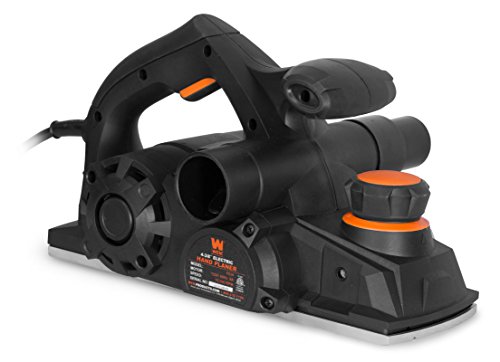
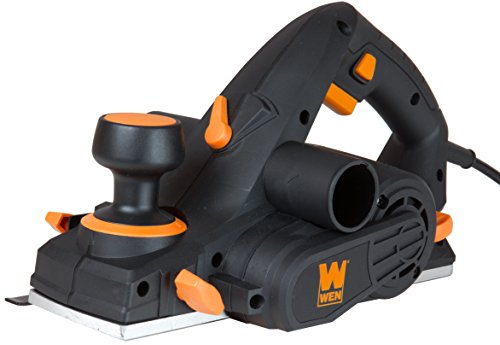
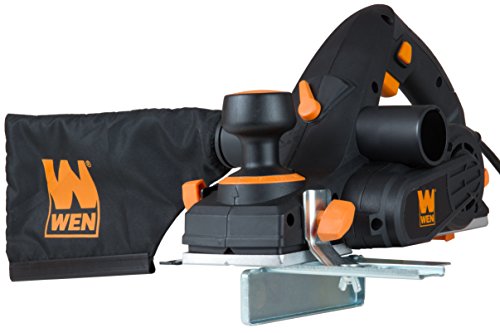
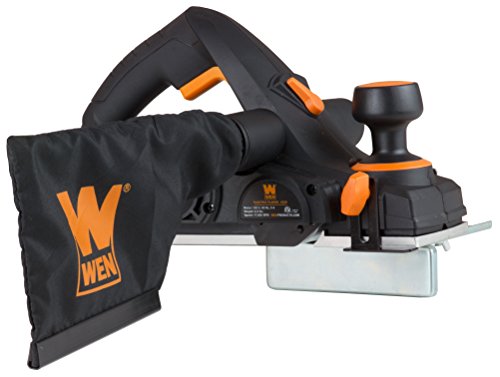
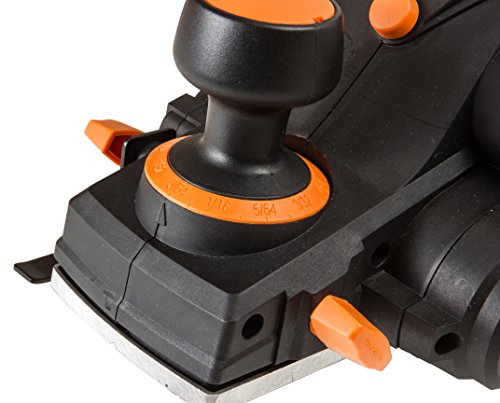
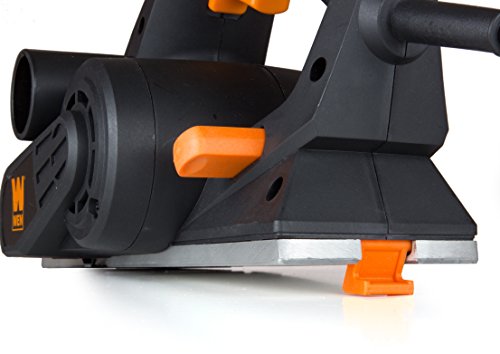
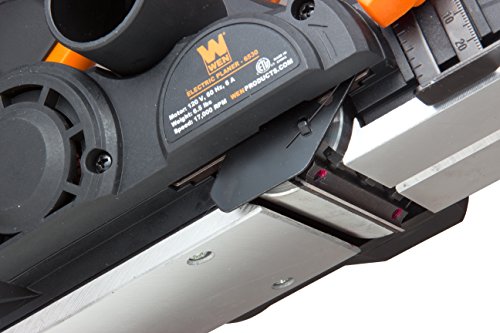
The WEN 6530 is the kind of tool I’d recommend to someone just starting out or tackling light jobs around the house. At 6 pounds, it’s one of the lightest in its class, and the 6-amp motor pushes out 34,000 cuts per minute, which is plenty for softwoods and light trimming. The 16 depth stops make repeat cuts predictable, and the rabbeting guide adds real utility for shelf dados or door adjustments.
It’s not built for heavy use, pros will burn through the blades quickly, but for trimming a sticky door or cleaning up a rough-cut beam in the garage, it works. The included dust bag is underwhelming, but the 2-year warranty is a nice touch. Compared to the WEN 6534, it’s narrower but more than enough for most household tasks.
Product photos
How We Picked These planer machines
Rather than a hands-on lab test, this selection is a research-led comparison of published specifications and owner feedback. I started by compiling a list of planer machines available from reputable brands, then compared their features – motor power, cutting width, depth adjustment, and cutterhead type. Crucially, I weighed owner reviews from multiple sources alongside professional reviews to understand real-world performance and durability. This process allowed me to rank options against key criteria for woodworkers.
For planer machines, cutting capacity and motor power were heavily weighted. A wider capacity reduces the need for multiple passes, while sufficient power is essential for handling hardwoods without bogging down. The cutterhead design – whether spiral, two-blade, or three-blade – significantly impacts finish quality and blade maintenance, so that was also a key factor. Ultimately, these elements determine how efficiently and cleanly a planer can process lumber.
Specifications reliably indicate a planer’s physical capabilities like cutting width and depth. However, owner feedback proved invaluable in assessing long-term reliability, ease of use, and the accuracy of depth adjustments. Reputation among woodworkers also played a role; brands consistently praised for build quality and customer support received higher consideration. For a deeper understanding of the options, you can explore our planer thicknesser buying guide.
How To Choose The planer machines
Choosing the right planer can dramatically improve the quality and efficiency of your woodworking projects.
A good planer delivers flat, consistently-sized lumber with minimal tear-out. Key considerations include motor power for handling different wood types, cutterhead design for achieving desired finish quality, and feed rate control for precise material removal. Look for robust construction, effective dust collection, and user-friendly features like calibrated depth adjustments.
Motor Power and Capacity
Don’t underestimate the importance of a robust motor. Softer woods like pine are far more forgiving, but hardwoods like oak or maple demand significantly more power to avoid bogging down and leaving a rough finish. A 15-amp motor is generally a good starting point for a benchtop thickness planer intended for occasional hardwood use, while a 2000W (roughly 15 amp) motor provides even more headroom. Beyond the amperage, consider the width and maximum thickness capacity of the planer. A 13-inch wide planer will save you time on larger projects, and the ability to handle timbers up to 6 inches thick opens up more possibilities.
Cutterhead Design
The cutterhead is where the magic happens, and the design profoundly impacts the finish quality. Traditional three-knife cutterheads are common and relatively affordable, but spiral cutterheads, especially those with carbide inserts, are gaining popularity. These offer a noticeably smoother cut, reduce tear-out (particularly on figured wood), and are quieter in operation. Carbide inserts also last far longer than traditional steel blades, though they can be more expensive to replace individually. If you are looking for top wood planer models, consider upgrade options like spiral cutterheads.
Feed Rate and Adjustability
Precise control over material removal is crucial. Look for planers with a two-speed gearbox, allowing you to select a faster feed rate for quick stock removal or a slower rate for finer finishing passes. A well-calibrated depth adjustment knob is also essential. The ability to make micro-adjustments – down to 0.01mm – allows for exceptionally accurate thicknessing. Here’s a quick rule of thumb:
Always take multiple shallow passes rather than attempting to remove too much material in a single pass. This will result in a cleaner cut, reduce strain on the motor, and prolong the life of your blades.
- A simple depth adjustment is sufficient for rough work and quick projects.
- A depth adjustment with a digital readout offers improved accuracy and repeatability, ideal for production work.
- Micro-adjustment capabilities (down to fractions of a millimeter) are essential for achieving precise thicknesses, especially when working with valuable hardwoods or projects requiring tight tolerances.
For those on a tighter budget, exploring wood planers under $500 can yield surprisingly capable machines. Don’t overlook the value of reading woodworking planer reviews before making a final decision, and consider checking out recommended power planers to see what other woodworkers are using.
Planer Machines Compared
The following table provides a specification comparison of various planer machines available for purchase.
| Product Title | Motor (Amps/Watts) | Max. Width (in.) | Max. Depth/Cut (in.) | Feed Speed (FPM) | Cutterhead Type | Dust Port |
|---|---|---|---|---|---|---|
| DEWALT 13-Inch Thickness Planer | 15 | 13 | 1/8 | 96/179 | Three-Knife | Yes |
| DEWALT DW735X Thickness Planer | 15 | 13 | 1/8 | 96/179 | Three-Knife | Yes |
| WOODERS Spiral Cutterhead Planer | 15/2000 | 13 | 1/8 | N/A | Spiral | Yes |
| WOODERS 13-Inch Benchtop Planer | 2000 | 13 | 3mm | N/A | Dual-Edge | Yes |
| VEVOR Two-Blade 13-Inch Planer | N/A | 13 | 6 | N/A | Two-Knife | Yes |
| VEVOR Two-Speed 13-Inch Planer | 2000 | 13 | 6 | 15/24 | Three-Knife | Yes |
| DEWALT 20V MAX Cordless Planer | 20V | N/A | 5/64 | N/A | N/A | N/A |
| WEN 6534 8-Amp Hand Planer | 8 | 4-3/8 | 1/8 | N/A | N/A | Yes |
| WEN 6530 3-1/4-Inch Hand Planer | 6 | 3-1/4 | 1/8 | N/A | N/A | Yes |
Frequently Asked Questions
What planer width should I buy?
A 13-inch wide planer is generally the sweet spot for most woodworkers. It’s large enough to handle sizable boards without being too bulky for a workshop, and it reduces the need for multiple passes on wider stock.
Are spiral cutterheads really worth the extra cost?
Yes, spiral cutterheads offer a significantly smoother cut with less tear-out, especially on challenging woods. While the initial investment is higher, the longer lifespan of carbide inserts can offset the cost over time.
What’s the difference between a benchtop and a floor-standing planer?
Benchtop planers are more portable and affordable, suiting hobbyists and smaller workshops. Floor-standing models offer greater capacity, power, and dust collection, making them ideal for professional or high-volume use.
Can a planer be used to joint an edge?
While a planer can flatten a board, it’s not a substitute for a jointer. A jointer creates a perfectly flat and square edge, essential for edge-gluing boards, whereas a planer works best on boards that already have at least one relatively flat face. For more information on hand-held options, explore top hand planer models.
How often do I need to change the blades in a planer?
The frequency of blade changes depends on usage and wood type. Carbide inserts in spiral cutterheads can last for years, while traditional steel blades may need sharpening or replacing every few months with regular use, especially when working with abrasive hardwoods.
The Bottom Line
Choosing a planer machine often comes down to balancing initial cost against long-term performance and convenience. While you can find workable options at lower price points, the DEWALT 13-Inch Thickness Planer consistently rises to the top as the best overall choice, offering a solid blend of power, capacity, and reliability for most woodworkers. It provides a great starting point without sacrificing essential features.
For specific needs, several other models stand out. If you’re prioritizing a smoother cut and reduced tear-out, especially when working with challenging woods, exploring benchtop planers with helical cutterheads like the WOODERS Spiral Cutterhead Planer is a worthy investment. And for budget-conscious buyers, the VEVOR Two-Blade 13-Inch Planer offers a surprising amount of capability for the price.
Ultimately, the specs on any planer are less vital than a well-tuned machine and a thoughtful approach to your work. Consistent, shallow passes are more important than a massive motor, and a sharp cutterhead trumps any fancy feature. Focus on building a solid foundation of technique, and the right planer will help you achieve professional-quality results.
