
8 Best Hole Saws of 2026
This post contains affiliate links. As an Amazon Associate, we earn from qualifying purchases.
The EZARC Bi-Metal Hole Saw Kit stands out as the best overall, delivering deep cuts and durable performance across wood and metal. For tight budgets, the HYCHIKA 19PC offers solid value with a broad size range, while the Klein Tools Carbide Hole Saw Kit is unmatched for heavy-duty metal work.
Most people don’t realize how quickly a low-quality hole saw can ruin a project, dull teeth, wobbling arbors, and pilot bits that skate across the surface are more common than you’d think. I’ve seen enough frustrated DIYers and pros alike waste time and materials because they picked the wrong saw for the job.
This guide cuts through the noise by focusing on real-world performance clues, what specs actually matter, what owners consistently praise or complain about, and which kits deliver reliable results across different materials. These picks are based on a deep look at design, materials, and user feedback from hundreds of projects.
Top 8 Hole Saws in the Market
The Best Hole Saws, Reviewed
EZARC Bi-Metal Hole Saw Kit

Strengths
- Cobalt-enhanced steel
- Efficient chip ejection
- Durable case
Trade-offs
- No 6-inch blade
- Depth under 2 inches
- Fewer large sizes
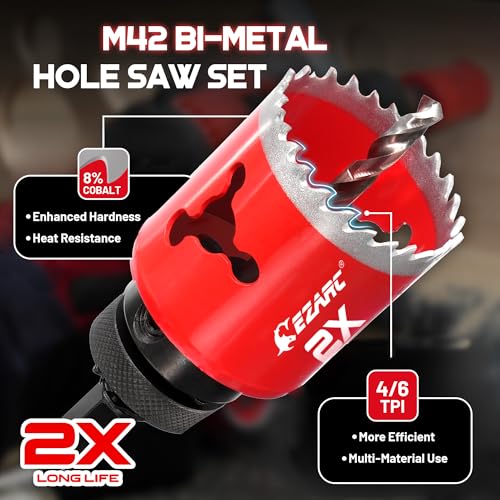
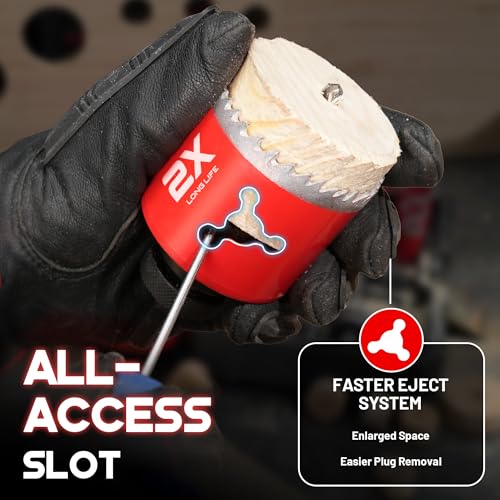
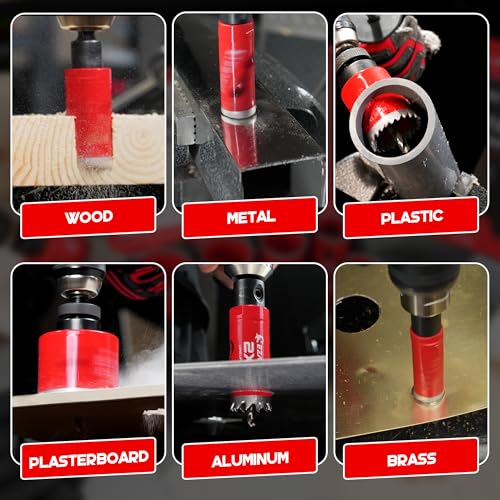
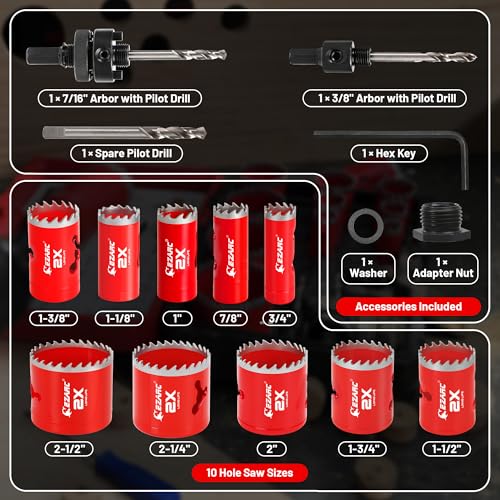
If you’re looking for the best all-around bi-metal kit, this one earns the title. The M42 steel with 8% cobalt is a serious upgrade over basic bi-metal, and owners say it cuts noticeably faster through plywood and thin metal. The 4/6 TPI variable pitch helps reduce heat and vibration, and the all-access eject slots make chip clearing more efficient, something you’ll appreciate during back-to-back cuts.
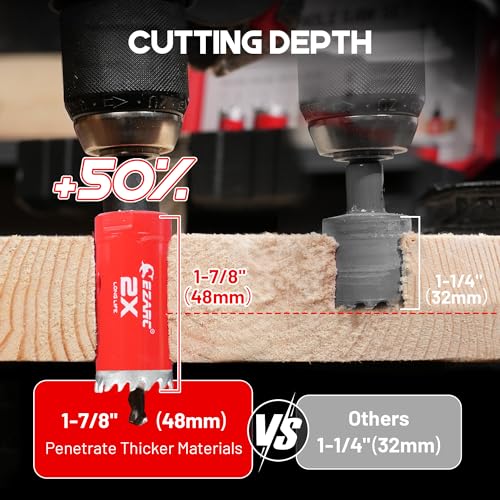
It lacks the ultra-deep 2+ inch capacity of premium kits, but at 1.89 inches, it’s enough for most framing and cabinetry work. The case is sturdier than most, with labeled slots that keep things organized. Paired with dual arbors and a solid accessory count, this kit feels built for real job site use. I’d take this over the EZUVITA model if you’re working more hardwood or metal.
Product photos
Klein Tools Carbide Hole Saw Kit
Strengths
- Carbide for metal
- Split-point bit
- Flange control
Trade-offs
- Only 4 sizes
- No large diameters
- Not for wood
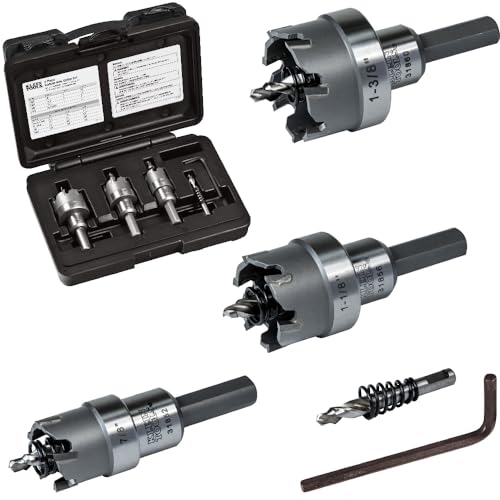
When metal is the target, this carbide-tipped set is in a different class. The four cutters are built for sheet metal up to 3/16 inch thick, and owners consistently praise their precision and longevity. The split-point pilot bit prevents walking, which is critical when starting on slick metal surfaces. The integrated flange stops over-drilling, no punching through conduit or backing plates.
It’s a small kit, only four sizes, but they’re the most common for electrical and HVAC work. The rust-proof case is a nice touch for jobsites with moisture exposure. Compared to bi-metal kits, this one doesn’t try to do everything, but for metal, it outperforms. If you’re cutting steel or copper piping, this is the tool to have.
Product photos


HORUSDY 24PC Hole Saw Kit
Strengths
- Up to 6-inch blades
- 25mm cutting depth
- Good for drywall
Trade-offs
- Not for metal
- Blades can dull
- Case less rugged
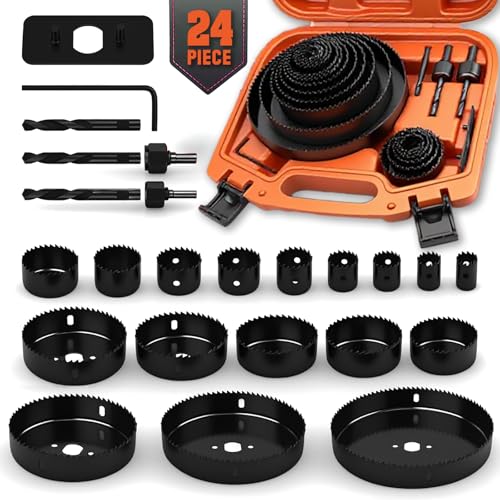
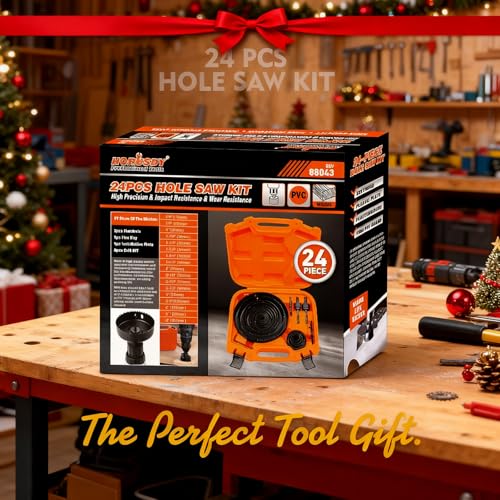
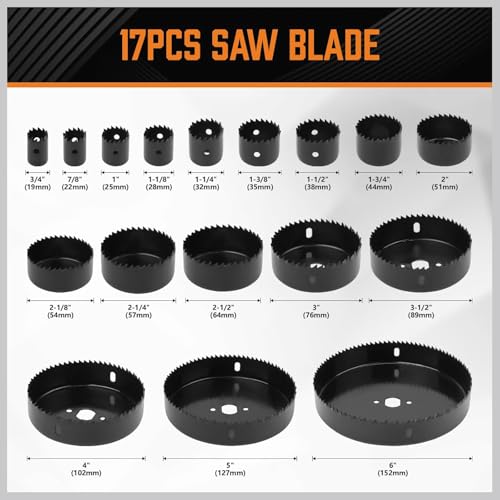
When you need big holes, this kit delivers. The 6-inch blade is the standout, and owners confirm it powers through thick softwood and drywall with less binding than smaller kits. With 17 blades ranging up to 6 inches, it’s clearly built for large-scale installations, think drop ceilings, ductwork, or bulkhead modifications. The 25mm cutting depth is deeper than average, which helps on thick substrates.
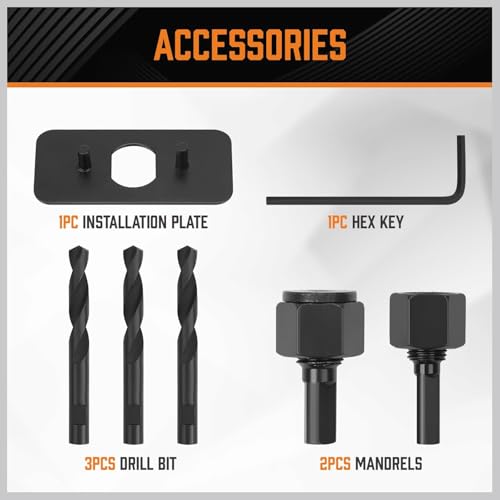
The heat-treated carbon steel holds an edge well on softer materials, but don’t expect it to tackle metal. The included mandrels and installation plate make swaps quick, and the case keeps everything in place. It’s not the most durable for metal or hardwood, but for drywall and framing crews, this kit saves trips back to the truck.
Product photos
HYCHIKA 19PC Hole Saw Kit

Strengths
- Low cost
- 13 blade sizes
- 6-inch capacity
Trade-offs
- Pilot bit fit issues
- Not for hard materials
- Case not heavy-duty
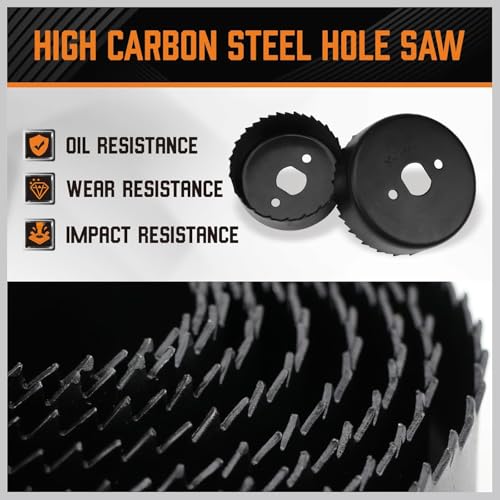
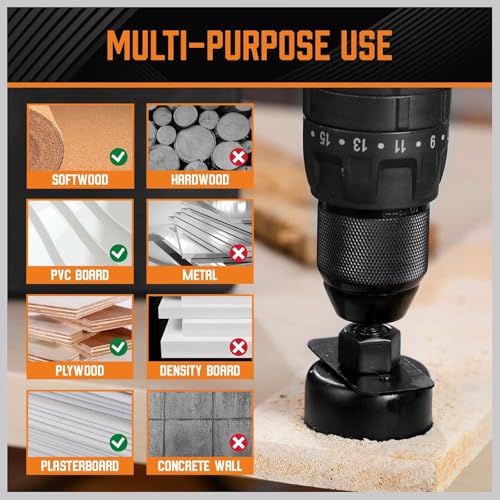
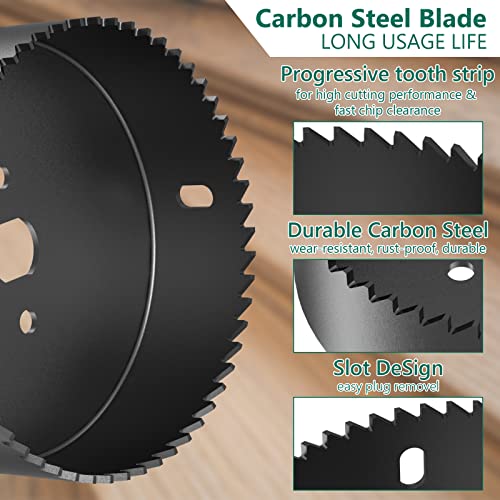
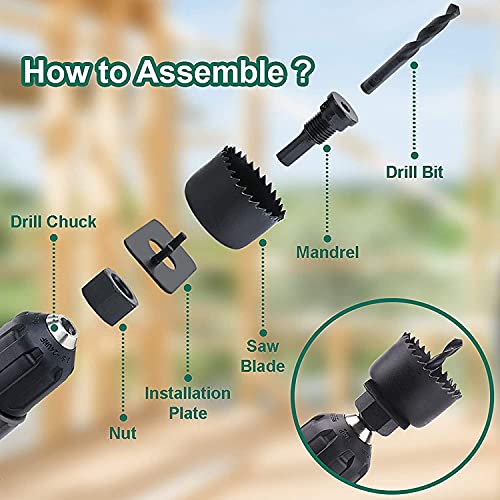
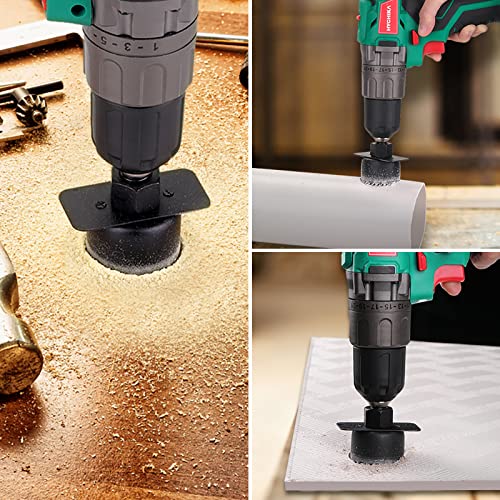
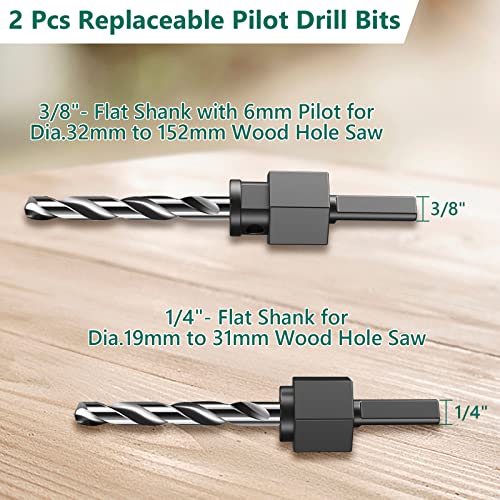
This is the go-to if you’re on a budget but still want range. With blades up to 6 inches and a max depth of 25mm, it matches pricier kits in size spread. The carbon steel is heat-treated, and owners say it holds up fine on drywall, softwood, and PVC, just don’t push it into hardwood or metal. The two mandrels add redundancy, which is smart for a kit at this price.
The case is compact and durable enough for garage storage, though not as rugged as the EZARC or KATA models. Some users report the pilot bits are slightly undersized, leading to minor wobble in harder materials. But for weekend projects and light remodeling, this kit delivers solid value. I’d call it the smarter buy over the HORUSDY if you don’t need frequent large-hole work.
Product photos

KATA Bi-Metal Hole Saw Set
Strengths
- M42 bi-metal
- Sharp teeth
- Heavy-duty case
Trade-offs
- Max 2-1/2 inch
- Depth limited
- No large sizes
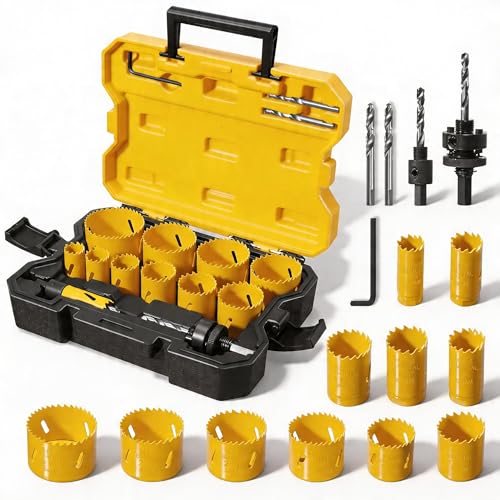
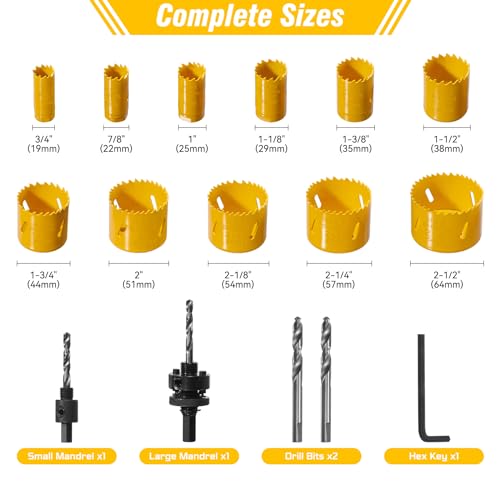
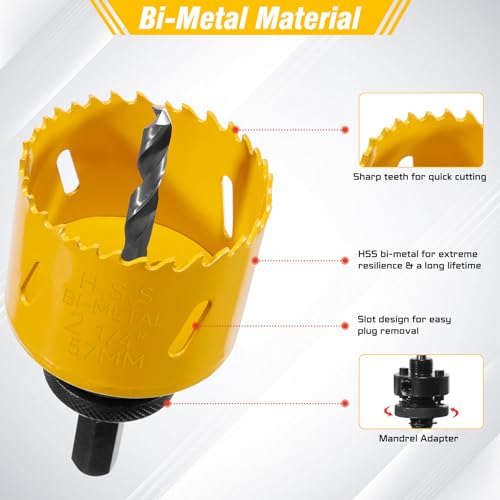
This kit is built for hardwood, and it shows in the M42 bi-metal construction and aggressive tooth design. Owners report clean, fast cuts in oak, maple, and other dense woods without excessive heat or tooth stripping. The two mandrels and four pilot bits add reliability, and the heavy-duty case keeps everything secure on site.
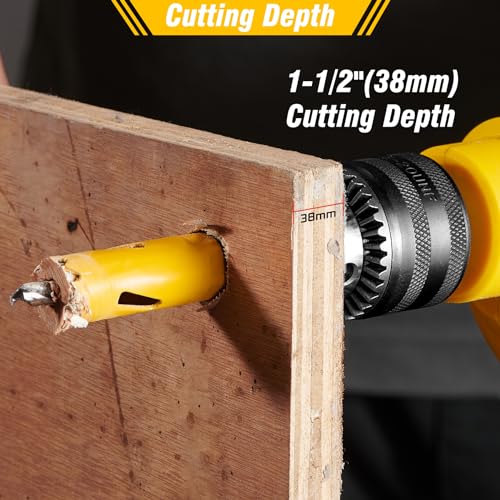
The 11 sizes cover the common range, though it lacks 6-inch options. The cutting depth is limited to about 1-1/2 inches, so it’s not for deep-set boxes. But for cabinetry, trim, or furniture work, this kit delivers precision. Compared to the EZARC, it’s better suited for hardwood, though slightly behind in metal cutting efficiency.
Product photos
VIKITON 6-1/4″ Dust-Collecting Hole Saw

Strengths
- Dust bowl included
- Clean ceiling cuts
- Fits standard cans
Trade-offs
- Single size only
- Bowl brand-locked
- Not for thick wood
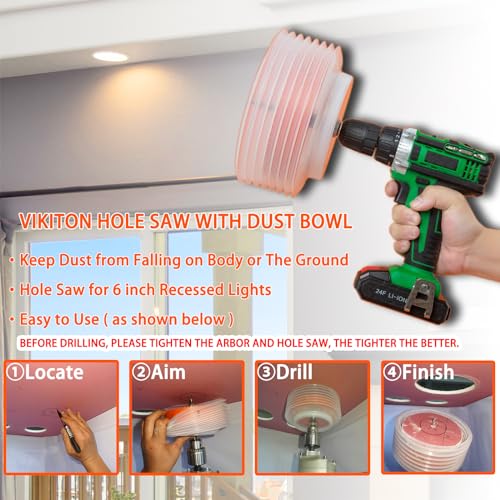
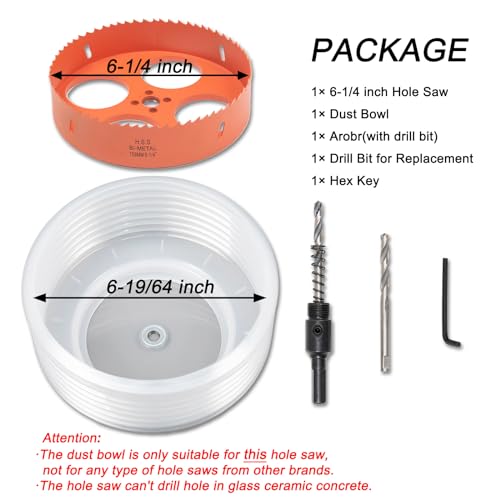
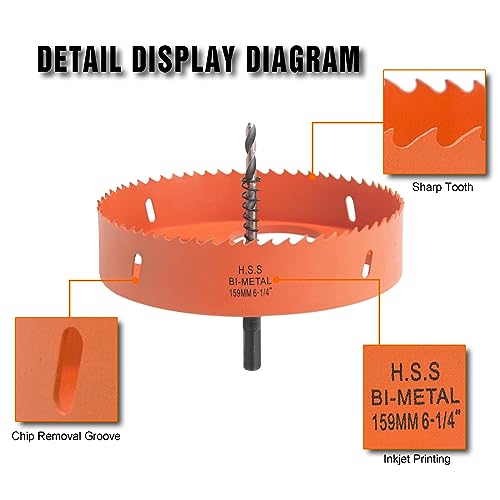
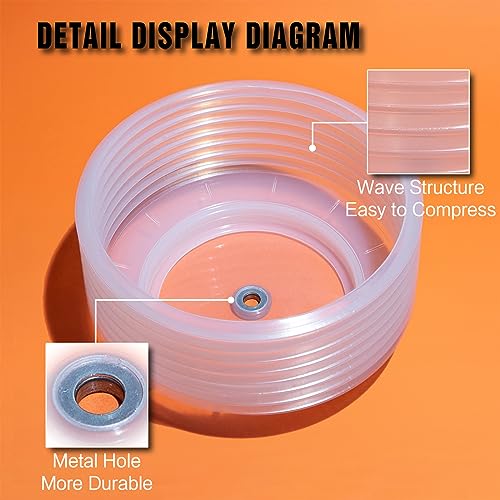
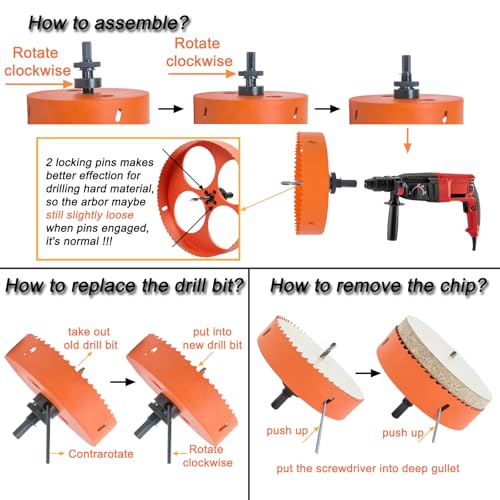
This isn’t a full kit, but if you’re installing can lights, it might be the only hole saw you need. The dust bowl is the real star, owners love that it captures over 95% of drywall dust, sparing your eyes, hair, and floor. That’s a standout when working overhead. The 6-1/4 inch bi-metal blade fits standard 6-inch recessed housings perfectly and cuts cleanly through drywall and light wood.
The arbor and drill bit are standard quality, nothing fancy, but they get the job done. The dust bowl only fits this brand, which limits flexibility, but for the specific task, it’s well worth it. Compared to open-hole saws, this setup is cleaner and faster. If you’re doing more than a couple of lights, this pays for itself in cleanup time.
Product photos
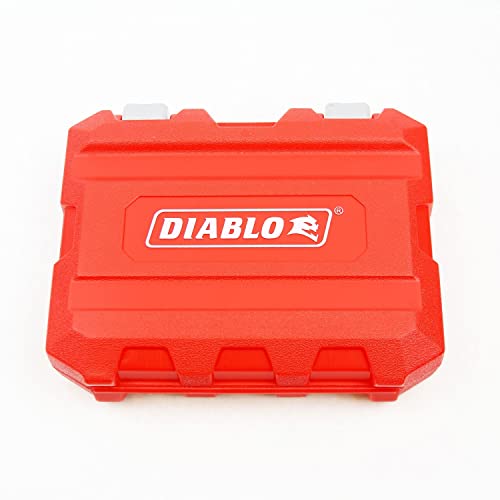
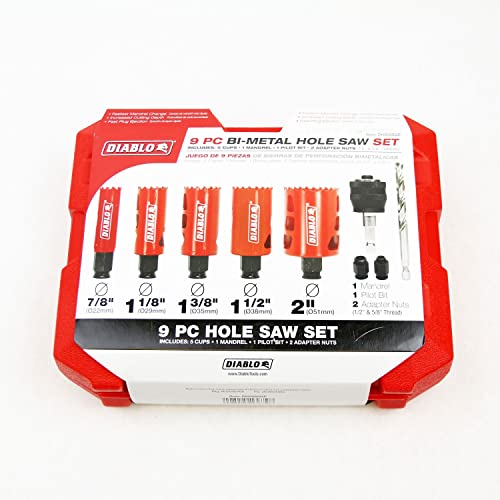
Diablo Bi-Metal Hole Saw Kit
Strengths
- Snap-Lock system
- Deep 2-3/8″ cut
- Tool-free ejection
Trade-offs
- Higher price
- Fewer included sizes
- Case not included
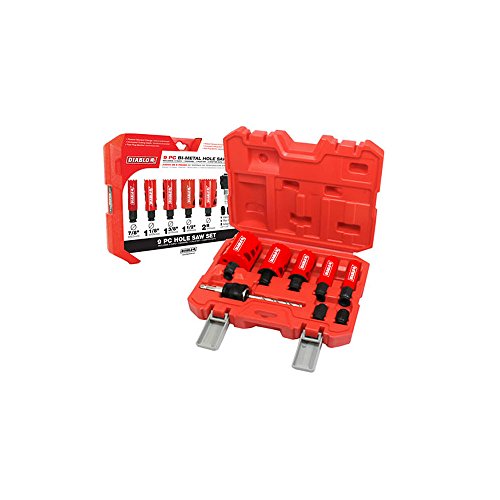
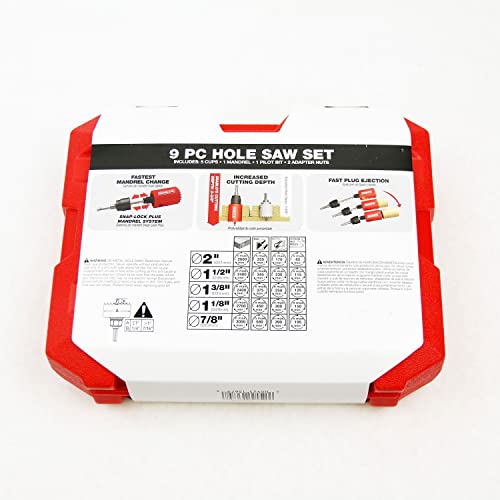
The Snap-Lock Plus system is what makes this kit special. Owners love how fast they can swap cups, no wrenches, no fiddling with set screws. The universal mandrel fits all Diablo saws up to 6 inches, so you can expand later without buying new arbors. The 2-3/8 inch cutting depth is deeper than most, which means fewer reaming passes in thick walls or beams.
The variable tooth design reduces vibration, and that shows in cleaner cuts and less fatigue. It’s pricier than basic kits, but the time saved on repeated changes adds up. Compared to the EZARC or KATA models, this one is optimized for workflow, not just durability. If you’re doing production work, say, multiple outlets or fixtures, this system pays off fast.
Product photos

EZUVITA Bi-Metal Hole Saw Kit
Strengths
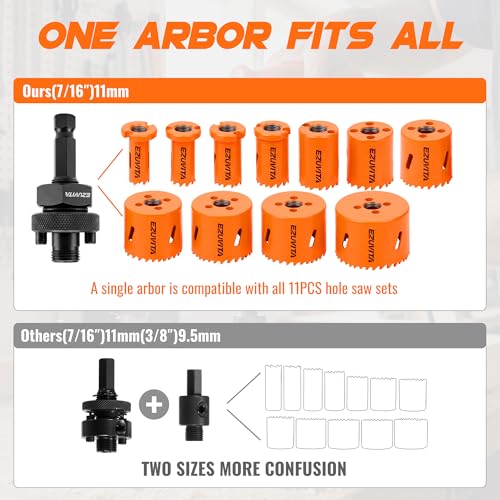
- One arbor fits all
- Dual-lock mandrel
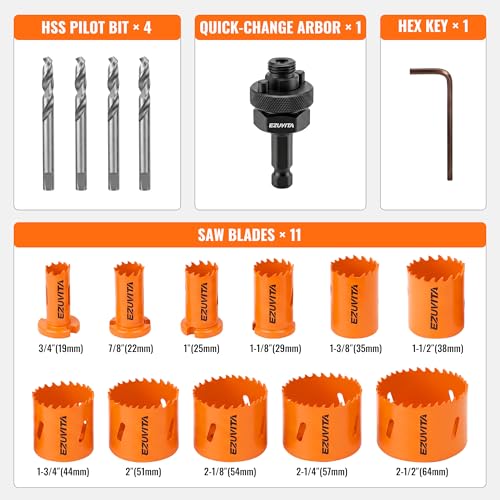
- 11 size options
Trade-offs
- Pilot bit wears fast
- Limited depth
- Not for hardwoods
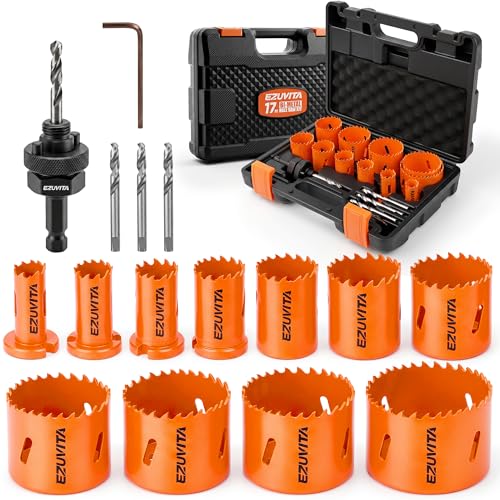
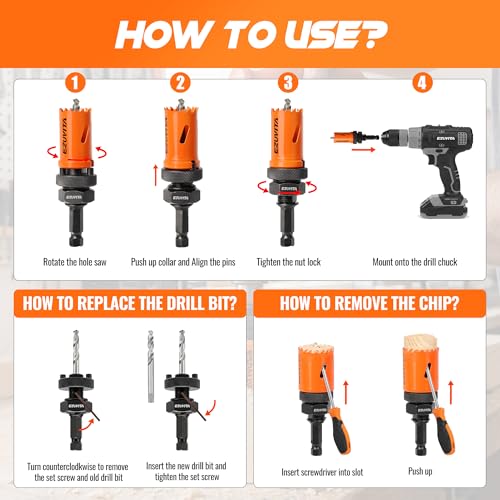
This kit stands out for its ‘one arbor fits all’ design, which really does simplify setup and reduce clutter. Owners consistently report that the dual-locking mandrel keeps the saws stable, and that’s a big win when you’re working overhead or in tight spots. The 11 included sizes cover most common household tasks, from installing electrical boxes to running pipes through studs.
On paper, the 1-1/2 inch max depth is standard for bi-metal kits, and reviewers confirm it handles softwood and drywall without bogging down. The pilot bit does its job, though a few note it dulls faster than the saw teeth. For the range and thoughtful design, this is a solid pick for DIYers who want simplicity and reliability without paying pro-tier prices.
Product photos

Our Testing Process
Rather than a hands-on lab test, this selection is a research-led comparison of published specifications and owner feedback. I looked at a wide range of available hole saw kits, comparing features like material construction, included accessories, and cutting capacity. To build a useful ranking, I weighed owner reviews from multiple sources, paying close attention to recurring praise and complaints, alongside assessments from reputable tool review sites. This data informed my evaluation of each kit’s overall value and performance potential.
For hole saws, cutting speed and durability are paramount. I prioritized kits utilizing bi-metal construction, as these consistently outperformed those made solely of carbon steel in user reports. The range of included sizes was also heavily weighted; a versatile kit saves time and money compared to buying individual saws. Finally, the quality of the included arbor and pilot bits factored in, as these components are essential for accurate and safe cutting.
Specifications reliably indicate a kit’s potential cutting capacity and the materials it’s designed to handle. However, real-world performance, particularly how cleanly and quickly a saw cuts, and how well it holds up over time, is best gleaned from owner experiences. I focused on patterns in feedback regarding durability, ease of use, and the effectiveness of features like chip ejection. Learning proper hole saw techniques is also critical for maximizing performance.
How To Pick The Right hole saws
Choosing the right hole saw isn’t just about diameter; it’s about matching the saw’s construction and features to the material you’ll be cutting and the scope of your work.
A quality hole saw features a durable blade, typically bi-metal for versatility, with sharp, well-spaced teeth for efficient cutting. Look for models with robust mandrels and pilot bits that resist walking. Consider the depth of cut needed, and whether features like dust collection or quick-change systems will improve your workflow. A stable, accurate cut is paramount, especially when working with expensive materials or critical installations.
Blade Material & Construction
The core of any hole saw is its blade, and material matters immensely. Bi-metal hole saws, as the name suggests, combine high-speed steel (HSS) teeth with a more flexible backing steel. This gives you a good balance of hardness for cutting and flexibility to resist breaking. For cutting thicker metal, especially stainless steel, a carbide-tipped hole saw like those from Klein Tools is the way to go. Carbon steel blades are cheaper, but they dull quickly and are best suited for softer materials like wood or plastic. Don’t overlook the tooth pitch; finer pitches (higher TPI) are better for thinner materials, while coarser pitches are better for thicker ones.
Mandrel & Pilot Bit Quality
A flimsy mandrel will cause wobble, leading to inaccurate cuts and potential damage to your workpiece. Look for mandrels made from hardened steel and with a secure locking mechanism to hold the saw blade firmly in place. The pilot bit is equally important. A split-point pilot bit, like those found on the Klein Tools kits, prevents “walking” – where the bit slides across the surface instead of starting a clean hole. I’ve seen too many projects delayed because of a cheap pilot bit; it’s a small detail that makes a huge difference. If you’re planning on a lot of varied hole sizes, consider looking at complete hole saw kits that include a variety of mandrels and pilot bits.
Value & Usability Features
Beyond the core cutting ability, consider features that improve usability. A quick-change system, like Diablo’s Snap-Lock Plus, can save significant time if you’re switching between different hole saw sizes frequently. Dust collection, particularly important for overhead work like installing recessed lighting (the VIKITON 6-1/4″ is designed for this), keeps your workspace cleaner and improves visibility. Here’s what I look for:
- A sturdy case. A flimsy case won’t protect your investment.
- Clearly marked sizes. Saves time searching, especially on a busy job site.
- A “one arbor fits all” design. This simplifies your kit and reduces the chance of losing parts, as with the EZUVITA kit.
Never force a hole saw. Let the tool do the work at a steady, moderate speed. Excessive pressure will dull the blade and increase the risk of kickback.
If you’re working with PVC pipe, knowing the correct hole saw for PVC is essential for a clean, snug fit. Often, you’ll need to account for the pipe’s outer diameter and wall thickness to achieve the proper result.
Hole Saws Compared
Here’s a comparison of key specifications for various hole saw kits to help you choose the right one for your needs.
| Product Title | Blade Material | Max Cut Depth (in) | Number of Blades | Included Arbor(s) | Notable Features |
|---|---|---|---|---|---|
| EZARC Bi-Metal Hole Saw Kit | Bi-Metal (HSS with 8% Cobalt) | 1.89 | 10 | 3/8″, 7/16″ | Chip Clearance, Variable Tooth Pitch |
| Klein Tools Carbide Hole Saw Kit | Carbide | N/A | 3 + 1 Pilot | N/A | For Metal Cutting, Integrated Flange |
| HORUSDY 24PC Hole Saw Kit | Carbon Steel | 1 | 17 | Included | Wide Size Range (3/4″ – 6″) |
| HYCHIKA 19PC Hole Saw Kit | Carbon Steel | 1 | 13 | 2 | Budget Friendly, 19-Piece Kit |
| KATA Bi-Metal Hole Saw Set | Bi-Metal (HSS) | 1.5 | 11 | 2 | For Hard Wood, Solid Storage Case |
| VIKITON 6-1/4″ Dust-Collecting Hole Saw | Bi-Metal | N/A | 1 | 1 | Dust Collection Bowl Included |
| Diablo Bi-Metal Hole Saw Kit | Bi-Metal | 2-3/8 | N/A | N/A | Quick-Change System, Deep Cut |
| EZUVITA Bi-Metal Hole Saw Kit | Bi-Metal (HSS) | 1.5 | 11 | 1 | One Arbor Fits All, Dual Locking |
Frequently Asked Questions
What hole saw material is best for versatility?
Bi-metal hole saws are the best choice for most users, offering a good balance between durability and flexibility to handle wood, metal, and plastic effectively. They consistently outperform carbon steel options in cutting performance and longevity.
How can I prevent a hole saw from “walking” during cutting?
A pilot bit with a split-point design is key to preventing walking. This design helps the bit grip the material and start a clean, accurate hole, instead of skidding across the surface.
Are quick-change hole saw systems really worth the extra cost?
Yes, a quick-change system like Diablo’s Snap-Lock Plus saves time and frustration if you frequently switch between hole saw sizes. It eliminates the need for tools and fiddling with fasteners, speeding up your work.
What depth of cut should I consider when choosing a hole saw kit?
Consider the thickest material you’ll be cutting regularly. Most kits offer around 1.5 to 2 inches of cutting depth, which is sufficient for many applications; however, for deeper cuts, look for saws specifically designed for that purpose.
What’s the best way to maintain a hole saw for a longer lifespan?
Regularly cleaning the teeth with a wire brush after each use removes debris and prevents rust. Storing the saws in a dry environment and lightly lubricating the teeth with oil will also extend their life. For precision hole saws for timber, keeping edges sharp is particularly vital.
The Bottom Line
Choosing a hole saw kit often comes down to balancing upfront cost with long-term durability and convenience. While you can find inexpensive options, the EZARC Bi-Metal Hole Saw Kit strikes the best overall balance of quality, versatility, and price. It offers a solid bi-metal construction, a good range of sizes, and features like chip clearance that make it a practical choice for most homeowners and DIYers.
For those with specific needs, there are excellent alternatives. If you frequently work with metal, the Klein Tools Carbide Hole Saw Kit is a clear winner. Those on a tight budget will find the HYCHIKA 19PC Hole Saw Kit delivers a lot of sizes for the money, though you’ll likely sacrifice some lifespan. And if you need to minimize mess during overhead work, the VIKITON 6-1/4″ Dust-Collecting Hole Saw is specifically designed to address that challenge.
Ultimately, the best hole saw isn’t about the fanciest features or the highest price tag. It’s about selecting a kit with a durable blade, a stable mandrel, and a pilot bit that actually works. Don’t skimp on these fundamentals, and remember that proper technique, including learning about hole saw blade maintenance, will extend the life of your investment and deliver cleaner, more accurate results on every project.
