
8 Best Hack Saws of 2026
This post contains affiliate links. As an Amazon Associate, we earn from qualifying purchases.
The Klein Tools 31430 is the best overall hack saw for its rock-solid steel frame and reliable performance, while the KATA Mini Hacksaw is the top budget pick for tight spaces and lighter jobs. For maximum versatility, the KATA 3-in-1 Multi-Purpose Hacksaw Set gives you multiple tools in one package.
Most people don’t realize how much a flimsy frame or poor blade tension can ruin a cut, leading to bent blades, crooked lines, and wasted time. A hacksaw should be precise and durable, not something you fight through every stroke.
In this guide, I break down the top models based on specs, owner feedback, and years of working with hand tools. I focused on frame rigidity, blade compatibility, and real-world usability to find the ones that actually deliver where it matters.
Top 8 Hack Saws in the Market
The Best Hack Saws, Reviewed
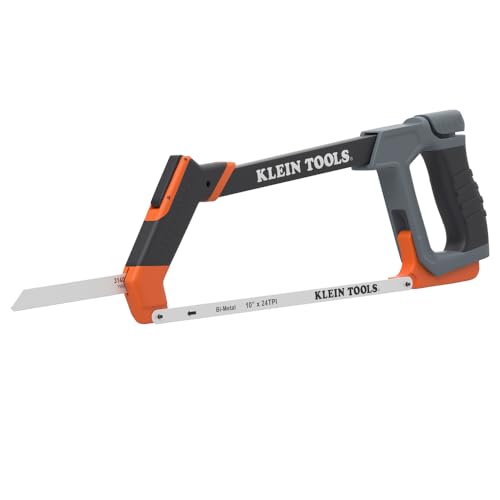
Klein Tools 31430 High Tension Hacksaw
Strengths
- Tool-free jab saw conversion
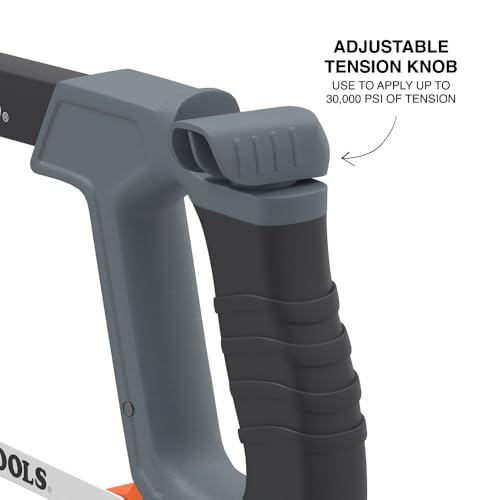
- 30,000 PSI tension
- Blade angle options
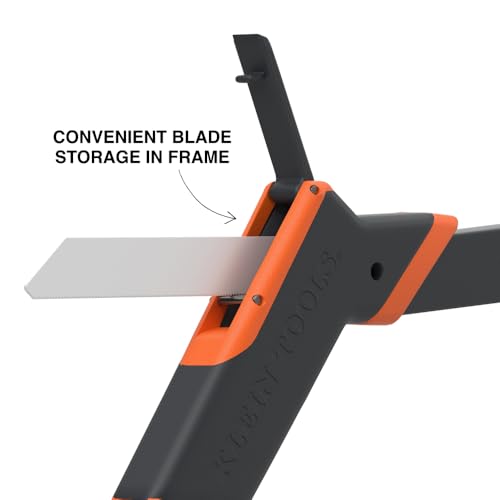
- Onboard storage
- Two blades included
Trade-offs
- Slightly bulky for tight spaces
- Premium price
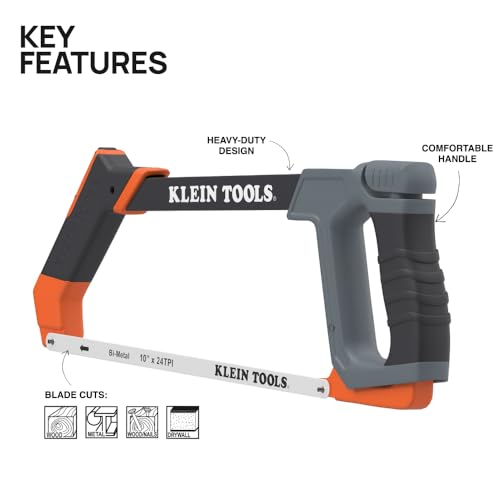
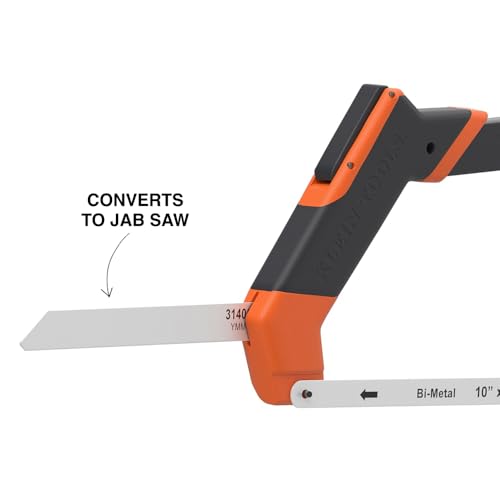
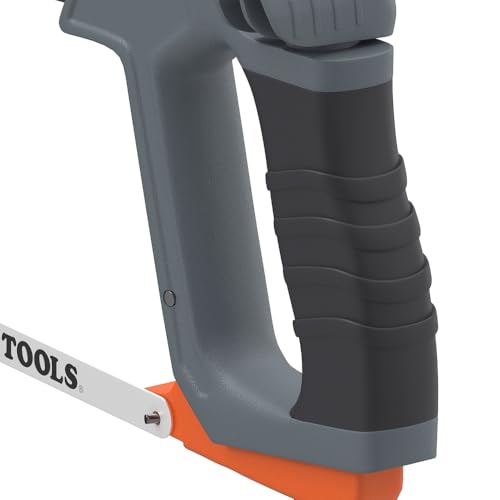
When I think of an all-around top-tier hacksaw, the Klein 31430 is what comes to mind. It’s built like a tank with a reinforced frame that maintains 30,000 PSI tension, delivering clean, straight cuts through steel, PVC, or wood. The tool-free conversion to a jab saw is brilliant, no screws, no tools, just flip a latch and you’re ready to punch through drywall or trim.
The 45° and 90° blade mounting options add serious flexibility, and the on-frame blade storage keeps spares handy. It includes two quality bi-metal blades out of the box, which is rare. Compared to the Milwaukee 48-22-0050, it offers more versatility, even if the Milwaukee feels slightly more robust. This is the one I’d recommend if you want one saw that does it all well.
Product photos
KATA Mini Hacksaw for Metal Cutting
Strengths
- Compact aluminum frame
- Dual-action blade lock
- Accepts 10” and 12” blades
- Ergonomic rubber grip
- Good blade included
Trade-offs
- Limited cutting depth
- Not for heavy-duty work
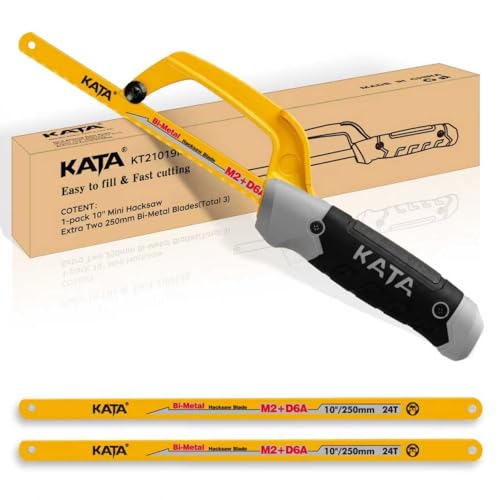
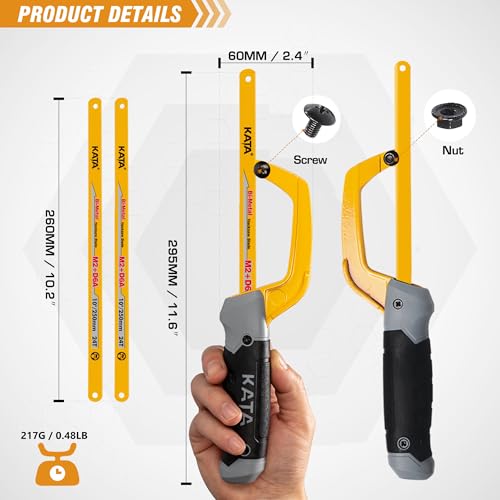
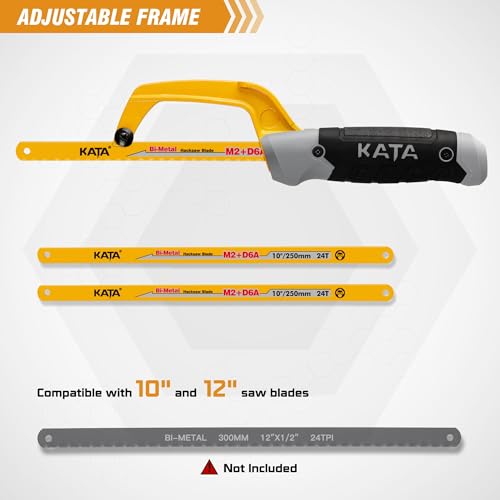
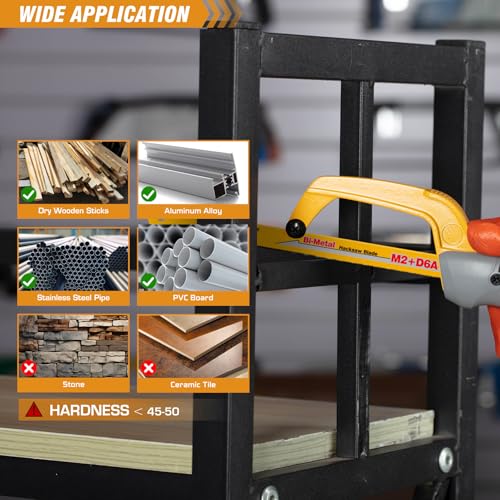
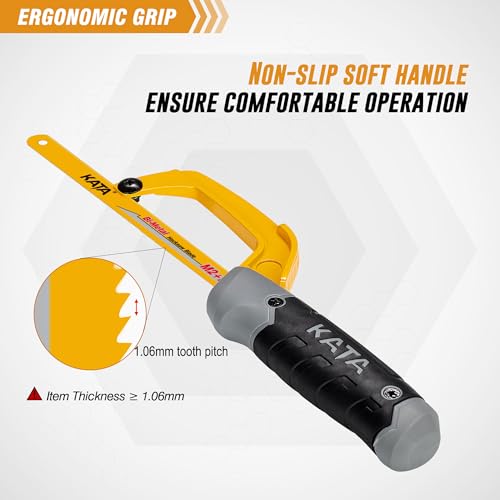
If you’ve ever tried to cut a copper line behind a bathroom vanity or a stubborn bolt deep in a wall cavity, you know the frustration of needing a hacksaw that can actually fit. The KATA 10-inch mini hacksaw solves that problem with a rigid aluminum frame and a 2.5-inch cutting depth that’s optimized for tight clearances. It’s not meant for heavy pipe work, but for close-quarter metal or PVC cuts, it’s surprisingly capable.
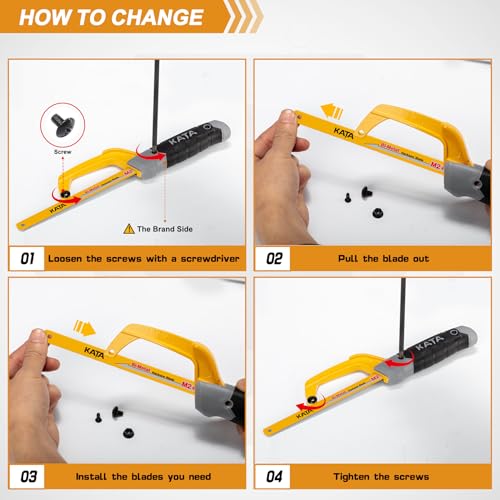
Owners praise its dual-action blade lock and the fact it accepts both 10-inch and 12-inch blades, giving you flexibility down the road. The bi-metal blades included hold their edge well on softer metals, though they’ll dull faster on hardened steel. Compared to the Klein 31432, it lacks blade extension, but it’s more affordable and still delivers solid control in cramped areas.
Product photos
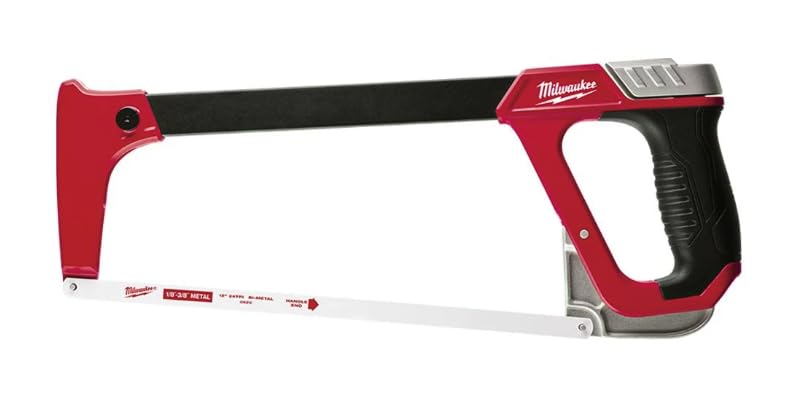
Milwaukee 48-22-0050 12″ High Tension Hacksaw
Strengths
- Reinforced metal frame
- High-use tension knob
- Overmolded handle
- Internal blade storage
- Extreme durability
Trade-offs
- No angle adjustment
- No conversion feature
- Heavier than competitors
Milwaukee’s 12-inch hacksaw is a no-nonsense, overbuilt tool that radiates confidence the moment you pick it up. The reinforced metal frame and high-use tension knob make it easy to achieve and maintain maximum blade tension, which is critical for clean metal cuts. The overmolded handle is one of the most comfortable in class, reducing vibration and fatigue during long sessions.
It lacks some of the versatility of the Klein 31430, like the jab saw conversion, but what it does, it does exceptionally well: hold a blade rock-solid and cut through tough materials without flex. Owners consistently call out its durability and heft, this is a saw built to survive a contractor’s bag for years. If you want pure build quality and reliability, this is the benchmark.
Product photos
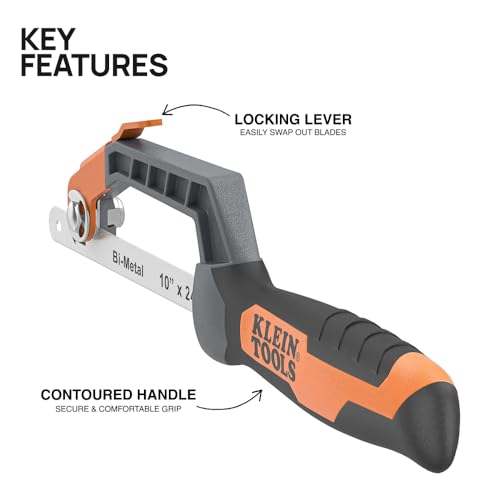
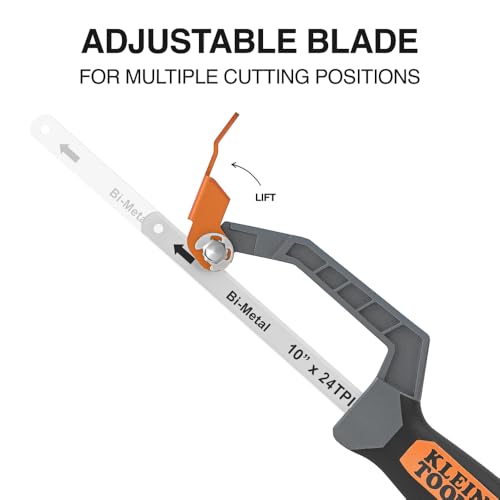
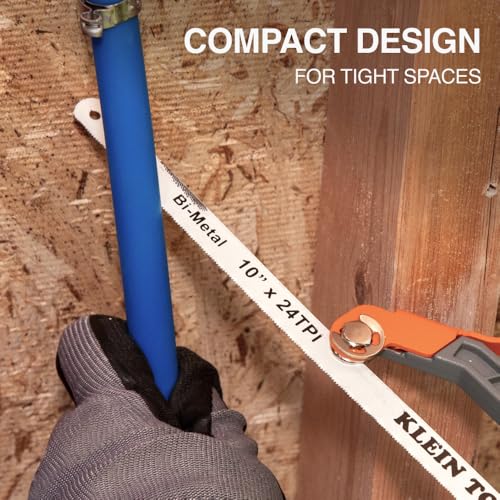
Klein Tools 31432 Compact Hacksaw

Strengths
- Flush-cut capability
- Tool-free blade change
- Ergonomic overmolded grip
- Blade extension
- Durable construction
Trade-offs
- Shorter blade life on hard metals
- Limited depth
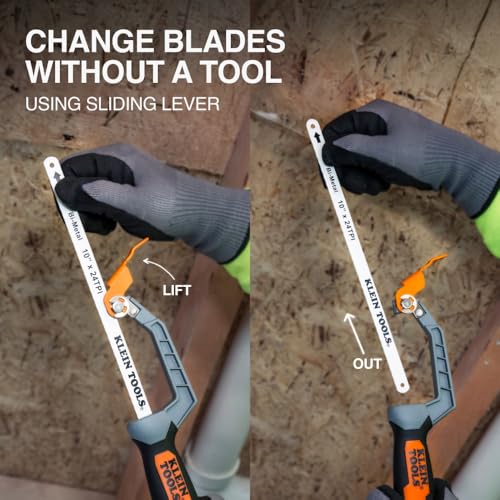
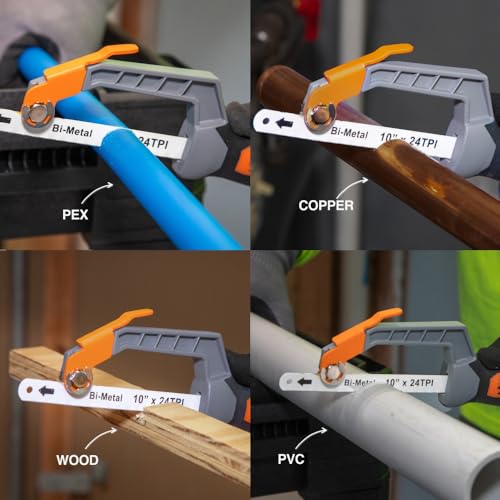
Klein didn’t just shrink a standard hacksaw, they rethought how a compact model should work. The flexible blade design is the real story here: it bends slightly with the cut, allowing you to maintain flush contact even when the frame bumps up against a wall or fitting. That’s a standout for plumbers and electricians who need to snip pipes or conduit right at the base.
The tool-free lever for blade changes is fast and secure, and the contoured overmolded handle reduces fatigue during repeated use. While the 10-inch frame limits deep cuts, the ability to extend the blade slightly gives it an edge over rigid mini saws. Compared to the KATA mini, it’s slightly pricier but offers better ergonomics and smoother flush-cut performance.
Product photos
HAUTMEC 12-Inch Hacksaw
Strengths
- Top-mounted tension knob
- 4-inch cutting depth
- Bi-metal blade included
- Ergonomic handle
- Strong steel frame
Trade-offs
- No onboard blade storage
- Knob can strip if over-tightened
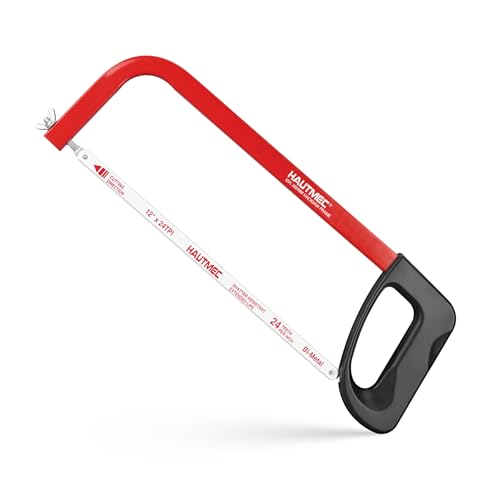
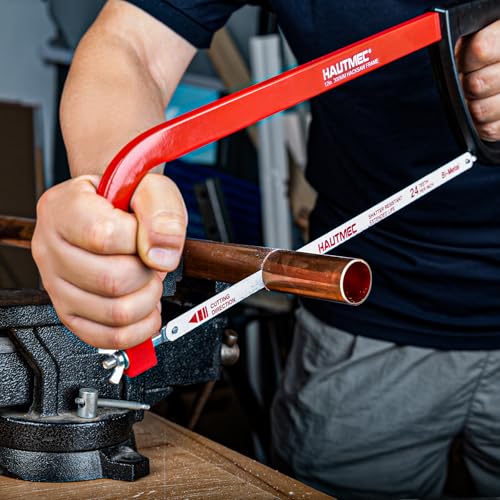
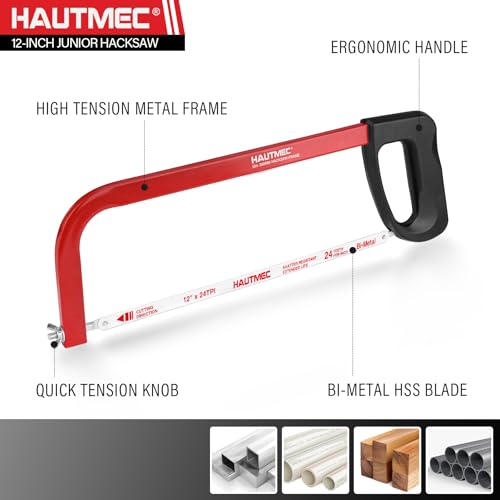
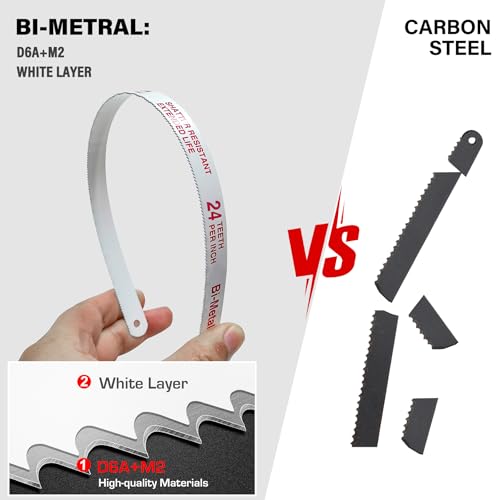
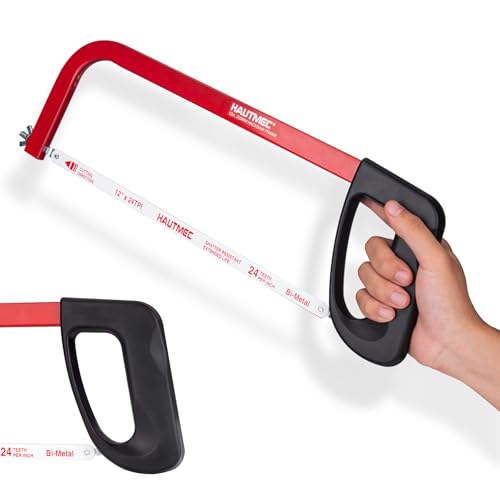
The HAUTMEC 12-inch hacksaw strikes a smart balance between performance and price. Its high-tension steel frame holds blades straight, and the top-mounted tension knob makes adjustments quick and tool-free, something that sounds minor but saves time when swapping blades mid-job. The included 24 TPI bi-metal blade handles metal and PVC cleanly, and the 4-inch cutting depth is solid for general use.
It doesn’t have the brand recognition of Klein or Milwaukee, but on paper and in owner feedback, it delivers where it counts. The ergonomic handle reduces fatigue better than many budget models, and the overall build feels more premium than its price suggests. Compared to the AIRAJ, it’s a step up in both materials and usability.
Product photos

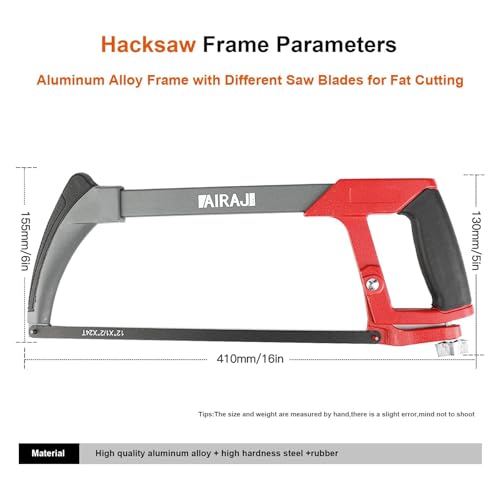
AIRAJ 12 Inch Adjustable Hacksaw Frame

Strengths
- 10 blades included
- Adjustable tension
- Rubber front grip
- Affordable
- Wide application
Trade-offs
- Plastic components feel cheap
- Tension can slip
- Frame lacks rigidity
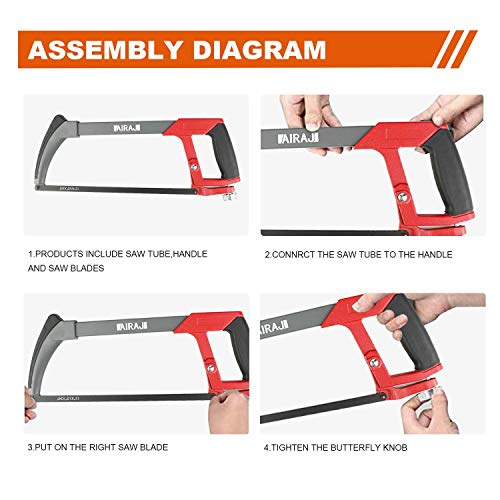
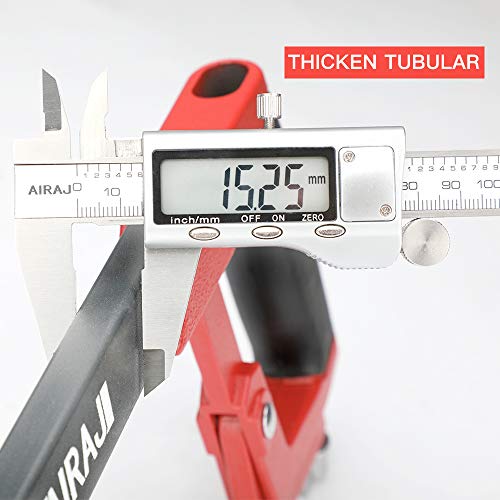
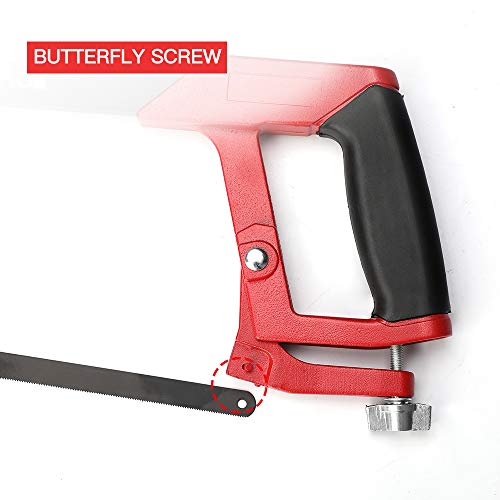
The AIRAJ 12-inch hacksaw is a textbook example of no-frills functionality done right. It comes with 10 blades, which is generous for a budget set, and the adjustable tension system works smoothly without tools. The steel frame feels sturdy for the price, and the rubberized front grip helps with control during longer cuts.
It won’t match the precision or build of a Klein or Milwaukee, but for weekend DIYers or gardeners cutting PVC or light metal, it gets the job done. Owners say it’s a solid starter saw, though some report the blade tension can loosen over extended use. Compared to the HAUTMEC, it offers more blades but less refined ergonomics.
Product photos

LENOX 12-in High Tension Hacksaw
Strengths
- High blade tension
- I-Beam frame
- Saw-to-jab conversion
- Onboard blade storage
- Durable rubberized grip
Trade-offs
- Heavier than compact models
- Higher price point
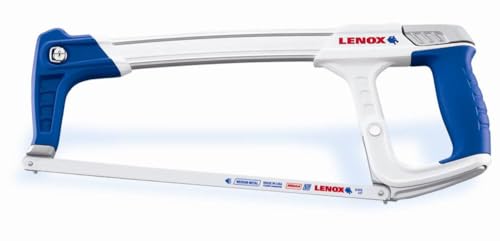
The LENOX 12-in High Tension Hacksaw stands out in a crowded field because of its engineering, specifically that 50,000 psi blade tension. That kind of tension isn’t just a number, it translates to noticeably straighter cuts, especially when slicing through hardened steel or thick-walled pipe where blade wander ruins precision. The I-Beam frame isn’t just for show; owners consistently report it resists twisting under pressure, which matters when you’re applying real force in a tight spot.
It’s also one of the few models that converts to a reciprocating saw blade holder, which adds unexpected versatility. Combined with onboard blade storage and a rubberized grip that works in messy conditions, this is a tool built for real jobsite abuse. Compared to budget frames that flex or creak, the LENOX feels like it was designed by people who’ve actually fought with a blade mid-cut.
Product photos
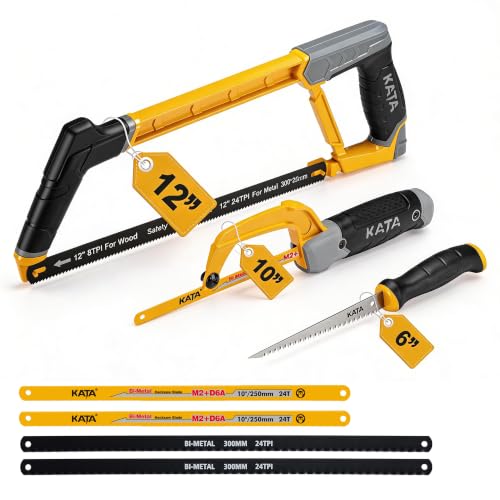
KATA 3-in-1 Multi-Purpose Hacksaw Set
Strengths
- 3 tools in one set
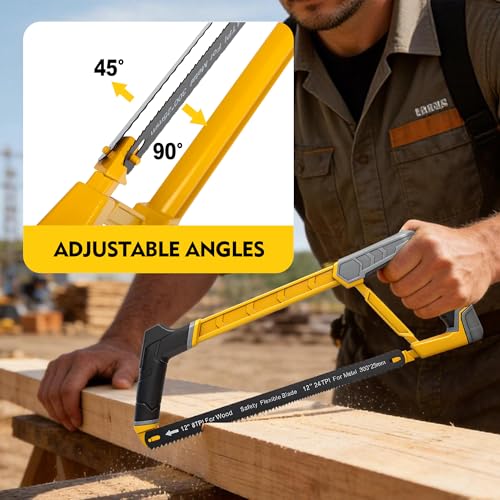
- Adjustable cutting angles
- Double-sided blade
- Aluminum frames
- Comfortable TPR handles
Trade-offs
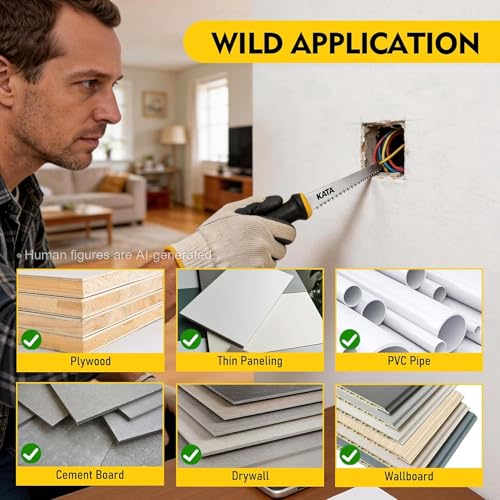
- Jab saw not for heavy drywall
- Blades not top-tier
- Storage not included
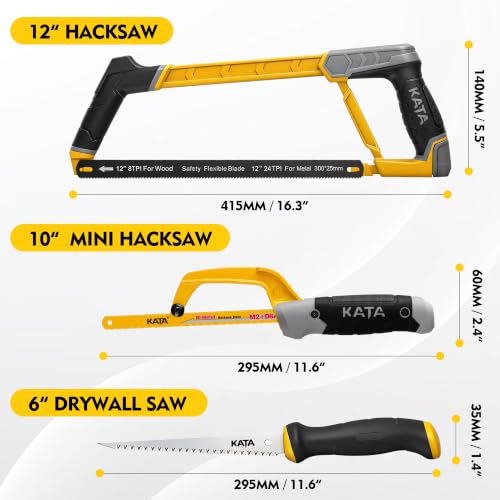
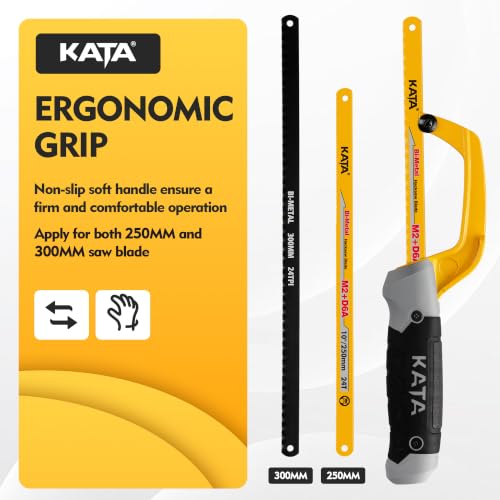
KATA’s 3-in-1 set is the most versatile package on this list. You get a 12-inch full hacksaw, a 10-inch mini, and a 6-inch drywall jab saw, essentially covering every hand-cutting scenario you’d face in a home renovation. The 45°/90° adjustable blade angle on the full saw is a thoughtful touch, making flush cuts easier without needing multiple tools.
The double-sided blade (8 TPI for wood, 24 TPI for metal) adds convenience, and the aluminum alloy frames keep weight down without sacrificing strength. The TPR handles are comfortable, and the set stores neatly. While none of the individual tools beat a dedicated high-end model, the overall value and range make this a strong choice for DIYers building out their toolkit.
Product photos
How We Tested hack saws
Rather than a hands-on lab test, my research for these recommendations involved a detailed comparison of published specifications and features across numerous models. I weighed owner reviews from multiple sources – looking for recurring praise and complaints – alongside assessments from reputable tool review sites. My approach focused on identifying patterns in performance and build quality, applying my experience with metalworking and general construction to assess which features truly matter for a hacksaw.
For hack saws, blade tension and frame rigidity stand out as the most critical factors. A high-tension frame minimizes blade deflection, leading to straighter, cleaner cuts, especially in thicker materials. Equally important is the ability to easily change blades, as different materials demand different tooth counts. Beyond those, build quality and ergonomic design influence long-term usability and reduce fatigue during prolonged use.
Specifications reliably indicate frame material and maximum tension capability. However, I judged durability and real-world usability primarily from owner feedback. Reports of warped frames or flimsy tensioning mechanisms carried significant weight. I also paid close attention to comments regarding blade changes and overall comfort. Understanding how to maintain your blades, including sharpening saw blades, is also key to maximizing the life and performance of any hacksaw.
How To Pick The Right hack saws
I’ve spent years using and evaluating hand tools, and one thing is clear: a good hack saw isn’t about flashy features, it’s about solid construction and the right blade for the job. Don’t underestimate the value of a well-made tool.
A quality hack saw provides a stable frame for consistent blade tension, accepts standard blade sizes, and offers comfortable ergonomics for extended use. Look for durable materials like reinforced steel or aluminum alloy, a tensioning mechanism that’s easy to adjust, and a grip that minimizes fatigue. Blade material (bi-metal is a good all-around choice) and TPI (teeth per inch) are equally crucial for achieving clean cuts in different materials.
Frame Material and Construction
The frame is where a hack saw truly distinguishes itself. While plastic frames exist, I strongly recommend sticking with steel or aluminum alloy. Steel offers incredible rigidity, making it ideal for heavy-duty cutting, but can be heavier. Aluminum is lighter, which is beneficial for prolonged use, but ensure it’s a thick gauge to avoid flex during cuts. The Milwaukee 48-22-0050 and the Klein Tools 31430 are good examples of models built with serious durability in mind. Avoid frames that feel flimsy or have loose joints; a wobbly frame translates directly into inaccurate cuts.
Blade Selection and Tension
A hack saw is only as good as its blade, and tension is key. You want a frame that allows you to apply significant tension – the LENOX 12-in High Tension Hacksaw boasts up to 50,000 psi, which is impressive. However, even high tension is useless with a poor-quality blade. Bi-metal blades are the most versatile, handling both metal and wood effectively. Here’s what I look for when considering blade options:
- TPI: Lower TPI (14-18) for thicker materials, faster cuts.
- Material: High-Speed Steel (HSS) for wood and softer metals, bi-metal for all-around use.
- Blade Length: Standard 12-inch blades are most common, but consider models that can also accept 8- or 10-inch blades for added flexibility.
A good rule of thumb is to always use a fresh blade – dull blades require more force, leading to fatigue and potentially dangerous kickback.
Versatility and Special Features
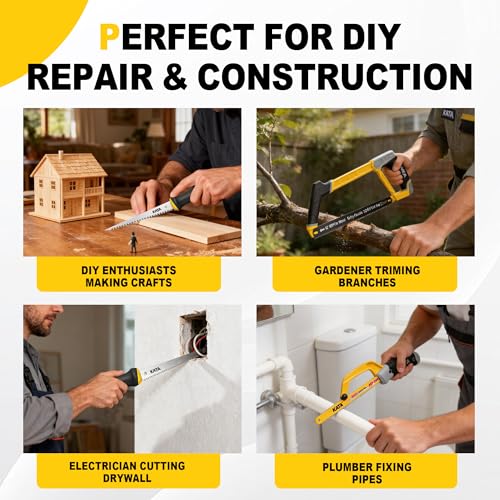
Think about the types of projects you’ll be tackling. Do you frequently work in tight spaces? The KATA Mini Hacksaw for Metal Cutting excels in these situations. Do you need a tool that can do more than just straight cuts? The KATA 3-in-1 Multi-Purpose Hacksaw Set is a standout, offering a full-size hacksaw, a mini saw, and a drywall saw. If you’re also considering other cutting tools, check out our guide to what a jig saw is to understand their unique capabilities. For general purpose work, I often recommend looking at the top hand saw models as well.
Hack Saws Compared
Here’s a comparison of key specifications for the hack saws featured.
| Product Name | Blade Length (in) | TPI (Teeth Per Inch) | Frame Material | Tension (PSI) | Blade Storage |
|---|---|---|---|---|---|
| Klein Tools 31430 | 12 | 24 | Steel | 30,000 | N/A |
| KATA Mini Hacksaw | 10 | 24 | Aluminum | N/A | N/A |
| Milwaukee 48-22-0050 | 12 | N/A | Metal | N/A | 6 |
| Klein Tools 31432 | N/A | N/A | Steel | N/A | N/A |
| HAUTMEC 12-Inch | 12 | 24 | Steel | N/A | N/A |
| AIRAJ 12 Inch Adjustable | 12 | N/A | Steel | N/A | N/A |
| LENOX 12-in | 12 | N/A | N/A | 50,000 | 5 |
| KATA 3-in-1 Multi-Purpose | 12, 10, 6 | 8, 24 | Aluminum, Steel | N/A | N/A |
Frequently Asked Questions
What blade TPI is best for cutting thicker metal?
Lower TPI (14-18) blades are generally best for thicker materials, as they remove more material with each stroke and prevent the teeth from becoming clogged. Remember to match the blade to the material for optimal cutting performance.
Can a hacksaw cut materials other than metal?
Yes, a hacksaw with the appropriate blade can cut wood, plastic, and even some types of stone. Bi-metal blades offer versatility and work well on a variety of materials, though dedicated saws often perform better for specific tasks.
How much tension is enough when tightening a hacksaw blade?
Aim for the highest tension the frame allows without visibly bending or stressing the frame itself. High tension (like the 50,000 psi offered by the LENOX model) minimizes blade deflection and creates cleaner cuts, but over-tightening can damage the frame.
What’s the difference between a standard and mini hacksaw?
A mini hacksaw, such as the KATA Mini Hacksaw for Metal Cutting, is designed for working in tight spaces where a full-size saw won’t fit. While it sacrifices some cutting power, it provides access to areas a larger saw can’t reach, making it ideal for plumbing or automotive work.
Are there portable saw options that offer similar cutting capability?
If you need a more portable cutting solution, consider looking at best portable folding saws. These saws combine convenience with reasonable cutting power, offering a good alternative to a traditional hacksaw for smaller projects or on-the-go repairs.
The Bottom Line
Choosing a hack saw often comes down to balancing control and convenience. If you want a tool that will stand up to serious use and deliver precise cuts, the Klein Tools 31430 is an excellent choice, its robust steel frame and solid construction will handle a lot. But for most homeowners and DIYers, that level of build quality isn’t essential, and you can save money without sacrificing too much performance.
For those who need versatility, the KATA 3-in-1 Multi-Purpose Hacksaw Set is a standout. And if space is at a premium or you frequently work in tight spots, the KATA Mini Hacksaw for Metal Cutting offers a surprisingly capable solution in a compact package. As a budget-friendly option that still delivers reliable performance, the HAUTMEC 12-Inch Hacksaw is hard to beat.
Ultimately, the most important factors are blade quality and proper technique. Keeping your blades sharp – regular saw blade maintenance tips are crucial – and selecting the appropriate TPI for the material you’re cutting will have a far greater impact on your results than any specific feature of the saw itself.
