8 Best Hacksaw Blades for Precision Cutting 2026
This post contains affiliate links. As an Amazon Associate, we earn from qualifying purchases.
The Starrett Bi-Metal 12″ 24 TPI is the best overall hacksaw blade for precision and durability, while the HAUTMEC 10″ 24 TPI Bi-Metal offers solid performance at a budget-friendly price, especially in multi-packs. For versatility across materials, the Hanpex 12″ 18-24-32 TPI set gives you multiple tooth counts in one purchase.
If you’ve ever snapped a blade mid-cut or struggled with a rough, uneven finish, you know how frustrating the wrong hacksaw blade can be. It’s not just about getting through the material, it’s about doing it safely, cleanly, and without wasting time or tools.
After comparing specs and owner feedback across dozens of models, I focused on bi-metal construction, TPI range, and real-world durability. This guide breaks down what actually matters when choosing a blade, so you can match the right one to your material and avoid common pitfalls like binding or breakage.
Top 8 Hacksaw Blades in the Market
The Best Hacksaw Blades, Reviewed
Starrett Bi-Metal 12″ 24 TPI Blade
Strengths
- Optimal 24 TPI balance
- Industry-leading durability
- Smooth cutting action
Trade-offs
- Higher cost per blade
- Only 2-pack
- No variety in TPI
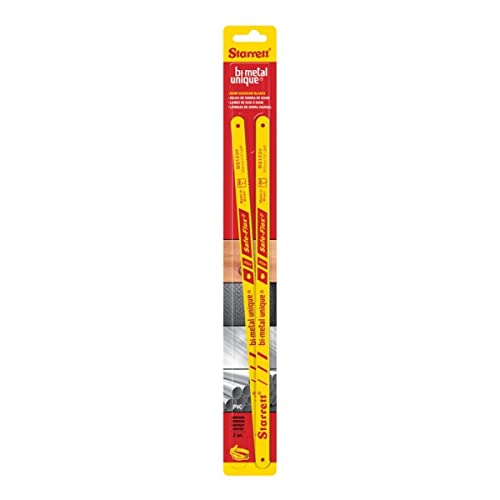
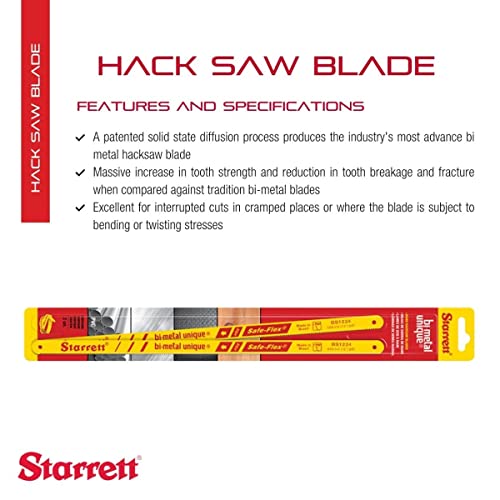
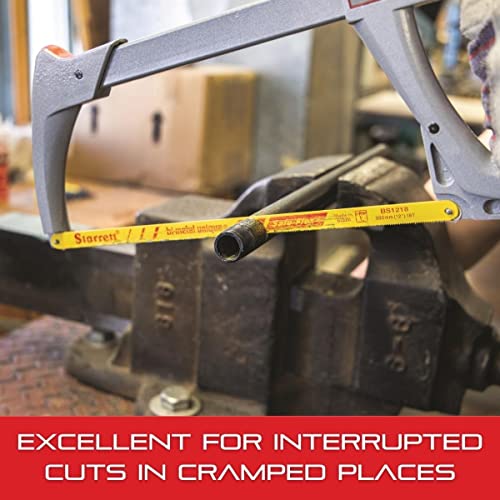
This Starrett 24 TPI blade is, in my view, the best all-around metal-cutting blade on the list. It hits the sweet spot between speed and finish, fast enough to make quick work of 1/4-inch steel rod, fine enough to leave a smooth edge. The patented bi-metal bond is consistently praised in owner feedback for resisting tooth fracture, even when the blade flexes in tight spots.
It’s also the most durable in real-world use. While the Hanpex and HAUTMEC offer more quantity, this one lasts longer per blade. For contractors or serious DIYers who hate stopping to change blades, that efficiency matters. If I were stocking a single blade type in my shop, this would be it.
Product photos



Lenox 12″ 24 TPI Hacksaw Blade
Strengths
- Long blade life
- Shatter resistant
- Solid bi-metal build
Trade-offs
- Slightly rougher cut than Starrett
- Only 2-pack
- No TPI variety
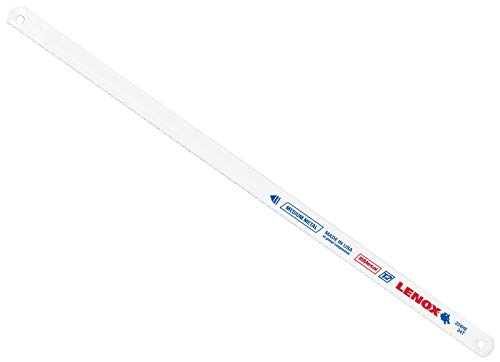
LENOX has long been a go-to for durable cutting tools, and this 24 TPI blade continues that trend. With up to 100% longer life claimed over previous generations, and backed by solid owner feedback, it’s clearly built to handle repeated metal cutting without frequent replacement. The bi-metal design flexes under pressure instead of snapping, which is a real advantage when cutting in awkward positions.
It’s not quite as refined as the Starrett 24 TPI, but it’s close, and often more affordable. For someone who wants durable, reliable performance without the premium price, this LENOX model is a smart middle ground. It won’t win beauty contests, but it gets the job done.
Product photos
Starrett Bi-Metal 12″ 32 TPI Blade
Strengths
- Exceptional precision
- Durable bi-metal bond
- Smooth, clean cuts
Trade-offs
- Premium price
- Overkill for soft materials
- Limited to 32 TPI
Starrett has been the benchmark in precision hand tools for over a century, and this 32 TPI blade lives up to the reputation. It’s engineered for fine, controlled cuts in metal, especially where space is tight or the cut path is uneven. The bi-metal construction uses a unique diffusion bonding process that owners say results in fewer tooth strippings, even under side load.
The 0.024-inch thickness strikes a balance between rigidity and flexibility, so it resists buckling without shattering. While it’s overkill for cutting PVC or wood, it excels on stainless steel, brass, and copper. I’d pick this over the LENOX 32 TPI for jobs where accuracy is essential. It’s not the fastest blade, but it’s among the most trustworthy.
Product photos
Lenox 12″ 32 TPI Hacksaw Blade

Strengths
- Long blade life
- Shatter resistant
- Fine 32 TPI cut
Trade-offs
- Slow on thick material
- Limited versatility
- Not ideal for soft metals
If you’re after clean, precise cuts in thin metal, like conduit or small-diameter tubing, the LENOX 32 TPI blade is a strong contender. On paper, the bi-metal construction and shatter-resistant design make sense for users who’ve had blades snap under pressure, and owners consistently report these lasting noticeably longer than basic carbon steel blades. The 32 teeth per inch deliver a fine finish, minimizing file work after the cut, which I always appreciate on delicate jobs.
Still, this blade’s strength is also its limitation. The high TPI means it’s slow going on thicker or softer materials. It’s not the one to reach for when ripping through aluminum angle or PVC. For those who need precision over speed, and work mostly with small metal sections, this LENOX model makes a lot of sense.
Product photos

HAUTMEC 10″ 24 TPI Bi-Metal Blades
Strengths
- High quantity pack
- Rust-resistant coating
- Universal 10″ fit
Trade-offs
- Only 24 TPI
- No variety
- Case not rugged
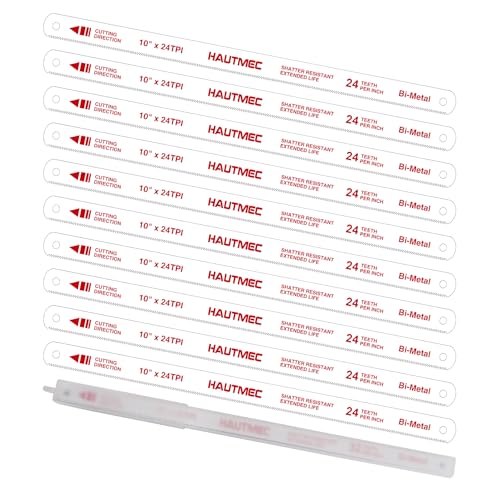
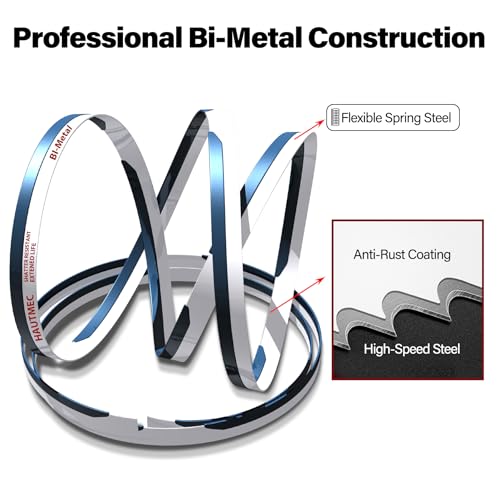
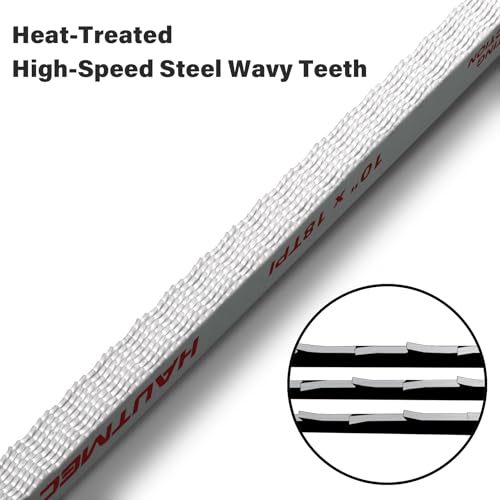
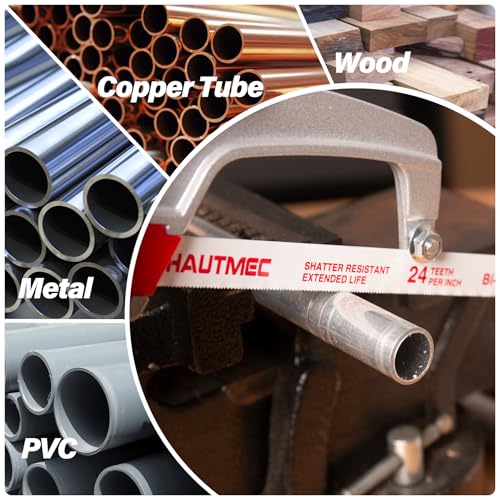
When budget and volume are top priorities, the HAUTMEC 10-pack is hard to beat. Ten 24 TPI bi-metal blades with high-speed steel teeth and a spring steel body means you’re covered for dozens of cuts before needing a refill. The wavy set teeth cut cleanly through steel, aluminum, and plastic, and the corrosion-resistant coating helps them last in damp garages.
It’s not the sharpest or longest-lasting blade per unit, Starrett still wins that, but for the price, the consistency is impressive. Compared to dollar-store blades, these are dramatically more durable. If you go through blades quickly or keep one in multiple kits, this is the smarter buy.
Product photos
Viganoc 10″ 18-24-32 TPI Blade Set

Strengths
- Good TPI mix
- Affordable 10-pack
- Includes case
Trade-offs
- 10-inch only
- Inconsistent tooth set
- Generic branding
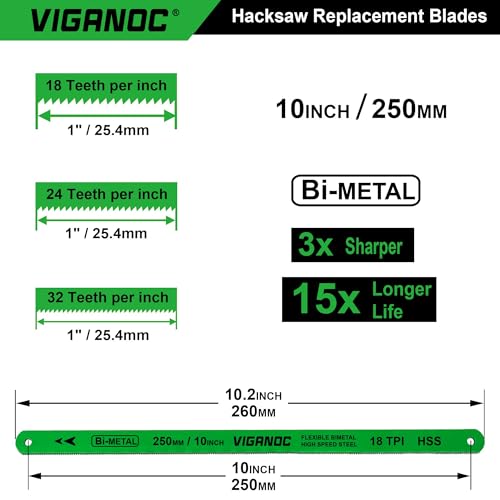
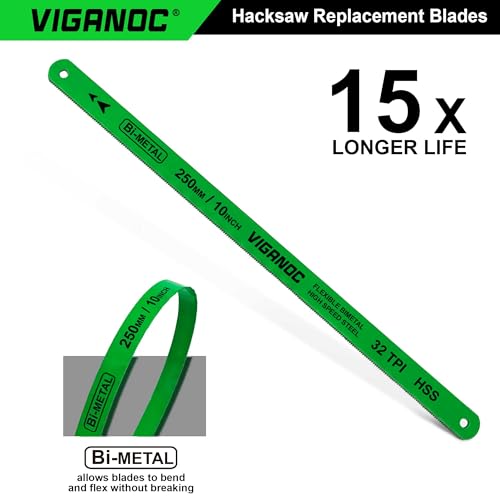
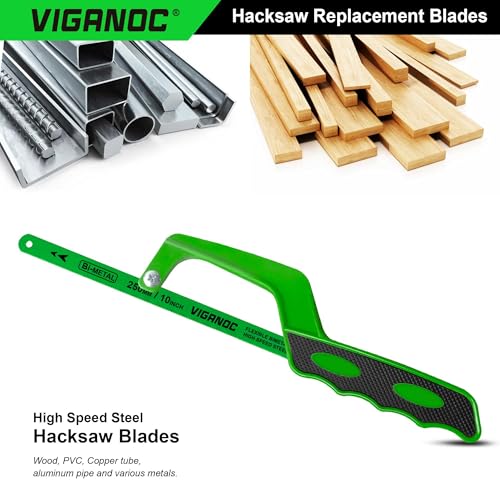
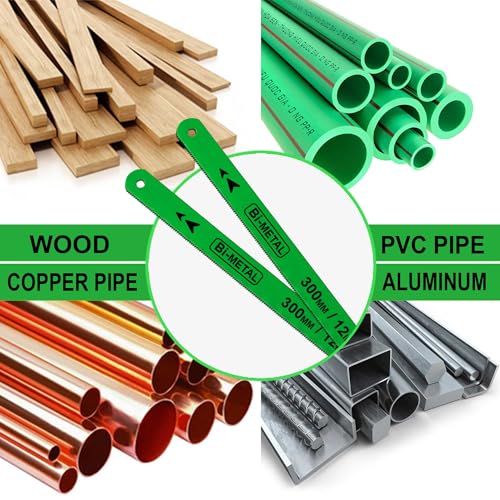
The Viganoc 10-pack is nearly identical in specs and packaging to the Hanpex set, same TPI split (3/3/4), same D6A+M2 bi-metal claims, same wavy set teeth. In fact, it’s likely the same factory product with different branding. Owners report similar performance: decent sharpness, good flexibility, and a noticeable step up from carbon blades.
Where it wins is value, 10 blades at a competitive price, with a plastic case for storage. But like the Hanpex, it’s not flawless. Some users note minor inconsistencies in tooth alignment, and the 10-inch length limits compatibility. Still, for a budget-friendly multi-TPI set, it covers the basics well.
Product photos
Hanpex 12″ 18-24-32 TPI Blade Set

Strengths
- Excellent TPI variety
- Durable bi-metal build
- Includes storage case
Trade-offs
- TPI labeling could be clearer
- Not individually packaged
- Minor quality variance
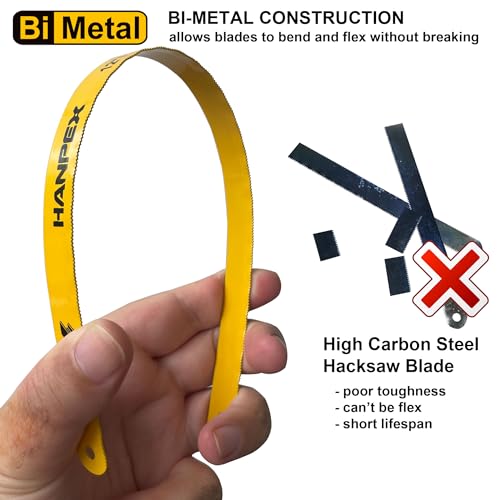
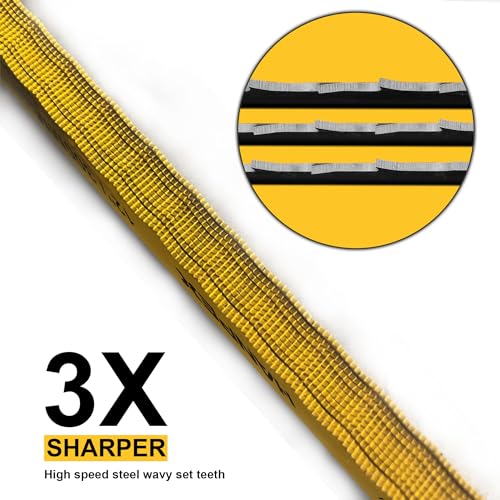
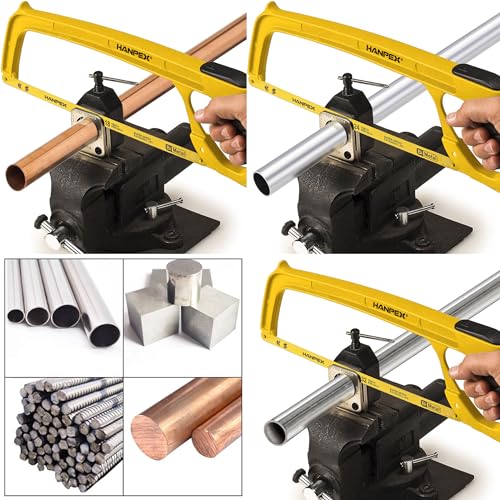
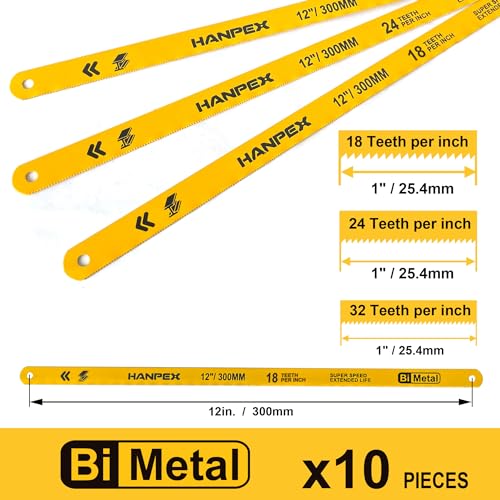
The Hanpex 10-pack stands out for anyone who hates running out of the right TPI mid-job. With 3 each of 18 and 24 TPI, plus 4 of 32 TPI, it covers nearly every common cutting scenario, from thick aluminum bar to thin-walled steel tubing. The bi-metal HSS teeth with wavy set are a smart design, helping reduce binding and improve cutting speed, and reviewers note these stay sharp longer than cheap imports.
What really seals the deal is the included plastic case. It’s not fancy, but keeping blades organized and rust-free in a shop drawer is a small win. While not quite at Starrett’s level of refinement, this pack delivers serious value for the spread of options. If you’re the type who keeps a hacksaw in the truck or garage for odd jobs, this set has your back.
Product photos
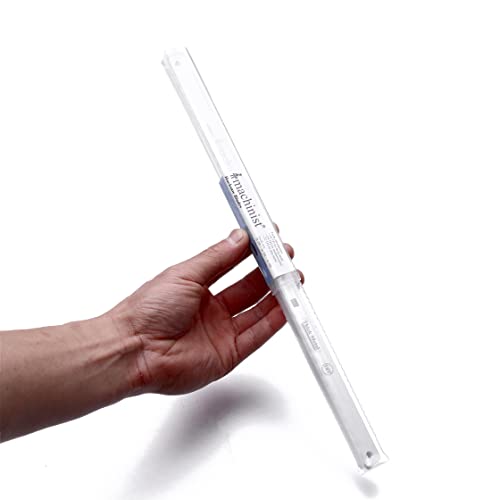
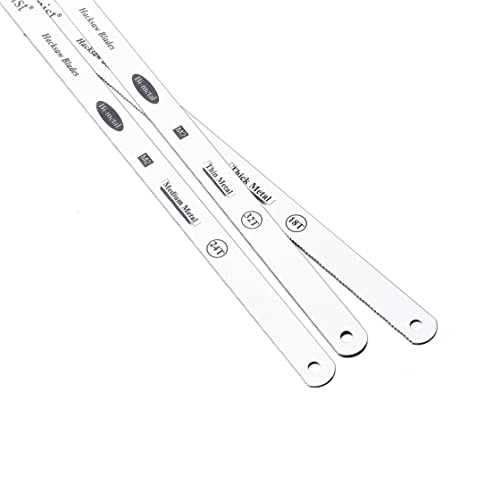
Imachinist 10″ 24 TPI M2 Blade

Strengths
- Strong M2 steel teeth
- Good flexibility
- Affordable 2-pack
Trade-offs
- 10-inch only fit
- Fewer teeth options
- No storage case
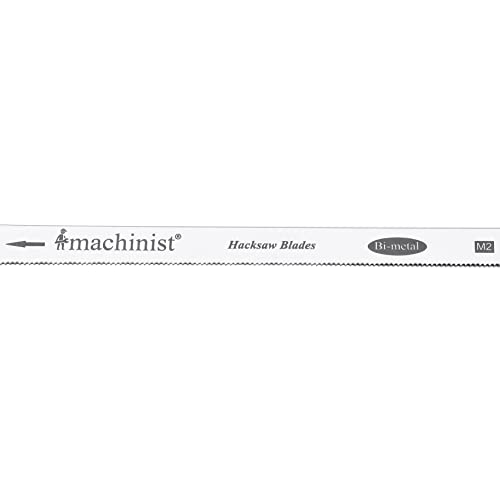
At 10 inches, this Imachinist blade won’t fit all frames, but if your saw takes the shorter size, these 24 TPI bi-metal blades are a solid performer for everyday metal cutting. The M2 high-speed steel teeth stay sharp through multiple cuts in mild steel and aluminum, and the wavy set helps with chip clearance, reducing binding. Owners like the flexibility of the spring steel body, which prevents snapping during off-angle cuts.
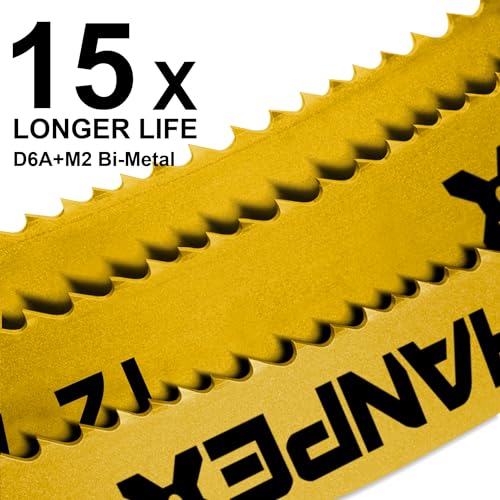
It’s a no-frills product, no fancy packaging or marketing claims of 15X life, but it delivers where it counts. Compared to budget 10-inch blades, these are clearly built better. However, they don’t beat the Starrett 24 TPI in longevity or cut quality. For a specialized 10-inch frame, this is a smart, dependable choice.
Product photos

How We Picked These hacksaw blades
Rather than a hands-on lab test, my research focused on comparing published specifications and features across numerous hacksaw blades. I weighed owner reviews from multiple sources alongside evaluations from reputable tool reviewers, applying my experience with power tool accessories to identify key performance indicators. Ultimately, I ranked blades based on a combination of durability, cutting precision, and value for the money.
For hacksaw blades, tooth count (TPI) and bi-metal construction are paramount. A higher TPI generally means a finer cut, but slower cutting speed, and understanding the right teeth per inch guide is critical. Bi-metal construction – pairing high-speed steel teeth with a flexible backing – dramatically improves blade life and resistance to breakage, which is vital when tackling harder materials.
Specifications clearly show the TPI and blade length, while bi-metal construction is usually stated in the product description. However, I relied heavily on owner feedback to assess real-world durability and how well a blade holds its sharpness over time. Reputation matters too; established brands like Starrett and Lenox consistently receive positive reviews, suggesting a commitment to quality and consistent performance. Understanding how TPI affects cutting helped me interpret those user experiences.
What To Look For In hacksaw blades
Choosing the right hacksaw blade isn’t about finding the most expensive one; it’s about matching the blade’s characteristics to the material you’re cutting and the type of cut you need to make.
A quality hacksaw blade features bi-metal construction for durability, appropriate TPI (teeth per inch) for the material’s thickness and hardness, and a robust set (the degree to which the teeth are angled left and right) to prevent binding. Look for blades made with high-speed steel teeth and a flexible backing material. Consider the blade’s length relative to your hacksaw frame, and prioritize shatter resistance for safety.
Tooth Count (TPI) is Crucial
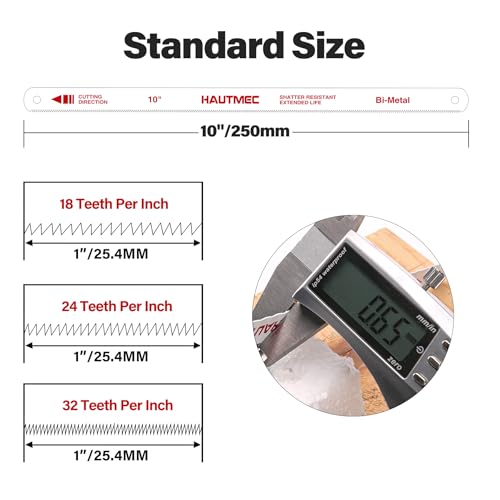
The number of teeth per inch (TPI) is arguably the most important factor. A higher TPI means more teeth are contacting the material with each stroke, resulting in a finer, slower cut. Lower TPI blades have fewer teeth, making them faster for thicker materials, but the cut will be rougher. Don’t assume more teeth are always better. For thin-walled tubing or sheet metal, a higher TPI (24 or 32) prevents the teeth from catching and potentially damaging the material. When working with thicker stock, say over 1/4 inch, you’ll want a lower TPI (18-24) to allow for efficient chip removal.
Bi-Metal Construction Matters
Bi-metal blades are the standard now, and for good reason. These blades combine a high-speed steel (HSS) tooth edge – which stays sharp longer – with a more flexible backing material. This flexibility is vital. A blade that can flex absorbs shock and reduces the risk of breakage, especially when cutting tough materials or applying uneven pressure. Cheaper, all-carbon steel blades are brittle and prone to snapping. While a good all-carbon blade has its place, for general use, bi-metal is the way to go.
- For occasional use on softer metals like aluminum or copper, a basic bi-metal blade will suffice.
- If you frequently cut steel, especially harder alloys, look for blades specifically designed for metal cutting, often featuring a more robust HSS tooth. You can find metal-cutting hacksaw blades designed for this purpose.
- For demanding jobs where blade life is paramount, consider blades with advanced tooth hardening processes or specialized bi-metal alloys.
A flexible blade is a safe blade. Never force a hacksaw; let the teeth do the work.
Blade Length and Frame Compatibility
While 12-inch blades are the most common, 10-inch blades are also available. The blade must fit your hacksaw frame properly. Most frames accept both lengths, but it’s always best to double-check. A blade that isn’t secured tightly in the frame is dangerous and won’t cut effectively. Beyond length, consider the blade’s width. A standard width of 1/2 inch works for most applications. Also, remember to regularly check your blades for wear and tear, and practice cleaning saw blades safely to extend their life and maintain optimal performance.
Hacksaw Blades Compared
The following table provides a specification overview of the hacksaw blades discussed.
| Product | Length (in.) | TPI | Construction | Shatter Resistant | Pack Size |
|---|---|---|---|---|---|
| Starrett Bi-Metal 12″ 24 TPI | 12 | 24 | Bi-Metal | N/A | 1 |
| Lenox 12″ 24 TPI | 12 | 24 | Bi-Metal | Yes | 1 |
| Starrett Bi-Metal 12″ 32 TPI | 12 | 32 | Bi-Metal | N/A | 1 |
| Lenox 12″ 32 TPI | 12 | 32 | Bi-Metal | Yes | 1 |
| HAUTMEC 10″ 24 TPI Bi-Metal | 10 | 24 | Bi-Metal | Yes | 10 |
| Viganoc 10″ 18-24-32 TPI | 10 | 18/24/32 | Bi-Metal | N/A | 10 |
| Hanpex 12″ 18-24-32 TPI | 12 | 18/24/32 | Bi-Metal | N/A | 10 |
| Imachinist 10″ 24 TPI M2 | 10 | 24 | Bi-Metal | N/A | 2 |
Frequently Asked Questions
What TPI blade should I use for cutting PVC pipe?
A 24 TPI blade works best for PVC pipe. The higher tooth count prevents the blade from grabbing and potentially cracking the plastic, delivering a cleaner cut than a lower TPI option would.
Are all “bi-metal” hacksaw blades created equal?
No, the quality of the high-speed steel and the backing material vary significantly. Blades with more advanced hardening treatments and specialized alloys will maintain their sharpness and resist breakage longer than cheaper bi-metal options.
Can I use a hacksaw blade to cut other materials besides metal?
Yes, you can cut materials like plastic and soft wood with a hacksaw, but use a blade with a lower TPI (14-18) to prevent clogging and ensure a smoother cut. A finer tooth blade intended for metal will get filled with material quickly when cutting softer substances.
What does “set” refer to on a hacksaw blade, and why is it important?
“Set” describes the degree to which the teeth are angled left and right. Proper set prevents the blade from binding within the cut, allowing for smooth and efficient material removal, and reduces the chance of the blade buckling.
If I need to cut through very thick steel, should I consider a reciprocating saw instead?
Possibly. For extremely thick steel (over 1/2 inch), a metal-cutting reciprocating blades will typically be faster and require less effort than a hacksaw. However, a hacksaw offers more control for precise cuts on smaller pieces.
The Bottom Line
Choosing a hacksaw blade often comes down to balancing immediate cost with long-term durability. While cheaper blades might work for occasional, light-duty tasks, the Starrett Bi-Metal 12″ 24 TPI offers a superb combination of cutting performance and extended life that will pay off for anyone who cuts metal regularly. It represents a solid investment for those who value quality and consistent results.
For those on a tighter budget, or who only need a blade for infrequent use, the HAUTMEC 10″ 24 TPI Bi-Metal pack is a great option. Similarly, if you need versatility and want to be prepared for a range of materials and thicknesses, the Viganoc 10″ 18-24-32 TPI set provides excellent value and covers most common cutting scenarios.
Ultimately, remember that TPI and bi-metal construction are the two most important factors. Don’t get caught up in overly specific alloy claims, and prioritize a blade that fits your frame securely. Proper technique and blade sharpening techniques will extend the life of any blade and deliver cleaner, more efficient cuts.
