8 Best Flux Core Welding Wires of 2026
This post contains affiliate links. As an Amazon Associate, we earn from qualifying purchases.
The YESWELDER E71T-GS .035 10LB stands out as the best overall flux core welding wire for its consistent arc, manageable slag, and strong performance on carbon and low-alloy steel. For budget-minded users, the VEVOR Flux Core .030 10LB offers solid reliability and value, especially for outdoor or rusty-material work, while the Blue Demon E71T-11 .030 2LB is a trusted choice for thinner gauge jobs.
Welders often struggle with spatter, poor penetration, or frustrating slag cleanup, especially when using the wrong wire for the job or material. These issues can turn a simple repair into a time-consuming hassle.
As someone who’s spent years testing tools and guiding DIYers through real-world projects, I focused on wires that deliver dependable performance based on specs, owner feedback, and their track record in the field. This guide breaks down what actually matters when choosing a flux core wire, so you can pick one that fits your machine, material, and working conditions.
Top 8 Flux Core Welding Wires in the Market
The Best Flux Core Welding Wires, Reviewed
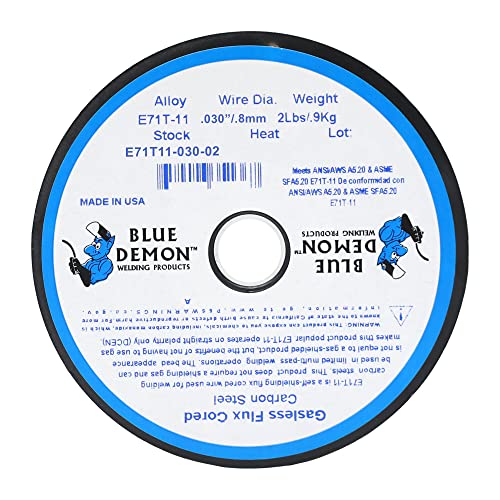
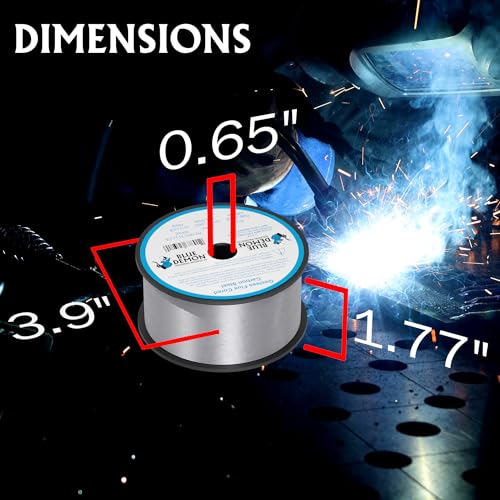
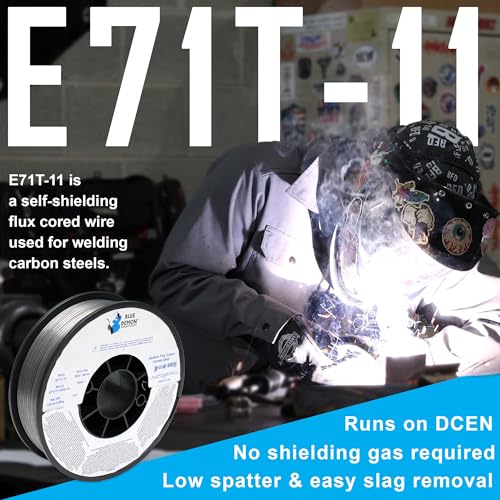
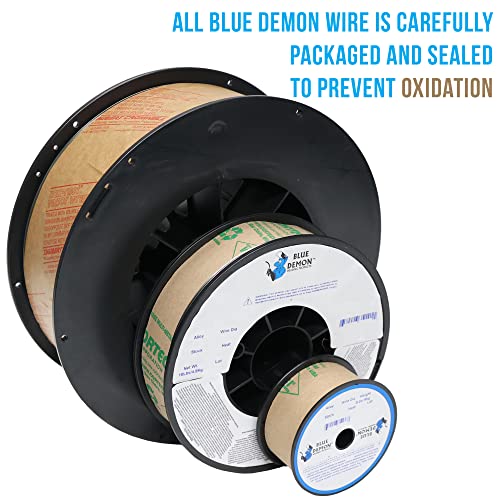
Blue Demon E71T-11 .030 2LB

Strengths
- Balanced diameter
- Multi-pass rated
- Clean slag removal
Trade-offs
- Only 2-pound spool
- Premium price
This 0.030-inch version of Blue Demon’s E71T-11 is my top pick overall. It brings the same multi-pass strength and DCEN compatibility as its thicker sibling, but in a diameter that’s easier to control on thinner materials. The arc is smooth, spatter is minimal, and slag removal is consistently praised in owner reviews, rare for flux-core wires.
It’s versatile enough for everything from automotive patchwork to farm gate repairs. The wire feeds reliably, even on older MIG machines, and the E71T-11 core handles dirty metal like a pro. Compared to E71T-GS wires, it’s simply more capable when strength and weld integrity matter.
Product photos
YESWELDER E71T-GS .035 10LB

Strengths
- Thicker 0.035″ diameter
- Excellent slag removal
- Durable ABS spool
Trade-offs
- Slightly rougher arc
- Less refined on thin metal
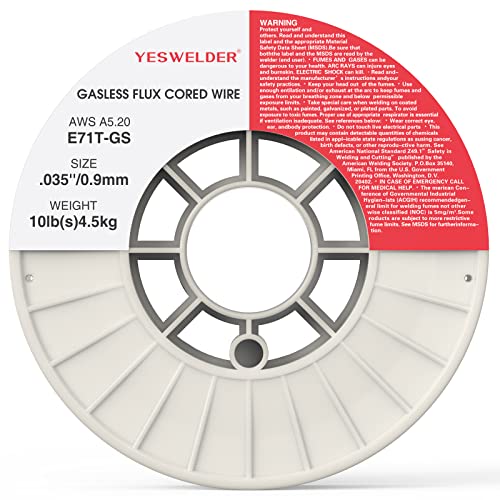
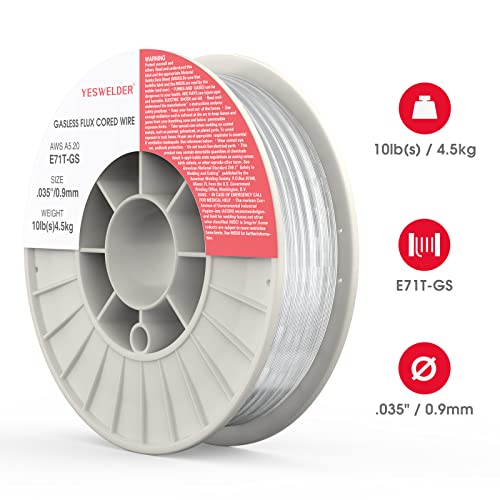
At 0.035-inch, this E71T-GS wire is a solid choice for thicker material and longer runs. The ABS plastic spool is a standout, owners praise its rigidity, which reduces tangles and improves feed reliability in less-than-perfect setups. The core chemistry includes strong deoxidizers, and reviewers confirm it handles light rust and mill scale without issue, making it a go-to for repair work on old frames or farm equipment.
It’s positioned as a value buy, and it earns that title. The wire produces clean slag that peels off easily, and the arc remains stable across positions. While it doesn’t outperform premium names like Blue Demon in smoothness, it comes close at a lower cost. If you’re doing a lot of flat or horizontal welds on 1/8-inch steel or thicker, this is a smart, cost-effective pick.
Product photos

ARCCAPTAIN Flux Core .030 2LB

Strengths
- Clean weld appearance
- Vacuum sealed
- Smooth feeding
Trade-offs
- Small 2-pound spool
- Higher cost per pound
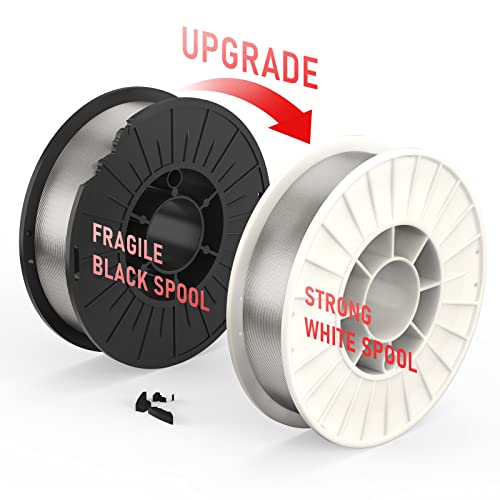
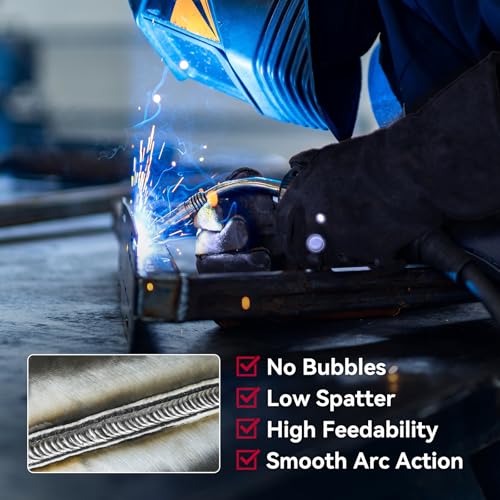
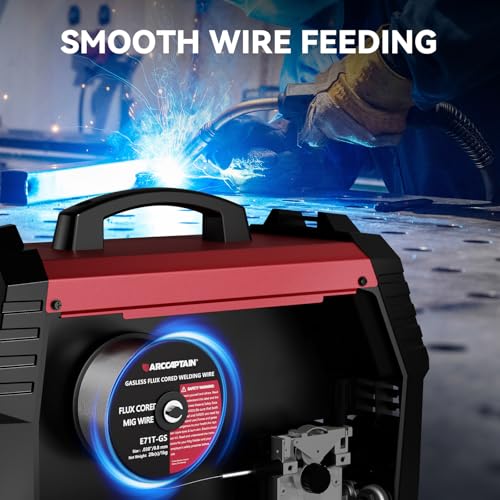
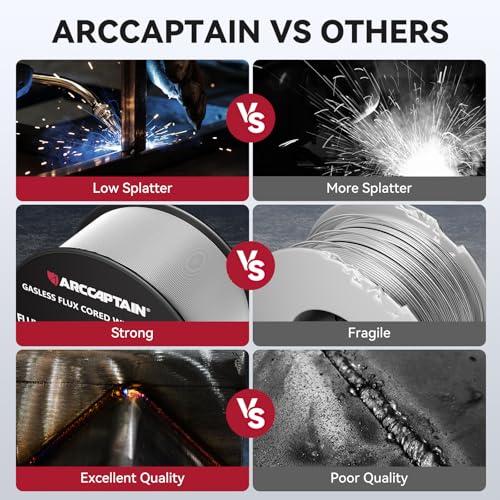
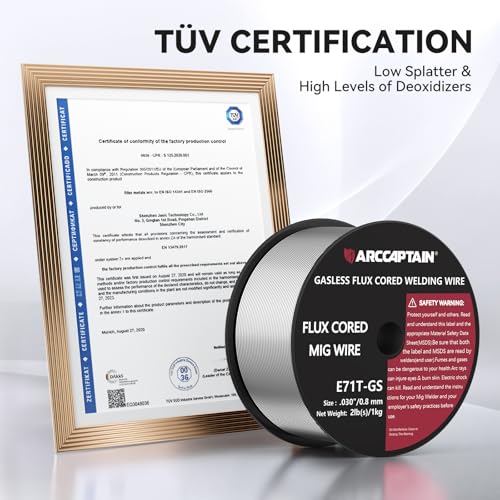
This 2-pound spool is all about clean, spatter-minimized welding right out of the vacuum seal. The E71T-GS formulation here is tuned for smooth arc action, and owner feedback backs that up, many highlight how little cleanup is needed post-weld. That makes it a strong contender for DIYers who want professional-looking beads without the fuss.
The vacuum packaging is a real advantage for long-term storage, especially in humid environments. While the small spool size means more frequent changes, it’s great for occasional users who don’t want to commit to 10-pound rolls. It’s compatible with most common MIG machines, and performs well on painted or slightly oily steel, though like all flux-core wires, prep still helps.
Product photos
Blue Demon E71T-11 .035 2LB
Strengths
- Multi-pass capable
- Strong penetration
- Excellent slag control
Trade-offs
- Smaller spool size
- Higher price per pound
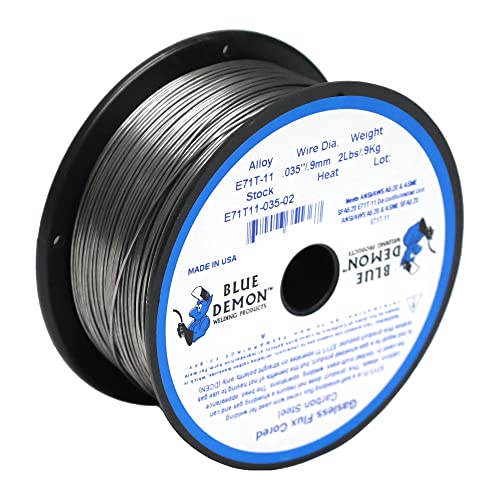
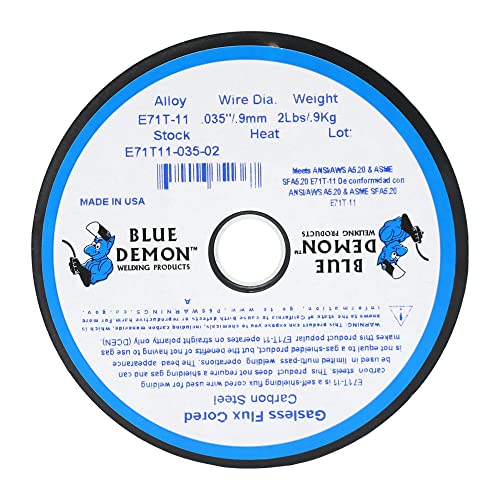
This 0.035-inch E71T-11 wire is built for toughness. Unlike E71T-GS, E71T-11 is formulated for multi-pass welding, which means stronger, more ductile joints, critical for structural or load-bearing repairs. The silicon and manganese content improves weld pool fluidity and hardness, and owners consistently report clean slag that breaks away cleanly.
It runs on DCEN, which helps with penetration on thicker steel, and it handles mill scale and rust without breaking down. While it’s only sold in 2-pound spools, its performance justifies the premium for serious work. If you’re repairing trailers, frames, or machinery, this wire delivers industrial-grade results without needing gas.
Product photos
VEVOR Flux Core .030 10LB

Strengths
- Low spatter
- Rust-tolerant
- Durable spool
Trade-offs
- Not for stainless
- Limited multi-pass data
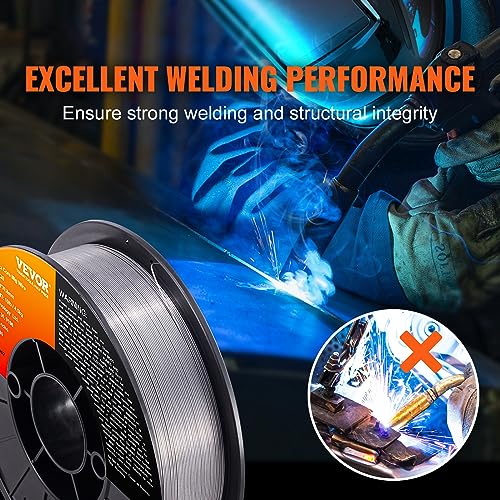
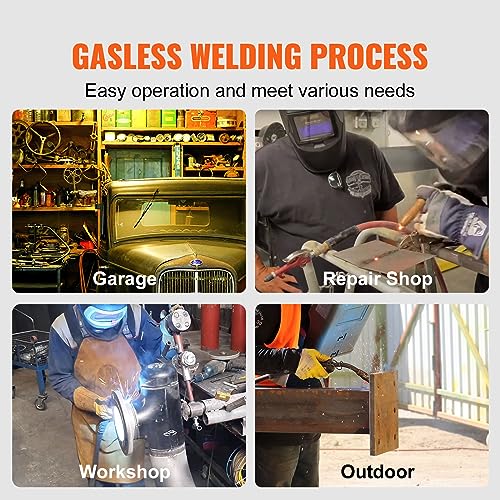
This 0.030-inch E71T-GS wire is built for practicality, especially in less-than-ideal conditions. On paper, the blend of manganese and silicon stands out, giving it solid deoxidizing power to cut through light rust and mill scale. That’s a big win for outdoor or field work where prep time is limited. Owners consistently report a stable arc and notably low spatter, which means less cleanup and more time focused on the weld.
It comes on a durable spool, which helps with feeding consistency, a common pain point with cheaper wires. While it doesn’t promise stainless or galvanized compatibility, it sticks to its core strength: reliable, gasless welding on mild steel. Compared to pricier brands, it delivers performance that punches above its weight, especially if you’re working on a budget but still need dependable results.
Product photos


YESWELDER Stainless Steel .030

Strengths
- True stainless compatibility
- All-position welding
- Corrosion-resistant welds
Trade-offs
- Higher price
- Limited to stainless use
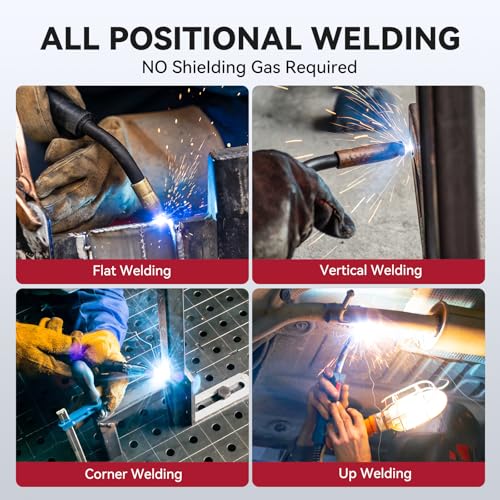
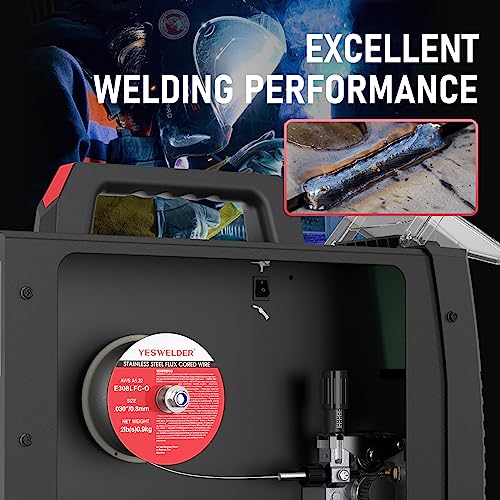
If you’re welding stainless steel without gas, this E308LFC-O wire is one of the few purpose-built options here. The flux core is designed to match the corrosion resistance of 304 and 308L alloys, and owners confirm it produces clean, ductile welds with good bead profile. It runs well in all positions, which is rare for stainless flux-core wires, many struggle overhead, but this one holds up.
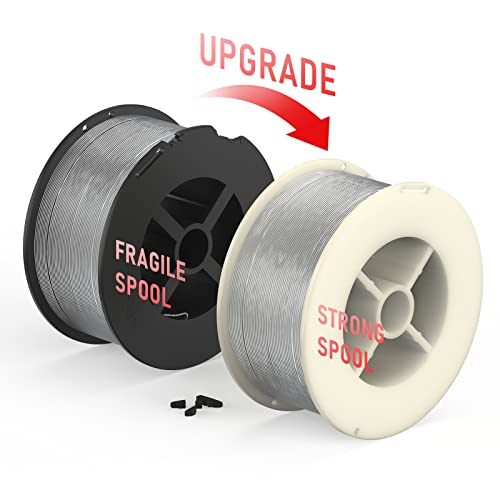
It’s not cheap, but you’re paying for material integrity. The ABS spool is sturdy, and the wire feeds reliably on most machines tuned for stainless. Given that shielding gas is a hassle outdoors, this self-shielded option is a real time-saver for food trailers, exhaust systems, or farm equipment with stainless components.
Product photos

WelderElite .030 2-Pack
Strengths
- Convenient 2-pack
- Good feedability
- Low spatter
Trade-offs
- Not true stainless wire
- Average slag removal
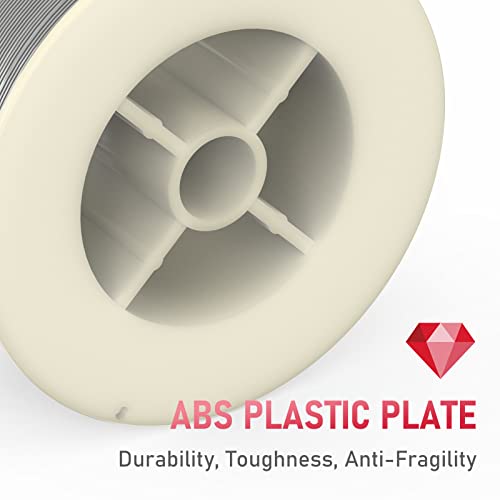
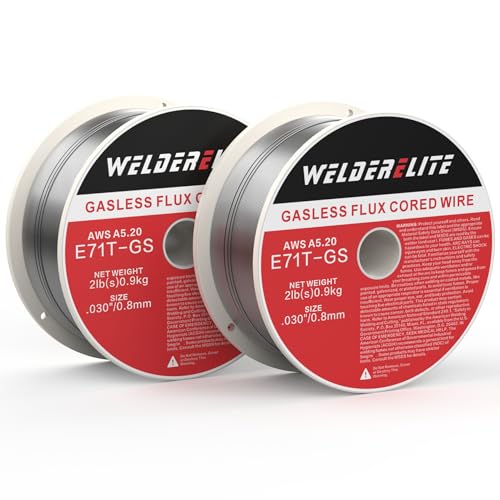
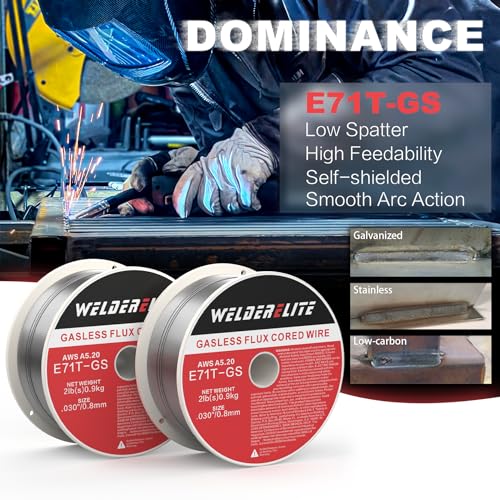
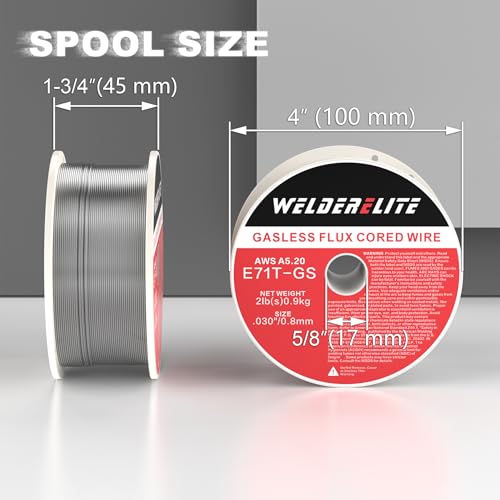
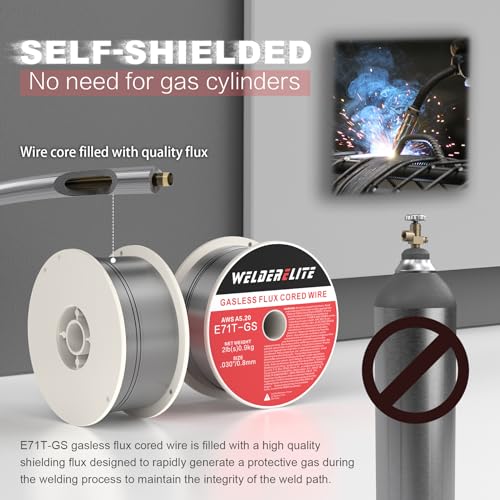
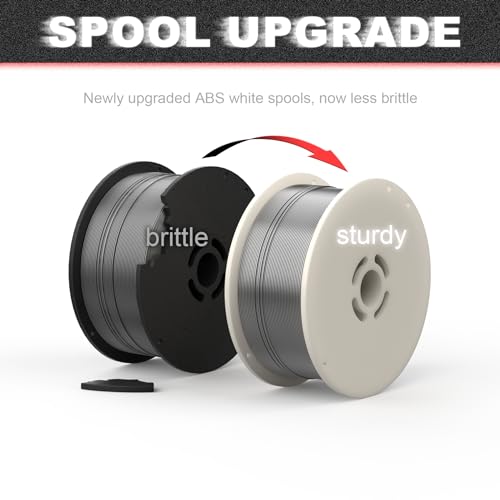
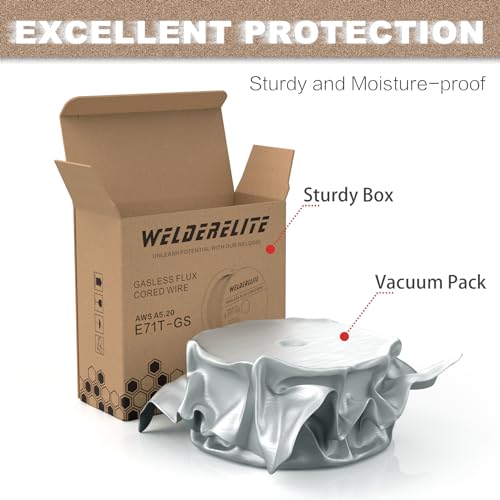
The two-pack format makes this one of the most flexible options here, 4 pounds total, split into manageable 2-pound spools. That’s ideal if you’re sharing wire across multiple machines or want backups without committing to a massive single roll. The E71T-GS wire delivers consistent arc stability and low spatter, and reviewers note it feeds smoothly even on entry-level MIG setups.
One thing to watch: while it claims compatibility with stainless and galvanized steel, owners caution that the welds on stainless can rust over time since it’s not a true stainless core. So I’d treat it as a mild steel specialist. Still, for general repairs and fabrication, it’s a solid performer. The multi-pack format gives it an edge for versatility and storage.
Product photos
4 Pack 035 Flux Core Wire
Strengths
- 4-pack convenience
- Vacuum sealed
- Good penetration
Trade-offs
- Average arc smoothness
- Not for thin metal
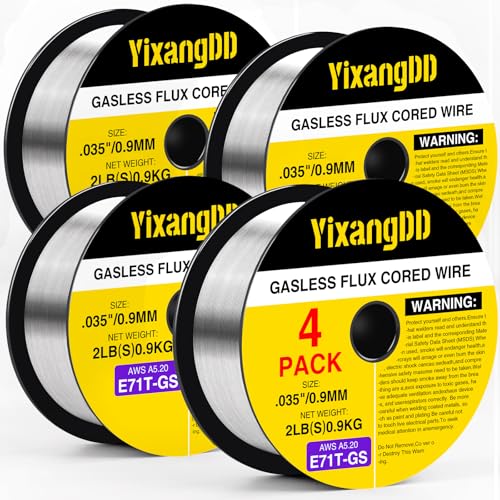
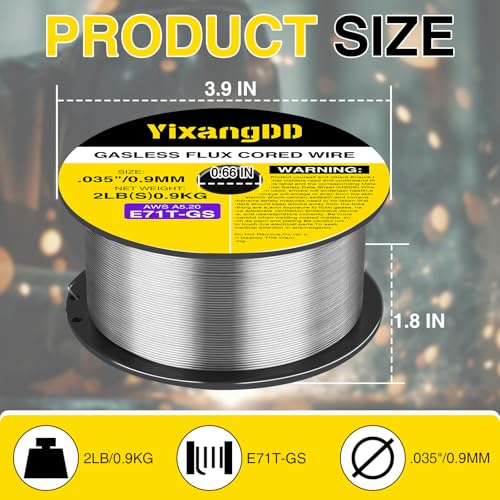
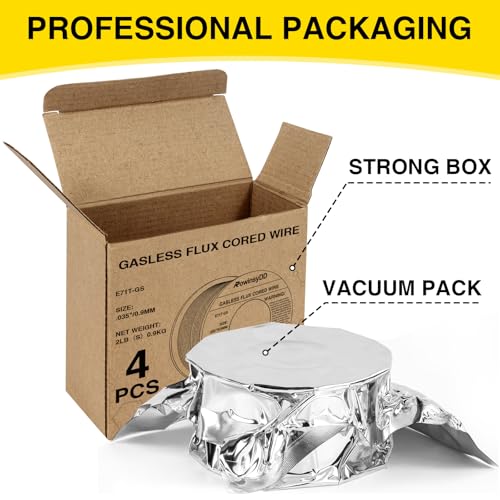
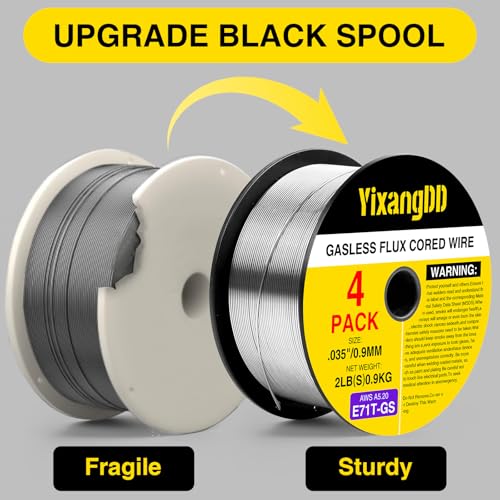
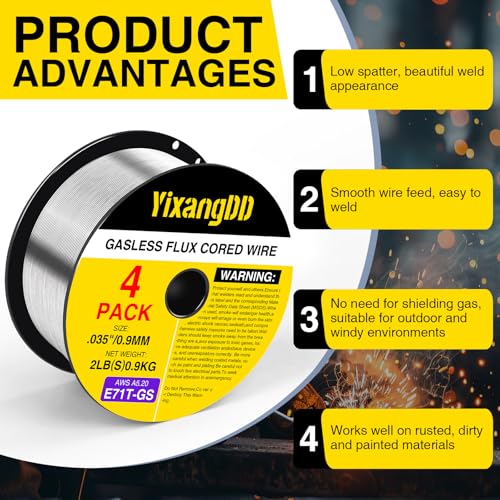
Four 2-pound spools of 0.035-inch E71T-GS wire? That’s a lot of flexibility. This pack is clearly aimed at frequent users who hate running out mid-job. The vacuum sealing on each spool is a smart touch, keeps moisture out and maintains wire integrity over time. Owners say the feedability is smooth and the arc stable, with decent slag coverage that’s easy to knock off.
While it’s not a premium wire like Blue Demon, it holds up well in real-world conditions. The thicker diameter gives deeper penetration, making it great for 1/8-inch steel and up. For someone doing regular maintenance, fencing, or trailer repairs, this pack offers both convenience and consistent performance.
Product photos
How We Chose These flux core welding wires
Rather than a hands-on lab test, my research focused on a detailed comparison of published specifications and features across numerous flux core welding wires. I weighed owner reviews from major retailers alongside expert opinions found in welding forums and trade publications. My assessment considered real-world usability factors, ranking each wire against criteria important to a range of welding projects and skill levels.
For flux core wires, consistent arc stability and ease of use are paramount. I prioritized these factors because they directly impact weld quality, particularly for those newer to the process. Equally important was versatility – the ability to work across different steel types and welding positions. A wire’s suitability for outdoor use, and resistance to common contaminants, also heavily influenced my rankings.
Specifications reliably indicate wire diameter and composition, informing potential weld penetration and mechanical properties. However, I placed greater emphasis on owner feedback concerning slag removal, spatter levels, and overall weld appearance. Reputation, gleaned from established welding communities, helped me assess long-term durability and consistent performance – factors not always evident in product descriptions. You can explore more options in our guide to recommended welding wire types.
How To Choose The flux core welding wires
Choosing the right flux core wire can make a big difference in the quality and ease of your welding projects.
A quality flux core wire offers consistent arc stability, minimal spatter, and good bead appearance. Look for wires that match the base material, are properly packaged to prevent moisture absorption, and suit the welding positions required for the job. Consider wire diameter, alloy composition, and whether gas shielding is needed.
Wire Diameter and Material Thickness
The diameter of the flux core wire is directly linked to the thickness of the material you’ll be welding. A .030” wire is generally best for thinner gauge steel – sheet metal or auto body work, for example. Stepping up to .035” or even .045” allows you to tackle thicker materials, like structural steel. Don’t try to weld thick steel with a thin wire; you’ll end up with poor penetration and a weak weld. Conversely, a thicker wire on thin metal can burn through easily.
Core Type and Slag Management
Flux core wires come in two main types: self-shielded (like many of the options we’ve looked at) and gas-shielded. Self-shielded wires don’t require an external gas supply, making them ideal for outdoor use or situations where portability is key. However, they typically produce more slag than gas-shielded wires. The amount of slag, and how easily it chips away, is a key indicator of quality.
Here’s what to consider regarding slag: * Easy removal is good. A wire that leaves behind difficult-to-remove slag will slow down your work. * Full slag coverage is desirable. This indicates proper fluxing action, protecting the weld pool. * Excessive slag can mean the wire isn’t running optimally or is mismatched to the material. Adjusting your welding parameters or switching to a different wire can help.
A good rule of thumb is to always wear appropriate personal protective equipment (PPE) when welding, including a helmet, gloves, and fire-resistant clothing.
Application and Value
Think about where you’ll be doing most of your welding. If you’re primarily working on automotive repairs or general fabrication in a shop, a bulk buy of a versatile wire like the YESWELDER E71T-GS .035 10LB can offer excellent value. However, if you need something for outdoor projects, or welding on rusty material, the VEVOR Flux Core .030 10LB’s self-shielding capabilities and resistance to contaminants make it a strong contender. For specialized work, like stainless steel, you’ll need a wire designed specifically for that alloy; thankfully, there are versatile MIG welding wires designed for specific applications. And if you’re still deciding on the overall welding setup, be sure to check out best welding machines overall to make sure your wire and machine are a good match.
Flux Core Welding Wires Compared
This table provides a detailed comparison of specifications for various flux core welding wires to aid in informed purchasing decisions.
| Product Title | Diameter (in) | Weight (lbs) | Steel Type | Shielding Gas? | Spool Material |
|---|---|---|---|---|---|
| Blue Demon E71T-11 .030 2LB | 0.030 | 2 | Carbon/Galvanized | No | N/A |
| YESWELDER E71T-GS .035 10LB | 0.035 | 10 | Carbon/Low-Alloy | No | ABS Plastic |
| ARCCAPTAIN Flux Core .030 | 0.030 | 2 | N/A | No | N/A |
| Blue Demon E71T-11 .035 2LB | 0.035 | 2 | Carbon/Galvanized | No | N/A |
| VEVOR Flux Core .030 10LB | 0.030 | 10 | Carbon | No | N/A |
| YESWELDER Stainless Steel .030 | 0.030 | 2 | Austenitic Stainless | No | ABS Plastic |
| WelderElite .030 2-Pack | 0.030 | 4 (2×2) | Galvanized/Mild/SS | No | N/A |
| 4 Pack 035 Flux Core Wire | 0.035 | 8 (4×2) | Galvanized/Mild/SS | No | ABS Plastic |
Frequently Asked Questions
What wire diameter should I use for a beginner?
A .030” diameter wire is generally the easiest to learn with. It offers a good balance of arc stability and forgiveness, making it less prone to burn-through for those still developing their technique.
Can flux core wire be used outdoors?
Yes, self-shielded flux core wire is specifically designed for outdoor use. Because it doesn’t require external shielding gas, it’s less susceptible to wind interference and works well on potentially dirty or rusty metal.
How do I know if I’m welding with the correct amperage?
Proper amperage depends on material thickness and wire diameter, but excessive spatter is a key indicator of being too low or too high. Consult your machine’s manual and experiment within the recommended range to find the sweet spot for clean, consistent welds.
What’s the difference between gas-shielded and self-shielded flux core wire?
Gas-shielded wires require an external gas supply for welding, resulting in cleaner welds with less slag. Self-shielded wires, however, offer portability and are better suited for outdoor projects where gas shielding isn’t practical.
Where can I find more information on selecting a welding machine to pair with this wire?
You can explore a variety of options in our guide to the best flux-core welding machines. We cover a range of machines suitable for different skill levels and project requirements.
The Bottom Line
Choosing a flux core wire often comes down to balancing convenience with control. You can spend more for a premium wire promising easier slag removal and a cleaner bead, or you can opt for a value-oriented option that gets the job done reliably with a bit more post-weld cleanup. For most general-purpose welding tasks, I believe the YESWELDER E71T-GS .035 10LB strikes the best overall balance, offering a good combination of usability, versatility, and value.
If your needs are more specific, there are excellent choices tailored to particular projects. For budget-conscious buyers, the VEVOR Flux Core .030 10LB delivers solid performance without breaking the bank. If you need to weld stainless steel, the YESWELDER Stainless Steel .030 is the clear pick, and for those looking for a reliable flux core welders, you’ll find a number of options in our detailed guide.
Ultimately, the specifications on the spool matter less than your technique and preparation. A consistent welding speed, proper voltage settings, and a clean base metal will make a far bigger difference in weld quality than any single feature of the wire itself. Don’t get lost in the details – focus on mastering the fundamentals, and you’ll be well on your way to achieving strong, professional-looking welds.
