
9 Best Foam Cutting Tools of 2026
This post contains affiliate links. As an Amazon Associate, we earn from qualifying purchases.
The Gonytia 190W Hot Knife Foam Cutter is the best overall for clean, reliable cuts across a range of foams, thanks to its solid temperature control and durable blades. For those on a tight budget, the Cooltop Hot Wire Foam Cutter Kit delivers basic functionality at a low price, while the NLBFOU 200W Air Cooled model stands out for heavy-duty, continuous use.
Foam looks easy to cut until you try it, too much pressure crushes it, dull blades tear it, and uneven heat melts it into a mess. Most people don’t realize how much the wrong tool can ruin a project before it even gets started.
I researched the top foam cutting tools by analyzing specs, owner feedback, and real-world performance across different materials and use cases. These picks reflect what actually works, based on consistent heat delivery, blade quality, safety, and value, not just marketing hype.
Top 9 Foam Cutting Tools in the Market
The Best Foam Cutting Tools, Reviewed
Gonytia 190W Hot Knife Foam Cutter

Strengths
- Foldable safety stand
- Four included blades
- Stainless steel blades
Trade-offs
- No active cooling
- Blades may degrade faster than nickel-chrome
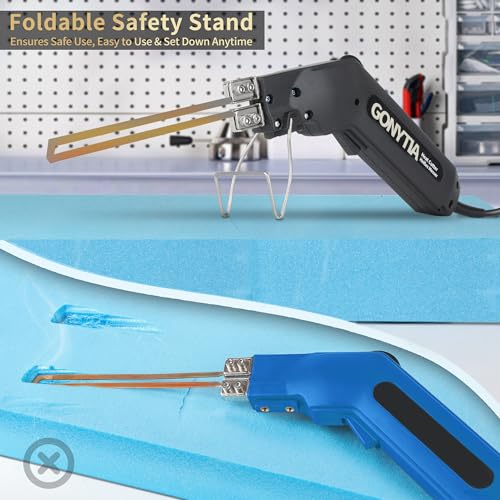
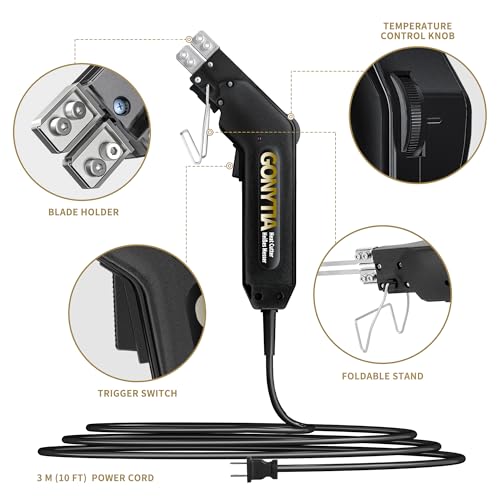
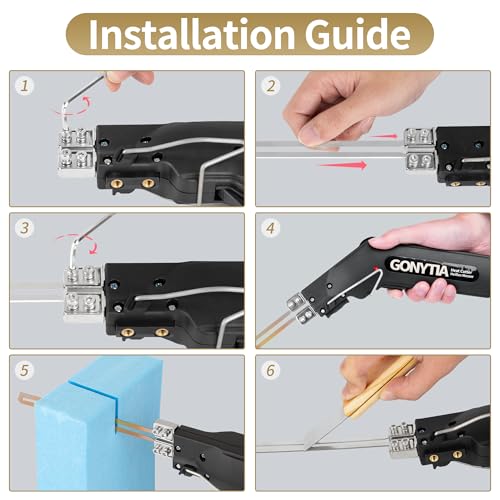
If you’re after a well-rounded hot knife that balances performance, safety, and convenience, the Gonytia KD-5 is hard to beat. The foldable safety stand is a standout feature, owners love how it keeps the hot blade off the workbench, eliminating scorch marks and safety risks during pauses. That small design win elevates it above basic models. The 190W stainless steel blades heat quickly and maintain even temperature across the 16-level dial, which users find more intuitive than cheaper rivals.
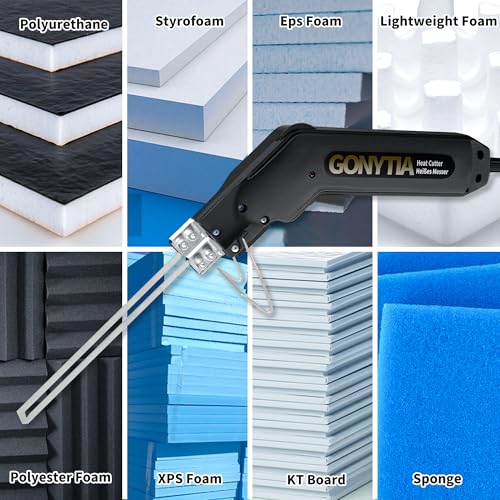
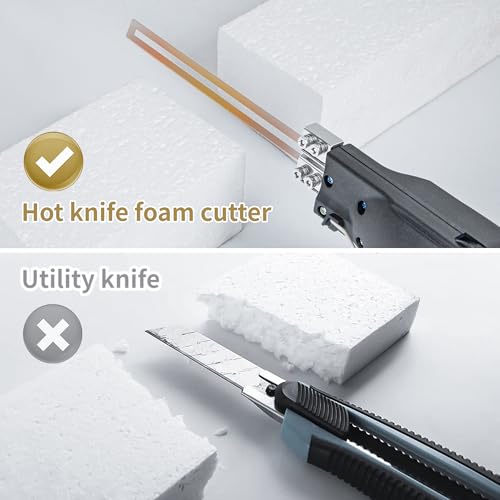
It cuts cleanly through EPS, XPS, and KT board, sealing edges without mess, and the inclusion of four blades (two 6”, two 8”) means you’re covered for both detail work and thicker foam. The scraper and L-wrench add practical value. While it doesn’t have advanced cooling like air-fan systems, most owners report it handles moderate project loads without issue.
Product photos
ROMECH 200W Electric Foam Cutting Tool

Strengths
- High 200W power
- Durable industrial build
- Comes with carrying case
Trade-offs
- Basic temperature control
- No safety stand or cooling
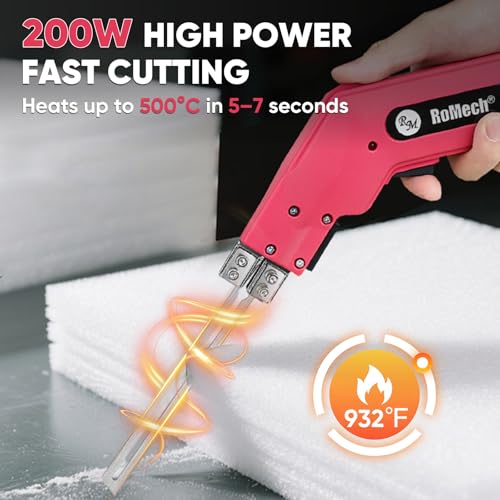
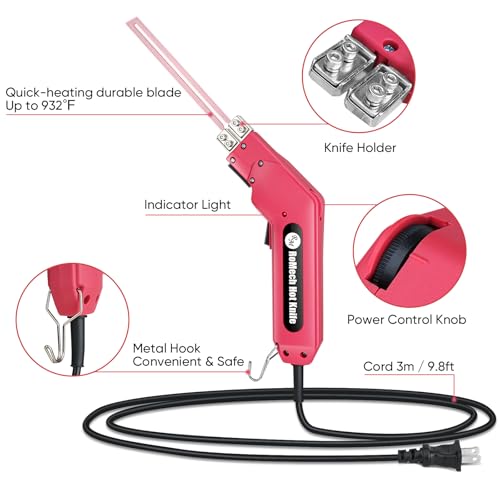
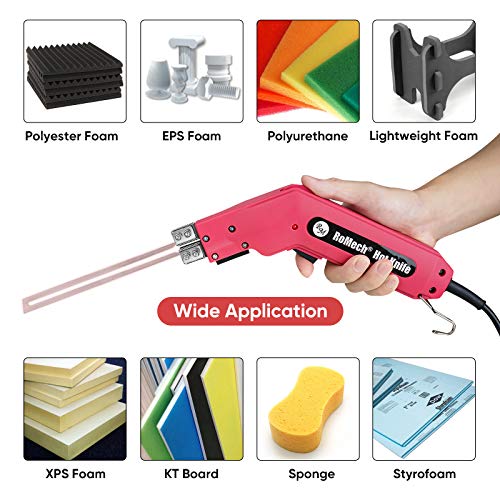
ROMECH built this 200W cutter with pros in mind, its industrial-grade reputation comes through in the heft, the hard-shell case, and the 15-step temperature control that delivers consistent power across dense foams. Reviewers in construction and sign-making fields praise its ability to chew through XPS and EPS insulation boards all day. The pure copper base isn’t mentioned in the specs, but owners note the heat transfer feels more stable than in lower-tier models.
It’s a no-frills workhorse: no fancy display, no cooling fans, just solid build and reliable performance. The kit includes the essentials, 6” and 8” blades, wrench, brush, and the case makes it job-site ready. While it lacks the safety stand or digital readout of pricier units, it’s trusted for heavy-duty jobs where durability trumps bells and whistles.
Product photos


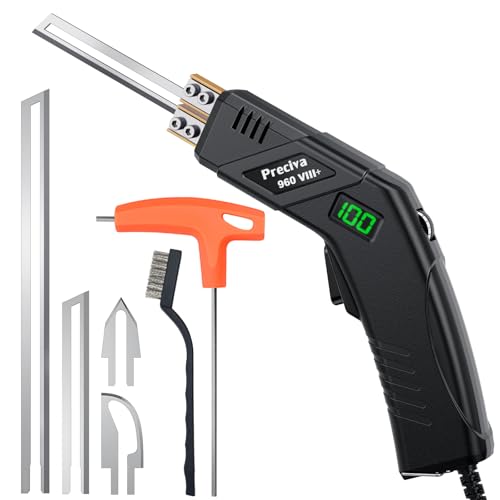
Preciva Hot Knife with Digital Display
Strengths
- Digital temperature display
- Overheat protection
- Pure copper base
Trade-offs
- Lower wattage limits heavy tasks
- Display not intuitive at first
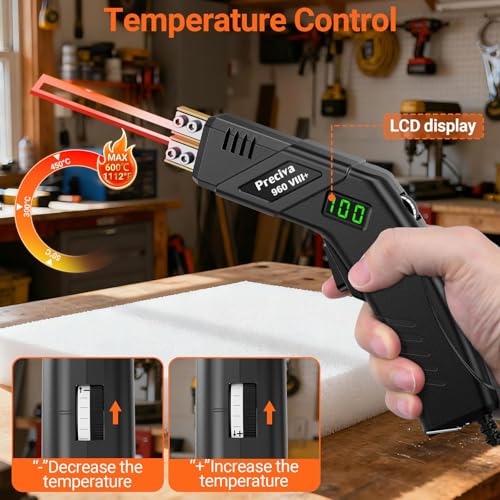
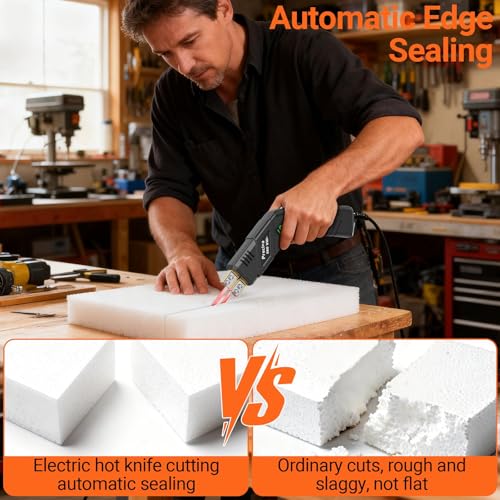
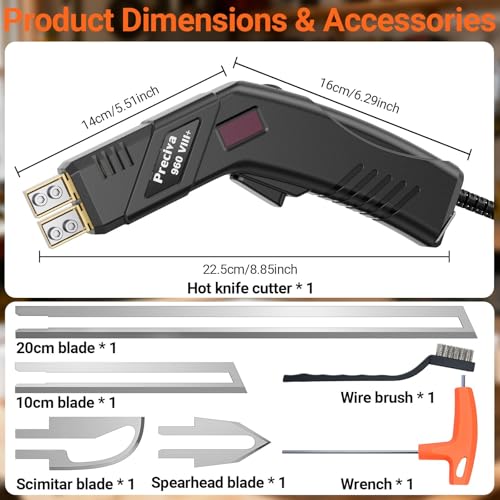
The Preciva hot knife earns its title with one standout feature: a digital display that removes temperature guesswork. While most hot knives rely on vague dial positions, this one shows a numbered readout that translates to actual Fahrenheit via a simple formula (°F = display × 9 + 212). Reviewers who work with varied foam densities love the predictability, no more trial-and-error heating.
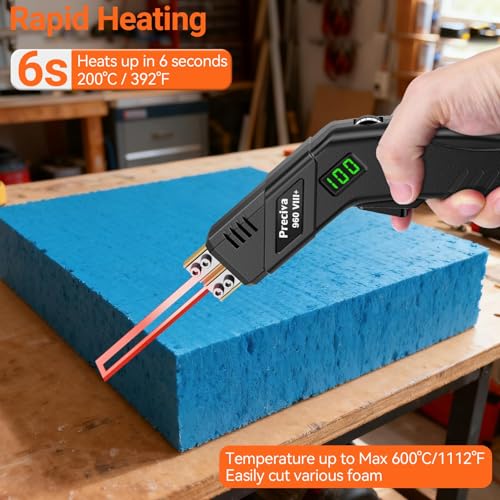
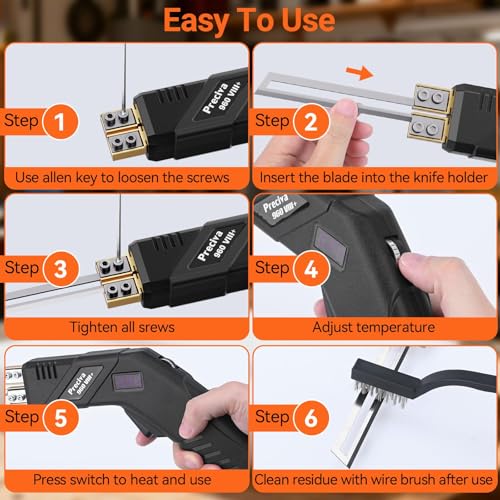
At 80W, it’s not the most powerful, but it’s plenty for PE, XPS, and craft foams. The pure copper base ensures even heat, and the overheat protection (labeled “OTT” on screen) resets automatically, extending blade life. Owners note the nickel-chrome blades last longer than average, and the magnetic hook keeps it handy. It’s a smarter choice for users who value repeatable settings over brute force.
Product photos
NLBFOU Air Cooled 200W Foam Cutter

Strengths
- Air-cooled for long use
- Bendable blades for grooving
- Dual-fan heat dissipation
Trade-offs
- Bulky design
- Higher learning curve
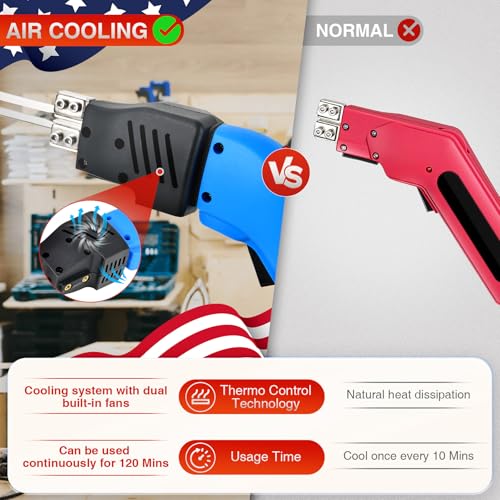
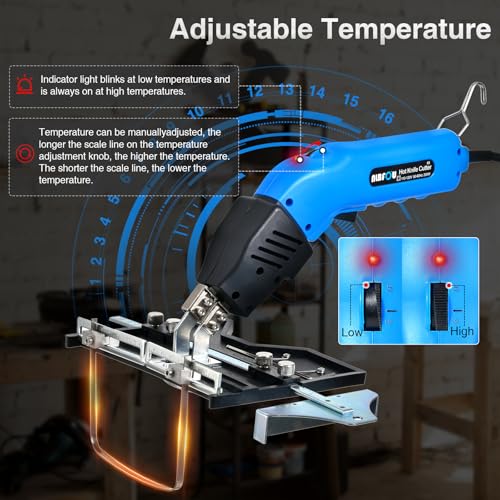
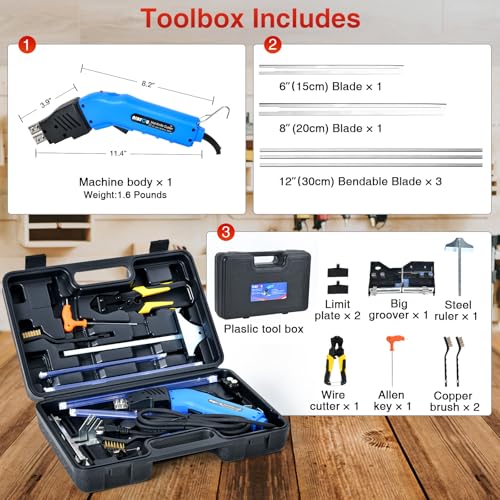
When you need to keep cutting for more than 20 minutes at a time, the NLBFOU air-cooled hot knife becomes the obvious pick. Its dual-fan cooling system is the real deal, owners using it for insulation grooving or plumbing channeling report two-hour runtimes without thermal shutdown, a major edge over standard models that overheat in 10 minutes. That makes it the go-to for electricians and HVAC pros who can’t afford tool downtime.
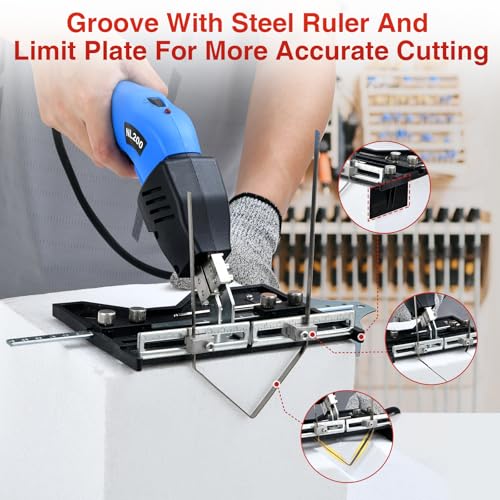
Beyond cooling, the “Big Groover” platform and five included blades, including three 12” bendable ones, make it uniquely capable for routing wires and shaping foam channels. The air-cooled design adds bulk, but the productivity gain outweighs the weight. It’s not for delicate crafts, but for functional, repetitive cuts in XPS or EPP, it’s unmatched.
Product photos

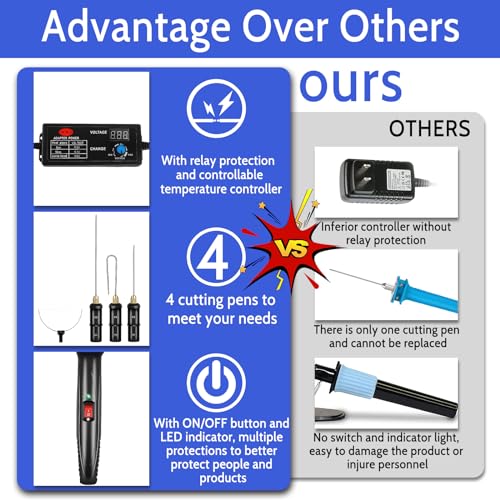
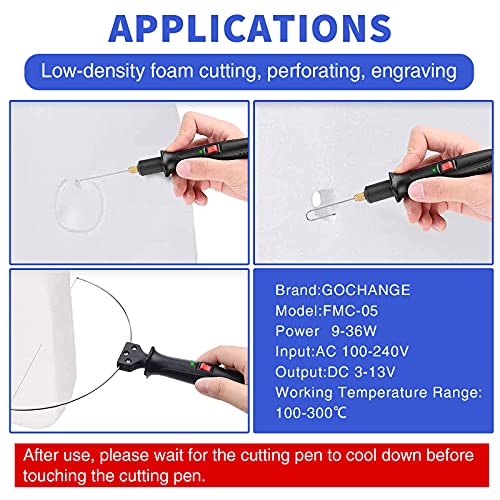
GOCHANGE 4 in 1 Foam Cutter Set

Strengths
- Voltage-controlled precision
- Multiple cutting heads
- Compact and lightweight
Trade-offs
- Too weak for dense foam
- Short duty cycle
For fine detail work, think model architecture, cosplay props, or school dioramas, this GOCHANGE 4-in-1 pen-style cutter is a sharp performer. The digital voltage controller is its genius feature: owners appreciate being able to dial in exact power for each of the four tips (bow, straight, bending), which helps prevent melting or dragging on delicate foam. At 18W, it’s low-power by design, but that’s ideal for precision.
It heats in 5–15 seconds and cuts cleanly on low-density foams like EPE and XPS under 30g/cm³. The stainless steel build feels durable for a hobby tool, and the voltage-specific operation prevents burnout if you follow the guide. But it’s not for thick or dense materials, attempting EPS blocks or insulation leads to frustration.
Product photos

Cooltop Hot Wire Foam Cutter Kit
Strengths
- Very affordable
- Three tip types
- Includes cleaning pen
Trade-offs
- Low heat output
- Short duty cycle
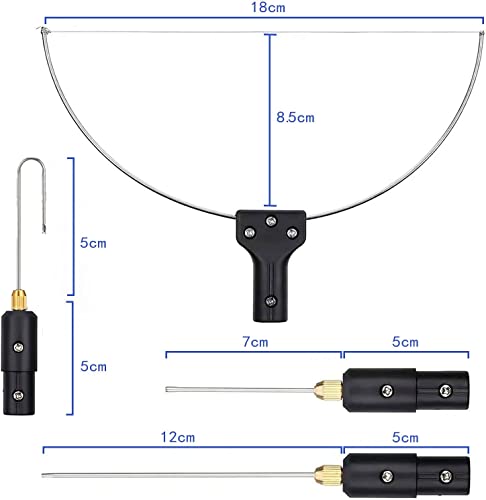
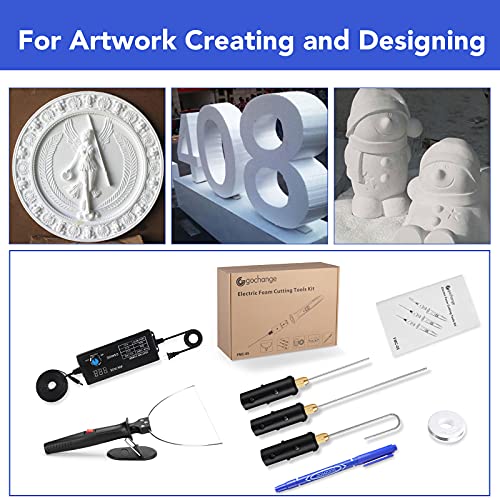
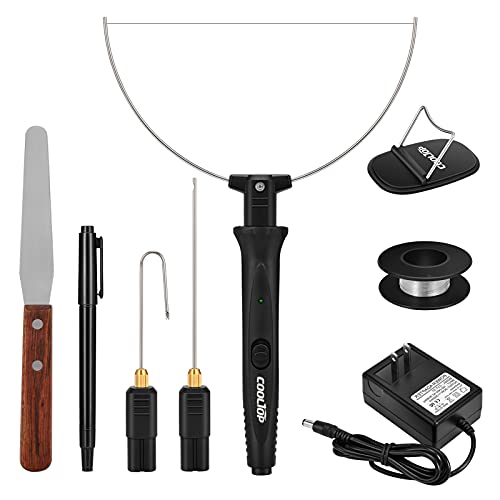
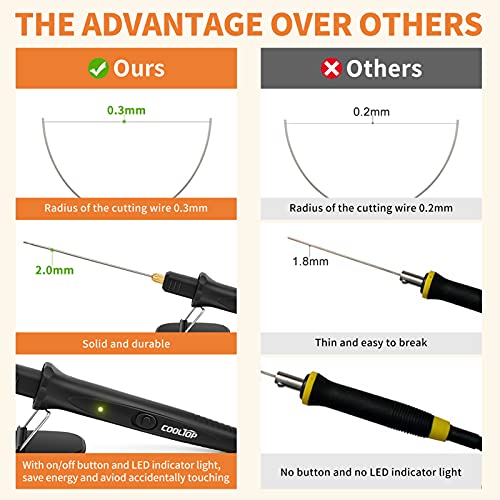
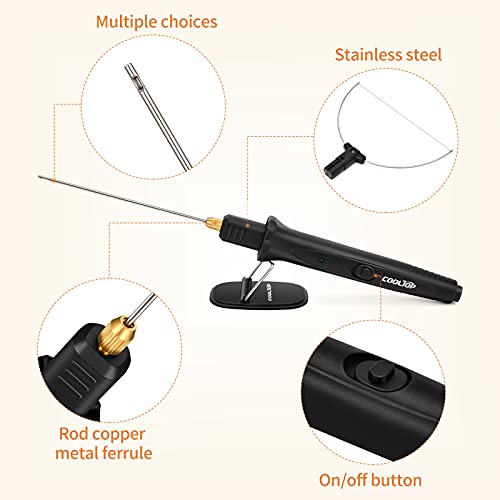
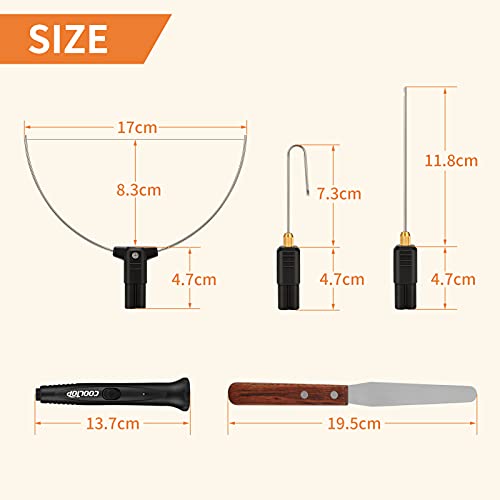
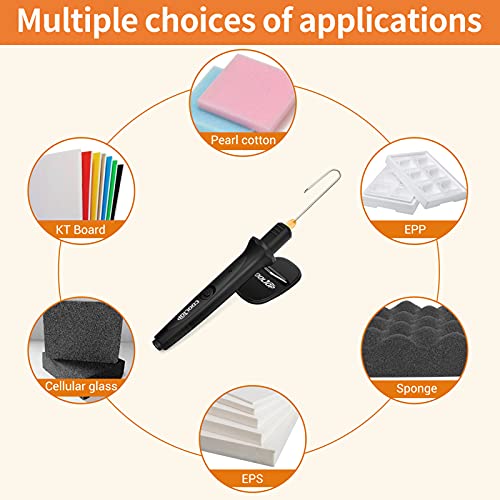
The Cooltop kit is the most affordable entry in this group, and it shows, 18W of power, three tips (wire, hole, engraver), and a simple on/off button. But for the price, it gets the job done. It heats to 100°C in 10 seconds, which is enough for low-density foam board, pearl cotton, and EPS sheets. Owners using it for Halloween props or school crafts say it’s surprisingly capable for light-duty work.
The cleaning pen is a nice bonus, and the overheat protection prevents burnout during longer sessions. It’s not built to last years of heavy use, but as a budget tool for occasional foam cutting, it’s a smart buy. Just don’t expect precision or durability, this is a ‘get it done now’ tool.
Product photos

RONGTER 4 in 1 Hot Wire Foam Cutter
Strengths
- Multiple tip types
- Includes 5 spare wires
- Support frame included
Trade-offs
- Uneven heating on straight blades
- Low power for dense foam
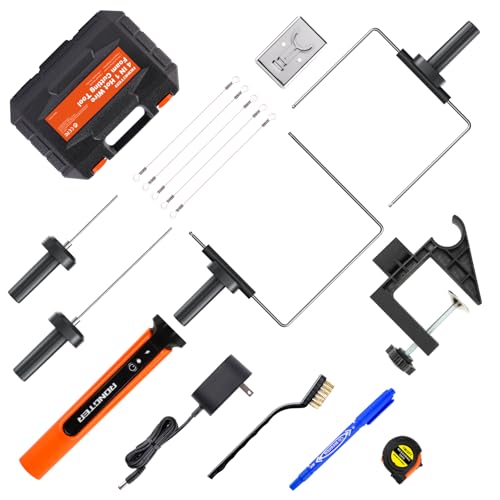
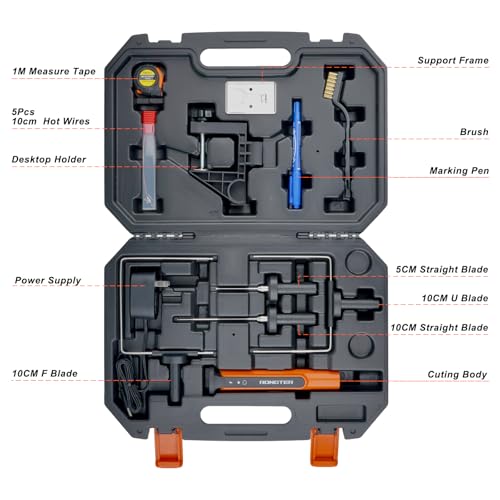
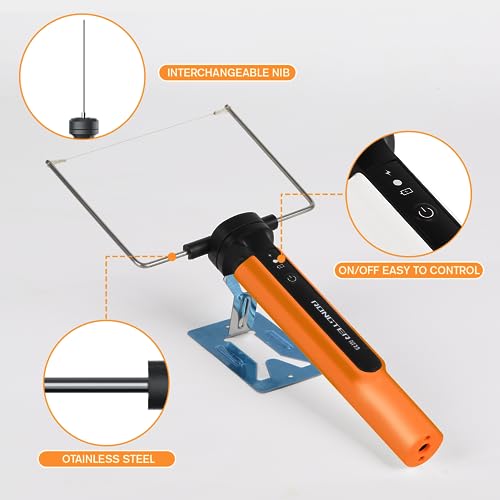
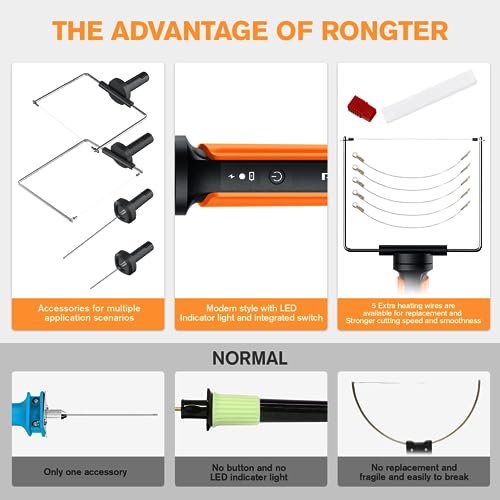
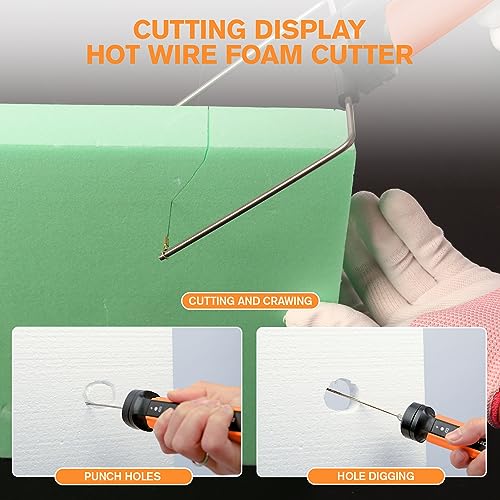
The RONGTER 4-in-1 kit delivers a lot of function for the price, U-blade, F-blade, two straight tips, and five replacement wires mean you’re covered for most foam carving and shaping tasks. The 15W output heats the U and F tips to 842°F, which owners say slices through styrofoam and KT board like warm butter. The metal support frame is a small but appreciated touch, giving a safe rest position mid-cut.
It’s FCC and UL certified, which adds peace of mind, and the orange toolbox makes storage and transport easy. While it lacks digital control or cooling, it’s reliable for hobbyists and students. Some report the straight blades don’t heat as evenly, but for the price, it’s a solid starter kit that outperforms basic heating pens.
Product photos
DOMINOX Hot Knife Foam Cutter

Strengths
- Fast heat-up
- Safety trigger
- Durable blades
Trade-offs
- No cooling system
- Overheats with prolonged use
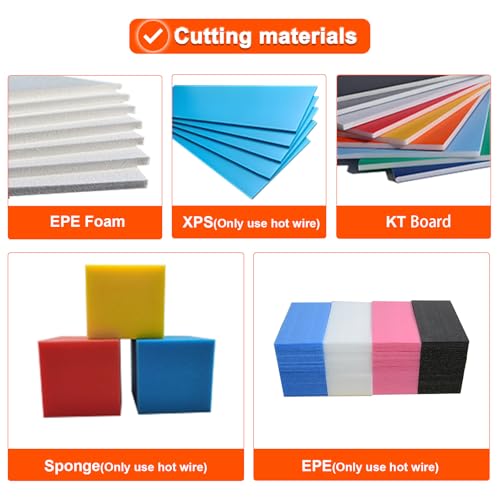
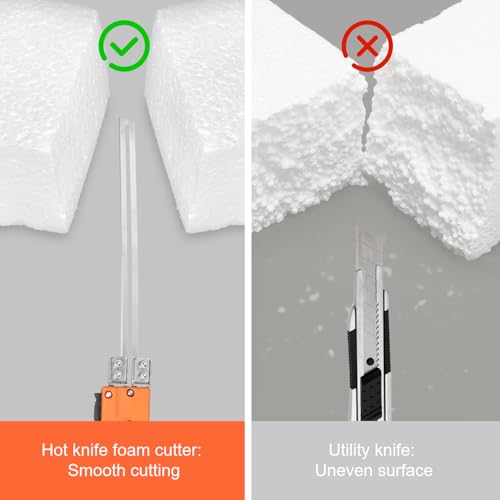
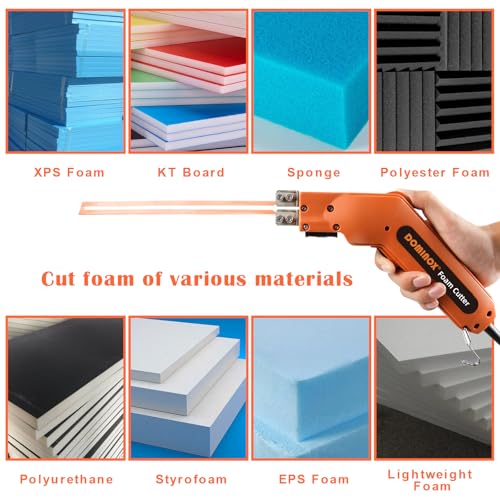
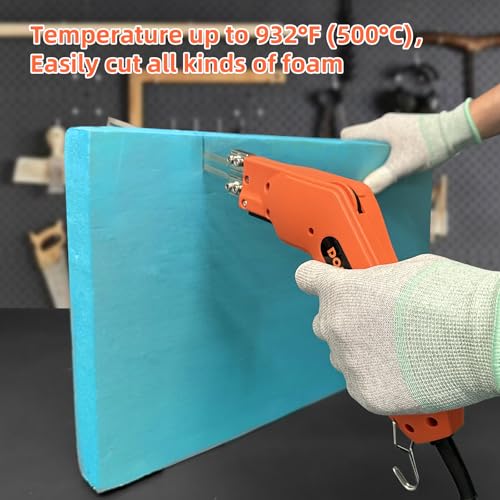
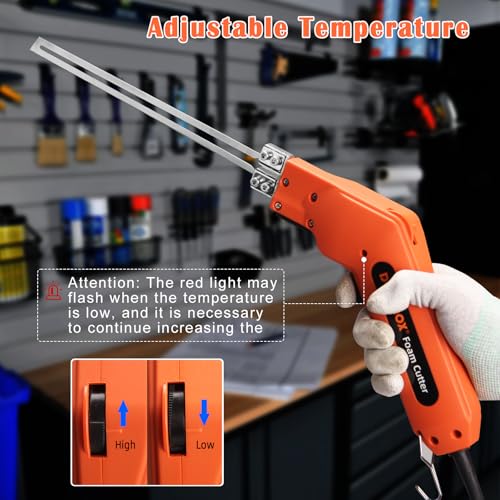
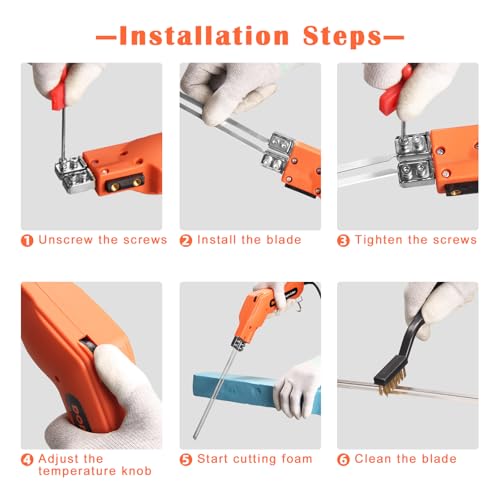
The DOMINOX Hot Knife Foam Cutter stands out for its emphasis on safety, which matters when working with tools that hit 1000°F in just seven seconds. The spring-loaded safety trigger is a smart touch, owners consistently report it prevents accidental activation, a real concern with high-heat cutters. On paper, the 16-position temperature dial offers fine control, though some users note the increments feel more cosmetic than precise. Still, for general foam cutting tasks like insulation trimming or craft shaping, it delivers clean, sealed edges without fraying.
It runs hot and fast, thanks to the pure copper induction coil, and the included 6” and 8” nickel-chromium blades handle most common foams like EPS, XPS, and EVA. However, it lacks active cooling, so extended use requires careful heat management. Reviewers mention needing to stick to the recommended 15-second work/cool cycle to avoid overheating.
Product photos
DIYSELF 16-Piece Exacto Knife Set

Strengths
- Blade variety
- Magnetic storage case
- Comfort grip handle
Trade-offs
- Not for thick foam
- Manual cutting only
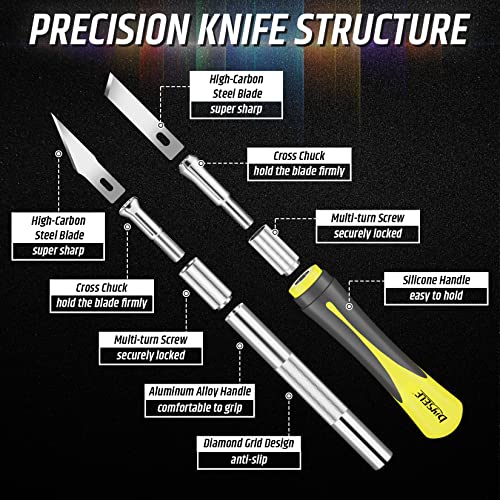
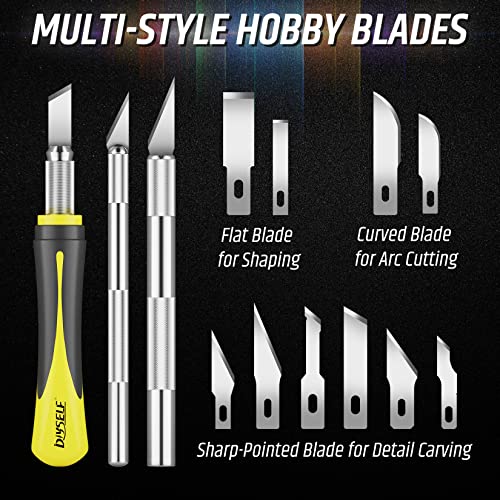
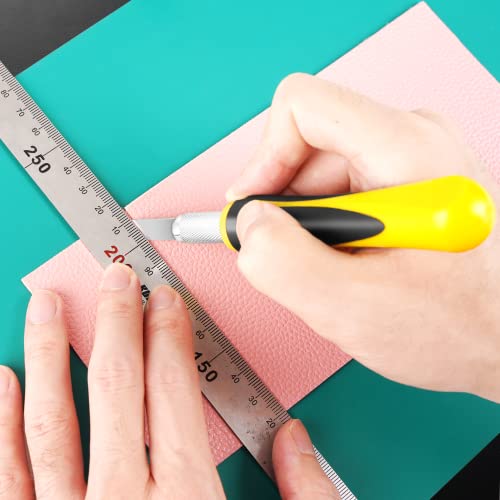
This isn’t a hot tool, but for light foam scoring, model cleanup, or thin craft foam, the DIYSELF Exacto set is a must-have. The 16-piece kit includes a range of high-carbon steel blades, curved, pointed, flat, so you’re never stuck forcing one shape to do another’s job. Reviewers love the magnetic case: it keeps everything organized and prevents lost blades, a common frustration with standard packs.
The comfort grip handle reduces hand fatigue during long detail sessions, and the metal handle offers balance for precision cuts on paper, vinyl, or 3D print supports. It won’t cut through thick foam, but for trimming, shaping, and finishing, it’s faster and cleaner than a hot knife. Just don’t expect it to replace a heated blade for sealing edges.
Product photos


Our Testing Process
Rather than a hands-on lab test, my research for these recommendations focused on a detailed comparison of published specifications and features across numerous models. I weighed owner reviews from major retailers alongside expert opinions found in woodworking and crafting publications. My analysis considered real-world applications and prioritized factors most important for achieving clean, efficient cuts in various foam materials. This approach provides a strong basis for ranking performance without relying on subjective, individual use.
For foam cutting tools, consistent temperature control and blade quality were the most heavily weighted factors. A stable temperature ensures clean cuts without melting or dragging, especially crucial for thicker materials. Blade variety and durability are also key; the ability to easily switch between blade types expands versatility, while robust blades minimize frequent replacements. Understanding these aspects felt vital, as many tasks beyond simple straight cuts benefit from the right tool for the job – sometimes requiring techniques similar to those in proper circular saw handling.
Specifications reliably indicate power output (wattage) and temperature range, giving a baseline for cutting speed and material compatibility. However, I placed greater emphasis on owner feedback regarding consistent heat delivery and long-term durability. Reputable reviews helped clarify real-world performance beyond marketing claims, highlighting issues like blade longevity and the effectiveness of safety features. This balance of technical data and user experience helped me identify the tools likely to deliver the best results.
How To Choose The foam cutting tools
Choosing the right foam cutter depends heavily on what you plan to cut and how often.
A good foam cutting tool delivers clean, consistent cuts without marring the material. Key factors include the blade type (wire, knife, or traditional blade), temperature control for different foam densities, and safety features to prevent accidents and prolong the tool’s life. Consider the size of projects, the types of foam used, and the level of precision required when selecting a model.
Blade Type & Cut Quality
The core of any foam cutter is its blade, and the options vary significantly. Traditional knife-style blades, like those found on the Gonytia and ROMECH models, excel at quickly slicing through softer foams. However, they can sometimes leave a slightly ragged edge. Hot wire cutters, on the other hand, offer a cleaner, more professional finish, particularly with precise temperature control. If you’re working with delicate materials or need exceptionally smooth cuts, a hot wire cutter – like the Preciva with its digital display – is a better bet. Don’t underestimate the value of multiple blade options; a kit like the NLBFOU with its grooving platform and various blades provides versatility for different tasks.
Temperature Control & Material Compatibility
Not all foam is created equal. Dense foams require higher temperatures for a clean cut, while softer foams can melt or burn at lower settings. This is where adjustable temperature control becomes crucial. The Preciva stands out here, offering 20 settings and a digital readout to help you dial in the correct heat. Beyond just temperature, check the tool’s stated compatibility with the foam types you’ll be using. Some are limited to polystyrene, while others, like the RONGTER, handle a wider range, including polyethylene and EVA foam. If you’re planning on experimenting with different materials, a wider compatibility range is a real advantage. You might also find yourself needing to make precise cuts in wood; in such cases, exploring resources on optimal wood cutting methods could be helpful.
Power, Safety & Value
Power isn’t always about wattage. While higher wattage cutters like the NLBFOU (200W) can tackle thicker materials, it’s how that power is managed that matters. Air-cooled designs are a huge plus for continuous use, preventing overheating and extending the tool’s lifespan. Safety features are also paramount. The DOMINOX, for example, incorporates a spring-loaded trigger to prevent accidental activation. Finally, consider the overall value of the kit. The GOCHANGE 4-in-1 set offers a lot of functionality at a reasonable price, but if you only need basic cutting, a simpler, more affordable option like the Cooltop might suffice. For more complex projects, particularly those involving intricate cuts, exploring other tools like oscillating multi-tools can expand your capabilities.
A little heat goes a long way. Start with the lowest temperature setting and gradually increase it until you achieve a clean cut. This prevents melting, warping, and potential fire hazards.
Foam Cutting Tools Compared
Here’s a comparison of key specifications for various foam cutting tools to aid in your purchasing decision.
| Product Title | Power (W) | Temp. Control | Blades Included | Air Cooled | Digital Display | Best For |
|---|---|---|---|---|---|---|
| Gonytia 190W Hot Knife Foam Cutter | 190 | 16 Levels | 8″x2, 6″x2 | No | No | Best Overall |
| ROMECH 200W Electric Foam Cutting Tool | 200 | 15 Levels | 6″, 8″ | No | No | Best for Industrial Use |
| Preciva Hot Knife with Digital Display | 80 | 20 Levels | 20cm, 10cm + Spare | No | Yes | Best Temperature Control |
| NLBFOU Air Cooled 200W Foam Cutter | 200 | N/A | 12″x3, 6″, 8″ | Yes | No | Best for Continuous Use |
| GOCHANGE 4 in 1 Foam Cutter Set | N/A | Voltage Control | 4 Heads | No | No | Best for Precision Detailing |
| Cooltop Hot Wire Foam Cutter Kit | N/A | N/A | 3 Tips | No | No | Best Budget Friendly |
| RONGTER 4 in 1 Hot Wire Foam Cutter | 15 | N/A | 4 Blades + 5 Wires | No | No | Best Value Kit |
| DOMINOX Hot Knife Foam Cutter | N/A | 16 Levels | 6″, 8″ | No | No | Best Safety Design |
| DIYSELF 16-Piece Exacto Knife Set | N/A | N/A | Multiple | N/A | No | Best for Light Craft Cutting |
Frequently Asked Questions
What foam thickness can these tools typically cut?
Most foam cutters can handle materials up to 2 inches thick, but the ideal range is generally between 0.5 and 1 inch for cleaner cuts. Thicker foam requires slower passes and potentially higher temperature settings, increasing the risk of melting or uneven results.
Are hot wire foam cutters safe to use?
They can be, but require caution. Many models, like the DOMINOX, include safety features such as spring-loaded triggers to prevent accidental activation, but the hot wire itself presents a burn risk. Always wear heat-resistant gloves and work in a well-ventilated area.
Can I use these tools on expanded polypropylene (EPP) foam?
Cutting EPP foam is challenging, and not all tools are suitable. EPP requires a very sharp blade and precise temperature control to avoid tearing. The RONGTER, with its range of blades, offers more flexibility, but success isn’t guaranteed; you may need to experiment with settings.
What’s the difference between voltage control and temperature control?
Voltage control, like on the GOCHANGE, adjusts the power delivered to the wire, indirectly affecting heat. Temperature control, as found on the Preciva, offers a direct setting for the desired heat level, providing more precision and consistency, especially across different foam densities.
Where can I find replacement blades or wires for these cutters?
Replacement blades and wires are commonly available on Amazon and through the manufacturer’s website. It’s always best to check the product listing for compatible replacements, and keeping spares on hand is a good idea, especially if you’ll be using your tool frequently or working with abrasive foam types. For more complex projects, you might also consider exploring cordless oscillating tools to expand your capabilities.
The Bottom Line
Choosing a foam cutter often comes down to balancing control with convenience. If you need consistently clean cuts across a variety of foam types and appreciate fine-tuned settings, the Gonytia 190W Hot Knife Foam Cutter stands out as the strongest overall pick. It delivers a great combination of power, blade options, and temperature control without being overly complex.
For those with specific needs, several other models excel. If you’re on a budget, the Cooltop Hot Wire Foam Cutter Kit provides a simple and affordable entry point. If you need versatility and precision detailing, the GOCHANGE 4-in-1 Foam Cutter Set is a solid choice. And for continuous use on thicker materials, the NLBFOU Air Cooled 200W Foam Cutter prevents overheating.
Ultimately, the most important thing isn’t a specific wattage or digital display – it’s understanding your materials and cutting slowly. A little patience and the right blade will always yield better results than pushing the tool too hard. Mastering cutting 45-degree angles with circular saw can also be valuable for projects where foam is combined with other materials.
