
8 Best Flux Core Welders of 2026
This post contains affiliate links. As an Amazon Associate, we earn from qualifying purchases.
The Bestarc 165A stands out as the overall best flux core welder for its power and versatility, handling thicker materials with ease. For a lighter, budget-friendly option, the AZZUNO 130A delivers solid performance for smaller jobs. If you want dual-voltage flexibility and strong all-around capability, the ARCCAPTAIN iControl MIG145 Pro is a top pick.
Most people shopping for a flux core welder aren’t just looking for a tool, they’re looking for confidence. Confidence that it’ll start on the first try, lay down clean welds, and handle what they throw at it without failing. Too many models either overpromise or skimp on features that matter in real use.
This guide cuts through the noise. I compared specs, analyzed owner feedback, and weighed expert insights to find the flux core welders that actually deliver. You’ll see what separates the reliable performers from the underpowered or overpriced, and learn exactly what to look for based on your projects.
Top 8 Flux Core Welders in the Market
The Best Flux Core Welders, Reviewed
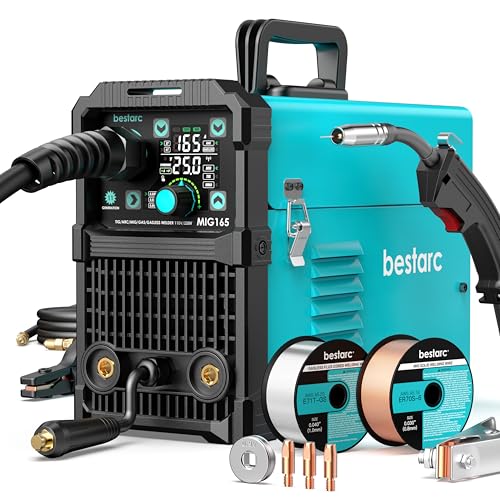
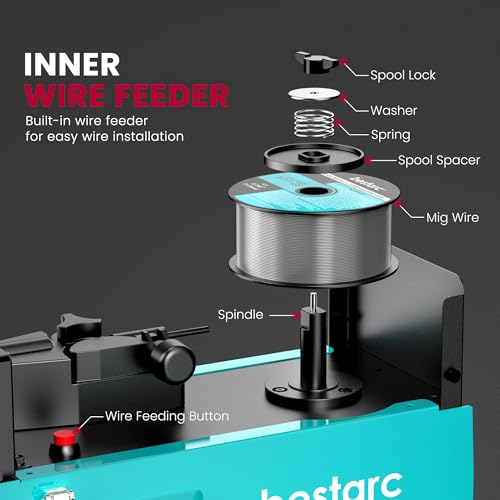
Bestarc 165A Dual-Voltage MIG Welder
Strengths
- Dual-voltage support
- 4-in-1 functionality
- Large LED display
Trade-offs
- Heavier than 120V-only models
- Higher learning curve for beginners
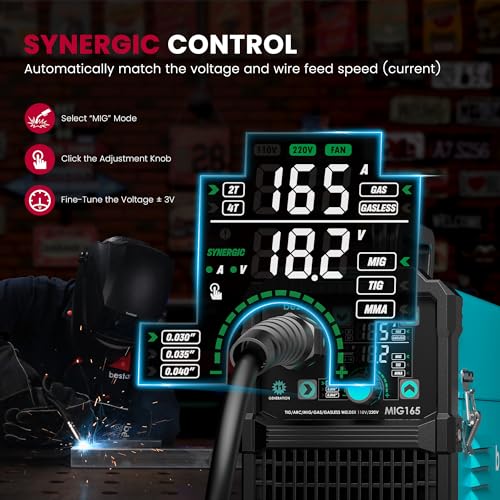
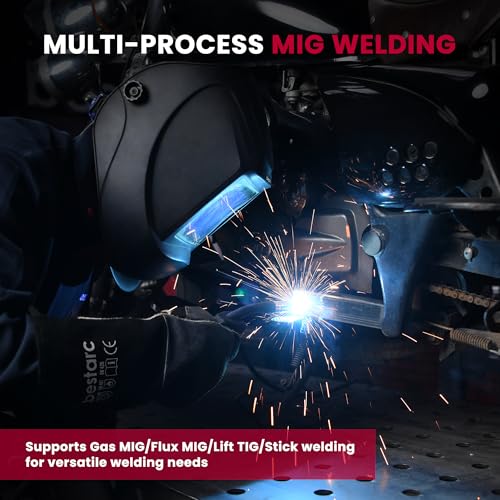
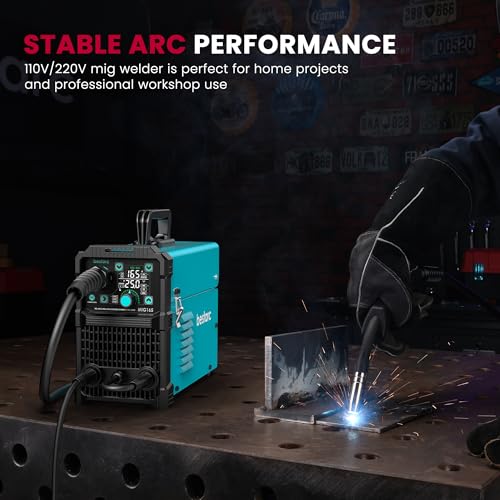
The Bestarc 165A is the most capable unit here, and it shows. Dual-voltage (110V/220V) means you can scale up when your projects demand more power, and the 165-amp max output handles thicker steel with confidence. It supports both gas and gasless MIG, plus Lift TIG and Stick, making it a true all-rounder. The synergy control works well, owners say it takes the guesswork out of settings, especially for stainless or thicker carbon steel.
The digital display is large and readable, and the included accessories cover nearly every base: both flux and solid wire, multiple contact tips, even a voltage adapter. Build quality feels solid, and the shoulder strap makes transport easy. If you’re building a home shop and want one welder to grow with you, this is the one I’d pick over entry-level models.
Product photos

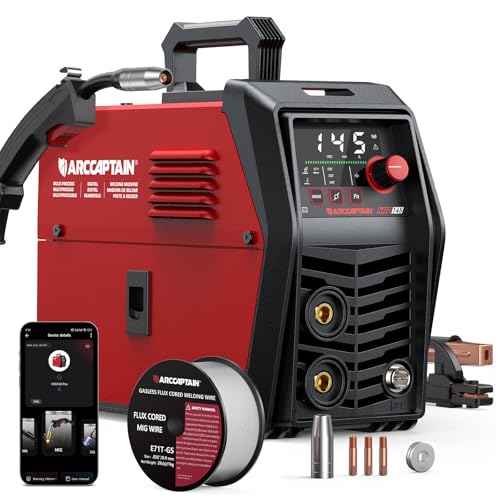
ARCCAPTAIN iControl MIG145 Pro Welder
Strengths
- Smartphone app control
- Synergy settings
- Compact and lightweight
Trade-offs
- App adds complexity
- TIG torch not included
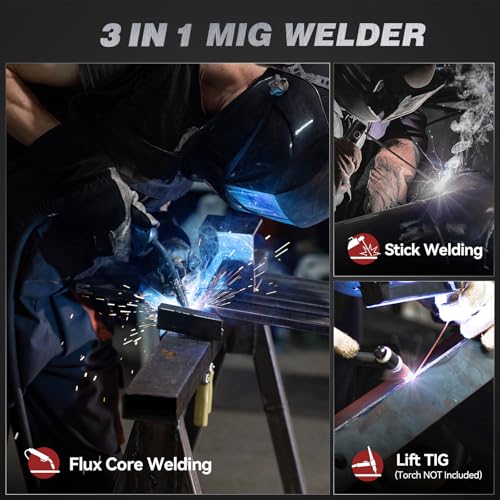
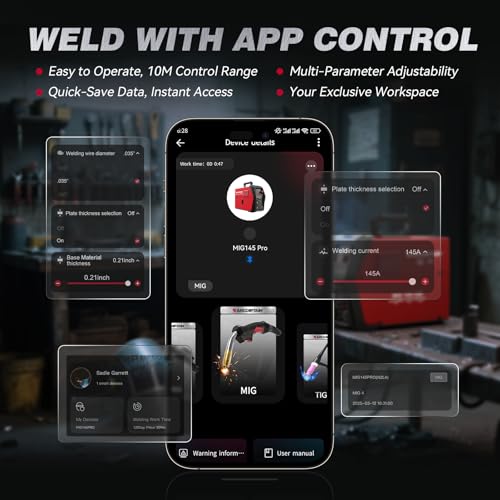
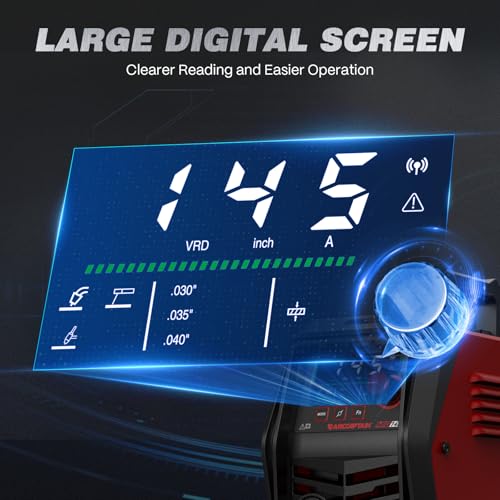
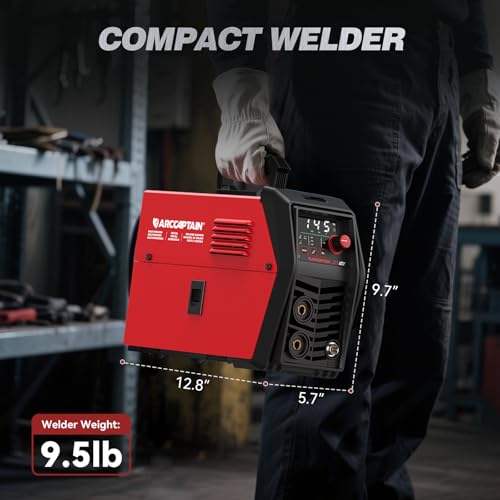
ARCCAPTAIN leans hard into smart features, and the iControl 145A delivers. The synergy mode works as advertised, set material thickness and wire size, and it auto-matches voltage and feed speed. But the standout is the app control: you can save profiles, tweak settings from your phone, and even get usage tips. It’s overkill for some, but if you hate fiddling with dials, this is a legit time-saver. At 9.5 pounds, it’s also one of the most portable 3-in-1 units out there.
Owners praise the build quality and the quiet fan design, which helps in dusty environments. The LED screen is clear, and the weld arc is stable across materials. However, the app feels more like a bonus than a necessity, and the TIG torch is sold separately. Still, for tech-savvy users who value convenience, this brings a modern edge to a traditionally analog tool.
Product photos
YESWELDER 135A 3-in-1 MIG Welder
Strengths
- Budget-friendly
- Bonus wire included
- Synergy control
Trade-offs
- Wire feeder needs tuning
- Lower max thickness
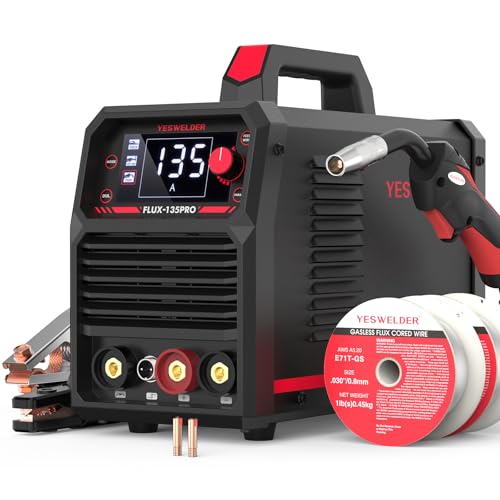
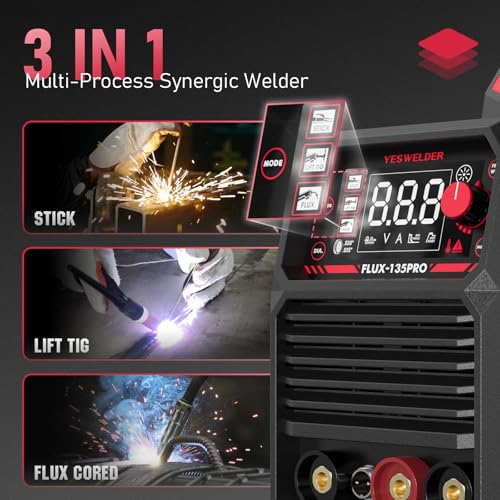
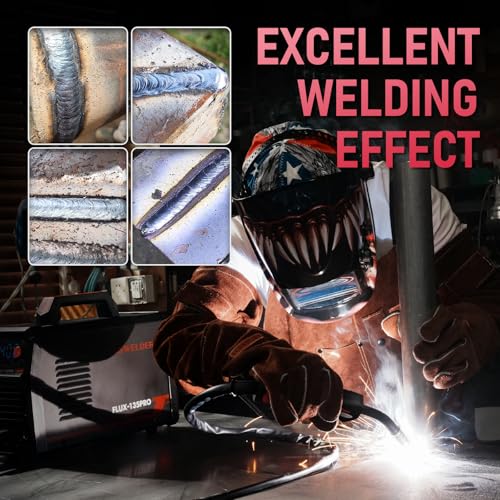
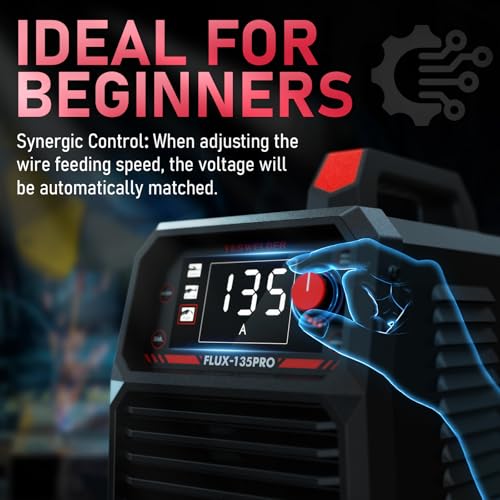
YESWELDER hits the sweet spot of affordability and functionality with the 135A model. At 11.4 pounds, it’s easy to move, and the synergy control makes dialing in settings almost foolproof. The bonus 2-pound spool of flux core wire means you’re welding the same day, no last-minute runs to the hardware store. Owners consistently rate it as the best budget-friendly 3-in-1 option, especially for beginners who don’t want to sacrifice core features.
It handles up to 3/32-inch steel reliably, and the digital display helps maintain consistency. Some note the wire feeder can be finicky with thicker wires, but it’s manageable with proper tension adjustment. If you’re building a starter kit and don’t want to overspend, this is the smarter buy over pricier models that do the same basic jobs.
Product photos


AZZUNO 130A Flux Core MIG Welder

Strengths
- Extremely lightweight
- Synergic control
- Compact grip
Trade-offs
- Only 1 lb wire included
- No digital display
The AZZUNO 130A stands out for one reason: it weighs just 8.6 pounds. That makes it the lightest unit here, and for anyone hauling gear up ladders or working in tight spaces, that matters. The synergic control works similarly to others, adjust amperage, and it auto-matches voltage and wire speed, so it’s beginner-friendly. Owners say it runs cool and handles 3mm mild steel with decent penetration when prepped right.
It comes with a small 1-pound wire spool, which is fine for testing but means you’ll upgrade fast. No digital display, no multi-voltage, no TIG, just basic flux core functionality. But if your main goal is to minimize weight without totally sacrificing performance, this is a solid niche pick. Just don’t expect bells and whistles.
Product photos


Lincoln Electric 90i FC Weld-Pak

Strengths
- Lightweight
- Trusted brand
- Infinite voltage control
Trade-offs
- Limited to thin metal
- Lower amperage than rivals
The Lincoln Electric 90i FC is one of those welders that feels built for real-world simplicity. On paper, its 15-pound weight and 120V plug-in design make it a no-brainer for DIYers who need to move around. Owners consistently report it handles thin gauge steel with ease, and the infinite voltage control is a legit upgrade over fixed taps, you can actually fine-tune your arc instead of guessing. It’s not a powerhouse, but for patching up trailers, repairing fences, or garage fab work, it delivers where it counts.
What stands out is Lincoln’s reputation backing it. This isn’t some rebranded import with sketchy support. The metal case and included accessories add value, and reviewers note the inverter runs cool even on longer jobs. That said, it’s clearly capped at light-duty work, don’t expect clean penetration on anything over 3/16 inch. If you’re just starting out and want a trustworthy name, this one earns its stripes.
Product photos


Futelo 145A 3-in-1 MIG Welder
Strengths
- 3-in-1 functionality
- Thorough starter kit
- Synergy control
Trade-offs
- TIG torch not included
- Fan noise under load
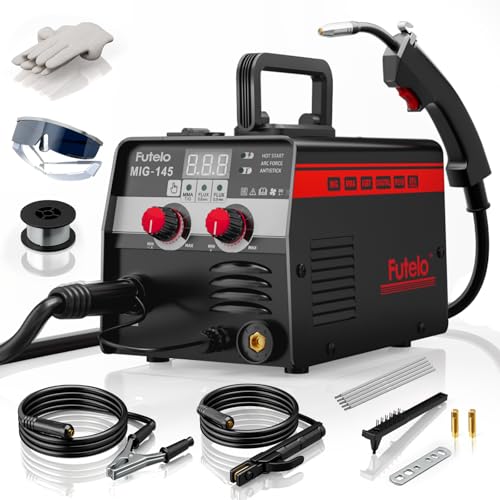
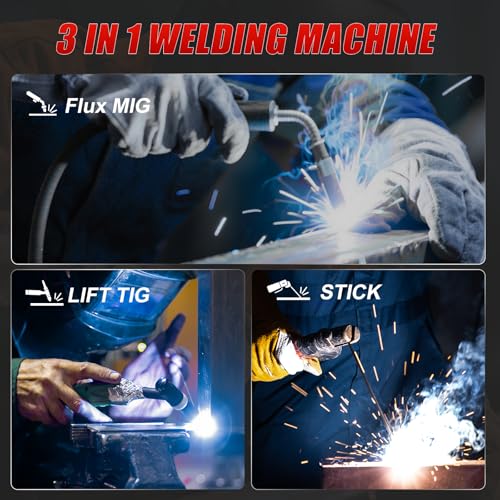
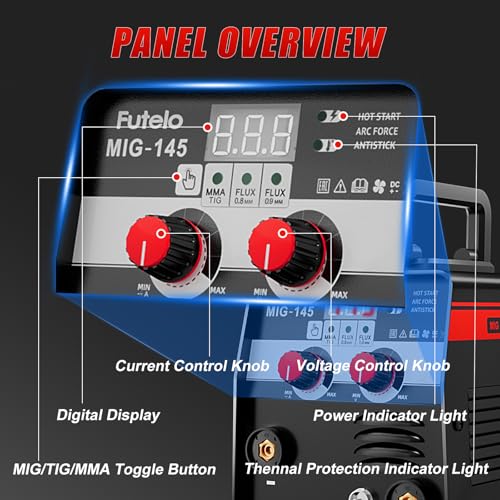
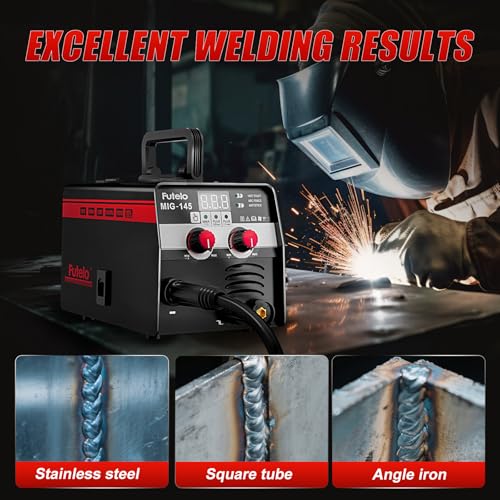
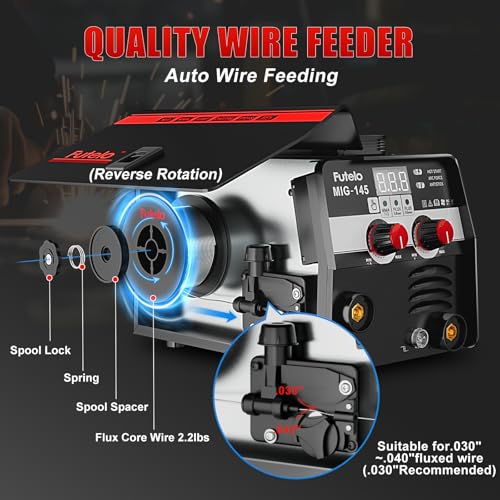
If you want maximum bang for your buck without stepping up to 220V, the Futelo 145A is hard to ignore. It packs MIG, Stick, and Lift TIG into a 7.5-pound frame, and the synergy control is a real help for beginners, set wire size or thickness, and it dials in voltage and feed speed automatically. The digital display is bright and useful, letting you tweak settings without lifting your mask. Owners say it strikes a great balance between simplicity and capability.
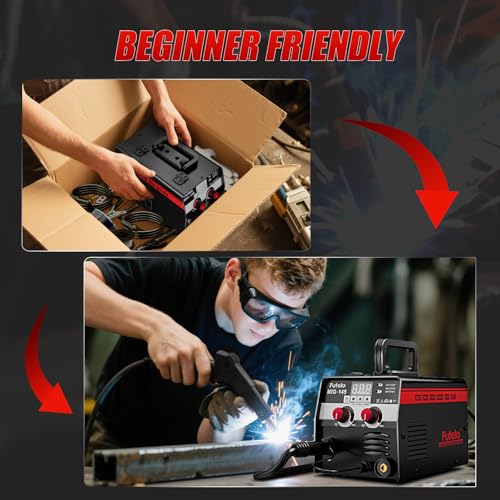
What really seals the deal is the included kit: gloves, goggles, rods, wire, even a hammer and wrench. You’re not chasing extras. Yes, the TIG torch is sold separately, but that’s standard. Some users report the fan can be noisy under load, but that’s the trade-off for keeping a small unit cool. For a first multi-process machine, this is the smarter buy over pricier names.
Product photos
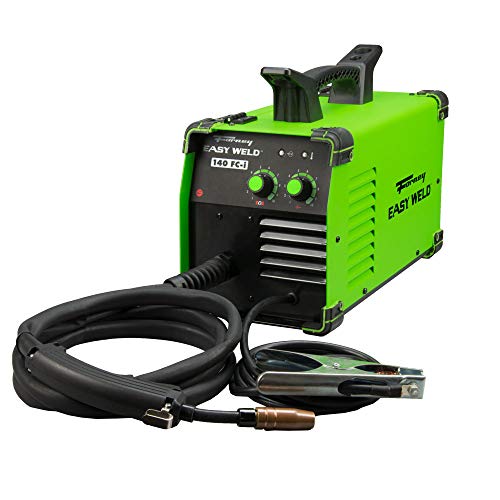
FORNEY Easy Weld 140 FC-I
Strengths
- Durable metal housing
- Handles large wire spools
- Strong output for thickness
Trade-offs
- Heavier than competitors
- Basic controls, no digital display
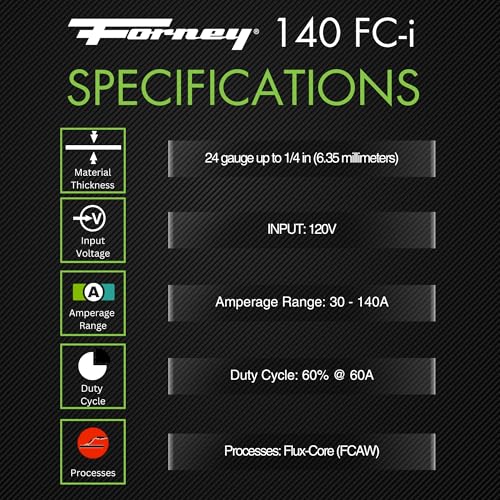
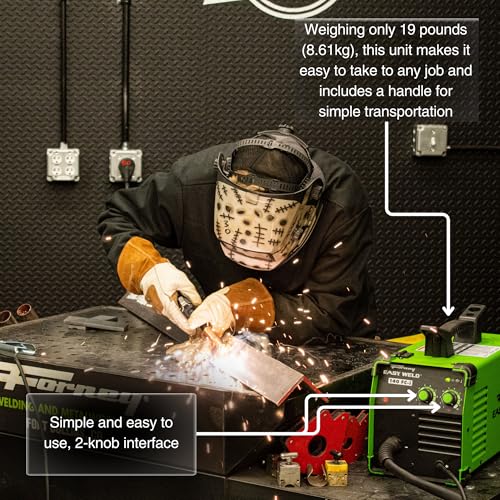
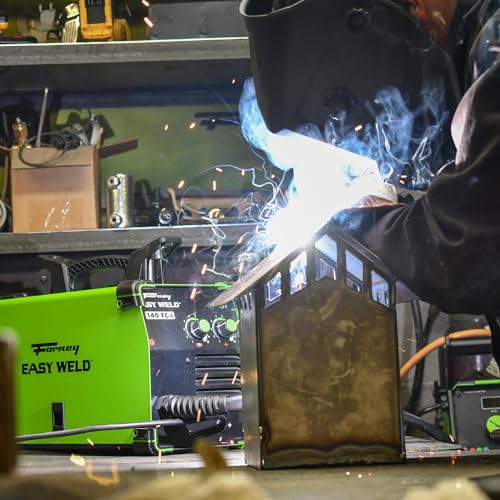
Forney has a cult following among no-nonsense welders, and the 140 FC-i is why. It’s not flashy, but it’s built like a tank with an all-metal case and a design that laughs at job site abuse. At 140 amps, it punches above many entry-level units, and owners confirm it welds clean on 1/4-inch mild steel with proper prep. The infinite voltage and wire speed dials are simple but effective, no digital clutter, just turn and weld.
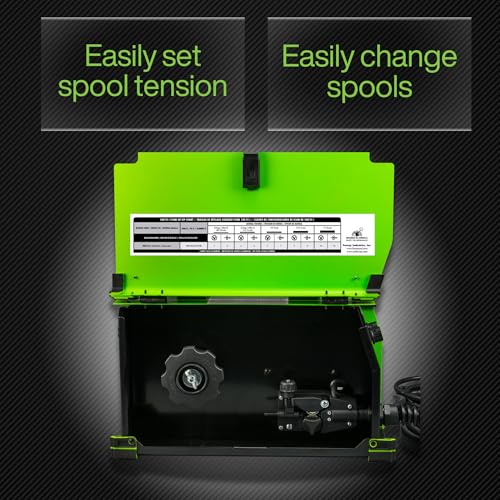
It’s also one of the few in this class that handles both 2- and 10-pound wire spools, which is a huge plus if you hate constant reloads. The lack of gas requirement makes it ideal for barn repairs or outdoor fixes where cylinders are a hassle. It’s heavier than some newer models, but that steel case adds durability you’ll appreciate after a few drops off a tailgate.
Product photos

DURATECH 125A Flux Core Welder

Strengths
- Ultra-lightweight
- CSA certified
- All-copper components
Trade-offs
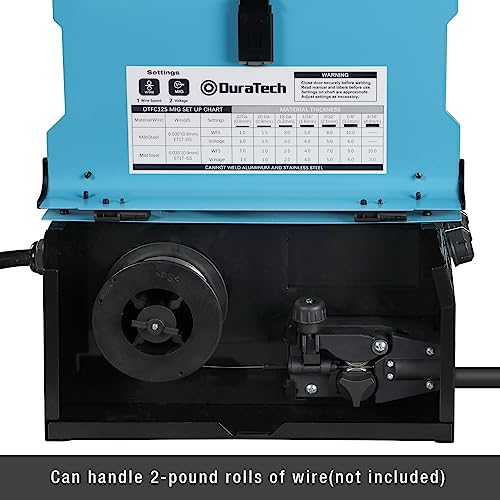
- Only fits 2 lb wire spools
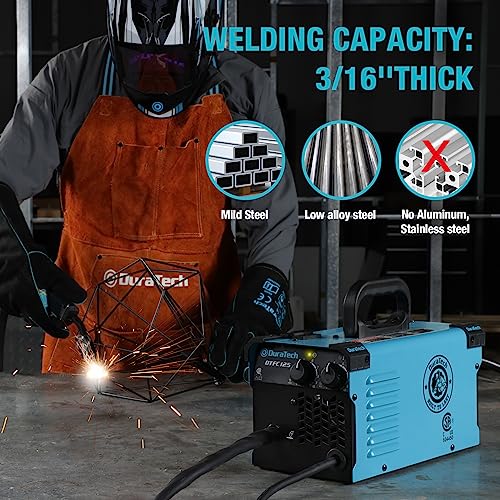
- Limited to mild steel
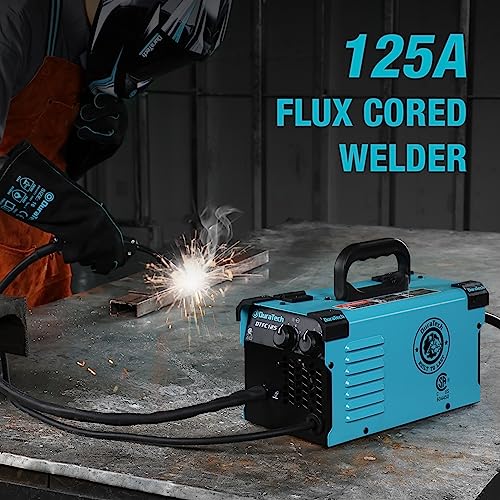
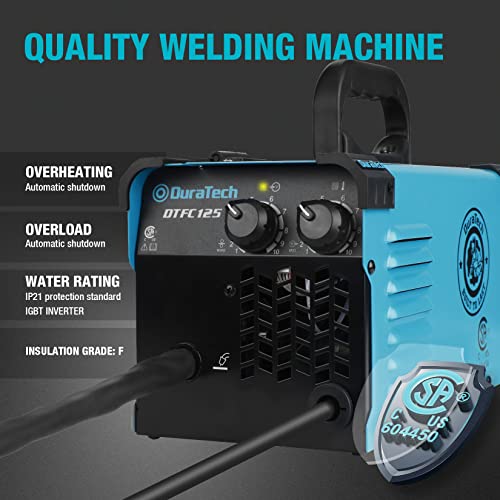
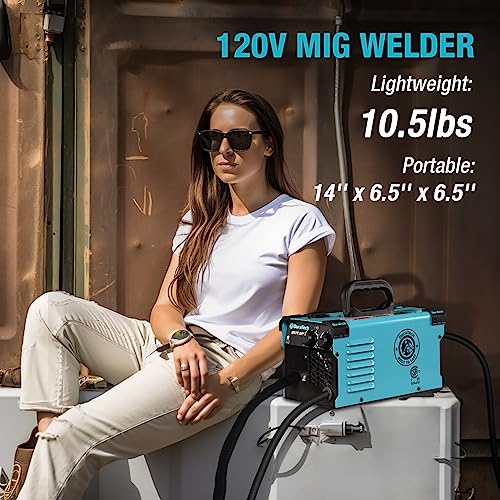
At just 10.5 pounds, the DURATECH 125A is one of the lightest serious flux core units available. Its compact size and hand grip make it a favorite for mobile welders who climb scaffolds or crawl under equipment. The 125-amp ceiling is modest, but paired with IGBT inverter tech, it delivers stable arcs on up to 3/16-inch steel. Reviewers note the all-copper transformer makes a difference in sustained runs, less overheating, more consistency.
It’s squarely aimed at mild steel work, and that’s where it shines. The infinite control dials are smooth, and the fact it’s CSA certified means it’s not cutting corners on electrical safety. However, it only supports 2-pound wire rolls, so if you’re doing longer jobs, be ready to swap often. For the weight-to-performance ratio, it’s a smart pick for focused tasks.
Product photos
How We Evaluated flux core welders
I’ve spent over 15 years working with power tools and understanding how they perform in real-world situations. Rather than a hands-on lab test of each model, this evaluation is a research-led comparison of published specifications, features, and a careful weighing of owner reviews and expert assessments. We looked at a wide range of flux core welders, focusing on those consistently appearing in “best of” lists and garnering positive user feedback. My goal was to identify the models that strike the best balance between performance, features, and value.
For flux core welders, output amperage, duty cycle, and portability are paramount. Higher amperage allows for thicker material welding, while a robust duty cycle prevents overheating during extended use. Portability is key for many users, whether they’re tackling farm repairs or mobile jobsites. We also placed a strong emphasis on features like synergic control, which simplifies operation for beginners, and dual-voltage capability for versatility. Choosing the best flux core welding wires is also critical for optimal results.
Specifications reliably indicate a welder’s potential output and input requirements. However, owner feedback proved invaluable in assessing real-world usability, build quality, and long-term reliability. Expert reviews from trusted sources helped confirm or challenge those owner experiences. We paid close attention to recurring themes in reviews – things like ease of setup, arc stability, and the effectiveness of safety features – to build a well-rounded picture of each welder’s performance.
Choosing The Right flux core welders
Picking the right flux core welder can feel overwhelming, but focusing on a few key areas will quickly narrow down your options.
A good flux core welder balances power with usability. Look for models with adjustable voltage and wire feed speed, a comfortable welding gun, and solid safety features like overheat protection. Consider the material thickness you’ll regularly work with, and ensure the welder’s amperage output is sufficient. Prioritize models with good owner reviews regarding arc stability and consistent weld quality.
Amperage & Material Thickness
The amperage of a flux core welder directly dictates the thickness of metal it can effectively join. Don’t overspend on a high-amperage machine if you only anticipate working with thin sheet metal. For most DIY projects and auto body repair, a 120-140 amp welder is sufficient. However, if you plan on tackling thicker steel – say, for farm equipment repair or building a trailer – you’ll want to step up to a 165A or higher model. Remember, it’s better to have a little extra capacity than to constantly push a welder to its limit.
Synergic Control & Ease of Use
Synergic control is a massive benefit, especially for beginners. This feature automatically adjusts voltage based on your wire speed and material thickness settings, simplifying the welding process. While experienced welders can fine-tune settings manually, synergic control takes much of the guesswork out of the equation. I find it’s a great feature to learn with, because it lets you focus on technique rather than chasing the right settings. Here’s what to consider:
- A simple interface is key.
- Clear digital displays are helpful for monitoring settings.
- Automatic synergic settings reduce the learning curve and improve weld consistency, even if you eventually move to manual adjustments.
Portability & Value
Weight and size matter, particularly if you plan to move your welder around a job site or work outdoors. Many models now fall into the under-15-pound category, making them relatively easy to transport. I often recommend checking out the most portable welding machines if you know you’ll be taking it on the go. Don’t automatically equate price with quality, but be wary of extremely cheap models that may lack essential features or build quality. Instead, consider your needs and look for the best value within your budget – some of the recommended flux core welders offer excellent accessory kits that can save you money in the long run.
A good rule of thumb is to buy a slightly more capable welder than you currently need. You’ll appreciate the extra headroom for future projects and avoid the frustration of a machine that’s constantly maxed out.
Flux Core Welders Compared
Here is a comparison of key specifications for several flux core welders.
| Product Name | Amperage (A) | Voltage (V) | Wire Diameter (in) | Duty Cycle (%) | Weight (lbs) | Modes |
|---|---|---|---|---|---|---|
| Bestarc 165A | 165 | 110/220 | 0.030/0.035/0.040 | N/A | 13.7 | MIG, TIG, Stick |
| ARCCAPTAIN iControl MIG145 Pro | 145 | 110/220 | 0.030/0.035 | N/A | 9.5 | MIG, MMA, TIG |
| YESWELDER 135A | 135 | 110/220 | 0.030/0.035 | N/A | 11.4 | MIG, Stick, TIG |
| AZZUNO 130A | 130 | 110/220 | 0.030 | N/A | 8.6 | MIG |
| Lincoln Electric 90i FC | 90 | 120 | 0.030/0.035 | N/A | 15 | MIG |
| Futelo 145A | 145 | 110 | 0.030/0.035 | N/A | 7.5 | MIG, Stick, TIG |
| FORNEY Easy Weld 140 FC-I | 140 | 120 | 0.030 | N/A | 19 | MIG |
| DURATECH 125A | 125 | 120 | 0.030/0.035 | N/A | 10.5 | MIG |
Frequently Asked Questions
What’s the difference between flux core and MIG welding?
Flux core welding uses a continuously fed tubular electrode filled with flux, eliminating the need for shielding gas. MIG welding, conversely, requires external shielding gas to protect the weld pool from atmospheric contamination, and uses a solid wire electrode.
How do I choose the right wire diameter for my flux core welder?
Most flux core welders accept either 0.030 or 0.035 inch diameter wire, with some handling 0.040 inch. Refer to your welder’s manual for specific recommendations, but generally, 0.030 inch is better for thinner materials and 0.035 inch for thicker ones.
Are flux core welders suitable for outdoor use?
Yes, flux core welders are well-suited for outdoor use because they don’t require shielding gas, which can be blown away by wind. However, always protect the welder from rain and ensure adequate ventilation, as flux core welding produces fumes.
What maintenance is required for a flux core welder?
Regularly cleaning the welding gun’s tip and nozzle is essential to prevent clogging. Inspect the drive rolls for wear and replace as needed. Also, periodically check the wire feed mechanism for smooth operation, and keep the exterior of the machine free from dust and debris.
Where can I find information on gas-free welding options?
If you’re interested in learning more about welding without gas, checking out the best no-gas MIG welders is a great place to start. These machines, like many flux core models, offer portability and convenience for various projects.
The Bottom Line
Choosing a flux core welder often comes down to balancing power and convenience. If you want a machine that can handle a wide range of projects, with the ability to tackle thicker materials, the Bestarc 165A stands out as a particularly capable option. It offers a good mix of amperage, dual-voltage operation, and positive owner feedback regarding its versatility.
For those on a tighter budget, or prioritizing portability, the AZZUNO 130A is a strong contender. Similarly, if you’re looking for a compact and feature-rich machine, the Futelo 145A offers MIG, Stick, and TIG capabilities in a lightweight package. Remember to check out our guide to MIG and flux core wire feed welders for more details on these options.
Ultimately, the specifications matter less than your skill and preparation. A solid understanding of welding techniques – proper setup, consistent travel speed, and appropriate wire feed speed – will deliver far better results than the most expensive machine. Focus on learning the fundamentals, prioritizing safety, and practicing consistently, and you’ll be well on your way to creating strong, reliable welds.
