
7 Best Welding Wires of 2026
This post contains affiliate links. As an Amazon Associate, we earn from qualifying purchases.
The Blue Demon ER70S6 11LB .030″ is the best overall welding wire for clean, strong welds on steel, especially when using shielding gas. For a no-gas option, the YESWELDER Flux Core 10LB .035″ stands out as a reliable budget pick that performs well in outdoor or rough conditions.
Most people buying welding wire don’t realize how much the wrong choice can sabotage their work, whether it’s excessive spatter, weak joints, or constant feeding issues. I’ve seen DIYers and even experienced welders waste time and material simply because they grabbed the wrong type or diameter for their project.
This guide cuts through the confusion by breaking down the top options based on real-world performance, material compatibility, and ease of use. I focused on specs, owner feedback, and application fit to find wires that deliver consistent results across common welding tasks.
Top 7 Welding Wires in the Market
The Best Welding Wires, Reviewed
YESWELDER Flux Core 10LB .035″

Strengths
- Gasless operation
- Deep penetration
- Large 10-lb spool
Trade-offs
- Slag to chip off
- Not for thin gauge
- Outdoor wind still matters
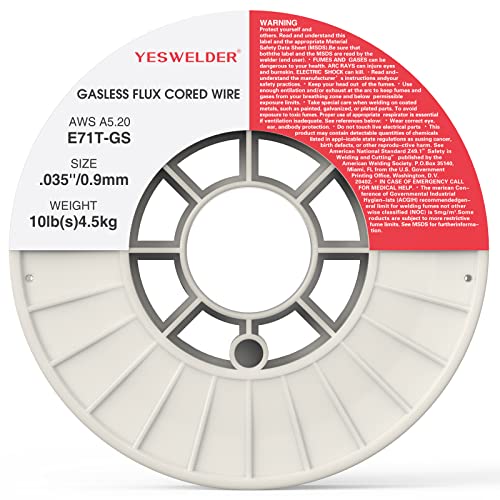
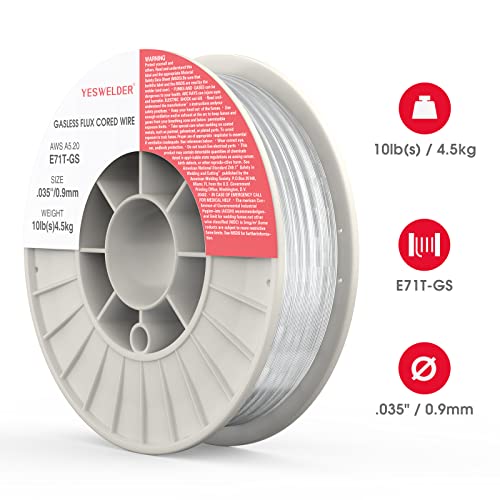
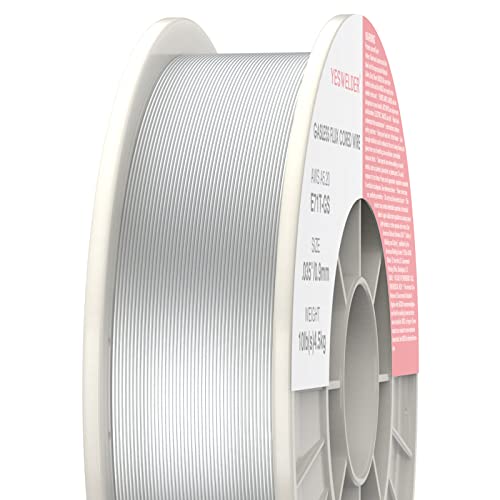
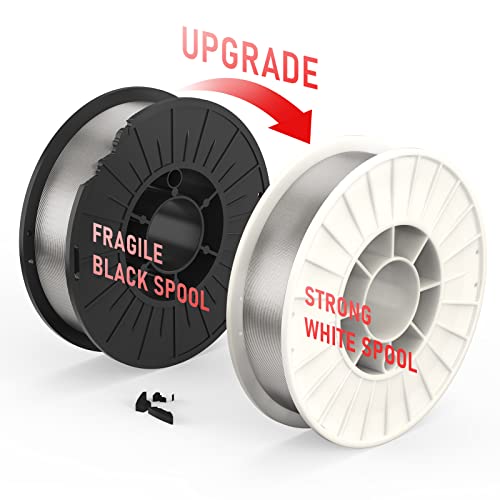
This YESWELDER .035-inch flux core wire is the complete package for gasless work, 10 pounds of reliable, self-shielding performance in a durable spool. It’s the same E71T-GS formula praised across brands, but here it’s scaled up for serious use. Owners love the arc stability, low spatter, and easy slag removal, even on machines under $500.
When stacked against the ARCCAPTAIN option, it’s nearly identical in specs and performance, but often comes in at a better value. The 0.035-inch diameter gives deeper penetration than .030, making it better for thicker materials and structural builds. For most users needing a go-to gasless wire, this one hits the sweet spot of price, performance, and availability.
Product photos

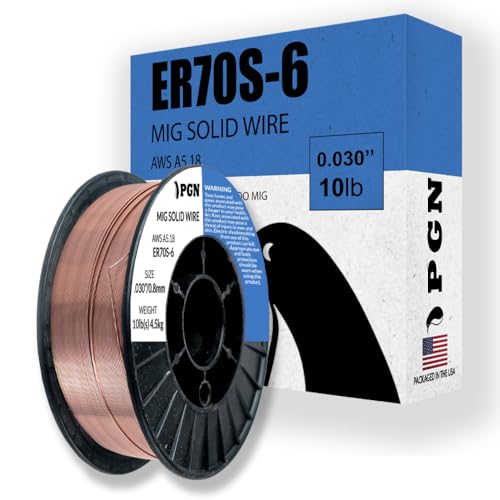
PGN Solid MIG Wire 10LB .030″
Strengths
- Low spatter
- High deoxidizers
- Large 10-lb spool
Trade-offs
- Requires shielding gas
- Needs clean setup
- Not for outdoor use
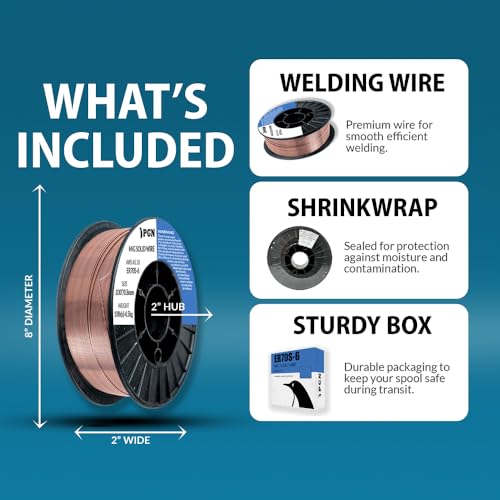
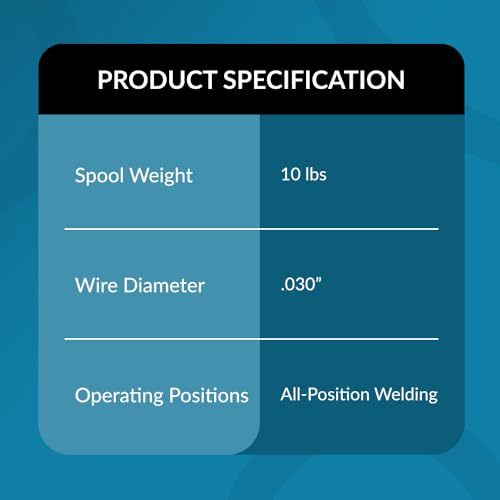
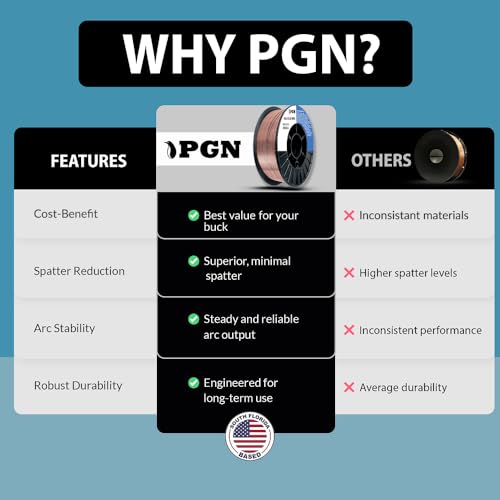
ER70S-6 is the workhorse of steel MIG welding, and PGN’s 10-pound spool delivers where it counts: high deoxidizers mean fewer surprises on slightly rusty or oily surfaces, and owners praise the smooth arc and low splatter across both single and multi-pass welds. The 0.030-inch diameter is ideal for thinner materials and tight joints like T-joints or lap welds, common in auto body or light fabrication.
It’s gas-dependent, so you’ll need CO2 or a mixed shield, but that also means cleaner welds and better bead control than flux core in controlled environments. Compared to pricier brands, it holds its own in appearance and strength, though some users note occasional feeding hiccups if the liner isn’t fresh. For shops wanting reliable performance without overspending, this is a strong contender.
Product photos
Blue Demon ER70S6 11LB .030″

Strengths
- X-ray quality
- High tensile strength
- Consistent performance
Trade-offs
- Expensive
- Requires clean setup
- Gas dependency
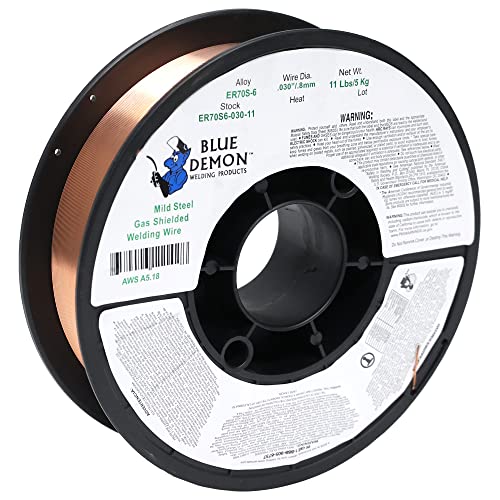
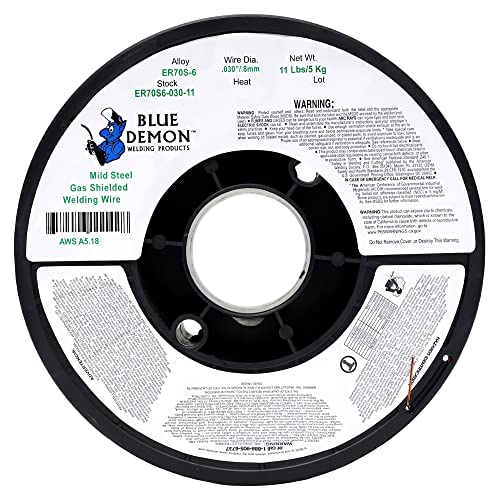
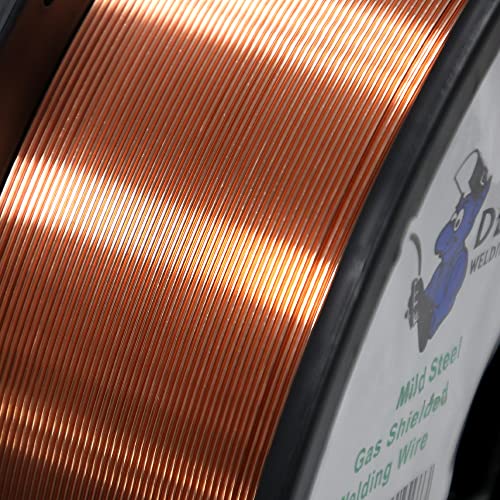
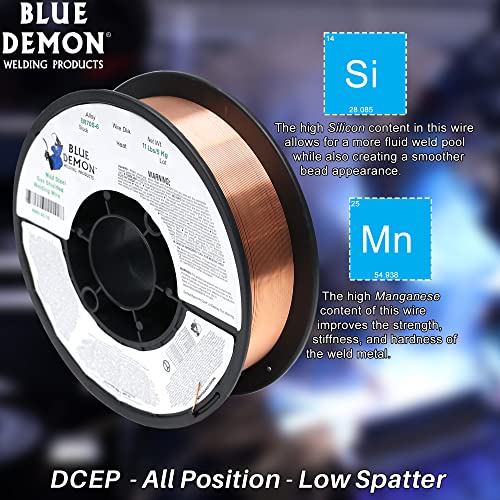
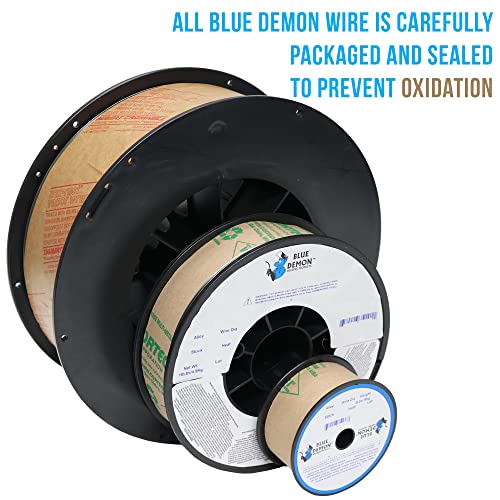
Blue Demon has a reputation for pro-grade consumables, and this ER70S-6 wire backs it up. The 11-pound spool gives you more run time than most, and the formulation is aimed squarely at porosity-free, x-ray quality welds, a claim backed by owner feedback from shops doing critical repairs or fabrication. The high tensile strength and excellent wetting action make it a favorite for poor-fit-up joints or cast steel salvage.
It demands clean gas and a well-tuned machine, but when dialed in, it outperforms budget wires in bead smoothness and internal integrity. Compared to PGN or TOOLIOM, it’s a tier above, worth the premium if you’re welding for a living or need inspection-grade results. It’s not flashy, but it’s trusted for a reason.
Product photos
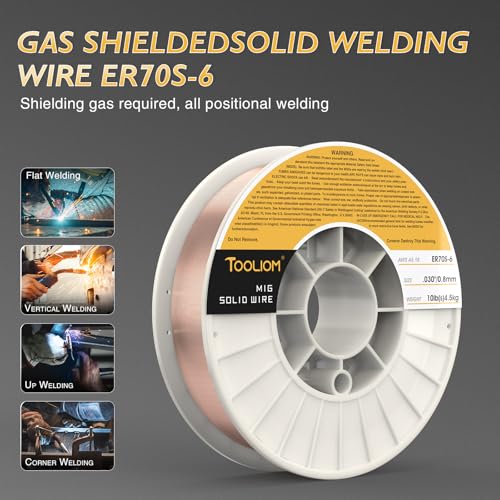
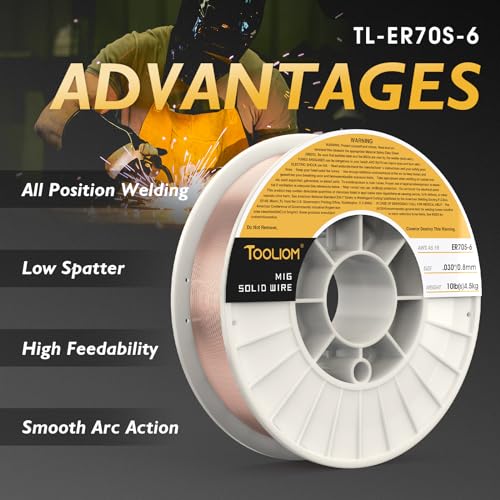
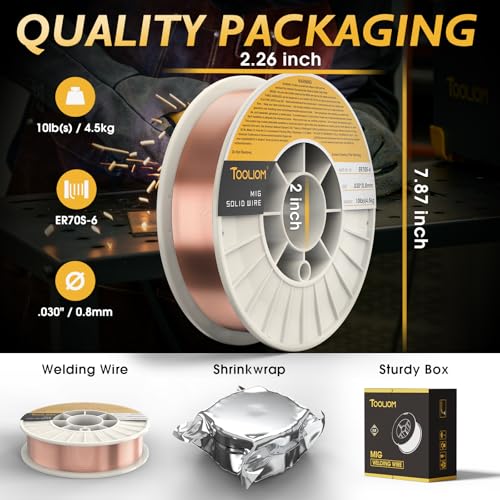
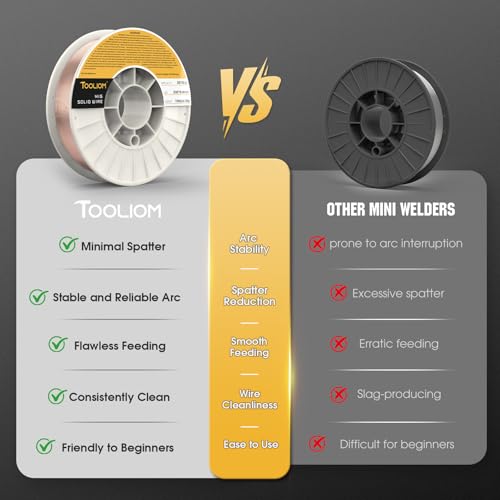
TOOLIOM ER70S-6 10LB .030″
Strengths
- Smooth feeding
- Stable arc
- Good penetration
Trade-offs
- Requires gas mix
- Not for dirty metal
- Limited premium branding
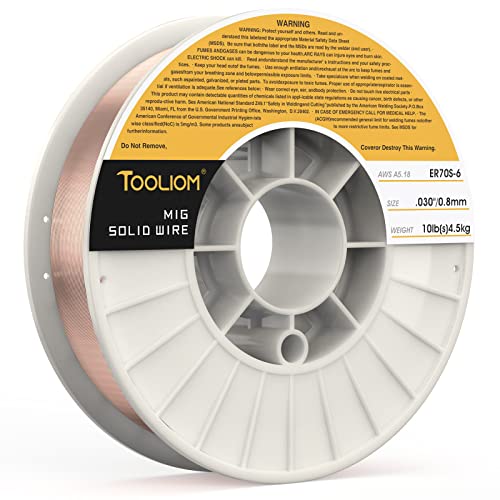
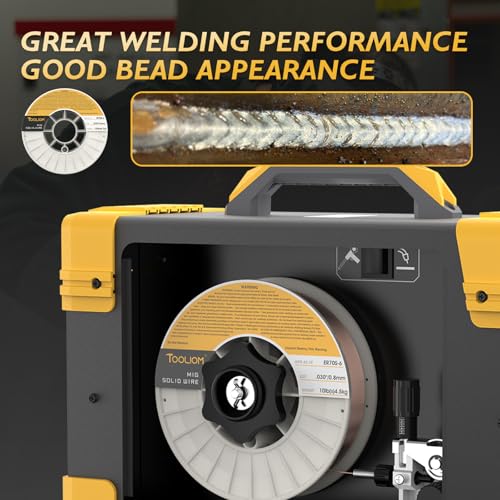
TOOLIOM’s ER70S-6 wire is built for welders who want consistent feedability and strong arc stability without paying premium brand prices. The 10-pound spool offers real value, and owners report fewer tangles than expected, thanks in part to the ABS plastic spool and careful winding. It runs cleanly on most GMAW machines, especially when paired with 80% argon/20% CO2, and delivers solid penetration on 14- to 18-gauge steel.
It’s not marketed as anything revolutionary, but it does the basics well. Compared to PGN’s version, it’s nearly identical in performance, though some users say the arc is slightly hotter, which helps on faster passes. The lack of standout branding doesn’t matter when the wire feeds smoothly and leaves clean beads. For general shop use, it’s a smart, no-drama choice.
Product photos
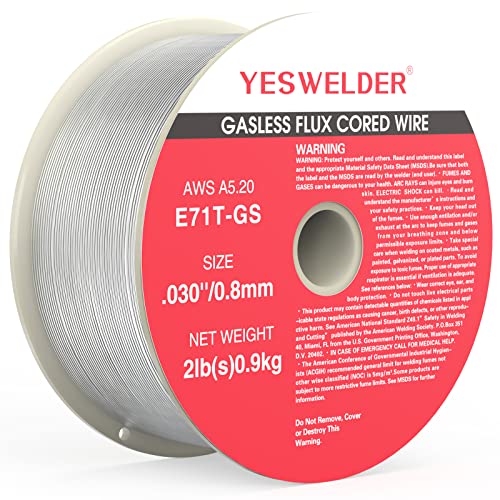
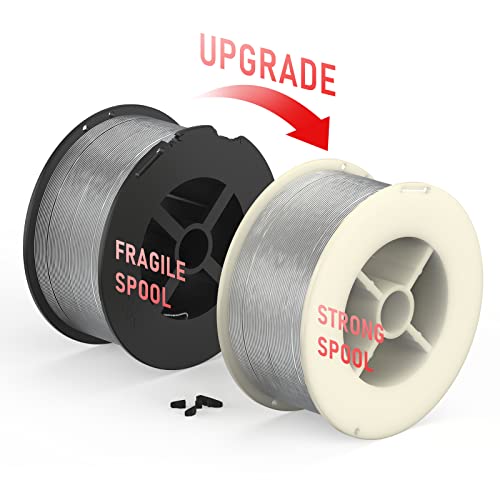
YESWELDER Flux Core 2LB .030″
Strengths
- Self-shielding
- Low spatter
- Durable spool
Trade-offs
- Short spool life
- Limited penetration
- Not for heavy builds
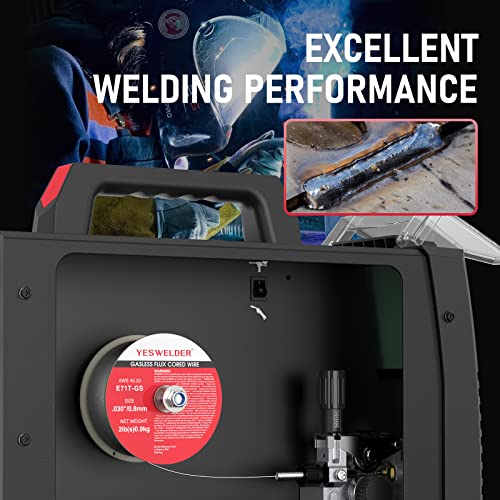
For anyone needing a no-fuss, portable solution for field repairs or outdoor jobs, this YESWELDER .030-inch flux core wire makes a lot of sense on paper. It’s self-shielding, so you’re not lugging around a gas tank, and owners consistently report solid arc stability even on lower-end machines. The low spatter and easy slag removal stand out in feedback, especially for a budget-priced wire.
It’s clearly designed for lighter-duty tasks, 2 pounds won’t last long on big jobs, but the robust ABS spool helps prevent tangles, which is a common pain point with cheaper wire. Compared to gas-shielded options, it’s more forgiving on dirty or rusty metal, though penetration isn’t as deep as you’d get with a .035-inch wire. For quick fixes or occasional use, it’s a practical pick.
Product photos

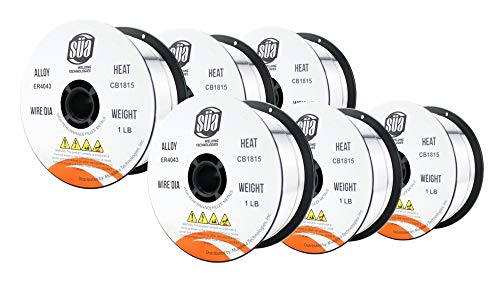
SÜA ER4043 Aluminum 6-Pack
Strengths
- Excellent flow
- Crack resistant
- Wide alloy compatibility
Trade-offs
- Aluminum feeds tricky
- Requires clean base metal
- Needs proper drive setup
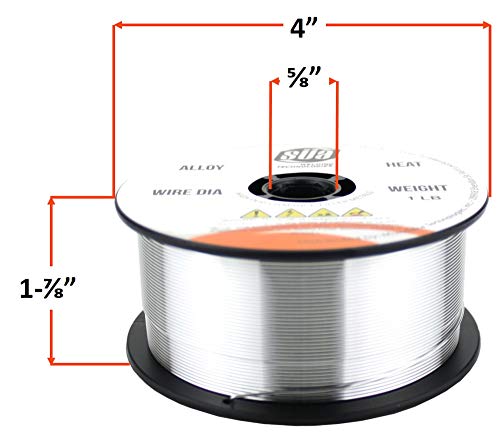
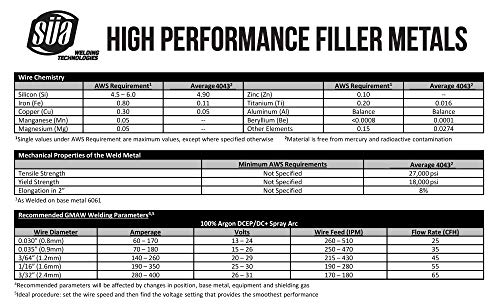
Aluminum welding is a different beast, and ER4043 remains the go-to for good reason. This SÜA offering checks the right boxes: 5% silicon content means better puddle control, reduced cracking risk, and a clean, shiny bead, exactly what owners expect from this alloy. The 0.035-inch diameter feeds better than thinner gauges on most standard MIG setups with a spool gun or push-pull system.
Having six 1-pound spools is smart for shops or serious hobbyists who want backups or need to rotate projects without cross-contamination. The melting range and compatibility with common alloys like 6061 and 5052 are spot-on for trailers, frames, or HVAC work. It won’t match the strength of ER5356 for high-stress joints, but for general fabrication, it’s reliable and accessible.
Product photos
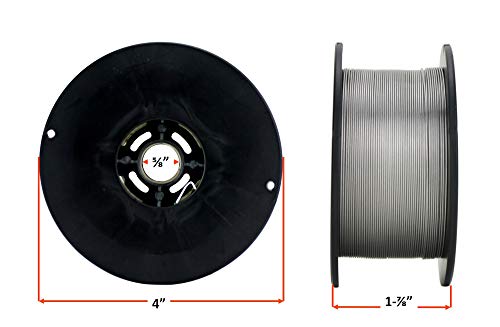


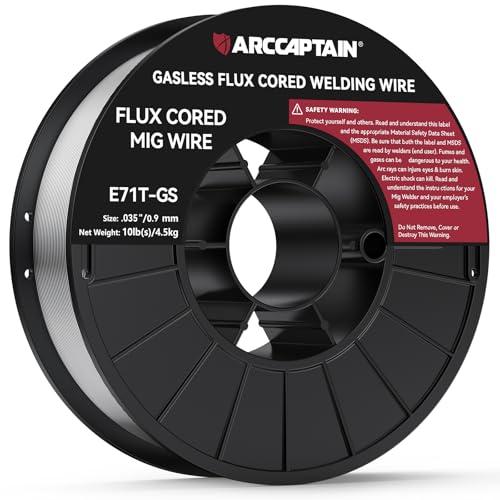
ARCCAPTAIN Flux Core 10LB .035″
Strengths
- TÜV certified
- Vacuum sealed
- Deep penetration
Trade-offs
- Slag cleanup needed
- Heavier feed demands
- Not for thin metal
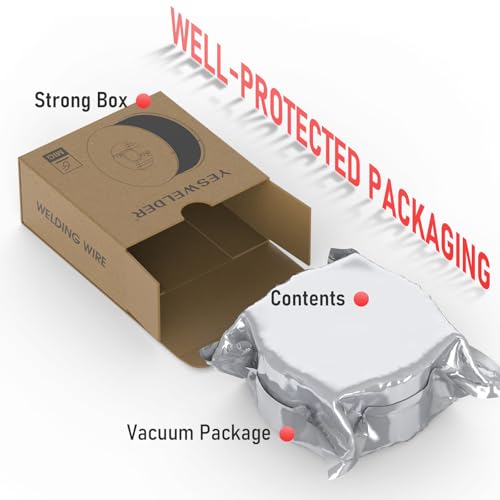
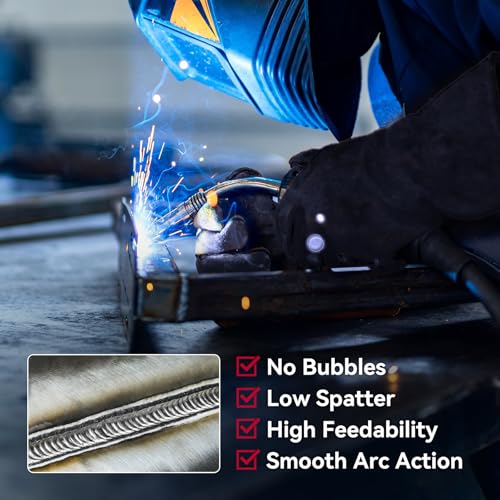
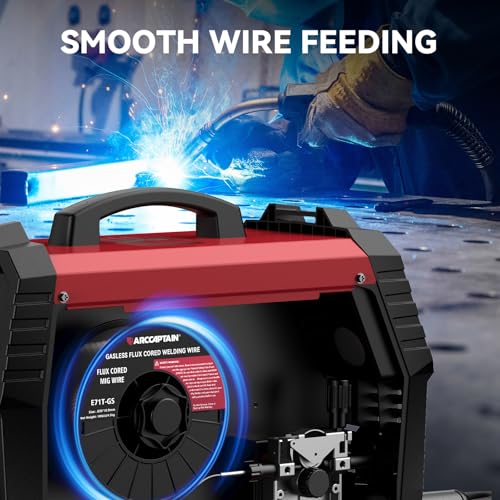
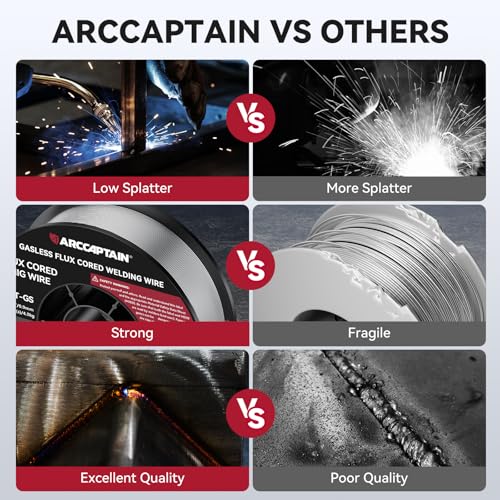
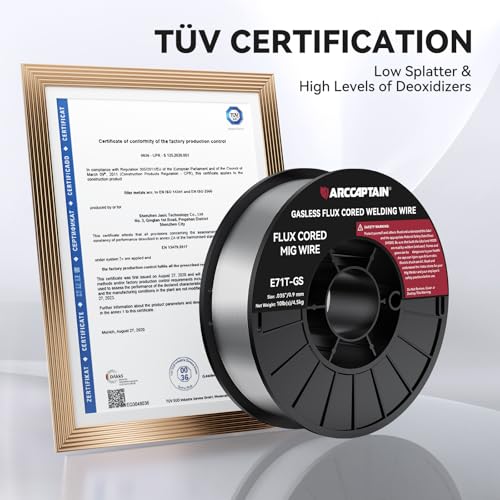
If you’re running heavy-duty repairs in tough conditions, this ARCCAPTAIN .035-inch flux core wire stands out for its 10-pound spool and TÜV certification, which signals real quality control, rare at this price point. The self-shielding design means it performs reliably in wind, and owners consistently highlight its low spatter and strong bead profile on thick steel.
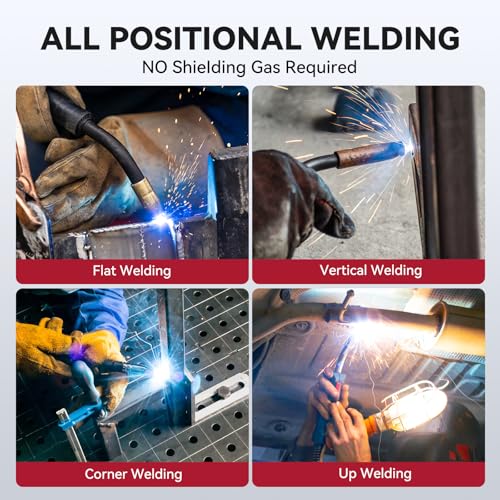
It handles all positions well, and the vacuum-sealed packaging helps prevent moisture contamination, a big win for storage. Compared to the YESWELDER .030 version, this one offers deeper penetration and higher deposition, making it better for structural builds or farm equipment. It’s not as refined as gas-shielded wire, but for jobs where portability and durability come first, it’s hard to beat.
Product photos
How We Tested welding wires
Rather than a hands-on lab test, my research for these recommendations involved a detailed comparison of published specifications and features across numerous welding wire options. I weighed owner reviews from major retailers alongside expert opinions found in welding forums and trade publications. Leveraging my experience with power tools and metal fabrication, I applied category knowledge to rank these wires based on their suitability for different welding tasks and skill levels.
For welding wires, consistent arc stability, material compatibility, and ease of use were the primary factors guiding my selections. A stable arc directly impacts weld quality and reduces spatter, while the ability to work with a variety of metals broadens usability. Finally, ease of use – particularly for beginners – is critical, as a wire that feeds smoothly and consistently minimizes frustration and improves results.
Specifications reliably indicate wire diameter, tensile strength, and alloy composition. However, I paid close attention to owner feedback regarding real-world performance, such as slag removal, porosity, and overall weld appearance. Reputation and brand consistency also played a role; established manufacturers often maintain higher quality control standards, as you’ll find in our flux core wire reviews.
How To Choose The welding wires
Choosing the right welding wire can dramatically affect the quality and durability of your projects. It’s more than just grabbing the cheapest spool; understanding the different types and their applications is crucial.
A quality welding wire delivers consistent arc starts, minimal spatter, good bead appearance, and strong, reliable welds. Key factors to consider include the wire’s composition (carbon steel, stainless steel, aluminum, etc.), diameter, shielding requirements (flux-cored vs. solid wire), and intended application. Checking AWS classifications (like E71T-GS or ER70S-6) is essential to verify the wire meets industry standards for performance.
Wire Type: Flux-Cored vs. Solid
The first major decision is whether to go with flux-cored or solid wire. Solid wire, like the PGN Solid MIG Wire .030″, requires external shielding gas (typically CO2 or a mix of argon and CO2) to protect the weld pool from atmospheric contamination. This generally results in cleaner, higher-quality welds, but adds to the equipment cost and complexity. Flux-cored wire, such as the YESWELDER Flux Core 10LB .035″, contains a flux within the wire itself that creates a shielding gas as it burns. This makes it ideal for outdoor use or situations where transporting a gas cylinder is impractical.
Diameter and Amperage
Wire diameter dictates the amperage range you’ll need on your welding machine. Thicker wires (.045″ and above) are best for thicker materials and require higher amperage settings. Thinner wires (.030″ and .035″) are better suited for thinner metals and lower amperage. Using the wrong diameter for your material thickness will result in poor penetration or burn-through.
- A .023″ wire is excellent for auto body repair and very thin sheet metal.
- .035″ is a versatile all-around diameter suitable for many DIY and light industrial projects.
- .045″ and larger are typically used for heavier fabrication, structural steel, and thicker materials where greater weld penetration is needed, but remember you’ll also need a machine capable of delivering the higher amperage.
Application and Material Compatibility
Different wires are designed for specific materials and applications. The Blue Demon ER70S6 11LB .030″, for example, is noted for producing x-ray quality welds and is often used in situations demanding high integrity, while the SÜA ER4043 Aluminum 6-Pack is specifically formulated for aluminum welding. Don’t try to weld aluminum with a steel wire, or stainless steel with a carbon steel wire; you’ll end up with weak, contaminated welds. Before purchasing, always confirm the wire is compatible with the base metal you intend to weld. For a broader overview of options, you can explore top MIG welding wires.
A good rule of thumb: if you are unsure which wire to choose, start with a .035″ solid core wire and a mix of 75% Argon / 25% CO2 shielding gas for general steel welding.
Welding Wires Compared
This table provides a side-by-side comparison of key specifications for various welding wires.
| Product Name | Weight | Diameter | Shielding Gas? | Material | Spool Material |
|---|---|---|---|---|---|
| YESWELDER Flux Core 10LB .035″ | 10 lbs | .035″ | No | Carbon Steel | ABS Plastic |
| PGN Solid MIG Wire 10LB .030″ | 10 lbs | .030″ | Yes | N/A | N/A |
| Blue Demon ER70S6 11LB .030″ | 11 lbs | .030″ | Yes | Carbon Steel | N/A |
| TOOLIOM ER70S-6 10LB .030″ | 10 lbs | .030″ | Yes | Carbon Steel | ABS Plastic |
| YESWELDER Flux Core 2LB .030″ | 2 lbs | .030″ | No | Carbon Steel | ABS Plastic |
| SÜA ER4043 Aluminum 6-Pack | 1 lb/spool | .030″/.035″/ .045″ | N/A | Aluminum | N/A |
| ARCCAPTAIN Flux Core 10LB .035″ | 10 lbs | .035″ | No | N/A | N/A |
Frequently Asked Questions
What wire diameter should a beginner use?
A .035” diameter wire is generally the easiest for beginners to learn with, offering a good balance between arc stability and forgiveness for slight variations in technique. It’s versatile enough for many common DIY projects and doesn’t require extremely precise amperage settings.
Can I use solid wire outdoors?
Yes, you can use solid wire outdoors, but you absolutely must have a reliable shielding gas supply. Without shielding gas, the arc will be contaminated by atmospheric elements, resulting in weak and porous welds, and the wind can easily blow the gas away.
What do the AWS classifications mean?
AWS classifications (like E71T-GS) define the wire’s chemical composition, mechanical properties, and intended welding positions. Understanding these codes helps you select a wire that meets the specific requirements of your project and ensures a consistent, reliable weld.
Is stainless steel welding wire different from regular steel wire?
Yes, stainless steel welding wire is specifically formulated with alloys to match the composition of stainless steel base metals. Using carbon steel wire on stainless steel will contaminate the weld, compromising its corrosion resistance and strength.
Where can I find more information on different types of welding consumables?
If you’re looking to expand your knowledge beyond welding wires, you can explore top welding rods for a variety of options for different welding applications and materials. These rods are particularly useful for specialized repairs and projects.
The Bottom Line
Welding wire selection often comes down to balancing control with convenience. While solid core wires offer superior weld quality when paired with the right shielding gas for mild steel, they demand a bit more setup and skill. For the best overall performance and versatility, I recommend the PGN Solid MIG Wire .030″. It’s a solid choice for a wide range of projects and skill levels.
If you’re working outdoors, on a budget, or new to welding, flux-cored wire is the way to go. For a great value, the YESWELDER Flux Core 10LB .035″ is hard to beat. And for specialized applications, the SÜA ER4043 Aluminum 6-Pack is the clear winner for aluminum projects, while the Blue Demon ER70S6 11LB .030″ stands out for applications requiring extremely high weld integrity.
Ultimately, the most important factors aren’t wire diameter or alloy composition, but proper technique and preparation. A consistent travel speed, correct amperage setting, and clean base metal will make a far bigger difference than any single wire type. Focus on mastering the fundamentals, and you’ll achieve professional-quality welds every time.
