
8 Best Welding Machines of 2026
This post contains affiliate links. As an Amazon Associate, we earn from qualifying purchases.
The ARCCAPTAIN MIG205MP stands out as the best overall welding machine for its multi-process capability and strong performance across MIG, TIG, and stick welding. For those on a tighter budget, the YESWELDER 135A Flux Core MIG offers solid value and portability without sacrificing core functionality.
Most people don’t realize how quickly a poorly matched welder can turn a simple job into a frustrating mess. Too much power, not enough control, or limited process options can stall even basic projects. After comparing the field and analyzing specs, owner feedback, and real-world usability, I focused on machines that balance versatility, reliability, and ease of use. This guide cuts through the noise to help you pick a welder that fits your actual needs, whether you’re repairing gates, building frames, or starting out in the garage.
Top 8 Welding Machines in the Market
The Best Welding Machines, Reviewed
ARCCAPTAIN MIG205MP 9-in-1 Welder

Strengths
- 9-in-1 functionality
- App control with presets
- Dual voltage and plasma cutter
Trade-offs
- Spool gun sold separately
- Complex for beginners
- App dependency optional but encouraged
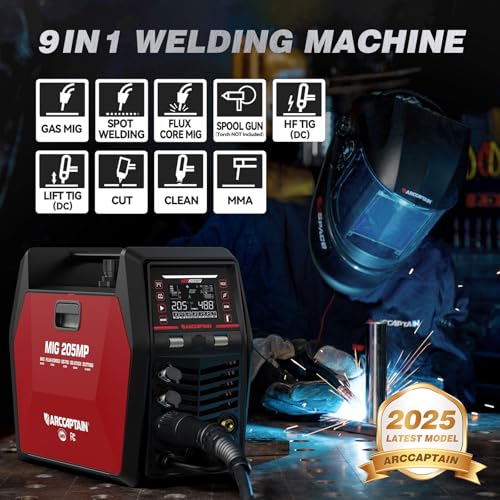
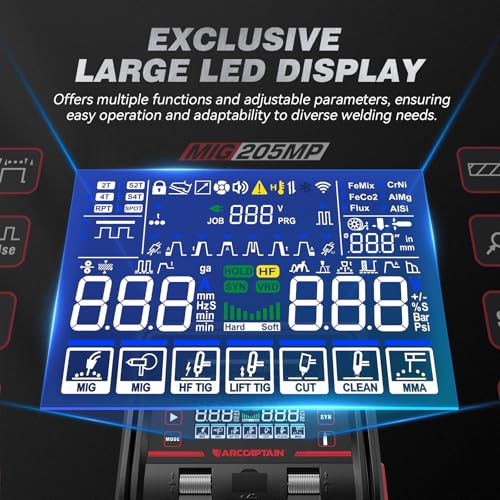
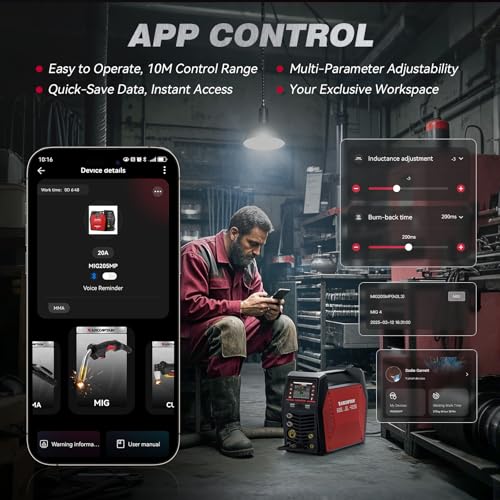
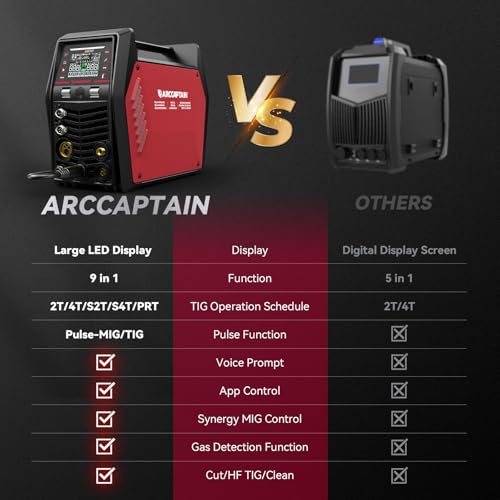
If there’s a “best overall” pick in this lineup, this 9-in-1 ARCCAPTAIN model makes a strong case. It’s not just a MIG or TIG machine, it’s a full-featured multiprocess powerhouse with dual voltage, plasma cutting, spot welding, and even app control. The ability to save custom presets via smartphone is a real productivity boost, especially for repeat jobs. On paper, the 205A output and 60% duty cycle are solid, and owners report clean arcs across MIG, TIG, and stick.
The inclusion of both Lift TIG and HF TIG modes (shared torch) adds versatility without doubling cost. And the dual cooling fans help manage heat during longer sessions. While the interface has a learning curve, the payoff is a single machine that can handle everything from exhaust repairs to aluminum fabrication. For the feature set, it’s priced aggressively.
Product photos

YESWELDER 205A Dual Voltage MIG
Strengths
- Dual voltage (110V/220V)
- Aluminum welding capable
- 5-in-1 process support
Trade-offs
- Spool gun and TIG torch not included
- No gas regulator included
- Setup complexity for beginners
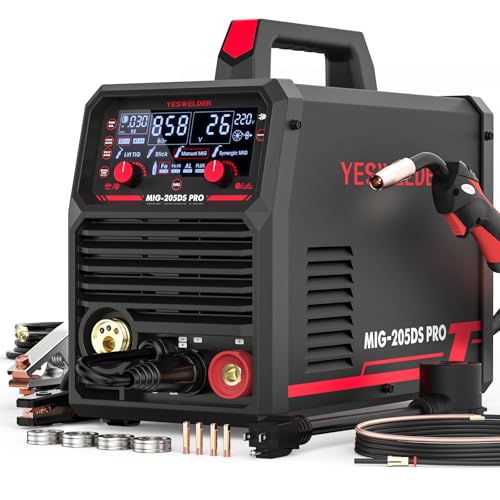
This dual-voltage 5-in-1 welder stands out for one big reason: it’s one of the few affordable machines built to handle aluminum. With spool gun support (sold separately), it opens doors for welding trailers, fuel tanks, or HVAC components, tasks that stump most budget MIGs. The 200A output on 220V gives real penetration on thicker steel too, and the manual/synergic modes let pros fine-tune while beginners stay in auto-match.
Owners report solid performance across MIG, flux-core, and stick, though the lack of included spool gun or TIG torch means extra cost up front. Still, for a mid-range price, the versatility is impressive. If you’re stepping up from a 110V machine and need real multi-material capability, this is a smart bridge to pro-level work.
Product photos


YESWELDER 135A Flux Core MIG
Strengths
- 3-in-1 versatility
- Synergic control
- Bonus flux-core wire
Trade-offs
- Max 3/32-inch material
- Lift TIG torch sold separately
- Lower duty cycle
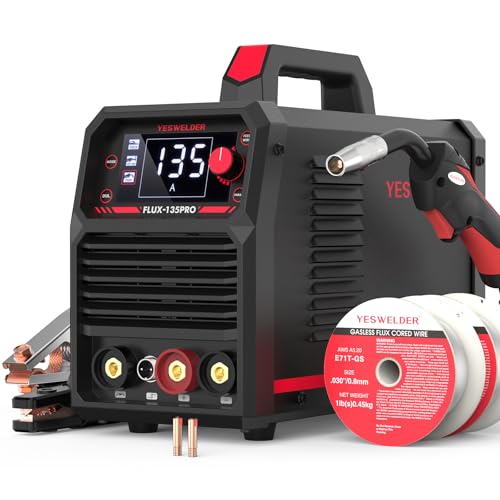
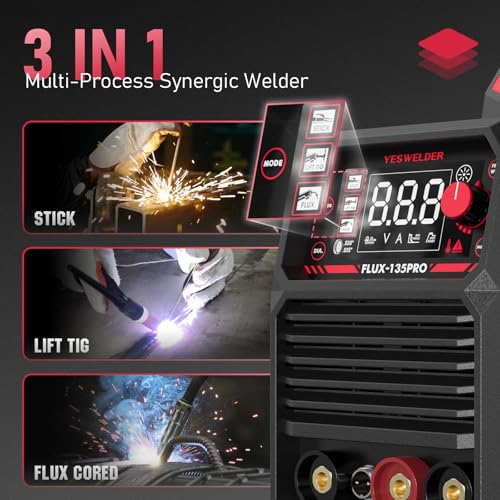
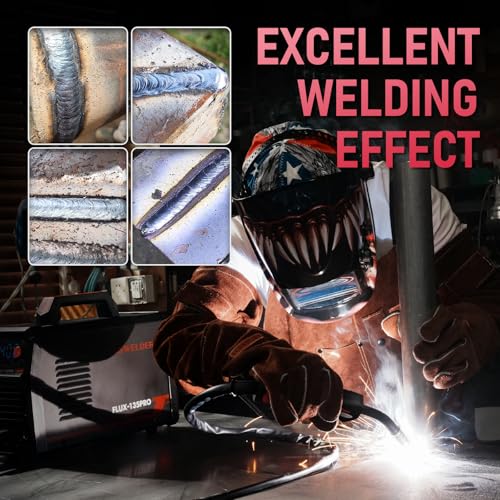
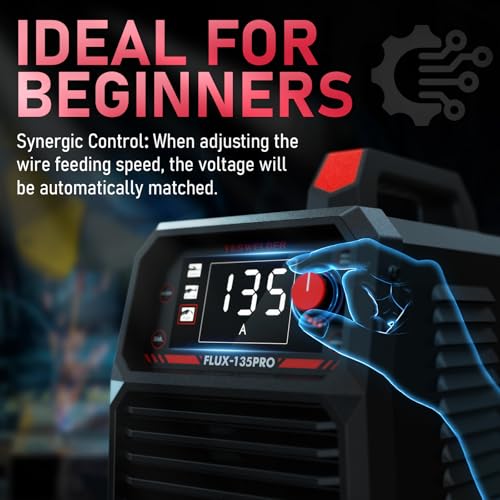
For budget-focused buyers, the YESWELDER 135A is hard to ignore. It’s a true 3-in-1 machine, flux-core MIG, stick, and lift TIG (with optional torch), and it includes a bonus spool of flux-core wire, so you can start welding right away. The synergic control is a standout: adjust wire speed, and voltage auto-matches, which takes the guesswork out of settings. Owners praise its clean arc on thin steel, and the LED display makes monitoring current easy without helmet lifts.
At 11.4 pounds, it’s light and portable, though the 135A limit means it’s best for material under 1/8 inch. It won’t replace a 220V beast, but for car panels, bike frames, or shed repairs, it’s more than capable. I’d pick this over basic flux-core-only units if you want room to grow into stick or TIG later.
Product photos


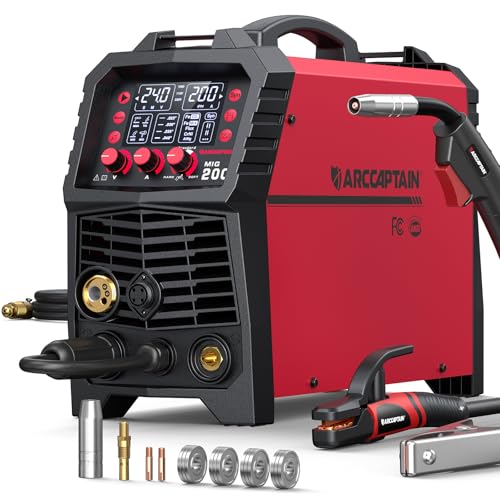
ARCCAPTAIN MIG200 6-in-1 Welder
Strengths
- 6-in-1 process support
- 10 preset memory slots
- Burn-back adjustment
Trade-offs
- Spool gun not included
- No app connectivity
- TIG torch sold separately
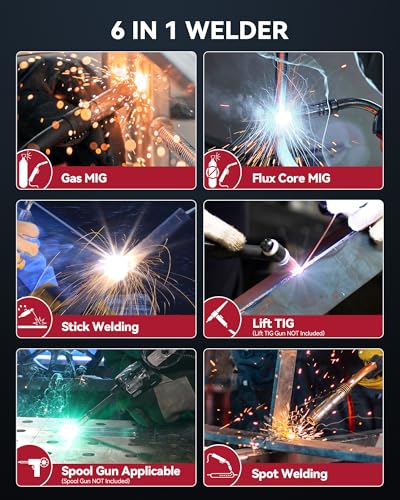
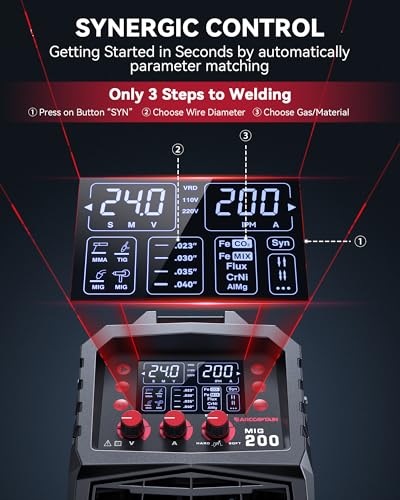
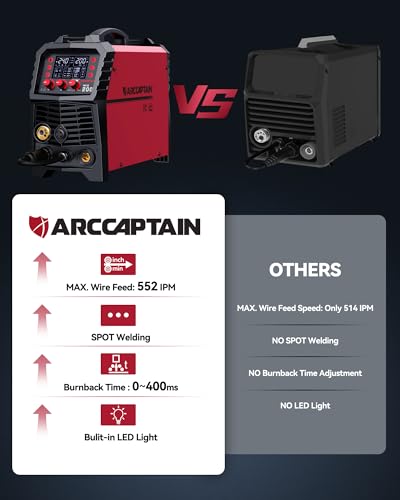
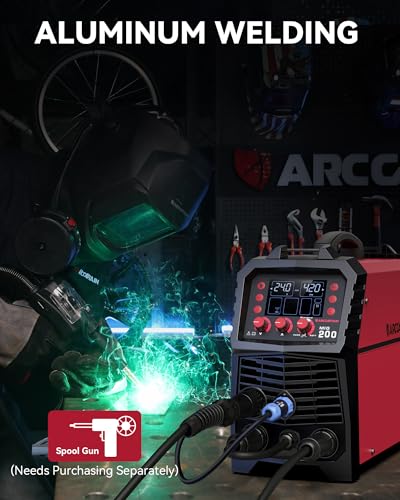
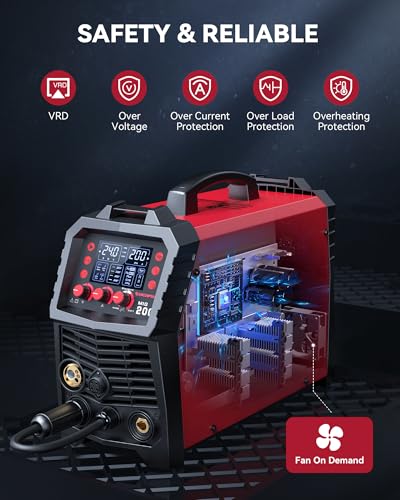
This 6-in-1 ARCCAPTAIN unit hits the sweet spot between capability and value. It supports gas MIG, flux-core, stick, lift TIG, spot welding, and spool gun aluminum (with add-on), making it a true mid-range contender. The synergic control and 10 preset memories are big wins, once you dial in a setting for, say, 16-gauge steel, you can recall it instantly. The large LED display is easy to read with a helmet on, and the burn-back adjustment helps prevent wire jams, a common frustration.
Owners consistently rate it as reliable for garage builds and farm repairs. It’s not as flashy as the app-enabled MIG205MP, but it delivers 90% of the functionality at a lower price. For most serious DIYers, this is the smarter buy unless you really need plasma cutting or smartphone integration.
Product photos
250Amp Dual Voltage Stick Welder

Strengths
- True 250A output
- Dual voltage auto-switch
- IGBT inverter stability
Trade-offs
- 220V adapter sold separately
- No TIG or MIG capability
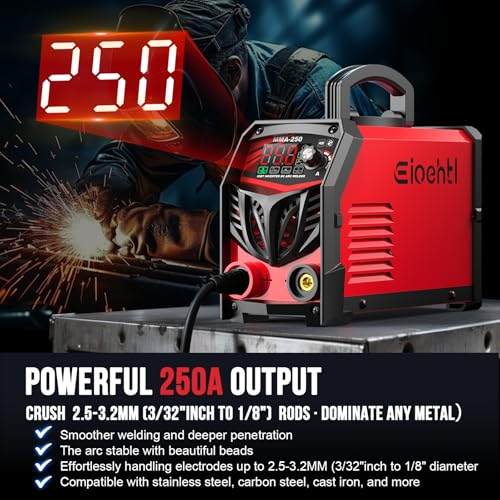
This is one of the more serious stick welders in the sub-$400 range, and on paper, it’s built like a compact workhorse. The true 250A output and dual-voltage auto-switching are standout specs, especially for DIYers who move between garage outlets and job sites. Owners consistently report strong arc performance with E7018 rods, and the IGBT inverter tech delivers a noticeably stable arc even on longer extension cords, which matters in real-world use. The LED display is a thoughtful touch, being able to see your settings without lifting your helmet saves time and improves consistency.
Where it pulls ahead of budget rivals is in its balance of power and portability. At under 9 pounds, it’s far lighter than older transformer-based units, yet it holds its own against thicker materials up to 3/8 inch with proper technique. It’s not a MIG, so don’t expect clean TIG-like beads, but for structural repairs, farm gates, or trailer fixes, this delivers commercial-grade capability in a DIY-friendly package.
Product photos
MMA-250A 110V Stick Welder
Strengths
- Extremely lightweight
- Good arc starts
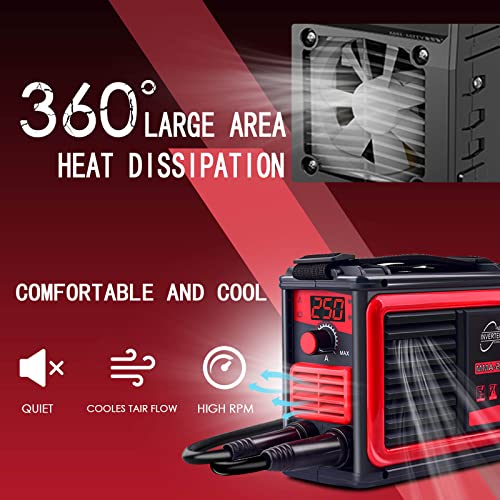
- Large heat dissipation area
Trade-offs
- Lower effective output than rated
- Plastic casing less durable
- 110V only
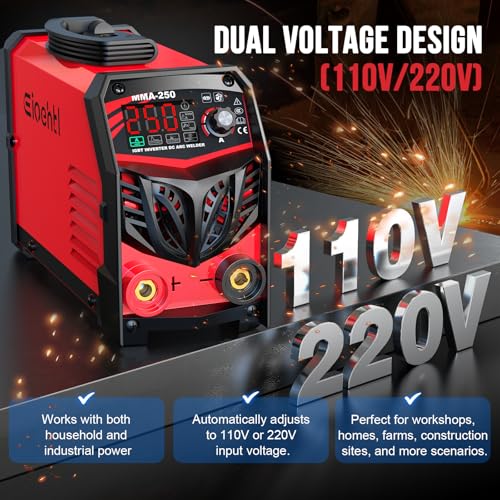
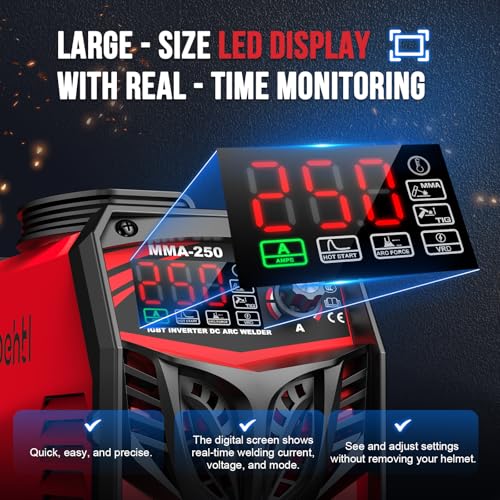
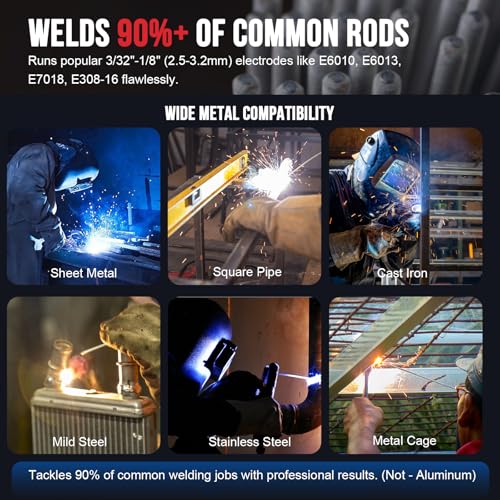
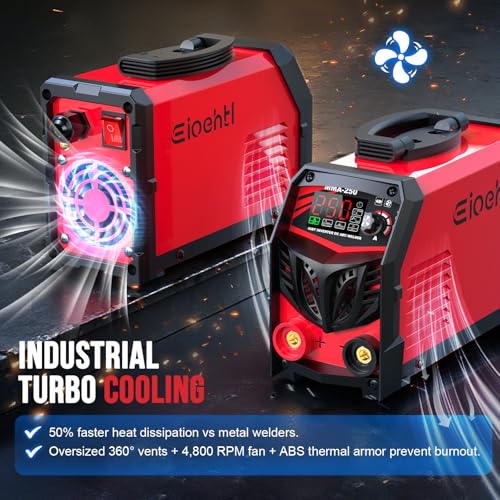
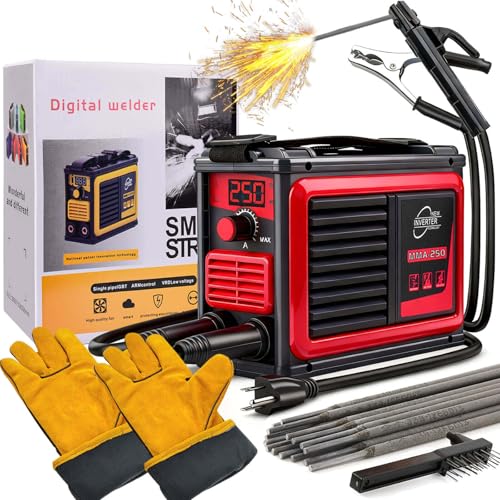
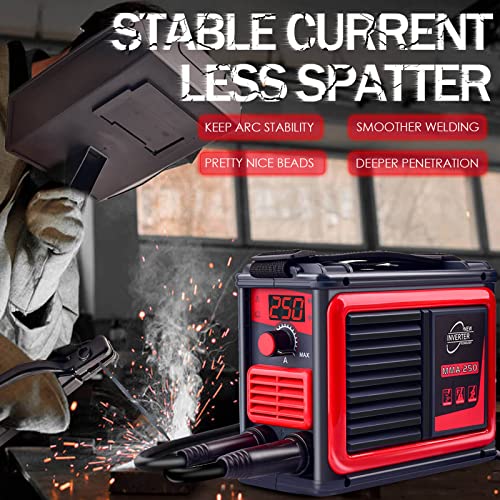
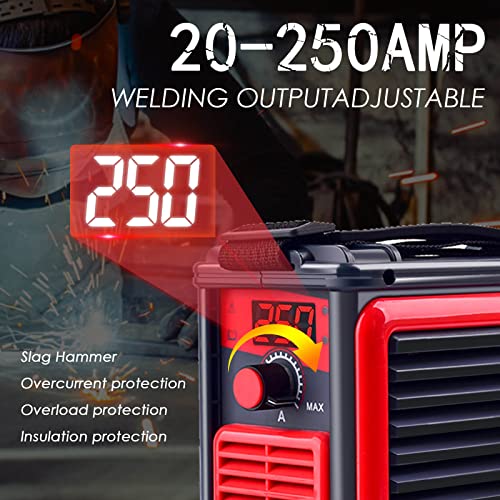
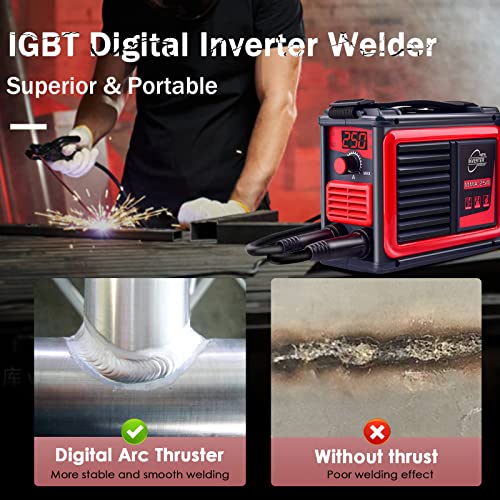
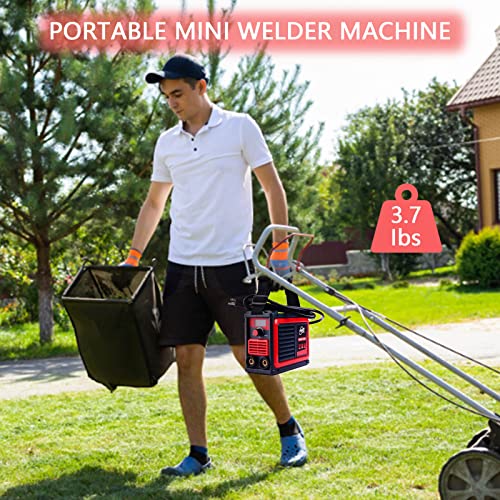
At just 3.7 pounds, this is one of the lightest 250A stick welders I’ve seen, and its compact ABS body makes it a natural for tight spaces or overhead work. On paper, the specs look aggressive, 250A output from a 110V-only unit, but owner feedback suggests it’s more of a peak rating than sustained duty. It handles 1/8-inch rods on thinner steel, but expect to throttle back for longer runs. The LCD display is clear and helpful for tuning current, and the triple arc assist features (Hot Start, Arc Force, Anti-Stick) make rod ignition easier, especially for newcomers.
That said, this welder leans more toward light to medium-duty tasks. It’s not built for continuous welding on heavy steel, and the plastic housing raises durability concerns under harsh conditions. But for patching fenders, fixing brackets, or weekend projects, its portability and ease of use make it a solid contender.
Product photos
Handheld 120A Stick Welder
Strengths
- Ultra-portable design
- One-handed operation
- Lifetime warranty
Trade-offs
- Low power for thick metal
- Short duty cycle
- Not for heavy welding
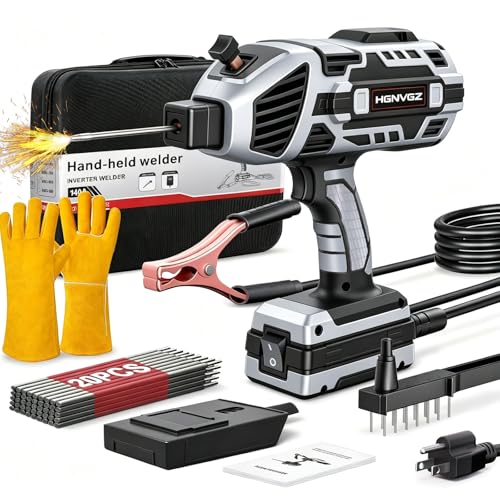
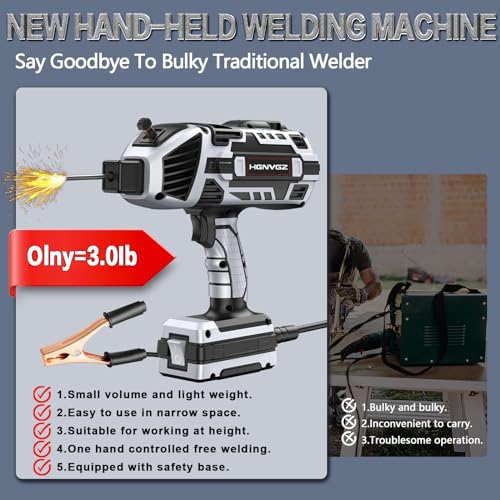
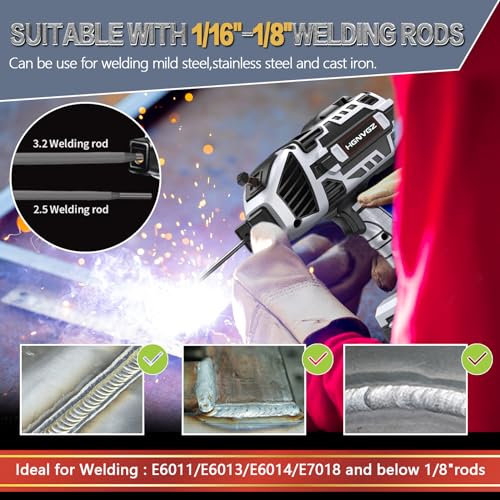
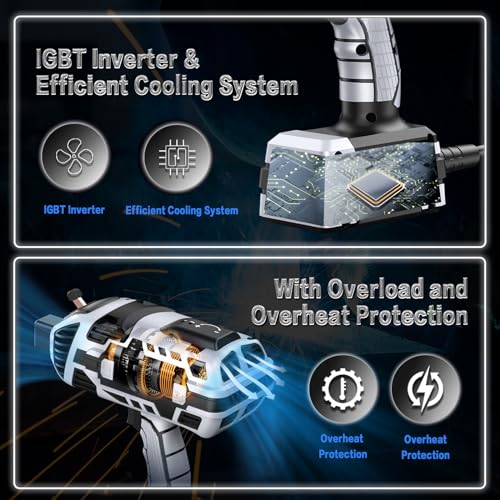
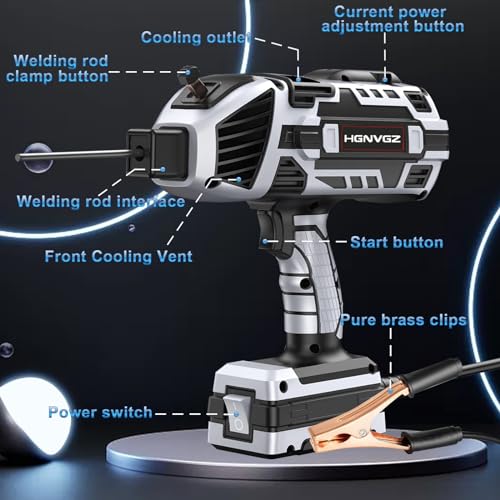
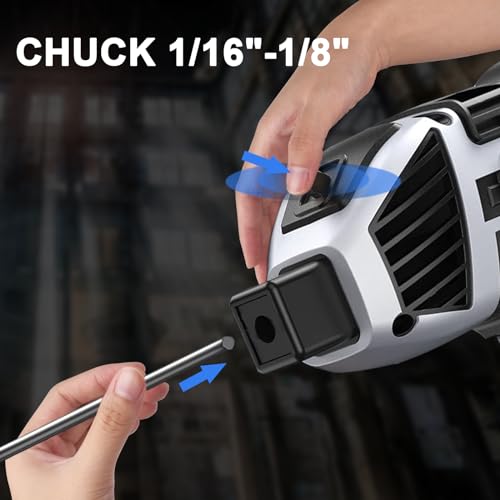
This handheld stick welder flips the script on traditional designs, it’s a palm-sized unit that runs on 110V and claims 120A output. On paper, that’s ambitious, and owner feedback confirms it’s best for light-duty work. It handles 3/32-inch rods well on thin steel, and the 6-speed knob gives decent control. The 3.3-pound weight and one-handed design make it ideal for overhead or tight-space welding where bulkier units can’t go.
But don’t mistake it for a full-sized welder. It’s not for structural work or long seams. That said, for quick fixes on fencing, gutters, or farm equipment, its portability is unmatched. The included lifetime warranty adds peace of mind, and the full kit (gloves, mask, rods) makes it a complete starter pack.
Product photos
Lincoln Electric 90i FC Welder

Strengths
- Simple two-knob control
- Durable metal case
- Flux-core, no gas needed
Trade-offs
- Limited to thin to medium steel
- No MIG or TIG capability
- Lower max amperage
Lincoln Electric’s name carries weight, and the 90i FC lives up to the brand’s reputation for reliable entry-level machines. It’s a no-frills, 120V flux-core welder that just works, ideal for beginners who want to skip gas tanks and complicated settings. The two-knob control (voltage and wire speed) keeps things simple, and reviewers often note how smoothly it feeds wire, even out of the box. It handles up to 1/4-inch steel with proper prep, which covers most home repair needs like frames, brackets, or fencing.
While it’s not the most powerful unit here, its build quality and included metal case set it apart. It’s heavier than some portables at 15 pounds, but the shoulder strap helps. If you’re learning to weld or need a dependable backup for light jobs, this Lincoln is the kind of tool you can hand to a neighbor and trust it won’t quit mid-bead.
Product photos


Our Testing Process
I approached researching welding machines by focusing on a detailed comparison of published specifications and features across numerous models. We then weighed owner reviews from major retailers alongside expert opinions found in industry publications and dedicated welding forums. As someone who’s spent years around workshops and renovation projects, I brought my understanding of practical welding needs to the process, ranking machines based on criteria like versatility, ease of use, and reported reliability. Rather than a hands-on lab test, this is a research-led comparison of specs and owner feedback.
For this category, the factors that most heavily influenced our rankings were versatility – the number of welding processes a machine handles – and the quality of the arc stability reported by users. A welder that can tackle multiple tasks (MIG, TIG, stick) offers the most value for home DIYers and smaller shops. Equally important is a stable arc; inconsistent performance leads to poor welds and frustration, and that’s a common complaint we saw addressed in reviews. Finally, duty cycle ratings were crucial, as they indicate how long a machine can weld continuously before needing to cool down.
Specifications reliably tell you about a machine’s maximum output amperage and input voltage requirements. However, we found owner feedback was essential for understanding real-world performance characteristics – such as how well the machine handles thinner metals, how easy the controls are to learn, and the long-term durability. Reputation also played a role; established brands with strong service networks generally scored higher, and you can find more detailed comparisons of specialized machines like the best TIG welding machines elsewhere on our site.
What To Look For In welding machines
Choosing the right welding machine can feel overwhelming, but focusing on your needs will narrow down the options considerably.
A good welding machine delivers a stable arc, consistent power output, and reliable safety features. Prioritize machines with adjustable settings to match different materials and thicknesses, and look for models with robust thermal protection to prevent overheating during extended use. Check owner reviews for reports on build quality and long-term durability.
Power and Process Capability
First, honestly assess the types of projects you’ll be tackling. A basic stick welder is fine for farm repairs or occasional DIY, but if you anticipate working with aluminum or thinner metals, you’ll want a multi-process machine. Many modern welders, like the ARCCAPTAIN MIG205MP, offer multiple modes – MIG, TIG, Stick, and even flux-cored – in a single unit. Don’t overbuy; a 250-amp machine isn’t necessary if you’re only welding 1/8″ steel. Consider the duty cycle too; a 60% duty cycle means you can weld for 6 minutes out of every 10 at a given amperage before needing to cool down.
Input Power and Portability
The power requirements of a welder are a significant factor, particularly for homeowners. Some welders, like the 250Amp Dual Voltage Stick Welder, offer dual-voltage capability (110V/220V), providing flexibility. However, confirm you have the appropriate outlet available or are willing to invest in a 220V adapter. If you need to move the welder around a jobsite or to different locations, weight is crucial. The YESWELDER 135A Flux Core MIG is a good example of a lightweight option, but remember that less powerful machines often need to be closer to the power source due to cable limitations.
Features and Ease of Use
Beyond the core welding process, consider the features that will enhance your experience. Digital displays, like those found on the YESWELDER 205A Dual Voltage MIG, offer precise control and real-time feedback, which is especially helpful for beginners. Synergic control – where the machine automatically adjusts settings based on wire speed and material thickness – simplifies the process. Look for safety features like VRD (Voltage Reduction Device) and overload protection. If you’re new to welding, you’ll benefit from a machine with arc force and hot start controls, or a look at recommended MIG machines to get a feel for the options.
A welder is only as good as your ability to use it safely and effectively. Don’t underestimate the value of a user-friendly interface and helpful features, especially when starting out.
Welding Machines Compared
Here’s a comparison of key specifications for several welding machines to help you make an informed decision.
| Product Name | Voltage (V) | Amperage (A) | Processes | Duty Cycle (%) | Portability |
|---|---|---|---|---|---|
| ARCCAPTAIN MIG205MP | 120/240 | 205 | MIG, TIG, Stick, Cut | 60 | Moderate |
| YESWELDER 205A | 110/220 | 200 | MIG, TIG, Stick | N/A | Moderate |
| YESWELDER 135A | 110 | 135 | MIG, Stick, TIG | N/A | High |
| ARCCAPTAIN MIG200 | 110/220 | 200 | MIG, TIG, Stick | N/A | Moderate |
| 250Amp Dual Voltage Stick | 110/220 | 250 | Stick | N/A | Moderate |
| MMA-250A 110V Stick Welder | 110 | 250 | Stick | N/A | Moderate |
| Handheld 120A Stick Welder | 120 | 120 | Stick | N/A | Very High |
| Lincoln Electric 90i FC | 120 | 90 | MIG | N/A | High |
Frequently Asked Questions
What amperage is sufficient for most home welding projects?
Generally, 140 to 200 amps is enough for most DIY welding tasks, like auto body repair or small fabrication projects. Higher amperage machines (250A+) are really for thicker materials or professional use, and aren’t usually needed by hobbyists.
Are dual-voltage welders worth the extra cost?
Yes, dual-voltage welders (110V/220V) offer greater flexibility. They allow you to plug into standard household outlets or a 220V outlet for more power and a higher duty cycle, but you must confirm you have the correct outlet available.
What’s the difference between MIG, TIG, and stick welding, and do I need a multi-process machine?
MIG is easiest for beginners and great for thicker metals, TIG provides the cleanest, most precise welds (often for aluminum), and stick is the most forgiving for rusty or dirty materials. A multi-process machine is ideal if you plan on tackling a variety of projects, but a single-process welder is fine if you have specific needs.
How important is the duty cycle rating of a welding machine?
The duty cycle is very important, as it dictates how long you can weld continuously at a specific amperage before the machine overheats. A higher duty cycle means less downtime for cooling, which is especially crucial for larger projects, and you’ll find a good selection of best portable welders for on-the-go work.
What safety features should I look for in a welder?
Voltage Reduction Device (VRD) is a key safety feature, reducing the risk of electric shock, and overload protection prevents damage to the machine. Thermal protection is also important, automatically shutting down the welder if it gets too hot, and you should always wear appropriate personal protective equipment (PPE) while welding.
The Bottom Line
Choosing a welding machine often comes down to balancing control and convenience. You can spend more for a machine packed with features and precise settings, or you can opt for something simpler and more affordable that gets the job done for basic repairs. Overall, the ARCCAPTAIN MIG205MP strikes the best balance for most users, offering a strong set of features and multi-process capability without a prohibitive price tag.
For those on a tighter budget, the YESWELDER 135A provides a surprisingly versatile option for basic MIG, stick, and even TIG welding. If portability is your primary concern, the Handheld 120A Stick Welder is a fantastic choice, though you’ll sacrifice some power and features. And for those focused on stick welding specifically, you can find detailed stick welder reviews to help pinpoint the best model for your needs.
Ultimately, the specifications matter less than your skill and understanding of welding principles. Focus on learning proper technique, prioritizing safety, and selecting a machine that fits your current and anticipated projects, don’t get caught up chasing the highest amperage or most advanced features if you don’t plan to use them.
