
8 Best Benchtop Grinders of 2026
This post contains affiliate links. As an Amazon Associate, we earn from qualifying purchases.
The WEN BG625V Variable Speed Bench Grinder is our top pick for most DIYers, thanks to its reliable performance and adjustable speed. For budget-conscious buyers, the Woodskil 6-Inch High-Speed Bench Grinder offers solid basics. If you need larger wheels and more material removal power, the BUCKTOOL 8-Inch Dual Speed Grinder steps up with size and dual-speed flexibility.
A lot of people buy bench grinders without realizing how different they can feel in practice, some vibrate badly, overheat quickly, or lack control for delicate tasks. I’ve seen too many folks frustrated by a tool that looked good on paper but fell short when sharpening a gouge or shaping a piece of steel.
This guide cuts through the noise. I compared motor specs, wheel setups, speed options, and real-world feedback to find models that deliver where it matters, stability, precision, and safety. You’ll learn what actually makes a difference in use, not just in marketing.
Top 8 Benchtop Grinders in the Market
The Best Benchtop Grinders, Reviewed
6-Inch Variable Speed Bench Grinder

Strengths
- Brushless motor
- Wide RPM range
- Diamond wheel dresser
- Cast-iron base
Trade-offs
- No included buffer wheel
- Slightly heavier
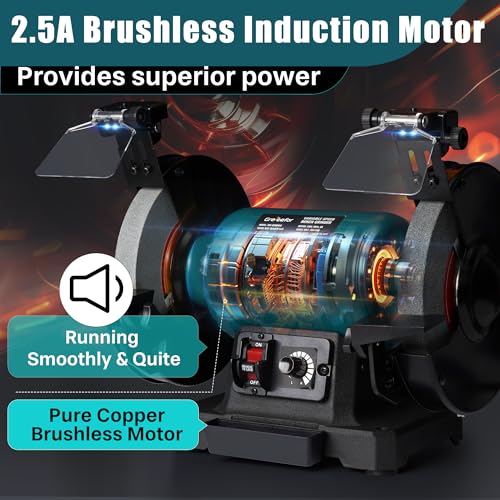
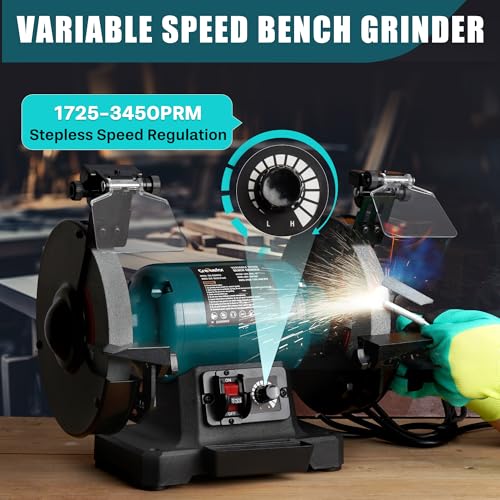
On paper, this 6-inch variable speed grinder hits a sweet spot, brushless motor, cast-iron base, and a wide RPM range (1725–3450) that gives real control across materials. The inclusion of a diamond wheel dresser is a standout, something often sold separately. Reviewers note it runs quietly and stays stable, even during long sessions, which speaks to the quality of the motor and base damping.
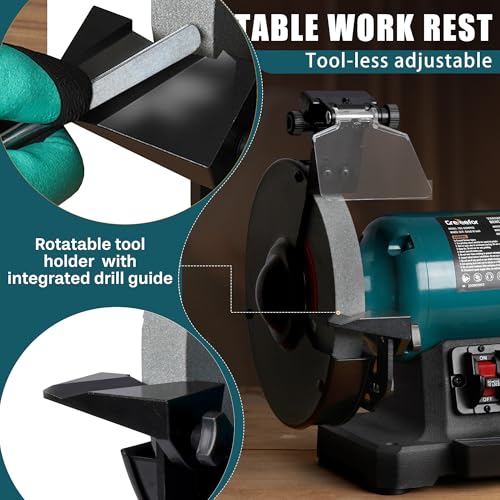
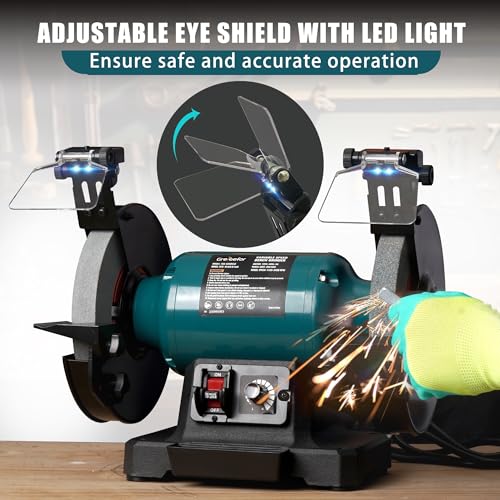
Compared to other variable speed models, it balances performance and usability better than most. The tool-free adjustments and water tray add convenience, and the LED light is bright enough to eliminate shadows. While the SKIL offers more wheel diameter, this one delivers smarter versatility. My recommendation for most DIYers and workshop owners: this is the smarter buy if you do mixed sharpening and shaping.
Product photos
Woodskil 6-Inch High-Speed Bench Grinder

Strengths
- CSA certified
- Affordable
- Durable steel base
Trade-offs
- No variable speed
- Basic tool rests
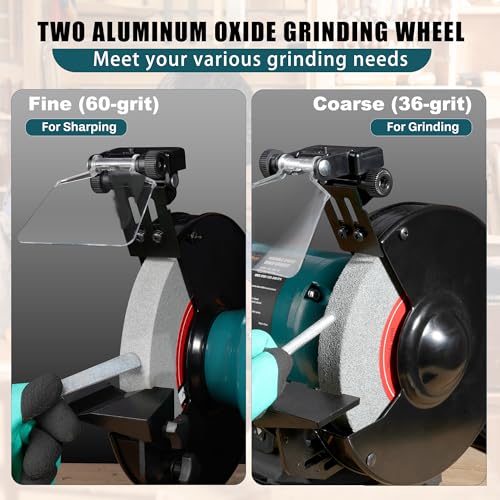
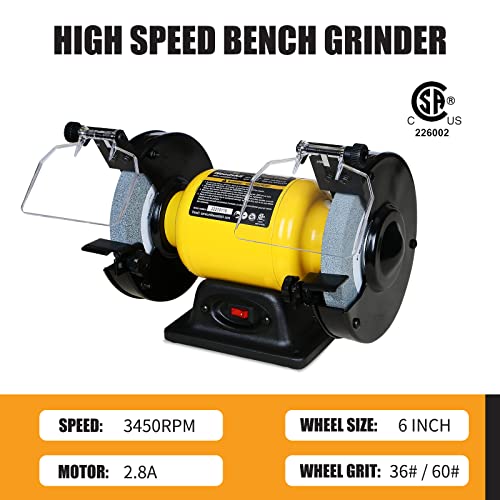
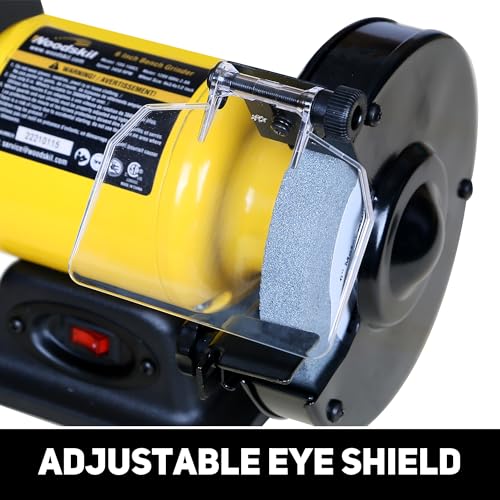
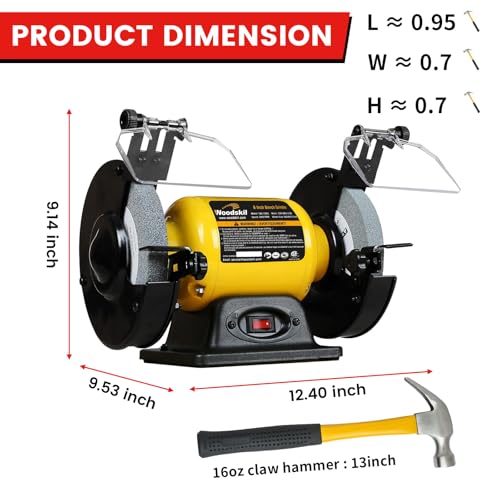
The Woodskil 6-inch grinder is a no-frills, CSA-certified budget option with a solid 3,450 RPM motor and a rigid steel base. It includes both 36-grit and 60-grit wheels, so it’s ready for coarse shaping and finer finishing out of the box. The transparent eye shield and spark arrestor meet basic safety standards, and the 2-year warranty matches pricier brands.
While it lacks variable speed or cast iron construction, owners report it holds up well under light to moderate use. It’s not built for all-day runs, but for weekend DIYers or those on a tight budget, it delivers core functionality without surprises. Compared to the WEN, it’s less refined but equally capable for basic tasks.
Product photos

WEN BG625V Variable Speed Bench Grinder

Strengths
- Variable speed
- Flexible LED light
- Two-year warranty
Trade-offs
- Plastic housing
- Lighter build
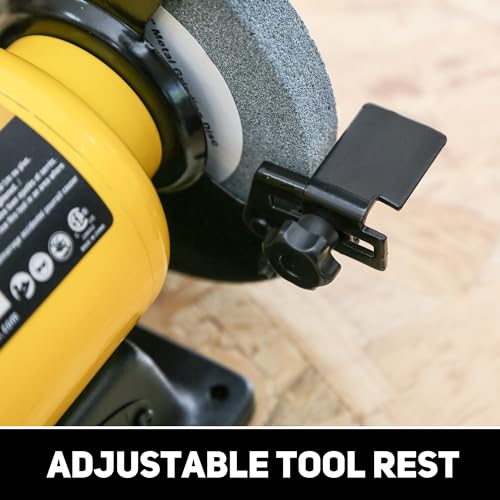
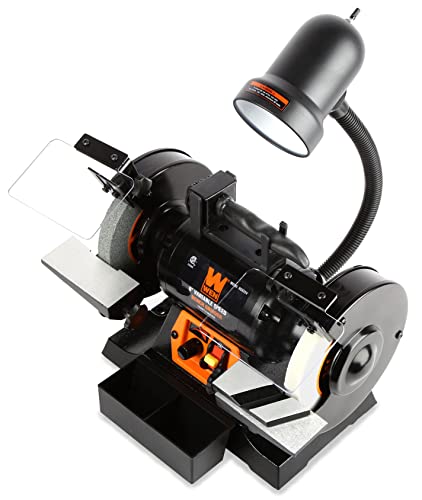
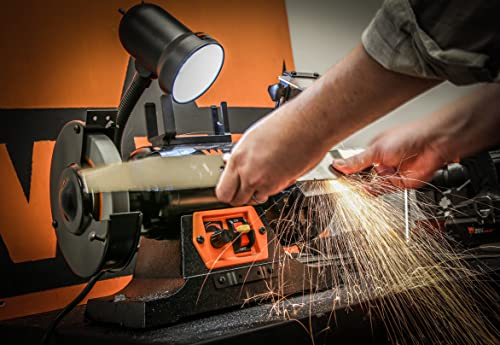
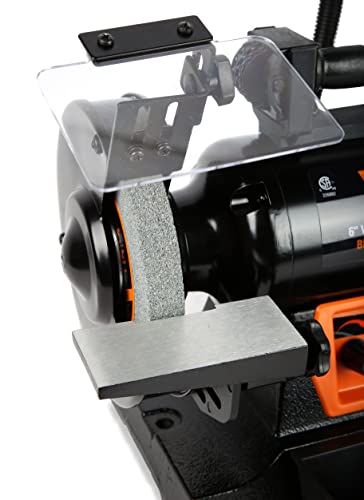
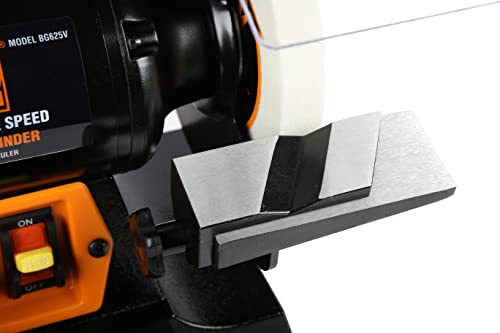
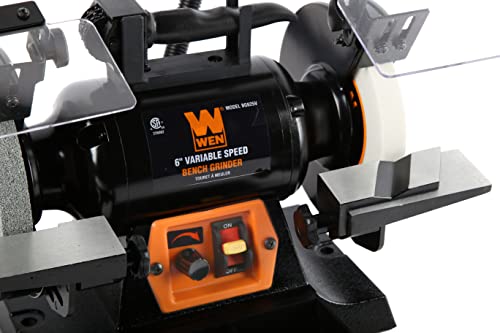
The WEN BG625V is a budget-conscious variable speed grinder that doesn’t cut corners where it counts, 2,000–3,400 RPM range, pivoting tool rests, and a flexible LED light make it unusually adaptable for the price. It’s not cast iron, but the base is rigid enough to avoid wobble, and the two-year warranty adds peace of mind.
Compared to the Delta or JET, it’s lighter and less robust, but owners consistently report it handles typical sharpening tasks just fine. The flexible work light is a small touch that makes a big difference in dim shops. For beginners or occasional users, this delivers 90% of the function at a fraction of the cost. I’d recommend it over pricier models if you’re just starting out.
Product photos
BUCKTOOL 8-Inch Dual Speed Grinder
Strengths
- Dual-speed motor
- Buffing wheel included
- Cast aluminum rests
Trade-offs
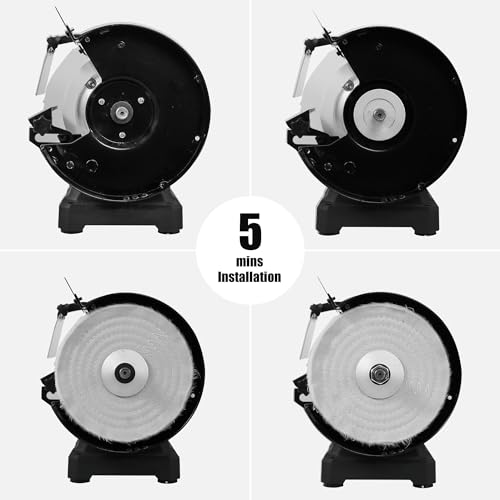
- Slightly complex setup
- Heavier footprint
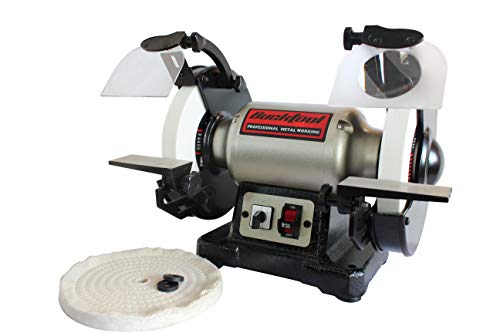
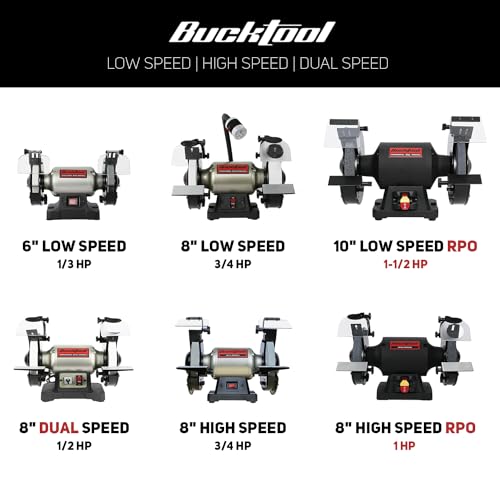
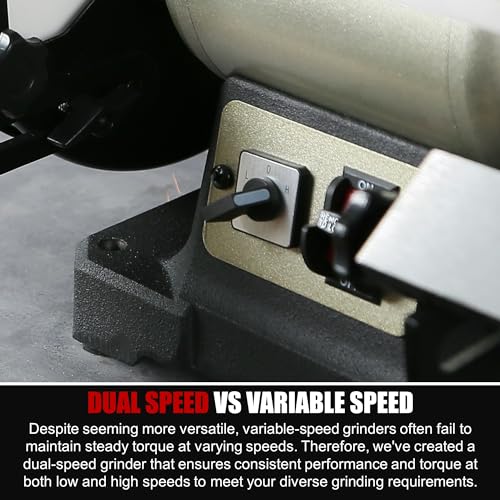
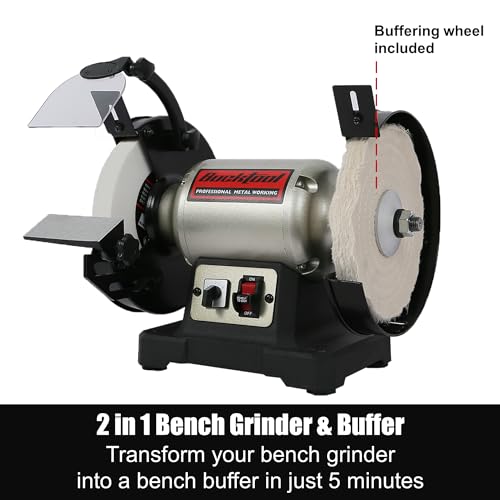
The dual-speed design of this BUCKTOOL grinder makes it uniquely versatile, low speed for woodworking tool edges, high speed for metal grinding or buffing. That flexibility, combined with the included buffing wheel, turns it into a multi-role machine. The cast aluminum tool rests are a step up from steel, resisting rust and allowing fine angle tuning.
Owners appreciate the switchable performance and the fact that it stays wobble-free, even at full speed. Compared to the single-speed BUCKTOOL model, this one is more of a generalist. If you’re sharpening chisels one day and polishing brackets the next, this is the more practical pick. I’d choose it over the low-speed-only version for mixed-use shops.
Product photos
BUCKTOOL 8-Inch Low-Speed CBN Grinder

Strengths
- Low-speed precision
- CBN wheel compatible
- Wide grinding surface
Trade-offs
- No high-speed option
- Limited to specialty use
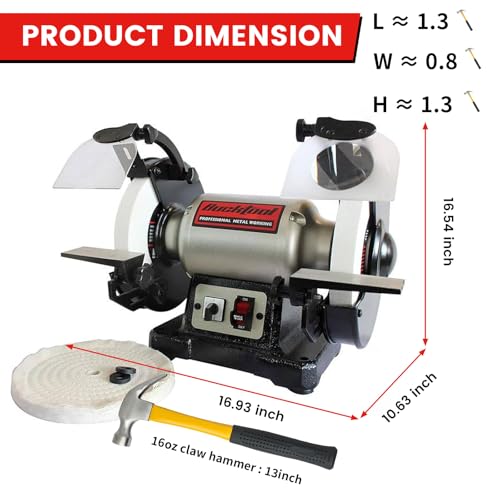
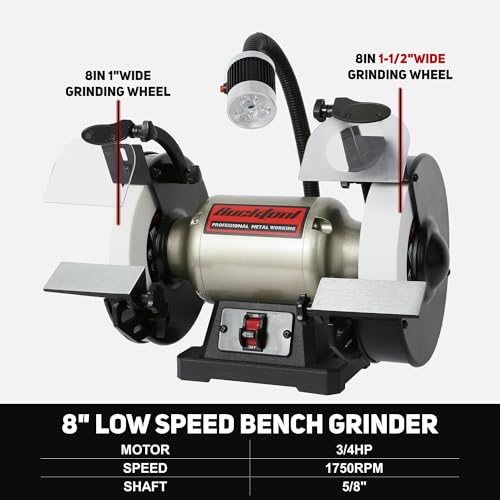
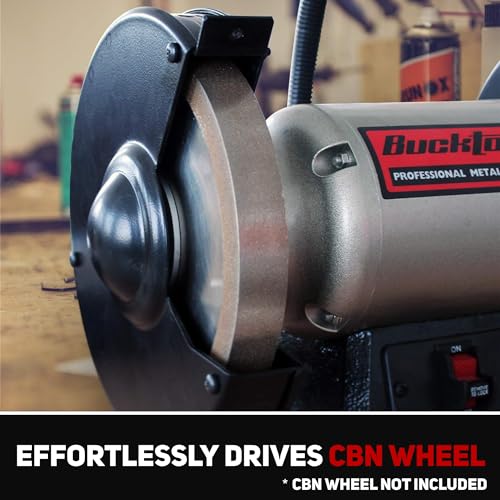
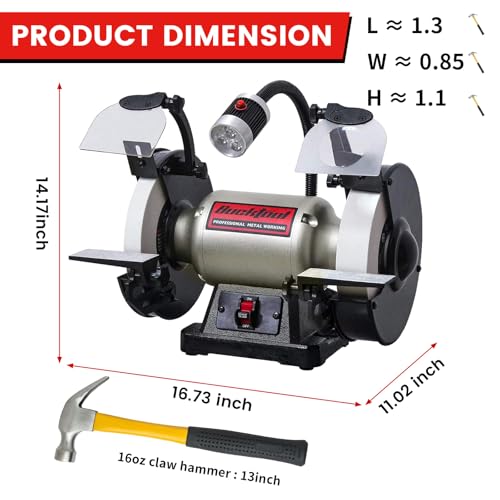
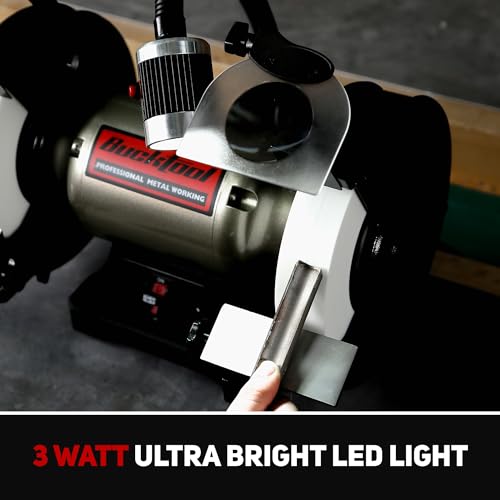
This BUCKTOOL 8-inch grinder is built for precision grinding, especially with its 1,750 RPM low-speed induction motor and compatibility with CBN wheels, something most grinders aren’t designed for. The extra-wide 1-1/2 inch wheels give more contact area, ideal for plane irons or wide chisels.
The magnifying eye shield and 0–45 degree adjustable tool rest show serious attention to detail. Owners who use it for woodworking tool maintenance rave about edge consistency and minimal heat buildup. It’s not fast, but that’s the point. Compared to the dual-speed BUCKTOOL model, this one is purer in purpose, no buffing, just controlled, cool grinding. I’d pick it for high-end woodworking shops.
Product photos
SKIL 8-Inch Grinder with Water Tray

Strengths
- Built-in water tray
- LED work light
- Magnified eye shields
Trade-offs
- Larger footprint
- No variable speed
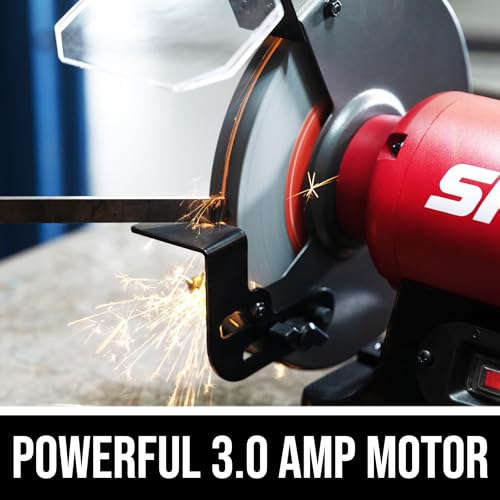
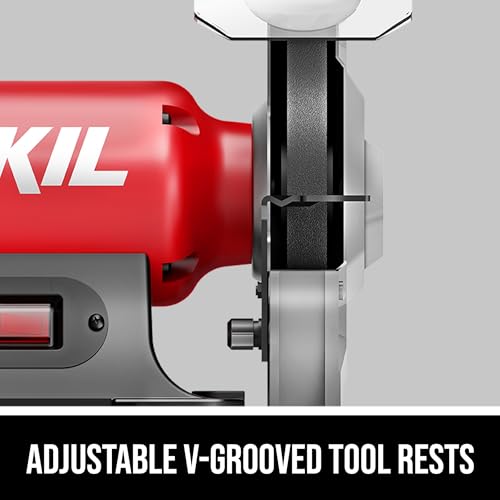
The SKIL 8-inch grinder stands out for its built-in water cooling tray, which is a rare and smart feature for heat-sensitive grinding tasks like chisels or tool bits. That, combined with the magnified eye shields and LED lighting, suggests this unit was designed with precision and visibility in mind, something many bench grinders overlook. Owners consistently report it runs cool and steady, though the 3.0 amp motor isn’t the most powerful in this lineup.
Still, the real advantage here is workflow integration. Being able to dip and grind without moving to a separate water station saves time and keeps temperatures in check. It’s not the fastest or most rugged, but for someone shaping delicate tools or doing fine metalwork, this is a thoughtful, well-laid-out machine. I’d pick it over raw power when thermal control matters.
Product photos



Delta Power Tools 6-Inch Grinder
Strengths
- Drill bit rest milled in
- Variable speed control
- Induction motor
Trade-offs
- No included dresser
- Basic lighting
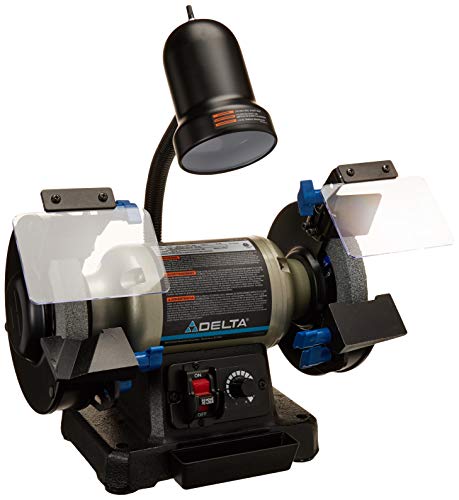
The Delta 23-196 is a niche performer, its standout feature is the milled drill bit rest on the left tool rest, which guides users to the correct 59-degree angle for drill sharpening. That’s rare and valuable. Combined with variable speed (2,000–3,400 RPM), it gives real control for reconditioning bits without walking.
While it doesn’t have a brushless motor or a water tray, its induction motor is smooth, and owners report excellent consistency on repeated sharpening runs. It lacks the extras of the B0G2WX6XSP, but for this specific task, it’s more accurate. If you go through drill bits often, like in a garage or repair shop, this is the pick. I’d take it over general-purpose grinders when bit maintenance is a regular chore.
Product photos

JET 6-Inch Grinder with Wire Wheel

Strengths
- Wire wheel included
- 3450 RPM output
- Cast iron stability
Trade-offs
- Fixed speed only
- No variable control
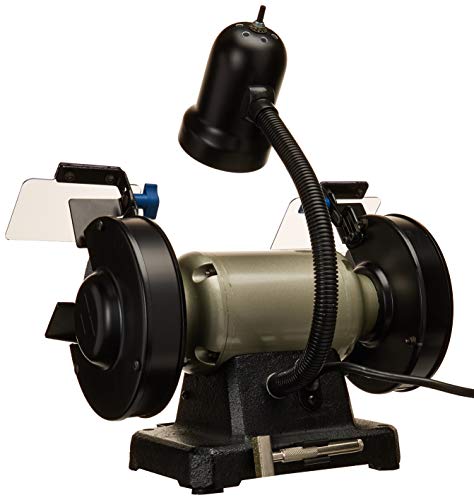
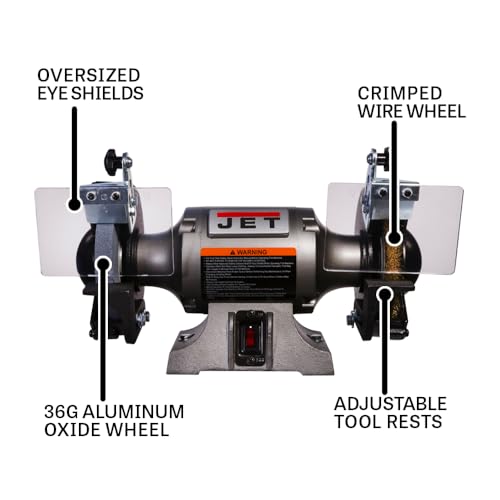
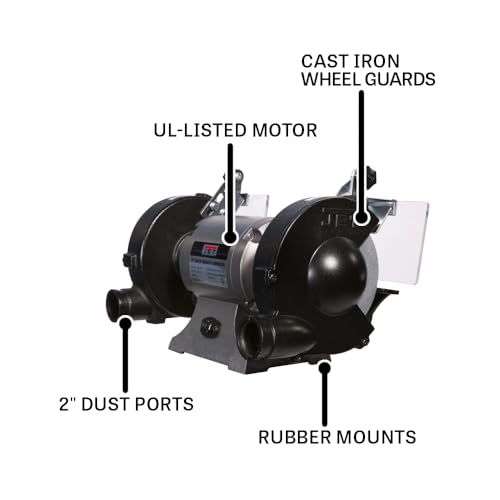
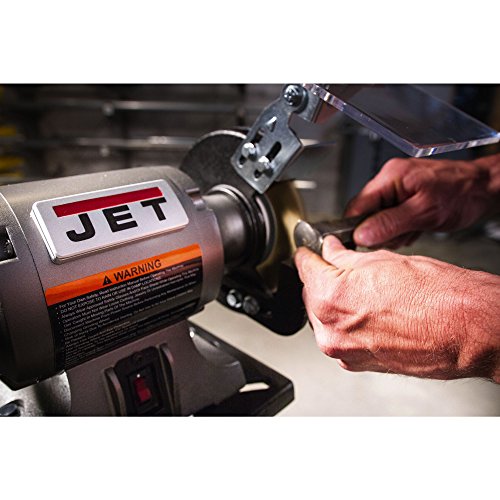
The JET JBG-6W is built like a shop-grade workhorse, 3,450 RPM, heavy-duty cast iron, and totally enclosed bearings mean it’s meant to run hard and long. What sets it apart is the inclusion of a crimped wire wheel, making it ready for metal polishing right out of the box. Most grinders in this list focus on sharpening; this one leans into finishing.
Owners consistently praise its durability and vibration control, though some note the fixed speed limits flexibility. Compared to the Delta or WEN, it’s less about finesse and more about raw capability. If you’re cleaning up welds, stripping rust, or prepping metal for paint, this is the unit that won’t flinch. I’d choose it over variable speed models when polishing is the main goal.
Product photos
How We Evaluated benchtop grinders
My approach to evaluating benchtop grinders involved a research-led comparison of specifications and owner feedback. I looked at motor power, speed ranges, wheel types and sizes, build quality (specifically base material and adjustability features), and safety elements like shielding and spark arrestors. To form recommendations, I weighed published specs against what owners reported about real-world performance – beyond the marketing claims – and considered overall value within each price bracket.
For benchtop grinders, consistent speed and a stable base are paramount. A powerful motor is helpful, but the ability to accurately control the speed, especially for precision work, is what truly sets units apart. Solid construction minimizes vibration, leading to better results and safer operation. I also gave significant weight to the inclusion of useful accessories like tool rests, work lights, and wheel dressers.
Specifications reliably indicate motor power and wheel dimensions. However, owner reviews provided valuable insight into the durability of the build, the effectiveness of the speed controls, and the actual noise levels during operation. Reputation within woodworking and metalworking communities also factored in, as those users often push tools to their limits and provide honest assessments. Knowing how to maintain your tools, including sharpening hole saws is also key.
What To Look For In benchtop grinders
Finding the right benchtop grinder can significantly improve your workshop’s capabilities.
A quality bench grinder balances power with control. Look for a robust motor (at least 1/2 HP for versatile use), variable speed settings for working with different materials, and a stable base to minimize vibration. Durable construction, adjustable tool rests, and effective spark shielding are also crucial for safety and precision.
Motor Power and Speed
The motor is the heart of any bench grinder, and choosing the right power and speed is critical. Don’t automatically assume “more” is better. A 1/2 HP motor is a solid starting point for general purpose use, handling tasks like sharpening chisels, shaping metal, and light deburring. However, if you plan on tackling heavier jobs, like serious metal removal or aggressively reshaping tools, you’ll likely want to step up to 3/4 HP or even 1 HP. Variable speed is where things get really interesting. Lower speeds are ideal for woodworking tools, preventing heat buildup and preserving the temper of the steel, while higher speeds excel at quickly removing material from metal.
Wheel Grit and Material
The grinding wheels themselves are just as important as the motor. Most grinders come with a coarse (36-grit) and a fine (60-grit or higher) wheel, which is a good starting point. But consider the materials you’ll be working with most often. Aluminum oxide wheels are excellent for general-purpose grinding of steel and other ferrous metals. Silicon carbide wheels are better suited for harder materials like glass, stone, and non-ferrous metals. If you do a lot of sharpening, you might even consider a CBN (cubic boron nitride) wheel, which stays truer for longer and requires less frequent dressing. For those looking to maintain sharp saw blades, exploring sharpening techniques for saw blades is a valuable investment.
Stability and Features
A wobbly grinder is a frustrating and potentially dangerous grinder. A heavy cast iron base is essential for minimizing vibration and ensuring accuracy. Look for a model with pre-drilled mounting holes so you can securely bolt it to a workbench. Beyond the base, consider features like adjustable tool rests, which allow you to maintain a consistent angle while grinding. A built-in work light can be incredibly helpful for detailed work, and a water tray is a must-have if you’re working with heat-sensitive materials. Here’s a quick guideline:
- A light-duty grinder might suffice for occasional sharpening.
- A mid-range model with variable speed offers versatility for most DIYers.
- A heavy-duty grinder with a robust base and advanced features is best for frequent use and demanding applications, especially if you’re serious about finding the top bench grinders.
Don’t skimp on safety. Always wear appropriate eye and face protection, and ensure the wheel guards are properly adjusted.
Benchtop Grinders Compared
Here’s a comparison of specifications for various benchtop grinders to help you choose the right one.
| Product Name | Motor HP | RPM | Wheel Size (in) | Wheel Grit(s) | Speed Control | Water Tray |
|---|---|---|---|---|---|---|
| 6-Inch Variable Speed Bench Grinder | 2.5A | 1725-3450 | 6 | 36, 60 | Variable | Yes |
| Woodskil 6-Inch High-Speed Bench Grinder | 1/2 | 3450 | 6 | 36, 60 | Fixed | No |
| WEN BG625V Variable Speed Bench Grinder | 2.5A | 2000-3400 | 6 | 36, 80 | Variable | No |
| BUCKTOOL 8-Inch Dual Speed Grinder | 1/2 | Low/High | 8 | 80, 120 | Dual | No |
| BUCKTOOL 8-Inch Low-Speed CBN Grinder | 3/4 | 1750 | 8 | 80, 120 | Fixed | No |
| SKIL 8-Inch Grinder with Water Tray | 3.0A | N/A | 8 | Medium, Coarse | Fixed | Yes |
| Delta Power Tools 6-Inch Grinder | 2.5A | 2000-3400 | 6 | N/A | Variable | No |
| JET 6-Inch Grinder with Wire Wheel | 1/2 | 3450 | 6 | 36, Wire | Fixed | No |
Frequently Asked Questions
What wheel grit should I use for sharpening woodworking tools?
A medium grit (around 60-80) is generally best for initial sharpening of woodworking tools, as it removes material quickly. Follow this with a finer grit (120 or higher) for refining the edge and achieving sharpness.
Are variable speed grinders really necessary?
Yes, variable speed grinders offer significant advantages. They allow you to adjust the speed to match the material and task, preventing overheating and improving control, especially when working with different metals or wood types.
How important is the base material of a bench grinder?
A heavy cast iron base is crucial for stability. It minimizes vibration during operation, leading to more accurate work and improved safety, unlike lighter materials that can move around.
Can I use a bench grinder for polishing?
You can, but it requires the correct wheel and accessories. A buffing wheel attached to your grinder can polish metal, though dedicated polishing tools are often preferred for achieving a higher quality finish. If you’re interested in more specialized options, consider looking at stationary table grinders for greater versatility.
What safety precautions should I always take when using a bench grinder?
Always wear safety glasses or a face shield to protect your eyes from flying sparks and debris. Ensure the wheel guards are properly installed and adjusted, and never operate a grinder with a damaged or worn wheel.
The Bottom Line
Choosing a benchtop grinder really comes down to how much control you want versus how much fuss you’re willing to deal with. For most homeowners and DIYers, the 6-Inch Variable Speed Bench Grinder strikes the best balance – offering enough power for common tasks, variable speed for versatility, and a water tray to prevent overheating. It’s a solid all-around performer that won’t break the bank.
If you have very specific needs, though, other options shine. For those on a tight budget, the Woodskil 6-Inch High-Speed Bench Grinder delivers good value. If you work with a lot of specialized tools or require extremely precise sharpening, the BUCKTOOL 8-Inch Low-Speed CBN Grinder is the way to go. And for maintaining sharp blades, learning about proper blade cleaning methods will extend the life of your investments.
Ultimately, remember that horsepower and speed settings are less crucial than a stable base and a commitment to safety. A wobbly grinder is inaccurate and dangerous, and even the most powerful motor won’t help if you aren’t wearing proper eye protection. Focus on build quality, consistent speed, and safe operating habits, and you’ll get years of reliable performance from your benchtop grinder.
