
8 Best Benchtop Metal Lathes of 2026
This post contains affiliate links. As an Amazon Associate, we earn from qualifying purchases.
The CREWORKS 9″ x 30″ 1100W Lathe stands out as the best overall benchtop metal lathe, offering solid capacity and power for serious hobbyists. For those on a tighter budget, the WEN 7″ x 12″ Benchtop Lathe delivers reliable performance at an accessible price, while the VEVOR 8.7″ x 39″ Automatic Feed Lathe brings extra length and automation for more complex work.
If you’re diving into metalworking, choosing the right benchtop lathe can make the difference between clean, repeatable results and constant frustration. These machines aren’t just about spinning metal, they need to hold precision, handle vibration, and grow with your skills.
I focused on real-world usability, prioritizing cast iron construction, motor reliability, and features like variable speed and automatic feed based on specs and owner feedback. This guide cuts through the noise to highlight models that deliver where it matters most.
Top 8 Benchtop Metal Lathes in the Market
The Best Benchtop Metal Lathes, Reviewed
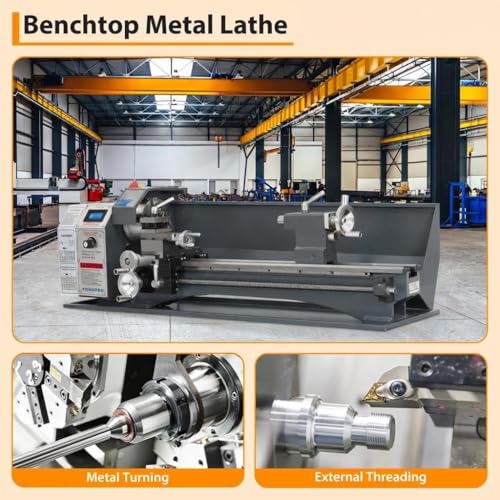
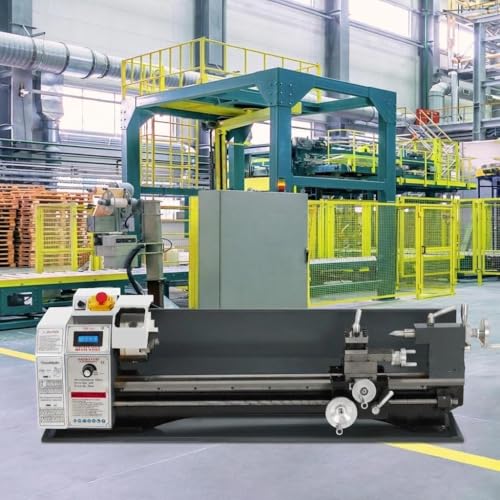
CREWORKS 9″ x 30″ Metal Lathe
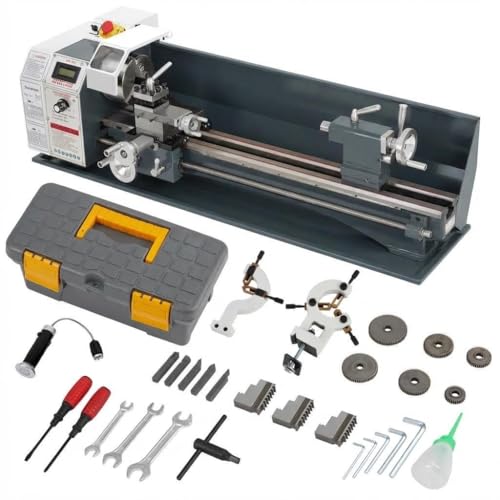
Strengths
- High 3000 RPM speed
- 1100W motor
- 4-way tool post
- Thorough accessory kit
- Smooth variable speed
Trade-offs
- No auto feed
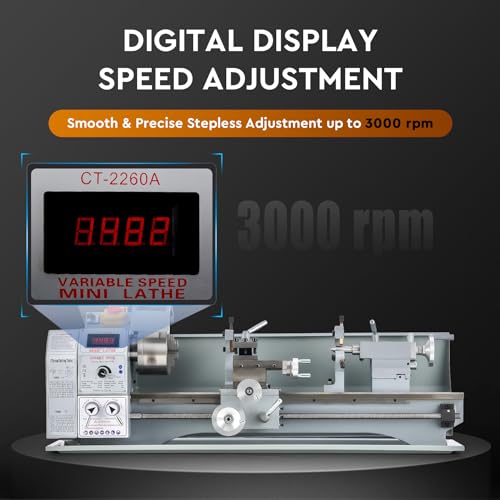
- Digital display can lag
- Manual gear changes
This one keeps coming up in owner reviews as the most balanced pick across performance, features, and usability. The 1100W motor and 3000 RPM max speed give it strong cutting potential, and the digital speed control is responsive. The 4-way tool post and adjustable compound rest make tool changes quick, which matters when switching between facing, parting, and threading.
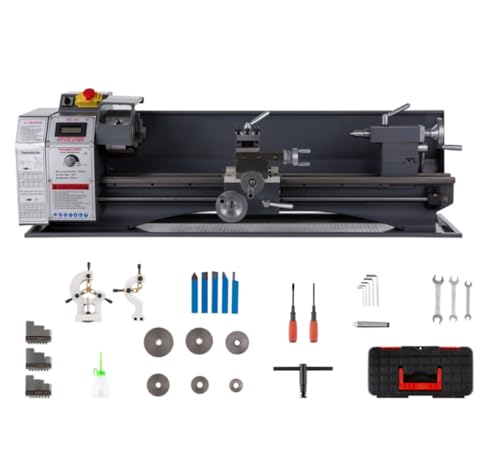
It doesn’t have auto feed like the larger VEVOR, but it comes with a solid accessory kit, work light, tools, and safety guard, so you’re ready to go out of the box. Build quality is consistent with HT200 cast iron, and owners say vibration is well-controlled. For most home shop users, this hits the sweet spot between capability and convenience.
Product photos
CREWORKS 9″ x 30″ 1100W Lathe

Strengths
- 1100W high power
- 3000 RPM max speed
- Extended bed length
- Cast iron frame
- Precision chuck
Trade-offs
- No automatic feed
- Heavy for benchtop
- No electronic gearing
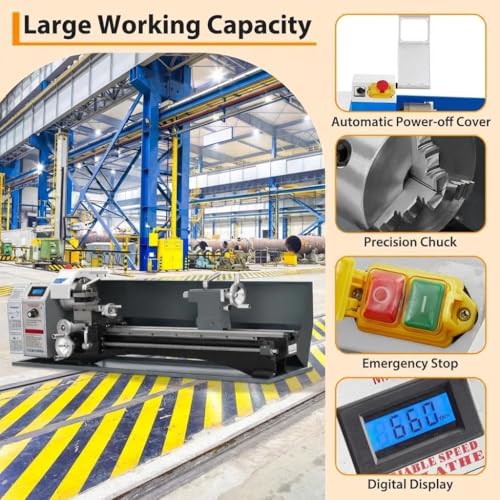
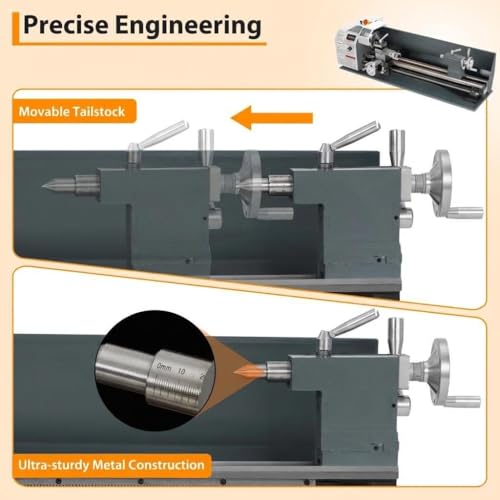
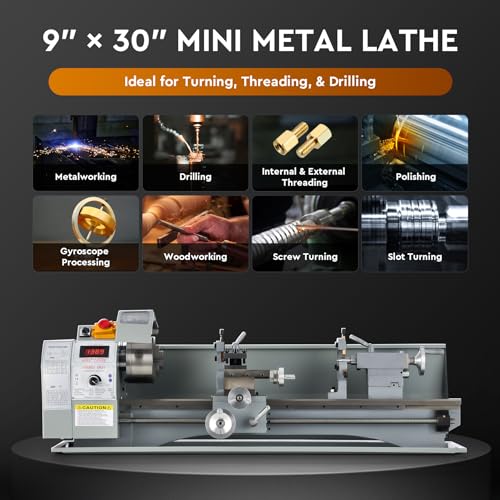
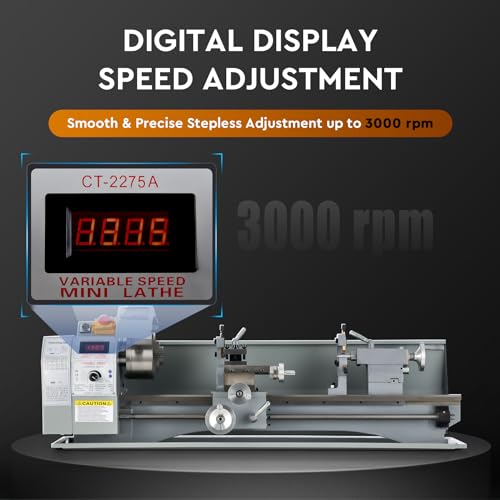
This CREWORKS model takes the same strong 1100W platform and stretches the bed to 30 inches, giving you more room for longer projects without sacrificing the 3000 RPM top speed. It’s essentially the high-performance version of their lineup, same brushless-level power, same precision engineering, but with improved versatility.
The larger spindle bore and extended center distance make it more practical for shafts or bushings. Owners appreciate the consistent torque delivery and minimal speed drop under load. While it lacks auto feed, the inclusion of a 4-way tool post and compound rest keeps it functional for complex jobs. If you want the most capable CREWORKS without stepping up to floor models, this is it.
Product photos
CREWORKS 9″ x 24″ Benchtop Lathe

Strengths
- High-precision chuck
- Cast iron stability
- Real-time LCD display
- Good for fine threads
- Clear safety guard
Trade-offs
- Shorter bed length
- No auto feed
- Limited heavy cutting
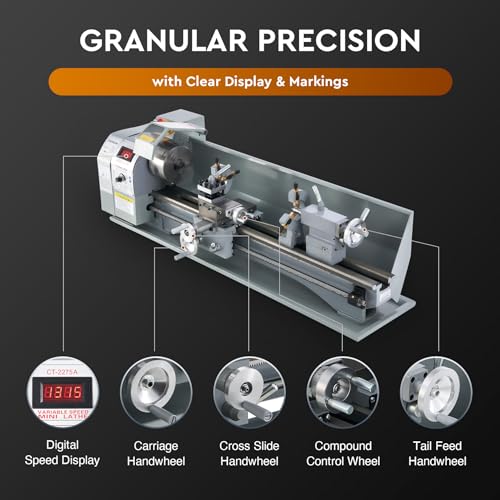
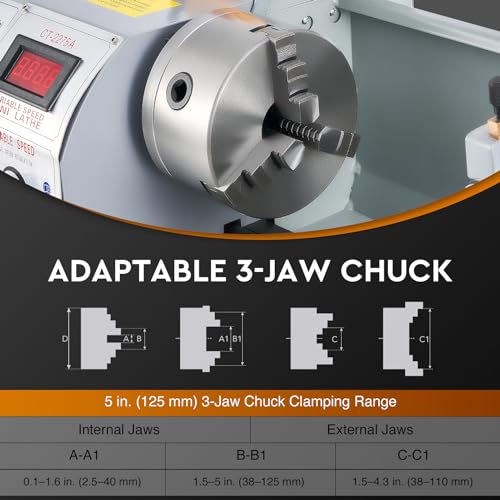
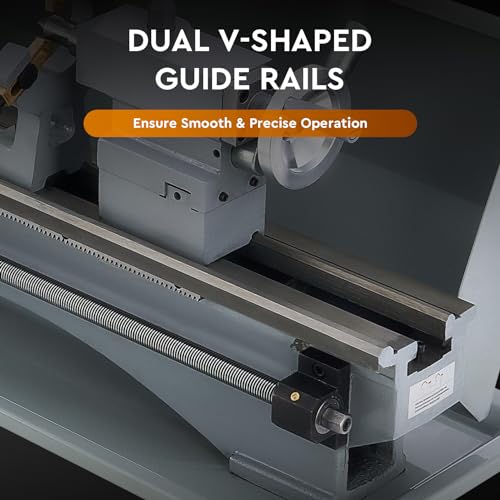
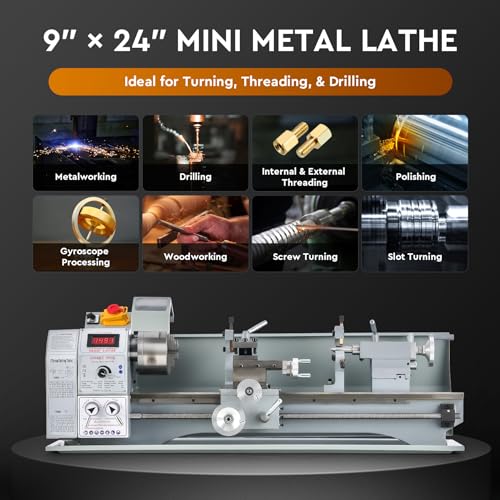
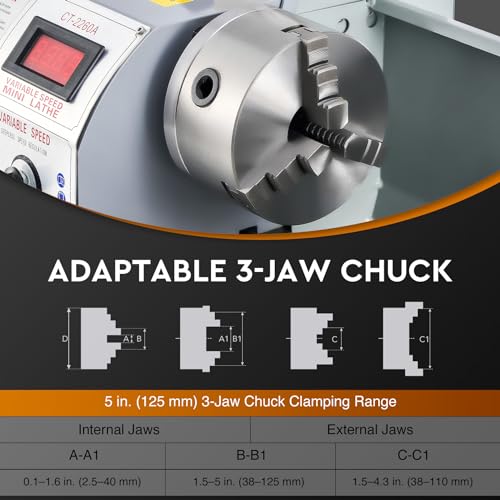
Precision is where this CREWORKS model shines. The 5-inch 3-jaw chuck offers better grip and centering than the standard 3.9-inch units, which matters for fine threading and small-diameter work. Combined with a rigid cast iron body and transparent safety guard, it feels like a tool built for accuracy over brute force.
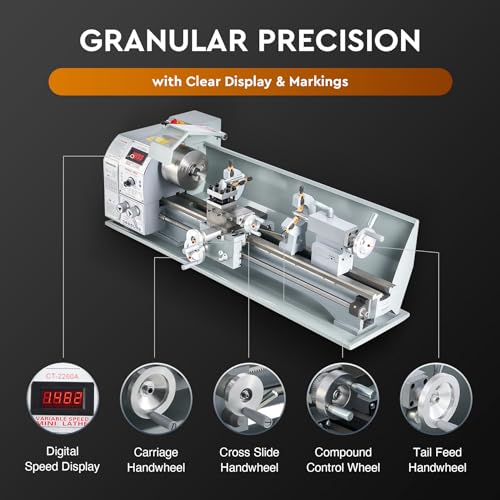
The 0–3000 RPM range gives excellent control for delicate finishes, and the digital display is crisp and responsive. Some owners note minor backlash in the handwheels, but overall feedback highlights its repeatability. It’s not the longest or most powerful, but for watchmakers, model builders, or anyone doing detailed instrument work, this is a standout.
Product photos
VEVOR 8.7″ x 39″ Automatic Feed Lathe

Strengths
- Fully automatic feed
- Electronic gear system
- High power motor
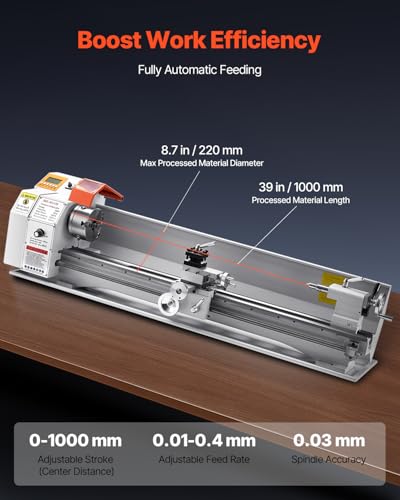
- Large work capacity
- Brushless drive
Trade-offs
- Bulky for small shops
- Higher power draw
- Steeper learning curve
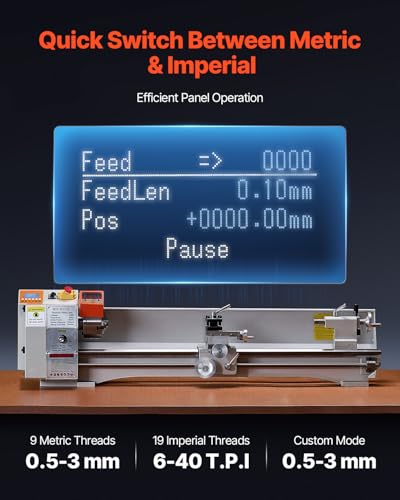
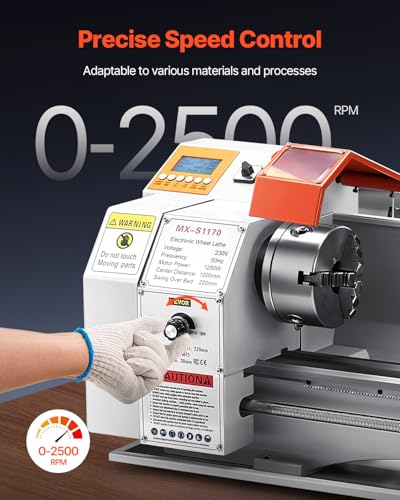
If automation is on your wishlist, this VEVOR model is the only one here offering full auto feed with digital panel control. The ability to set stroke and feed rate from 0.01 to 0.40 mm means you can walk away during threading operations, which is rare at this price tier. The 1250W brushless motor gives it serious grunt, and on paper, it outperforms most benchtop units in torque and consistency.
The electronic gear system eliminates the need to swap gears for metric/imperial threads, a feature usually found on industrial machines. While owners praise the build and precision, a few mention the footprint is substantial for a benchtop unit. Still, if you’re doing repeated runs or want to reduce manual labor, this is the closest thing to a mini production lathe in this group.
Product photos
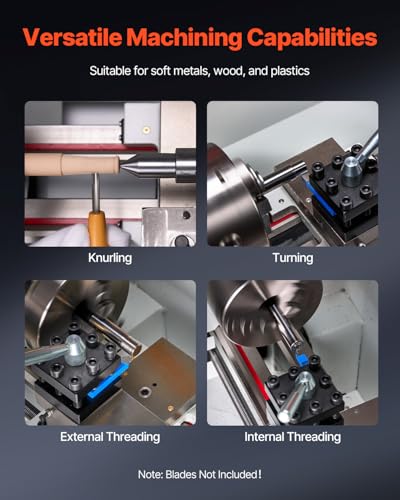
VEVOR 8.3″ x 29.5″ Brushless Lathe

Strengths
- Brushless motor
- Dual speed ranges
- Metal gears
- Digital display
- Good safety features
Trade-offs
- Mid-tier power
- No auto feed
- Limited to medium cuts
The 750W brushless motor is the headline here, and it’s a smart upgrade over brushed alternatives. Brushless motors run cooler and last longer, which matters if you’re doing regular runs. The dual-speed range (high and low gear) gives better torque control, especially when threading or working with harder alloys.
It shares the same robust HT200 cast iron base as other VEVOR models, so rigidity isn’t an issue. Owners note the digital display is clear and the safety interlocks work reliably. While it doesn’t have the highest power or speed, the brushless drive makes this a strong long-term investment for users who hate maintenance.
Product photos
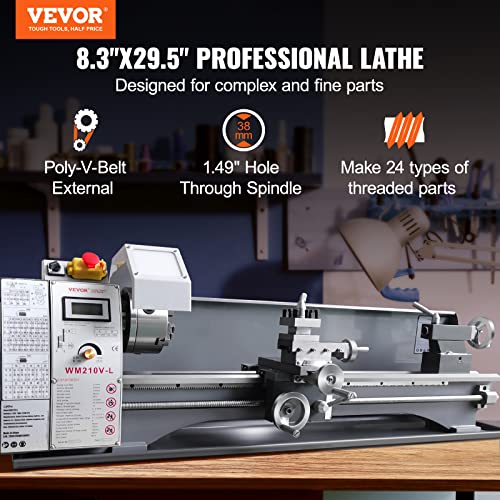
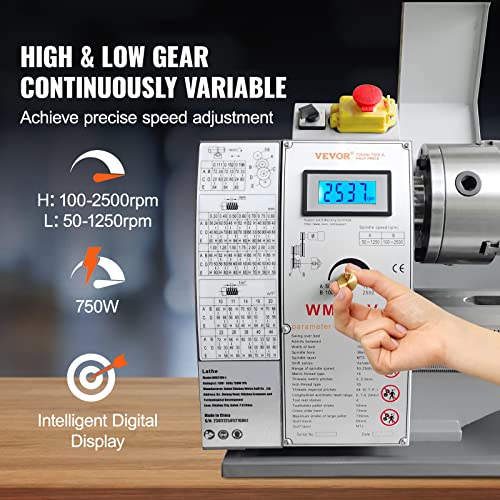
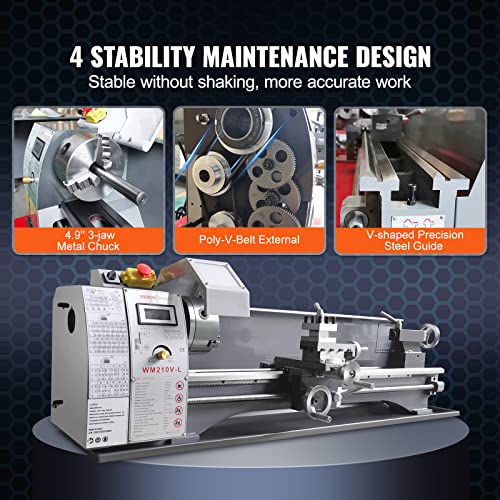
VEVOR 7″ x 16″ Direct Drive Lathe
Strengths
- Direct drive motor
- Brushless motor
- Digital speed display
- Safety cutoff switches
- Cast iron construction
Trade-offs
- Limited swing and length
- Lower power than 1100W models
- No auto feed
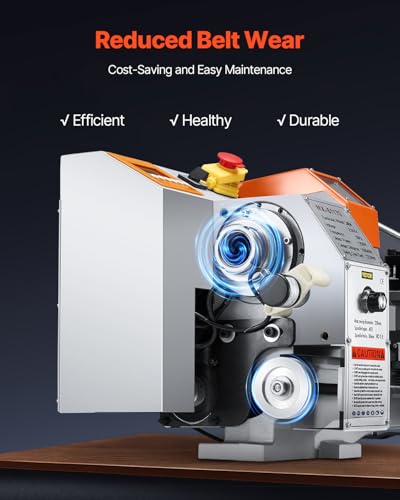
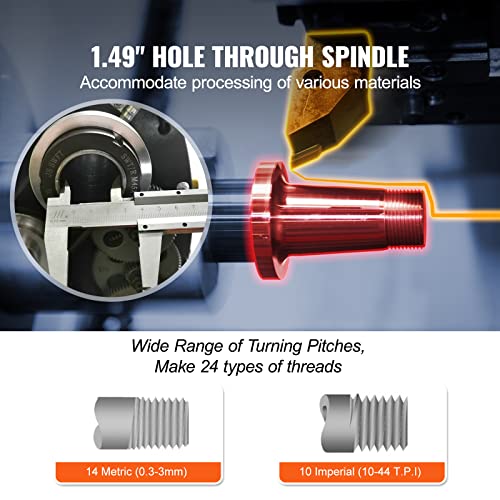
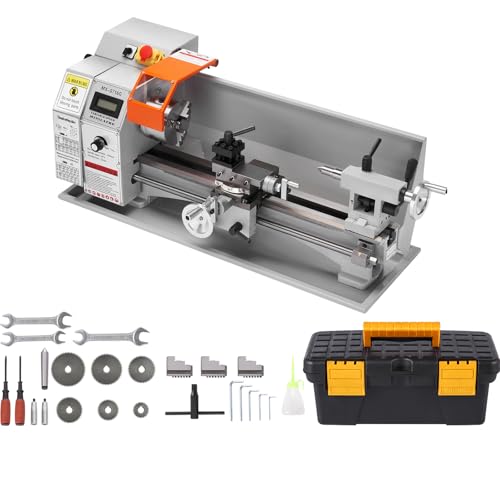
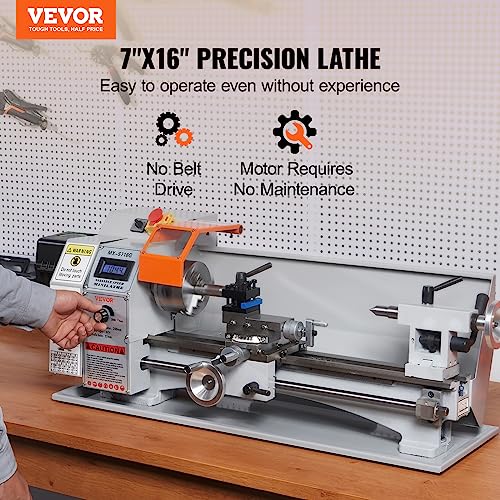
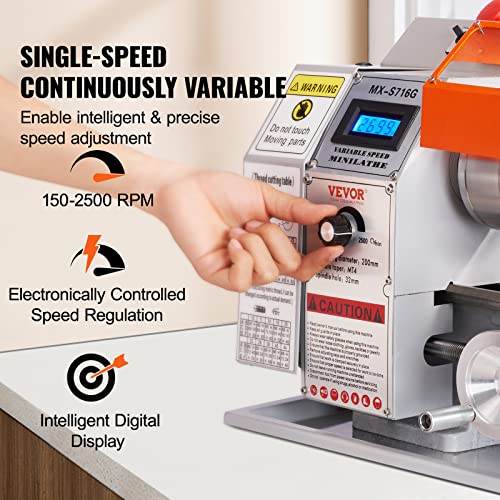
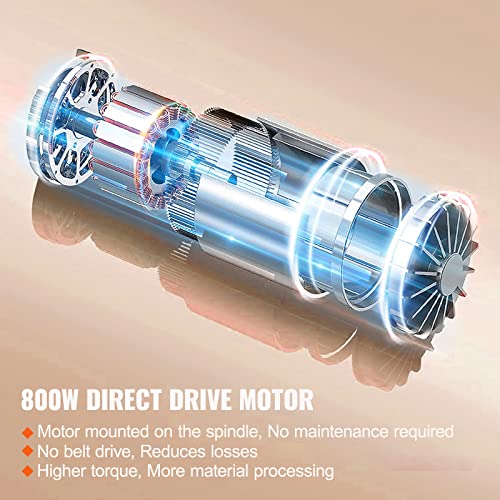
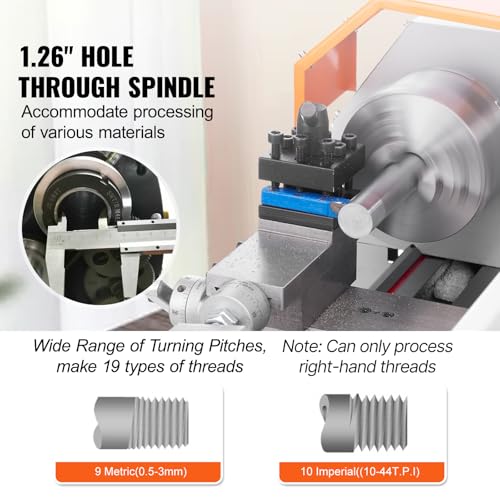
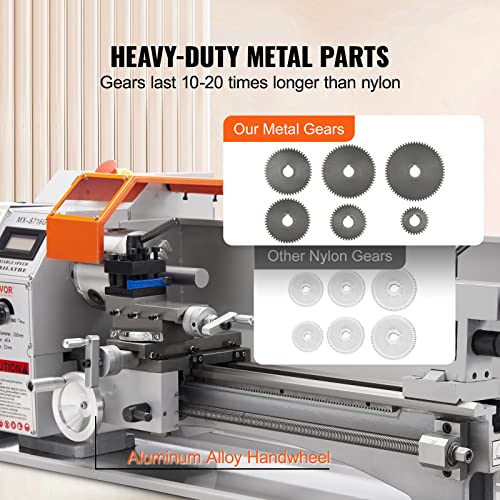
The direct drive system on this VEVOR lathe stands out immediately. With no belts to stretch or replace, it promises cleaner power delivery and less maintenance over time. The 800W brushless motor is a solid choice for light to medium-duty work, and owners consistently report fewer heat issues during extended runs compared to belt-driven models. Speed control is smooth across the 150–2500 RPM range, and the digital display makes repeatable setups easier.
It’s not the most powerful in the lineup, but for hobbyists who value simplicity and reliability, this model delivers. The inclusion of safety features like the chuck cover cutoff switch and emergency stop shows thoughtful design. However, some users note that the smaller bed size limits longer workpieces, so it’s better suited for precision parts than large-scale turning.
Product photos
VEVOR 7″ x 14″ Digital Display Lathe

Strengths
- Affordable entry point
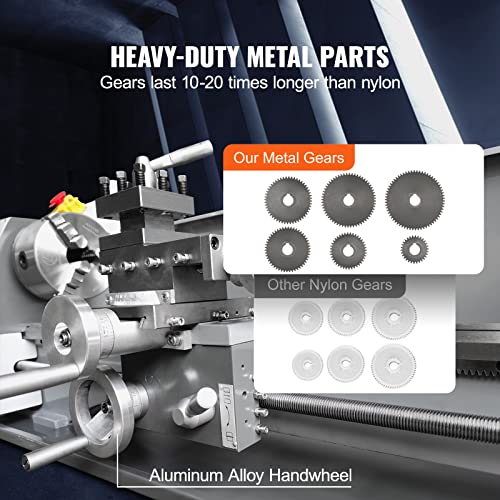
- Metal gears
- Digital speed display
- Compact size
- Safety power-off switch
Trade-offs
- Underpowered motor
- Limited material capability
- No brushless motor
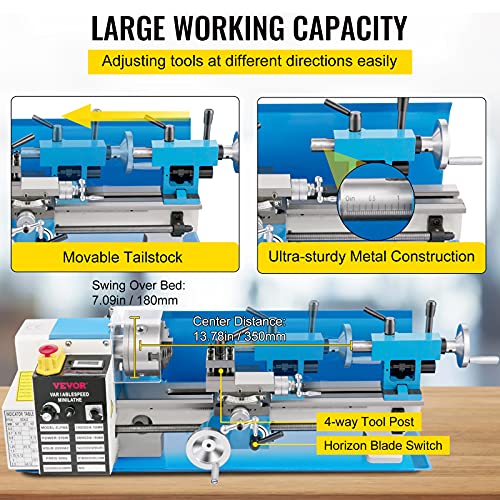
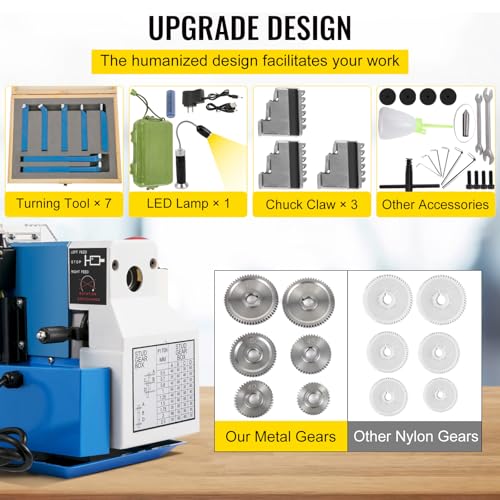
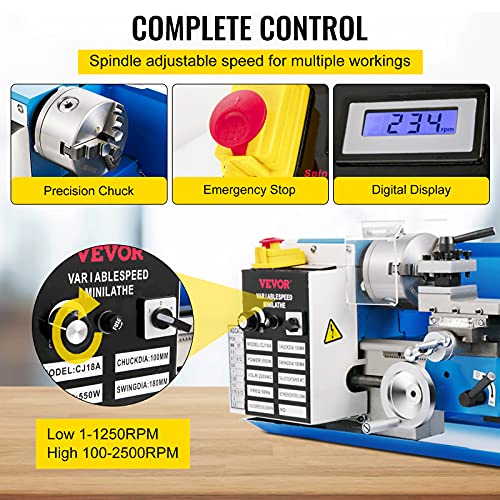
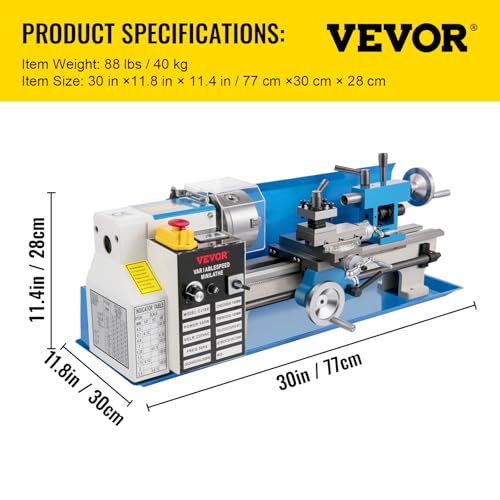
At 550W, this is the lowest-powered lathe in the list, but it’s clearly built for budget-conscious buyers who still want core functionality. The digital display upgrade over older models helps with speed accuracy, and the metal gears are a welcome step up from nylon. It handles small parts well, and the 4-way tool post adds real utility.
Owners say it’s surprisingly stable for the price, though it struggles with harder metals or deep cuts. The lack of high torque means you’ll need to take light passes, especially in steel. But for aluminum, brass, or plastic work, it holds its own. If you’re on a tight budget and just starting, this gets you into metal turning without breaking the bank.
Product photos

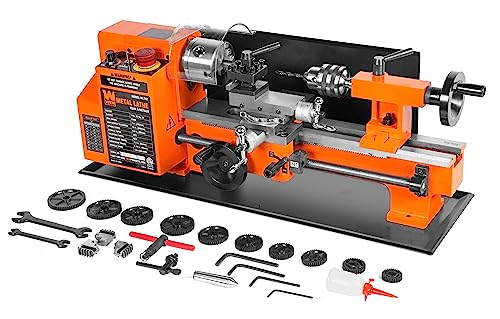
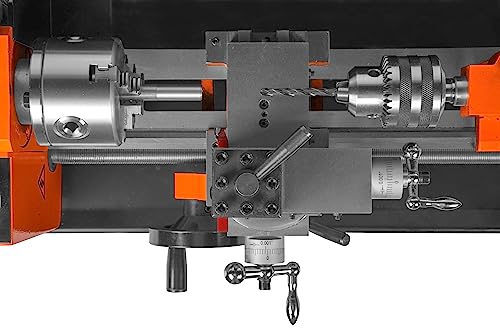
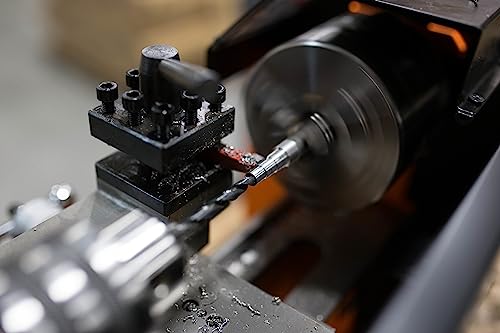
WEN 7″ x 12″ Benchtop Lathe

Strengths
- Simple setup
- Two-year warranty
- Manual and auto feed
- Affordable
- Compact footprint
Trade-offs
- Low motor power
- No digital display
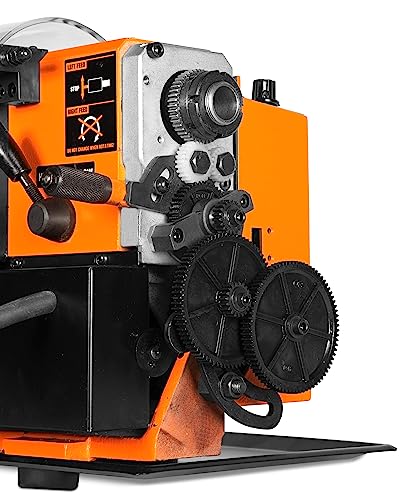
- Basic gearing
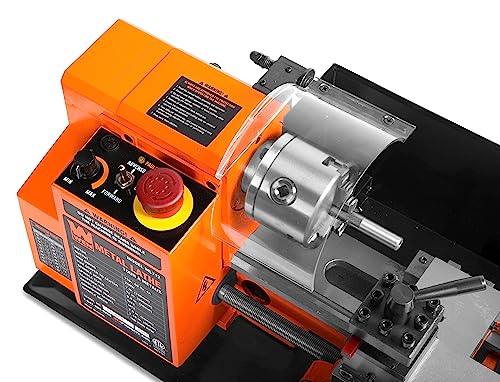
The WEN ML712 is clearly designed as an entry point into metal lathes, and it does that job well. With a modest 4-amp motor, it won’t rival the 1100W units in cutting depth, but it’s reliable for soft metals and plastics. The two-speed range gives decent flexibility, and the threading dial makes it easy to dial in common TPI settings.
It’s one of the few with a solid warranty, two years, which adds peace of mind. Owners say assembly is straightforward and it runs quietly. However, the lack of digital display and lower RPM ceiling means you’re trading features for affordability. But for a first lathe or a school workshop, it’s hard to beat the value.
Product photos
How We Evaluated benchtop metal lathes
Rather than a hands-on lab test, my research for this guide was a detailed comparison of published specifications and features across numerous models. I weighed owner reviews from multiple sources alongside assessments from reputable tool review sites, focusing on identifying consistent strengths and weaknesses. My background maintaining workshops and working with tools informed how I prioritized these factors, ultimately ranking lathes against defined criteria for performance and value.
For benchtop metal lathes, several factors stood out as most important. Swing over bed and distance between centers directly impact the size of projects you can tackle, so those were heavily weighted. Equally crucial was motor power – a more powerful motor handles harder metals and heavier cuts with less strain. Finally, build quality (specifically, cast iron construction) plays a huge role in minimizing vibration and ensuring long-term accuracy.
Specifications reliably indicate a lathe’s capacity and power output. However, I paid close attention to owner feedback regarding ease of use, particularly for beginners, and long-term durability. Reputation and consistent positive comments about accuracy – especially when threading – were strong indicators of quality. You’ll find a discussion of the top metal lathe models in our broader buying guide, if you’d like to explore more options.
How To Choose The benchtop metal lathes
Finding the right metal lathe for your needs requires more than just looking at price. A good machine is a long-term investment, and making the wrong choice can lead to frustration and poor results.
A quality metal lathe delivers precise cuts, consistent performance, and durable construction. Key considerations include motor power, spindle speed control, build materials (cast iron is preferred), chuck size and type, and available features like automatic feed and digital readouts. Buyers should also assess their project scope and skill level to select a machine that matches their capabilities.
Motor Power and Material Capacity
Don’t get hung up on the highest wattage number. While power is important, it’s the application of that power that matters. A smaller lathe with a well-designed motor and robust construction can outperform a larger, cheaper lathe with a more powerful but poorly implemented motor. Consider the types of materials you’ll be working with. Softer metals like aluminum and brass require less power than steel or stainless steel. Look for lathes with brushless motors; they’re more efficient, run cooler, and require less maintenance than brushed motors.
Speed Control and Precision
Variable speed is absolutely crucial, but the range and control within that range are equally important. A wide speed range (like the 100-2500 RPM offered by some models) allows you to handle a variety of materials and cutting operations. Digital readouts for spindle speed are a huge benefit, offering far more accuracy than analog dials. Beyond speed, pay close attention to the quality of the chuck. A high-precision 3-jaw chuck, like those found on many professional models, will grip your workpiece securely and minimize runout. If you’re considering a specific model, search online forums for feedback on its accuracy and how well it holds tolerances.
- A basic 4-jaw chuck is versatile but requires more setup time and skill to use effectively.
- An adjustable tailstock is essential for supporting longer workpieces and performing operations like drilling and reaming. Look for one with a smooth, easily adjustable feed mechanism.
- Automatic feed capabilities can significantly increase efficiency and consistency, particularly for repetitive tasks like threading. However, don’t overestimate this feature if you’re primarily focused on one-off projects.
Value, Features, and Automation
Often, you pay for features you won’t use. For a first-time buyer, or someone tackling only occasional projects, a simpler machine might be perfectly adequate. However, if you foresee expanding your metalworking capabilities, investing in a lathe with features like automatic feed, digital readouts, and a quick-change tool post can save you time and effort in the long run. Don’t overlook the importance of safety features like chuck guards and emergency stop switches. You can find some excellent [hobbyist metal lathes] (https://powertoolguide.net/best-small-metal-lathes/) that balance affordability and functionality.
Don’t assume a heavier lathe is always better. While cast iron construction is desirable for rigidity, excessive weight can make a lathe difficult to move and set up. Focus on a balanced design that offers stability without being cumbersome.
Benchtop Metal Lathes Compared
This table provides a detailed comparison of specifications for various benchtop metal lathes to aid in your purchasing decision.
| Product Title | Swing Over Bed | Distance Between Centers | Motor Power | Max Spindle Speed (RPM) | Chuck Size | Auto Feed |
|---|---|---|---|---|---|---|
| CREWORKS 9″ x 30″ Metal Lathe | N/A | 30″ | N/A | 3000 | N/A | Yes |
| CREWORKS 9″ x 30″ 1100W Lathe | 8.7″ | 27″ | 1100W | 3000 | 5″ | N/A |
| CREWORKS 9″ x 24″ Benchtop Lathe | 8.7″ | 23.6″ | 1100W | 3000 | 5″ | N/A |
| VEVOR 8.7″ x 39″ Automatic Feed Lathe | N/A | 39″ | N/A | 2500 | N/A | Yes |
| VEVOR 8.3″ x 29.5″ Brushless Lathe | N/A | 29.5″ | 750W | 2500 | N/A | N/A |
| VEVOR 7″ x 16″ Direct Drive Lathe | N/A | 16″ | 800W | 2500 | N/A | N/A |
| VEVOR 7″ x 14″ Digital Display Lathe | N/A | 13.78″ | 550W | 2500 | 4″ | N/A |
| WEN 7″ x 12″ Benchtop Lathe | 7″ | 12″ | 4A | 2500 | N/A | Yes |
Frequently Asked Questions
What swing and distance between centers do I really need?
Generally, beginners can start with a lathe offering at least 7″ of swing and 16″ between centers. This will cover most hobbyist projects, but if you anticipate larger workpieces, consider a model with 8″ or more swing and 24″ or greater distance between centers.
Are brushless motors truly superior in metal lathes?
Yes, brushless motors offer several advantages over brushed motors. They provide more consistent power, run cooler, have a longer lifespan, and require less maintenance – all contributing to better long-term benchtop lathe performance.
What is the benefit of a digital readout (DRO) on a metal lathe?
A DRO provides precise spindle speed readings, which is far more accurate than relying on analog dials. This is particularly useful for achieving consistent results when cutting different materials or performing complex operations like threading.
Is it possible to find a good quality lathe without spending a fortune?
Absolutely. There are several models offering excellent benchtop lathe value that balance affordability with essential features and acceptable build quality. Focus on prioritizing needs over premium extras.
What should I look for in a chuck for my metal lathe?
A high-precision 3-jaw chuck is ideal for securely gripping round stock and minimizing runout. While a 4-jaw chuck is more versatile, it’s also more complex to set up and requires greater operator skill. Consider the top benchtop lathe models and their included chucks when making your decision.
The Bottom Line
Choosing a benchtop metal lathe really comes down to balancing your ambition with your budget and skill level. If you’re serious about metalworking and want a machine capable of handling a wide range of projects with accuracy and power, the CREWORKS 9″ x 30″ 1100W Lathe stands out as the best overall performer. It provides a good blend of capacity, power, and features to grow with your abilities.
For those just starting out, or working on smaller projects, the WEN 7″ x 12″ Benchtop Lathe offers a surprisingly capable entry point. If you need a compact option for a small workshop, explore the range of compact benchtop lathes. And for hobbyists needing a versatile machine, the VEVOR 8.7″ x 39″ Automatic Feed Lathe delivers a lot of functionality for the price.
Ultimately, the specifications are less important than a solid, well-built machine that feels precise and inspires confidence. Don’t get lost in the details of every feature; focus on a lathe with a sturdy construction, reliable motor, and accurate speed control. Those fundamentals will serve you far better than any extra bells and whistles.
